
The 6 Capsule Wardrobe Jackets That Actually Earn Their Hanger Space
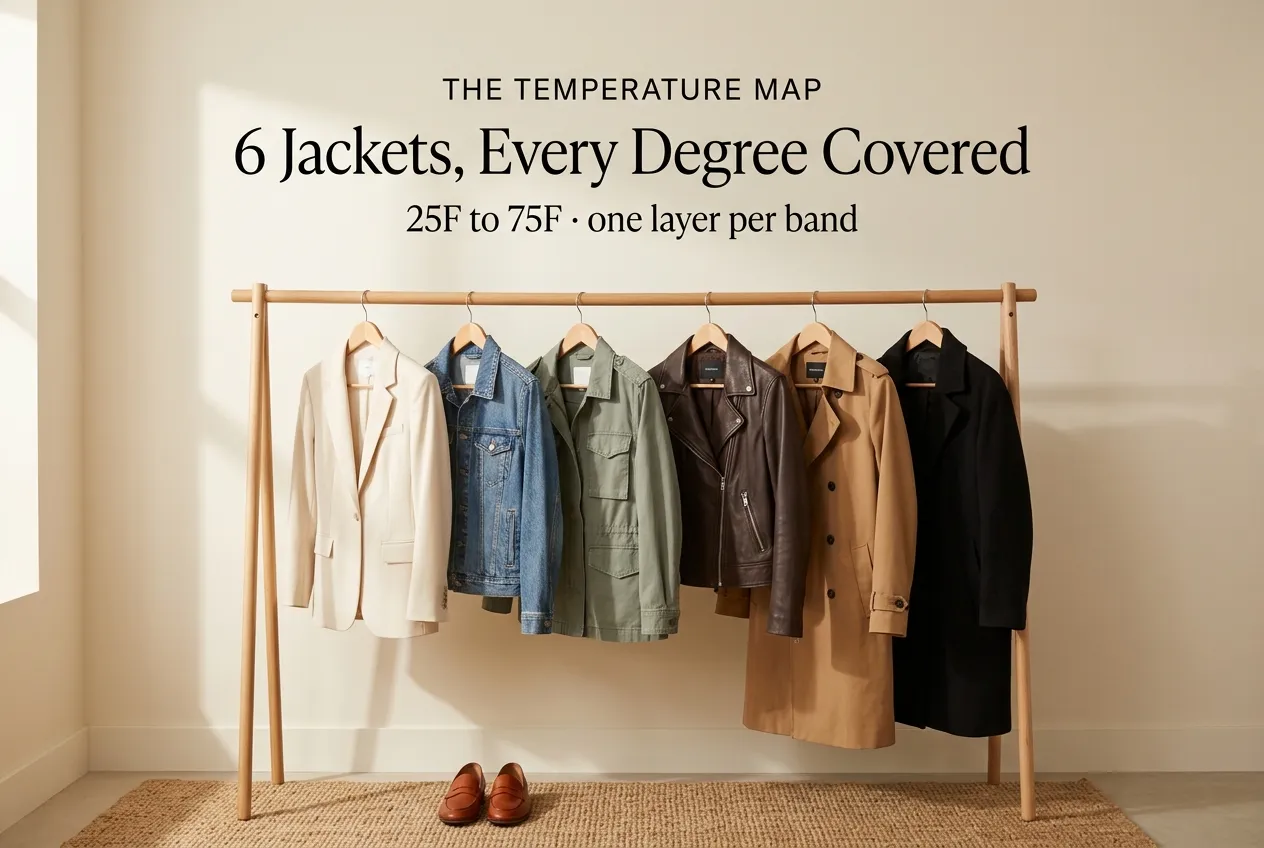
You own more jackets than you wear. Most of us do. The denim one from three summers ago, the blazer that fits everywhere except the shoulders, the puffer you grab because it’s closest to the door. Capsule wardrobe jackets aren’t about owning fewer coats for the sake of it. They’re about owning six that cover every temperature you’ll actually stand in, and knowing which one to reach for without thinking. That’s the promise here: a layer for every degree band, in the order worth buying them.
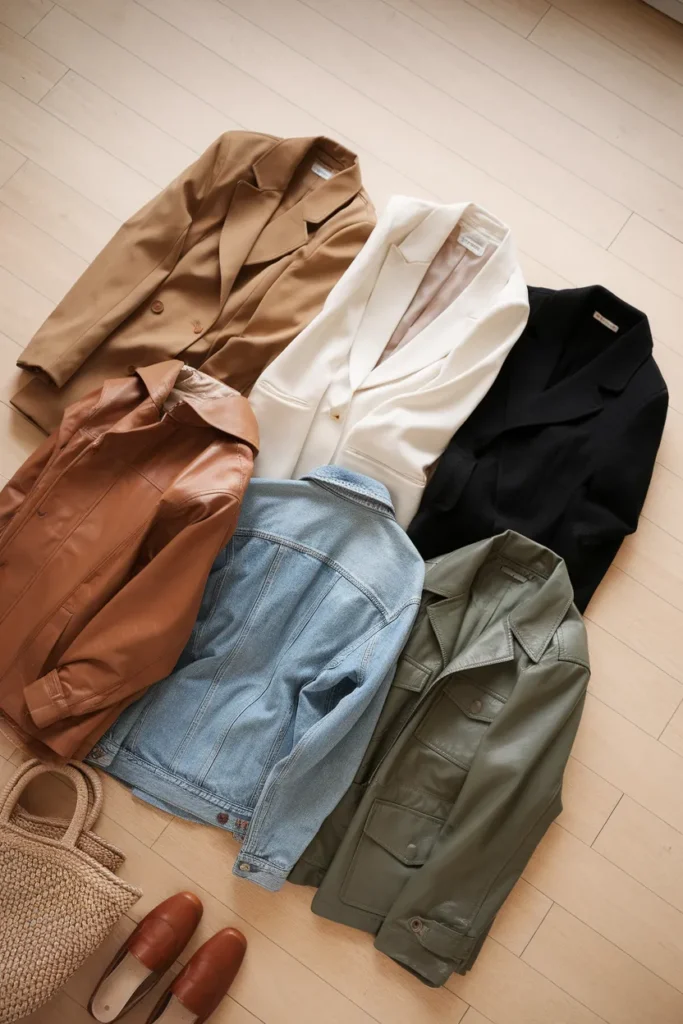
Why Your Jackets Fight Each Other Instead of Working Together
Here’s what usually goes wrong. You buy jackets one at a time, each one solving whatever the weather was doing that week. A cold snap in October gets you a puffer. A wedding in May gets you a blazer. By year three you own nine jackets and four of them cover the exact same fifteen degrees.
Nothing coordinates because nothing was chosen against anything else.
A capsule approach flips the order. You map the temperature range you actually live in, then buy one piece per band. Six pieces, no overlap, no gaps. Every jacket earns its hanger space by covering something none of the others can, and each one works over at least three things you already own.
If you’re building the whole closet and not just the outerwear, this slots into the 30-piece year round capsule wardrobe that works in every season as the layering section.
The Temperature Map: Which Jacket Covers Which Degrees
This is the part worth screenshotting. Six jackets, mapped to the degrees they actually handle, with what goes underneath.
| Outside temp | Reach for | Underneath |
|---|---|---|
| 70F and up | Blazer, worn open | Tee, tank, silk cami |
| 60 to 72F | Denim jacket | Tee, thin knit |
| 55 to 68F | Blazer, buttoned | Fine knit, button-down |
| 50 to 62F | Utility field jacket | Long sleeve, sweatshirt |
| 45 to 60F | Leather moto | Fine knit, turtleneck |
| 40 to 58F | Trench | Sweater, or the blazer |
| 25 to 45F | Wool coat | Chunky knit, or the blazer |
Notice the overlap between rows is intentional. Bands share a few degrees so you always have two valid choices and can pick on mood rather than necessity. Notice also what happens at the bottom: below about 25F, a wool coat stops being enough on its own, and cold-climate readers need a seventh piece. More on that in the FAQ.
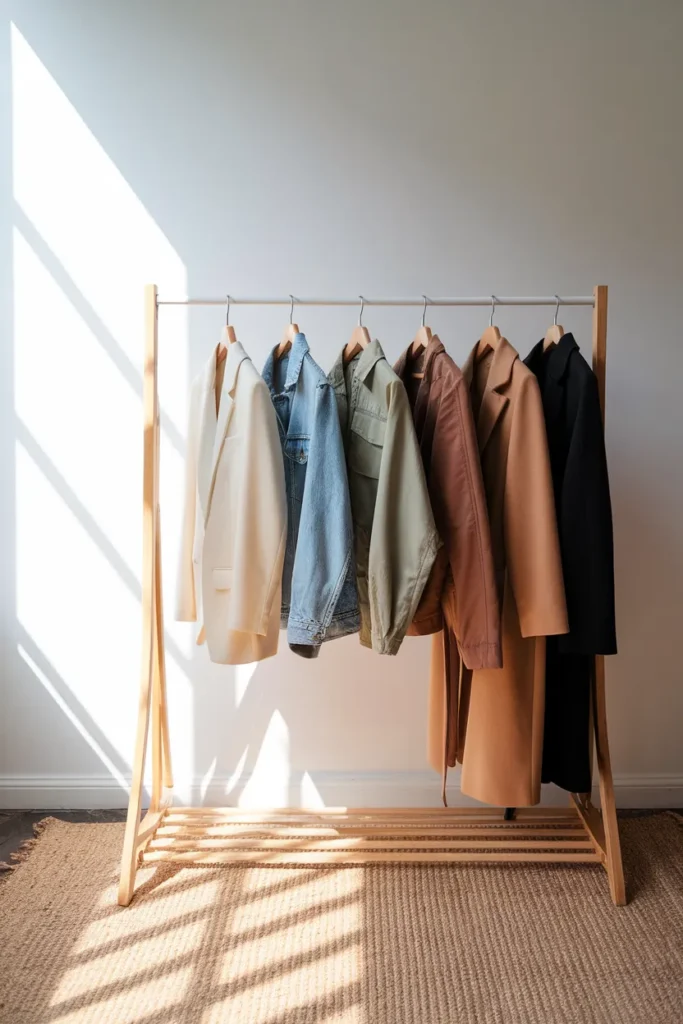
Jacket 1: The Tailored Blazer
If you only buy one piece from this list, buy this. A blazer is the only jacket here that works indoors, which means it doubles as a top on days nobody sees your outerwear at all. It reads finished over jeans and a tee at 68 degrees, and it layers under the wool coat at 35.
Look for a straight, slightly relaxed cut rather than something nipped hard at the waist. Roomy enough for a fine knit underneath, structured enough to sit flat under a coat. Check the lining: cupro, viscose, and silk breathe, and polyester doesn’t, which matters more than it sounds like it should on a warm afternoon.
Sleeve length is where most blazers fail off the rack. The cuff should stop at your wrist bone with a quarter inch of shirt showing. Tailoring a sleeve is inexpensive and it changes the whole silhouette.
Mid-tier options from Madewell, J.Crew, Banana Republic, and Everlane sit in a workable range, usually somewhere between the low and mid hundreds. Contemporary picks from COS and Sezane cost more and generally show it in the shoulder construction. If you’re building for the office specifically, the blazer does most of the heavy lifting in a business professional wardrobe of 15 essentials that actually mix and match.
Color: navy and charcoal read softer in daylight than black. Cream is beautiful and needs more dry cleaning than anyone admits.

Jacket 2: The Denim Jacket
The denim jacket does something none of the others do: it makes formal things casual. A midi dress in a denim jacket reads Saturday. The same dress in a blazer reads Tuesday meeting. That’s real range from one piece.
Wash matters more than cut. A medium-to-dark vintage blue works across the most outfits, since very light washes read summer-only and raw indigo can transfer onto cream trousers the first few wears. Skip heavy distressing if you want the jacket to still look intentional in five years.
Go for rigid cotton over stretch. Denim with a lot of elastane bags out at the elbows within a season and loses the structure that makes it interesting over soft fabrics. One hundred percent cotton is stiffer at first and better forever.
Fit note: buy it close through the shoulder and let the body sit easy. A denim jacket that fits like a shirt looks like a mistake, and one that swims on you loses the shape entirely. It should close over a tee and skim over a thin knit.
Old Navy, Gap, and Uniqlo all sit in the mass tier here, which is genuinely fine for denim. The trade-off at that price is usually thinner cotton and simpler interior seam finishing, so expect a little more fading and a little less body. Pair it with the seven jean styles worth the investment, keeping the washes at least two shades apart so the outfit doesn’t read as a set.

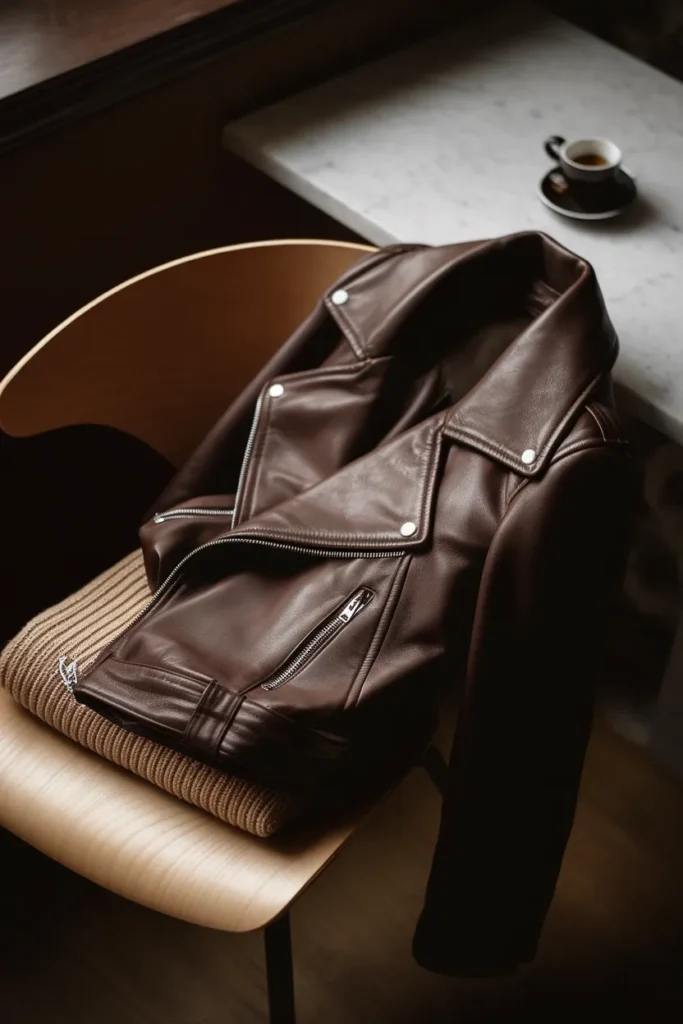
Jacket 3: The Leather Moto
Every capsule eventually feels a little too polite. A moto jacket is the fix. It’s the piece that keeps a closet of neutrals from reading like a uniform, and it does it through texture rather than color, which is why it stays easy to style.
Buy it snug. Genuine leather stretches and molds to your shape within a few months, so a moto that feels roomy in the fitting room will be shapeless by spring. Zip it fully closed before you decide.
Lambskin is soft immediately and drapes beautifully. Cowhide is heavier, stiffer, and lasts longer. Both are good answers to different questions. Avoid anything labeled bonded leather, which is scrap glued to a backing and will peel.
Hardware is the quiet decision. Silver reads more casual, gold reads dressier and warmer. Match it to the jewelry you actually wear and the jacket will look deliberate rather than assembled.
Real leather runs high, often several hundred dollars and up into the four hundreds and beyond at contemporary brands. A well-made polyurethane version from a mid-tier label costs a fraction and looks close for two or three seasons, with the honest trade-off that it won’t develop patina and won’t survive a decade. Buy the real one if this is a piece you’ll wear weekly. Buy the alternative if you’re testing whether it’s your style at all.
Jacket 4: The Utility Field Jacket
Here’s the band most closets miss entirely. Between roughly 50 and 62 degrees, a denim jacket isn’t enough and a wool coat is far too much. The field jacket lives exactly there, and once you own one you’ll wear it more days per year than anything else on this list.
Cotton canvas or heavy twill, in olive, sage, or khaki. Durable, spot-cleanable, and forgiving of a school run and a grocery trip on the same morning. Some versions come waxed for water resistance, which adds weight and a lot of longevity.
The risk with this shape is that it goes boxy. Look for an interior drawstring at the waist so you can pull in the middle when you want shape and leave it loose when you’re layering a sweater underneath. If yours doesn’t have one, a thin leather belt worn over the top does the same job.
Length is the other thing to check. Hip-length covers a longer tunic or an untucked shirt, which a cropped jacket won’t do, and it stops short of competing with your trench.

Jacket 5: The Trench
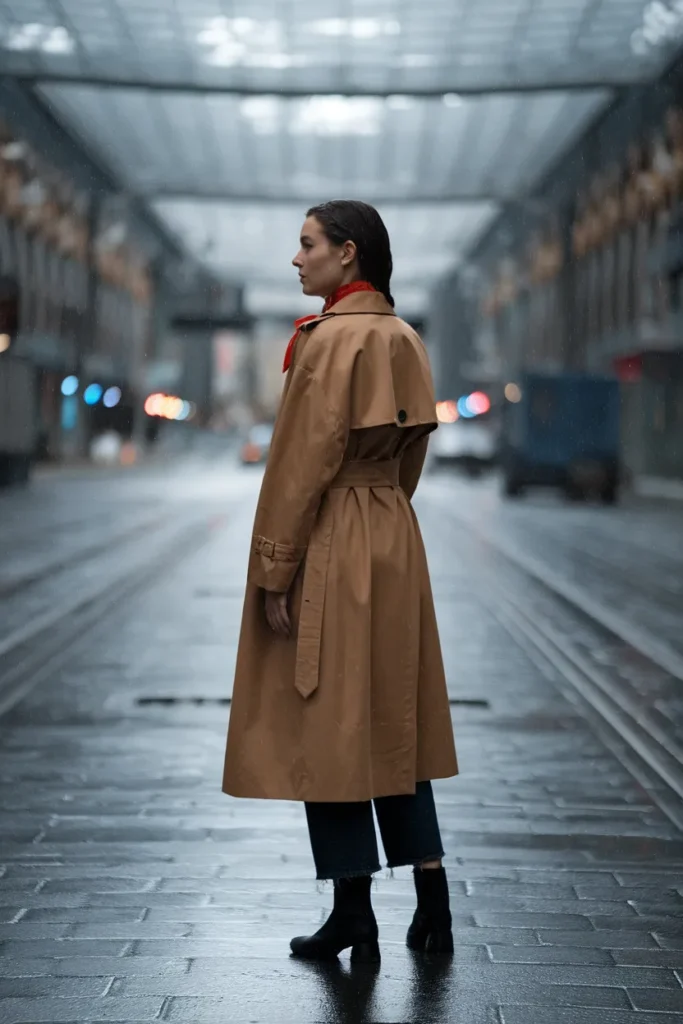
The trench covers 40 to 58 degrees better than anything else you can own, and it’s the single most useful piece in a transitional closet. Beige, stone, or soft khaki. Hem below the knee, since anything cropped at mid-thigh cuts the leg line and dates fast. Cotton gabardine over polyester, every time.
That’s the short version, because this one deserves more room than a section here can give it. We’ve broken down cut, belt placement, and which styles hold up across price tiers in the best trench coats for a capsule wardrobe, classic to modern.
One thing worth adding: if you’re layering a chunky knit underneath, try it on in store with an actual sweater. Trenches run trim through the upper arm more often than you’d expect.
Jacket 6: The Wool Coat
Winter is the season your coat becomes your outfit. People see it more than they see anything underneath, which is a decent argument for putting real money here.
Read the fiber content before anything else. You want at least 70 to 80 percent wool or cashmere. Melton wool is dense, wind-resistant, and lasts. Cashmere is lighter and warmer and more delicate. A small percentage of nylon, up to about 20, actually strengthens the fabric and reduces pilling, so it isn’t a red flag on its own.
Single-breasted and wrap styles layer under less bulk than double-breasted ones, and the hem should clear your longest skirt or dress.
The full breakdown, including how the tiers actually differ, is in the best wool coats for a capsule wardrobe in 2026.
Quick test most people skip: sit down in it. Winter coats take their worst stress in a car seat or on a train, and if the hip pulls or the buttons strain when you sit, that’s where it’ll fail.

The Buying Order: Which One to Get First
Six jackets is a real amount of money. Nobody buys them in a weekend, so here’s the sequence that gets you dressed fastest for the least spent.
Start with the gap, not the list. Open the temperature map above and find the band your closet doesn’t cover. That’s your first purchase, whatever it happens to be. Buying a blazer when you already own two is how the pile grows.
If your closet has no real pattern yet, use these defaults:
Four-season climate (most of the Midwest, Northeast, and Mid-Atlantic): blazer, then trench, then wool coat, then field jacket, then denim, then moto.
Mild climate (much of California, the Gulf South, the Southwest): blazer, then denim, then trench, then field jacket. Delay the wool coat, and consider skipping it for a heavier trench or a quilted layer instead.
Cold climate (Upper Midwest, Mountain West, northern New England): wool coat first, no debate, then blazer, then trench, then field jacket, then denim, then moto.
Buy the first two well and the last two cheaply. The pieces you wear ninety days a year justify the cost per wear. The ones you reach for a dozen times don’t.
Outfit Math: How Six Jackets Become Thirty Outfits
The point of a capsule isn’t the pieces. It’s the multiplication.
Take five base outfits you already wear. Jeans and a white tee. Trousers and a fine knit. A midi dress. A skirt and a button-down. Leggings and a long sweater. Now add a jacket to each. Six jackets across five bases gives you thirty distinct looks, and most of them read as genuinely different outfits rather than variations.
The reason it works is that each jacket carries a different register. Blazer over the midi dress reads polished. Denim over the same dress reads weekend. Moto over it reads evening. One dress, three moods, no new purchases.
Keep the jackets in your neutral base so the multiplication holds. If five of six are neutral and one carries your accent color, every combination lands. The mechanics of that are in how to pair neutral colors so every outfit looks pulled together.
Fit Notes by Proportion
What works with your proportions matters more than any rule about which jacket is universally correct.
Petite (5’4″ and under): look for cropped or hip-length rather than mid-thigh, which tends to swallow the leg line. Many brands run a petite line in blazers and trenches specifically, and the shoulder seam placement is the real difference, not just the sleeve.
Tall (5’9″ and over): the common problem is sleeve and hem, not width. Tall sizing in trenches and wool coats is worth hunting for, since a trench that hits mid-thigh on you was designed to hit below the knee.
Curvy and hourglass: single-breasted coats and belted trenches work with the waist you already have. Look for jackets with a defined waist seam rather than a straight tube shape.
Pear: field jackets and moto jackets that end at the high hip sit better than ones that end at the widest point.
Apple and rectangle: open-front blazers and unbelted trenches create a long vertical line. A drawstring waist on a field jacket lets you decide how much shape you want on a given day.
Midsize and plus-size: shoulder fit is the one thing tailoring can’t fix cheaply, so buy for the shoulder and adjust everything else. There’s more on sizing between standard ranges in building a midsize capsule wardrobe that fits between sizes.
Over 40 and over 50: nothing on this list changes. Fabric quality tends to matter more to how a jacket reads over time than any cut does.
Read the Label Before You Read the Price Tag
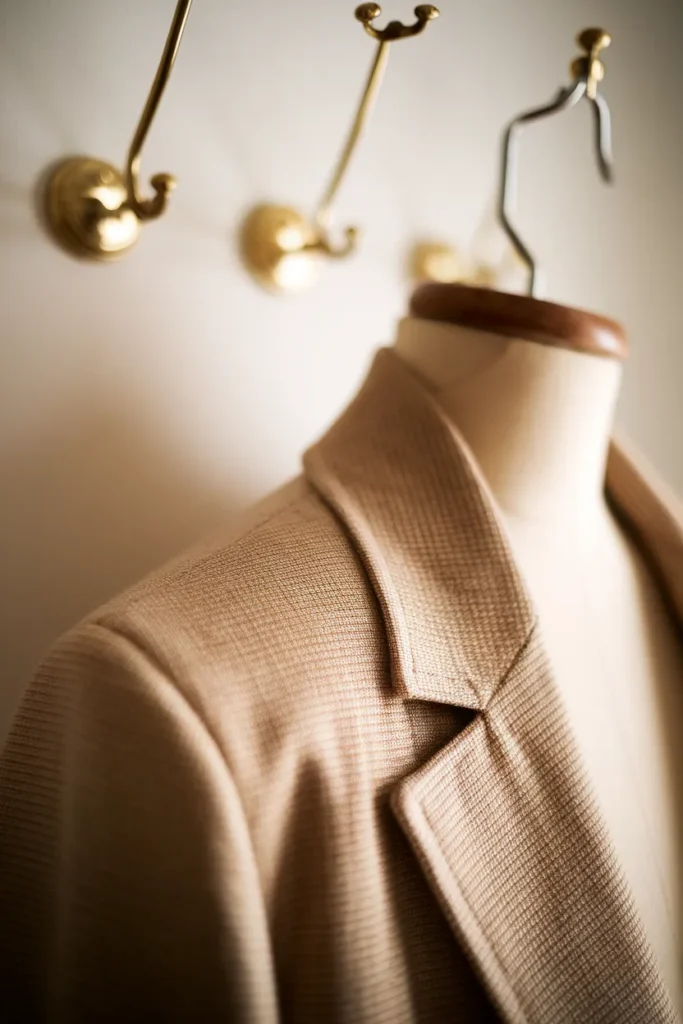
Fiber content tells you more about how a jacket will age than the price does. A wool blend at 80 percent will hold its shape through years of winters. The same coat at 30 percent wool and 70 percent polyester will pill by February.
In the US, that information has to be there. Under federal fiber content labeling rules, most textile and wool garments sold here must carry a label listing fiber content, country of origin, and the business responsible for the product. Worth knowing: trim, and linings that aren’t there for warmth, generally don’t get counted in that percentage, so a coat’s stated content describes the shell.
Two minutes with the label saves you a season of disappointment.
What to Do With the Jackets You Already Own
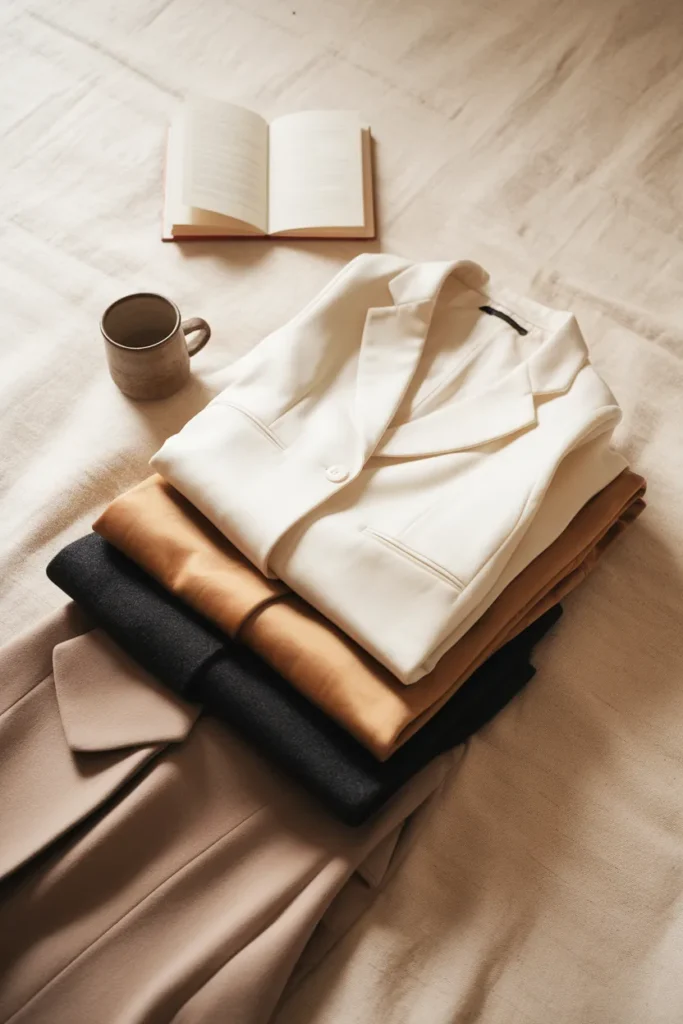
Before you buy anything, pull every jacket out of the closet and lay them on the bed. Then sort them into three piles: covers a temperature band, duplicates something else, hasn’t been worn in two years.
The duplicates are the interesting pile. Most people find two or three jackets covering the same fifteen degrees, and keeping the best one frees both hanger space and mental space.
For what leaves, resale and donation both beat the trash by a wide margin. According to the EPA’s textile data, Americans generated about 17 million tons of textiles in 2018 and recycled only 14.7 percent of it, with more than 11 million tons going to landfill. Buying fewer and wearing them longer is the part of this that actually moves the number.
Frequently Asked Questions
How many jackets do I actually need in a capsule wardrobe? Most people are well covered by four to six, depending on climate. Four works in a mild region. Six covers a genuine four-season year. If you live somewhere that drops below 25F regularly, add a seventh insulated layer, since a wool coat alone stops being enough at that point.
Which one should I buy first if I can only buy one? The blazer, in most climates, because it’s the only piece here that works indoors as a top and outdoors as a layer. In a cold region, buy the wool coat first instead. Nothing else keeps you warm in January.
What if I live somewhere warm year round? Skip the wool coat entirely and buy a heavier trench or a quilted layer for your coldest weeks. The blazer, denim jacket, and field jacket will cover most of your year. Choose unlined or cotton-linen blend versions where you can find them, since lined wool in a warm climate mostly hangs unused.
Can I wear a denim jacket to the office? In a creative or business-casual office, yes. Choose a dark uniform wash with no distressing, and pair it with tailored trousers rather than jeans so the outfit doesn’t read as double denim. In a formal office, the blazer is the safer call.
What should I spend on a leather jacket? Genuine leather typically starts in the mid hundreds and climbs from there. A good polyurethane version costs a fraction and looks convincing for a couple of seasons. If you’ll wear it weekly, the real one wins on cost per wear inside about three years. If you’re still deciding whether it’s your style, start with the alternative.
Do these work if I’m petite? Yes, with attention to length and shoulder seam. Cropped and hip-length cuts generally sit better than mid-thigh, and a true petite line adjusts the shoulder placement rather than just shortening the sleeve, which is the difference that matters.
How long should a good jacket last? A well-made wool coat or trench should give you eight to ten years with basic care. Leather lasts longer and looks better with age. Denim is somewhere in the middle. Use a fabric shaver on wool once a month, refresh water resistance on the trench and field jacket each season, and hang heavy coats on wide wooden hangers so the shoulders keep their shape.
Start With the Gap
You don’t need six jackets by Friday. You need to know which band your closet doesn’t cover, and buy that one next.
Pull everything out this weekend and lay it against the temperature map. Most closets turn out to have three jackets doing one jacket’s work and a forty-degree gap nobody noticed. Fix the gap, edit the duplicates, and getting dressed in October stops being a decision at all.
Save the map for the next time you’re standing in a fitting room wondering whether you already own something like this.
Keep reading

The 8 Capsule Wardrobe Tops That Anchor Every Outfit You Own
You have more tops than anything else in your closet. You also have the least to wear. That contradiction is what sends...

Capsule Wardrobe Accessories: The Small Pieces That Change Everything
You built the capsule. Thirty pieces, mostly neutral, all of them things you actually like. And getting dressed is faster now, which...

The Best Ankle Boots for a Capsule Wardrobe
You know the drill. Your closet is full, the weather just turned, and you still reach for the same tired pair every...