
Capsule Wardrobe Shoes: The 7 Pairs That Cover Everything
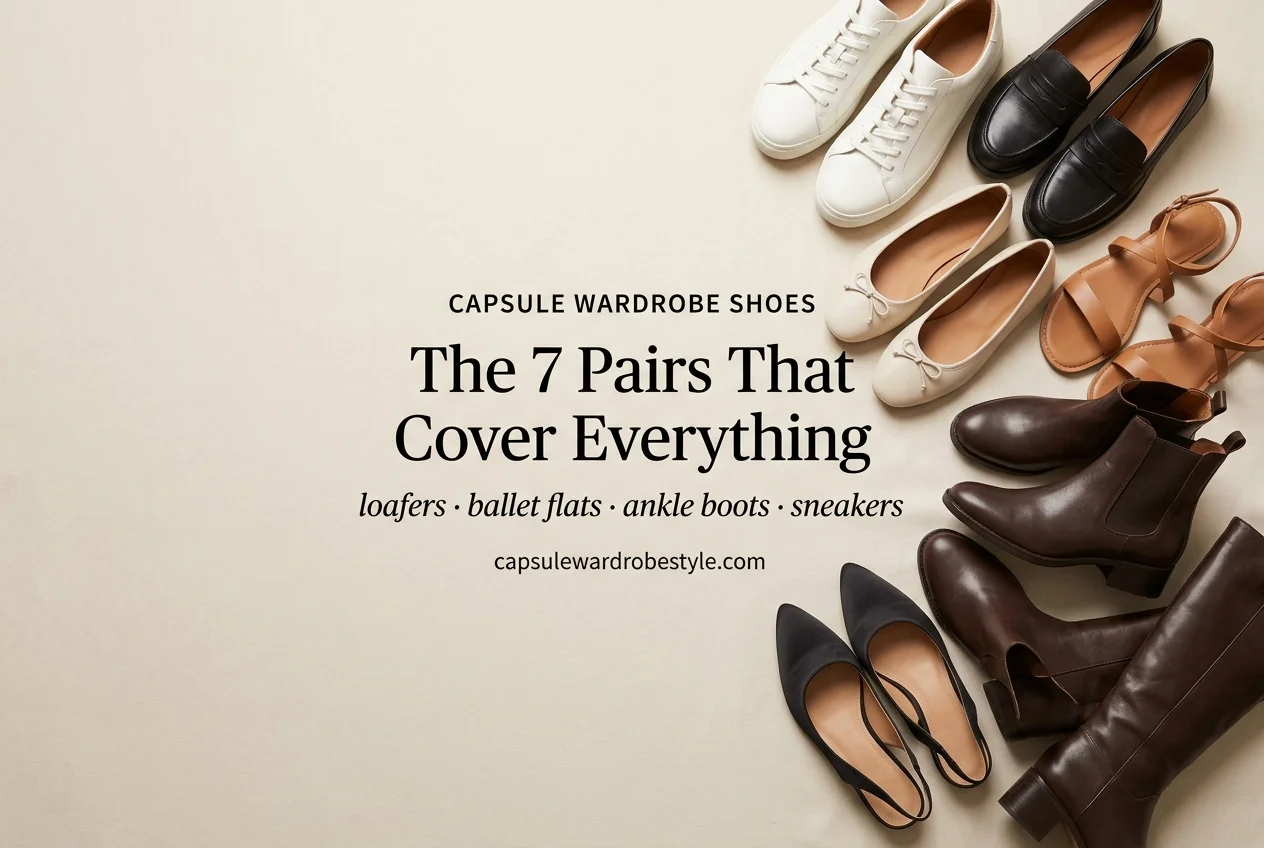
Capsule wardrobe shoes are the part of the closet edit almost everyone skips. You can get the tops right, get the trousers right, build a whole neutral palette you actually like, and still stand in the doorway on a Tuesday morning with nothing on your feet that works with any of it.
Seven pairs solve that, as long as each pair owns a job no other pair covers as well. Below is the exact lineup, the order to buy it in, and a grid that proves it covers a real week.
What Makes a Shoe Capsule Different From Owning Fewer Shoes
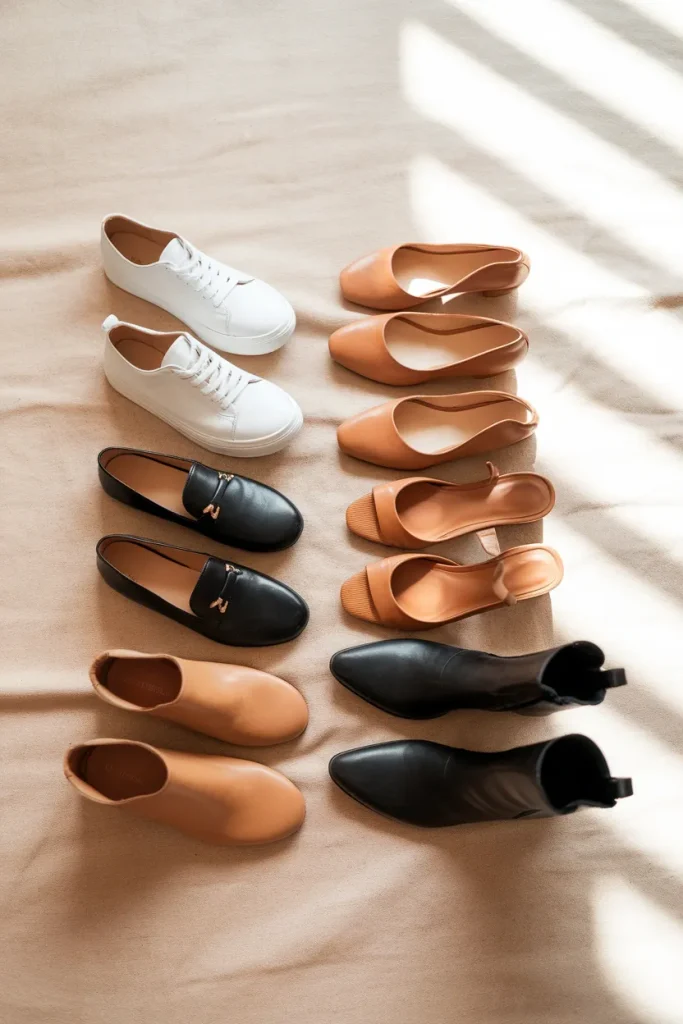
Subtraction alone does nothing. Cut your rack from twenty-two pairs to seven and you can still end up with seven pairs that all do the same thing, which is how you get four versions of a black bootie and no sandal that works with a dress.
Rule one: every pair gets a job. Walking days, put-together days, dress days, cold days, hot days, occasion days, weather days. When a pair has no job, it goes. When two pairs share a job, the better one stays.
Rule two: every pair has to work with at least two thirds of your bottoms. Run it literally. Pull your jeans, your trousers, your midi skirt, and your two dresses, then hold each shoe against all of them. Anything that only works with one bottom is a costume.
Money makes this less abstract. US households spent an average of $2,001 on apparel and services in 2024, according to the Bureau of Labor Statistics, down about 2 percent from the year before.
That spending is already happening. A capsule points it at seven pairs that compound instead of fifteen that cancel each other out.
The Four Everyday Pairs That Do Most of the Work
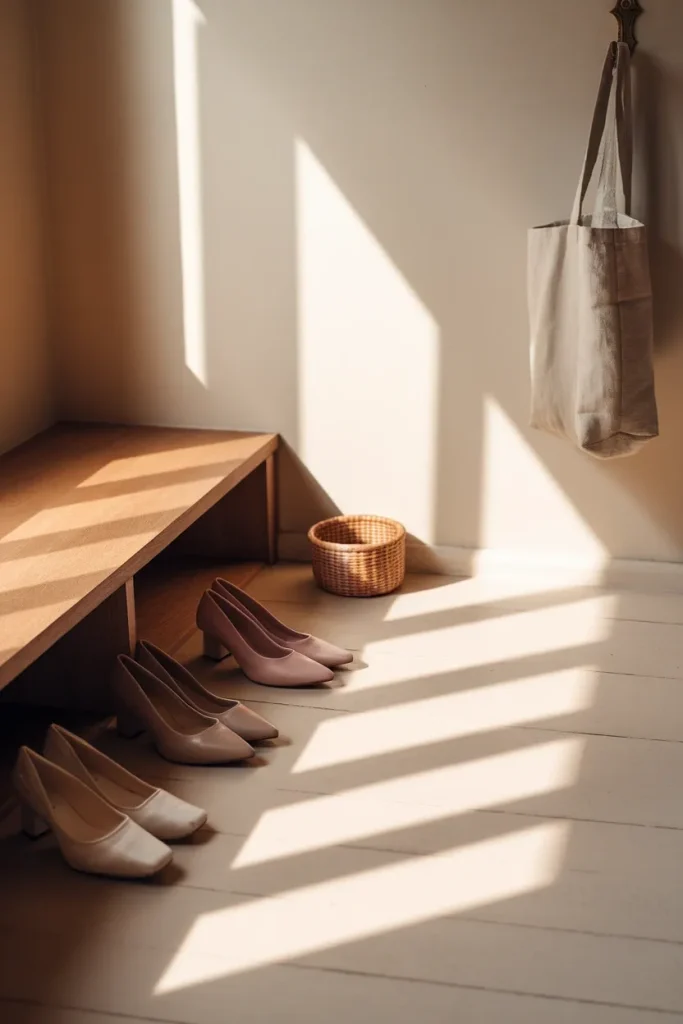
These four cover the ordinary week. Buy them properly and the last three become easy.
1. White Leather Sneakers
Job: walking days, errand days, anything where you are on your feet for hours.
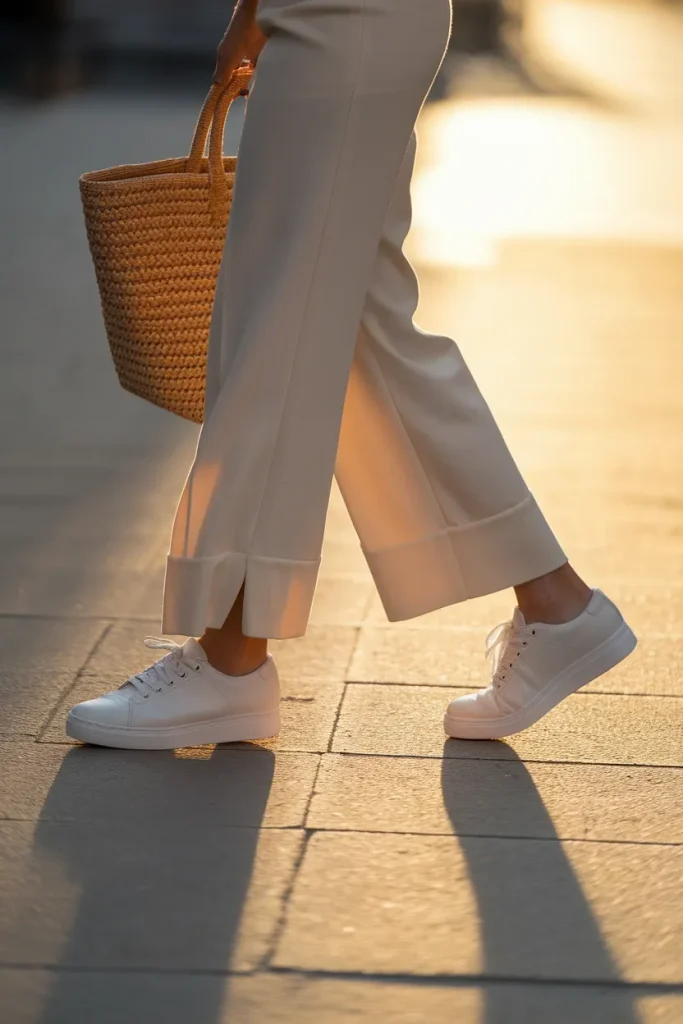
Buy leather over canvas. Leather wipes clean with a damp cloth, holds its shape through a wet commute, and reads polished enough to wear with wide-leg trousers instead of only with jeans. Canvas grays out after one rainy season and never fully comes back.
Low profile matters more than brand. A slim sole keeps the sneaker wearable with tailoring, while a chunky runner sole locks it to athleisure and kills half its range.
Mass options at Adidas, Target, and Amazon Essentials run roughly $40 to $110. Mid-tier picks from Everlane, Madewell, and Quince sit near $90 to $170. Veja lands around $150 to $200, and Common Projects starts around $550, where the honest gain is finish rather than function.
Keep white to this one pair. A second white shoe duplicates a job that is already covered.
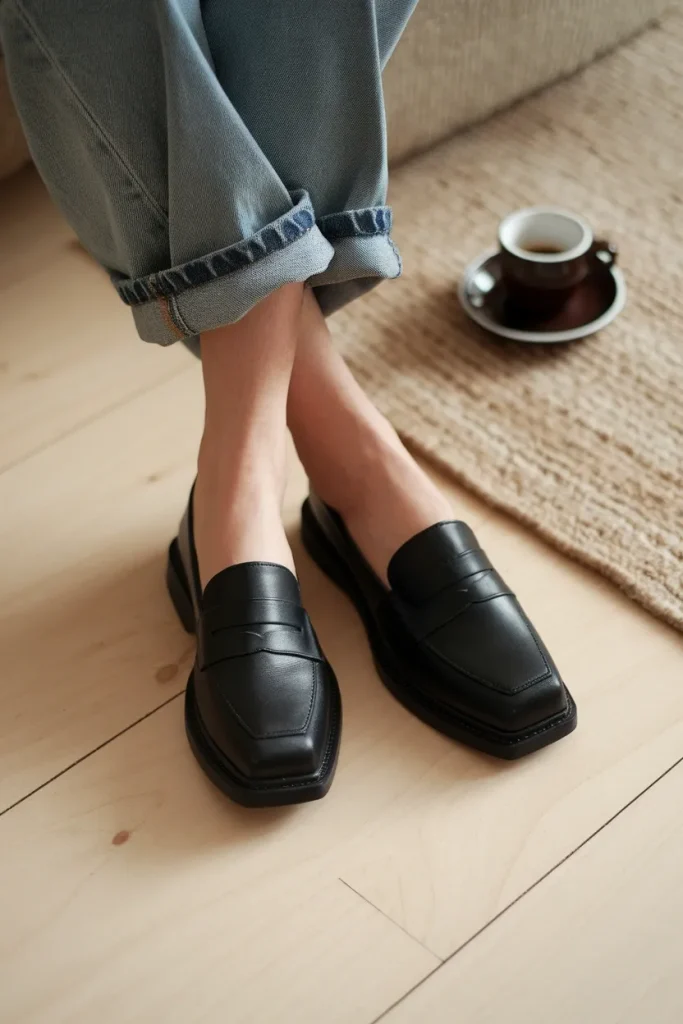
2. The Loafer
Job: looking put together with no effort at all.
The loafer earns its place faster than anything else here because it swings between business casual and Saturday without changing register. Slip it on with jeans and the outfit reads deliberate. Slip it on with trousers and it reads like you planned the day.
Shape is where this goes wrong. Go almond toe, low vamp, thin or modestly stacked sole.
Lug soles had a long run and are cooling off for fall 2026, so a chunky-soled loafer bought today will look dated by next spring while a slim one will not.
Mass options at Target and Old Navy land between $35 and $50, with a real trade-off in insole padding and sole flex. Sam Edelman and Madewell generally run $128 to $170. Contemporary picks at COS, Sezane, and Vince sit from $200 up past $400.
For the full breakdown by shape, sole, and price tier, we went deep on the best loafers for women, chosen the capsule way.
3. The Ballet Flat
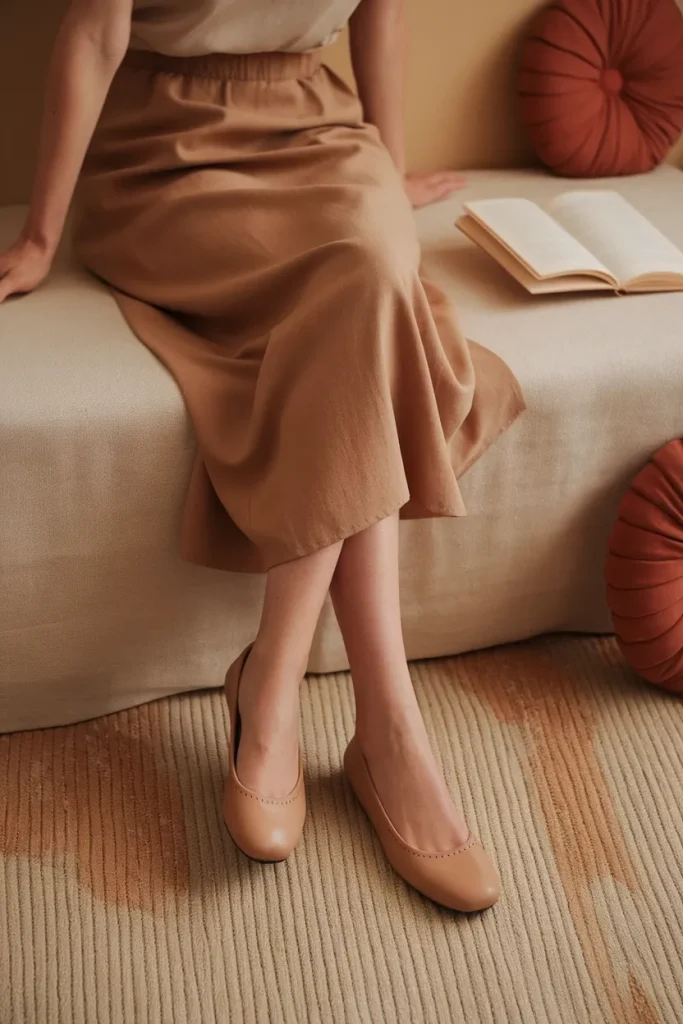
Job: dresses, skirts, and any day your feet have already had enough.
The ballet flat is what makes a midi skirt work without heels. It keeps the leg line clean where a sneaker interrupts it and a boot swallows it. Choose a rounded or softly squared toe in bone, cream, or soft tan, and skip buckles and hardware that date fast.
Two fit notes worth knowing. Leather stretches to your foot within a week or two of wear, while suede barely stretches at all, so buy suede at your true size and buy leather snug rather than roomy.
The second one matters if you are 5’4″ or under. A flat with a low vamp, meaning one that shows more of the top of the foot, lengthens the leg. A high vamp that cuts straight across the instep shortens it.
Mass options at Target and H&M run $25 to $45 and tend to arrive with a thin unlined footbed that flattens fast. Everlane, Madewell, and Quince sit near $80 to $150. Margaux, Sezane, and Reformation run $200 to $350, where the gain is a leather-lined footbed and a sole that can be repaired.
4. The Flat Sandal
Job: summer’s version of the loafer.
From May through September this pair makes an outfit look finished with no effort. Go leather, go simple, and pay attention to strap architecture.
A single wide band across the foot photographs beautifully and slides off at every crosswalk. Two points of contact, one across the foot and one at the ankle or between the toes, actually stays on.
Tan and bone are the two that pull weight, and tan is the more versatile of the two.
Target and Old Navy hover around $25 to $40 in synthetic, which is fine for a beach week and less fine for a city summer, because synthetic footbeds never mold to the foot and start to slip once they get damp. Madewell and Everlane sit near $80 to $130. Sezane and Reformation run $200 to $300.
The Three Pairs That Handle Everything Else
Four pairs cover the ordinary week. These three cover the rest of your life, which is where most closets fail.
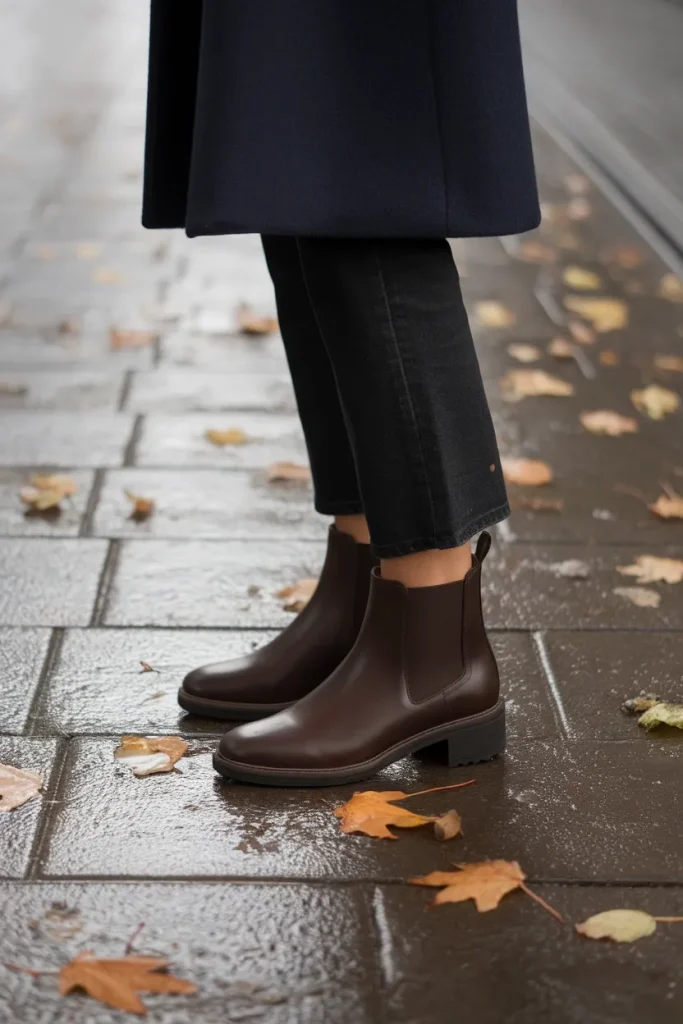
5. The Ankle Boot
Job: cold-weather jeans and trousers, September through March.
Shaft height is what makes or breaks an ankle boot. A shaft that hits at the narrowest part of the ankle lengthens the leg, while one that sits an inch higher, on the wider part of the calf, cuts it short. Almond or softly squared toe again, and a heel between flat and two inches so you can walk to the parking garage.
Chelsea styles are the easiest to wear because the elastic gore does the fitting for you and they pull on in seconds. Zip styles win if your calves or insteps run fuller, since a zip adjusts and elastic does not.
Keep the sole slim for the same reason the loafer stays slim. Mass options run $50 to $90, mid-tier picks from Madewell, Everlane, and Quince sit between $130 and $250, and contemporary boots at COS or Vince climb past $300.
Our shape-by-shape guide covers the rest: the best ankle boots for a capsule wardrobe.
6. The Slingback or Low Heel
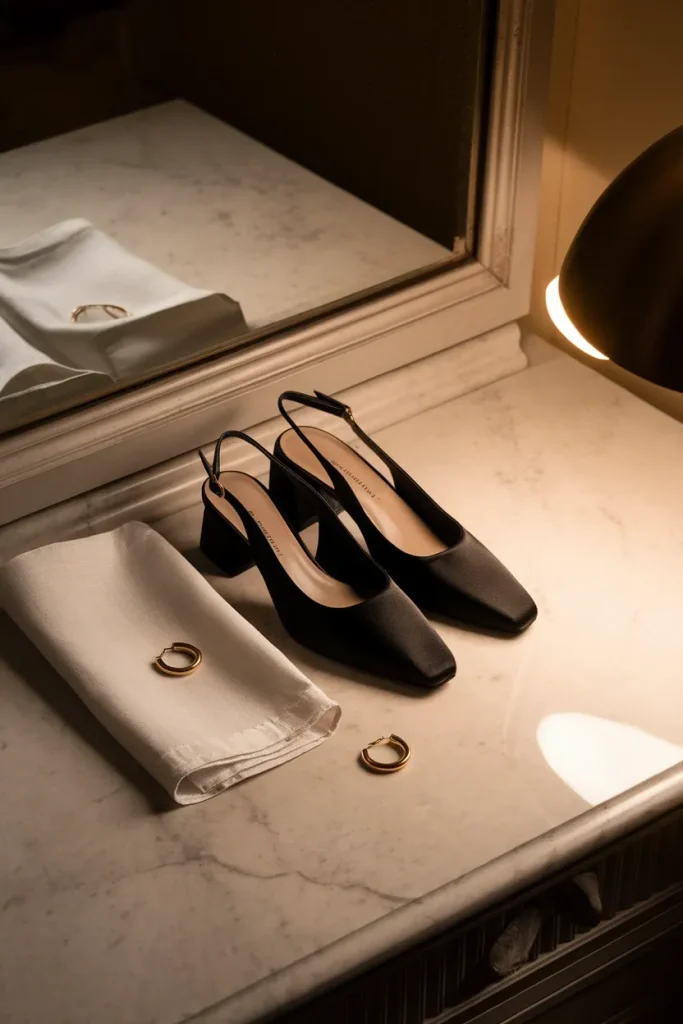
Job: the occasion, without the pain.
Every capsule needs one pair that handles a wedding, a client dinner, a funeral, a nice restaurant, and an interview. It does not need to be a stiletto.
A slingback or a low block heel between 50 and 65 millimeters, roughly two to two and a half inches, is the sweet spot. High enough to change the line of a trouser, low enough to stand in for three hours.
Black patent used to be the default here. Patent is fading for fall 2026 while satin is rising, so matte leather or a soft satin in black, bone, or navy is the safer buy.
Wide feet do better in an almond or squared toe than a sharp point, and a slingback strap that sits below the ankle bone rather than across it stays put. Banana Republic and J.Crew land near $100 to $180. COS and Sezane run $200 to $350.
Buy this one in the fall even if the occasion is in June. Occasion shoes bought two days before an event are how people end up with something that works once.
7. The Tall Boot
Job: skirts and dresses when it is genuinely cold.
Most people skip this pair and then miss it every November, because without it a midi skirt becomes summer-only clothing. A knee-high in espresso or black turns every dress and skirt you own into cold-weather clothing, which is the biggest single range increase any one shoe can deliver.
Calf width is the whole game. Standard shafts are typically cut for a 14 to 15 inch calf, and a boot that pinches at the top will never be comfortable no matter how good the leather is. Measure the widest point of your calf with a soft tape before you order, and buy from brands that publish shaft circumference.
Wide-calf options start near $60 at mass retailers and run past $300 in the contemporary tier. Riding-boot shapes with a flat or low heel read the most timeless. Western is having a strong fall 2026 moment, which is fun, and also the reason it is a poor choice for the one tall boot in a seven-pair capsule.
The Coverage Grid: Proof That Seven Pairs Handle a Real Week
A list of styles means nothing until you map it against the days you actually live. Screenshot this one.
| Occasion | Sneaker | Loafer | Ballet flat | Sandal | Ankle boot | Slingback | Tall boot |
|---|---|---|---|---|---|---|---|
| Errands, school run, long walk | Yes | Yes | Yes | Yes | |||
| Office or business casual | Yes | Yes | Yes | Yes | Yes | ||
| Working from home, lunch out | Yes | Yes | Yes | Yes | Yes | ||
| Weekend brunch | Yes | Yes | Yes | Yes | Yes | ||
| Dinner out | Yes | Yes | Yes | Yes | Yes | Yes | |
| Wedding or event | Yes | Yes | |||||
| Travel day | Yes | Yes | Yes | ||||
| Rain or slush | Yes | Yes | |||||
| Cold-weather skirt or dress | Yes | Yes |
Read down the columns and the hierarchy shows itself. The ankle boot clears eight of nine occasions and the loafer clears six, which makes those two the pairs to spend real money on. The slingback clears only three, and one of them is the occasion where being underdressed actually costs you something, so it earns its place on stakes rather than on frequency.
Read across the rows and the gaps show up too. Rain and cold-weather dressing both lean on two pairs, so if you live somewhere genuinely wet, that ankle boot needs to be leather with sealed seams rather than suede.
Now check the sneaker, loafer, and ankle boot together. That trio covers eight of the nine rows on its own, and the only row it misses is the wedding.
Which is why those three are also the travel set: they handle walking days, dinners, and cold or wet weather, and one of them stays on your feet in transit. If you are packing around them, our guide to comfy travel outfits that still look good covers the rest of the suitcase.
Buy Order: What to Get First When You Cannot Buy All Seven
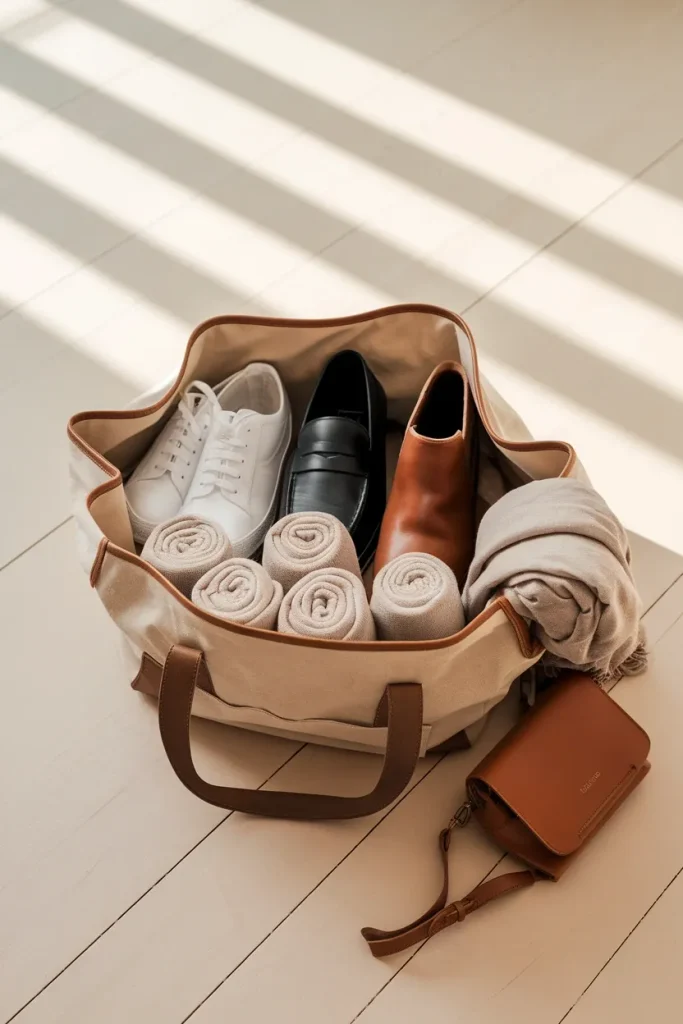
Nobody builds this in one trip. Buy in this order and the capsule stays functional at every stage instead of only at the end.
- Loafer. Six of nine occasions, and the widest swing between casual and dressed.
- White leather sneaker. Covers the highest-mileage days.
- Ankle boot. Eight of nine occasions, but seasonal, so buy it in August or September when the selection is widest.
- Ballet flat. Puts every skirt and dress you already own back into rotation, and it is the pair that finally covers the wedding row.
- Flat sandal. Buy in April, while sizes are still in stock.
- Slingback. Buy before you need it.
- Tall boot. The most expensive per occasion and the last to earn its place.
Working with a small budget, start with three: a mass-tier sneaker around $60 to $100, a mid-tier loafer on sale around $90 to $130, and a mid-tier ankle boot around $110 to $150. That comes to roughly $260 to $380, and it clears eight of the nine rows above. Add the ballet flat next season, somewhere between $80 and $150, and you are at full coverage for around $340 to $530 total.
One thing that changes the math. Shoes only look expensive next to clothes that fit, so a $300 boot under a boxy, ill-fitting top still reads cheap. The eight capsule wardrobe tops that anchor every outfit are worth sorting before you spend big on footwear.
The Neutral Base That Makes Shoes Mix
Color is where a seven-pair capsule either clicks or falls apart. What works is a three-part structure: two dark bases, one light neutral family, and white.
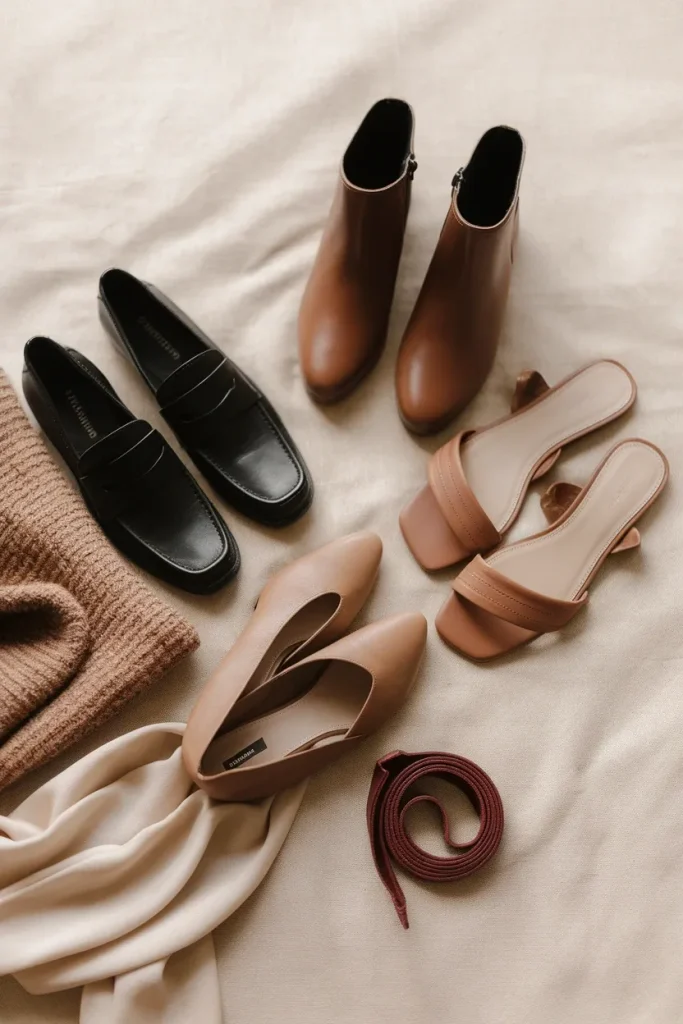
Two dark bases. Black and espresso brown is the most forgiving pairing. Black and cognac is warmer and sits beautifully against camel, oat, and cream. Espresso and cognac together is the trap, because two mid-browns sitting that close together read as a mistake rather than a choice.
Your loafer, slingback, ankle boot, and tall boot all live here.
One light neutral family. Anywhere from bone to tan, and it goes to the ballet flat and the sandal. Both read as an extension of the leg rather than a hard stop at the ankle, which lengthens the line under dresses and cropped trousers. A black flat with bare legs does the opposite, which is worth knowing if you are petite and wondering why an outfit looks shorter than it did in your head.
White. The sneaker, and only the sneaker.
Counted out, that is four pairs across your two dark bases, two in the light neutral family, and one in white. Call it four, two, and one.
Undertone decides which dark pairing suits you. Cool skin tones look sharper in black and gray-brown, while warm tones come alive in cognac, camel, and espresso. If you have never checked which camp you sit in, run a color analysis test at home first, because it makes every shoe decision after it faster.
Fit, Sizing, and the Cost-Per-Wear Math
Cost per wear settles the cheap-versus-expensive argument, though most people run it backwards. Wear frequency is the input that decides everything, and price is only the other half of the fraction.
Run it on a high-frequency pair. An ankle boot worn three times a week for five months is about sixty wears a year. Over three years that is 180 wears, so a $170 boot costs 94 cents a wear and a $250 boot costs $1.39.
Both are trivially cheap per use, which is exactly why the loafer, sneaker, and ankle boot are where your money should go.
Now run it on a low-frequency pair. A slingback worn fifteen times a year for three years is 45 wears. At $250 that is $5.56 a wear, and at $120 it is $2.67.
The same math that justifies spending on your boots argues against spending on your occasion heels.
That is the whole rule: spend on the pairs you wear constantly, save on the pairs you wear rarely. The tall boot sits in the second group alongside the slingback.
Fit determines whether any of it holds. Shop late in the day when feet have swollen slightly, measure both feet since most people have one that runs larger, and buy for the larger one. The American Podiatric Medical Association recommends having your feet professionally measured rather than assuming your size has held steady, and notes that running shoes should be replaced every 600 to 800 miles or every six to eight months, which is a useful benchmark for how hard your walking sneaker is working.
Between sizes, size down in leather and size up in suede or any lined boot. An elastic gore or stretch panel forgives far more width than soft leather will.
What Is Dating Right Now, and How to Buy Around It
A capsule is supposed to outlast the trend cycle, which means checking your seven against what is actually moving.
As of fall 2026, the styles cooling off are lug-sole loafers, chunky boots, patent finishes, croc embossing, studs and grommets, chunky nineties athletic runners, and Mary Jane heels. The styles rising are satin finishes, derby lace-ups, western boots, ballet sneakers, high-vamp heels, and finer embellishment.
Every one of those shifts touches a pair you already own, which is why the shape rules in each section above were written the way they were.
Slim over chunky on the loafer, the boot, and the sneaker. Matte or satin over patent on the slingback. Riding shape over western on the tall boot.
Follow those five calls and the cycle stops applying to you. The ballet flat and the flat sandal are pure shape and have been stable for decades.
Read the rising trends as fun rather than as capsule purchases. A western boot or a satin flat makes a great eighth pair once the seven are handled.
Until then, the faster way to make the same seven pairs feel new each season is to change what sits around them, which is exactly what capsule wardrobe accessories that change everything are for.
Care and Rotation: Making Seven Pairs Last
Seven pairs only works if the pairs survive. Three habits do most of the work.
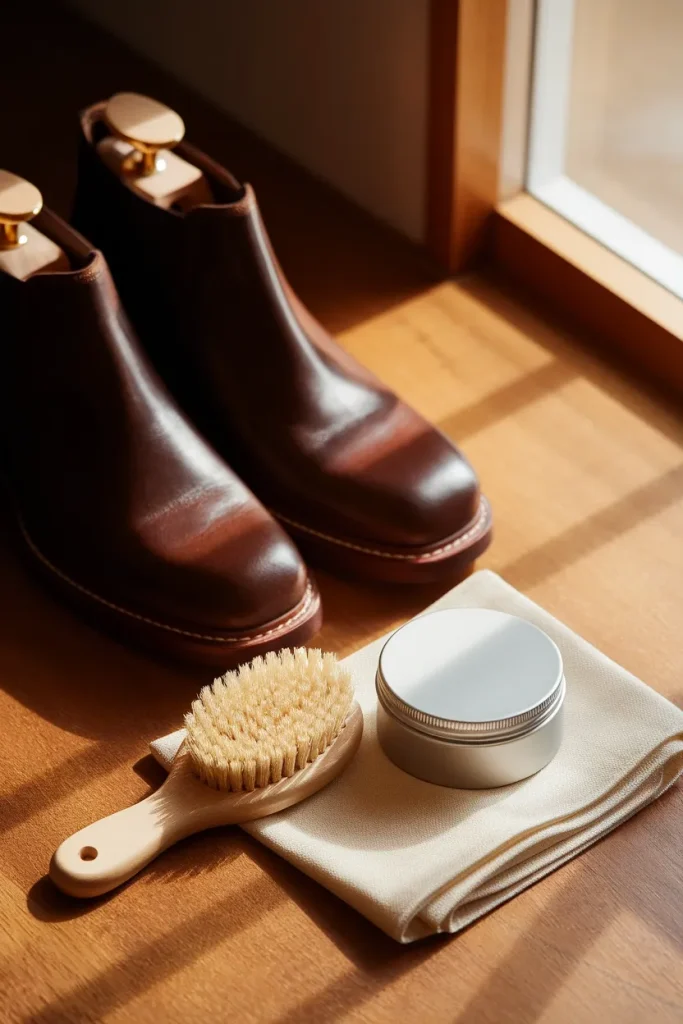
Rest each pair 24 hours between wears. Leather absorbs a surprising amount of moisture in a single day, and wearing the same boots two days running breaks down the lining faster than anything else you can do to them. With seven pairs in rotation this happens on its own.
Protect before the first wear, not after the first stain. Suede protector spray costs around $12 and the job is quick. Waiting until something happens is waiting too long.
Add rubber sole guards to leather-soled loafers and flats. A cobbler charges roughly $20 to $35, and it can double the life of the sole while adding grip, which matters more than it sounds like it should on wet tile. That grip is also what makes a leather-soled loafer safe to travel in, so you are not stuck leaving your best pair home.
A few weather rules close it out. Suede and road salt do not coexist, so keep suede out of slush entirely, and leather boots want conditioner twice a season.
Wet shoes dry at room temperature stuffed with newspaper or cedar trees, never on a radiator, because direct heat shrinks and cracks leather permanently. If you are building a whole cold-and-wet strategy, our guide to rainy day outfits that stay dry covers the rest of the outfit.
Frequently Asked Questions
How many shoes should a capsule wardrobe have? Usually seven to nine pairs for a year-round closet, and six if you live somewhere with a mild winter and skip the tall boot. The number matters less than the coverage. If your pairs clear every row in the grid above, you have enough. If three of your pairs all handle the same job, you have too many and a gap somewhere else.
What shoes work with trousers, dresses, and denim? The loafer and the ankle boot are the only two that genuinely clear all three. A ballet flat handles dresses and denim well and looks slightly under-scaled with wide-leg trousers. A sneaker handles denim and trousers and rarely works with a formal dress. If you want one pair that does the most, buy the loafer.
Which capsule shoes survive travel? Sneaker, loafer, ankle boot, for the reasons the grid lays out above. Swap the boot for the flat sandal on a warm-weather trip. Leave anything with a heel over two inches at home unless the trip has a specific event on the calendar.
Does this work for petite women? Yes, with one adjustment that applies across all seven pairs: match your shoe color to your hem or to your skin tone rather than introducing a contrasting color at the ankle, which stops the eye and shortens the leg. Tan and bone do this best with bare legs. Espresso and black do it best under dark denim and trousers.
Are the expensive pairs worth it, or is there a cheaper alternative? It depends entirely on how often you wear them, which is what the cost-per-wear section above works out in full. The short version: the loafer, sneaker, and ankle boot get worn enough that a $150 to $250 pair costs about a dollar a wear, so that is where the money belongs. The tall boot and slingback get worn rarely, so a $100 to $150 pick makes better sense there. Below about $50 the trade is almost always a thin unlined footbed and a stiff sole that never softens.
Can I wear these to an office? Five of the seven read as business casual with no effort: loafer, ballet flat, ankle boot, slingback, and tall boot. Sneakers work in a creative or relaxed office if they are clean leather in a slim profile. Flat sandals depend on your dress code, since open toes are still restricted in plenty of workplaces.
Do these work year-round, or do I need a separate summer set? No separate set needed. Four pairs run all twelve months (sneaker, loafer, ballet flat, slingback), the sandal covers May through September, and the two boots cover September through March. That overlap is deliberate, so you are never rebuilding from scratch when the season turns.
Seven Pairs, and You Are Done Rebuilding Every Season
What makes this stick is simple. Every pair has a job it owns outright, so the morning question shrinks from twenty options down to two, and both of them work.
The grid is the part worth keeping. Save it to your phone, and when something catches your eye in a store window, check which row it covers. If it is a row you have already handled, it goes back on the shelf.
That single habit is what keeps a closet from drifting back to twenty-two pairs, and it costs nothing.
If you are building the rest of the closet around these seven, the tops and the accessories are the next two pieces to sort. Both change how the shoes read far more than an eighth pair ever would.
Keep reading

The 8 Capsule Wardrobe Tops That Anchor Every Outfit You Own
You have more tops than anything else in your closet. You also have the least to wear. That contradiction is what sends...

The 6 Capsule Wardrobe Jackets That Actually Earn Their Hanger Space
You own more jackets than you wear. Most of us do. The denim one from three summers ago, the blazer that fits...

Capsule Wardrobe Accessories: The Small Pieces That Change Everything
You built the capsule. Thirty pieces, mostly neutral, all of them things you actually like. And getting dressed is faster now, which...
2 Comments