
Business Professional Wardrobe for Women: 15 Essentials That Actually Mix and Match
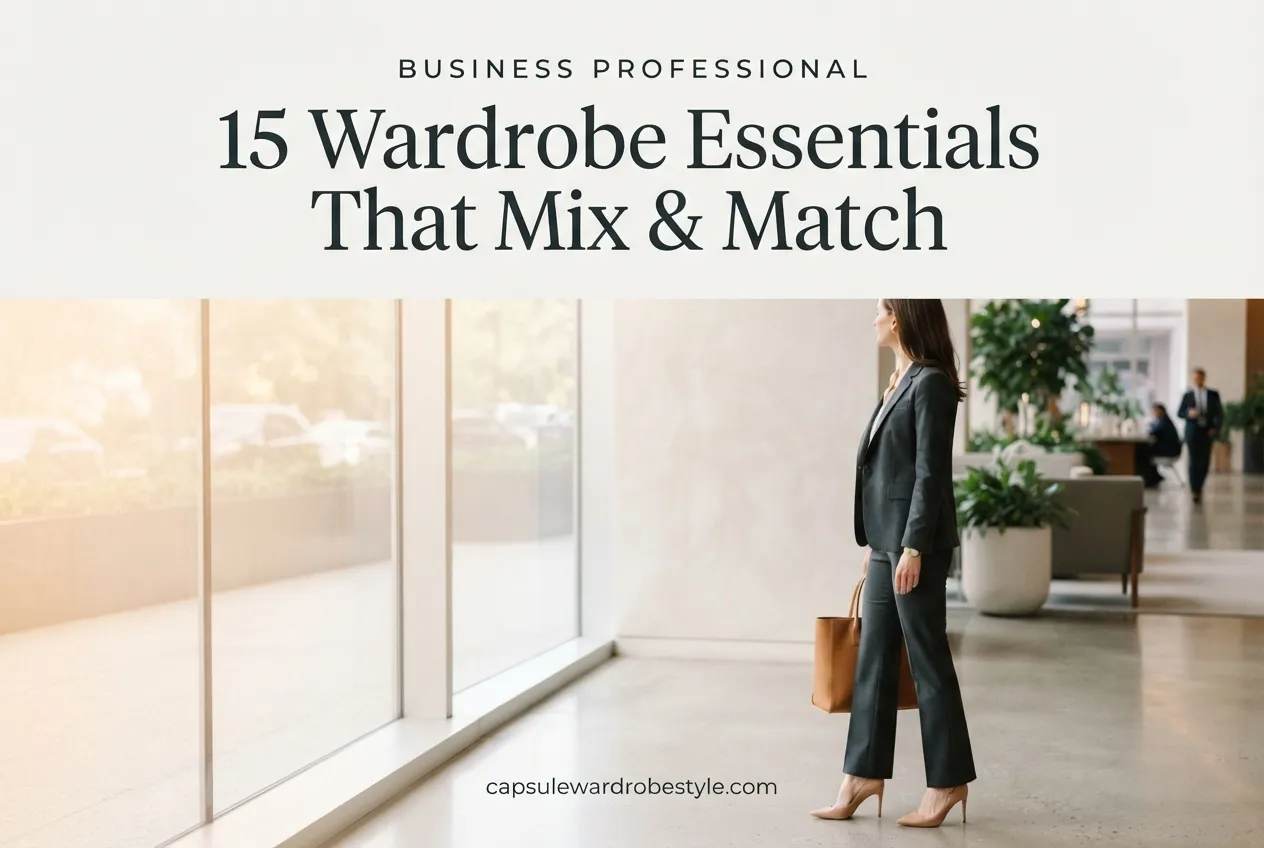
Your closet is full. You still stared at it for ten minutes this morning and put on the same suit you wore Tuesday. A business professional wardrobe is supposed to fix that, and most of them don’t, because they’re a pile of separates that never talk to each other.
This is the fix. Fifteen pieces, chosen so almost everything goes with almost everything, in a neutral base you can wear to an interview, a client pitch, or a Monday you’d rather sleep through. You get the pieces, the fit notes, the price ranges, and a simple grid so you can build weeks of outfits without thinking.

What “Business Professional” Actually Means (and How It Differs From Business Casual)
Business professional is the formal end of office dressing. Think matched or coordinated suiting, closed-toe shoes, and a conservative, polished silhouette. It’s the standard for interviews in law, finance, and consulting, for court, and for senior client-facing days.
Business casual is its relaxed cousin: a blazer with trousers, a blouse without a jacket, a midi skirt with a fine-knit sweater. Same polish, fewer rules.
Why does the line matter? Because dressing a full tier too casual reads as “didn’t take this seriously,” and a full tier too formal can read as out of touch. If you want the outside reference, career offices lay this out cleanly, from how career offices define each dress code to a plain-language primer on business attire. This guide lives at the formal tier and keeps every piece cohesive.
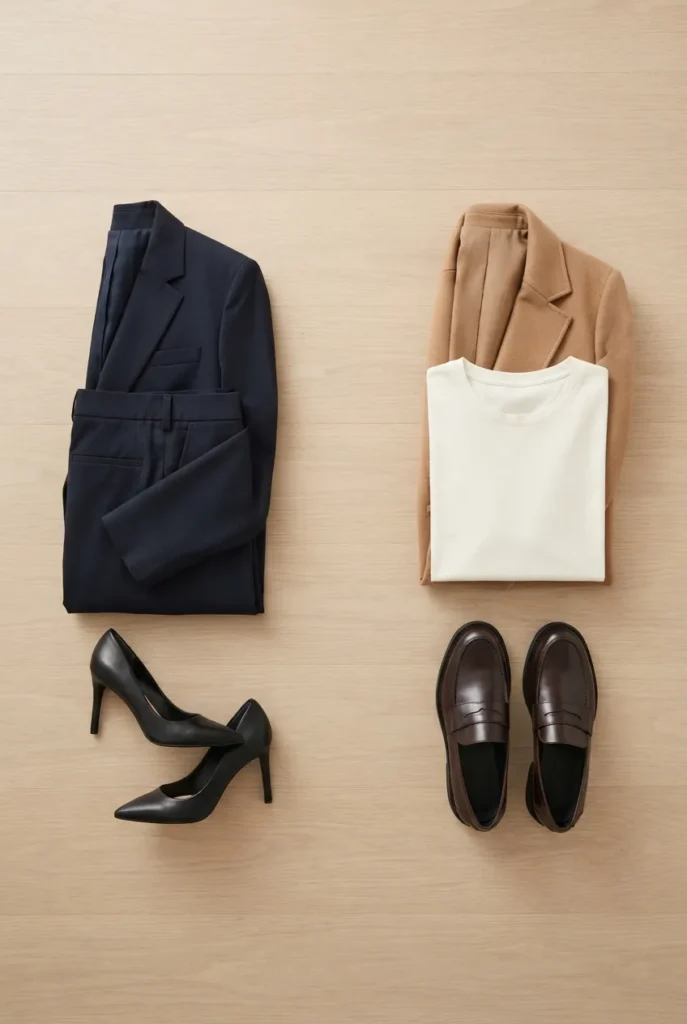
The 5-4-3-2-1 Business Professional Capsule Grid
Here’s the framework the roundups skip. Group your 15 essentials so they multiply instead of just sitting there.
5 tops: two silk or poplin blouses, one white button-down, one fine-knit shell, one sleeveless top for under jackets.
4 bottoms: tailored trousers, wide-leg trousers, a pencil skirt, and a straight or A-line skirt.
3 layers: a matched suit blazer, a contrast blazer, and a tailored dress that works alone or under a jacket.
2 shoes: pointed-toe pumps and polished loafers or flats.
1 anchor bag: a structured tote that carries a laptop and still looks the part.
Do the outfit math. Five tops across four bottoms alone is twenty combinations before you add the dress, the layers, or a swapped shoe. That’s the whole point of a capsule: buy fewer, wear more. Save yourself the planning and grab a printable capsule wardrobe checklist to track what you own before you buy anything new.
[VERIFY: My closet went from ___ pieces to a 15-piece work capsule, and I stopped re-buying the same black trousers every fall.]
Essential #1 to #3: The Blazer Trio That Does the Heavy Lifting
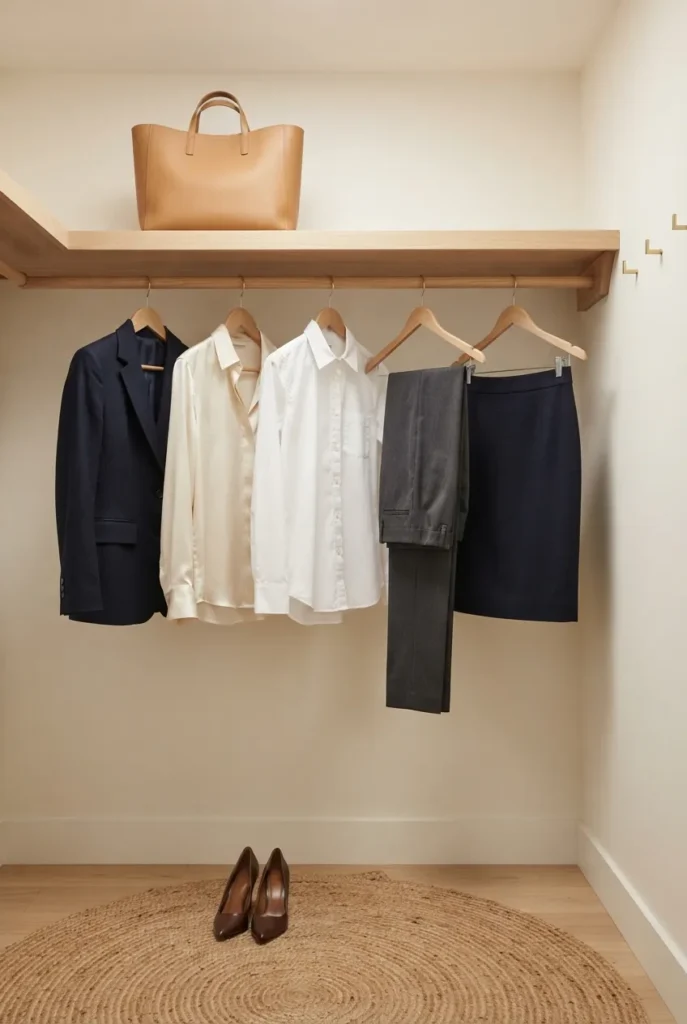
Start here. A blazer is the single piece that turns separates into “an outfit.” You want three: a matched suit blazer in charcoal or navy, a second suit blazer in a different neutral, and one slightly softer contrast blazer for less formal days.
Fabric matters more than logo. Look for a mid-weight wool blend or a structured ponte that holds its shape by 5 p.m. Fit at the shoulder first, because that seam is the one a tailor can’t easily fix.
Price ranges run wide: J.Crew and Banana Republic blazers typically land around $150 to $250, Quince offers washable-wool styles closer to $80 to $130, and if you want the investment version, Vince on sale sits higher. One blazer stretches shockingly far once you know the tricks in styling one blazer several ways.
Essential #4 to #8: Blouses, the Button-Down, and Tops That Layer
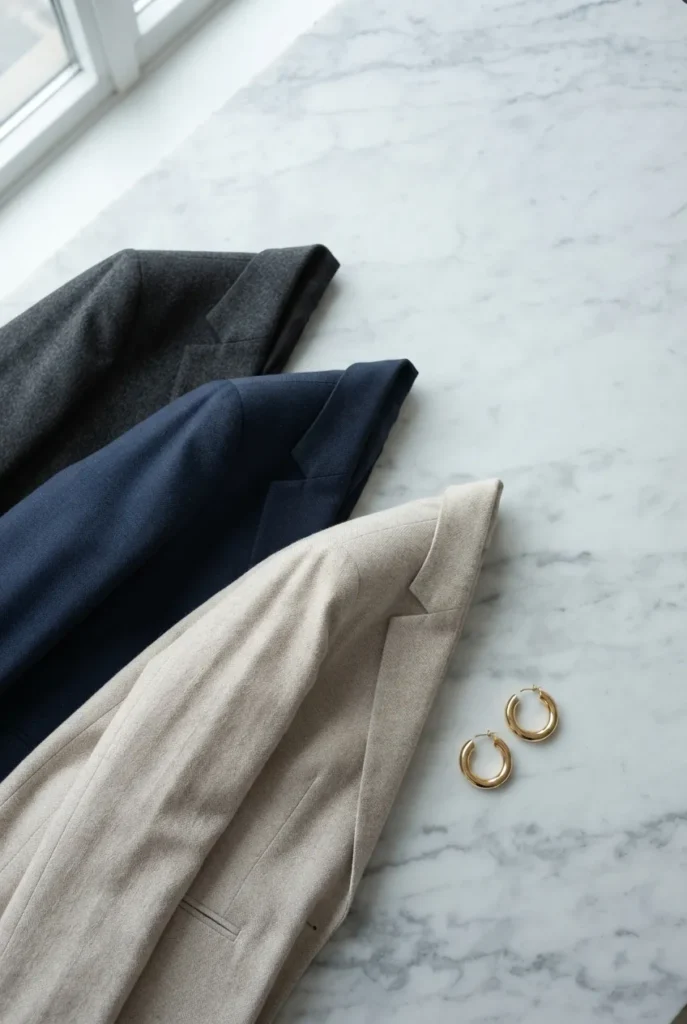
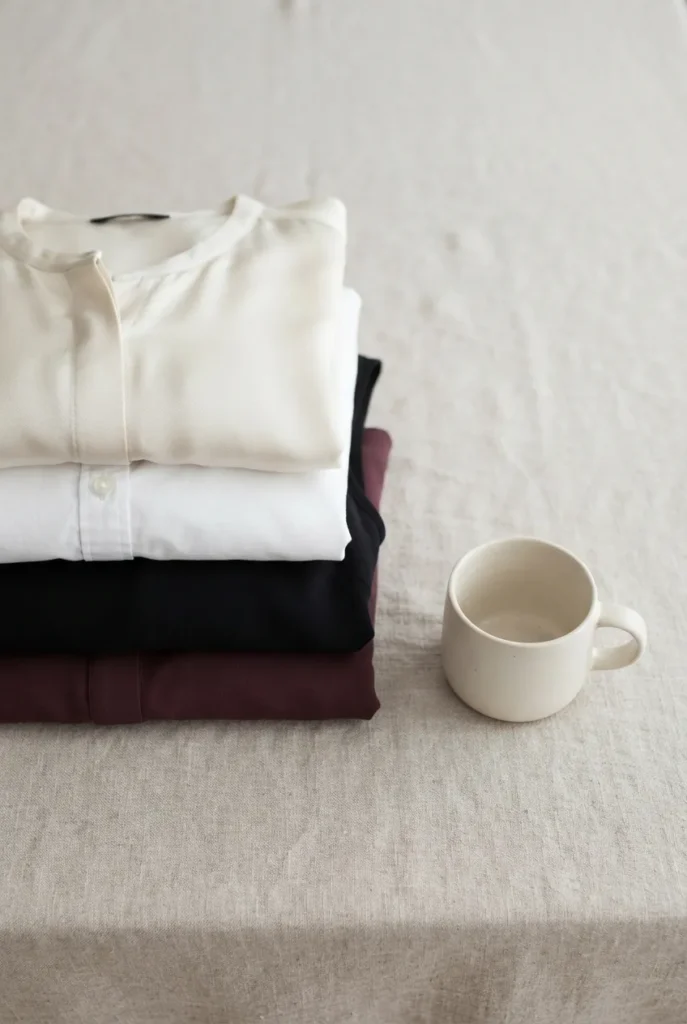
Your five tops are the color and texture in a mostly-neutral base. Two blouses in silk or a silk-feel poplin (ivory, soft black, or a muted accent like burgundy), one crisp white button-down, one fine-knit shell for cooler rooms, and one clean sleeveless top to wear under jackets without bulk.
The white button-down earns its hanger space more than any other top. Tucked under a blazer it reads boardroom; cuffs rolled with trousers it reads polished-casual. There’s a whole world in getting more outfits from a white button-down.
A sub-$50 note: mass-market blouses (Old Navy, H&M, Uniqlo) work, but check the fabric. Thin polyester wrinkles and clings under lights, so size up slightly or choose a matte weave.
[VERIFY: I tested blouses across ___ and ___, and the ___ one held up best after repeat washing.]
Essential #9 to #12: Trousers and Skirts That Anchor Every Look
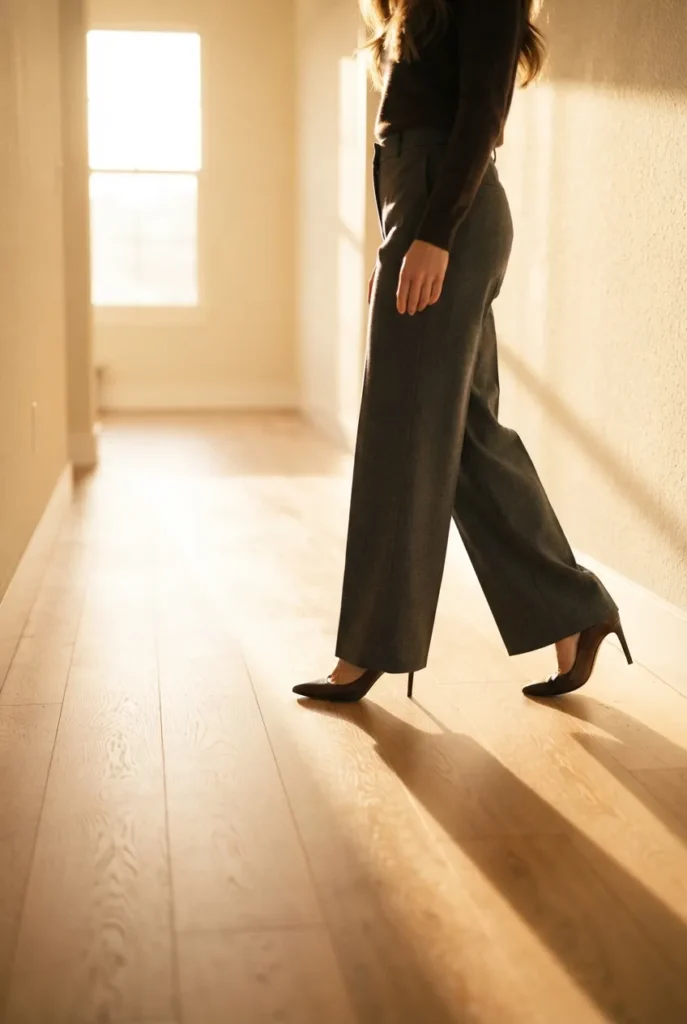
Four bottoms, all in your neutral base so any top works. Tailored straight-leg trousers for the classic suit look, a wide-leg trouser for a modern drape, a pencil skirt for the sharpest formal option, and a straight or A-line skirt for movement.
Hem length is the detail that separates “polished” from “almost.” Trousers should just kiss the top of your shoe. Skirts read most professional at or just below the knee. Wide-leg trousers in particular do a lot of quiet work, and there are plenty of wide-leg trouser outfit ideas once you own a good pair.
Madewell and J.Crew trousers usually run about $90 to $140, Quince and Uniqlo come in lower, and Everlane sits in the middle. Buy the fabric weight that drapes; cheap thin suiting reads cheap under fluorescent light.
Essential #13: The One Dress That Replaces a Whole Outfit
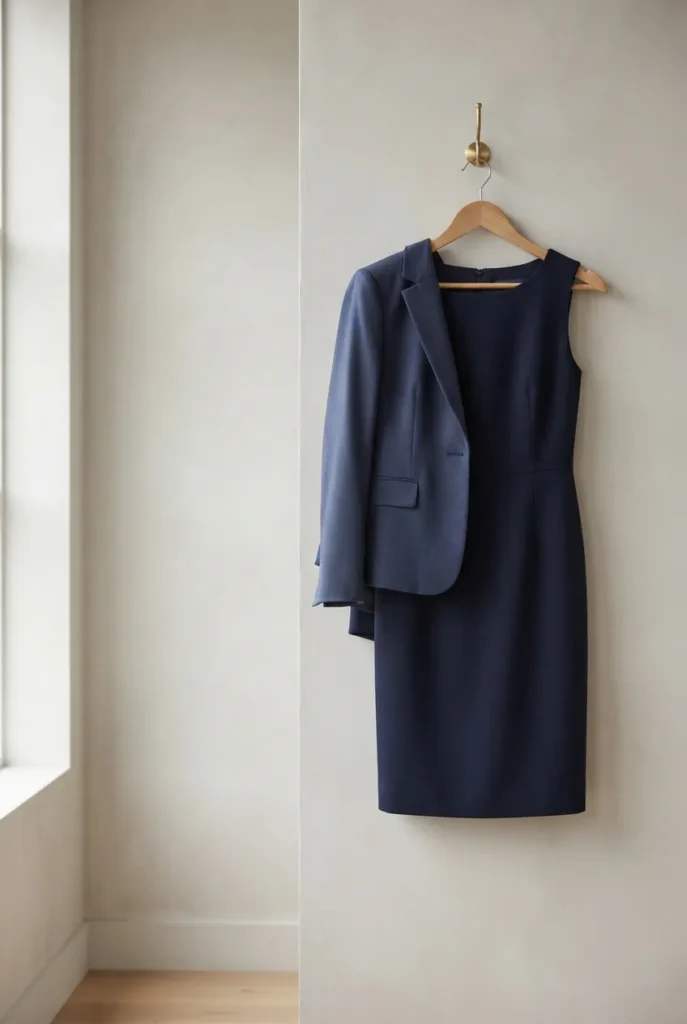
A tailored sheath or a clean shift dress in a solid neutral is the fastest business professional outfit you own. Zip it, add pumps, and you’re done, which is exactly why the answer to “can I wear a dress” is yes, as long as it’s structured and hits at or near the knee.
The dress also doubles as a top. Layer your suit blazer over it and it reads like a coordinated look. One piece, two very different outfits.
Reformation and COS sit in the $120 to $250 range for the contemporary version; Target’s A New Day and Amazon Essentials cover the sub-$50 end, with the tradeoff being thinner fabric that benefits from a slip underneath.
Essential #14 and #15: Shoes and the Anchor Bag
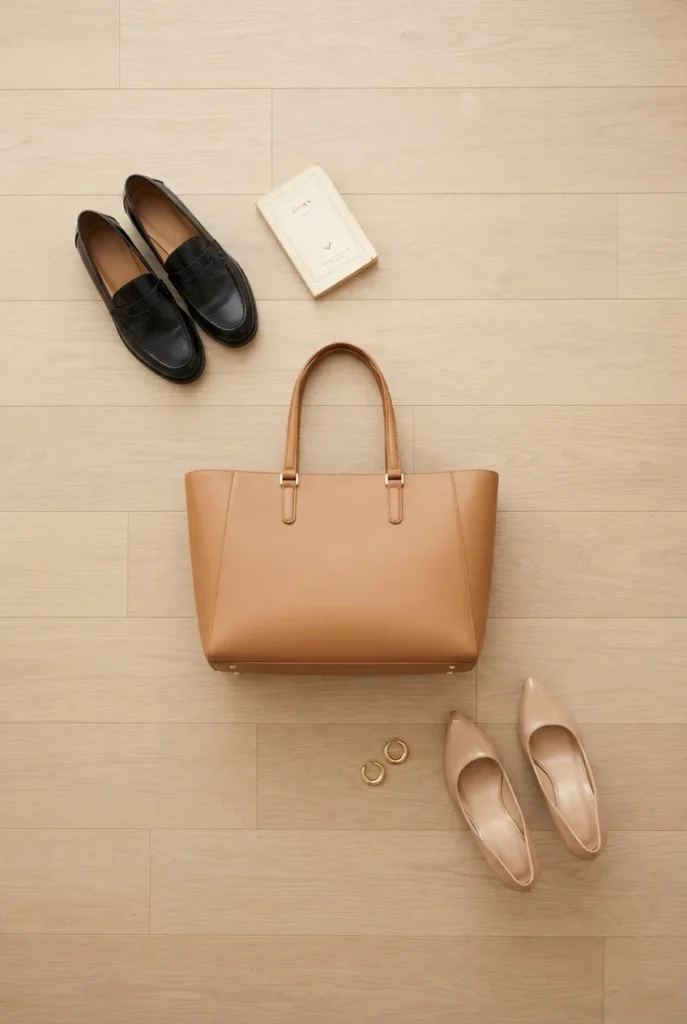
Two shoes cover everything: a pointed-toe pump in a neutral for the most formal days, and a polished loafer or pointed flat for the long ones. Comfort is not the enemy of professional; a block heel or a cushioned flat keeps you sharp past 3 p.m.
Your fifteenth piece is a structured tote in camel, black, or espresso that fits a laptop and holds its shape. A slouchy bag undoes a crisp suit. This is the piece worth spending on, because it’s in every single outfit.
Adding Color Without Breaking the Dress Code
A business professional wardrobe is not a punishment in gray. Keep your suiting and bottoms neutral, then let one top or one accessory carry the color. Burgundy, deep teal, and camel all read polished. Save bright or busy prints for business casual days.
A simple rule: color lives above the waist and small. A muted blouse or a single scarf lifts the whole look without shouting.
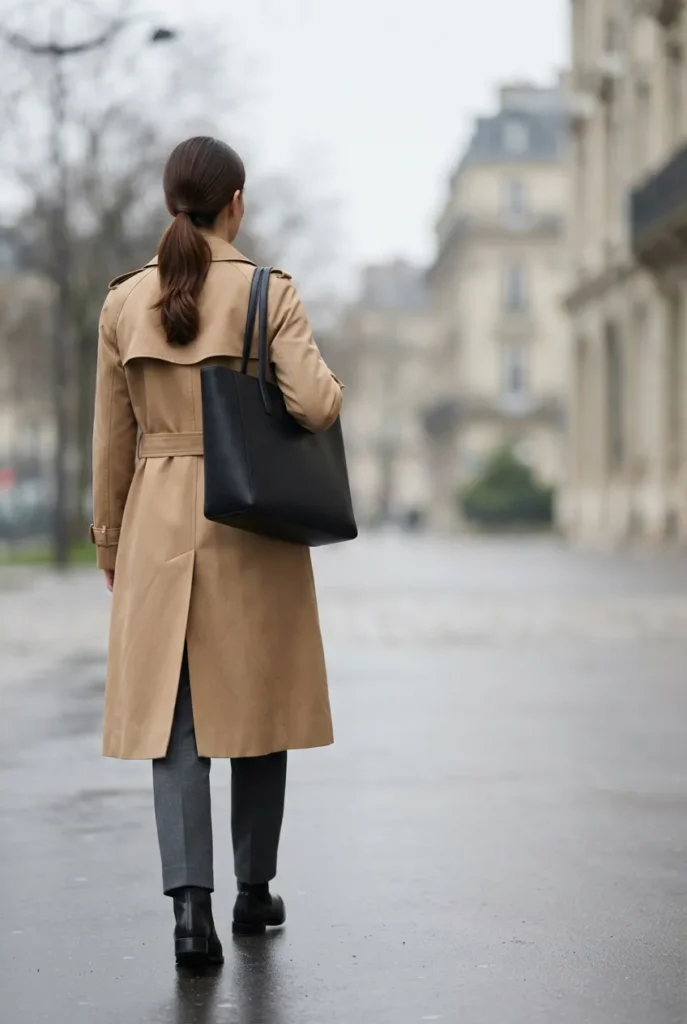
The trench coat is your cold-weather layer, and it needs to fit over a blazer without pulling. That’s a real consideration when choosing a trench that layers over a suit.
Fit by Proportion: Petite, Tall, Curvy, and Over 40
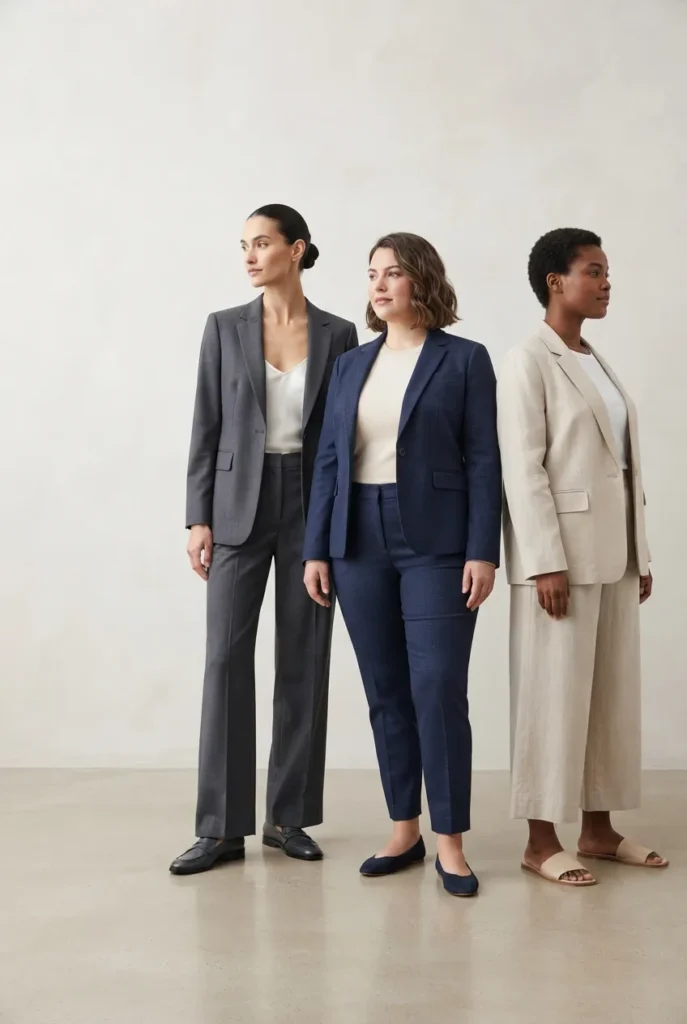
Formalwear is where fit shows most, so build to your proportions rather than fighting them. Petite (5’4″ and under): look for shorter blazer lengths and cropped or hemmed trousers so the line stays clean. Tall (5’9″ and over): prioritize longer inseams and tunic-length blouses so nothing rides short. Curvy and hourglass: a single-button blazer and a defined waist work with your shape rather than boxing it in.
Over 40 and dressing for a senior role often means leaning into structure and better fabric, and there’s a fuller capsule approach for women over 40 if that’s your season. The goal is always what works with your proportions, never hiding them.
Frequently Asked Questions
What is a business professional wardrobe?
It’s a coordinated set of formal office pieces (matched or complementary suiting, tailored blouses, closed-toe shoes, and a structured bag) built in a neutral base so the pieces mix and match. It’s the most formal common dress code, above business casual.
What is the 3-3-3 rule for outfits?
It’s a challenge where you pick 3 tops, 3 bottoms, and 3 pairs of shoes and build a week or more of outfits only from those nine items. It’s a quick way to prove how far a small capsule stretches, and it works beautifully with the 15 essentials here.
What’s a good business professional outfit?
A reliable formula: matched suit (blazer plus trousers or a pencil skirt), a tucked silk blouse or white button-down, pointed-toe pumps or polished loafers, and a structured tote. Swap the top or shoe to change the feel.
Can I wear a dress for business professional attire?
Yes. A structured sheath or shift dress in a solid neutral, hitting at or near the knee, is fully business professional. Add a blazer for the most formal settings.
Is a suit worth the investment, or is there a cheaper alternative?
The blazer and the bag are worth spending on because they anchor every outfit. For everything else, mid-tier options from Quince, Uniqlo, or Everlane deliver most of the look for less, as long as you check the fabric weight.
How many pieces do I really need?
Usually 12 to 18 for a full business professional capsule. The 15 here cover a five-day week with room to repeat pieces without looking repetitive.
Does this wardrobe work year-round?
Mostly, yes. Swap fabric weights by season (lighter blouses and unlined blazers in summer, wool blends and the trench in winter) and the core stays the same all year.
Your Next Step
You don’t need a bigger closet. You need fifteen pieces that finally cooperate. Start with the blazer, the trousers, and the tote this week, then fill in the rest as you go. Pin this so you have the grid on your phone the next time you’re standing in front of the closet at 7 a.m., and let’s make “nothing to wear” a thing of the past.
Keep reading

Capsule Wardrobe Shoes: The 7 Pairs That Cover Everything
Capsule wardrobe shoes are the part of the closet edit almost everyone skips. You can get the tops right, get the trousers...

The 8 Capsule Wardrobe Tops That Anchor Every Outfit You Own
You have more tops than anything else in your closet. You also have the least to wear. That contradiction is what sends...

The 6 Capsule Wardrobe Jackets That Actually Earn Their Hanger Space
You own more jackets than you wear. Most of us do. The denim one from three summers ago, the blazer that fits...