
How to Pair Neutral Colors So Every Outfit Looks Pulled Together
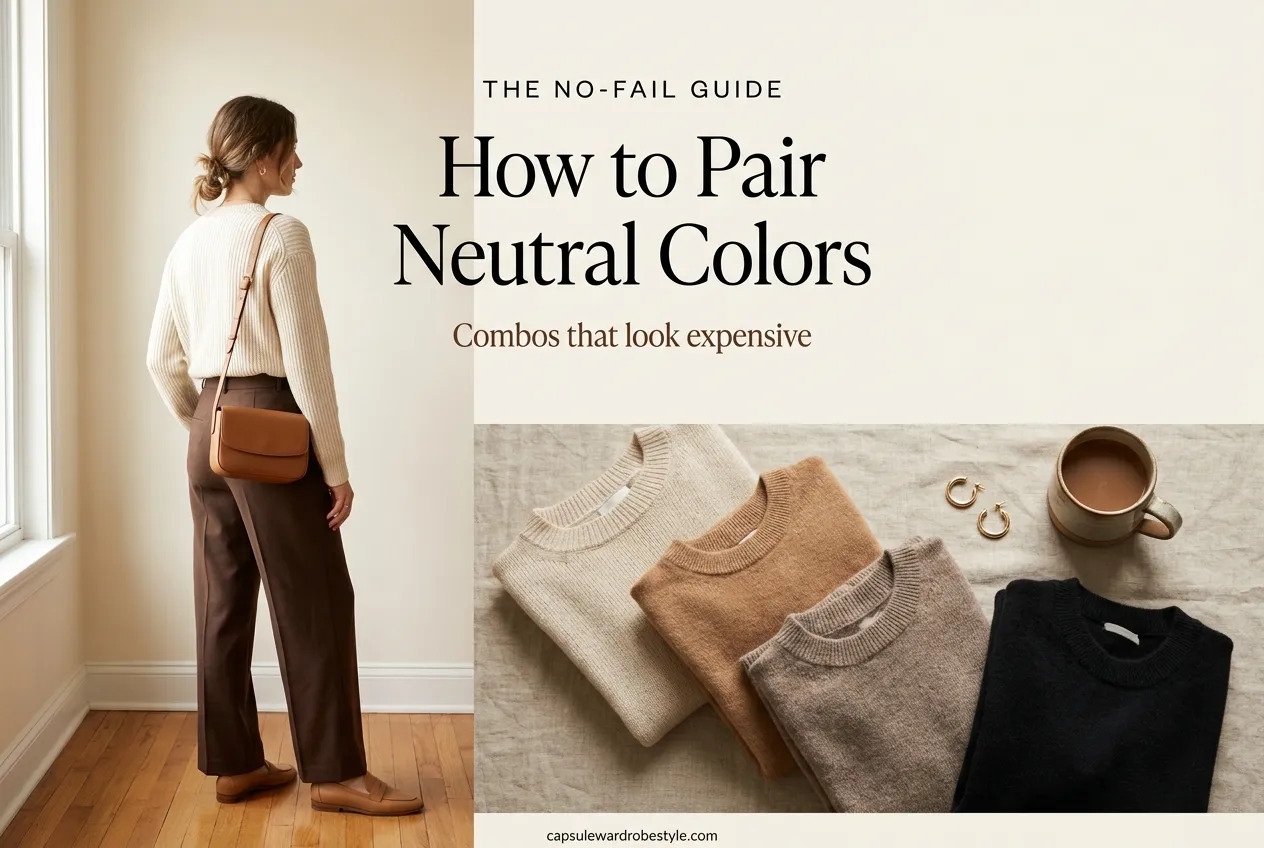
You opened your closet full of beige, cream, gray, and camel. Somehow it still looks like a pile, not an outfit. Here’s the good news: learning how to pair neutral colors is less about taste and more about a few simple rules. Once they click, you can build a polished look in under a minute, no color-wheel degree required.
I’m going to walk you through the exact logic I use, plus a cheat sheet you can screenshot. By the end you’ll pair neutrals with confidence, spend less, and finally get more outfits out of what you already own.
What Actually Counts as a Neutral Color
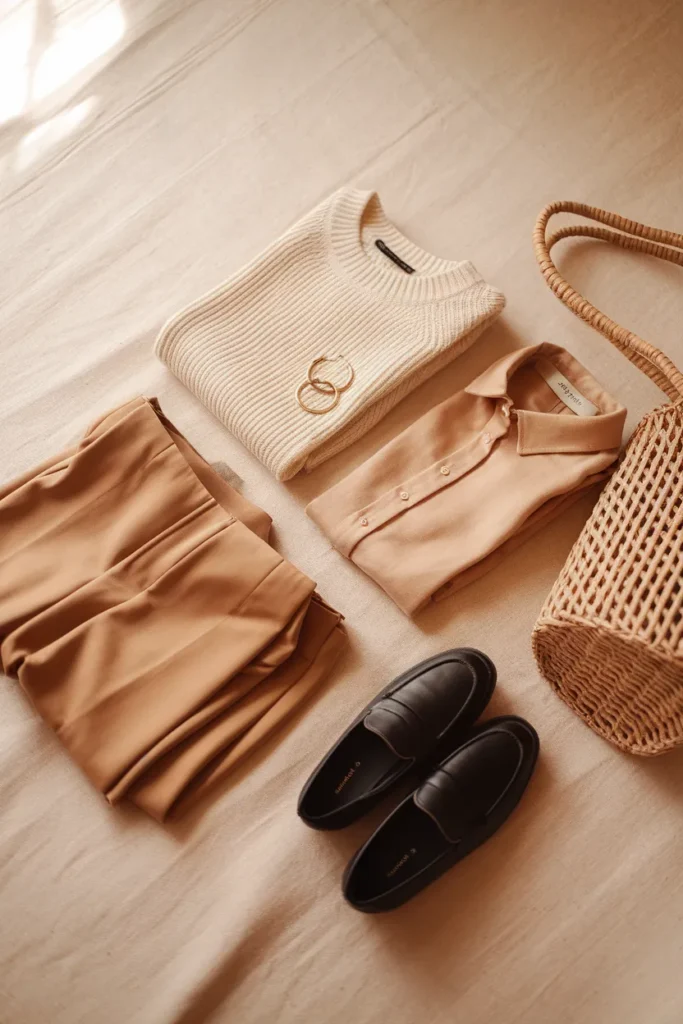
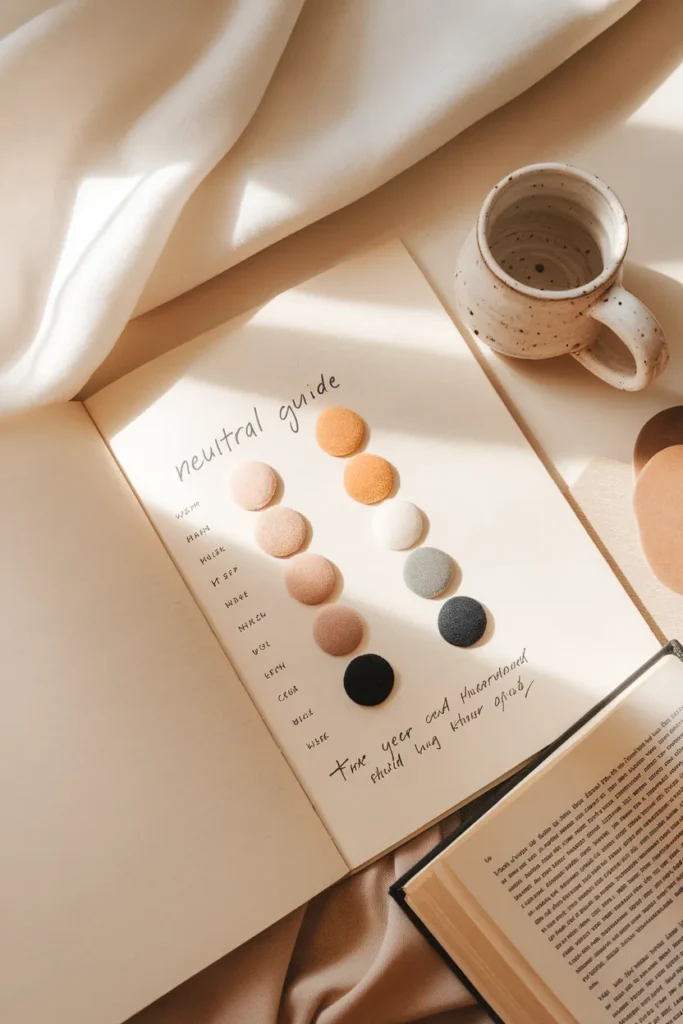
Before you pair them, name them. Neutrals are the low-drama shades that play well with almost everything: white, ivory, cream, beige, oat, taupe, camel, brown, gray, charcoal, and soft black. Navy and olive act like neutrals too, even though they started as colors.
Think of them as the base of your outfit math. They carry the look. A bright accent is the seasoning, not the meal.
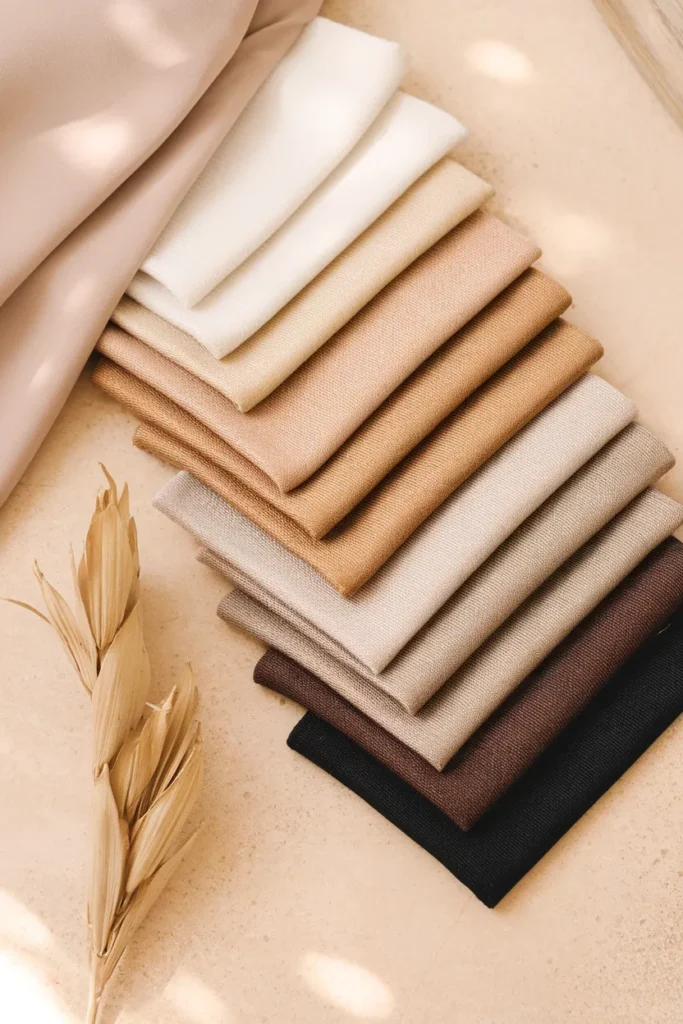
Here’s the part most guides skip. Every neutral leans warm or cool, and that lean is what makes two neutrals sing or clash. Beige and camel are warm. True gray and charcoal are cool. Cream is warm white. Bright white is cool. Keep that in your back pocket. We’ll use it in a second.
Warm or Cool: The One Rule That Fixes Most Neutral Outfits
Most “off” neutral outfits fail for one reason. A warm neutral is fighting a cool one. A yellow-based camel next to an icy gray can look muddy, like they belong to different rooms.
The fix is simple. Pair warm with warm, cool with cool, and you get instant harmony. Cream, beige, camel, and brown are a warm team. White, gray, charcoal, and soft black are a cool team.
Want to know why opposites can also work on purpose? That’s color theory doing its job, and if you like the science, how complementary colors sit on the wheel is a genuinely fun rabbit hole. For everyday dressing, though, matching temperature is the shortcut that never lets you down.
Not sure which team your skin prefers? That overlaps with finding your best wardrobe colors for your skin tone, and it’s worth a read before you invest in a new coat.

The Two-Neutral Formula That Always Works
Here is the fastest way to get dressed. Pick two neutrals and let them lead. One lighter, one deeper. Light on top, deep on bottom, or flip it.
Try these and you’ll see it:
- Cream + chocolate brown
- White + charcoal gray
- Camel + soft black
- Oat + espresso
- Beige + navy
Each pair reads intentional because there’s clear light-to-dark movement. That movement is what your eye reads as “styled.” A whole outfit in one flat mid-tone can look like pajamas. A little range looks like a plan.
This is the backbone of a neutral capsule wardrobe you can wear all year. Two-neutral outfits are the reason a small closet can still feel endless.

Play With Contrast Levels for Different Moods
Two neutrals can feel soft or sharp depending on how far apart they sit in lightness. This is contrast, and choosing it on purpose is a quiet styling superpower.
Low contrast means tones close together, like oat and cream. Soft, expensive, French-girl calm. Great for quiet luxury looks.
High contrast means far apart, like white and soft black. Crisp, graphic, wide awake. Great for workwear and anytime you want to look sharp.
Medium contrast, like camel and espresso, is the everyday sweet spot. Interesting, but easy.
Pick your contrast to match your day. Low for a slow weekend, high for a big meeting. Same neutrals, different energy.
Your No-Fail Neutral Pairing Cheat Sheet
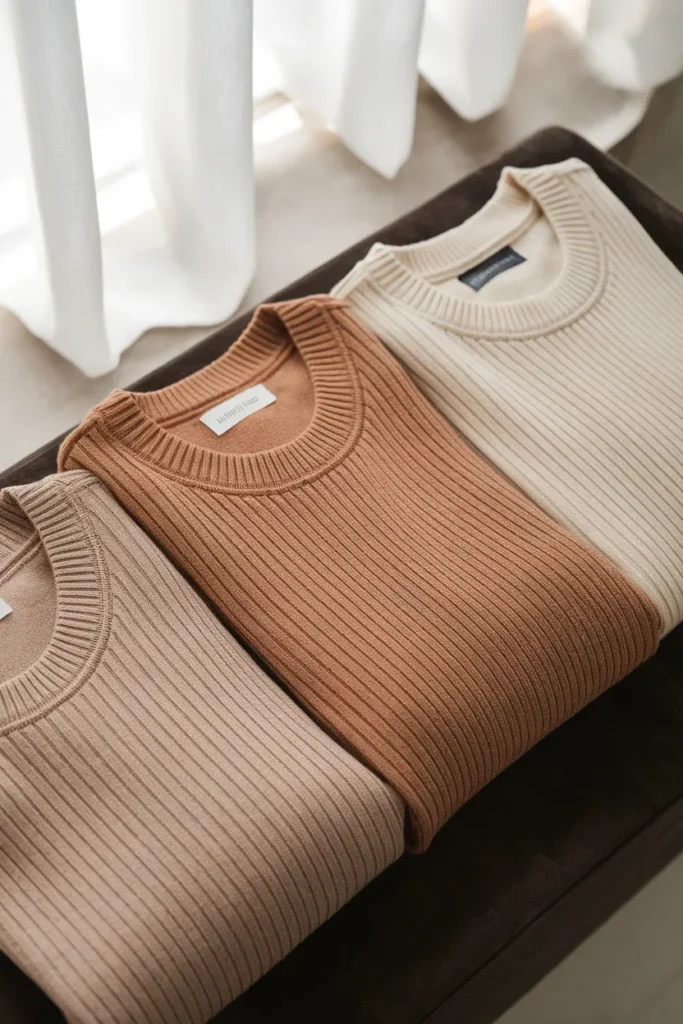
Screenshot this one. It’s the whole guide in a glance, built around temperature and contrast so you never guess.
| Base neutral | Best partners | Temperature | Contrast |
|---|---|---|---|
| Cream | Chocolate brown, camel, soft black | Warm | Medium to high |
| Beige | Navy, espresso, olive | Warm | Medium |
| Camel | Soft black, cream, charcoal | Warm | Medium to high |
| White | Charcoal, soft black, navy | Cool | High |
| Gray | White, black, navy | Cool | Medium to high |
| Charcoal | Ivory, camel, soft blue | Cool leaning flexible | High |
| Navy | Cream, white, tan | Cool leaning flexible | Medium |
Notice charcoal and navy bridge both teams. They’re your peacemakers when a warm and cool piece need to share an outfit.
How to Add One Accent Color Without Wrecking the Calm
Neutrals love a little company. The trick is restraint. One accent, not five.
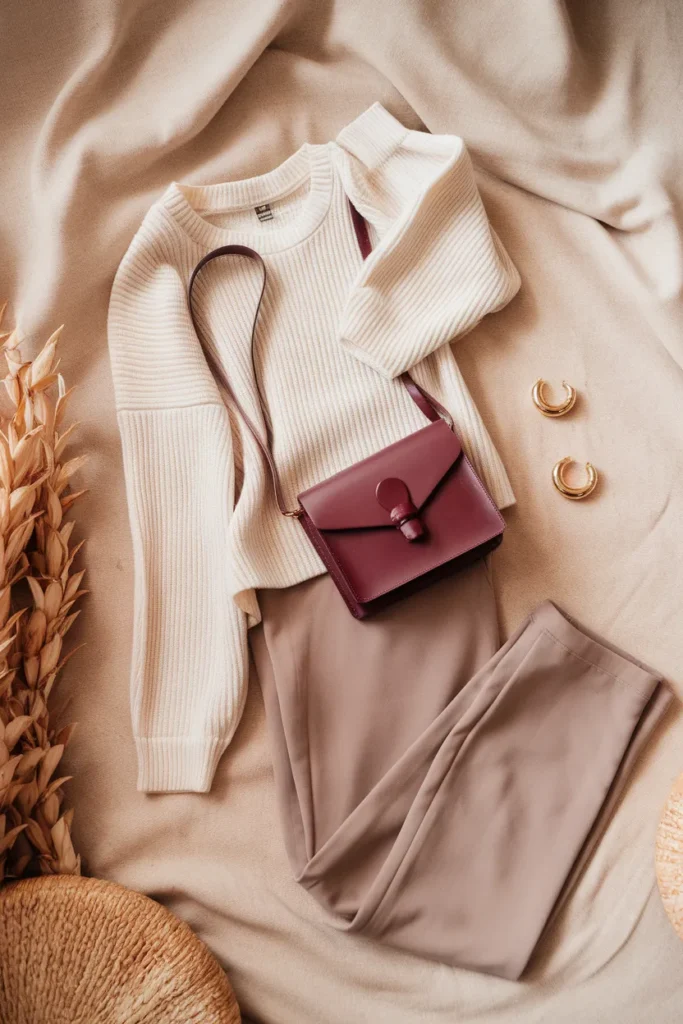
A useful ratio is the 60-30-10 split. Sixty percent your main neutral, thirty percent your second neutral, ten percent an accent. That ten percent might be a burgundy bag, a butter-yellow scarf, or tomato-red flats.
Match the accent’s temperature to your neutrals when you can. Warm neutrals love rust, olive, and mustard. Cool neutrals love cobalt, berry, and emerald. If you want the physics of why certain accents pop against certain bases, the science of complementary color pairs explains it clearly.
Craving that expensive-but-quiet look? Keep the accent tiny and the neutrals doing the heavy lifting. That’s the heart of quiet luxury style that looks expensive for less.
Mix Textures So an All-Neutral Look Never Goes Flat
When colors stay quiet, texture does the talking. This is how an all-cream outfit avoids looking like a bathrobe.
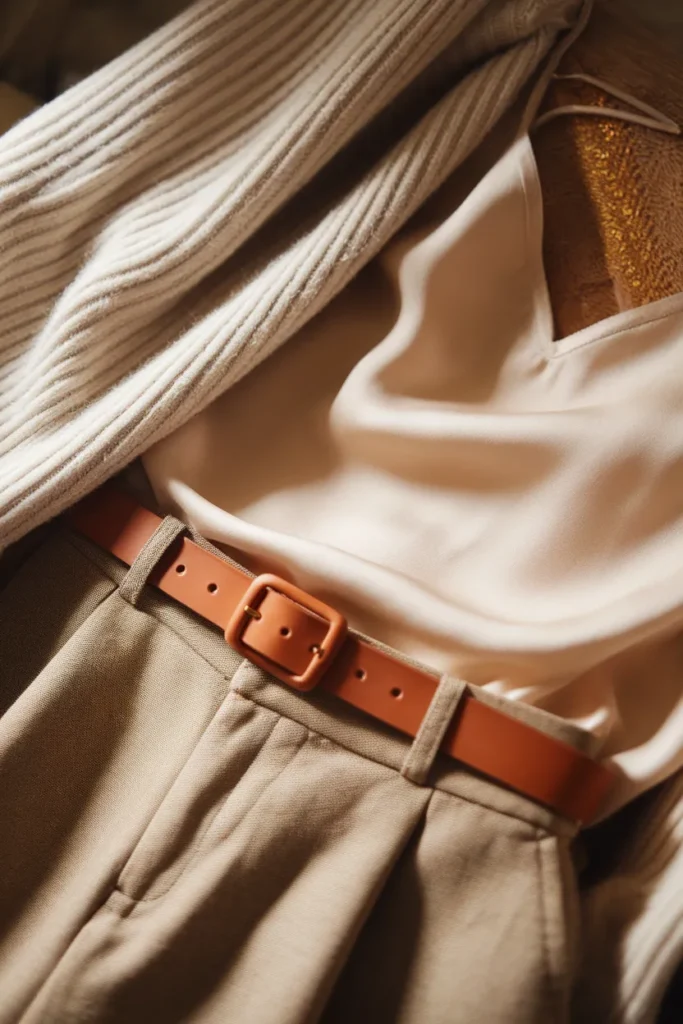
Layer different surfaces: a chunky knit over a silky cami, linen trousers with a leather belt, a wool coat over cotton. The tones can nearly match as long as the fabrics don’t.
Denim counts too. A mid-wash jean is basically a neutral, and it grounds camel, cream, and white beautifully. If denim is your daily base, how to style jeans five different ways pairs nicely with everything here.
Real Neutral Outfit Combos to Copy Today
Enough theory. Here are complete looks you can rebuild from your own closet, each following the rules above.
- Weekend calm: oat sweater, cream wide-leg trousers, tan loafers, woven tote. Low contrast, all warm.
- Sharp at work: white button-down, charcoal trousers, soft black flats, structured bag. High contrast, all cool.
- Everyday easy: camel knit, mid-wash jeans, white sneakers. Medium contrast, warm with a denim base.
- Quietly expensive: cream knit, chocolate-brown trousers, gold hoops, leather crossbody. Warm, medium contrast, no accent needed.
- One-accent moment: beige coat, cream base, one burgundy bag. Warm base, single accent, 60-30-10.
[VERIFY: I rotated this five-look set through one work-and-weekend week in [season] and only reached for pieces I already owned.] Swap any piece for your closest match. The formula holds even when the exact shade doesn’t.

Common Mistakes When Pairing Neutrals (and Easy Fixes)
A few small habits quietly flatten neutral outfits. Here’s how to dodge them.
Mixing warm and cool by accident is the big one. If a look feels muddy, check temperature first. Pull one piece back to the right team.
Staying in one flat mid-tone is the second. Add light-to-dark range and the outfit wakes up.
Forgetting texture is the third. All matte, all one fabric, reads cheap. One shiny or nubby surface fixes it fast.
[VERIFY: I once wore an all-gray look I loved on the hanger, then realized in photos it was one flat tone head to toe. Adding a cream layer and a leather belt is what saved it.]
Frequently Asked Questions
What colors go with neutral colors?
Almost anything, which is their superpower. For a calm look, pair a neutral with another neutral in the same temperature. For a pop, add one accent like burgundy, olive, or cobalt at about ten percent of the outfit.
What are the four main neutral colors?
The classic four are white, black, gray, and beige. In real closets, cream, camel, taupe, and brown do just as much work, and navy and olive behave like neutrals too.
Which is a neutral color pair that always works?
Cream and chocolate brown for warm skin and warm wardrobes, or white and charcoal for a crisp cool combo. Both have clear light-to-dark contrast, which is why they always look styled.
How do I use neutral colors without looking boring?
Add contrast and texture. Move from light to dark, and mix at least two fabrics like knit and leather or linen and denim. That’s what separates flat from expensive.
Can I mix beige and gray?
Yes, but choose a beige and gray that share an undertone, usually a warmer greige gray with a soft beige. When in doubt, put a bridging neutral like navy or charcoal between them.
Does this work for petite or curvy shapes?
The pairing rules are the same for every body. For petite frames (5’4″ and under), keeping both neutrals close in tone can lengthen your line. For curvy shapes, contrast at the waist with a belt draws the eye where you want it. It’s about your proportions, not hiding anything.
Are neutrals a year-round thing?
Completely. Shift the fabrics, not the palette. Linen and cotton neutrals for summer (75 to 95F), knits and wool neutrals for fall and winter. The camel and cream you love in October work in July in a lighter weave.
Pull It All Together
Pairing neutrals stops feeling like guesswork the moment you lead with temperature, add a little contrast, and let texture carry the quiet. Warm with warm, cool with cool, one accent at most. That’s the whole game.
Try one two-neutral combo from the cheat sheet tomorrow morning and notice how much faster you get dressed. Then come build the rest of your calm, with us, one easy formula at a time.
Keep reading

How to Style Cargo Pants for Women (Without the Combat Look)
Most women who ask how to style cargo pants for women already own a pair. That’s the part nobody says out loud....

How to Style a Denim Jacket: The Layer That Goes With Everything
Learning how to style a denim jacket is less about finding new outfits and more about fixing the three or four small...

How to Style a Denim Skirt: 8 Outfits You Can Build From What’s Already in Your Closet
Learning how to style a denim skirt gets easier when you start one step earlier than most guides admit. Start with the...