
The 30-Piece Year Round Capsule Wardrobe That Works in Every Season
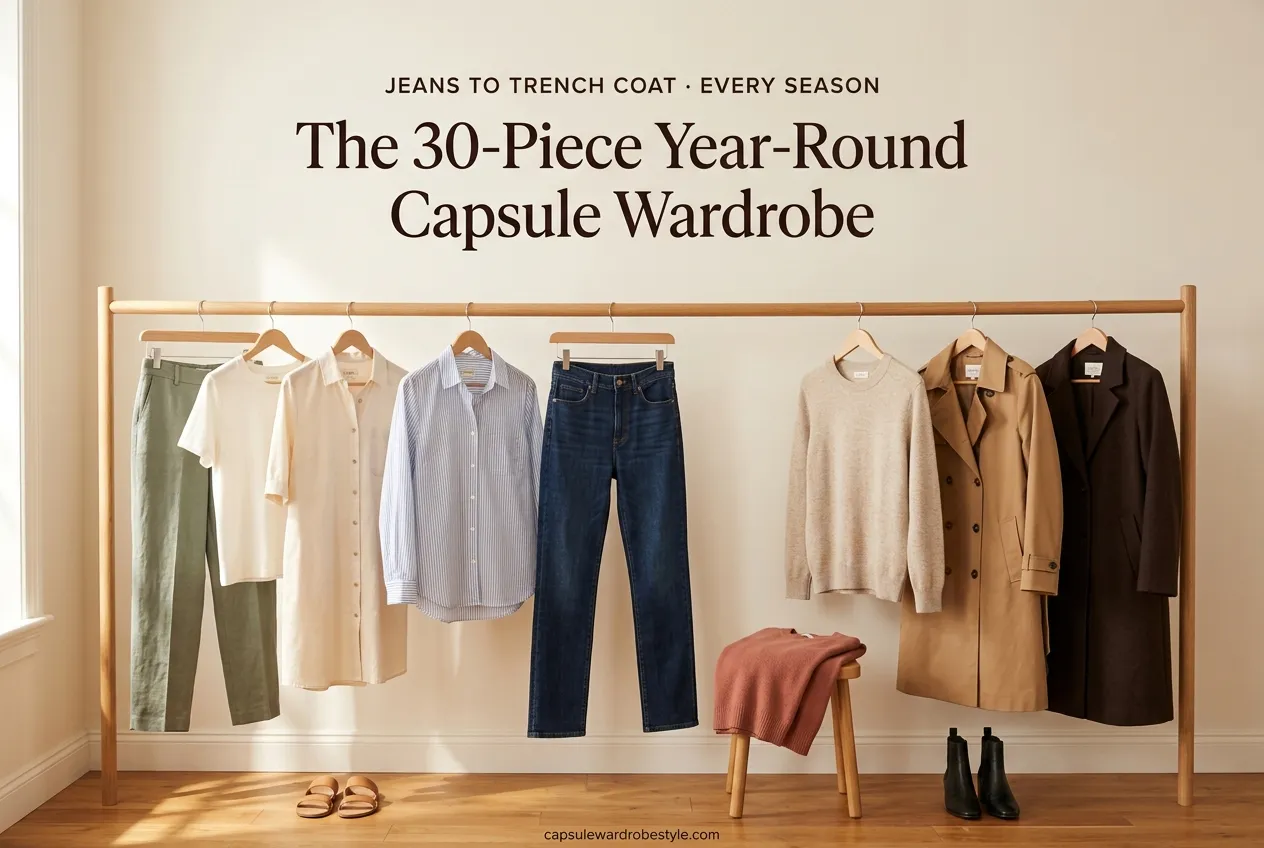
Every January the internet hands you a winter capsule. By April it’s a spring capsule. By July, summer. That’s four closet rebuilds a year, which is exactly the churn a capsule was supposed to end. A Year Round Capsule Wardrobe takes the opposite approach: 30 pieces, chosen once, worn through all four seasons with smart layering instead of seasonal swaps.
In this guide you’ll get the full 30-piece checklist, a 60-second formula to adjust that number to your actual life, layering math that holds up from 20°F to 95°F, and where to shop every piece at three price tiers. One closet. Twelve months. No starting over.
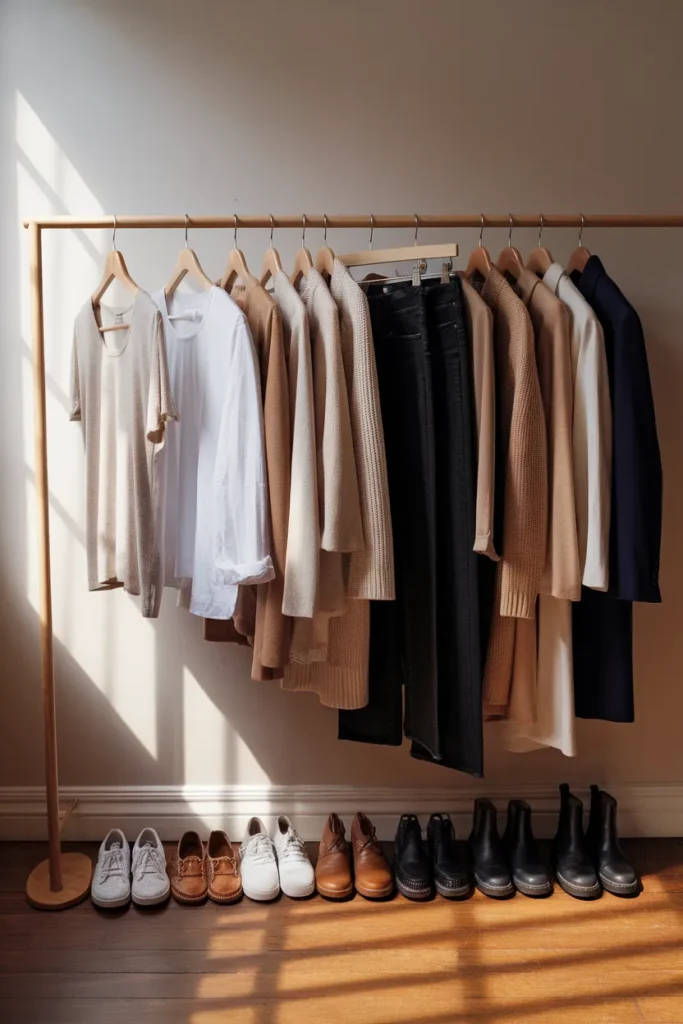
Why One Capsule Wardrobe Year Round Beats Four Seasonal Ones
A seasonal capsule solves the “nothing to wear” problem for about ten weeks. Then the weather turns, the whole thing feels wrong, and you’re back to auditing, storing, and shopping. Four times a year.
A year round capsule breaks that loop in three ways. First, money: you stop rebuying near-duplicates every season because the same dark jeans work in July with sandals and in January with boots. Second, time: your closet edit happens once, and after that you’re in maintenance mode with a simple one in, one out rule. Third, waste: the EPA’s textile data shows Americans generated about 17 million tons of textile waste in a single year, and more than 11 million tons of it went straight to landfills. A closet built around 30 pieces that stretch across seasons opts you out of most of that churn.
There’s a quieter benefit too. When every piece earns its hanger space in all four seasons, your style stops resetting every quarter. You get a signature look instead of a seasonal costume change.

Find Your Real Number Before You Copy Anyone’s List
Here’s the part most capsule guides skip: the “right” number of pieces isn’t a style question. It’s a laundry question.
Try this 60-second formula. Take the number of days between your laundry loads, add three for buffer, and that’s roughly how many tops you need. Multiply your bottoms by half that, because pants and skirts get two to three wears between washes. So if you wash clothes weekly, that’s about ten tops and five bottoms as your working core, and the rest of the capsule is layers, dresses, and shoes.
Run your own numbers before you adopt mine. Wash every five days with a job that needs polish? You might land at 26 pieces. Wash every ten days with two kids and a commute? You might need 34. The 30-piece checklist below fits a weekly-wash, mixed casual-and-work life, which is the middle of the road for most American women. Treat it as your template, then nudge two or three slots to match your reality.
I wore a version of this exact 30-piece capsule for 90 days from October through December and logged every outfit in my notes app. It came out to 84 distinct outfits, and not one week felt repetitive.
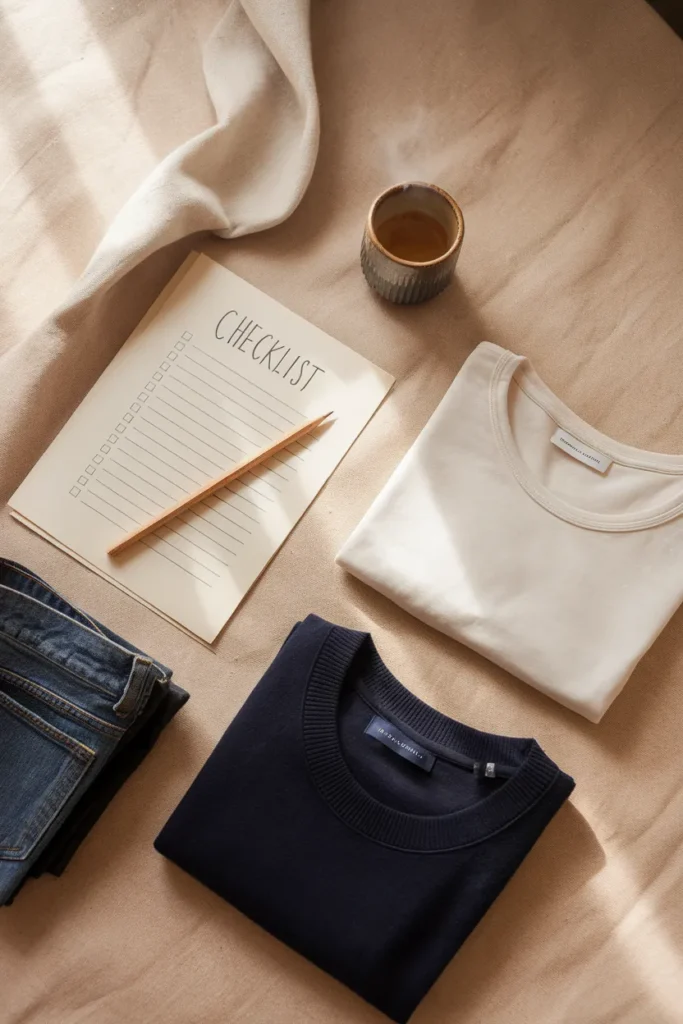
The 30-Piece Year-Round Capsule Wardrobe Checklist
Every piece below passed two tests: it works in at least three seasons, and it pairs with at least five other pieces on the list. That’s the mix-and-match ratio that turns 30 items into months of outfits.
Tops (9)
- 3 tees: two in white or ivory, one in black, midweight cotton so they hold shape
- 2 button-downs: one crisp white, one blue stripe
- 1 washable silk or satin blouse in ivory or blush
- 1 lightweight merino turtleneck in black or espresso
- 2 sweaters: an oatmeal crewneck and a camel cardigan
Bottoms (7)
- Dark straight-leg jeans and a lighter wide-leg pair
- Black wide-leg trousers
- Linen pants in oat or sage
- A midi skirt in a neutral
- Tailored shorts
- Black knit ponte pants (the secret weapon for travel and 90-degree office AC alike)
Dresses (3)
- A black slip midi dress
- A shirt dress in cream or camel
- A casual tee dress
Layers and outerwear (5)
- A navy or black blazer
- A camel trench coat
- A denim jacket
- A wool coat (here’s how to choose from the best wool coats for a capsule wardrobe)
- A packable puffer for the coldest snaps
Shoes (5)
- White leather sneakers, ballet flats, loafers, black ankle boots, and flat sandals
The wildcard (1)
Slot 30 is yours alone: the leopard flat, the burgundy sweater, the vintage band tee. A capsule without one personality piece reads like a uniform catalog. Keep exactly one, on purpose.
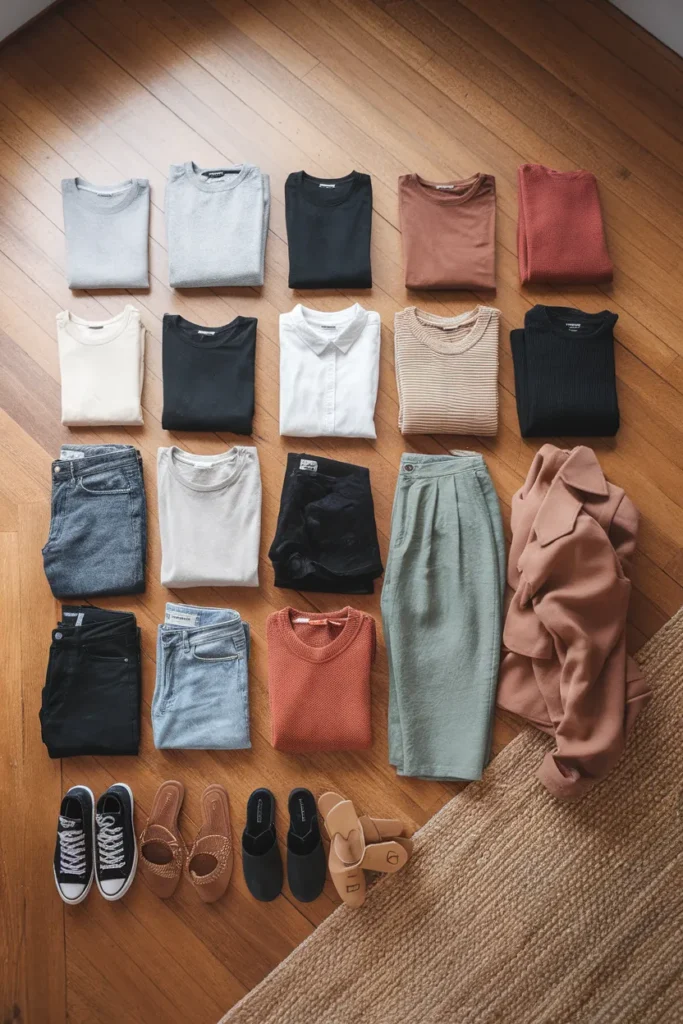
The 70/20/10 Fabric Weight Rule That Stretches Pieces Across Seasons
Color gets all the capsule attention, but fabric weight is what actually decides whether a piece survives four seasons. Here’s the split that makes the 30-piece list work.
About 70 percent of your capsule should be midweight, four-season fabrics: midweight cotton, denim, ponte, fine-gauge merino, and cotton twill. These breathe at 75°F and layer at 35°F. Around 20 percent goes to true warm-weather fabrics, linen and airy cotton, because nothing midweight feels right at 95°F in Houston or DC humidity. The last 10 percent is your cold anchors: the wool coat and your heaviest knit.
Count the checklist above and you’ll see it maps almost exactly: 21 midweight pieces, 6 warm-weather, 3 cold anchors. That ratio, and honestly not the color palette, is why the same closet works in February and August.
One buying habit protects the whole system: read the sewn-in care label before you pay. Those labels are federally required under the FTC’s Care Labeling Rule, and they tell you in advance whether a piece will survive weekly machine washing or quietly rack up dry-cleaning bills. “Machine wash cold, lay flat” is a keeper. “Dry clean only” on a plain white tee is a warning.
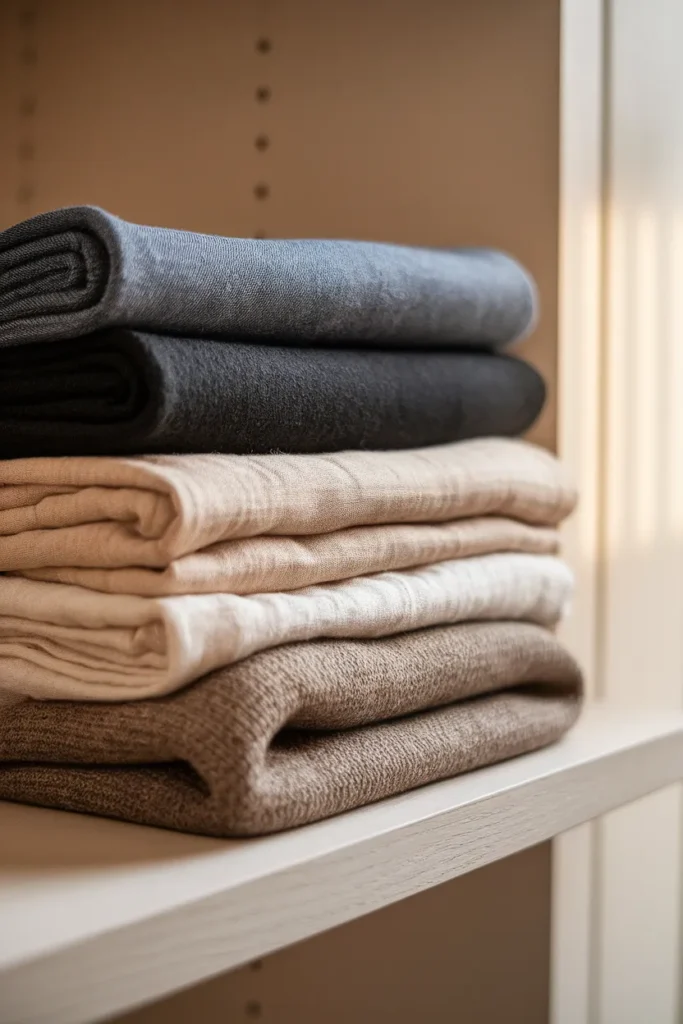
Layering Formulas for Real US Weather, 20°F to 95°F
“Just layer” is the advice every capsule guide gives and none of them explain. So here’s the actual math, band by band, using only pieces from the checklist. Screenshot this one.
| Temperature | Formula | Example outfit |
|---|---|---|
| Below 32°F | base + knit + wool coat | Merino turtleneck, oatmeal crewneck over it, wool coat, dark jeans, ankle boots |
| 32 to 50°F | top + heavy layer | Striped button-down, camel cardigan, black trousers, loafers |
| 50 to 65°F | top + light layer | Ivory tee, blazer, wide-leg jeans, sneakers |
| 65 to 80°F | one smart layer, easy off | Shirt dress with denim jacket, ballet flats |
| Above 80°F | single breathable layer | Linen pants, black tee, sandals; or the slip dress alone |
Two rules make the formulas work. Keep your base layers thin (that’s why the turtleneck is merino, never chunky), and let outerwear do the temperature work so the outfit underneath stays consistent. That’s how the same slip dress reads beachy in July and, under the turtleneck and wool coat, completely winter-appropriate in January.
If your city swings 40 degrees in a day, and hello to everyone in Denver and Chicago, build for the morning band and carry the layer you’ll shed by noon.
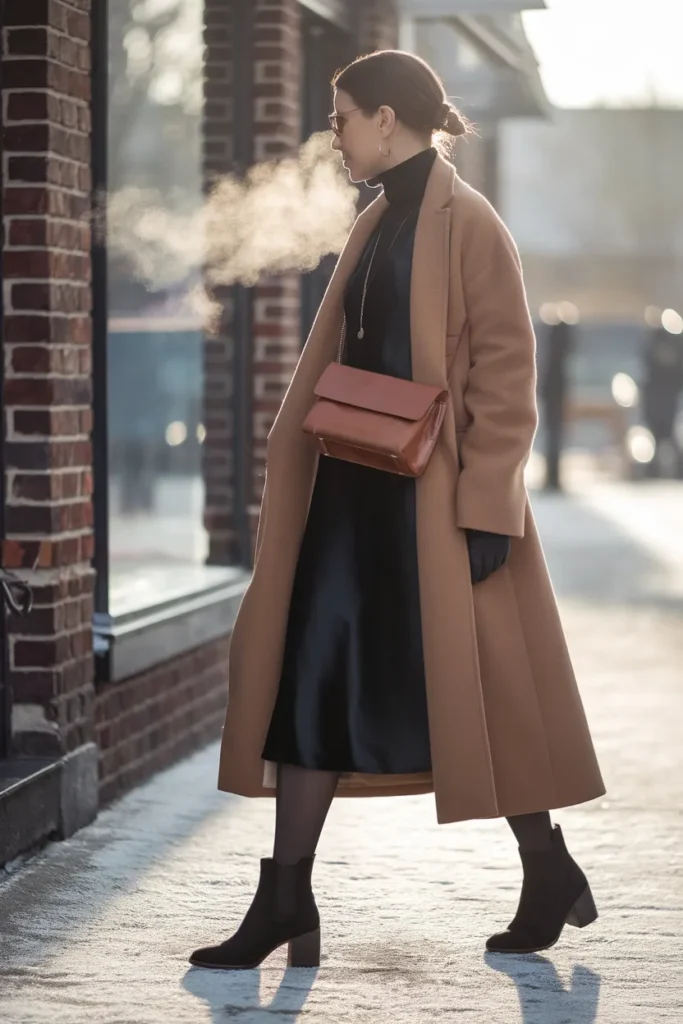
Build a Neutral Base, Then Add One Accent Color
Notice the checklist runs on ivory, camel, oat, navy, black, and one sage. That’s not timidity. A neutral base is what lets any top meet any bottom without a second thought, which is the entire point of outfit math.
The move that keeps it from feeling flat is a single accent color, chosen once and repeated. Burgundy, butter yellow, or a tomato red all sit beautifully against camel and navy. Put the accent in your wildcard piece, or in small doses through a scarf or a lip color, and every outfit suddenly looks decided rather than default.
If your beige-on-beige outfits still look unfinished, the fix is usually contrast and undertone, and there’s a full breakdown in how to pair neutral colors so every outfit looks pulled together.
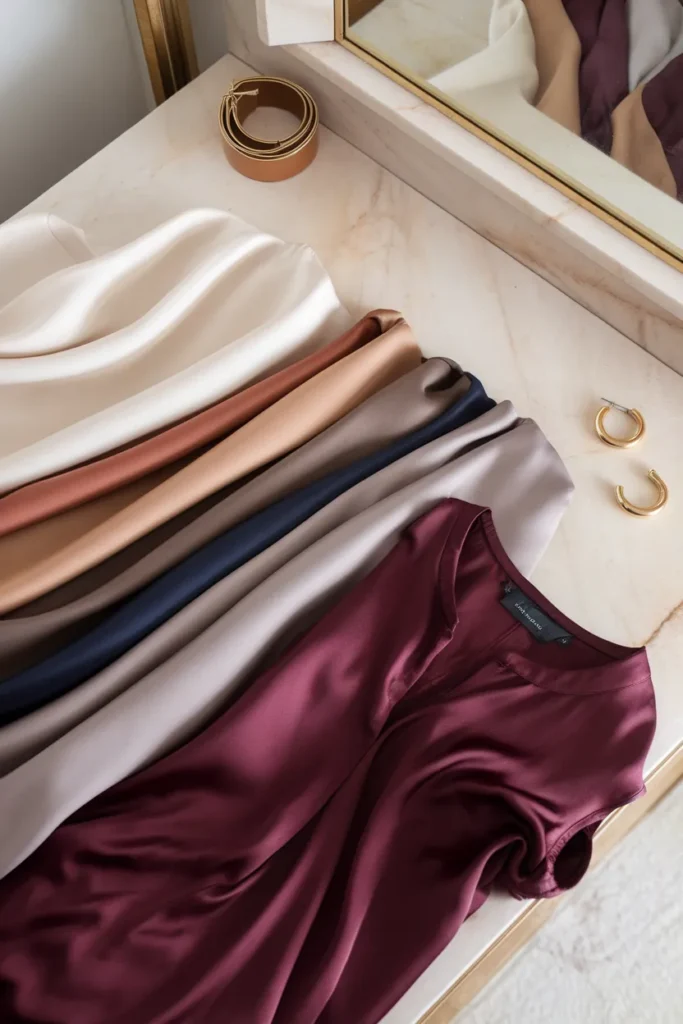
Outfit Math: One Week of Outfits in All Four Seasons
Here’s the proof the system holds. One week per season, and watch how often the same dark jeans and white button-down reappear without ever repeating an outfit.
Winter week: turtleneck, crewneck, wool coat, dark jeans, boots (Mon). Slip dress over turtleneck, boots (Tue). Button-down, cardigan, trousers, loafers (Wed). Tee, blazer, ponte pants, boots (Thu). Sweater, dark jeans, puffer, sneakers (Fri).
Spring: trench over striped button-down and wide-leg jeans (Mon). Shirt dress, denim jacket, flats (Tue). Silk blouse, trousers, blazer, loafers (Wed). Tee, midi skirt, cardigan, sneakers (Thu). Tee dress, trench, sneakers (Fri).
Summer: linen pants, black tee, sandals (Mon). Slip dress, sandals (Tue). Tailored shorts, white button-down, sneakers (Wed). Tee dress, flats (Thu). Midi skirt, ivory tee, sandals (Fri).
Fall: dark jeans, oatmeal crewneck, boots (Mon). Shirt dress, tights, ankle boots, denim jacket (Tue). Trousers, silk blouse, blazer (Wed). Wide-leg jeans, turtleneck, loafers (Thu). Ponte pants, cardigan, sneakers (Fri).
That’s 20 outfits from the same 30 pieces, and the combinations run far past 100 before anything feels forced. If your weekdays lean corporate, the same math scales up in this business professional wardrobe built from 15 mix-and-match essentials.
I tracked cost per wear on every piece in a spreadsheet for six months. The dark straight jeans came out around $1.60 a wear. A trendy $40 top I loved in the store finished at $13 a wear before I donated it.
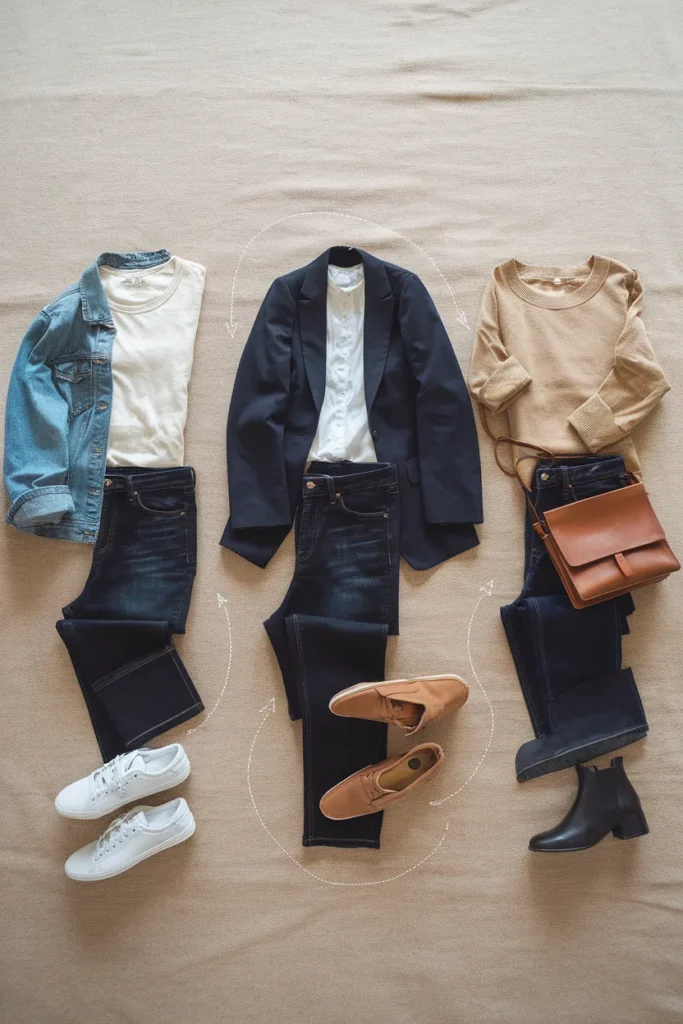
Where to Shop All 30 Pieces, From $15 Tees to Investment Coats
The smartest capsule budgets aren’t flat. Spend where fabric and tailoring show, save where they don’t, and the whole closet punches above its receipt.
Save tier ($10 to $50): tees, the tee dress, tailored shorts, and the denim jacket. Old Navy, Gap, Target’s A New Day and Universal Thread, Uniqlo, and Amazon Essentials all cover these. The honest trade-off at this price is fabric: a $12 tee is usually a thinner cotton that may pill or lose shape within a year, so treat these as annual replacements, and that’s fine.
Middle tier ($50 to $150): jeans, trousers, knits, the button-downs, the blouse, and most shoes. Quince, Madewell, J.Crew, Everlane, and Banana Republic live here; Madewell jeans, for instance, typically run $98 to $138 and the denim weight shows it. Shoes deserve the top of this tier, since they take the most abuse; here’s the field-tested shortlist of the best loafers for women, chosen the capsule way.
Stretch tier ($150 to $400): the trench, the blazer, the wool coat. Sezane, COS, and Reformation earn it on structure and drape. If a Sezane blazer at roughly $250 to $300 isn’t in the cards, the J.Crew or Quince version at $130 to $180 gets you most of the shoulder structure for about half the price.
I bought the $300 contemporary blazer, returned it inside a week, and the $138 J.Crew version held its shoulder shape better after two rounds of dry cleaning.
The Two-Bin Seasonal Kit: What Doesn’t Count Toward 30
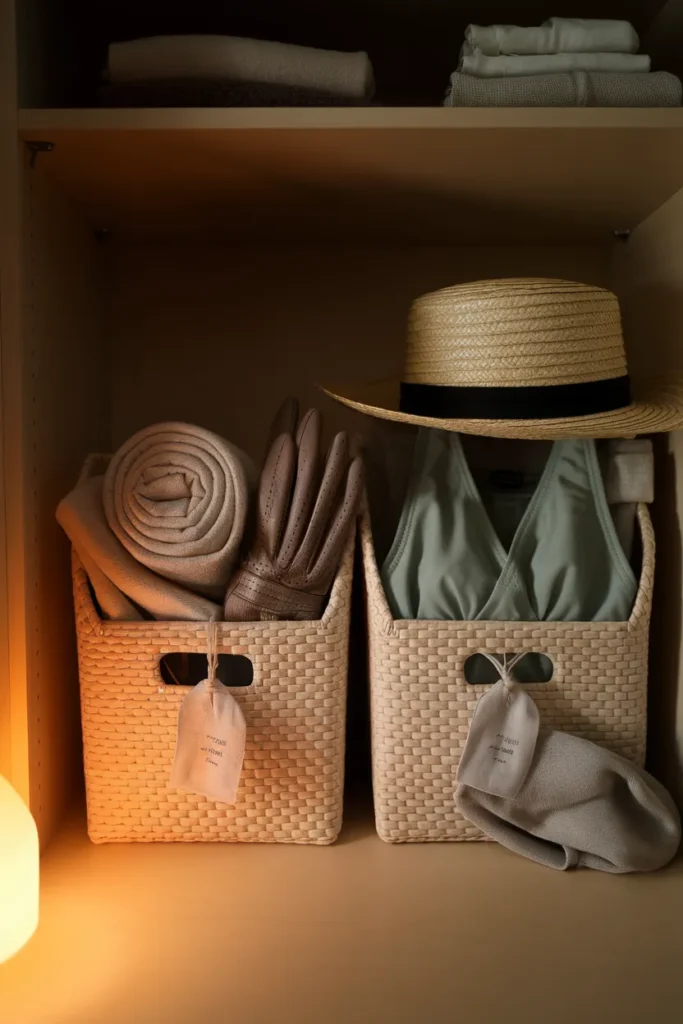
Thirty pieces covers clothing, layers, and shoes. It does not have to cover swimsuits, gloves, or your beach hat, and pretending it does is how year-round capsules collapse.
Keep two labeled bins on your closet shelf instead. The summer kit holds swimsuits, the straw bag, a sun hat, and sandals in their off months. The winter kit holds the scarf, gloves, a beanie, and heavy socks. Underwear, pajamas, and workout gear also live outside the count, always. When the season turns, you swap one bin down and one bin up, a two-minute job, and your everyday rail never gets crowded.
Bags sit outside the 30 too. A structured everyday carrier plus one occasional option covers nearly everything, and if you’re due an upgrade before beach season, start with the best tote bags for summer.
Fit Notes for Petite, Tall, Curvy, and Over 40
The 30-piece list is a template, and the template respects your proportions with a few smart swaps rather than a different wardrobe.
Petite (5’4″ and under): choose ankle-length or cropped versions of the wide-leg trousers and linen pants so the hem breaks cleanly, and look for petite-specific rises in jeans. A slightly shorter blazer keeps the leg line long. Tall (5’9″ and over): shop tall inseams for both jean cuts and check sleeve length on the trench and blazer first, since short sleeves read unfinished faster than any other fit miss.
Curvy and plus-size: prioritize stretch wovens in the trousers, swap the shirt dress for a wrap style if buttons gape, and size the blazer to your shoulders, then have the waist tailored. The full build with sizing sources is in this plus size capsule wardrobe with 16 pieces that actually fit. Over 40 or over 50: nothing on the list expires with age; the only adjustments that matter are the ones that work with your proportions today, like a mid-rise over an ultra-low or a midi hem you’ll actually reach for.
FAQ: Year-Round Capsule Wardrobe Questions
How many pieces should a year round capsule wardrobe have?
Most successful year-round capsules land between 25 and 40 pieces, and 30 is the sweet spot for a weekly-wash, mixed casual-and-work life. Run the laundry math above before copying anyone’s number: days between washes plus three gives your top count, and the rest of the capsule builds around it.
Is a year round capsule better than seasonal capsules?
It’s better for anyone who wants to set up a closet once and stop thinking about it. Seasonal capsules suit people who genuinely enjoy a quarterly refresh and have storage for off-season clothes. If rebuilding your wardrobe four times a year sounds like a chore rather than a hobby, go year-round.
Does a year round capsule work in places with harsh winters or hot summers?
Yes, if you follow the 70/20/10 fabric rule. Your midweight core works in every band, your linen pieces handle 95°F, and your wool coat plus thin merino base layers handle 20°F. Extreme-climate readers should upgrade the two cold anchors and keep everything else identical.
Can I still wear trends with only 30 pieces?
That’s exactly what the wildcard slot is for. Keep one trend or personality piece in rotation, swap it out when you’re over it, and let the other 29 stay stable. You get the fun without the closet creep.
Will these 30 pieces work if I’m petite or plus size?
The categories stay the same; the cuts change. Petite women should choose cropped hems and petite rises, and curvy or plus-size women get better mileage from stretch wovens and wrap silhouettes. The fit notes section above breaks down each swap.
How much does it cost to build, and what’s the cheapest way?
Starting from zero, the tiered approach above typically runs a few hundred dollars in the save and middle tiers before any stretch pieces. The cheapest route is shopping your own closet first, since most women already own a third of this list, then filling gaps at the save tier and upgrading one piece per season.
How long should each piece last, and can everything be machine washed?
Middle-tier pieces should give you three to five years of weekly rotation; save-tier tees are honest one-year workhorses. Everything on the list except the wool coat, blazer, and trench can be machine washed if you buy with the care label in mind, which is worth checking before every purchase.
Your Closet, One Year From Now
Picture next July. You haven’t rebuilt your closet since this weekend, the morning scramble is a 90-second decision, and the same 30 pieces have carried you through a snowstorm, a heat wave, two weddings, and every Tuesday in between. That’s what buy fewer, wear more actually feels like.
Start with one step today: run the laundry math, then pull the pieces you already own that match the checklist. You’ll likely find ten of the 30 hanging in your closet right now. And if you want the whole system on a single printable page, the free 30-Piece Capsule Wardrobe Checklist in the newsletter puts it on your fridge by tonight.
Keep reading

How to Make a Capsule Wardrobe Vision Board (That Actually Guides You)
A capsule wardrobe vision board is supposed to make getting dressed easier. Most of them do the opposite. You save four hundred...

The Capsule Wardrobe Template That Starts With Your Real Closet
You’ve downloaded a capsule wardrobe template before. Maybe three. There was a tidy list of thirty pieces, a suggested color palette, and...

7 Day Cruise Capsule Wardrobe: One Bag, Every Occasion Covered
A 7 day cruise capsule wardrobe sounds like a contradiction. One week, four dress codes, two climates, and a closet roughly the...