
Balletcore Outfits: Soft, Feminine Looks From a Capsule You Already Own
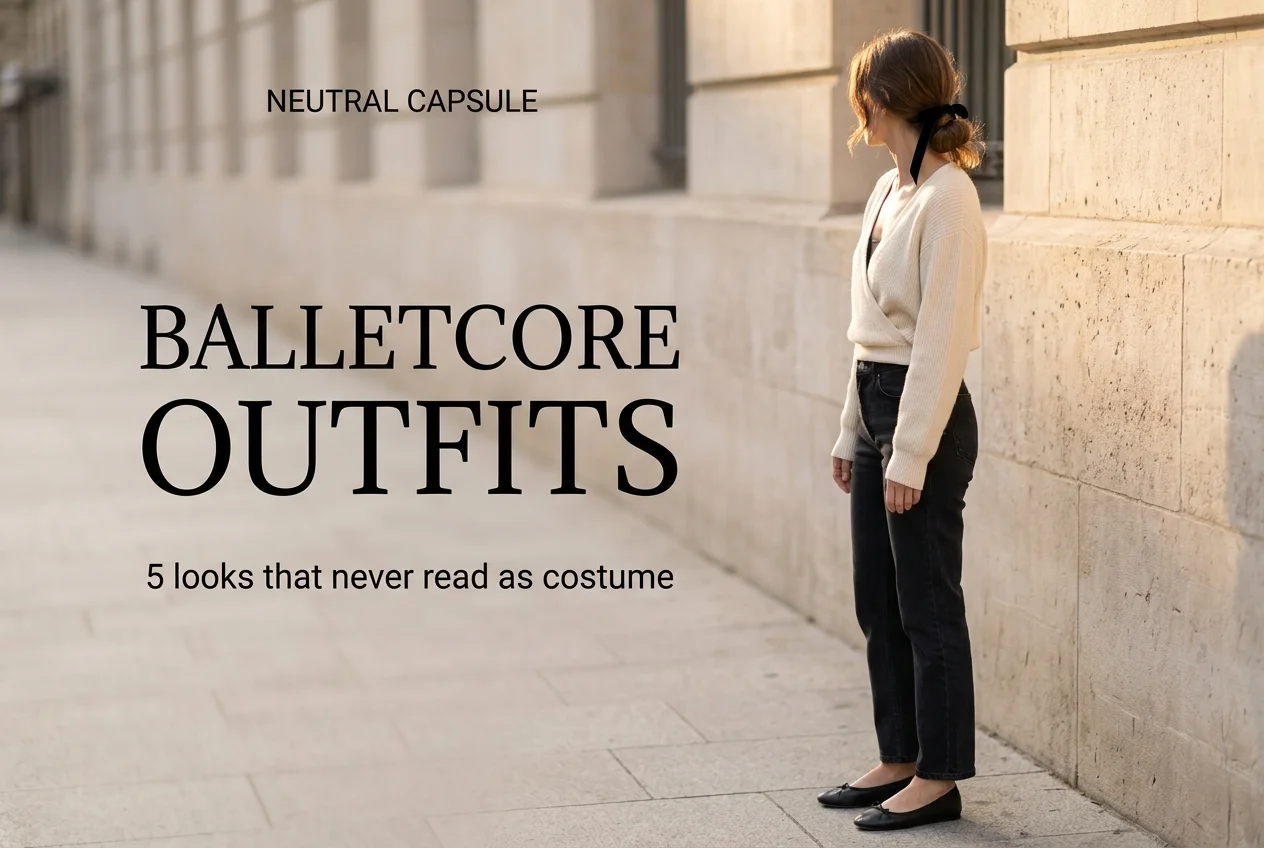
Balletcore outfits have a reputation problem. Half the images you save look like a 24 year old at a photoshoot, and the other half look like actual dancewear. Neither version helps you get dressed on a Tuesday morning.
Here’s the part nobody says out loud: you probably own most of a balletcore wardrobe already. Soft knits. Something with a wrap front. Flats. A few pieces in cream or black. What’s missing isn’t clothing. It’s a rule for how many ballet signals one outfit can carry before it tips into costume. That rule is below, along with five outfit formulas built entirely from a working capsule.
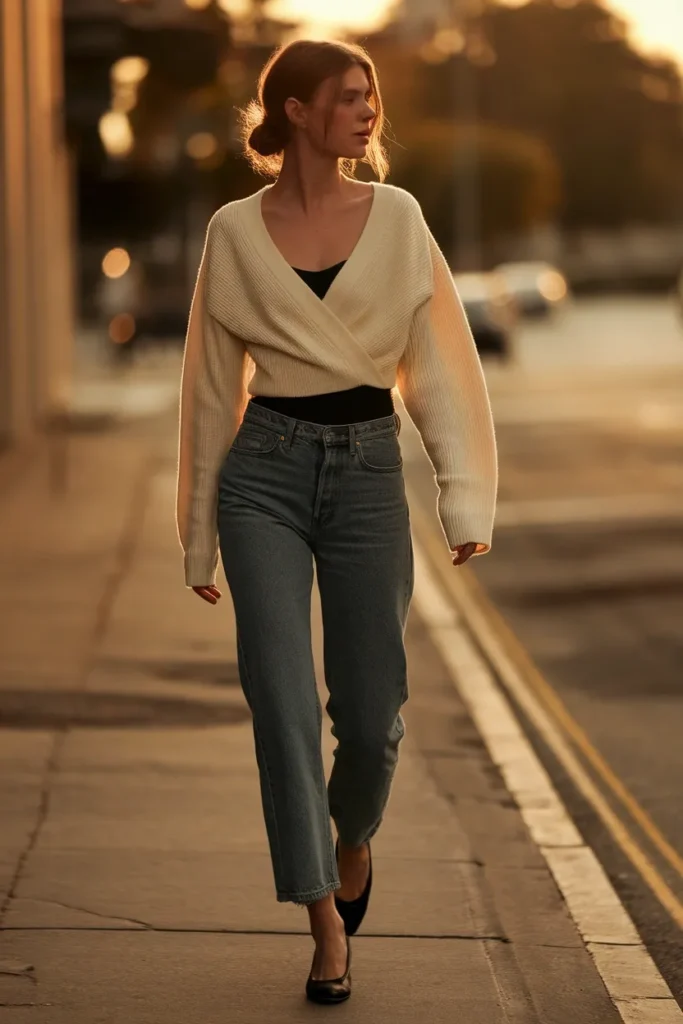
What Balletcore Actually Looks Like in 2026 (It Isn’t the 2022 Version)
Most of the balletcore guides still floating around search results were written in 2022 and 2023, when the aesthetic meant baby pink, tulle, and a lot of ribbon. Those articles are describing a moment that already passed.
The current version is darker and considerably more wearable. Who What Wear’s reporting on the 2026 revival describes a shift toward black leotards worn with unexpected pieces, saturated jewel tones, layered sheers, metallic flats, and an overall mood that reads lived-in rather than sugary. The trend is being driven by dancers now instead of by aesthetic accounts, and it shows. You can read their full breakdown of how balletcore changed between 2022 and 2026 if you want the runway context.
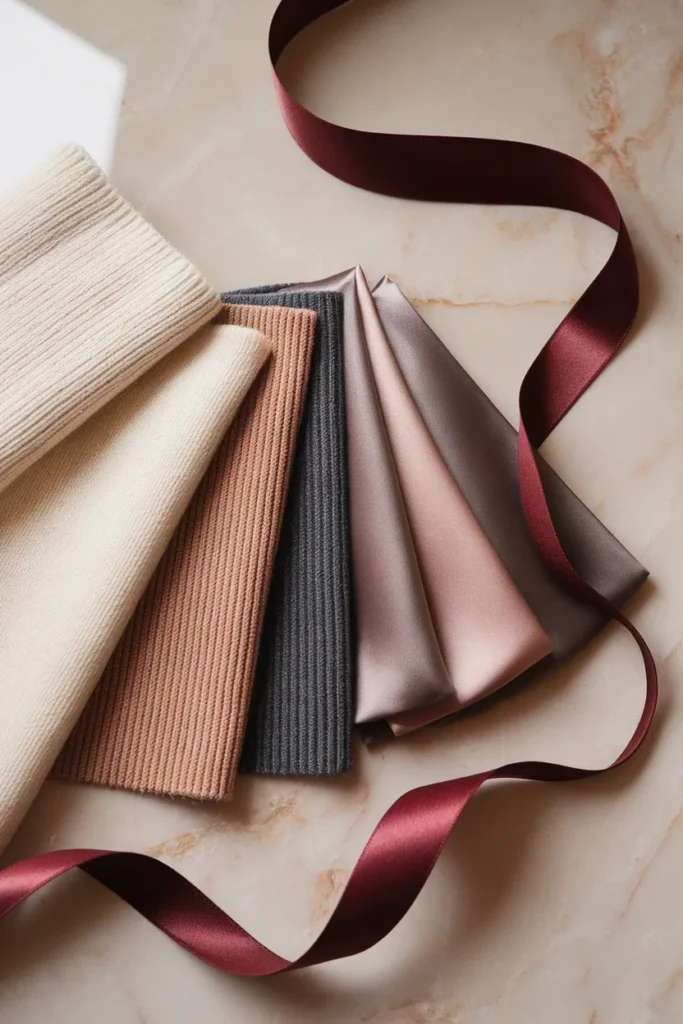
For a capsule closet, this shift is very good news. Black, charcoal, oat, cream, and espresso are already your base. Deep burgundy and inky navy are already the accents you reach for in fall. The 2026 palette overlaps almost perfectly with a neutral capsule, which means you can wear this without buying a pastel wardrobe you’ll abandon by March.
The soft pink version still exists. It just isn’t the only door in anymore.
The Ballet Signal Scale: Why Some Outfits Read Chic and Others Read Costume
Every balletcore piece sends a signal. Some whisper it, some announce it. The reason one outfit looks expensive and the next looks like a recital is almost never the individual pieces. It’s how many signals are stacked at once.
Here’s the scale, from quietest to loudest. Screenshot this one.
| Ballet signal | How loud it reads | Where it works |
|---|---|---|
| Ballet flats | Quiet | Anywhere, daily |
| Wrap-front cardigan or top | Quiet | Anywhere, daily |
| Small ribbon or narrow bow | Quiet | Anywhere, daily |
| Bodysuit worn as a top | Medium | Work, dinner |
| Opaque or sheer tights | Medium | Fall through winter |
| Blush or satin midi skirt | Medium | Dinner, events |
| Leg warmers | Loud | Weekends only |
| Tulle skirt | Loud | Events only |
| An actual leotard | Loud | The studio |
The working rule: one loud, or two quiet. Three signals of any volume and the outfit stops reading as your style and starts reading as a theme.
So a black bodysuit with jeans and flats is two quiet signals plus one medium, which sits right at the edge and works because the jeans ground it. Add leg warmers and you’ve crossed over. Swap the jeans for a tulle skirt and you’ve crossed over twice.
This is also why ballet has fed fashion for a century without ever looking like fancy dress on the street. The Museum at FIT’s Ballerina: Fashion’s Modern Muse exhibition traced exactly this, showing how designers from Balenciaga to Claire McCardell borrowed one element at a time: a wrapped bodice here, a knit separate there, a flat shoe. One borrowed idea per garment. Never the whole costume.
The 9 Capsule Pieces That Do All the Work
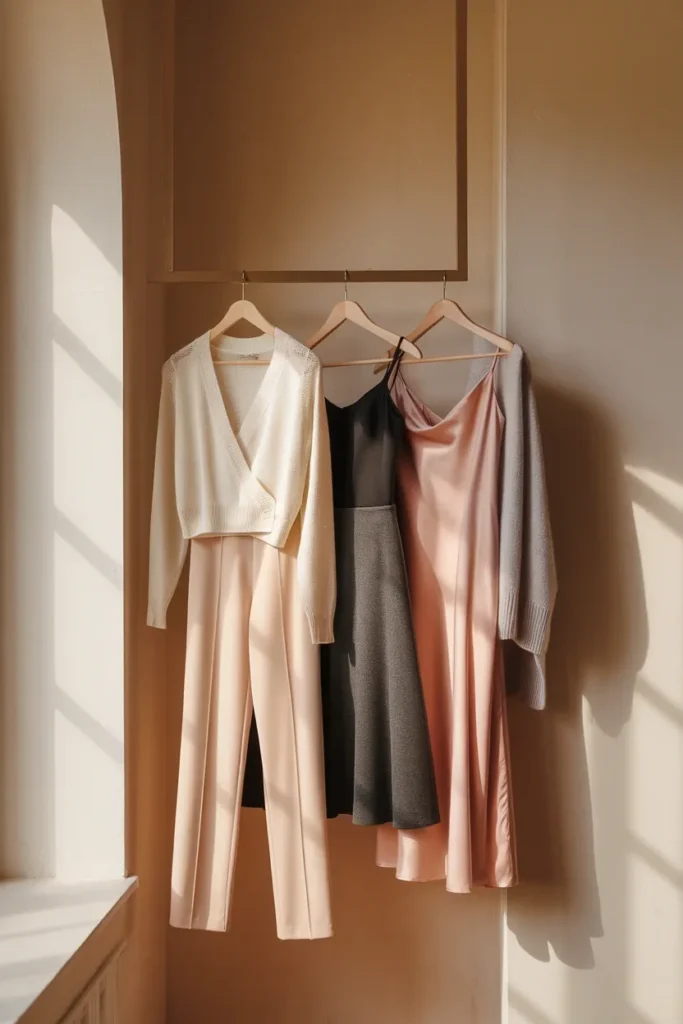
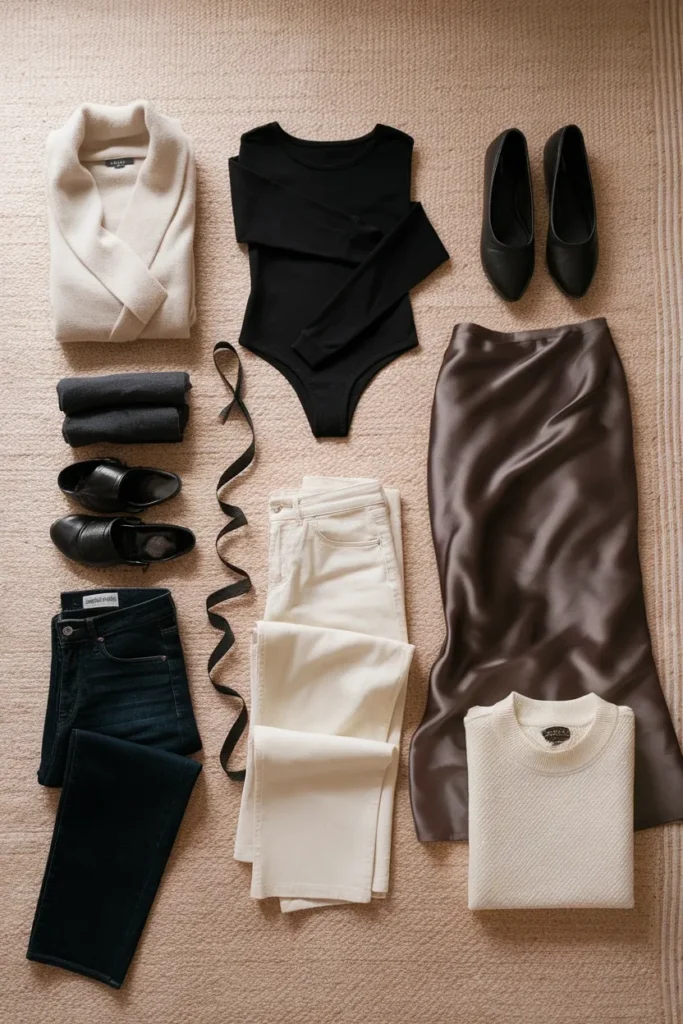
You don’t need a separate balletcore wardrobe. You need nine things, and if your closet is already neutral, you own six of them.
- A wrap-front cardigan in cream, oat, or black. Fine gauge, not chunky. The V it creates is the single most useful shape here.
- A bodysuit in black or ivory. Long sleeve, high or scoop neck. It gives you the smooth tucked line that makes everything else look deliberate.
- Ballet flats in black, cream, or a soft metallic. Leather or suede if the budget allows.
- Opaque tights in black or charcoal. Sheer black once the weather warms.
- A midi skirt with drape. Satin, silk, or a soft twill in charcoal, espresso, or blush.
- Straight or wide-leg trousers in cream, oat, or black.
- Straight-leg jeans, mid or dark wash, no distressing.
- A soft knit tee or fine-gauge sweater in ivory or gray.
- A narrow ribbon or a small bow clip. Grosgrain, velvet, or silk. Costs almost nothing and does an enormous amount.
Six of those nine are just good basics that happen to be ballet-adjacent. If your foundation layer needs work first, the eight capsule wardrobe tops that anchor every outfit covers the bodysuit and knit tee decisions in far more detail than fits here.
The three genuinely new buys for most people are the wrap cardigan, the flats, and the ribbon. That’s a small, cheap entry point into an aesthetic that photographs beautifully
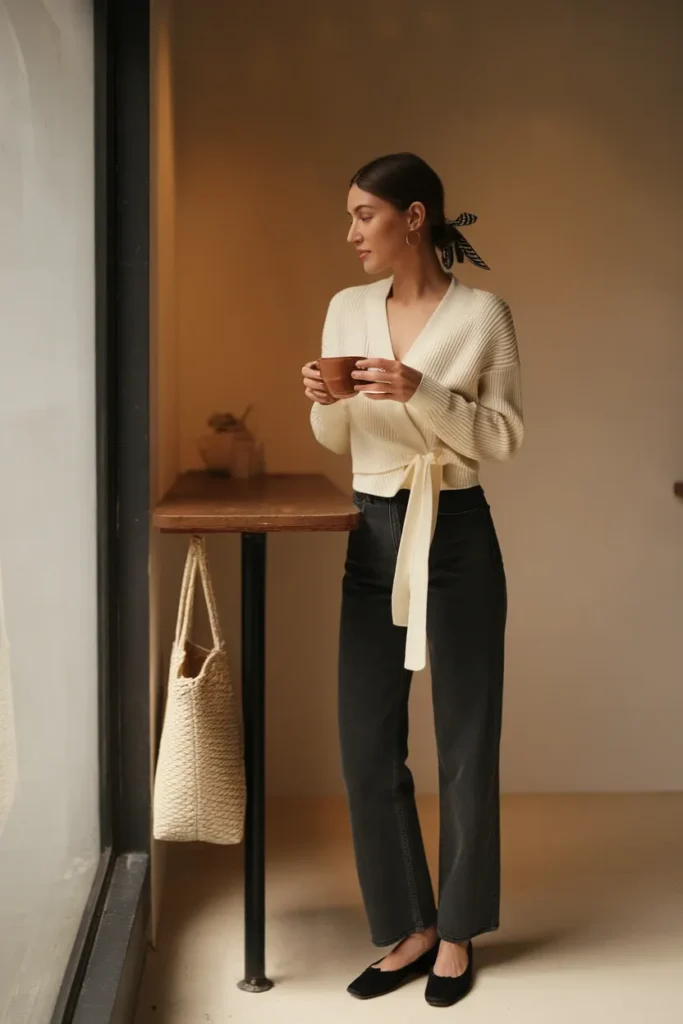
Balletcore Outfit Formula 1: The Coffee Run
Straight-leg jeans. Cream wrap cardigan, worn closed, sleeves pushed to the elbow. Black ballet flats. Hair low and loose with a narrow ribbon tied at the base.
Two quiet signals, one neutral base. It reads as put-together on a Saturday without any part of it looking planned.
The detail that makes this work is the sleeve push. A wrap cardigan buttoned to the wrist reads slightly prim. Shove the sleeves up and it immediately looks like something you throw on, which is exactly the register balletcore needs to sit in.
For the jeans, avoid anything with a heavy distressed hem. The flat shoe has a low profile and a frayed hem competing next to it makes the ankle look messy. A clean straight hem hitting right at the ankle bone is what you want.
If you’re carrying anything, a woven tote or a small structured crossbody in tan or black keeps this out of preppy territory. The ribbon is doing the ballet work already, so the bag should stay quiet. Small hardware, no charms, nothing shiny.
Swap the flats for white sneakers on a genuinely long walking day. You lose the ballet signal, but the cardigan and ribbon carry enough of it. Balletcore that hurts your feet defeats the entire point of an aesthetic built on comfort. If you want more ideas for pieces that do the heavy lifting here, the small accessories that change everything in a capsule breaks down ribbon, bag, and jewelry pairings for exactly this kind of outfit.
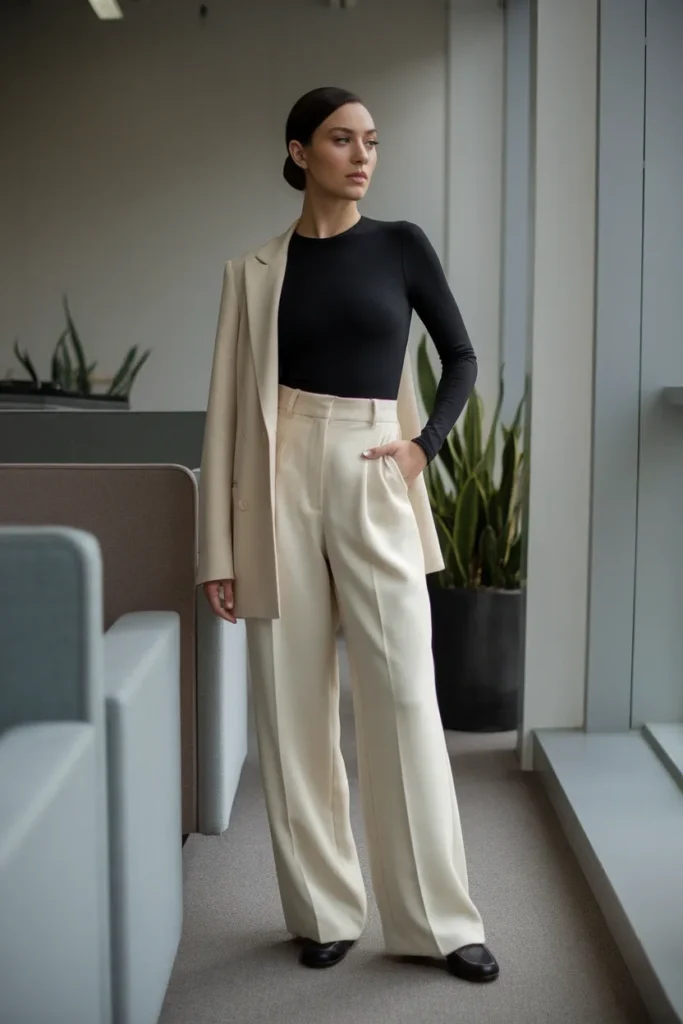
Balletcore Outfit Formula 2: The Office Version
Black bodysuit tucked into cream wide-leg trousers. Ballet flats or loafers. A fine gold hoop, and nothing else.
Balletcore work outfits are one of the most-saved variations on Pinterest, and they’re also where people most often overshoot. The fix is subtraction. In an office, the bodysuit is your only real ballet signal. Everything else should be plain, well-cut, and slightly severe to balance it.
The bodysuit is the whole trick. It creates an unbroken vertical line from shoulder to waist that a tucked blouse never quite achieves, because there’s no fabric bunching at the waistband. Pair it with a high-rise trouser and the proportion does the work that a blazer usually has to do.
Add the blazer anyway if your office runs formal. Oat, camel, or black, unstructured shoulder, worn open. It reads as professional and it caps the softness so nobody’s reading your outfit as an aesthetic choice.
On shoes: a ballet flat in a conference room can look slightly young depending on your industry. A loafer keeps the low profile and the neat toe while adding enough weight to hold its own, and it’s often the smarter call for a workday that involves any standing. If you’re deciding between pairs, the best loafers for women in 2026, chosen the capsule way sorts them by shape and by which outfits they actually pair with.
Skip the ribbon at work. A low bun on its own carries the reference perfectly well.
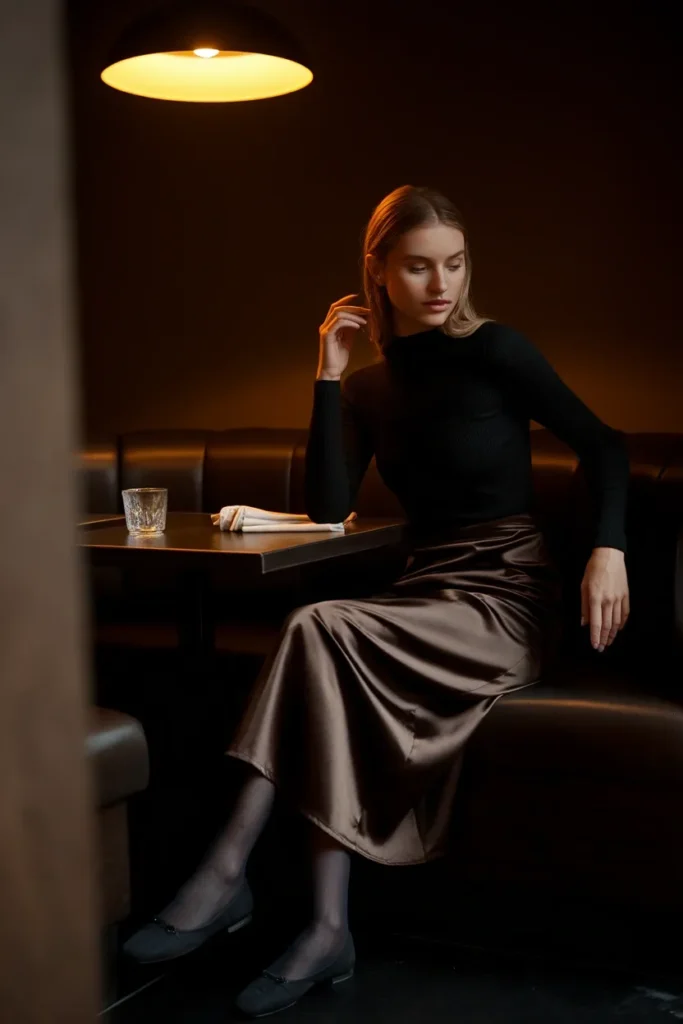
Balletcore Outfit Formula 3: Dinner, Without the Tulle
Satin midi skirt in espresso or charcoal. Black bodysuit or a fitted fine-knit top. Ballet flats or a low slingback. Bare legs in summer, sheer black tights once it cools.
This is the formula most likely to make someone ask where your outfit is from, and it contains nothing unusual.
The reason it works is texture contrast. A matte knit against a liquid satin skirt gives you dimension without a single pattern or bright color. Your eye reads it as considered. Most people never work out why.
Go for a bias-cut skirt if you’re buying one. A straight-cut satin skirt hangs like a tube and clings in all the places you’d rather it didn’t. A bias cut falls in a soft spiral, skims instead of grips, and moves when you walk, which is the actual ballet reference doing its job.
For color: espresso, charcoal, and inky navy all photograph richer than black and are more forgiving in restaurant lighting. Blush works too, though it demands a darker top to stay out of bridesmaid territory.
Jewelry stays minimal. One gold hoop or a thin chain. The outfit is already carrying two ballet signals, and a statement necklace pushes it to three.
Balletcore Outfit Formula 4: Jeans, But Softer
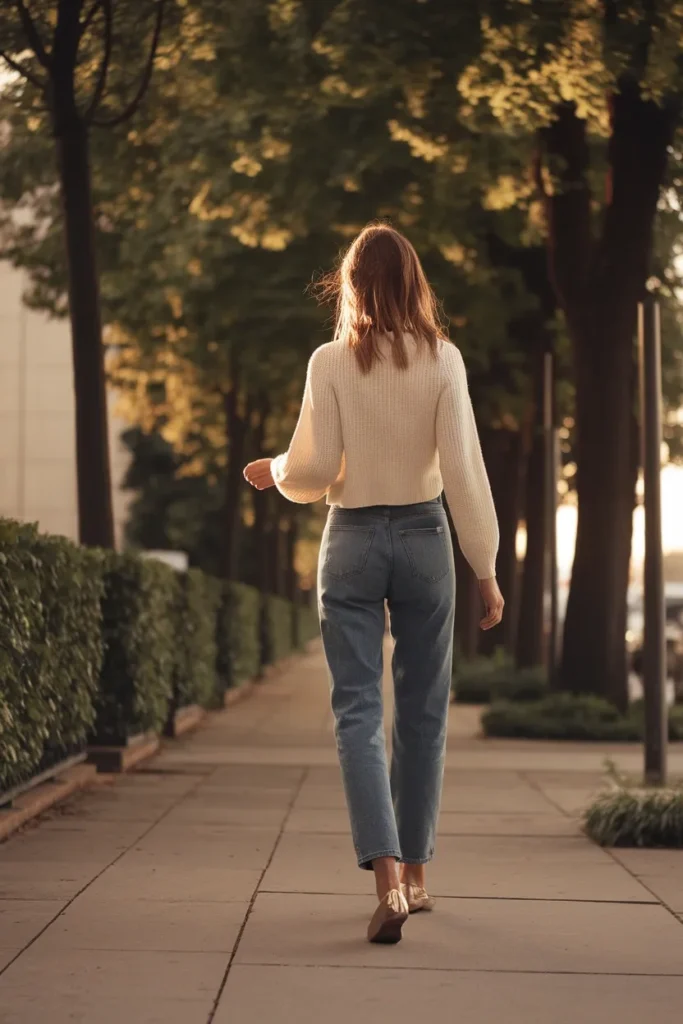
Mid-wash straight jeans. Ivory fine-gauge sweater, front hem tucked. Cream or metallic ballet flats. Gold hoops.
This one barely qualifies as a trend outfit, and that’s the point. It’s the version you’ll actually wear on repeat, and it sits about two inches away from classic Parisian dressing. If that overlap interests you, the French girl style guide to dressing like a Parisian minimalist covers the same shapes from the other direction.
The front tuck matters more than it sounds. A full tuck reads formal, an untucked sweater reads slouchy, and a loose front tuck lands exactly in between while showing enough waistline to keep the proportions from going boxy.
Metallic flats are the underrated move in this formula. A soft champagne or pewter leather picks up warmth from the sweater and adds just enough shine that the outfit doesn’t go flat in photos. They also read as more intentional than black flats in a casual outfit, without costing you any polish.
If you want more ballet in it, add a narrow ribbon. If you want less, add a leather belt and it becomes an ordinary very good jeans outfit. Both are correct.
Balletcore Outfit Formula 5: The Dark Version
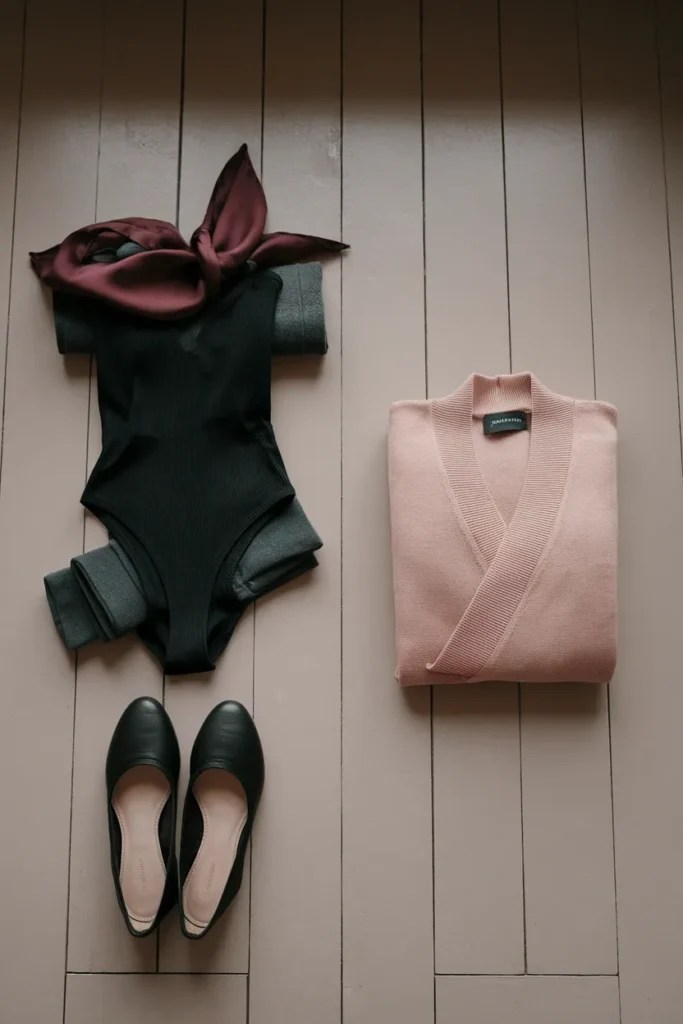
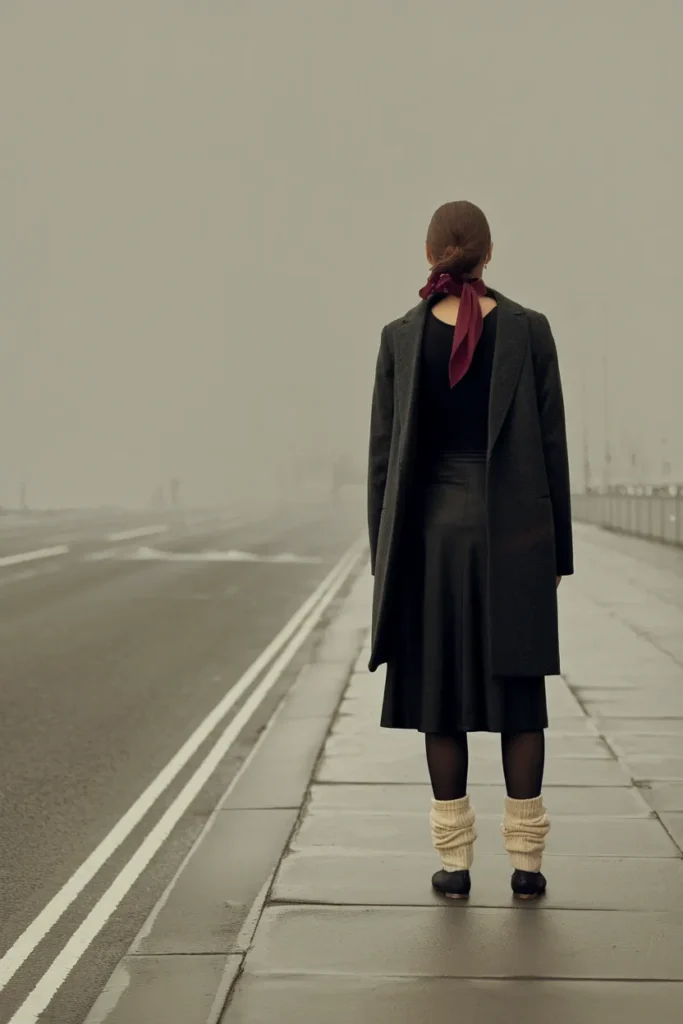
Black bodysuit. Charcoal or black midi skirt. Black opaque tights. Black flats. One deep jewel tone somewhere: a burgundy silk scarf, an emerald earring, an inky navy coat over the top.
Nearly every guide skips this variation because it doesn’t fit the pastel framing they committed to years ago. It’s also the version most likely to work on a woman over 35, in a cold-weather city, in an office, or in a life that involves getting on a train.
Tonal black is the easiest sophisticated outfit in existence, and adding a single ballet cue turns it from plain into deliberate. The flats do it. The tights do it. Together they’re two mediums, which is right at the line, so keep the top half completely unadorned.
The jewel accent is what stops it going funereal. One saturated color against full black reads as intentional styling. Burgundy is the most forgiving. Emerald and cobalt both work if they suit your coloring.
Hair up, always, with this one. A low bun sharpens the whole thing. Hair down turns it into a generic black outfit and you lose the reference entirely.
Balletcore Fall and Winter Outfits: Layering Without Losing the Line
Balletcore is built on long, uninterrupted lines, and most winter layering destroys them. Bulk at the hip, a coat that stops mid-thigh, a scarf swallowing the neck. All of it fights the silhouette.
Three rules keep it intact.
Layer thin over thin. A fine-knit cardigan over a bodysuit, then a coat. Never a chunky sweater over a chunky anything. Ballet layering is about count, not thickness, and dancers layer for warmth precisely by stacking thin pieces.
Match your tights to your shoes. Black tights with black flats create one continuous line from knee to toe, which makes your legs read longer and stops the outfit from cutting at the ankle. Nude tights with black shoes chop you in half.
Choose a coat that clears the skirt. Either well above the hem or well below it. A coat ending within two inches of your skirt hem creates a stacked-layer effect that looks accidental. Long and lean beats cropped here, every time. The six capsule wardrobe jackets that actually earn their hanger space covers which lengths play well with midi skirts if you’re shopping this fall.
Leg warmers are the one loud piece that genuinely earns a place in winter, worn over tights, scrunched at the ankle, with flats. Weekends only. Grocery store, dog walk, coffee. Not the office.
What to Buy, What to Skip, and Roughly What It Costs
The entry pieces are cheap. The pieces that make it look expensive are not always the ones you’d guess.
Worth spending on: the ballet flats and the wrap cardigan. Flats sit directly on the floor and take the most visible wear, and a cheap pair creases across the vamp within a month and never recovers. Leather or suede, with a real sole. Mid-tier options from Madewell, J.Crew, or Quince generally land under $150, and Sezane’s ballerinas sit around the $150 mark at the upper end of that tier. A well-made pair worn three times a week for two years costs you well under a dollar a wear, which is about as good as cost-per-wear gets.
Fine to buy cheap: tights, the ribbon, the bodysuit. Target, Old Navy, and Uniqlo all handle these well, generally in the $10 to $40 range. Bodysuits stretch out eventually no matter what you spend, so there’s no argument for the expensive version.
Skip entirely, at least at first: the tulle skirt, the leotard, and anything with an oversized bow. High cost per wear, single-context, and they age out of the trend first. If you fall for the aesthetic and still want tulle in six months, buy it then.
The one dupe worth knowing: if you love a $300-plus satin bias skirt, Quince and Everlane both cut similar shapes in washable silk or a good satin blend for a fraction of it. The trade-off is usually the weight of the fabric, so check that it hangs rather than clings before you commit.
Balletcore by Body Type and Age
The aesthetic gets sold on very tall, very slim bodies, which is a marketing choice and not a rule. Here’s what to adjust so the proportions work with your frame rather than against it.
Petite (5’4″ and under): keep the skirt hem at mid-calf or shorter and match tights to shoes. A midi that hits at the widest part of your calf will visually shorten you. Wide-leg trousers should be hemmed to graze the floor over a flat.
Tall (5’9″ and over): you can carry the long lean line better than anyone, and a full-length skirt with flats looks intentional on you where it can overwhelm a shorter frame. Watch sleeve length on wrap cardigans, which often run short.
Curvy and midsize: the bodysuit is your best friend here for the smooth waistline, but size up top and check the shoulder seam. A wrap cardigan tied at your natural waist rather than the hip defines the shape instead of flattening it. Bias-cut skirts skim; straight-cut satin does not.
Over 40 and over 50: the dark version above is written for you. Drop the ribbon, drop the leg warmers, keep the flats, the bodysuit, and the drape. What remains is a genuinely elegant outfit that happens to reference ballet, and nobody will read it as chasing a trend.
Across every frame, the fix is the same: reduce signal count and let the cut do the work.
The Colors That Keep Balletcore Out of Costume Territory
Pale pink is the color everyone associates with balletcore, and it’s also the one most likely to wash you out or read young. It isn’t a bad color. It’s just a demanding one.
The safer base is the one your capsule already runs on: cream, oat, charcoal, espresso, soft black. Build the outfit in those, then let a single ballet element carry the reference. You’ll look expensive rather than themed.
If you want pink in it, the shade matters far more than the amount. A cool, dusty, slightly gray pink flatters most people. A warm bubblegum pink flatters very few. And blush against your face is a completely different decision from blush on a skirt, which is why some people can wear the color beautifully in one placement and terribly in another. Working out which pinks and neutrals actually suit your coloring takes about twenty minutes and saves a lot of returns.
For accents, burgundy, inky navy, and forest all sit well against the balletcore base and lean the whole thing more adult. Silver and champagne metallics work better than gold with the cooler versions.
One accent color per outfit. That’s the entire color rule.
Balletcore Outfits: Frequently Asked Questions
What is balletcore fashion, exactly?
It’s a style borrowed from dancewear and ballet studio culture: wrap tops, bodysuits, soft knits, flats, tights, drape, and a muted palette. In its wearable form it means taking one or two of those elements and putting them into ordinary clothes, rather than dressing as a dancer.
Is balletcore still in style in 2026?
Yes, though it looks different from its 2022 version. The current iteration runs darker and more grounded, with black, jewel tones, and metallic flats replacing the pastel and tulle era. It’s also become less of a trend cycle and more of a permanent styling vocabulary, in the same way French girl dressing did.
Can I wear balletcore if I’m not a dancer and never was?
Yes, and honestly the non-dancers usually wear it better, because they aren’t tempted to reach for real dancewear. Stick to the quiet signals: flats, wrap fronts, a ribbon. Nobody needs to see a leotard.
Can you wear balletcore over 40?
Absolutely, with the signal count turned down. Keep the flats, the bodysuit, and the satin drape. Drop the leg warmers, the bows, and the pale pink. What you’re left with reads as elegant rather than as a trend.
Are ballet flats necessary for the balletcore look?
They’re the strongest single shortcut, but no. A loafer, a mesh flat, a low slingback, or even a clean white sneaker will all hold the outfit together as long as another ballet element is present. The low profile and neat toe matter more than the specific shoe.
Is balletcore appropriate for work?
Yes, in its subtracted form. A bodysuit with wide-leg trousers and loafers is entirely office-appropriate. Save the tights, ribbons, and anything satin for after hours, and add a blazer if your workplace runs formal.
How do I keep a balletcore outfit from looking like a costume?
Count your signals before you leave the house. One loud piece or two quiet ones, and no more. If you’re wearing flats, a wrap top, a ribbon, tights, and leg warmers all at once, remove two of them. That single edit fixes nearly every balletcore outfit that isn’t working.
Do satin and silk balletcore pieces hold up to real wear?
Washable silk and good satin blends hold up well if you wash cold, hang dry, and steam rather than iron. Genuine silk charmeuse wants dry cleaning or a very careful hand wash. Tights and bodysuits are the true consumables here and should be replaced every season or two without guilt.
Start With Two Pieces, Not Twenty
The thing worth taking from all of this is that balletcore isn’t a wardrobe you buy. It’s a finish you apply to the clothes already hanging in your closet.
Pull one wrap-front piece and one pair of flats this week. Put them with jeans you already own. Add a ribbon if you’re feeling it, and skip it if you’re not. That’s a complete balletcore outfit, and it cost you almost nothing.
Then work down the signal scale from there, one formula at a time, and keep only the versions you actually reach for on a normal morning. A closet built that way stays wearable long after the trend name stops being useful.
Keep reading
Winter 2026 Fashion Trends Worth Your Closet Space
Every winter fashion trends 2026 roundup you have read so far has handed you a shopping list. Five trends here, twenty-three there....
Fall 2026 Fashion Trends: The Looks Worth Adding to Your Capsule
Every fall fashion trends 2026 roundup you’ve read this month has the same problem. It tells you satin is back, hands you...
Whimsigoth Outfits: Witchy, Romantic Style You Can Build From Your Fall Capsule
The first time whimsigoth outfits showed up in your feed, you probably saved four of them and then wore none. That is...
One Comment