
Boho Chic Outfits: The Modern Take on Free-Spirited Dressing
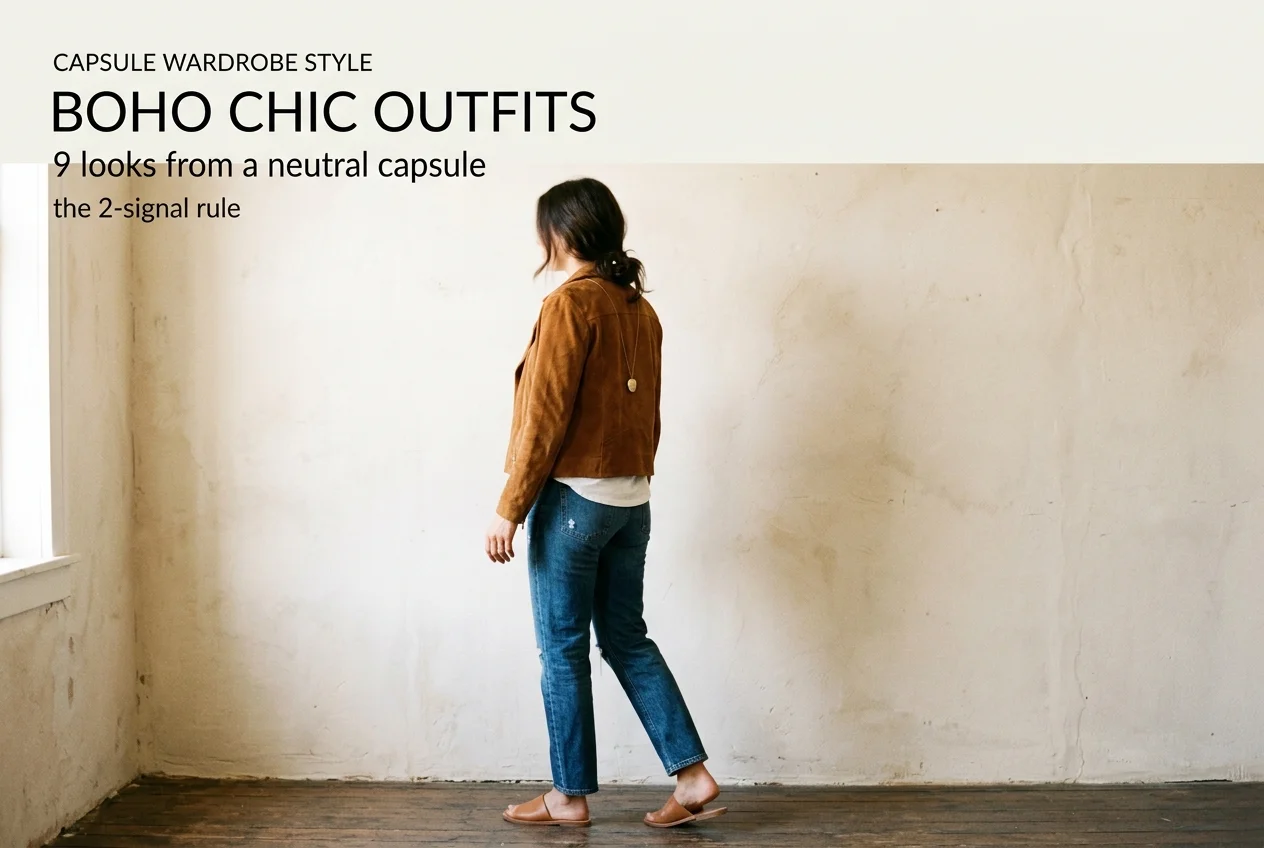
Boho chic outfits have a reputation problem. Half of us love the look on a Pinterest board and then put on a fringe vest, catch our reflection, and immediately take it off. It reads costume. It reads like we’re trying. So here’s what this guide does differently: instead of handing you forty things to buy, it gives you a dial that controls exactly how much boho goes into an outfit, then walks you through nine looks you can build tonight from a closet that’s mostly neutrals.
Boho works best when it’s a seasoning rather than the whole meal. That single idea is what the rest of this article is built on.
What Boho Chic Actually Means in 2026 (And What Actually Changed)
The original version wasn’t styled by anyone. Bohemian dressing came out of the 1960s and 70s as a genuine rejection of buying things, which is why so much of it was handmade. A Museum of Fine Arts Boston exhibition of 54 original ensembles sorted the era into five distinct camps, ethnic, craft, trippy, retro, and fantasy, and made a point that still lands: for once, Paris and London and New York weren’t dictating anything. They were copying what young people had already invented in their bedrooms. That DIY root is why crochet, embroidery, and patchwork carry more weight in this aesthetic than any single silhouette does.
What changed in 2026 is the polish level. Fashion forecasting firm Heuritech tracked a 30% year-over-year jump in global boho chic searches, and the pieces climbing fastest are the restrained ones: lace trim, suede, wide-leg denim. Nobody’s asking for a tapestry vest and a headband. The current read is a lace-trimmed slip under a structured coat, or one suede fringe jacket over an otherwise plain outfit.
That’s good news for a capsule closet. It means you’re building on the same closet-first logic behind balletcore outfits: take one aesthetic signal, apply it to pieces you already wear, stop there.
The Boho Dial: How Much Is Too Much
Here’s the framework nobody else gives you. Every boho element in an outfit counts as one signal. Count your signals before you leave the house.
| Setting | Signals | What it reads as | Wear it |
|---|---|---|---|
| 1. Whisper | One | A neutral outfit with a story | Office, school pickup, dinner with his parents |
| 2. Sweet spot | Two | Deliberately, confidently boho | Weekends, travel, brunch, most of your life |
| 3. Full send | Three or more | Costume territory unless you’re at the event | Festivals, beach vacation, photo shoots |
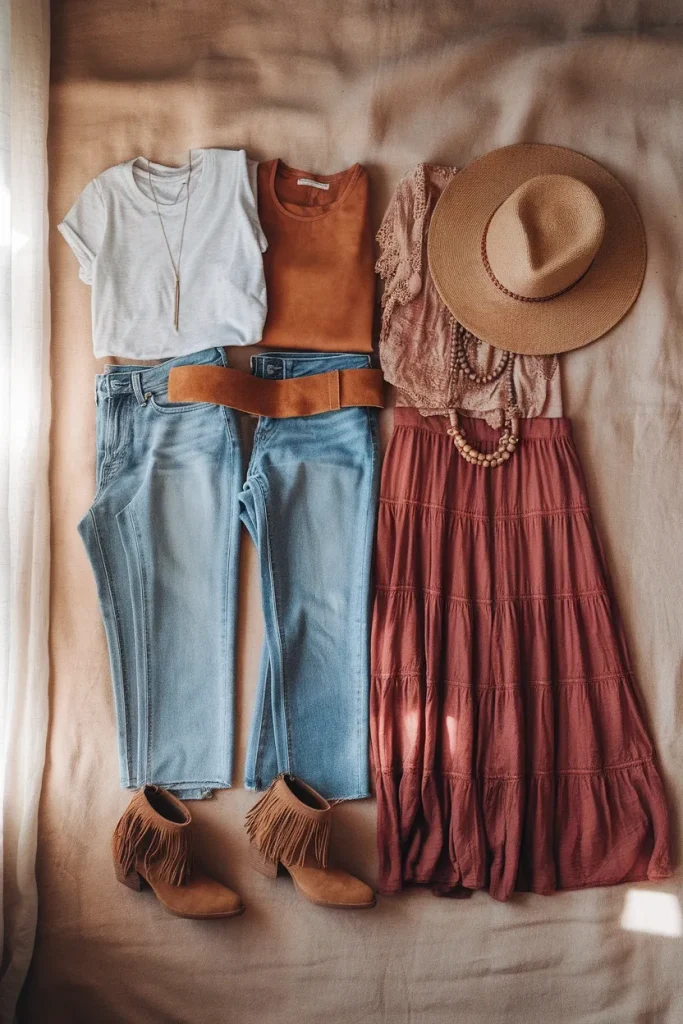
The rule underneath it: two signals maximum for everyday wear, and the rest of the outfit stays plain. A tiered skirt plus a peasant blouse plus fringe boots plus stacked bangles is four signals, which is why it looks like you’re headed to a themed party. Swap the peasant blouse for a plain white tee and drop the bangles. Same skirt, same boots, suddenly it works.
Most women overshoot because each individual piece looked great in isolation. Count first. Then subtract.
The Five Boho Signals Already Hiding in Your Closet
You need to know what counts as a signal before you can count them. There are five categories, and most neutral closets already contain two or three.
Texture
Crochet, macramé, suede, raffia, waffle knit, anything with visible handwork. Texture is the single most efficient boho signal because it reads instantly without adding a print or a color. One open-weave cardigan does more than an entire floral outfit.
Paisley, small ditsy florals, block print, ikat, batik. Print is the loudest signal and the easiest one to overdo. If you’re using print, it’s usually your only signal.
Silhouette
Volume in the wrong place for a normal outfit: a tiered skirt, a bell sleeve, a wide flared leg, a kaftan cut, a loose kimono layer. Silhouette signals feel dressy without effort and photograph beautifully.
Jewelry
Layered chains, brass or tarnished gold, natural stone, a single long pendant, small hoops stacked in one ear. Jewelry counts. Plenty of women forget that and end up at four signals without realizing.
Footwear
Flat leather sandals, tall suede boots, espadrilles, western-leaning ankle boots, anything with fringe or a woven upper. Footwear is where boho most often sneaks in unnoticed, so check your feet before you count.
Two of these, no more, for normal life. If you’re unsure which two to pick, texture plus footwear is the most forgiving combination, and it’s why the small accessories that change an outfit’s whole direction matter so much more here than in a minimalist outfit.
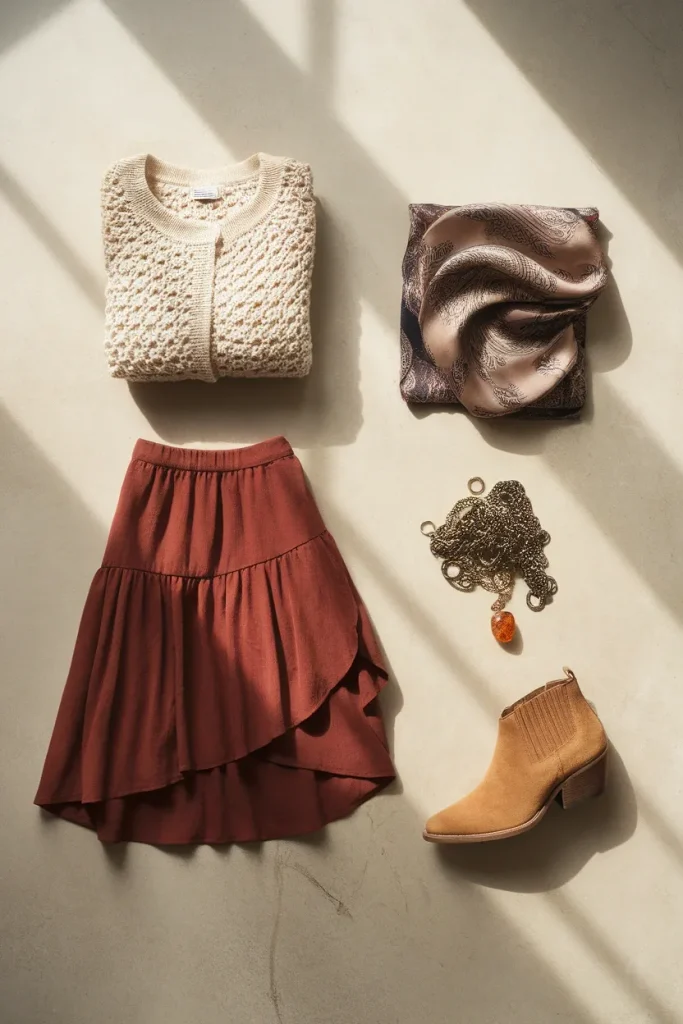
9 Boho Chic Outfits You Can Build From a Neutral Capsule
Every formula below is two signals or fewer. The signals are named so you can see the math.
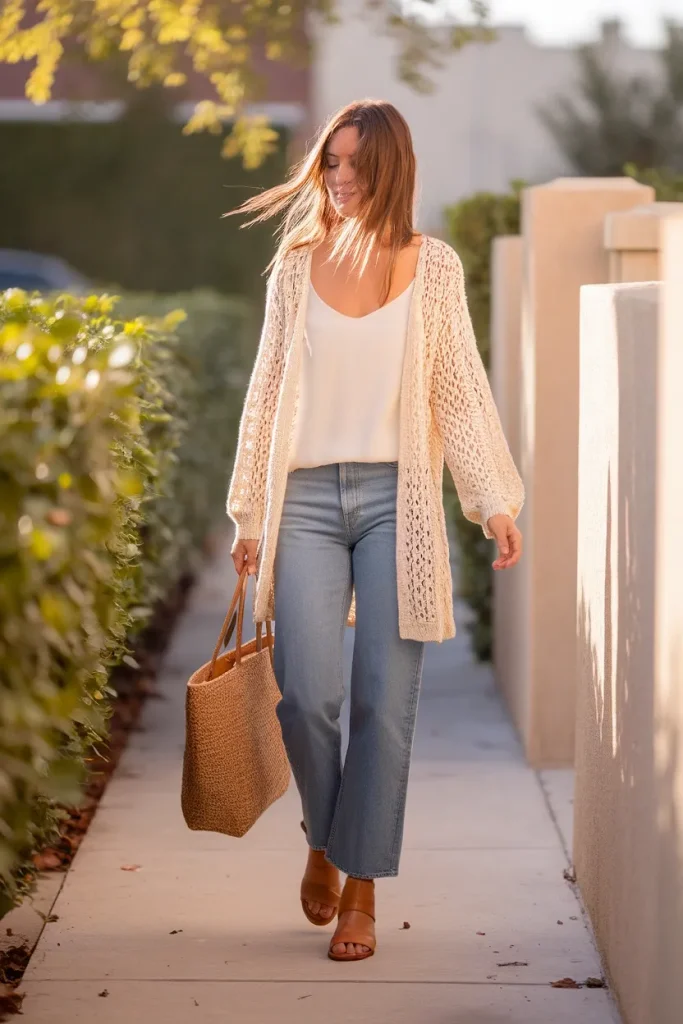
1. The one that always works. White tee, straight-leg indigo jeans, cream crochet cardigan, flat tan sandals. Signals: texture, footwear. Start here if you’ve never worn boho and you’re nervous about it. It’s the highest-value look on this list and it costs you nothing new.
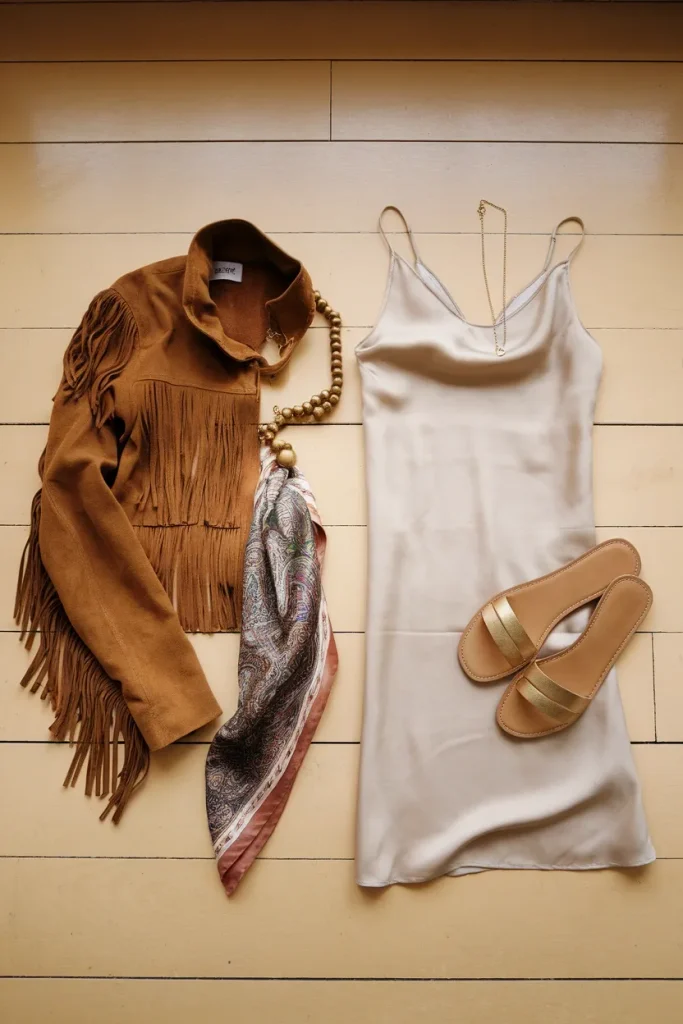
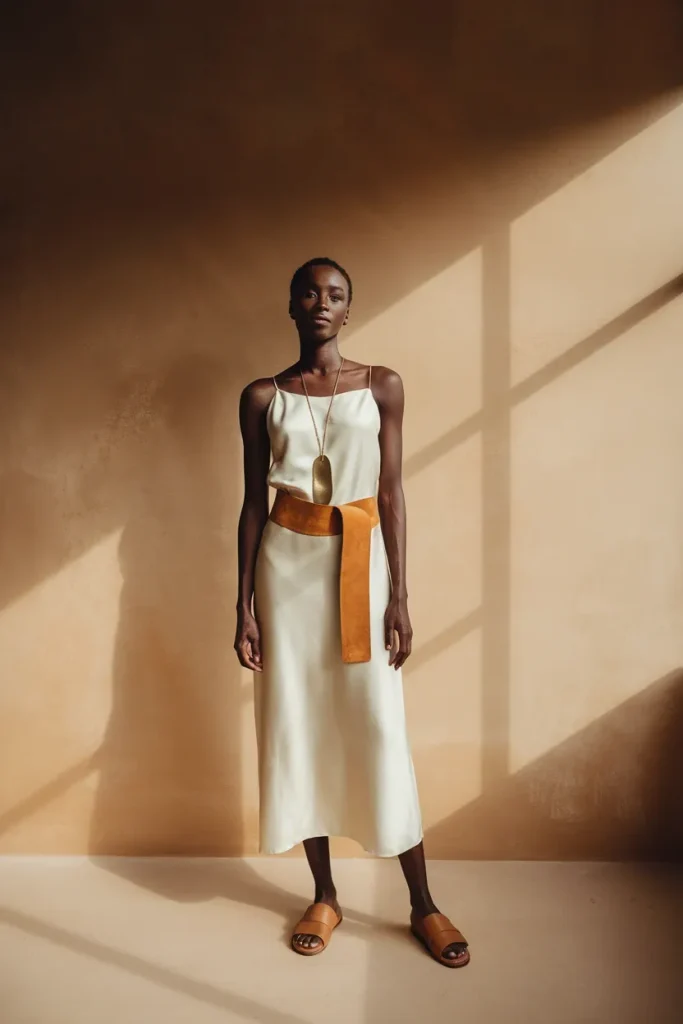
2. Slip dress, softened. Ivory or oat silk slip dress, caramel suede belt cinched at the natural waist, flat leather sandals, one long pendant. Signals: texture, jewelry. The belt is doing all the work.
3. Tiered skirt, plain top. Rust or oat tiered midi skirt, fitted white tank or plain tee tucked in, simple sandals. Signals: silhouette. One signal, which means you can add fringe boots later and stay in the sweet spot.
4. The suede jacket outfit. Caramel suede jacket over a plain white tee and straight jeans, flat boots. Signals: texture. A suede jacket is the single highest-leverage boho purchase for a neutral closet because it converts four existing outfits at once.
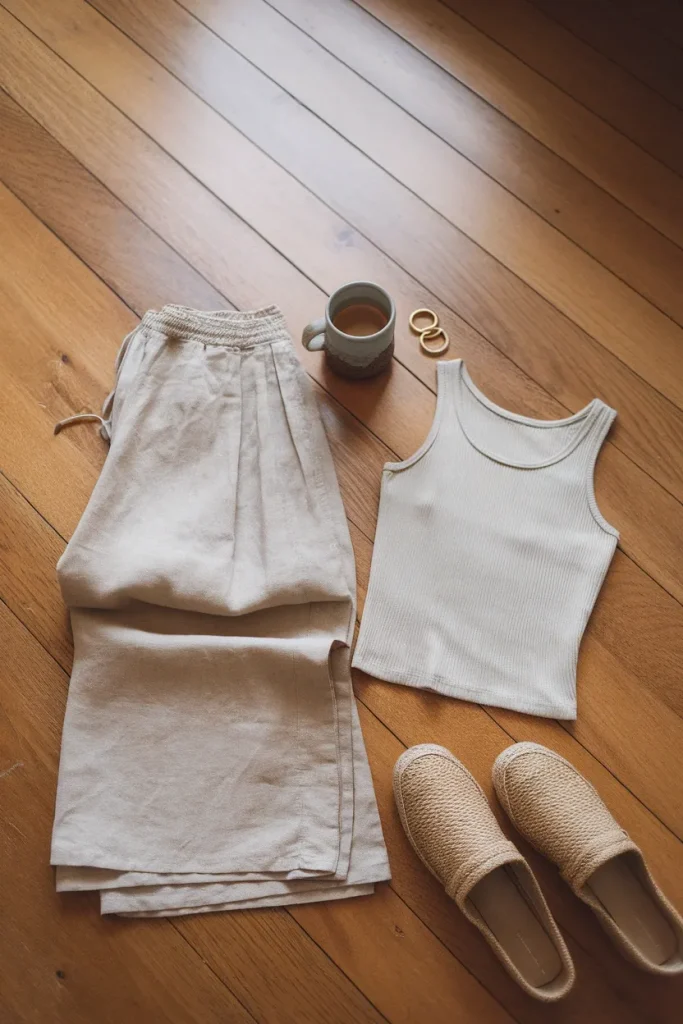
5. Wide leg and a tank. Oat or ivory wide-leg linen pants, fitted ribbed tank, espadrilles or flat sandals, gold hoops. Signals: silhouette, footwear. Reads expensive in July and takes eleven seconds to assemble.
6. Kimono over neutrals. Long open lightweight kimono or duster in a muted print, plain tank and jeans underneath, flat sandals. Signals: print, silhouette. Keep the jewelry off with this one.
7. Lace under structure. Lace-trimmed camisole or slip, plain blazer or denim jacket over it, straight jeans, loafers. Signals: texture. The structured layer is what keeps it out of lingerie territory.
8. The maxi and a jean jacket. Floral or solid maxi dress, classic denim jacket, flat sandals. Signals: silhouette, print. The denim is deliberately unromantic, and that’s the point.
9. Vacation boho. White cotton midi dress, woven raffia tote, flat leather sandals, straw hat. Signals: texture, footwear. This is the only look here that can take a third signal, because the setting carries it.
A note on shoes, since six of these nine end in sandals: comfort decides whether you actually repeat the outfit. Pick flat sandals that survive a full day of walking over the pretty ones you take off after an hour.
Fall Boho: The Version That Works in September
Boho is filed as a summer aesthetic in most people’s heads, which is exactly why fall boho feels fresh. The 2026 revival is running on suede, fringe, and chunky knits, all cold-weather materials. Between 45 and 70 degrees, the aesthetic actually gets easier because layering gives you texture for free.
Three formulas that carry September through November:
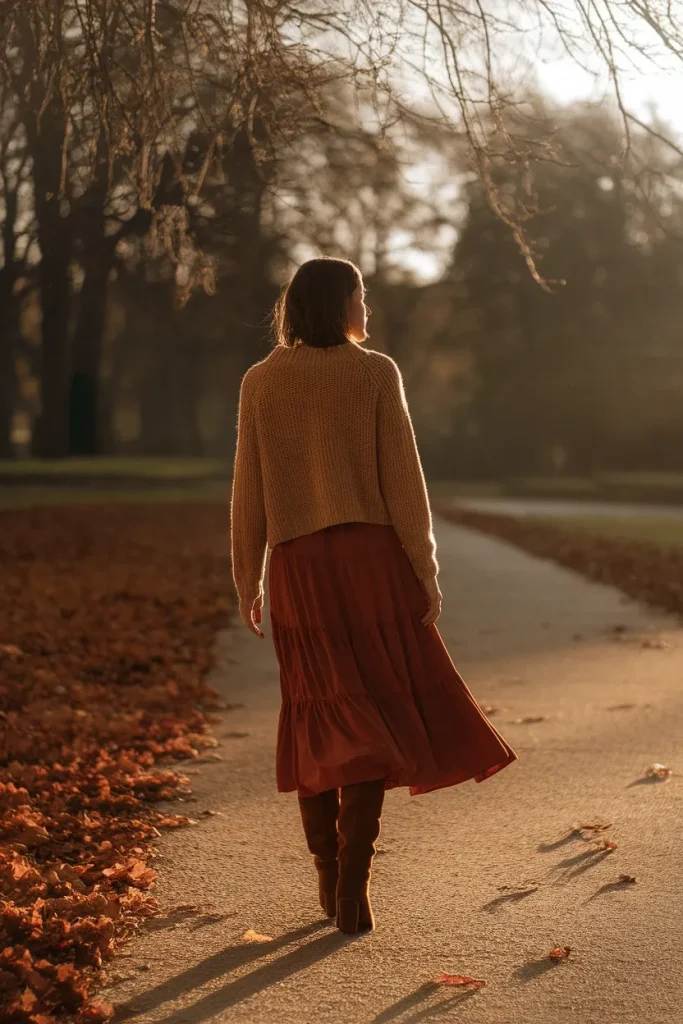
- Chunky oat knit + tiered rust midi skirt + tall brown suede boots. Signals: texture, footwear. The knit does the heavy lifting.
- Suede jacket + plain black turtleneck + straight jeans + ankle boots. Signals: texture. One signal, wear it to anything.
- Long cardigan + white tee + wide-leg jeans + a paisley scarf tied at the neck. Signals: texture, print. The scarf is removable if the room turns formal.
Brown replaces black as the anchor neutral in fall boho, which is a small change that makes a large difference. Espresso, chocolate, and caramel all read warmer and more bohemian than black does, and they set off cream and rust better. Build the base on ankle boots that earn their hanger space season after season in brown suede rather than black leather, and half your fall outfits tilt boho without any other change.
Real-world note: I ran a 12-piece neutral capsule with exactly three boho add-ins (a crochet cardigan, a caramel suede belt, and tan fringe-trim ankle boots) for the whole of last fall, and those three pieces changed the read of every single outfit without adding a fourth thing to the rotation.
[CONFIRM]
The Boho That Passes at Work
Most offices will take exactly one signal. That’s the whole rule, and it’s why work boho is easier than people expect.
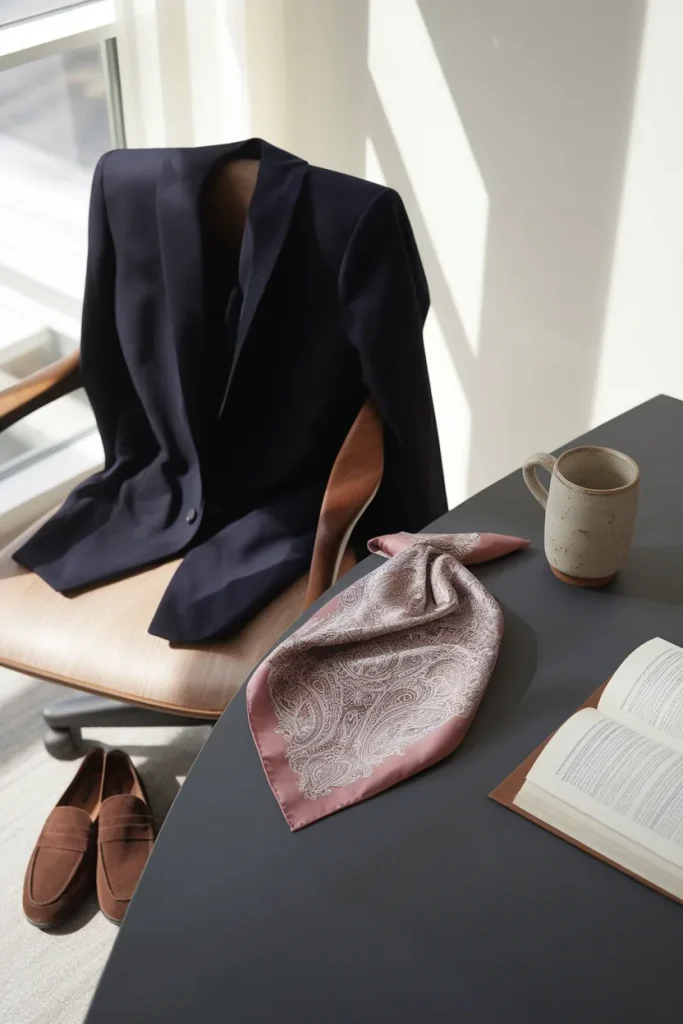
What passes almost everywhere: a paisley silk scarf with an otherwise plain outfit. A lace-trimmed camisole under a blazer. Brown suede loafers instead of black leather. One long pendant over a plain knit. Wide-leg trousers in oat instead of charcoal.
What doesn’t: fringe of any kind, visible crochet, tiered skirts, bell sleeves, stacked bangles that make noise when you type.
The distinction is texture and color versus shape and movement. Subtle texture reads as taste. Volume and fringe read as costume in a conference room, no matter how good the piece is. If your workplace runs formal, keep a business professional wardrobe of 15 pieces that mix and match as your base and treat boho strictly as an accessory layer on top of it.
Boho by Proportion: Petite, Tall, Curvy, and Midsize
Boho involves volume, and volume behaves differently depending on your proportions. None of this is about hiding anything. It’s about where the eye lands.
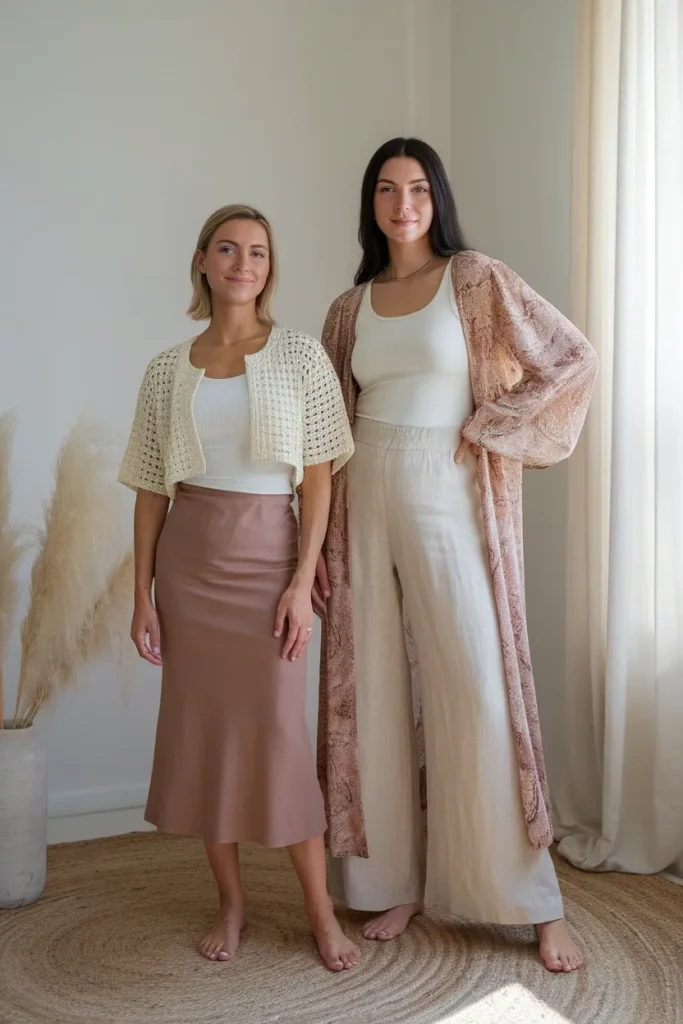
If you’re petite (5’4″ and under): the tiered skirt is the piece to watch, since tiers cut you into horizontal sections. Go with fewer, deeper tiers rather than many shallow ones, and keep the hem at your ankle or mid-calf rather than letting it pool. Tuck your top in every time. A crochet cardigan cropped at the natural waist works better than a duster that hits mid-calf.
If you’re tall (5’9″ and over): you can carry the full-length kaftan and the maxi tiered skirt that swallow other people. Watch the sleeve and hem length on anything labeled maxi, since a “maxi” cut for 5’5″ becomes a midi on you and loses the drape that makes it boho.
If you’re curvy or hourglass: a defined waist keeps volume from reading as shapeless. The suede belt over a slip dress is the single most useful trick on this list for you. Wide-leg pants work better with a fitted top than a flowy one, and a peasant blouse works better tucked than loose.
If you’re midsize or plus-size: vertical volume beats horizontal volume. A long open kimono or duster creates a clean vertical line, while a tiered skirt plus a bell-sleeve top adds width in two directions at once. Pick one volume piece per outfit and keep the other half fitted, which is the same reasoning behind how volume gets balanced in the mob wife aesthetic.
If you’re apple or rectangle: the belt trick works for you too, placed slightly higher than your natural waist. Bell sleeves and statement necklines pull attention upward, which is useful if you’d rather the eye rest there.
What to Buy First, and What to Skip
Do the closet count before you spend anything. Open your closet and find your existing signals. Most neutral capsules already contain a denim jacket, a white tee, straight jeans, flat sandals, and at least one knit with visible texture, which is enough for outfits 1, 3, 4, 7, and 8 on this list with zero purchases.
Buy first, in this order:
- A suede or suede-look jacket. Highest conversion rate of anything on this list. Mid-tier options at Madewell, J.Crew, and Everlane generally land in the $150 to $300 window, and contemporary labels like Sezane run higher.
- A caramel or tan leather belt with a visible buckle. Cheapest signal you can buy. Mass retailers like Target, Gap, and Old Navy typically carry these in the $15 to $40 range.
- A crochet or open-weave cardigan. Quince and Uniqlo tend to sit in the $50 to $100 range, Madewell and Anthropologie higher.
- Flat tan leather sandals. Wear-rate is enormous and they cross seasons.
Prices reflect typical US retail tiers as of August 2026. Check current pricing before you publish, since these move with the season.
Skip, at least at first: fringe vests, anything with mirror or coin embellishment, wide-brimmed hats you’ll wear twice a year, and multi-print maxi dresses. All four are single-outfit pieces with a low wear rate, which is the opposite of what a capsule needs.
On dupes: if you’re looking at a $300-plus suede jacket, a $120 suede-look version in a good weight will genuinely outperform it in cost per wear for most people, because you’ll be less precious about wearing it in the rain. The trade-off runs the other way at the bottom: sub-$50 crochet is usually acrylic, which pills within a season and loses its shape after two washes. Spend on the knit, save on the belt.
Boho pieces also travel unusually well, since they’re mostly soft, packable, and wrinkle-tolerant. If you’re building toward a trip, the 14-piece island capsule that fits in a carry-on is a useful blueprint for how few pieces you actually need.
Real-world note: I bought a $300 suede fringe jacket, returned it after nine days because I kept leaving it at home in case it rained, and a $110 suede-look version from a mid-tier brand has since gone into rotation roughly twice a week.
[CONFIRM]
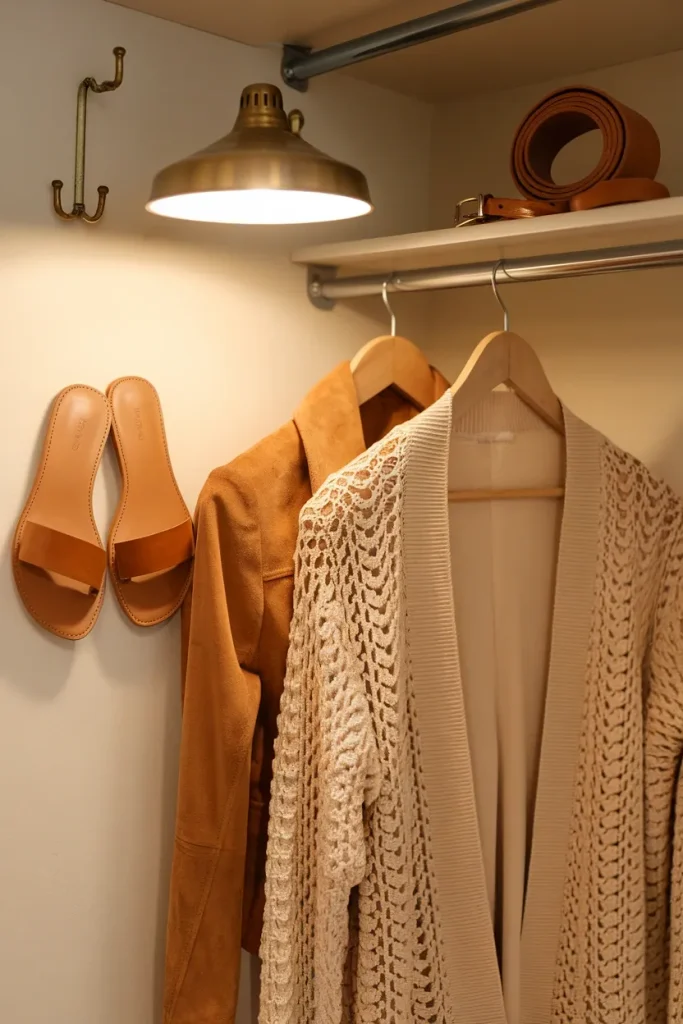
Real-world note: I styled one caramel suede jacket five different ways in a single week (over a slip dress, over a white tee and jeans, over a turtleneck, belted over a tiered skirt, and open over wide-leg linen pants) and nobody at school pickup noticed it was the same jacket.
[CONFIRM]
Boho Chic Outfits: Your Questions Answered
Is boho chic still in style in 2026? Yes, and it’s growing rather than fading. Heuritech recorded a 30% year-over-year rise in global boho chic searches, with lace-trim tops, wide-leg jeans, and suede all forecast to keep climbing through the next twelve months. The current version is considerably more restrained than the 2005 one, which is part of why it’s lasting.
How do I wear boho chic without looking like I’m in costume? Count your signals and cap them at two for everyday wear. Texture, print, silhouette, jewelry, and footwear each count as one. Most costume-y outfits are sitting at four without the wearer realizing that her bangles and her boots both counted.
Can I wear boho chic to a business casual office? One signal, and make it texture or color rather than shape. A paisley silk scarf, a lace-trimmed camisole under a blazer, or brown suede loafers will pass in nearly any business casual setting. Fringe, crochet, and tiered skirts generally won’t.
Does boho chic work if you’re petite? It does, with two adjustments: choose skirts with fewer, deeper tiers instead of many shallow ones, and tuck your top in so the waistline stays visible. A cropped cardigan will serve you better than a long duster, which tends to shorten the leg line.
What’s the difference between boho and cottagecore? Boho leans global, worn-in, and slightly rock and roll, built on suede, fringe, paisley, and brass. Cottagecore leans pastoral and domestic, built on gingham, eyelet, puff sleeves, and floral cotton. Both use prints and volume, so they overlap visually, though the reference points sit far apart.
Is a suede jacket worth the investment, or should I buy the cheap version? For most people the mid-tier version wins on cost per wear, because real suede makes you cautious about rain and you end up wearing it less. Spend your money on the knitwear instead, where fiber content genuinely determines whether the piece survives a second season.
How do I care for crochet, suede, and linen so they last? Wash crochet and open-weave knits by hand or on a delicate cycle in a mesh bag, then dry flat, since hanging stretches the weave permanently. Brush suede with a suede brush after each wear and keep it away from rain. Linen can go in the machine on cold and softens with every wash, so resist the urge to iron it flat.
Where to Start Tonight
Go stand in front of your closet and count. Find the pieces with visible texture, the ones with volume, the shoes with a woven or suede upper. Most neutral closets are already sitting at one or two boho signals without their owner knowing it, which means your first boho chic outfit costs you nothing and takes about four minutes to assemble.
Try outfit number one this week: white tee, straight jeans, whatever textured cardigan you own, flat sandals. See how it feels before you buy a single thing. If it feels good, the suede belt is your next ten-dollar decision, and the jacket can wait until fall.
Then come back and tell me which one you wore first. I read every comment, and the outfit questions are the ones I answer fastest.
Keep reading
Winter 2026 Fashion Trends Worth Your Closet Space
Every winter fashion trends 2026 roundup you have read so far has handed you a shopping list. Five trends here, twenty-three there....
Fall 2026 Fashion Trends: The Looks Worth Adding to Your Capsule
Every fall fashion trends 2026 roundup you’ve read this month has the same problem. It tells you satin is back, hands you...
Whimsigoth Outfits: Witchy, Romantic Style You Can Build From Your Fall Capsule
The first time whimsigoth outfits showed up in your feed, you probably saved four of them and then wore none. That is...
One Comment