
Fall 2026 Fashion Trends: The Looks Worth Adding to Your Capsule
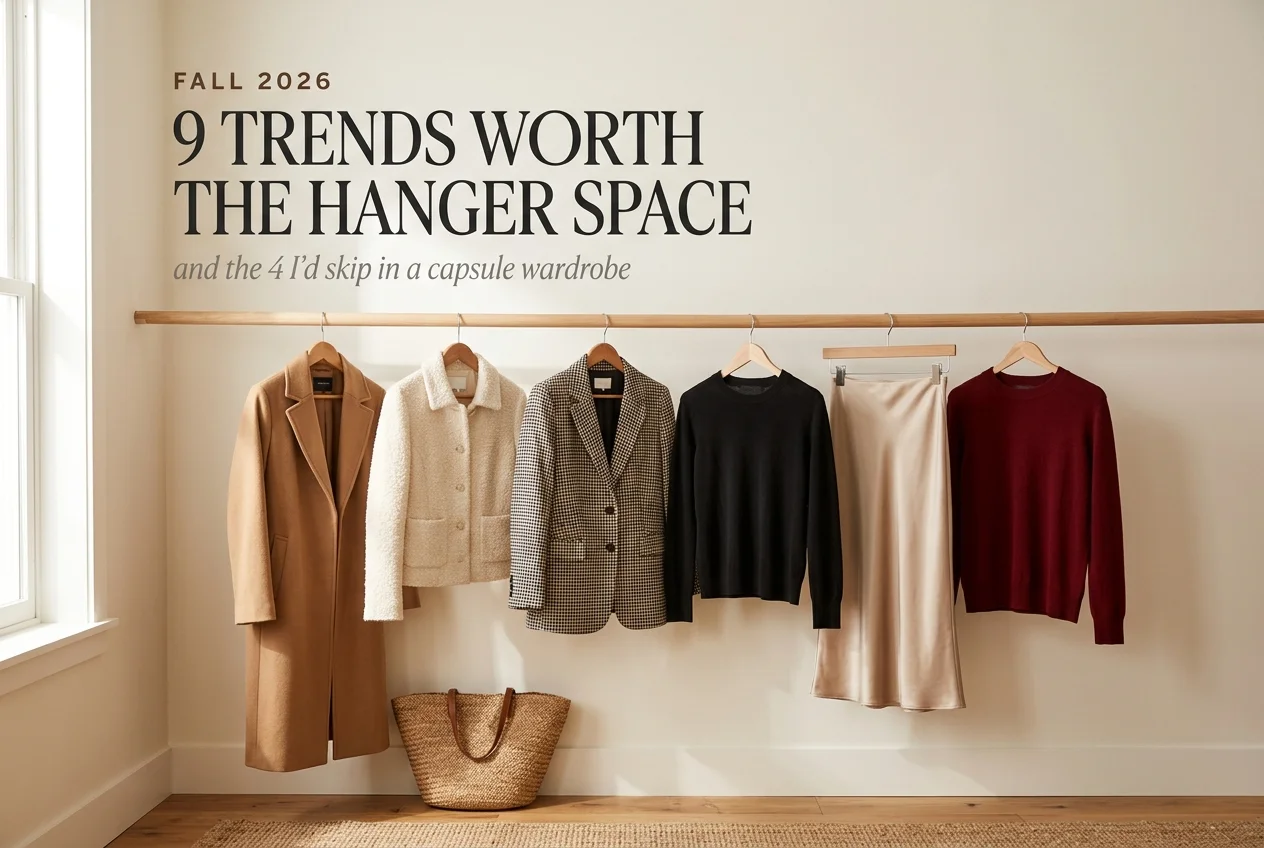
Every fall fashion trends 2026 roundup you’ve read this month has the same problem. It tells you satin is back, hands you a grid of things to buy, and walks away before the hard part. The hard part is Tuesday morning, when you’re standing in front of a closet that already holds 80 pieces and somehow produces nothing. So here’s the version nobody wrote: nine trends that will actually multiply what you own, four I’d leave on the rack, and a scoring method you can use on anything.
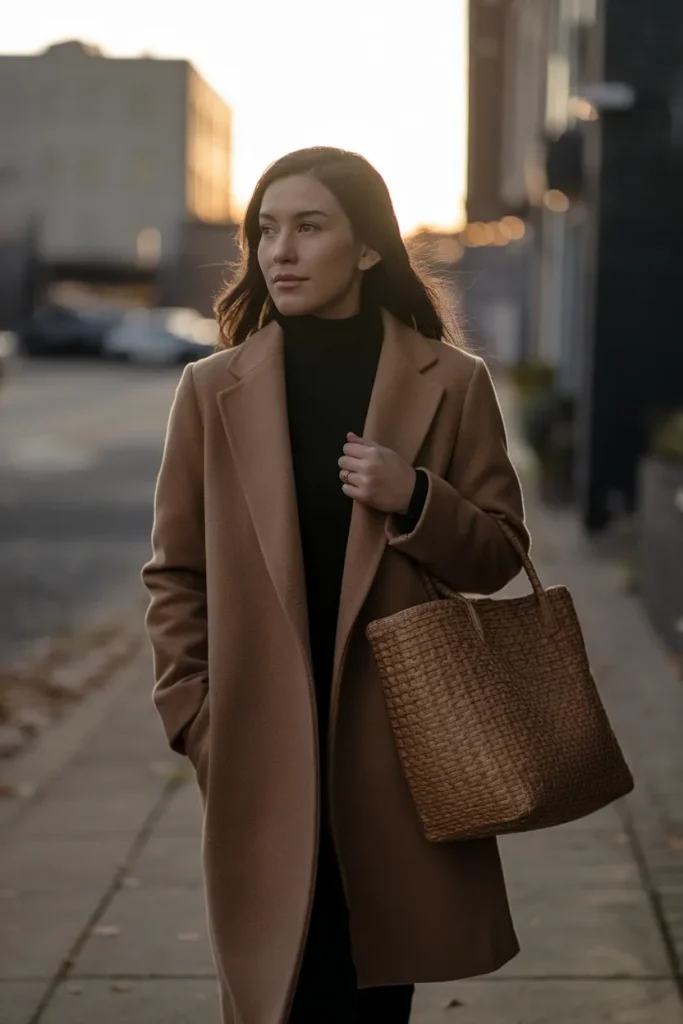
What Fall 2026 Actually Changed (and What It Left Alone)
Here’s the honest read after going through every major fall 2026 fashion trends report and shopping edit side by side: this season is a texture season pretending to be a silhouette season.
Look at what repeats. Shearling, boucle, brushed wool, sequins, dimensional organza. Fur, real and faux, everywhere. Meanwhile the shapes underneath barely moved. Straight-leg jeans still work. A column skirt still works. Your white button-down did not expire in August.
That matters enormously for a capsule closet, because texture is additive and silhouette is subtractive. A new texture layers over what you own. A new silhouette makes what you own look wrong.
On color, Pantone’s seasonal Fashion Color Trend Report is the only source worth anchoring to, since it’s built from designer submissions rather than editor guesswork. The fall palette leans warm and slightly dirty this year. More on that below.
What didn’t change: neutrals. Cream, camel, oat, espresso, navy, soft black. Nobody’s asking you to throw those out, and anyone implying otherwise is selling something.
The Capsule Fit Score: How to Judge a Trend Before You Buy It
This is the part the fall fashion trends 2026 coverage skips entirely. A trend is only good for you if it survives contact with your existing closet.
I score every trend three ways before anything goes in a cart:
Outfit multiplier. How many pieces you already own does it pair with? Under four, it’s a dead end.
Season stretch. Does it work past November? A piece that lives for eight weeks needs to be cheap or beloved. Preferably both.
Cost per wear outlook. Purchase price divided by realistic wears. Not aspirational wears. A $400 shearling worn 40 times a winter beats a $60 sequin top worn twice, and it isn’t close.
| Fall 2026 trend | Outfit multiplier | Season stretch | Cost per wear outlook | Verdict |
|---|---|---|---|---|
| Statement coat | Very high | Oct to Mar | Excellent | Buy first |
| Tactile texture (knit, shearling, boucle) | High | Sep to Feb | Excellent | Buy |
| Sharp tailoring / shrunken jacket | High | Year round | Very good | Buy |
| Bold checks | Medium | Sep to Jan | Good | Buy one |
| Red mahogany / burnt olive | High | Year round | Very good | Buy |
| Satin | Medium | Year round | Good | Buy one |
| Brooches, ornate jewelry | Very high | Year round | Excellent | Buy first |
| Two-tone shoes | Medium | Sep to Apr | Good | Optional |
| Animal print | Medium | Sep to Feb | Fair | Optional |
| Opulent eveningwear | Low | 6 weeks | Poor | Skip |
| Fur pants | Very low | 6 weeks | Poor | Skip |
The 3-Outfit Test. Before anything gets bought, name three complete outfits using pieces already hanging in your closet. Not three vibes. Three outfits, head to toe, that you’d walk out the door in. If you can’t reach three, you like looking at the trend. You won’t wear it.
One practical note on cost per wear: check the care label before you buy, not after. A “dry clean only” boucle jacket carries roughly $15 to $25 per cleaning in most US cities, and three cleanings a season quietly reprices the piece. The FTC’s consumer guidance on apparel labeling explains what those symbols legally have to tell you.
Tactile Texture Is the Real Story of This Season
If you take one thing from the fall 2026 runways, take this. Texture was the through line at nearly every show: shearling collars, brushed mohair, chunky rib, boucle tweed, and organza used with actual dimension instead of as a flat overlay.
Why it’s a gift to a small closet: texture reads as newness without changing your shapes or your palette. A cream boucle jacket over the same jeans and same tee you wore in June looks like a different outfit. It isn’t. The photo just has more going on.
Where to spend: one textured outer layer, in a neutral. Shearling collar jackets and boucle blazers at mid tier run roughly $130 to $220 at Madewell, J.Crew, and Quince. Mass tier gets you there for $50 to $90 at Uniqlo or Target, with the trade-off being fabric weight, since lighter boucle pills faster at the sleeve and the bag-strap line.
Where not to spend: textured pants. Low multiplier, short stretch, and they photograph better than they wear.
If you like the layered, slightly offbeat version of this, it’s the same instinct behind how to wear eclectic grandpa style without looking costumey, which runs on exactly this mix of knit weights.
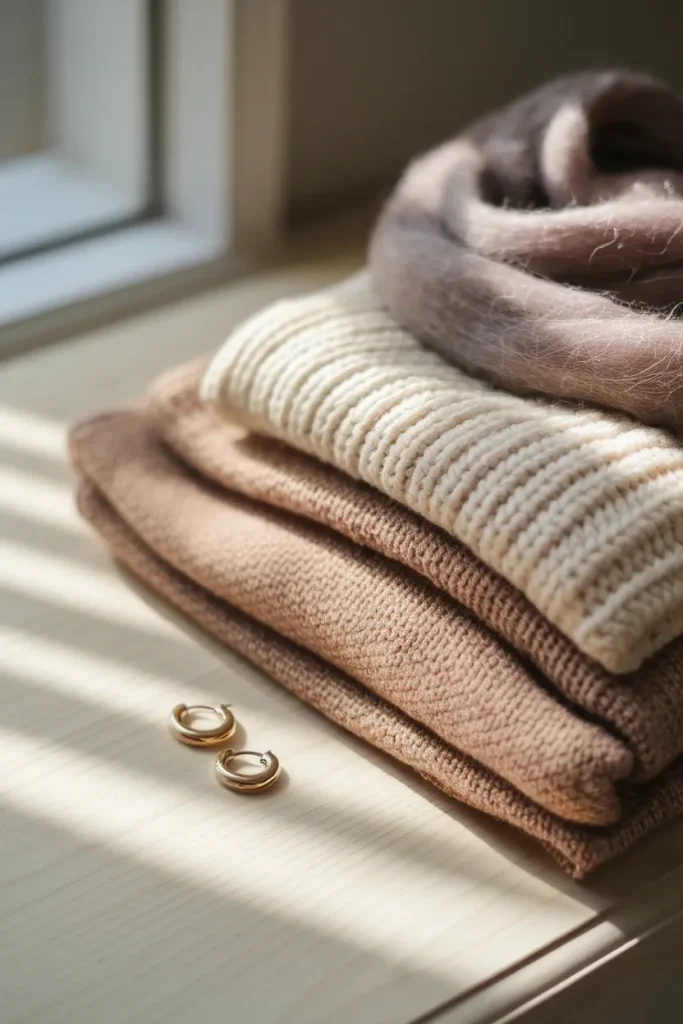
Dark Romance, Dialed Down Enough for a Tuesday
The runways went gothic this season. Lace, high necklines, asymmetric hems, regency shapes, a lot of black on black.
Worn literally, it’s a costume. Worn as one element, it’s the most useful thing in this report for anyone who already owns a lot of black.
The wearable translation is a single romantic detail against otherwise plain clothes. A lace-trimmed camisole under a plain crew sweater, with just the hem showing. A high-neck ruffled blouse under a blazer. Black tights with a black midi and black boots, which is a column that reads intentional rather than funereal.
The reason this works in a capsule closet is that black on black already lives there. You’re not buying a look. You’re buying one detail and letting your existing pieces carry it.
Price reality: lace-trim camisoles run about $20 to $45 mass tier, $60 to $110 mid tier. Buy the mid tier one if you’ll wear it under things weekly, because the mass tier lace flattens in the wash after a handful of cycles and the flattening is visible exactly where you meant it to peek out.
We’ve written the full version of this mood as witchy, romantic whimsigoth outfits built from a fall capsule if you want the deeper dive.
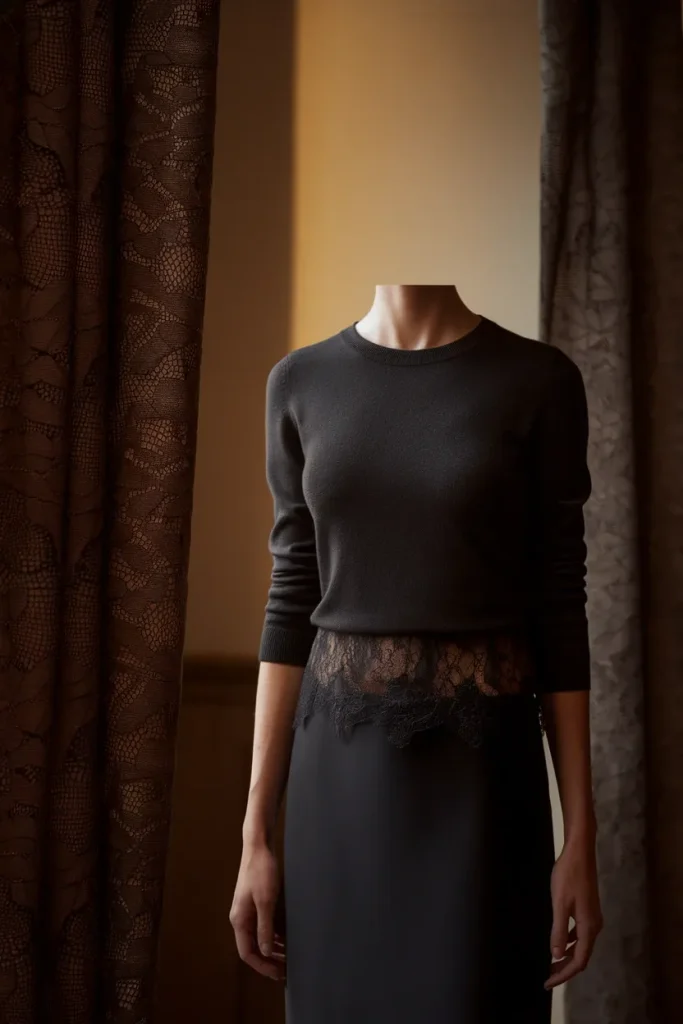
Sharp Tailoring and the Shrunken Jacket
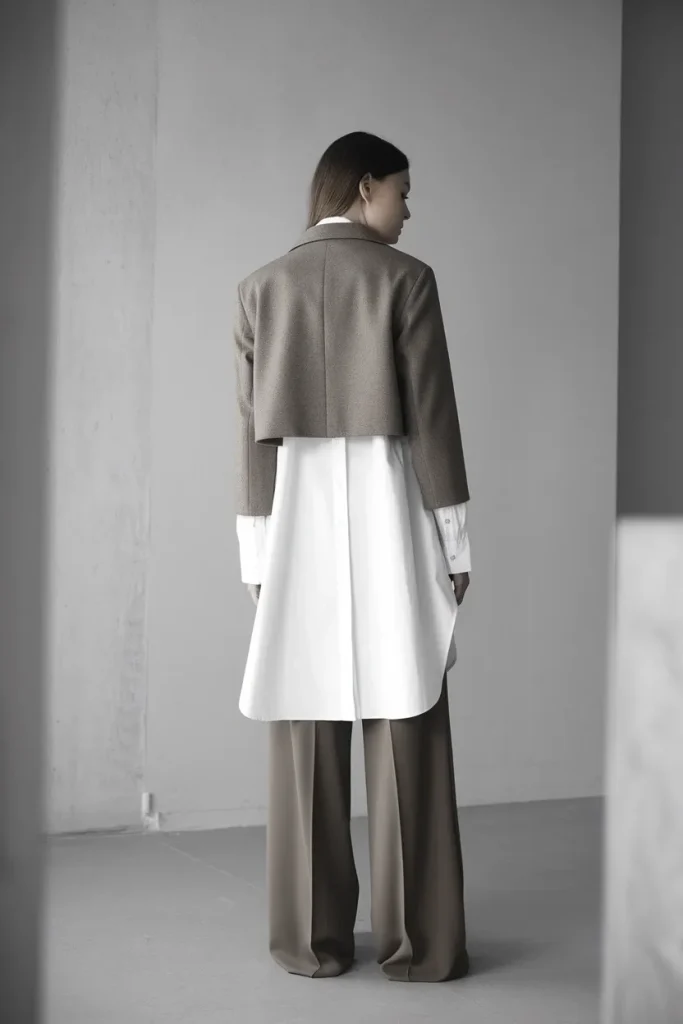
Tailoring came back sharp: lapel-less cuts, skirt suits, suede fabrications, deconstructed shoulders. The commercial version that will actually reach your closet is the shrunken jacket, cropped at the hip bone with a narrower shoulder than the oversized blazers of the last few seasons.
Fit note, and it’s the one that decides whether this works on you. A shrunken jacket needs something longer underneath. When the jacket hem and the top hem land at the same point, your torso gets visually cut in half at its widest point. Let the shirt extend an inch or two below.
For proportions: if you’re petite, the shrunken cut is genuinely easier to wear than the oversized one, because a standard blazer’s shoulder seam usually lands past your actual shoulder. If you’re tall, size up one and let it sit as a true crop rather than fighting for coverage. If you’re curvy, look for a one-button or lapel-less closure, since a two-button shrunken jacket tends to strain at the bust and pull the lapels open.
Expect $60 to $110 at Old Navy or H&M, $110 to $190 at Banana Republic or Abercrombie, and $200 to $380 at COS or Sezane. The mid tier is the right spend here, because the shoulder construction is where the money shows and mass tier shoulders collapse within a season.
This slots directly into the six capsule wardrobe jackets that earn their hanger space, and if you already own three of those six, the shrunken cut is the natural fourth.
The Statement Coat Earns Its Hanger Space Fastest
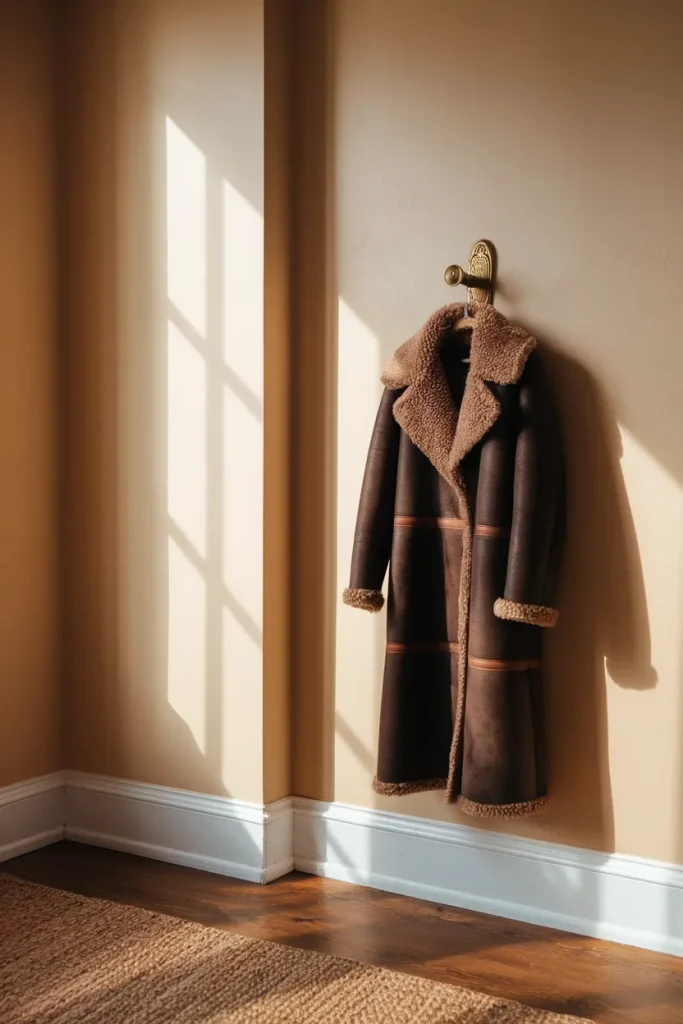
If you buy one thing this season, buy the coat. It’s the single highest-leverage purchase on this list and the math isn’t close.
Think about the wear count. From late September through March, a coat goes over nearly every outfit you own. That’s roughly 120 to 150 wears in a US climate with real winter. A $400 coat at 130 wears is about $3 a wear in year one, and coats last five years or more if the fabric is decent. Compare that to almost anything else in your closet.
Statement in 2026 means one of three things: a strong color, a shearling or faux fur collar, or an exaggerated shape. Pick one, not all three, or the coat stops going with things.
The capsule move is a coat in an unexpected neutral rather than a bright one. Red mahogany, burnt olive, or a deep chocolate all read as a statement against a black and cream wardrobe while still pairing with everything you own. A cobalt coat gets compliments and then gets left on the hook.
Fabric floor to insist on: at least 50% wool for real cold. Below that you’re buying a coat-shaped windbreaker, whatever it costs. We break down the specifics in the best wool coats for a capsule wardrobe.
Fall 2026 Color Trends: Red Mahogany, Burnt Olive, Muted Clay
Pantone’s fall palette this year runs warm and slightly muddied, which is good news for anyone building on neutrals.
The three that matter most for a capsule closet:
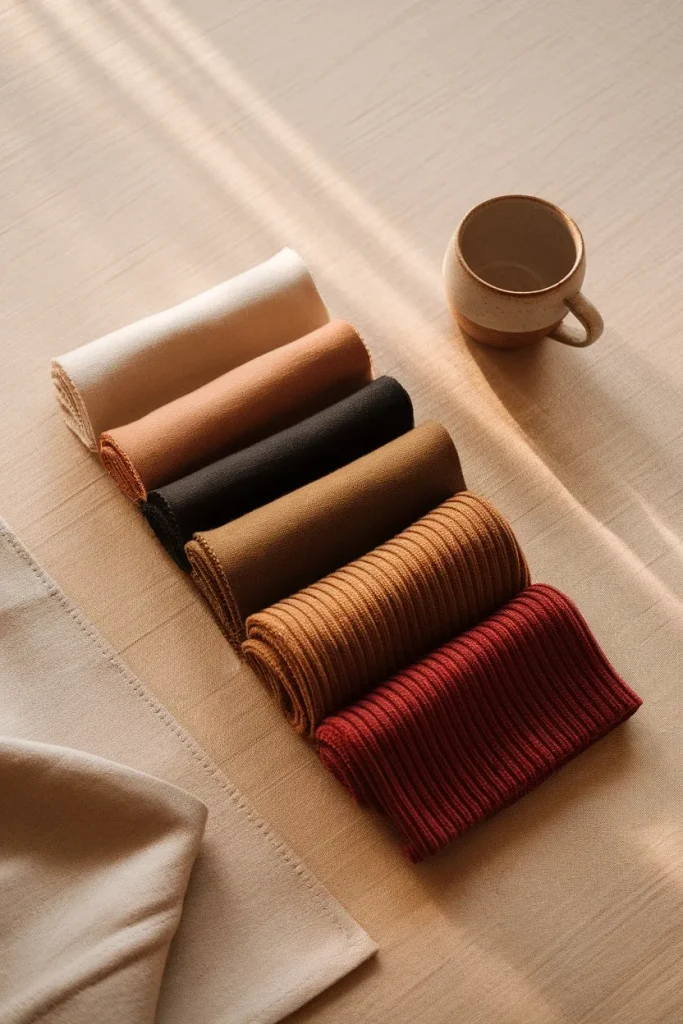
Red mahogany. A blend of cherry red and chocolate brown. It behaves like a neutral against camel, cream, navy, and black, which almost no red does. This is the accent color of the season.
Burnt olive. Muted, streamlined, sophisticated. It does the job denim does, meaning it plays well with warm and cool neutrals alike.
Muted clay. A dusty beige-pink quiet enough to pass as a classic neutral. Useful as a base layer color if cream washes you out.
The rest of the range (Neptune Green, Green Envy, Arabian Spice, Foxglove, Festival Fuchsia, Acacia, All Aboard) is worth knowing but not worth restructuring around. Those are accent-scale colors: a scarf, a knit, a bag.
Apply the 60-30-10 split and this gets simple. Sixty percent neutral base, thirty percent secondary neutral, ten percent accent. Red mahogany is your ten. That’s one sweater or one bag, not a wardrobe.
Which of these suits you depends on your coloring more than the trend cycle, and it’s worth knowing whether you’re a true autumn or a soft autumn before you commit to a $200 sweater in a shade that fights your skin.
Bold Checks Without the Costume Problem
Plaid, tartan, and checkerboard showed up across a lot of collections this season, and Who What Wear flagged bold checks as a buy while calling gingham a skip. That split is the right instinct, and here’s the rule underneath it.
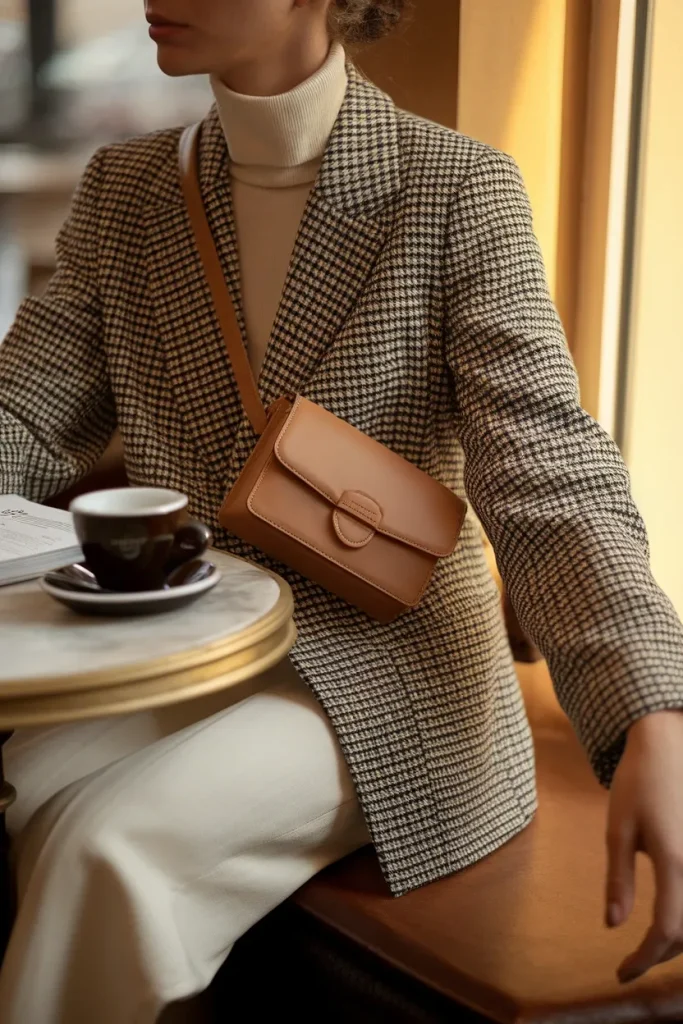
Scale decides everything. A large check reads as a statement piece and needs everything else plain. A micro check reads as a textured neutral and can be treated as one. Micro houndstooth in black and cream genuinely functions as a neutral in a capsule closet, which is why it keeps reappearing every few years.
The costume trap is wearing check as an outfit rather than as a piece. One checked item, everything else solid, in colors pulled from within the check itself. That’s the whole rule.
Best entry point for a small closet: a micro check blazer or a check scarf. Both go with the neutrals you already own and neither commits you to a look. Worst entry point is a matching check set, which has a low outfit multiplier and a photographic quality that ages fast.
Satin Moves Into Daylight
Satin was called out as a buy across multiple fall 2026 edits, and the shift worth noticing is that it stopped being an evening fabric.
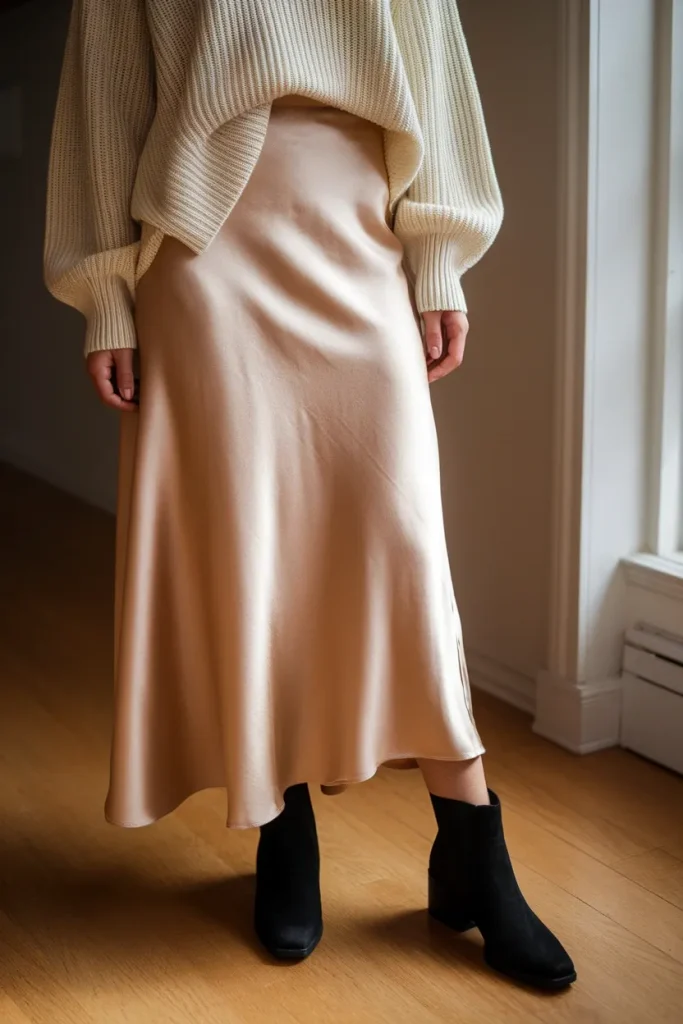
The daytime version is a column slip skirt or a satin shirt, styled down hard. Slip skirt with a chunky rib sweater and boots. Satin shirt tucked into straight jeans with loafers. The contrast between the shine and something matte and heavy is the entire point, and it’s what keeps satin from reading like you’re on your way to a wedding.
Two things to check before buying. First, the weight: thin satin clings and shows every line, so hold it up and see if it falls or floats. Heavier satin drapes into a column, which is what you want. Second, the finish: a slightly matte or washed satin is far more wearable in daylight than a high-gloss one, and it photographs better too.
Slip skirts land around $30 to $60 mass tier and $90 to $160 at Madewell, Quince, or Everlane. This is a case where the mid tier is worth it, because the weight difference is immediately visible and it’s the whole reason the piece works.
One caution for a small closet: satin is a one-piece trend. A slip skirt or a shirt, not both.
Brooches Are the Cheapest Way Into the Season
This is the sleeper pick, and it’s the one I’d act on first if the budget is tight.
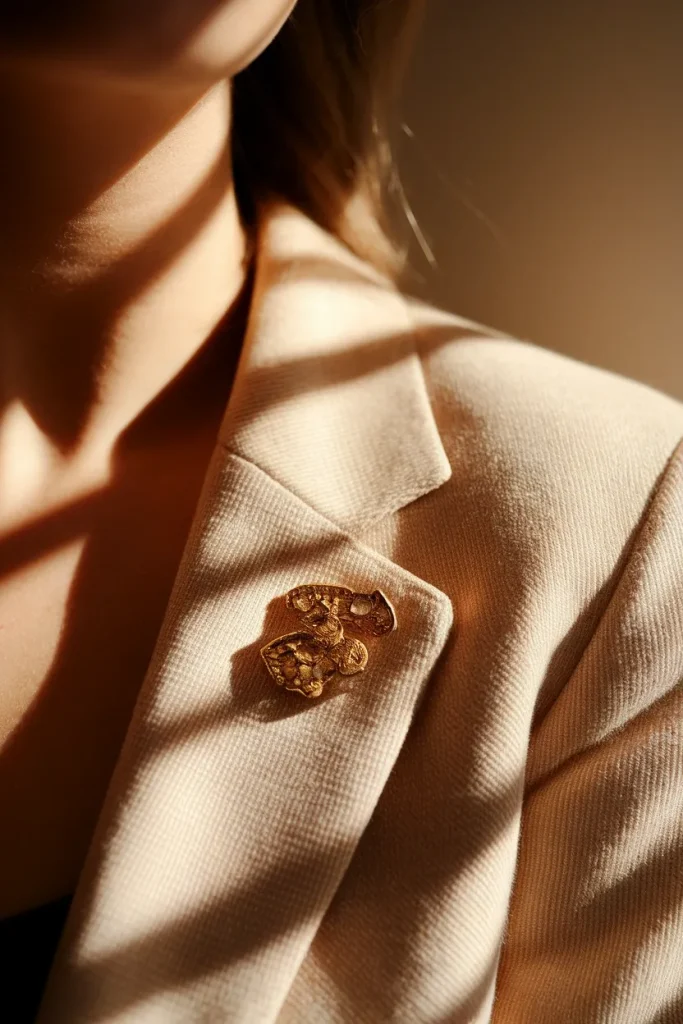
Brooches showed up twice in the research: on the fall runways as decorative closures on jackets and coats, and independently in Pinterest’s own 2026 predictions. When a trend appears in both the design pipeline and the save data, it tends to stick around longer than a single season.
The reason it’s perfect for a capsule closet is the outfit multiplier. One brooch changes a blazer lapel, a coat collar, a sweater shoulder, a scarf, and a bag strap. That’s five outfits altered by one object, at $15 to $60 for a decent vintage or costume piece.
Placement rules that keep it modern rather than dated: high on the shoulder rather than centered on the chest, or clustered in twos and threes on a lapel. A single brooch pinned dead center reads like a uniform.
Ornate over dainty is the direction this season, which is a reversal from the last few years of tiny gold everything. If your jewelry drawer is all fine chains, one substantial piece is enough to update the whole rotation. That principle runs through the small accessories that change every outfit you own.
The Fall 2026 Trends I’d Skip If Your Closet Is Small
Not skipping because they’re ugly. Skipping because the arithmetic doesn’t work.
Opulent eveningwear. Beautiful, and it pairs with almost nothing you own. A six-week season and a wear count in the single digits. Rent it.
Fur pants. Very low multiplier, high cost, and a shape that dates fast. This is a runway idea, not a wardrobe one.
Head-to-toe animal print. One animal print piece is a great neutral substitute. Two turns into a theme, and the second piece almost never gets worn with the first anyway.
Matching check sets. Low multiplier by design, since the two halves rarely separate well.
The pattern across all four: they pair with fewer than four things already hanging in your closet. That’s the line. Whenever you’re unsure about a trend piece, count the pairings before you count the compliments.
Three Outfit Formulas That Use Almost All of It
Here’s how the season assembles from pieces most capsule closets already contain, plus one or two additions.
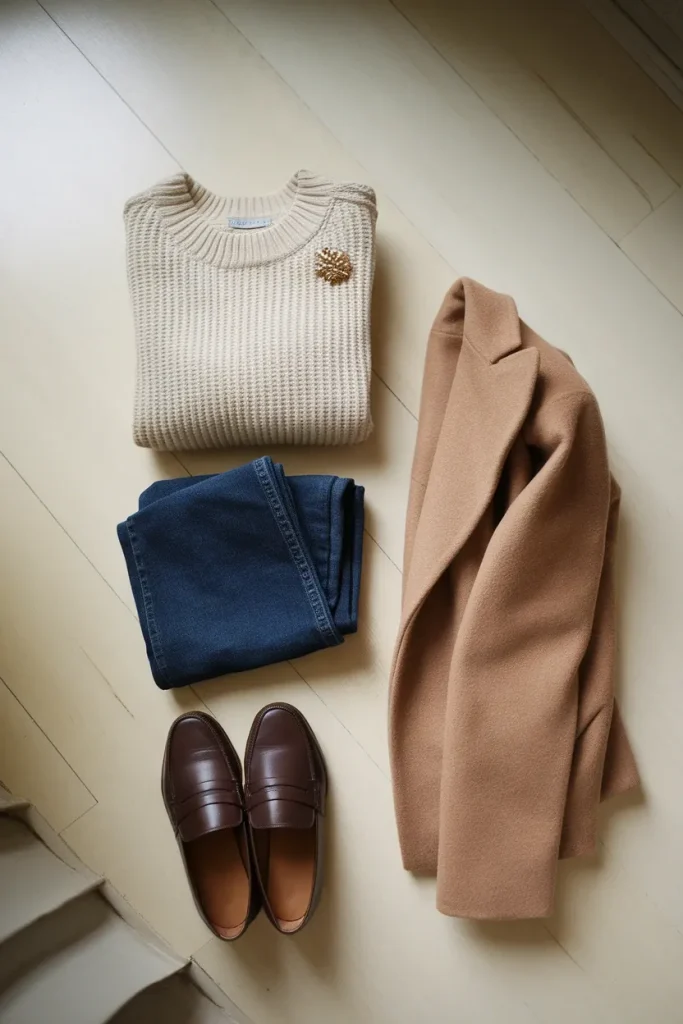
Formula 1, the everyday. Textured neutral knit + straight-leg jeans + statement coat + loafers + brooch on the coat collar. This is five of the nine trends in one outfit and it takes about ninety seconds to put on.
Formula 2, the workday. Shrunken jacket + white button-down with the hem showing + wide-leg trousers in burnt olive + ankle boots. Sharp tailoring and the color story, no styling effort required.
Formula 3, dinner. Satin slip skirt + fine-gauge black sweater + lace camisole hem showing beneath it + tall boots + ornate earrings. Satin and dark romance together, and every piece works separately the next day.
Notice what all three share: a matte, heavy anchor against one shiny or textured element. That contrast is the actual formula. The specific pieces are interchangeable.
Footwear does a lot of quiet work in all three, and the best loafers for women chosen the capsule way covers the shape that carries formulas one and two.
Frequently Asked Questions
What are the biggest fall fashion trends for 2026? Texture leads: shearling, boucle, brushed wool, and dimensional knits. After that, sharp tailoring and the shrunken jacket, statement coats, bold checks, satin worn in daytime, dark romantic details like lace and high necklines, and ornate jewelry with brooches specifically. Shapes stayed close to last year, which is why most of your existing closet still works.
What colors are in for fall 2026? The warm, slightly muddied end of the range. Red mahogany (cherry red blended with chocolate brown), burnt olive, and muted clay are the three most useful for a capsule wardrobe because all three behave like neutrals. Pantone’s wider fall palette also includes Neptune Green, Green Envy, Arabian Spice, Foxglove, Festival Fuchsia, Acacia, and All Aboard, which work better as accent-scale pieces.
How many trend pieces should a capsule wardrobe have? Usually two to four per season, out of roughly 30 to 40 total pieces. Keep the base neutral and let the trend pieces be the ten percent. More than four and they start competing with each other instead of with your basics.
Do these fall 2026 trends work for petite women? Several are easier on a petite frame than last year’s were. The shrunken jacket sits better than an oversized blazer because the shoulder seam lands where your shoulder actually is. For the satin slip skirt, look for a true midi rather than a maxi, or have it hemmed, since the column effect depends on the hem hitting mid-calf rather than pooling at the ankle.
Can I wear satin to the office? Yes, with a matte anchor. A washed satin slip skirt with a chunky knit and boots reads as work-appropriate in most business casual settings. Skip the high-gloss finish and skip satin on both halves at once.
What’s a cheaper alternative to a shearling or faux fur coat? A wool coat with a detachable shearling collar, or a plain wool coat plus a separate faux shearling scarf, gets you the same visual effect for considerably less. Expect $90 to $160 at Old Navy or Uniqlo versus $300 and up for a full shearling. The trade-off is warmth at the body rather than at the neck.
Will these fall 2026 trends still work next year? The texture, tailoring, coat, and color trends should carry over, since none of them depend on a novelty shape. Satin and brooches are cyclical and will likely soften rather than disappear. The eveningwear and fur-pants end of the season is the part with a genuine expiration date.
The Short Version
Buy the coat. Add one texture, one brooch, and one piece in red mahogany or burnt olive. That’s four purchases, and it updates every outfit you already own without touching the rest of your closet.
Everything else in the fall 2026 fashion trends conversation is optional, and the four things on the skip list are optional in the way a second dessert is optional.
Run the 3-Outfit Test on anything you’re unsure about. If you can’t name three real outfits from pieces already hanging up, put it back and check again in a week. The trend will still be there. Your closet will thank you for the pause.
Which of these are you actually planning to buy this season? Save the Capsule Fit Score table before you go shopping, and use it on the next thing that tempts you.
Keep reading
Winter 2026 Fashion Trends Worth Your Closet Space
Every winter fashion trends 2026 roundup you have read so far has handed you a shopping list. Five trends here, twenty-three there....
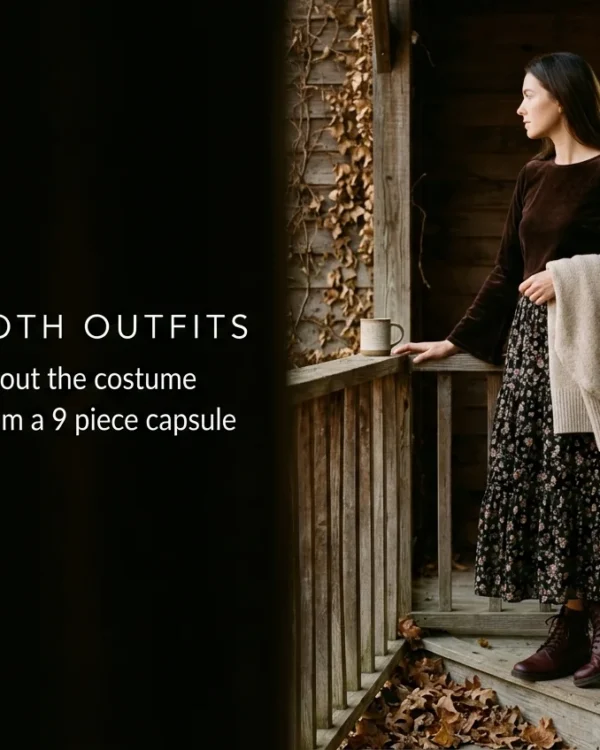
Whimsigoth Outfits: Witchy, Romantic Style You Can Build From Your Fall Capsule
The first time whimsigoth outfits showed up in your feed, you probably saved four of them and then wore none. That is...
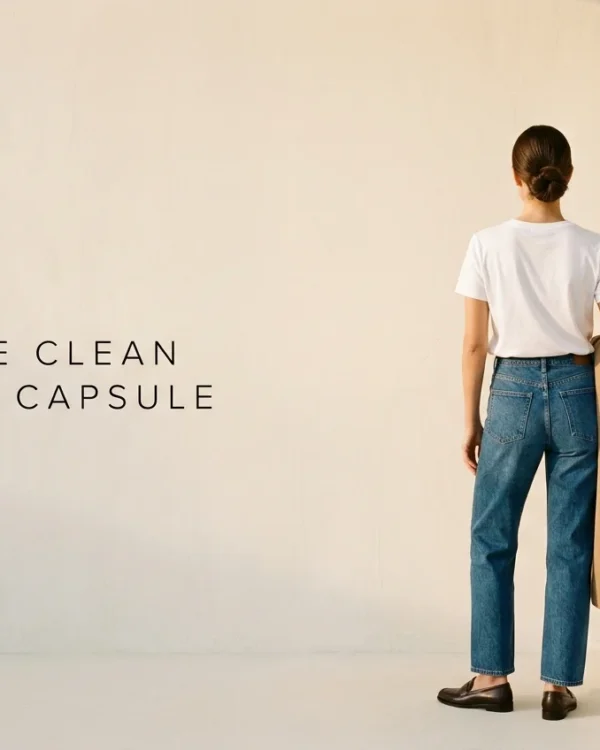
Clean Girl Aesthetic: The Minimalist Look That Started It All
The clean girl aesthetic sold something by accident, and it was never the clothes. It was the idea that this look costs...
One Comment