
Winter 2026 Fashion Trends Worth Your Closet Space
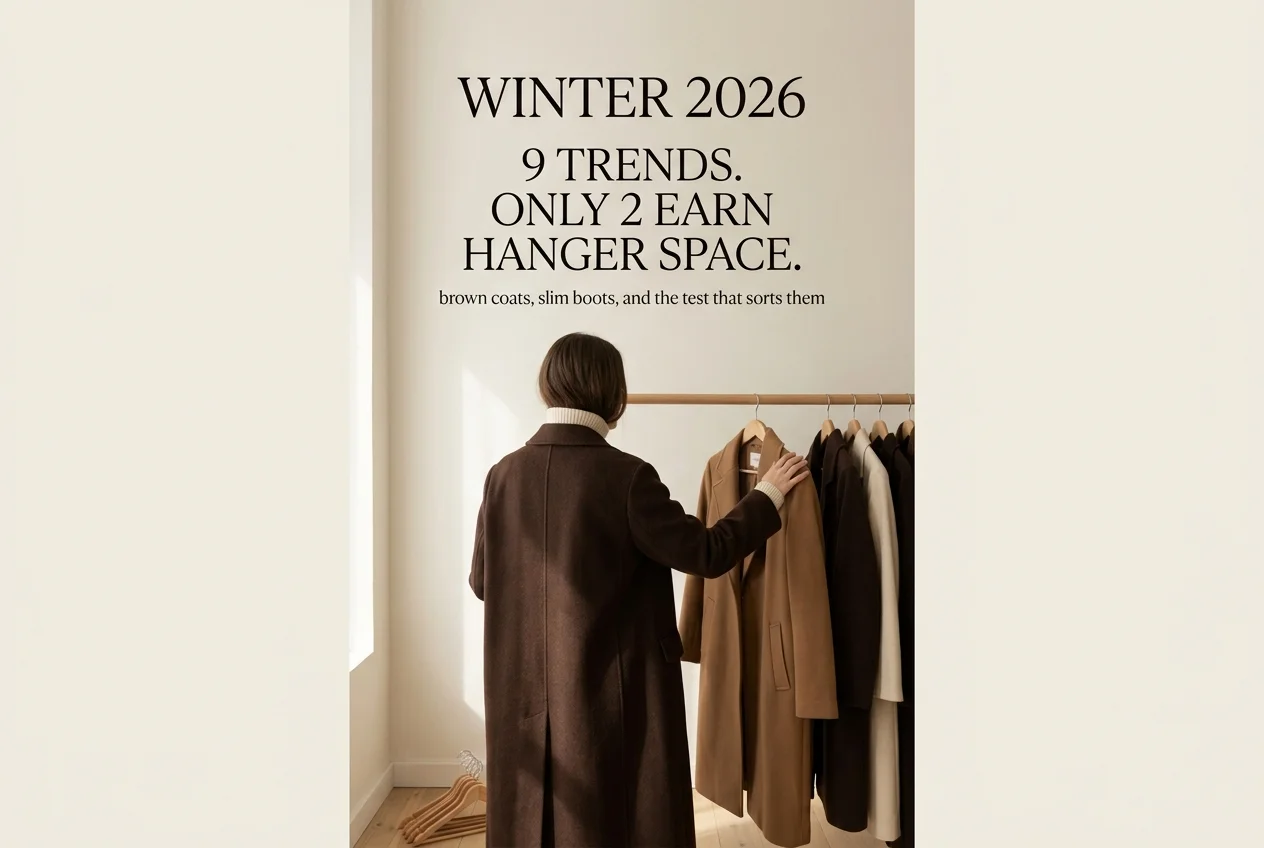
Every winter fashion trends 2026 roundup you have read so far has handed you a shopping list. Five trends here, twenty-three there. What none of them told you is which two actually survive contact with a closet you already own. That is the whole problem. You do not need more clothes, you need the two or three additions that make the thirty pieces you already have feel new again, and this is the piece that sorts them.
So here is what follows: nine winter 2026 trends scored against a simple four-question test, three I would leave on the rack, real cost per wear math on the biggest buys, and one genuinely useful disagreement between what the runway is selling and what people are actually searching for.
What Actually Shifted for Winter 2026 (and What Is Just Noise)
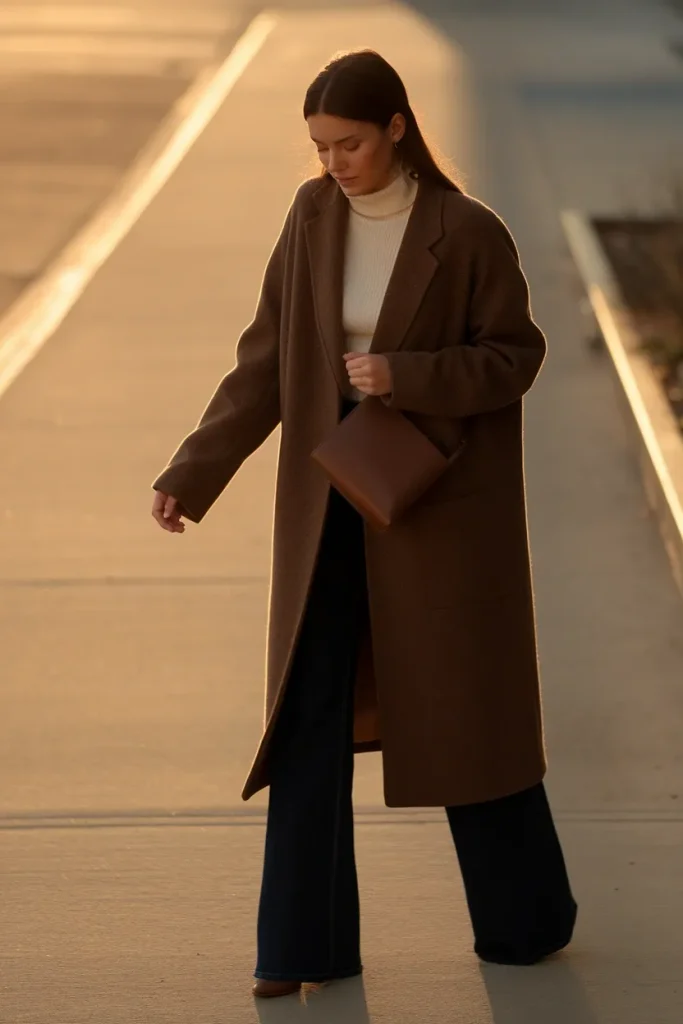
Three things genuinely moved this season. Brown displaced black as the default outerwear neutral. Collars got tall and structural, with the coat absorbing the job the scarf used to do. And texture took over from print as the way an outfit signals effort.
Everything else on the trend lists is churn.
Sheer hose, polka dots, peplum, balaclavas, rugby shirts, statement socks: all of it appeared on somebody’s winter 2026 list, and all of it is a one-season accessory play. Fun. Not structural.
The color story is worth pausing on because it broke in an unusual direction. Pantone named Cloud Dancer its Color of the Year for 2026, PANTONE 11-4201, described officially as a lofty white meant to read as a calming influence. A near-white in a winter season is a strange call on paper. In practice it lines up with what fashion editors are already reporting, which is a season built on quiet neutrals with one loud thing on top.
Marie Claire’s winter color report lands on navy, teal, camel, powder pink, pale pistachio, and winter citrus. PureWow’s lands on peridot green, winter citrus, deep plum, navy, pastel pink, and every shade of brown. Overlap the two and you get the honest answer: navy, brown, and citrus orange are the three colors with real consensus behind them. Pistachio and peridot are editorial reaches.
PureWow also called the one to retire, and it is butter yellow. After five years, that run is over.
The Hanger Space Test: 4 Questions Before Any Trend Enters Your Capsule
Here is the filter. Score any winter 2026 trend piece out of 8. Anything under 5 goes back on the rack.
| Question | 2 points | 1 point | 0 points |
|---|---|---|---|
| Does it work with 3+ pieces I already own? | Works with 5 or more | Works with 3 or 4 | Works with 2 or fewer |
| Will I still wear it in winter 2028? | Silhouette has been around 10+ years | Feels current, unclear staying power | Peaked this season |
| Does it fit my base palette? | It is a neutral or my accent | Adjacent to my palette | Fights my existing colors |
| Can I reach a cost per wear under $4? | Under $2 | $2 to $4 | Over $4 |
Score it before you check out, not after. The second question is the one that quietly kills most impulse buys, because a silhouette that only exists this season cannot amortize.
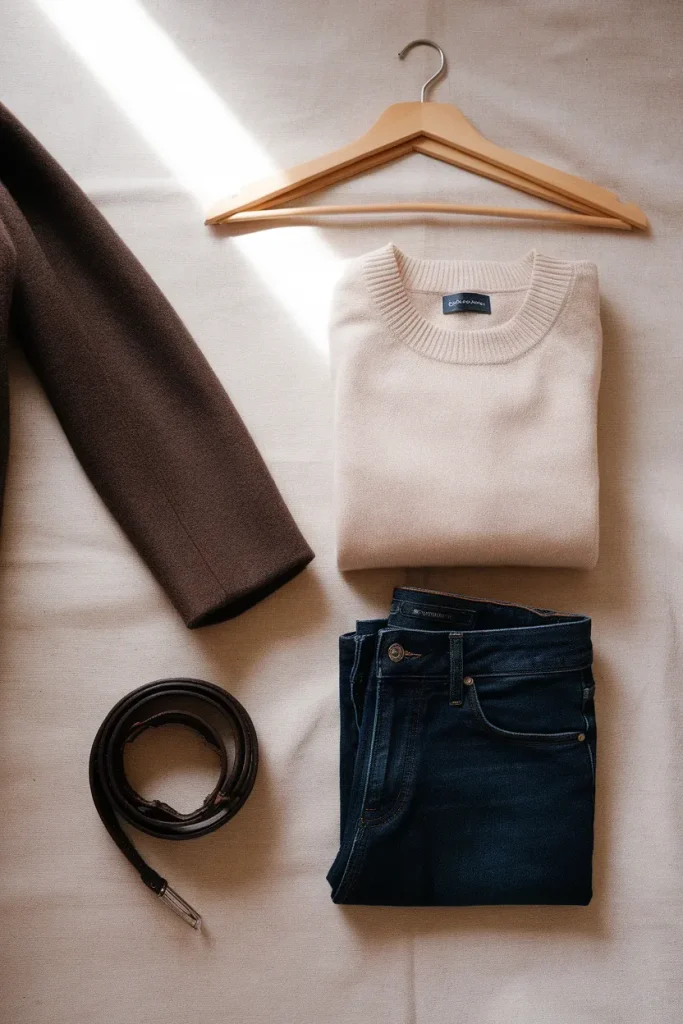
Two worked examples. A chocolate brown wool coat at $300: works with everything (2), brown coats have been around forever (2), it is a neutral (2), forty winter wears puts it at $7.50 in year one and under $2 by year three (2). Score of 8. Buy it.
A balaclava at $45: works with a coat and nothing else (0), peaked hard this season (0), fine on palette (1), maybe eight wears puts it at $5.60 (0). Score of 1. Leave it.
Brown Took Black’s Job as the Winter Neutral
This is the shift with the most consensus behind it, and the most practical value.
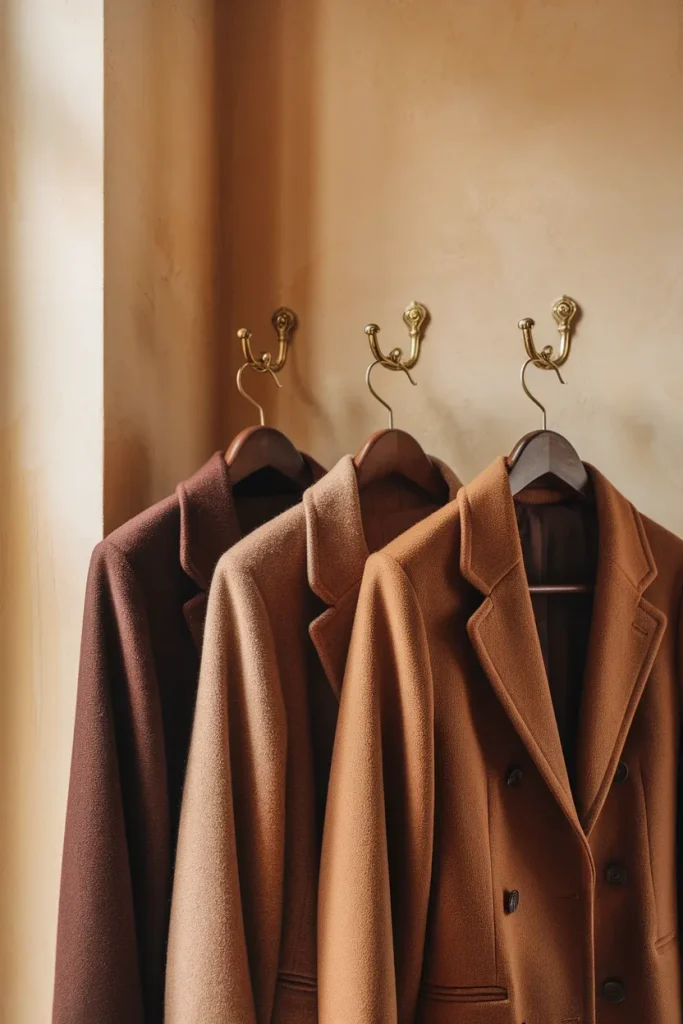
Every major winter 2026 report landed on it independently. Jo-Lynne Shane’s headline trend is brown coats replacing black. PureWow’s color list includes camel, chocolate, beige, coffee, and French roast as a single unified direction. Pinterest’s own 2026 data shows the search term “brown linen shirt” up 100 percent. Three separate sources, three different methodologies, same conclusion.
Why it matters for a capsule specifically: brown is warmer against most skin tones than black, it photographs softer, and it reads as more expensive at the same price point because cheap black fabric shows its cheapness faster. A $200 brown wool-blend coat looks better than a $200 black one. Every time.
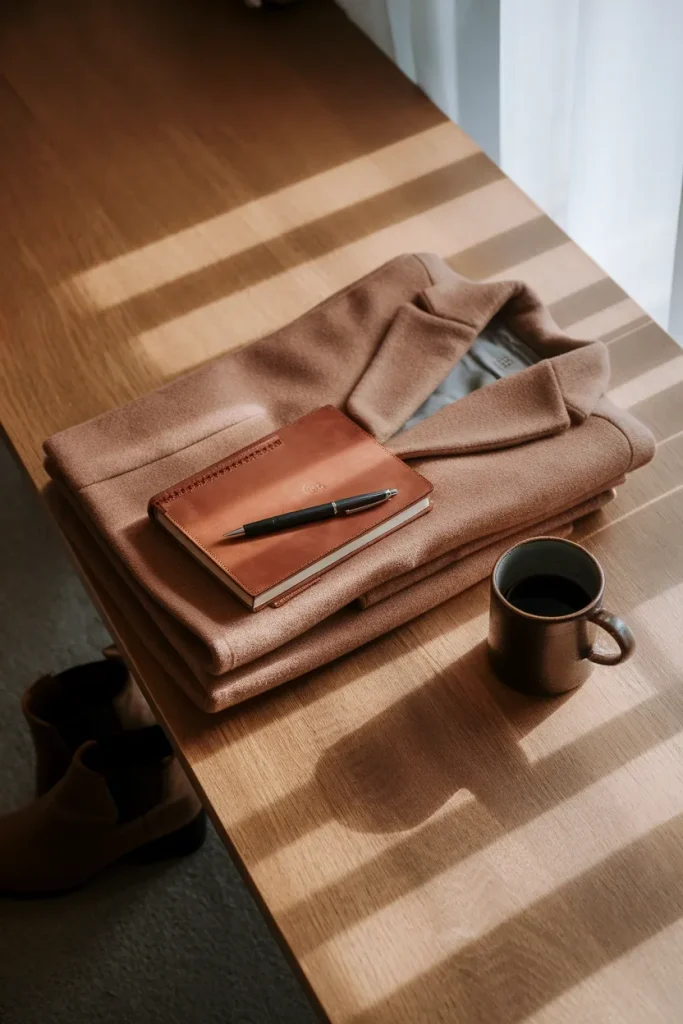
The practical move is one coat, not a wardrobe overhaul. Chocolate, camel, or espresso, in a longline silhouette that clears your knee. Wool blends at Quince and Everlane sit in the mid tier around $150 to $250. Aritzia and Reformation run contemporary, roughly $250 to $450. If you want the full breakdown on fabric weight and lining, we went deep on the best wool coats for a capsule wardrobe and the fiber-content thresholds worth paying for.
One caution on the sub-$100 versions at Old Navy and H&M. They will be polyester-dominant, which means they hold shape well and breathe badly. Fine for a mild commute, not for a real cold snap.
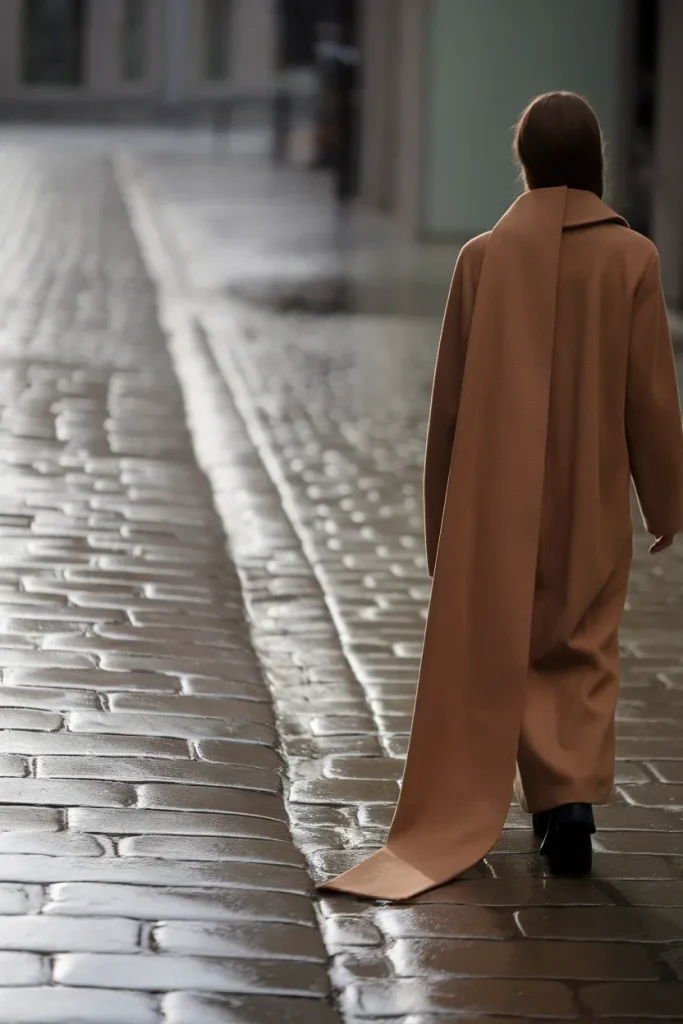
The Scarf Coat and the Funnel Neck: One Coat Doing Two Jobs
Two versions of the same idea, and it is the single most useful outerwear development in years.
The scarf coat has a long panel of matching fabric attached at the neckline that you wrap, drape, or let hang. The funnel neck goes the other way, building a tall structural collar that stands on its own, often with a shearling facing. Marie Claire leads its whole winter report with the popped collar. Who What Wear ranks scarf coats fourth of five. Champagne & Savings lists funnel neck jackets third of twenty-three.
Pinterest confirms the demand independently: the search term “high collar jacket” is up 60 percent in Pinterest’s own 2026 data.
For a capsule, the appeal is arithmetic. One purchase retires two hanger slots, because you stop needing a separate winter scarf for that coat. Fewer pieces, same warmth, and the outfit reads more finished because the proportions were designed together instead of assembled in a hallway at 7am.
Price reality, taken from live listings this season: Quince sits around $200, H&M around $199, BCBG around $278, J.Crew around $348, and L’Academie around $399. The $200 tier is the value sweet spot here, because the drape of the scarf panel depends more on fabric weight than on brand.
Fit note worth knowing. A funnel collar adds visual bulk right at the jaw, so if you are petite or have a shorter neck, pick the scarf version instead. The wrap sits lower and keeps your neckline open. If you are tall, either works, and the funnel is genuinely better on you than on almost anyone else.
If you are still deciding how many coats a real capsule needs, the six capsule wardrobe jackets that actually earn their hanger space maps them against temperature range rather than style category.
Navy So Deep It Reads Black (The Quiet Swap Nobody Notices)
Both major color reports named navy, and both described the same specific shade: navy so dark it is nearly black.
That specificity is the useful part. A mid navy fights black in a closet, because the two colors sit next to each other and the mismatch is obvious in daylight. A near-black navy does not fight anything. It slots in wherever black used to go, adds a hint of warmth, and quietly makes a black-heavy capsule look intentional instead of default.
Marie Claire spotted it in pea coats and barrel jeans. The move for your closet is smaller than that. One knit, or one pair of trousers, in the deepest navy you can find.
Before you commit, run a winter color analysis on yourself first. Deep navy is close to universal, but if you sit in a warm-toned season, espresso brown does the same job better on you and you will reach for it more.
The Boot Silhouette Slimmed Down, and Only One Version Earns a Slot
Chunky boots are receding. Jo-Lynne Shane flags slimmer boot silhouettes as a return to sleek and refined. Who What Wear puts kitten-heel boots third of five. Champagne & Savings lists pointed-toe ankle boots at twenty-one.
Three sub-styles are all being called back at once: the kitten heel, the pointed toe, and the sleek riding boot. Only one of them belongs in a capsule.
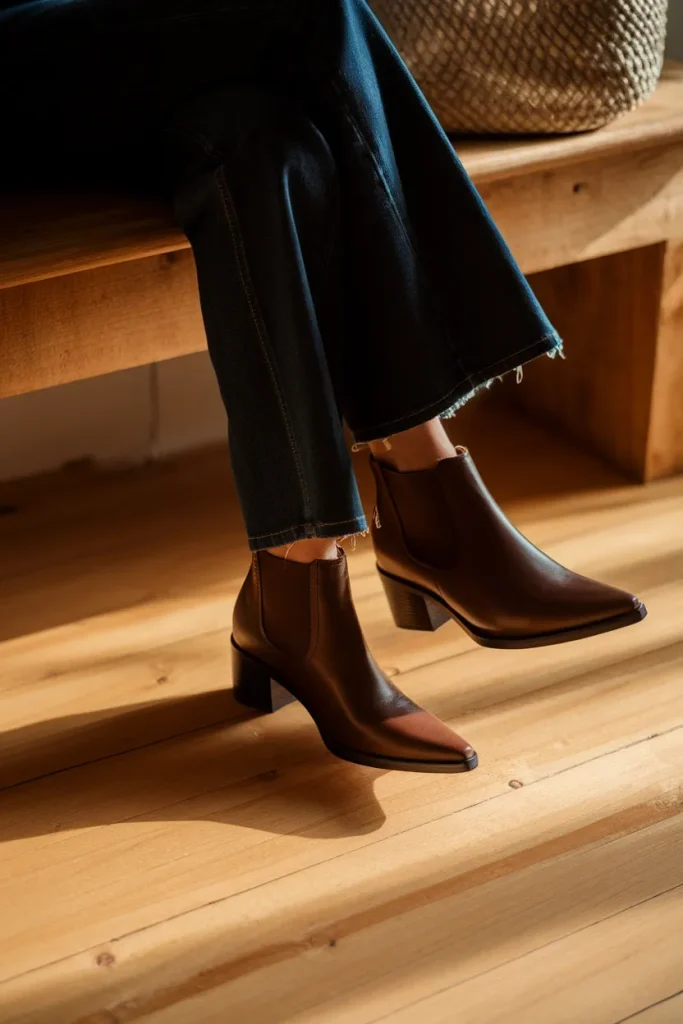
The pointed-toe ankle boot in a low block heel, roughly one and a half to two inches. It walks, it wears with jeans and trousers and midi skirts, and the pointed toe does the lengthening work without the kitten heel’s stability problem on winter sidewalks.
Kitten-heel boots are pretty and impractical in December. A two-inch stiletto-profile heel on ice is a genuinely bad idea, and the wear count collapses accordingly. If you love the look, buy them for indoor-heavy months and do not count them as your winter workhorse.
Live pricing runs wide: H&M around $48, Zara around $129, Marc Fisher LTD around $199, Madewell around $218. The $48 pair will have a synthetic sole that gets slick fast, which is a safety trade-off worth naming, not just a quality one.
Proportion notes. If you are petite, keep the shaft height at or just below the narrowest part of your calf and wear them with a cropped or full-length hem so the boot never cuts your leg at the widest point. If you are tall, a taller shaft balances your leg line better than an ankle-height boot. If you are curvy, look for a wider shaft opening rather than sizing up the foot, because most sizing-up does nothing for calf width.
For the full lineup by silhouette, the best ankle boots for a capsule wardrobe breaks down five styles by cost per wear rather than by trend.
The Denim Split: Barrel, Bootcut, and the Skinny Jean Question
Denim is the messiest category this season, so let me be precise about what the evidence actually says.
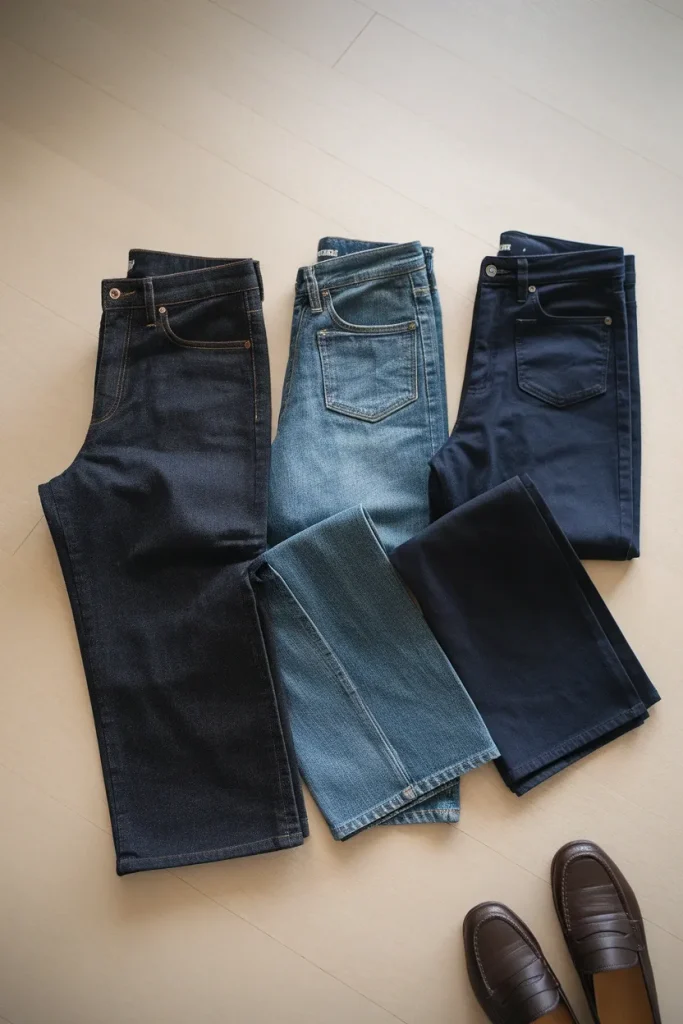
Who What Wear ranks bootcut jeans second of five, citing Levi’s around $110 and Madewell around $148. Champagne & Savings lists barrel jeans at eight. Marie Claire runs an entire section titled “What’s the Skinny?” arguing skinny jeans and cigarette trousers are back as legging-like bottoms. Trade press has run the same story.
Here is the part nobody else is telling you. Pinterest’s own published 2026 search data points the opposite way. “Baggy suit” is up 90 percent. “Pleated trousers” is up 30 percent. Skinny does not appear anywhere in Pinterest’s rising winter terms.
So the runway and the retail buyers are pushing narrow, and actual consumer search demand is still climbing toward wide. Those two things can both be true, and when they conflict, the search data is the better predictor of what you will still want to wear in eighteen months.
The capsule answer is bootcut. It sits between the two, it has never fully left, and it scores well on question two of the Hanger Space Test in a way that neither barrel nor skinny does. Barrel is a genuine silhouette, and it is also unmistakably a 2026 silhouette, which means it dates.
If you already own skinny jeans, keep them. They will look current again this winter under a longline coat and a tall boot. Buying new ones is a different decision, and I would not.
Texture Is Doing the Work Print Used to Do
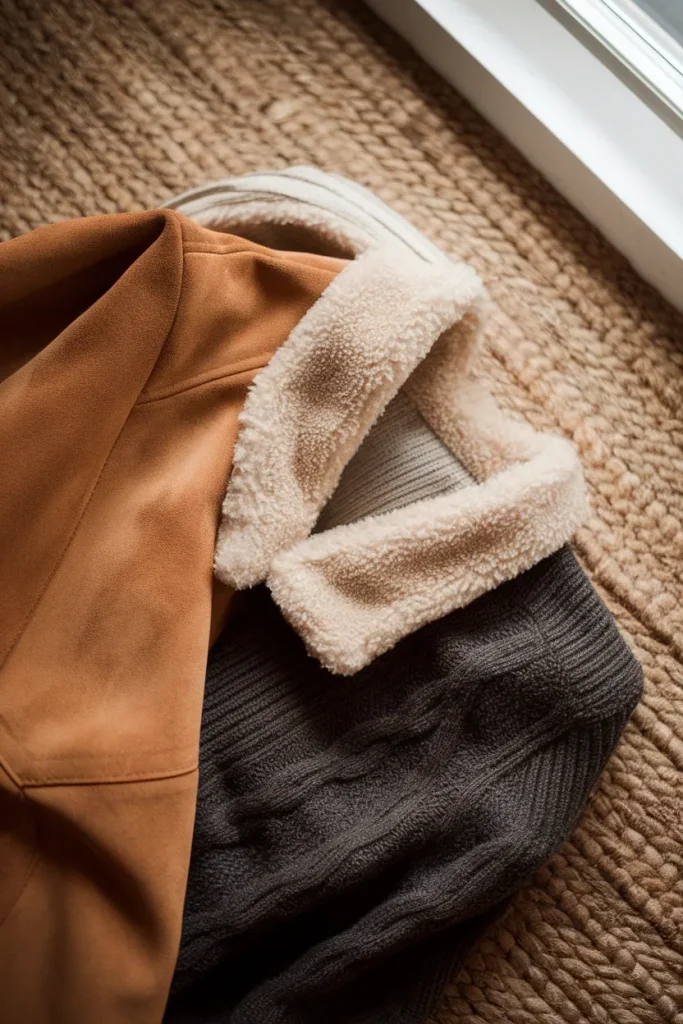
Scan every winter 2026 list side by side and the texture words repeat more than any single garment does. Sherpa. Shearling. Suede. Faux fur. Boucle.
Jo-Lynne Shane’s seventh trend is sherpa accents. Champagne & Savings opens with faux fur and shearling and lists suede at eleven. PureWow calls suede the standout finish inside the brown color story.
The reason this matters more than a print trend: texture is palette-neutral. A suede jacket in camel does not add a new color to your closet, so it does not create the compatibility problem that a plaid or a polka dot creates. It adds visual interest at zero cost to your mix-and-match ratio. That is rare.
Use it in one place per outfit. A sherpa collar or a suede jacket or a shearling boot, never all three at once, because the textures compete and the outfit reads costume.
Suede has a real trade-off worth naming: it stains, it water-marks, and it needs a protectant spray before first wear. Faux suede solves the water problem and loses the drape. Both are legitimate choices depending on your climate.
For a full outfit built almost entirely on texture rather than color, the eclectic grandpa knitwear look is the most capsule-friendly version of that idea running right now.
What Pinterest Search Data Says Is Actually Coming
Every article ranking for winter fashion trends 2026 is built from runway shows and retail buys. Not one of them checks the demand side. Pinterest publishes its own search growth data in the Predicts report, and it tells a partly different story.
Here is the cross-reference, with Pinterest’s published percentages against what the fashion press is calling.
| Trend | Runway and retail press | Pinterest search demand | Verdict |
|---|---|---|---|
| Tall and funnel collars | Marie Claire leads with it | “high collar jacket” +60% | Double-backed. Buy. |
| Brown as the neutral | Named by Jo-Lynne Shane and PureWow | “brown linen shirt” +100% | Double-backed. Buy. |
| Utility and field jackets | Marie Claire’s “Mrs. Fix It” | “field jacket outfit” +65%, “utility shirt” +45% | Double-backed. Buy. |
| Statement belts | Barely mentioned | “chunky belt” +65% | Pinterest-only. Cheap way in. |
| Capes | Listed by Champagne & Savings | “cape outfit” +65% | Double-backed. Rent, do not buy. |
| Brooches and pins | Absent from every list | “brooch aesthetic” +110%, “maximalist accessories” +105% | Pinterest-only. Under-served. |
| Icy blue | Absent, press says navy | “icy blue” +50% | Pinterest-only. Watch it. |
| Skinny jeans | Marie Claire and trade press push it | Does not appear. “baggy suit” +90% | Runway-only. Skip. |
| Polka dots | Marie Claire’s “Polka Party” | Does not appear | Runway-only. Skip. |
| Lace details | Absent from winter lists | “lace bandana” +150%, “lace belt” +55% | Pinterest-only. Early. |
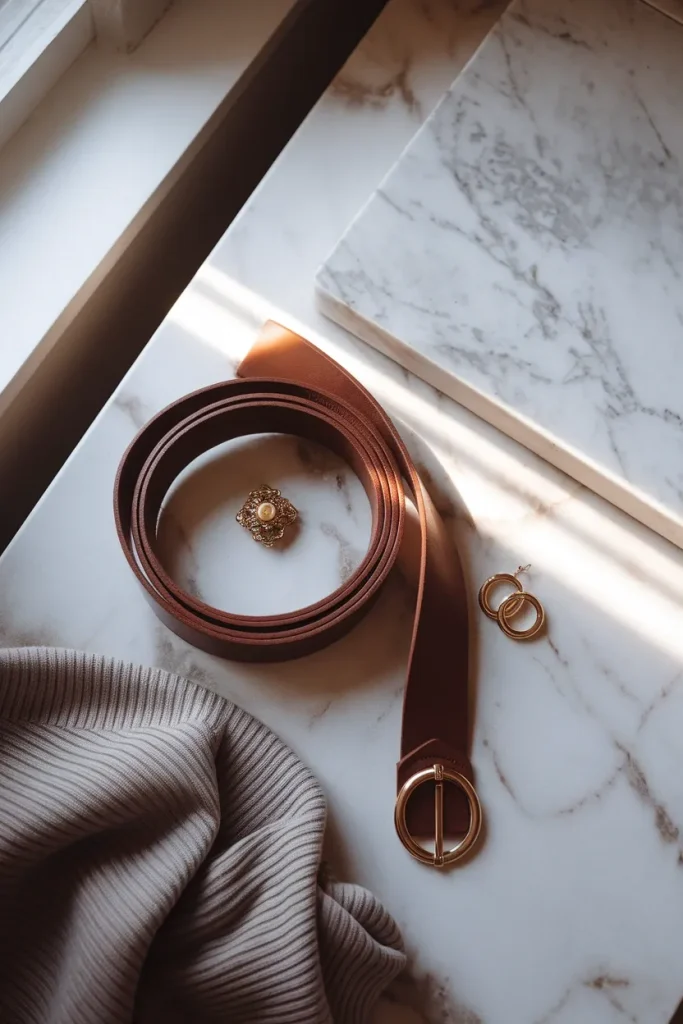
Read the right-hand column and the cheapest, highest-return move of the season becomes obvious. Two accessories, a chunky belt and a brooch, are riding real search demand that the fashion press has not covered yet, and neither one costs more than a mid-tier lunch. A belt reshapes three coats you already own. A brooch turns a plain crew neck into something that looks considered.
That is the leverage point. Not the coat. The small accessories that change a neutral outfit covers the audit method for figuring out which ones you are actually missing.
Three Winter 2026 Trends I Would Skip
Skipping is the part these articles never do, so here it is plainly.
Butter yellow. PureWow called it directly: after five years, the run is ending. If you own it, keep wearing it, it does not evaporate. Buying more of it in October 2026 is buying at the top.
Polka dots. They appear on exactly one major winter list and nowhere in Pinterest’s rising terms. A polka dot piece also fails question one of the Hanger Space Test hard, because a print binds to a specific palette and refuses to mix.
Balaclavas and statement socks. Both real, both fun, both scoring 1 or 2 out of 8. Novelty accessories have a wear ceiling of maybe ten outings before they read as dated, and no price low enough fixes a wear ceiling.
Cost Per Wear Math on the Five Biggest Winter 2026 Buys
Everyone quotes prices. Almost nobody divides. Winter pieces get a genuinely high wear count because the weather forces repetition, which is why winter is the best season to spend real money.
The math below assumes a US winter of roughly ninety wearable-cold days and models year one only. Divide again by year two and three, and the good buys get dramatically better.
| Piece | Realistic price range | Year-one winter wears | Cost per wear, year one | Verdict |
|---|---|---|---|---|
| Brown wool-blend coat | $200 to $350 | 45 | $4.44 to $7.78 | Best buy of the season. Drops under $2 by year three. |
| Scarf coat | $200 to $350 | 30 | $6.67 to $11.67 | Strong, and it retires your scarf slot too. |
| Pointed-toe ankle boots | $130 to $220 | 50 | $2.60 to $4.40 | Best cost per wear on the list. |
| Deep navy knit | $60 to $150 | 25 | $2.40 to $6.00 | Solid. Fiber content decides where you land. |
| Chunky leather belt | $30 to $70 | 40 | $0.75 to $1.75 | Cheapest leverage available. |
Two things fall out of that table. Boots and belts beat coats on pure cost per wear, because the wear count matters more than the price. And a $350 coat you wear forty-five times is a better financial decision than a $90 coat you wear eight times, which is the exact trap that produces a full closet and nothing to wear.
Wear count depends on the piece surviving, which is mostly a care question. The Woolmark Company’s official wool care guidance is worth reading once, because most people over-wash wool badly. Wool is naturally odor and stain resistant, so it needs washing far less often than cotton. Woolmark’s own recommendation is to rest a wool garment for twenty-four hours between wears so the fibers recover, brush woven pieces after wearing instead of laundering them, and dry flat away from direct heat. Following that alone can double the life of a coat, which halves its cost per wear.
How to Wear Winter 2026 Trends for Your Proportions
Three of this season’s silhouettes carry real proportion risk. Here is what works with your frame rather than what hides it.
Tall and funnel collars. They add visual mass at the jawline and shorten the apparent neck. If you are petite or short-necked, choose the scarf coat instead and wrap it low so your neckline stays open. If you are tall, the funnel is genuinely one of the few silhouettes designed at your scale.
Barrel and wide-leg denim. The break point is what decides this, not the width. Have the hem finished so it stops within an inch of the top of your shoe. If you are petite, that single alteration is the difference between the jeans reading intentional and reading borrowed. If you are curvy, a mid or high rise with a contoured waistband keeps the volume from starting at your waist.
Longline coats. A coat that ends mid-calf can cut a shorter frame in half. The fix is not a shorter coat, it is wearing it open with a vertical column of one color underneath, which restores the unbroken line. If you are plus-size or midsize, look for a coat with a set-in shoulder seam that actually meets your shoulder, because a dropped shoulder on a longline coat adds width exactly where you do not want it.
A Six-Piece Winter 2026 Add-On Capsule Under $600
If you own a functioning neutral base already, these six additions cover the season without touching anything else in your closet.
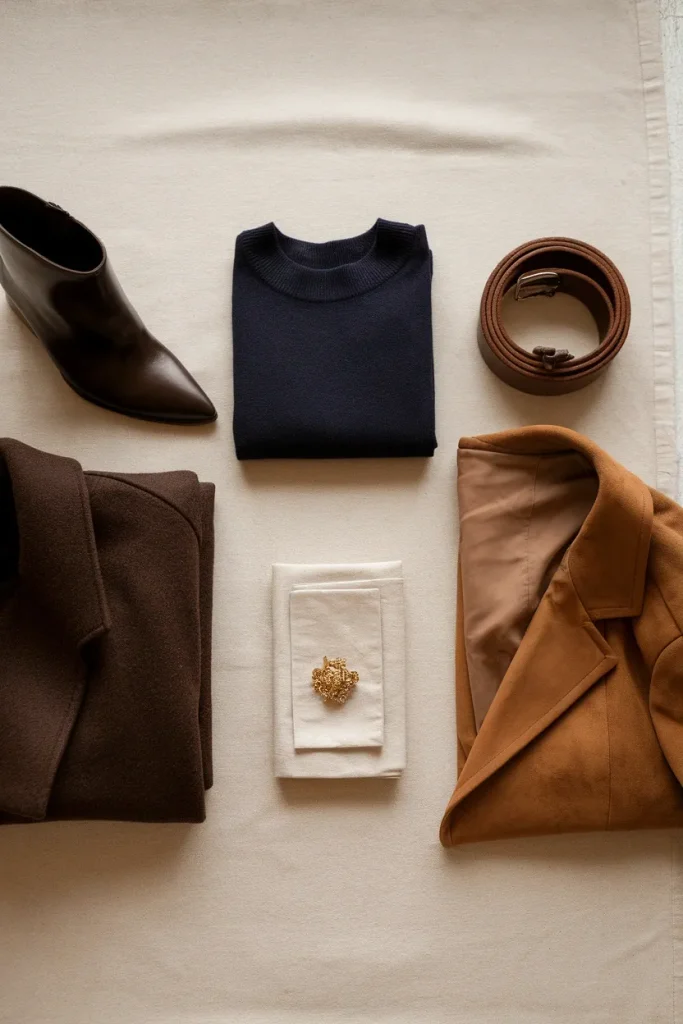
- Chocolate or camel wool-blend coat, longline, $200 to $250. The anchor.
- Pointed-toe ankle boot, low block heel, espresso or black, $130 to $180. Best cost per wear on the list.
- Deep navy knit, merino or lambswool, $60 to $110. The quiet swap.
- Chunky leather belt, chocolate, $30 to $60. Reshapes three coats you already own.
- Suede or sherpa layering piece, camel, $80 to $140. Texture without adding a color.
- One gold brooch or vintage-style pin, $20 to $40. The cheapest way to look considered.
Total lands between $520 and $780 depending on tier. Buy them in that order, because the coat and boots carry the most wears and the last two items are the ones you can skip if the budget runs out.
Numbers three and six also handle December parties without a new dress, which is the point of what to wear on New Year’s Eve without buying a new dress in more detail.
Winter 2026 Fashion Trends FAQ
What are the biggest winter 2026 fashion trends? Three shifts have real consensus behind them: brown replacing black as the default outerwear neutral, tall structural collars in the form of scarf coats and funnel necks, and texture (suede, sherpa, shearling) taking over from print as the way an outfit signals effort. Slimmer boot silhouettes and deep navy round out the list. Everything else on this season’s trend roundups is one-season churn.
What colors are in for winter 2026? Overlapping the two major color reports gives you three with genuine consensus: deep navy, every shade of brown from camel through espresso, and winter citrus orange. Deep plum, teal, and powder pink appear on one list each. Pantone’s Color of the Year for 2026 is Cloud Dancer, a soft white, which lines up with the season’s overall quiet-neutral direction.
Are skinny jeans back in style for 2026? The fashion press says yes, and Pinterest search data says no. Marie Claire and the trade press are calling the skinny jean and cigarette trouser back, while Pinterest’s published 2026 data shows demand still climbing toward wide silhouettes (“baggy suit” up 90 percent) with skinny absent from its rising terms. If you own skinny jeans, wear them this winter under a longline coat and a tall boot. Buying new ones is a harder case to make.
Is butter yellow over for winter 2026? PureWow named it the one color to leave behind after a five-year run. That does not mean the butter yellow sweater in your closet stops working, and it does mean this is a poor moment to buy more of it. Winter citrus orange is the color picking up the energy butter yellow is losing.
Do these winter 2026 trends work for petite women? Most of them, with two adjustments. Choose the scarf coat over the funnel neck, because a tall collar adds mass right at the jaw and shortens the apparent neck. And have wide or barrel-leg denim hemmed to stop within an inch of your shoe. Longline coats work fine on a petite frame as long as you wear them open over a single-color column underneath, which keeps the vertical line unbroken.
Is a scarf coat worth the investment, or is there a cheaper alternative? The value case is real, because one purchase covers both your coat slot and your scarf slot. Live pricing this season runs from around $199 at H&M and $200 at Quince up to $348 at J.Crew and $399 at L’Academie. The $200 tier is the sweet spot, since the drape of the scarf panel depends more on fabric weight than on brand name. The cheaper alternative is simpler: a plain coat you already own plus a large wool scarf, which costs nothing and looks nearly as intentional.
Can I machine wash a wool or wool-blend coat? Usually no, and more importantly you rarely need to. Wool is naturally odor, stain, and crease resistant, so it needs cleaning far less often than cotton. The Woolmark Company recommends resting a wool garment twenty-four hours between wears so the fibers recover, brushing woven pieces after wearing, airing rather than washing to remove odor, and drying flat away from direct heat when washing is unavoidable. Spot clean, brush, and air first. Save dry cleaning for the end of the season.
The Two Trends Actually Worth Your Money This Winter
If you take one thing from all of this: buy the brown coat and the chunky belt.
The coat carries forty-plus wears and gets cheaper every year you own it. The belt costs under $60 and reshapes three pieces already hanging in your closet, and it is riding search demand the fashion press has not caught up to yet. Everything else on this list is optional.
Run the Hanger Space Test on whatever is sitting in your cart right now. Four questions, eight points, under five goes back. If you want a second opinion on a specific piece, tell me what it is and what you would wear it with, and I will score it with you.
Keep reading
Fall 2026 Fashion Trends: The Looks Worth Adding to Your Capsule
Every fall fashion trends 2026 roundup you’ve read this month has the same problem. It tells you satin is back, hands you...
Whimsigoth Outfits: Witchy, Romantic Style You Can Build From Your Fall Capsule
The first time whimsigoth outfits showed up in your feed, you probably saved four of them and then wore none. That is...
Clean Girl Aesthetic: The Minimalist Look That Started It All
The clean girl aesthetic sold something by accident, and it was never the clothes. It was the idea that this look costs...