
How to Make a Capsule Wardrobe Vision Board (That Actually Guides You)
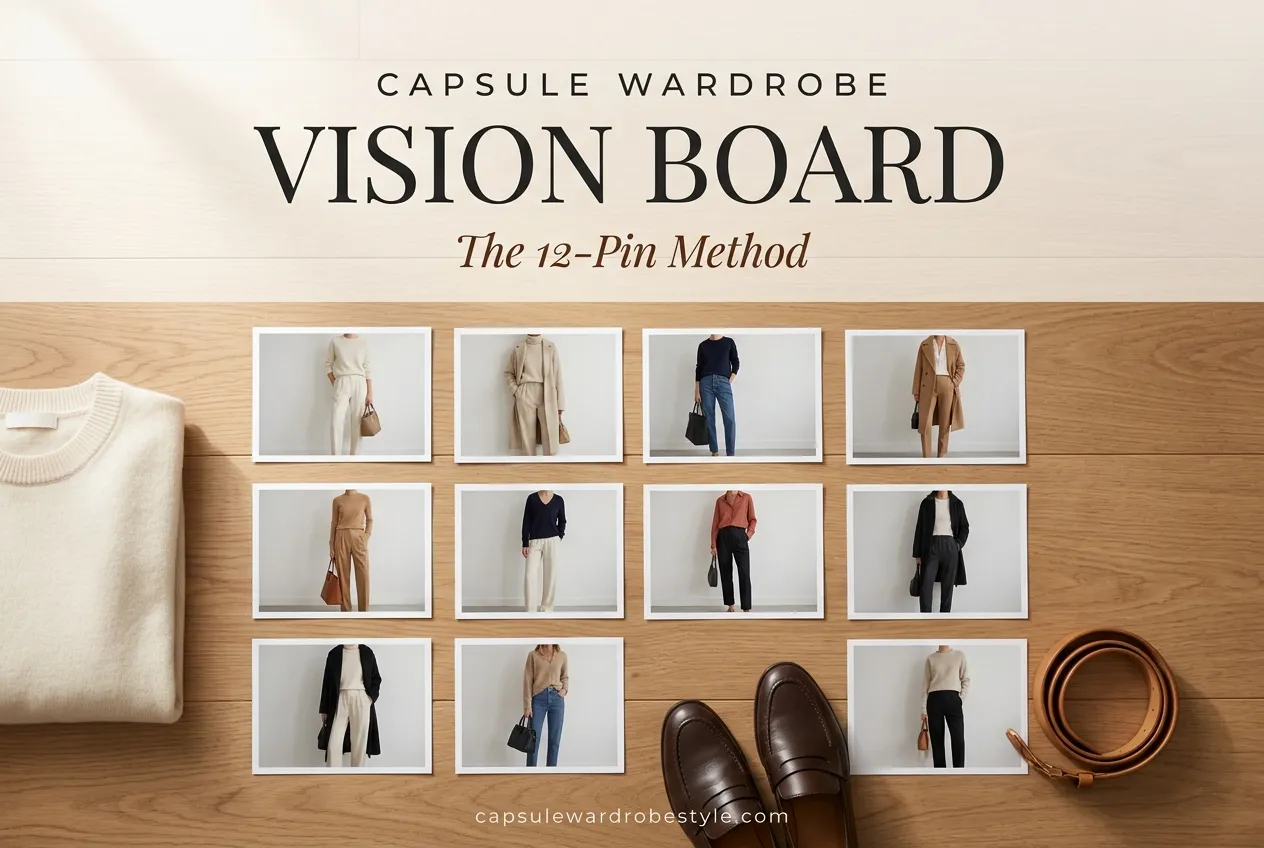
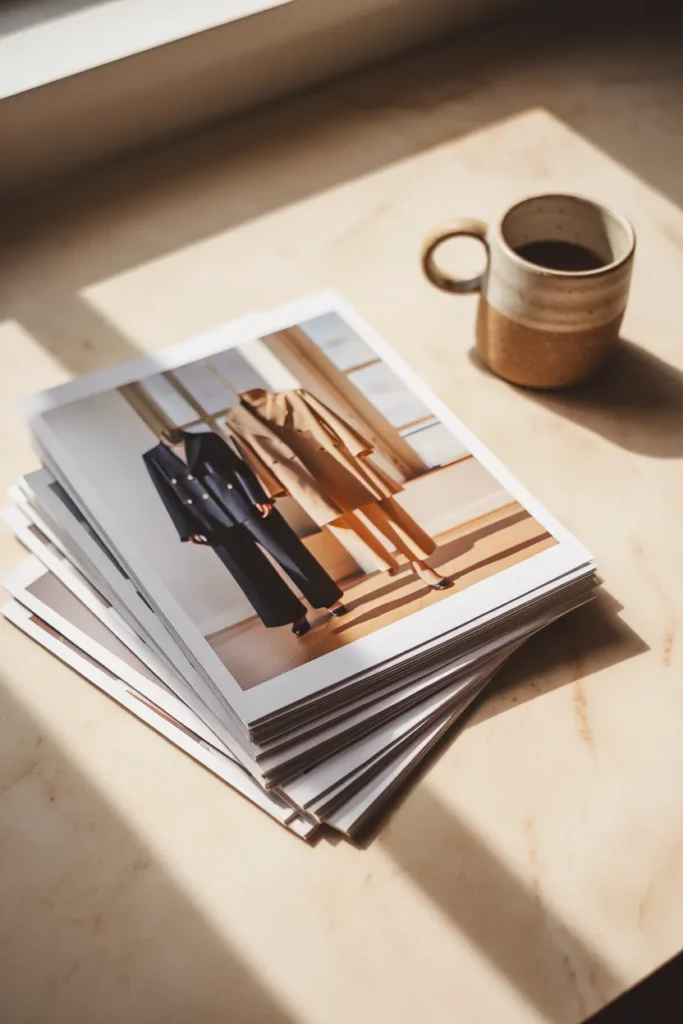
A capsule wardrobe vision board is supposed to make getting dressed easier. Most of them do the opposite. You save four hundred pins, the board looks gorgeous, and your closet still produces the same tired outfit on Tuesday morning. The problem isn’t your taste. It’s that nobody told you a board has a job to do, and a job means rules. Here’s the method that turns a pretty collection of images into something that changes what you buy.
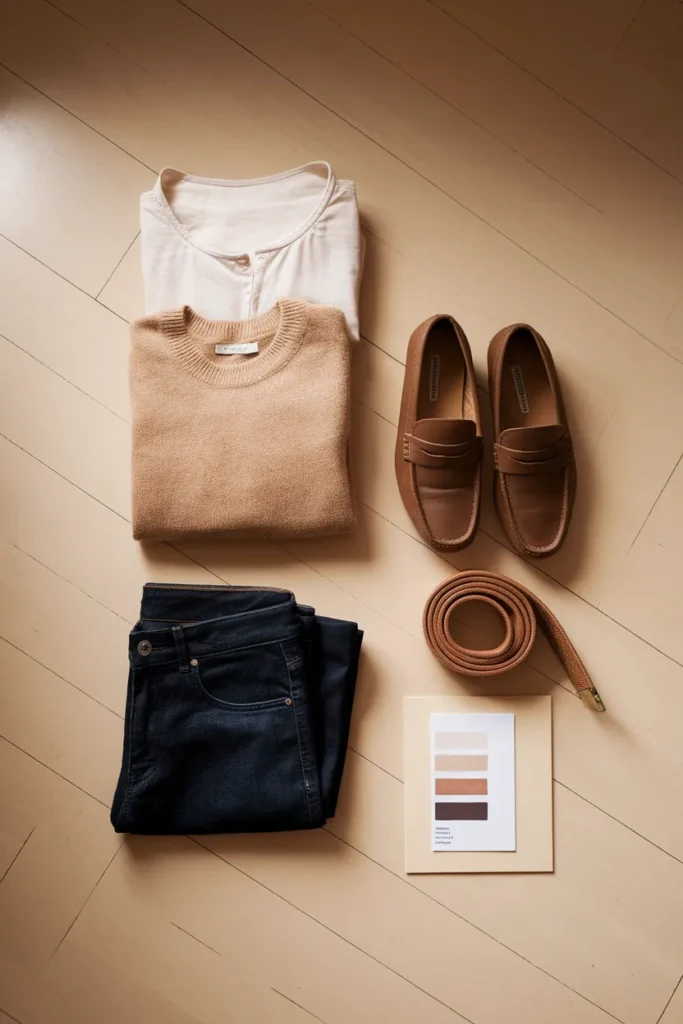
What a Capsule Wardrobe Vision Board Actually Does
Think of it as a filter, not a fantasy. Your board’s only job is to sit between you and the checkout button and answer one question: does this piece belong in the closet I’m building?
That sounds small. It isn’t. Most closet regret comes from buying things that were lovely in isolation and homeless once they got home. A good board makes that mistake visible before your card comes out.
There’s a second job too, and it’s the one people skip. A finished board tells you what you already own that’s working. When you notice that eleven of your saved images feature a soft black crewneck, and you own a soft black crewneck, you’ve just learned that piece earns its hanger space and probably deserves a backup.
So a capsule wardrobe vision board isn’t a wish list. It’s a description of a closet you could plausibly reach this year, assembled from images instead of adjectives, because adjectives lie. “Effortless” means five different things to five women. A photograph of a woman in wide-leg trousers and a rumpled linen shirt means exactly one.
Before You Pin Anything, Answer These Five Questions
Skip this and your board drifts within a week. Write the answers somewhere you’ll see them while you pin.
- What does my actual week look like? Count the days. Three at a desk, two at home, weekends with kids at the park. That ratio is your board’s ratio.
- What do I reach for when I’m running late? Those pieces are already your anchors. Name them.
- Which colors do I feel like myself in? Not which colors are trending. Which ones you keep buying.
- What have I bought in the last year and never worn? Be specific. That pattern is the trap your board needs to catch.
- How do I want to feel by 9am? Polished, comfortable, unbothered, pulled together. Pick two.
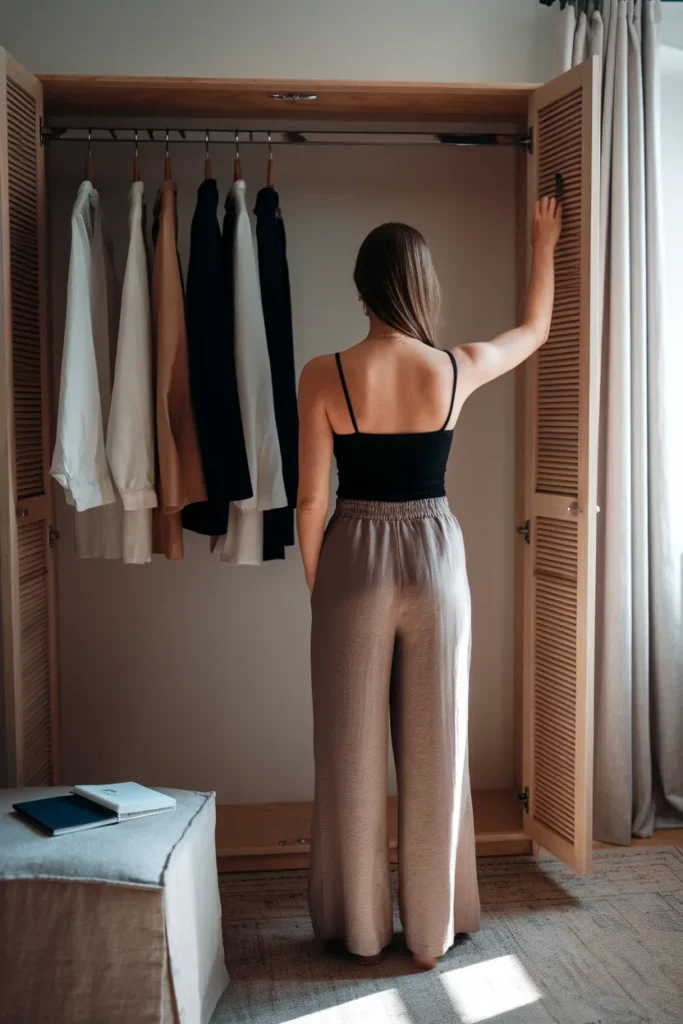
Now go look at what’s hanging up. It’s much easier to build a board that reflects reality when you start from the clothes already hanging in your closet instead of an imaginary blank slate.
The 12-Pin Rule (How Many Images You Actually Need)
Here’s the piece nobody says out loud. A board with four hundred pins is not a vision. It’s a mood, and moods can’t be shopped.
Twelve is the working number. Twelve images is enough for patterns to surface and few enough that you can hold the whole thing in your head while you’re standing in a fitting room. Pin as widely as you like during the collecting phase, then cut to twelve.
Why twelve and not fifty? Because more options make decisions harder, not easier. That’s the finding behind Iyengar and Lepper’s research on choice overload: shoppers offered six jams bought far more often than shoppers offered twenty-four. A board is a choice set. Keep it small enough to act on.
Split your twelve like this, and score each pin as you go.
The Board Read Scorecard
| Slot | How many pins | What it has to show |
|---|---|---|
| Full outfits | 5 | Head to toe, on a real body, in daylight |
| Single anchor pieces | 3 | One garment, clearly visible fabric and cut |
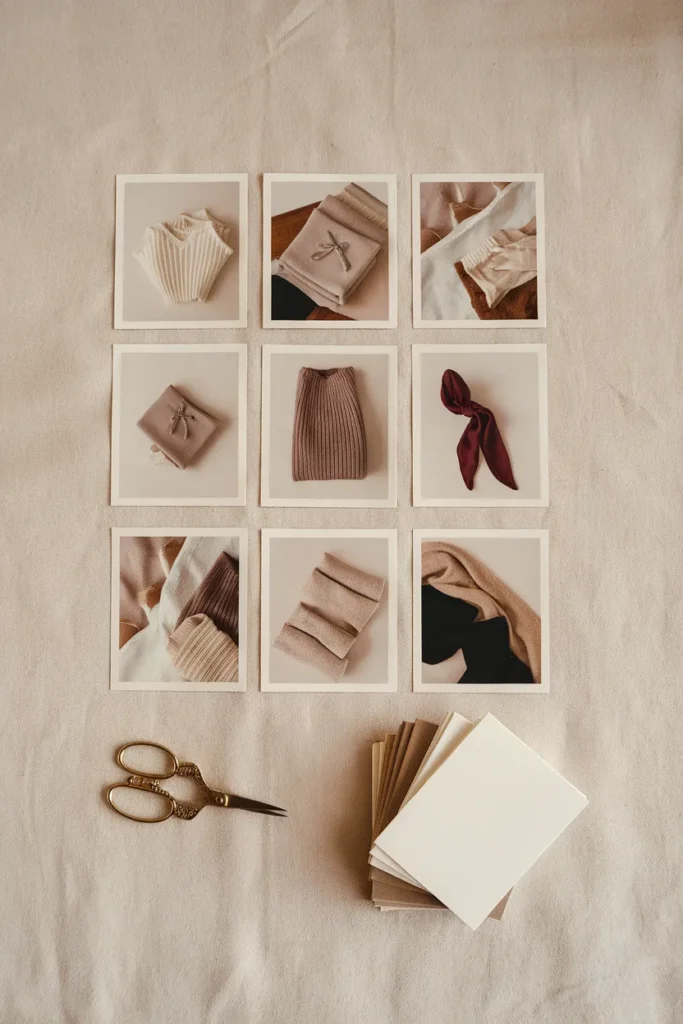
| Color and texture | 2 | Swatches, knit close-ups, fabric drape |
| Shoes and bags | 1 | The pair you’d wear four days a week |
| Wildcard | 1 | The one you can’t justify and love anyway |
Screenshot that. It’s the whole structure.
The Wearability Test That Separates Fantasy From Closet
Every board has passengers: images you love that will never translate into a Tuesday. Run each of your twelve through three questions.
Would I wear this to something on my actual calendar this month? Not a hypothetical trip to Rome. Something already scheduled.
Do I own at least one piece in this image, or one close enough? If a pin has nothing in common with your closet, it’s a rebuild, not a refinement.
If this outfit got a coffee stain at 8:40am, would I still leave the house in it? This one is brutal and it works. It filters out anything too precious to live in.
Two out of three, it stays. Fewer, it moves to a separate board called Someday. Don’t delete it. Aspiration is useful, it just shouldn’t sit in the same drawer as decisions.
This is where a lot of women get stuck with a specific aesthetic. You save forty flowing pins, buy one tiered skirt, and it hangs there alone because nothing else you own speaks its language. If that’s you, the fix is building the whole language at once, which is what a boho capsule wardrobe that still mixes and matches is for.
How to Read Your Board and Pull Out a Color Palette
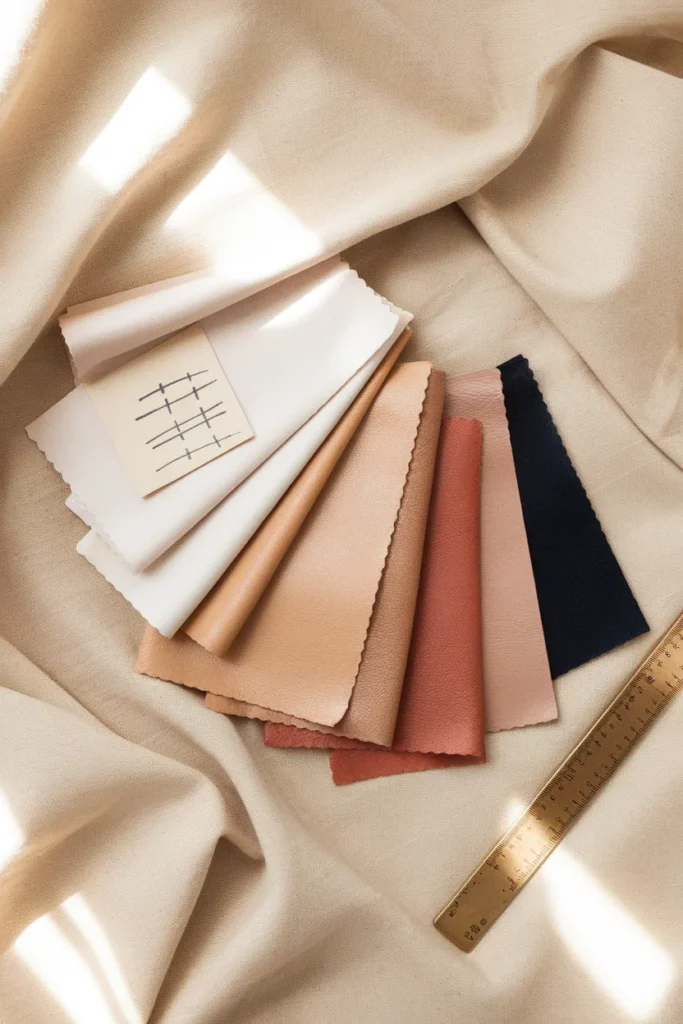
Now stop adding and start counting. Go through your twelve and tally every color you see. Not the colors you like. The ones physically present.
You’ll almost always find three groups. Base colors show up in six or more images, usually neutrals doing the quiet structural work. Support colors appear three to five times. Accents show up once or twice and carry all the personality.
Your capsule wardrobe color palette is roughly 60 percent base, 30 percent support, 10 percent accent. If your tally comes back with nine colors, you don’t have a palette yet, you have a collection. Cut until you’re at five or six total.
One thing worth naming: if every image on your board is beige and you feel a little flat looking at it, that’s data too. Neutrals are a foundation, not a personality. Plenty of women build a base and then discover they need something louder, and how to add color without losing cohesion covers exactly that problem.
Turning the Board Into an Outfit Formula, Not a Wish List
Look at your five full-outfit pins side by side. They’re more similar than you think.
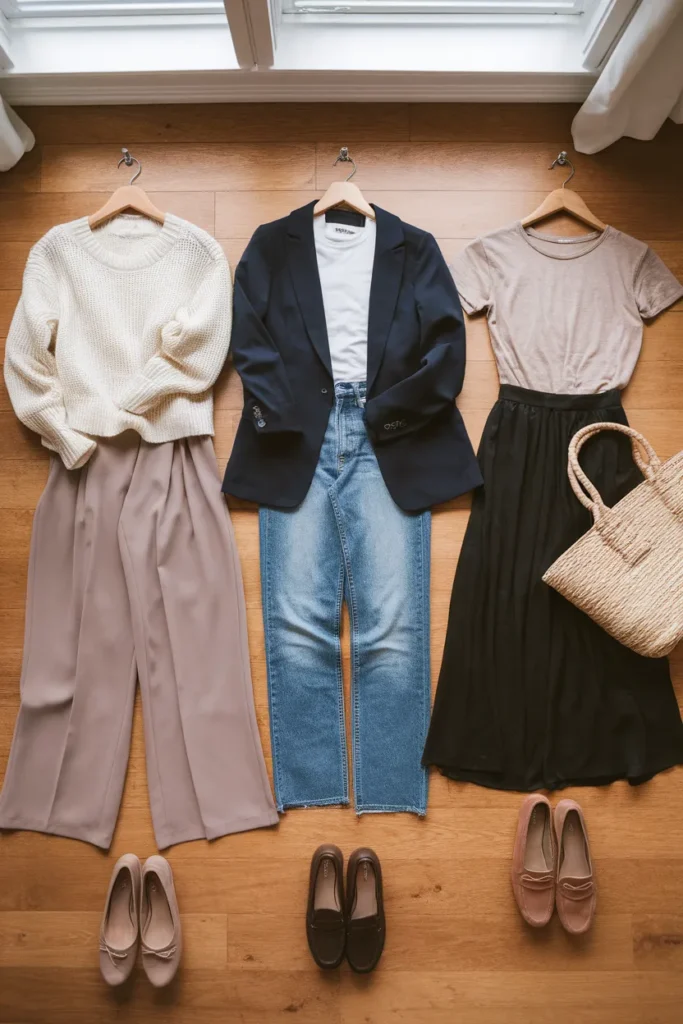
Write each one as a formula. Fitted top plus wide-leg trouser plus flat shoe. Long line coat plus straight jean plus knit. Midi skirt plus tucked tee plus loafer. Three or four formulas will cover almost everything on your board, and that’s your outfit math for the season.
This is the moment the board earns back the hour you spent on it. You now own a small set of repeatable combinations instead of a vague feeling. On a bad morning you don’t decide what to wear. You pick a formula and fill it.
Test each formula against your real week. If you wrote three formulas and all three are weekend formulas, but you’re at a desk four days out of seven, your board is describing a life you have on Saturdays. Rebalance before you shop. If you want a piece set that supports formulas across all four seasons, a 30-piece year round capsule that works in every season is the structure most of these formulas sit on.
From Board to Shopping List (With Real Price Tiers)
Here’s what almost nobody does, and it’s the reason most boards never change a closet.
Take your twelve pins and list every distinct garment you can identify. Then mark each one: own it, own something close, or gap. Only the gaps go on the list, ranked by how many of your formulas they unlock. A piece that appears in three formulas beats a piece that appears in one, every time.
Now price the gaps by tier so you know where to spend and where to save.
- Mass, roughly $15 to $50. Uniqlo, Old Navy, Target’s A New Day and Universal Thread, Amazon Essentials. Good for tees, tanks, and trend accents. The trade-off is fabric weight, so expect thinner cotton and shorter life on anything worn weekly.
- Mid, roughly $50 to $150. Madewell, J.Crew, Quince, Everlane, Banana Republic. Madewell denim typically runs around $98 to $138. This is where most capsule anchors belong.
- Contemporary, roughly $150 to $400. Sezane, COS, Reformation, Frank & Eileen. Worth it for outerwear and a blazer, where structure and drape actually show.
- Investment, $400 and up. A coat you’ll wear ten years, if the cost per wear genuinely lands under a few dollars.
One rule to keep the list honest. If a piece appears in five of your twelve pins, buy it once and buy it well. If it appears once, buy it cheap or wait. Shoes sit in the middle, which is why they’re worth their own comparison, and the best loafers for women, chosen the capsule way walks through that decision. Prices move constantly, so confirm before you buy.

Digital or Physical: Which Board Actually Gets Used
The format matters less than the placement. The board you can see when you’re deciding is the board that works.
Pinterest is the easiest place to collect and the hardest place to edit. Use board sections to keep your twelve separate from your browsing pile, and keep the working board secret so the algorithm doesn’t refill it with noise. Pinterest’s own guidance on board fundamentals suggests a clear, focused theme and enough pins to give the board real context, which is worth reading before you name yours.
Canva is the best home for the finished twelve. Build a simple grid, export it, and set it as your phone lock screen. That’s the version you’ll actually consult in a store.
Physical wins on commitment. Printed images pinned inside the closet door, where you see them while you’re standing there in a towel at 7:40am. Nothing digital competes with that timing.
Most women end up with two: Pinterest for gathering, and one edited version living somewhere they’ll trip over it.

Naming Your Aesthetic So the Board Stays Consistent
Once your twelve are set, give the whole thing three words. Not one, which is too broad, and not ten, which is a mood.
Refined, warm, unfussy. Structured, soft, coastal. Sharp, minimal, dark. Whatever fits.
Those three words become the sentence you say to yourself in a store. If a jacket is refined and warm but very fussy, it fails one out of three and you already know what to do. The words work faster than the images once you’ve been using them a month.
Be careful of one thing here. Naming an aesthetic can tempt you into buying the costume instead of the clothes. The three words should describe how pieces feel and function, not a specific decade or reference you’ll be bored of by spring. The exception is when you genuinely love a period and want to build it properly, in which case vintage-inspired pieces with retro soul shows how to do it without ending up in costume.

How Often to Update Your Board (and What to Delete)
Twice a year is plenty. Once in late summer as the fall layers come out, once in late winter before spring. Anything more frequent and you’re redecorating instead of dressing.
When you update, don’t start over. Pull up the twelve and ask a single question of each: did I wear anything like this in the last six months? Pins that survive two consecutive reviews are your real style, and they’re worth building around permanently.
Delete anything that’s been on the board for a year without producing a purchase or an outfit. It isn’t your taste. It’s someone else’s, and it’s been quietly making you feel behind.
Keep a running Someday board for everything you cut. Every so often something migrates back, and that’s genuinely useful information about where your style is heading next.
Frequently Asked Questions
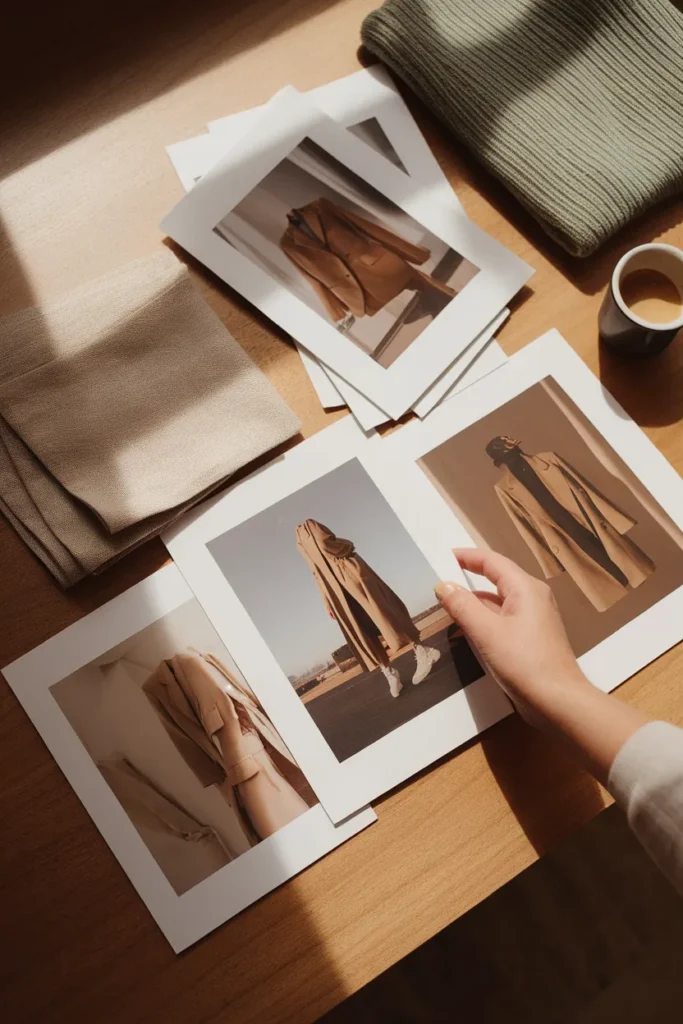
What should go on a capsule wardrobe vision board? Twelve images: five full outfits, three single anchor pieces, two color or texture shots, one shoe or bag, and one wildcard. Full outfits matter most because they show proportion, which single garment shots hide.
What’s the difference between a mood board and a vision board? A mood board captures a feeling and can stay abstract. A capsule wardrobe vision board has to produce decisions, which means every image needs to be something you could realistically wear and buy.
Should my board be digital or physical? Whichever you’ll see at the moment of decision. Pinterest for gathering, Canva for the edited version on your lock screen, printed inside the closet door if you decide what to wear while standing there.
How do I turn my board into a color palette? Count the colors that physically appear across your twelve pins. Colors in six or more images are your base, three to five are support, one or two are accents. Aim for five or six total, weighted roughly 60/30/10.
Does this method work if I’m petite or curvy? Yes, with one adjustment. Pay attention to proportion rather than the specific garment. If you’re petite, note where hems and waistlines sit on the women in your pins, because a mid-calf skirt reads differently at 5’2″ than at 5’9″. If you’re curvy, prioritize pins that show fabric with structure and drape rather than very boxy cuts, since those tend to translate more predictably.
How often should I update my capsule wardrobe vision board? Twice a year, in late summer and late winter. Pins that survive two consecutive reviews are your genuine style. Anything sitting untouched for a year should come off.
Do I need a paid planner, or is Pinterest enough? Pinterest plus a free Canva grid does everything described here. Paid planners are mostly worth it if you want the accountability of printed pages, and they typically run $10 to $20. The method matters more than the template.
Your Next Ninety Minutes
Give this one evening. Collect widely for a week if you like, then sit down and cut to twelve, count your colors, write your three formulas, and mark your gaps.
The board you end up with won’t be the prettiest one on Pinterest. It’ll be the one that quietly stops you from buying the fourth striped shirt, and that’s a much better outcome than a beautiful collection of images you never look at again.
Pin the Board Read scorecard so it’s there the next time you’re standing in a fitting room wondering whether this one counts.
Keep reading

The Capsule Wardrobe Template That Starts With Your Real Closet
You’ve downloaded a capsule wardrobe template before. Maybe three. There was a tidy list of thirty pieces, a suggested color palette, and...

7 Day Cruise Capsule Wardrobe: One Bag, Every Occasion Covered
A 7 day cruise capsule wardrobe sounds like a contradiction. One week, four dress codes, two climates, and a closet roughly the...

The 30-Piece Year Round Capsule Wardrobe That Works in Every Season
Every January the internet hands you a winter capsule. By April it’s a spring capsule. By July, summer. That’s four closet rebuilds...