
Plus Size Capsule Wardrobe: 16 Pieces That Actually Fit and Flatter
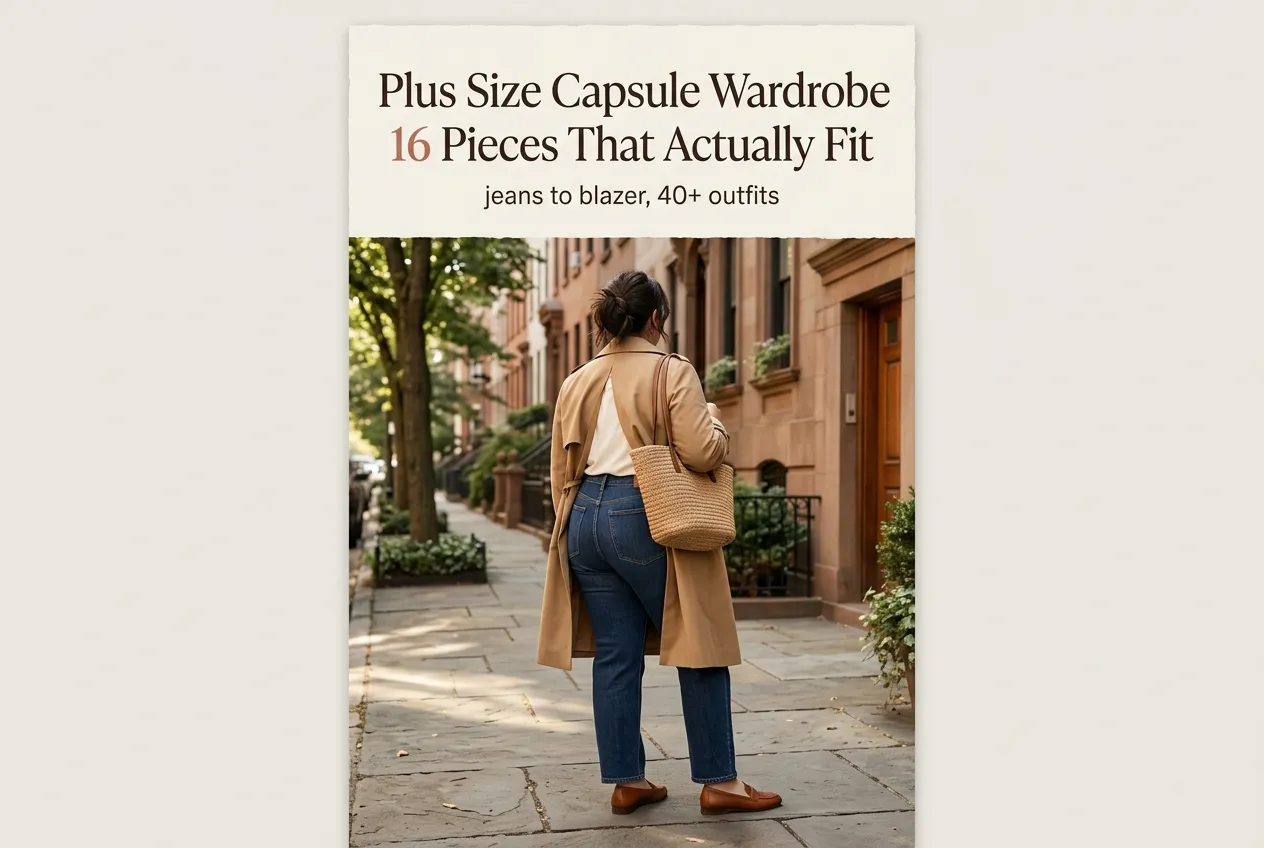
Your closet is full and you still have nothing to wear. If that sentence stings, a plus size capsule wardrobe is the fix, and it works for a reason nobody talks about: it removes fit gambling from your mornings. This guide gives you 16 pieces that mix into 40 plus outfits, the exact fabric and construction specs to look for in each one, and a brand list sorted by both budget and real size range. No vague “invest in basics” advice. Actual buying intel.
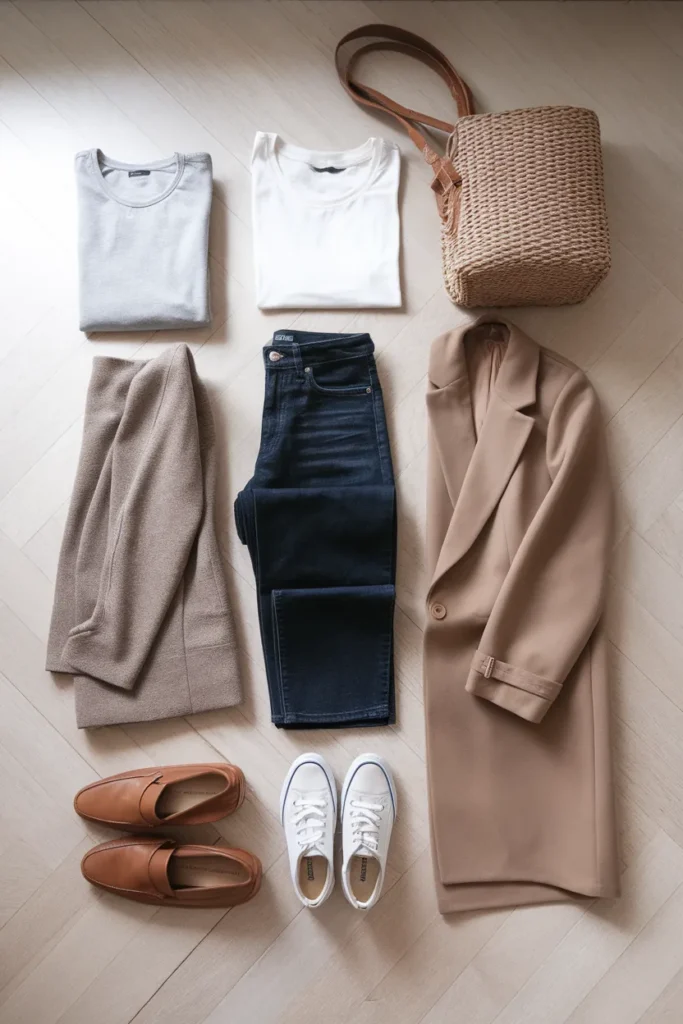
Here’s the promise. By the end of this post you’ll know exactly what to buy, what to skip, and which US retailers actually carry your size, whether that’s a 14 or a 32.
Why a Capsule Wardrobe Works Even Harder in Plus Sizes
Every woman deals with morning decision fatigue. Researchers who study it describe how the quality of our choices drops as the number of choices piles up, which is why a packed closet can make you feel worse, not better. The conceptual analysis of decision fatigue published through the National Institutes of Health frames it plainly: repeated decisions drain the same mental battery you need for everything else in your day.
Now add the plus size layer. Sizing is wildly inconsistent from brand to brand, returns are constant, and a bad purchase costs the same $60 whether it fits or not. When good options are harder to find, every wrong buy hurts twice.
A capsule flips that math. You make 16 careful decisions once, then coast on them for years. Cost per wear drops. Morning panic drops. And because every piece was chosen to work with your proportions instead of against them, you stop keeping “someday” clothes that quietly judge you from the hanger.
One more honest note: this isn’t about owning less for the sake of a number. It’s about every single piece earning its hanger space.
Three Fit Rules to Lock In Before You Buy Anything
Get these three rules right and almost any piece list will work. Skip them and even the prettiest capsule falls apart by week two.
Rule 1: Fabric needs recovery, not just stretch. Stretch is how a fabric gives. Recovery is whether it snaps back. Look for 2 to 5 percent spandex or elastane blended into cotton, denim, or ponte. A jean that bags out by lunch has stretch without recovery, and it will always bag out. Midweight fabrics with some body, like ponte, twill, and heavier jersey, skim your shape and hold a clean line all day. Whisper-thin fabrics cling and crease.
Rule 2: Fit the biggest measurement, tailor the rest. On structured pieces like blazers and button-downs, buy for your shoulders and bust, then have the waist or sleeves adjusted. A $15 to $25 tailoring fee turns an okay jacket into one that looks made for you. Shoulders are the one thing a tailor can’t easily fix, so that’s where the fit decision lives.
Rule 3: Rise and waistband construction decide comfort. High-rise bottoms with a wide, flat waistband sit securely and smooth the midsection without pinching. Skinny elastic and low rises roll, dig, and create the exact lines you’re trying to avoid. Check the waistband before anything else.
Choose a Neutral Palette That Does the Mixing for You
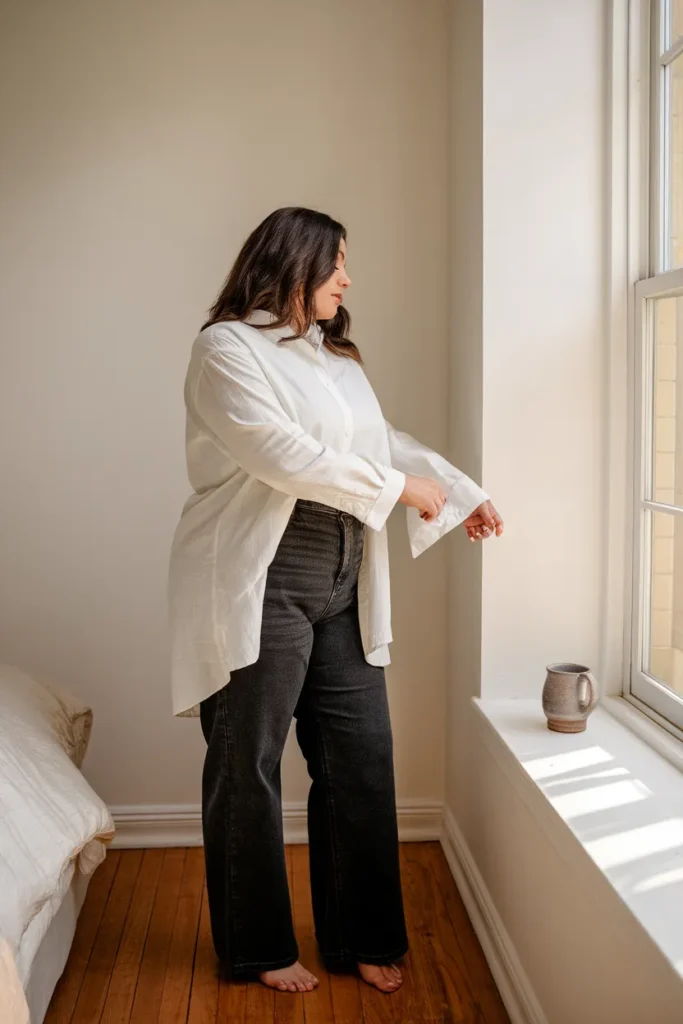
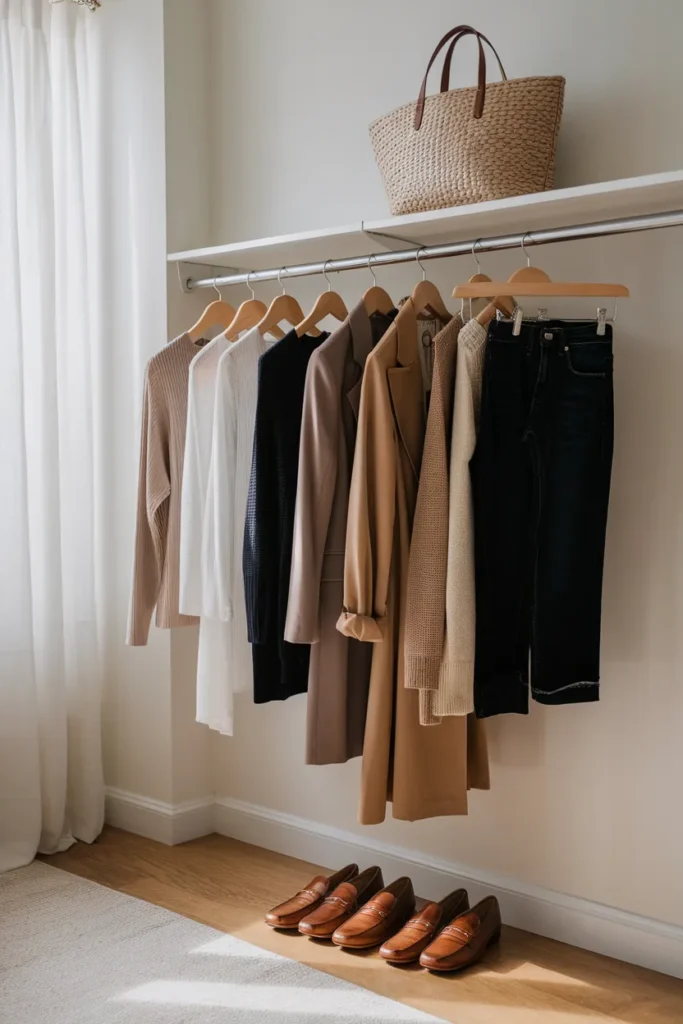
Color, not quantity, is why some 16-piece closets make 40 outfits and others make 9. Use the 60-30-10 split. Roughly 60 percent of your capsule sits in one main neutral family (say ivory, oat, and camel), 30 percent in a grounding neutral (navy, espresso, or soft black), and 10 percent in one accent you genuinely love, like burgundy or butter yellow.
When everything shares a palette, outfit math stops being a puzzle. Any top meets any bottom and the result looks intentional. If you want the full logic behind which neutrals sit well together and why some combinations look muddy, the guide on how to pair neutral colors so every outfit looks pulled together breaks it down shade by shade.
A quick plus size note on color placement: you don’t need to hide in black. Wear your accent color wherever you want eyes to go, and use your deepest neutral wherever you want a long unbroken line. That’s placement strategy, and it beats “dark is safe” every time.
The Tops: 4 Pieces That Carry Every Outfit
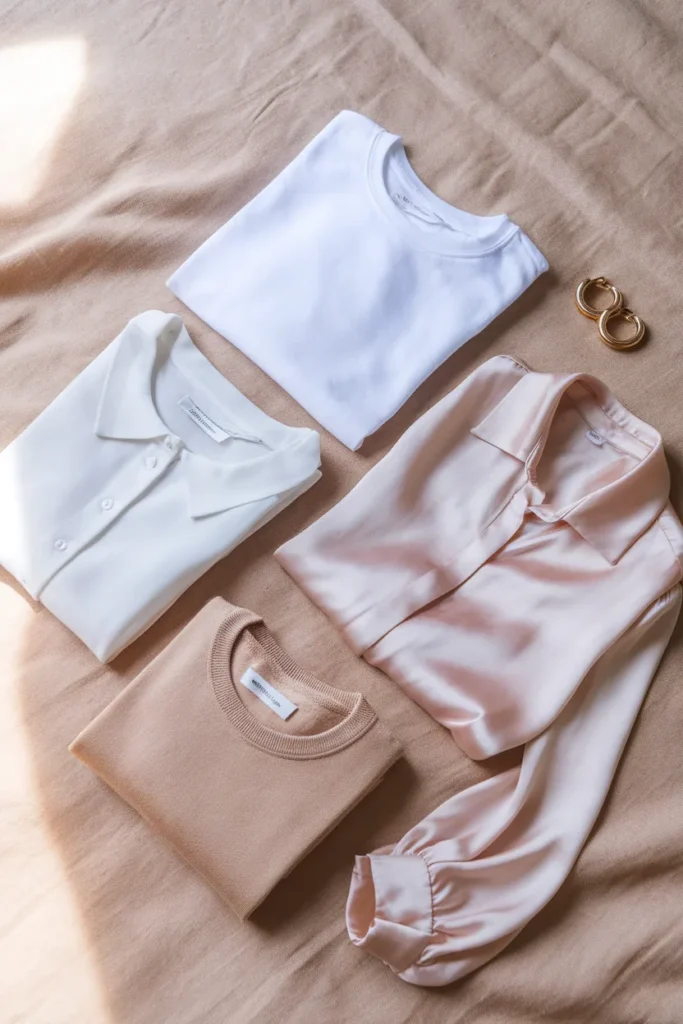
1. A heavyweight white tee. Skip the tissue-thin ones. You want midweight cotton or a cotton-modal blend, a hem that hits below the hip, and a set-in sleeve that ends mid-bicep. That weight is what makes a tee look finished instead of thrown on, and the longer hem gives you the half tuck without a gap.
2. A white button-down with real bust room. The gape between buttons isn’t your body’s fault. It’s a shirt cut without bust darts. Look for darts, a touch of stretch in the poplin, or a hidden interior button at chest height. Size for the bust, tailor the waist if it billows. Worn open over the tee, it doubles as a light layer.
3. A silky blouse in your accent or a soft neutral. Choose real drape: washable silk, cupro, or a quality polyester crepe that pours rather than clings. A V or a subtle cowl neckline draws a long vertical line, which is the friendliest neckline geometry going.
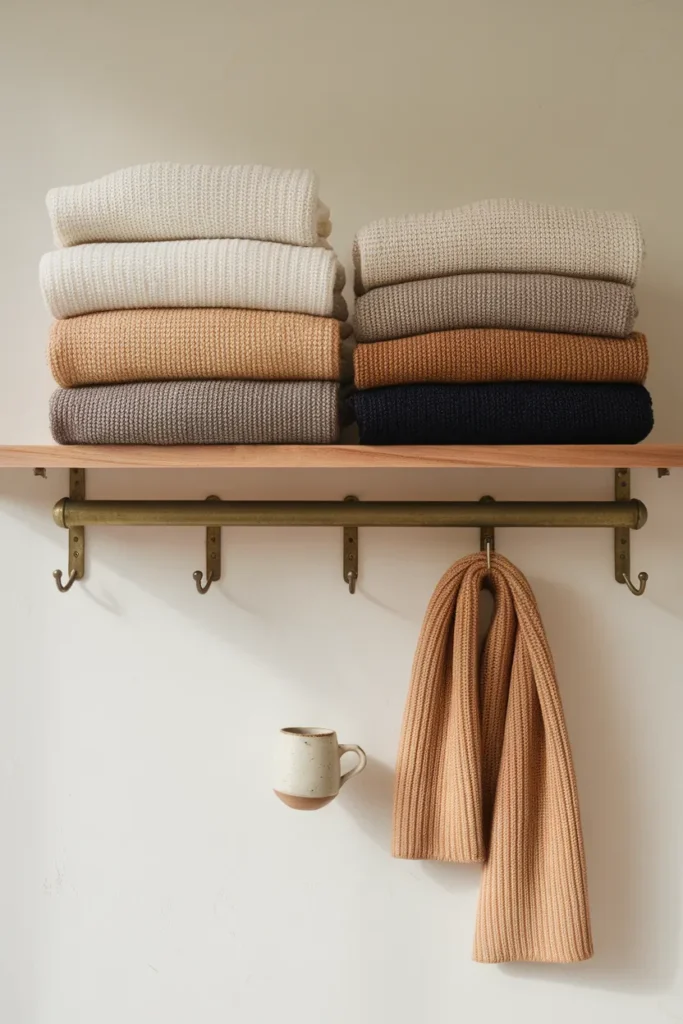
4. A fine-gauge crewneck sweater. Fine gauge means a thin, dense knit that skims. Chunky knits add bulk exactly where you don’t want it and refuse to layer under a blazer. Merino or a merino blend in oat or camel earns its spot from September through April.
The Bottoms: 4 Pairs Built Around Fit, Not Luck
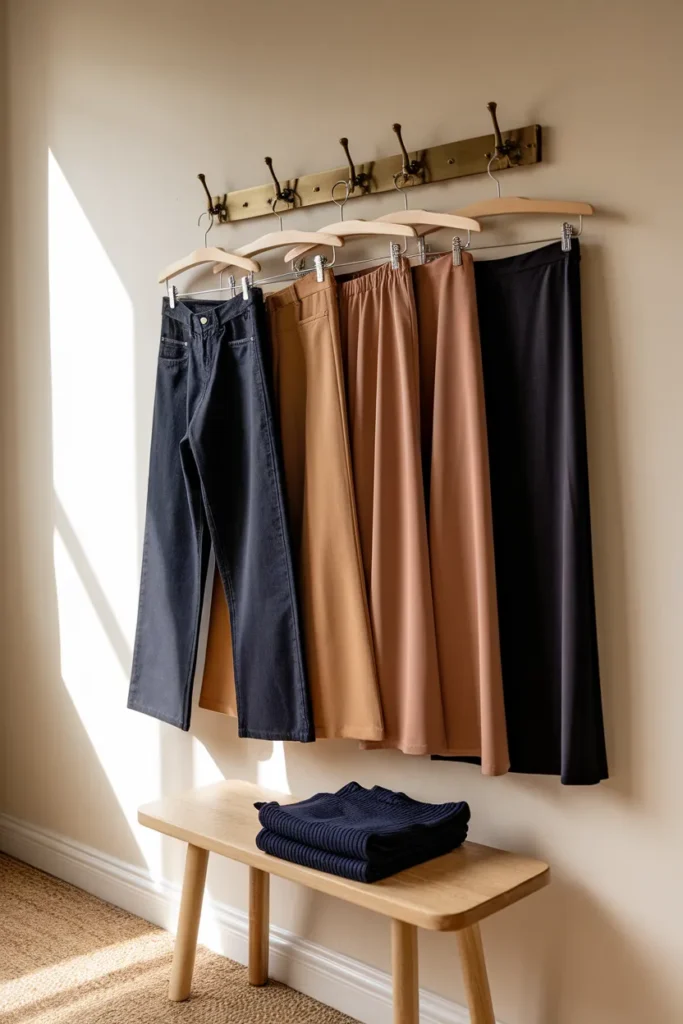
5. Dark straight-leg jeans. Dark indigo, high rise, 1 to 2 percent elastane, and a firm midweight denim around 10 to 12 ounces. Straight legs balance hips and thighs without the cling of a skinny or the volume commitment of a full wide leg. Dark wash also dresses up with the blazer for dinner, which a light wash never quite manages.
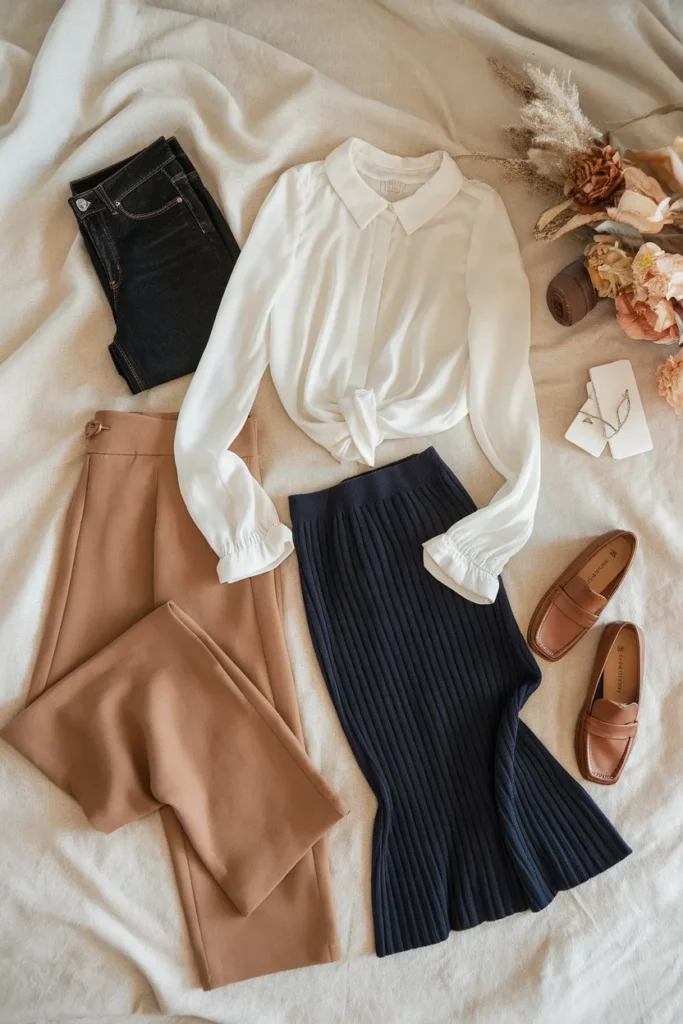
6. Wide-leg trousers in camel or navy. A high waist, a flat front, and a leg that falls straight from the widest point of your hip create one long, unbroken line from waist to floor. Worn with the loafers and a slight heel hidden under the hem, they add visible inches of height. The same pair anchors the 20-piece workwear capsule wardrobe if your week includes an office.
7. Ponte pants in soft black. Ponte is the secret handshake of comfortable polish: a thick double knit that stretches like a legging but drapes like a trouser. Look for at least 5 percent spandex and a wide waistband. These are the travel day, big lunch, long meeting pants.
8. A knit midi skirt. An A-line or gentle bias cut in a heavier knit moves with you and needs zero styling effort. Midi length plus loafers reads polished. Midi length plus sneakers reads weekend. One skirt, two moods.
The Dresses: 2 One-and-Done Outfits
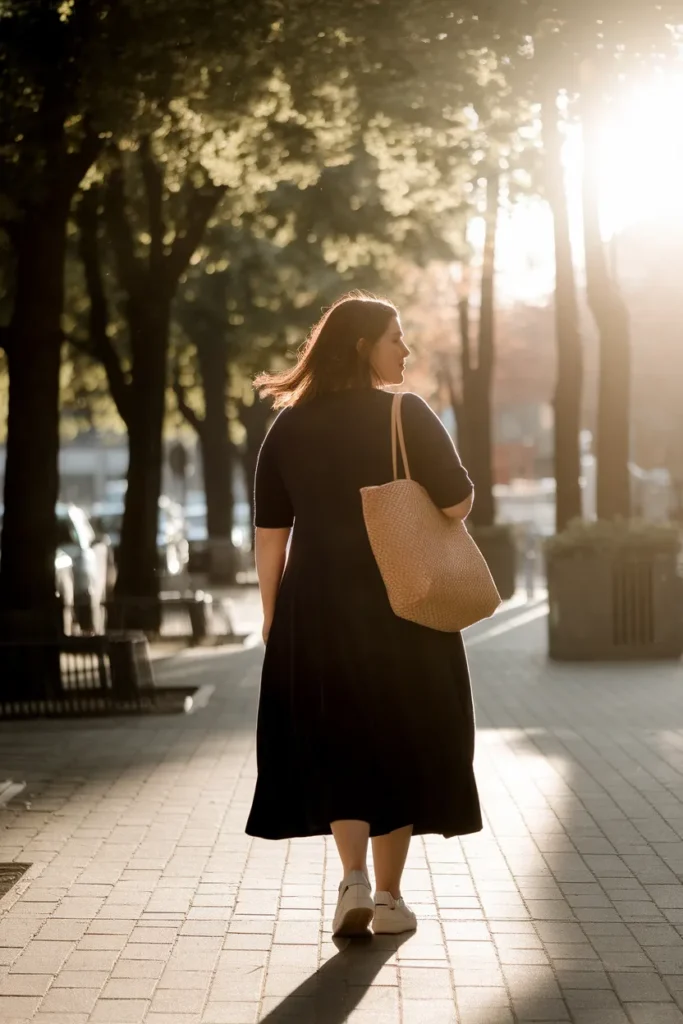
9. A knit midi dress. One zipper-free piece, one complete outfit. Choose a heavier knit with structure, a wrap or faux-wrap front if you like waist definition, or a straight column if you prefer a longer line. Navy or espresso keeps it working for the office, a shower, and date night without a costume change.
10. A shirt dress. Cotton poplin or Tencel twill, buttons all the way down, and a removable belt. Belted, it’s a defined-waist dress. Open over the tee and jeans, it becomes a duster layer, which quietly turns one piece into two. In July it works alone with sandals. In October it layers under the trench.
Both dresses should pass the sit test in the fitting room: sit down, cross your legs, reach forward. If anything pulls across the bust or rides past mid-thigh, it fails now rather than at a restaurant later.
The Layers: A Blazer, a Trench, and a Long Cardigan
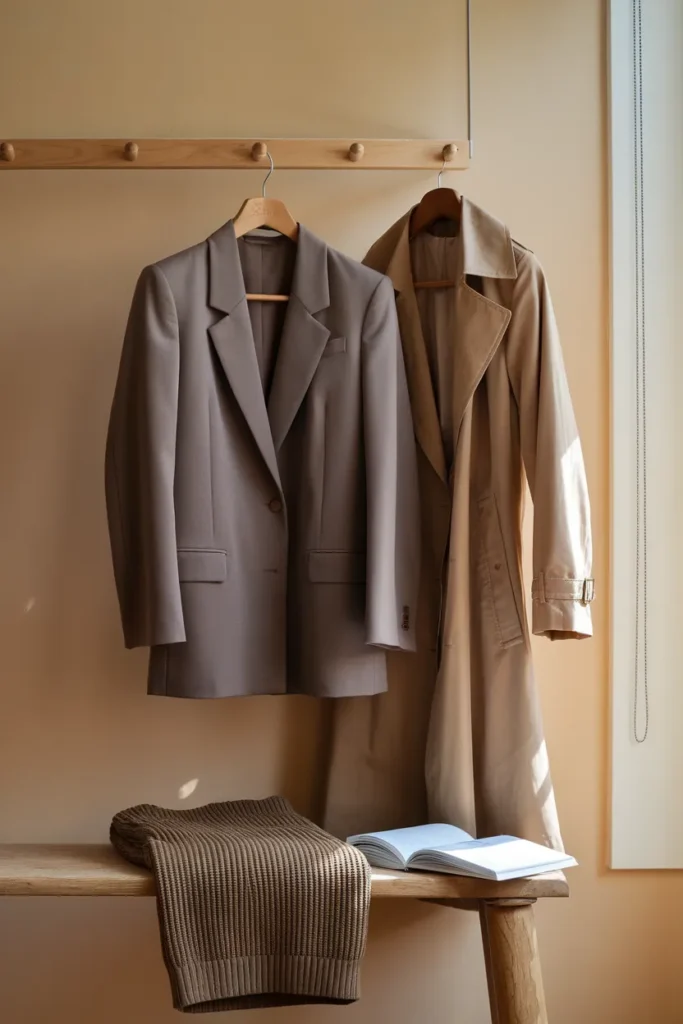
11. A structured blazer. Single-button or open-front cuts sit better over a bust than double-breasted styles, and a slight stretch in the weave keeps the shoulders comfortable. Buy for the shoulders, per rule 2. In taupe or soft black, it upgrades every single outfit already on this list. It’s also the backbone piece of the 16-piece capsule wardrobe for women over 40, because the blazer trick doesn’t expire with any birthday.
12. A classic trench coat. Look for a raglan sleeve, which cuts on the diagonal from the collar and gives the shoulder and upper arm real room, plus a belt you can tie loosely or leave hanging. Knee length in camel or khaki stretches across three seasons.
13. A longline cardigan. Espresso or oat, hitting mid-thigh, in a knit heavy enough to hold its line. It softens the trousers, warms the dresses, and replaces the blazer on days when you want zero structure. Fall save season lives in this piece.
The Finishers: Loafers, Sneakers, and One Good Tote
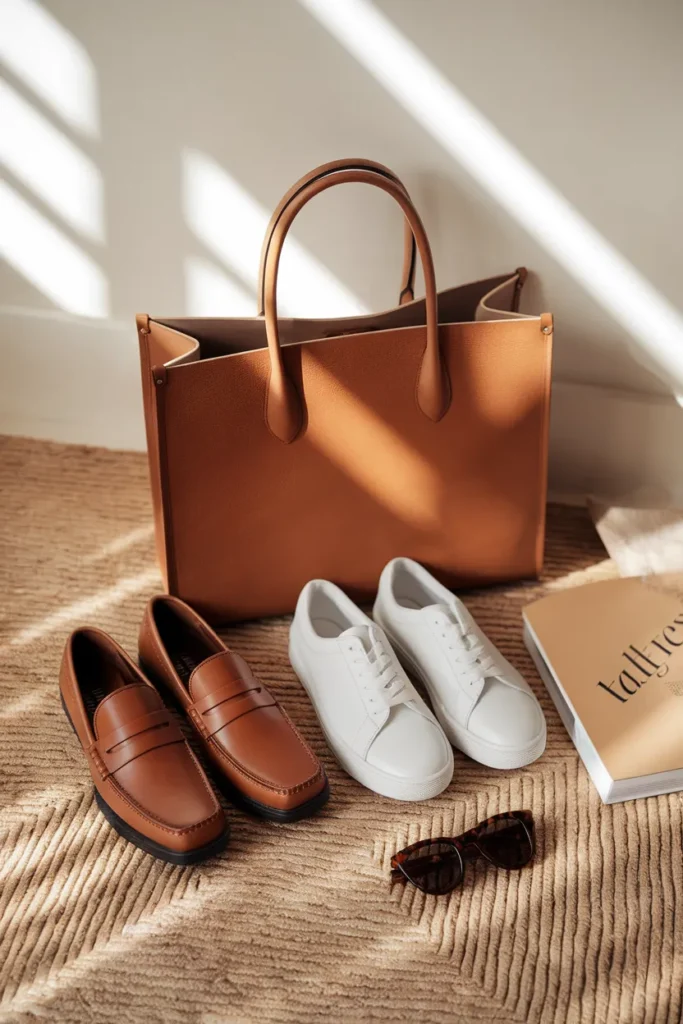
14. Leather loafers. A slightly squared or almond toe, a lug or stacked sole for stability, and, crucially, wide width availability. A loafer that pinches never leaves the closet. If you want specific picks vetted for comfort and cost per wear, the roundup of the best loafers for women, chosen the capsule way does the legwork.
15. White leather sneakers. Leather, not knit mesh, because leather holds structure and wipes clean. Minimal branding, cream or white, cushioned insole. These carry the midi skirt, the dresses, and the jeans through every casual day on the calendar.
16. A structured tote. One bag that holds a 13-inch laptop, zips shut, and stands up on its own in camel or cognac leather (or a quality vegan version). A bag with structure finishes an outfit the way a blazer does. A slouchy freebie bag undoes it.
The 16-Piece Fit Cheat Sheet
Screenshot this table and take it shopping. It compresses everything above into the exact specs that make each piece work.
| # | Piece | Look for | Walk away from |
|---|---|---|---|
| 1 | White tee | Midweight cotton-modal, below-hip hem | Tissue-thin fabric, cap sleeves |
| 2 | White button-down | Bust darts, stretch poplin, hidden button | Rigid poplin cut straight |
| 3 | Silky blouse | Real drape, V or cowl neck | Clingy thin knits |
| 4 | Crewneck sweater | Fine-gauge merino blend | Chunky, cropped knits |
| 5 | Straight jeans | High rise, 1 to 2% elastane, dark wash | Low rise, no stretch |
| 6 | Wide-leg trousers | High waist, flat front, full-length hem | Side elastic that bunches |
| 7 | Ponte pants | 5%+ spandex, wide waistband | Thin ponte that goes sheer |
| 8 | Knit midi skirt | Heavier knit, A-line or gentle bias | Clingy jersey, unlined |
| 9 | Knit midi dress | Structured knit, wrap or column | Flimsy fabric, high slits |
| 10 | Shirt dress | Poplin or Tencel, removable belt | Fixed skinny belt loops |
| 11 | Blazer | Single-button, stretch weave, shoulder fit | Double-breasted, stiff |
| 12 | Trench coat | Raglan sleeve, knee length, tie belt | Narrow set-in shoulders |
| 13 | Long cardigan | Mid-thigh, holds its line | Waterfall fronts that swamp |
| 14 | Loafers | Wide widths, stacked or lug sole | Narrow last, slick sole |
| 15 | White sneakers | Leather, minimal branding | Mesh knit, loud panels |
| 16 | Structured tote | Zip top, stands upright | Slouchy, unstructured |
Outfit Formulas: How 16 Pieces Become 40 Plus Outfits
Here’s the outfit math, and it’s the part that makes a small closet feel abundant. Four tops times four bottoms is 16 base outfits before a single layer enters the picture. Add one of three layers to each and you’re past 45 combinations that all share a palette, so they all work.
If you’d rather not count, run these five formulas on repeat:
- Tee + jeans + blazer + loafers. The default that never misses.
- Blouse + wide-leg trousers + loafers. Polished enough for any meeting.
- Sweater + midi skirt + sneakers. The soft weekend uniform.
- Knit dress + trench + loafers. One-piece dressing with a coat that does the styling.
- Button-down (open) + tee + ponte pants + sneakers. Layered, comfortable, airport-proof.
Rotate those five and you’ve covered a two-week stretch without repeating a look. If you’re wondering whether 16 is really enough, the honest breakdown of how many clothes you actually need in a minimalist wardrobe shows why most of us wear about a fifth of what we own anyway.
Where to Shop by Budget and Size Range
Naming brands without naming their size ceilings is half an answer, so here’s the full one. Ranges shift by style and season, so always confirm on the product page, but this is the current lay of the land.
to $
| Brand | Typical size range | Price tier |
|---|---|---|
| Old Navy | 0 to 30, most styles online | $ (about $10 to $50) |
| Target (A New Day, Ava & Viv) | XS to 4X | $ |
| Uniqlo | XS to XXL, extended mostly online, runs small | $ |
| Abercrombie | Up to XXL in many basics | $$ (about $50 to $150) |
| Madewell | Extended sizes in denim and select styles | $$ |
| J.Crew | Extended sizes in select styles | $$ |
| Eloquii | 14 to 28, plus-dedicated | $$ |
| Spanx | Broad inclusive range in ponte and denim | |
| Universal Standard | 00 to 40, the widest range going | $$ to $$$ (about $60 to $250) |
| Anthropologie | Plus sizes in select lines | $$$ |
A few field notes. Madewell jeans typically run $98 to $138 and their stretch denim recovery is the reason stylists keep recommending the investment. Eloquii cuts for curves from the first pattern block instead of grading up a straight size, and it shows in the bust and hip fit. Quince makes lovely washable silk at friendly prices, though many styles stop at XL or 2XL, so check before you fall in love. And if the whole list feels like a lot of money at once, the plan for a capsule wardrobe on a budget under $200 shows the order to buy in so nothing sits unworn while you save.
Craving one aspirational piece? A Toteme-style wool wide-leg trouser runs north of $450. Quince’s wool-blend version delivers most of that drape for roughly $70 to $90, and nobody at the meeting can tell the difference from across the table.
Five Mistakes That Shrink Your Outfit Count
Buying for a someday size. A piece that fits the body you have today gets worn 100 times. A piece bought one size down gets worn zero times and stings every time you see it.
All drape, no structure. A closet of soft knits feels comfortable and photographs like pajamas. You need the blazer, the trench, and the tote precisely because structure is what reads as finished.
Skipping the tailor. Off-the-rack clothing is cut for a fit model, not for you, at every size. Hemming trousers and nipping a blazer waist costs less than one impulse buy and multiplies how often you reach for both.
Replacing instead of keeping. Cheap pieces that pill and warp by month three push you back into the buy-toss cycle, and that cycle is enormous: the EPA’s textile data counts around 17 million tons of textiles entering the US waste stream in a single year, most of it landfilled. Fewer, better pieces are the quiet exit from that loop.
Ignoring the foundation layer. A well-fitted bra and smooth, comfortable underlayers change how every one of the 16 pieces sits. Get professionally measured once a year, since sizes drift more than we think.
Plus Size Capsule Wardrobe FAQ
How many pieces should a plus size capsule wardrobe have? Most functional capsules land between 15 and 40 pieces depending on your lifestyle and laundry rhythm. This 16-piece list is a complete daily base including shoes and a bag. Add workout gear, occasion wear, and season-specific outerwear on top without counting them.
What is the 3-3-3 rule for a capsule wardrobe? The wardrobe version means building around 3 neutral colors, 3 accent colors, and 3 patterns so everything coordinates. There’s also a packing cousin, 3 tops, 3 bottoms, and 3 pairs of shoes for travel. Both are simplifying frameworks, not laws.
Can I add trendy pieces to a plus size capsule? Yes, and you should if trends bring you joy. Keep the 16 core pieces classic and add one or two trend items per season, each of which must pair with at least three core pieces. That keeps the capsule current without wrecking the outfit math.
What if I’m between sizes? Size up on structured wovens like the blazer, button-down, and shirt dress, then tailor down where needed. Stay true to size or size down slightly on forgiving knits like ponte and the midi dress, since knits relax with wear. When in doubt, fit the largest measurement first.
Does this 16-piece capsule work year-round? Mostly, yes. It’s built for roughly 45 to 85 degrees Fahrenheit. In deep summer, swap the sweater for a linen shirt and lean on the dresses. In real winter, add a wool coat, boots, and tights rather than rebuilding from scratch.
What if I can’t buy everything at once? Buy in this order: jeans, blazer, white tee, loafers. Those four already make outfits together. Then add one piece a month, highest-wear items first. A capsule built over six months fits your life better than one panic-bought in a weekend anyway.
How do I make these pieces last? Wash cold and inside out, skip the dryer for anything with spandex, and lay knits flat to dry. Wash jeans as rarely as you can stand. A fabric shaver revives ponte and merino in five minutes, and it’s the best $15 in this whole system.
Your Next Step
You don’t need a shopping spree to start. Pull what you already own that matches this list, screenshot the fit cheat sheet, and fill only the true gaps, one careful piece at a time. Sixteen decisions, made once, and the “closet full, nothing to wear” mornings quietly end. Your future self, dressed in four minutes and out the door, says thanks.
Keep reading

8 Hoodie Outfits for Plus-Size Women That Actually Look Put-Together
Your closet has a hoodie in it. Probably three. And every cold morning you reach for one and think the same thing:...

How to Style a Hoodie for Women Over 50: 8 Outfits That Work
The hoodie in your closet is probably fine. The problem is usually three inches of it you have never looked at closely....

8 Cozy Hoodie Outfits for Fall and Winter That Never Look Sloppy
Your hoodie is not the problem. The seven inches of fabric hanging off the back of your neck is the problem, and...