
Clean Girl Aesthetic: The Minimalist Look That Started It All
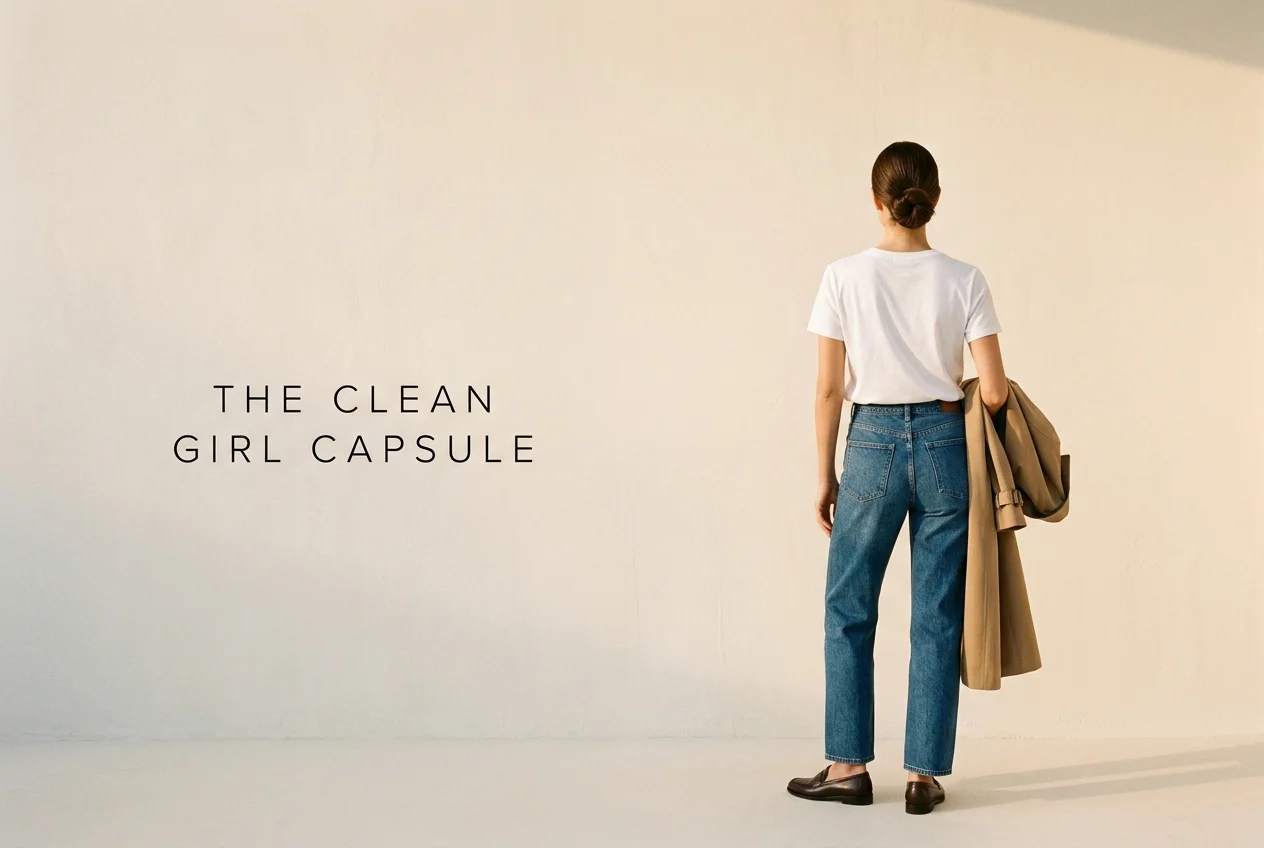
The clean girl aesthetic sold something by accident, and it was never the clothes. It was the idea that this look costs nothing to produce. A white tee, straight jeans, hair pulled back in ninety seconds, out the door. Anyone could do it. That was the pitch.
What you were actually looking at was a woman with fourteen pieces that all match, a tailor who took an inch off her hems, and a laundry routine. The look is engineered. That is good news, because engineering can be learned and bone structure cannot. This guide gives you the piece list, the color math, five outfit formulas that run in about four minutes, and the upkeep reality nobody puts in the pin description.
What the Clean Girl Aesthetic Actually Is
Strip away the matcha and the morning routine content, and you are left with three rules.
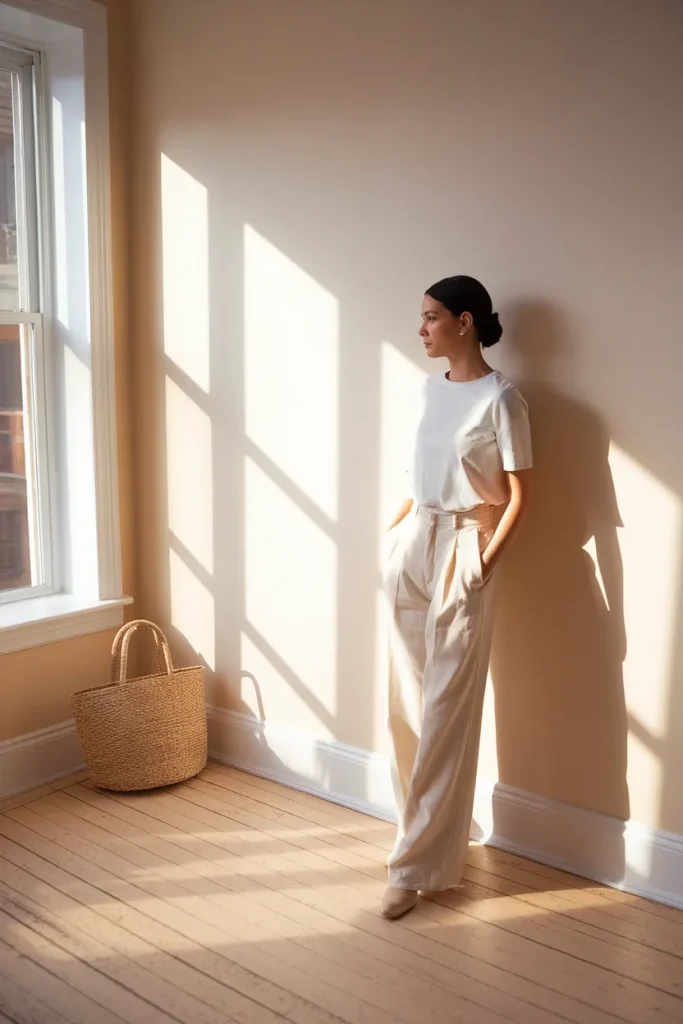
Color is limited. Somewhere between four and six shades total, most of them light, all of them able to sit next to each other without arguing. Fit is deliberate. Nothing is baggy by accident, and nothing pulls. Grooming carries the look. Smooth hair, clean nails, skin that looks cared for.
That is the whole system. What it is not is a personality. The internet turned it into a lifestyle package with a wellness routine attached, and that is where most women bounce off it, because they do not want the 5 a.m. pilates and they assume the wardrobe comes bundled with it. It does not. You can take the wardrobe architecture and leave the rest sitting on TikTok where you found it.
The reason it reads as expensive has almost nothing to do with what the pieces cost. A tight palette means every item matches every other item, so nothing ever looks like an accident. Deliberate fit means the eye reads intention. Those two things together are what people are calling quiet money when they see it on someone.
Where It Came From, and Why the Credit Matters
The term first showed up on TikTok at the end of 2021 and started registering on Google Trends through 2022. It sat under the larger “That Girl” wave, the productivity-and-wellness content cycle that was everywhere that year. By early 2026 the hashtag had passed 1.2 million videos.
There is a real criticism attached to it and it is worth knowing before you write about it or build around it. The signature elements, slicked and oiled-back hair, gold hoops, brown lip liner, came out of Black and Latina communities where women wearing exactly those things had been called unpolished for decades. The same look, on white women, got repackaged as clean. That word is doing heavy lifting, and the implied opposite of clean is not flattering to anyone.
You do not have to resolve that debate to get dressed. It is worth knowing that the aesthetic did not appear from nowhere in 2021, and that the styling cues have a longer history than the hashtag does. Credit costs nothing.
Is It Still Relevant in 2026?
Partly. Here is the honest split.
The makeup side is cooling fast. Beauty press spent the back half of this year calling time on it, and the maximalist swing is already underway in color cosmetics. If you are chasing the no-makeup makeup half of this trend, you are arriving late.
The wardrobe side is not going anywhere, and it was never really a trend to begin with. A tight neutral palette, good fit, and pieces that all combine is just how well-dressed women have operated for about a century. The hashtag put a name on it and a filter over it. Take the name away and you still have the most efficient closet structure available.
So build the wardrobe. Skip the branding. When the phrase goes fully out of fashion, and it will, the fourteen pieces still work and you will not have to start over. That is the entire argument for building this way instead of chasing the next aesthetic through your credit card.
The Clean Girl Color Palette, and the 60-30-10 Split
Most women get the palette wrong by going too pale and too cold. The look is not white and gray. It is warm neutrals with a spine of something darker to hold it together.
Run it as 60-30-10. Sixty percent of your closet is your base: ivory, oat, cream, bone. Thirty percent is your anchor, the darker shade that keeps you from washing out and gives every outfit a bottom edge: espresso, soft black, navy, or deep camel depending on your coloring. Ten percent is one accent you actually like: burgundy, butter yellow, tomato red, sage. One. Not four.
The anchor choice is where undertone matters more than anything else in this article. Espresso and camel sit warm. Soft black and navy sit cool. Pick the wrong one and every ivory piece you own starts making you look tired, which is usually blamed on the ivory when the anchor is the problem. If you have never worked out where you sit, it is worth how to find your season with a color analysis test before you buy a single thing, because a palette built on the wrong anchor will fight you for years.
One more rule that saves money: your accent has to work against the base and the anchor. Burgundy against ivory and espresso is easy. Burgundy against ivory and navy is harder. Test it on the hanger before it comes home.
The 14-Piece Clean Girl Capsule Wardrobe
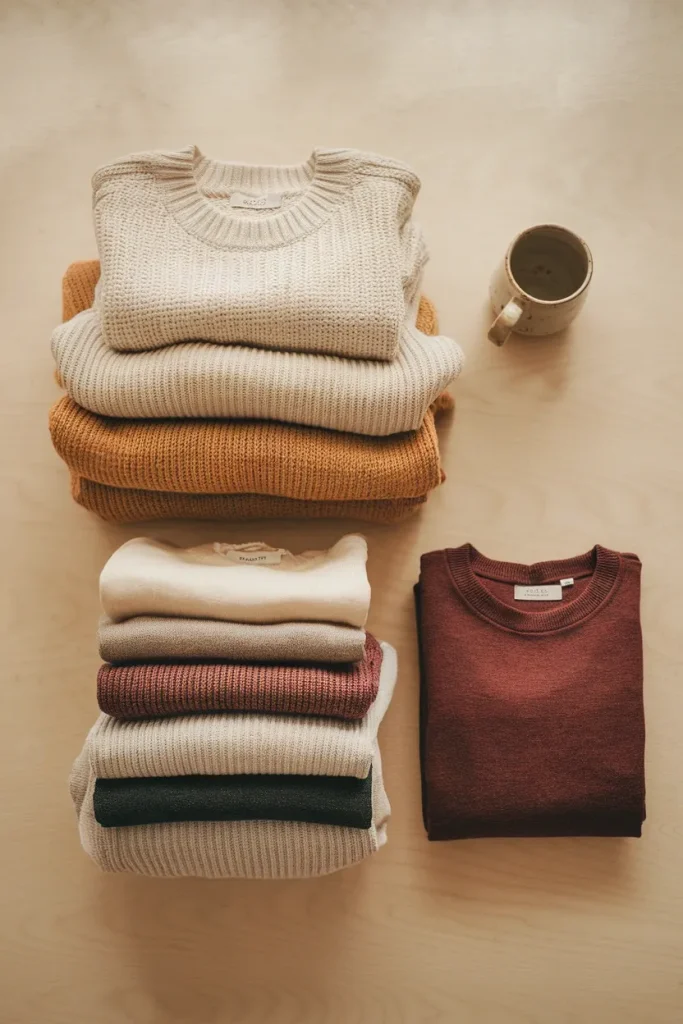
No competitor covering this look will commit to a number, so here is one. Fourteen pieces, and they combine into more than forty outfits before you add a single accessory.
| # | Piece | Why it earns hanger space | Typical US price range |
|---|---|---|---|
| 1 | White cotton tee, boxy cut | Goes under every layer you own | $20 to $50 |
| 2 | Ivory or oat knit tank | The warm-weather base layer | $20 to $60 |
| 3 | White button-down, cotton poplin | Works tucked, open, or knotted | $50 to $130 |
| 4 | Fine-gauge crewneck, camel or cream | Reads polished under a coat | $50 to $150 |
| 5 | Ribbed long-sleeve, soft black | Your fall and winter base | $25 to $70 |
| 6 | Straight-leg jeans, mid or dark rinse | The most-worn thing you will own | $70 to $140 |
| 7 | Wide-leg trousers, ecru or oat | Instant polish with zero effort | $60 to $150 |
| 8 | Tailored trousers, espresso or black | The workhorse for anything formal | $70 to $160 |
| 9 | Bias midi skirt, cream or camel | Turns a tee into an outfit | $60 to $150 |
| 10 | Oversized blazer, oat or black | Single highest-leverage layer here | $90 to $250 |
| 11 | Trench coat, classic camel | Carries all of spring and fall | $120 to $300 |
| 12 | Long wool or wool-blend coat | Winter, without ruining the line | $150 to $400 |
| 13 | Leather loafers or ballet flats | The daily shoe | $70 to $200 |
| 14 | Clean white or ecru sneakers | Weekends and travel | $60 to $130 |
Two notes on how to read that. Every price is a range because your tier decides the number: Old Navy, Target and Uniqlo land at the bottom, Madewell, J.Crew, Quince and Everlane in the middle, COS and Sezane at the top. Quince has been the outlier on cashmere for a while now, with crewnecks around the fifty dollar mark, which is roughly a third of what the same weight costs at mid-tier.
The second note matters more. Pieces 1, 6, and 10 do the most work in the entire capsule. If your budget only stretches to three good things, buy the tee, the jeans, and the blazer at the highest tier you can manage and fill everything else in at mass. That order is not arbitrary. It follows wear frequency, and wear frequency is what decides cost per wear. For a deeper breakdown of how the upper half of a capsule holds together, the eight capsule wardrobe tops that anchor every outfit you own goes further than I can here.
Five Outfit Formulas You Can Run in Four Minutes
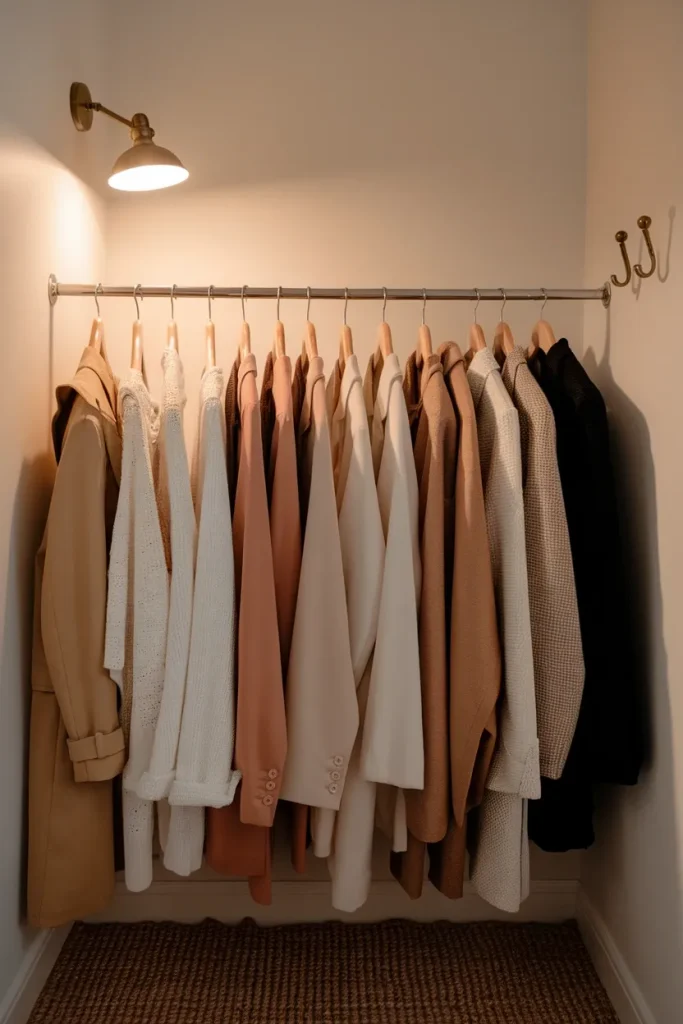
Decision fatigue is the actual problem this look solves. Formulas beat inspiration on a Tuesday at 7:15 a.m., because a formula does not require you to have an idea.
1. The Tonal Column
Same shade, top to bottom, two textures. Ivory knit tank with ecru wide-leg trousers. Cream crewneck with a cream bias skirt. Matching your neutrals exactly is not the goal, and slight variation actually reads more expensive than a perfect match. The vertical line does the rest.
2. The Anchor Sandwich
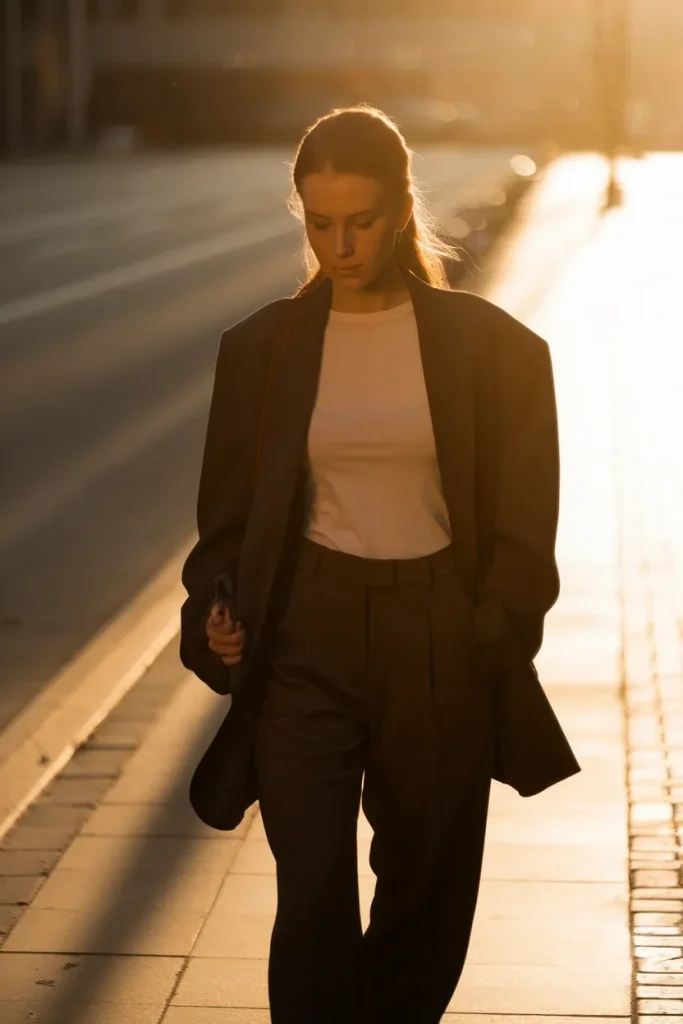
Light in the middle, dark at both ends. Espresso trousers, white tee, soft black blazer. Your eye reads the frame first and the frame is what makes it look considered. This one is nearly foolproof for work.
3. The Trench Rescue
Whatever you already have on, plus the camel trench. Jeans and a tee become an outfit the second that coat goes over them. September and October in most of the country run 50 to 70F, which is exactly the trench’s window, and it is why this formula gets saved more than any other in fall.
4. Structured Top, Soft Bottom
Fitted or tailored on top, fluid underneath. Ribbed long-sleeve with a bias midi skirt. White button-down with wide-leg linen. The contrast in weight is what keeps you from looking like you are wearing pajamas, which is the failure mode of an all-soft outfit.
5. The Uniform
One combination you wear on repeat, in three colorways. Tee, straight jeans, loafers. Buy the tee three times. Women who look consistently pulled together are almost always running a uniform and letting you assume it is variety.
Front-load formula 2 if you only remember one. It is the highest hit rate of the five and it works in every season.
The Fabric Rules Nobody Puts in the Pin Description
Here is the part the trend content skips entirely. Clean is a maintenance promise, and light neutrals bill you for it monthly.
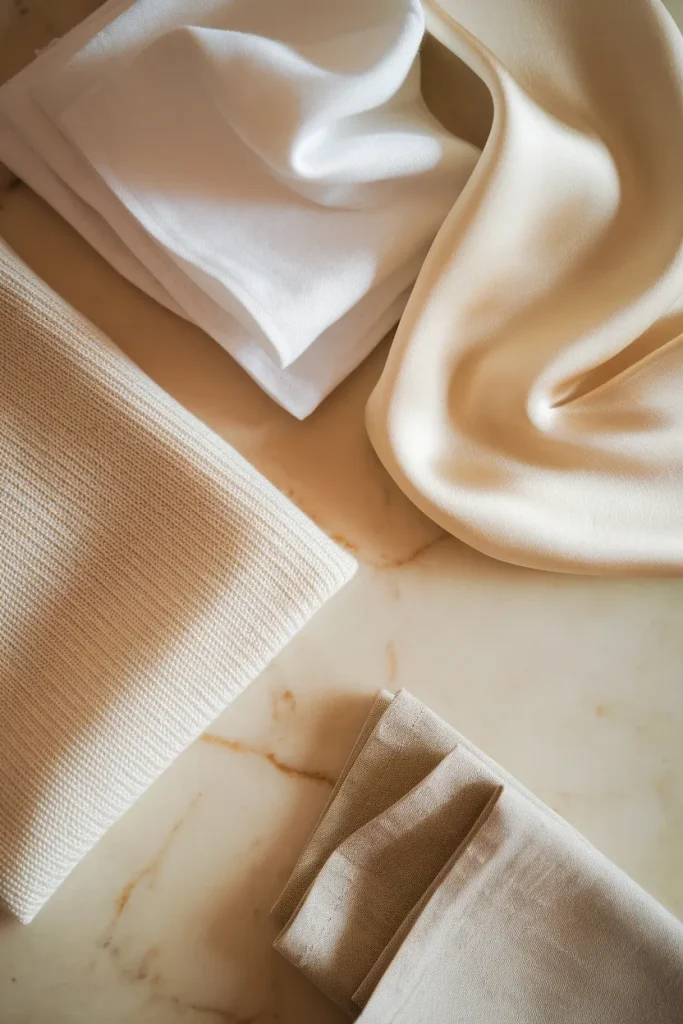
White cotton, cream wool, and ivory silk fail in three completely different ways. Cotton goes gray and takes on a dinginess that no amount of bleach fixes, because the fibers themselves are dulling. Wool pills at every friction point and cream shows pilling far worse than charcoal does. Silk waterspots, and it shows deodorant transfer on contact.
So buy accordingly. Below is what I would call the upkeep score, and it is the thing I wish someone had handed me before I built a closet full of pale linen.
| Piece | Upkeep | What actually goes wrong | Buy it in |
|---|---|---|---|
| White cotton tee | High | Grays out in 6 to 9 months of regular wear | Cheap, replace on schedule |
| Ivory silk blouse | High | Waterspots, deodorant marks, dry-clean only | Only if you genuinely wear blouses |
| Cream fine-gauge knit | Medium | Pills under bag straps and seatbelts | Mid tier or above, gauge matters |
| Ecru linen trousers | Medium | Wrinkles constantly, softens over time | Any tier, embrace the wrinkle |
| Camel trench | Low | Cuffs and collar soil slowly | Buy well, it lasts years |
| Espresso tailored trousers | Low | Hides everything | Highest tier you can afford |
| Wool coat, oat | Medium | Shoulder fade, lint shows badly | Mid to high, brush it weekly |
| White sneakers | High | Visibly dirty within weeks | Cheap, treat as consumable |
Two things that follow from that table. First, put your money in the low-upkeep pieces, because those are the ones that stay looking good long enough to earn it. Spending $300 on a white tee is spending $300 on something with an expiration date. Second, buy your high-upkeep pieces cheaply and unsentimentally, and replace them when they turn. A dingy white tee makes an entire outfit look tired, and the tee is almost always what people notice without knowing they noticed it.
Check the label before you buy, every time. The FTC requires a care label on every garment sold in the US, and dry-clean-only carries real legal weight: a manufacturer has to hold evidence that washing will damage the garment before printing it. When you see it on a cream blouse, believe it, and factor about eight to twelve dollars a visit into what that blouse actually costs you.
How to Wear It After 30: The Three Swaps
Almost every guide to this look is written to a nineteen-year-old. Lounge sets, crop tops, school outfits, dorm-budget hauls. If you are thirty-five with a job and a school run, those references land somewhere between useless and mildly insulting.
The look translates. It needs three swaps.
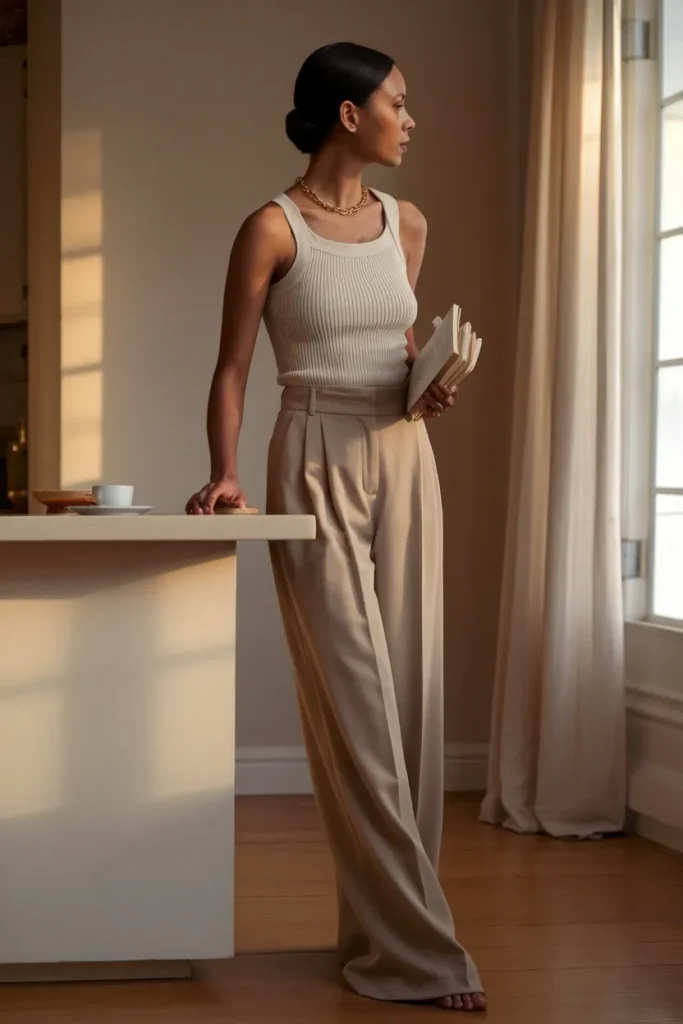
Swap the lounge set for tailoring. The matching knit set is the single most age-specific piece in the whole aesthetic. It works on campus and it reads unfinished nearly everywhere else. Wide-leg trousers with a knit tank give you the same ease and hold up in a room full of adults.
Swap the crop for a defined waist. The point of the crop top in this look is a visible waist. You can get the same line from a tucked tee, a belted trouser, or a top that ends right at the hip bone, without the sliver of midsection that most women over thirty do not want to think about all day.
Swap athleisure for structure at least once per outfit. Leggings and a hoodie in ivory is not this look, whatever the algorithm suggests. One structured element per outfit, a blazer, a trench, a stiff trouser, a real shoe, is what separates put-together from just-woke-up. Office dressing is where this matters most, and if you want the sharper end of that spectrum, how to wear the office siren aesthetic to an actual job sits right next door to this one.
None of that is about dressing older. It is about the difference between clothes designed for a body with nothing on its schedule and clothes designed for a body that has to sit in a meeting, drive, and still look intentional at 6 p.m.
Clean Girl by Proportion
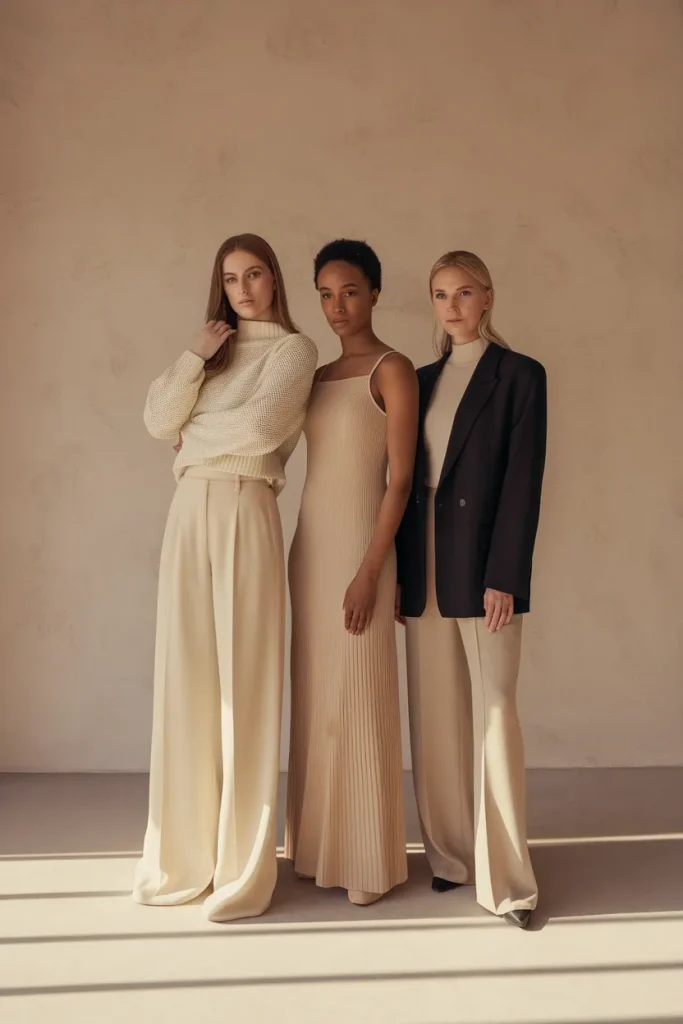
The version of this look that gets pinned is almost always modeled on a tall, straight-size frame. That does not mean it only works there. It means the proportions need adjusting, the same way any silhouette does.
Petite, 5’4″ and under. Wide-leg trousers will swallow you if the hem drags. Have them shortened to graze the floor in the shoe you actually wear, which is the single highest-return alteration in this entire wardrobe and usually runs $15 to $25. Keep your tonal columns unbroken, and skip the mid-thigh blazer in favor of one that ends at the hip.
Tall, 5’9″ and over. Your advantage is the column, so lean into it. Watch sleeve and inseam length on mass-tier pieces, which are cut for 5’6″. Uniqlo and Gap both run tall sizing that solves most of this.
Curvy and hourglass. Bias-cut skirts and fluid trousers work with your line rather than against it. Boxy tees can read shapeless, so tuck or French-tuck to keep the waist visible. Look for stretch in tailored trousers, since rigid wool in a straight cut will pull across the hip.
Pear. Put your structure on top. The oversized blazer and the crisp button-down balance a fuller hip, and a darker anchor shade on the bottom half with your lighter base up top does the rest.
Apple and rectangle. Vertical lines and open layers are your friends. An unbuttoned long trench or a duster over a tonal base creates length without asking your waist to do anything it does not want to do.
Midsize and plus. The palette works exactly the same. The constraint is availability, since neutral basics in extended sizing thin out fast above a 16 at the mid tier. Old Navy, Universal Thread at Target, and Uniqlo carry the deepest neutral ranges in extended sizing right now, and that is where I would start the base layer.
Nothing here is about hiding. It is about where the eye lands and how the vertical line reads, which is a proportion question and applies equally to everyone.
Clean Girl vs Quiet Luxury vs French Girl vs Coastal Grandmother
These four get used interchangeably and they are not the same thing. Knowing which one you actually want stops you buying pieces that pull in four directions.
| Clean girl | Quiet luxury | French girl | Coastal grandmother | |
|---|---|---|---|---|
| Core idea | Polished and simple | Expensive and unbranded | Undone and a little sexy | Relaxed and roomy |
| Palette | Warm light neutrals | Camel, navy, gray, ivory | Black, white, denim, red | Ivory, sand, sage, chambray |
| Signature piece | White tee, gold hoops | Cashmere, fine tailoring | Striped tee, ballet flats | Linen shirt, straw tote |
| Fit | Fitted or deliberate | Precise, close | Slightly loose, careless | Generous, oversized |
| Grooming | Slicked hair, dewy skin | Understated, groomed | Air-dried, red lip | Minimal, sun-worn |
| Reads as | Put together | Wealthy | Effortless | Comfortable |
| Best if you | Want a low-decision closet | Want longevity above all | Hate looking overdone | Prioritize comfort |
Read down the fit row and the difference becomes obvious. Clean girl is deliberate, French girl is deliberately careless, and those two instincts cannot live in the same outfit. Coastal grandmother is the loosest of the four, and if roomy linen is where you are most comfortable, the coastal grandmother wardrobe, built without living by the sea is a better fit for you than this one is.
The overlap is real, though. All four run on neutrals, all four reward good fabric, and about eight of the fourteen pieces above appear in all of them. Build the base and you can lean any direction later without starting over.
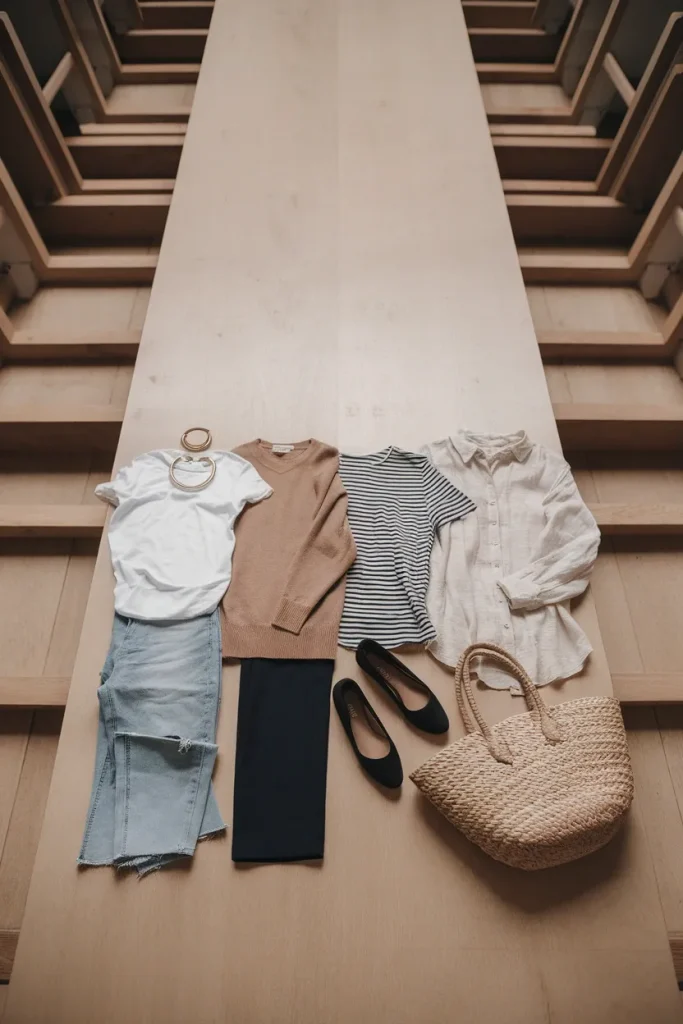
Shoes, Bags, and the Jewelry Rule
Accessories are where this look is won or lost, because they are the cheapest part to get wrong and the most visible.
Shoes. Two pairs carry the whole capsule: a leather flat and a clean sneaker. Loafers give you more range than ballet flats do, since they hold up under trousers, jeans, and a midi skirt equally well, and they survive actual sidewalks. Ballet flats are prettier and considerably more fragile. If you are choosing one, the best loafers for women in 2026, chosen the capsule way breaks down which shapes work under which hems, which matters more than the brand does.
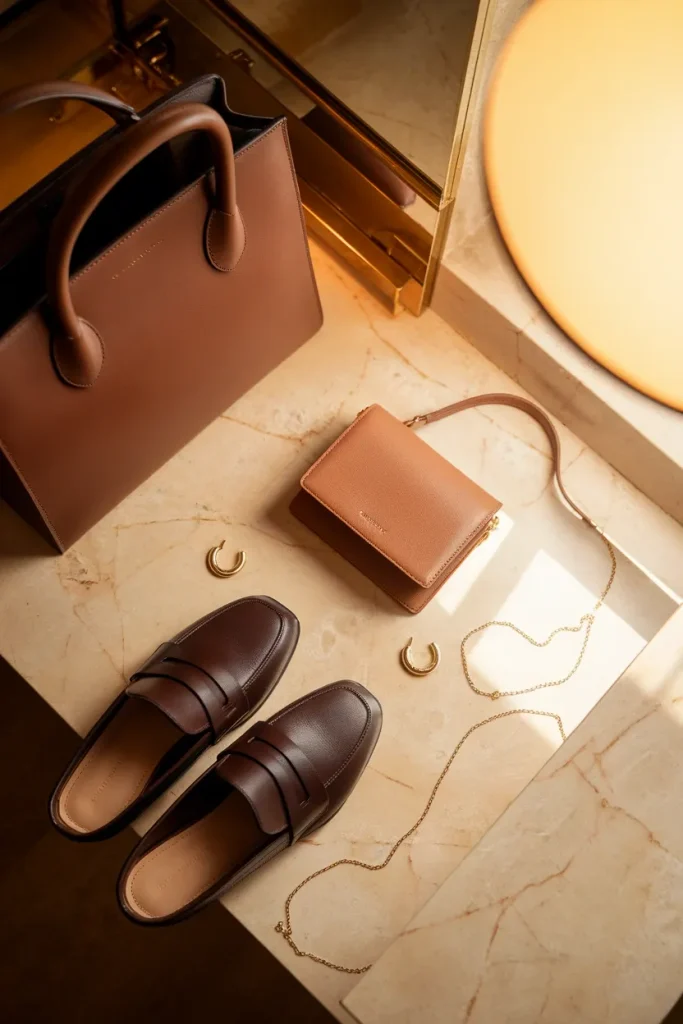
Bags. One structured tote in a neutral leather, one small crossbody. Both in a shade that sits inside your palette, which usually means camel, espresso, or bone rather than black if your anchor is warm. Hardware should match your jewelry.
The jewelry rule. Gold, small, and the same pieces every day. Hoops between one half inch and one inch, a fine chain, one ring you never take off. Consistency is what makes jewelry read as signature rather than as an afterthought, and it is why the gold hoop became the recognition cue for this entire aesthetic. Silver works exactly as well if it suits your coloring; what does not work is switching between them week to week. For the wider accessories picture, capsule wardrobe accessories and the small pieces that change everything covers belts and scarves, which I have left out here on purpose.
One thing to avoid: matching your bag to your shoes exactly. It ages the outfit about fifteen years and it is the most common mistake in this whole look.
What It Actually Costs to Build
Rough numbers for all fourteen pieces, so you can decide before you start rather than three purchases in.
Mass tier, roughly $700 to $1,000 total. Old Navy, Gap, Target’s A New Day and Universal Thread lines, Uniqlo, Amazon Essentials. Everything on the list exists at this tier. The trade-offs show up in fabric weight and in how the pieces hold shape after twenty washes, which hits your knits and your trousers hardest. Perfectly viable, especially for the high-upkeep items you will replace anyway.
Mid tier, roughly $1,400 to $2,200 total. Madewell, J.Crew, Quince, Everlane, Banana Republic, Abercrombie. This is the sweet spot for most readers. Denim and outerwear improve noticeably here, and Quince in particular has bent the math on cashmere and washable silk.
Contemporary, roughly $3,000 and up. Sezane, COS, Reformation, AYR, Frank and Eileen. Worth it selectively: the coat, the blazer, the trousers. Buying an entire capsule at this tier is how people end up with an expensive closet and no outfits.
The strategy that actually works is mixing. Put mid or contemporary money into pieces 10, 11, 12 and 8, the blazer, the trench, the wool coat and the tailored trousers, since those are structured, low-upkeep, and worn over everything else. Buy the tee, the tank, the sneakers and the long-sleeve at mass. If a $400 coat feels out of reach right now, capsule wardrobe jackets that actually earn their hanger space covers where the mid-tier options hold up and where they do not.
Spread it across two seasons if you need to. Buy outerwear in late winter when it goes on markdown, and buy your base layers in whatever month you notice the old ones have gone gray.
Five Mistakes That Make the Look Fall Flat
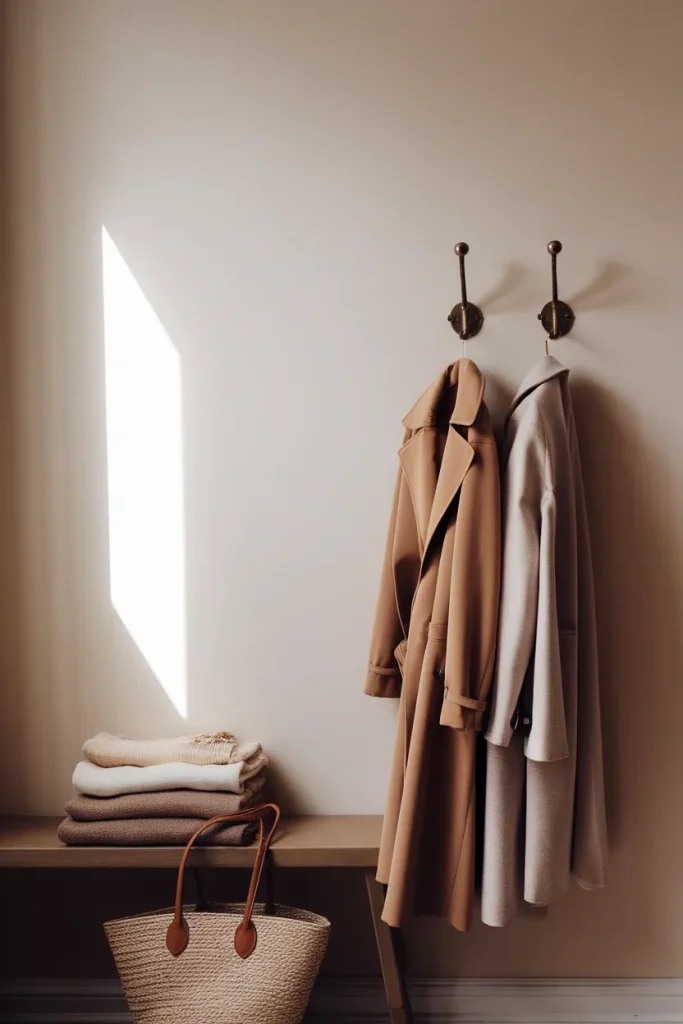
Too many neutrals, no anchor. All ivory and oat with nothing dark reads washed out in daylight. You need the thirty percent.
Cheap shine. Polyester satin in a bias skirt is the fastest way to undo this look. If you cannot afford silk, go for matte: cotton, viscose, or a heavy crepe.
Wrong hem length. Trousers dragging on the ground or hitting mid-calf will sink an otherwise correct outfit. Hemming is cheap and it is the highest-leverage thing on this page.
Visibly tired basics. Gray-white tees, pilled cream knits, scuffed sneakers. The palette leaves nowhere for wear to hide, which is the tax you pay for light neutrals.
Buying the aesthetic instead of the wardrobe. Six new pieces that only work with each other is not a capsule, it is a costume. Every new item has to combine with at least two things you already own or it does not come home.
Clean Girl Aesthetic FAQs
Is the clean girl aesthetic still popular in 2026? The wardrobe side is, and it is holding steady. The beauty side is fading, with makeup press across this year calling the end of the no-makeup makeup cycle and pointing to a maximalist swing. Since the clothing half is really just a neutral capsule with good fit, it outlives the hashtag by default.
What is the difference between clean girl and quiet luxury? Clean girl is about looking polished with minimal decisions. Quiet luxury is about looking expensive without visible branding. The palettes overlap heavily, the fabrics do not: quiet luxury leans on cashmere, silk and fine wool as the point, while clean girl gets there on cotton and fit.
Does it work if you are petite or curvy? Yes, with the proportion adjustments in the section above. Petite frames need hems taken up and shorter blazers. Curvier frames want fluid bottoms, stretch in tailoring, and a visible waist through tucking. The palette itself has no body-type requirement.
How much does a clean girl capsule wardrobe cost to build? Roughly $700 to $1,000 for all fourteen pieces at mass tier, $1,400 to $2,200 at mid tier, and $3,000 and up at contemporary. Mixing tiers is the most efficient approach: spend on outerwear and tailoring, save on base layers.
How do you keep white and cream clothes looking new? Wash whites separately in cold water and skip the fabric softener, which coats fibers and dulls them over time. Air-dry instead of tumbling wherever you can, because heat sets both discoloration and pilling. Treat white tees and sneakers as consumables and replace them every six to nine months rather than fighting to restore them.
Can you wear it to work? It is one of the easiest looks to translate to an office. Run the anchor sandwich formula, keep one structured piece in every outfit, and swap sneakers for loafers. Business casual environments take the whole capsule with almost no adjustment.
Does it work in fall and winter? It works better in fall than in summer, which surprises people. Camel, oat and espresso are cold-weather colors by nature, and layering gives the palette more to do. Swap cotton for wool and fine-gauge knits, add the trench in September and the wool coat by November, and the rest carries straight through.
Where to Start
If you take one thing from this, take the anchor. Most women who try this look and decide it does not suit them have built the base without the darker thirty percent, and then blamed their coloring for what is a structural gap.
Start with three purchases: a tee you would happily replace, straight-leg jeans that fit at the waist without a belt, and a blazer in your anchor shade. Run the anchor sandwich formula for a week. If getting dressed gets easier, keep building. If it does not, you have lost very little and learned something about what you actually want to wear.
Then come back and tell me which formula stuck. I am always curious which one earns its keep in someone else’s closet, because it is almost never the one I expect.
Keep reading
How to Style a Button-Down Shirt for Plus-Size Women: 8 Outfits That Work
You bought the shirt because it looked crisp on the hanger. Then you buttoned it, reached for your coffee, and watched the...
How to Style a Button-Down Shirt for Women Over 50: 8 Outfits That Work
You probably own a button-down shirt. Most of us do. It hangs in the closet looking crisp and responsible, and every time...
How to Style a Button-Down Shirt: 8 Outfits for Every Day
Most closets have one. A crisp shirt bought for an interview, a blue oxford that looked smart in the store, a striped...