
Vintage-Inspired Capsule Wardrobe: Timeless Pieces With Retro Soul
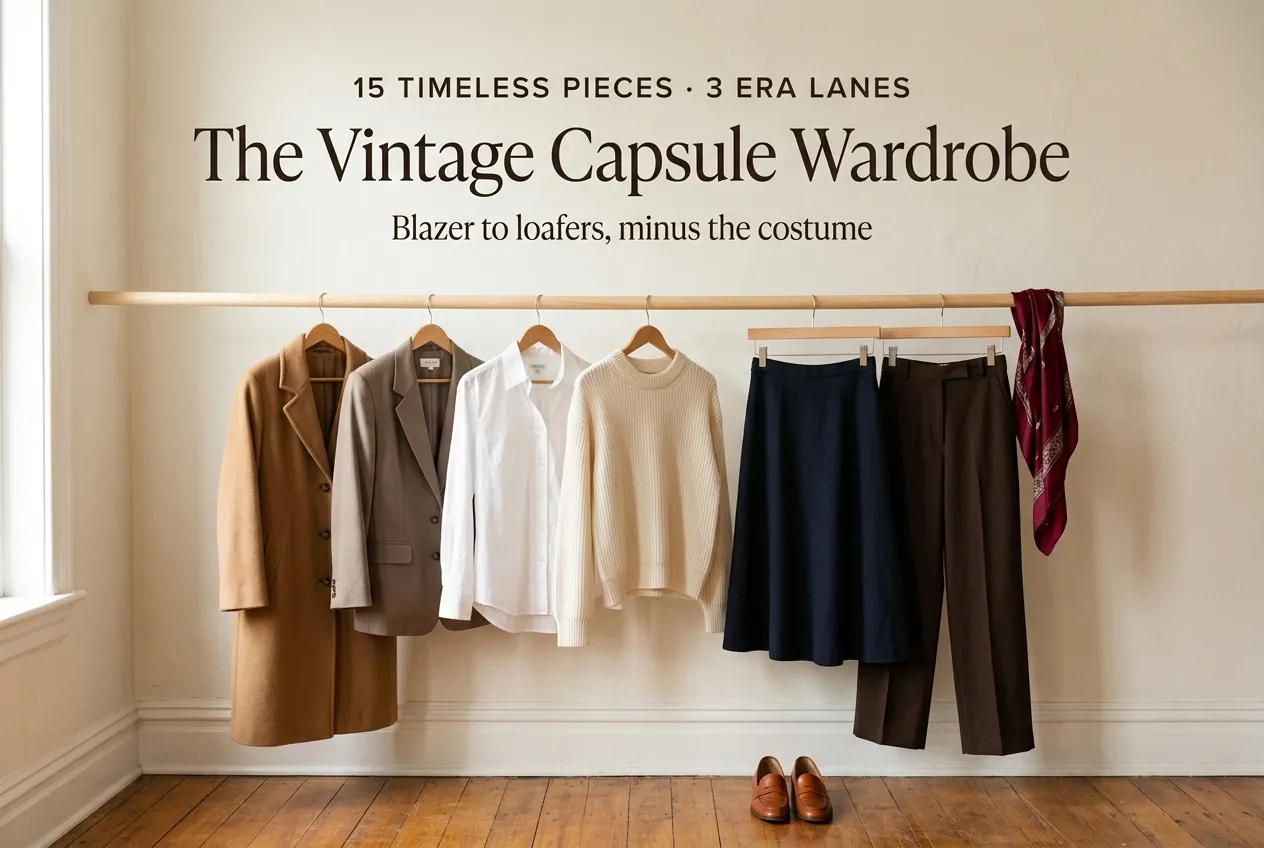
A vintage capsule wardrobe sounds like a contradiction on paper. Capsules are strict. Vintage is romantic. One wants fifteen disciplined pieces, the other wants the entire 1970s. Here’s the part nobody puts on the pin: the capsule wardrobe is itself a vintage idea, born decades before minimalism had a hashtag, and the two get along beautifully once you set a few ground rules.
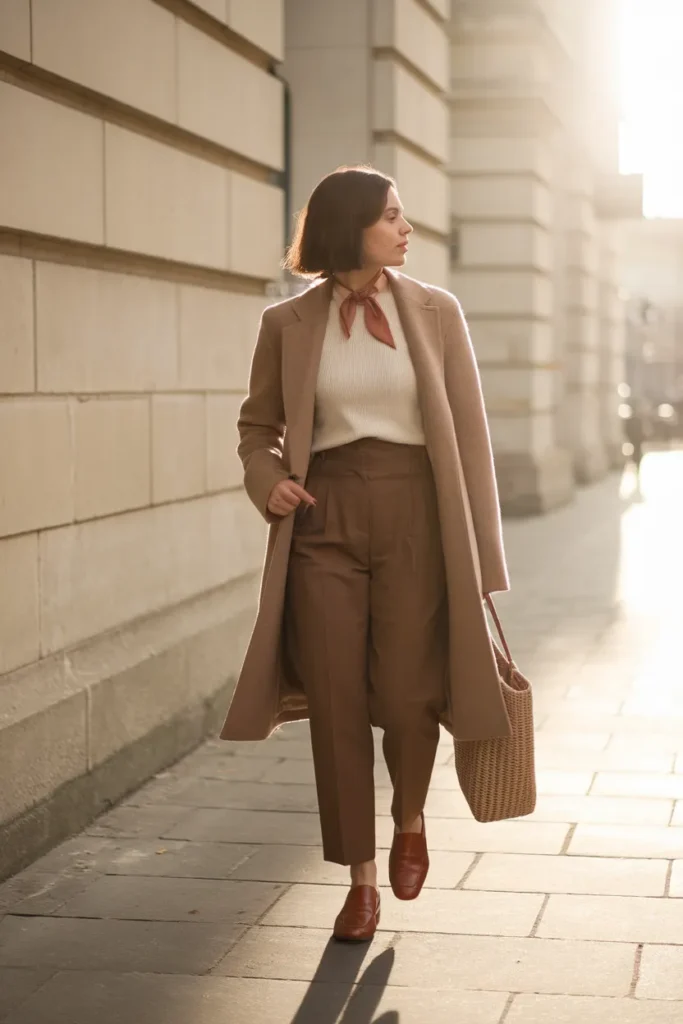
This guide hands you those rules. You’ll get fifteen pieces with genuine retro soul, three era lanes to choose from, a US thrifting field guide, a sizing chart that saves you from buying a “size 14” that fits like a modern 8, and the 70/30 trick that keeps the whole thing reading chic rather than costume. Pour a coffee. Your closet edit starts here.
What Makes a Capsule Wardrobe Vintage (and Still Wearable)
A capsule is a small set of pieces, usually 12 to 20 to start, chosen in one tight color palette so nearly everything pairs with everything else. A vintage capsule keeps that exact math and borrows its silhouettes, fabrics, and details from past decades: some pieces true secondhand, some faithful reproductions, some modern basics that simply read timeless.
The blend matters more than purity. Aim for roughly a third of your capsule carrying visible retro character, with the remaining two thirds doing quiet modern support work. That ratio is what separates “she has incredible style” from “she’s headed to a theme party.”
It also protects your budget. A wool coat worn a hundred times a year turns even a splurge into pocket change once you run the cost per wear, and vintage construction tends to survive that kind of rotation. If you already keep a 30-piece year-round capsule wardrobe, think of this as swapping five to eight of those slots for pieces with a past life. Same system. More soul.
The 1934 Dress Rehearsal: A Short History Worth Stealing From
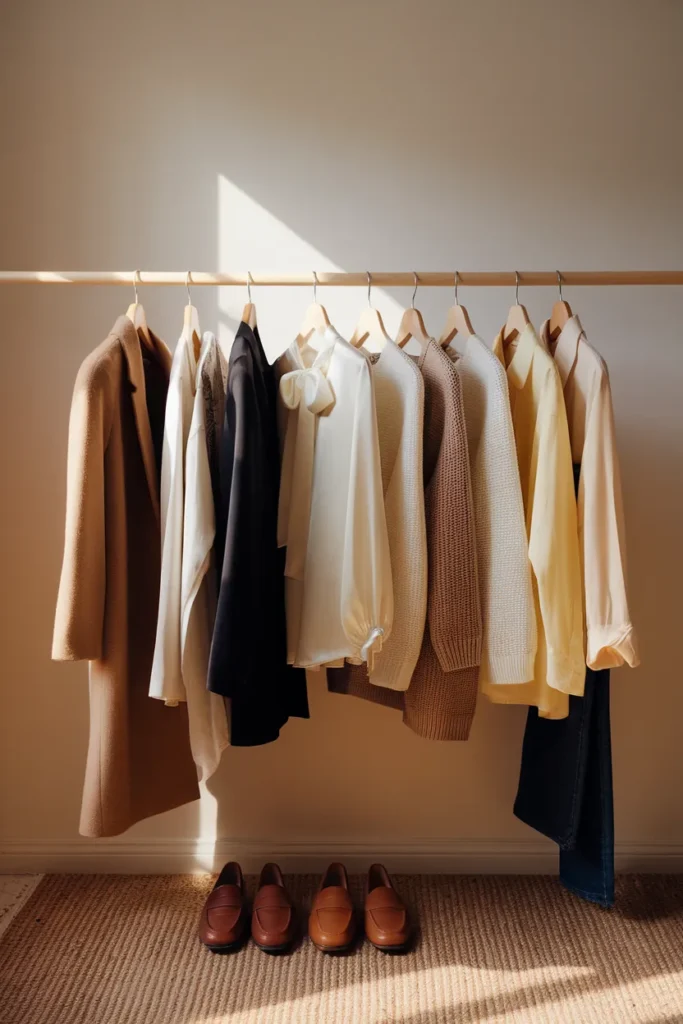
If a capsule feels like a modern internet invention, here’s a delicious correction. In 1934, American designer Claire McCardell built a set of interchangeable wool travel pieces meant to cover everything from casual daytime to formal evening out of a single bag. Stores didn’t bite. She believed in the idea anyway, and that ensemble now lives in the Met’s Costume Institute, quietly smug about being ninety years early.
American magazines ran with the concept through the 1940s. One famous 1940 Vogue campus plan stretched sixteen coordinated pieces, including four skirts, three blouses, and two jackets, across an entire school year. Wartime rationing made the interchangeable wardrobe a patriotic skill, and mid-century charm guides taught women to build everything around personal neutrals with matched accessory sets.
London boutique owner Susie Faux revived the term “capsule wardrobe” in the 1970s, and Donna Karan’s 1985 seven-piece work collection carried it into American closets for good. So when you build one from actual vintage pieces, you’re closing a very satisfying loop. The clothes and the system grew up together.
Pick an Era Lane: 1950s Polish, 1970s Ease, or 1990s Minimalism
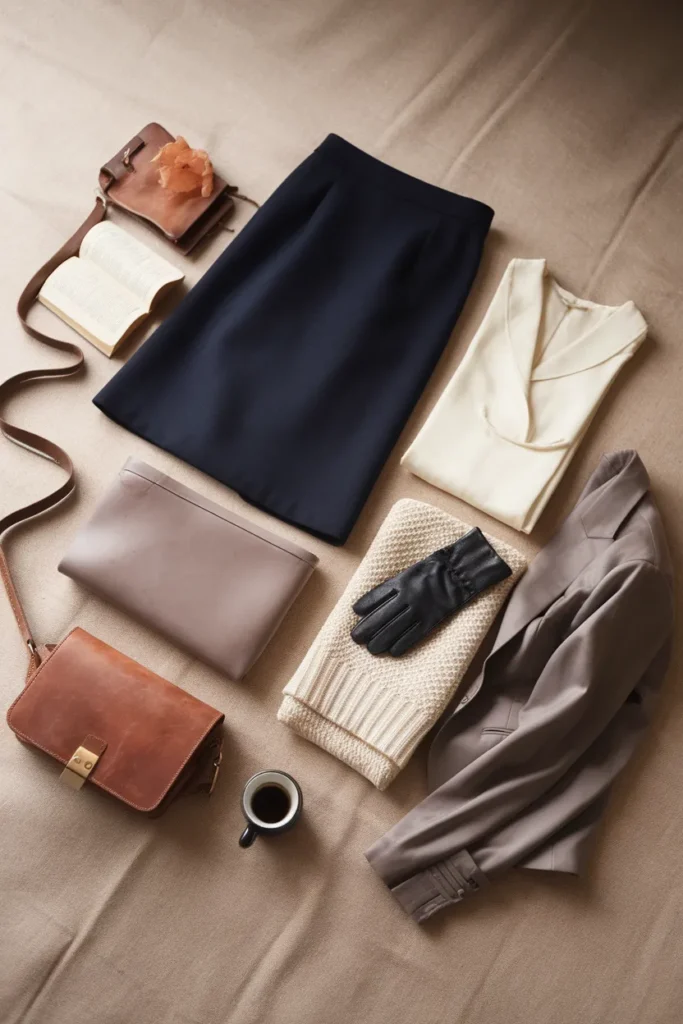
Trying to love every decade at once is how closets turn into flea markets. Pick one lane to lead, let a second one whisper, and skip the rest for now.
The 1950s lane is structure and polish: defined waists, full or pencil midi skirts, cropped cardigans, kitten heels, and top-handle bags. It rewards hourglass and pear proportions especially well because every silhouette is built around a marked waist, though a belt gives any figure that line. Reproduction houses and true 50s dresses at estate sales are your hunting grounds.
The 1970s lane is ease: high-rise wide-leg denim, camel suede, silk scarves, knit polos, and stacked-heel boots. It’s the friendliest lane for beginners because most of it already looks like current denim trends. If your saved pins lean flowy, borrow the discipline from a boho capsule wardrobe that still mixes and matches and apply it here.
The 1990s lane is minimalism: slip skirts, relaxed blazers, straight-leg jeans, fine knits, and sleek loafers. The Row built an empire on the exact silhouettes hanging in 90s thrift racks right now, which makes this the single cheapest way to look expensive in 2026.
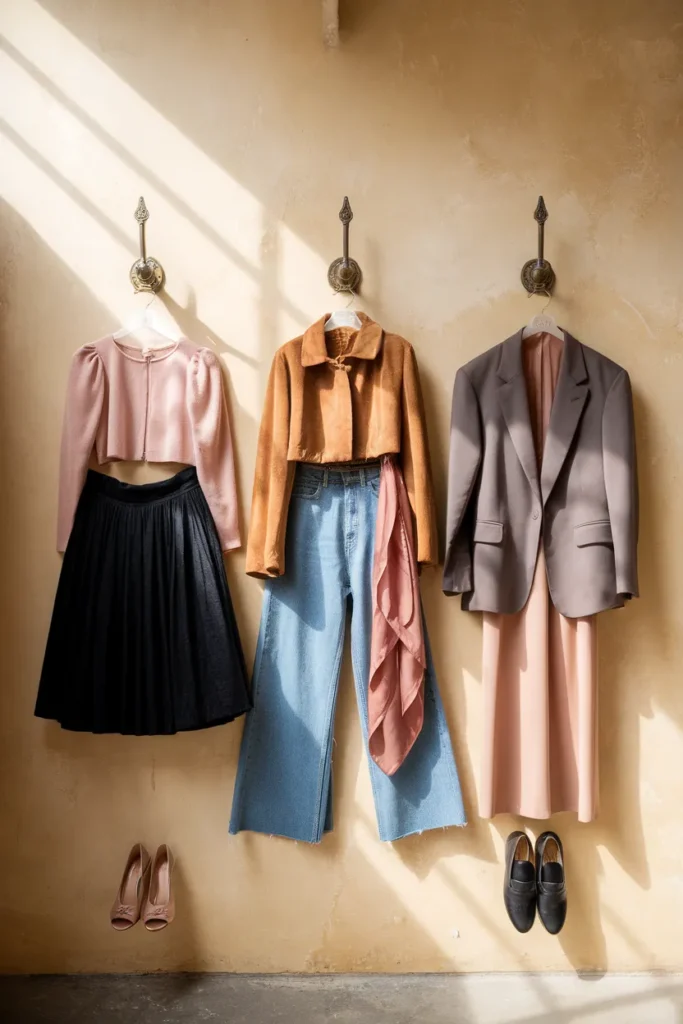
The Vintage Core: 8 Foundation Pieces That Earn Their Hanger Space
These eight do the quiet daily work. Buy them modern or thrifted, keep them in your palette, and every retro piece you add later will have something to lean on.
- High-waist wide-leg trousers. The one silhouette all three era lanes share. Quince and Everlane keep these in the $50 to $150 lane, and a thrifted wool pair often costs less than lunch.
- A white button-down. Crisp, standard fit, no stretch fabric if you can help it. Gap and Uniqlo versions usually run under $50; expect lighter cotton at that price and plan to replace it sooner.
- A crewneck knit in cream or oat. Wool or cotton, never shiny. Thrift racks are full of hand-knit versions with better yarn than most new sweaters.
- A wool coat. The piece that makes every outfit underneath look intentional. Camel reads most vintage; the best wool coats for a capsule wardrobe breaks down cuts and budgets.
- Dark straight-leg jeans. Madewell pairs typically run $98 to $138, and their cuts nod straight at the 70s and 90s anyway.
- A midi skirt. Pencil for the 50s lane, slip for the 90s. One is plenty.
- A day dress. A shirtdress is the workhorse: it belts, it layers, it opens like a duster.
- A soft-shoulder blazer. Skip aggressive padding. A secondhand 90s blazer in wool costs a fraction of new and drapes better.
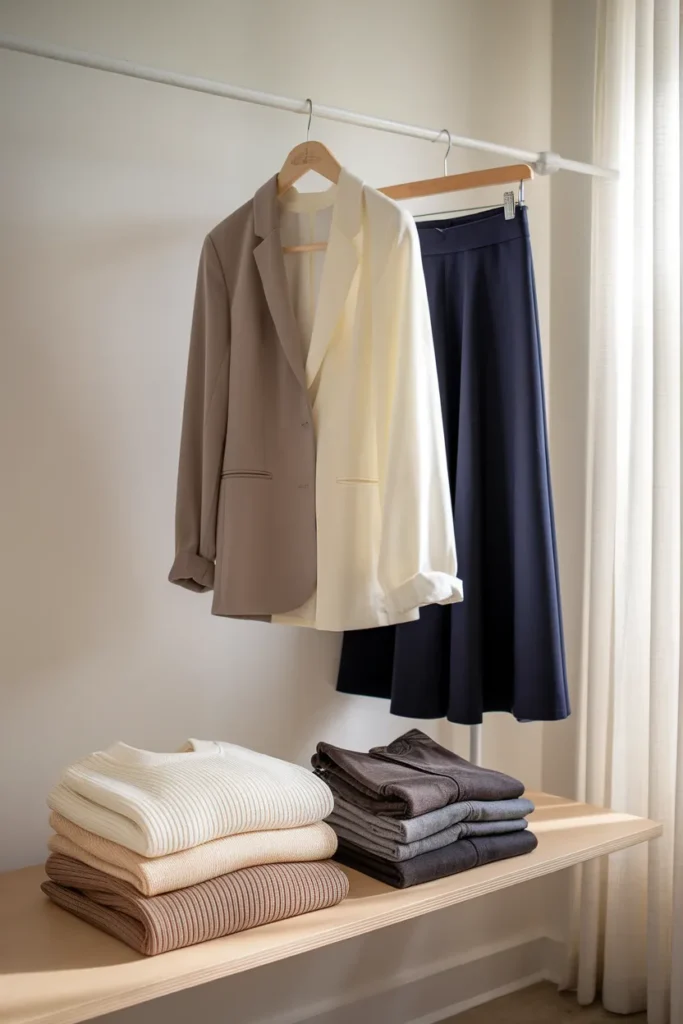
The Retro Soul: 7 Character Pieces With Actual Personality
Here’s where the fun lives. These seven carry the era on their sleeve, and because your foundation is calm, they get to be loud.
- A silk scarf. The hardest-working dollar in vintage. Neck, hair, bag handle, belt loop: one square, four jobs.
- A brooch. Heirloom pins are having their biggest moment in decades. Estate sale trays sell them for the price of a latte.
- A cropped cardigan. Pearl buttons if you’re in the 50s lane, ribbed knit for the 70s.
- Leather loafers. The shoe that whispers old money in every decade. Start with the best loafers for women, chosen the capsule way, then hunt a broken-in secondhand pair.
- A structured top-handle bag. Rigid frame, short handle, zero logos. Thrift stores misprice these constantly, in your favor.
- A waist belt. Skinny for dresses, wider for high-rise trousers.
- Cat-eye or oval sunglasses. Ten dollars of retro per wear, minimum.
Notice what’s on the list: mostly accessories. Character pieces at accessory scale let you dial vintage up or down by breakfast, which is exactly the control a working capsule needs.
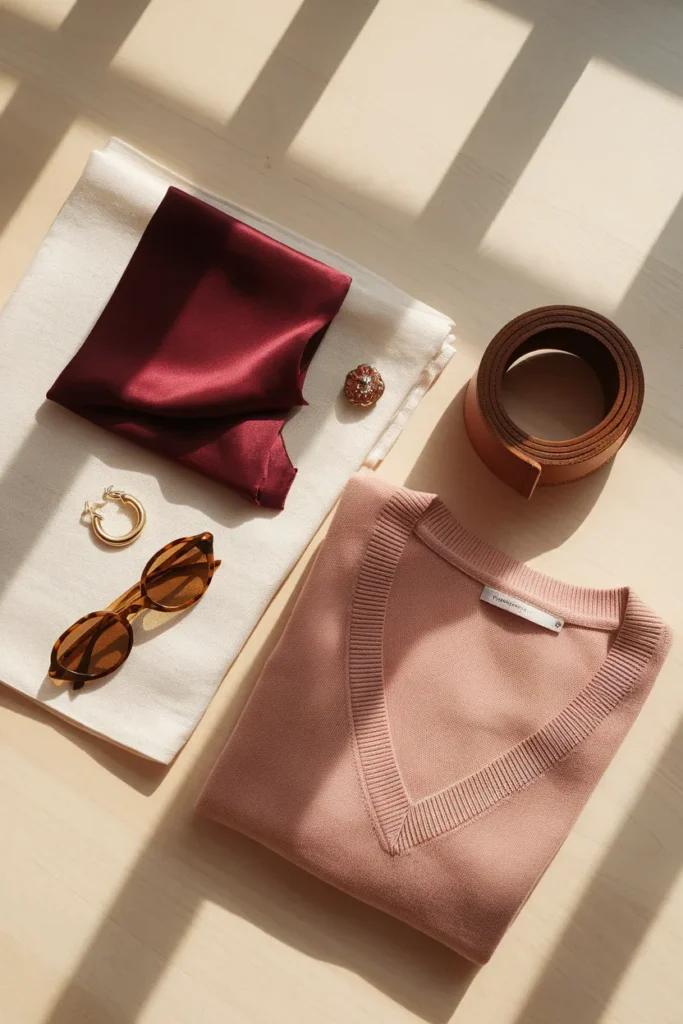
The 70/30 Rule: Retro Soul Without the Costume
The question I hear most often about dressing vintage is some version of “how do I keep this from looking like a costume?” The answer fits in one ratio. Keep any single outfit roughly 70 percent modern and neutral, 30 percent visibly vintage. One statement era piece, everything else quiet. A 50s dress with sleek ankle boots and a modern bag reads fashion. A 50s dress with seamed stockings, gloves, and victory rolls reads reenactment.
Three supporting rules make the ratio foolproof. First, one era per outfit. Mixing a 70s scarf with 90s jeans works because both are diluted; head-to-toe 1955 does not. Second, keep hair and makeup current. Your modern bun is doing more anti-costume work than any styling trick. Third, fit decides everything. A vintage piece two sizes off drifts into dress-up territory instantly, so budget $15 to $40 for a tailor the way you’d budget for the garment itself.
And when an outfit feels almost right, check the waist before you check anything else. The fastest fix in vintage styling is usually a belt, and the best belts for a capsule wardrobe covers the five shapes worth owning.

Build the Palette Like It’s 1955, Wear It Like It’s 2026
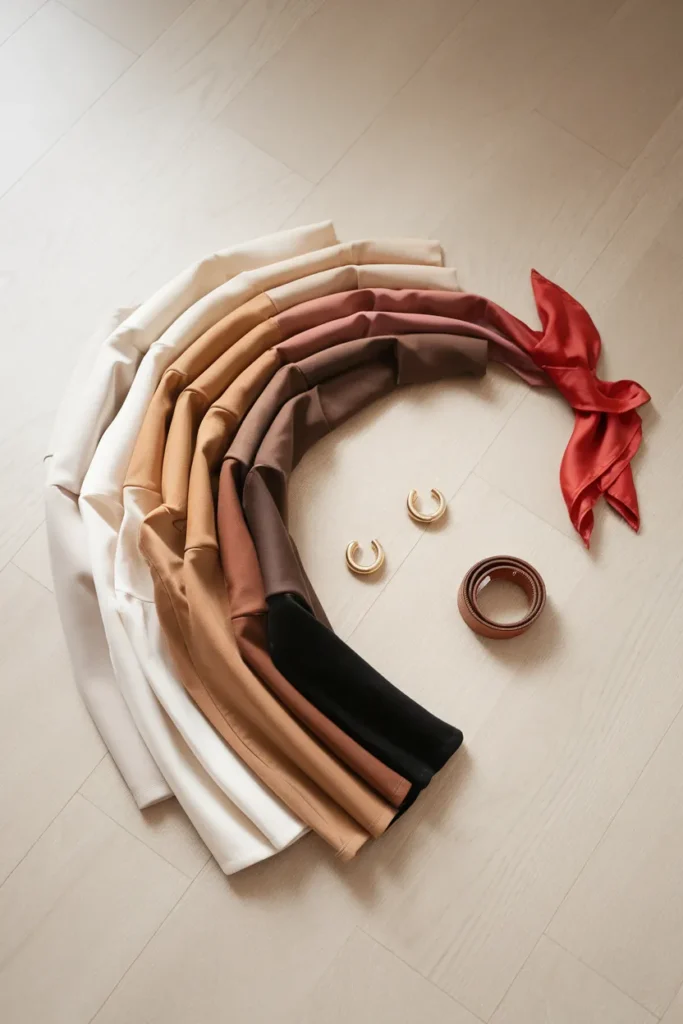
Mid-century wardrobe guides had one genuinely brilliant habit: a woman picked her personal neutrals first, then color-matched every coat, shoe, and accessory set to them so any combination worked blind. Steal that. Choose two base neutrals (camel and espresso, or soft black and gray), add two soft supporting shades (cream, oat, navy, or sage), and allow yourself exactly one accent with period charm, like burgundy, butter yellow, or tomato red.
Then apply the two matching rules vintage stylists never broke. Match your metals: if your brooch is gold-tone, your hoops and belt buckle follow. Match your leathers: cognac shoes want a cognac bag. Small alignments, outsized polish.
The payoff is outfit math. Five palette-locked pieces can produce fifteen combinations, while fifteen random pieces might produce five. If beige-on-beige keeps coming out flat rather than French, the fix is contrast placement, and this guide to pair neutral colors so every outfit looks pulled together walks through it shade by shade.
Thrifting the Capsule: A US Field Guide
Sourcing is where a vintage capsule gets cheap, personal, and genuinely sustainable. By EPA’s national textile waste data, Americans send roughly 17 million tons of textiles into the waste stream in a year, and about two thirds of that ends up in landfill. Every thrifted coat is one garment pulled out of that current, which makes your closet edit quietly count for something.
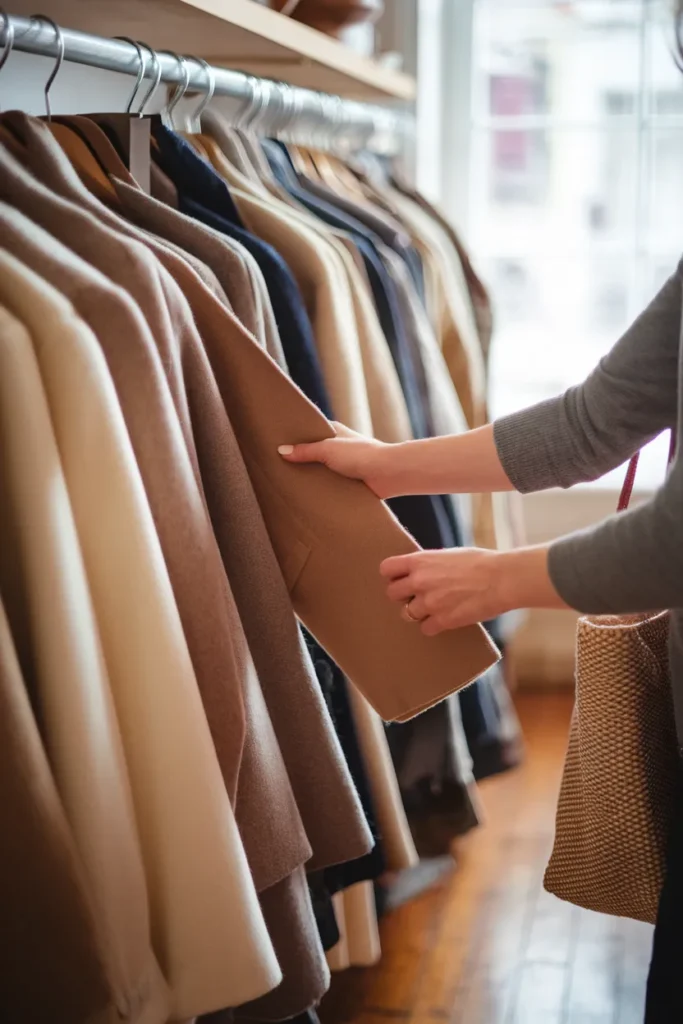
Hunt by venue. Goodwill and Salvation Army are for foundation pieces: knits, blazers, straight jeans, the occasional wool skirt. Estate sales are where true mid-century lives, usually at a fraction of boutique prices, and Friday mornings beat Saturday afternoons every time. Etsy lets you search by decade, measurement, and fabric from your couch. Poshmark, ThredUp, and eBay reward a saved search left running for “wool wide leg trousers” in your measurements.
Then inspect like a dealer. Hold seams up to light to catch moth holes. Check underarms and collars for staining that won’t lift. Tug the zipper: metal zippers usually date a piece to the 1960s or earlier, which is a bonus, while a broken one is a $12 repair you should negotiate into the price. And trust your nose. Musty airs out over a weekend; mildew never really leaves.
Vintage Sizing, Decoded (Read This Before You Buy)
Here’s the heartbreak this section prevents: falling for a gorgeous 1950s dress tagged size 14, buying it, and discovering it fits like a modern 6. US sizing standards have shifted several times since mid-century, and later vanity sizing widened the gap further, so the number on a vintage tag is closer to trivia than truth.
Use this rough translation, then verify with a tape measure every single time:
| Tag says | 1950s to 1960s piece | 1970s to 1980s piece | 1990s piece |
|---|---|---|---|
| 12 | fits like a modern 4 to 6 | fits like a 6 to 8 | fits like an 8 to 10 |
| 14 | fits like a modern 6 to 8 | fits like an 8 to 10 | fits like a 10 to 12 |
| 16 | fits like a modern 8 to 10 | fits like a 10 to 12 | fits like a 12 to 14 |
The tape measure is the real system. Measure the bust, waist, and hip of the piece you’re eyeing, then compare against the best-fitting garment already in your closet rather than against any chart. Sellers on Etsy and eBay list flat measurements for exactly this reason, and good ones answer measurement questions within a day.
One honest note for anyone shopping above a modern 12: true mid-century pieces skew small because the surviving supply skews small, so the 70s, 90s, and quality reproduction brands will be your richest hunting grounds. The proportion-first approach in this midsize capsule wardrobe built for bodies between sizes translates directly to vintage racks.
Outfit Math: One Vintage Piece, Three Modern Ways
Every character piece should pass the one piece, three outfits test before it earns hanger space. Run these as your templates.
The 70s silk scarf. Knotted at the neck over a white tee, straight jeans, and loafers for errands. Draped under a blazer collar for meetings. Tied to the top-handle bag when the outfit needs exactly five percent more.
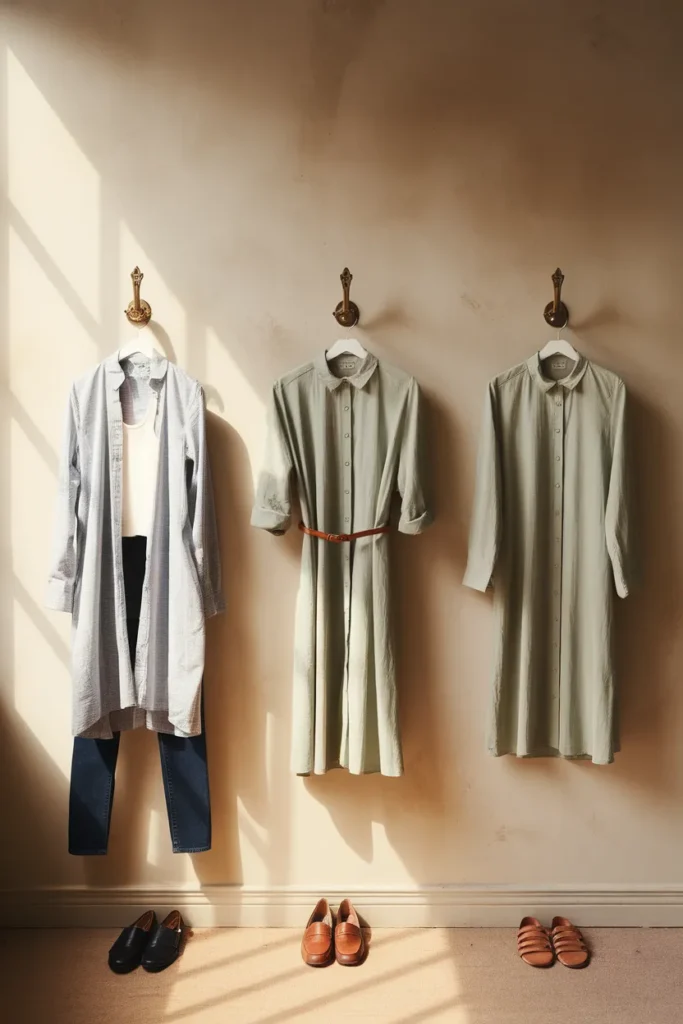
The 50s shirtdress. Worn open like a duster over a tank and jeans on Saturday. Belted at the waist with loafers for the office. Buttoned and bare-legged with sandals through August, because a shirtdress is the rare piece that stretches across seasons without complaint.
The 90s blazer. Over an oat slip skirt with a fine knit for dinner. Squared over a button-down and dark jeans for work. Shoulder-draped over a midi dress when the restaurant runs cold and the outfit still has to win.
Three pieces, nine outfits, zero new purchases. That’s the mix-and-match ratio a vintage capsule is supposed to hit, and it’s the moment the morning “nothing to wear” spiral quietly retires.
Caring for Pieces Older Than Your Playlist
Vintage survives on gentleness. Handwash pre-1970s pieces in cold water with a no-rinse wool soap as your default, and only trust a washing machine once a fabric has proven itself. Vintage rayon is the famous trap: it can shrink dramatically when soaked, so rayon crepe goes to the dry cleaner, full stop.
Dry knits flat on a towel, never on a hanger, and give bias-cut dresses padded hangers so gravity can’t stretch decades of drape out of shape. Skip mothballs; cedar blocks and a lavender sachet protect wool without making your closet smell like 1962 in the wrong way. Mend small before it becomes big: a loose button tonight beats a lost button in a parking lot.
Do this and the economics turn absurd in your favor. A $40 thrifted wool coat worn eighty times a winter costs fifty cents a wear, and it’ll line up for next winter too. Fast fashion can’t run that math.
FAQ: Vintage Capsule Wardrobe Questions, Answered
How many pieces does a vintage capsule wardrobe need? Start with 12 to 15 using the foundation-plus-character split above, and let it grow toward 25 to 35 as you learn your era lane. There’s no magic number; there’s only the point where every piece pairs with most of the others.
Can a capsule be entirely true vintage? It can, and collectors do it, but it’s the advanced class. Sourcing basics like plain white shirts secondhand in your size takes patience, so most people run a blend and let the character pieces carry the history.
How do I wear vintage to work without it reading costume? Apply the 70/30 rule with the vintage share as one accessory or one silhouette: a silk scarf with a modern suit, a 90s blazer over current trousers, a brooch on a plain knit. Keep hair and makeup fully modern and nobody blinks.
What size am I in vintage, and does this work for petite or plus-size figures? Ignore the tag and shop by bust, waist, and hip measurements every time. Petite frames often win with 50s and 60s pieces, which cut shorter through the torso, while plus-size and midsize shoppers usually find the deepest supply in 70s, 90s, and reproduction lines.
Is true vintage worth the price compared with reproduction brands? Judge fabric and construction, never age alone. A $30 true-vintage wool skirt with French seams beats most $100 reproductions, while a tired polyester piece is a pass at any price. Cost per wear settles every tie.
How do I wash pieces older than I am? Cold handwash as the default, dry-clean rayon and anything structured, dry knits flat, and store wool with cedar. When in doubt, test an inside seam with a damp white cloth first to check for dye bleed.
Does a vintage capsule work year-round or just for fall? Year-round, with fall as its show-off season. Linen 70s pieces and shirtdresses carry summer, the wool core carries winter, and the palette holds everything together across all four. Layering does the rest.
Your First Weekend, Sorted
Here’s the gentle start: this weekend, pick your era lane, pull the three closest foundation pieces you already own, and hunt exactly one character piece secondhand, ideally a silk scarf or a brooch, since they cost the least and teach the most. Wear the combination twice next week and pay attention to which version of you shows up in it.
That’s the whole trick to a vintage capsule wardrobe: you borrow ninety years of good decisions so that getting dressed tomorrow takes ninety seconds and looks like it took an hour. Save this guide to your style board, and go let something old make your mornings new.
Keep reading
Winter 2026 Fashion Trends Worth Your Closet Space
Every winter fashion trends 2026 roundup you have read so far has handed you a shopping list. Five trends here, twenty-three there....
Fall 2026 Fashion Trends: The Looks Worth Adding to Your Capsule
Every fall fashion trends 2026 roundup you’ve read this month has the same problem. It tells you satin is back, hands you...
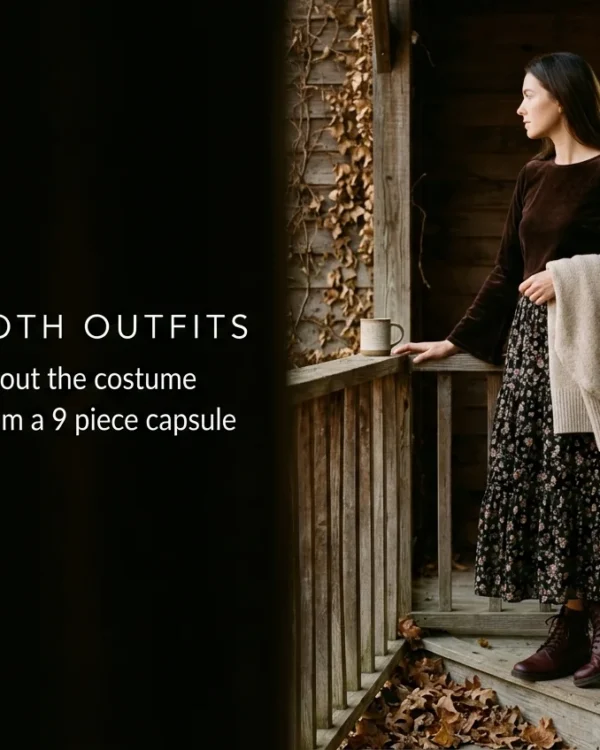
Whimsigoth Outfits: Witchy, Romantic Style You Can Build From Your Fall Capsule
The first time whimsigoth outfits showed up in your feed, you probably saved four of them and then wore none. That is...