
Tenniscore Outfits: How to Wear Preppy Sport Style Off the Court
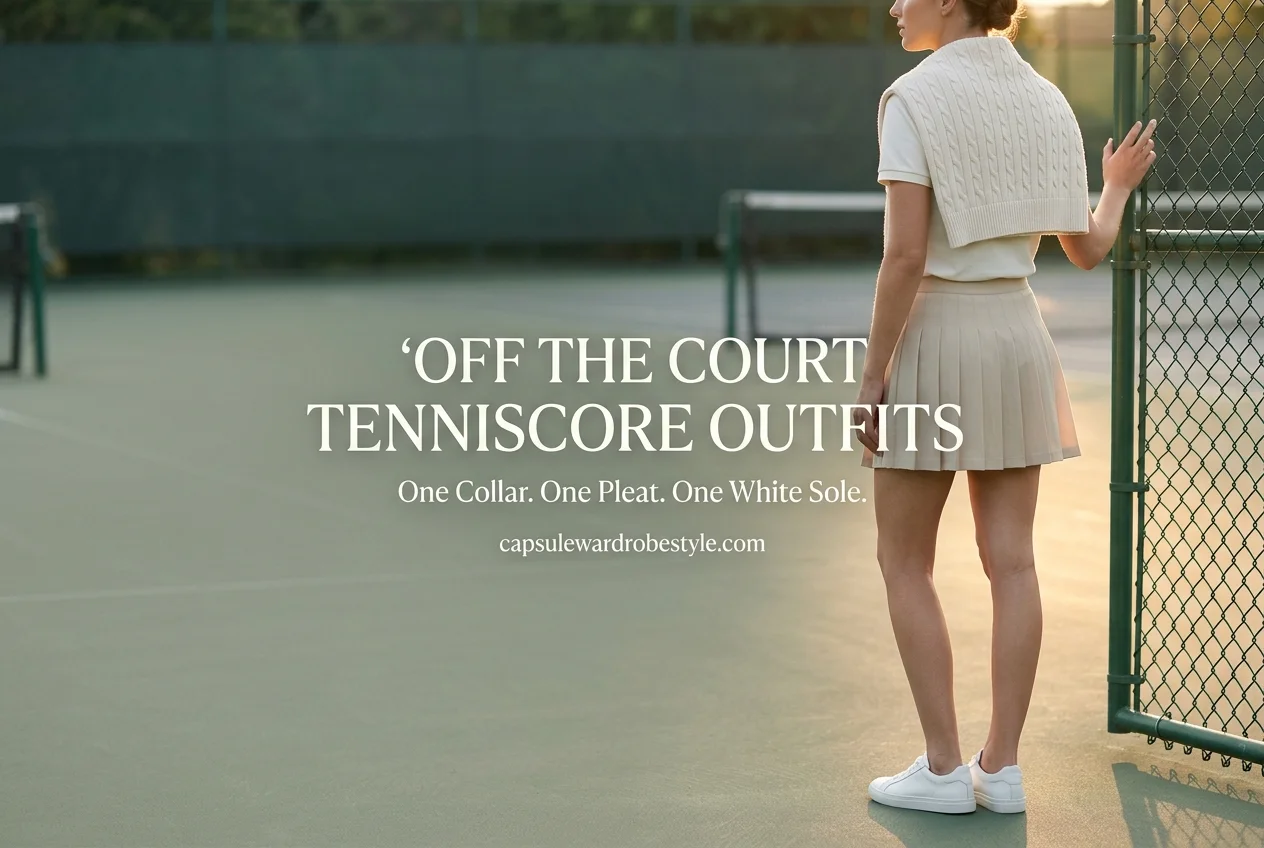
Tenniscore outfits have one problem, and every roundup online makes it worse. Styled the way they usually get styled, a 13-inch pleated mini, a cropped polo, a visor, the whole thing reads as fancy dress. Nobody wants to look like they wandered off a set. Which is a shame, because underneath the costume version sits one of the easiest, most wearable looks you can build from clothes you already own.
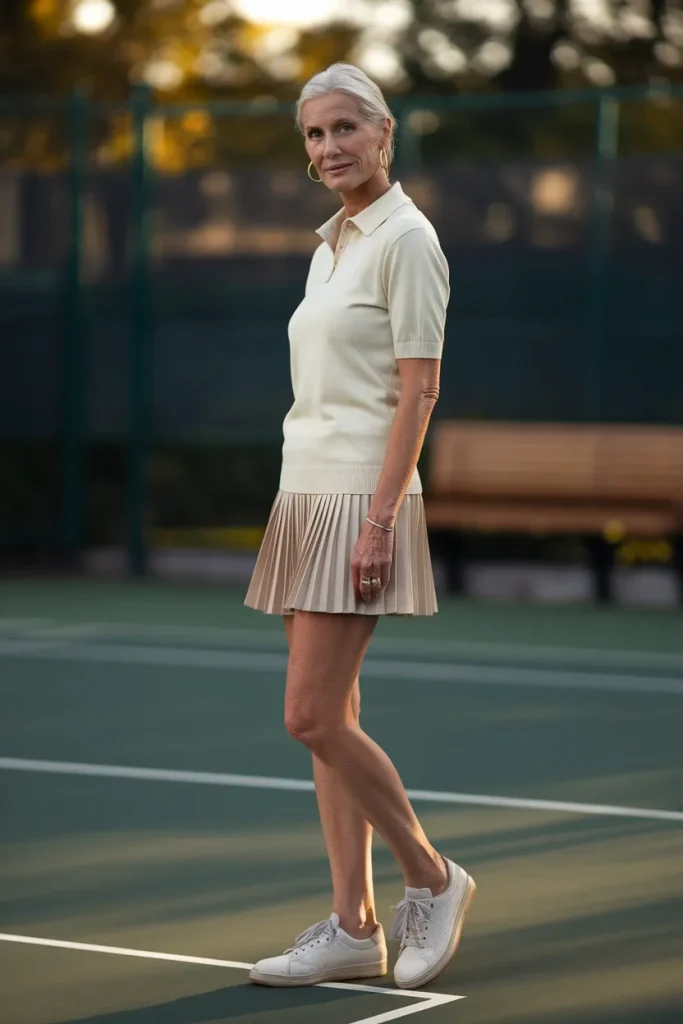
So here is what this guide does that the others do not. You get a three-part formula that keeps the look grounded, six outfits built for ordinary Tuesdays, an honest swap ladder if a mini skirt is simply not happening, a fabric warning nobody else is giving you, and a straight answer on which pieces deserve your money once the trend cools off.
What Tenniscore Actually Is (And What It Borrowed From Wimbledon)
Tenniscore is court dressing pulled off the court and worn as regular clothes. Pleats, collars, white cotton, a flat white sole, a knit thrown over the shoulders. It borrows the visual grammar of tennis without any expectation that you play.
The aesthetic did not appear from nowhere. It has a real institutional source: the all-white tradition at Wimbledon, which dates to the 1870s and survives today as one of the strictest dress codes in professional sport. Players must be dressed in tennis attire that is “almost entirely white,” per the official Wimbledon rule on white clothing. That single restriction is why the whole aesthetic feels expensive. Take color away and what is left to look at is cut, texture, and fit, which is exactly the same reason a neutral capsule wardrobe photographs well.
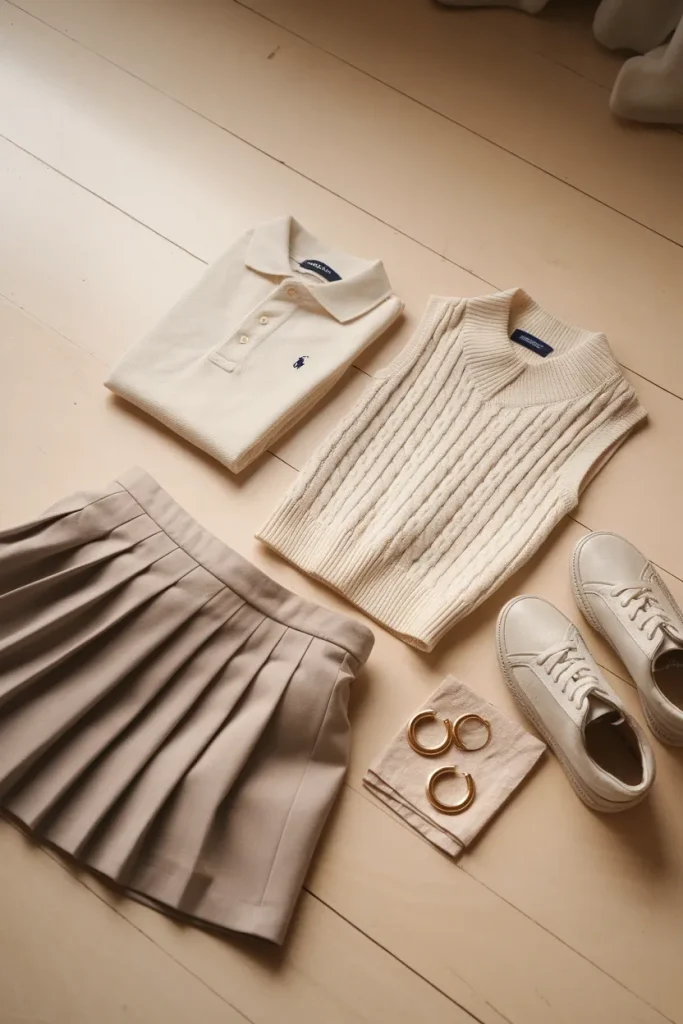
The current wave has two clear drivers. The 2024 press tour for the film Challengers put tennis dressing on every red carpet for a full season, and the US Open now functions as a September fashion week for anyone who has never held a racquet. Search interest and Pinterest saves both climb through late August for exactly that reason.
Worth knowing before you spend anything: this is a revival, not a new invention. The look ran hard in 2021 and 2022, cooled, and came back. That history matters when we get to the section on what to keep.
The 3-Point Rule: A Formula That Keeps It From Reading as Costume
Most tenniscore failures come from the same mistake, which is wearing every signal at once. Collar plus pleat plus white sneaker plus visor plus varsity stripe plus terry headband. Each element is fine. Stacked together they stop being an outfit and start being a reference.
So use this instead. It is the framework I hand anyone who asks, and it fits on a phone screen.
Pick two of these three. Never all three at once unless you are actually going to the club.
| The point | What counts | When to drop it |
|---|---|---|
| One collar | Piqué polo, white button-down, collared knit vest, quarter-zip, tipped rugby | Drop when you want the look softer. A fine-gauge crewneck in cream does the same job with less signal. |
| One pleat | Pleated skort, box-pleat midi, pleated trouser, drop-waist pleated dress | Drop when you are already wearing texture up top, like cable knit or terry. |
| One white sole | Leather court sneaker, retro trainer, canvas low-top | Drop when it rains, when the dress code says loafers, or when you want the outfit to skew evening. |
Two points reads as style. Three points reads as theme. That is the entire rule, and it has never once let me down when I am getting dressed at 7am and cannot think straight.
The white sole is the point people most often get wrong, because a scuffed gym sneaker undoes everything above it. If yours have gone gray, that is a fifteen-minute fix with a magic eraser and a toothbrush, and it matters more than any single purchase in this article. I go deeper on the difference between a court shoe and a running shoe in this guide to how to style white sneakers so they read polished instead of gym, because the sole shape does most of the work.
The Pieces That Carry the Whole Aesthetic
You do not need seventeen items. You need five categories, and within each one there is a version that earns its hanger space long after tennis stops being the reference.
The collar
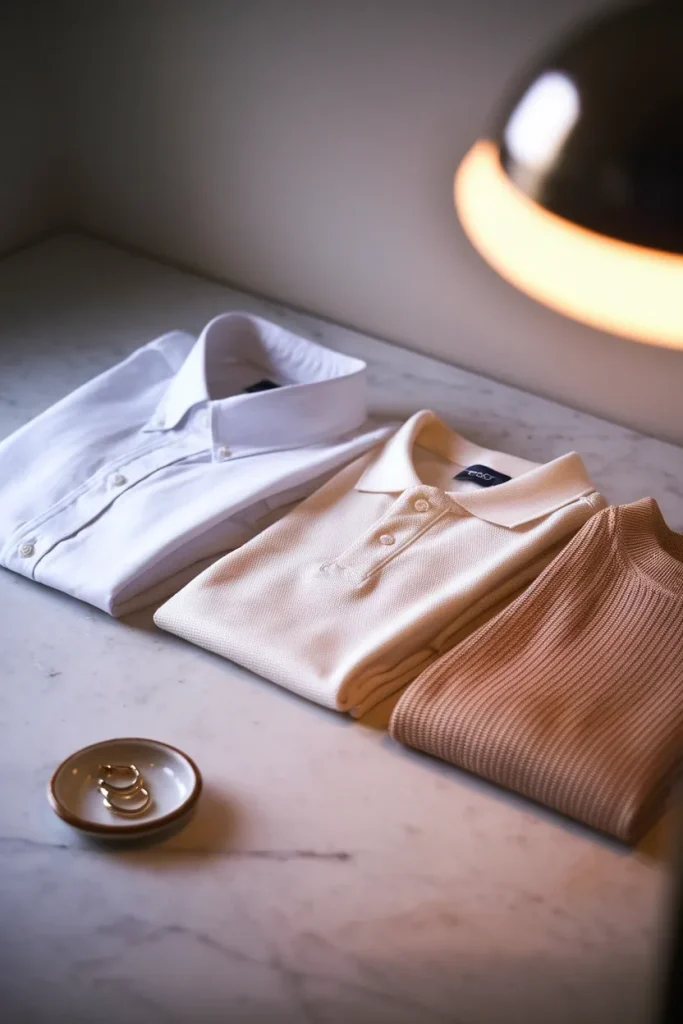
A piqué polo in ivory, cream, or navy is the workhorse. Look for a knit collar with enough body to stand on its own, because a floppy collar is the single fastest way to make the outfit look cheap. Mass tier runs roughly $20 to $40 at Uniqlo, Old Navy, or Target. Mid tier at J.Crew or Madewell typically lands between $60 and $90 and buys you heavier cotton that holds shape through repeated washing.
A white button-down does the same job with more polish and zero sport reference, which makes it the safer buy of the two. It is also the piece with the widest reach in a capsule, and I have written a full breakdown on styling a white button-down twelve different ways if you want to see how far one shirt stretches.
The pleat
Skorts solve the practical objection to tennis skirts, which is that you cannot bend over in one. Built-in shorts, no thinking required. Old Navy and Target sit in the $25 to $45 band; performance versions from athletic brands run higher, with lululemon’s pleated tennis skirt sitting around $88 at the time of writing.
A pleated midi is the grown-up alternative and honestly the better cost-per-wear buy, because it works at the office and the mini does not.
The knit layer
Cable-knit vest, cricket-stripe trim, or a plain fine-gauge sweater knotted over the shoulders. Lands’ End sells a varsity V-neck around $95, and Quince and Uniqlo both carry cotton versions well under that. Fabric note worth having: cotton knits hold their shape but bag out at the hem, while merino recovers better and costs more.
The white sole
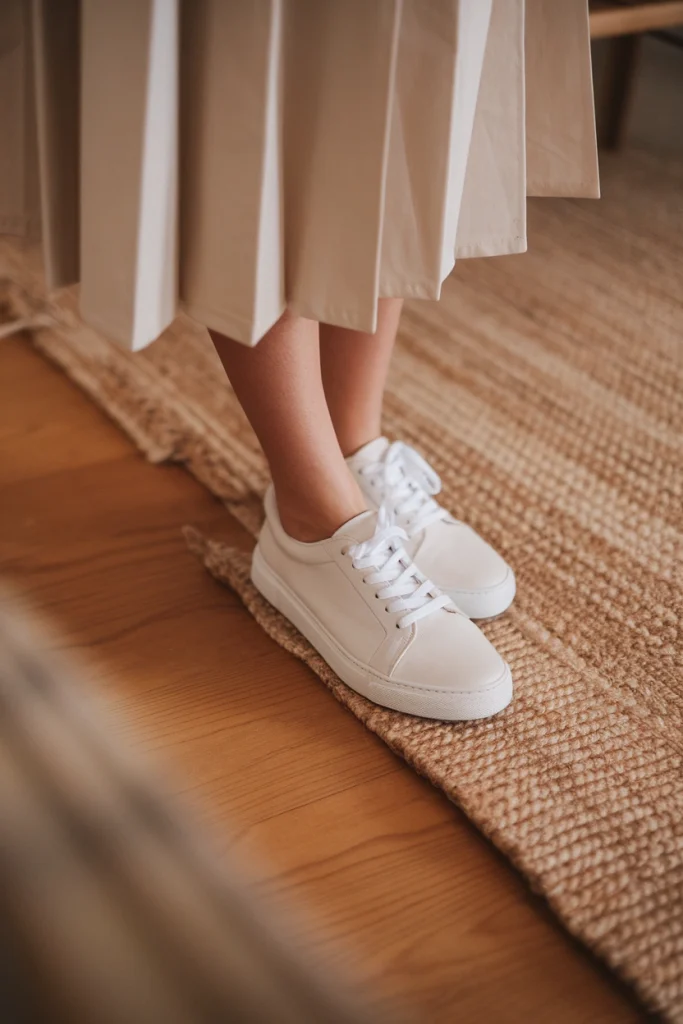
Leather, low, flat. Adidas keeps a court silhouette in the $60 to $110 range depending on model, and their VL Court sits at the lower end of that. Canvas works in summer but grays faster and cannot be wiped clean.
The small structured bag
A compact crossbody or a woven tote in cream, tan, or espresso. The bag is where most people accidentally break the aesthetic by carrying something slouchy and oversized. Structure is the whole point.
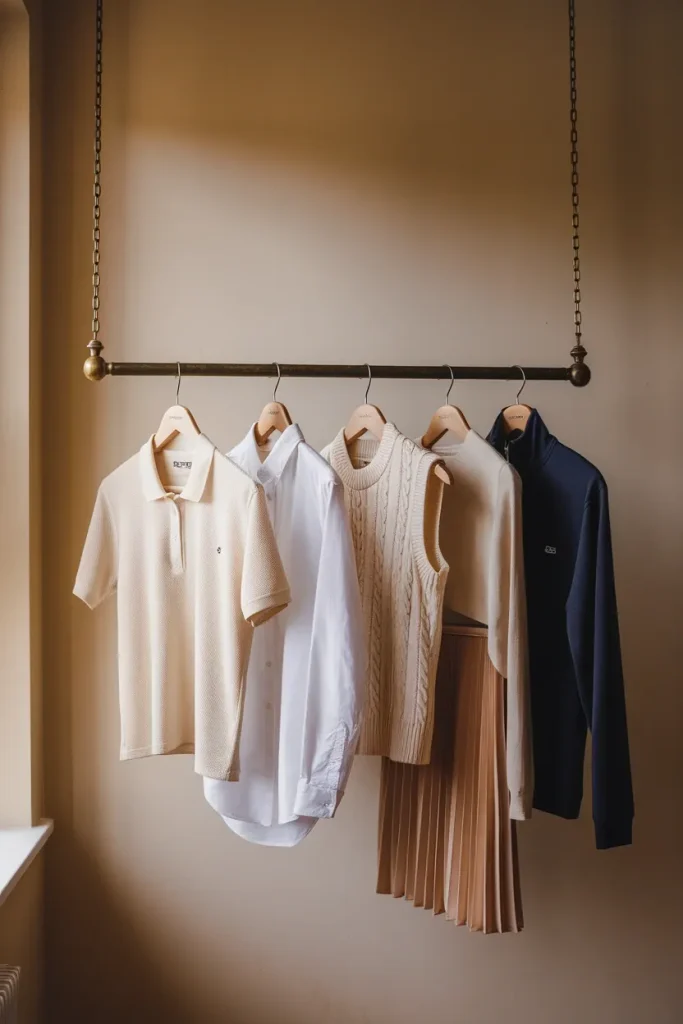
You Already Own Most of a Tenniscore Capsule
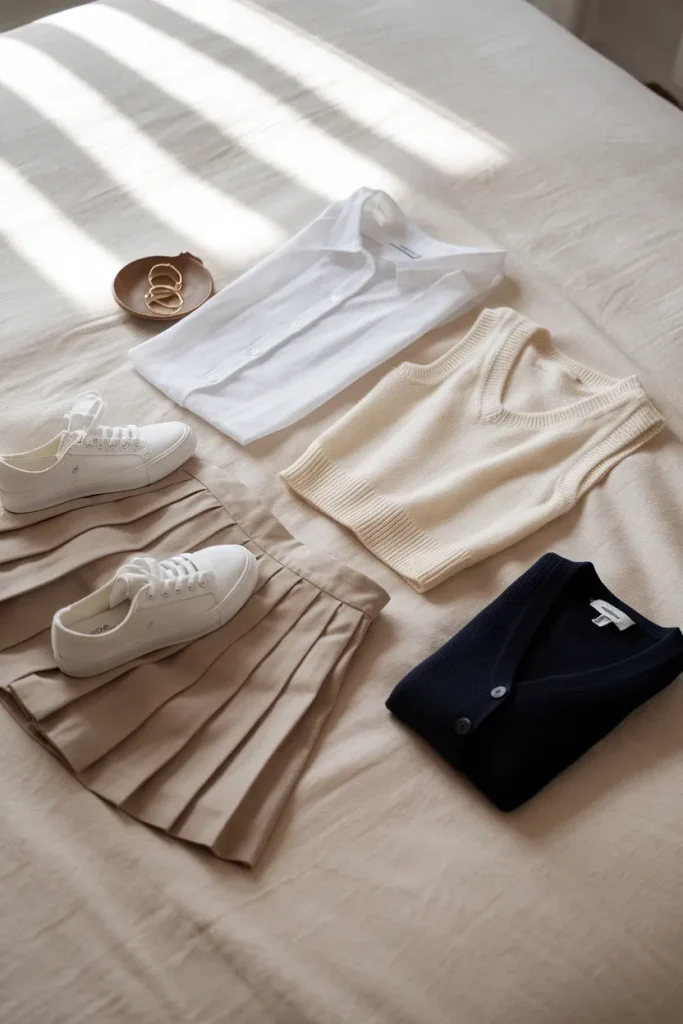
Here is the part every ranking article skips. Before you buy a single thing, go stand in your closet and pull these six items. Most women I talk to find at least four of them without moving anything.
- Any white or cream collared top, polo or button-down, it does not matter which
- A cream, ivory, or oatmeal knit, sweater or vest or cardigan
- Anything pleated, even a work skirt you forgot about
- White or off-white sneakers
- A navy or forest green layer, blazer, quarter-zip, or cardigan
- Gold hoops, a slim watch, or a simple belt
Lay those six on the bed. What you are looking at is a functioning tenniscore capsule, and it cost nothing. If you are short a piece, that is your one purchase, and now you are buying with a gap in mind instead of buying because a roundup told you to.
The knit vest is usually the piece people own and never wear, which is a waste of good hanger space. If yours has been sitting untouched since you bought it, the fix is usually proportion rather than the vest itself, and I walk through every way to wear a vest without it feeling stiff in a separate guide.
Now run the outfit math. Six pieces, styled against each other, produce more than you would guess:
| Base piece | Add | Finish with | Reads as |
|---|---|---|---|
| Collared top | Pleated skirt | White sneakers | Classic court |
| Collared top | Jeans | White sneakers | Weekend preppy |
| Knit vest over collared top | Pleated skirt | Loafers | Old money |
| Knit over shoulders | White tee, pleated trouser | Sneakers | Quiet luxury |
| Collared top | Pleated midi | Ballet flats | Office-safe |
| Knit vest | Trousers | Sneakers | Casual Friday |
Six outfits from six pieces, none of which required a purchase. Buy fewer, wear more. That is the whole argument for building a capsule this way.
Six Tenniscore Outfits Built for Ordinary Days
Skip the styled-for-camera versions. These are built around places you actually go.
1. School pickup and errands. Ivory polo, oat pleated skort, white leather sneakers, small crossbody. Two points of the rule, collar and pleat, with the sneaker as the third only because you will be on your feet. This is the one outfit where all three points are earned.
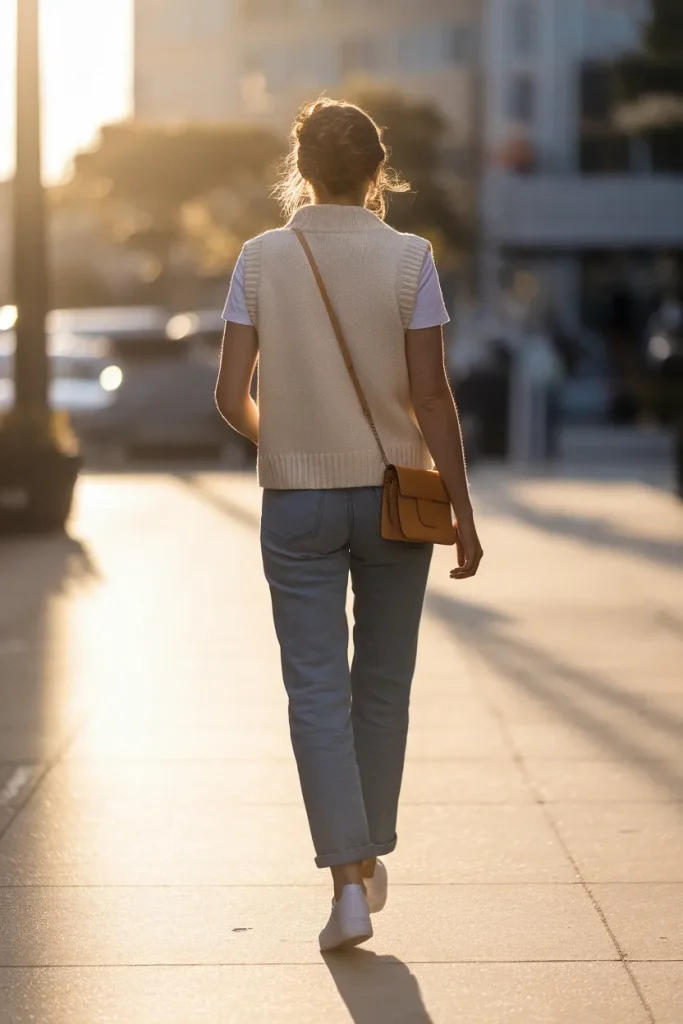
2. Weekend coffee. Cream knit vest over a white tee, straight-leg jeans, white sneakers. No pleat at all. The vest and the sole carry it, and the jeans keep it from tipping into theme.
3. Casual Friday at the office. White button-down tucked into a pleated midi, loafers, thin gold chain. Collar and pleat, no sneaker. Nobody in the meeting will register it as a trend, which is exactly the goal.
4. Dinner outside. Cream box-pleat dress, flat leather sandals, structured tan bag, gold hoops. One point, the pleat, doing all the work.
5. Travel day. Navy quarter-zip, white tee, cream wide-leg trouser, white sneakers. Collar and sole, no pleat. Comfortable enough for six hours and it photographs well the second you land.
6. Actual spectator seats. Striped rugby or tipped polo, denim, sneakers, ball cap, cardigan tied at the waist for when the sun drops. Spectator dressing has its own set of constraints, mostly around temperature swings and long walks, and I cover those in more detail in this guide to what to wear to a baseball game, which transfers almost directly to a tennis tournament.
The Skirt Length Question, Answered by Proportion Instead of Age
Nobody is obliged to wear a 13-inch skirt to participate in this. The pleat is the reference, and pleats exist at every length. What follows is about what works with your proportions, not about hiding anything.
| If the mini is not happening | Wear this instead | Why it still reads tenniscore |
|---|---|---|
| Petite, 5’4″ and under | Skort at 15 to 16 inches, or a pleated midi that stops at the narrowest part of your calf | The pleat carries the reference. A midi that ends mid-calf can shorten the leg line, so aim for the taper. |
| Tall, 5’9″ and over | Pleated midi at 28 to 32 inches, or a pleated trouser | You have the length to carry a longer pleat without it swallowing you. Most standard midis will read shorter on you. |
| Curvy or hourglass | A-line pleated skort with a defined waistband, or a pleated midi in a fabric with weight | A structured waistband keeps the pleats releasing from the smallest point instead of adding volume at the hip. |
| Midsize and plus-size | Pleated midi or a drop-waist pleated dress with a knit vest layered over | Vertical pleat lines run uninterrupted, and the vest adds a second structured layer at the shoulder. |
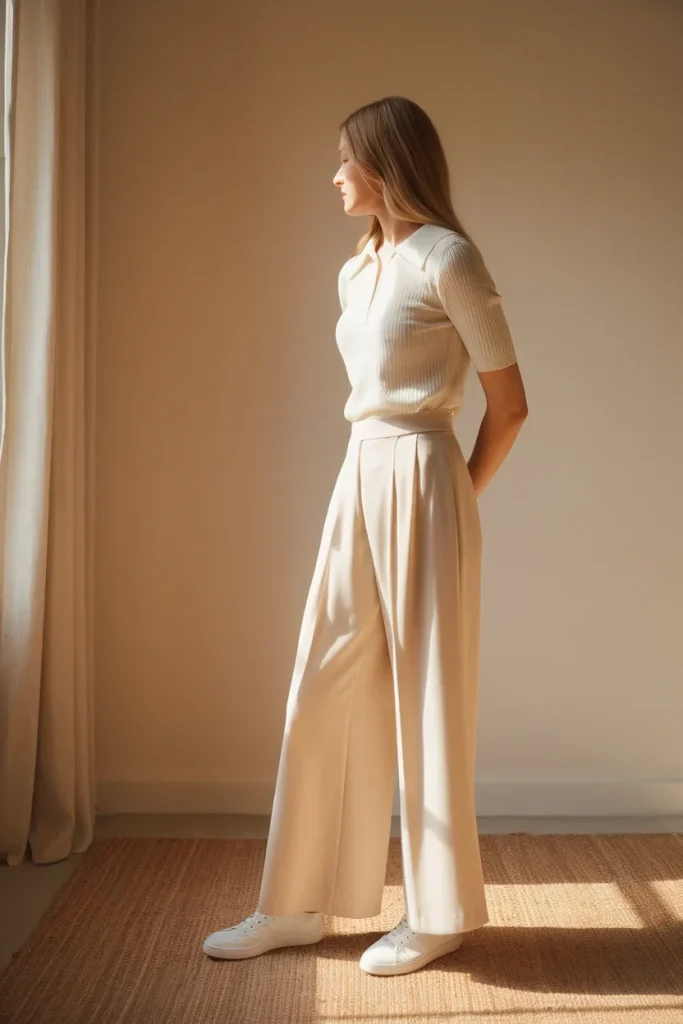
| Over 40 and simply not interested in a skirt | Cream or white wide-leg trouser with a collared top and white sneakers | This is the most wearable version of the entire aesthetic, and it is the one I reach for most. |
That last row deserves its own note, because the white trouser version of tenniscore is quietly the best one. It reads expensive, it works year-round, and it survives the trend completely. Getting the break and the rise right is most of the battle, which I break down in how to style wide-leg trousers for your proportions.
One fit note on skorts specifically. The inner short should sit flat against your thigh without gripping, and the outer pleat should fall clear of it. If the short is tighter than the skirt, the pleats will catch and ride, and no amount of styling fixes that.
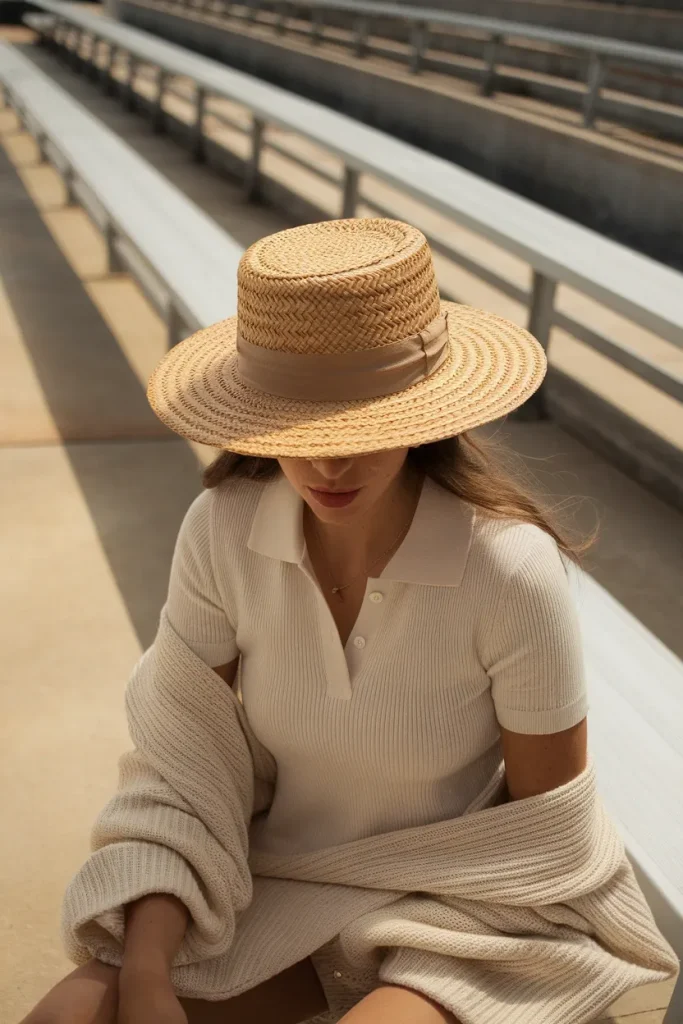
All That White Has a Sun Problem Nobody Mentions
Here is the thing no other tenniscore article will tell you, and it genuinely changed how I shop for summer whites.
The aesthetic is built on thin white cotton, and thin white cotton is close to the weakest sun protection you can put on your body. According to the Skin Cancer Foundation’s guidance on sun-protective fabric, a standard white T-shirt offers a UPF of roughly 7, and that number drops to about 3 once the fabric is wet. For comparison, a UPF 50 fabric blocks around 98 percent of UV. Dark, densely woven cloth performs dramatically better than pale, loosely woven cloth.
Which puts you in an awkward spot if you are wearing head-to-toe white to sit in an open stadium for four hours in late August.
Three fixes that do not wreck the look:
- Choose density over thinness. Piqué knit and twill are more tightly constructed than jersey or voile. A piqué polo genuinely outperforms a thin white tee.
- Add a layer that is actually doing something. The knit thrown over your shoulders is not just styling. Draped over your upper arms and neck it covers the area that burns first.
- Buy one UPF-rated piece for the outdoor days. Plenty of tennis-specific tops carry a rated UPF, and a rated long-sleeve worn under or instead of the polo solves it entirely.
None of this means avoid white. It means know what the fabric is doing, and add a hat and sunscreen rather than trusting the shirt.
What Survives After the Trend Cools
Trend data on this one is more interesting than the styling advice, and it points somewhere most articles will not go.
Trend forecasting firm Heuritech tracked tennis short skirts falling roughly 21 percent in visibility over a twelve-month window, while retro trainers climbed about 42 percent in the same period. White sneakers hold somewhere near 37 percent of the sneaker market outright. Read those three numbers together and the conclusion is uncomfortable for anyone about to buy four pleated minis: the skirt is the disposable half of tenniscore and the shoes are the durable half.
So here is how I would split a budget on this aesthetic.
| Piece | Trend risk | Verdict |
|---|---|---|
| White leather court sneaker | Very low | Buy well. You will wear it for years across half your closet. |
| Piqué polo or white button-down | Very low | Buy well. Neither has ever gone out. |
| Cream or navy knit vest | Low | Worth owning, cycles in and out gently. |
| Pleated midi or pleated trouser | Low | The quiet winner. Reads as tailoring, not trend. |
| Pleated mini skort | High | Buy at the mass tier. Spending $88 here is spending on the fastest-declining piece. |
| Visor, terry headband, varsity graphics | Very high | Rent the vibe. Skip the spend entirely. |
There is a coloring dimension to this too, and it is the reason two women can buy the identical cream polo and only one of them looks well. Pure optic white flatters cool, high-contrast coloring, while cream, oat, and ivory sit much better on warm or soft coloring. Working out which end of that you fall on is genuinely worth an afternoon, and this walkthrough on how to find out which whites and greens actually suit your coloring is where I would start.
Taking Tenniscore Into Fall
The reason this aesthetic dies every September is that people only own the summer version of it. Fixed easily.
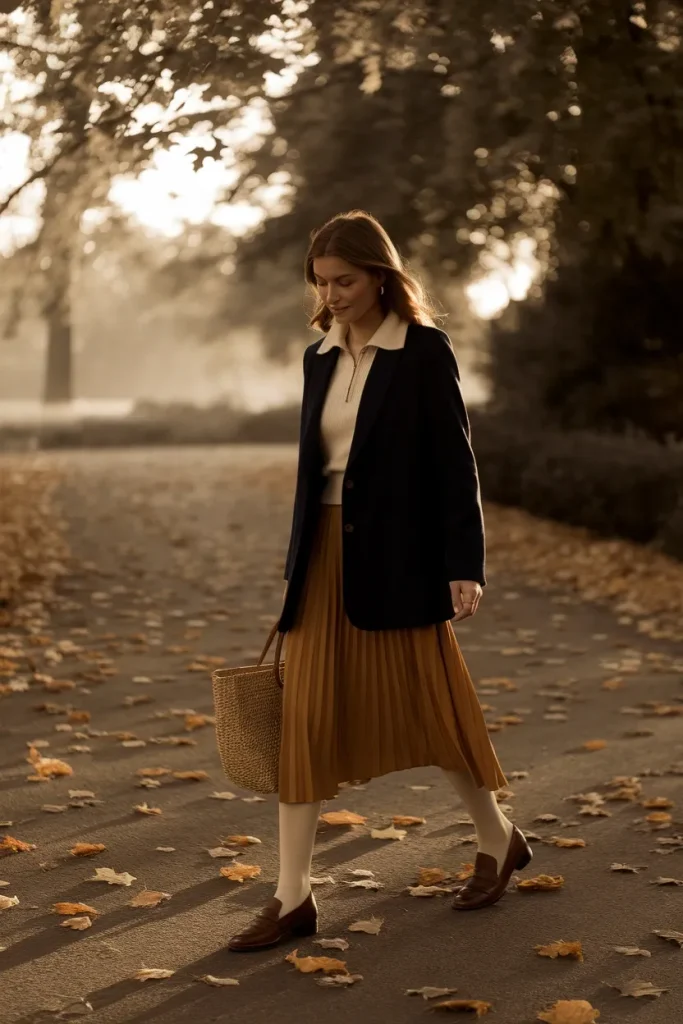
Swap bare legs for opaque tights in cream, oat, or espresso under the pleated skirt. Swap the sneaker for a loafer once the temperature drops under about 55F. Add the cable knit as an actual sweater rather than a shoulder drape. Trade the crossbody for a woven or leather tote.
The single highest-leverage fall addition is a navy blazer thrown over the collared top and pleated skirt, which turns the whole thing into something you can wear to a parent-teacher meeting without a second thought. Proportion is what makes or breaks that combination, and I have a full walkthrough on how to style a blazer over almost anything if the shoulder line is giving you trouble.
By November, keep the trouser version and the loafers and let the skort rest until May. That is not the trend ending. That is a capsule doing what a capsule is supposed to do.
Frequently Asked Questions
What is tenniscore?
Tenniscore is a preppy sport aesthetic that borrows tennis dressing and wears it as everyday clothing. The core signals are pleats, collars, white and cream cotton, flat white soles, and a knit layered over the shoulders. You do not need to play, and the look has more to do with the visual restraint of court dress codes than with the sport itself.
Is tenniscore still in style in 2026?
Partly, and the split matters. Forecasting data shows tennis-style short skirts declining while retro trainers and white sneakers keep climbing, so the shoe-and-collar half of the aesthetic is holding strong while the mini skirt half is fading. Publications are split on the trend overall, with some declaring it permanent and others calling time on it. Build around the durable pieces and you are covered either way.
Do I have to wear white?
No. White is the reference because of tournament dress codes, but cream, oat, navy, forest green, and soft gray all read tenniscore. A navy polo with a cream pleated skirt is arguably a more wearable version than head-to-toe white, and it hides a coffee spill.
How do you style a tennis skirt if you are curvy or plus-size?
Look for a defined, structured waistband so the pleats release from your narrowest point rather than adding volume at the hip, and choose a fabric with some weight, since thin poly-blends cling. A pleated midi with a knit vest layered over the top is the easiest version, because the uninterrupted vertical pleat line does the work and the vest adds structure at the shoulder.
Can I wear tenniscore to work?
Yes, with one adjustment. Swap the mini for a pleated midi or a pleated trouser, keep the collar, and change the sneaker for a loafer or a ballet flat. A white button-down tucked into a pleated midi is standard business casual that happens to sit inside the aesthetic.
What should I wear to the US Open or a tennis tournament?
Plan for a long day in open sun and a temperature drop after dark. Dense-weave cotton rather than a thin tee, a knit or shirt you can layer over your shoulders, a hat, comfortable flat shoes you can walk a concourse in, and a small crossbody, since most venues cap bag size. Spectator dressing is more about heat and walking distance than about the outfit photographing well.
Is a skort better than a tennis skirt?
For real life, usually yes. The built-in short removes every practical objection about sitting, bending, wind, and stairs, and visually the pleat reads identically. Check that the inner short is not tighter than the outer skirt, or the pleats will catch and ride up as you walk.
The Short Version
Tenniscore outfits work when you treat them as a formula rather than a costume. One collar, one pleat, one white sole, and you only ever pick two. Everything else follows from there.
Go pull those six pieces from your closet before you open a single shopping tab. Most women already own four of them, and the outfit you build from what is already hanging there will cost nothing and get worn more than anything you buy this week. If you land on a gap, make it the sneakers or the collared top, because those are the two pieces still working for you long after the pleated mini goes quiet.
Keep reading
Winter 2026 Fashion Trends Worth Your Closet Space
Every winter fashion trends 2026 roundup you have read so far has handed you a shopping list. Five trends here, twenty-three there....
Fall 2026 Fashion Trends: The Looks Worth Adding to Your Capsule
Every fall fashion trends 2026 roundup you’ve read this month has the same problem. It tells you satin is back, hands you...
Whimsigoth Outfits: Witchy, Romantic Style You Can Build From Your Fall Capsule
The first time whimsigoth outfits showed up in your feed, you probably saved four of them and then wore none. That is...