
How to Style Overalls So Every Outfit Looks Deliberate
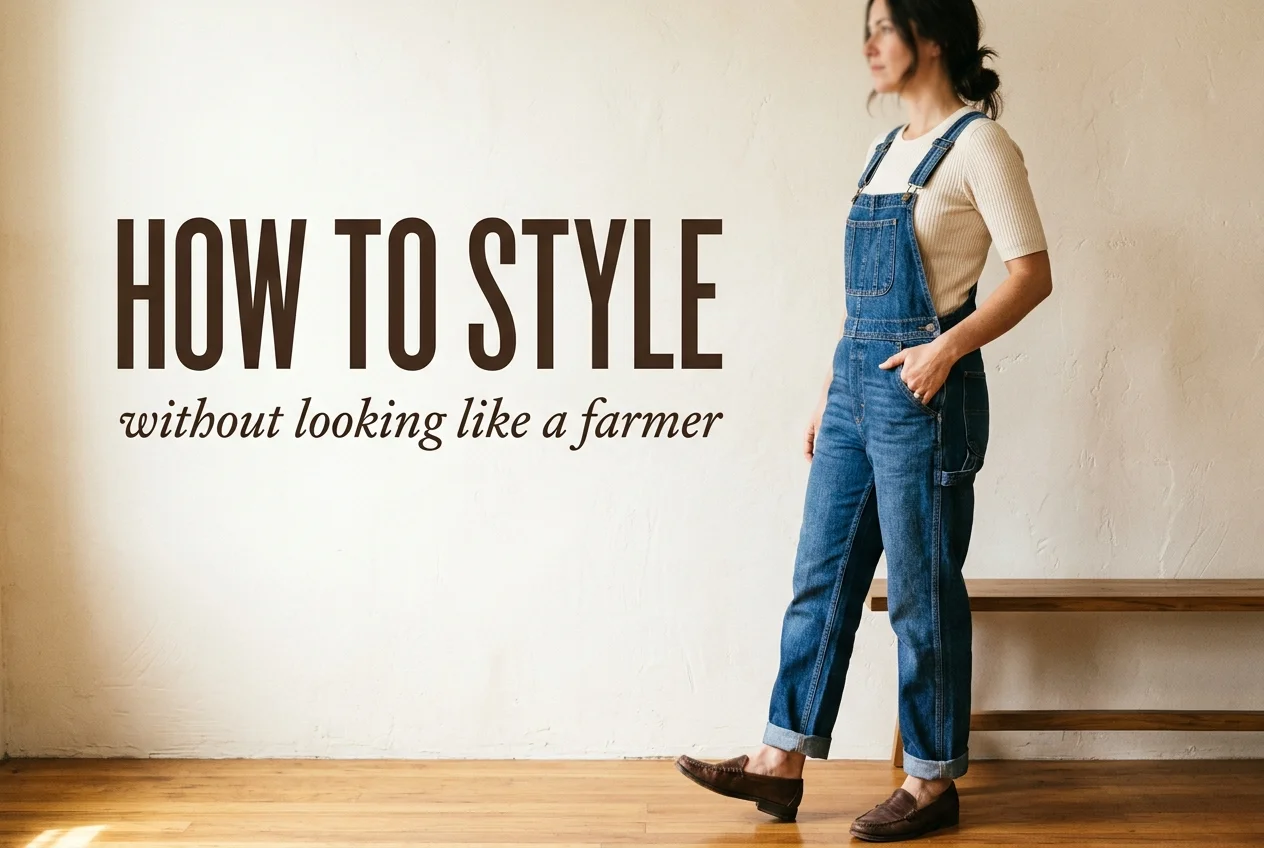
Most women who ask how to style overalls already own a pair. They’re folded on the shelf, worn twice, quietly filed under “cute idea, wrong on me.” Here’s what’s actually going wrong: it’s almost never the overalls. It’s the three inches of strap slack, the hem sitting in the wrong place, and a top that’s fighting the bib for attention. Fix those and the same pair you avoided all summer becomes the thing you reach for on the days you can’t think.
I’m going to give you numbers, not vibes. Actual strap drop, actual hem break, ten outfit formulas ranked by how reliably they work, and an honest answer to whether a pair earns its hanger space in a capsule wardrobe.
Why Some Overall Outfits Read Costume and Others Read Editorial
There’s a single variable doing most of the work here, and it isn’t the overalls. It’s contrast.
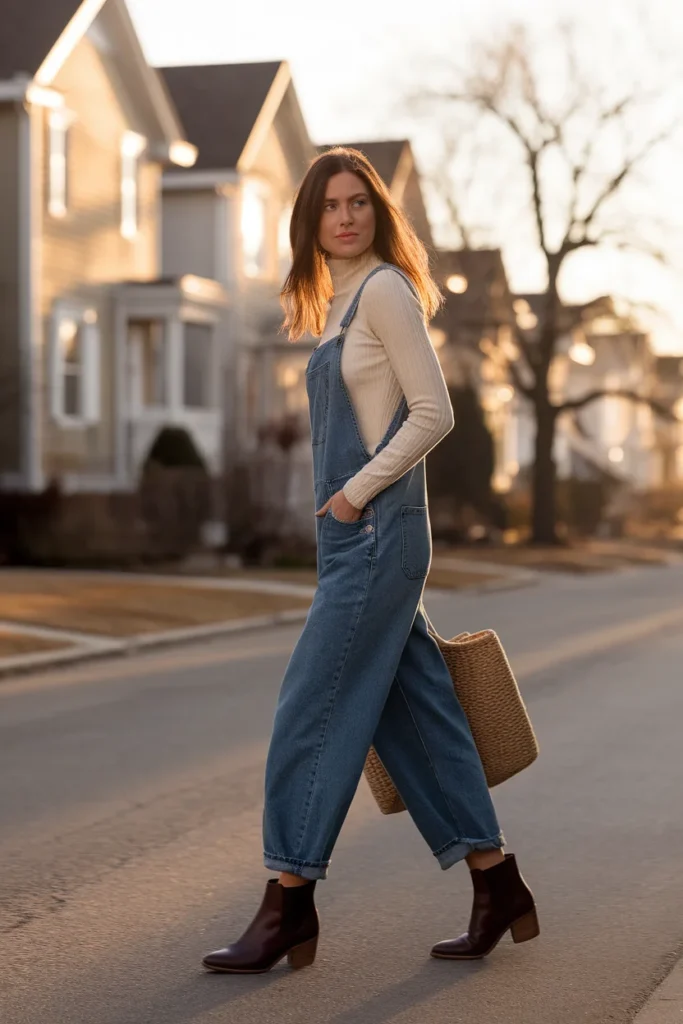
Overalls are a high volume garment with a bib that draws the eye straight to your torso. When you pair that with an equally loose top, the entire upper half of your body becomes one undifferentiated block of fabric. Your waist disappears. Your shoulders disappear. What’s left reads as a shape rather than a person wearing clothes, and shape without structure is what our brains file under “costume.”
Put something fitted underneath and the whole thing snaps into focus. A ribbed knit, a slim long sleeve, a proper fitting tee. Suddenly there’s a line where your body is, the bib becomes a design element instead of a tent, and the outfit looks like a choice.
This is the same contrast rule that makes the same contrast rule that makes baggy jeans look deliberate work, and once you’ve internalized it you’ll spot it everywhere. Volume on the bottom wants structure on top. Volume on top wants a defined bottom. Overalls give you volume in both places at once, which is exactly why they’re harder than jeans and exactly why the fitted layer isn’t optional.
Second variable: the vertical break. An outfit with no interruption between chin and ankle reads long and shapeless. Cuffing the hem, pushing sleeves to the elbow, and letting a few inches of ankle show all create the breaks that make a body look like a body.
The 3 Point Overall Check. Before you leave the house, run these three. Screenshot this.
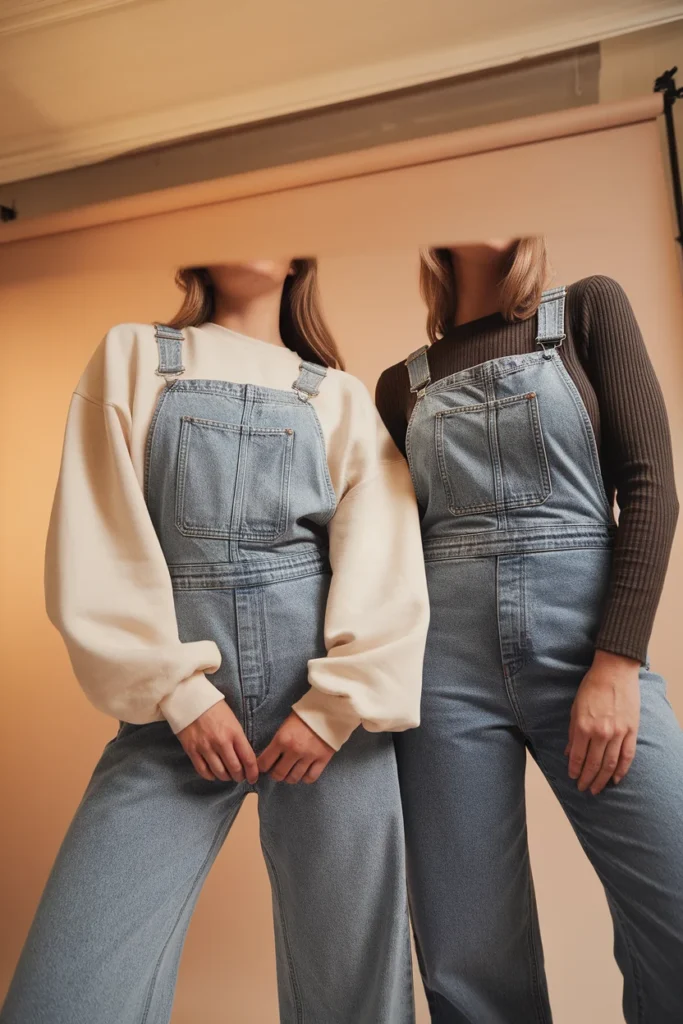
- Straps: can you slide a flat hand between the strap and your collarbone with light resistance? Too loose and the bib sags into a bucket. Too tight and the crotch rides.
- Hem: is there daylight between the denim and the top of your shoe? Even half an inch. A hem that pools reads sloppy on every single body.
- Top: is the layer underneath more fitted than the overalls? If you can’t answer yes immediately, change it.
Three yeses and the outfit works. One no and you’ll feel it all day without knowing why.
The Fit Numbers Nobody Gives You
Every article on this topic tells you to “get the fit right” and then moves on. Here are the actual measurements.
Strap drop
Adjust so the bib sits flat against your chest with the top edge landing roughly two to three inches below your collarbone. If the bib is gapping away from your body when you stand straight, the straps are too long by about an inch and a half. Most overall buckles give you four to six inches of adjustment range, so this is nearly always fixable without a tailor.
The test: bend forward at the waist. If the bib swings away from your chest far enough to see your feet through the gap, tighten.
Hem break
This is the one that separates a polished outfit from a rumpled one.
- Full length, uncuffed: hem should hit within a half inch of the top of your shoe. Any pooling and it reads sloppy.
- Single cuff: roll two to two and a half inches, once. Lands just above the ankle bone.
- Double cuff: roll one and a quarter inches, twice. Sits at or just above the ankle bone and holds its shape better through the day.
- Cropped: hem lands one to three inches above the ankle bone. Best with a visible sock or a boot shaft.
If you’re 5’4″ or under, most straight size overalls will run three to five inches long on you, which is exactly why petite women assume overalls don’t work on them. They work. They just need hemming or a committed double cuff.
Bib width and rise
The bib should be narrow enough that it doesn’t extend past the inner edge of your bra straps. Wider than that and it visually broadens your chest and shortens your neck. Rise matters just as much: the crotch seam should sit within an inch of where a normal pair of jeans sits on you. Anything lower and you get the drop crotch effect that reads juvenile immediately.
Sizing note that saves a return: overalls are almost always sized off the hip and thigh, not the waist. If you’re between sizes, size up and take in the straps. Sizing down for a snugger waist gives you a crotch problem you cannot fix.
Ten Outfit Formulas, Best One First
These are ordered by how reliably they work, not by how novel they are. The first one has never failed on anyone.
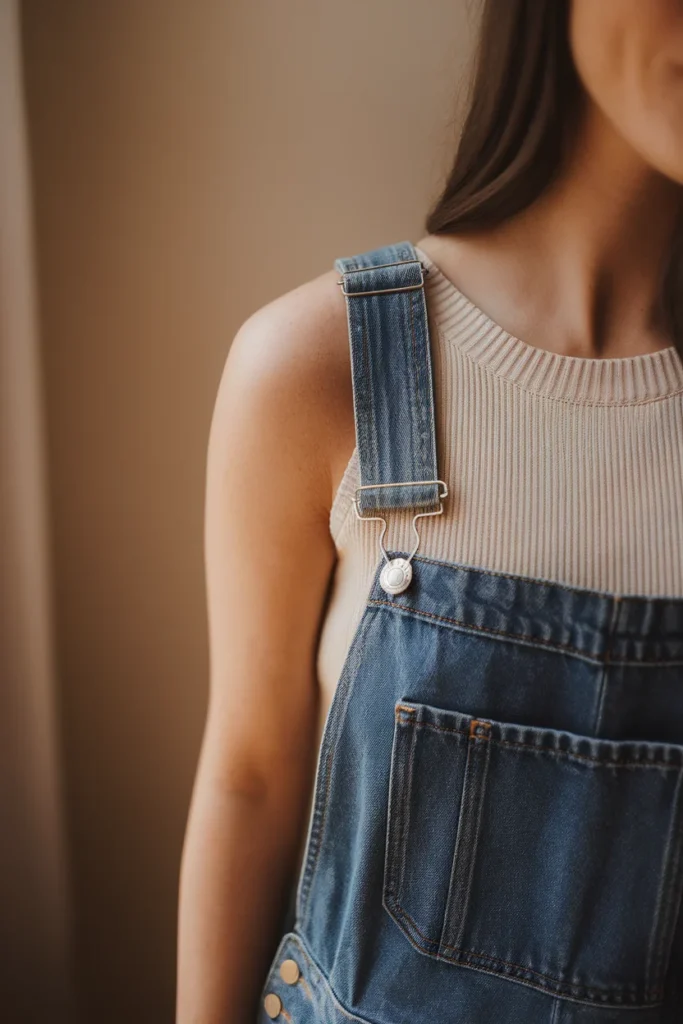
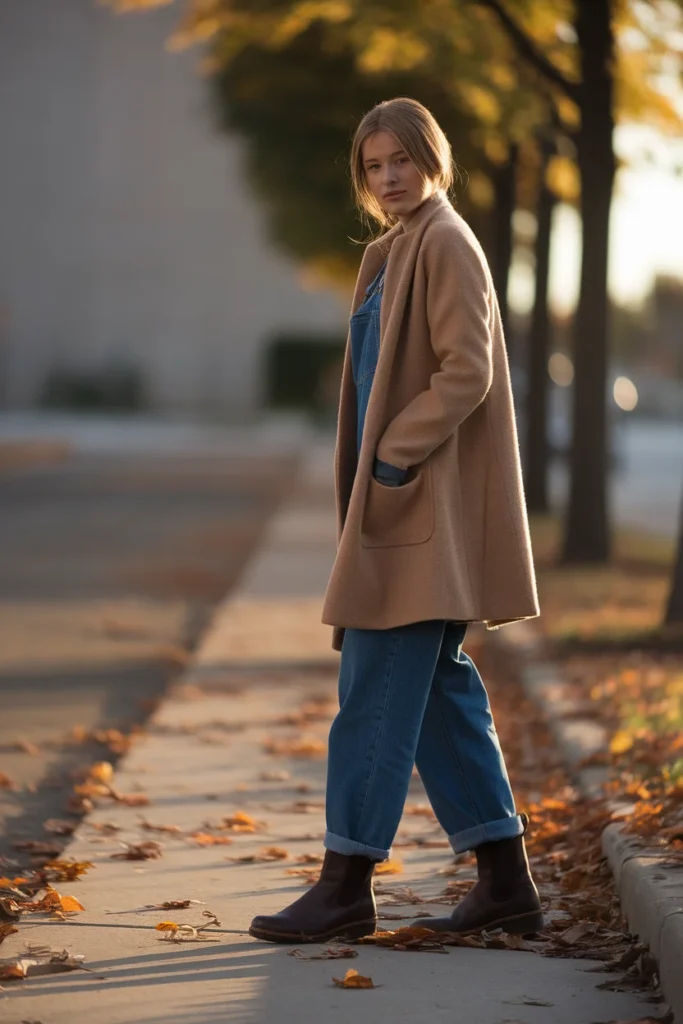
1. Fitted ribbed knit plus single cuff plus ankle boot. Espresso or cream knit, sleeves pushed to the elbow, denim cuffed once, brown leather boot. This is the outfit that makes people ask where you got the overalls. Works September through April. Works on every proportion.
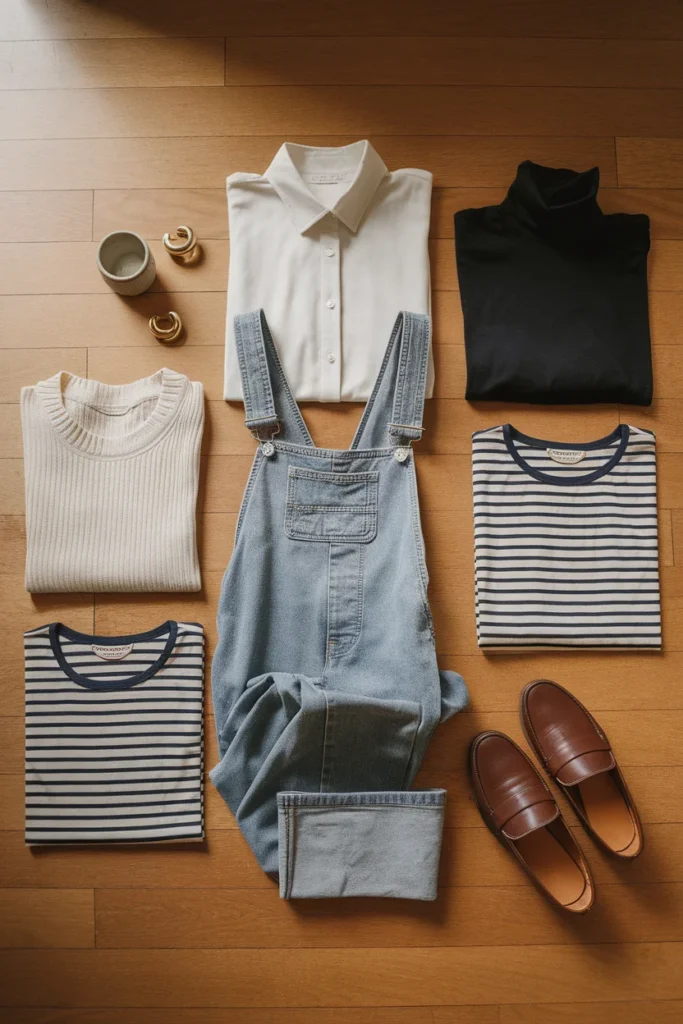
2. White button down, sleeves rolled, loafers. Tuck the shirt into the overalls at the waist so the fabric doesn’t bunch under the bib. Add gold hoops. This is the version you can wear to a school meeting or a casual office and nobody blinks.
3. Fine gauge black turtleneck, black overalls, black boot. A monochrome column in one color family. Reads expensive at any price point because there’s no visual seam for the eye to catch on.
4. Striped boat neck tee plus ballet flats. French adjacent, spring appropriate, and the boat neck does something specific: it widens the shoulder line just enough to balance the bib.
5. Cropped cardigan buttoned over the bib. Only the bottom two or three buttons done up. Creates a waist that the overalls erased.
6. Chunky knit, tucked at the front only. Push the front hem of an oversized sweater into the overall waistband and leave the back loose. Keeps the volume without losing the waistline.
7. Denim on denim, two washes apart. Light wash overalls, mid or dark wash jacket, or the reverse. styling a denim jacket over the bib works as long as the two denims are visibly different in tone. Same wash top and bottom reads like a uniform.
8. Blazer over the whole thing. A structured shoulder is the fastest way to age an overall outfit up by ten years. Camel, navy, or black. Leave it open.
9. Long sleeve bodysuit under, heeled ankle boot. The bodysuit solves the untucking problem permanently. This is the going out version.
10. Chore coat plus scarf plus sneakers. The weekend errand version, and the one you’ll actually wear most. A jute or cream scarf breaks up the denim.
One pair, nine outfits. Here’s the capsule math. Take one pair of mid wash overalls and four tops you already own, and you get a week and a half without repeating.
| Top | Shoe | Outer layer | Occasion |
|---|---|---|---|
| Cream ribbed knit | Brown ankle boot | None | Everyday |
| Cream ribbed knit | White sneaker | Chore coat | Weekend errands |
| White button down | Loafer | None | Casual office |
| White button down | Ballet flat | Cropped cardigan | Lunch, school run |
| Black turtleneck | Black boot | None | Evening |
| Black turtleneck | Loafer | Camel blazer | Dressed up |
| Striped boat neck tee | Ballet flat | None | Spring day |
| Striped boat neck tee | White sneaker | Denim jacket | Travel |
| Chunky oat sweater | Brown boot | Scarf | Cold weekend |
Nine distinct outfits. Four tops. One pair of overalls.
What to Layer, Season by Season
Overalls are one of the few pieces that genuinely stretch across all four US seasons, which is a large part of why they’re worth the hanger space. The layering changes completely, though.
Spring, March through May, 50 to 70F. Long sleeve tee or a fine cotton knit underneath, ballet flats or white sneakers, a trench or a denim jacket over the top when the morning is still cold. This is peak overall season in terms of comfort, since you don’t need bulk under the bib.
Summer, June through August, 75 to 95F. Swap denim for a lighter fabric if you can. Linen blend or a lightweight cotton twill overall in ecru or oat runs noticeably cooler than heavyweight indigo. Underneath: a plain cotton tank or a cropped tee. Flat sandals. Skip the layer entirely on the hottest days and let the tank do the work.
Fall, September through November, 45 to 70F. This is the sweet spot and it’s where the search volume lives. Ribbed knits, fine gauge merino, a chunky sweater with the front tucked. Boots do the heavy lifting here, and the ankle boots that work with a cropped hem matter more than the overalls do. A barn jacket or chore coat over the top and you’re set for two solid months.
Winter, December through February, 20 to 45F. Two approaches. Either go thermal underneath (a fitted heat retaining long sleeve, wool socks, a proper boot) or go corduroy instead of denim, which is meaningfully warmer and reads softer. Over the top: a wool coat, long enough to cover the bib line or short enough to stop above it. Anything landing mid bib looks accidental.
One layering rule that holds in every season: whatever goes under the overalls should be thin enough that the bib still lies flat. The second the bib starts riding on top of bulk, the fit is gone.
Shoes Decide the Whole Mood
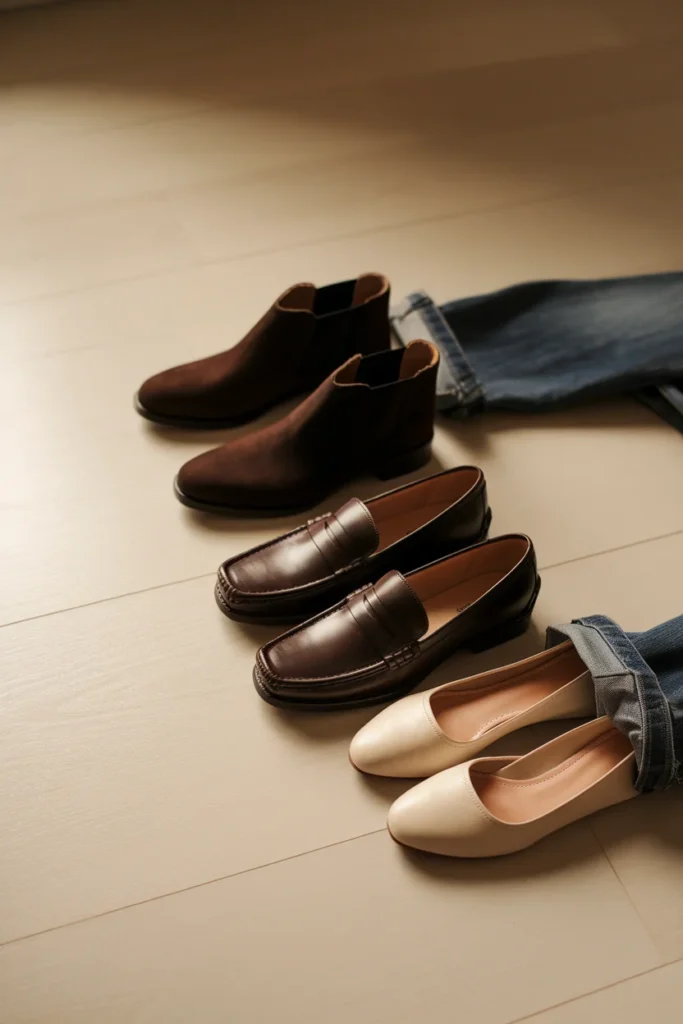
You can wear the same overalls with the same knit two days running, change only the shoe, and get two completely different outfits. This is the highest leverage decision in the whole article, which is why it gets its own section.
Ankle boots, brown or black leather. The most reliable pairing that exists. A boot shaft fills the gap at a cuffed hem and gives the eye somewhere to land. Almond or square toe over round, since round toe plus overalls tips juvenile fast.
Loafers. The single fastest way to make overalls look grown up. There’s something about a hard soled, polished shoe against soft slouchy denim that reads intentional every time. a pair of polished loafers in espresso or black does more for this outfit than any accessory will.
Ballet flats. Spring and summer, light wash overalls, works beautifully. Keep the hem cropped or well cuffed so the flat isn’t swallowed.
Clean white sneakers. The default weekend answer. Low profile ones. Chunky trainers add bulk at the bottom of an already voluminous outfit and it fights.
Heeled ankle boots or a block heel mule. The going out version. A two to three inch block heel lengthens the leg line enough to counteract the horizontal cut of the hem.
What to skip. Round toe flat sandals with a full length hem, since the hem swallows them and you lose the ankle. Anything with a visible chunky rubber lug sole in a light color, since it draws the eye down to the heaviest point of the outfit. Knee high boots with a full length overall, since the hem and the boot shaft compete and neither wins.
Sock note that matters more than it should: a visible sock in cream, oat, or a color pulled from your top makes a cuffed overall look styled. A white athletic sock makes it look unfinished.
Wash, Color, and Where Overalls Sit in a Neutral Palette
If you’re building a capsule and you want overalls to actually integrate rather than sit off to the side, wash choice is where you win or lose.
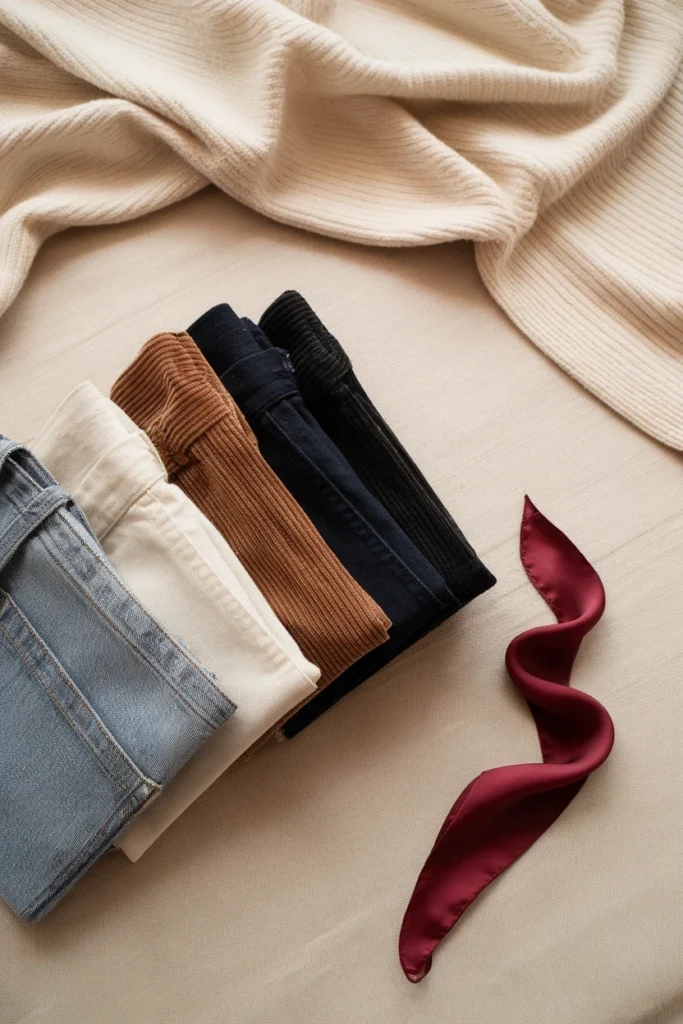
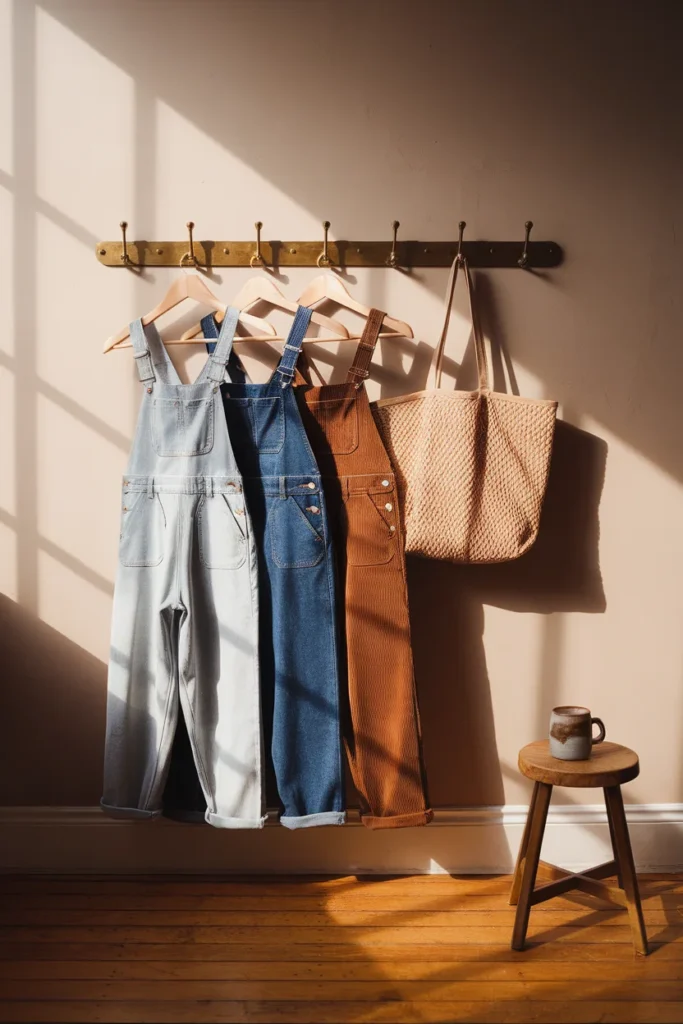
Mid wash indigo is the most versatile and the most forgiving. It goes with cream, oat, camel, espresso, navy, sage, black, and white without a fight.
Ecru, oat, and off white overalls are the quiet luxury version. They pair beautifully with tonal neutrals and read softer and more expensive than indigo. They also show everything, so they’re a spring and summer piece for most people.
Black overalls are the most immediately grown up option and the easiest to dress up. They also read the least like a farm garment, which if that’s your worry, solves it in one purchase.
Corduroy in espresso, camel, or olive is the fall and winter workhorse. Warmer than denim, softer drape, and the wale texture adds interest without adding pattern.
Light wash and heavily distressed are the two that skew youngest. Not unwearable, just requiring more from the rest of the outfit to balance.
Where this sits in a palette: treat overalls as a neutral base piece, not an accent. They’re doing the job a pair of jeans does, so they take up a base slot. That means the accent has to come from the top, the shoe, or one accessory, and only one. Overalls plus a bold top plus a bold shoe plus a bold bag is three accents fighting for a single outfit. Understanding how to pair neutral colors so the layers read intentional is what keeps a denim heavy outfit from going flat.
Use the 60 30 10 split. Overalls are your 60. A cream or oat knit is your 30. Espresso boots, or one burgundy scarf, is your 10.
Overalls by Proportion
Overalls have a reputation for only working on one kind of body, and that reputation is wrong. What changes is the cut, not whether you get to wear them.
Petite, 5’4″ and under. The single highest impact change is hemming. Most straight sizing runs three to five inches long on you, and a puddled hem is what makes overalls look borrowed. Go straight or slim leg over wide leg, keep the bib narrow, and hem to a true cropped length that shows the full ankle. A visible ankle adds apparent height more than any heel does.
Tall, 5’9″ and over. You have the easiest time with wide leg and full length, and you’re one of the few people who can wear an uncuffed hem well. Watch the rise: brands often add length to the leg without adding to the rise, so the crotch can sit high. Check that seam before you commit.
Curvy and hourglass. Look for a cut with a defined side seam and some shaping through the waist, and skip the boxy utility styles that go straight down from bib to hem. A fitted knit underneath and a cropped cardigan buttoned at the waist will give you back the definition the bib flattens.
Midsize and plus size. Fit through the hip and thigh first, then adjust the straps, always in that order. Stretch content of two to three percent elastane makes a large difference in comfort and in how the seat sits. building a midsize capsule wardrobe around pieces that actually fit applies here more than anywhere, because overalls are a piece where a near fit and a real fit look completely different from across a room.
Pear. Wide leg works with your proportions because it skims rather than clings through the hip and thigh. Keep the top fitted so the volume stays below the waist.
Apple and rectangle. A slightly wider leg balances the torso, and a cropped cardigan or an open blazer creates the vertical lines that give you a waist.
Over 40 and over 50. This is the demographic asking the question most anxiously, and the answer is a straightforward yes. Three adjustments do all the work: choose black, espresso, or dark indigo over light wash, choose an unbroken uncontrasted fabric over heavy distressing, and put a hard soled shoe on the bottom. Loafers, not sneakers, if you want the outfit to read polished. That’s the entire difference.
Where to Buy Overalls in the US, by Price Tier
Prices below are typical ranges, and denim moves with sales constantly, so treat these as brackets rather than exact numbers.
Mass, roughly $30 to $60. Old Navy and Gap both run denim overalls most seasons, usually in the $45 to $70 bracket before sale. Target’s Universal Thread line carries them in spring and fall. Expect lighter weight denim, simpler hardware, and less shaping through the seat. The trade off at this price is fabric weight: thinner denim wrinkles at the hip and softens out of shape faster, so you’re buying two seasons rather than five.
Mid, roughly $80 to $150. This is where the value sits. Madewell and Everlane both do overalls in heavier weight denim with proper hardware, typically in the $98 to $148 range. Quince has moved into this category at a lower price with decent fabric. Abercrombie and Anthropologie carry them seasonally. If you’re buying one pair to keep, buy here.
Contemporary, roughly $180 to $350. Reformation, Sezane when they run them, and COS for the more architectural cuts. You’re paying for cut, drape, and fabric weight. The difference is visible, especially in how the bib sits and how the leg falls.
Investment, $400 and up. Genuinely hard to justify on a garment whose entire heritage is workwear. If you’re drawn to a $350 pair, the honest move is to look at what makes it appealing (usually the leg cut and the wash) and find it in the $98 to $148 bracket. Madewell and Everlane both hold up well against contemporary pricing here, and the cost per wear math almost always favors the mid tier pair you actually wear.
Fabric spec worth checking before you buy: look for 11 to 13 ounce denim if you want structure and longevity, and 8 to 10 ounce if you want softness and summer wearability. Two to three percent elastane adds comfort. Anything above five percent will bag out at the knee and seat within a season.
Do Overalls Earn Their Hanger Space?
This is the question no other article on this topic will ask you, and it’s the one that matters if you’re building a capsule rather than a collection.
Here’s the test I use for any single piece. Count how many outfits it creates that you’d genuinely leave the house in, using only clothes you already own. If the number is under five, it’s a want. If it’s eight or more, it’s a base piece and it earns a permanent slot.
The table earlier in this article gets you to nine with four tops. That’s a real number, and it’s higher than most single garments manage. A blazer typically gets you six or seven. A statement skirt often stalls at three. Overalls score well because they replace an entire outfit rather than one layer, which means every top you own becomes a complete look the moment you put them on.
The catch is that they only score that well if the fit is right and the wash is neutral. A light wash distressed pair with a wide bib might get you three outfits, all of them casual. A mid indigo or black pair with a clean cut gets you nine, spanning weekend to casual office. Same category, completely different return.
They also do something specific for a capsule that’s easy to overlook: they solve the “I don’t want to think” days without defaulting to leggings. That’s a real function, and if you build a year round capsule wardrobe that stretches across seasons you’ll notice how few pieces genuinely do it.
My honest verdict: one pair, mid indigo or black, mid tier price, correctly hemmed. Two pairs only if one is corduroy for winter and you live somewhere cold enough to need it. Three is a collection, not a capsule.
Care, Washing, and What a Pair Actually Costs You
Nobody covers this, and it’s the reason most overalls stop looking good after a season.
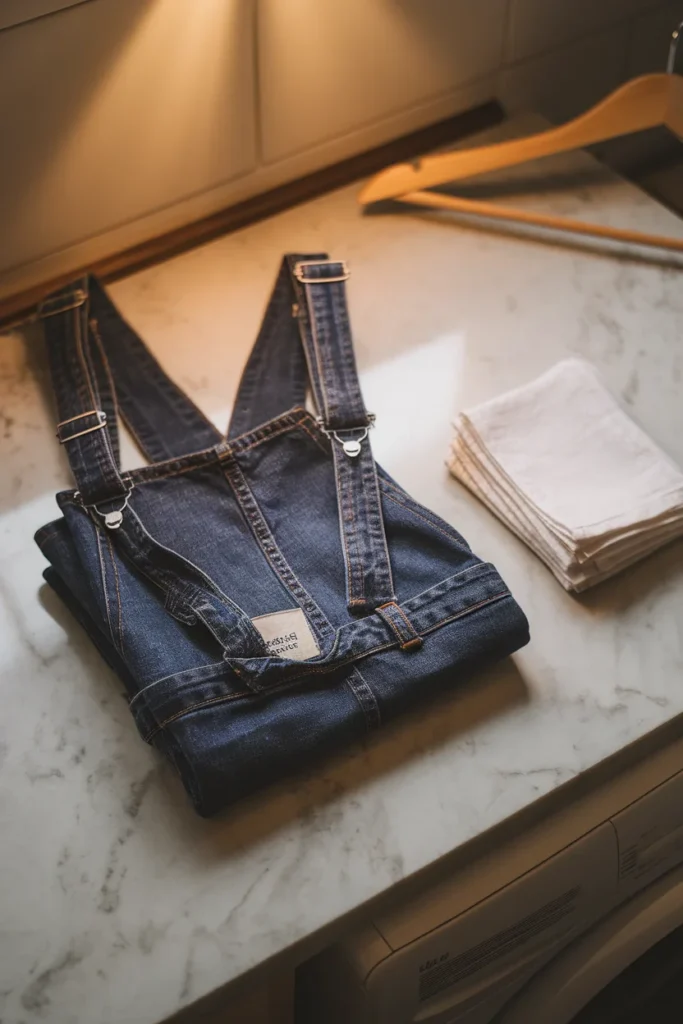
Wash them inside out, cold, and rarely. Denim doesn’t need washing every wear. Every four to six wears is plenty unless something happened. Cold water and inside out preserves the indigo, which is a surface dye that abrades away in hot water and hard agitation.
Fasten the buckles before washing. Loose metal hardware tumbling against denim is what puts those small white abrasion marks on the bib and thighs. Clip them shut or thread them through the bib loop.
Skip the dryer or use low heat only. Heat is what shrinks the leg and warps the fit through the seat. Hang dry from the waist, not from the straps, which stretches the shoulder line permanently. If the pair has elastane, heat degrades it faster than anything else you can do.
Worth knowing: the FTC’s care labeling rule requires US manufacturers to state washing method, water temperature when hot water would cause damage, drying method, and any warnings, and to have a reasonable basis for those instructions. The label isn’t a suggestion, and it isn’t marketing. If it says cold wash only, the manufacturer has testing behind it. Read the label before the first wash, not after the fit changes.
Cost per wear, run honestly. A $120 mid tier pair worn twice a week through a fall and winter season, so roughly 40 wears, lands at $3 per wear in the first season alone. Wear them a second year and you’re at $1.50. Compare that to a $50 pair worn six times before the fit went soft, which is $8.33 per wear. The cheaper pair costs you more. This is the whole argument for buying mid tier on a piece you’ll actually reach for, and it’s why fabric weight is worth checking before you buy.
Two repairs worth paying for: a hem, which runs about $15 to $25 and is the single highest return alteration on this garment, and a strap buckle replacement, which most tailors do for under $20 and which extends the life of a pair that’s otherwise fine.
Five Mistakes That Make Overalls Look Sloppy
1. Both straps loose. One strap dropped can look relaxed in the right context. Both hanging is the single fastest way to look like you’re mid change.
2. An oversized top under an oversized overall. Covered above, and it’s the most common error by a wide margin. Fitted underneath. Always.
3. A hem that pools. Half an inch of daylight above your shoe, minimum. If the pair needs hemming, hem it. A $20 alteration is the difference between a pair you wear and a pair you don’t.
4. Leaning into the farm reference. A plaid flannel, a wide brim hat, and a lug sole boot with overalls is a themed outfit, and your brain reads it as one instantly. Worth noting that overalls were literally sold as waist overalls until about 1960, when Levi’s riveted work pants from the 1873 patent finally got renamed jeans. The workwear DNA is real. You just don’t need to underline it. One heritage reference per outfit is plenty.
5. Too many accents. Overalls are already a statement in silhouette terms. Add one point of interest, not three. A gold hoop, or a burgundy scarf, or a red flat. Pick one.
How to Style Overalls Frequently Asked Questions
How should overalls fit?
The bib should sit flat against your chest, roughly two to three inches below your collarbone, with enough strap tension that you can slide a flat hand underneath with light resistance. The crotch seam should land within an inch of where your regular jeans sit. Size off your hip and thigh, then adjust the straps, never the reverse.
What shoes do you wear with overalls?
Ankle boots and loafers are the two most reliable choices, and loafers are the faster route to a grown up look. Ballet flats work in spring and summer, low profile white sneakers work for weekends, and a two to three inch block heel works for evening. Skip chunky lug soles and knee high boots with a full length hem.
How do you wear overalls without looking like a farmer?
Three changes handle it. Choose a dark indigo, black, or espresso over light wash and distressing. Put a fitted knit or button down underneath instead of a flannel. Finish with a hard soled shoe like a loafer or leather boot. The farm read comes from the combination of light denim, plaid, and a rugged boot, so change any two of those and the association breaks.
Can you wear overalls over 40?
Yes, and the styling barely changes. Go darker on the wash, skip heavy distressing, keep the bib narrow, and choose a polished shoe. A blazer over the top is the single fastest way to make the outfit read as deliberate at any age.
What do you wear under overalls?
Anything more fitted than the overalls themselves. A ribbed knit, a fine gauge merino, a slim long sleeve tee, a tucked white button down, or a bodysuit if you’re tired of untucking. Keep it thin enough that the bib still lies flat against your chest.
Are overalls year round or seasonal?
Genuinely year round in most of the US, which is unusual for a single garment. Denim carries spring and fall, lightweight cotton or linen blend handles summer, and corduroy covers winter. The layering underneath changes completely by season, the overalls don’t have to.
Can I wear overalls to work?
Depends on your office, but a black or dark indigo pair with a tucked white button down, loafers, and a blazer clears most casual and business casual dress codes. Skip it for anywhere that expects tailoring. The tell is the bib, so if your workplace would raise an eyebrow at a jumpsuit, it will raise one at overalls.
Start With the Fit, Then the Formula
If you take one thing from this: the pair you already own probably works. Run the 3 Point Check on it tomorrow morning. Straps snug enough for a flat hand, half an inch of daylight above the shoe, something fitted underneath. That’s usually the entire gap between the version that sat on the shelf and the version you wear twice a week.
Then work down the formula list. Start at number one, the fitted ribbed knit with a single cuff and an ankle boot, because it’s the one that works on everyone. Once that feels normal, the other nine come easily.
Save this one for the next time you’re standing in front of your closet at 7am with nothing on. That’s exactly the morning overalls are for.
Keep reading

How to Style Jeans: 16 Outfits for Every Day
You own jeans you love. You also own the same three jeans outfits on repeat, and by mid-October they feel stale. The...
How to Style a Button-Down Shirt for Plus-Size Women: 8 Outfits That Work
You bought the shirt because it looked crisp on the hanger. Then you buttoned it, reached for your coffee, and watched the...
How to Style a Button-Down Shirt for Women Over 50: 8 Outfits That Work
You probably own a button-down shirt. Most of us do. It hangs in the closet looking crisp and responsible, and every time...