
What to Wear on a First Date Without Changing Six Times
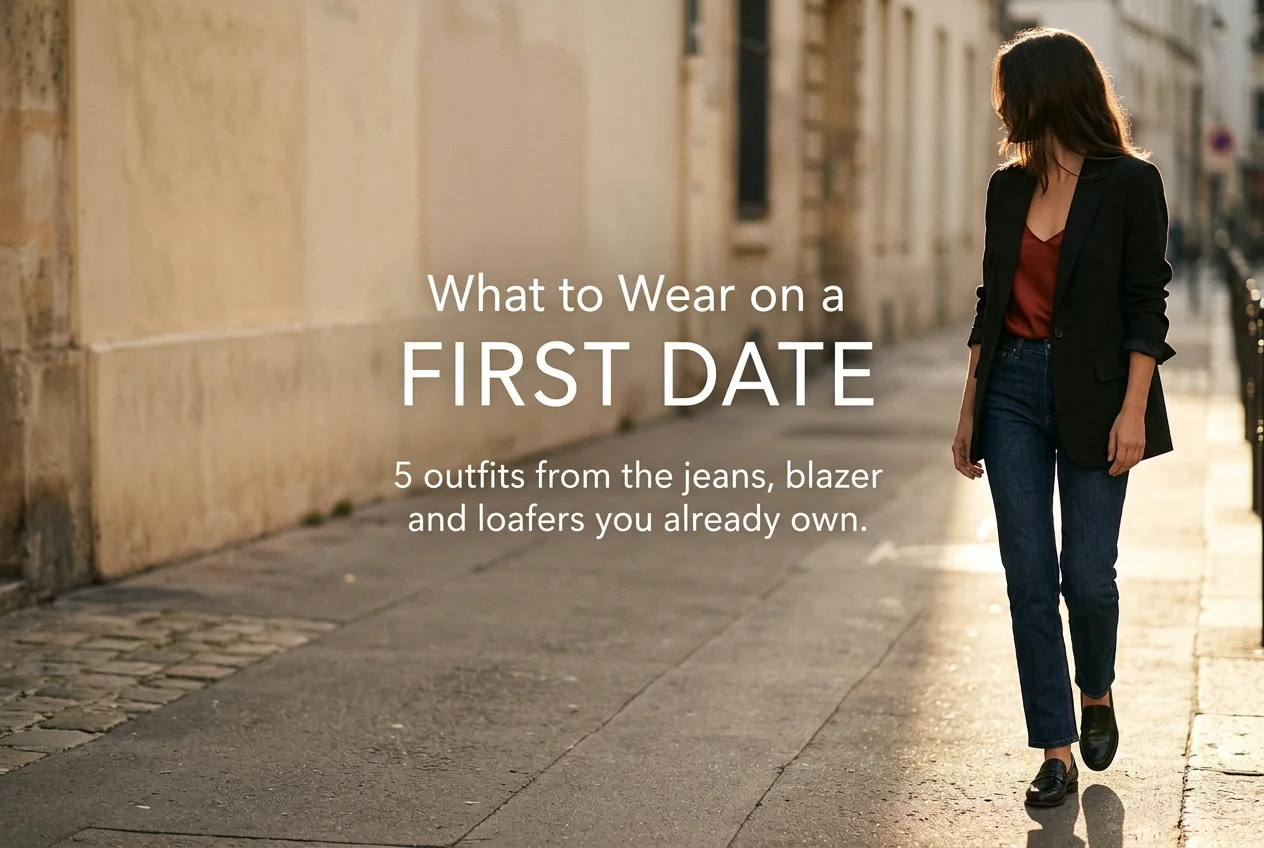
Figuring out what to wear on a first date is rarely a clothing problem. It’s a decision problem wearing a clothing costume. Your closet is full of things you genuinely like, you’re meeting someone who has seen four photos of you, and somewhere around the fourth outfit change you stop trusting your own eyes.
Here’s the shortcut. Your first date outfit already exists in your closet. What you’re missing isn’t a new dress, it’s a formula, a venue, and about a minute of honest testing in front of a mirror.
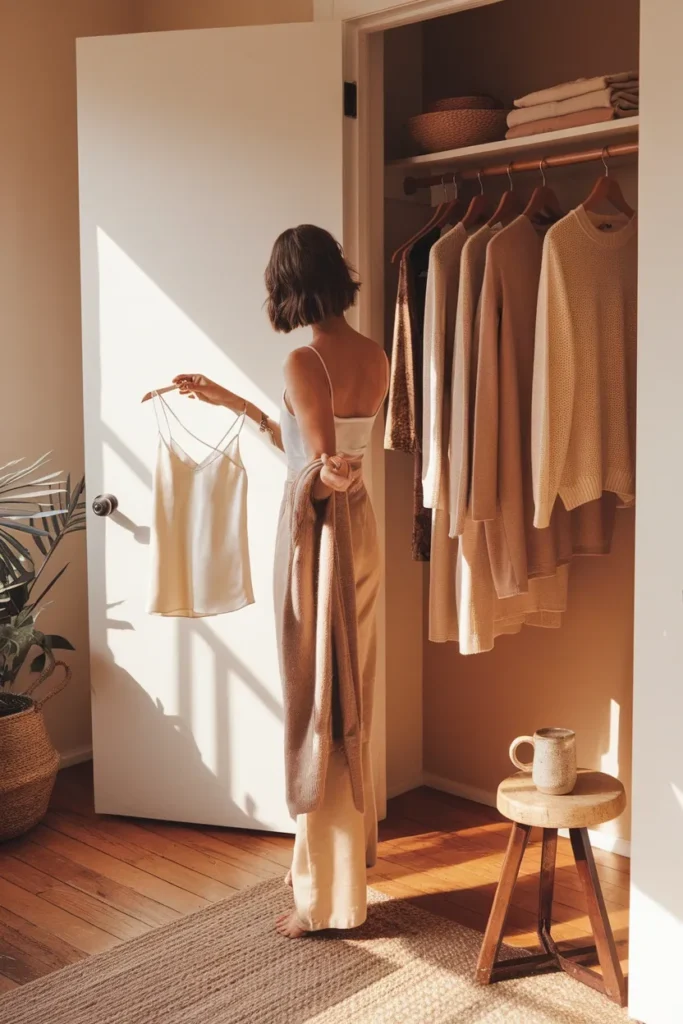
Below you’ll find five venue-based outfits built entirely from capsule pieces, a three-part formula that ends the changing-room spiral, the truth about the “wear red” advice everyone keeps repeating, and a quick physical test that catches the problems a mirror hides.
Start With the One Question That Decides Everything
Before you touch a hanger, answer this: how much will you be moving?
That single question does more work than any color rule, body-type chart, or trend report. A coffee date is forty minutes of sitting upright in a hard chair. A dinner date is two hours of sitting, mostly still, in a room that is either freezing or stuffy. A walk through a Saturday market is ninety minutes on your feet, possibly on brick.
Movement dictates fabric, shoe, and waistband. Everything else is decoration.
Most first date guides skip straight to outfit galleries, which is why women end up in beautiful clothes that betray them at minute twenty. A stiff waistband is fine standing at a bar and miserable in a low restaurant booth. Suede flats are perfect on a dry sidewalk and ruined by one unexpected puddle.
So map it before you dress:
- Sitting, short (coffee, a gallery, a bookstore): structure is safe, comfort matters less, your top half does the talking because that’s all he sees across a small table.
- Sitting, long (dinner, a movie, a show): waistband forgiveness is non-negotiable, and bring a layer because dining rooms run cold.
- Standing (drinks, a bar, a brewery): shoes are everything, and your silhouette reads full-length from across a room.
- Walking (market, park, mini golf, arcade): flat shoes you’ve already broken in, fabric that doesn’t cling when you warm up.
The same logic applies to any high-uncertainty outfit, which is why it’s worth reading how to dress for a concert without overthinking it if you tend to freeze on unfamiliar occasions.
If he hasn’t told you the venue yet, ask. “What did you have in mind?” is a normal question, not a demanding one, and it saves you two hours of guessing.
The Two Anchors, One Signal Formula
Here’s the outfit math that ends the spiral.
Every good first date outfit is built from two anchors and one signal.
Anchor 1 is your bottom half. Jeans, trousers, a skirt, the bottom of a dress. It should be a piece you can sit, stand, and walk in without a single adjustment. Quiet. Neutral. Boring, even. Anchors are supposed to be boring.
Anchor 2 is your shoe. Pick the one you’d happily walk six blocks in, because at some point you probably will.
The signal is one piece that says something about you. A silk camisole in tomato red. A camel blazer with the sleeves pushed up. A chunky gold hoop. A vintage-feeling knit in butter yellow. One texture, one color, or one shape that isn’t neutral.
The rule that makes it work: anchors stay quiet, the signal gets loud, and you never wear two signals. Two signals is how an outfit starts competing with itself, and competing outfits read as “tried very hard,” which is the exact impression you were trying to avoid.
This is also why capsule dressing wins first dates. When your base is a set of well-fitting neutrals, the signal is the only decision left. Ten minutes becomes one. If your neutral base is thin, start with the capsule wardrobe tops that anchor every outfit you own and build out from there.
A common snag: you open the closet, everything is beige, and there’s no signal in sight. That happens to a lot of people about a year into capsule dressing, when the neutrals have quietly crowded out everything else. You have three ways out of it, none of which require shopping.
- Use texture as the signal. A ribbed knit, a corduroy, or a satin-finish top in the same neutral family reads as interest without adding color.
- Use a shoe or a bag. A burgundy loafer or an espresso leather crossbody against a full oat outfit is a signal, and it’s the easiest one to swap.
- Use jewelry with weight. One substantial gold hoop or a chunky chain does more than three delicate pieces layered together, especially in low light.
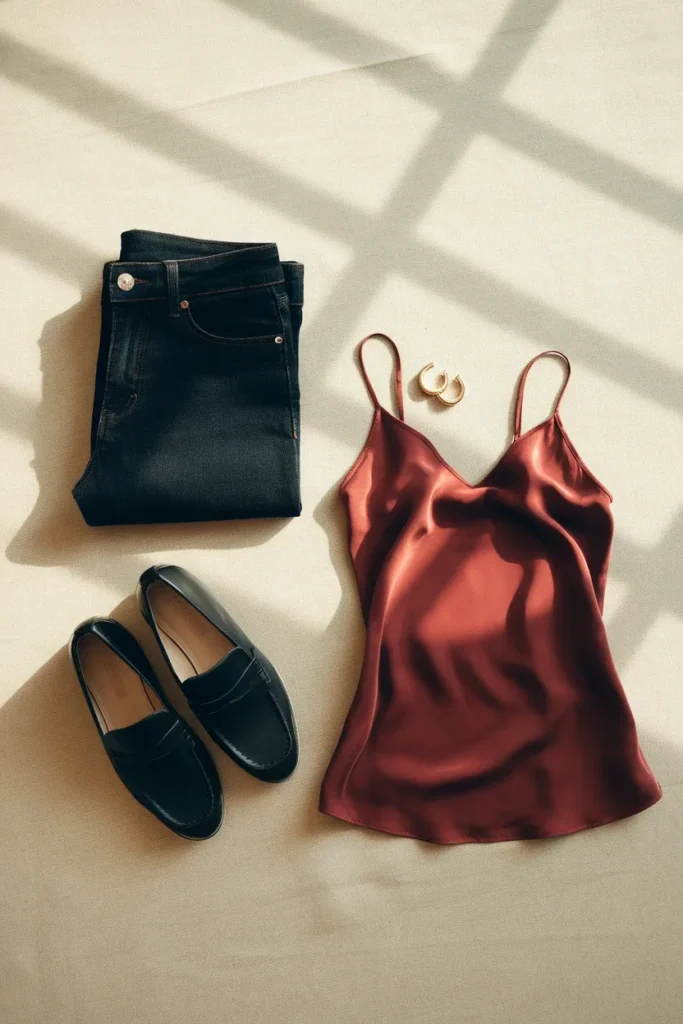
Here’s the formula applied across the five venues you’re most likely to face. Screenshot this one.
| Venue | Anchor 1: bottom | Anchor 2: shoe | The one signal |
|---|---|---|---|
| Coffee, daytime | Straight-leg jeans, mid or high rise | White leather sneakers or soft loafers | Cream cardigan over a white tee |
| Dinner, sit-down | Black wide-leg trousers | Ankle boots, low block heel | Silk-feel camisole in one strong color |
| Drinks, evening | Dark straight jeans, no distressing | Heeled ankle boot or a polished loafer | Structured blazer, sleeves pushed |
| Walking or market | Relaxed straight jeans | Ballet flats or clean sneakers | Denim jacket plus gold hoops |
| Movie or low-key | Wide-leg trousers, soft drape | Loafers | Fine-knit sweater in camel |
What to Wear on a Coffee Date
Coffee is the most common first date in America right now, and it’s the hardest to dress for, because the bar is “put together but not like you’re auditioning.”
Build it: straight-leg jeans in a mid-blue or off-black, a white tee that actually fits at the shoulder, and a cream or oat cardigan you can push up at the sleeves. Shoes flat. Jewelry small and gold. That’s the whole outfit.
The reason this reads well across a small table is that a café puts your top half at eye level for forty straight minutes. Your shoulder line, your neckline, and your sleeves are the entire visual. Which means a tee with a saggy neckline sabotages a good outfit faster than the wrong pants ever will.
Two upgrades that cost nothing:
- Half-tuck the tee. It defines your waist without the fussiness of a full tuck, and it survives sitting down.
- Push the cardigan sleeves to the forearm. It makes a soft layer look deliberate instead of like you got cold.
On shoes, a leather loafer beats a sneaker here nine times out of ten, because it holds a shape while sitting and a sneaker slumps. A pair from Everlane or Sam Edelman typically runs about $120 to $180, and Target’s A New Day version usually lands around $35 to $45. Fair warning on the budget pair: the sub-$50 loafers are almost always bonded rather than full-grain leather, so they crease deeply within a season and won’t hold up to rain. Buy them knowing they’re a one-year shoe. If you want the version that lasts, here are the best loafers for women worth their hanger space.
One practical note nobody mentions: coffee shops are loud and small. Skip anything with a wide brim, a long fringe, or a sleeve that will trail through a saucer.
What to Wear on a Dinner Date
Dinner raises the formality by exactly one notch. One. This is where most people overcorrect into something they’d wear to a wedding.
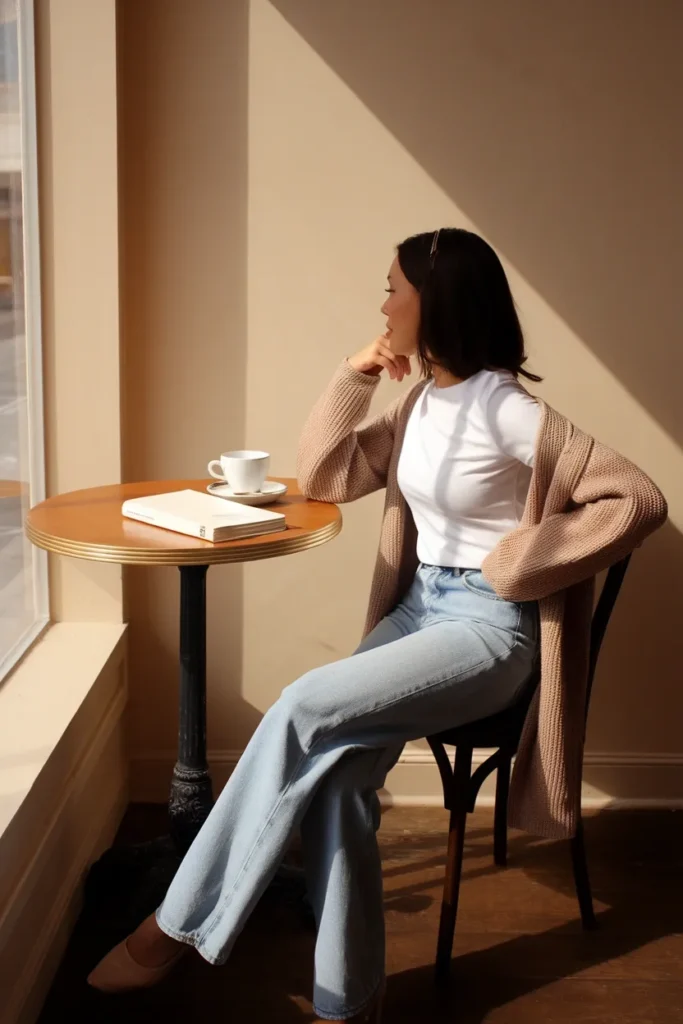
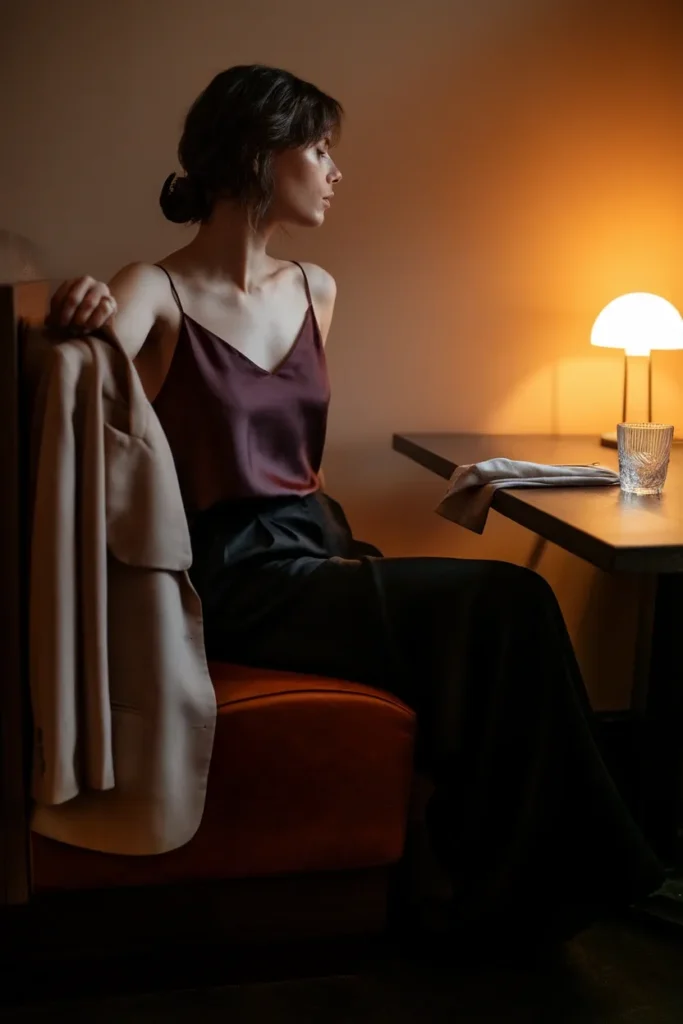
Build it: black or espresso wide-leg trousers with real drape, a silk-feel camisole or a fine-knit shell, and an ankle boot with a low block heel. Add a blazer or a longline cardigan you can drape on the chair back.
Wide-leg trousers do something a dress can’t: they look composed while you’re seated, because the fabric falls straight from the hip instead of pulling across the thigh. A woman in good trousers at a restaurant table looks like she planned it. Quince and Everlane both sit in the $50 to $120 range for the fluid, drapey versions, and J.Crew’s tailored wool blends typically run $150 to $200.
The camisole is your signal, so this is where the color goes. Deep burgundy, tomato red, cobalt, or butter yellow all photograph well under warm restaurant light and read as intentional rather than loud.
Three dinner-specific details:
- Bring the layer, always. Air conditioning in an American restaurant in August is a genuine hazard. A blazer or an unstructured cardigan solves it and gives you something to do with your hands.
- Check your neckline while seated, not standing. Necklines migrate when you lean toward a table.
- Skip anything that needs both hands to manage. A wrap dress that requires re-tying is a bad choice on a night you want to be present.
Small pieces carry disproportionate weight at dinner because your accessories sit right at conversation height. A single gold chain, one ring, and a structured crossbody do more than a full jewelry stack. If you’re building that layer out properly, start with the capsule wardrobe accessories that change an outfit fastest.
What to Wear on a Drinks or Bar Date
Drinks is the venue where your full silhouette matters, because you will be standing, seen from across a room, and probably in dim light.
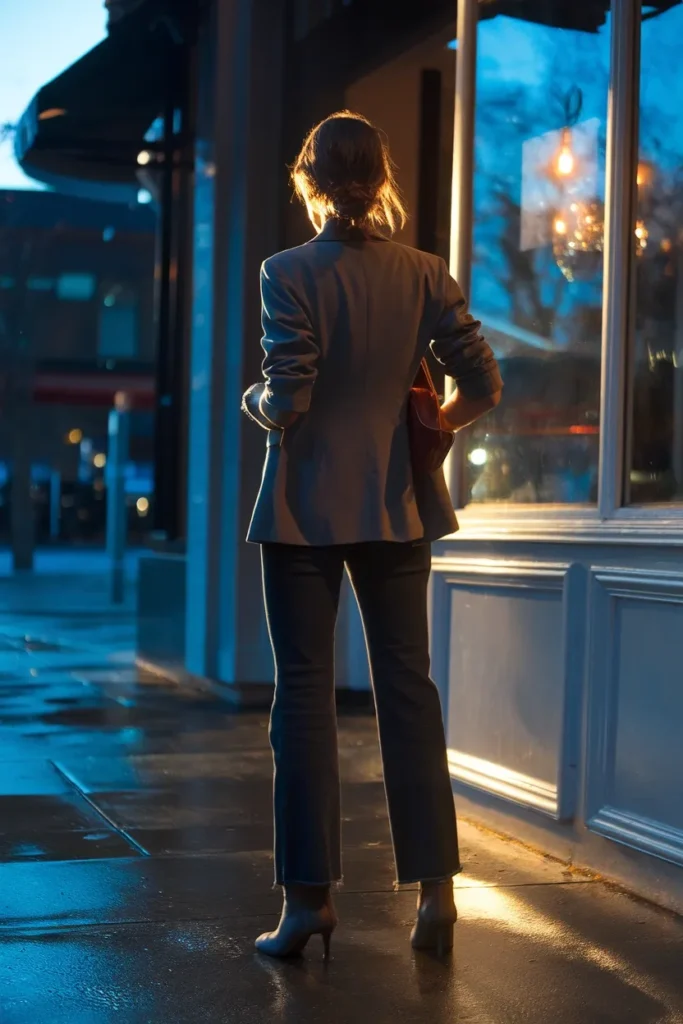
Build it: dark straight-leg jeans with no distressing, a fitted or half-tucked top, a structured blazer, and a heeled ankle boot or a polished loafer. This outfit works from six in the evening until closing and it works in almost every American city.
The blazer is doing the heavy lifting. In low light, structure at the shoulder is one of the few things that reads clearly at fifteen feet. Soft knits and flowing fabrics disappear in a dark bar. A defined shoulder line does not.
Dark denim over black trousers is the deliberate choice here, not the lazy one. Black trousers plus a blazer can slide into “I came straight from a client meeting,” while dark denim plus the same blazer reads as evening. Madewell and Everlane straight-leg denim typically runs about $98 to $148, and Old Navy’s version usually lands around $40 to $55 with a softer, more elastic fabric that will bag at the knee sooner.
Watch the shoes. Bar floors are sticky, uneven, and occasionally outdoors on a patio. A block heel under two inches survives all three. A stiletto does not, and heel-in-a-sidewalk-grate is not the story you want from the night.
If this pared-back, structured evening formula appeals to you generally, it’s essentially the same logic behind French girl style and how to dress like a Parisian minimalist: a small number of well-cut pieces, worn repeatedly, with one point of interest.
What to Wear on a Walking, Market, or Activity Date
Bowling, mini golf, a farmers market, a botanical garden, a walk that turns into two hours. Activity dates are the most fun and the most likely to punish a bad shoe decision.
Build it: relaxed straight jeans, a fitted tee or a light long-sleeve, a denim jacket, and flat shoes you have already worn at least five times. Gold hoops as the signal.
Broken-in matters more than expensive here. A brand-new ballet flat will take skin off your heel by block eight, and there’s no graceful way to limp through the back nine of mini golf.
Fabric is the other trap. You’ll warm up, and a clingy jersey shows it. Cotton, linen blends, and mid-weight knits all handle temperature change better than a thin synthetic. If it’s an outdoor date in late summer, a cotton poplin shirt worn open over a tank gives you sun coverage and a layer to shed.
Practical wins that people underrate:
- Pockets. An activity date with a bag you have to hold is a low-grade annoyance for the entire outing. Jeans with real pockets plus a crossbody solves it.
- A hem that clears the ground. Wide-leg trousers dragging through a wet market floor will end the date early in your head, even if it doesn’t in his.
- One layer you can tie at the waist. Weather changes, plans change, and having somewhere to put a jacket keeps your hands free.

About That “Just Wear Red” Advice
You’ve seen it on every first date list: wear red, science says he’ll find you more attractive. It’s the most repeated styling claim on the internet and it deserves a closer look.
The claim traces back to the 2008 study that started the whole red conversation, by Andrew Elliot and Daniela Niesta. The research is real and the original finding was real. What gets left out is what happened next.
A 2018 meta-analysis by Lehmann, Elliot and Calin-Jageman pooled the accumulated studies and found the red effect substantially smaller and less consistent than the early headlines suggested. Later replication work has been similarly mixed. The honest summary: red may nudge perception slightly under some conditions, and it is nowhere near strong enough to build an outfit around.
So here’s the better version of that advice.
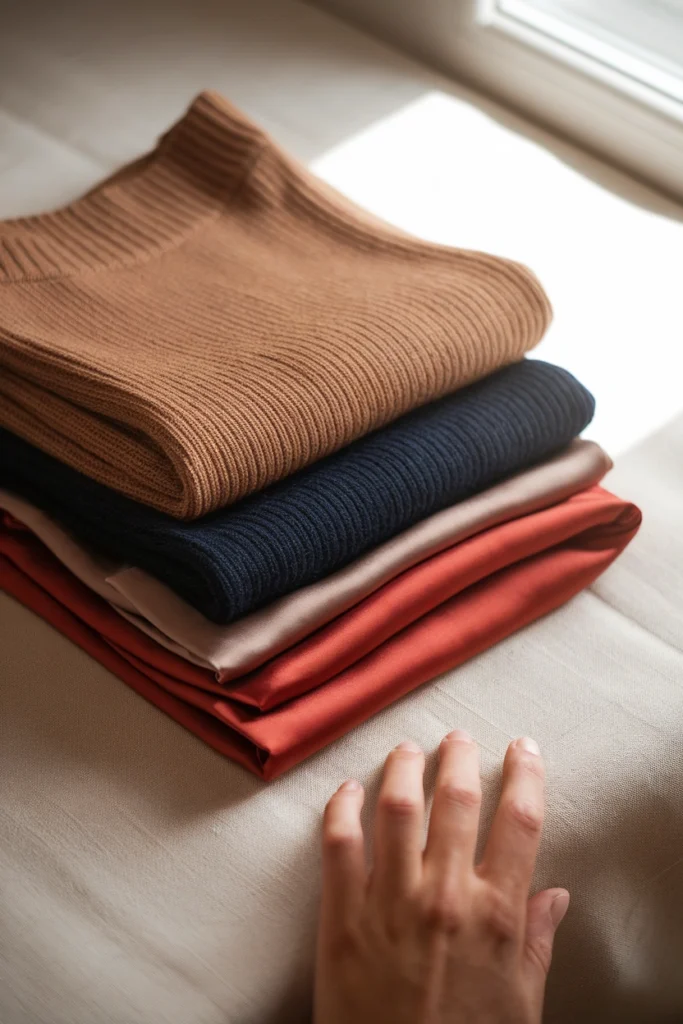
Wear a color you look alive in. That’s a real, observable effect and it beats any lab finding. Hold a piece up under natural light near a window and look at the skin under your jaw. Some colors make it look warmer and more awake. Others drain it and add shadow. You will see it in about four seconds, and it’s specific to you in a way that no generic rule can be.
If red genuinely suits you, wear red. If you look better in olive, camel, navy, or dusty terracotta, wear those instead and stop feeling like you’re leaving points on the table. You aren’t.
One thing color rules do get right: keep it to one. Whatever your color is, it’s the signal, and the anchors stay neutral.
Dress for Your Proportions, Not Against Them
Most first date advice tells women what to hide. That framing is both unhelpful and inaccurate, because clothes don’t hide anything. They change where the eye rests and how a line reads.
Here’s what actually shifts by proportion.
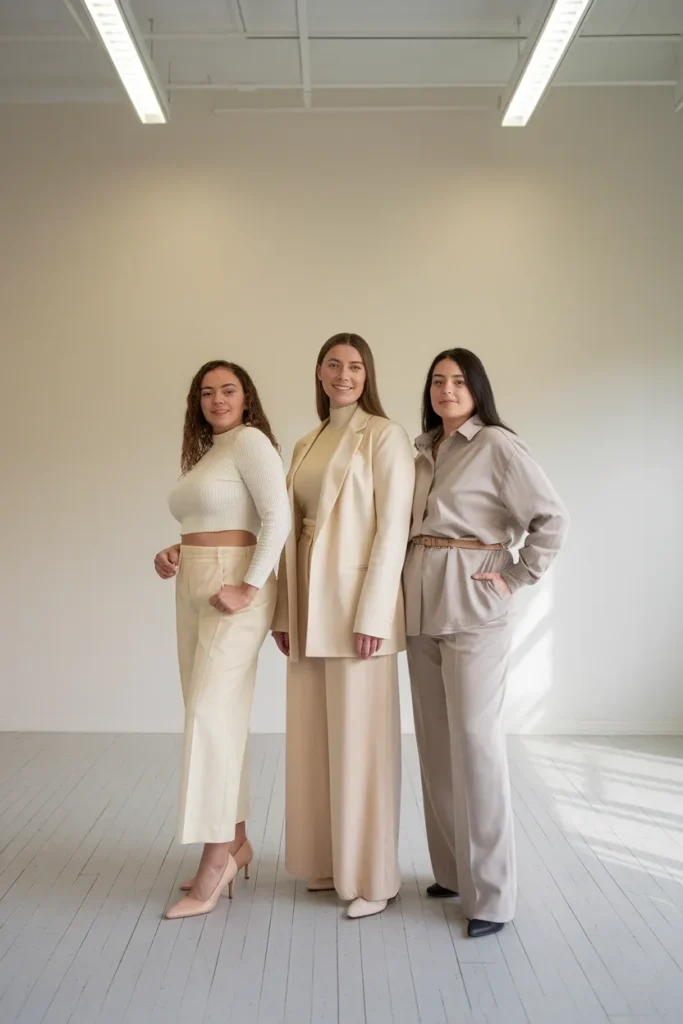
If you’re petite (5’4″ and under): an unbroken vertical line makes the most of your frame. Same-color trouser and shoe, or a hem that hits at the narrowest part of the ankle, keeps the leg reading long. Cropped wide-legs often work better than full-length, since a puddling hem cuts the line at the floor. Look for petite-specific inseams rather than hemming a regular pair, because the knee break lands wrong on a shortened standard leg.
If you’re tall (5’9″ and over): you have room for volume that swallows other people. Full wide-legs, longline blazers, and midi lengths all land where they were designed to land. Check sleeve and inseam length before anything else, since a sleeve that stops short is the single fastest way a good jacket reads as borrowed.
If you’re curvy or midsize: structure at the waist and drape below it is a reliable combination. A defined waistband with fluid trousers, or a fitted top with a fuller bottom, gives shape without compression. Stretch-woven fabrics with about two percent elastane sit better through a whole seated dinner than rigid cotton.
If you’re rectangle or straight through the middle: a belt, a half-tuck, or a wrap detail creates a waist where the fabric otherwise falls straight. A blazer nipped slightly at the middle button does the same thing without adding a layer.
If you’re over 40 or over 50: fabric quality starts doing visible work. A dense knit, a real silk or a good silk-feel viscose, and a trouser with weight to it all read differently in person than the thin versions. This is where a mid-tier piece genuinely outperforms three budget ones.
None of this is a rule you have to follow. It’s a set of levers, and you get to decide which ones you feel like pulling.
The 60-Second Sit-Stand-Walk Test
A mirror shows you one thing: how you look standing still, arms down, in your bedroom. A date involves none of those conditions.
This is the test I’d run before every first date, and it takes less than a minute.
| Test | What you do | What it catches |
|---|---|---|
| Sit | Sit on a hard kitchen chair for 30 seconds | Waistbands that dig, skirts that ride up, tops that gape at the button, trousers that pull at the thigh |
| Stand | Stand and raise both arms straight overhead | Hems that lift, sleeves that pull short, a top that crops when you reach for a shelf or hug hello |
| Walk | Walk your hallway twice at normal pace | Shoes that slip at the heel, hems that drag, straps that slide, anything that needs adjusting |
If a piece fails one test, swap that piece and only that piece. Don’t restart the outfit. Restarting the outfit is how forty minutes disappears.
There’s a reason this is worth doing beyond avoiding a wardrobe incident. Researchers have measured how clothing changes the wearer’s own thinking, not just how observers perceive them. Slepian and colleagues found that what people wore shifted how abstractly they processed information. You don’t need to accept any particular effect size to notice the practical version: an outfit you’re constantly adjusting keeps a small part of your attention on yourself, and that’s attention you’d rather spend on the person across the table.
The goal isn’t looking perfect. It’s forgetting what you’re wearing by minute five.
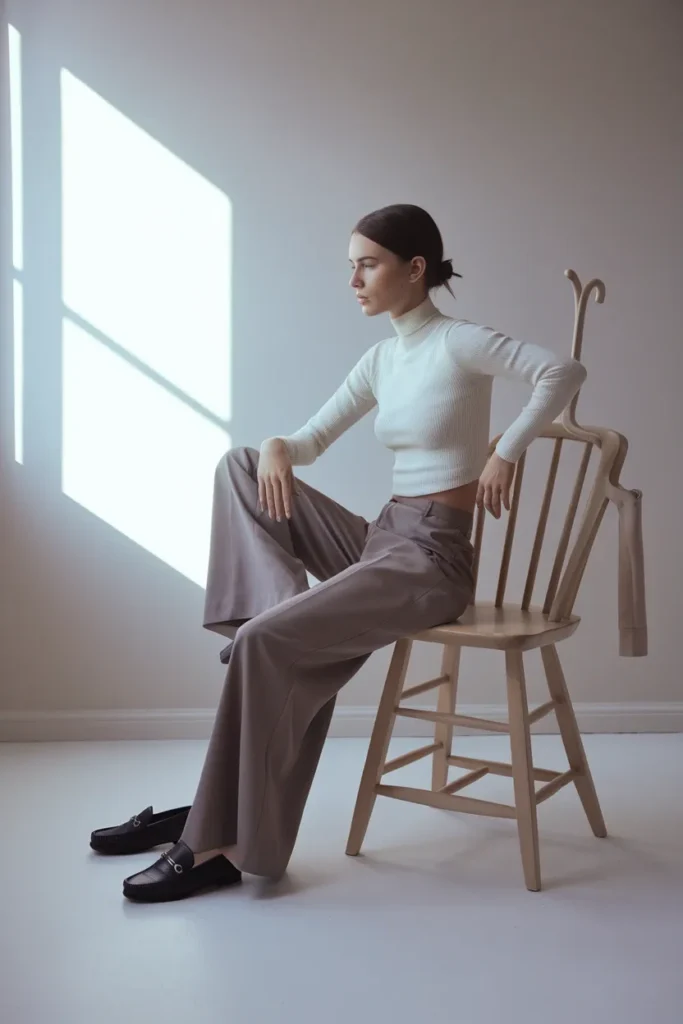
What Not to Wear on a First Date
Short list, and none of these are about being modest or covered. They’re about friction.
Anything brand new. New clothes have not told you the truth yet. They stretch, ride, scratch, and slip in ways you can only discover by wearing them, and a first date is a bad lab. If a new piece is the plan, wear it around the house for two hours first.
Shoes you haven’t walked in. The single most common first date regret. Plans change, parking is further than expected, and one of you suggests walking to the next place.
A fabric that shows nerves. Silk and thin synthetics both hold a mark when you get warm. A cotton blend, a fine knit, or a silk-feel viscose with a bit of texture handles it invisibly.
A full outfit of things you’ve never worn together. If four pieces are individually great and untested as a group, you’ll spend the night quietly wondering whether it works. Wear a combination you’ve already seen on yourself.
Anything that requires maintenance. Strapless tops, wrap dresses that untie, a bag with no strap, a hem you have to hold on stairs. Every piece of maintenance is attention you’re not giving the conversation.
What is completely fine, despite what the internet says: jeans, sneakers, a repeat outfit, no makeup, flat shoes, and the same reliable pieces you wear every week. The idea that a first date demands a costume is the belief creating the problem in the first place.
Your Fall Transitional First Date Outfit
Since we’re heading into the 50 to 70 degree stretch, here’s the version that carries from September through November without a rethink.
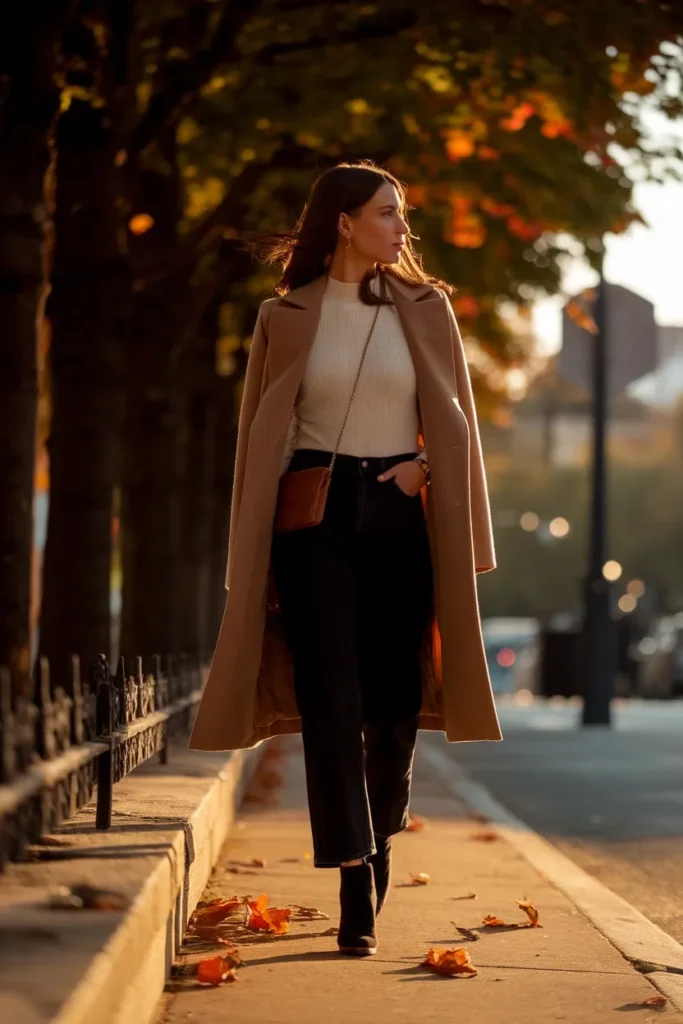
Straight-leg dark denim, a fine merino or cotton crewneck in camel or cream, and a trench or a soft blazer over the top. Ankle boots. A crossbody with a strap long enough to wear across the body while walking. That’s it, and it handles a 68 degree afternoon and a 48 degree walk to the car equally well.
The trench is the piece doing the seasonal work. It reads as put-together in a way a puffer never will, it belts to create shape when you want it, and it opens into a clean vertical frame when you don’t. Mid-tier versions from Quince or Everlane generally run about $90 to $180. Sezane and other contemporary labels typically sit in the $250 to $400 range, and a mid-tier gabardine trench gets you most of the way there for less than half. The real difference shows in the collar structure and how the belt holds a knot after a season.
For colder months, swap the crewneck for a turtleneck and the trench for a wool coat, keep everything else, and the formula survives December. Softer, more feminine variations of this same base are worth exploring if the aesthetic suits you, and building a romantic capsule wardrobe covers that direction properly.
What to Wear on a First Date Frequently Asked Questions
What should you wear on a first date if you don’t know where you’re going?
Default to dark straight-leg jeans, a fitted neutral top, a blazer or cardigan, and a flat leather shoe. It reads correctly at a café, a restaurant, and a bar, which covers most first dates in the US. Add or remove the layer to shift the formality. If you can, just ask him what he had in mind.
What color should you wear on a first date?
Wear a color that makes your skin look awake, checked in natural light near a window. The widely repeated “wear red” advice comes from a real 2008 study, but later meta-analytic work found the effect much smaller and less reliable than the popular versions claim. Camel, navy, olive, and dusty terracotta all work beautifully on plenty of people. Keep it to one non-neutral color per outfit.
Is it okay to wear jeans on a first date?
Yes, and it’s often the better call. Dark straight-leg denim with no distressing, worn with a structured layer and a leather shoe, reads as considered rather than casual. Jeans only look too casual when the rest of the outfit is also casual, so let the top half carry the formality.
What should you not wear on a first date?
Anything brand new, shoes you haven’t walked in, and any piece that needs ongoing adjusting. Those three cause almost every first date wardrobe regret. Fabric that marks when you warm up is worth avoiding too. Everything else is a matter of taste.
What should a petite or curvy woman wear on a first date?
If you’re petite, keep the vertical line unbroken with a cropped wide-leg or an ankle-length hem, and buy petite inseams instead of hemming standard ones. If you’re curvy or midsize, pair a defined waist with drape below it and look for around two percent elastane in woven fabrics so the fit holds through a seated dinner. Both approaches are about how the line reads, not about covering anything.
How much should a first date outfit cost?
Ideally nothing, since the point of a capsule wardrobe is that the outfit already exists. If you’re filling a genuine gap, a versatile pair of trousers in the $50 to $120 range and a leather loafer around $120 to $180 will each get worn dozens of times a year, which brings the cost per wear down fast. Buying a single-use date outfit is the worst value in the closet.
Do these first date outfits work year-round?
The formula does, and the pieces mostly do. Two anchors and one signal holds in every season. In summer, swap the trouser for a linen pant and the boot for a sandal. In winter, add a turtleneck under the knit and a wool coat over it. The transitional version above is the one that covers the most months.
Pick One and Stop Looking
The thing about deciding what to wear on a first date is that the outfit was never really the point. You want to walk in feeling like yourself, sit down without adjusting anything, and forget about your clothes entirely by the time the drinks arrive.
Two anchors. One signal. Sixty seconds of testing. Then close the closet.
If you want the version of this that makes every morning easier, not only date nights, the same logic scales into a full capsule. Start with the neutrals you already reach for most, and build out from there.
Keep reading

What to Wear on New Year’s Eve When Your Closet Is Full of Neutrals
Every December I get the same message from readers, and it always arrives around the 27th: what to wear on New Year’s...

What to Wear in Vegas: Day-to-Night Outfits That Pack Light
Figuring out what to wear in Vegas is less about glamour than it is about logistics. You’ll be outside in 100-degree sun...

What to Wear to Graduation as a Guest (Without Buying Anything New)
You have three weeks, one ceremony invitation, and a closet that suddenly feels useless. Figuring out what to wear to graduation as...