
What to Wear to a Concert: Outfits That Handle a Long Night
This post may contain affiliate links. If you buy through them, we may earn a commission at no extra cost to you. As an Amazon Associate, we earn from qualifying purchases.
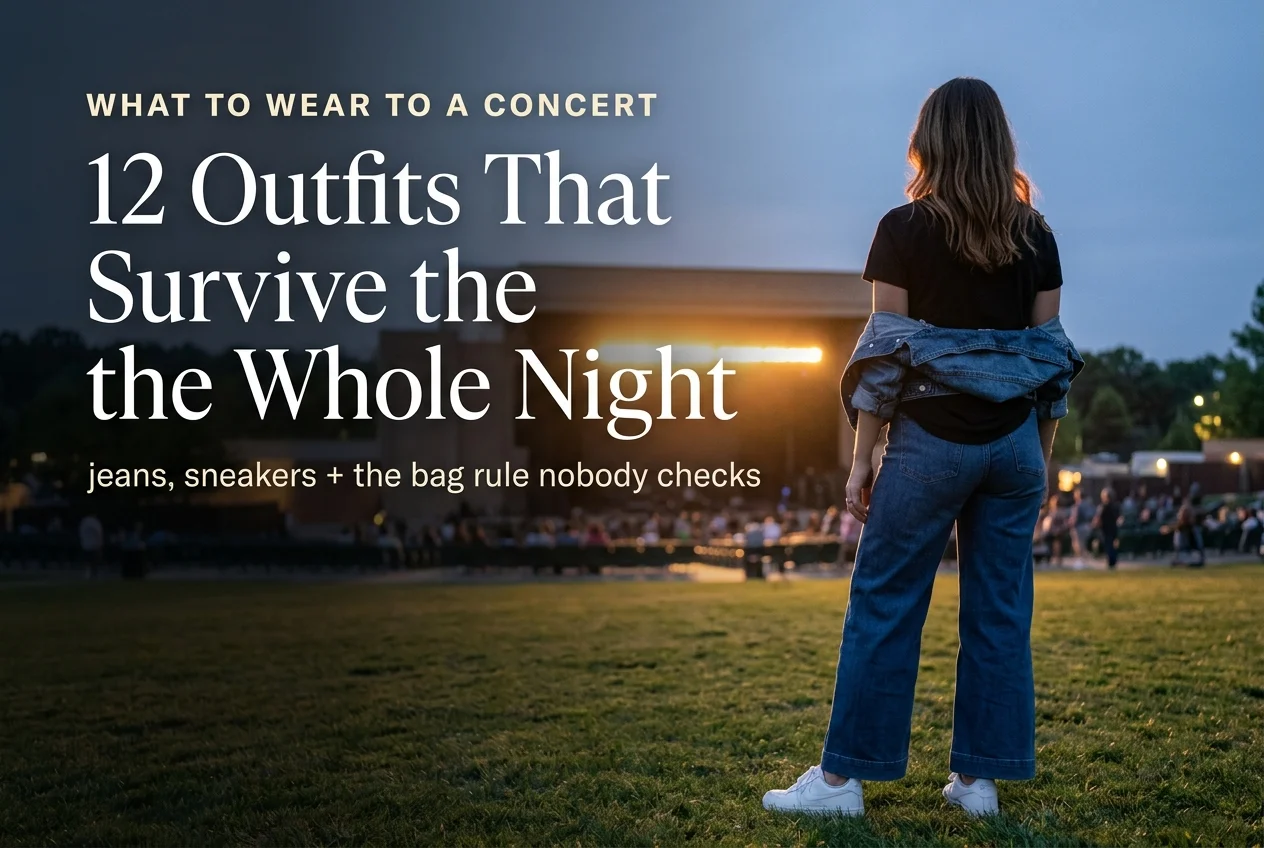
You have known about this show for four months. You have thought about the outfit for maybe eleven minutes, all of them this afternoon, standing in front of a closet that has never once felt emptier. That is the actual problem with figuring out what to wear to a concert. It is not a lack of clothes. It is that a concert asks your outfit to do six or seven different jobs in one night, and most outfits are built for one.
Here is what nobody tells you. The outfit that photographs beautifully in your bathroom mirror at 6pm is often the same outfit you are quietly resenting by 9:40, when your feet hurt, your jacket has nowhere to go, and the underwire situation has become the main thing you are thinking about instead of the band you paid to see.
So this guide runs backward from the night itself. Venue first, then door policy, then the physical timeline, then twelve outfit formulas you can build from a capsule wardrobe you already own. No shopping required, though I will point you toward what is worth buying if a gap shows up.
Start With the Venue, Not the Outfit
The single biggest mistake is picking a look before you know where you are standing. A seated theater and a general admission floor are different physical events. One asks you to sit still in climate control for two hours. The other asks you to stand on concrete in a crowd that generates its own weather.
Four venue types cover almost every show you will go to.
Indoor arena or stadium. Climate controlled, but crowd heat is real and the air handling loses. Expect it to feel 10 to 15 degrees warmer on the floor than it did in the concourse. Bag rules are strictest here.
Outdoor amphitheater or lawn. The temperature swing is the whole story. Doors at 6:30 in August sun, encore at 10:45 in a breeze. Grass eats thin heels. Bring a layer you can physically carry.
Small club or general admission floor. Hot, tight, loud, and you will be standing the entire time with no seat to retreat to. Sweat-friendly fabric matters more than silhouette. Nothing sheer, nothing dry clean only.
Theater or historic venue. Seated, cooler, quieter between songs. This is the one venue where a slightly elevated outfit reads correctly instead of like you tried too hard. Also the one where a stiff waistband will punish you for two straight hours.
If you only take one thing from this section, take this: decide the venue type first, and roughly half your outfit decisions make themselves.
The Bag Rule That Ends More Concert Outfits Than Anything Else
Nothing derails a night faster than being turned away at the gate with a bag you love and cannot bring inside. Most major venues now run a size-limited or clear-bag policy, and the specifics are published but almost never read.
For a concrete benchmark, State Farm Arena publishes a 14 by 14 by 6 inch limit on single-compartment drawstring bags, purses and fashion backpacks, with backpacks and hard-sided bags of any size prohibited outright. Medical bags and diaper bags are exempt from the size rule but still get searched. Numbers vary venue to venue, and plenty of arenas run tighter policies than that, so check your specific venue page the week of the show.
Two practical rules come out of this.
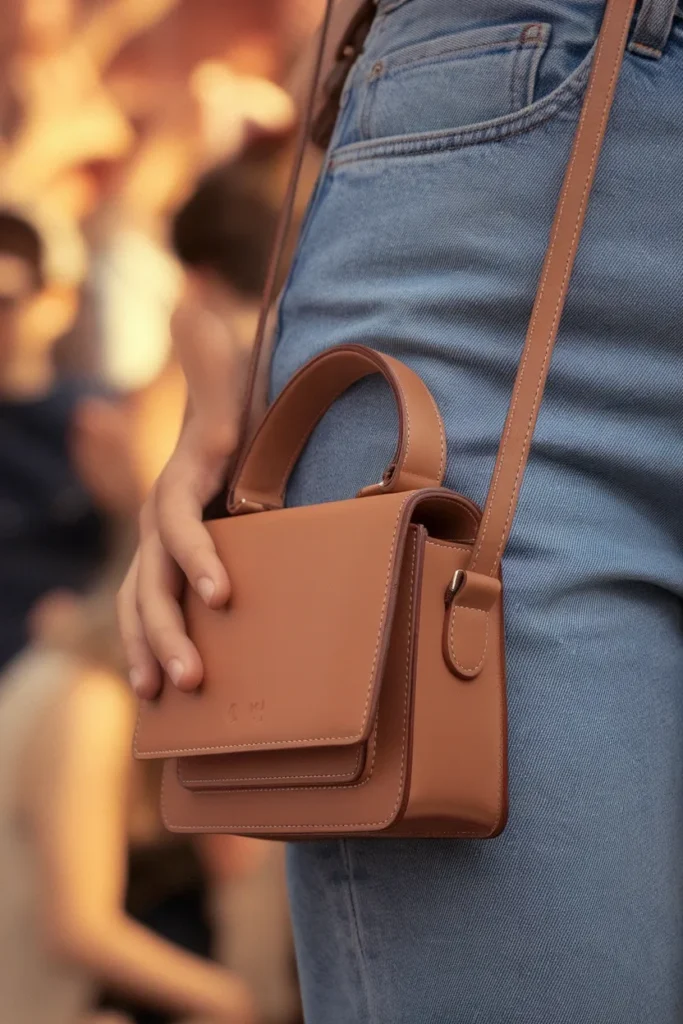
First, go smaller than you think. A compact crossbody in the 8 by 6 inch range clears essentially every policy in the country, keeps your hands free, and does not swing into the person next to you. Phone, card, ID, lip balm, earplugs, hair tie. That is the whole kit.
Second, wear the bag, do not carry it. A tote is a wonderful thing at a farmers market and a genuine liability in a standing crowd. Crossbody strap worn across the body, bag sitting at your front hip. You will forget it is there, which is the point.
A note on clear bags. They clear security instantly and they look like exactly what they are. If your venue requires one, pick a structured clear crossbody in a small size and put a neutral pouch inside it, so what shows through reads as intentional rather than as the contents of your junk drawer.
The Six Hours Your Outfit Actually Has to Survive
This is the part every other concert guide skips. Your outfit is not going to a photo shoot. It is going on a shift.
Here is the real arc of a show night, and what each stage does to what you are wearing.
6:00pm, the drive and the parking lot. Comfortable so far. Everything feels fine. This is the deceptive part.
7:00pm, the line outside. Wind, sun, or a light drizzle. Whatever layer you brought, you are wearing it now and you are glad you have it.
8:15pm, doors and the opener. Inside, warm, crowd filling in. That layer is coming off, and it now needs somewhere to live for the next three hours. If you cannot tie it around your waist or stuff it in your bag, you will be holding it.
9:30pm, the headliner. Peak heat. Peak crowd. You are standing, probably jumping a little, definitely sweating. This is where thin cotton and a relaxed waistband earn their keep and where anything stiff, sheer or synthetic turns on you.
11:00pm, the encore and the walk out. Temperature has dropped, you are damp, and the walk to the car is longer than you remembered. The layer goes back on. Your feet file a formal complaint.
Design for 9:30pm and 11:00pm, not for 6:00pm. That single reframe fixes most concert outfits.
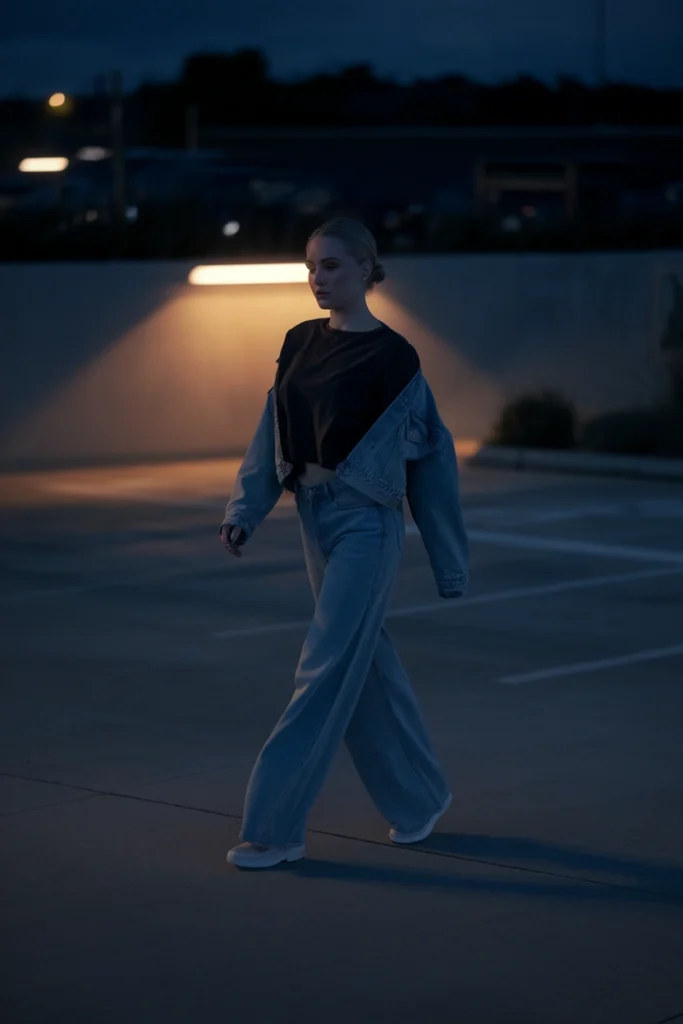
The same logic applies to any long evening out, which is why pulling a going-out look from the capsule you already own tends to outperform a single-use purchase. Pieces that have already survived a full day of wear have told you something about themselves.
The Door-to-Encore Test
Before you leave, put the outfit through five questions. If it fails two or more, change something.
| # | The question | Why it matters |
|---|---|---|
| 1 | Can I stand in these shoes for four hours? | GA floors have no seats. Test it by standing still in your kitchen for ten minutes. |
| 2 | Does my layer have somewhere to go? | Tie at the waist, fit in the bag, or stay on. Holding it is not a plan. |
| 3 | Will this fabric look worse damp? | Silk, thin rayon and anything pale gray will show it. Cotton, denim and dark colors will not. |
| 4 | Does my bag clear the door policy? | Check the venue page, not a general guide. |
| 5 | Can I raise both arms without adjusting anything? | You will be reaching, clapping, filming. Strapless and low-cut both fail this quietly. |
Screenshot that. It takes ninety seconds and saves the entire night.
12 Concert Outfit Formulas You Can Build From a Capsule Wardrobe
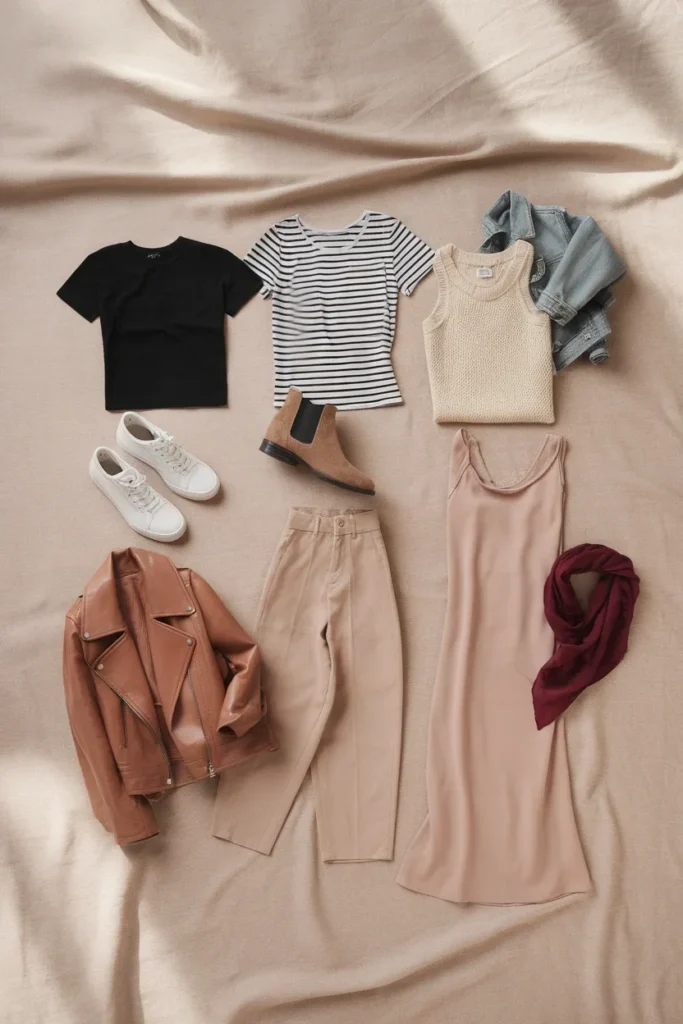
Every look below is built from pieces a working capsule already holds. Ordered with the highest-utility formula first.
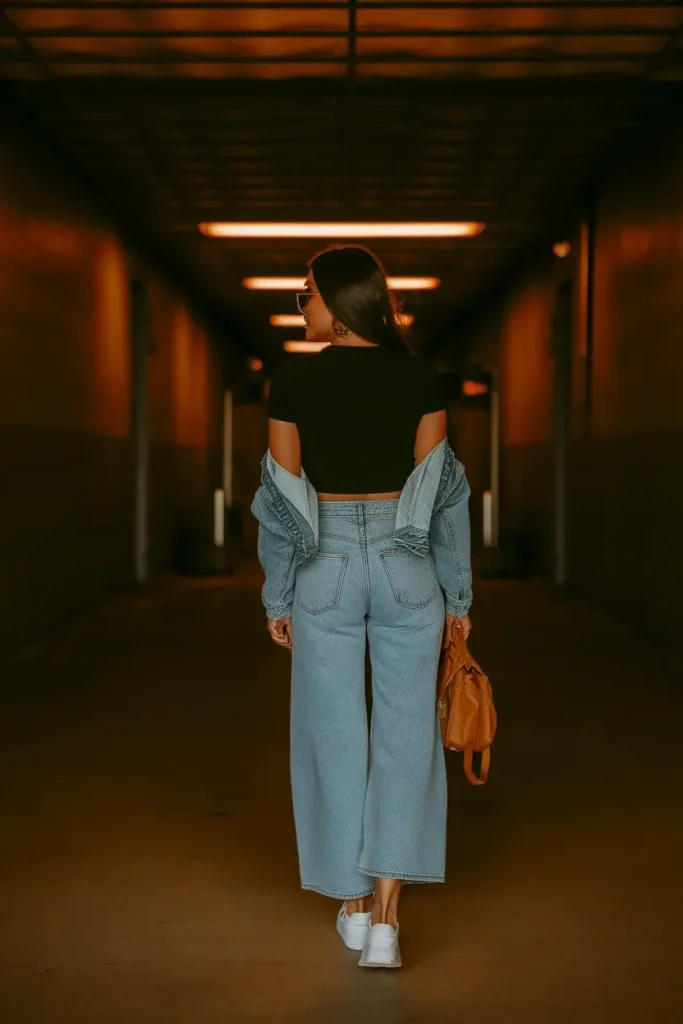
1. The universal. Soft black tee, half tucked into wide-leg or relaxed jeans, white leather sneakers, cropped denim jacket. Works at every venue type, every genre, every temperature above 55F. If you only remember one, remember this one.
2. Band tee and slip skirt. Vintage or plain band tee knotted at the hip, satin or matte midi slip skirt, ankle boots. The skirt moves, the boots hold, the tee keeps it from reading like a wedding guest.
3. Slip dress and leather jacket. Black midi slip, soft leather or faux leather moto, low block-heel boots. Pit-proof and photographs well, which is a rare combination.
4. The open button-down. White button-down worn open over a black ribbed tank, wide-leg jeans, loafers or sneakers. Your layer is already on your body and it does not need a home later. Quietly the smartest structure on this list.
5. Tank and cargo. Ribbed tank, relaxed cargo pants, white sneakers, compact crossbody. Pockets that actually hold a phone. Underrated.
6. Denim jacket over a maxi. Black or espresso maxi dress, denim jacket, sneakers. Full coverage, full airflow, zero waistband to negotiate.
7. Knit tank and leather pants. Fine-gauge black knit tank, faux leather straight-leg pants, ankle boots. Reads elevated indoors, holds up in a crowd, wipes clean.
8. Striped tee and denim skirt. Breton stripe tee, mid-length denim skirt, opaque tights, tall boots. A specifically good fall amphitheater answer.
9. The seated-show look. Black fine-knit turtleneck, wide-leg trousers, loafers, gold hoops. For theaters and historic venues where you will be sitting and want a soft waistband.
10. Linen and cotton for heat. Oversized linen shirt open over a white cotton tank, relaxed trousers, sneakers. Linen is doing real thermal work here, not just looking the part.
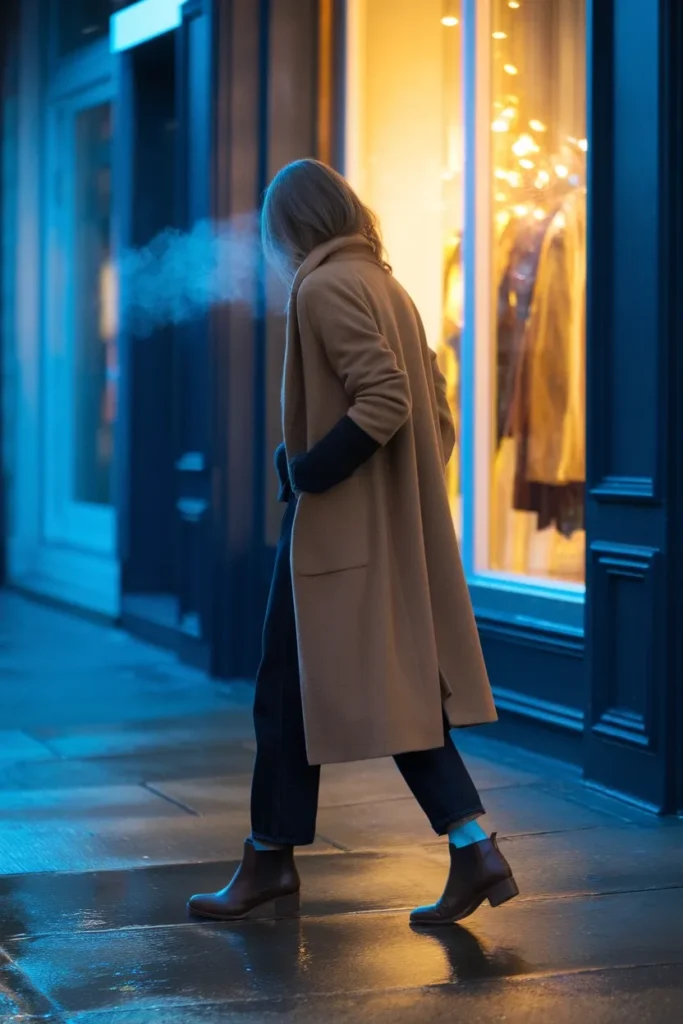
11. Winter arena. Fine merino crewneck, straight jeans, ankle boots, wool coat that you will check or fold over a seat back. Merino because it handles the 40 degree swing between the parking lot and the floor.
12. Pop show, one shiny thing. A single metallic or sequin top with everything else kept plain: black jeans, black boots, no other embellishment. One shiny element reads deliberate. Three reads like a costume.
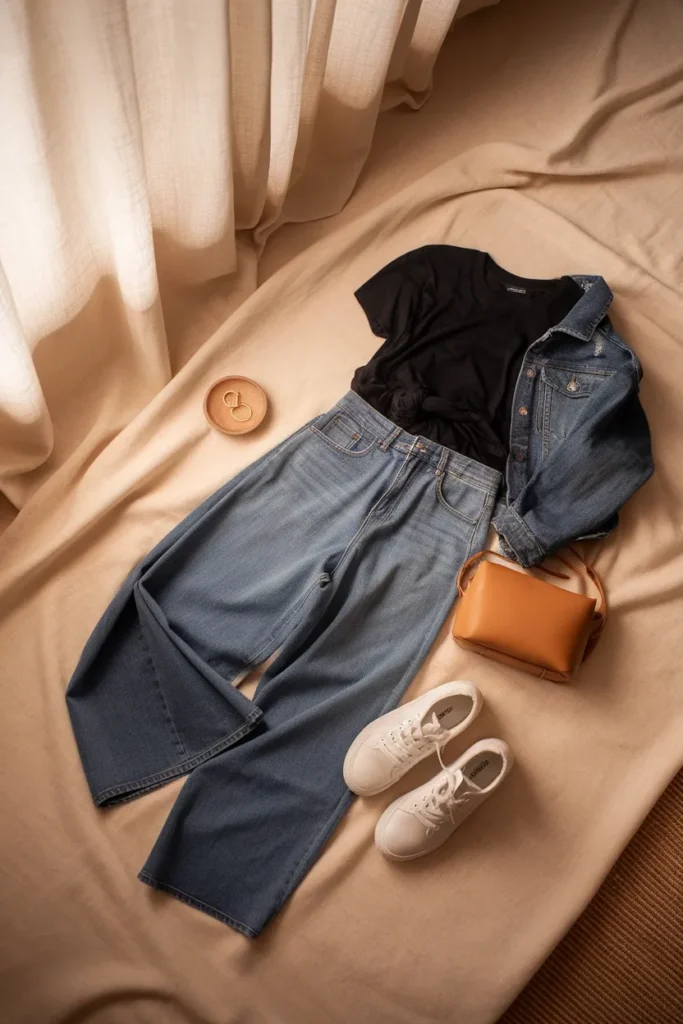
Two of these lean hard on relaxed denim, which is worth getting right. If your wide-leg or baggy pairs keep swallowing you, how to style baggy jeans without losing your shape covers the proportion fixes that make the silhouette work instead of wear you.
Concert Shoes: What Survives Four Hours of Standing
Footwear is where concert outfits go to die. You are standing on concrete, in a crowd, for longer than you would ever choose to stand voluntarily.
Three categories work.
White or neutral leather sneakers. The default, and correctly so. Leather rather than canvas because leather holds its shape when it gets damp and cleans up after a stranger steps on it. Expect to spend roughly $80 to $175 depending on tier, with solid options at Veja, Adidas and Nike, and budget-friendly picks at Target and Old Navy.
Low block-heel ankle boots. The move when sneakers feel too casual for the outfit. Block heel under two inches, closed toe, real sole. Ankle boots in a capsule typically run $120 to $250 at Madewell, Sam Edelman or Vince on sale. If you want a shortlist that already accounts for all-day wear, the best ankle boots for a capsule wardrobe is a good place to start.
Loafers. Best for seated theater shows and cool-weather indoor venues. Not for GA floors, where the open topline lets everything in.
What does not work: stiletto heels of any height, brand new shoes you have not broken in, backless mules that slip when you move, and open-toe sandals in a standing crowd, for reasons your toes will explain to you.
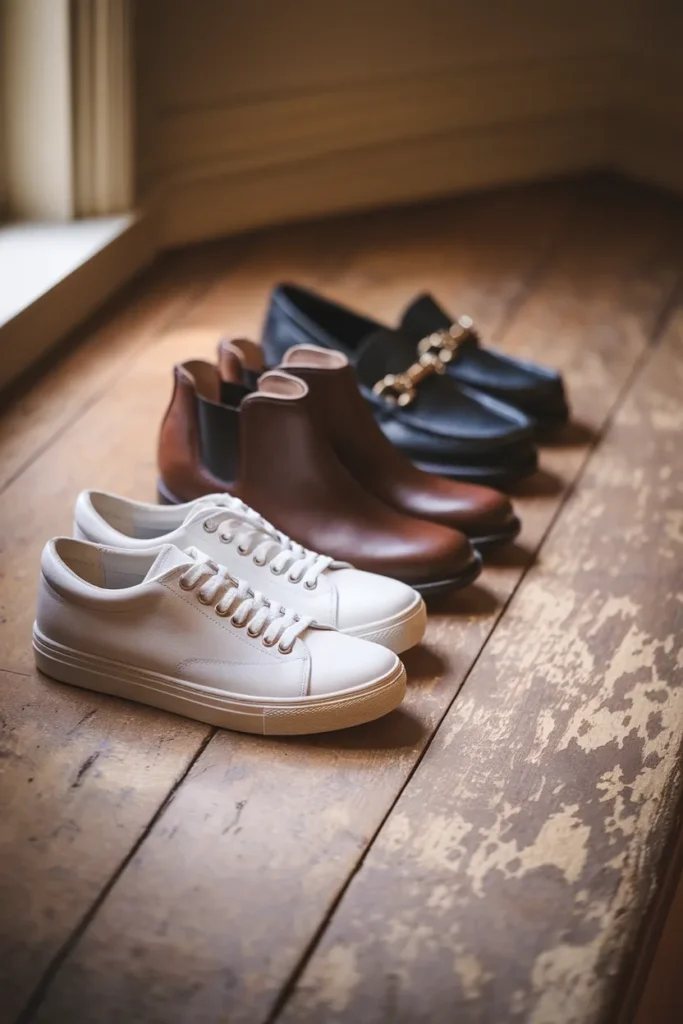
One practical trick: wear thin cushioned socks rather than no-show liners with sneakers. Four hours of standing is a blister engine, and a slightly thicker sock is the cheapest insurance available.
What to Wear to an Outdoor Concert
Outdoor shows are two events wearing a trench coat. The 7pm version and the 10:30pm version have almost nothing in common.
Plan for a 20 to 25 degree drop. An August amphitheater can start at 88F and end at 64F. That gap is the entire outdoor concert problem.
Build on a breathable base. Cotton, linen, or a linen blend. Skip polyester, which traps heat during the show and then goes clammy after sunset.
Bring exactly one layer, and make it packable. A denim jacket, a cotton overshirt, or a thin merino crewneck. It needs to survive being tied around your waist for three hours and still look fine when you put it back on.
Respect the grass. Lawn seats plus thin heels is a physics problem you will lose. Sneakers or flat boots.
Sun is a real factor before dark. A ball cap or a soft-brim hat, and sunglasses you would not cry over losing.

The layering piece is doing most of the work here, and getting the weight right matters more than the style. What to layer under a denim jacket from 40 to 70 degrees maps the fabric weights against actual temperature ranges, which is more useful than guessing at the door.
Beach and pier shows. Sand changes the shoe rule: flat sandals you can rinse, or canvas sneakers you do not mind getting sandy. Bring the layer anyway. Sea air drops the temperature faster than a lawn does after sunset, and a linen shirt over a tank is the right weight.
What to Wear to a Concert When It’s Cold
Winter shows introduce a problem summer shows do not have: your coat becomes luggage the moment you walk inside.
Decide the coat’s fate before you leave. Three options. Check it, which usually costs $5 to $15 and adds a twenty-minute line at the end of the night. Fold it over a seat back, which only works at seated venues. Or wear something light enough that you can keep it on, which is the reason a fine merino sweater beats a bulky knit.
Layer thin, not thick. A silk or merino base, a fine-gauge sweater, and a coat over the top will outperform one heavy sweater every time, because you can shed the middle layer and still look finished.
Tights under jeans is a legitimate move. Thin opaque tights under straight-leg denim for the walk in, and you will forget they are there once you are inside.
Boots with a real sole. Salt, slush, and a parking lot you cannot see the end of.
Concert Outfits by Genre, Without Costuming Yourself
Genre should tune your outfit, not dictate it. The trap is dressing as a theme rather than as yourself with a nod to the room.
Country. Denim, a light knit or a simple tee, and boots. Real western boots if you own them, ankle boots if you do not. One western element is plenty. Fringe, a bolo, a hat, boots and a belt buckle all at once is a costume.
Rock, alt and metal. Black on black, relaxed denim, a leather or denim jacket, boots. If this is your regular register rather than a one-night thing, an all-black capsule with real range shows how to keep an all-black base from flattening into one silhouette.
Pop. This is where a shiny element belongs. Metallic, sequin, or a strong color, kept to one piece with the rest neutral.
Rap and R&B. Sharper tailoring works here. Straight or wide-leg trousers, a fitted knit tank, clean sneakers or low boots, minimal jewelry with one strong piece.
Indie, folk and singer-songwriter. The softest register on the list. Linen, cotton, muted color, flat boots. Comfort reads as correct rather than as giving up.
Jazz, classical and theater shows. Seated and cooler. Trousers or a midi, a fine knit, loafers. Slightly more polished than you would wear to dinner.
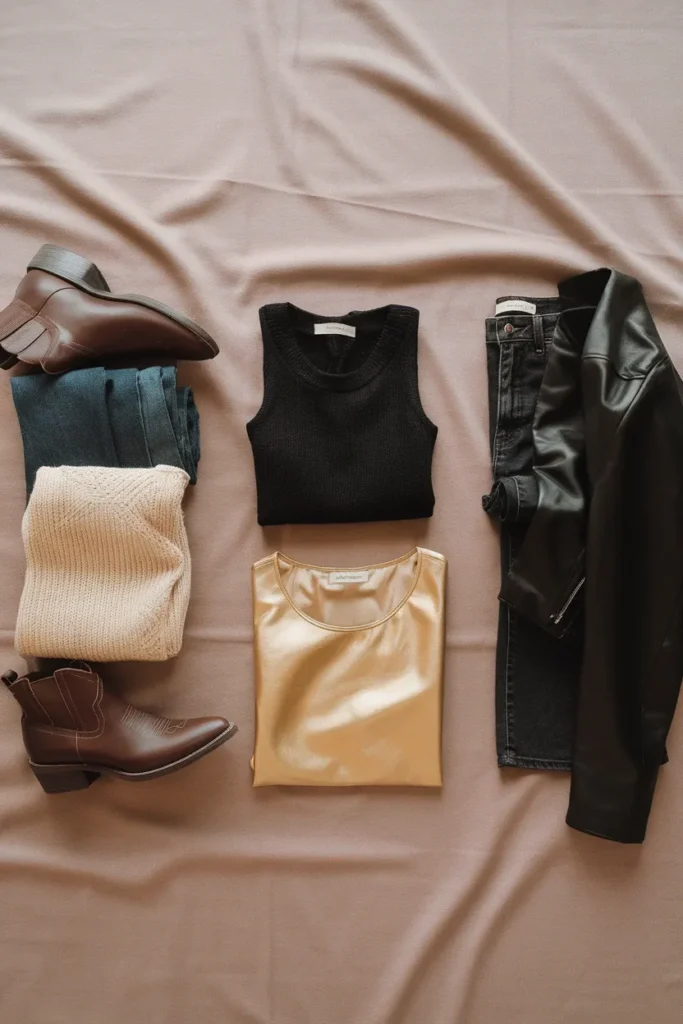
A few genres get searched for on their own, so here is the tuning for each.
Hip hop. The rap and R&B register above, pushed one notch bolder: a boxier tee or knit tank, relaxed wide-leg or cargo trousers, the cleanest sneakers you own and one substantial piece of jewelry. Streetwear proportions, nothing tight, nothing you cannot move in.
Reggaeton and Latin shows. You will dance for three hours. A fitted top with high-waisted wide-leg trousers or a flowing midi, a shoe you can move in (a low block heel or a sneaker) and one piece of color. Breathable fabric is not optional here; it is the outfit.
Punk and pop-punk. A band tee or a plain black tee, black or faded denim, a plaid shirt tied at the waist as your layer, combat or Chelsea boots. The layer doubles as crowd armor near the pit.
Christian and worship concerts. Family crowds, a lot of standing, usually an arena or a church hall with the air conditioning turned up. Jeans or wide-legs, a knit or a tee, sneakers and a light layer. Modest without being formal is the register.
K-pop. Fan colors and a lightstick change the math enough that it gets its own guide. The short version: shoes you can stand in, a bag that clears the venue policy with the lightstick inside, and one piece in the group’s color.
A school band or orchestra concert. In the audience, smart casual: dark jeans or trousers, a knit, loafers or flats. No hats in the sightline and no heavy perfume in a packed auditorium. If you are the one performing, the ensemble’s dress code wins, and it is almost always concert black.
What to Wear to a Concert Over 40
This question shows up in the People Also Ask box constantly, and the honest answer is that the rules do not change much. Comfort, fit and fabric quality matter at every age. What changes is that you have usually stopped being willing to suffer for an outfit, which is an advantage.
A few things genuinely help.
Trade the crop top for a shorter hem on a fuller piece. A slightly cropped boxy tee over a high-waisted wide-leg jean gives the same proportion with none of the exposure question.
Let fabric do the elevating. A fine merino tank reads more considered than a cotton one at essentially the same silhouette. Expect $50 to $110 at Quince, Everlane or J.Crew for merino, versus $10 to $25 for cotton at Old Navy or Uniqlo.
One strong accessory beats three small ones. Substantial gold hoops, or a single cuff, and nothing else competing.
Block heel or flat, always. Not a concession. A preference you have earned.
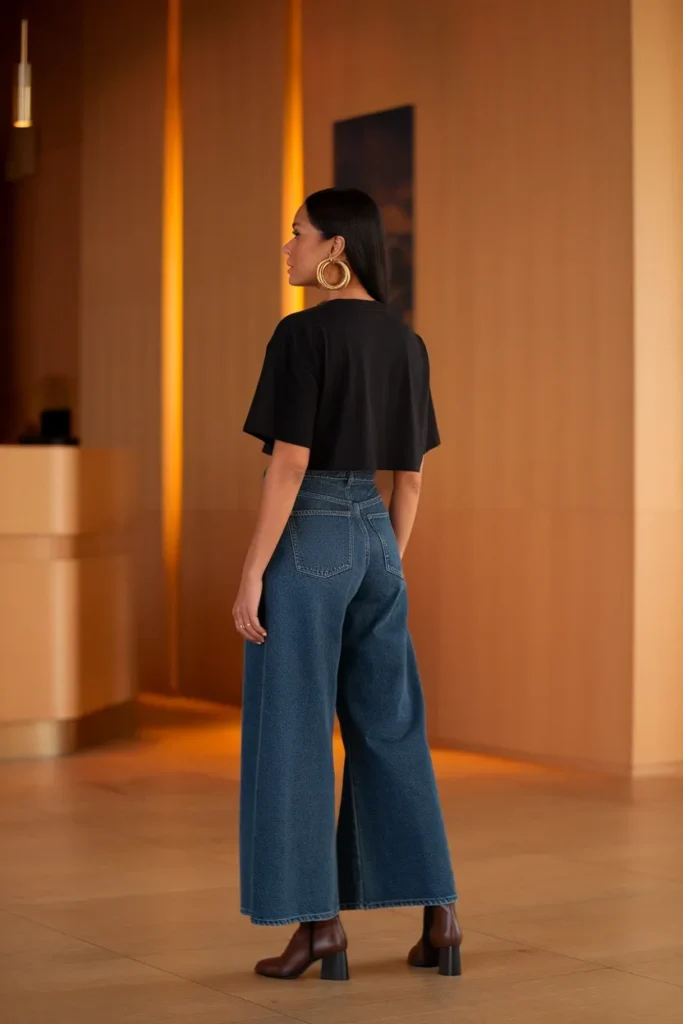
If you want the full framework rather than concert-specific notes, 16 timeless pieces for a capsule wardrobe over 40 covers the base these looks are drawn from.
Plus-Size, Modest and Hijabi Concert Outfits: Fit and Coverage Notes
The twelve formulas do not change. Five details do.
- Fabric first. Breathable, with some weight. Thin jersey clings when damp; a mid-weight cotton, a ponte or a denim-weight fabric does not.
- Let the layer be the silhouette. Formula 4, the open button-down over a tank, and formula 6, the maxi under a denim jacket, give coverage that stays on all night without a coat check. A longline open shirt in crisp cotton does more for a plus-size outfit than any shapewear.
- Rise and waistband. High-rise wide-leg trousers or jeans with a little stretch, worn at the natural waist with a soft tee half-tucked. The waistband is the thing you will notice at 9:30pm, so test it sitting down before you leave.
- Hijab and modest layering. A breathable jersey or cotton scarf rather than chiffon, which slips and traps heat. A maxi or a tunic-length top over straight or wide-leg trousers, flat boots or sneakers, and a light duster or long shirt as the layer. Tights under a midi for cooler venues.
- Bag strap length. A crossbody strap that adjusts long enough to sit at the hip rather than under the arm. Most straps are cut short; look for an adjustable one or buy a longer strap separately.
Concert Outfits in the Show’s Color: Pink, Red, Blue or White
Themed tours and fan dress codes are why so many people search for a pink concert outfit or a red one. The rule is the same as the pop-show formula: one piece carries the color and the rest stays neutral.
- Pink. A pink knit tank or satin cami with black wide-legs, or a pink slip skirt with a black tee. Blush reads soft and hot pink reads like a statement; both work as long as there is only one of them.
- Red. The easiest color to wear at night because it photographs well in low light. A red top, or red boots with everything else black. Red on red is a costume.
- Blue. Denim already counts. A cobalt knit with white sneakers, or dark denim head to toe with a white tank, and you are in the color without buying anything.
- White. Risky in a crowd, between beer, grass and strangers, so keep it above the waist: white tee or tank, dark bottoms, dark shoes.
If the artist has a signature color, wear it in the piece you would take off first if it gets warm. That way the layer, not the base, is the themed part.
The Accessories That Earn Their Place
Five items, and the fifth one is the one nobody mentions.
A compact crossbody. Covered above, and worth repeating because it is the single highest-impact swap.
One pair of substantial earrings. Gold hoops or a simple drop. They read in dim light where a delicate necklace disappears entirely.
A hair tie on your wrist. By the third song you will want it.
A belt, if the jeans need it. Structure at the waist keeps a relaxed silhouette from reading shapeless. If you want the broader logic on which small pieces actually change an outfit, the small accessories that change a whole outfit covers it properly.
Filtered earplugs. Here is the part that gets left out of every concert style guide. The National Institute on Deafness and Other Communication Disorders puts concerts at 94 to 110 dBA, against a stated threshold where “long or repeated exposure to sounds at or above 85 dBA can cause hearing loss.” Musician-style filtered earplugs from brands like Loop or Eargasm typically run $20 to $40, sit nearly invisibly, and lower the volume without muddying the sound the way foam plugs do. They fit in the same tiny bag as everything else. You will hear the show better and you will hear every show after it.
The concert kit, if a piece is missing. Plain versions, nothing trend-led, all small enough to disappear into the capsule you already have:
- Compact crossbody with an adjustable strap
- Clear stadium-approved crossbody
- Filtered concert earplugs
- Cushioned no-show socks
- Cropped denim jacket
- White leather sneakers
- Low block-heel ankle boots
- Satin midi slip skirt
What Not to Wear to a Concert
Short list, all learned the hard way by somebody.
- Brand new shoes. The blister will outlast your memory of the setlist.
- A bag over the venue’s size limit. Check the venue page the week of the show.
- Anything strapless in a standing crowd. You will spend the night adjusting.
- Thin pale gray or heather fabric. It shows sweat the most visibly of any common fabric.
- A coat you cannot check, carry or wear. Decide its fate before you leave the house.
- Full dry clean only. Beer exists. Crowds exist.
- Long delicate necklaces. They tangle, they catch, they snap.
Frequently Asked Questions
How should I dress to attend a concert? Start with the venue type, then the door’s bag policy, then build a layered outfit around a breathable base you can stand in for four hours. A soft tee, relaxed jeans, sneakers and a denim jacket covers roughly eighty percent of shows.
What can a 40 year old wear to a concert? The same formulas, tuned for fabric and fit rather than trend. A cropped boxy tee over high-waisted wide-leg jeans with block-heel boots and gold hoops works at any age and does not require you to negotiate with your outfit all night.
Is it better to dress up or down for concerts? Slightly down, with one elevated element. Overdressing is uncomfortable in a standing crowd and underdressing feels like you did not care. One good piece, whether that is a leather jacket, a metallic top or real gold earrings, does the whole job.
Are jeans good for concerts? Yes, and they are close to the best option available. Denim breathes better than most synthetics, hides spills, survives crowds, and stands up to a full night. Choose a relaxed or wide-leg cut over anything tight and stiff, since you will be standing and moving for hours.
What is the best thing to wear to an outdoor concert? A breathable cotton or linen base, one packable layer you can tie at your waist, and flat shoes that handle grass. Plan for a 20 to 25 degree temperature drop between doors and the encore.
What should I wear to a concert when it’s cold? Thin layers under a coat, rather than one bulky sweater. Silk or merino base, fine-gauge knit, coat on top. Decide before you leave whether you are checking the coat, folding it over a seat, or wearing something light enough to keep on.
Can I wear a dress to a concert? Absolutely, with two adjustments. Pick a midi or maxi length so you are not managing the hem in a crowd, and add a jacket you can tie around your waist. A slip dress with a leather jacket and low boots is one of the most reliable concert outfits there is.
What should I wear to a hip hop concert? Streetwear proportions: a boxy tee or knit tank, relaxed wide-leg or cargo trousers, clean sneakers and one strong piece of jewelry. Nothing tight, nothing you cannot stand in for four hours.
What are good plus-size concert outfits? The open button-down over a tank with high-waisted wide-leg jeans, or a maxi dress under a denim jacket. Both give coverage that stays on all night, and both come from pieces a capsule already holds. Test the waistband sitting down before you leave.
What do you wear to a band concert? In the audience at a school or community concert, smart casual: dark jeans or trousers, a knit, loafers or flats. Performers follow the ensemble’s dress code, which is usually all black.
What are cute concert outfits that are still comfortable? The slip skirt with a knotted tee and ankle boots, or the slip dress with a leather jacket and low boots. Both photograph well, move well and survive four hours of standing.
The Short Version
A concert outfit has one real job: to disappear. You should not be thinking about your feet during the bridge, or your waistband during the encore, or where your jacket went during the opener. You should be thinking about the show.
Work backward from the venue, respect the bag policy, design for 9:30pm instead of 6:00pm, and pull everything from pieces you already own. That is the whole method.
Run the Door-to-Encore Test before you walk out the door. Then go have the night you bought the tickets for.
Which formula are you reaching for first? If you build one of these from your own capsule, come tell me which pieces you swapped in. That is usually where the best variations come from.
Keep reading

Plus-Size Outfits: 20 Easy Capsule Looks to Rewear
Standing in front of a packed closet and still feeling like you have nothing to wear happens to almost all of us....

What to Wear for Brunch: Outfit Ideas for Women Over 50
Brunch after 50 asks one outfit to do a lot. You wait outside in a cool breeze, sit for ninety minutes under...

What to Wear for Brunch: Outfit Ideas From Your Capsule Wardrobe
Brunch is the one plan that asks for two outfits at once. You want something easy enough for a sticky booth and...