
How to Style a Button-Down Shirt: 8 Outfits for Every Day
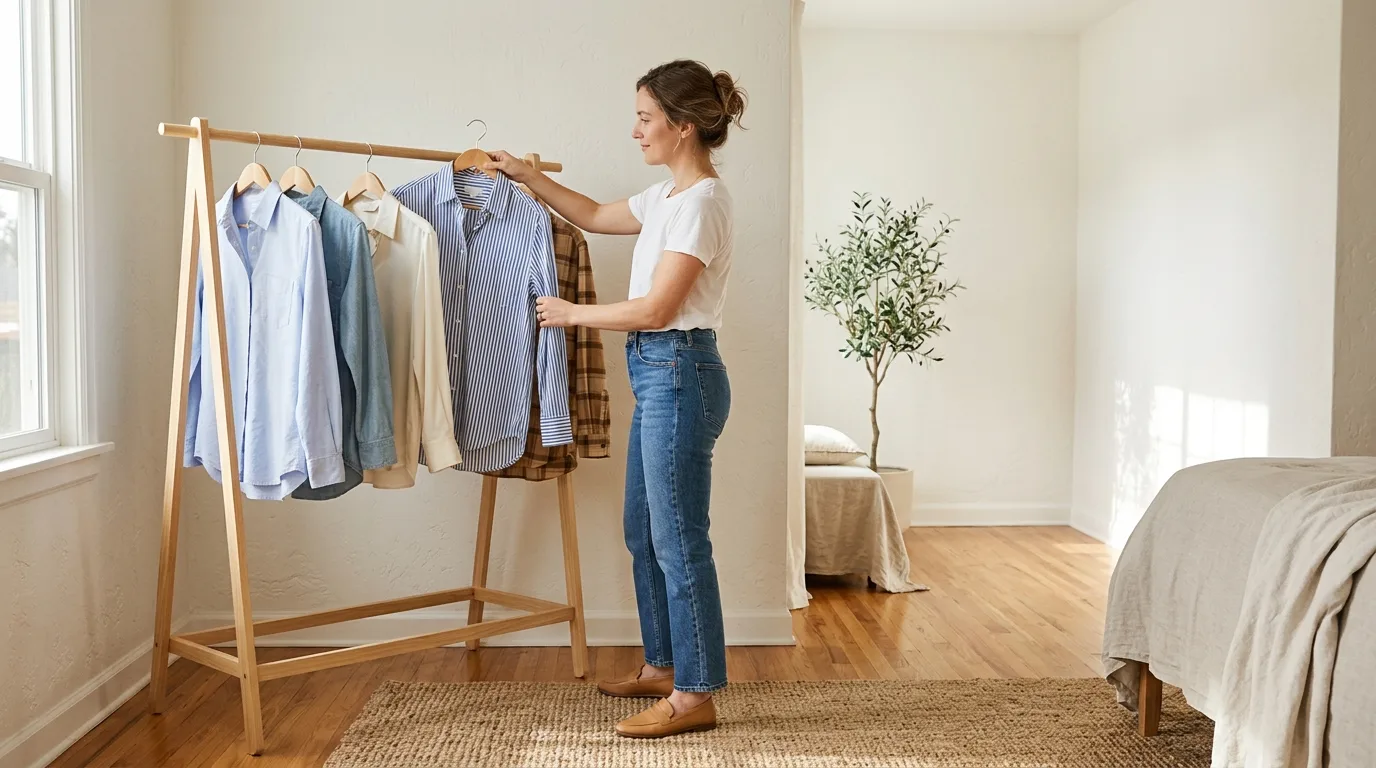
Most closets have one. A crisp shirt bought for an interview, a blue oxford that looked smart in the store, a striped one still hanging with the fold lines in. Then a busy morning comes, it feels stiff or boxy, and it goes back on the rail.
The shirt usually isn’t the problem. Fit, fabric, and the way it meets the rest of your outfit are. Get those three right and button-down shirt outfits become the easiest thing in your closet, the kind of top that works with jeans on Saturday and wide-leg trousers on Monday.
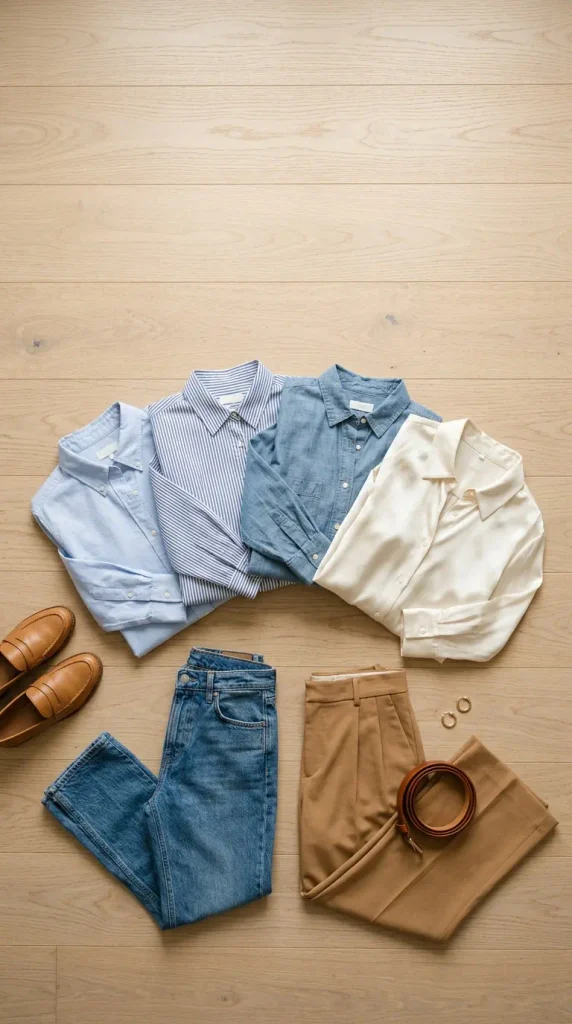
Below you’ll find a quick fit check to run before you style anything, a fabric guide for fall and winter, and eight outfits built from pieces a capsule wardrobe already holds. Each one names the shirt, the tuck, the shoes, and the one small move that makes it look planned instead of thrown on.
Pick two you’d wear this week. Save the rest for later.
The 4-Point Fit Check to Run Before You Style Anything
When a button-down makes someone feel dumpy, the cause is nearly always fit. No tuck or belt can fix a shirt that pulls across the bust or hangs past the shoulder.
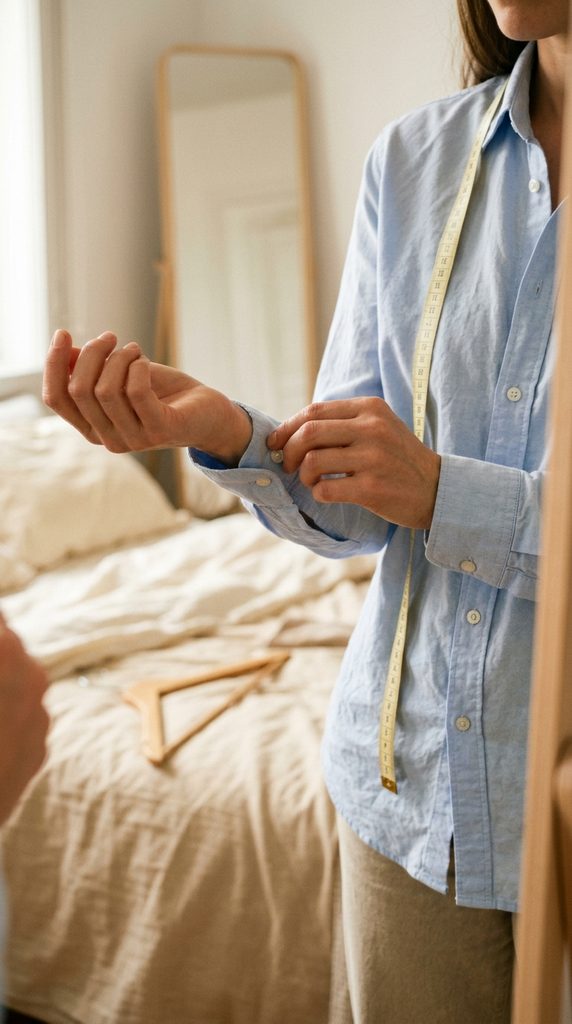
Put the shirt on, button it, and stand at a full-length mirror wearing the bottoms you reach for most. Then check four spots, in this order.
The 4-Point Shirt Fit Check
Do the reach test in side light from a window. Gaps show up as small dark ovals between buttons, and they’re much easier to spot than in overhead bathroom light.
A shirt that fails only the reach test can be saved for the day with a tiny safety pin or a sew-in snap on the inside of the placket. A shirt that fails the shoulder test can’t. That one is a tailor job or a return.
Pick the Shirt Fabric for the Season
Fabric decides how a shirt drapes, how fast it wrinkles, and whether it layers under a knit or fights it. October and January call for different shirts than July does.
| Fabric | Best season | Styling note |
|---|---|---|
| Poplin | Year-round | Smooth and thin, so it slides under sweaters. Wrinkles fast. |
| Oxford | Fall, winter, spring | Textured weave that still looks right a little rumpled. |
| Chambray | Year-round | Denim look, soft hand. Pair with jeans only if the washes clearly differ. |
| Flannel | Late fall, winter | Thick and warm. Best worn open as a light jacket. |
| Silky | Evenings, any month | Drapes and tucks softly. Can cling under wool sweaters. |
| Linen | Summer, warm fall days | Airy and crumpled by noon. Wear the wrinkles or skip it. |
If you own only one shirt right now, a pale blue or white oxford covers the most outfits in cold months. Poplin is the better second shirt, since it layers under knits without bulk.
Read the tag before you buy. Under the FTC’s Care Labeling Rule, clothing sold in the US has to carry care instructions. That small label tells you right away whether a shirt is wash-and-wear or a dry-cleaning commitment.
Outfit 1: The Blue Oxford, Tucked Into Wide-Leg Trousers (Workday)
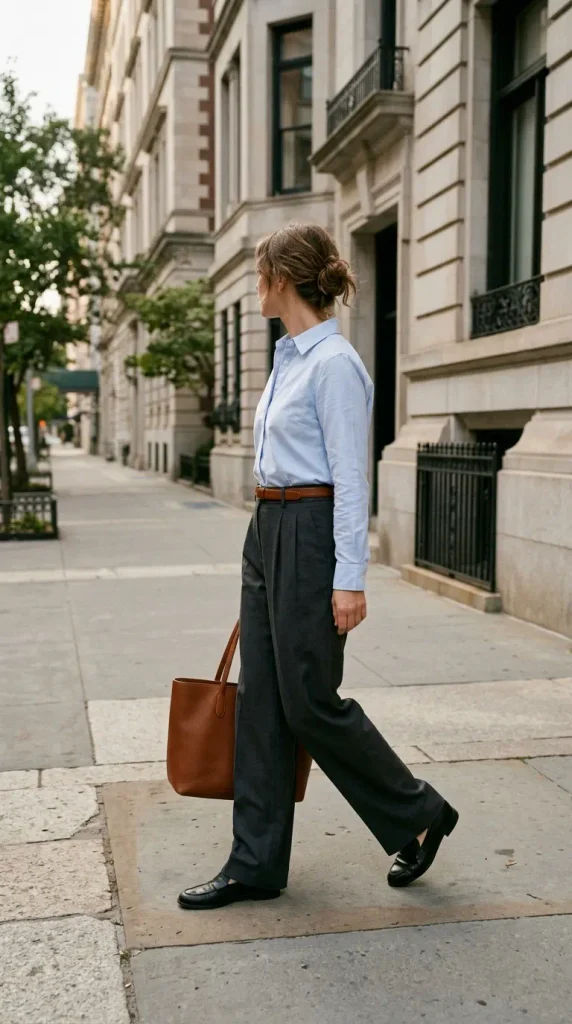
Pale blue reads softer than white under office lights, and it hides a long day better too.
- Shirt: pale blue oxford, fully tucked
- Bottoms: high-rise wide-leg trousers in charcoal or camel
- Belt: slim cognac leather
- Shoes: black or tan loafers
- Bag: structured leather tote
A full tuck only looks sharp if the front stays flat. Before you zip, pull each side seam of the shirt toward your back and fold the extra fabric into a flat pleat. The front lies smooth against the waistband instead of puffing over it by lunch.
Leave the top button open, and the second one too if the collar lies flat. Fully buttoned reads like a uniform.
Outfit 2: A Striped Button-Down Outfit Worn Open Over a White Tee (Errands and Weekends)
Tucked stripes can feel stiff on a Saturday. So skip the buttons entirely and wear the shirt like a light jacket, over a fitted white tee and straight-leg jeans.
- ▸Roll the sleeves twice so they stop just past the elbow.
- ▸Leave every button open and let the hem hang straight.
- ▸Keep the tee fitted and tucked, so the shirt is the only thing that moves.
- ▸Finish with white sneakers or ballet flats and a crossbody bag.
Thin stripes look calmer than wide ones, and blue and white goes with nearly every denim wash. The plain tee underneath matters more than it seems. It does the same quiet job as the capsule wardrobe tops that anchor every outfit, giving the stripes a solid frame so the look never turns busy.
Two tops. No ironing. Looks planned.

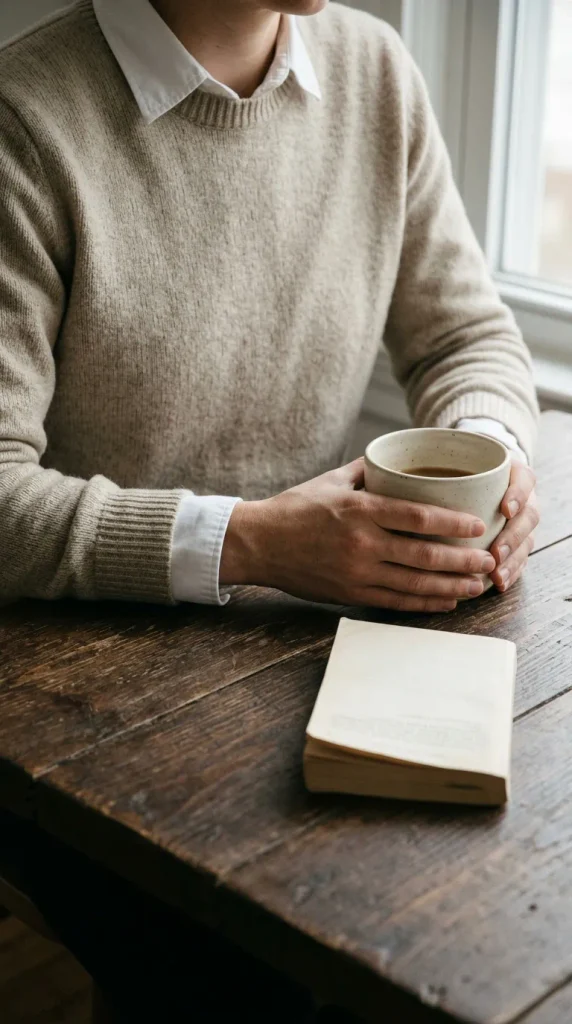
Outfit 3: Button-Down Under a Sweater, Collar and Cuffs Out (Fall Layering)
A crewneck shows just the collar points. A V-neck shows the collar plus a slice of placket. Both work, but they say different things: the crewneck looks clean and minimal, the V-neck looks preppy.
Here’s how to make the layers sit right:
- Wear a thin shirt. Poplin slides under a knit, while a thick oxford bunches at the armholes.
- Pull the collar points out over the neckline and smooth them flat.
- Fold the sweater cuff back once over the shirt cuff, so a narrow band of shirt shows at each wrist.
- Let the shirt hem peek an inch below the sweater, or tuck both into high-rise trousers.
It’s the same collar-and-cuff trick that shows up again and again in fall outfits built from a capsule wardrobe, because it adds color and structure without adding weight.
💡 Quick Tip
Collar points curling up over the sweater? Check the underside of the collar for small slots and slide a collar stay into each one. The points will stay flat all day.
A silky shirt is the one to skip here, since it tends to cling under wool.
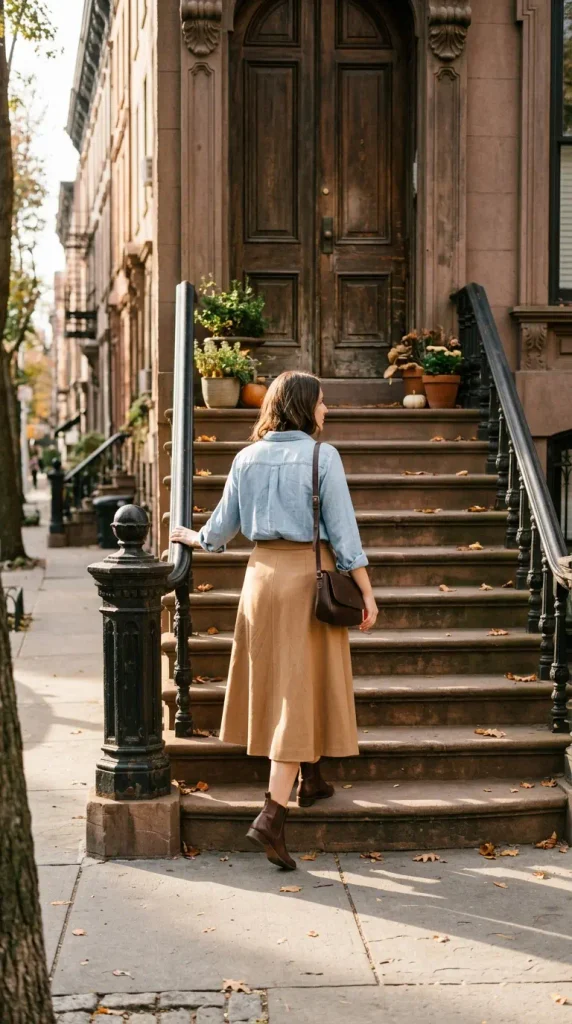
Outfit 4: A Chambray Shirt With a Midi Skirt and Ankle Boots (School Run and Brunch)
Chambray takes the dressiness out of a midi skirt. The combination looks relaxed enough for a school drop-off and put-together enough for brunch after.
How you handle the hem is what makes or breaks it:
Shirt hangs loose over the skirt. The waistband disappears, the skirt loses its shape, and the outfit looks unplanned.
Front tuck, or a small knot at the waist. The waistband shows, the skirt keeps its swing, and the line runs longer.
For the knot, unbutton the bottom two buttons, take the two front tails, tie them once at your waist, and tuck the ends up under the knot. That’s it.
Camel, olive, and black skirts all suit chambray. Espresso ankle boots finish it in fall. Once it’s cold, add opaque tights and let the boots meet the skirt hem, so no strip of bare leg breaks the line.
Outfit 5: A Flannel Shirt Worn Open as a Light Jacket (Cold Weekends)
The usual mistake is treating flannel like a dress shirt: buttoned to the top and tucked in. Brushed cotton is too thick for that, so it bunches at the waistband and adds bulk where you don’t want it.
Wear it open instead, as the outer layer.
Recreate this look
Turtleneck and flannel together read warm and outdoorsy, and the jeans keep it everyday. On a mild afternoon, take off the coat and the flannel still works as a jacket on its own.
One warning: keep it to one plaid per outfit. A patterned scarf on top turns the look busy fast.

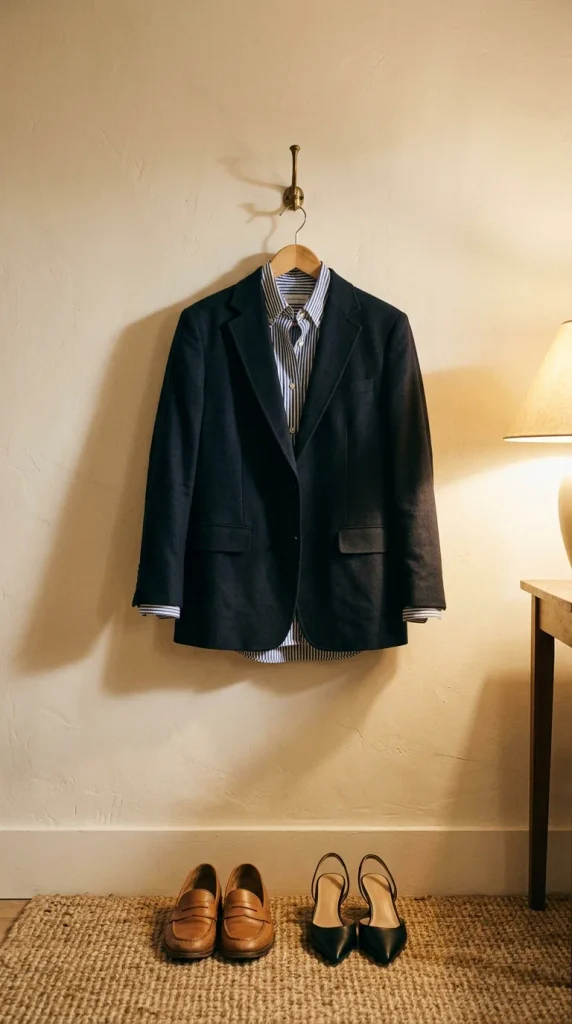
Outfit 6: Button-Down Under a Blazer, Then Swap Your Shoes for Dinner
Shirt plus blazer is one of the oldest work formulas around. It lasts because the collar frames your face and the blazer adds clean shoulders. A blue stripe or a soft solid under navy or camel suits most work dress codes.
The details decide whether it looks current or costume:
Keep the collar inside the lapels, lying flat.
Push the blazer sleeves up a little so a half inch of shirt cuff shows.
Tuck the shirt so the blazer hem is the only hem you see.
A big collar flipped out over the lapels.
An untucked shirt hanging below the blazer, so two hems compete.
A thick oxford under a slim blazer, which pulls at the arms.
For dinner, swap the loafers for low slingback heels, open one more button, and add gold hoops. Same shirt, same blazer, a different evening.
If you’re still deciding which blazer deserves the spot in your closet, start with the capsule wardrobe jackets worth the hanger space.
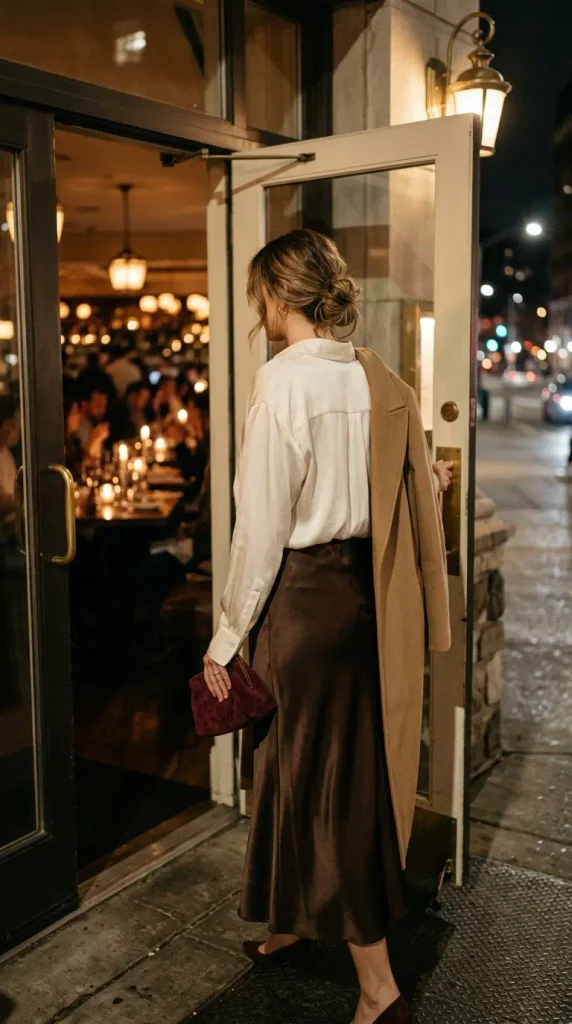
Outfit 7: A Silky Button-Down Tucked Into a Satin Slip Skirt (Date Night and Holidays)
Two shiny pieces sound like too much. In two clearly different colors, though, they look rich rather than costume-like. Try ivory with espresso, champagne with black, or navy with burgundy.
A shirt collar brings daytime structure to a satin skirt, so the outfit looks polished instead of party-only.
Tuck the shirt loosely all the way around, then lift your arms once so it relaxes over the waistband. Leave the top two buttons open. Unbutton the cuffs and fold them back a single turn.
Ankle boots work in December. Slingbacks work everywhere else. A camel coat over your shoulders handles the walk from the car.
Keep the colors clearly apart. A matching silky shirt and satin skirt in the same shade can read as pajamas.
Outfit 8: An Oversized Button-Down Outfit Over a Tank and Knit Pants (WFH and Travel Days)
Soft days slide toward sloppy fast. An oversized shirt over a fitted base fixes that, because one structured layer makes the whole outfit look chosen.
Pick a shirt cut to be big, with a dropped shoulder seam by design. Wear it open over a ribbed tank, with wide-leg knit pants at home or straight jeans for a flight. The sleeves are where it all comes together, so give them the roll that stays put:
Unbutton the cuff. Flip the sleeve up, inside out, until it stops just below your elbow with the whole cuff showing at the top.
Take the bottom edge of that fold and roll it up once more, covering most of the cuff.
Leave the top edge of the cuff peeking out, then slide the roll to mid forearm.
That trapped cuff is what keeps the roll from sliding down every time you reach for a mug. A plain push-up never holds as well.

Keep the Collar Crisp Between Wears
A limp collar ages a shirt faster than anything else. Three habits keep it sharp.
- Hang it right: use a wooden or slim hanger and fasten the top button, so the collar keeps its curve.
- Dry it gently: pull it from the dryer while it’s still slightly damp, then smooth the collar and cuffs flat with your hands.
- Iron the collar first: press the underside, working from the points in toward the center, so creases don’t form at the tips.
Heat matters more than most people think. A university extension guide to ironing versus pressing lays out the rule simply. Cotton gets the cotton setting, a polyester and cotton blend gets the lower permanent press setting, and dampening the fabric first makes wrinkles release faster.
⚠️ Watch Out
Irons and steamers burn skin and can scorch blends at high heat. Test on an inside seam first, keep your free hand clear of the steam, and point steam at the fabric, never toward you. If the label says dry clean only, the label wins over any tip here.
Button-Down Shirt Outfits FAQs
How do I wear a button-down shirt without looking frumpy?
Start with fit, not styling. The shoulder seam should sit on your shoulder bone, the buttons shouldn’t gap when you reach forward, and the cuffs should hit your wrist bone. Then give the shirt a waist with a full tuck, a front tuck, or a small knot. Open the top two buttons and roll the sleeves once or twice, so the shirt looks worn in rather than stiff.
Should I tuck in a button-down shirt?
That depends on the hem and the bottoms. Hip-length shirts tuck cleanly into high-rise trousers and skirts, while longer shirts look better with a front tuck or worn open as a layer. To keep a full tuck in place, fold the extra fabric at each side seam toward your back before you zip. That one move keeps the front flat all day.
What should I wear under a button-down shirt?
Under thin white or pale shirts, a smooth layer close to your skin tone is the least visible choice. For a shirt worn open, pick a fitted tank or a white tee you’re happy to show. Under a sheer or silky shirt, a camisole in the same shade as the shirt looks cleanest and keeps the drape smooth.
Can you wear a button-down shirt as a dress?
Yes, if the shirt is long enough to cover what a mini skirt would and the fabric is fully opaque. Oversized poplin and oxford shirts work best. Belt it at your natural waist so it reads as a shirtdress, and add opaque tights and ankle boots when it’s cold. A shirt that only reaches your hip is a tunic, so pair that one with pants.
What’s the difference between a button-down and a button-up shirt?
Technically, a button-down shirt has small buttons on the collar points that fasten the collar to the shirt. A button-up has buttons down the front and a plain collar. In everyday speech most people call both a button-down, and many stores do too. If the collar detail matters to you, zoom in on the product photos before ordering.
Do button-down shirts work for petite women?
They do, with two quick checks. Shoulder seams and sleeves on standard sizes often run long for women 5’4″ and under, so try petite sizing first if those don’t land right. Then choose a hem that ends at the high hip, or use a front tuck. Either keeps your waist visible and the leg line long.
Is an expensive button-down shirt worth it?
Sometimes. Price matters less than four details you can check in the store: even, close stitching along the placket; stripes or checks that line up at the seams; buttons sewn on firmly; and fabric thick enough that you can’t see your hand through it. A mid-priced shirt that passes all four usually beats a pricey one that fails two.
Your Next Step
One good shirt can carry a whole week once it fits and you know which tuck goes with which bottom. Run the fit check, choose the fabric for the month you’re in, then pick two outfits from this list and wear them before you buy anything new. Most closets already hold the trousers, jeans, knits, and loafers these looks need.
Button-down shirt outfits get easier each time you repeat one, because the moves turn into habit. Save this pin to your outfit board so all eight formulas are waiting the next time you’re at the closet with nothing to wear.
Keep reading
How to Style a Button-Down Shirt for Plus-Size Women: 8 Outfits That Work
You bought the shirt because it looked crisp on the hanger. Then you buttoned it, reached for your coffee, and watched the...
How to Style a Button-Down Shirt for Women Over 50: 8 Outfits That Work
You probably own a button-down shirt. Most of us do. It hangs in the closet looking crisp and responsible, and every time...

How to Style a Jacket for Plus-Size Women: 10 Outfits That Work
A lot of jacket advice for bigger bodies is still written around hiding. Hide the hips, hide the arms, hide under something...