
What to Wear for Headshots: How to Look Like Yourself on Camera
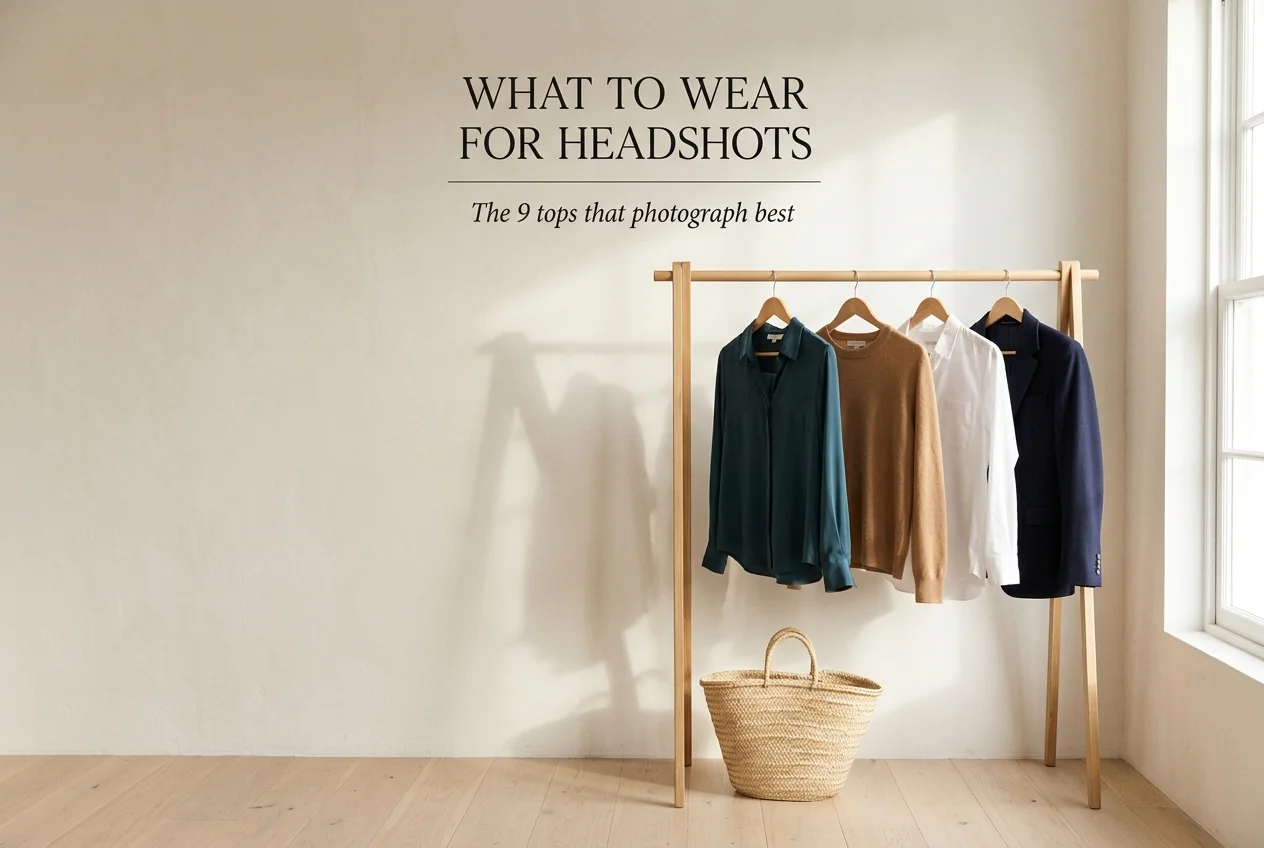
You have a headshot booked, and you’ve been standing in front of your closet for twenty minutes. Everything looks either too casual or like you’re trying too hard. Here’s the part nobody tells you when they explain what to wear for headshots: women get handed a shopping list when what they actually need is a filter. Once you know which four things the camera reacts to, most of your closet sorts itself into yes and no in about ten minutes. You almost certainly already own the right top.
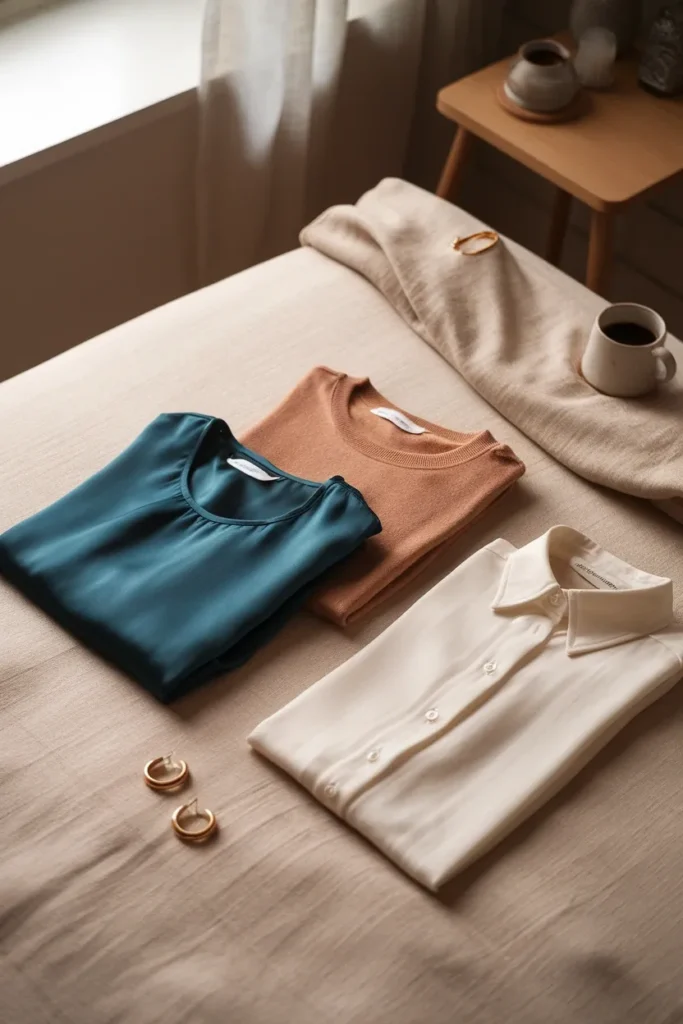
A good headshot is not a fashion photo. Its job is to make a stranger think she seems competent and I’d like to talk to her, in about half a second, at the size of a thumbnail. That’s it. Your outfit’s only assignment is to stay out of the way of your face while quietly signaling the room you belong in.
Which is genuinely good news, because it means the answer is usually already hanging up.
Start With the Photo’s Job, Not the Outfit
Before you pull a single hanger, answer one question: where is this photo going to live?
A LinkedIn profile, a law firm bio page, a conference speaker card, and an Instagram profile picture all want slightly different things. A firm bio wants structure and restraint. A speaker card gets cropped tight and needs color that survives at postage-stamp size. An author photo can be softer and warmer.
Write the destination down. Everything below gets easier once you have.
Second question: how tight is the crop? Most professional headshots are cropped somewhere between mid-chest and just below the shoulder. Ask your photographer. If you get a tight crop, roughly eighty percent of the visible frame is your face, hair, neckline, and shoulders, and your beautiful trousers are simply not in the photo. Budget your attention accordingly.
Shop Your Closet First: Build the Waist-Up Capsule
Almost every headshot guide online sends you shopping. You do not need to shop. You need to look at your closet from the shoulders up, which is a view you have probably never taken.
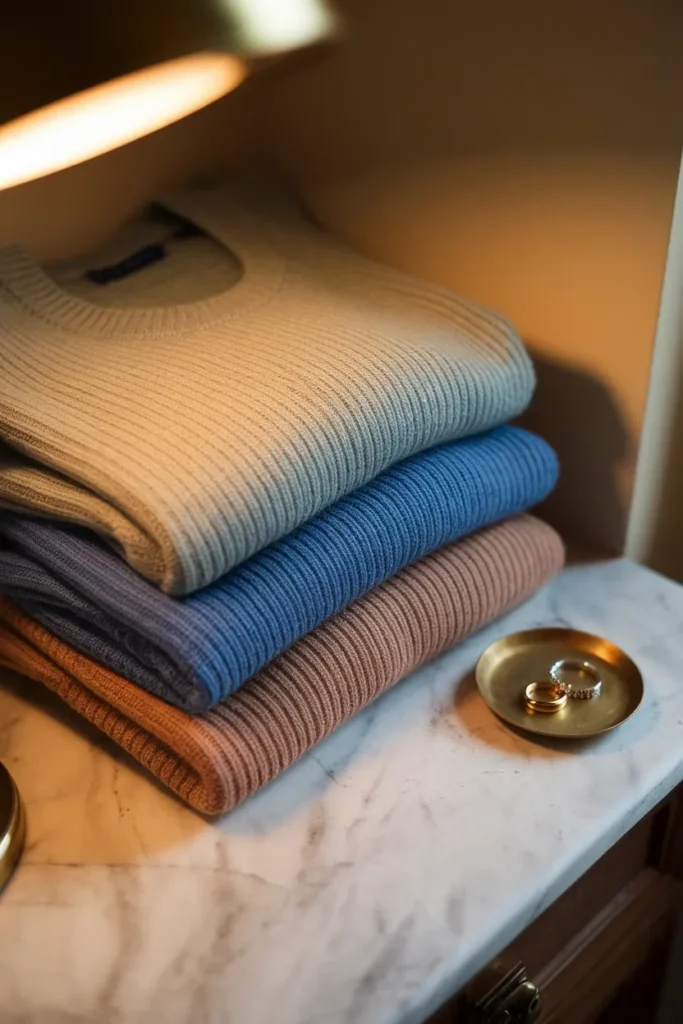
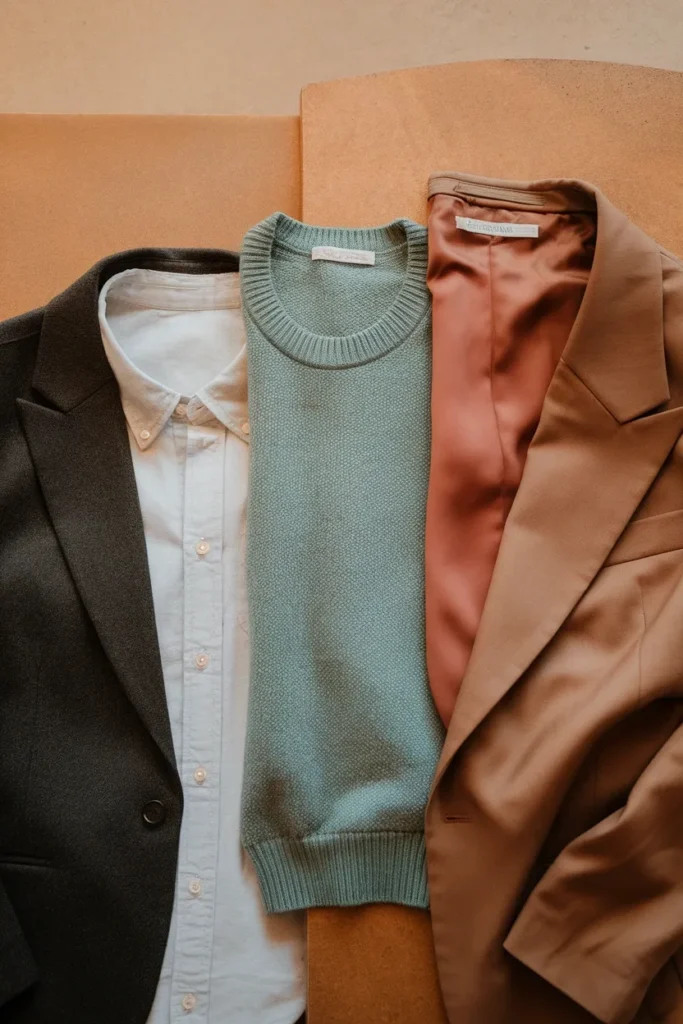
Pull everything that meets four conditions: solid color, matte fabric, fits clean through the shoulder, and has a neckline you can see your collarbone in. Lay it on the bed. That pile is your headshot capsule, and for most women it holds somewhere between six and fifteen pieces without a single purchase.
Then sort it against this grid. Save the screenshot, take it to your closet, and fill in what you own.
The Waist-Up Capsule: 9 slots that cover any headshot
| Slot | What it does on camera | Look for |
|---|---|---|
| 1. Deep jewel top | Adds color to the face without shouting | Teal, burgundy, forest, sapphire |
| 2. Warm neutral knit | Softens a cool background | Camel, oat, taupe |
| 3. White button-down | The reset button, works everywhere | Crisp cotton, not sheer |
| 4. Soft-black top | Slims the frame on a light backdrop | Matte, never shiny |
| 5. Navy blazer | Instant structure, most-photographed layer there is | Shoulder seam sitting right |
| 6. Neutral cardigan | Softer authority for a warm brand | Fine gauge, no pilling |
| 7. Silk-feel shell | Reads elevated under a jacket | Matte-finish, not satin |
| 8. Simple studs or small hoops | Light on the ears, no motion | Gold or silver, under a quarter |
| 9. One accent piece | Personality, used sparingly | Scarf, single ring, tortoise frames |
You will not wear all nine. You are picking three outfits from a bench of nine, which is building a waist-up capsule from tops you already own rather than buying a costume for one afternoon.
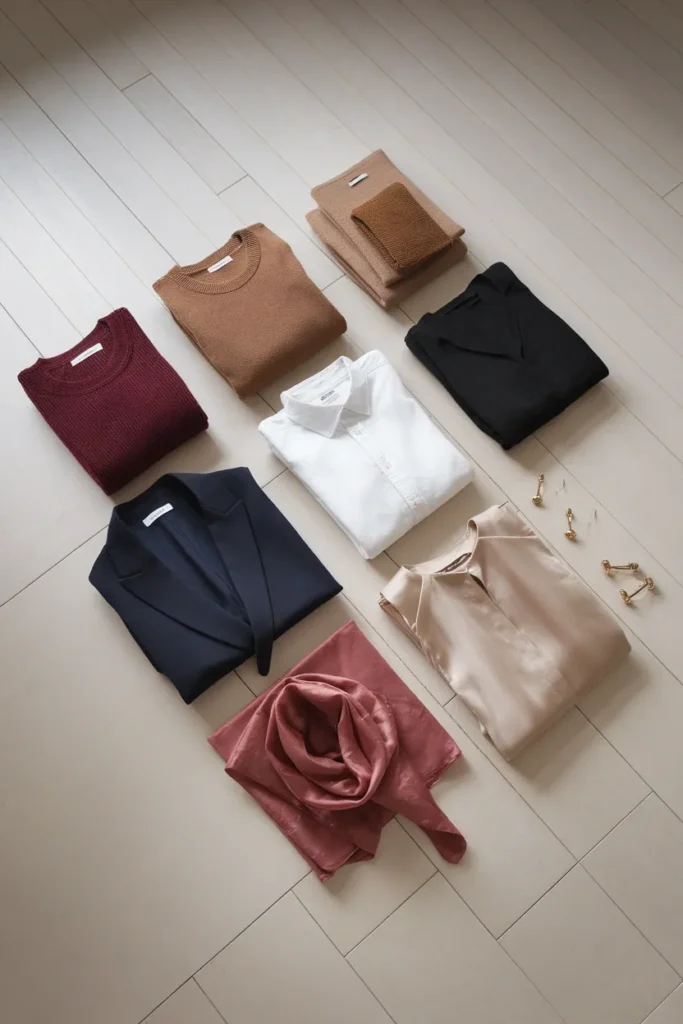
If your pile comes up short, buy one piece, not five. A well-cut top in a deep jewel tone usually lands somewhere in the $30 to $60 range at Uniqlo or Target, and in the $70 to $120 range at Madewell or Everlane. One piece. That’s the whole budget.
The Best Colors to Wear for Headshots (and Three to Skip)
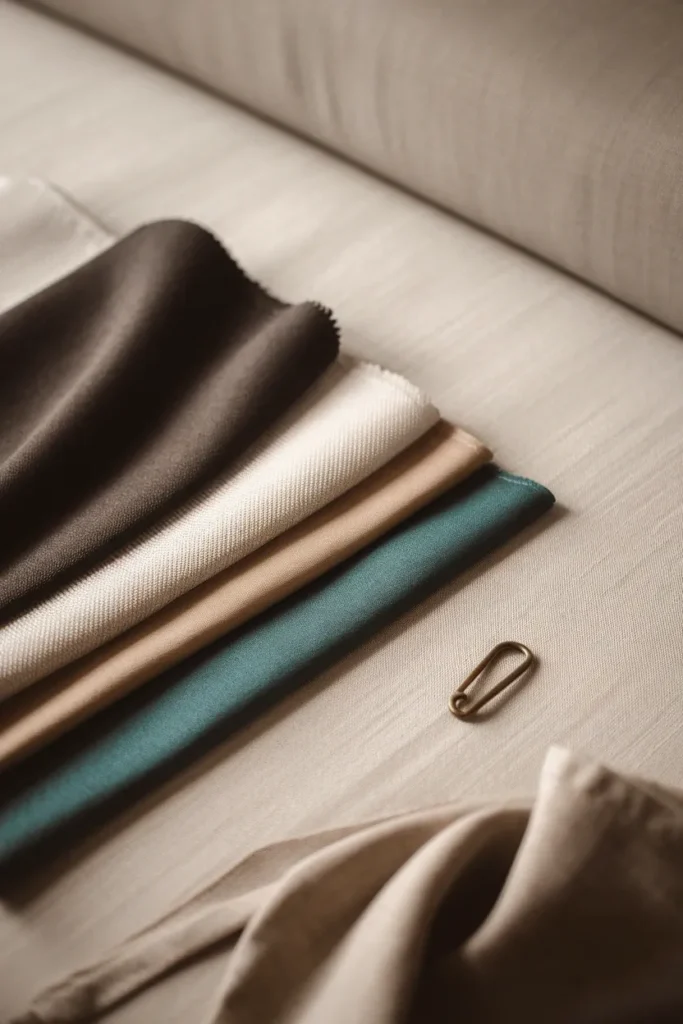
Mid-tone and deep saturated colors photograph best. Teal, burgundy, forest green, navy, dusty terracotta, warm camel: all of them hold their shape under studio light and push a little color up into your face without competing with it.
Three to be careful with.
Pure bright white. On a light background it blows out, meaning the camera loses all the fabric detail and your shirt turns into a flat white shape. A soft ivory or a cream does the same job and keeps its texture. If you love your white button-down, save it for a mid-gray or dark backdrop where it has something to sit against.
Neon and fluorescent anything. Bright saturated synthetics bounce their own color back up onto your jaw and chin. Lime green gives you a green chin. It’s fixable in editing, badly and slowly, and no retoucher enjoys it.
Pure black on a dark background. Your shoulders disappear and your head appears to float. Black is genuinely excellent on light gray or white backdrops, where it gives you a clean, sharp silhouette. Ask what color the backdrop is before you commit.
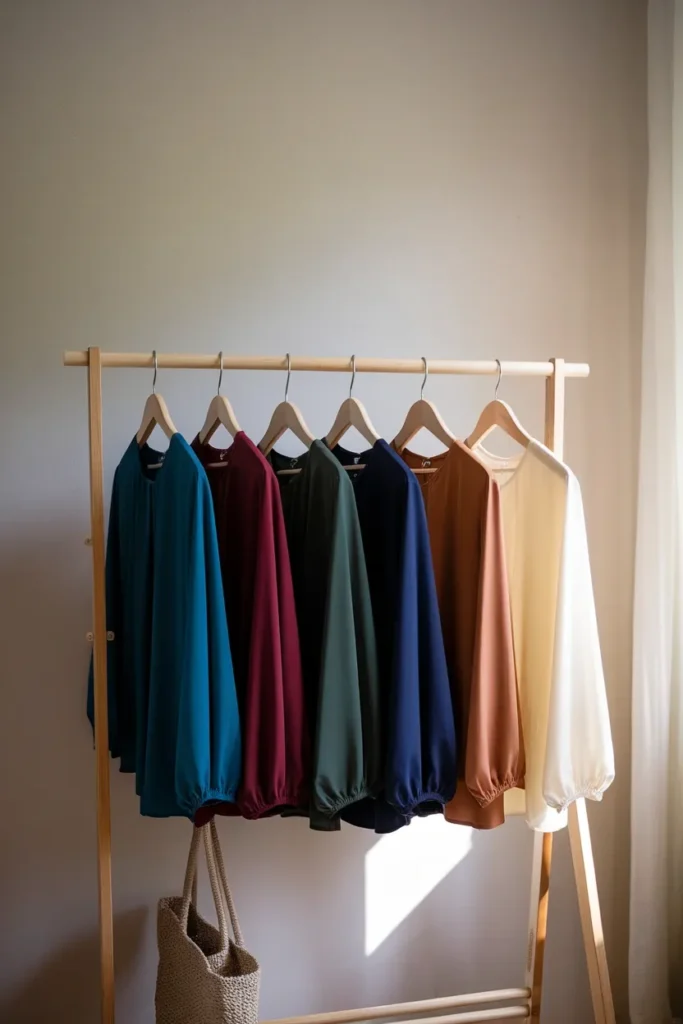
One quiet rule that matters more than any color chart: your top should contrast with the backdrop. Same-tone outfit against same-tone wall is the most common reason a headshot looks flat, and it happens to people wearing perfectly nice clothes.
Match the Color to Your Undertone, Not the Trend
Skin undertone decides which version of a good color suits you, not whether the color is good.
Warm undertones (skin leans golden or peachy, gold jewelry looks natural on you) sit well with camel, olive, rust, warm ivory, and tomato red.
Cool undertones (skin leans pink or blue, silver looks natural) come alive in sapphire, emerald, plum, true navy, and cool gray.
Neutral undertones get the easiest run of it. Soft teal, dusty rose, and mid-gray all read well.
Quick check if you’re unsure: hold a piece of white paper next to your bare face in daylight. Skin that looks slightly yellow beside it is warm. Slightly pink is cool. Hard to tell means neutral.
Getting several people to photograph well together is the same coordination problem as family photos, just solved for one person instead of six. If your company is shooting a whole team on one backdrop, agree on a shared color family in advance and let everyone pick their own piece inside it.
Necklines, Sleeves, and Fit: What the Camera Actually Sees
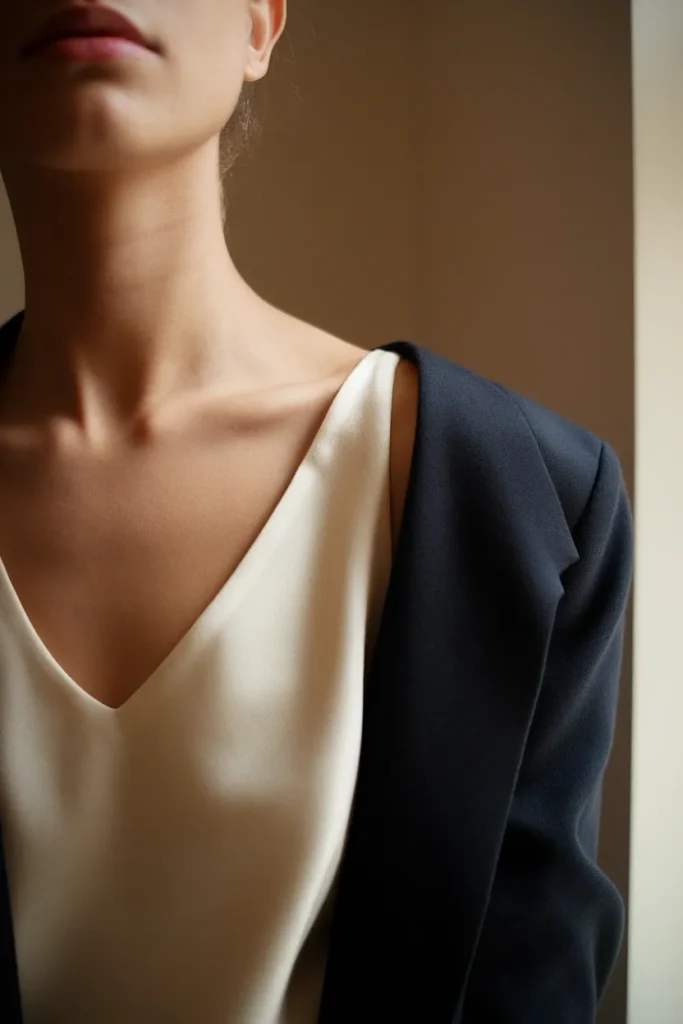
Neckline does more visual work in a headshot than any other detail, because it frames your face directly.
A V-neck or an open collar lengthens the neck and opens the frame. Reliable on almost everyone. A crew neck works nicely on a longer neck and can look a bit compressed on a shorter one. A boat neck widens the shoulder line, which is helpful if you want more presence in the frame and less so if your shoulders are already broad. A turtleneck photographs beautifully in a soft knit and can read heavy in a bulky one.
Skip anything very low. In a tight crop the camera cuts across your chest, and a deep V that looks great in person can crop into an awkward shape.
On sleeves: three-quarter and long sleeves are the safest bet, and sleeveless is completely fine as long as the crop is not extremely tight. Ask. If your photographer is shooting close, a bare shoulder can make the photo read more casual than you intended.
Fit comes down to one seam. Your shoulder seam should sit at the point of your shoulder, not below it. A blazer that drops past that point makes the whole frame slump, and it’s the difference between looking tailored and looking borrowed. Everything else can be pinned from behind. That seam can’t.
If you’re petite, look for jackets cut in petite sizing rather than sized down, because a standard shoulder on a smaller frame lands wrong no matter how good the fabric is. If you’re between sizes, size up and have the shoulder taken in. Tailoring a shoulder typically runs $25 to $60 and outlasts the photo by years, which is what makes it a jacket that earns its hanger space rather than a one-day rental.
Fabric and Texture: Why Your Favorite Top May Photograph Badly
Matte beats shiny, every time.
Satin, sequins, patent, and high-shine polyester all throw studio flash straight back at the lens as hot white spots. Wool crepe, ponte, brushed cotton, fine merino, and matte silk blends absorb light and hold their shape.
Two more fabric notes worth knowing before you commit.
Thin jersey clings and creases. It picks up every seam of what’s underneath and wrinkles in the car on the way over. If jersey is your pick, wear a seamless layer under it and steam it at the studio.
Linen wrinkles within minutes of sitting down. Linen is wonderful and it is a poor headshot fabric for that one reason. Save it for summer, not for a photo that lives on your bio page for four years.
Wear seamless undergarments in a color close to your skin. Visible straps are the single most common thing photographers quietly retouch out, and retouching costs time you could spend getting a better frame.
Patterns, Logos, and the Stripe Problem
Solid colors win. Not because pattern is unprofessional, but because pattern competes with your face for the viewer’s attention in a photo that lasts half a second.
There’s also a technical reason to avoid fine patterns specifically. Tight repeating stripes, small checks, and dense herringbone can interact with a digital camera sensor and produce moiré, a shimmering rainbow ripple across the fabric. It’s difficult to remove cleanly and it will make an otherwise perfect frame unusable.
If you want pattern, go large and low-contrast. A wide, soft stripe is fine. A pinstripe is asking for trouble.
Leave visible logos at home. A brand mark dates the photo, pulls the eye, and occasionally creates a licensing headache if your company uses the image in advertising.
What to Wear for Headshots by Industry
Industry sets the dial between soft and structured. Everything else on this page still applies.
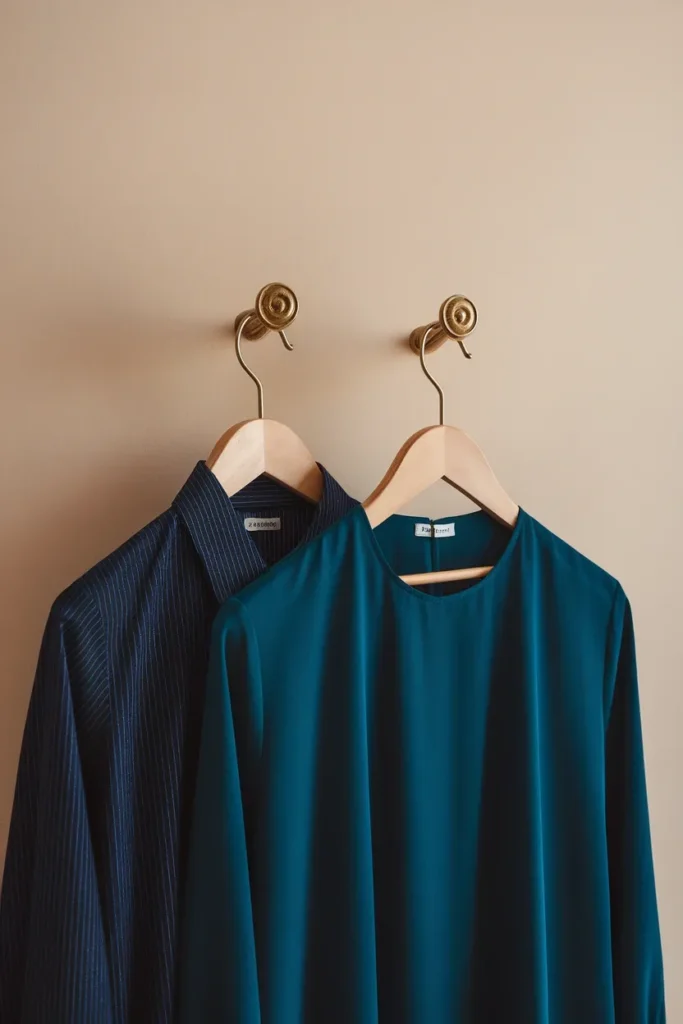
Finance, law, and consulting. Structured blazer, solid shell underneath, deep neutral or navy. Restraint reads as competence here. A crisp white button-down under a charcoal jacket is close to a uniform for a reason.
Healthcare. Soft, clean, approachable. Mid-blue and teal photograph well and carry a quiet clinical calm. Skip anything low or busy. If you’ll be photographed in scrubs or a coat, wear a solid crew or V underneath so the neckline stays clean.
Tech and startups. A fine-gauge knit or a matte shell in a solid color. A blazer is optional and often overdressed for the culture. Aim for put-together rather than formal.
Real estate and sales. Warmth sells. Camel, warm ivory, and dusty terracotta all read friendly and photograph beautifully. A structured jacket keeps it credible.
Creative fields, education, and nonprofit. More room to show personality. One accent color, an interesting texture, a single distinctive piece of jewelry. Still solid, still matte.
If you want a second opinion on where your industry sits, Harvard’s professional attire guide maps business casual against business formal and makes the same point I would: read the room you’re actually in, then dress a half-step above it.
Jewelry, Glasses, and the Accessories That Pull Focus
Small, still, and matte is the rule.
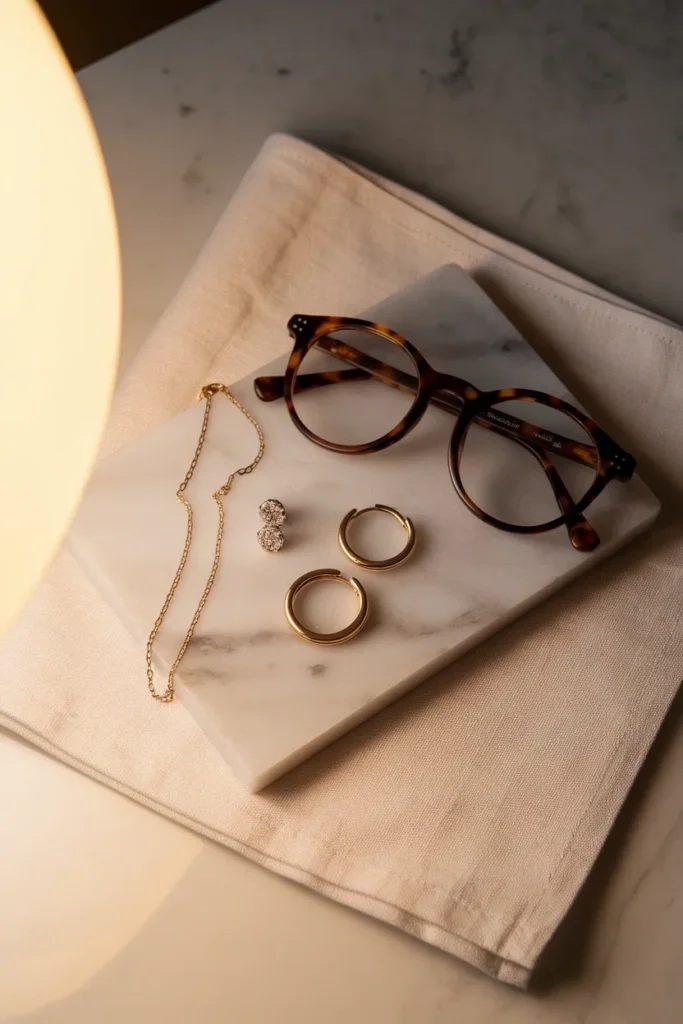
Studs and small hoops sit close to the ear and stay put. Long dangly earrings move between frames, catch light unpredictably, and give you an inconsistent set of photos to choose from. A fine chain is lovely. A statement necklace tends to become the subject of the photograph.
Glasses. Wear them if you wear them daily, because a photo of you without them stops looking like you. Two things help enormously: anti-reflective lenses, and telling your photographer in advance so they can angle the light off the lens. Some studios keep empty frames on hand. If yours does and you’re worried about glare, ask.
Rings and watches barely register in a tight crop, so wear whatever you like. A well-tied scarf can add color right at the neckline, which is prime real estate. Just make sure it lies flat rather than bunching under your chin, and remember that small accessories that change an outfit do it at the neckline in headshots, not at the waist.
One makeup note that saves photos: skip foundation and primer containing SPF on shoot day. Some sunscreen filters reflect studio flash and produce a pale gray cast across the face, invisible in the mirror and glaring on the screen. Matte finish, blotting paper in your bag, and you’re set.
The 5-Year Test: Will This Photo Still Look Current in 2031?
Here’s the question no other guide asks. Your headshot will sit on LinkedIn for three to five years, and possibly a lot longer on a bio page nobody remembers to update. So the real test isn’t whether the top looks good this week. It’s whether the photograph will look undated in 2031.
Run any candidate outfit through four questions.
- Was this silhouette invented in the last eighteen months? A very of-the-moment shoulder, sleeve, or collar shape is the fastest way to timestamp a photo. Classic shapes age slowly.
- Is the color a trend color or a permanent one? Navy, camel, burgundy, forest, and ivory have been photographing well for fifty years. This season’s it-shade probably won’t be.
- Would I still wear this if my job changed? If the outfit only works for your current title, the photo expires when you get promoted.
- Does it look like me on a normal Tuesday? If you’d never wear it to work, people who meet you will experience a small mismatch, and that costs you more than an unfashionable collar ever would.
Anything that passes all four is worth photographing in. Anything that fails two is a great outfit for a different occasion.
The nice side effect: pieces that pass the 5-Year Test are the same pieces that carry the rest of your wardrobe. A deep burgundy knit, a navy blazer, or a scarf you already know how to tie does not stop working in November because you wore it in a photo in August.
What to Wear for a Passport or ID Photo (Different Rules Entirely)
Worth flagging, because women often book both in the same week and assume the advice transfers. It doesn’t.
A headshot is a branding photo. A passport photo is a compliance document, and the rules are set by the government rather than by taste. According to the State Department’s passport photo requirements, for a US passport photo you must:
- Remove your glasses. All of them. And don’t rest them on your head.
- Remove hats and head coverings, except for documented religious or medical reasons, and even then your full face has to be visible with no shadows.
- Avoid uniforms, anything that resembles a uniform, and camouflage.
- Use a plain white or off-white background, free of shadows, texture, objects, or lines, standing several feet from the wall.
Jewelry and facial piercings are allowed as long as they don’t obscure your face.
Practical translation: a solid mid-tone or darker top, so you don’t disappear into a white background. A crew or modest V so the neckline reads cleanly. No white, no cream, no uniform-adjacent blazer with visible insignia. The soft-black top and the deep jewel top from your waist-up capsule both work perfectly here, which is a nice bit of overlap.
How Many Outfits to Bring and How to Prep Them
Bring three. Not one, because you’ll want options once you see the first frames. Not six, because decision fatigue eats your session time and you’ll look tired in the last set.
Build them like this:
- Outfit 1: the safe one. Solid mid-tone, structured, industry-appropriate. Your default.
- Outfit 2: the warm one. Softer layer, neutral or warm color. Reads approachable.
- Outfit 3: the layered one. A jacket over one of the above. Gives you a second look from one change.
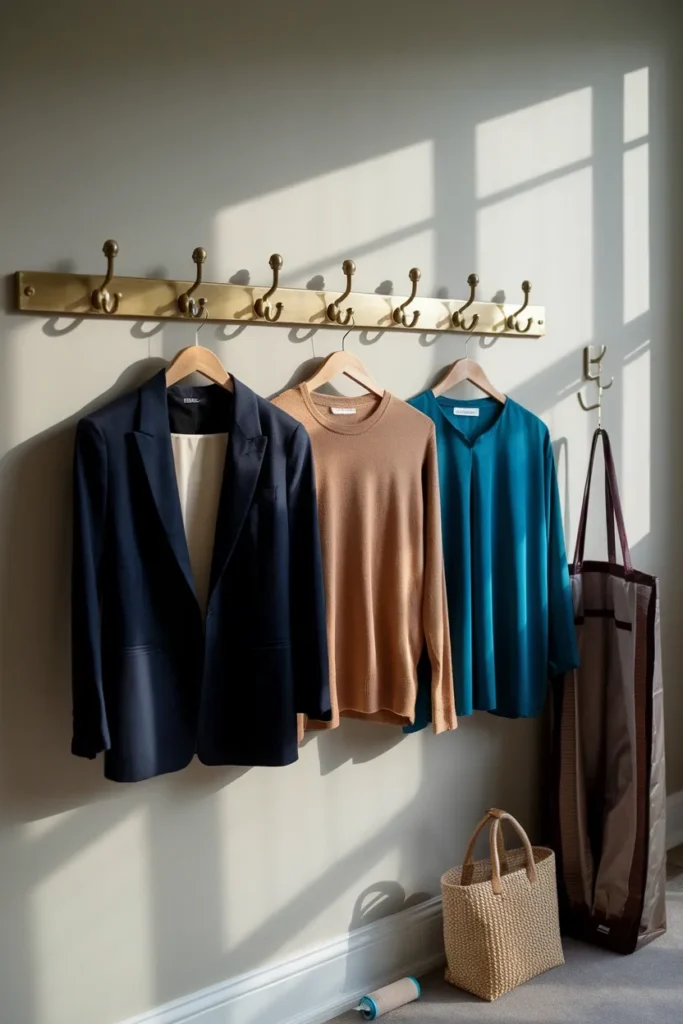
Prep matters more than people expect. Steam everything the night before, then transport it on hangers in a garment bag rather than folded in a tote, roughly how you’d pack them for a flight. Wrinkles across the chest are the number one reason a photographer has to reshoot a set.
Arrive in outfit one already on, with the other two hanging. Bring a lint roller, a small mirror, blotting paper, and whatever undergarment each top needs. Change fast, and give your energy to your face instead of your zipper.
What to Avoid Wearing for Headshots
The short version, in order of how often it goes wrong:
- Anything shiny under studio flash
- Fine stripes and small dense checks
- Visible logos
- Pure bright white on a light backdrop
- Deep necklines that crop badly
- Statement earrings that move between frames
- Anything you last wore three years ago and no longer feel like yourself in
- A brand new haircut on the morning of the shoot
That last one catches people. Book the cut a week ahead so it settles.
what to wear for headshots women Frequently Asked Questions
What’s the best color to wear for a professional headshot? Deep, saturated mid-tones. Navy, teal, burgundy, forest green, and warm camel all photograph reliably and push a little color into your face without competing with it. The more important rule is contrast: whatever you choose should be a different tone from the backdrop.
Can I wear black or white in a headshot? Both, with a condition attached. Black looks sharp against a light gray or white backdrop and swallows your shoulders against a dark one. Bright white blows out under studio light on a pale background, so swap to ivory or cream, or save the white shirt for a darker backdrop.
Can I wear a sleeveless top in my headshot? Yes, as long as the crop isn’t extremely tight. In a close crop a bare shoulder tends to read more casual than intended. Ask your photographer how tight they’re shooting, and bring a jacket as a second option either way.
Should I wear my glasses in my headshot? If you wear them every day, yes. A photo of you without them stops looking like you. Tell your photographer in advance so they can angle the lighting to avoid glare, and use anti-reflective lenses if you have them. For a passport photo the answer flips: glasses come off, no exceptions.
How many outfits should I bring? Three. One safe and structured, one warm and softer, one layered with a jacket. Steam them the night before and bring them on hangers.
Do I need to buy something new for my headshot? Almost certainly not. Pull every solid, matte top that fits clean through the shoulder and lay them on the bed. Most women find six to fifteen viable pieces already hanging up. If the pile really is empty, buy one top in a deep jewel tone, typically $30 to $60 at Uniqlo or Target and $70 to $120 at Madewell or Everlane, and stop there.
Does this advice work if I’m petite or between sizes? Yes, with one adjustment. The shoulder seam is the seam that decides whether a jacket photographs well, so if you’re petite look for petite-cut jackets rather than sizing down a standard cut. If you’re between sizes, size up and have the shoulder taken in, usually $25 to $60 at a local tailor. Everything else can be pinned out of frame during the shoot.
Your Headshot Is Waiting in Your Closet
The whole thing comes down to four filters: solid, matte, clean through the shoulder, and a neckline that frames your face. Run your closet through those and you’ll have your three outfits in about ten minutes, without spending anything.
Then forget the clothes entirely. The best headshots are the ones where the woman in the frame wasn’t thinking about her collar, because she’d already settled it the night before.
Pull your nine pieces this week and lay them out. If you find yourself short in more than a couple of slots, that’s not a headshot problem, it’s a closet telling you which pieces it’s missing, and that’s a much more useful thing to know.
Keep reading

Office Siren Aesthetic: How to Wear It to an Actual Job
The office siren aesthetic is the sharpest thing to happen to workwear in a decade, and it’s also the fastest way to...

How to Wear Winter Work Outfits That Stay Warm and Look Expensive
Cold mornings make getting dressed for work feel like a math problem. You want to look pulled together. You also want to...

The Teacher Outfits Capsule: Comfortable Clothes That Survive a Full Classroom Day
You have thirty minutes before the first bell. Coffee in one hand, lanyard somewhere. And you are standing in front of a...