
The Teacher Outfits Capsule: Comfortable Clothes That Survive a Full Classroom Day
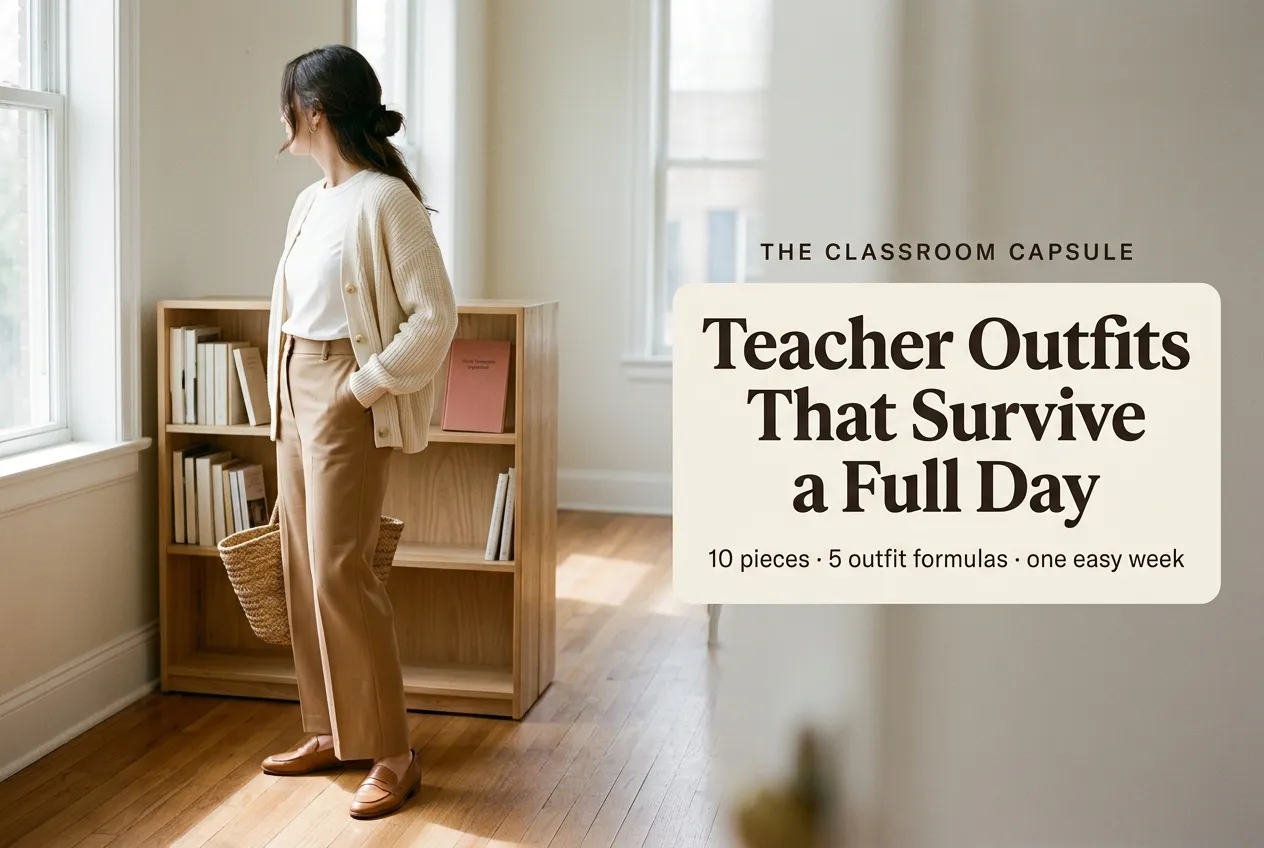
You have thirty minutes before the first bell. Coffee in one hand, lanyard somewhere. And you are standing in front of a full closet with the same thought every teacher knows by heart: nothing to wear. The fix is not more clothes. It is a small set of teacher outfits that mix and match, move when you move, and wash clean after a day of glue sticks and dry-erase marker. That is what a classroom capsule does, and this guide builds you one.

Here is the promise. By the end, you will have a piece list, five outfit formulas, and a washability rule of thumb so you can get dressed in ninety seconds and look like you tried harder than you did. No trend chasing. Just clothes that work as hard as you do.
What Most Teachers Actually Wear
Ask a room of teachers what they wear and you get a pattern, not a uniform. Comfortable bottoms with give. A top you can lift your arms in without a wardrobe emergency. One layer for the room that is always freezing. And shoes built for standing, walking, kneeling, and the occasional sprint to the copier.
Professional here means pulled-together, not stiff. Research on educator attire from the U.S. Department of Education’s study on how teacher dress shapes classroom perception supports what most of us feel instinctively: looking intentional earns a little more room to lead. You do not need a suit. You need pieces that read as considered.
The capsule approach fits this perfectly. Instead of buying a new shirt every payday (and owning four versions of the same one), you build a neutral base of pieces that earn their hanger space, then let them recombine. Buy fewer, wear more.
The Bottoms That Survive a Full Teaching Day
Bottoms are where comfort is won or lost. You sit on tiny chairs, crouch at desks, and stand for hours. So the waistband matters as much as the look.
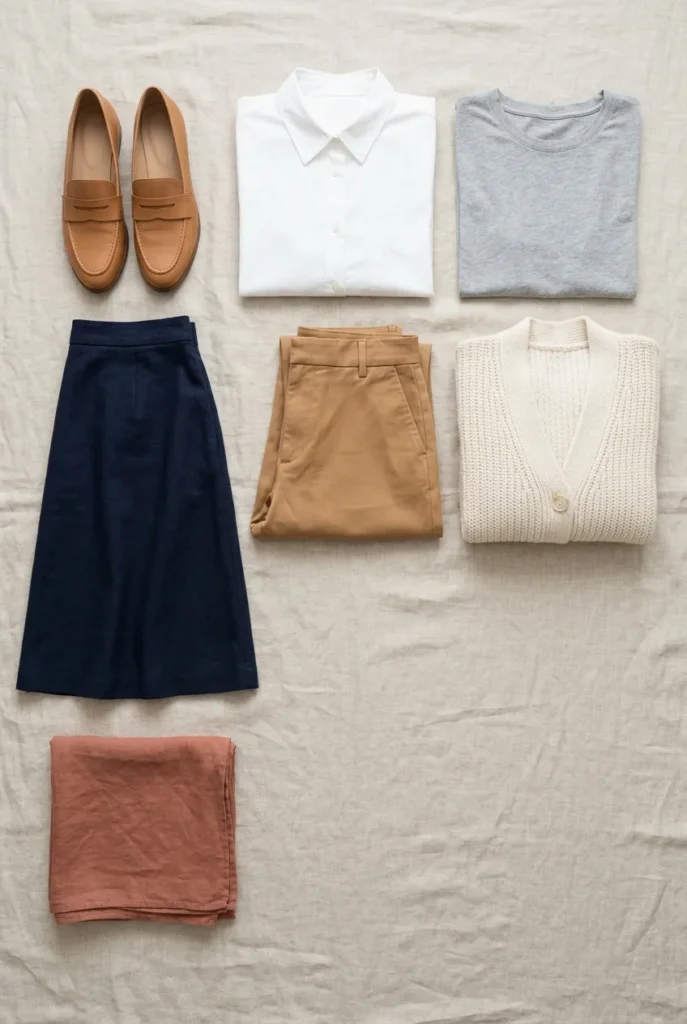
Three bottoms carry most classroom weeks. Wide-leg trousers give you a polished line with room to move (Quince and Everlane typically run around $50 to $90, Old Navy versions closer to $35 to $45, all ). A ponte or knit pant reads like real trousers but stretches like leggings. And a midi skirt, A-line or slightly structured, is a fast way to look put-together with zero effort.
For proportions, petite teachers (5’4″ and under) usually do best with a cropped wide-leg or an ankle length so the fabric does not pool; tall teachers (5’9″ and over) should check the inseam so trousers do not read cropped by accident. This is about working with your proportions, not hiding anything.
If you want the reasoning behind mixing these into a broader work rotation, this pairs well with building a business professional wardrobe that mixes and matches.
[VERIFY: I rotated a 12-piece teacher capsule for 90 days in the fall and never repeated an outfit in a single week.]
Tops You Can Raise Your Arms In
The arm test is real. You point at the board, reach for the top shelf, and hug a crying first-grader all before lunch. So tops need a little ease.
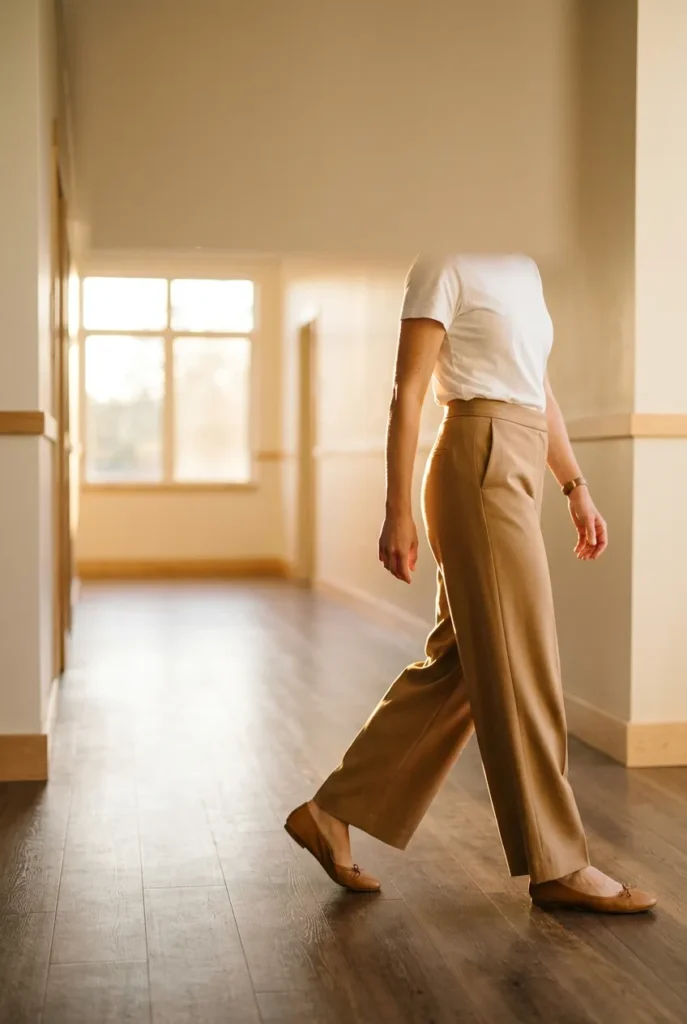
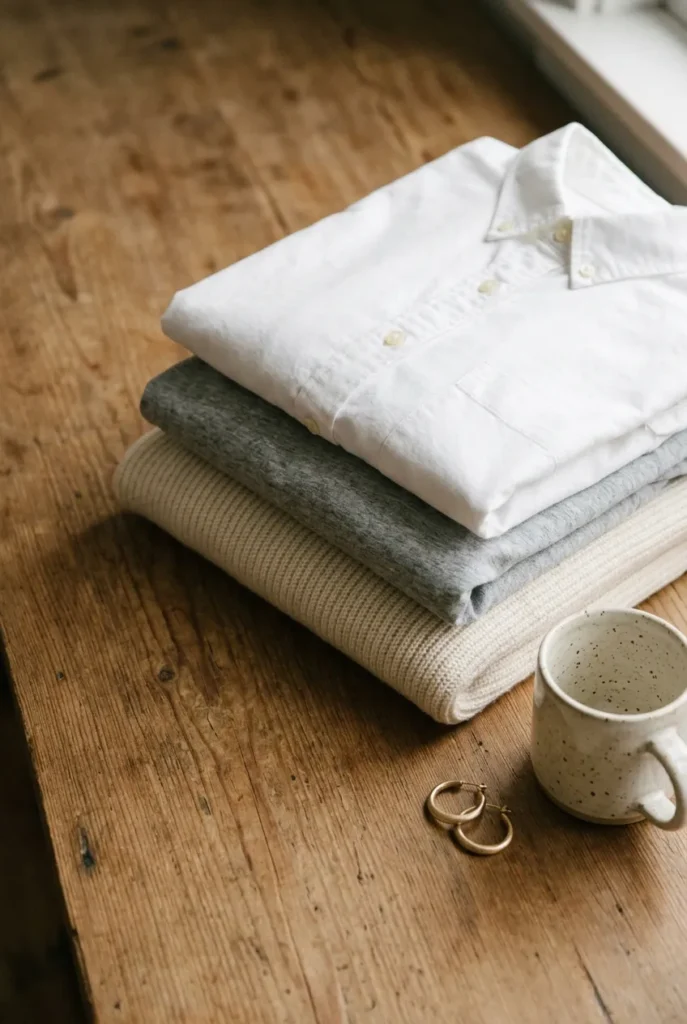
Start with a base you already trust: a white tee, a soft gray tee, and a white button-down. Add one or two elevated everyday tops (a silky-feel shell, a fine-gauge knit) for days you want to look a notch sharper. The button-down doubles as a light layer left open over a tee.
The trick to looking expensive here is fabric and fit, not price. A $20 tee in a heavier cotton with a clean neckline can outclass a flimsy $60 one. That whole idea, spending less and looking like you spent more, is the heart of how to make elevated basics look more expensive.
One-and-Done Dresses
Some mornings you have nothing left to give an outfit. That is what the one-and-done dress is for. Pull it on, add flats, done.
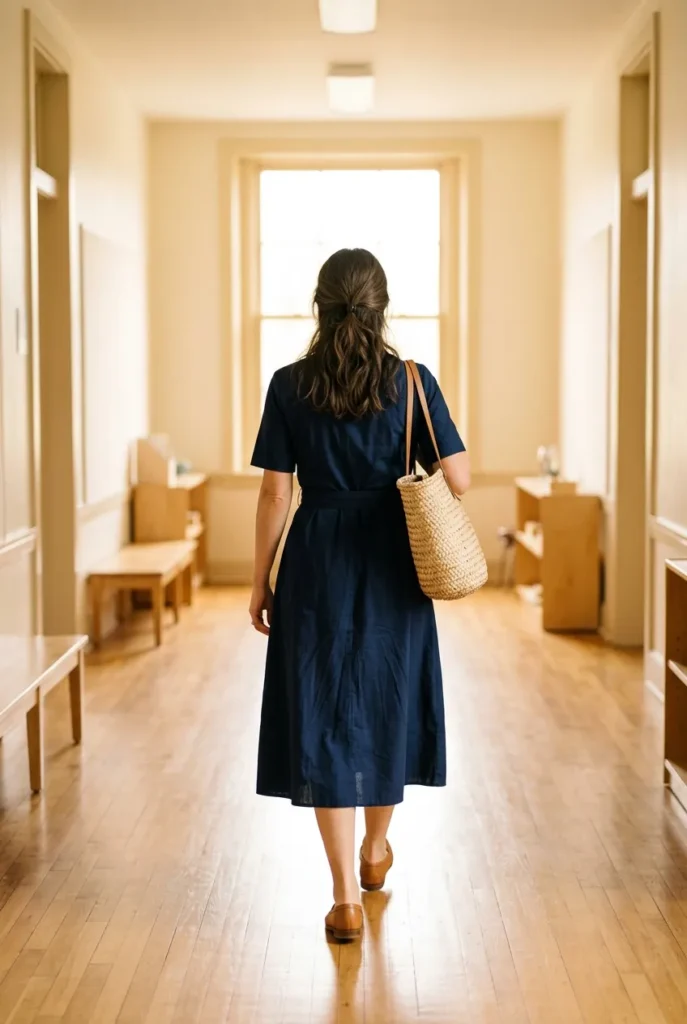
A midi shirtdress, a ponte sheath, or a simple A-line in a machine-washable knit covers most of the school year. Look for pockets (you will use them), a hemline that lands mid-calf or just below the knee so you can bend and sit freely, and a fabric with a touch of stretch. A wrap style flatters an hourglass shape by defining the waist; a shift or A-line gives a rectangle or apple shape clean, comfortable room through the middle.
If your school leans toward a stricter dress code, a structured sheath bridges neatly into a formal office outfits capsule for stricter dress codes.
[VERIFY: I styled one navy shirtdress five different ways in a single school week, just by swapping the layer and shoes.]
Layering Pieces That Do the Heavy Lifting
Classrooms have two temperatures: too cold and suddenly too warm. One good layer solves both.
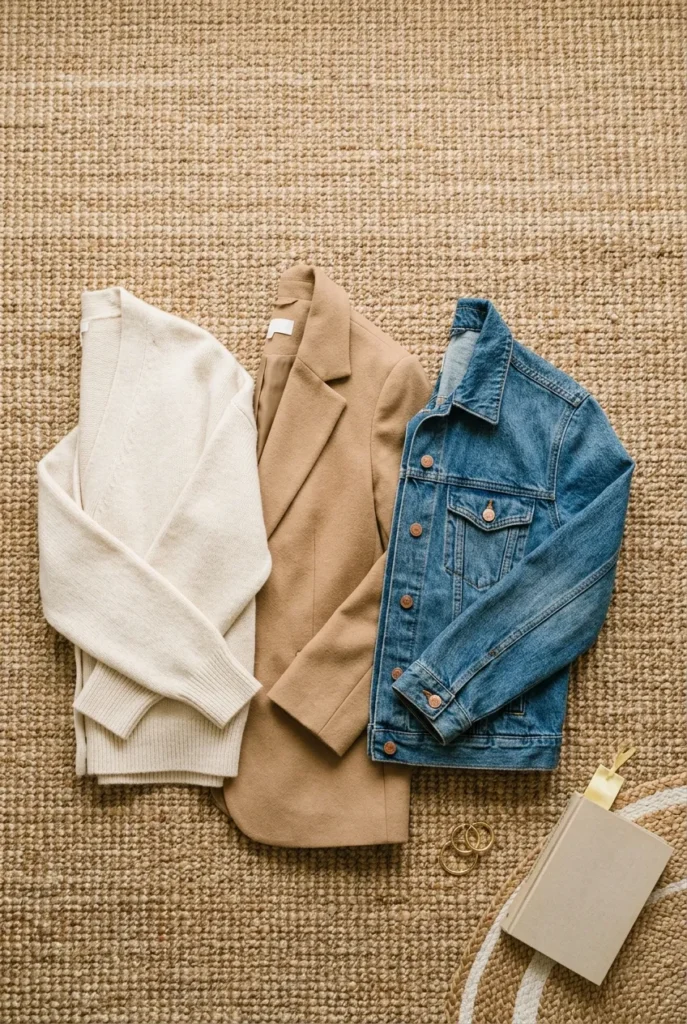
A relaxed cardigan is the workhorse. A soft blazer (unstructured, not corporate) instantly sharpens a tee-and-trouser day. And a denim jacket keeps a dress feeling casual for younger grades. Keep these in your neutral base so they go over everything: cream, camel, gray, navy.
Two layers, three bases, and your outfit count multiplies fast. That flexible, dress-up-or-down thinking is exactly what drives the smart casual outfits playbook, and it translates straight to the classroom.
Shoes You Can Stand In for Seven Hours
Shoes make or break a teaching day, because you are on your feet for most of it. Comfort is not optional here, it is the whole job.
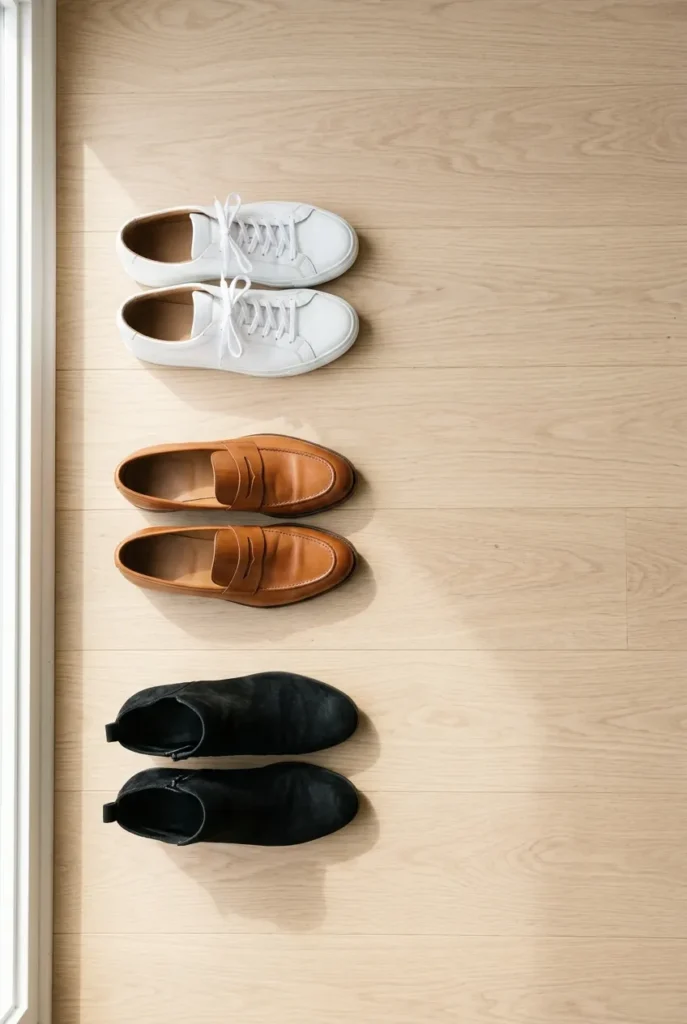
Three pairs cover almost everything. A clean leather sneaker for high-movement days (think field trips and PE-adjacent chaos). A supportive ballet flat or loafer for polished days. And a low block-heel bootie for fall and winter, when you want a little lift without wobbling down a tile hallway. Skip anything you cannot walk a mile in, because some days you will.
[VERIFY: I tracked cost-per-wear on my classroom loafers for 6 months and they came out to under a dollar a day.]
The Fabric and Washability Test
Here is the angle most teacher outfit lists skip. It does not matter how cute a piece is if it cannot survive marker, glitter, and a Tuesday.
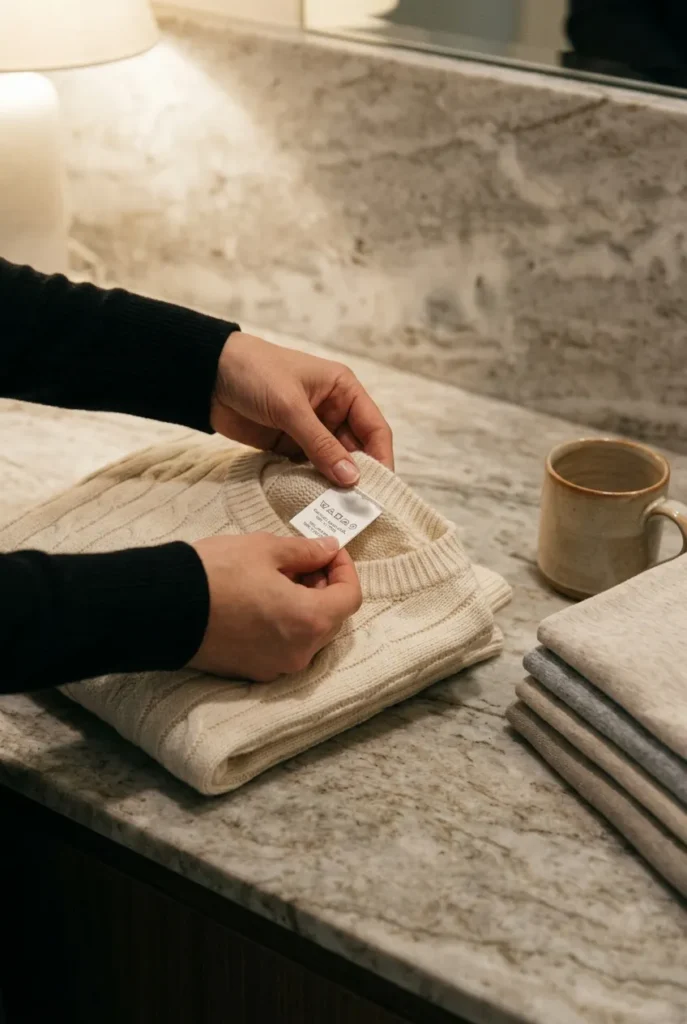
Before anything earns a spot in the capsule, check the care label. You want machine-washable, wrinkle-resistant, and forgiving. Fabrics that hold up: cotton and cotton blends, ponte knit, washable crepe, and TENCEL. Fabrics that fight you: pure linen (wrinkles by second period), silk (spot a stain, panic), and anything labeled dry-clean-only for daily wear. Care symbols are standardized, so the tag really does tell you the truth. The FTC’s care labeling rule is why that little symbol strip exists on every garment.
Think in cost-per-wear, not sticker price. A $90 washable dress you wear fifty times a year costs you less per wear than a $30 top you baby and rarely reach for. Buy fewer, wear more.
Five Outfit Formulas for a Full Week
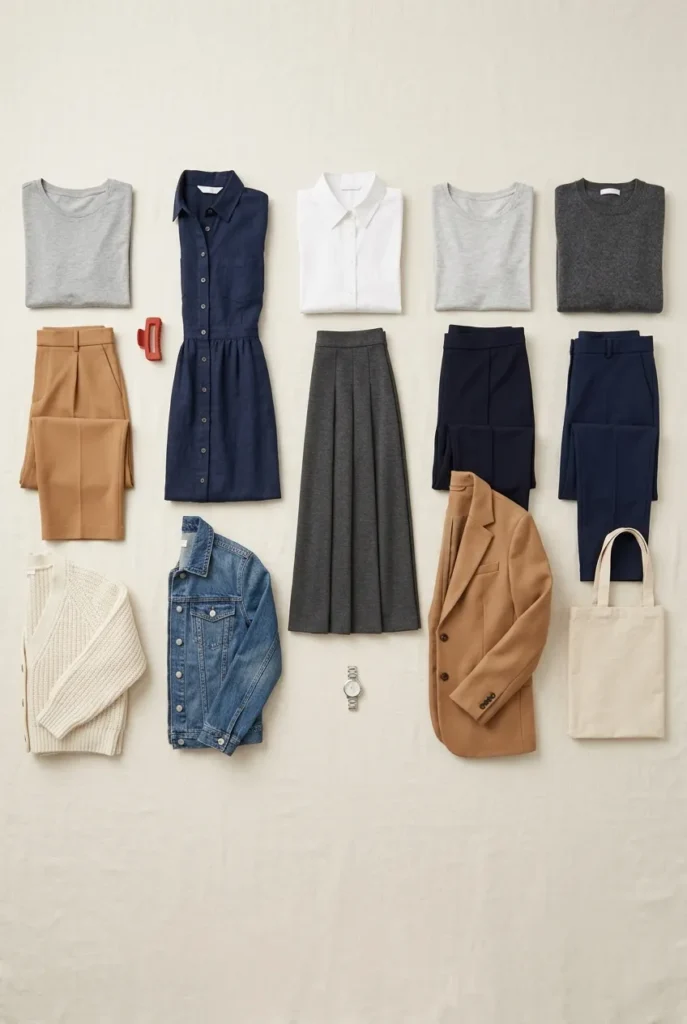
This is the outfit math. Take the pieces above and here are five formulas that carry you Monday through Friday without a single repeat. Screenshot this part.
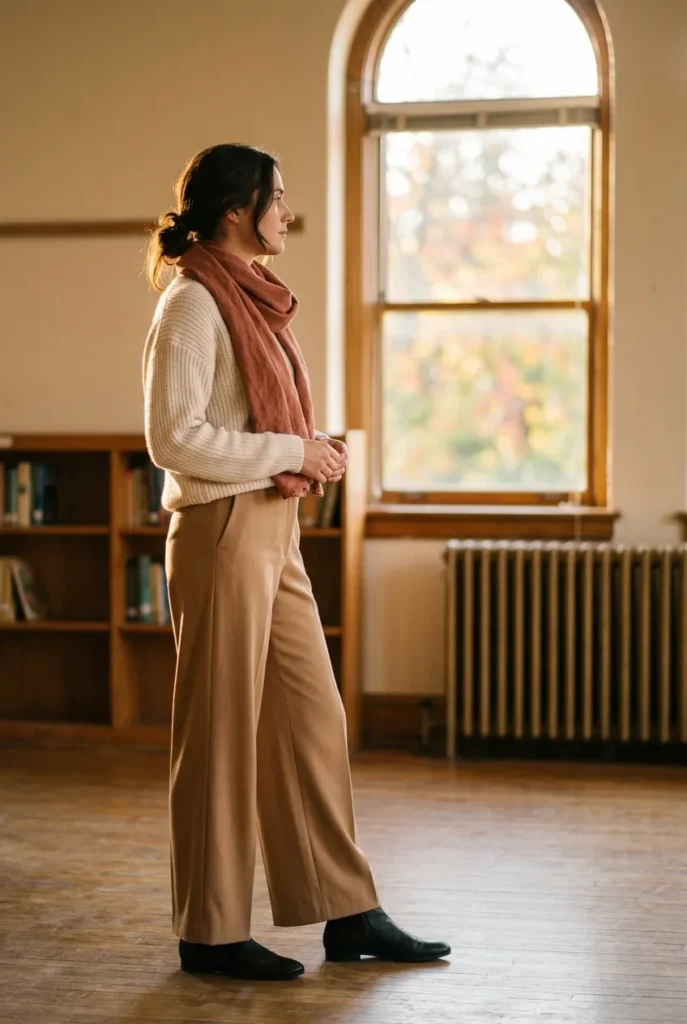
Monday: White tee + camel wide-leg trousers + cardigan + loafers. The easy reset day.
Tuesday: Navy midi shirtdress + denim jacket + white sneakers. Movement-friendly.
Wednesday: Button-down (tucked) + midi skirt + ballet flats. Quietly polished.
Thursday: Gray tee + ponte pants + soft blazer + booties. The look-expensive day.
Friday: Knit top + wide-leg trousers + sneakers + tote. Comfortable landing.
Notice the mix-and-match ratio. Roughly a dozen pieces just made a full week, and swapping one layer or shoe doubles it again. One piece, three outfits, every time.
Dressing for Your Season and Grade Level
A capsule stretches across seasons with small swaps. In fall (45 to 70F), add the cardigan, booties, and a scarf. Winter (20 to 45F) brings a wool coat and tights under the midi skirt. Spring (50 to 70F) is trench-and-flats territory. Summer (75 to 95F) leans cotton dresses and breathable tops, though many teachers are in air conditioning, so keep one layer handy year-round.
Grade level shapes it too. Elementary and preschool teachers sit on the floor and get messy, so washable knits, flats, and darker bottoms win. Middle and high school teachers can lean a touch sharper, blazers, structured trousers, loafers, which flows nicely into the scholarly dark academia aesthetic if that is your vibe.
[VERIFY: I tested four versions of this capsule across Madewell, Quince, J.Crew, and Everlane before landing on my final pieces.]
Frequently Asked Questions
What do most teachers wear?
Most teachers wear comfortable, professional-leaning pieces: wide-leg or ponte trousers, tees and button-downs, one-and-done dresses, a cardigan or blazer for the layer, and supportive flats, loafers, or sneakers. The common thread is clothing that moves and washes easily.
How can I dress as a teacher without buying a whole new wardrobe?
Build a small neutral capsule of about ten to fourteen pieces that mix and match. A handful of tops, two or three bottoms, a dress or two, two layers, and three pairs of shoes will generate a full week of outfits.
Is a capsule wardrobe worth the investment for teachers?
Usually yes, because you buy fewer pieces and wear each one far more, which lowers your cost per wear. Spending a little more on a washable, durable piece you reach for constantly beats a closet of cheap items you rarely wear.
What fabrics hold up best in a classroom?
Cotton and cotton blends, ponte knit, washable crepe, and TENCEL wear well and resist wrinkles. Check the care label for machine-washable instructions, and be cautious with pure linen and silk for daily teaching.
Can these teacher outfits work for petite or curvy proportions?
Yes. Petite teachers often prefer cropped or ankle-length trousers and midi skirts that hit mid-calf; curvy and hourglass shapes tend to like a defined waist through a wrap dress or a tucked top. Choose the cut that works with your proportions.
Do these outfits work year-round?
The base does. Swap layers and shoes by season: cardigans and booties in fall, a coat and tights in winter, a trench in spring, breathable cotton in summer. The core pieces stay the same.
What should I wear the first day of school?
Reach for a one-and-done dress or a tucked button-down with wide-leg trousers and comfortable flats. You want to look intentional but stay comfortable, because the first day is long and busy.
Getting Dressed in Ninety Seconds
A teacher capsule is not about owning less for its own sake. It is about mornings that no longer start with a closet standoff. Pick your neutral base, run it through the washability test, and lean on the five formulas until they are muscle memory. Then getting dressed takes ninety seconds and looks like it took an hour. If you build even half of this before the next school year, your future self, coffee in hand at 7 a.m., will thank you. Start with the pieces you already own, and add only what earns its hanger space.
Keep reading

Office Siren Aesthetic: How to Wear It to an Actual Job
The office siren aesthetic is the sharpest thing to happen to workwear in a decade, and it’s also the fastest way to...

What to Wear for Headshots: How to Look Like Yourself on Camera
You have a headshot booked, and you’ve been standing in front of your closet for twenty minutes. Everything looks either too casual...

Japan Travel Capsule Wardrobe: What to Wear Sightseeing
You are going to walk. A lot. Japan rewards the traveler who wanders, which means your feet, your fabrics, and your outfit...