
Colorful Capsule Wardrobe: Adding Color Without Losing Cohesion
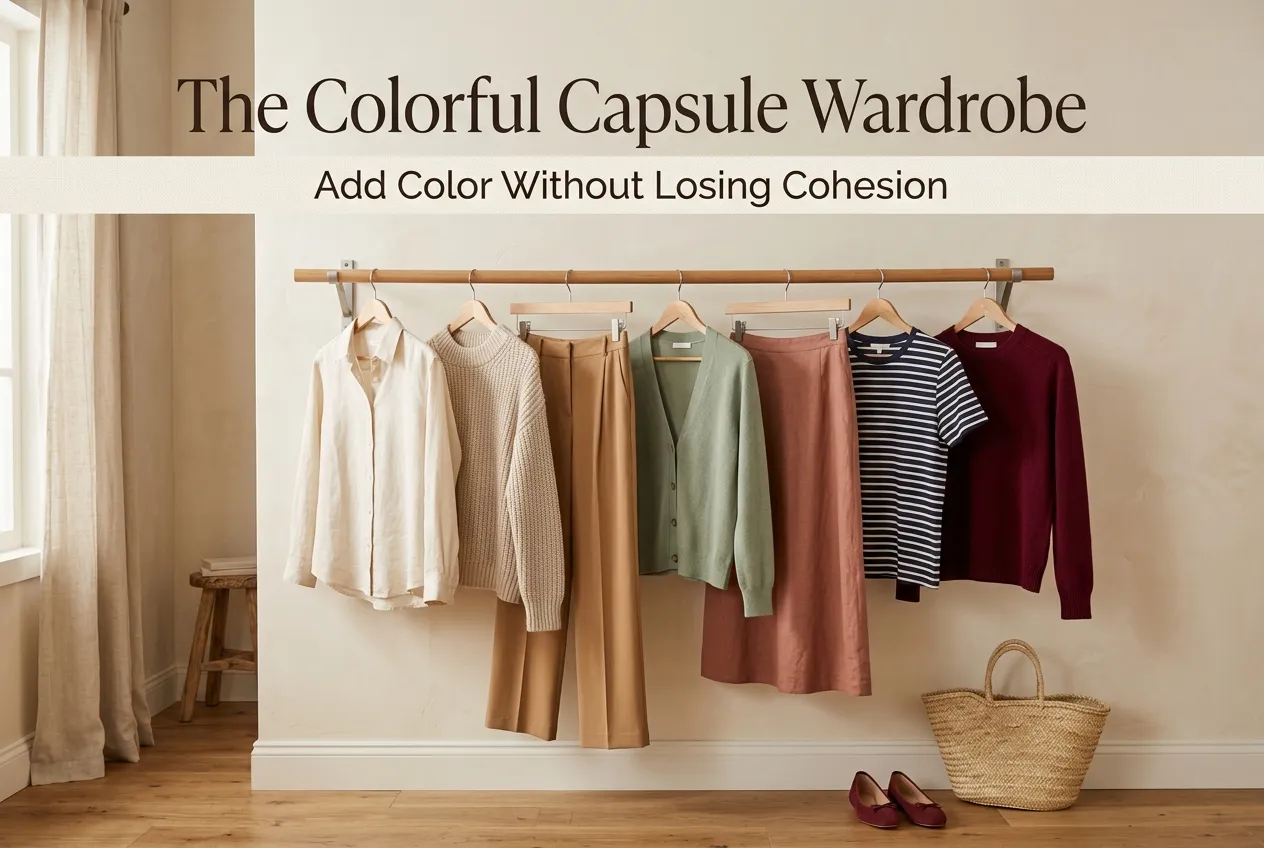
A colorful capsule wardrobe sounds like a contradiction. Capsules are supposed to be beige, gray, and quietly dependable, and color is supposed to be the thing that wrecks the whole mix-and-match system. After years of building capsules, I can tell you the real story: color doesn’t break cohesion. Random color does. This guide walks you through the exact system I use to add real color (burgundy, butter yellow, cobalt, take your pick) without losing the one piece, three outfits math that makes a capsule worth having. You’ll get my Echo Test, a color placement map you can screenshot, an 18-piece plan, and where to shop it all on any budget.
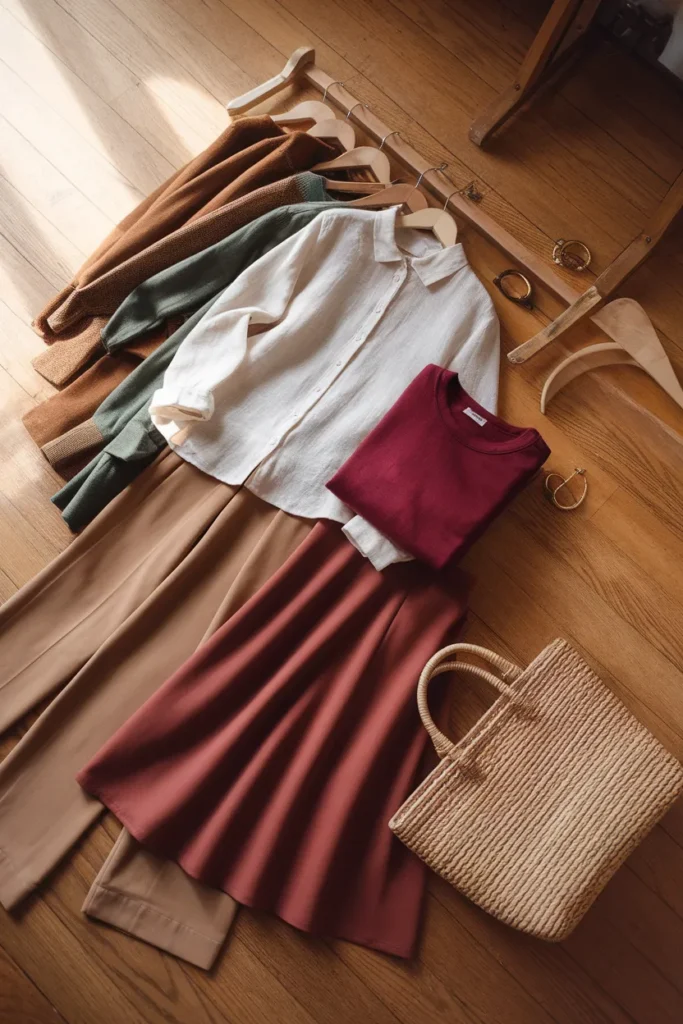
Why Most Colorful Capsules Fall Apart (and What Actually Works)
A capsule works because of outfit math. Twenty pieces that all cooperate can produce forty or fifty outfits, while eighty pieces that ignore each other produce the same three you always wear.
Neutrals pass that math automatically. Cream goes with camel, camel goes with espresso, and nothing has to be planned. Color only multiplies when it repeats, and that’s the part most colorful closets miss.
Here’s the usual failure: you buy a coral blouse in March, an emerald skirt in May, and a lilac sweater in September. Each one is pretty. None of them speaks to the others, so each needs its own supporting cast, and suddenly you’ve spent $400 and have nothing that goes together. Cohesion isn’t about owning fewer colors. It comes from repeating the ones you own on purpose, which is the same logic that makes the 30-piece year round capsule wardrobe run in every season. Repetition is the entire secret. Everything below is just a practical way to enforce it.
Start With an Anchor Piece, Not a Color Palette
Most advice tells you to pick a palette first. Choose four pretty colors, then go shopping. I’ve watched that approach fail over and over, because a hex grid saved from Pinterest doesn’t tell you whether those shades exist in stores this year, or whether they sit well together on actual fabric.
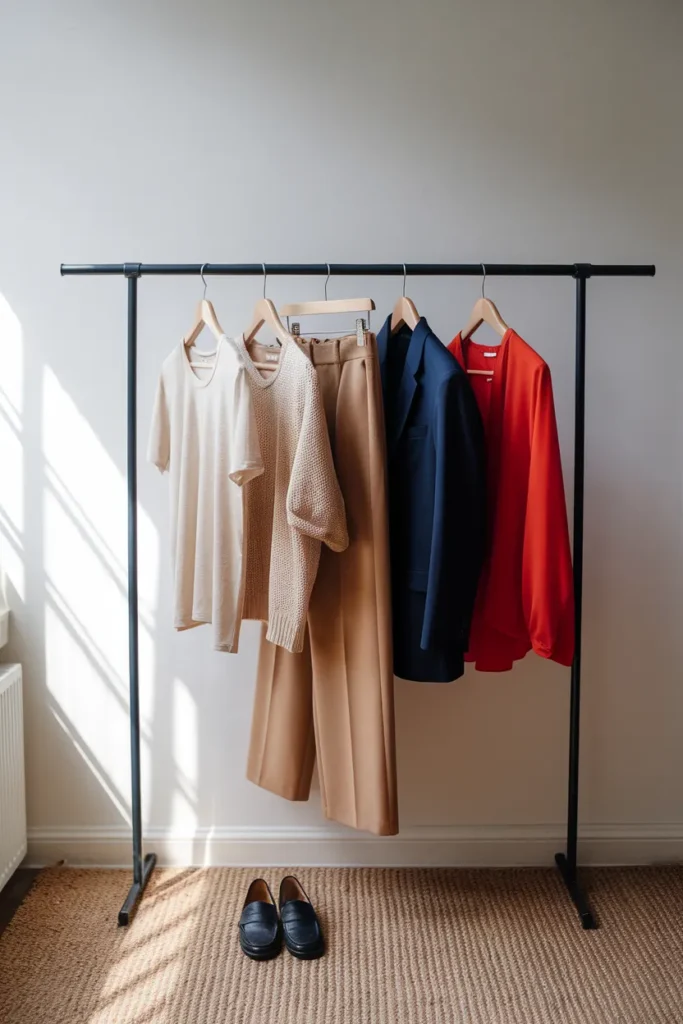
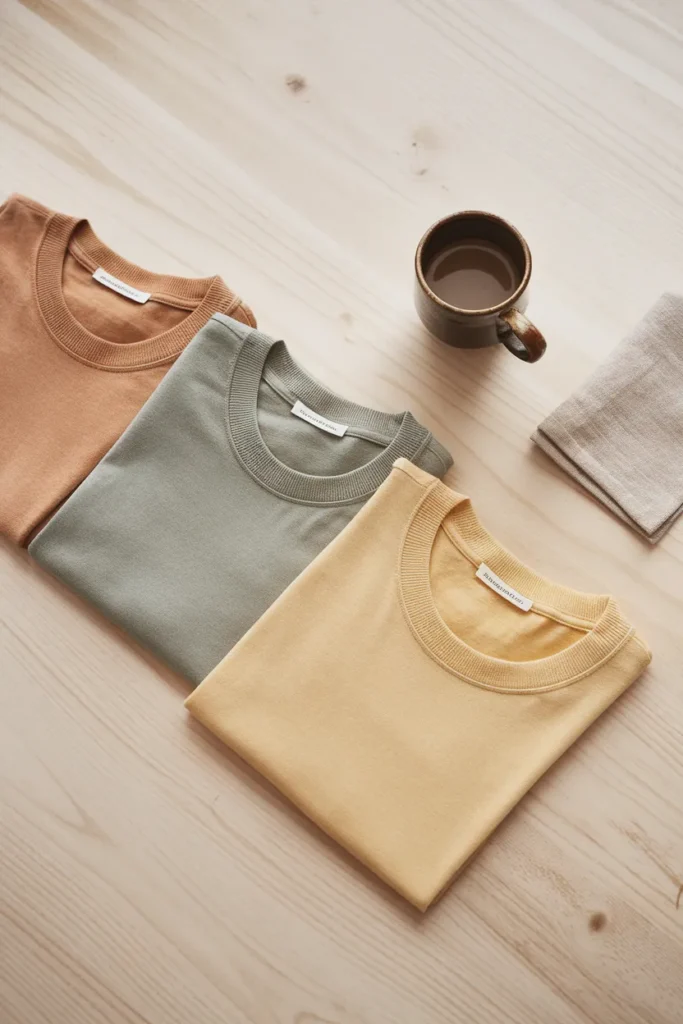
Flip the order. Find one anchor piece you already love, ideally a print that carries three or four colors: a floral midi dress, a striped knit, a paisley scarf. Your palette is whatever that piece contains. If the dress holds burgundy, butter yellow, sage, and cream, congratulations, that’s your colorful capsule wardrobe palette, chosen by a designer whose whole job was making those shades agree.
An anchor piece solves the shopping problem too. Hold any new item next to it in the fitting room. If the color appears in the print, it joins the family. If it doesn’t, it stays on the rack no matter how pretty it looked under store lighting. Build a base before you add color, and let one real garment (never an abstract mood board) decide what color means in your closet.
The Echo Test: The Only Rule a Colorful Piece Has to Pass
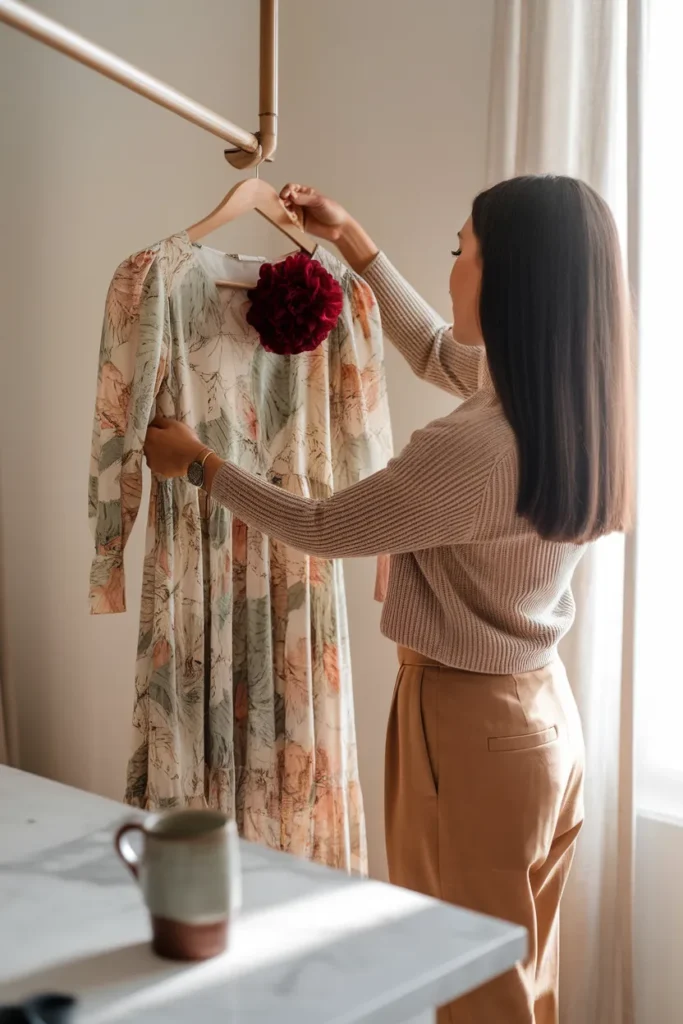
Here’s the framework I built after seeing too many beautiful orphan pieces waste their hanger space. Before any colorful item earns a spot in your capsule, it has to pass the Echo Test: its color must already exist somewhere else in your closet, in a different garment category.
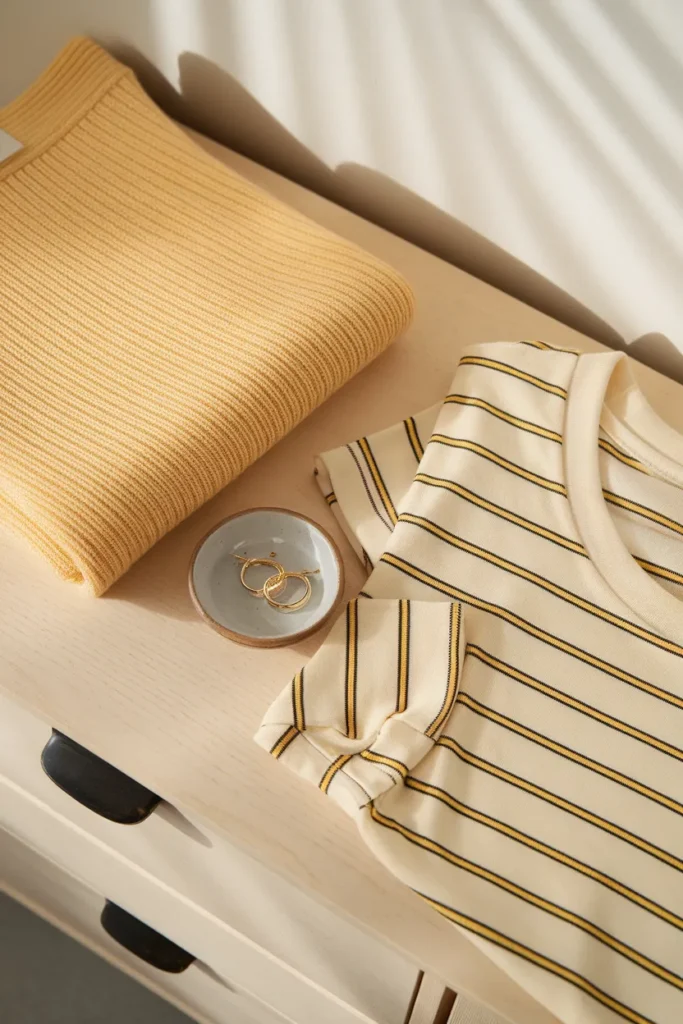
A butter yellow sweater passes if you own a striped tee with a yellow thread, a printed skirt with yellow in it, or even yellow-tipped earrings. It fails if it would be the only yellow thing you own, because an un-echoed color can only ever star in one outfit formula. Echoed colors slide into five or six.
There’s one legal loophole, and I use it constantly: buy the echo in the same order. Want a cobalt blouse with zero blue in your closet? Fine, add a cobalt-and-cream scarf or a pair of cobalt flats to the cart, and the blouse arrives with its echo built in. Two pieces, one new color, instant cohesion.
Run the test backward during a closet edit, too. Any colorful piece with no echo either gets one bought for it or gets donated. Sentiment is allowed. Orphans are expensive. If you’re unsure which shades deserve echoing in the first place, your undertone matters more than the trend cycle, so lean toward the colors that already earn you compliments.
The Color Placement Map (Screenshot This)
Even echoed colors misbehave when they land in the wrong category. Colorful coats and colorful pants are commitments. Colorful tops and accessories are flirtations. A working capsule wardrobe with color loads each category differently, and this map is the ratio I hand to every woman who asks.
| Category | Color load | Why it works |
|---|---|---|
| Tops and knits | About half in color | Tops change daily, so color here reads fresh without limiting combinations |
| Bottoms | Mostly neutral, one color piece max | Neutral bottoms let every colorful top multiply |
| Dresses | One printed anchor | A print is a complete outfit and your palette source |
| Outerwear | Neutral, or one echoed color coat | Coats touch every outfit, so a wrong color taxes all of them |
| Shoes | Neutrals plus one accent pair | One burgundy flat adds polish; three colored pairs add chaos |
| Accessories | Free space | Scarves, bags, and jewelry are the cheapest place to echo |
Notice the pattern: color concentrates in high-rotation, low-commitment categories and thins out where a single piece touches everything. That’s why a colorful capsule wardrobe can hold six or seven colors and still get you dressed in ninety seconds.
The map works with your proportions at any size, since it governs where color sits rather than how anything fits. If you’re shopping between or beyond straight sizes, the same placement logic drives the plus size capsule wardrobe built from 16 pieces that actually fit, just with silhouettes chosen for you.
The Neutral Base That Makes Color Look Expensive
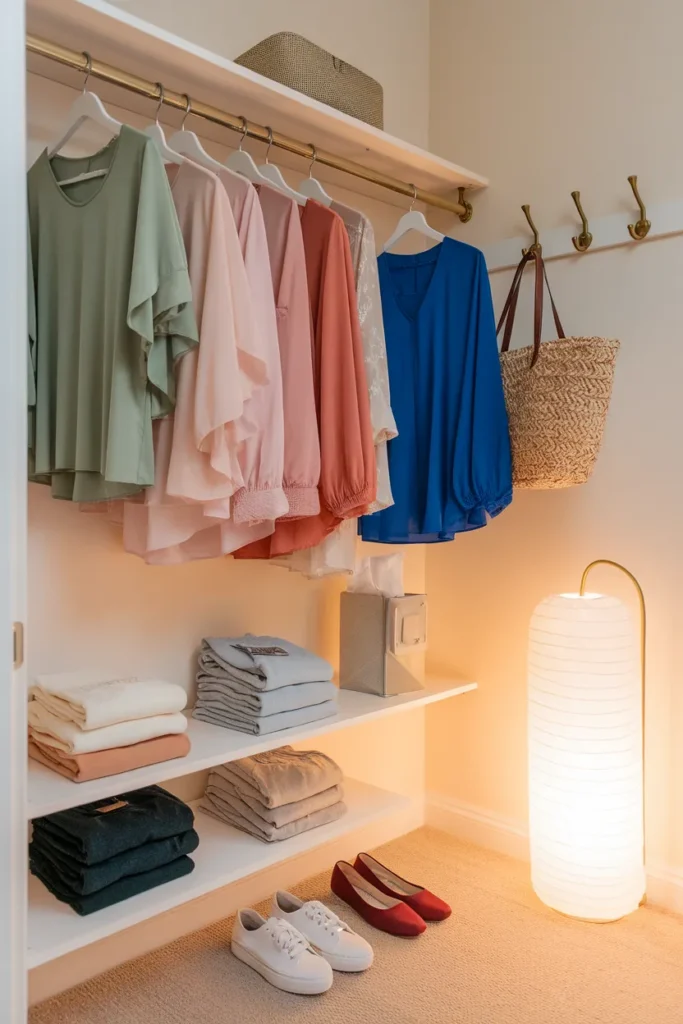
Color gets the credit, and neutrals do the labor. Roughly the 60-30-10 split holds: sixty percent quiet base, thirty percent your echoed colors, ten percent accent moments. Shift those numbers a little and nothing breaks, and invert them and everything does.
Choose your neutral temperature deliberately. Ivory, oat, camel, and espresso warm a palette and make terracotta, butter yellow, and burgundy glow. Soft black, gray, and navy sharpen it and favor cobalt, tomato red, and blush. Pick one lane for the base and your colors instantly look chosen instead of collected.
White sneakers, dark straight jeans, a camel trouser, an ivory button-down: none of it photographs excitingly on its own, and all of it is why the burgundy sweater looks like a decision. When two neutrals meet in one outfit (cream with camel, navy with gray) the pairing has its own rules, and I break down every combination in how to pair neutral colors so every outfit looks pulled together. Nail the base first. Color paid for the ticket, and neutrals built the theater.

An 18-Piece Colorful Capsule (With the Outfit Math)
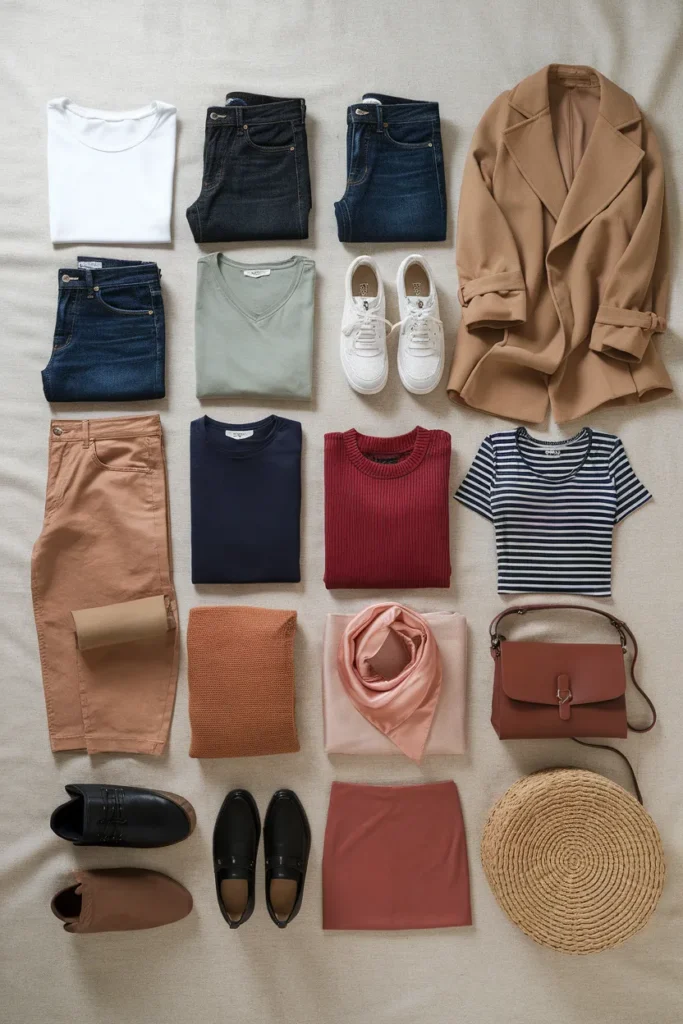
Here’s a complete starter build using everything above: one anchor print, four echoed colors (burgundy, butter yellow, sage, navy), and a warm neutral base.
The neutral base, 7 pieces. White tee. Ivory button-down. Dark straight-leg jeans. Camel wide-leg trousers. Camel trench coat. White sneakers. Soft black loafers.
The color, 8 pieces. Printed midi dress carrying burgundy, butter yellow, sage, and cream (the anchor). Burgundy crewneck sweater. Butter yellow knit tee. Navy-and-cream striped tee. Sage cardigan. Cobalt blouse, bought with its echo. Dusty terracotta midi skirt. Burgundy ballet flats.
The connectors, 3 pieces. Silk scarf in the anchor print’s colors. Espresso leather crossbody. Woven tote.
Run the math conservatively. Each of the six colorful tops works over both bottoms and under the trench, the dress stands alone or layers under the sage cardigan, and the skirt takes any top whose color appears in the print. That’s forty-plus real outfits from eighteen pieces before you touch the scarf. The stripes and the scarf are quiet workhorses here, since a multi-color piece echoes almost everything at once.
If dresses are already your comfort zone, you can run this entire play with even less effort, and the dresses only capsule wardrobe for summer shows what ten one-and-done pieces look like.
Folding In Fall 2026 Color Without Chasing Trends
Trend colors and capsules can coexist, as long as the trend applies for membership like everything else. This season makes it easy, because the Pantone Color Institute’s Fall 2026 report for New York Fashion Week leans warm and wearable: Red Mahogany (a burgundy-chocolate blend), Acacia (this year’s richer take on butter yellow),
Muted Clay, Burnt Olive, and a clear sky blue called All Aboard, anchored by seasonless shades like Toffee and Egret. You can read the full breakdown, with the Institute’s own commentary, in WWD’s report on the Pantone fall palette.
Notice something? Burgundy and butter yellow were already in our 18-piece build. Good trend adoption usually feels like that: the season confirms a color you can echo, and you deepen it rather than starting over.
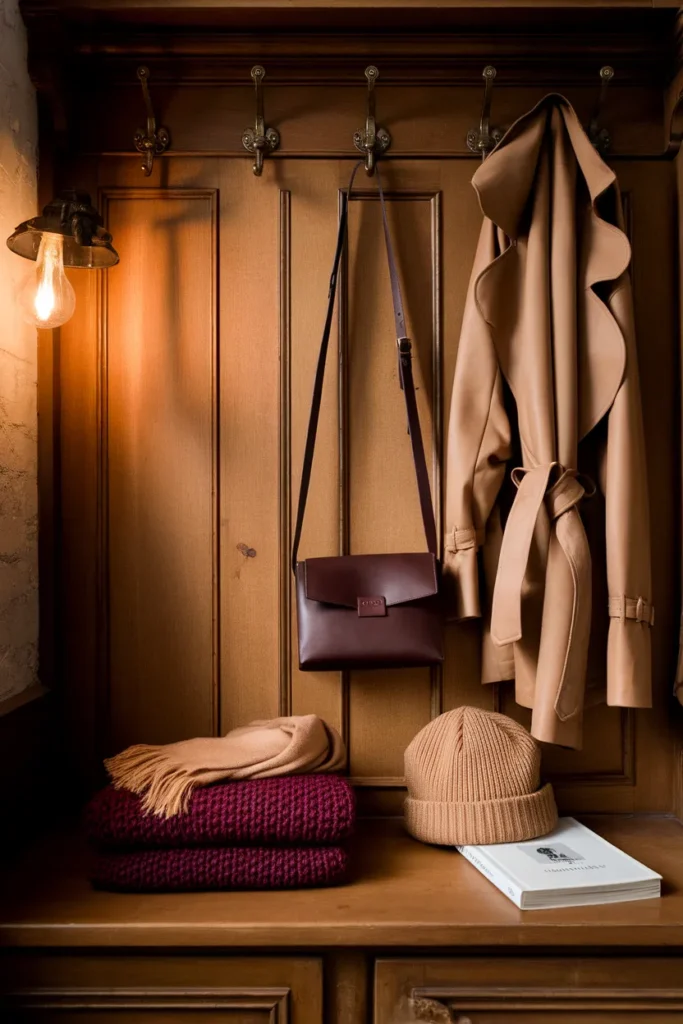
My rule for trend color is simple. Let it enter through knits, tees, and accessories first, the low-commitment rows of the placement map. Give it a coat or a bag only after it has survived one full season in your rotation, and only in a shade that passes the Echo Test. A Red Mahogany wool coat is a gorgeous idea precisely because it echoes burgundy you already wear; if a colored coat tempts you this fall, start with the best wool coats for a capsule wardrobe and check the echo before the checkout.
Where to Buy Color on Every Budget (and Keep It From Fading)
Colorful pieces carry more purchase risk than neutrals, since a shade can bore you or date itself faster than a white tee ever will. So my spending rule flips the usual advice: save on trend color, spend on your echoes and your base.
Testing a color, $10 to $50. Uniqlo, Old Navy, Gap, and Target’s A New Day are perfect labs. A $15 to $30 tee in Acacia yellow tells you within a month whether the shade deserves promotion. The trade-off at this tier is real, though: lighter cotton, less structure, and more pilling after repeated washes, so treat these as auditions rather than anchors.
Committing to an echo, $50 to $150. Once a color proves itself, buy it in fabric that lasts. Quince and Everlane cover elevated basics roughly in the $50 to $120 range, J.Crew and Banana Republic handle structured knits and trousers, and Madewell jeans typically run $98 to $138 for the neutral base underneath it all.
The anchor print, $150 to $400. This is the one place I’ll nudge you upward, because the anchor sets your whole palette. Sezane and Reformation both cut printed dresses, usually in the $150 to $300 range, that read far past their price. For an investment-tier reference, Toteme’s striped knits sit above $400 and are aspirational for most budgets; a J.Crew or Quince Breton stripe at $40 to $90 delivers ninety percent of the same echo work.
Then protect what you bought, because a faded echo stops echoing. Wash color cold and inside out, skip the dryer for anything you love, and actually follow the garment’s care tag; US law requires every garment to carry reliable care instructions under the FTC’s Care Labeling Rule, so the answer is sewn into the seam.
Cost per wear rewards the boring habits. A $98 pair of jeans worn twice a week for a year costs about a dollar a wear, and a $30 top that fades by October never gets that cheap. For the accent shoe specifically, one well-made pair beats three trendy ones, and the best loafers for women, chosen the capsule way includes exactly the burgundy pair I’d pick.
Three Colorful Outfit Formulas That Never Miss
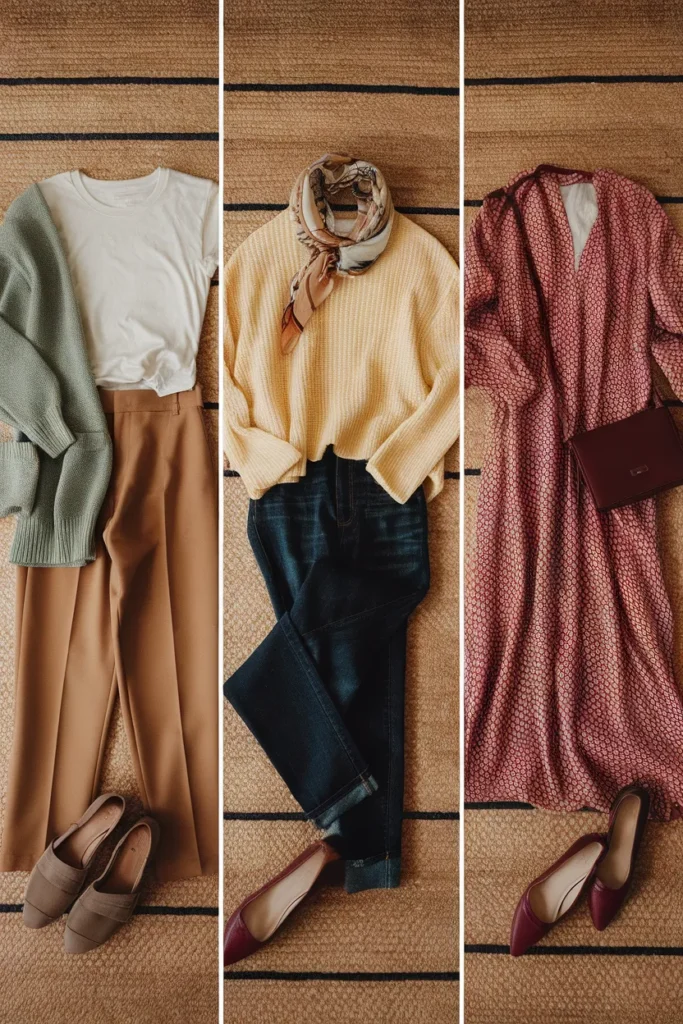
Formulas are how the system pays off on a rushed Tuesday. These three cover most mornings.
The column and pop. One neutral color head to toe (cream tee, camel trousers, white sneakers), then a single colorful layer over it. The neutral column lengthens, and the sage cardigan or burgundy sweater does all the talking.
The echo sandwich. Colorful top, neutral bottom, then shoes or a bag that repeat the top’s color. Butter yellow knit, dark jeans, and the scarf with yellow in its print knotted on the tote. Two echoes make any color look intentional.
The print plus two pulls. Wear the anchor dress, then pull two of its colors into your accessories: burgundy flats and the espresso crossbody. Designers already balanced the print, so the outfit assembles itself.
Rotate the three and you’ll cover work, weekend, and dinner without repeating an exact look for weeks. That’s buy fewer, wear more in practice.
Colorful Capsule Wardrobe FAQ
How many colors should a colorful capsule wardrobe have?
Three to four echoed colors on top of two or three neutrals is the sweet spot, which lands you at six or seven total shades. Fewer feels restrictive if you love color, and more starts breaking the outfit math because each new shade needs its own echoes.
Can I mix prints and patterns in a colorful capsule?
Yes, as long as every print shares at least one color with your palette, ideally pulled from your anchor piece. Vary the scale (one large floral with one fine stripe) and keep a solid neutral somewhere in the outfit to give the eye a resting place.
Does this work for petite or plus-size women?
The system is size-neutral because it governs color placement rather than fit. If you’re petite, a head-to-toe neutral column with color up top works especially well with your proportions, and if you’re curvy or plus-size, the same placement map applies once each silhouette fits you correctly. Fit first, then color.
Should I spend more on colorful pieces or neutral ones?
Put the bigger budget into neutrals and proven echoes, since they appear in nearly every outfit and their cost per wear drops fast. Audition new or trendy colors at the $15 to $40 tier, and only promote a shade to better fabric after it has survived a month of real wear.
How do I keep bright colors from fading?
Wash cold, inside out, with like colors, and air dry anything you care about, since heat is what dulls dye fastest. The care tag sewn into the garment is the manufacturer’s tested instruction, so when it disagrees with habit, trust the tag.
Can I wear a colorful capsule to work?
Absolutely, and the placement map is your dress code translator. Keep bottoms and outerwear neutral, let color arrive through a blouse, fine knit, or scarf, and deeper shades like burgundy, navy, and burnt olive read as polished in even conservative offices.
Do these colors work year-round or just for fall?
The system is year-round, and only the accent weighting shifts. Burgundy and butter yellow lean fall and winter, while sage, blush, and cobalt carry spring and summer, and your neutral base plus the anchor-print logic never changes with the calendar.
Your Next Step
You don’t need a new closet. You need one anchor piece, the Echo Test at the register, and the placement map on your phone. Start this week by finding the print you already love, pull its colors, and let every future purchase audition against it. Screenshot the map, save this guide to your capsule board, and the next time a gorgeous one-off color flirts with you from a sale rack, you’ll know exactly what to ask it.
Keep reading

Summer Color Analysis: How to Find Your Shade of Cool and Actually Wear It
If you keep buying gorgeous clothes that look flat the second you put them on, Summer Color Analysis might be the piece...

Winter Color Analysis: The Colors That Actually Work on You
Winter color analysis usually gets explained in swatches. You have seen them: cobalt, magenta, icy blue, true black, arranged in a tidy...

Autumn Color Analysis: The Palette That Makes You Glow
There’s a specific kind of frustration that comes from owning a closet full of clothes you chose on purpose and still looking...