
How to Transition Your Wardrobe from Spring to Summer Without Buying a Whole New Closet
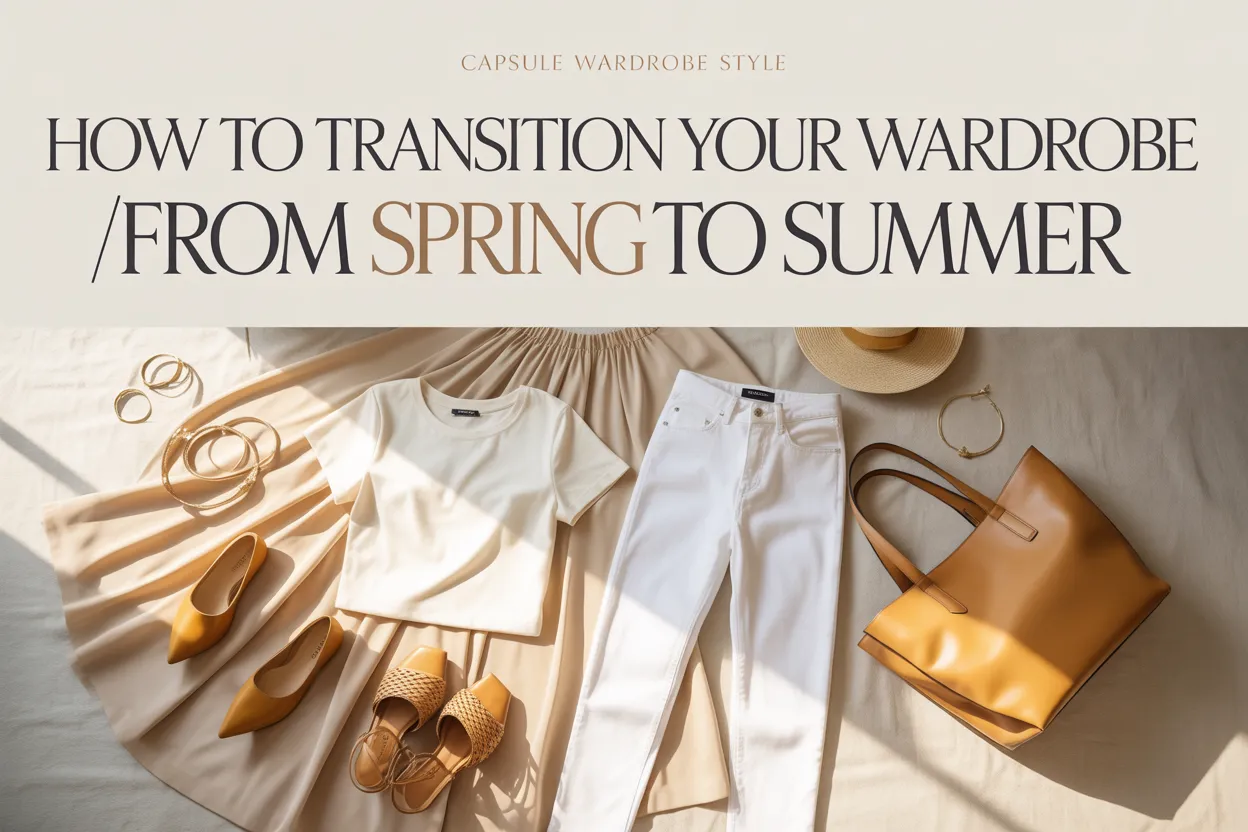
You open your closet on the first 80-degree morning of June and realize half of what’s hanging there feels wrong. The cardigan that saved you in April is suddenly suffocating. The ponte trousers cling. Your favorite spring trench is taking up real estate it no longer earns. Sound familiar? This is the exact wardrobe moment we want to fix today.
Here’s the truth nobody told me before I started building intentional capsules: you don’t need a brand new summer wardrobe to transition your wardrobe from spring to summer. You need a smart edit, a few strategic swaps, and a tighter understanding of what your spring pieces can still do once the humidity rolls in. That’s it.
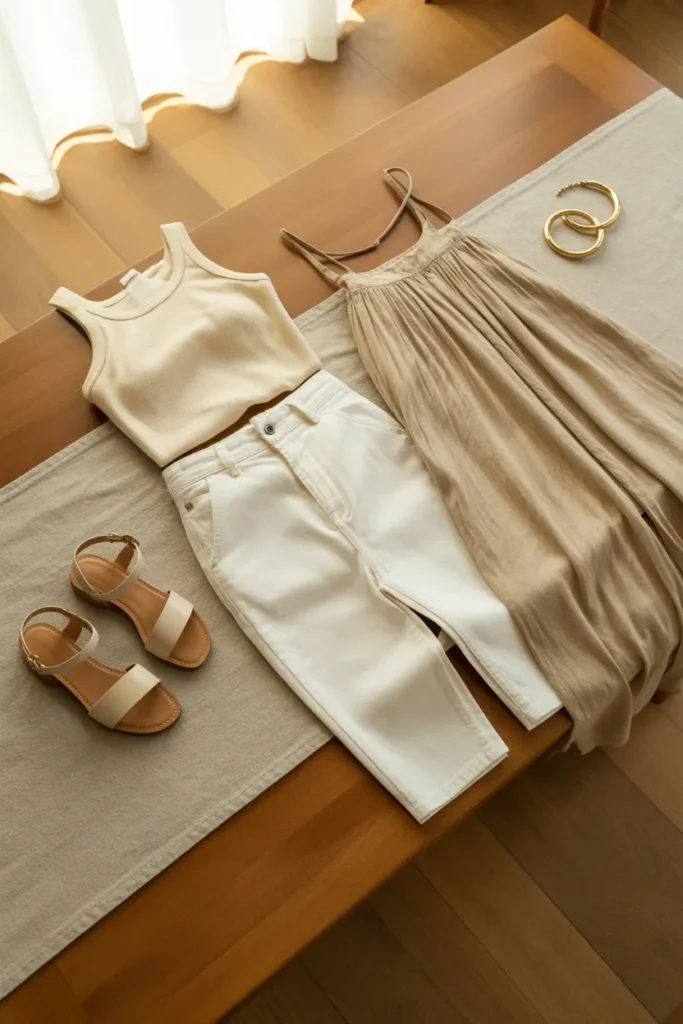
This guide walks you through the exact 3-box method I use every May, a fabric swap chart you’ll want to screenshot, climate-specific tweaks (because a humid Atlanta summer needs different choices than a cool Seattle one), and outfit pairings that lean on capsule staples you almost certainly already own. By the end, you’ll know what to box up, what to keep working, and what (if anything) genuinely earns a spot in your cart.
Why Most Spring to Summer Wardrobe Transitions Go Sideways
Most of us treat the calendar shift like a clean break. Spring clothes go in storage on May 31, summer pieces come out June 1, and we panic-shop the gap. That approach burns money and creates closet clutter, because plenty of spring pieces still work hard in early summer. The problem isn’t your spring wardrobe. It’s the lack of a transition system.
A real transitional wardrobe answers three questions: which pieces retire, which pieces rotate forward, and which gaps need filling. Once you can answer those, the panic disappears. You also stop buying duplicate items you already own in a slightly different shade.
I’ve tested this approach across four wardrobe edits now, and the same patterns show up every year. About 60% of a thoughtful spring capsule carries straight into summer with no changes. Another 25% needs a styling shift (worn differently, layered differently, or paired with lighter shoes). Only the remaining 15% genuinely needs replacing or storing. That’s a much smaller shopping list than most fashion sites would have you believe.
The 3-Box Method: Retire, Rotate, Refresh
Before you buy anything, sort. This is the single most useful exercise for a spring to summer wardrobe transition, and it takes about 45 minutes if you put on a podcast and commit. Pull every spring piece out and run it through three boxes.
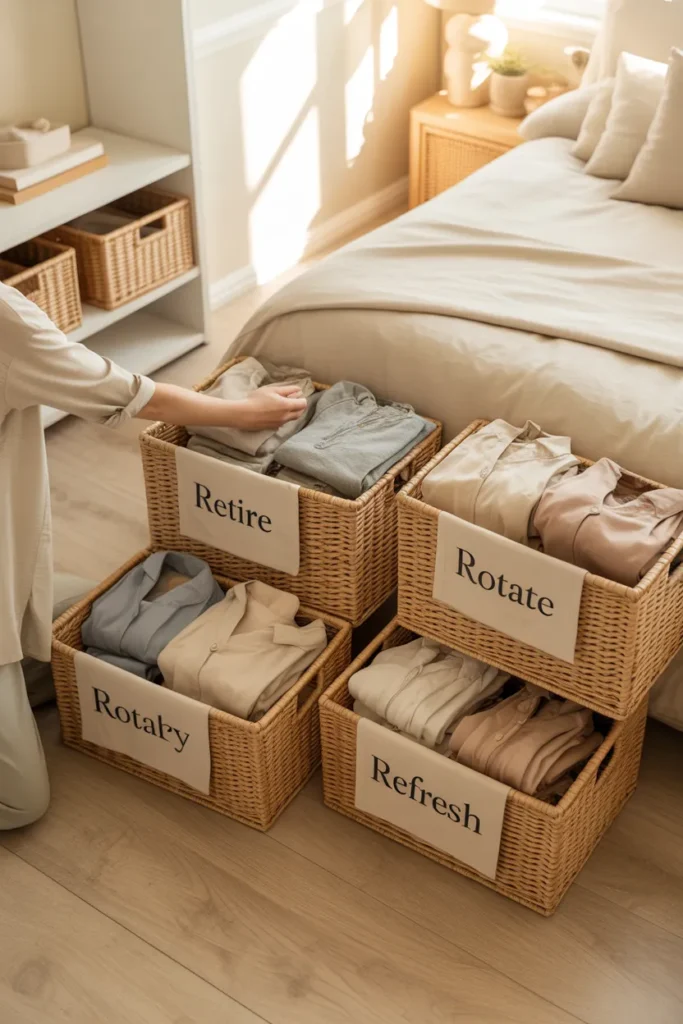
Box 1: Retire (store until fall)
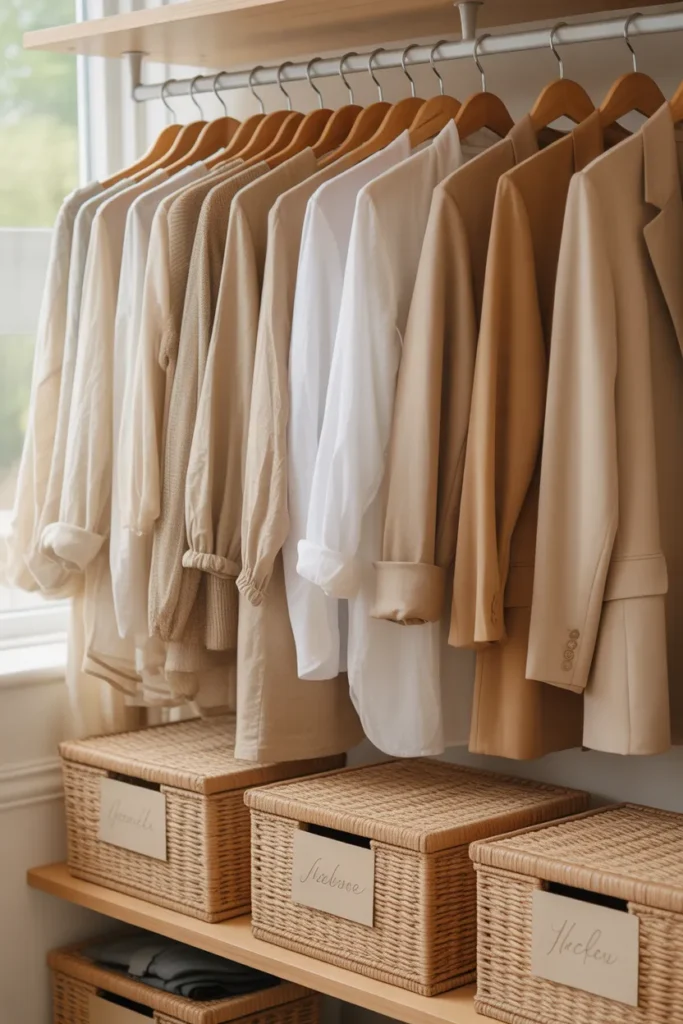
These are pieces that genuinely don’t function once temperatures climb above 75°F. Your wool blazer, ponte trousers, heavyweight knit sweaters, suede ankle boots, and any thicker cardigans go here. Wash them according to their care label, fold with cedar blocks, and store in breathable cotton bins (never plastic, which traps moisture and yellows fabric).
Box 2: Rotate (keep accessible, restyle for summer)
This is where the magic lives. Your white button-up shirt, straight-leg jeans, ballet flats, lightweight trench, midi skirts, and most of your tees move into rotate. They aren’t going anywhere, they’re just going to work harder. We’ll restyle them in the next section.
Box 3: Refresh (genuine gaps to fill, if any)
Only fill this box after the first two are sorted. Most readers find their refresh list is shorter than expected: maybe a linen-blend tank, a pair of woven leather sandals, a slip skirt, and one summer-weight dress. That’s a $200-300 refresh, not a $1,500 overhaul.
Who This Works For
This transition framework works across body types, budgets, and climates, but the specific pieces I recommend will vary based on your situation.
Size range: Every staple mentioned in this guide is available in extended sizing. For straight sizes, most pieces are stocked at Old Navy, Gap, J.Crew, and Madewell. For plus sizes up to 4X, look at Old Navy, Universal Standard, Madewell’s extended line, and Anthropologie’s plus collection. For petites (5’4″ and under), Ann Taylor, Gap Petites, and J.Crew Petite carry the same silhouettes in proportional cuts. For tall sizes, J.Crew Tall and Banana Republic Tall are reliable.
Lifestyle fit: This works for anyone who wants a wardrobe that handles real life. Office days, errands, weekend brunches, weddings, travel, and the occasional dinner out. If your job requires industrial workwear, a uniform, or formal black tie regularly, you’ll need a more specialized capsule.
Climate fit: I’ve structured the swap chart below to flex across three US climate zones. Humid summer (Southeast, Gulf Coast, Mid-Atlantic), cool coastal summer (Pacific Northwest, coastal New England, San Francisco Bay), and dry summer (Southwest, Mountain West, parts of California). More on climate-specific tweaks in a later section.
The 5-Fabric Swap Chart
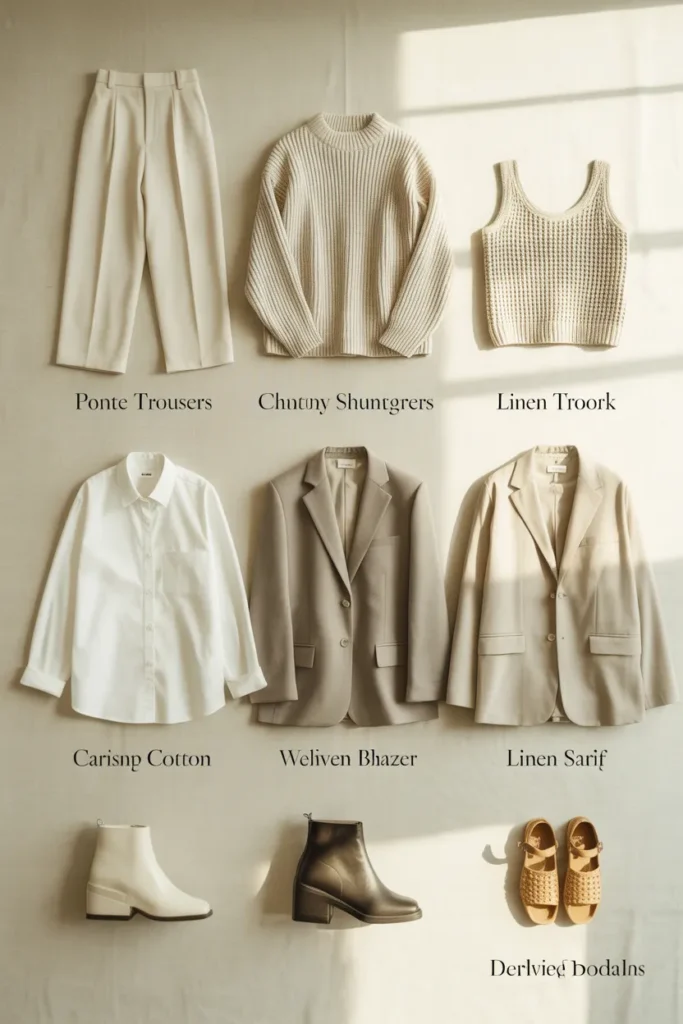
This is the screenshot-worthy table I promised. When you pull a piece out of your closet and aren’t sure if it transitions, check the fabric. Here’s the cheat sheet I run every season.
| Spring Fabric | Summer Equivalent | Why It Works |
|---|---|---|
| Ponte knit trouser | Linen blend or Tencel trouser | Same tailored look, lets skin breathe |
| Cotton sweater | Knit tank or short-sleeve sweater tee | Keeps the texture, drops the heat |
| Lightweight wool blazer | Unstructured cotton or linen blazer | Tailored polish without the weight |
| Cotton poplin button-up | Linen-blend short-sleeve camp shirt | Same easy structure, summer hand feel |
| Ankle bootie | Leather slide or woven sandal | Closes the look without trapping heat |
Save this image, screenshot it, or pin it. You’ll come back to it every May and August.
9 Capsule Pieces That Earn Their Keep in Both Seasons
These are the pieces I’d argue belong in any spring to summer wardrobe transition, ranked by versatility and cost-per-wear. Each one does at least double duty.
1. The white cotton tee
What it is: a relaxed-fit, mid-weight 100% cotton crewneck or scoop-neck tee in true white. Look for at least 5.5 oz weight so it holds shape. Everlane’s Box-Cut and Madewell’s Whisper Cotton are reliable. For budget, Target’s A New Day and Old Navy’s EveryWear run well.
Why it earns a spot: it pairs with everything in your spring rotate box, and it’s the foundation of 80% of your summer outfits.
How to style it two ways: tucked into a midi skirt with woven sandals and gold hoops for brunch, or knotted at the front over white denim with ballet flats for errands. For petites, a slightly cropped tee balances proportions. For plus sizes, look for a longer hem that hits at the hip. Care: wash inside out in cold, dry flat to prevent the neckline stretching.
2. Straight-leg white jeans
What it is: a mid-rise, ankle-length straight-leg jean in non-stretch or low-stretch white denim. Gap’s ’90s Loose, Madewell’s Perfect Vintage, and Levi’s Wedgie are workhorses.
Why it earns a spot: white denim instantly summer-ifies anything you already own. Throw a navy striped tee over them and you look intentional.
How to style it two ways: with a chambray button-up half-tucked and tan loafers for a clean weekend look, or with a black silk tank and gold sandals for dinner. Care flag: white denim shows everything. Wash separately in cold and store folded, not hung, to preserve the leg shape.
3. The lightweight trench (yes, in summer)
What it is: an unlined or lightly lined cotton or cotton-blend trench in classic khaki or stone. Banana Republic, J.Crew, and Everlane all run reliable versions.
Why it earns a spot: this is the piece most people retire too early. A lightweight trench handles cool summer evenings, over-air-conditioned offices, and rainy June mornings beautifully.
How to style it two ways: thrown over a slip dress and sandals for date night, or belted over white jeans and a tank for travel days. For travel specifically, a trench is one of the most versatile carry-on layers you can pack. (See our travel capsule wardrobe guide for the full packing breakdown.)
4. Ballet flats
What it is: classic round-toe or almond-toe leather ballet flats in a neutral (black, nude, or tan).
Why it earns a spot: the single most underused summer shoe. Ballet flats handle 85°F days that sandals can’t (think air-conditioned office floors, walking tours, restaurants with strict shoe rules) and they elevate any outfit instantly.
How to style it two ways: with cropped white jeans and a striped tee for an off-duty French look, or with a midi sundress and a structured tote for lunch. We did a full breakdown on the best pairs across price points in our ballet flats roundup if you want specific recommendations.
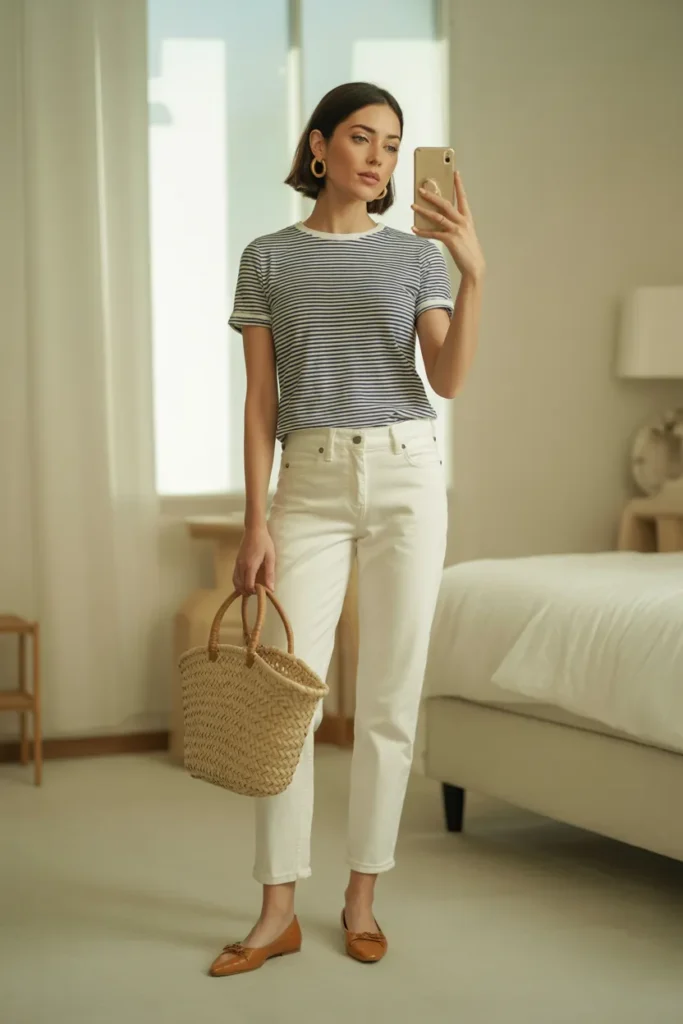
5. The linen-blend midi skirt
What it is: an A-line or column midi skirt in linen blend, Tencel, or cotton poplin. Length should hit mid-calf to ankle. Quince, J.Crew, and Anthropologie carry strong options.
Why it earns a spot: a midi skirt reads polished in any temperature, and the linen blend handles humidity without permanent wrinkling.
How to style it two ways: with a tucked white tee and ballet flats for a Tuesday in the office, or with a fitted tank and sandals for weekend brunch. Care: most linen blends do well steamed instead of ironed. If you see “100% linen,” expect more wrinkling. The blend (linen plus viscose or cotton) holds up better for daily wear.
6. The white button-up
What it is: a classic cotton or cotton-poplin button-up in true white, fit slightly relaxed. J.Crew’s Garçon and Everlane’s Relaxed Oxford are classic.
Why it earns a spot: a white button-up is the closest thing to a wardrobe time machine. It pairs with literally everything you already own, and styling it open over a tank turns it into a summer layer.
How to style it two ways: tucked into trousers with loafers for work, or unbuttoned over a tank and shorts as a beach coverup. Care flag: cotton poplin wrinkles, but it’s the kind of wrinkle that reads relaxed instead of sloppy. Steam between wears.
7. Slim dark-wash jeans
What it is: a mid-rise, ankle-length straight or slim-straight jean in a deep indigo wash with minimal stretch.
Why it earns a spot: dark denim transitions seasons better than any other color. It pairs with summer’s lighter tops without the heaviness of black.
How to style it two ways: with a white tee and woven sandals for casual days, or with a silk camisole and heeled mules for evening.
8. The cotton or linen-blend midi dress
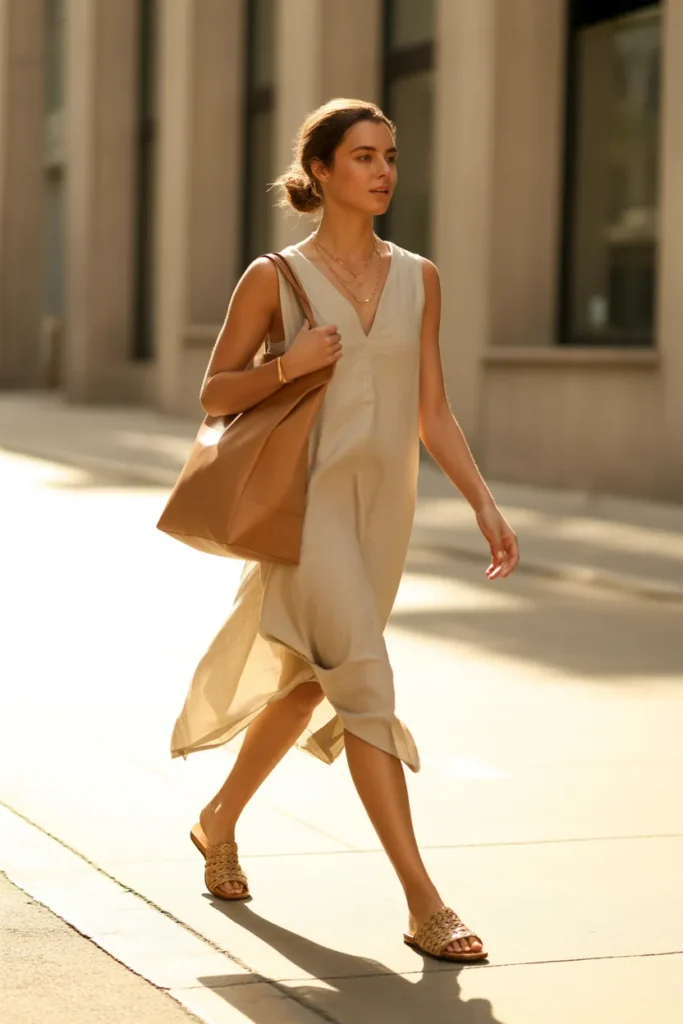
What it is: a sleeveless or short-sleeve midi dress in a neutral or muted print, made of breathable cotton, linen blend, or Tencel.
Why it earns a spot: a single dress eliminates the daily outfit puzzle. Slip it on, add sandals, and you’re dressed.
How to style it two ways: with white sneakers and a denim jacket for spring carryover, then with woven sandals and a straw tote for full summer mode. For sizing between sizes, dresses with side ties or elastic waists are forgiving. Plus sizes up to 3X available at Old Navy, Madewell’s extended line, and Anthropologie.
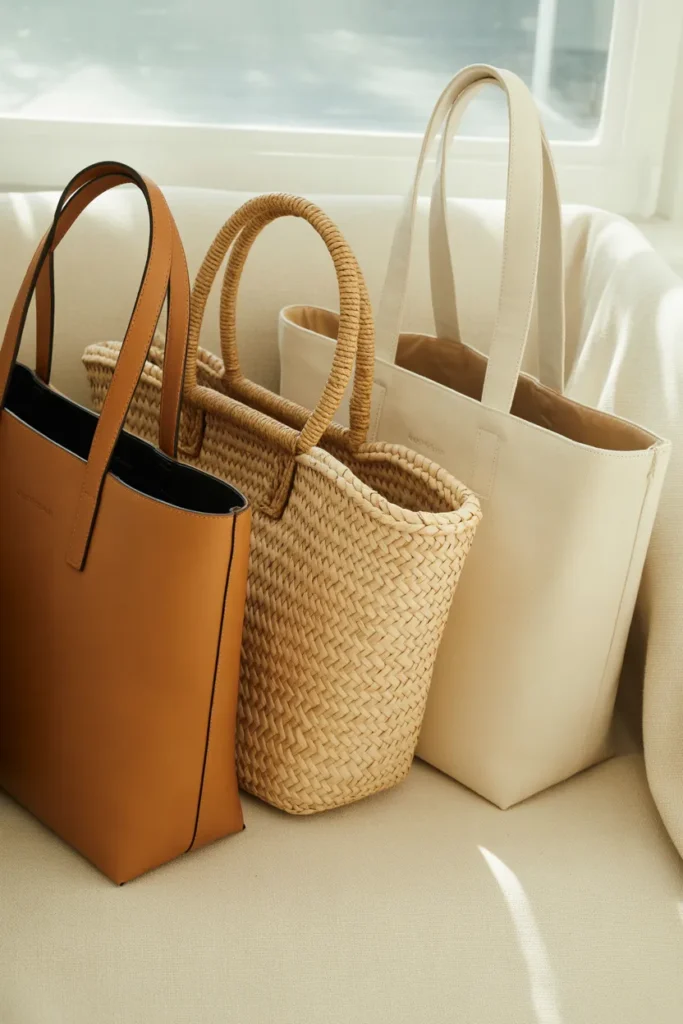
9. The structured tote
What it is: a medium to large structured tote in tan, cream, black, or natural straw. Leather, canvas, or woven.
Why it earns a spot: a tote replaces both your spring crossbody and your beach bag, and it’s the one accessory that makes any outfit look intentional.
How to style it two ways: holding work essentials with a button-up and trousers, or holding a beach towel with a sundress and sandals.
Build This Look With What You Already Own
Before you buy a single thing, here’s how to make a spring to summer transition outfit using pieces almost every capsule wardrobe already contains.
Start with: white tee + straight-leg jeans + ballet flats (the universal capsule trio).
Spring version: add a lightweight cardigan and a crossbody bag.
Transition version: swap the cardigan for an unbuttoned white shirt as a layer, knot the tee, push the jeans up at the ankle, and switch to a structured tote. Same five base pieces, completely different temperature reading.
Summer version: retire the layer entirely, untuck the tee, and swap the jeans for white denim cutoffs or a midi skirt.
That’s three distinct seasonal looks from one foundation. This is the cost-per-wear math that makes capsule thinking work. A $40 white tee worn 80 times over two seasons lands at 50 cents per wear. Compare that to a trend piece worn five times.
For more transitional outfit pairings using these same pieces, our summer outfit ideas guide walks through 20 combinations using mostly capsule staples.
Climate-Specific Tweaks
This is the section the top-ranking articles miss entirely, and it matters more than the specific pieces. The same outfit reads differently in Phoenix than it does in Portland.
Humid summer (Southeast, Gulf Coast, Mid-Atlantic, parts of the Midwest)
Linen blend wins over pure linen (less wrinkling). Tencel and viscose are your best friends because they drape without clinging. Skip cotton-poly blends, which trap heat. Open weaves and looser silhouettes (camp shirts, A-line midi dresses) outperform fitted pieces. For shoes, leather slides and woven sandals beat closed-toe flats most days. Reference: the American Academy of Dermatology’s heat and skin guide covers fabric choices for hot, humid conditions.
Cool coastal summer (Pacific Northwest, coastal New England, San Francisco Bay)
Your trench, your cardigan, and your dark denim earn even more wear here. Average summer highs in Seattle and San Francisco often sit in the 60s and low 70s, which means you’re layering more than you think. A linen-blend blazer over a tank is your evening uniform. Closed-toe ballet flats stay in heavy rotation.
Dry summer (Southwest, Mountain West, parts of California)
Heat without humidity changes the math. Long, loose sleeves in lightweight cotton can actually keep you cooler than going sleeveless because they block sun. UPF-rated cotton or linen pieces are worth the investment. The EPA’s UV index resource is useful for planning when to wear long-sleeve sun protection vs. minimal coverage.
When to Officially Make the Spring to Summer Switch
There’s no calendar date. The right time to transition your wardrobe from spring to summer is the second week you’ve consistently hit highs above 75°F in your area. For most of the US, that’s mid-May to early June. For the upper Midwest and Pacific Northwest, sometimes not until late June. Don’t rush it. Boxing up your trench in April only to need it again in May is a small frustration you can avoid.
A Sample 5-Piece Spring to Summer Capsule (15+ Outfits)
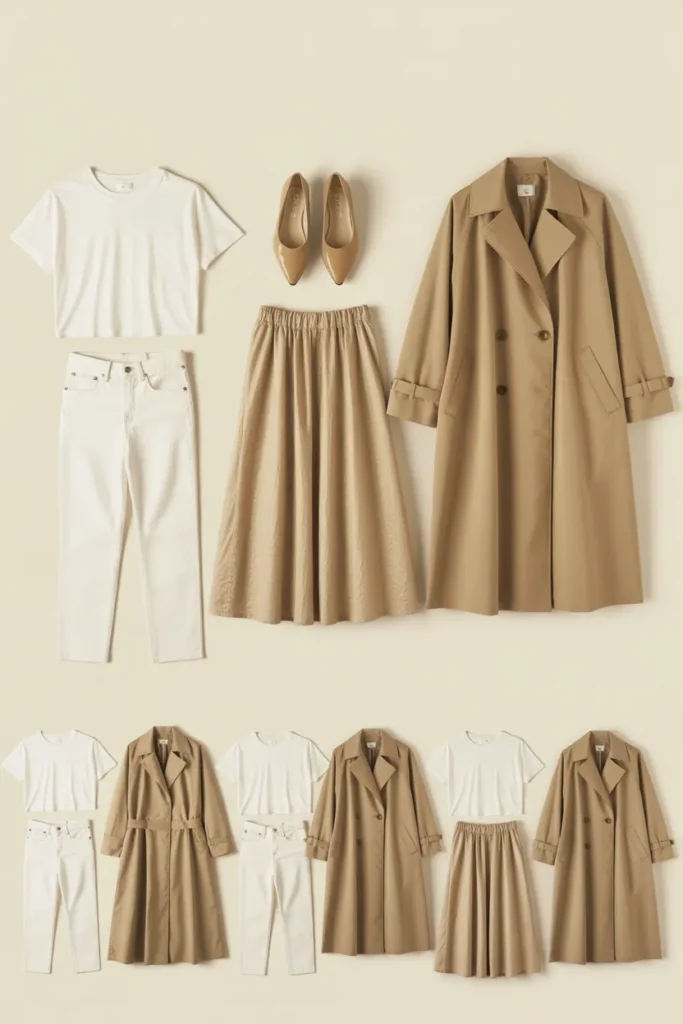
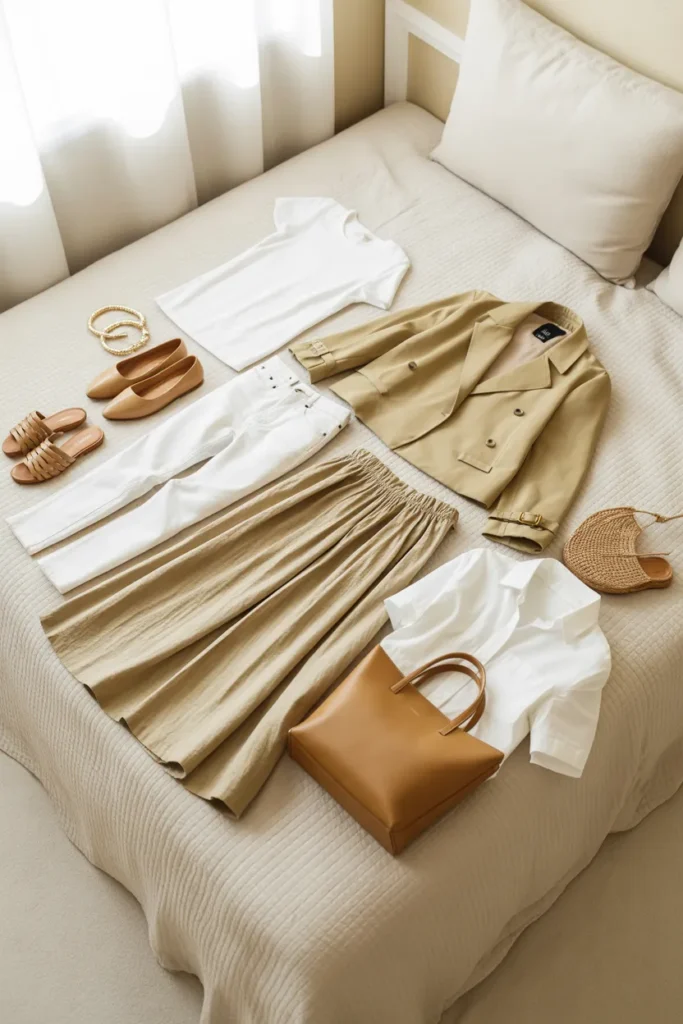
If you build around these five pieces from your rotate box, you can hit at least 15 distinct outfits.
- White cotton tee
- White straight-leg jeans
- Linen-blend midi skirt (neutral)
- Lightweight trench
- Tan leather ballet flats or woven sandals
Sample outfits from these five: tee + jeans + flats. Tee + skirt + sandals. Tee + jeans + trench + flats. Tee + skirt + trench + sandals. Tee tucked + jeans rolled + sandals. Tee knotted + skirt + flats. And on. Add one button-up and one dress and you’re well past 25 combinations without buying anything new.
Pieces That Are Worth Replacing (and Pieces That Aren’t)
Replace a piece only if at least two of these are true: it’s structurally damaged, it no longer fits your body, the fabric is wrong for the season ahead, or you genuinely don’t reach for it.
Worth replacing this transition: a tee that’s stretched out or yellowed at the underarms, jeans with knee blowouts, ballet flats with worn-through soles, sandals from two summers ago that hurt your feet.
Not worth replacing: anything just because it’s “last year’s color.” Capsule wardrobes don’t follow microtrends. A neutral piece bought in 2023 still looks intentional in 2026 if the fabric and fit hold up.
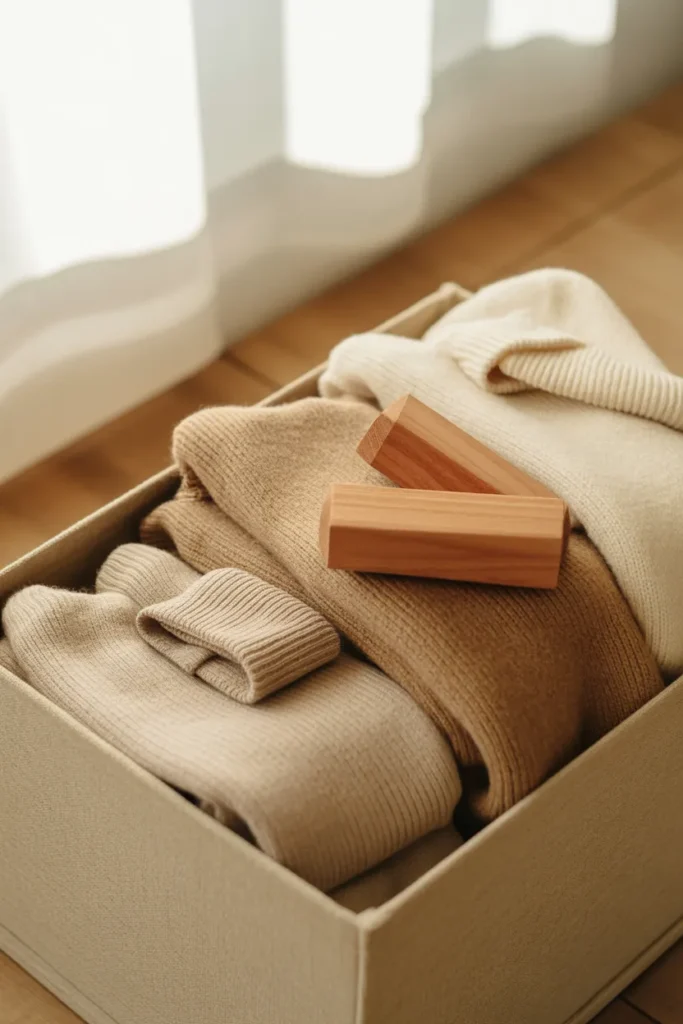
How to Store Your Spring Pieces So They Survive Until Fall
Storage matters more than people think. A wool blazer stuffed in a plastic bin in July comes out in October with permanent creases and that musty closet smell.
Use breathable cotton or linen storage bins. Add cedar blocks (refresh the scent with a light sandpaper rub once a year). Fold knits and wool pieces flat instead of hanging. Keep storage out of direct sunlight to prevent fading. For delicate spring pieces (silk blouses, fine knits), wrap in acid-free tissue paper. Avoid vacuum bags for natural fibers, which crush and damage them.
Frequently Asked Questions
How do you transition your wardrobe from spring to summer?
Sort everything into three boxes: retire (heavyweight pieces that don’t function above 75°F), rotate (versatile pieces that work in both seasons), and refresh (genuine gaps to fill). About 60-75% of a thoughtful spring wardrobe carries straight into summer with smarter styling. Focus on swapping fabric weights rather than replacing entire categories.
What clothes work for both spring and summer?
White and dark-wash jeans, cotton tees, lightweight button-ups, midi skirts in linen blend or Tencel, slip dresses, ballet flats, lightweight trench coats, and structured totes all bridge both seasons. Look for breathable natural fibers in pieces you can layer up in cool spring evenings or wear alone in peak summer heat.
How do I style a spring to summer outfit if I don’t own a midi skirt?
A midi skirt is one option, not a requirement. Substitute white straight-leg jeans, dark-wash jeans rolled at the ankle, or wide-leg linen pants. The goal is a relaxed lower half in a breathable fabric. If you own any of those three, you have your foundation.
What size should I order if I’m between sizes?
For tees, button-ups, and dresses, size up if you want a relaxed drape. For jeans and structured pieces (trousers, blazers), size to your true measurement and tailor if needed. For petites, focus on inseam and torso length over overall sizing. For plus sizes, brands like Universal Standard and Madewell’s extended line tend to run more true to the size chart than mainstream sizing.
Are these pieces seasonal or year-round?
Most are year-round capsule staples. The white tee, straight-leg jeans, button-up, ballet flats, and trench all carry across all four seasons with different layering. Only the linen-blend skirt and woven sandals are more specifically spring-summer. That’s part of why this approach saves money over time.
How do I pack this for travel?
Stick to a 5-7 piece capsule from the rotate list. Roll soft pieces (tees, dresses), fold structured pieces (jeans, button-up). Wear your bulkiest piece (trench) on the plane. Choose one shoe style (ballet flats) plus one sandal. A structured tote doubles as your personal item. We have a full travel capsule walkthrough at our travel capsule wardrobe guide with packing list visuals.
When should I officially swap out my spring wardrobe?
When highs hit 75°F or above for two consecutive weeks in your area. For most of the US, that’s mid-May to early June. Boxing up too early often means digging back into storage when an unexpected cool spell hits.
Pulling It All Together
A successful spring to summer wardrobe transition isn’t about a shopping spree, it’s about a smart edit. Sort with the 3-box method, lean on the fabric swap chart, build outfits around the nine capsule pieces above, and tweak for your climate. You’ll save money, reduce closet stress, and end up with a wardrobe that actually works for your real life.
If you’re staring at your closet right now feeling overwhelmed, start with one box. Just the retire box. Pull out the wool blazer and the ankle boots, store them properly, and breathe. The rest comes together piece by piece.
Save this for your next capsule wardrobe refresh, and come back next May when the swap charts and 3-box method save you another panicked shopping trip.
This article is general styling guidance. For specific fit, fabric, or care concerns, check the manufacturer’s care label and consult the brand’s customer service.
Keep reading
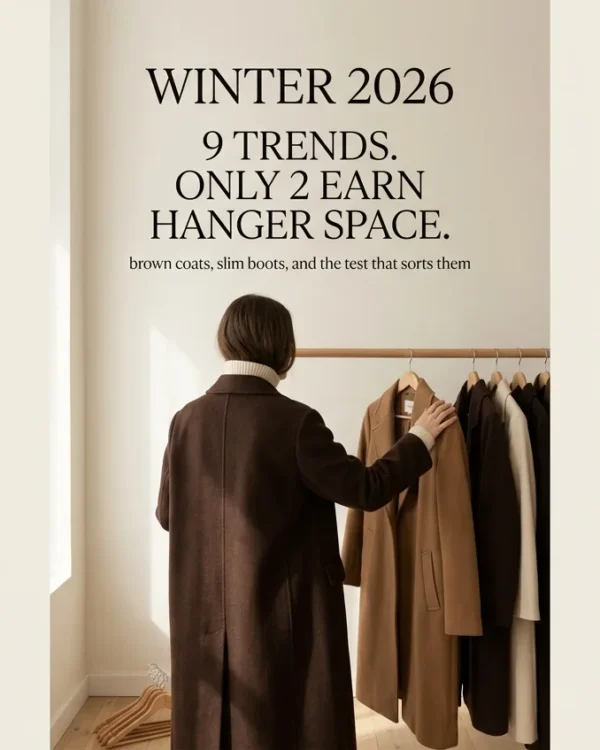
Winter 2026 Fashion Trends Worth Your Closet Space
Every winter fashion trends 2026 roundup you have read so far has handed you a shopping list. Five trends here, twenty-three there....
Fall 2026 Fashion Trends: The Looks Worth Adding to Your Capsule
Every fall fashion trends 2026 roundup you’ve read this month has the same problem. It tells you satin is back, hands you...
Whimsigoth Outfits: Witchy, Romantic Style You Can Build From Your Fall Capsule
The first time whimsigoth outfits showed up in your feed, you probably saved four of them and then wore none. That is...