
How to Choose the Right Wardrobe Colors for Your Skin Tone (Without Buying a Single New Thing First)

You open your closet on a Tuesday morning, pull on a sweater you loved on the hanger, and catch yourself in the bathroom mirror looking tired. Not bad outfit. Not bad hair. Just tired. Sound familiar? Nine times out of ten that washed-out feeling isn’t sleep. It’s the color sitting an inch from your face. Getting the wardrobe colors for your skin tone right is the single fastest way to look more rested, more polished, and more like yourself, and you can do it in about five minutes with a piece of paper and natural light.
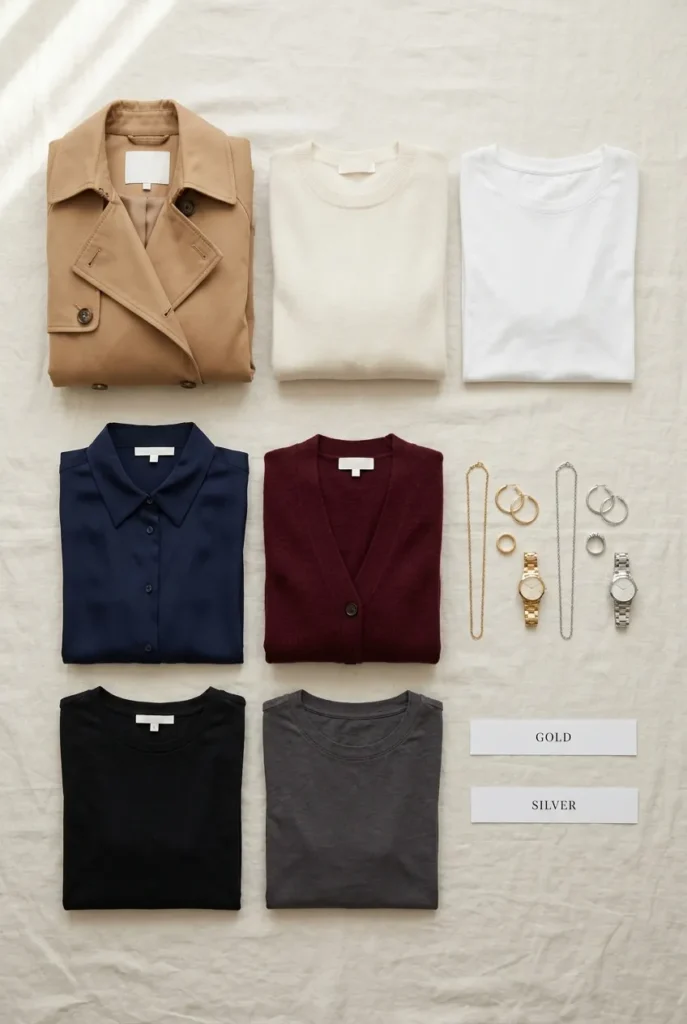
After helping hundreds of readers rebuild their capsules and rebuilding my own three times, I can tell you the color question is the one that actually moves the needle. You can own a closet full of well-fitting clothes and still look off if half the palette is fighting your face. Below you’ll find the same five-minute self-test I run on every client, the four undertone categories explained in plain English, a shopping translation for each one, and a rescue plan for the pieces you already own that don’t quite work.
Who This Guide Works For
This works for any size (XXS to 5X), any age, any skin shade from porcelain to deep ebony, and any climate. The diagnostics rely on undertone, not surface color, so they hold up whether you tan in summer or stay the same shade year-round. Petites can apply every recommendation as written, just shorten hemlines and crop blazer sleeves.
Tall readers can extend midi pieces to maxi for the same effect. Plus-size readers will find specific retailer notes (Universal Standard, Old Navy up to 4X, Quince through 3X, Nordstrom Plus, Anthropologie’s A+ line) called out where relevant. If you work from home three days a week and head into an office two, you’re squarely in the target. If you live somewhere with all four seasons, even better, because the palette work pays off through every transition.
The 5-Minute Self-Test for the Right Colors for Your Skin Tone
Before you spend a dime, run these four mini-tests back-to-back. Do them in front of a window with the curtain pulled back, no overhead lighting on, no makeup. Five minutes, total.
Test 1: The Vein Test
Turn the underside of your wrist toward the window. Look at the largest veins.
- Green or olive veins point to a warm undertone.
- Blue or purple veins point to a cool undertone.
- A mix of both, or you genuinely can’t tell, points to a neutral undertone.
Test 2: The Jewelry Test
Hold a gold chain to your collarbone, then a silver one. Photograph both in the same light.
- Gold makes your skin look lit from within: warm.
- Silver makes your skin look fresher and brighter: cool.
- Both look equally good: neutral.
Test 3: The White Paper Test
Hold a piece of plain printer paper next to your bare face in window light.
- Skin looks yellow, peach, or golden next to the paper: warm.
- Skin looks pink, rosy, or slightly blue: cool.
- Skin looks neither and the paper just looks white against you: neutral.
Test 4: The Sun Test
Think about how your skin reacts to a week of summer sun, no SPF (hypothetically, please wear SPF).
- Tans easily, rarely burns: usually warm or neutral.
- Burns first, then tans lightly: usually cool or neutral-cool.
- Burns and freckles, doesn’t really tan: usually cool.
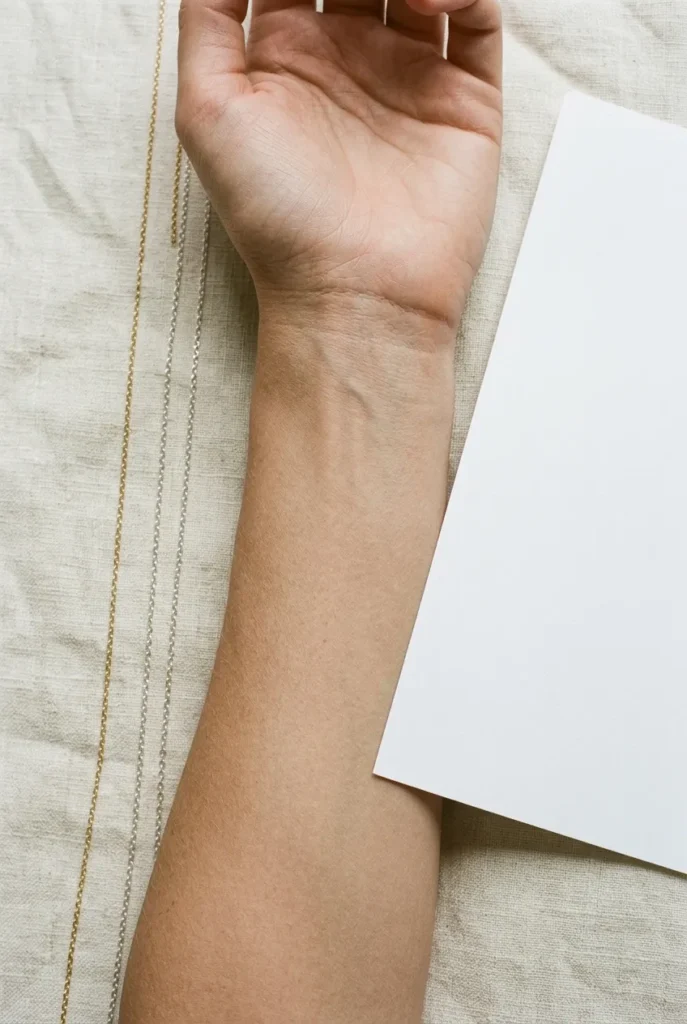
Three out of four pointing the same direction? That’s your answer. Two and two? You’re neutral, which is honestly the most flexible category to land in.
The Four Undertone Categories in Plain English
Color analysts will go deeper into 12 seasonal sub-types (True Spring, Light Summer, Soft Autumn, Deep Winter, and so on), and that level of detail is worth exploring if you want to invest. For 95% of capsule-builders, the four-category framework below is enough to make every shopping decision easier.
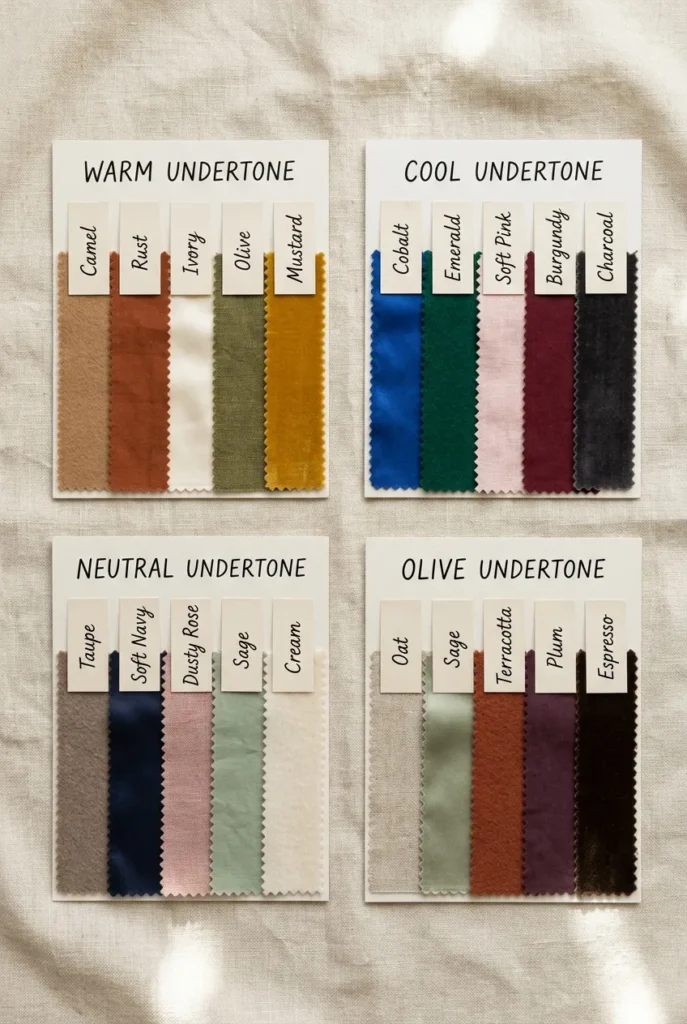
Warm Undertone
Your skin has yellow, golden, or peach base notes. You glow in gold jewelry, ivory looks better on you than stark white, and earthy colors make you look rested. Common reactions: “she looks so sun-kissed,” even mid-February.
Cool Undertone
Your skin has pink, red, or blue base notes. Silver and platinum flatter you, pure white looks crisp against your face, and jewel tones make your eyes pop. Common reactions: “you look so put together today,” when you’re actually just wearing a cool-toned sweater.
Neutral Undertone
You have a balanced mix, leaning slightly warm or slightly cool depending on season and sun exposure. Both gold and silver work. You can pull off ivory and pure white. Your palette range is the widest of the four.
Olive Undertone
Often clustered with neutral, olive deserves its own mention. The skin has a subtle green or yellow-green cast underneath. Warm earth tones flatter, but so do muted cool tones. Bright pure white can look harsh; ivory and oat are kinder.
Best Clothing Colors for Warm Skin Tones
Warm undertones come alive in colors pulled from autumn: camel, rust, mustard, olive, terracotta, warm reds, mocha, ivory, cream, soft gold, and warm earthy greens. Think the palette of a wheat field at golden hour.
What earns a spot in a curated wardrobe:
- A camel coat or trench. What it is: a knee-length classic outerwear piece in a true warm tan. Why it earns its hook: pairs with 80% of warm palettes and reads expensive even at Target prices. Style it two ways: open over an ivory tee and straight-leg jeans with white sneakers for weekends, or belted over a rust knit dress with knee boots for date night.
- A rust or burnt-sienna knit. Pairs with ivory, camel, olive, and dark denim. Style it tucked into wide-leg trousers with loafers for work, or loose over a cream slip skirt for brunch.
- An ivory silk or matte satin blouse. Softer than pure white, far more flattering on warm skin. Tuck it into tailored trousers for the office, or knot it at the waist with high-rise jeans for weekends.
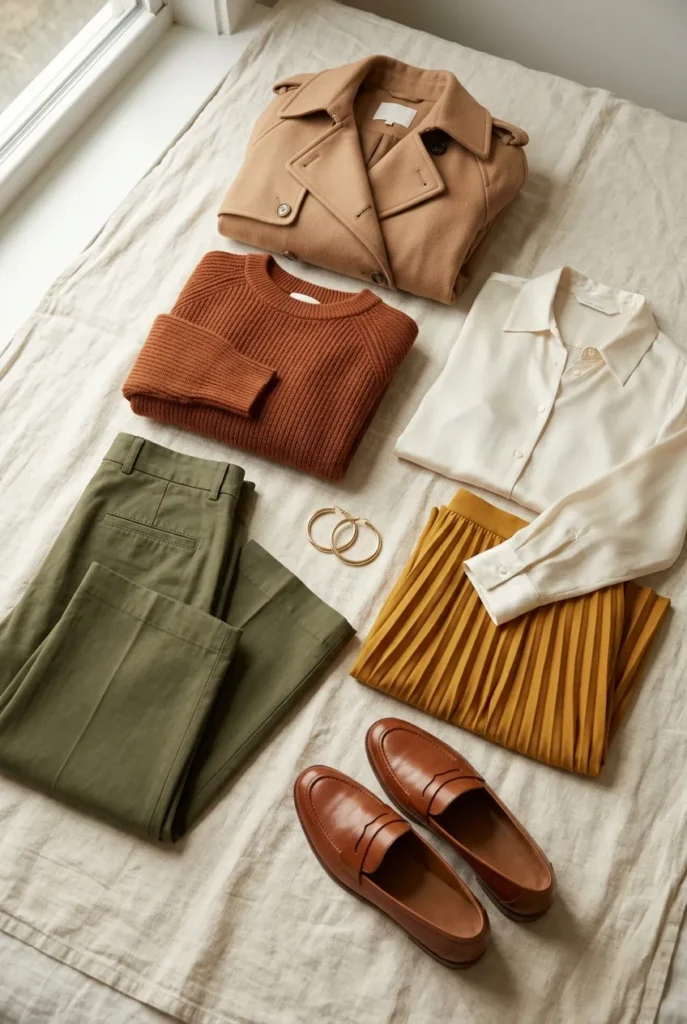
Care notes: Camel wool blends pill at friction points (under bag straps, inner sleeves), so look for a tight weave or a wool-cashmere blend. Ivory silk needs hand washing or a gentle dry clean. Rust cotton knits can fade in direct sun, so dry flat indoors.
Petite, tall, plus adaptations: Petites should crop the trench at the knee, not below. Tall readers can extend to mid-calf. Plus-size readers will find an excellent camel trench in Old Navy’s plus line up to 4X and at Universal Standard.
Colors warm skin tones should approach with care: Icy pastels, pure stark white, fuchsia, electric blue, and clear jewel tones can drain warm skin. You can still wear them, just keep them away from your face (think pants, skirts, or a peek under layers).
Best Clothing Colors for Cool Skin Tones
Cool undertones look most luminous in pure white, true black, navy, cobalt, emerald, sapphire, burgundy, plum, ruby red, soft blush, lavender, and charcoal gray. Think of a frosted winter morning.
What earns a spot in a curated wardrobe:
- A navy or black blazer. What it is: a structured single-breasted blazer in cool navy or true black. Why it earns its hook: anchors workwear, weekend brunch, and travel uniforms. Style it open over a white tee and straight-leg jeans with loafers, or buttoned over a burgundy slip dress with ankle boots.
- A burgundy or wine-red knit. Pairs with charcoal, black, navy, and crisp white. Style it tucked into black trousers with silver hoops for work, or loose over a black slip skirt with knee boots for date night.
- A pure white poplin or cotton button-down. Cooler than ivory, brighter against cool skin. Wear it half-tucked into wide-leg jeans for weekends, or under a black blazer with tailored pants for work.
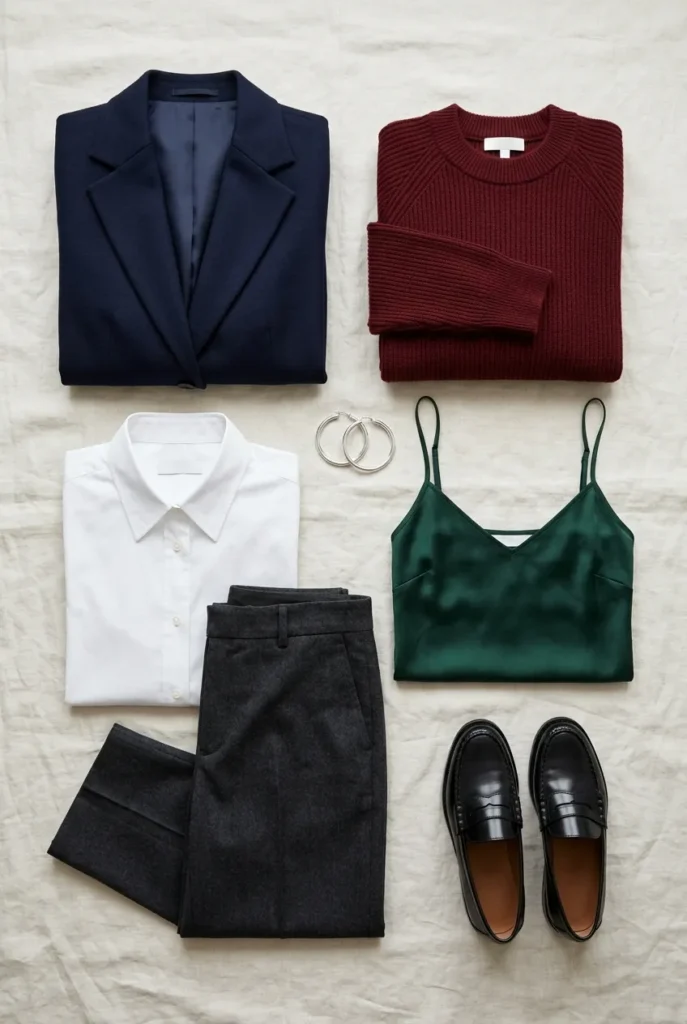
Care notes: Burgundy knits often bleed in the first wash, so wash separately the first three times. Navy cotton fades in dryer heat, so air dry. Pure white poplin wrinkles easily but steams smooth in 90 seconds.
Petite, tall, plus adaptations: Petites should look for navy blazers labeled “petite fit” at J.Crew Factory and Banana Republic Factory. Tall readers, Quince’s tall line runs long in the sleeve. Plus-size readers, Universal Standard’s Lyon Ponte Blazer goes to 4X in true cool navy.
Colors cool skin tones should approach with care: Mustard yellow, orange, warm browns, and warm camel can mute cool skin. If you love camel, look for a cool-leaning version (more gray, less yellow) often labeled “stone” or “taupe.”
Best Clothing Colors for Neutral Skin Tones
Neutral undertones are the chameleons. The widest palette of the four. Soft navy, sage, dusty rose, mauve, taupe, soft white, ivory, charcoal, jade green, soft burgundy, dusty blue, and most muted versions of any color all read flattering.
What earns a spot in a curated wardrobe:
- A sage or eucalyptus green knit. What it is: a fine-gauge crewneck or mock-neck in a muted green. Why it earns its hook: bridges warm and cool palettes, which most neutral closets already mix. Style it with cream wide-leg trousers and white sneakers, or with dark indigo jeans and brown loafers.
- A taupe or soft mushroom trench. Pairs with ivory, soft white, navy, and burgundy alike. Style it open over a white tee and jeans, or belted over a knit midi dress with knee boots.
- A soft navy silk blouse. Less harsh than true black, more polished than denim blue. Tuck it into camel trousers for work, or pair it with a cream skirt for date night.
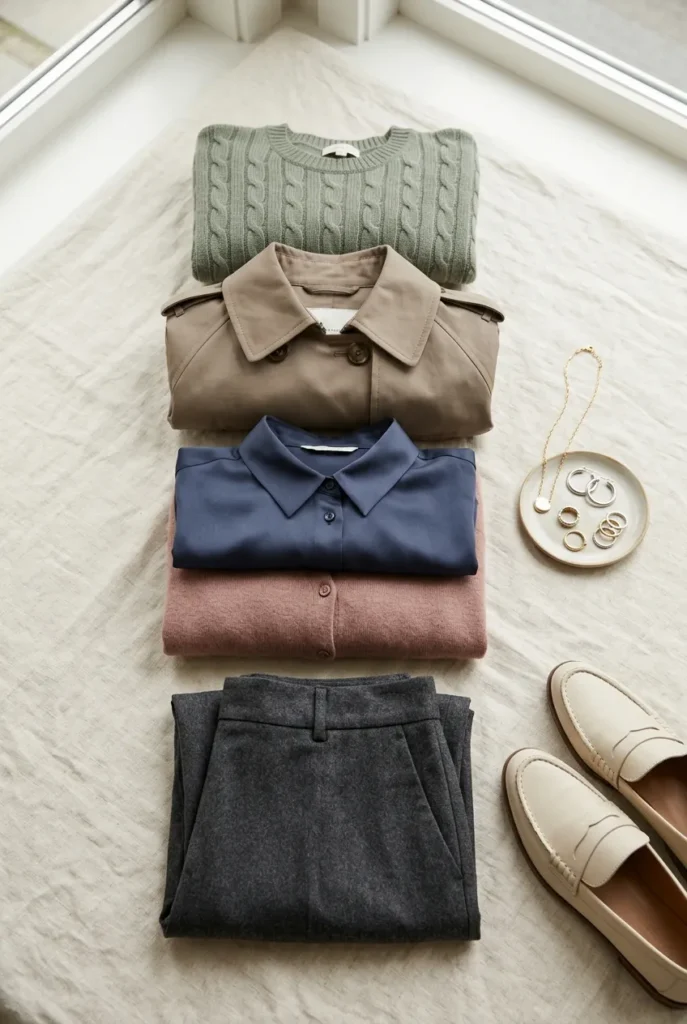
Care notes: Sage knits in cotton-blend tend to pill, so opt for merino or extra-fine merino. Taupe trenches in poly-cotton resist wrinkles for travel. Silk blouses always benefit from a gentle steam over an iron.
Best Clothing Colors for Olive Skin Tones
Olive skin looks luminous in oat, soft cream, warm white, sage, terracotta, deep plum, espresso brown, mustard, rust, dusty rose, and muted jewel tones. Bright pure whites can read harsh, and pastels can wash out; pivot to muted or warmed-up versions instead.
What earns a spot in a curated wardrobe:
- An oat or warm cream knit. Softer than ivory, less yellow than camel. Style it with dark denim and brown boots, or with espresso wide-leg trousers and gold jewelry.
- A plum or aubergine cardigan. Pairs beautifully with cream, sage, and espresso. Style it open over a cream tee with straight-leg jeans, or buttoned with a knit skirt and tall boots.
- An espresso brown trouser. Replaces black for most occasions and reads warmer on olive skin. Pair with an oat sweater and loafers for work, or with a cream blouse and gold hoops for dinner.
Care notes: Cream knits stain easily, so steam clean rather than wash when you can. Plum dyes can transfer, so wash inside out. Espresso wool trousers benefit from a brush-down, not a wash, between wears.
The 60-30-10-10 Color Rule for Capsule Wardrobes
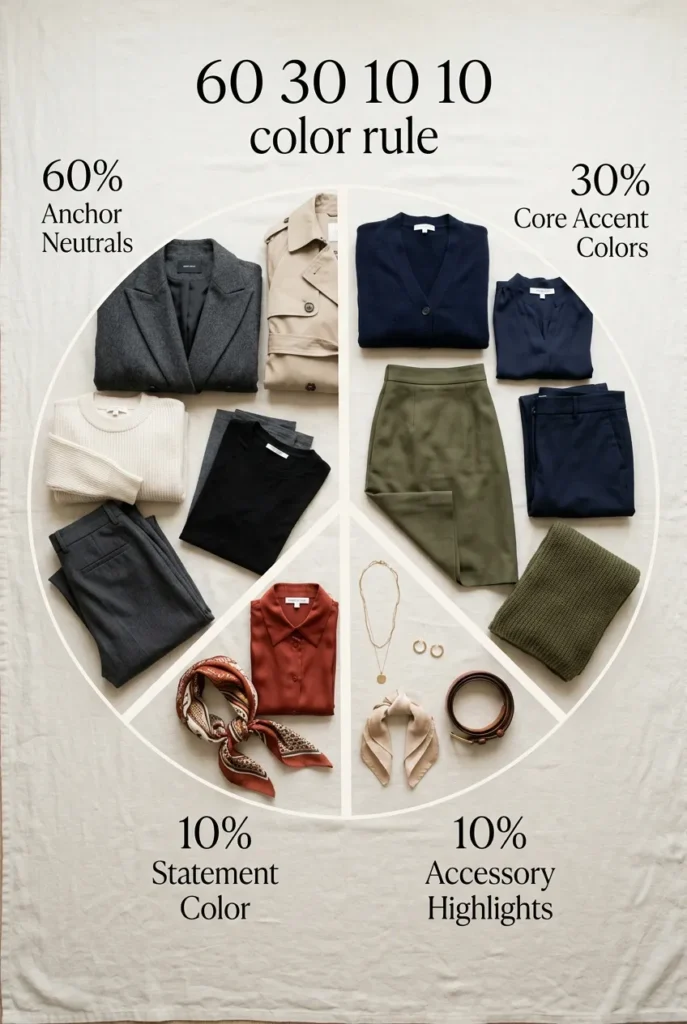
Here’s the original framework no other ranking article uses. Once you know your undertone, build your capsule color allocation like this:
| Color Tier | Percentage of Closet | What Goes Here | Example for Warm | Example for Cool |
|---|---|---|---|---|
| Anchor neutral | 60% | Daily workhorses | Camel, ivory, olive | Navy, charcoal, white |
| Secondary neutral | 30% | Bridging pieces | Cream, mocha, denim | Black, gray, denim |
| Statement color | 10% | One signature shade | Rust or mustard | Burgundy or emerald |
| Accent color | 10% | Pops in accessories | Soft gold, terracotta | Silver, soft blush |
This 60-30-10-10 split keeps your wardrobe coherent across seasons and ensures every piece you add already has three friends in the closet. For a deeper breakdown of building around neutrals first, see our full neutral capsule wardrobe guide.
Build This Look With What You Already Own
Most readers panic at this point. “Do I need to replace half my closet?” Almost certainly not. Here’s the rescue plan I run with clients:
- Pull everything in your strongest 5 colors from the test results above. These become your “first reach” pieces. Hang them at eye level.
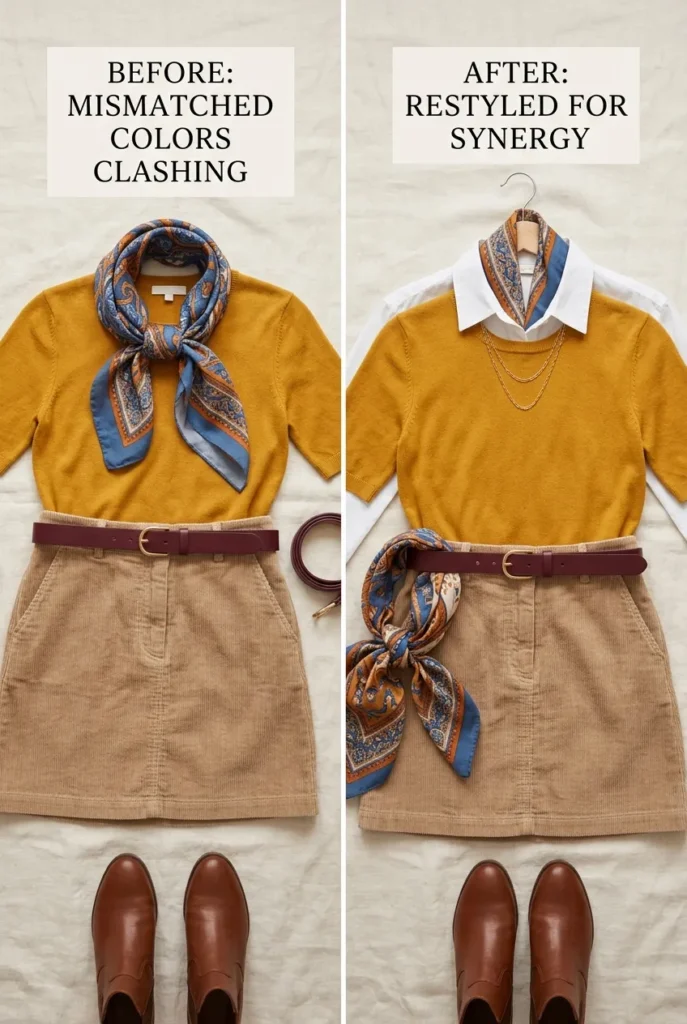
- Move slightly-off colors to the layering pile. A pure white tee on warm skin? Wear it under a camel cardigan, not solo. The cardigan reads at the face, the tee disappears.
- Use accessories to neutralize wrong-undertone pieces. A cool-pink blouse on warm skin gets a camel silk scarf at the neck. Suddenly the warmth wins.
- Repurpose for “low face” wear. Pants, skirts, and shoes sit far from the face. Wear your “wrong color” pieces below the waist and let your right-undertone pieces work at the collarbone.
- Donate or sell only after 30 days. Some pieces grow on you once they’re recontextualized.
This is the part competitor articles skip entirely, and it’s what makes the difference between a $400 closet purge and a $0 wardrobe revival.
How to Pick Colors That Go With Your Skin Tone While Shopping
A printed color swatch lives in your phone notes. Open it under the dressing room light, hold a candidate piece against your face, and ask three questions:
- Do my eyes brighten or dim? (Brighten = yes.)
- Do under-eye shadows look softer or harder? (Softer = yes.)
- Does my skin look one tone or patchy? (Even tone = yes.)
For online shopping, request a photo of the actual fabric next to a printed page or a neutral wall. Vendor product shots are color-corrected within an inch of their lives, so the swatch in your hand is the only reliable read.
Pair this with the color coordination principles in our layering guide and you’ll cut your returns roughly in half over a year.
Nail and Hair Colors That Match Your Wardrobe Palette
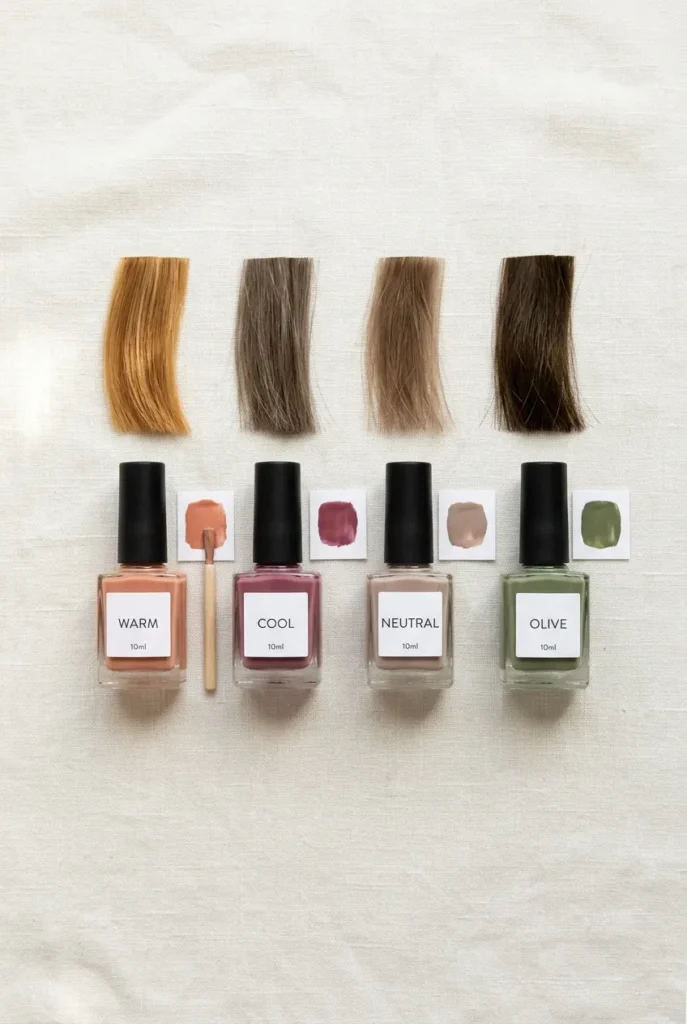
Worth a quick note since readers cross-shop these on Pinterest. Warm undertones glow in honey, caramel, copper, and chestnut hair shades, with nail polish in warm reds, terracotta, beige nudes, and burnt orange. Cool undertones look best in ash blonde, jet black, espresso, and burgundy hair, with polish in true reds, plum, berry, cool nudes, and burgundy. Neutrals can wear nearly any hair color but tend to favor mushroom blonde, soft brown, and natural-looking balayage; nails in mauve, dusty rose, soft taupe, and muted reds. Olive skin shines in espresso, mahogany, and chestnut hair with terracotta, plum, deep red, and warm nude nails.
Cost-Per-Wear Math: Why Color Accuracy Saves You Money
Here’s the math that justifies a fifteen-minute color self-test better than any aesthetic argument. The average American buys 53 new pieces of clothing per year (American Apparel & Footwear Association data, widely cited). Of those, an estimated 1 in 3 rarely or never gets worn, mostly because of fit, fabric, or color regret. At an average of $35 per piece, that’s roughly $620 wasted per year per closet.
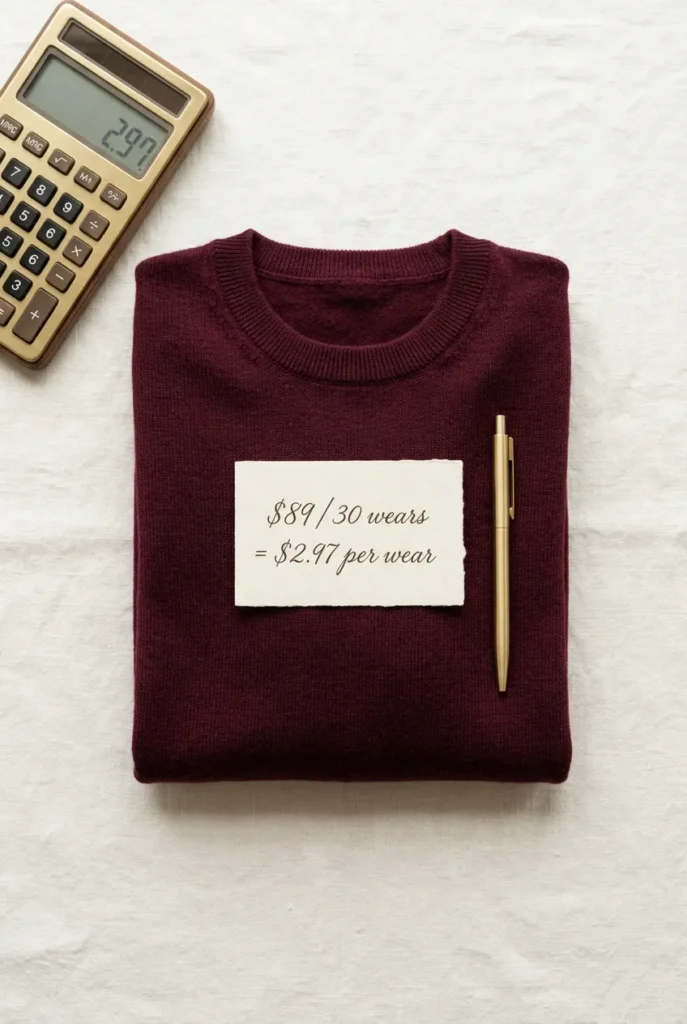
Now run cost-per-wear on a single right-color sweater. A $89 burgundy merino crew on cool skin, worn once a week from October through March, lands at about $3.42 per wear in year one and under $2 in year two. Compare that to a $35 mustard sweater worn three times before it migrates to the donate pile, which is $11.66 per wear and a guilty conscience.
Right color, even at a higher per-piece price, almost always wins the cost-per-wear contest. This is why building a capsule around your actual undertone is one of the highest-leverage decisions you can make for both your closet and your bank account. For the French girls reading along, the French girl style approach takes this principle to its logical end (small wardrobe, every piece in the right palette).
Sources Worth Bookmarking
For the science behind undertone classification, the Cleveland Clinic has a clear, medically reviewed explainer on skin undertones. For broader color theory and palette construction, Pantone’s color fundamentals primer is the industry standard.
FAQ
What is the 3-3-3 rule for wardrobe?
The 3-3-3 rule asks you to create a week’s worth of outfits using only 3 tops, 3 bottoms, and 3 pairs of shoes. It’s a packing and minimalism trick that proves a small, right-color capsule will outperform a packed closet of wrong colors every time.
What is the 60/30/10/10 color rule?
It’s a color allocation framework for capsule building: 60% of your closet in your anchor neutral, 30% in a secondary neutral, 10% in your statement color, and 10% in accent shades and accessories. See the table earlier in this article for examples by undertone.
How do I find the best clothing colors for my skin tone?
Run the four-test diagnostic in the section above (vein test, jewelry test, white paper test, sun test). If three of four point the same direction, that’s your undertone. Then match your closet allocations to the relevant palette in the warm, cool, neutral, or olive section.
What colors should warm skin tones avoid?
Pure stark white, icy pastels, fuchsia, electric blue, and clear cool jewel tones tend to drain warm skin near the face. You can still wear them in bottoms, skirts, or under layers; just keep them off the collar line.
How do I style this if I don’t own a camel coat or a navy blazer?
Start with what you have in the closest tone. Tan trench, beige jacket, or even a denim jacket layered over an ivory or white tee will read in the same family. Once you replace one piece, choose your undertone’s anchor neutral first.
What size should I order if I’m between sizes?
In structured pieces (blazers, trousers, trenches), size up for cleaner lines and easier layering. In knits, size down for a more polished fit, unless you want the relaxed oversize look on purpose. Plus-size readers, brands like Universal Standard and Quince run more true-to-size than fast-fashion ranges.
Is a color palette seasonal or year-round?
Your undertone is permanent. Your palette is year-round. Seasonal shifts only change which pieces from your palette get heavier weight (camel coats in winter, ivory linen in summer), not the colors themselves.
How do I pack this for travel?
Pick one anchor neutral, one secondary neutral, one statement color, and one accent. Build all travel outfits within those four. A warm-undertone weekend kit might be camel trench, ivory tee, olive trouser, rust sweater, and a single gold accessory. Everything mixes; nothing fights.
Can I wear colors outside my undertone if I love them?
Yes, always. The framework is for the colors near your face. Keep “wrong-undertone” pieces below the waist or under a right-undertone layer, and your face still reads fresh.
Save This for Your Next Capsule Wardrobe Refresh
The wardrobe colors for your skin tone aren’t a trend, they’re a permanent shortcut. Five minutes with a piece of paper now will save you hundreds of dollars in returns, donations, and “what was I thinking” purchases over the next decade. Pin this guide, run the four tests this weekend, and screenshot the 60-30-10-10 table for your next shopping trip. When you’re ready to translate the findings into a real closet, the neutral capsule wardrobe guide is the natural next read.
What undertone did you land in? Save this guide to your capsule wardrobe board so it’s there the next time you stand in a dressing room wondering if that color is actually the one.
This article shares general styling information and is not medical or professional advice. For questions about skin health, consult a qualified US healthcare professional.
Keep reading
13 Ways to Wear Sage Green for Plus-Size Women
Sage green is the color women buy on impulse and then leave on the hanger. It looks calm and expensive in the...

Sage Green Outfits for Women Over 50: 10 Ways to Wear It Well
Sage green is the one color women keep asking me about and then leave hanging in the closet. It looks calm and...

10 Sage Green Outfit Ideas for Fall (and Exactly What to Pair Them With)
Sage green outfits look easy on a pin and confusing in a closet. The color sits right between a neutral and a...
One Comment