
What to Pack for Europe in Summer: A Capsule Wardrobe You’ll Actually Wear
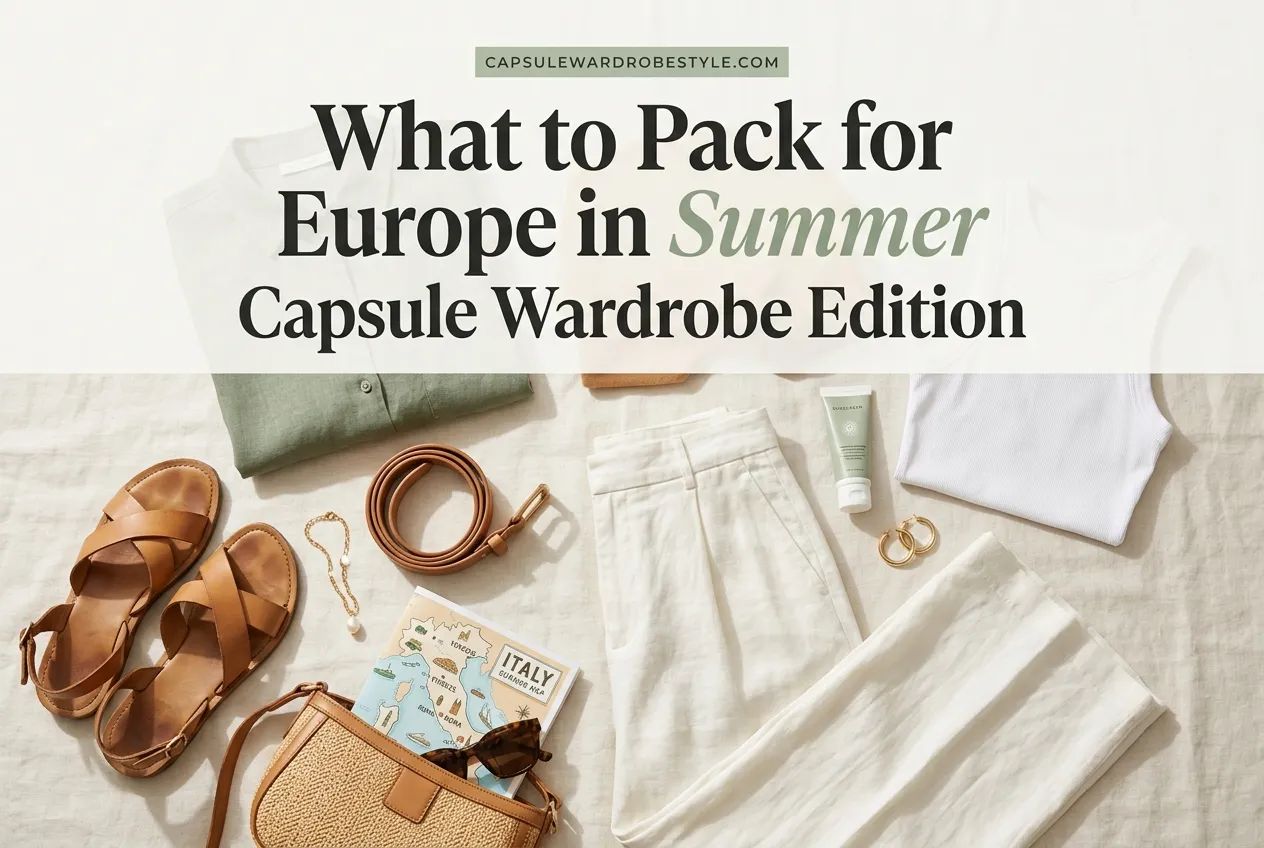
If you’ve ever stood over a half-packed suitcase at midnight, sweating through your tee, googling what to pack for Europe in summer and feeling more confused with every blog post you opened, this guide is for you. I packed only this capsule for a 10-day trip across Rome, Florence, and Lake Como last June, and I genuinely did not run out of outfits. I also did not lug a giant suitcase up a single set of Italian stairs, which, if you’ve ever wrestled a 50-pound bag onto a regional train, you know is its own kind of luxury.
Here’s the honest part. Most Europe packing lists you’ll find online are either bloated (24 items for 10 days, plus a whole separate “evening” capsule) or weirdly stylized (six identical linen sets and zero practical advice about cobblestones). This one is different. It’s built on real climate data, real shoe survival, real fabric performance, and an outfit math that gives you twenty-plus looks from a tiny pile of clothes.
Below you’ll find the exact framework, the pieces, the shoes that earned their suitcase space, and the two things almost no one mentions: the Cobblestone Test and the Modesty Map. Let’s get into it.
The European Summer Climate Reality (And Why It Wrecks Most Packing Lists)
Europe in summer is not one climate. It’s at least three. The reader who packs for “summer in Europe” the same way she’d pack for a week at the Jersey Shore is the reader who ends up buying a sweater at H&M in Munich at 9 p.m. because she’s freezing on a train platform.
Here’s the rough breakdown. Southern Europe (Italy, Spain, Greece, Portugal, southern France) runs hot and dry in June, July, and August, with daytime temps regularly hitting 85°F to 95°F and occasionally pushing past 100°F in inland cities like Seville or Florence. Central Europe (Paris, Berlin, Amsterdam, Prague) sits cooler and more changeable, with daytime highs between 70°F and 82°F and surprise rain showers that can drop the temp ten degrees in an hour. Northern Europe (London, Edinburgh, Copenhagen, Dublin) is its own thing entirely, with highs hovering around 65°F to 75°F and evenings that genuinely feel like fall.
What does this mean for what to pack for Europe in summer? You pack for a heat wave and a cold front. You bring a hero layer. You skip anything that only works in one temperature. And you double-check the forecast for your specific cities the week before you fly, because June in Rome and June in Reykjavik are not the same season.
The other reality nobody warns you about: most European hotels and AirBnBs in older buildings do not have American-style central air conditioning. You will sweat in your room. You will wash a tee in the sink at 11 p.m. So everything you pack needs to dry overnight on a balcony rail. That single requirement narrows your fabric list fast.
The 4-3-2-1 Europe Capsule Math (Save This Part)
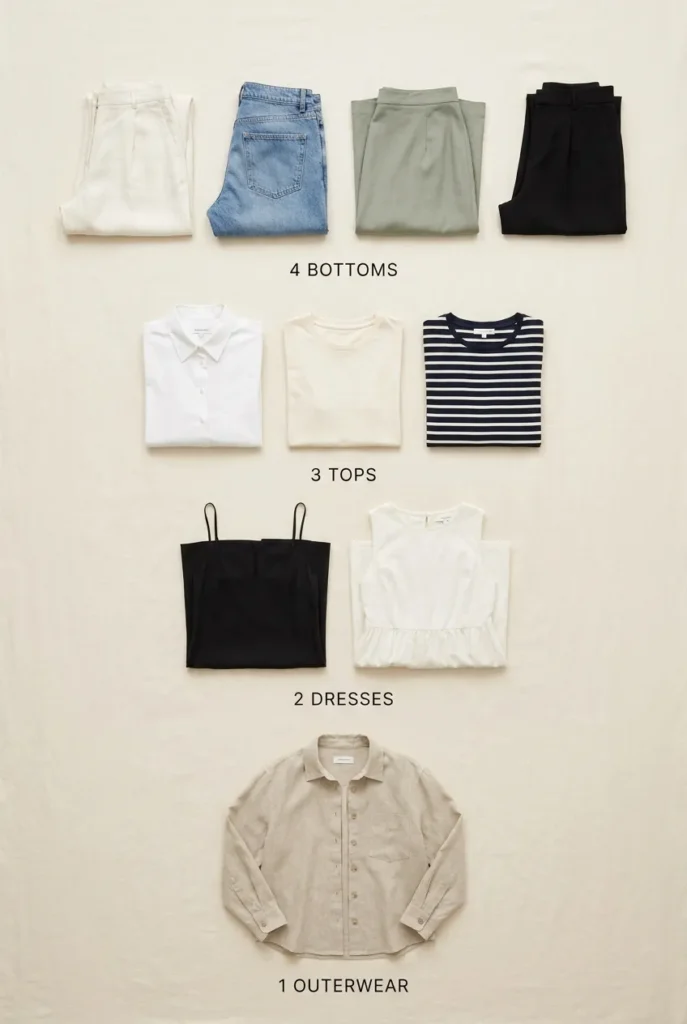
Here is the framework. After testing capsules of 12, 16, and 22 pieces across three Europe trips, I landed on a ratio that works for a 7- to 14-day trip without feeling repetitive. I call it the 4-3-2-1 Europe Capsule Math.
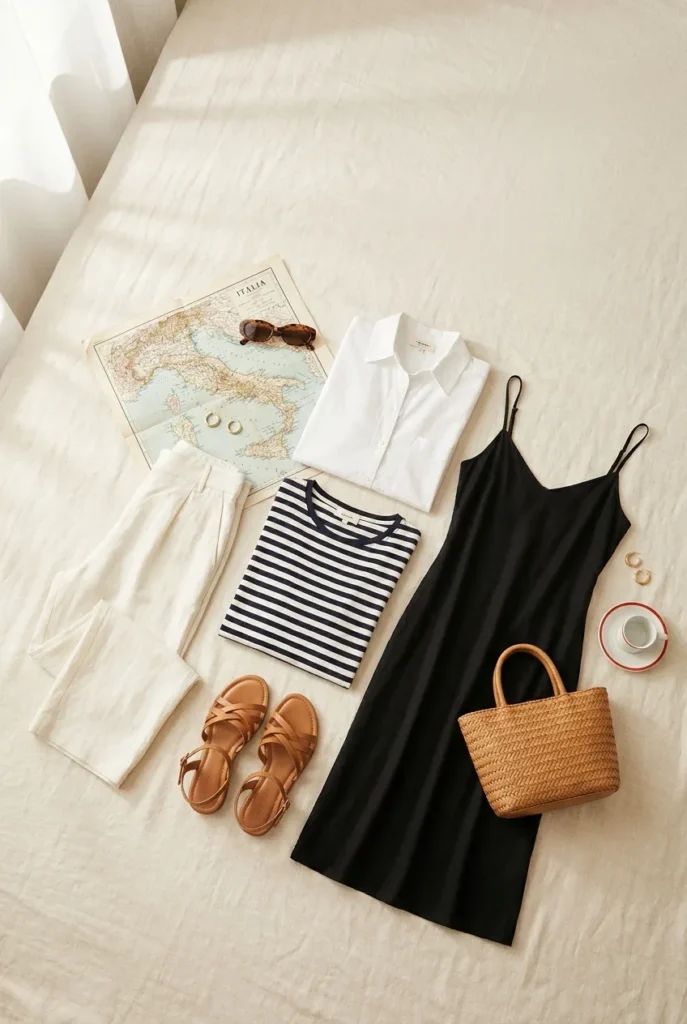
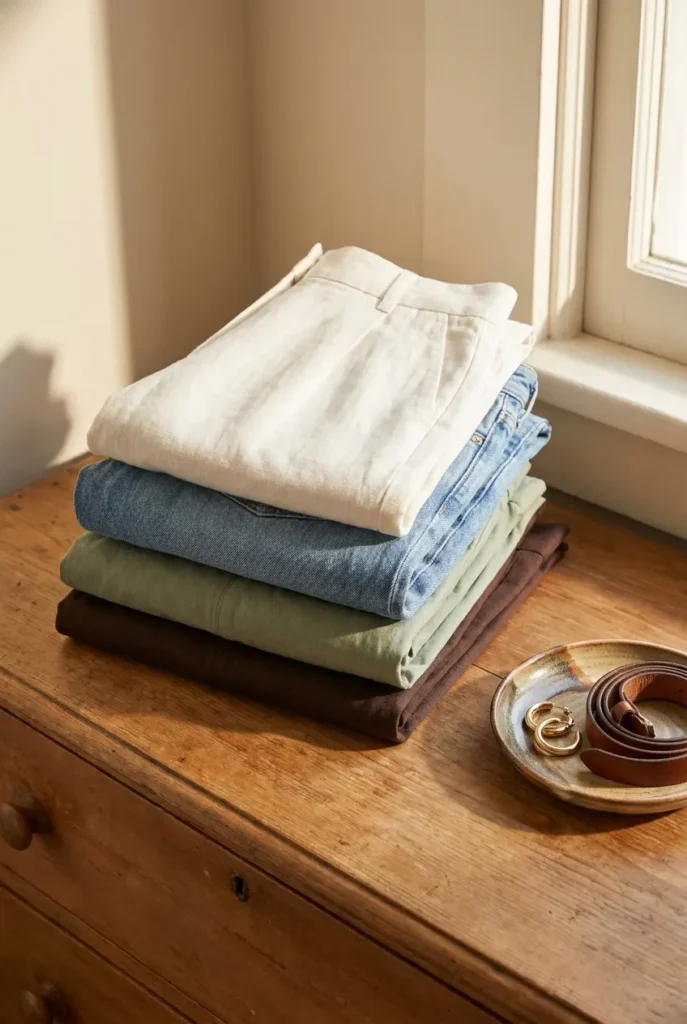
- 4 bottoms: 1 pair of wide-leg linen pants, 1 pair of soft denim jeans or denim shorts, 1 midi or knee-length skirt, 1 pair of cropped tailored trousers.
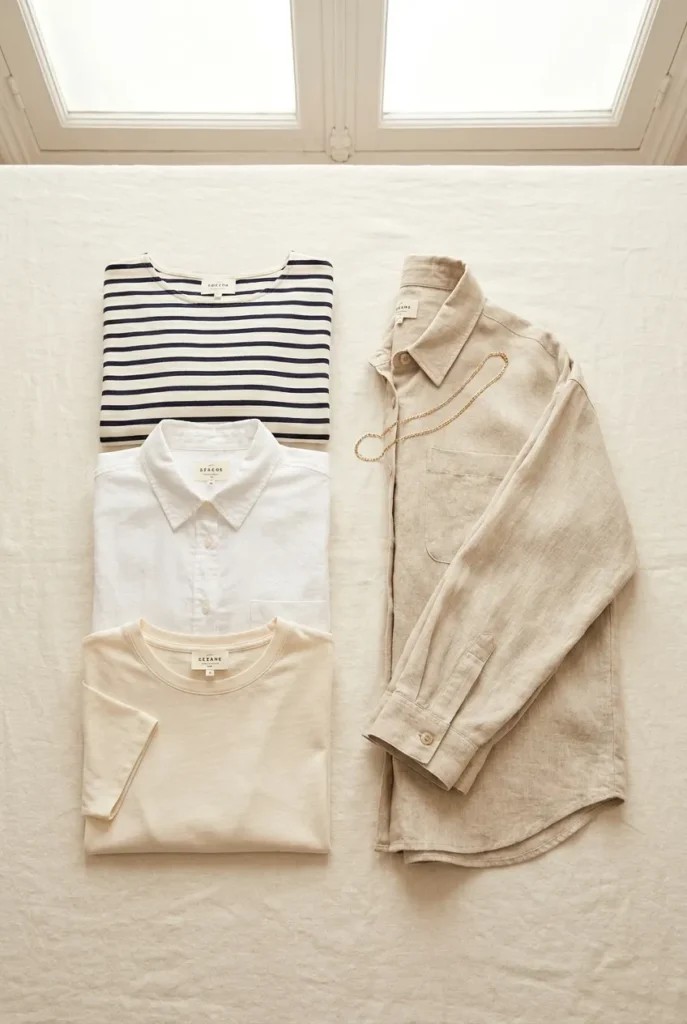
- 3 tops: 1 white button-down (long sleeve, breathable cotton), 1 white or cream tee, 1 striped Breton tee.
- 2 dresses: 1 midi slip dress in a neutral, 1 cotton or linen day dress with a defined waist.
- 1 hero layer: an oversized linen shirt-jacket, a packable trench, or a fine-knit cardigan in oat or cream.
That’s ten pieces of clothing, plus shoes and accessories below. The math behind it: 4 × 3 = 12 top-and-bottom outfits before you even count the dresses. Add the 2 dresses and you have 14 outfits. Add a hero layer and an accessory swap, and you have well past 20 looks from one carry-on.
The key is that everything has to talk to everything else. You’re not picking favorites. You’re picking a team. Stick to a tight color palette (more on that in a second) and every piece becomes a multiplier. This is the same logic behind a neutral capsule wardrobe that mixes effortlessly, just compressed into travel form.
A note on color palette. The 60-30-10 split works beautifully here. Pick one base color for 60% of your capsule (ivory, oat, or cream are easiest to keep clean and look polished even when wrinkled). Pick a secondary color for 30% (navy, soft black, espresso, or sage). Add a 10% accent (tomato red, butter yellow, or dusty terracotta) through a scarf, a pair of earrings, or one top.
Bottoms That Earn Their Suitcase Space
Let’s start with the four bottoms, because this is where most travelers overpack. The temptation is to bring six pairs because you “don’t know what mood you’ll be in.” Skip it. Four well-chosen bottoms cover every situation.
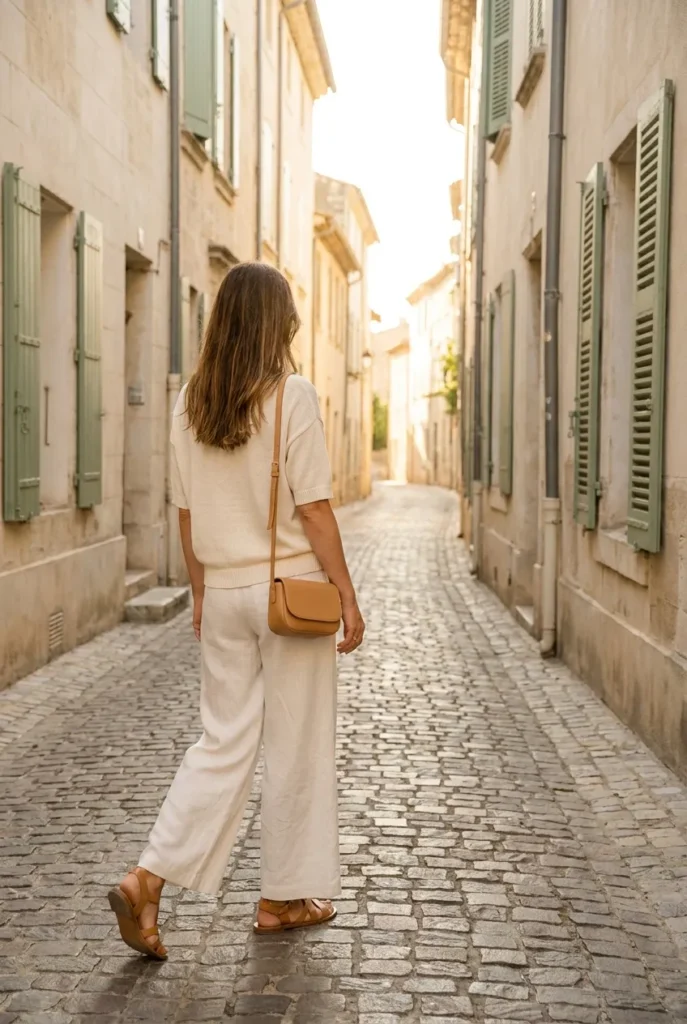
1. Wide-leg linen pants. Non-negotiable. I tested four versions across Quince, Madewell, J.Crew, and Everlane, and the winner for travel was a heavier-weight linen that didn’t wrinkle into a paper bag after one wear. Look for 100% linen at around 5 to 6 oz fabric weight, in ivory or oat. Quince typically runs $50 to $70, Madewell sits closer to $100 to $130, and Everlane lands in between. The Quince pair was the surprise. They drape, they breathe, and they shake out wrinkles in a hotel bathroom shower in about ten minutes.
2. Denim. One pair only. Pick the wash and cut you wear most. Soft, broken-in mid-wash straight legs travel best because they look polished in a piazza dinner photo and casual on a train. Skip stiff dark denim, it does not dry. Madewell, Everlane, and Abercrombie all run a solid mid-wash straight in the $80 to $150 range.
3. A skirt. A midi cotton or linen skirt in your secondary color (sage, navy, or espresso) doubles your dinner-outfit options without taking real space. Look for an elasticated or partially-elasticated waist for plane comfort. Anthropologie and J.Crew both run reliable options in the $80 to $140 range.
4. Cropped tailored trousers. This is the piece most packing lists skip and most travelers regret skipping. A pair of soft cropped trousers in black or espresso turns a tee into a polished dinner outfit instantly. They’re also the answer for evening rooftop bars, modest cathedral visits, and any moment you want to look “tried a little.” J.Crew, Banana Republic, and Quince all do this well, $60 to $150.
A quick note on shorts. Yes, you can pack denim shorts. No, most of Europe is not a denim-shorts culture for women over 25 in cities. If you’re going to Greek islands, Mallorca, or a beach-focused trip, swap the trousers for shorts. If you’re city-hopping, leave them home.
Tops, Tees, and the Layer Question
Three tops sounds insane until you wear them. Hear me out.
The white button-down is your hardest-working piece. It’s a beach cover-up, a cathedral shoulder cover, an evening top with the cropped trousers, a layer over a slip dress when the wind picks up in Lake Como at sundown. Look for a slightly oversized cotton or cotton-linen blend, not a stiff oxford. Frank & Eileen, Everlane, and Quince all run versions in the $50 to $200 range.
A fine cream or white tee in a slightly heavier cotton (not paper-thin) goes under everything and stands alone for daytime. Skip the cheap ones from Amazon basics, they pill on day two of travel. The Madewell Whisper tee and the Everlane Supima tee both hold up in the $25 to $45 range.
A striped Breton tee in navy and ivory or black and cream is the closest thing to a universal European wardrobe piece. It looks pulled together in a way a plain tee doesn’t, and it pairs with literally every bottom in your capsule. Saint James is the heritage choice ($90 to $130), but J.Crew, Quince, and Sezane all run beautiful versions for less.
What about a fourth top? You’ll be tempted. Don’t. If you really feel the pull, swap one of the existing three for a silk or satin camisole that works under the button-down for dinner. That’s it.
The hero layer deserves its own paragraph. For southern Europe in June and July, an oversized linen shirt-jacket in oat or cream is perfect. For a trip that spans north and south, swap it for a packable trench coat. For anywhere with cool nights (Lake Como, Edinburgh, Amsterdam, the Italian Alps), add a fine cashmere or merino cardigan in cream that folds into nothing. You’ll need it. If you want a deeper dive on stacking layers without bulk, here’s how to layer outfits like a pro for chilly evenings in Europe on the site.
Dresses That Do Double Duty
Two dresses for ten days sounds like a stretch. It isn’t, because the right two dresses each work three or four different ways.
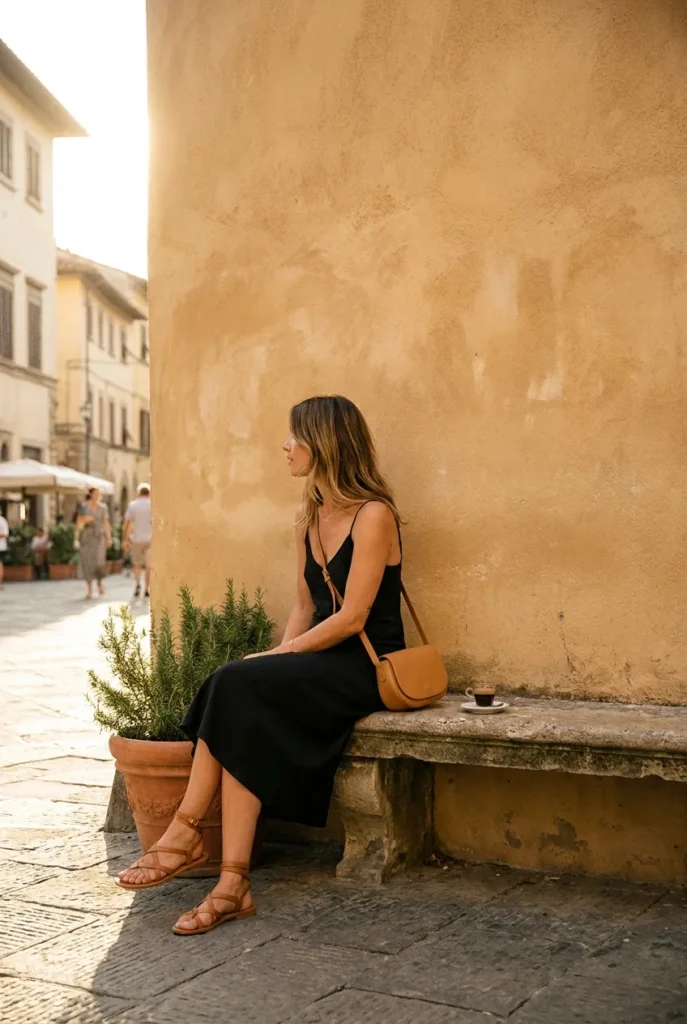
Dress 1: A black or navy slip midi dress. Bias-cut, fluid fabric, simple straps. This is your dinner dress, your aperitivo dress, your “I want to look pulled together but I’m exhausted” dress. Worn alone with sandals at night. Layered under the white button-down knotted at the waist for daytime. Topped with the cardigan for cool evenings. Reformation, Madewell, and Anthropologie all run versions in the $90 to $220 range. The Quince silk slip ($80 to $100) is the dupe everyone whispers about.
Dress 2: A cotton or linen day dress with structure. Something with a defined waist, a sleeve (cap or short), and a knee-length or midi hem. Think shirtdress energy or a softly structured A-line. This is your daytime dress, your modest cathedral dress, your “looks like effort but isn’t” dress. Sezane and Doen are the aspirational choices ($150 to $300). Quince, J.Crew, and Old Navy all run more affordable options that pass the cobblestone test ($30 to $100).
The trick with travel dresses is that they bypass the entire outfit-building question. You put on the dress. You put on sandals. You leave. On a tired travel day, that’s worth real suitcase space.
The Cobblestone Test (Choose Your Shoes Like Your Feet Depend on It)
This is the section nobody else writes, and it’s the section that makes or breaks your trip. Your feet will walk 15,000 to 22,000 steps per day in Europe. On cobblestones. On marble. On gravel. On scorching pavement. The shoes you pack will either save you or ruin Tuesday.
Here’s the test. Every shoe in your capsule has to score a yes on three questions:
- Can I walk 6 miles in this without blisters?
- Does it look pulled together in a piazza photo at dinner?
- Will the heel or sole survive a cobblestone gap that’s an inch wide?
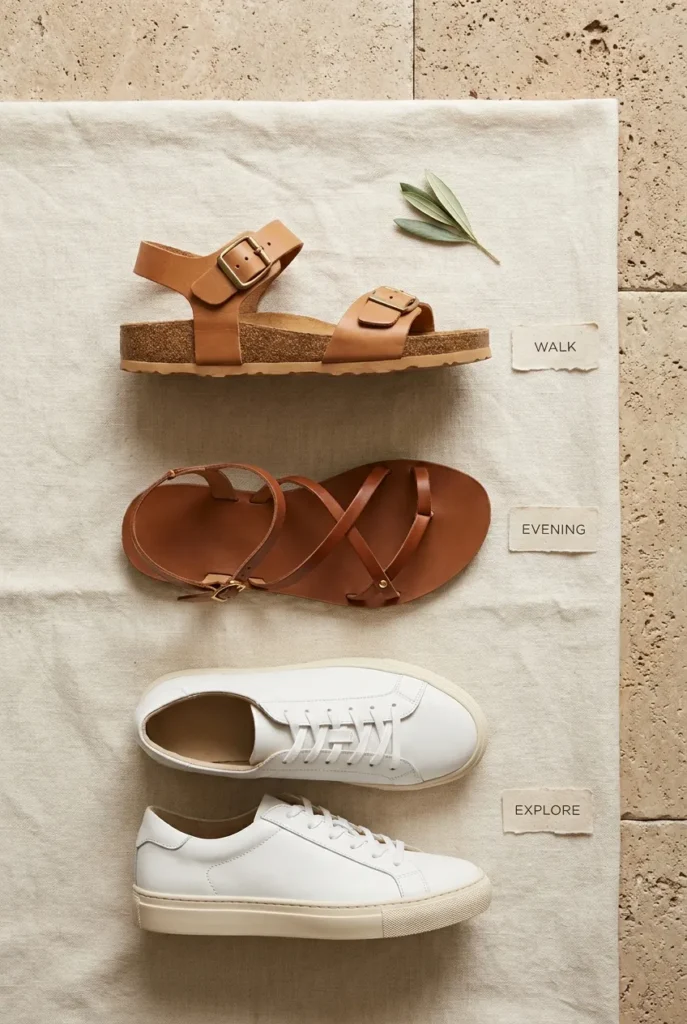
Three shoes pass for almost any Europe summer trip:
Walking sandals with real arch support. Not flip-flops. Real leather sandals with a structured footbed. Birkenstock Madrid or Arizona in oiled leather is the workhorse choice ($90 to $130). The Sam Edelman Bay sandal and the Madewell Boardwalk slide are slightly dressier alternatives ($60 to $100) that still survive a day of walking.
Strappy leather sandals for evening. Skip the stilettos. A flat or near-flat strappy sandal in tan or black handles dinner, theater, evening walks, and the inevitable “let’s keep going” moment. Sam Edelman, Steve Madden, and Madewell all run versions in the $70 to $150 range. The heel base must be flat or under one inch, or it will catch in cobblestone gaps.
A pair of clean leather sneakers. White, cream, or beige. These are your marathon-walking-day shoes and your travel-day shoes. Veja, Adidas Stan Smith, and Cariuma all pass the test ($75 to $200). Skip white canvas, it will be filthy by day three.
If you’re tempted to pack ballet flats, packing them as a fourth shoe is fine, but they fail the cobblestone test for full walking days. Bring them only if you have a dressy dinner where sneakers won’t work and you can taxi there.
Accessories, Bags, and the Modesty Map
You need three bags, and not one more.
A small structured crossbody for everyday city walking, ideally with a zip closure and a long enough strap to wear across the body (anti-pickpocket reality, not paranoia). Camel, cream, or soft black. Madewell and Quince both run real leather versions in the $80 to $200 range.
A woven tote for beach days, market days, and the airport. Soft enough to fold into your carry-on, structured enough not to collapse. $30 to $90 at Target, Quince, or any local market once you arrive.
A nylon zip pouch or small evening clutch for dinner. If you skip this, fine, you can dinner-out with the crossbody, but a clutch instantly elevates the slip dress moment.
Jewelry: small gold hoops, one delicate necklace, one watch. That’s it. Leave the statement pieces home, they don’t survive airport security trays and they mark you as a tourist.
Sunglasses: one oval or square pair in tortoise or black. Don’t pack a backup unless you historically lose them.
Sunscreen, lip balm, a packable rain shell for central Europe, a refillable water bottle, and a small foldable umbrella. Done.
The Modesty Map (Save This for Cathedral Days)
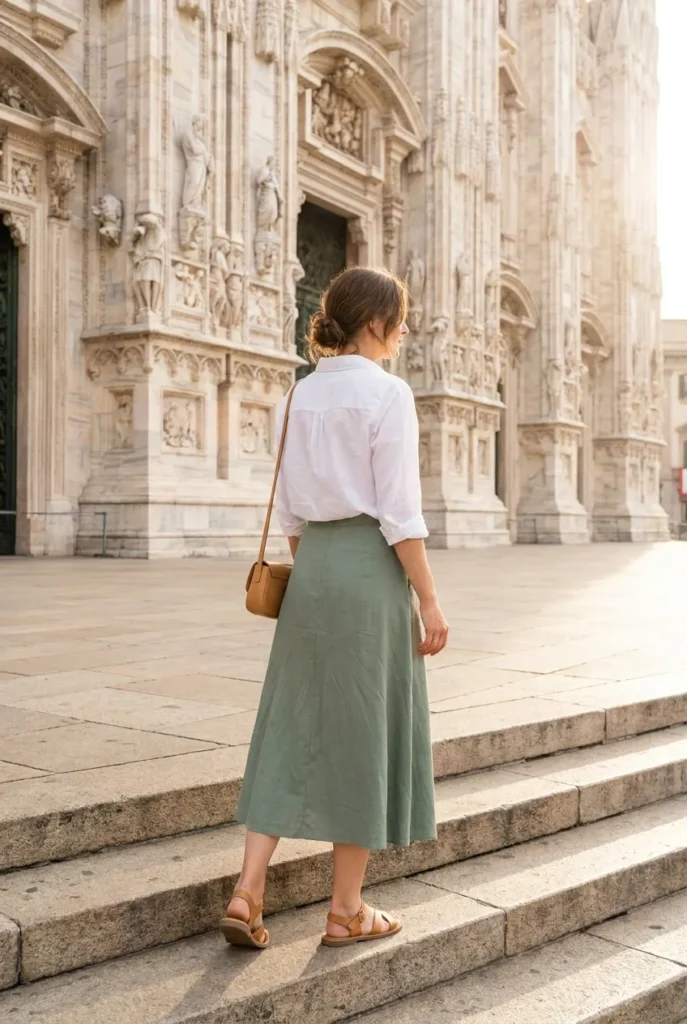
Most American travelers get caught off guard by European church and religious-site dress codes. Here’s the short version. Plan a top with shoulder coverage and a bottom that hits at or below the knee for any of the following:
| Site or City | Dress Code Enforced |
|---|---|
| Vatican City (St. Peter’s Basilica, Vatican Museums) | Shoulders and knees covered. Strict. They will turn you away. |
| Most cathedrals in Italy, Spain, Portugal | Shoulders covered, knees covered or close to it. |
| Mosques (Istanbul, Granada Alhambra Mosque section) | Shoulders, knees, and head covered for women. |
| Orthodox churches (Greece, parts of the Balkans) | Shoulders covered, sometimes knees. Skirts preferred over pants in rural churches. |
| Smaller village churches (anywhere) | Variable but lean conservative. |
Your white button-down plus midi skirt combination handles every one of these. So does your day dress with the cardigan over your shoulders. Pack accordingly.
For current entry requirements and specific country-by-country guidance, I’d check the US State Department travel pages before your trip. They update frequently and are the most reliable source for dress codes and access rules at major sites.
How to Pack It All in a Carry-On (Actually)
Yes, this fits in a carry-on. I’ve done it three times. Here’s the method.
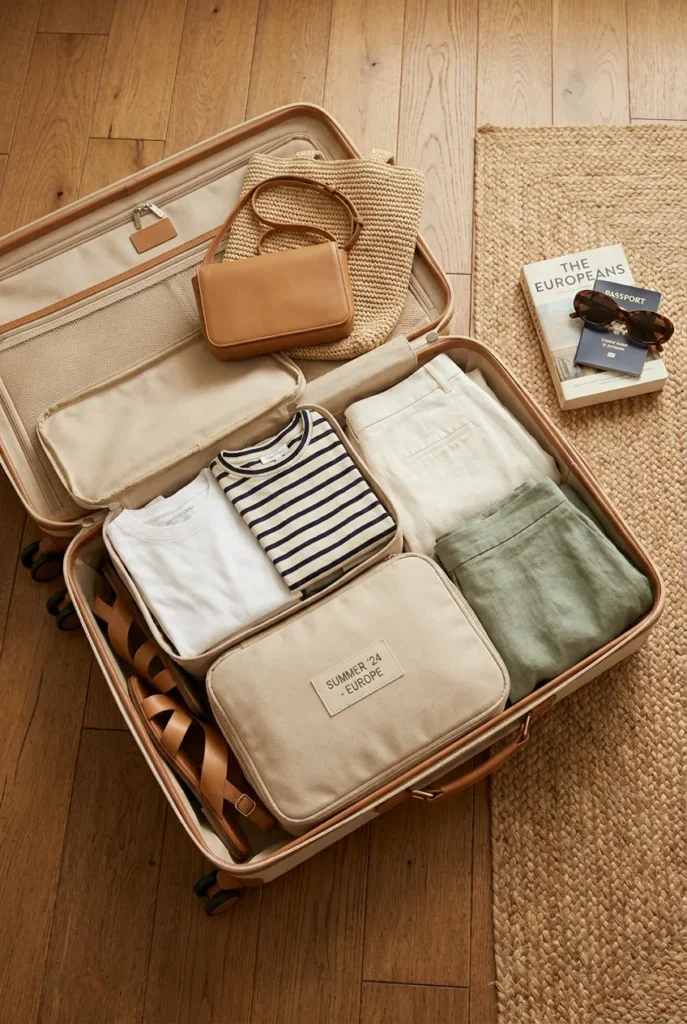
Use packing cubes, but only two. One slim cube for tops and underwear, one slightly larger cube for bottoms. Dresses go flat on top, not in a cube. Shoes go in shoe bags or one shoe inside the other, on the bottom of the bag.
Roll tees and tops, fold pants and dresses. Rolling compresses but creates wrinkles in structured fabrics. Folding pants the long way and laying them flat keeps the crease. Slip dresses get folded in half once and laid on top, hanger-fold style.
Wear your bulkiest shoes and your hero layer on the plane. Sneakers go on your feet. The linen shirt-jacket or trench gets folded over your arm or worn through security.
Limit your toiletries. Most hotels and AirBnBs in Europe stock decent shampoo, conditioner, and soap. Bring only what you genuinely need: a small skincare bag, sunscreen, deodorant, toothpaste, prescriptions, a tiny laundry detergent sheet pack for sink washes. The full TSA carry-on liquid limits are spelled out on the TSA’s official what-can-I-bring page if you want to double-check what’s allowed.
Use the personal item. Your tote or large crossbody goes under the seat. Pack your electronics, a paperback, sunglasses, a packable rain shell, a refillable water bottle, and one change of underwear in case your bag gets delayed. That last one has saved me twice.
If you’re starting your capsule from scratch and want a non-travel-specific foundation to build on, here’s the foundation summer capsule wardrobe you can adapt for travel.
Your Arrival Day Outfit (The Hack Nobody Tells You)
Here’s the move. Your arrival day outfit is the outfit you wear on the plane. It needs to:
- Look polished enough that you don’t feel rumpled stepping off at customs.
- Be comfortable for an 8-hour flight.
- Layer up and down because planes and airports run hot, cold, and back again.
- Free up your suitcase space (you’re wearing your bulkiest pieces).
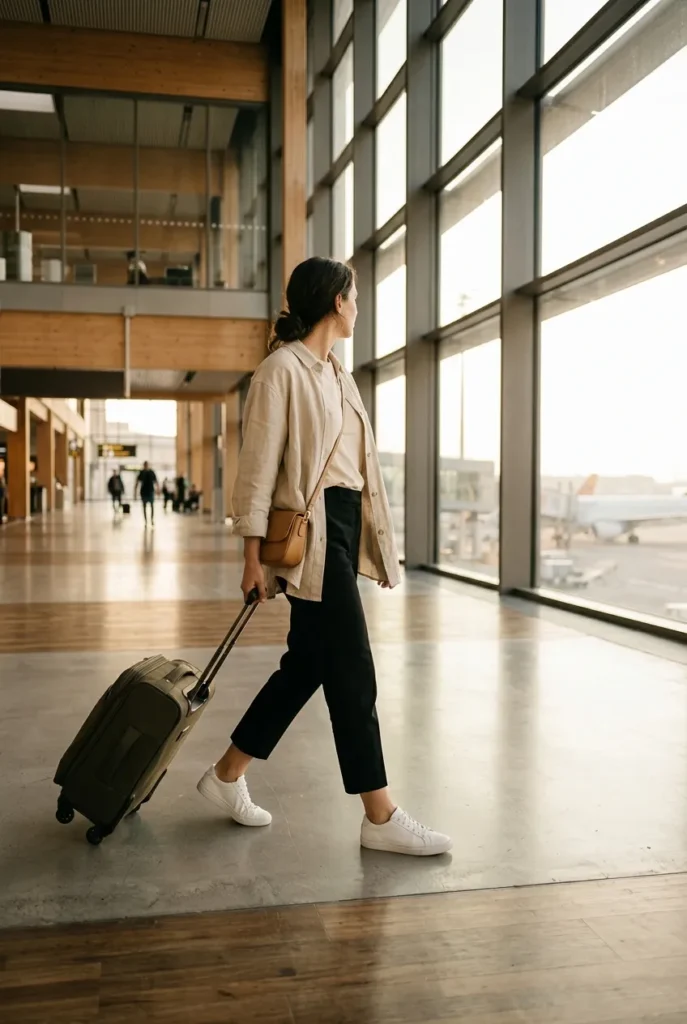
The formula: cropped tailored trousers or jeans, the white tee, the linen shirt-jacket as your in-flight layer, clean sneakers, and the small crossbody. Add a packable cashmere or merino cardigan in your personal item for sleep. When you land, you can swap the shirt-jacket for the cardigan, freshen up at the airport bathroom, and walk out looking like you’ve been traveling intentionally, not surviving.
Save the slip dress and the strappy sandals for your second night, when jet lag has loosened its grip and you’ve had a proper espresso.
Frequently Asked Questions
What is the 5-4-3-2-1 rule for packing?
The 5-4-3-2-1 packing rule is a popular travel guideline: 5 tops, 4 bottoms, 3 dresses or layers, 2 pairs of shoes, and 1 swimsuit or accessory. It works for shorter trips and warmer climates. For a longer Europe summer trip, I prefer the 4-3-2-1 capsule math above because it leaves room for a hero layer and tighter outfit math, which matters when European nights run cool.
What should I bring on a summer trip to Europe?
The short list: a wide-leg linen pant, a pair of jeans, a midi skirt, cropped trousers, three breathable tops (white button-down, plain tee, Breton stripe), two versatile dresses, one hero layer, three pairs of shoes (walking sandals, evening sandals, clean sneakers), a small crossbody, a woven tote, sunglasses, gold hoops, and TSA-compliant toiletries. Stick to a tight color palette so everything mixes.
What is the 3-3-3 rule for packing?
The 3-3-3 packing rule is the most minimalist version: 3 tops, 3 bottoms, 3 pairs of shoes, total, for a short trip. It works for a long weekend in one city. For a 7- to 14-day Europe summer trip across multiple cities and climates, it’s usually too restrictive. The 4-3-2-1 math is closer to right.
What are the 5 biggest packing mistakes to avoid for Europe in summer?
The five most common mistakes: (1) Overpacking shoes that don’t pass the cobblestone test. (2) Bringing all-cotton tees that take forever to dry after sink-washing. (3) Forgetting a layer because “it’s summer” (Lake Como, Paris, and Edinburgh evenings will humble you). (4) Packing pieces in too many color families so nothing mixes. (5) Ignoring cathedral and religious-site dress codes and getting turned away at the Vatican.
Do you really only need a carry-on for two weeks in Europe?
Yes, with the 4-3-2-1 framework and the willingness to do one sink-wash mid-trip. The trick is fabric choice (linen and cotton blends that dry overnight) and a tight color palette so every piece multiplies. A carry-on also saves you from checked-bag fees, lost-luggage anxiety, and the misery of dragging a large suitcase up a hotel staircase.
Can I wear shorts in Europe in summer?
You can wear shorts in beach towns, on Greek islands, in resort areas, and in tourist-heavy parts of southern European cities. In Paris, Rome, Florence, Milan, Barcelona, and similar style-conscious cities, most local women over 25 skip shorts in favor of midi skirts, sundresses, or wide-leg pants. If you want to blend, lean into those. If you don’t care, pack the shorts.
What colors work best for a Europe summer capsule wardrobe?
A tight palette of one base color, one secondary, and one accent works best. Ivory or oat for 60% of the capsule, navy or espresso for 30%, and an accent (tomato red, butter yellow, or sage) for the remaining 10%. This makes every piece interchangeable and keeps your photos looking cohesive.
The Real Takeaway
Packing for Europe in summer isn’t about bringing more options. It’s about bringing the right ten or twelve pieces, in colors that talk to each other, with shoes that survive the cobblestones and a hero layer for the evening you didn’t see coming. The 4-3-2-1 math gives you twenty-plus outfits from a carry-on. The Cobblestone Test keeps your feet alive. The Modesty Map keeps you inside the Vatican instead of arguing with a guard outside it.
Pack the linen pants. Pack the slip dress. Pack the sandals that actually fit. Leave the “just in case” sweater and the second pair of jeans. You’ll wear what you bring, you’ll buy a souvenir scarf in Florence that becomes the favorite thing in your suitcase, and you’ll come home with a packing strategy you’ll use for every trip after this one.
Now save this guide before you forget, and start your pile.
Keep reading

What to Wear for Family Pictures Without Buying Everyone New Clothes
Your session is in eleven days and you’ve already spent two evenings with forty tabs open. I know that feeling. Deciding what...

What to Wear on a Rainy Day: Outfits That Stay Cute and Dry
Figuring out what to wear on a rainy day comes down to about four decisions you make before you ever pick an...

What to Wear in Nashville: Outfits With a Little Twang
Deciding what to wear in Nashville trips people up for one reason nobody warns you about, and it isn’t the cowboy boots....