
5 Outfit Formulas That Work Every Single Time (Even on the Mornings You Have 4 Minutes)
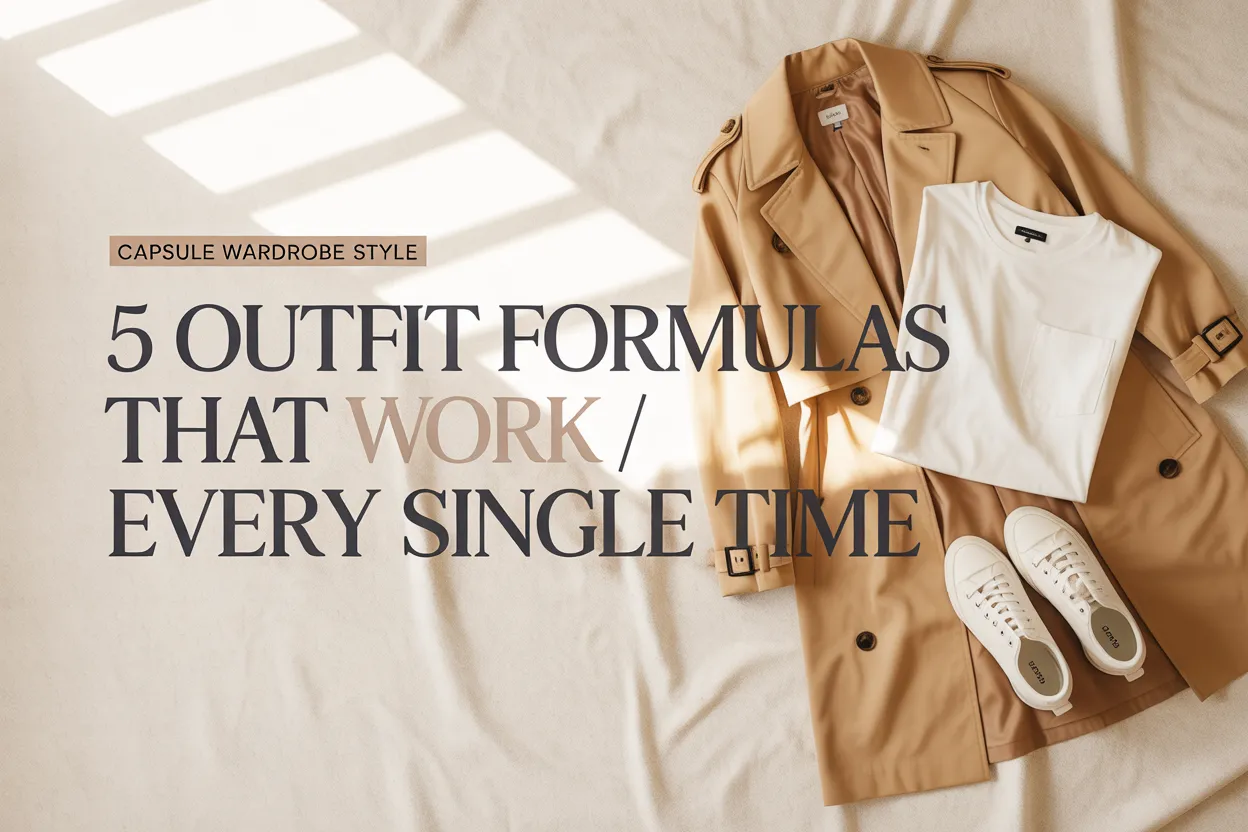
You’re standing in front of a full closet, coffee going cold, and somehow nothing looks right. Sound familiar? That paralysis isn’t a wardrobe problem. It’s a decision problem. And the fix has nothing to do with buying more clothes. It has everything to do with outfit formulas, the quiet little blueprints that let you get dressed in under five minutes and still walk out looking pulled together.
We’ve tested these five formulas through humid Atlanta summers, gray Seattle winters, three carry-on-only trips, and one very sweaty toddler birthday party. They work. Save this post, because by the end you’ll have a screenshot-ready cheat sheet plus styling notes for petites, tall frames, and sizes up to 3X.
What Are Outfit Formulas (And Why They Beat “Inspiration” Every Time)
An outfit formula is a repeatable structural template, like a recipe. You decide the proportions and pieces once, then plug in different colors, textures, and accessories forever after. Inspiration is fragile. A saved Pinterest pin won’t help when your favorite blouse is in the laundry. A formula will.
Here’s the difference in plain terms. Inspiration says “wear this exact outfit.” A formula says “wear this kind of outfit, with whatever you already own.”
That distinction is why outfit formulas are the backbone of every functional capsule wardrobe. They turn 30 pieces into 60+ outfits without you ever having to think hard about what to wear.
Who These Outfit Formulas Work For
Quick honesty check before we go deeper.
- Size range: Every formula here adapts cleanly from petite XS to 3X. Where proportions need adjusting, we’ll call it out specifically.
- Lifestyle fit: Best for women juggling remote work, school runs, casual office days, weekend errands, dinners out, and travel. Not built for formal black-tie or industrial workwear.
- Climate fit: Designed around four-season US weather. Each formula includes a transitional swap for early spring and early fall, plus humid-summer and cold-winter adjustments.
If your wardrobe leans heavily on streetwear, head-to-toe athleisure, or runway-trend pieces, these formulas will still work as a base, you’ll just push them in a more directional direction.
The 3-Layer Outfit Math (Original Cheat Sheet, Screenshot This)
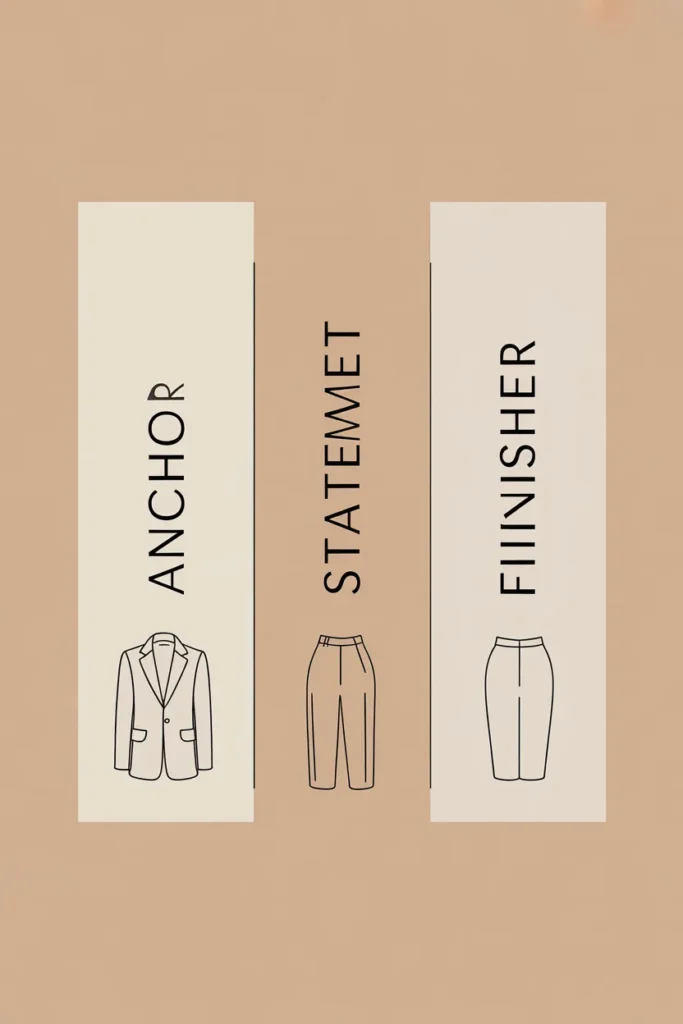
Before the formulas themselves, here’s the underlying logic that makes every single one of them work. We call it 3-Layer Outfit Math.
| Layer | Job | Examples |
|---|---|---|
| Anchor | Sets the silhouette and tone | Straight-leg jeans, tailored trousers, midi skirt, slip dress |
| Statement | Adds the visual interest | Striped tee, knit vest, blazer, button-down, oversized cardigan |
| Finisher | Pulls the look together | Loafers, white sneakers, leather belt, gold hoops, structured tote |
Every formula below is just a different combination of those three layers. Memorize the math, and you’ll never feel stuck again.
Outfit Formula 1: The Tonal Tailored Look
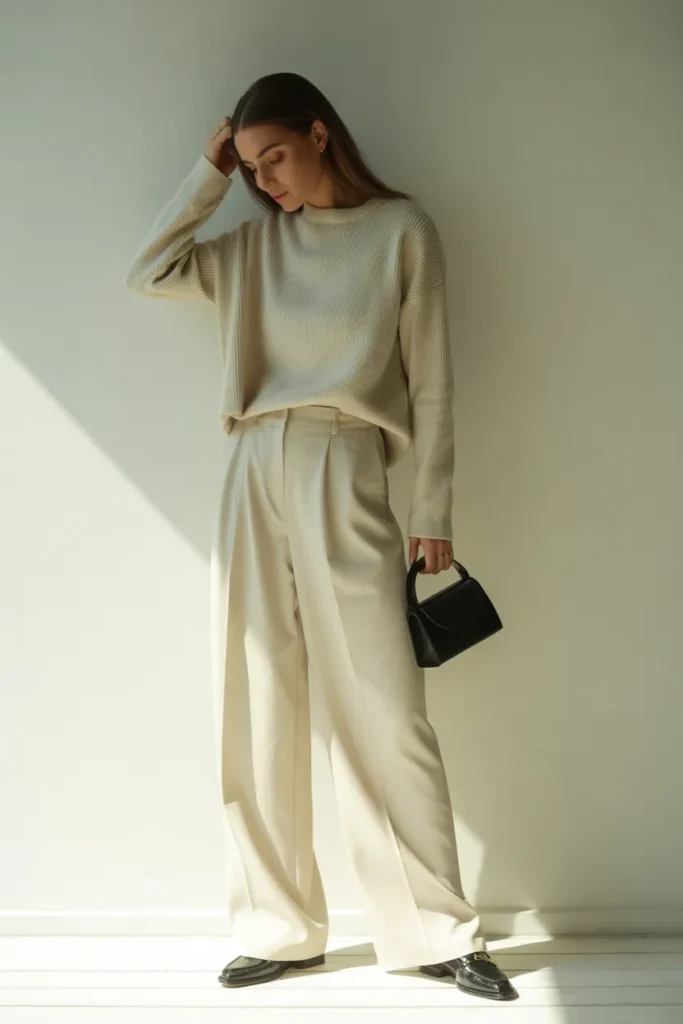
What it is: Two pieces in the same color family (think cream sweater + cream wide-leg trousers), broken up only by a slightly different texture and one finisher piece in a contrasting neutral.
Why it earns a spot in a curated wardrobe: Tonal dressing photographs beautifully, reads as quiet luxury without trying, and stretches your existing pieces because you stop thinking in “outfits” and start thinking in “color stories.” Cost-per-wear stays low because you’ll reach for these pieces year-round.
How to style it two ways:
- For the office: Cream rib-knit + cream tailored trousers + black leather loafers + small black structured bag. Add gold studs and a low ponytail.
- For weekend errands: Same cream pieces with white sneakers, a slouchy beige tote, and a long camel cardigan thrown over the top.
Size adaptations:
- For petites, choose cropped or ankle-length trousers and a sweater that hits at the high hip, never below.
- For tall frames, look for “tall” inseams (32 to 34 inches) and lean into longer sweater hems for proportion.
- For plus sizes, Old Navy, Universal Standard, and Target’s A New Day line carry tonal cream sets in extended sizes up to 3X.
Build it with what you already own: Pull any cream, oatmeal, or off-white piece from your closet. Pair it with another piece in the same family, even if the textures differ (cotton tee with linen pants is more interesting than two identical fabrics). Done.
Fabric and care note: Cream pieces in 100% cotton or linen blend will pill less than rayon. Hand wash or delicate cycle in a mesh bag, lay flat to dry. Steam, do not iron, to keep the drape.
Outfit Formula 2: The High-Low Mix (Tailored on Top, Relaxed on Bottom)
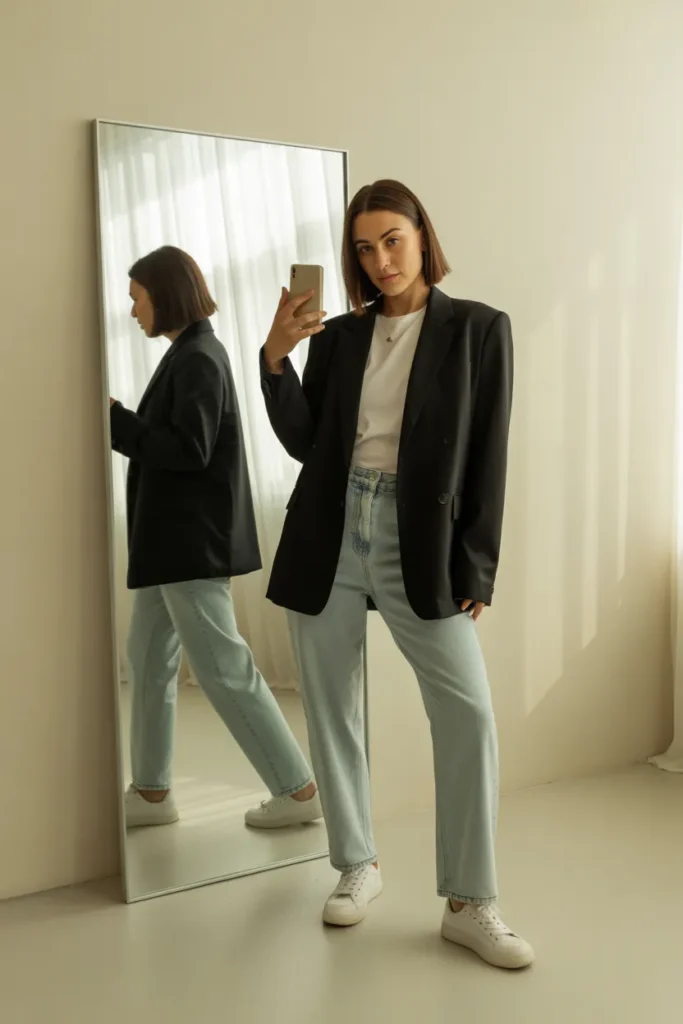
What it is: Anything structured up top (blazer, button-down, fitted knit) paired with something easy and unfussy on the bottom (straight-leg jeans, slip skirt, wide-leg crop). It’s the formula every minimalist fashion editor lives in for a reason.
Why it earns a spot: This is the formula that turns errands into “looks pulled together on purpose.” It rewards you for owning one good blazer because that blazer now has 15 outfits attached to it.
How to style it two ways:
- Smart casual office: Black tailored blazer + white cotton tee + light wash straight-leg jeans + white leather sneakers + small crossbody.
- Date night: Same blazer + a silk camisole + black satin slip skirt + pointed-toe flats + gold hoops.
Size adaptations:
- For petites, crop the blazer hem at the high hip. A blazer that hits past the hip drowns shorter frames.
- For tall frames, oversized boyfriend blazers actually work in your favor. Lean into the longer length.
- For plus sizes, look for blazers cut with a defined shoulder seam and slight waist shaping (Eloquii, Madewell Plus, and Nordstrom’s Halogen line all carry these in sizes up to 24).
Build it with what you already own: You almost certainly own a blazer and jeans. That’s the whole formula. Today, pair them. Tomorrow, swap the jeans for whatever non-jean bottom you reach for most.
Fabric and care note: Wool-blend blazers wrinkle less than linen, but linen blazers feel right in summer. If your blazer is more than 30% polyester, expect slight pilling under the arms within a year. Spot clean and steam between full washes.
Outfit Formula 3: The Dress + Sneaker (Low Effort, High Style)
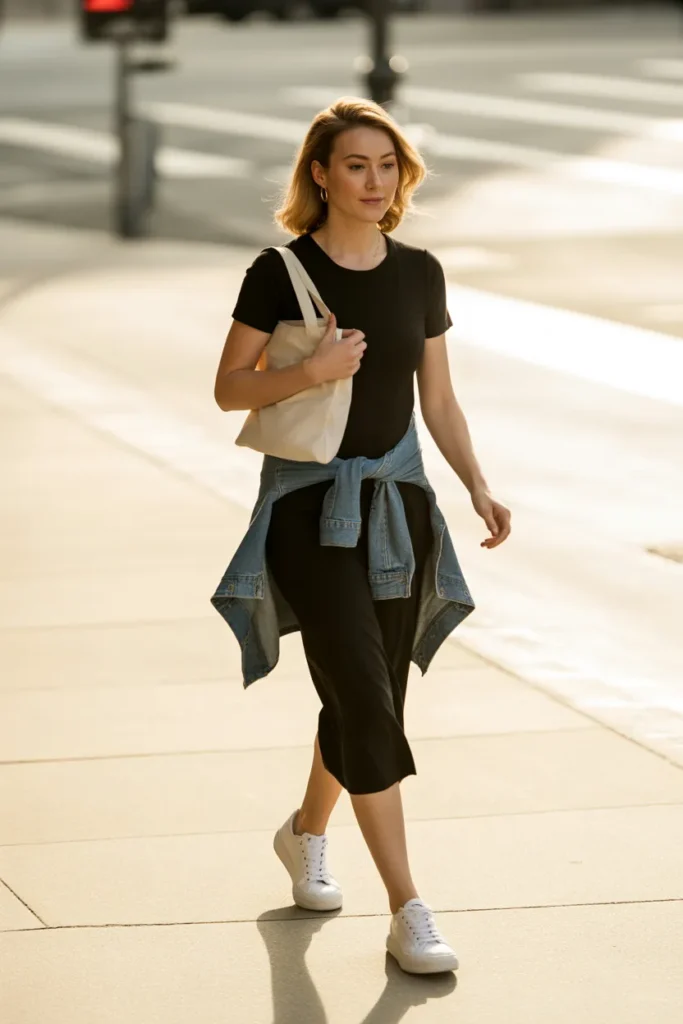
What it is: One easy dress (midi, slip, t-shirt, or shirtdress) plus a clean white sneaker, plus one finisher (belt, denim jacket, gold jewelry, or a tote).
Why it earns a spot: It’s the single highest cost-per-wear formula on this list. One dress equals an entire outfit. Add a finisher and it reads styled, not lazy. We’ve worn the same black slip dress this way to brunch, to a museum, on a flight, and to a casual baby shower.
How to style it two ways:
- Spring transitional: Black midi t-shirt dress + white sneakers + denim jacket tied at the waist + canvas tote.
- Late summer dinner out: Same dress + tan leather slides + thin gold belt + small structured bag + a stack of gold bracelets.
Size adaptations:
- For petites, a midi length should hit mid-calf, not mid-shin. If it lands awkwardly, hem it or size down.
- For tall frames, midi dresses can read more like high-water on you. Look for “tall” or “longline” labeling, or commit fully to a maxi.
- For plus sizes, A-line and bias-cut silhouettes that skim through the midsection work beautifully. Skip clingy jersey unless you love how it falls on you.
Build it with what you already own: Pull every dress out of your closet. Add the sneakers you already wear. The “outfit” is done. Add a belt or a denim jacket to elevate it.
Fabric and care note: Tencel, modal, and viscose dresses drape better than 100% cotton, but they wrinkle in a suitcase. For travel, choose jersey or a poly-blend. Hang to dry, never tumble dry on high or you’ll lose the drape.
Outfit Formula 4: The Third Piece Rule (The One That Looks the Most Intentional)
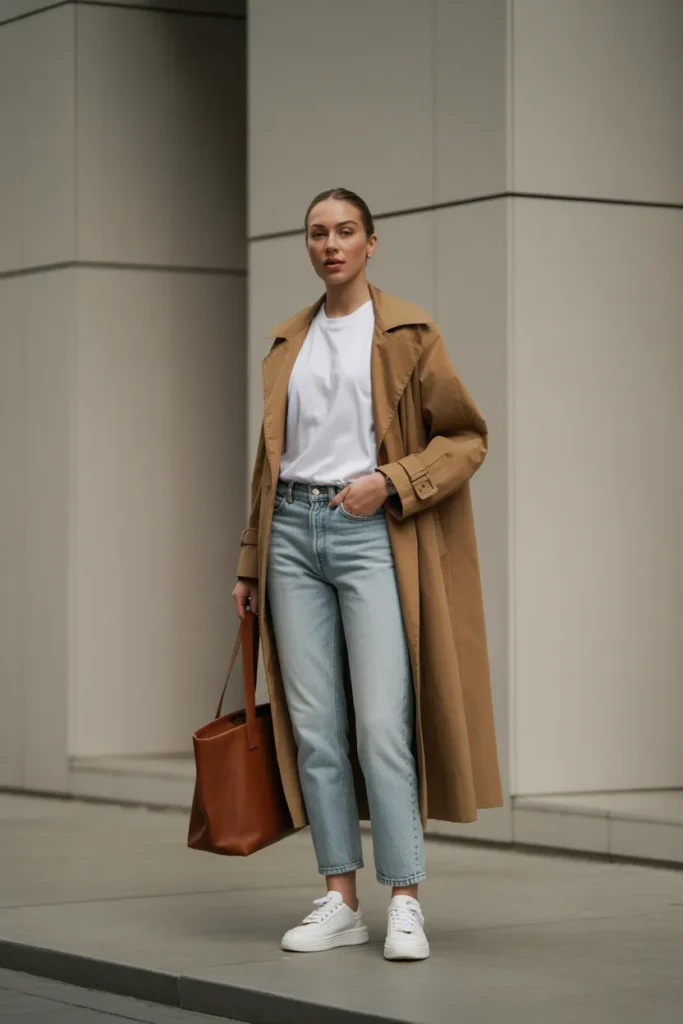
What it is: Top + bottom + a third piece (blazer, cardigan, vest, scarf, structured jacket, or layered button-down). The third piece is what separates “I got dressed” from “I look like I tried.”
Why it earns a spot: This is the formula that tricks people into thinking you have a stylist. It’s also the most forgiving, because the third piece does most of the styling work for you. Cost-per-wear on a great third piece (a trench, a denim shirt, a knit vest) is absurdly low because it goes over almost everything.
How to style it two ways:
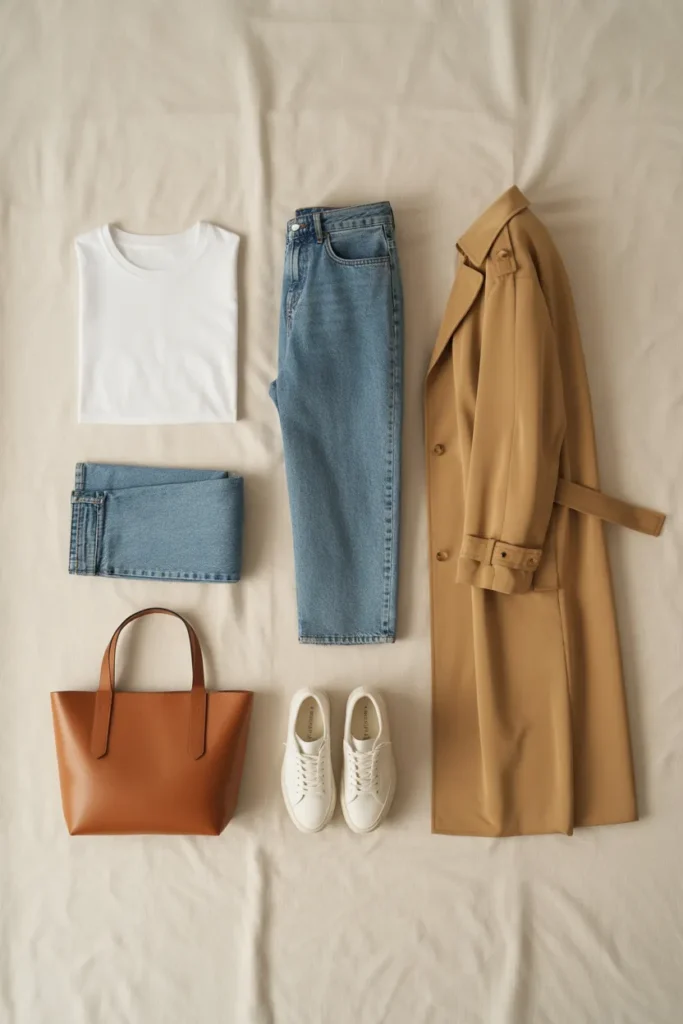
- Cool-weather coffee run: White tee + straight-leg jeans + camel trench + white sneakers + brown leather tote.
- Office to dinner: Silk cami + black tailored trousers + cropped knit cardigan + loafers + small gold-chain bag. Swap loafers for heels at 6pm.
Size adaptations:
- For petites, a cropped cardigan or vest is your shortcut. Long third pieces visually shorten the leg line on shorter frames.
- For tall frames, a duster cardigan or longline trench plays to your proportions.
- For plus sizes, look for the same silhouette in sizes up to 3X at retailers like Universal Standard, Eloquii, and Old Navy. Open-front cardigans and unstructured blazers tend to be more size-inclusive than fully buttoned vests.
Build it with what you already own: Walk to your closet. Add a third layer to the outfit you’d wear today. Literally any third layer. Done.
Fabric and care note: A camel trench in a cotton-poly blend wrinkles less than a pure cotton one, which matters if you travel with it. Knit vests in merino wool will pill less than acrylic blends. Hang trenches on a wide wooden hanger to keep the shoulders intact.
Outfit Formula 5: The Monochrome Power Move
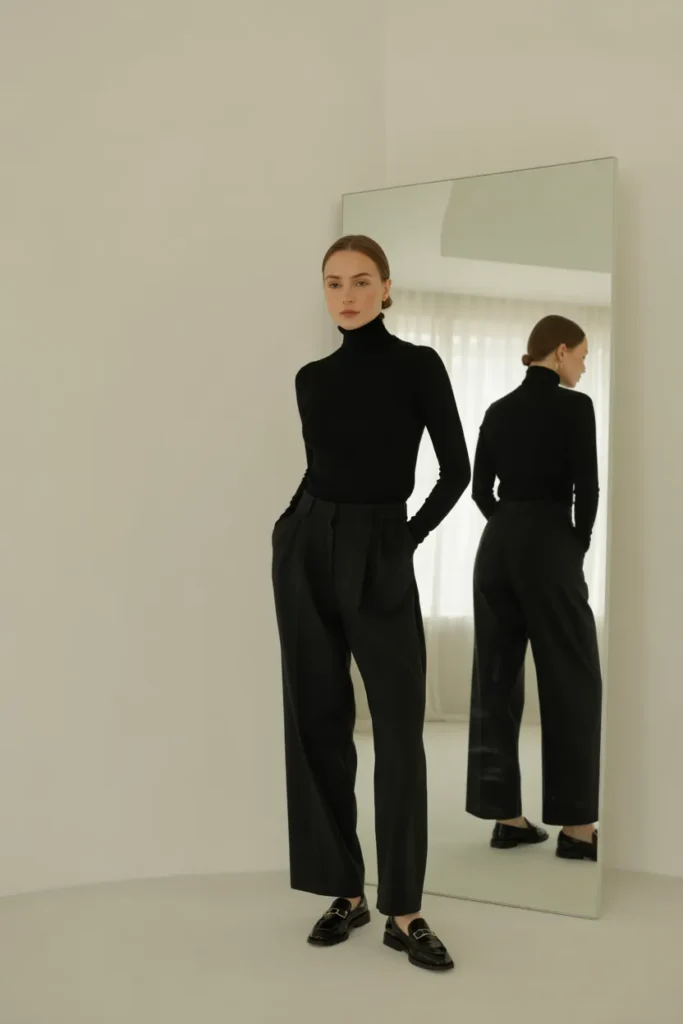
What it is: A head-to-toe single-color outfit. Most often black or navy, but cream, camel, and chocolate brown all work beautifully.
Why it earns a spot: Monochrome dressing visually lengthens the body, photographs cleanly, and signals “I made decisions today.” It also forces you to actually wear the pieces sitting in your closet because you stop trying to mix-match them with everything else.
How to style it two ways:
- Quiet luxury winter: Black turtleneck + black wide-leg trousers + black leather loafers + black structured tote + small gold earrings as the only contrast.
- Summer evening: Cream linen tank + cream linen wide-leg pants + tan leather slides + thin gold necklace + raffia bag.
Size adaptations:
- For petites, monochrome is your best friend. The unbroken color line adds visual height. Stick to ankle or full-length bottoms.
- For tall frames, you can break the monochrome with a slightly different shade in the same family (charcoal trousers with a black top) without losing the effect.
- For plus sizes, the color line works in your favor too. Look for matching fabric weights so the pieces read intentional, not coincidental.
Build it with what you already own: Open your closet. Pull every black piece out. Or every cream. Or every navy. Build today’s outfit using only that color. Easiest entry point on this list.
Fabric and care note: Black fades. Wash inside out, in cold water, and skip the dryer to keep that deep black look. Cream stains, but most stains lift with a Tide pen if you catch them within an hour.
Cost-Per-Wear Cheat Table for All 5 Formulas
Here’s the part competitors completely skip. The math.
| Formula | Anchor Piece You Likely Own | Estimated Cost-Per-Wear (Year 1) | Capsule Score |
|---|---|---|---|
| Tonal Tailored | Cream sweater | $0.40 to $1.20 | 9/10 |
| High-Low Mix | Black blazer | $0.60 to $1.50 | 10/10 |
| Dress + Sneaker | Black midi dress | $0.50 to $1.10 | 9/10 |
| Third Piece Rule | Camel trench | $0.30 to $0.90 | 10/10 |
| Monochrome | Black turtleneck | $0.40 to $1.00 | 10/10 |
If you’re choosing where to invest first, the third piece rule and the high-low mix have the highest payoff. Both rely on one anchor piece (a great trench, a great blazer) that unlocks dozens of outfits.
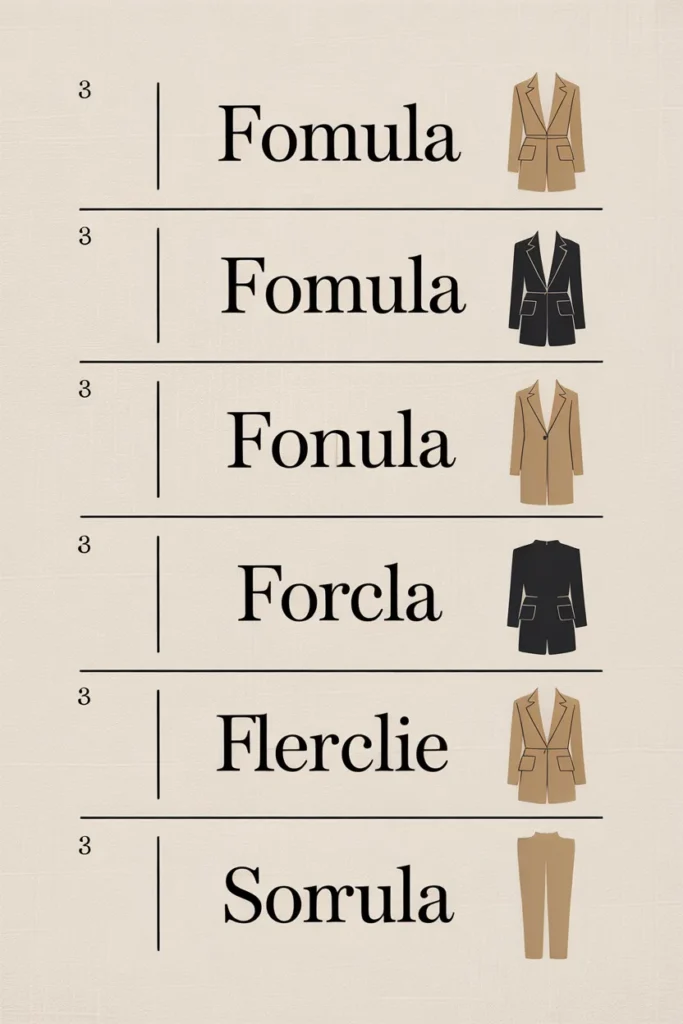
The Travel Application: How to Pack These Formulas in a Carry-On
This is the second angle competitors ignore. Each formula folds into a 5-day carry-on.
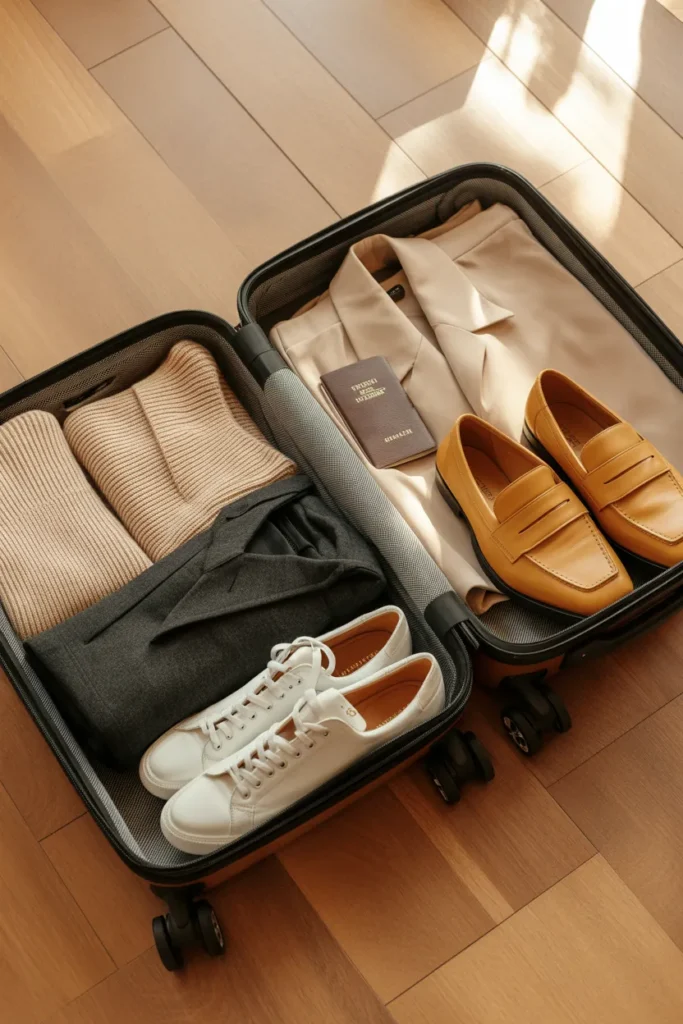
- Anchor pieces (pack once): 1 pair straight-leg jeans, 1 pair tailored trousers, 1 midi dress.
- Statement pieces (pack three): 1 white tee, 1 silk cami, 1 cream knit.
- Third pieces (pack one or two): 1 trench OR 1 blazer.
- Finishers: White sneakers + loafers + 1 small bag.
That’s 9 to 10 pieces. Mix them through all 5 formulas and you have 12+ outfits. The trick is keeping the color story tight (cream, black, camel, denim only). Mix in a navy or chocolate brown if that’s your neutral.
For internal pairing inspiration, see our complete carry-on capsule wardrobe packing guide.
Build Your Own Outfit Formula in 4 Steps
Once you’ve worn these five for a few weeks, you’ll start spotting your own patterns. Here’s how to lock them in.
- Photograph every outfit you wear for two weeks. Phone, mirror, done.
- Look for the repeats. You’ll see the same anchor + statement + finisher show up over and over.
- Name the formula. Naming makes it stickier. Mine is “the cream and camel uniform.”
- Build a tiny capsule around your top three formulas. That’s all you need.
For a deeper walkthrough, check out our capsule wardrobe building blocks guide
If you want a starter list of the staples that anchor every formula above, our women’s capsule wardrobe essentials list.
For more on the science behind decision fatigue and why simplifying your closet actually works, the American Psychological Association has a helpful overview of decision fatigue research . And for fabric care guidance from a trusted source, the Federal Trade Commission’s Clothes Captioning rule guide explains what those care symbols actually mean.
FAQ: Outfit Formulas, Answered
What are some outfit formulas that actually work?
The five covered above (tonal tailored, high-low mix, dress + sneaker, third piece rule, and monochrome) are the most repeatable. They work because each one builds on the same 3-layer math: anchor + statement + finisher. Memorize the structure, swap the pieces, and you have hundreds of looks from a small closet.
What is the 3-3-3 rule for fashion?
The 3-3-3 rule is a styling challenge where you pick 3 tops, 3 bottoms, and 3 pairs of shoes, and remix them for a set period (often a week or a month). It’s a great way to stress-test your formulas and prove how few pieces you actually need.
What is the rule of 5 in fashion?
The rule of 5 says you should buy no more than 5 new clothing items per year. It’s a sustainability principle aimed at curbing overconsumption and pushing you toward higher-quality, longer-lasting pieces. It pairs beautifully with outfit formulas because formulas force you to wear what you already own.
What are the 7 rules of outfits?
There’s no single official list, but the most cited 7 rules tend to be: stick to a color story, follow a proportion balance (fitted on top, looser on bottom or vice versa), include a third piece, use one statement at a time, fit beats trend, accessories pull it together, and dress for your actual life. All five formulas above respect these.
How do I style this if I don’t own a blazer or trench?
Swap in any structured layer you do own. A denim jacket, a cropped leather jacket, a wool cardigan, even a button-down shirt worn open over a tee will function as the third piece. The role matters more than the exact garment.
What size should I order if I’m between sizes?
For tailored pieces (blazers, trousers), size down for a sharper line. For knits, dresses, and anything with drape, size up for a more relaxed silhouette. Plus-size and tall ranges often run truer to size than straight-size lines, so check the brand’s size chart before deciding.
Are these outfit formulas seasonal or year-round?
Year-round. The pieces swap (linen in summer, wool in winter), but the structures stay identical. That’s the whole point of building outfits around formulas instead of trends.
How do I pack outfit formulas for travel?
Stick to one neutral color story (cream, black, camel, denim is a foolproof combo), pack one anchor per formula, and bring two finishers (sneakers + loafers, plus one small bag). The travel section above breaks the exact list down.
Save This for Your Next Capsule Wardrobe Refresh
You don’t need more clothes. You need fewer decisions. These five outfit formulas are the shortcut. Pin this post, screenshot the 3-Layer Math table, and try one formula tomorrow morning. Then another the day after.
Two weeks from now you’ll catch yourself getting dressed in three minutes flat, walking out the door confident, and finally wearing the pieces you’ve owned all along.
Which formula are you trying first? The high-low mix is the gateway drug, but the monochrome is the one that’ll have your friends asking who styles you.
This article shares general style guidance. Fit, fabric performance, and what feels right on your body are personal. Trust your mirror over any rule, including ours.
Keep reading
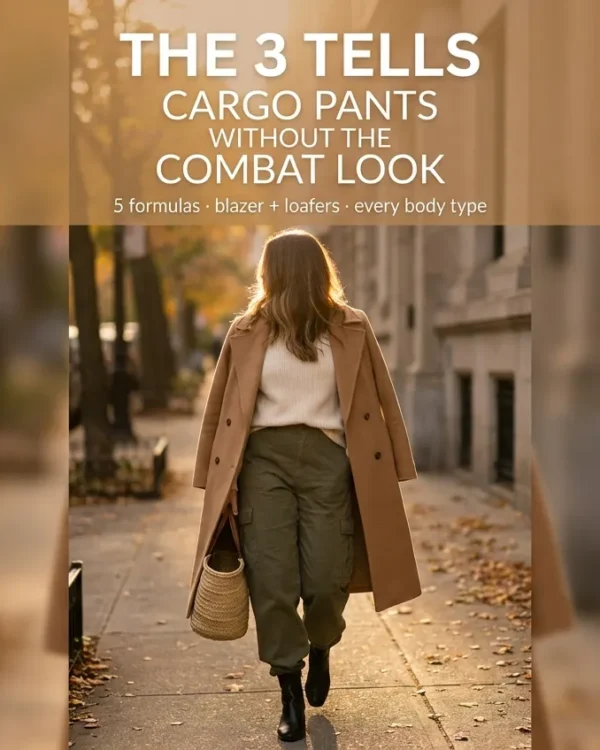
How to Style Cargo Pants for Women (Without the Combat Look)
Most women who ask how to style cargo pants for women already own a pair. That’s the part nobody says out loud....

How to Style a Denim Jacket: The Layer That Goes With Everything
Learning how to style a denim jacket is less about finding new outfits and more about fixing the three or four small...

How to Style a Denim Skirt: 8 Outfits You Can Build From What’s Already in Your Closet
Learning how to style a denim skirt gets easier when you start one step earlier than most guides admit. Start with the...