
How to Make Cheap Clothes Look Expensive (The Elevated Basics Method)
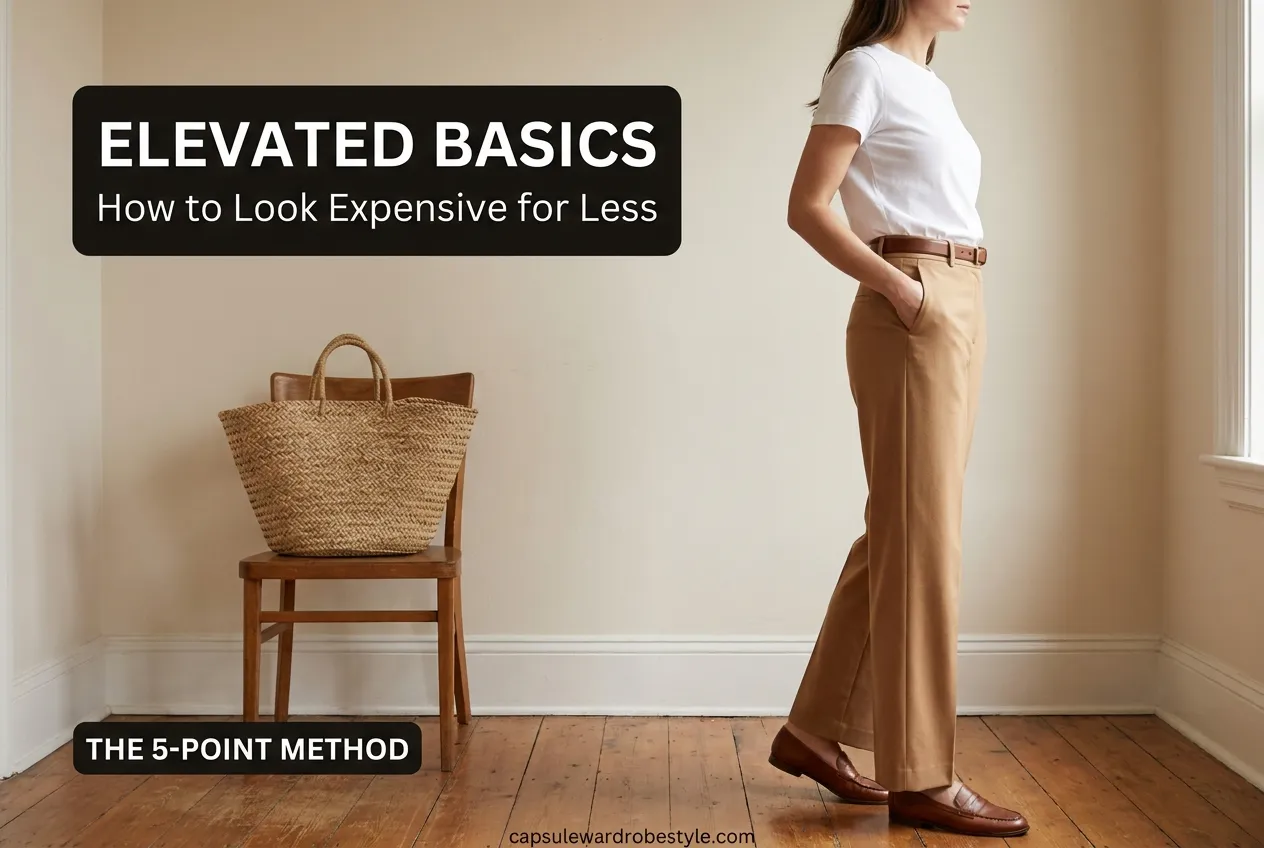
Here’s the thing nobody selling you clothes wants to admit. Expensive-looking outfits are rarely about the price tag. They’re about fit, fabric, color, and a few finishing habits that cost almost nothing. That gap is exactly what elevated basics live in.
You probably own the pieces already. A white tee. Some jeans. A blazer shoved to the back. The problem isn’t your closet. It’s that a few small things are quietly reading as “cheap” before you even leave the house. Fix those, and the same clothes look like they cost three times what they did.
This is the method I keep coming back to. It works whether your tee came from Target or Toteme.
What Elevated Basics Really Mean
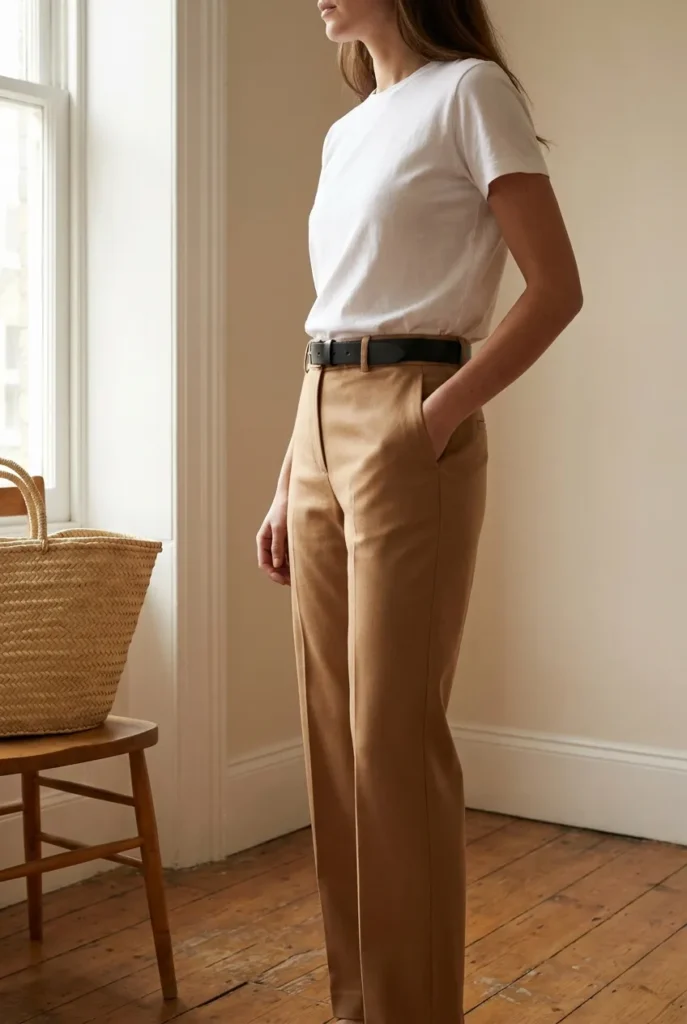
Elevated basics are everyday pieces (the tee, the button-down, the trouser) chosen and worn so they look considered instead of thrown on. The word “elevated” points at quality and intention, not a luxury label.
Think of it as the difference between a shirt that just covers you and one that fits your shoulders, sits clean at the hem, and holds its shape all day. Same category. Different result.
If you like the philosophy behind this, our full breakdown of quiet luxury style digs into the mindset. For our purposes, keep it simple: buy fewer, wear more, and make every piece earn its hanger space.
The 5-Point Expensive Test
Before you buy anything, or when you’re deciding whether to keep something, run it through five questions. This is the checklist I screenshot and keep in my phone. Front-loading the highest-value tip: fit comes first, always.
The 5-Point Expensive Test:
- Fit. Does it sit clean on the shoulders and hem, with no pulling or pooling?
- Fabric. Does it feel substantial and hold its shape, or does it thin out and cling?
- Color. Is it a clean, saturated neutral, or a slightly “off” shade that reads flat?
- Finishing. Are seams straight, buttons secure, hems even?
- Cost per wear. Will you actually reach for it enough to justify the space?
If a piece fails two or more, it isn’t elevated, no matter what it cost. This little audit is the original tool this article gives you, and it works on a $15 tee just as well as a $400 coat.
Fit Is the Whole Game
If you change one thing today, change fit. A slightly-too-big tee and gaping trousers are the fastest way to look like you got dressed in the dark.
You do not need a bespoke tailor. A local one can take in a side seam, shorten a hem, or slim a sleeve for a small fee. That one visit often does more than a new purchase.
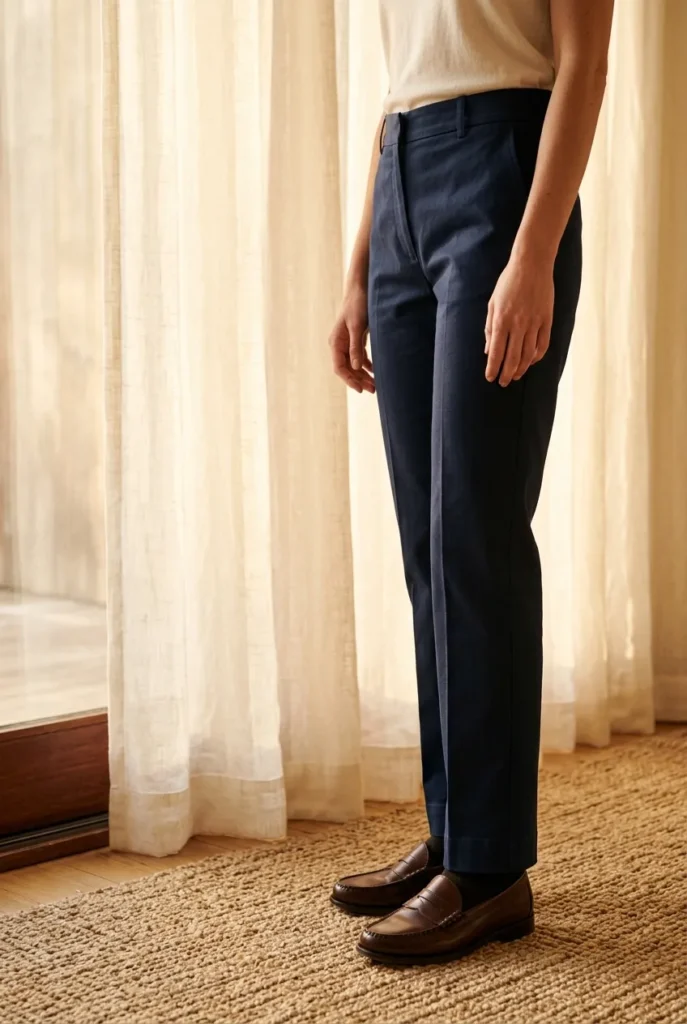
Watch three fit points: shoulders (the seam should meet the edge of your shoulder), sleeve length (hits mid-wrist for shirts), and trouser break (a small break or none, never a puddle). When you nail those, cheap fabric suddenly reads intentional.
Fit also depends on your proportions, not a number. Petite frames usually want a cropped trouser and a shorter jacket so the vertical line stays long. Curvy and hourglass shapes tend to look sharpest when the waist is defined rather than hidden. If you want a piece that already does this heavy lifting, here’s how to style a blazer for a pulled-together look without any tailoring at all.
Fabric: The Tell Nobody Talks About
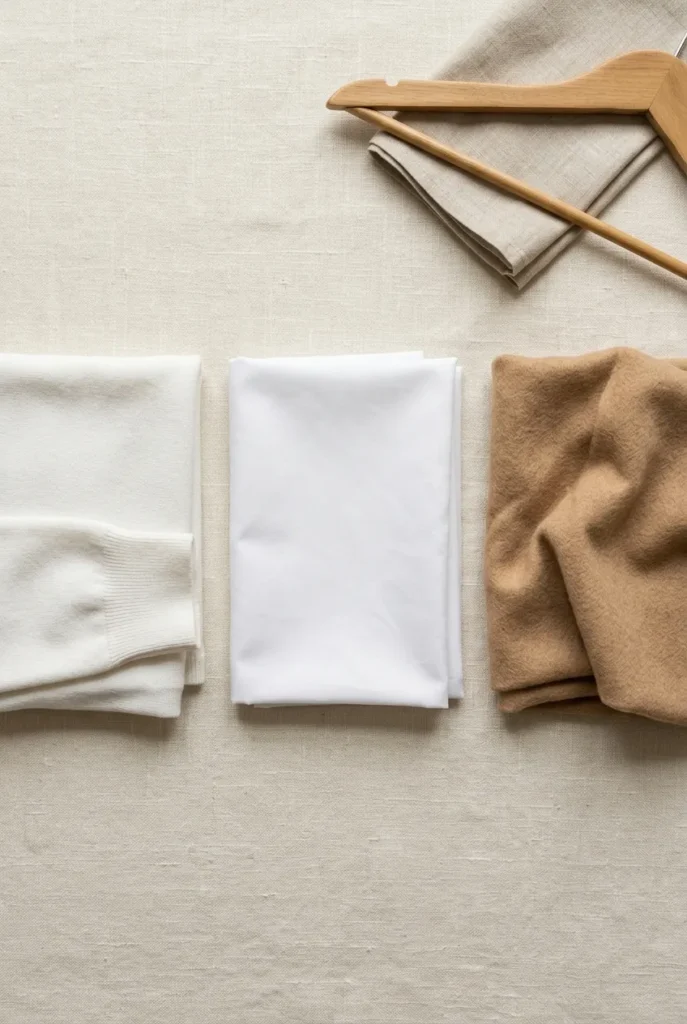
Fabric is where cheap clothes give themselves away, and it’s the easiest thing to check before you buy. Hold the garment to the light. If you can see straight through a tee, it will look flimsy on. Reach for a heavier cotton, a dense jersey, or a fine-gauge knit that has some weight and drape.
Natural and blended fabrics (cotton, linen, wool, a touch of elastane for stretch) tend to hold structure better than thin all-polyester. That’s not a rule against synthetics, it’s about weight and finish. A structured poly-blend blazer can look fantastic; a paper-thin one never will.
Here’s a quick cheat table you can screenshot:
| Fabric | Reads expensive when | Watch out for |
|---|---|---|
| Cotton tee | Dense, opaque, holds shape | See-through, curling hems |
| Cotton poplin shirt | Crisp, slight structure | Wrinkles that won’t press out |
| Wool or fine knit | Even gauge, soft drape | Pilling, thin transparent spots |
| Trousers | Weighty, clean drape | Shiny cheap sheen, clingy |
Caring for good fabric keeps it looking good. For knits especially, follow the official Woolmark guidance on washing wool and knits so your sweaters don’t pill or shrink. And when in doubt, read the care label the FTC requires on every garment before you toss it in the machine.
Color Discipline: Build a Base, Then Add One Accent
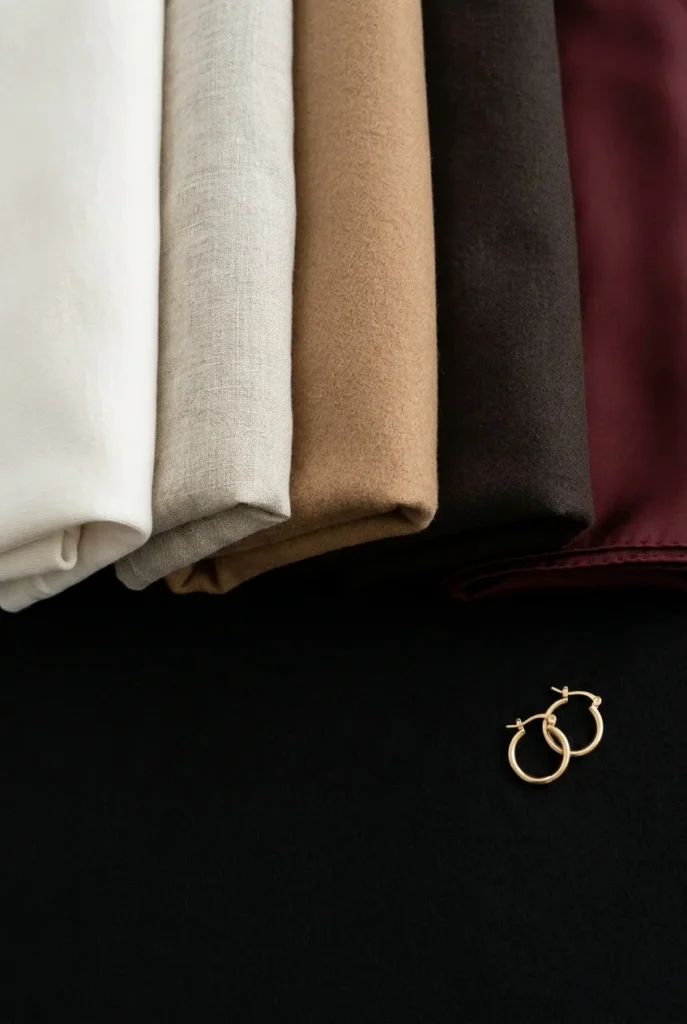
Expensive-looking outfits almost always keep the palette tight. When everything lives in the same neutral family (ivory, oat, camel, navy, soft black), pieces look coordinated even if they came from five different stores.
A simple approach is the 60-30-10 split: about 60 percent a dominant neutral, 30 percent a secondary neutral, 10 percent one accent color like burgundy or butter yellow. Build a base before you add color and outfits stop fighting each other.
The other trick is matching your neutrals to you. A warm ivory can flatter where stark white washes you out, and the reverse is true for cool complexions. Our guide on choosing wardrobe colors for your skin tone walks through finding yours.
The Finishing Moves (Almost Free)
This is where an outfit crosses over. Small habits, big payoff.
Steam or press before you wear. Wrinkles read cheap faster than almost anything. A quick handheld steam takes two minutes.
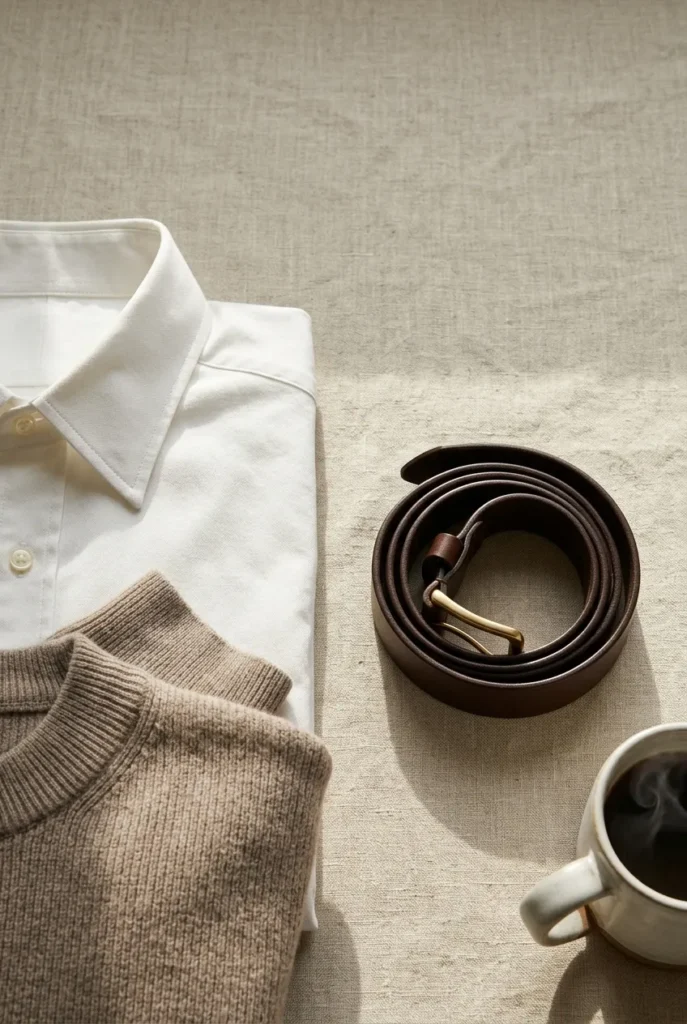
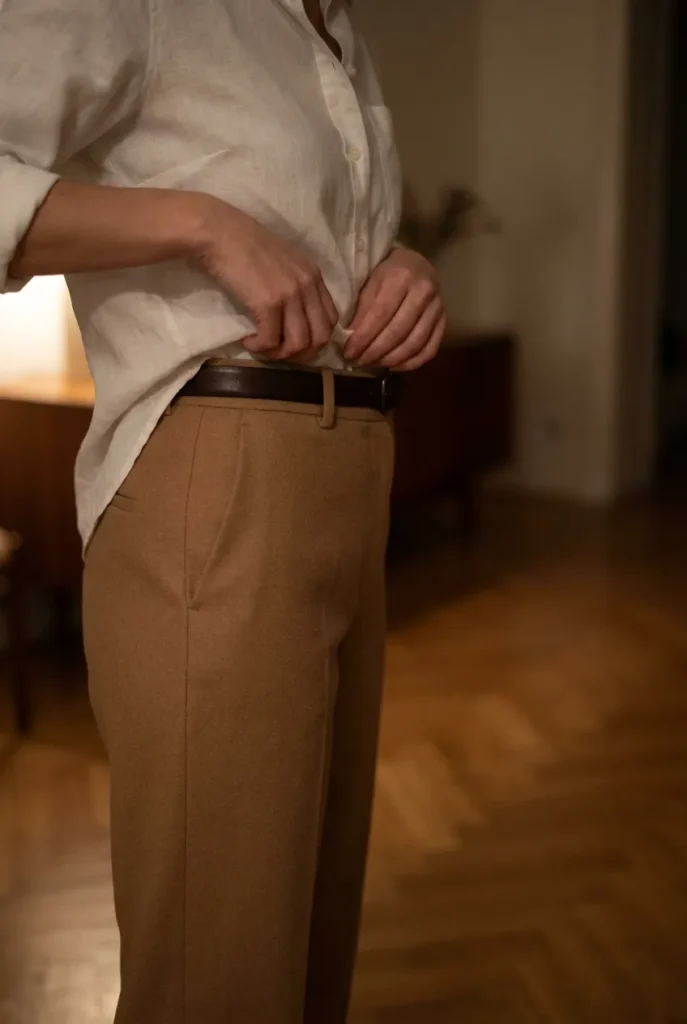
Then tuck it. A full or French tuck instantly adds intention and shows your waist. Add one considered accessory: a slim leather belt, gold hoops, a structured tote. Not three, one or two. And keep shoes clean, because scuffed footwear undoes everything above it.
Last, remove the little tells: cut off the loose brand tag on the sleeve, snip stray threads, and pick off pilling with a fabric shaver.
7 Elevated Basics Worth Owning
If you’re building from scratch, these seven do the most work and mix into dozens of outfits. Prices are ranges so you can shop your own tier; confirm current numbers before publishing.
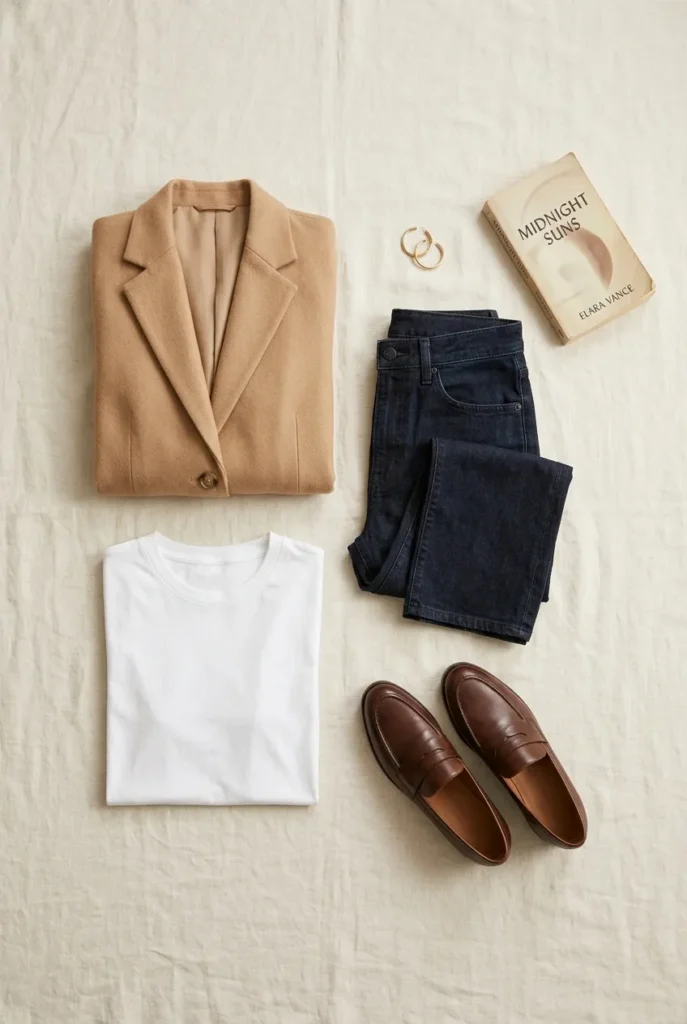
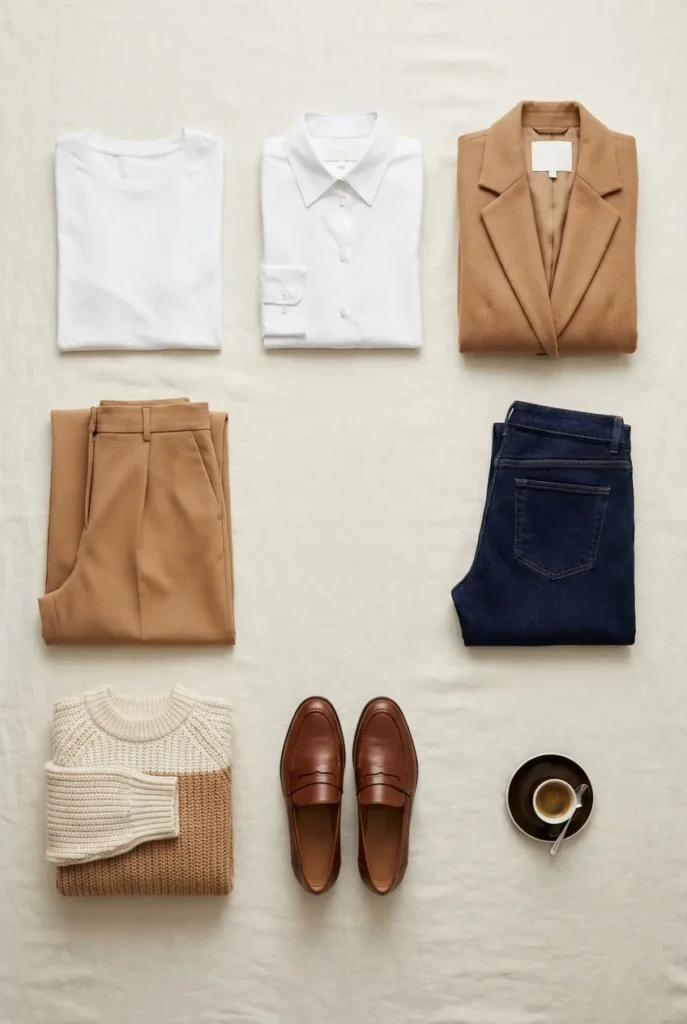
A crisp white tee, dense and opaque, is the anchor. Our tested picks live in the best white t-shirts we’ve tested for 2026.
A cotton poplin button-down layers over everything. A tailored blazer in camel or black sharpens any look. Straight-leg or wide-leg trousers with weight and clean drape. Dark straight-leg jeans, no heavy fading. A fine-gauge knit in a neutral. And leather loafers or ballet flats to finish.
Want the fuller starter list? See the wardrobe essentials every closet should start with.
Elevated Outfit Formulas (One Piece, Three Outfits)
Formulas remove the morning guesswork. Memorize a few and you always look put-together.
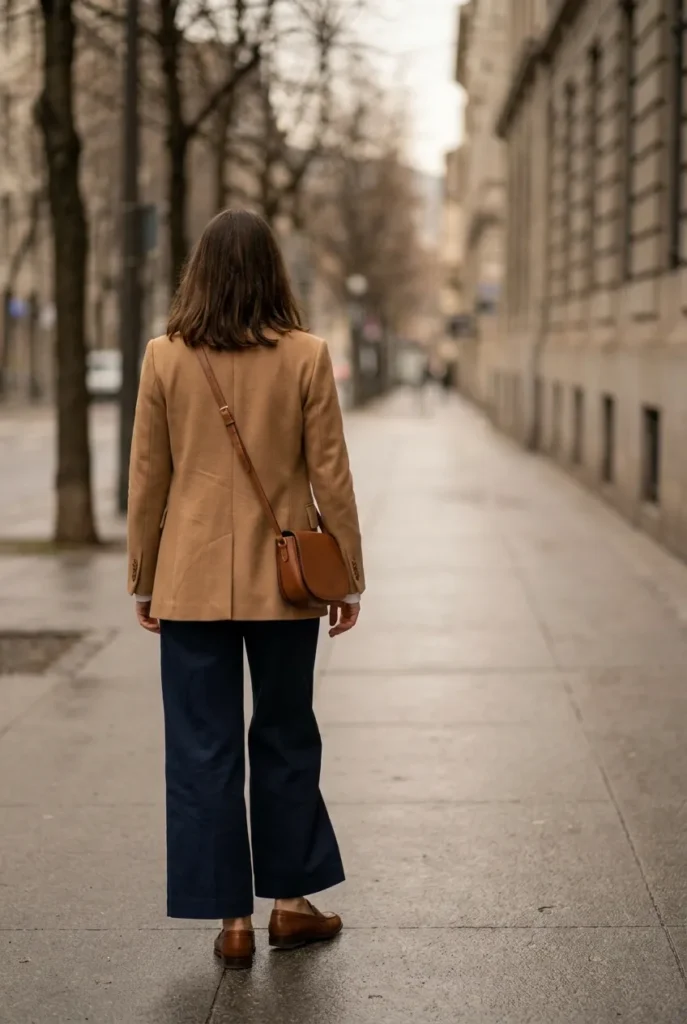
Formula one: white tee, straight-leg trousers, loafers, gold hoops. Daytime polish. Formula two: poplin button-down (French-tucked), dark jeans, blazer over the shoulders, ballet flats. Formula three: fine knit, wide-leg trousers, structured tote, sleek flat. Each uses the same core pieces in a new order, which is the whole point of outfit math.
Budget Dupes: Look Expensive for Less
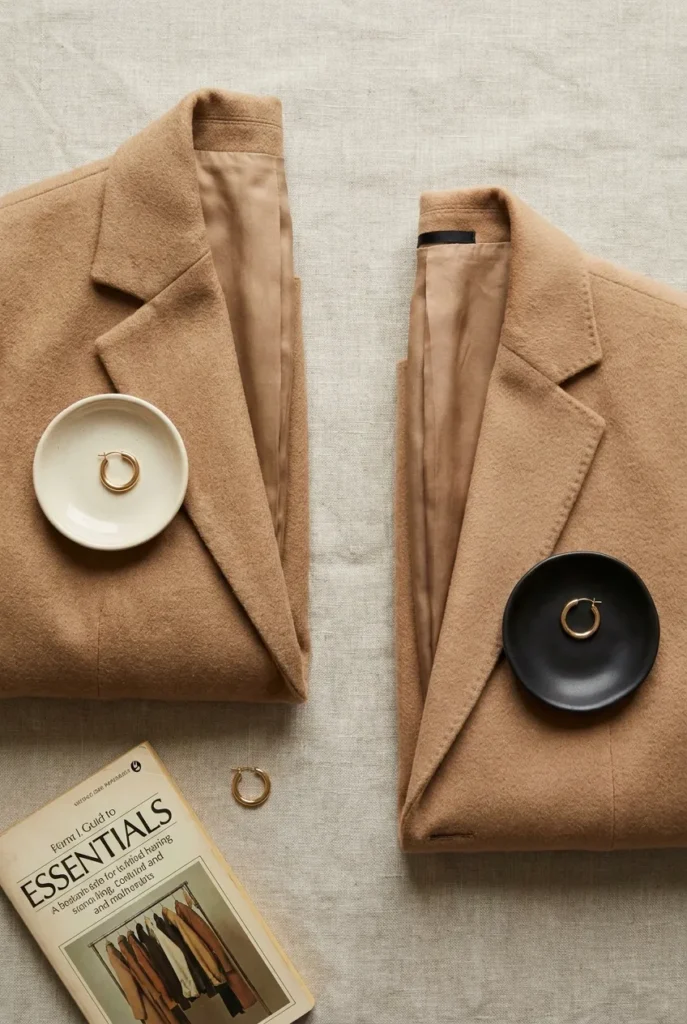
You do not need investment prices to pass the 5-Point Test. If a piece you love runs $300-plus, there’s almost always a mid-tier version that gets you 90 percent of the way. A contemporary wool blazer around often has a Madewell or Quince counterpart near 120$ with similar structure.
Going sub-$50 is fine too, as long as you accept the trade-off: thinner fabric or simpler finishing, which you offset with fit and steaming. For genuinely good cheap starting points, browse our affordable capsule basics under $30, then elevate them with the finishing moves above.
Frequently Asked Questions
What does “elevated basics” actually mean?
Everyday pieces chosen and worn so they look intentional and high quality, through fit, fabric, and finishing rather than a luxury label.
What is the 3-3-3 rule for clothing?
It’s a styling challenge where you pick 3 tops, 3 bottoms, and 3 pairs of shoes, then mix them into a week or more of outfits. It’s a fun way to prove how far a small set of elevated basics stretches.
What’s an example of elevated casual?
A white tee tucked into tailored trousers with loafers and gold hoops. Casual pieces, but the fit, neutral palette, and finishing make it read polished.
Does this work for petite or curvy women?
Yes. Fit is adjusted to your proportions: petites usually want cropped hems and shorter jackets, while curvy and hourglass figures look sharpest with a defined waist. The method is the same; the tailoring adapts.
Is it worth investing, or are cheaper pieces fine?
Both work. Cheaper pieces can pass the 5-Point Test if you nail fit and steaming. Invest where you wear something constantly (a blazer, good trousers) to lower your cost per wear.
How do I keep cheaper fabrics looking expensive over time?
Wash gently and less often, follow the care label, air knits instead of over-washing, and use a fabric shaver on pilling. Steaming before each wear does most of the heavy lifting.
Can I wear elevated basics to work?
Easily. Swap the tee for a poplin shirt, add the blazer, and choose trousers over jeans for a business-casual version of the same formulas.
The Takeaway
Looking expensive is a skill, not a budget. Run the 5-Point Test, fix your fit, respect fabric, keep your palette tight, and finish with intention. Do that and the clothes you already own start working harder than they ever have. Try one formula tomorrow morning and see how different the same pieces feel.
Keep reading

How to Style a Jacket for Plus-Size Women: 10 Outfits That Work
A lot of jacket advice for bigger bodies is still written around hiding. Hide the hips, hide the arms, hide under something...

How to Style a Jacket for Women Over 50: 12 Outfits That Work
Your closet probably holds more jackets than you wear. There’s the blazer from an old job, the denim jacket you’re unsure about...

How to Style a Jacket: 10 Cozy Jacket Outfits for Fall and Winter
Your jacket is the first thing people see between October and March. It’s also the piece most of us grab last and...