
Japanese Minimalist Fashion: How to Get the Look
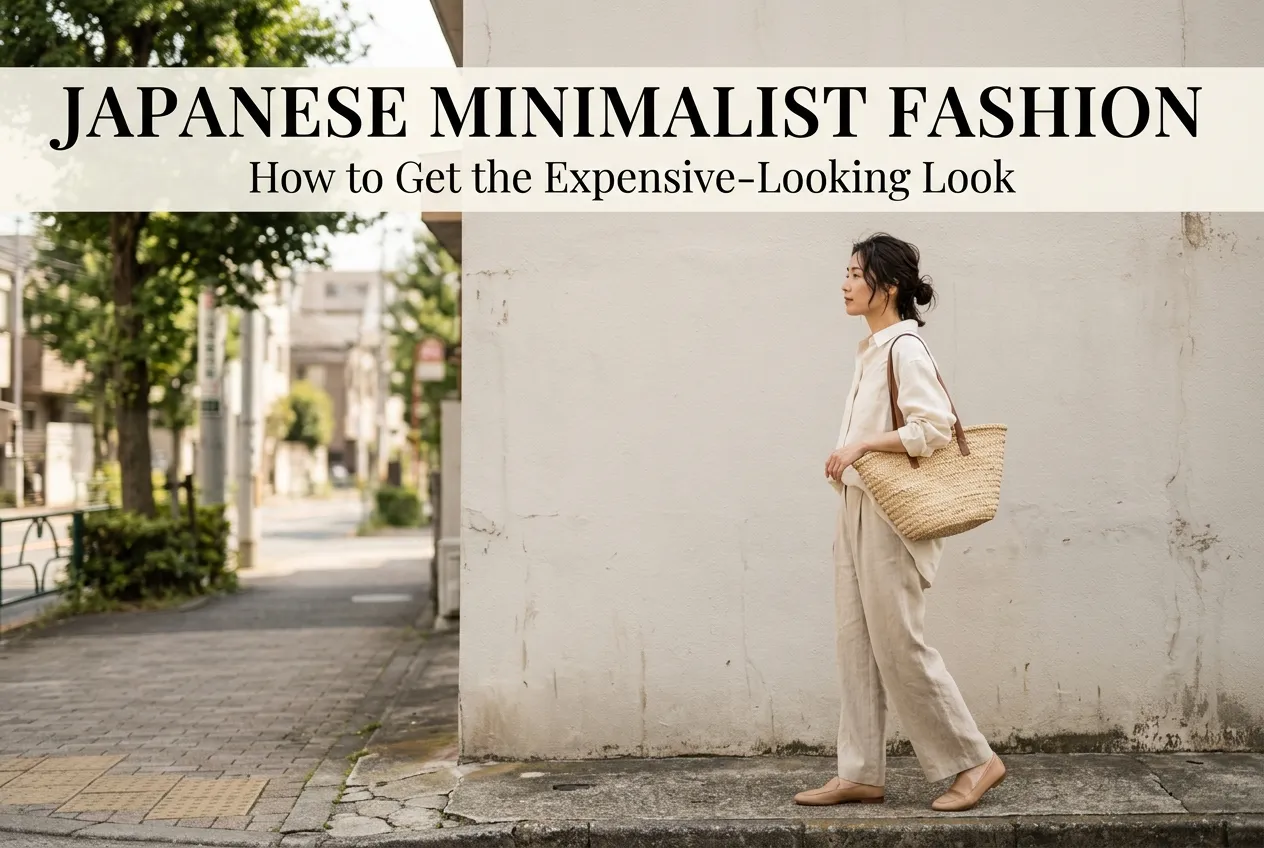
Japanese minimalist fashion is having a moment, and honestly, it earned it. It looks quiet. It looks expensive. It looks like the person wearing it has her life together, even on a Tuesday. Here is the promise of this guide: by the end, you will have real outfit formulas, a neutral color plan, and a shortlist of US stores to shop, so you can actually wear this look instead of just pinning it. No theory dump. No fast-fashion haul. Just the pieces and the math.
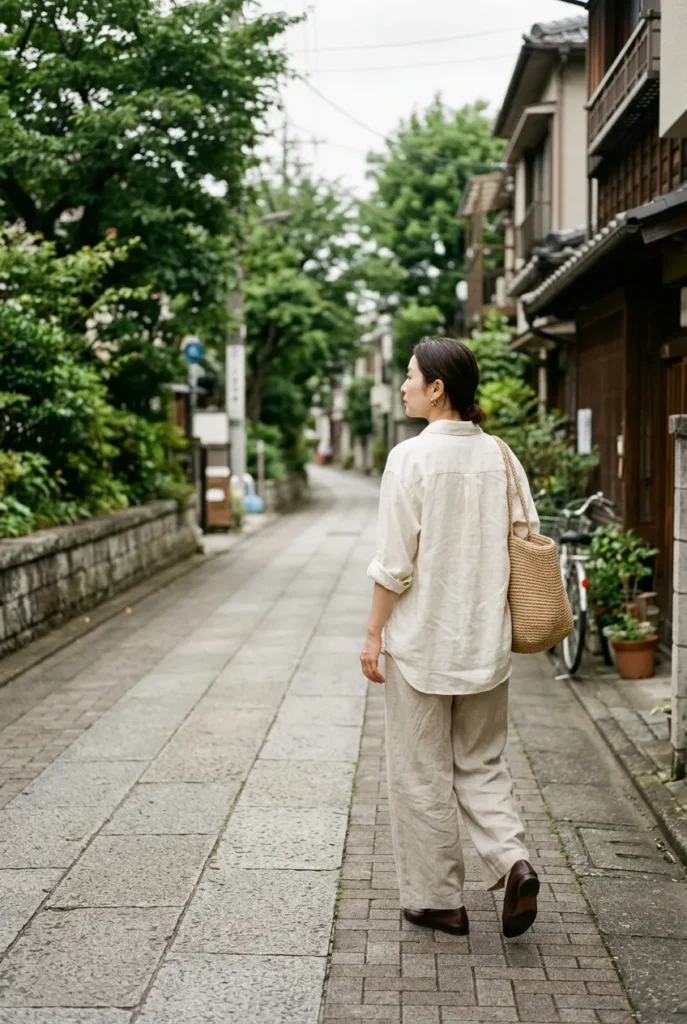
What Japanese Minimalist Fashion Actually Is
At its core, this style is about wearing less, but better. Think clean lines, roomy silhouettes, and a neutral base that lets the cut and the fabric do the talking. It borrows heavily from a Japanese design idea of restraint and empty space, where what you leave out matters as much as what you put in.
It is not about being boring. It is about being intentional. One beautiful linen shirt beats five loud printed ones. If you have ever stood in front of a full closet thinking you have nothing to wear, this approach fixes exactly that problem, because everything you own is meant to work together.
The Philosophy Behind the Calm (Wabi-Sabi and Ma)
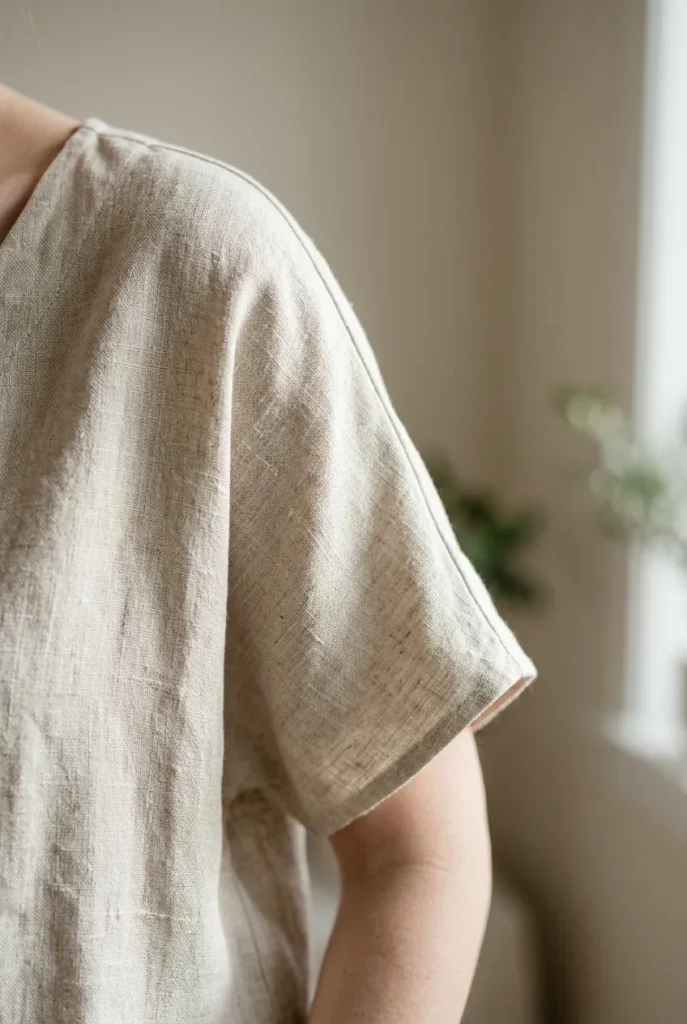
Two ideas quietly shape this whole aesthetic. The first is wabi-sabi, a way of finding beauty in the imperfect, the aged, and the understated. A slightly rumpled linen jacket is not a flaw here. It is the point. If you want the deeper backstory, the philosophy of the philosophy of wabi-sabi is a genuinely lovely rabbit hole.
The second idea is ma, which is basically the beauty of empty space. In an outfit, ma is the breathing room: the loose drape of a trouser, the gap a boxy shirt leaves at the waist. Designers like Rei Kawakubo built entire collections on this, and the Met’s Rei Kawakubo retrospective is a great visual crash course in how radical that thinking really is.
The Neutral Color Plan (Build a Base, Then Breathe)
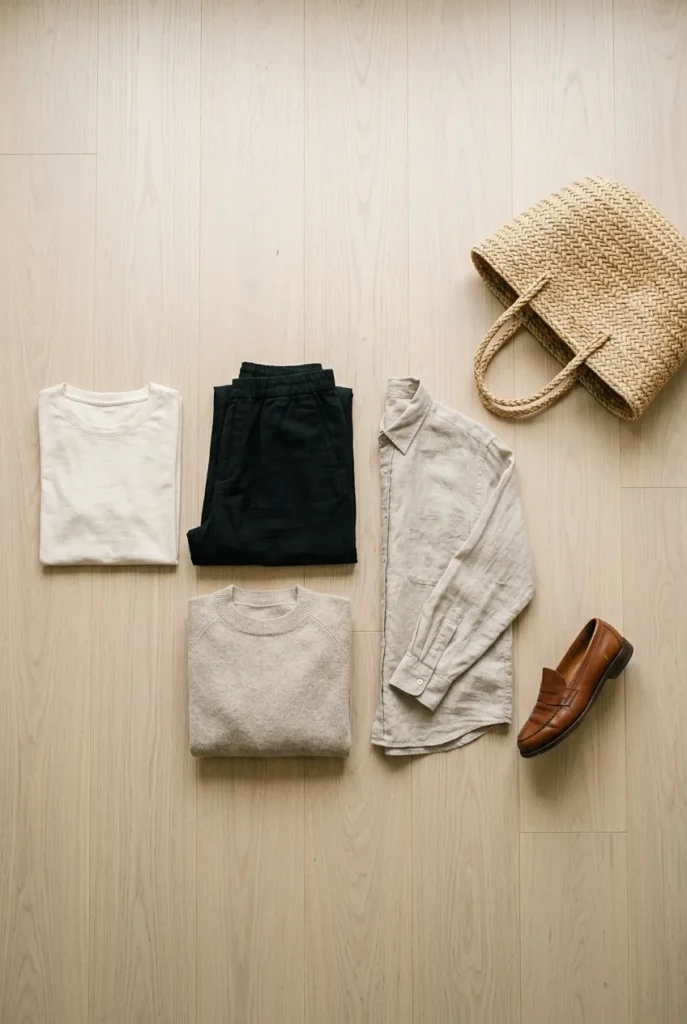
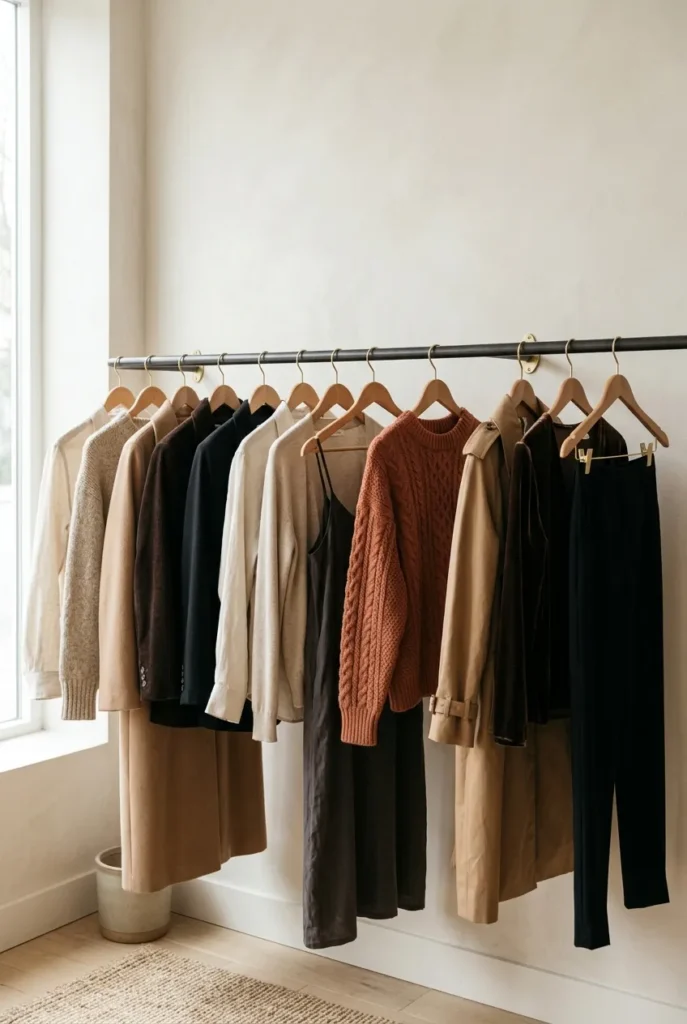
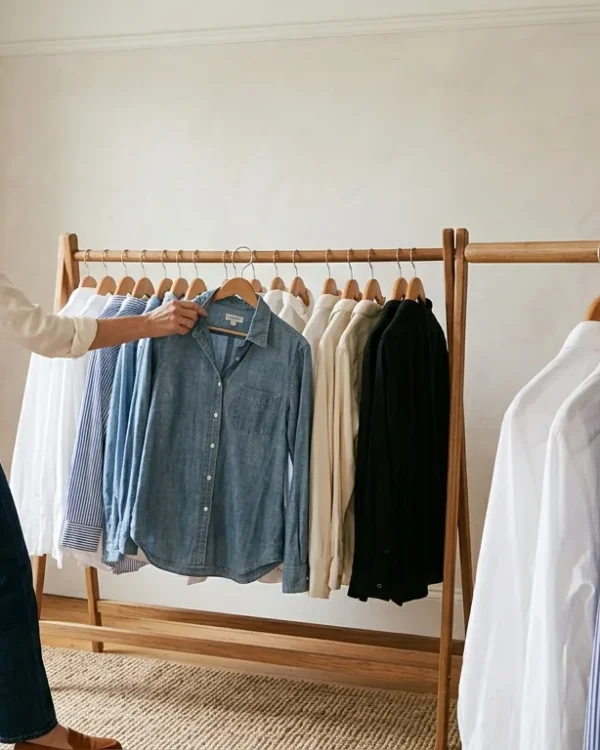
Color is where most people overcomplicate things. Keep it simple. Pick a neutral base of two or three colors you already gravitate toward: cream, oat, soft black, espresso, navy, or gray. That base is roughly 80 percent of your closet.
Then add restraint, not rainbows. One muted accent is plenty. A dusty terracotta knit. A butter-yellow tee. Wear it once in an outfit, never three times. This is the “build a base before you add color” rule, and it is why these outfits photograph so well and never clash.
The Core Silhouettes That Make It Work
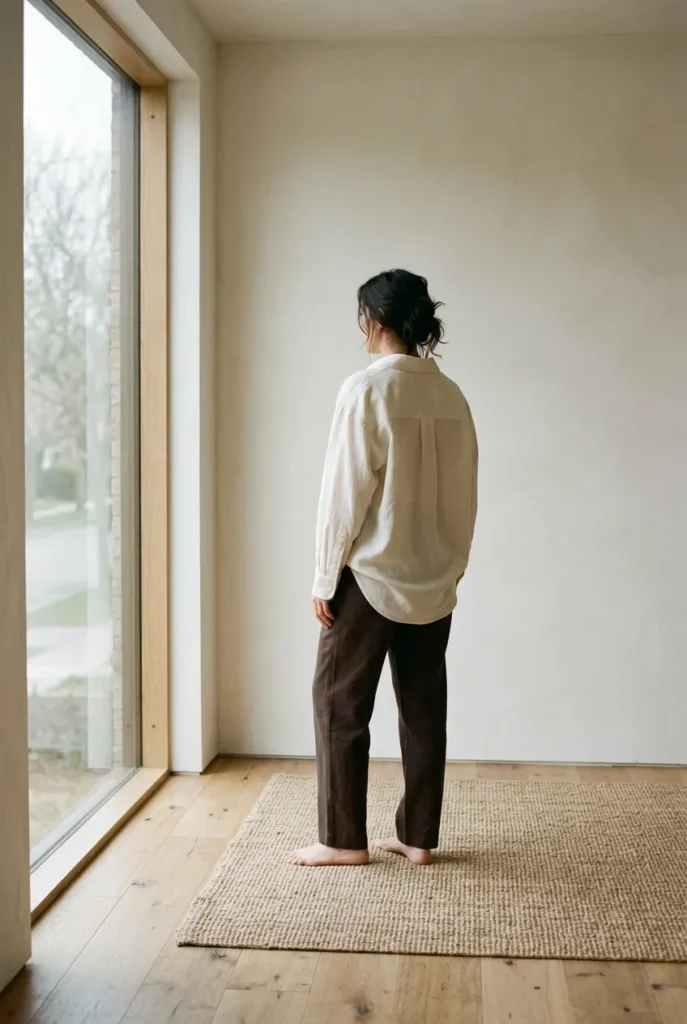
Japanese minimalist fashion leans on a handful of shapes. Roomy on top and roomy on the bottom, balanced so you never look like you are drowning. The usual heroes: an oversized button-down, a boxy tee, wide-leg or straight trousers, a fluid midi skirt, and a long unstructured coat.
Fabric matters more than logos here. Reach for natural fibers with weight and drape: linen, cotton poplin, heavy jersey, fine wool. These fabrics fall better, wrinkle honestly, and age well, which is the whole wabi-sabi idea in practice.
4 Outfit Formulas You Can Wear Tomorrow
Here is the part the other guides skip. Formulas, not vibes. Steal these.
Formula 1, the everyday uniform: boxy white tee, wide-leg trousers, loafers, woven tote. Four pieces, zero thinking.
Formula 2, the polished errand look: oversized linen shirt worn open, matching neutral tank underneath, straight jeans, ballet flats.
Formula 3, the quiet-luxury layer: fine-knit sweater, fluid midi skirt, long coat left unbuttoned, leather crossbody.
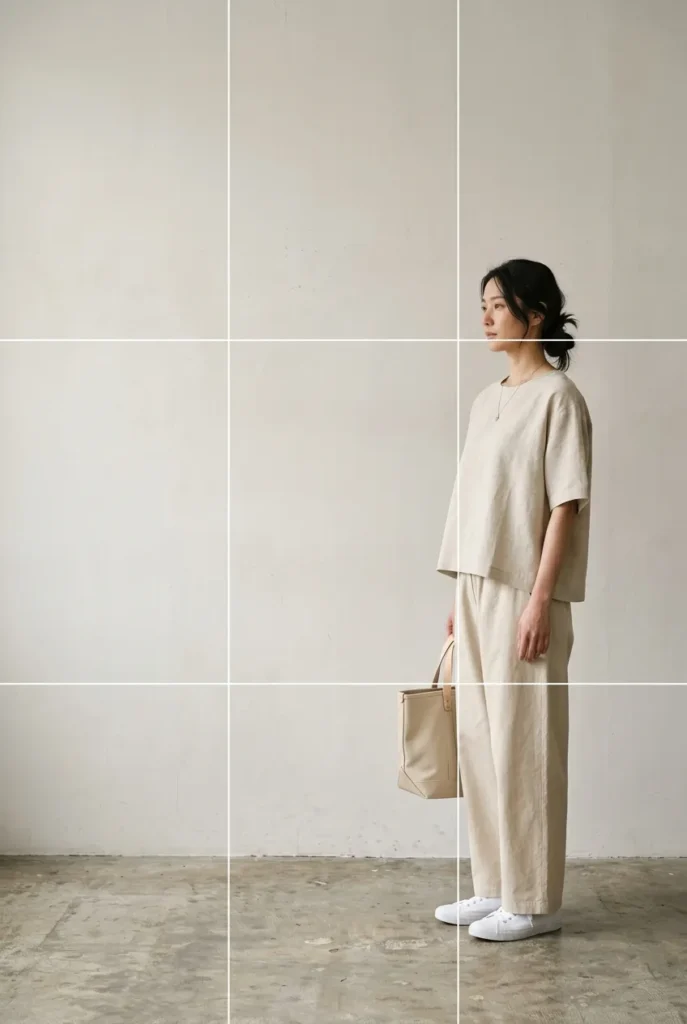
Formula 4, the transitional throw-on: monochrome tee and trousers in one color family, sneakers, structured tote. Head-to-toe oat reads far more expensive than it costs.
Once these click, maintaining the closet is its own small skill, and the maintain your capsule with the one-in-one-out rule method keeps it from creeping back to chaos.
The 3-3-3 Approach to a Tiny Capsule
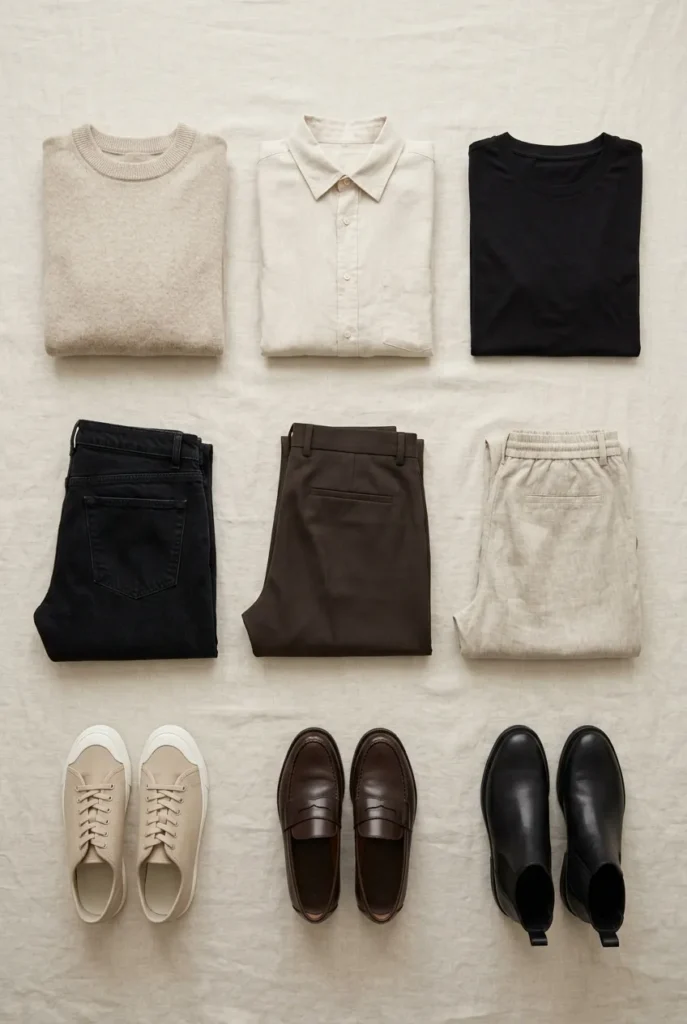
If ten formulas feels like a lot, shrink it. A simple starting exercise is to pick 3 tops, 3 bottoms, and 3 pairs of shoes, then see how many outfits you can build before you add anything else. Most people are shocked at how far nine pieces stretch when they all share a palette.
The trick is that every piece has to earn its hanger space. If a top only works with one bottom, it is a passenger, not a player. Choosing that carefully also happens to be the fastest cure for the “I keep buying the same shirt” spiral, which is really about learning to stop impulse buying clothes you never wear.
Where to Actually Shop It in the US
You do not need to import anything. Here is the tiered plan, priced as ranges so you can match your budget.
For the mass tier ($10 to $50), Uniqlo and MUJI are the obvious anchors for clean tees, linen, and trousers, with Old Navy and Target filling gaps. For mid ($50 to $150), Quince and Everlane nail natural fibers and drape, with Madewell for denim (jeans typically run around $98 to $138 [VERIFY]). For contemporary ($150 to $400), COS is the closest high-street match to the aesthetic.
If you want one investment piece, a well-cut Toteme or Vince coat lasts years, and if that number stings, a COS or Quince wool-blend coat is a strong mid-tier dupe within the same silhouette.
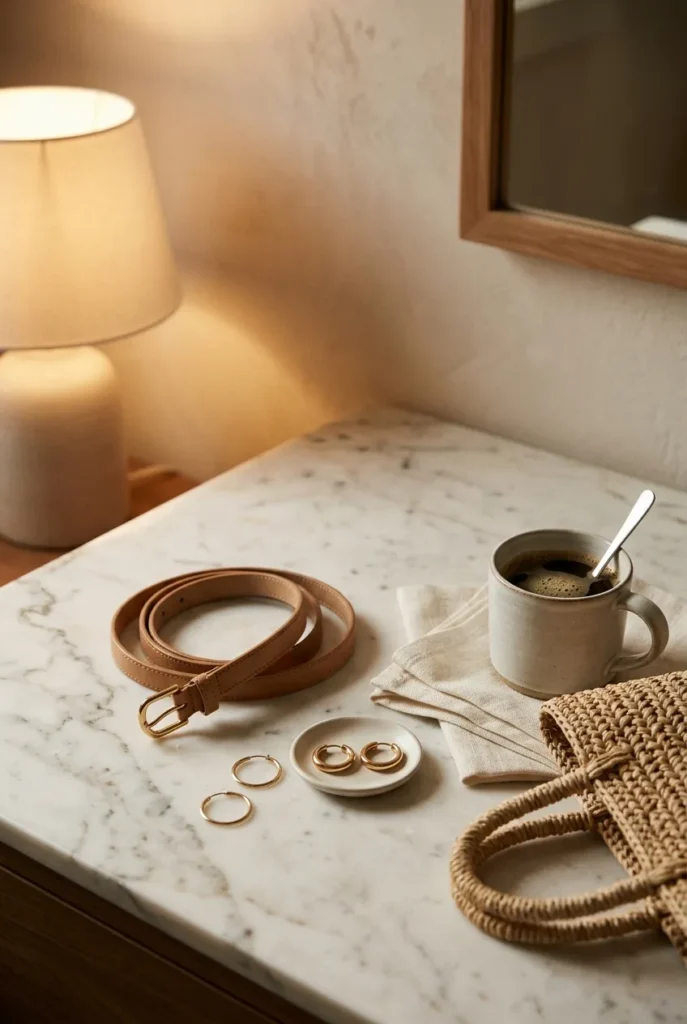
Accessories are where a neutral outfit gets its personality, and something as small as a belt shifts a whole look, so it is worth learning to build endless outfits from five belts before buying more clothes.
The Brands Worth Knowing
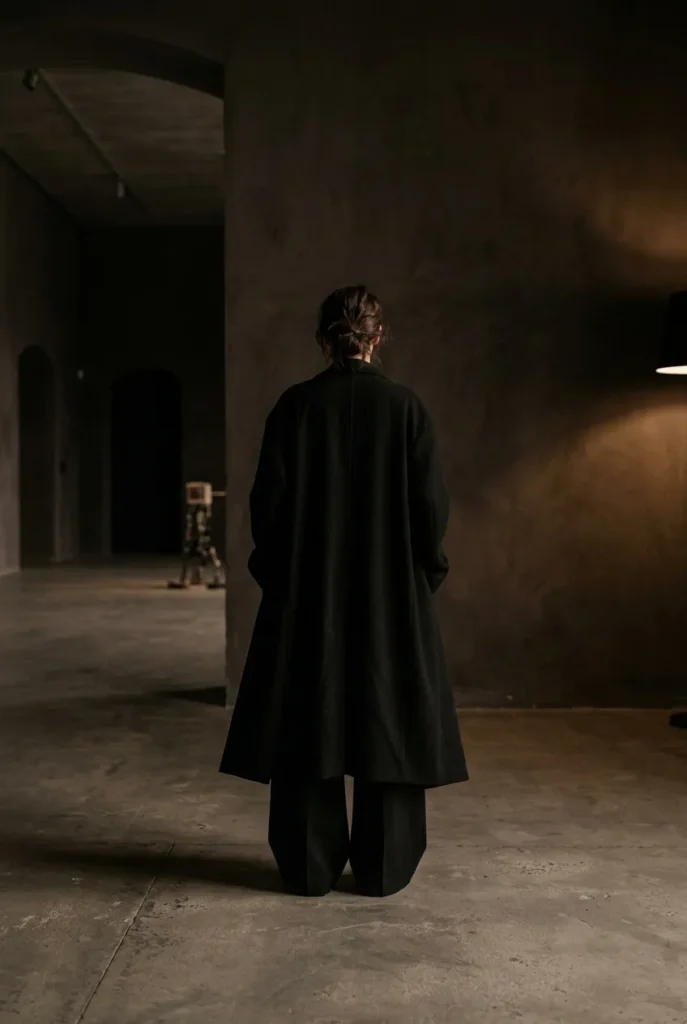
If you like to shop by name, a few Japanese labels define the look. Uniqlo and MUJI at the accessible end, both built on clean, functional basics in natural fabrics. At the design end, Comme des Garçons, Yohji Yamamoto, and Issey Miyake are the trio that made oversized, deconstructed, all-black minimalism a global language.
You do not have to own any of them to get the look. But scrolling their lookbooks trains your eye for proportion and drape faster than almost anything else.
Making It Work for Your Body and Your Life
Roomy does not mean shapeless. The balance trick is to keep volume on one half and let the other half read closer, so an oversized shirt pairs with a straighter trouser, and a wide leg pairs with a neater top. If you are petite, crop or tuck one layer so the proportions do not swallow you. If you are curvy, a defined waist with a belt keeps the drape intentional rather than heavy.
The best part is how little maintenance this closet needs once it is built. Fewer, better pieces in colors that already agree means getting dressed takes about ninety seconds. That is the real payoff: not just looking calm, but feeling it.
Frequently Asked Questions
What is Japanese minimalism called?
In fashion and design it is often tied to the ideas of wabi-sabi (beauty in imperfection) and ma (the beauty of empty space). There is no single label, but those two concepts capture the spirit.
What is the 3-3-3 rule for clothes?
It is a simple capsule exercise: pick 3 tops, 3 bottoms, and 3 pairs of shoes, then build as many outfits as you can from just those nine pieces before adding anything new.
What is Japanese minimalist design?
It is a design approach built on restraint, natural materials, clean lines, and intentional empty space, so the form and quality stand out instead of decoration or logos.
What Japanese brands are minimalist?
Uniqlo and MUJI at the accessible end, and Comme des Garçons, Yohji Yamamoto, and Issey Miyake at the design end.
Does this style work for petite women?
Yes. Keep one layer cropped or tucked so the volume stays balanced, and choose trousers that hit right at the ankle to avoid extra fabric pooling.
Can I build this look on a budget?
Absolutely. Uniqlo, MUJI, Old Navy, and Target cover the basics under $50, and the neutral palette means cheaper pieces blend in instead of looking cheap.
Is it just an all-black wardrobe?
No. Black is popular, but oat, cream, camel, navy, and gray are just as core. The look is about tone and drape, not one single color.
The Takeaway
Japanese minimalist fashion is not a shopping spree, it is a subtraction. Start with a neutral base, learn two or three outfit formulas, and let quality fabrics do the heavy lifting. Try the 3-3-3 exercise this weekend and see how many outfits nine pieces can make. Pin this guide so your formulas are handy next time you are standing in front of the closet, and build slowly from there.
Keep reading

How to Style Jeans: 16 Outfits for Every Day
You own jeans you love. You also own the same three jeans outfits on repeat, and by mid-October they feel stale. The...
How to Style a Button-Down Shirt for Plus-Size Women: 8 Outfits That Work
You bought the shirt because it looked crisp on the hanger. Then you buttoned it, reached for your coffee, and watched the...
How to Style a Button-Down Shirt for Women Over 50: 8 Outfits That Work
You probably own a button-down shirt. Most of us do. It hangs in the closet looking crisp and responsible, and every time...