
The One-In-One-Out Rule: How to Maintain a Capsule Wardrobe Forever

You did the hard part. You spent a weekend pulling everything out, you made the donate pile, and for about three weeks your closet felt like a deep breath. Then a sale email landed. A cute top followed you home. A friend swore by a brand. And slowly, quietly, the rail filled back up until you were standing there again at 7:50 in the morning, surrounded by clothes, sure you owned nothing to wear.
The one-in-one-out rule is what stops that slow refill. It is the simplest maintenance system in all of capsule dressing: for every new piece that comes in, one piece goes out. No new weekend purges. No starting over every season. Just a quiet rule that keeps your closet the size you decided it should be. We will cover what it really means, the variations nobody explains well, an original four-question test to use before you buy, and how to make the whole thing stick for years.
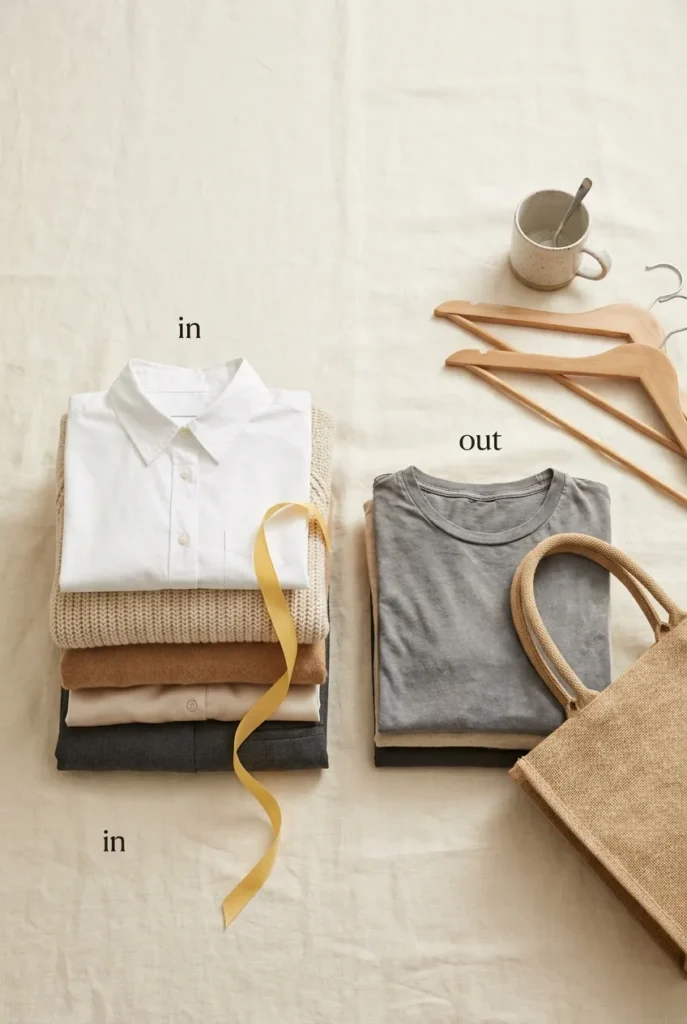
What the One-In-One-Out Rule Actually Is
Here is the whole rule in one sentence. Every time you buy or receive a new piece of clothing, you remove one piece you already own. One in, one out. The total count never creeps.
That is it. It sounds almost too plain to matter. But a capsule wardrobe is not a one-time project, it is a number you protect. If you decided your closet works best at, say, 38 pieces, the only way it stays at 38 is if the math holds every single time something new arrives.
Most people treat decluttering as an event. They blitz the closet, feel great, and then let entropy do its thing until the next blitz. This rule turns decluttering into a reflex instead. The work gets spread across the year in two-minute moments rather than saved up into another exhausting weekend.
It also changes how you shop, which is the part people miss. When you know a new sweater means an old sweater has to leave, you start asking whether the new one is actually better than what it would replace. That single question kills a surprising number of impulse buys before they happen.

Why a Capsule Needs This Rule More Than Any Other Closet
A regular closet can absorb a few extra pieces without anyone noticing. A capsule cannot. The entire payoff of a capsule, getting dressed fast, everything mixing with everything, that calm scannable rail, depends on the count staying small and the pieces staying cohesive. Add ten random buys over a year and you do not have a capsule anymore. You have a normal cluttered closet that you happened to start small.
There is a bigger picture too, and it is not feel-good fluff. According to the U.S. Environmental Protection Agency, Americans generated about 17 million tons of textiles in a single year, sent 11.3 million tons of it to landfills, and recycled less than 15 percent. We buy fast and we discard faster. The one-in-one-out rule is a personal brake on that cycle. Buy less, choose better, wear it longer.
The reader version of this is simpler. You stop buying the same striped shirt for the fourth time. You stop spending $400 in a season and owning nothing that goes together. You keep your closet at the size that actually serves you.
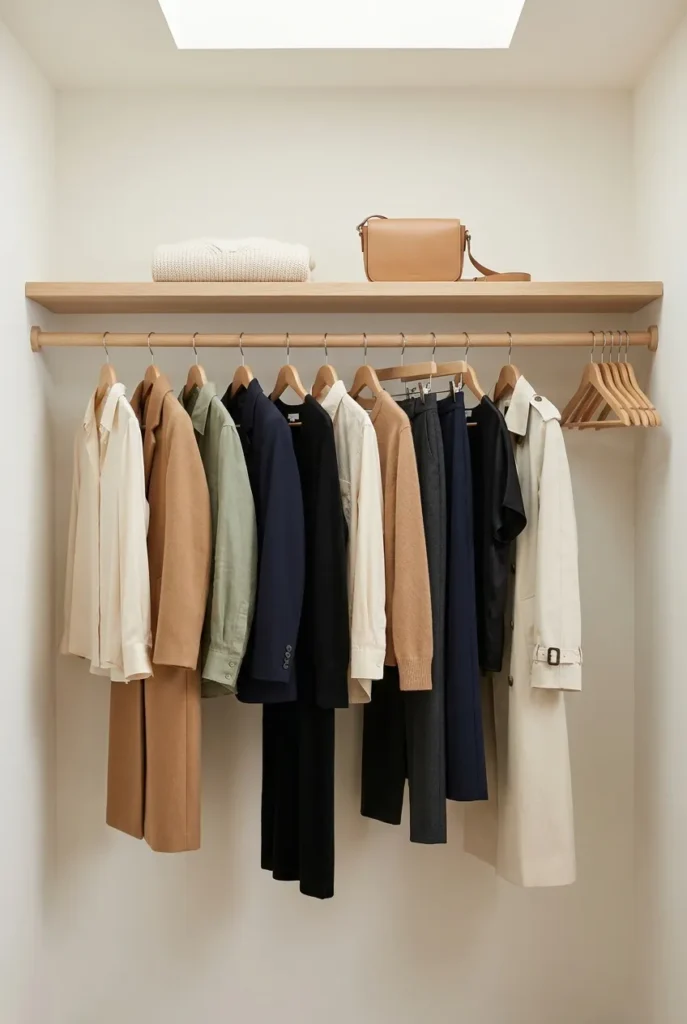
The SWAP Test: Four Questions Before Anything New Comes In
This is the part no competitor offers, so screenshot it. Before you let a new piece into your capsule, run it through the SWAP test. If it cannot pass all four, it does not earn its hanger space, and nothing has to leave because nothing new came in.
S, Style match. Does it work with at least three pieces you already own? If it only pairs with one outfit in your head, it will live in the dead zone of your rail.
W, Worth the wear. Estimate the cost per wear. A $120 blazer you will wear weekly for years is cheaper, per wear, than a $25 top you will wear twice. Divide the price by the realistic number of wears before you decide it is expensive.
A, Anchor or accent. Is this an anchor piece (a true workhorse like good jeans, a white button-down, a trench) or an accent? A capsule can hold only so many accents before it loses its base. If you already have your accents covered, an anchor earns its place faster.
P, Position the exit. Before you buy, name the exact piece leaving. Not “something.” The specific shirt. If you cannot name what goes out, you are not ready to bring something in.
Run those four every time and the rule almost enforces itself. The decision happens in the store, not in your closet three weeks later.
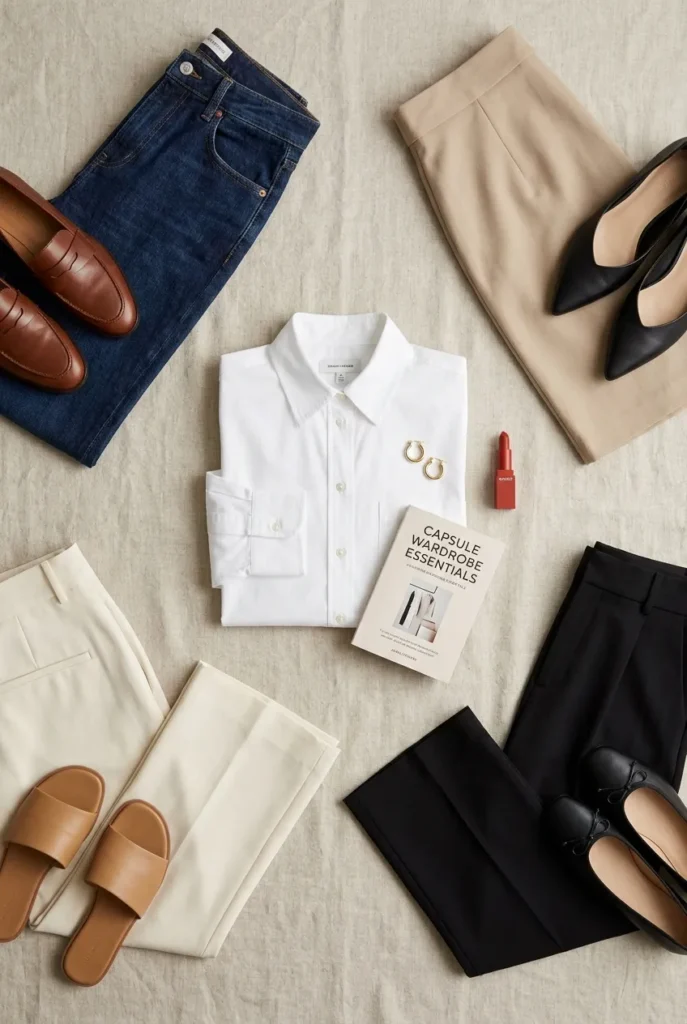
The Three Variations Nobody Explains Clearly
The plain rule is one in, one out. But there are three flavors, and picking the right one for where you are makes all the difference.
One-In, One-Out (maintain)
The classic. You like your closet size and you want to hold it steady. Best for anyone who has already finished a declutter and just wants the count to stop creeping. If you have not done that reset yet, start with a full closet declutter to reset first, then switch this rule on to hold the line.
One-In, Two-Out (shrink)
For every new piece, two leave. Use this when your closet is still bigger than you want and you would rather trim gradually than do another big purge. It shrinks the wardrobe quietly over a few months without a single dramatic weekend.
Same-Category Swap (refine)
The sharpest version for a capsule. A new piece can only replace one from its own category. New jeans replace old jeans. A new blazer replaces an old blazer. This keeps your ratios intact, so you never drift into eleven tops and two bottoms. It is the version we would point most capsule builders toward, because a capsule lives and dies by balance.
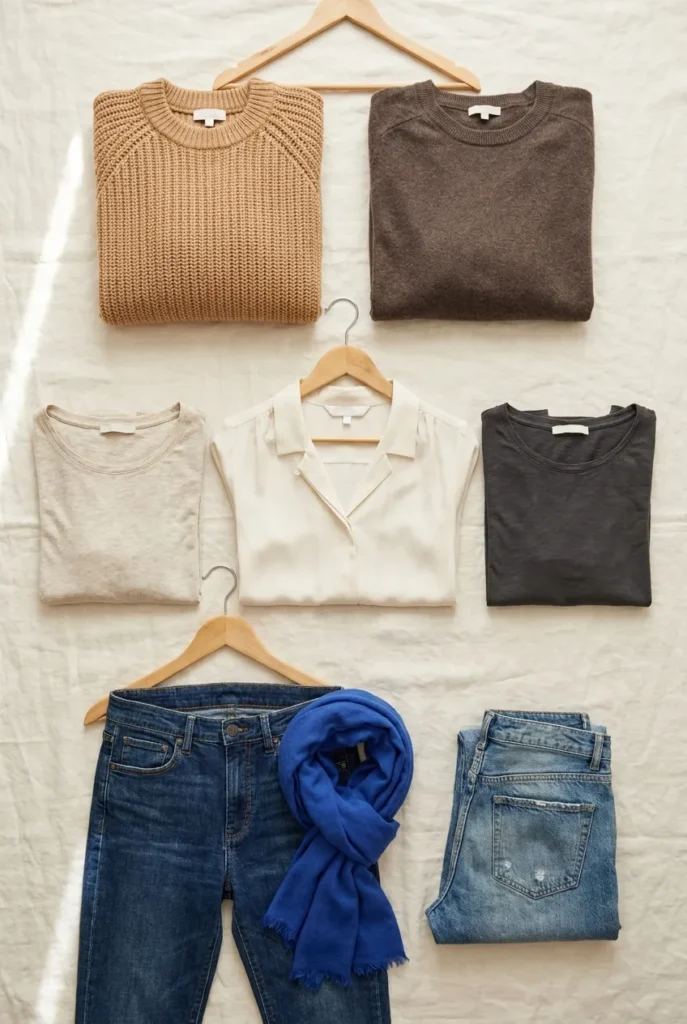
How the Rule Pairs With the 80/20 and 70/30 Ratios
If you have spent time on Pinterest, you have seen the ratio rules: the 80/20 wardrobe split and the 70/30. They are not competitors to one-in-one-out, they are the targets it protects.
The 80/20 split says roughly 80 percent of your closet should be versatile neutral basics you wear constantly, and about 20 percent can be statement or trend pieces. The 70/30 version is a slightly more generous take on the same idea. Either way, the ratio is the shape you want your capsule to hold.
Here is how they work together. The ratio tells you the shape. The one-in-one-out rule keeps the shape from drifting. When something new tempts you, you check it against your current split. Are you already heavy on the fun 20 percent? Then a neutral anchor earns the slot, and a tired statement piece exits. The rule becomes the day-to-day enforcement of the ratio you chose.
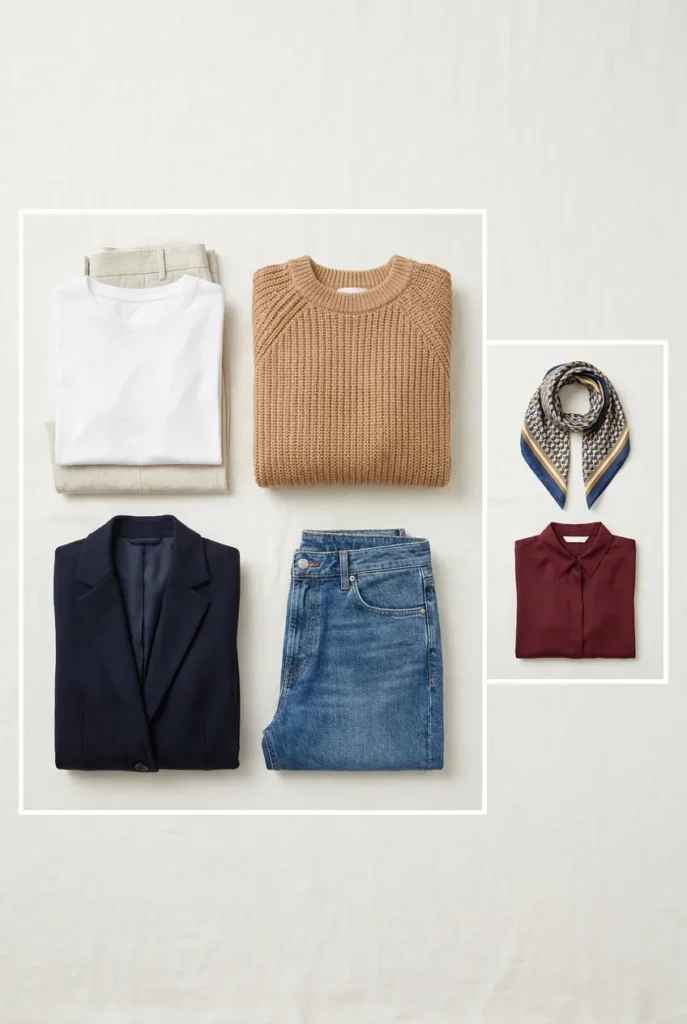
Anchor this with a cohesive color palette and your mix-and-match math multiplies. Fewer pieces, more outfits, because everything still talks to everything.
How to Run One-In-One-Out, Step by Step
You do not need an app or a spreadsheet, though you can track cost per wear if you like that sort of thing. The whole system is four moves.
- Set your number. Decide the count your capsule should hold. Most people land somewhere between 30 and 45 core pieces, but pick what fits your life, not a Pinterest figure.
- Run the SWAP test before every purchase. Style match, worth the wear, anchor or accent, position the exit. If it fails, it does not come home.
- Remove the named piece the day the new one arrives. Not next week. Same day, while the decision is fresh. The new sweater goes on the rail, the old sweater goes in the donate bag immediately.
- Keep one exit bag going. A standing donate or resell bag by the closet door means the “out” piece has somewhere to land in two seconds. No bag, no follow-through.
That fourth move is the quiet hero. The rule fails for most people not because they disagree with it, but because the old piece never physically leaves the house. Give it a bag and a destination and the system runs itself.
IMAGE 7 (Step by step) Photorealistic lifestyle shot, side angle, low warm lamplight in the early evening. A woman seen from behind or side (face not the focus) placing a folded gray sweater into a reusable canvas donate bag that sits beside a tidy neutral closet. Calm, homey, intentional. Hardwood floor, jute rug, brass hooks on the wall. No logos, no text. Rule of thirds, warm grade. Hex accent: none, keep warm-neutral. Alt text: Folding a sweater into a standing donate bag beside a neutral closet, the one-out step in action.
What to Actually Do With the “Out” Piece
The piece leaving still has value, and where it goes matters for both your conscience and sometimes your wallet.
Resell the good stuff. Pieces in solid shape from mid and contemporary brands (think Madewell, J.Crew, Sezane, Reformation) move well on resale platforms, and that cash can quietly fund the next “in.” Donate the wearable middle to a local shelter or thrift that actually distributes clothing. Recycle the truly worn out through a textile recycling drop rather than the trash, since, as the EPA data shows, most textiles never get recycled and end up buried.
One rule of thumb. If the piece is good enough that you are tempted to keep it “just in case,” it is good enough to resell or gift to someone who will wear it now. “Just in case” is how closets refill.

Where People Slip Up (and How to Not)
The rule is simple, but a few predictable potholes trip almost everyone.
The gift loophole. “It was a gift, so it does not count.” It counts. A piece on your rail is a piece on your rail, however it arrived. Run gifts through the same SWAP test, gently.
The deferred exit. You buy the new thing, fully intending to remove the old one later. Later never comes. Remove it the same day or the rule quietly dies.
The seasonal cheat. “I will swap when the season changes.” Seasonal storage is fine, but it is not the same as removing a piece. Storing is not exiting. Keep the two ideas separate.
The “I deserve it” override. You absolutely can buy yourself something lovely. The rule does not say no. It just says something else leaves when it does. Reward and discipline can hold hands here.
Name your potholes and you will sidestep them. Most failures are logistical, not philosophical.

How to Make It a Habit That Lasts for Years
A rule only works if it becomes automatic, and automatic comes from friction reduction, not willpower. Keep the donate bag by the door. Do the swap the same day. Run the SWAP test in the store before you are emotionally attached. None of these take effort once they are habits, and habits are what keep a capsule intact through years of sales, seasons, and life changes.
Give it one full season to settle. After that, the rule stops feeling like a restriction and starts feeling like the reason your mornings got quieter. You open the closet, everything fits the number, everything goes together, and the thing you reach for is already a good choice.

Frequently Asked Questions
Does the one-in-one-out rule work for men’s wardrobes too?
Yes, completely. The rule has nothing to do with gender or style, it is just count maintenance. A men’s capsule of shirts, trousers, knitwear, and a couple of jackets holds its number exactly the same way. New oxford in, old oxford out.
What does Reddit generally say about one-in-one-out?
The common consensus in decluttering communities is that the rule works best as maintenance after an initial declutter, not as a way to shrink a large closet quickly. People who struggle with it usually skipped the reset first or never removed the old piece the same day. The fix is the standing donate bag.
How is this different from the 90/90 rule?
The 90/90 rule, from The Minimalists, asks whether you used an item in the last 90 days or will in the next 90, and if not, you let it go. It is a tool for the initial purge. One-in-one-out is a tool for maintenance afterward. Use 90/90 to get to your number, then one-in-one-out to keep it. They pair well.
Is one-in-one-out worth it if I love shopping?
It might be the best rule for you, actually. It does not ask you to stop shopping. It asks you to make one small trade each time, which keeps the fun without the pileup. Many people find they shop more thoughtfully and enjoy each piece more.
Can I do one-in-one-out with a seasonal capsule?
Yes. Apply it within each season’s active rotation, and keep seasonal storage separate from the count. Storing your winter coats in summer is not “removing” them. When you genuinely retire a piece, that is the exit that counts.
What if I am between sizes or my body is changing?
Be gentle and practical. During postpartum, weight changes, or any transition, hold a small flex set of pieces that fit you now, and apply the rule loosely until things settle. The rule serves you, not the other way around.
How long until it feels natural?
Usually one full season, roughly three months. The first few swaps take conscious thought. After that, naming the exit piece and dropping it in the donate bag becomes a reflex you barely notice.
The Bottom Line
A capsule wardrobe is not something you build once, it is something you keep. The one-in-one-out rule is the keeping. It is small, it is boring in the best way, and it is the difference between a closet that stays calm for years and one that quietly fills back up by spring. Pick your number, run the SWAP test before you buy, and let one thing leave every time one thing arrives. Your future self, standing at the closet at 7:50 on a Tuesday, will thank you.
What is the first piece you would let go to make room for something better? That is where it starts.
Keep reading

How to Make a Capsule Wardrobe Vision Board (That Actually Guides You)
A capsule wardrobe vision board is supposed to make getting dressed easier. Most of them do the opposite. You save four hundred...

The Capsule Wardrobe Template That Starts With Your Real Closet
You’ve downloaded a capsule wardrobe template before. Maybe three. There was a tidy list of thirty pieces, a suggested color palette, and...

7 Day Cruise Capsule Wardrobe: One Bag, Every Occasion Covered
A 7 day cruise capsule wardrobe sounds like a contradiction. One week, four dress codes, two climates, and a closet roughly the...