
How to Style Khaki Pants for Women: Beyond the Basics
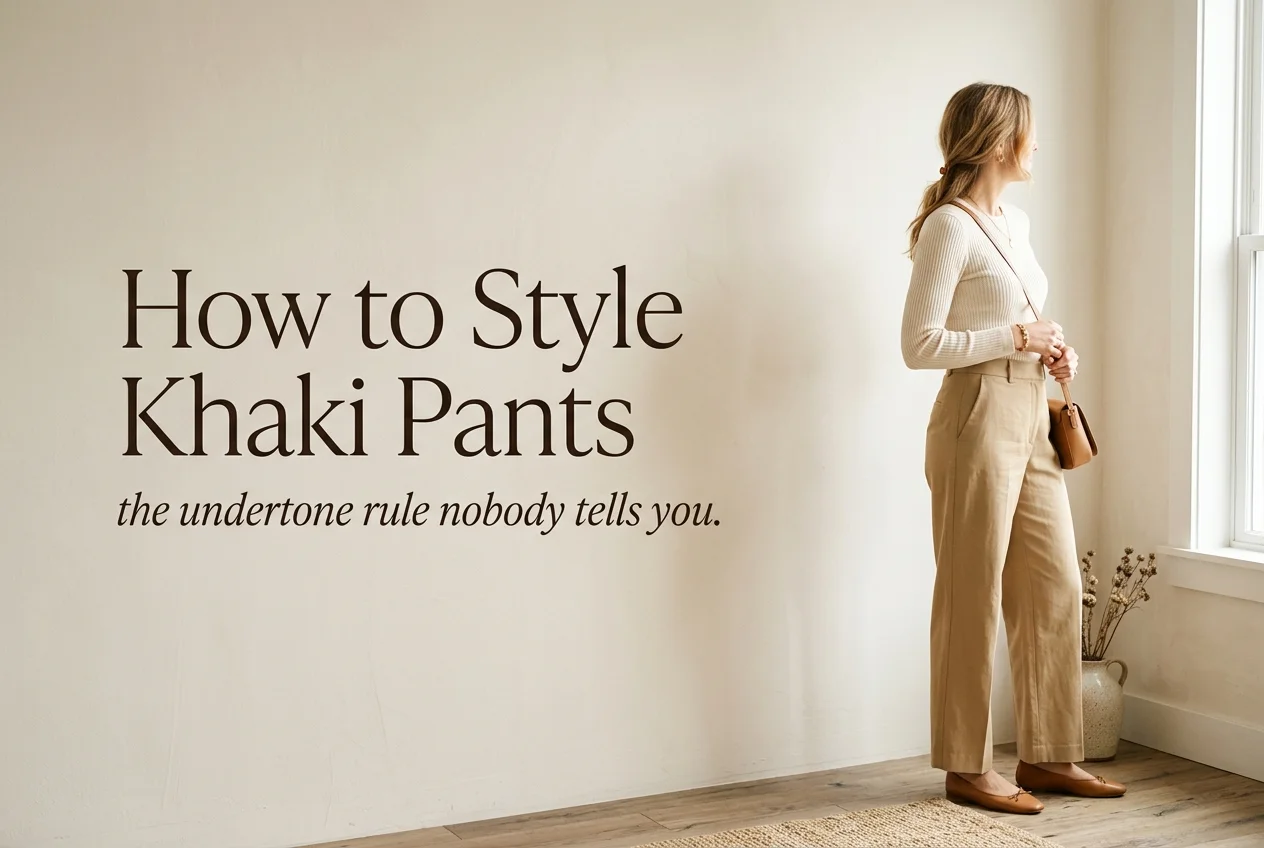
You own a pair. They’re folded on the shelf where you put them after wearing them twice. Every time you reach for them, something goes wrong, so you reach for jeans instead. Learning how to style khaki pants isn’t about finding more outfit photos. It’s about one thing nobody tells you: your khaki has an undertone, and half the tops in your closet are fighting it. Fix that, and the same pants suddenly work with twelve different combinations.
Here’s the full system, from the undertone test to the shoes.
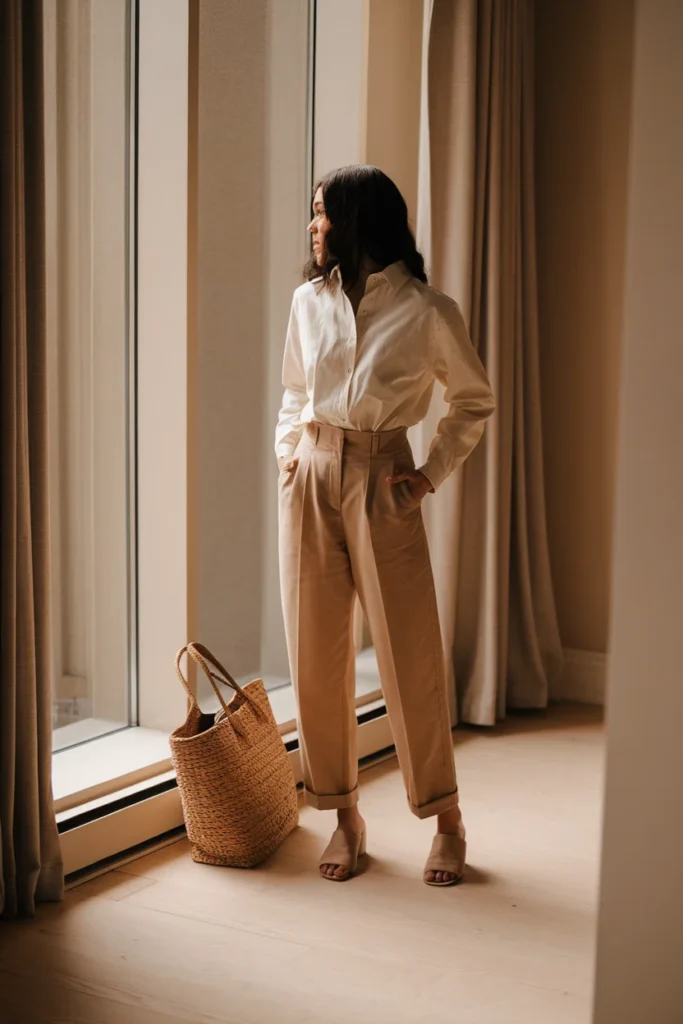
Why Your Khaki Pants Look Off (It’s the Undertone, Not the Outfit)
Khaki was never a standardized color. When British officers in colonial India needed uniforms that disappeared against the landscape, they took white cotton and dyed it with local mud to make troops harder to spot. Different region, different mud, different shade. That improvisation is still baked into the category almost two centuries later, which is why two pairs labeled khaki can look nothing alike on the hanger.
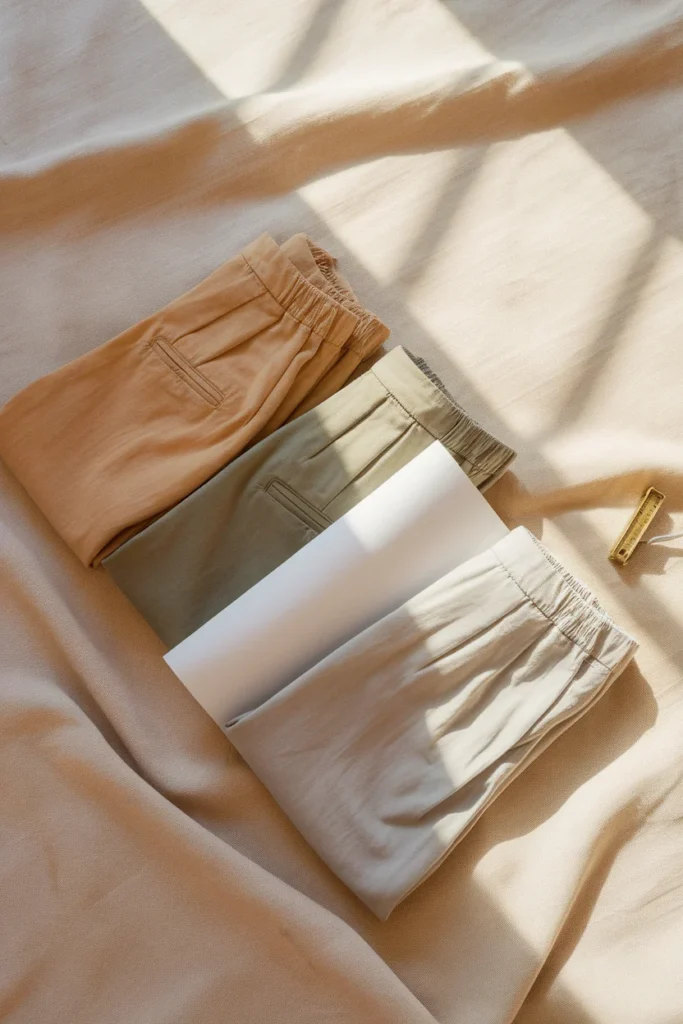
Modern khaki splits into three families. Once you know which one you own, color pairing stops being guesswork.
Hold your pants flat against a plain sheet of white printer paper in daylight. Not lamplight, not your phone flash. Then look at what the contrast reveals.
The Khaki Undertone Decoder
| If it reads… | You own | Wear these with it | Skip these |
|---|---|---|---|
| Golden, yellow, slightly orange against the white | Warm sand | Cream, ivory, camel, chocolate, rust, burgundy, olive, gold hardware | Cool grey, optic white, icy blue, silver |
| Muddy, greenish, a little grey-green | Olive drab | Black, navy, forest, cream, tomato red, butter yellow, denim | Chocolate brown, pastel pink, warm tan |
| Flat, greyish, almost stone | Cool greige | Optic white, black, charcoal, cobalt, soft blush, navy, silver hardware | Rust, mustard, orange-toned tan, gold |
Warm sand is the classic. Old Navy, Gap, and most mall khakis land here. Olive drab shows up in utility and cargo cuts. Cool greige is the contemporary version, common at COS, Everlane, and Quince, and it’s the one that trips people up most because it behaves like grey, not like tan.
That single test explains the outfit you keep abandoning. A cool greige pant with a rust sweater will always look slightly muddy. Same sweater, warm sand pant, and it sings.
What Color Shirt Goes With Khaki Pants
Now the decoder does the work. Instead of memorizing combinations, you’re matching temperature.
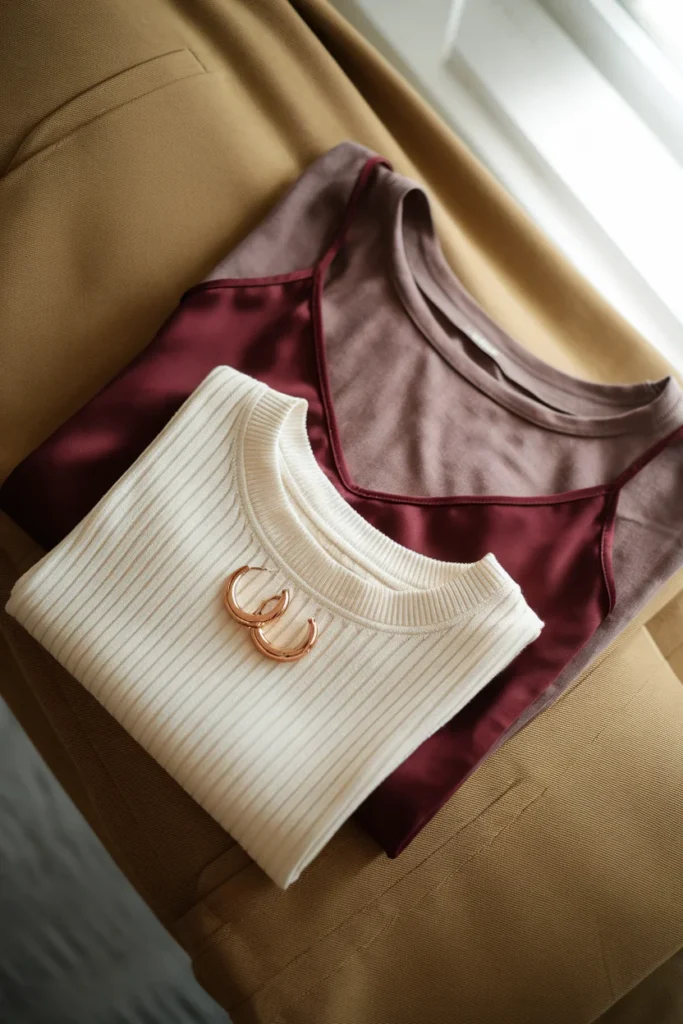
Warm sand khaki wants warmth back. Cream instead of white. A chocolate knit, an oatmeal cardigan, a burgundy silk tank for evening. Rust is the sleeper hit here and almost nobody reaches for it. If you want contrast without coldness, go navy rather than black.
Olive drab khaki is the most forgiving of the three because green sits comfortably beside almost every strong color. Black works. Navy works. A crisp white poplin shirt works. Tomato red against olive is a combination worth trying once before you dismiss it.
Cool greige khaki behaves like a light grey trouser, so treat it that way. Optic white, true black, charcoal, cobalt. If you already know pairing rules that work for grey trousers, apply the same logic and you’re done.
One rule cuts across all three: keep your metals consistent with your undertone. Gold hoops with warm sand, silver with cool greige. It’s a small thing that reads as expensive.
The 1-Pair, 12-Outfit Grid
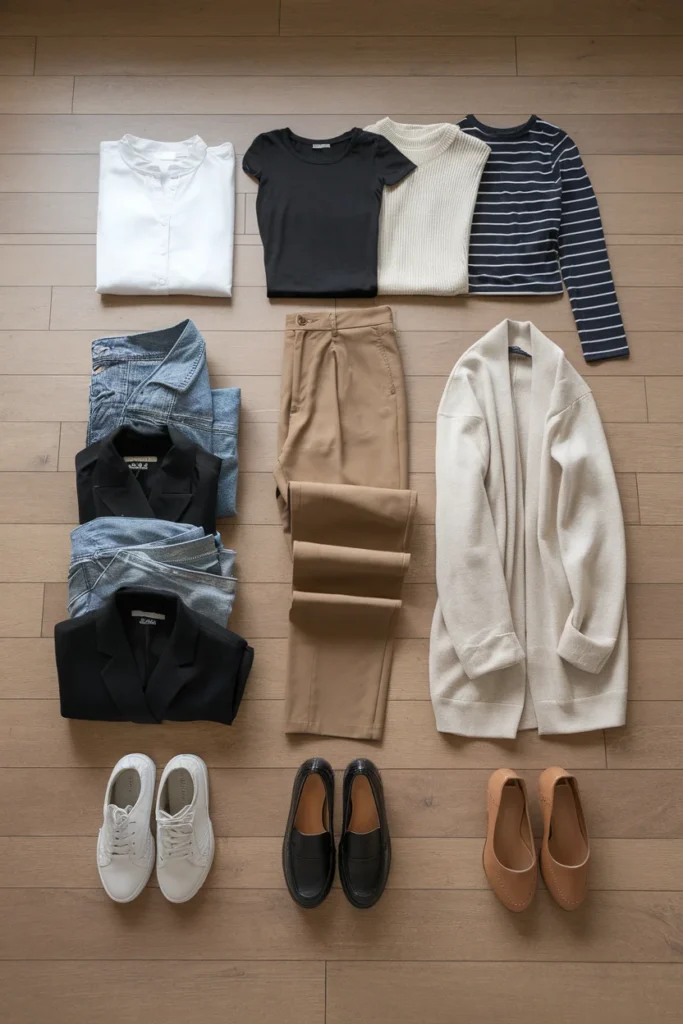
Outfit math is the fastest way to justify hanger space. One pair of khaki pants, four tops, three layers, three shoe options, and you’re at twelve documented outfits before you add a single accessory.
Here’s the grid. Screenshot it.
| + White button-down | + Black fitted tee | + Cream knit | + Striped long-sleeve | |
|---|---|---|---|---|
| + Black blazer | Interview polish | Sharp weeknight dinner | Soft office | Smart casual Friday |
| + Denim jacket | Weekend errands | Coffee run | School pickup | Farmers market |
| + Oversized cardigan | Work from home | Travel day | Sunday reading | Early fall walk |
Shoes shift the register without changing the grid. White sneakers pull everything casual, black loafers pull everything professional, tan ballet flats sit between the two. Same twelve combinations, three moods each, which is thirty-six outfits from ten pieces.
The four tops are doing the heavy lifting, so it’s worth being deliberate about which ones you own. If your top drawer is a graveyard of near-identical tees, the grid collapses. A tighter edit of the tops worth keeping in a working capsule is the fix.
Five Khaki Pants Outfit Formulas You’ll Actually Repeat
Grids are for planning. Formulas are for 7:40 on a Tuesday.
1. The Quiet Monochrome. Khaki pants, cream knit, camel coat, tan flats. Everything within two shades of each other. This is the single highest-return formula in the list because tonal dressing reads expensive at every price point, and it works with warm sand or olive drab without adjustment.
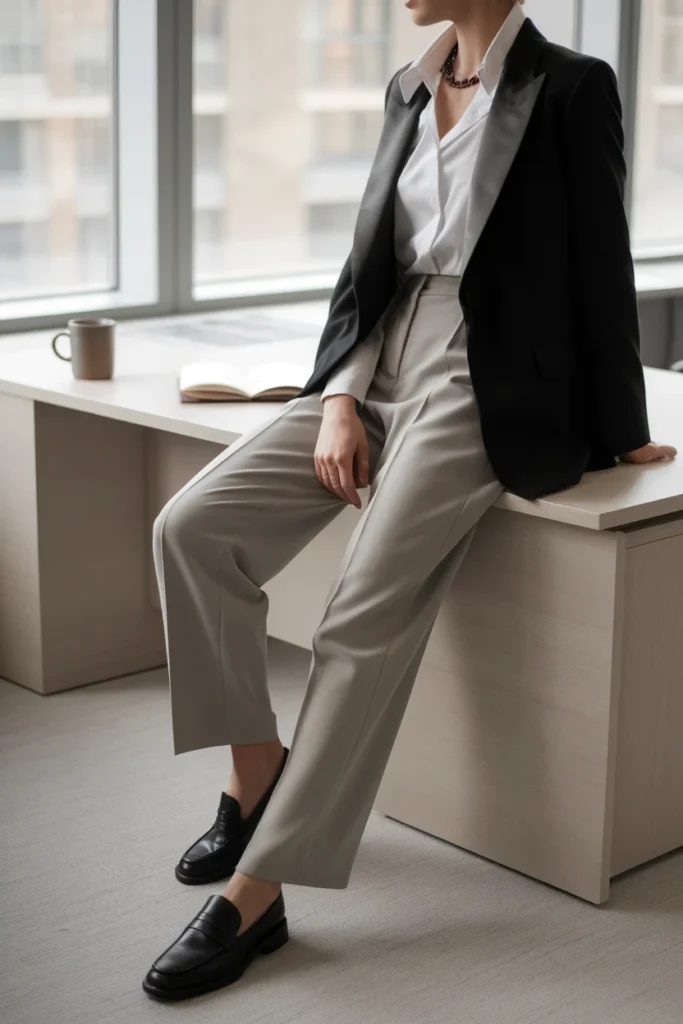
2. The Crisp Contrast. Khaki pants, white poplin shirt fully tucked, black leather belt, black loafers. Three colors, hard edges, zero ambiguity. Best with cool greige.
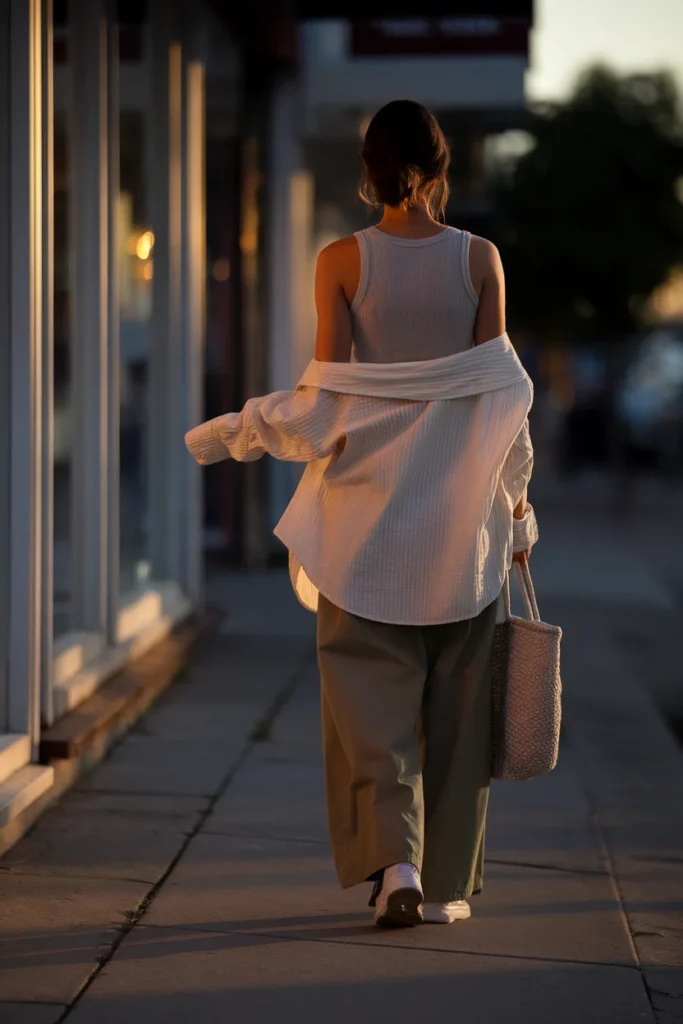
3. The Soft Utility. Khaki pants, fitted rib tank, unbuttoned oversized shirt worn open, white sneakers. If your pair happens to be a cargo cut, the same principles in styling cargo pants without looking off-duty apply directly.
4. The Elevated Casual. Khaki pants, striped long-sleeve, denim jacket, gold hoops, woven tote. The stripe adds visual interest so nothing else has to.
5. The Evening Shift. Khaki pants, burgundy or black silk camisole, heeled mule, small crossbody. Swapping cotton for silk on top is the entire trick. Fabric shift does what a color change can’t.
How to Style Khaki Pants for Work Without Looking Like a 2004 Office Park
Khaki earned its business-casual reputation honestly. After World War II the category moved from military surplus into civilian closets, and by the 1990s Dockers had built an entire office dress code around it. That association is exactly the problem. Pleated front, relaxed thigh, mid-calf break, and you’ve time-traveled.
Three adjustments fix it.
Raise the rise. A high or mid-high rise creates a visible waist and lengthens the leg line. Low-rise khaki is the fastest route to looking dated.
Kill the pleat, or commit to it. Flat front is safe. A single deep pleat on a wide-leg trouser is deliberate and modern. Multiple shallow pleats are the 2004 tell.
Structure the top half. A blazer, a fitted knit, or a tucked poplin shirt gives the outfit a defined shoulder and waist. Soft top plus soft bottom reads like loungewear no matter how good the pants are.
For a truly office-safe version, pair olive drab or cool greige with black or navy rather than tan-on-tan, and keep the shoe closed. This is also where khaki proves its value in a system that has to carry across all four seasons: it’s one of the few bottoms that works in July linen weight and November brushed twill.
What Shoes to Wear With Khaki Pants
Shoes decide the register, so choose them last, after the outfit is otherwise set.
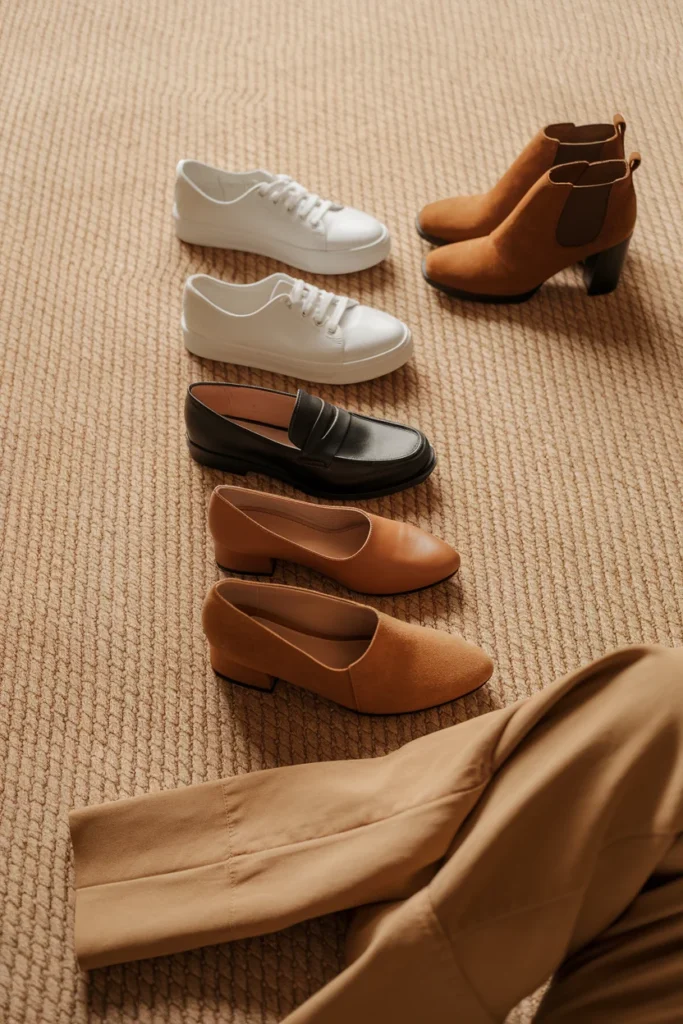
White leather sneakers are the default for anything casual. Keep them clean, because scuffed white against khaki reads sloppy rather than lived-in.
Black loafers instantly formalize. They also anchor an outfit visually, which matters if your pants are pale and your top is pale.
Tan or nude ballet flats extend the leg line by matching your skin or your trouser, and they’re the quiet-luxury choice with a monochrome look.
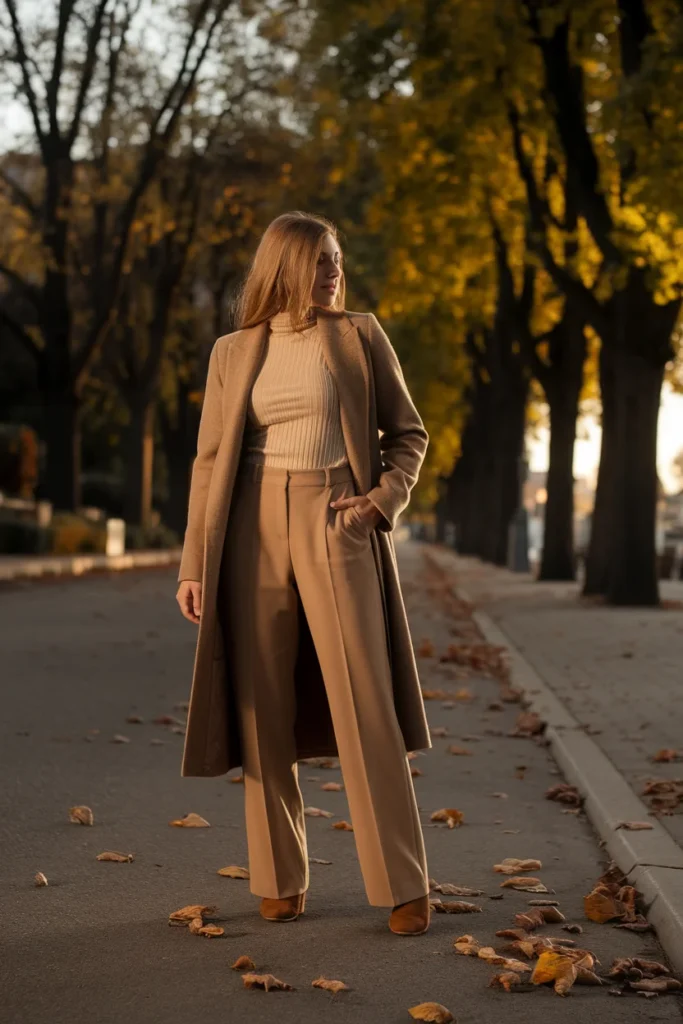
Ankle boots work beautifully in fall, with one condition. Match the boot color to the pant or go darker. A tan boot with warm sand khaki looks intentional. A black boot with warm sand khaki needs black repeated somewhere up top.
Heeled mules or slingbacks carry khaki into evening without a full outfit change.
Watch the break. Cropped khaki wants a visible ankle and a low-profile shoe. Full-length wide-leg khaki wants a bit of heel so the hem doesn’t drag or pool.
Layering Khaki Pants Through Fall and Winter
Khaki is a fall workhorse, and September through November is when it earns its keep.
Start with the base layer, then add exactly one structured piece and one soft piece. A fitted knit under an open wool coat. A poplin shirt under a chunky cardigan. Two soft layers stacked will bulk you out; two structured layers will feel stiff.
For genuine cold, the sequence that works is thin base, mid-weight knit, then outerwear with a defined shoulder. A trench in early fall, a wool coat once it drops below 45F, a quilted jacket for anything wet. Choosing outerwear that layers over almost everything matters more than owning a lot of it.
Two seasonal notes. Tuck a thin base layer, never a thick one, or the waist disappears. And in winter, switch to a heavier brushed twill or a wool-blend khaki if you own one, because summer-weight cotton looks out of place next to a wool coat even in the right color.
Choosing the Right Pair: Fit, Fabric, and Rise
If styling still feels like a fight after the undertone fix, the pants themselves are probably wrong.
Fabric first. Cotton twill is the classic and holds a crease. Tencel and lyocell blends drape softer and resist wrinkling, which is why Everlane’s Tencel chinos travel well. Linen blends are summer-only and will wrinkle by lunch, so buy them knowing that. Anything above roughly five percent elastane will bag out at the knee within a season.
Rise. High rise for a defined waist and longer leg line. Mid rise if high rise gapes at your back waist. Low rise only if you’re deliberately styling a specific look.
By frame, and read these as proportion notes rather than rules:
- Petite (5’4″ and under): cropped or ankle-length so the hem hits above the ankle bone rather than bunching. Madewell’s petite line is the reliable option. A high rise plus a tucked top does the most work here.
- Tall (5’9″ and over): check the inseam before anything else. Full-length wide leg is your advantage, so look for 32 inch or longer inseams.
- Curvy and hourglass: a contoured or elasticized back waistband stops the gap at the small of the back. Athleta’s curvy fits and Alex Mill’s adjustable waist tabs both address this directly.
- Midsize and plus: flat front, mid-to-high rise, and a straight or wide leg keeps proportions balanced. Gap’s Downtown Khakis run through an extended size range.
- Rectangle and inverted triangle: a wider or barrel leg adds visual width at the hip and balances the shoulder line.
Barrel leg is the silhouette with the most momentum going into fall 2026, and it behaves a lot like wide leg once it’s on. If you’re deciding between the two, how wide-leg denim sits on different frames translates almost directly to trousers.
Why Khaki Reads Cheap (and the Four Tells to Avoid)
Price isn’t the variable. A $45 pair can look considered and a $200 pair can look flat. These four things decide it.
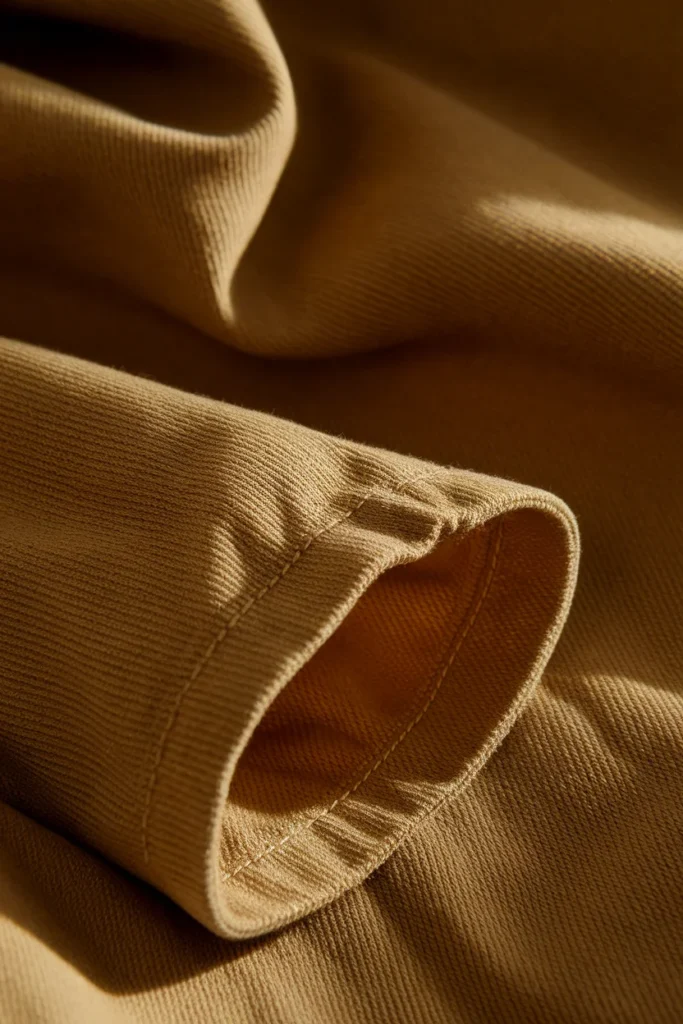
1. Sheen. Matte twill reads expensive. Any shine on the surface means a high synthetic content catching light, and it’s visible from across a room.
2. Orange cast. Cheap khaki dye often skews orange rather than golden. Hold it against something you know is warm neutral, like a camel coat. If it looks brassy, it will look brassy in every photo you’re in.
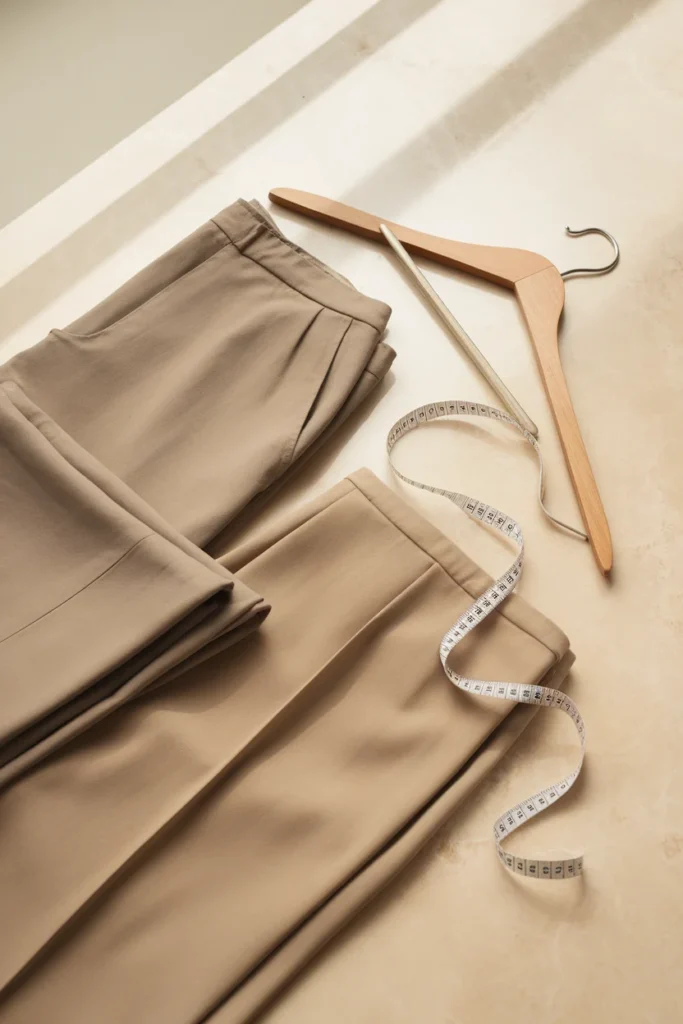
3. Wrong break. Fabric pooling on the shoe is the single most aging detail in the category. Hem them. A tailor charges around $15 to $25 for a trouser hem and it changes the pant more than any styling choice in this article.
4. Poly wrinkle. Cotton creases softly. Polyester blends crease sharply and hold it. Check the composition label before buying, and check the care instructions while you’re there, since manufacturers are required to have a reasonable basis for every care instruction they print.
Cost per wear settles the rest. A $120 pair worn weekly for two years lands near $1.15 a wear. A $40 pair worn twice costs $20 each time.
Where to Buy Khaki Pants by Price Tier
Prices move, so treat these as bands rather than quotes.
Under $50: Old Navy, Uniqlo, and Target’s A New Day and Universal Thread lines typically run $28 to $45. Expect lighter fabric and a shorter lifespan, and budget for a hem.
$50 to $150: Gap Downtown Khakis, Quince, Everlane’s Tencel chinos, J.Crew’s Sailor chino, Madewell’s Harlow wide-leg, and Banana Republic’s barrel-leg chino generally sit between $60 and $150. This band is the value sweet spot for fabric quality.
$150 to $400: Alex Mill’s Nellie straight leg, Reformation’s Mason cropped pant, and Jenni Kayne’s linen Keaton run roughly $145 to $265. You’re paying for fabric weight, finishing, and a cleaner dye.
If you’re eyeing something above $250, the honest mid-tier substitute is Everlane or Quince in the same silhouette. The dye and the drape are where you’ll notice the gap, not the construction.
Frequently Asked Questions
What color shirt goes with khaki pants? It depends on your pair’s undertone. Warm sand khaki works with cream, camel, chocolate, rust, and burgundy. Olive drab works with black, navy, white, and tomato red. Cool greige works with optic white, black, charcoal, and cobalt. Run the white-paper test first.
Can you wear black with khaki pants? Yes, and it’s one of the sharpest combinations available. Black works best with olive drab and cool greige khaki. With warm sand, black can look slightly harsh, so navy or chocolate is often the softer choice.
Are khaki pants business casual? Generally yes, with conditions. Flat front, mid-to-high rise, properly hemmed, and paired with a structured top reads business casual in most US offices. Cargo pockets, low rise, or a pooling hem push it toward weekend wear.
What is the difference between khakis and chinos? Khaki originally described a color and a heavier military twill. Chino describes a lighter, more tightly woven cotton twill with a smoother finish and typically flat front construction. In current US retail the terms overlap heavily, so judge by fabric weight and finish rather than by the label.
What shoes go with khaki pants? White sneakers for casual, black loafers for professional, tan ballet flats for a monochrome look, ankle boots for fall, and heeled mules for evening. Match cropped hems to low-profile shoes and full-length wide-leg hems to a slight heel.
Do khaki pants work for petite women? Yes, with attention to length. Look for cropped or ankle inseams so the hem sits above the ankle bone, choose a high rise, and tuck your top. Petite-specific lines are worth the search, and hemming a regular inseam is inexpensive.
Can khaki pants be machine washed? Most cotton and cotton-blend khakis can be machine washed cold and hung to dry, which preserves both color and shape. Always follow the care label, since the FTC requires manufacturers to base those instructions on real evidence. Skip the dryer on high heat, which is what causes shrinkage and fades the dye unevenly.
Start With the Paper Test
The fastest thing you can do today takes ten seconds. Pull out your khaki pants, hold them against a sheet of white paper by a window, and figure out which of the three families you own. Everything else in this guide gets easier once you know that.
Then pick one formula from the list of five and wear it this week. Not all twelve. One. The pants that felt unwearable last month usually just needed the right top standing next to them.
Tell me in the comments which undertone you turned out to have, because it’s almost never the one people expect.
Keep reading

How to Style Jeans: 16 Outfits for Every Day
You own jeans you love. You also own the same three jeans outfits on repeat, and by mid-October they feel stale. The...
How to Style a Button-Down Shirt for Plus-Size Women: 8 Outfits That Work
You bought the shirt because it looked crisp on the hanger. Then you buttoned it, reached for your coffee, and watched the...
How to Style a Button-Down Shirt for Women Over 50: 8 Outfits That Work
You probably own a button-down shirt. Most of us do. It hangs in the closet looking crisp and responsible, and every time...