
How to Wear All Black Without Looking Boring
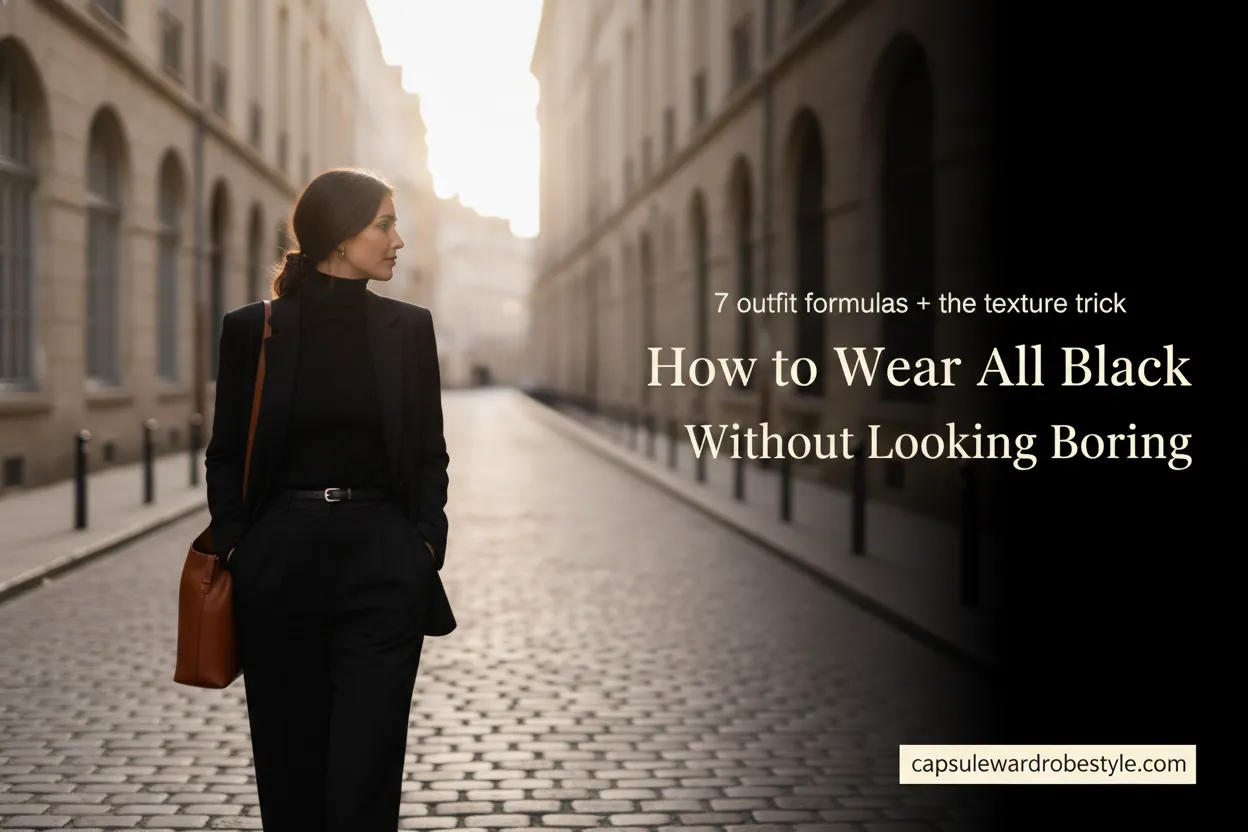
You put on all black because it is easy. Then you catch yourself in the mirror and it looks like you gave up. Sound familiar? All black outfits for women get a bad reputation for a reason: done lazily, black goes flat, reads like a uniform, and washes you out under bad lighting. Done well, it is the most expensive-looking thing you own. This guide fixes the boring version for good, with real outfit formulas, a texture trick you can copy today, and one small twist that separates chic from basic.
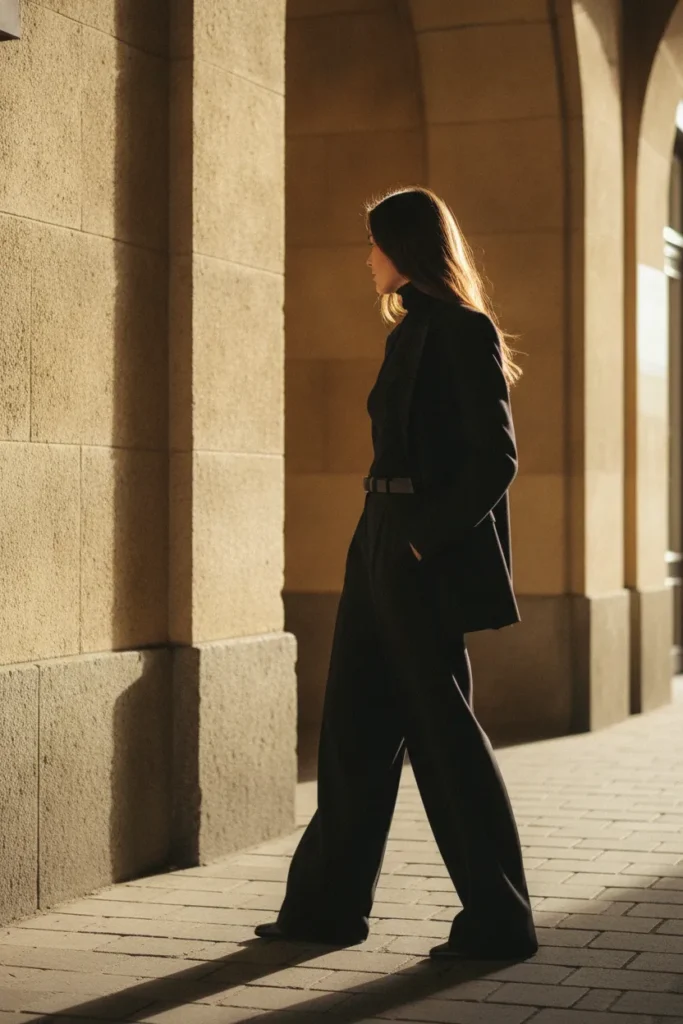
Here is the truth most roundups skip: black is not one color. Charcoal, jet, faded black, and blue-black all sit differently on you, and mixing three washed-out blacks by accident is exactly why an outfit looks tired. The fix is not more black. It is smarter black.
Why All Black Falls Flat (And the One Reason It Works)
When every piece is the same matte cotton in the same slightly faded tone, light hits it evenly and the whole look reads as one shapeless block. Your eye has nowhere to land. That is the boring version.
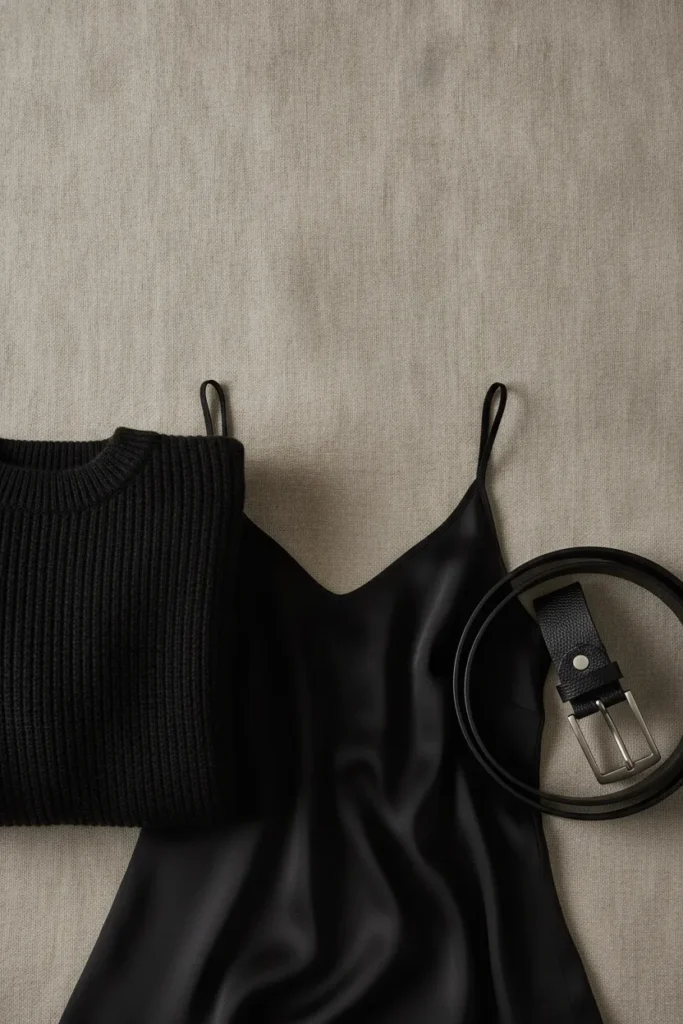
The reason all black works when it works is contrast. Not color contrast, texture contrast. A silk tank next to a chunky knit. A leather belt against a soft drape. Matte trousers under a bit of sheen. That interplay is what your eye reads as “styled,” and it costs you nothing but a smarter pairing.
The Texture Math Framework (Screenshot This)
Here is the original framework this whole article is built on. Every all black outfit that looks expensive follows a simple ratio: two textures minimum, three ideal, and at least one of them catches light.
Think of it as outfit math for a single color:
- One matte anchor. Your base. Wide-leg trousers, a straight midi skirt, or tailored pants.
- One soft or draped layer. A fine knit, a silk cami, a jersey turtleneck.
- One light-catcher or structure piece. Leather, satin, patent, a crisp cotton poplin, or a structured blazer.
Two out of three and you are already ahead of most people. All three and it looks intentional. That is the entire secret, and it works whether you are dressing for a coffee run or a dinner reservation.
7 All Black Outfit Formulas You Can Copy
These are copy-paste formulas, not one-off shopping lists. Each one uses the texture math above so nothing reads flat. Front-loaded here is the single most useful one.
1. The Blazer Reset (highest-value, works anywhere)
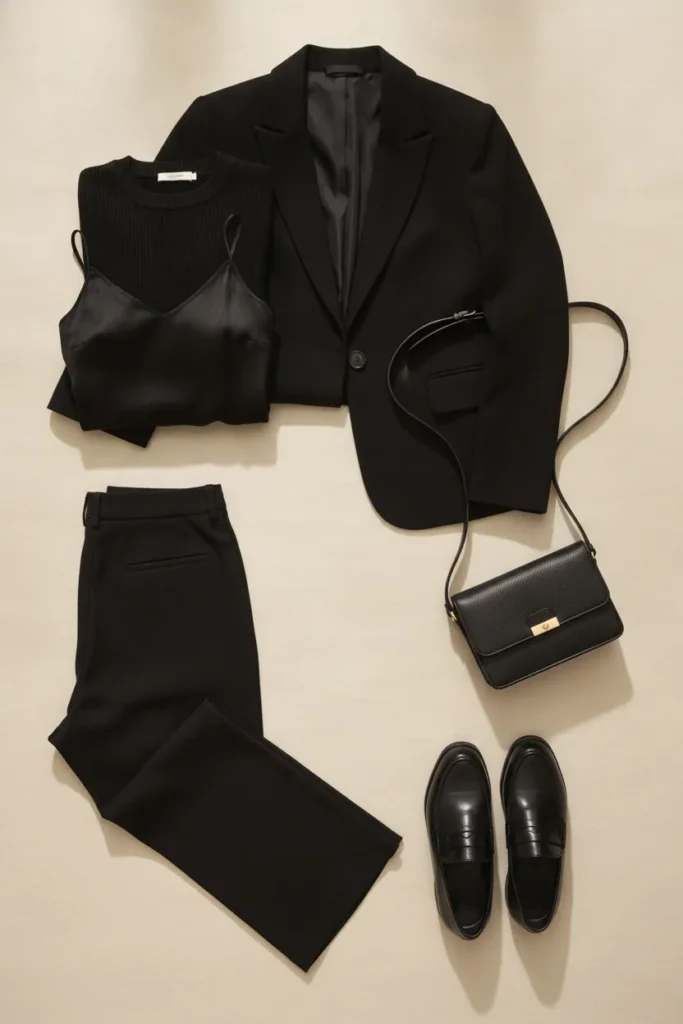
Black tailored blazer, black fine-knit tee, black straight-leg or wide-leg trousers, black loafers. The blazer’s structure does the heavy lifting. Add gold hoops and you are dressed for almost anything. Push the sleeves up for daytime, leave them down for evening.
2. The Soft Drape
Black silk or satin slip skirt, black ribbed knit tucked in, black ballet flats. The sheen of the skirt against the matte knit is the whole outfit. Quiet, elegant, and takes ninety seconds.
3. The Sharp Casual
Black straight jeans, black cotton tee, black leather jacket, black sneakers. Denim’s texture keeps it from looking like a costume. This is your errands-and-still-look-pulled-together look.
4. The Column
Black turtleneck tucked into black high-waist trousers, one long black coat over the top. A single vertical line, elongating and effortless. A slim belt at the waist stops it going shapeless.
5. The Office Version
Black tailored trousers, black poplin button-down, black pointed flats or low block heels. Crisp cotton is your light-catcher here. If you build outfits like this often, it pairs neatly with a business professional wardrobe that mixes and matches so your work pieces do double duty.
6. The Dress-and-Done
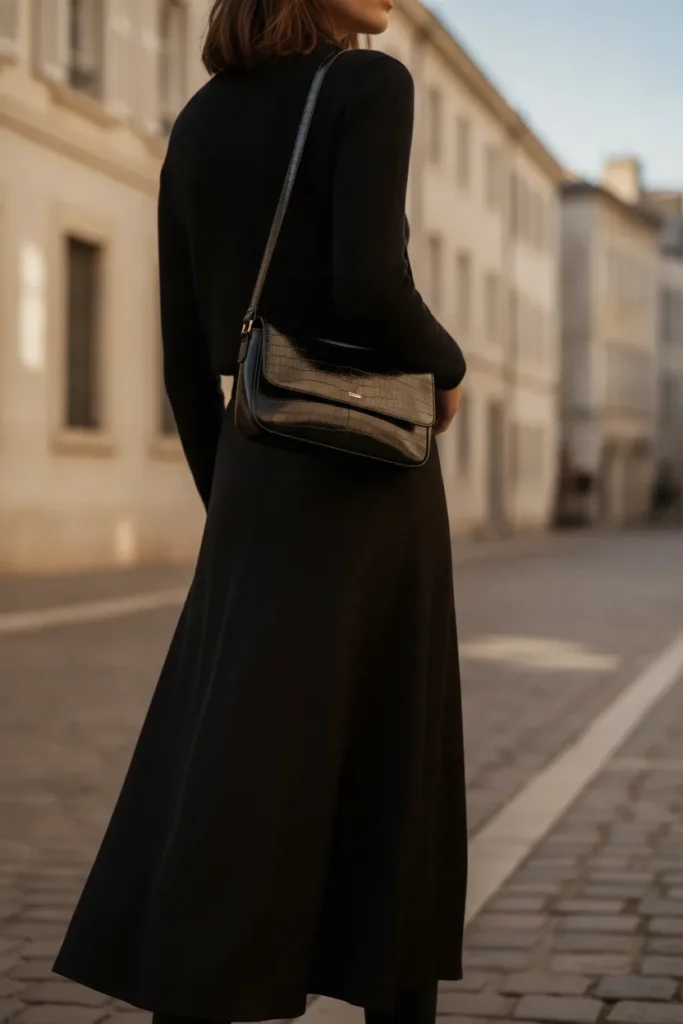
Black midi dress in a matte jersey or ponte, black knee boots or flats, a structured black bag. One piece, styled two textures. Add a belt to define the waist and change the whole silhouette.
7. The Layered Transitional
Black tee, black cardigan or vest, black wide-leg trousers, black loafers. Perfect for the shoulder seasons when mornings are 50F (10C) and afternoons hit 70F (21C).
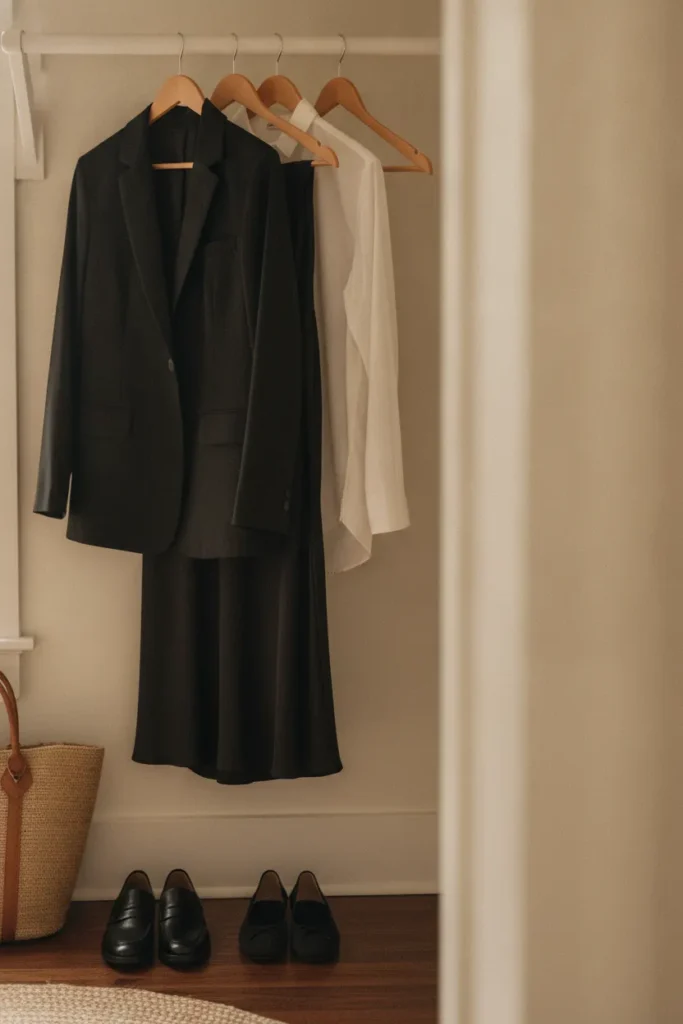
How to Look Classy in All Black
This is the question people actually search, so here is the direct answer. Classy comes from three things working together: fit, fabric, and one point of shine.
Fit first. Black is unforgiving with drape, so tailoring reads louder than it does in prints. Trousers should break cleanly, knits should skim not cling, and a blazer should sit at the shoulder. Second, lean into fabrics that hold their shape, wool, ponte, silk, structured cotton, over thin jersey that pills and fades. Third, give the eye one deliberate finish: a leather belt, a gold hoop, a polished loafer.
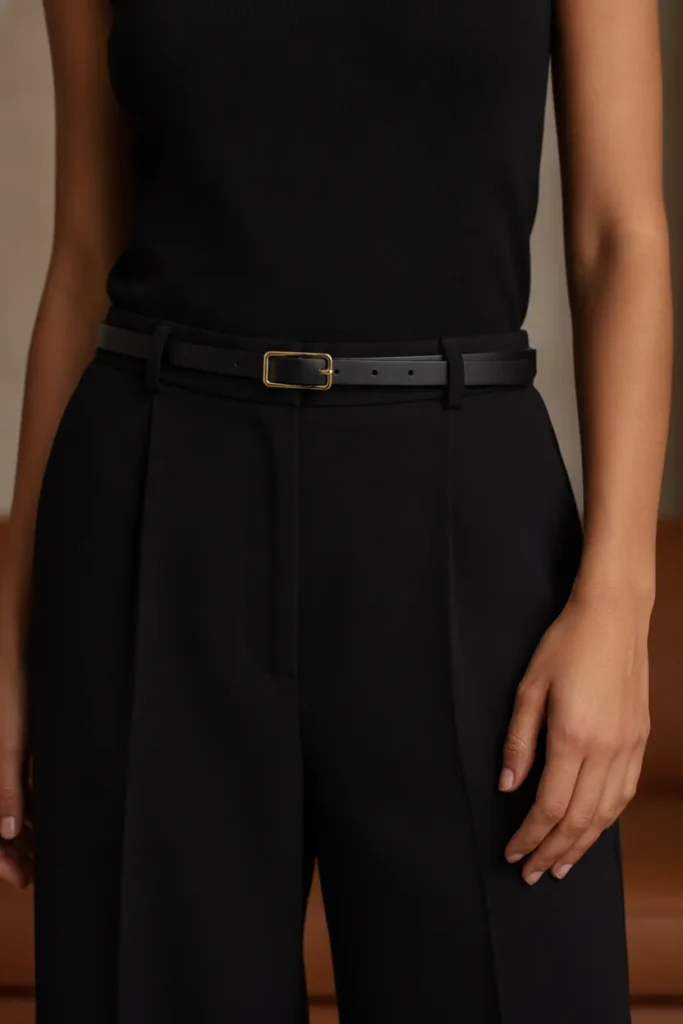
That last point matters more than people think, which is why the right belt earns its hanger space fast. A single well-chosen belt turns three flat black outfits into three defined ones, and if you want help choosing, here are the best belts for a capsule wardrobe.
The One Small Twist That Kills the Boring
If you take one thing from this, take this. Add a single non-black accent and the entire outfit shifts from safe to considered. Not a whole colorful layer, just one small hit.
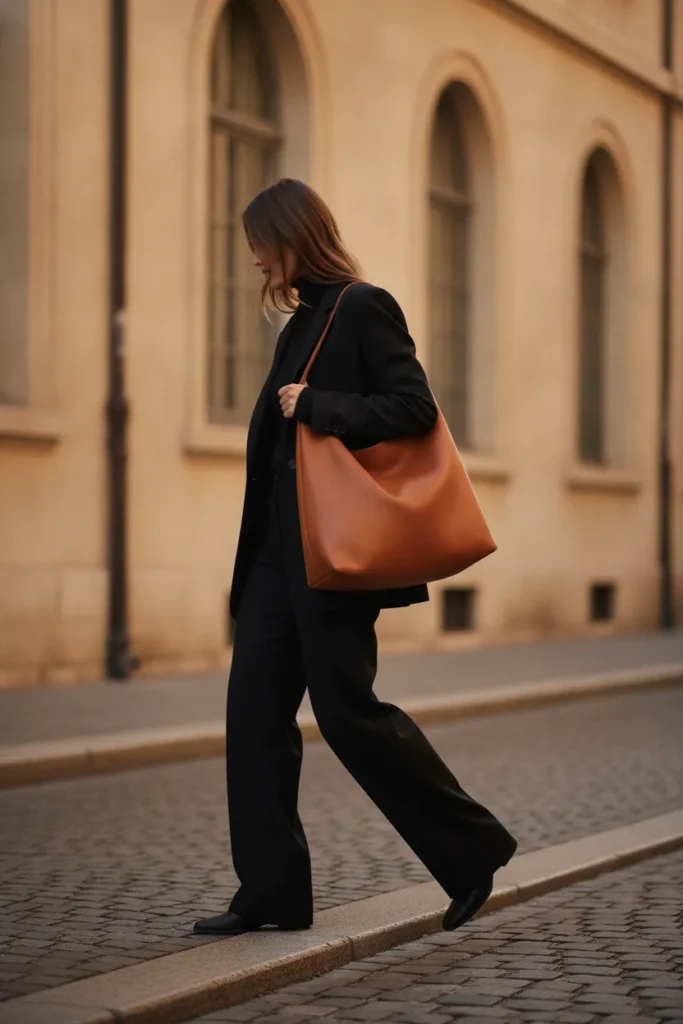
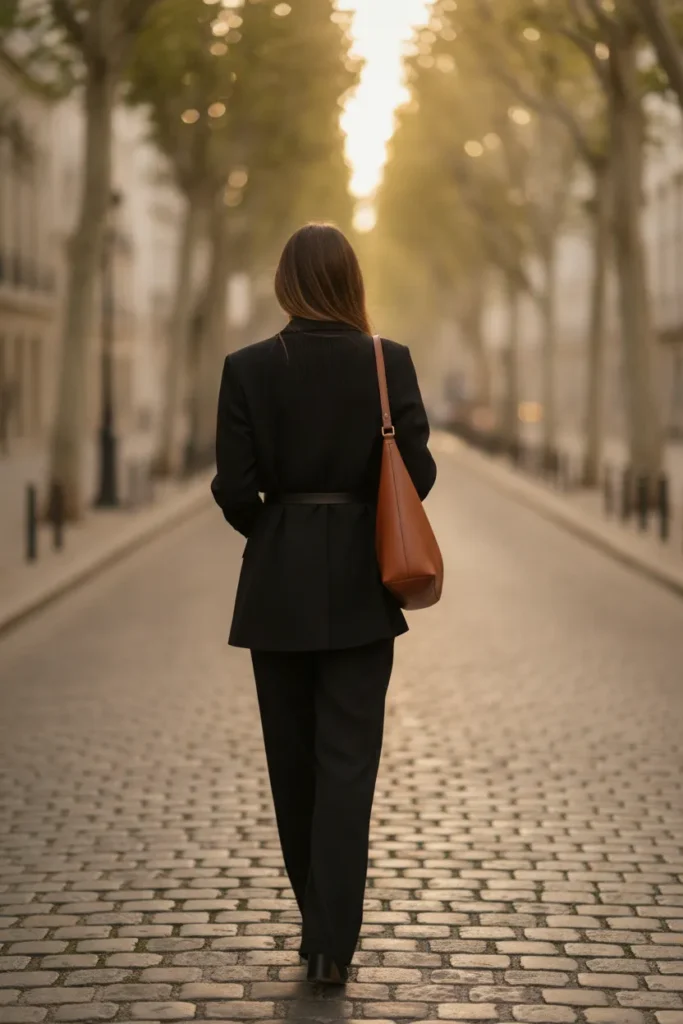
A cognac leather bag. A camel coat left open over the black. Gold jewelry. A tan loafer instead of black. Warm brown tones especially flatter against black, which is part of why so many pinned looks pair black with a cognac coat. If you are not sure which warm shades suit you, your warm autumn color palette is a good place to start before you buy.
Even keeping it strictly monochrome, you can borrow the logic of a color system: pros treat black as the neutral base that everything else answers to, the same way a house palette works around one anchor tone (see how Pantone frames color relationships). Black is your anchor. The twist is your accent.
Dressing All Black for Your Body and Proportions
Black is often called slimming, but that is lazy advice. What black actually does is create an uninterrupted vertical line, and you can use that line to work with your proportions rather than hide them.
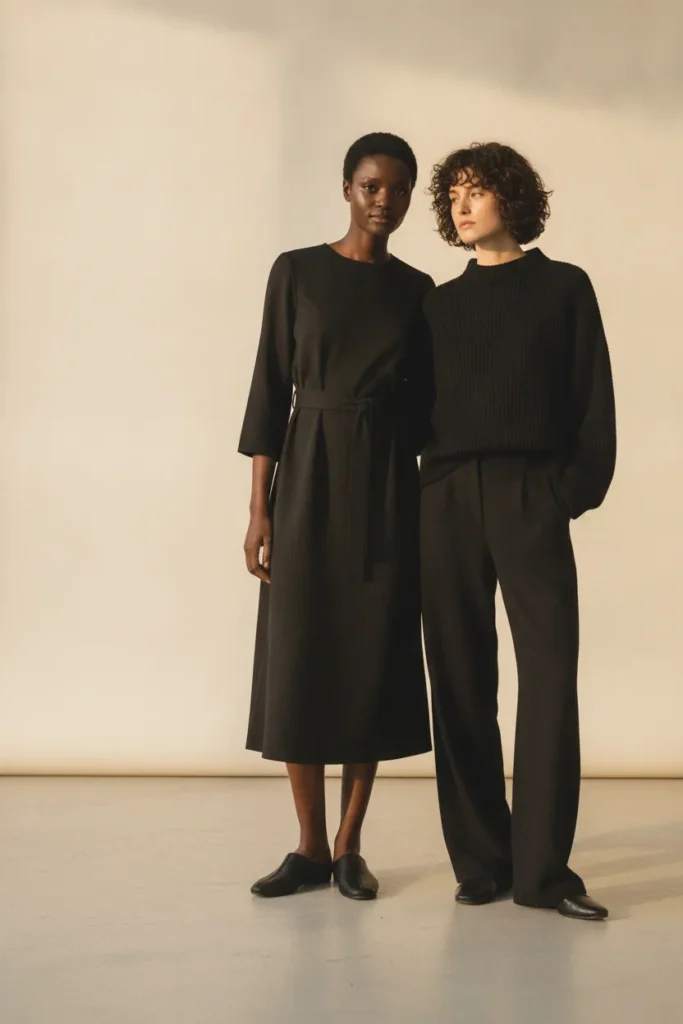
If you are petite (5’4″ and under), keep the tones consistent top to bottom so the line stays unbroken, and let the shoe blend in to add visual height. If you are curvy or hourglass, define the waist with a belt so the column does not read boxy. If you are tall (5’9″ and over), you can break the outfit at the waist with a contrasting texture and still keep length on your side. The goal is what works with your shape, not what disguises it.
Fabric and Care: Keeping Your Black Actually Black
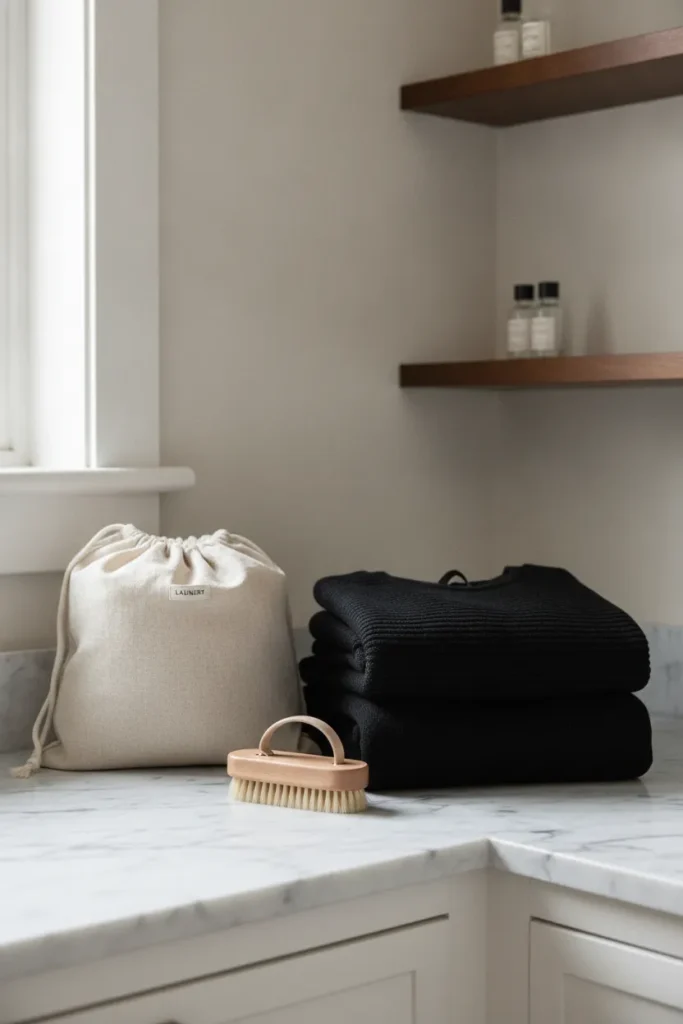
The fastest way to make all black look cheap is faded, linty, pilled black. Fresh black reads expensive; gray-tinged black reads worn out.
Wash black inside out, cold, and less often than you think. Skip the dryer for knits and let them lay flat. A fabric shaver on your matte pieces before you leave the house does more than any styling trick. For wool and finer knits, following the fiber’s actual care guidance keeps the color deep and the shape intact (the Woolmark care guide is a reliable reference). Treat the fabric well and a good black piece easily earns its cost per wear over years.
Shopping the Black Capsule (Real US Retailers)
You do not need a closet full of black to do this. A tight set of pieces in different textures covers dozens of outfits. Prices are ranges and shift, so confirm current numbers before you buy.
- Matte anchor trousers: Everlane or Quince wide-leg, typically $50 to $98 . Old Navy for a mass-tier start around $30 to $45 , with a lighter fabric trade-off.
- Fine knit: Uniqlo or J.Crew, roughly $30 to $90.
- Silk or satin layer: Quince washable silk, around $50 to $80; a mid-tier alternative to a $200-plus designer slip.
- Structured blazer: Mango, Banana Republic, or Massimo Dutti, about $90 to $200 .
- Leather bag as your accent: Madewell or Sezane, roughly $150 to $320 .
Build the base first (trousers, knit, tee), then add the light-catcher. That order keeps you from over-buying.
Putting It All Together
The difference between boring black and expensive black is never the amount of black. It is texture, fit, and one small point of interest. Follow the texture math, add your twist, keep your pieces truly black, and getting dressed in the morning stops being a gamble.
Frequently Asked Questions
How do you look classy in all black?
Focus on fit, fabric, and one point of shine. Tailored pieces that skim the body, fabrics that hold their shape like wool or silk, and a single polished finish (a leather belt, gold hoops, or a clean loafer) do more than any trend.
What is the 3-3-3 rule for outfits?
It is a styling challenge where you pick three tops, three bottoms, and three pairs of shoes, then build a run of outfits only from those nine pieces. For all black it works beautifully, because a tight set of textures mixes into far more looks than nine.
What is the psychology of wearing all black?
Black is widely read as confident, focused, and put-together, which is part of why it feels like armor on a busy day. It also simplifies decisions, so many people wear it to cut morning decision fatigue.
Is an all black outfit cute?
Absolutely, when it has contrast. Flat, same-texture black can look severe, but mix a soft knit with a bit of sheen and add one warm accent and it reads chic and approachable.
Can I wear all black to work?
Yes. Black trousers, a crisp poplin shirt, and pointed flats is a reliable office formula. Crisp cotton acts as your light-catcher so it stays sharp, not sleepy.
Does all black work in summer?
It does if you switch to lighter fabrics. Linen, cotton, and mesh in black keep the look while staying breathable, and matte-versus-airy is its own texture contrast.
How many black pieces do I actually need?
Usually 8 to 12 well-chosen pieces in different textures will generate weeks of outfits. Build the matte base first, then add a soft layer and one light-catcher.
Ready to build the rest of your capsule?
If black is your base, the next step is the handful of colors and accents that make it sing. Grab the free 30-piece capsule checklist and start dressing in ninety seconds flat, no more standing in front of a full closet with nothing to wear.
Keep reading

8 Hoodie Outfits for Plus-Size Women That Actually Look Put-Together
Your closet has a hoodie in it. Probably three. And every cold morning you reach for one and think the same thing:...

How to Style a Hoodie for Women Over 50: 8 Outfits That Work
The hoodie in your closet is probably fine. The problem is usually three inches of it you have never looked at closely....

8 Cozy Hoodie Outfits for Fall and Winter That Never Look Sloppy
Your hoodie is not the problem. The seven inches of fabric hanging off the back of your neck is the problem, and...