
Deep Winter Color Palette: Best Colors to Wear

You have opened a full closet and still felt washed out. The deep winter color palette might be the reason certain tops make your face look rested and expensive, while others leave you looking tired no matter how much sleep you got. This guide breaks down your best colors, the shades to sidestep, and how to turn all of it into a capsule you can actually wear on a Tuesday morning.
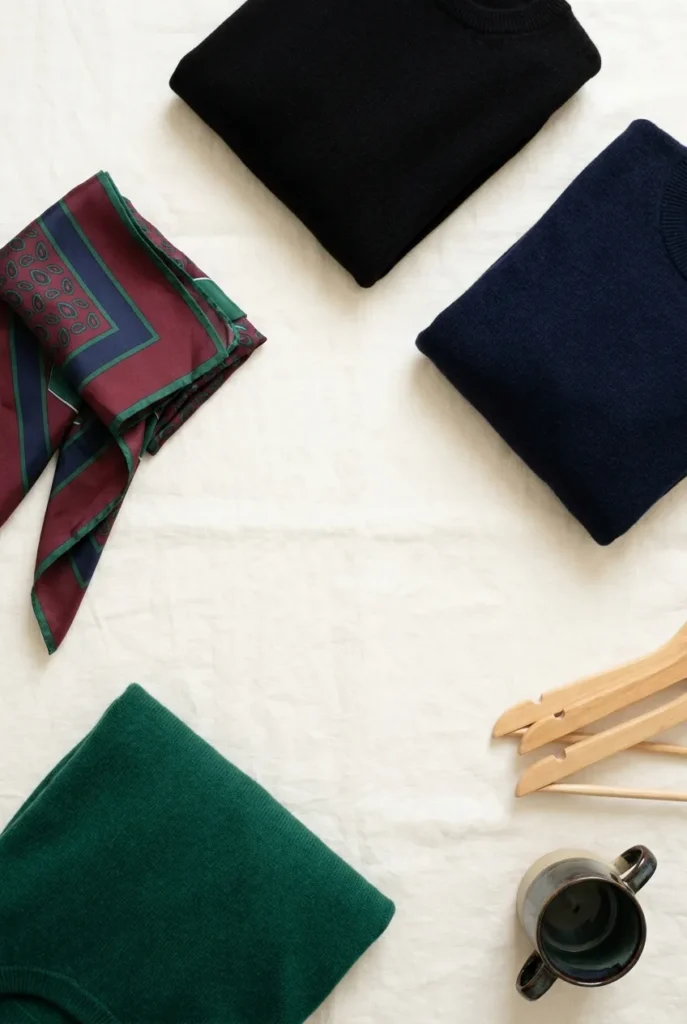
Deep winter is one of the four “winter” families in seasonal color analysis. Think of it as the season built on depth: rich, cool-leaning colors with real intensity behind them. If you feel best in shades that look almost inky, and washed-out pastels make you disappear, you are already circling this palette.
Let me give you the short version before the deep dive. Deep winters glow in true neutrals and saturated jewel tones. Beige, camel, and dusty pastels tend to fight you. Everything below is built around that one idea.
What Is the Deep Winter Color Palette?
The deep winter color palette is a set of cool-leaning, high-value colors used in seasonal color analysis to flatter people with deep, contrast-rich coloring. “Deep” refers to value, meaning the colors sit dark rather than light. “Winter” refers to temperature, meaning they lean cool rather than warm.
In practice, that gives you two things at once: darkness and clarity. Your colors are not muddy or dusty. They read clean, even when they are very dark. A deep winter emerald looks like a jewel, not like moss.
Depth is the anchor. Coolness is the direction. When you understand how color perception actually works, the “why” clicks into place: your natural contrast is high, so colors with their own built-in richness meet you where you are instead of fading against you.
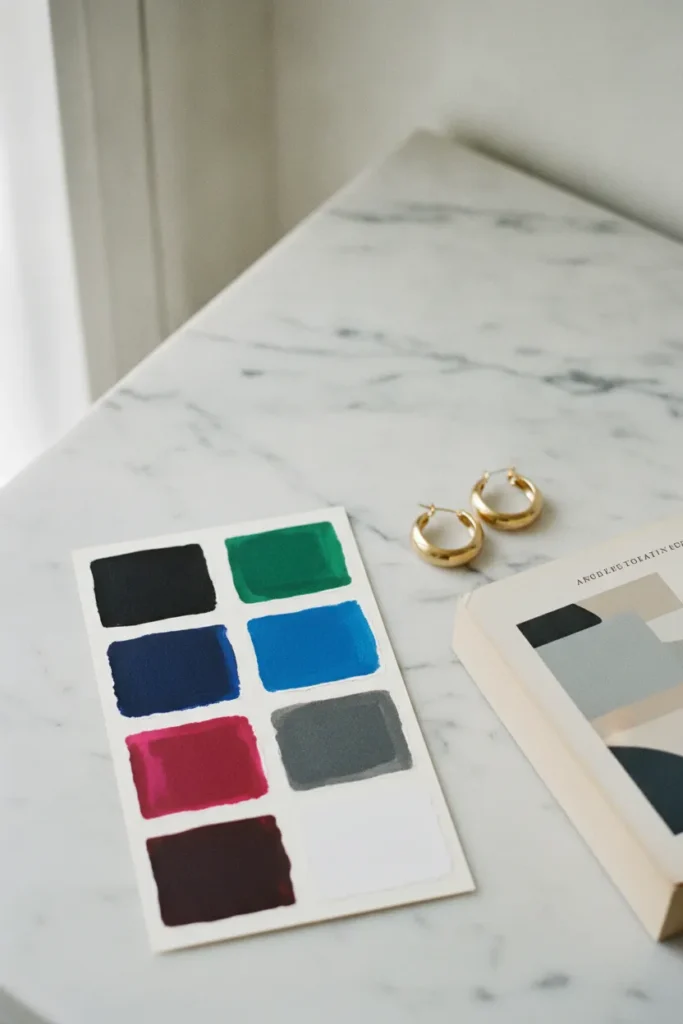
Are You Actually a Deep Winter?
Here is where people get tripped up. Deep winter borders deep autumn and true winter, so a lot of readers hover between them. A quick self-check helps before you overhaul anything.
You are likely a deep winter if pure white and true black both look sharp on you, if silver and clear gemstones suit you more than gold and amber, and if you have naturally high contrast between your hair, skin, and eyes. Dark eyes (deep brown, deep hazel, near-black) are common here.
You are probably not a deep winter if warm rust, camel, and olive make you look lit from within. That glow points you toward autumn instead, and the warm autumn color palette that makes you glow is worth a look. Cool but light and soft? You may sit closer to summer, and this guide to how to build a spring color palette for your wardrobe can help you compare the lighter, warmer end of the spectrum.
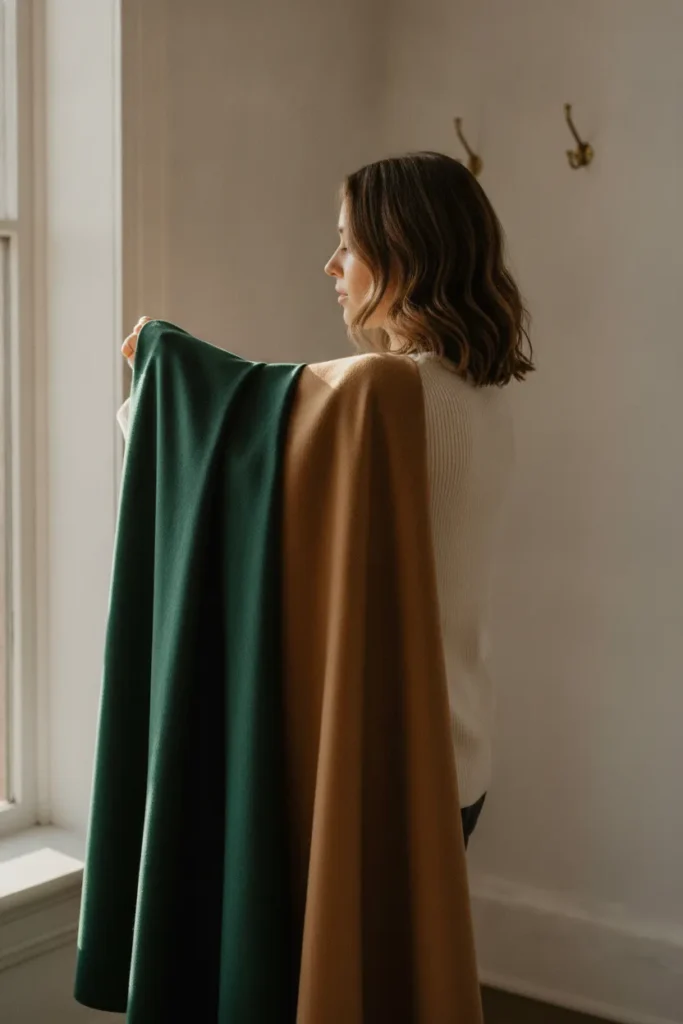
One honest caveat. Self-diagnosis gets you 80 percent of the way. Professional draping confirms the rest, especially for borderline seasons. If you land between two, test with real fabric near your face in daylight before you commit your budget.
The Deep Winter Color Map: Your Best Colors
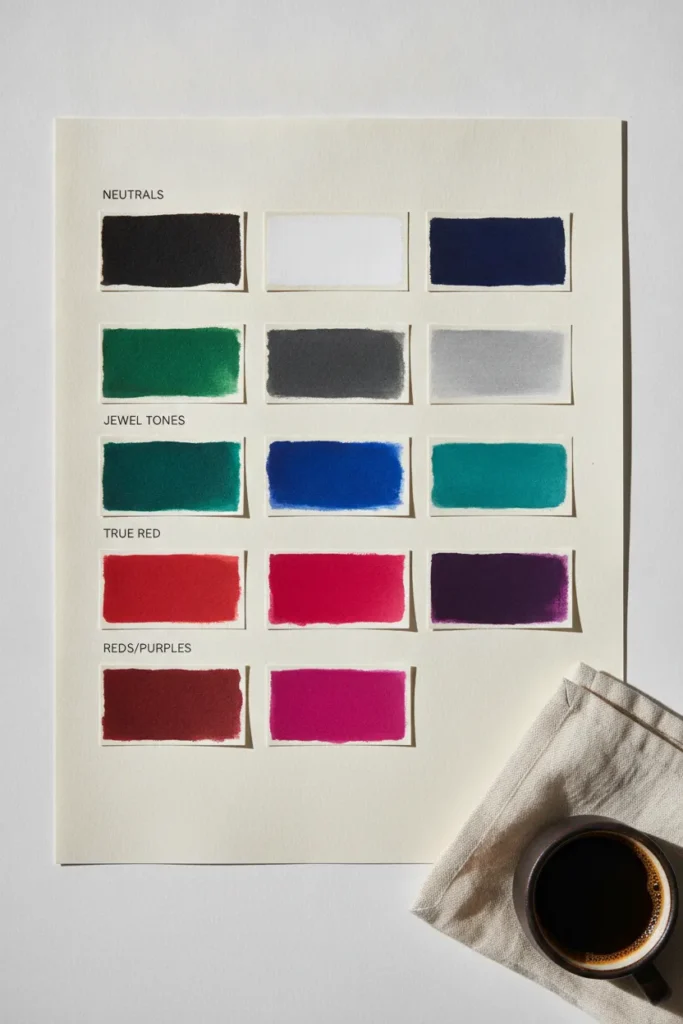
Deep winter colors sort neatly into three working groups. This is the part you can screenshot and take shopping.
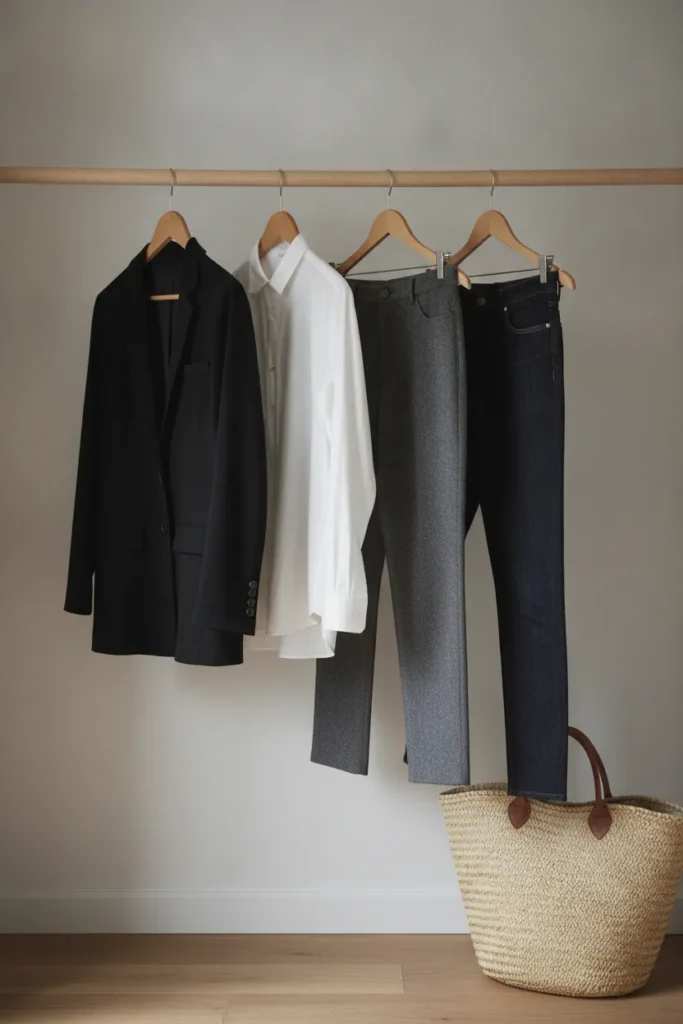
Your true neutrals: true black, pure white, charcoal, deep navy, and a cool taupe. These are your base, the pieces that earn their hanger space because they go with everything else on this list.
Your jewel tones: emerald, pine green, sapphire, cobalt, and deep teal. These are the colors that make a plain outfit look intentional.
Your reds, pinks, and purples: true red, wine, burgundy, magenta, fuchsia, and eggplant. Deep winters can wear a bold lip color and a bold coat, and both will look deliberate rather than loud.
The unifying rule: choose depth and clarity over softness. If a color looks dusty, powdery, or washed with gray, it usually reads flat on you. Reach for the version with more life in it.
Neutrals: Your Deep Winter Base
Most capsule wardrobes live or die by their neutrals, and deep winter has the best neutral toolkit of any season. You get to use true black, which many palettes cannot pull off, and it will look crisp rather than harsh.
Build your base first. A black or navy tailored blazer, a pure-white button-down, charcoal trousers, and dark denim will carry the majority of your outfits. These are the anchor pieces you reach for on autopilot.
Cool taupe and gray-based neutrals fill the gaps between your bolder colors. They keep an outfit from looking like a costume when you pair two jewel tones together.
Skip warm neutrals here. Cream, camel, and golden beige tend to pull the light off your face. Swap cream for pure white and swap camel for charcoal, and you will see the difference in a mirror immediately. “The day I traded my camel coat for a charcoal one, three people asked if I’d been on vacation.”
Jewel-Tone Accents That Do the Heavy Lifting
Neutrals are the foundation. Jewel tones are what make people ask where you shop. This is where a deep winter wardrobe stops looking safe and starts looking styled.
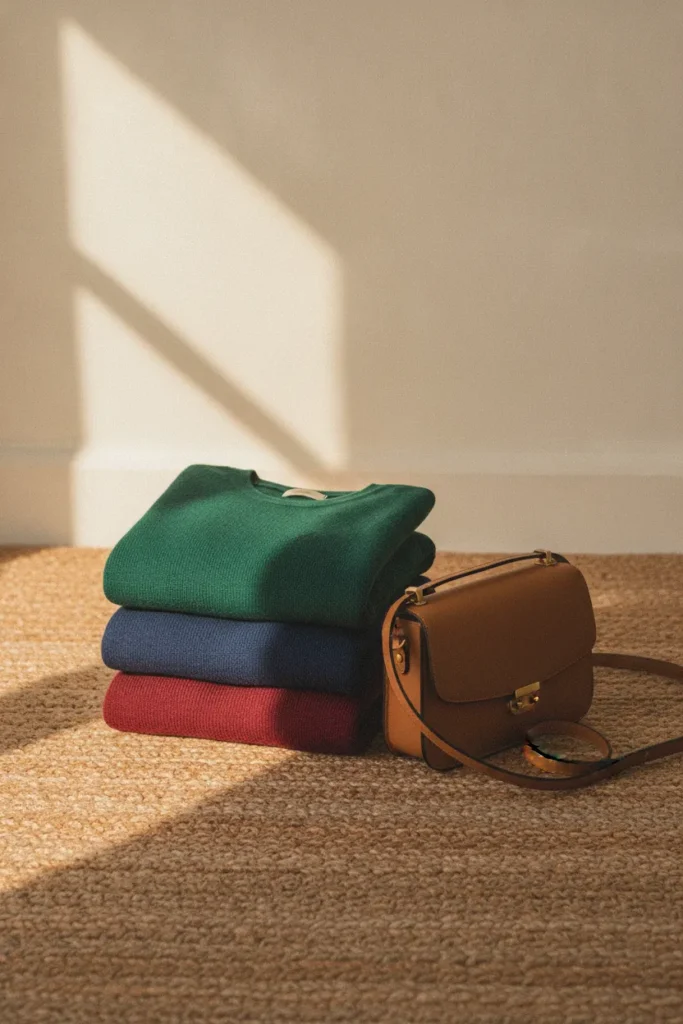
Pick two or three accent colors and commit. Emerald, sapphire, and wine are a reliable trio because they mix with each other and with every neutral you own. One emerald knit can front a dozen outfits.
The trick is proportion, not quantity. A single sapphire sweater under a black blazer reads richer than head-to-toe color. One piece, three outfits. That is the whole game.
Cost per wear rewards you here too. A well-made emerald sweater in a color that genuinely suits you gets worn on repeat, which quietly makes it one of the cheapest things in your closet over time.
Colors to Approach with Caution
No color is truly banned, but some make your job harder. Knowing them saves you from the “I spent money and have nothing that goes together” spiral.
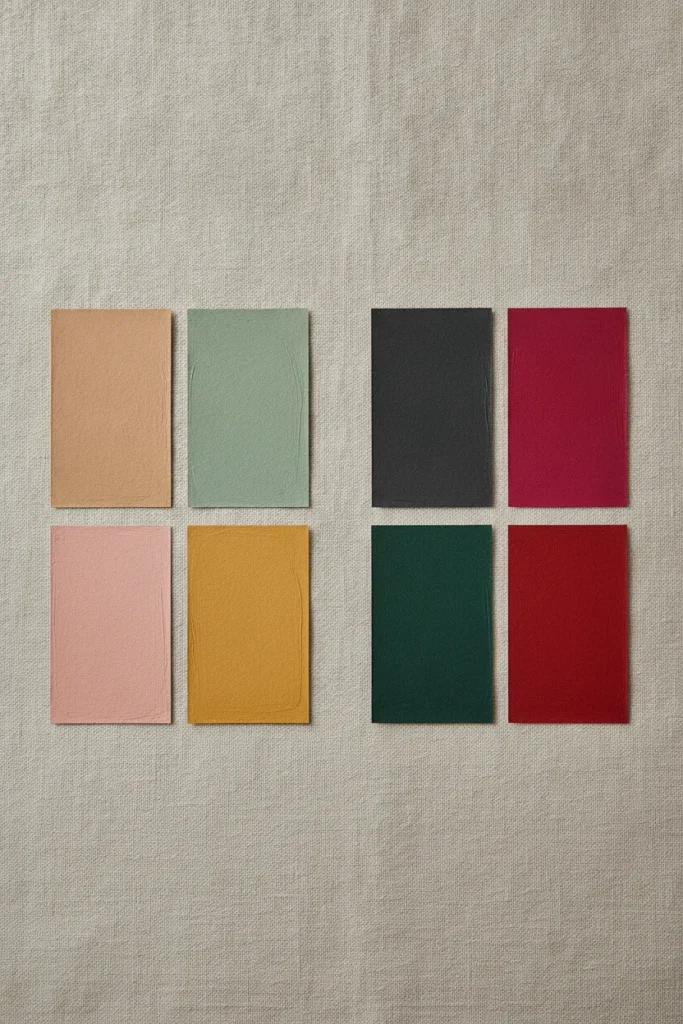
Warm earth tones are the main culprits: rust, mustard, olive, camel, and terracotta. They belong to autumn and tend to dull a deep winter down.
Soft, dusty pastels are the second: powder blue, blush, sage, and buttercream. They are lovely colors that simply lack the depth your coloring wants, so they can wash you out.
If you love a caution color, use it far from your face. Olive trousers with an emerald top keeps the winning color where it counts, near your jaw and eyes, while you still get to wear the shade you like.
Building a Deep Winter Capsule Wardrobe
Here is the part the color-analysis sites skip. Knowing your colors is step one; building a wardrobe you can grab in ninety seconds is the point.
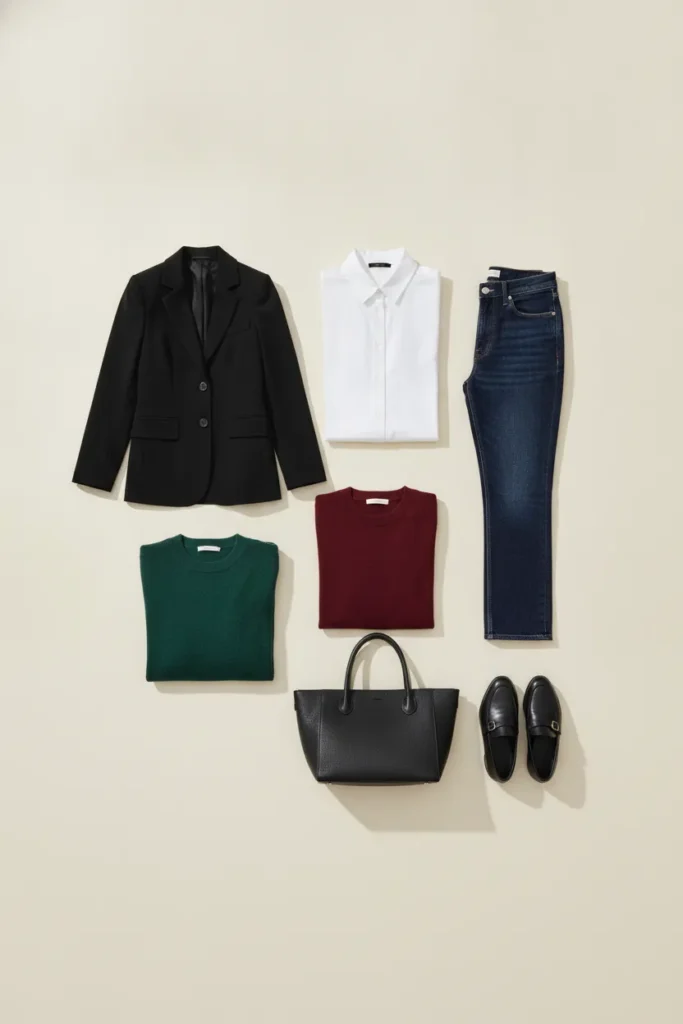
Start with a neutral base of roughly 8 to 12 pieces, then layer in 4 to 6 jewel-tone accents and a couple of statement items in wine or true red. That ratio keeps everything mixing.
A workable US starting point, with price ranges to confirm at purchase:
- Tailored blazer, black or navy: J.Crew or Banana Republic, usually $130 to $180 current price]. Dupe under $80: Old Navy or H&M in a similar cut, with a lighter fabric weight as the trade-off.
- Pure-white button-down: Uniqlo or Everlane, usually $50 to $90 .
- Emerald or sapphire fine-knit sweater: Quince or J.Crew, usually $50 to $110 .
- True-red or wine knit: Madewell or Banana Republic, usually $70 to $130 .
- Dark straight-leg denim: Madewell jeans typically run $98 to $138 .
- Black leather crossbody or tote: Quince or Madewell, usually $90 to $200 .
For winter specifically, your coat does the most visible work, so let it be a true neutral you love. If you want outfit inspiration beyond color theory, these cozy winter outfits that still look put-together show the neutral-plus-jewel-tone formula in action.
Deep Winter Outfit Formulas (The 60-30-10 Split)
Outfit math takes the guesswork out of mornings. The 60-30-10 split means roughly 60 percent neutral base, 30 percent secondary color, and 10 percent accent. For a deep winter, that translates into clean, high-impact looks.
Here is a screenshot-ready starter set. Save it, then swap pieces to fit your closet.
| Formula | 60% Base | 30% Secondary | 10% Accent | Wears best for |
|---|---|---|---|---|
| The Polished Everyday | Charcoal trousers | White button-down | Emerald flats | Work, errands |
| The Quiet Statement | Black blazer + black denim | Sapphire knit | Silver hoops | Dinner, meetings |
| The Weekend Cool | Dark denim | White tee | Wine crossbody | Casual, weekend |
| The Coat Moment | Navy coat | Charcoal knit dress | True-red lip | Cold days, events |
Notice the accent almost always sits near the face or the hand: a lip, an earring, a bag, a shoe. That is deliberate. Your best colors work hardest close to your jaw and eyes.
Read these aloud in your head and they should sound like real outfits, not a formula. That is the test.

Deep Winter Makeup and Accessories
Your palette does not stop at clothes. Makeup and metals either extend the effect or quietly undo it.
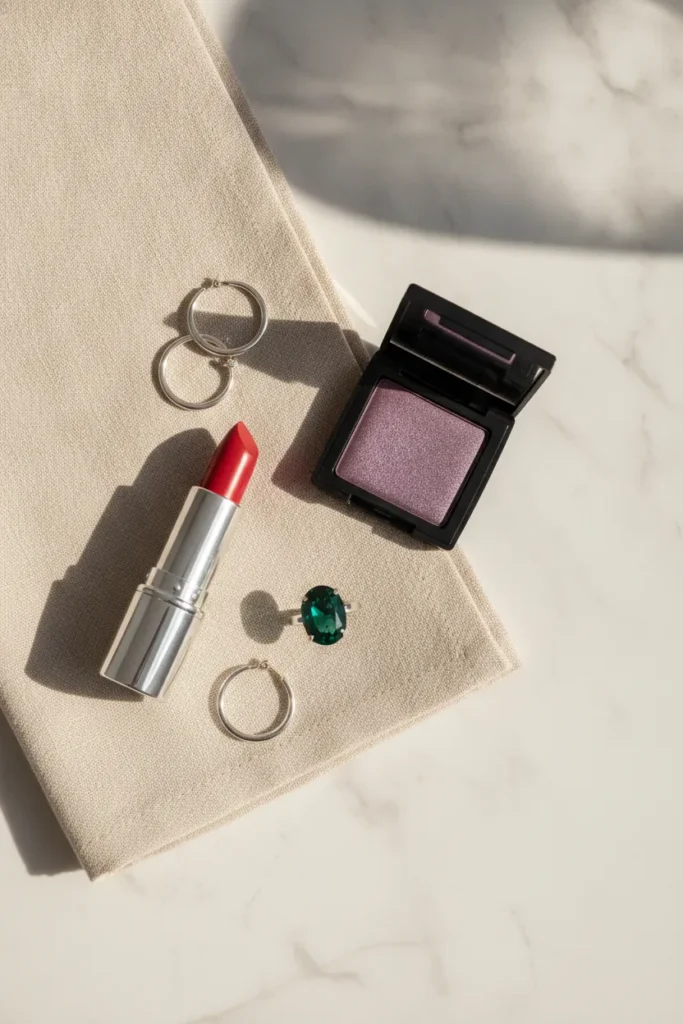
For makeup, reach for depth with a clean edge: a true red or berry lip, a plum or espresso eye, a cool-rose blush. If a shade turns ashy or too orange on you, the undertone is off, not the intensity.
For metals, silver, white gold, and platinum echo your coolness better than yellow gold. Clear or deeply colored gemstones (a garnet, a sapphire) suit you more than amber or turquoise.
Bags and shoes are easy: black and deep espresso leather anchor everything, and a single wine or emerald piece pulls your palette together without trying. To understand how professionals standardize color families like these, the work of the Pantone Color Institute is a useful rabbit hole.
Frequently Asked Questions
Is the deep winter color palette cool or warm?
Cool-leaning. Deep winter sits on the cool side of the color wheel, though it can read as neutral-cool rather than icy. When in doubt, choose the version of a color with more blue or clarity in it rather than warmth.
What are the best colors for a deep winter to wear?
True black, pure white, deep navy, charcoal, emerald, sapphire, true red, wine, and magenta. These give you a full base plus enough jewel-tone accents to build dozens of outfits.
What colors should a deep winter avoid?
Warm earth tones (camel, rust, mustard, olive) and soft dusty pastels (blush, sage, powder blue) are the trickiest. If you love them, wear them away from your face, like on trousers or a skirt.
Does the deep winter palette work for brown skin?
Yes. Deep winter spans a wide range of depths and looks striking on deep skin tones, where saturated jewel tones and true red really shine. Undertone matters more than depth, so cool-neutral undertones are the signal.
What is the difference between deep winter and true winter?
True winter is the coolest, brightest winter. Deep winter is the darkest, with slightly more warmth allowed. If icy brights suit you best, you lean true winter; if the darkest jewel tones suit you best, you lean deep.
Can deep winters wear gold jewelry?
Silver, white gold, and platinum are the most natural fit. You can wear a deep, cool-toned gold occasionally, but bright yellow gold tends to fight the palette.
How many pieces do I need for a deep winter capsule?
Usually 8 to 12 neutral basics plus 4 to 6 jewel-tone accents is plenty to start. The point is fit and color, not volume, so buy fewer and wear more.
Conclusion
Your colors are not a rulebook, they are a shortcut. Once your closet leans into deep winter’s neutrals and jewel tones, getting dressed stops feeling like a negotiation and starts taking ninety seconds. Pick your base, choose two or three accents you love, and let the caution colors go. If you want the printable version to shop from, grab the free 30-piece capsule checklist and build your deep winter wardrobe one confident piece at a time.
Keep reading

How to Wear All Black Without Looking Boring
You put on all black because it is easy. Then you catch yourself in the mirror and it looks like you gave...

Warm Autumn Color Palette: The Colors That Make You Glow
You have stood in front of a full closet and felt washed out anyway. The warm autumn color palette is often the...

How to Build a Spring Color Palette for Your Wardrobe
Your closet is full. You still feel like you have nothing to wear. And every spring, the same thing happens: you buy...