
Romantic Capsule Wardrobe: Soft, Feminine Pieces You’ll Actually Wear
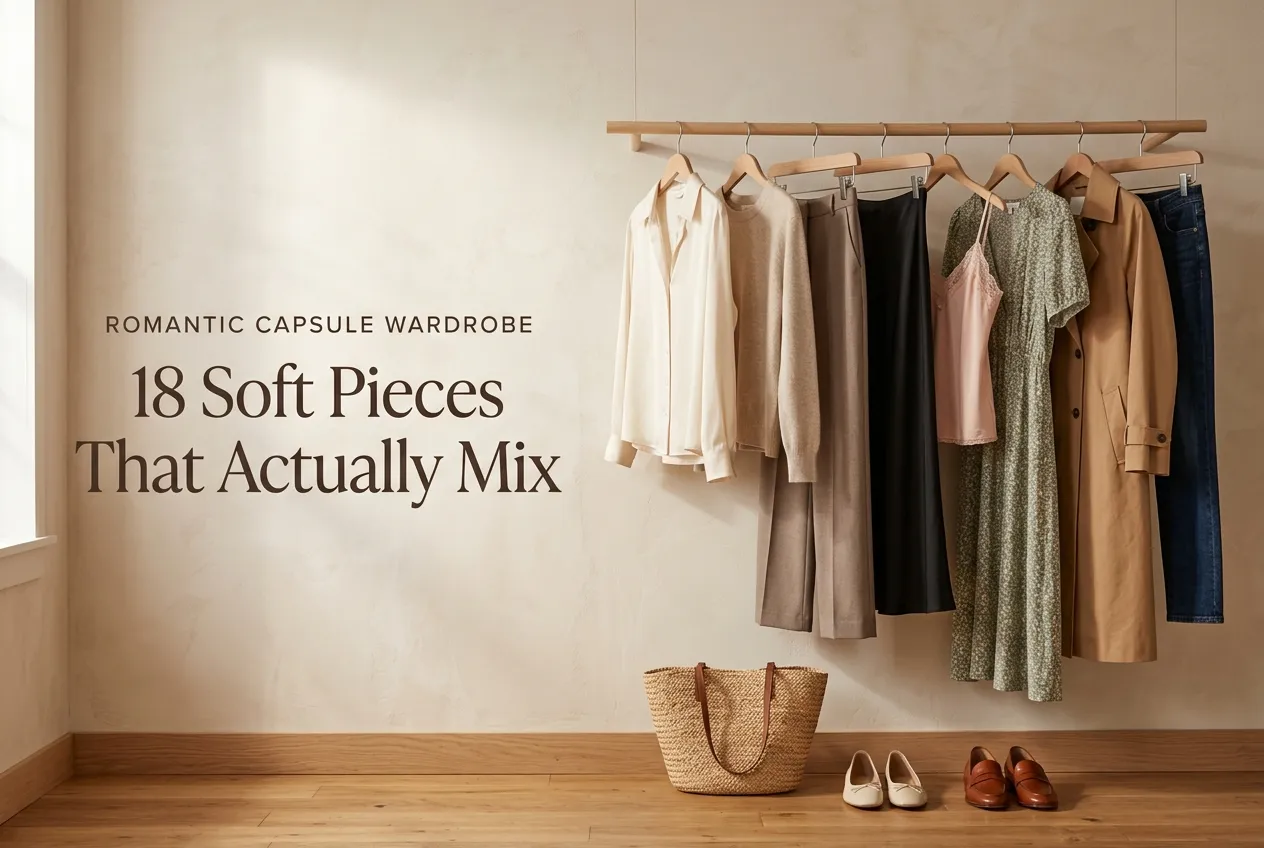
A romantic capsule wardrobe sounds like a contradiction the first time you hear it. Capsules are disciplined. Romantic dressing is all lace trim, floral print, and a skirt that moves when you turn. Put them in the same closet and one of them usually loses. Most of the time it’s the romantic half, quietly, over about six months, until you’re back in the same jeans and gray tee wondering where the soft version of you went.
It doesn’t have to go that way. The problem was never that romantic pieces are impractical. It’s that nobody gives you a ratio.
(Price ranges below are approximate US retail as of mid-2026 and move with sales and seasons. Check before you buy.)
What a Romantic Capsule Wardrobe Actually Is
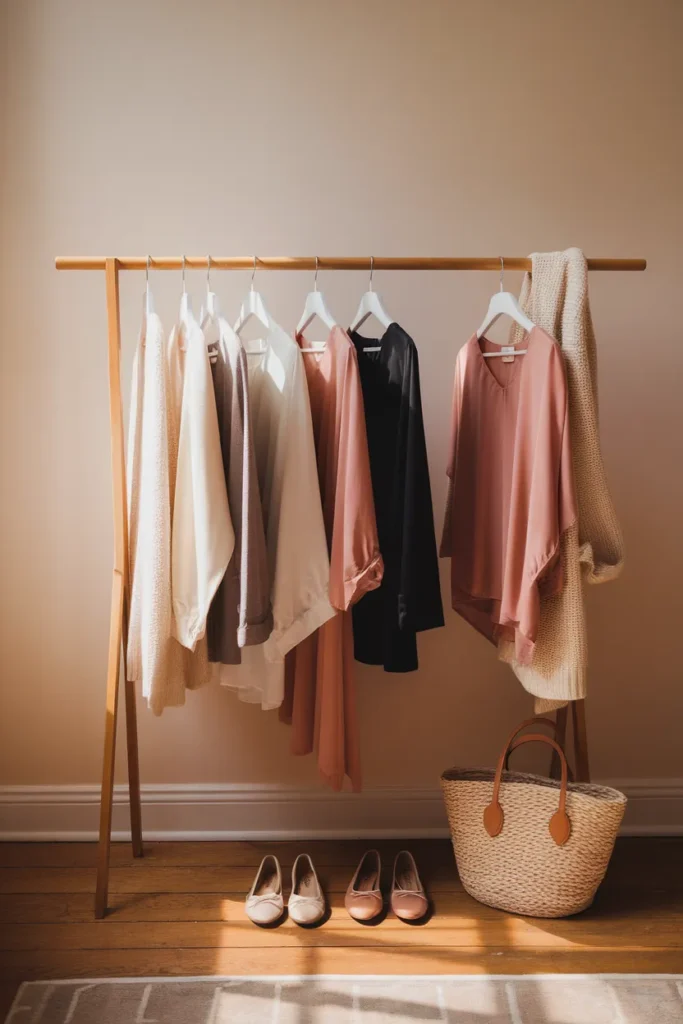
Strip the aesthetic down and romantic dressing is built on three things: softness in the fabric, movement in the silhouette, and definition at the waist. Everything else is decoration.
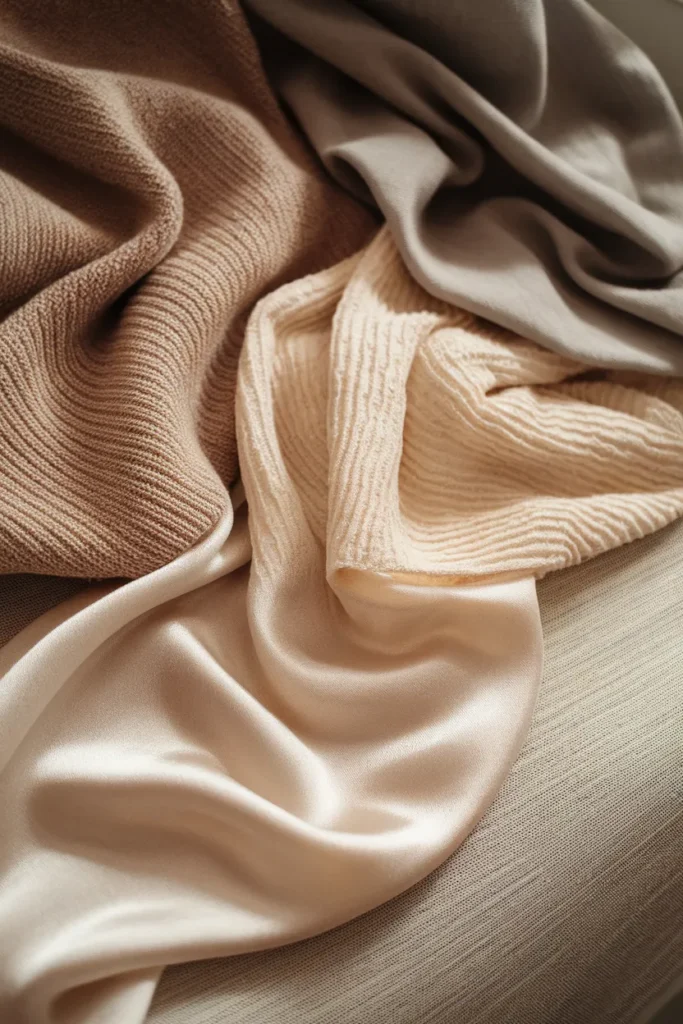
That’s the useful part. Once you know the aesthetic lives in fabric, movement, and waist, you stop shopping for florals and start shopping for behavior. A plain ivory blouse in washed silk reads more romantic than a stiff polyester one covered in roses. Drape does the work. Print just announces the intention.
Which means a romantic capsule is not a smaller version of a floral closet. It’s a small set of pieces chosen for how they hang, cut with a defined middle, in fabrics that catch light instead of blocking it.
Romantic style versus the Kibbe Romantic
Search this topic and you’ll hit two different systems wearing the same word, so let’s separate them once.
Romantic style personality is about taste. You’re drawn to soft fabrics, pretty detail, a defined waist, and you’d rather look put together than look comfortable. It says nothing about your measurements.
Kibbe Romantic is a body-type category from a specific styling framework, describing a soft, curved frame with rounded facial features.
You can have romantic taste in any body. This article is written for the first one, because taste is what actually determines whether a piece gets worn. Every fit note here is framed around proportion, not category.
Why Most Romantic Closets Quietly Stop Working
Here is the failure, and it’s almost always the same one.
You buy the pretty things. The eyelet blouse, the tiered midi, the puff-sleeve top, the floral wrap dress, the lace-trim camisole. Each one is lovely on the hanger. Then you go to get dressed and realize the eyelet blouse fights the tiered skirt, the puff sleeve doesn’t sit under any jacket you own, and the floral dress only goes with itself.
You didn’t buy badly. You bought too many statement pieces and almost nothing to rest them against.
Detail needs quiet next to it. A ruffle reads elegant beside a clean trouser and reads costume beside another ruffle. That’s the whole diagnosis, and once you see it you can’t unsee it in your own closet.
The 70/30 Softness Split
This is the fix, and it’s the piece of outfit math the rest of the internet leaves out.
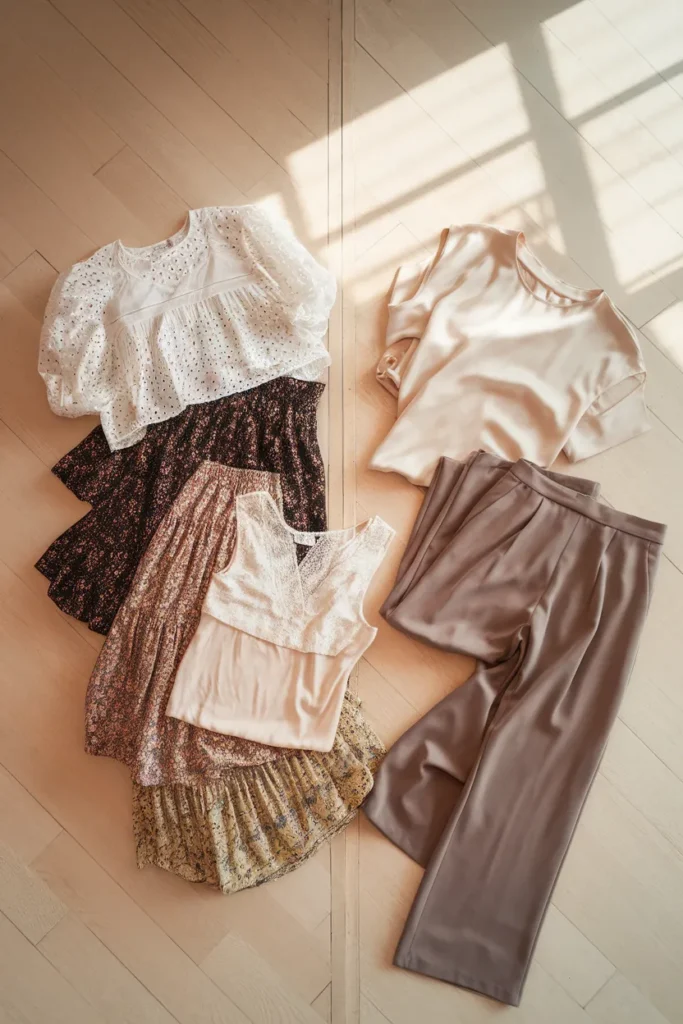
Seventy percent of your romantic capsule should be quiet. Thirty percent should carry the detail.
Quiet pieces are clean-lined, solid-colored, and structurally simple. Silk shell, plain knit, straight trouser, unfussy midi skirt. They’re the pieces that make everything else look intentional.
Detail pieces are the ones you fell in love with. Lace trim, puff sleeve, floral print, ruffle, sheer overlay, bow neck.
In an eighteen-piece capsule that’s roughly twelve quiet, six detail. Every outfit then pairs at most one detail piece with quiet pieces around it, and suddenly the same wardrobe that produced four workable looks produces thirty.
| Split | 12-piece capsule | 18-piece capsule | 24-piece capsule |
|---|---|---|---|
| Quiet (70%) | 8 pieces | 12 pieces | 17 pieces |
| Detail (30%) | 4 pieces | 6 pieces | 7 pieces |
| Detail per outfit | 1 max | 1 max, 2 if one is small | 2 max |
Screenshot that. It’s the only rule in this article you actually need to remember.
One clarification worth making, because it trips people up: quiet does not mean boring. A quiet piece can be cream cashmere, or a bias-cut satin skirt, or a trouser in a fabric with real drape. Quiet describes the amount of visual information, not the amount of beauty.
Start With Seven Quiet Pieces
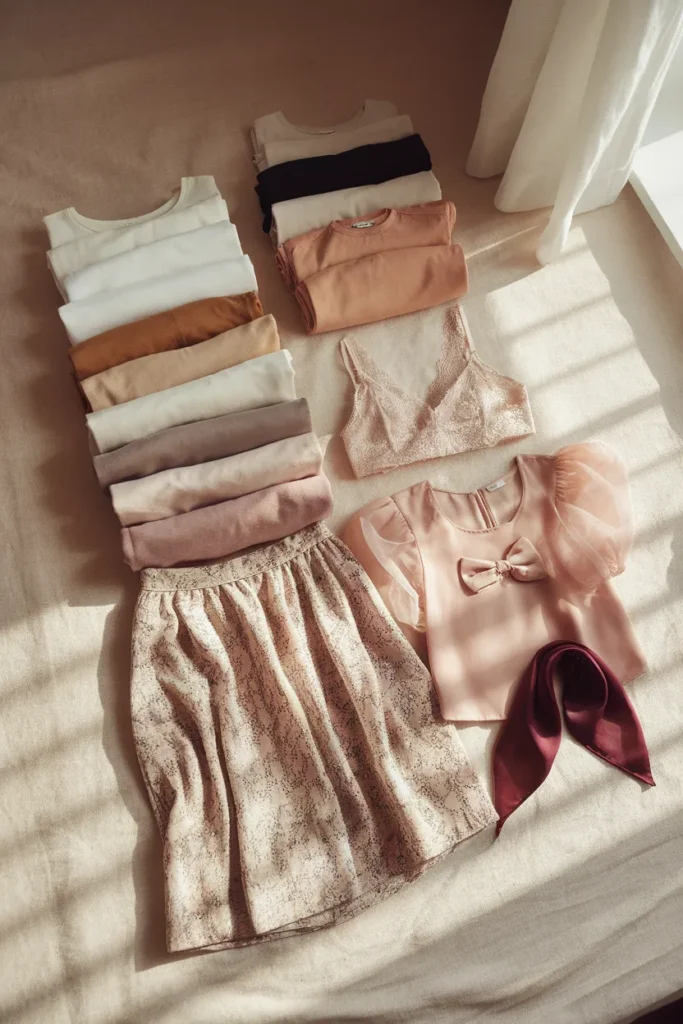
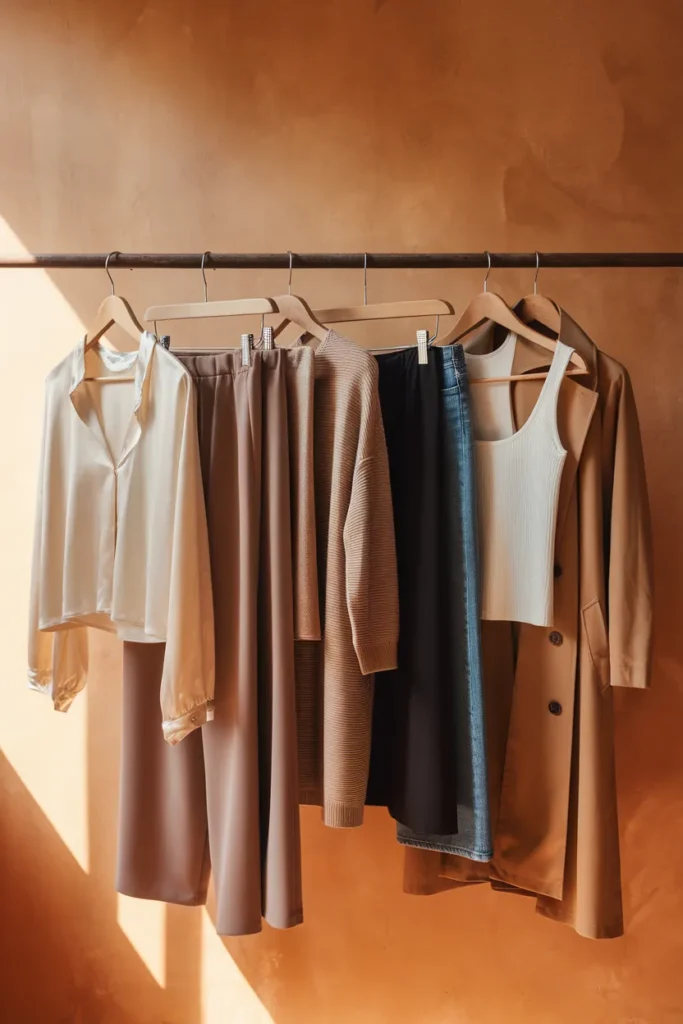
Build the base before you add anything pretty. These seven carry roughly eighty percent of your outfits and none of them will date.
- Ivory or cream silk-blend blouse. The single hardest-working romantic piece there is. Long sleeve, so you can push them up. Uniqlo runs around $40 to $50, Quince sits near $50 to $70, Everlane and Madewell land around $90 to $130.
- Wide-leg trouser in a drapey fabric. Not stiff suiting. You want fabric that moves when you walk. Old Navy from about $35, Banana Republic around $90 to $130.
- Fine-gauge knit in oat or cream. Merino or a merino blend so it sits close without bulk. Uniqlo around $40 to $60, Quince cashmere often $50 to $80, J.Crew from about $90.
- Bias-cut midi skirt, solid. Satin, silk blend, or a soft crepe. This is the piece that turns any plain top into an outfit. Roughly $60 to $150 across the mid tier.
- Straight or slim dark-wash jean. Your bridge between romantic and real life. Madewell typically runs $98 to $138, Gap and Old Navy cover $40 to $70.
- Soft trench or unstructured coat in camel or stone. Look for a belt rather than a buckle-heavy military build. Mid tier around $150 to $250.
- Fitted white tee or ribbed tank. Boring on paper, essential under every open blouse and inside every skirt you own. Under $30 almost anywhere.
The palette matters as much as the pieces. If your seven basics don’t talk to each other, nothing you layer on top will save the outfit, and it’s worth learning how to pair neutral colors so nothing looks flat before you buy a single detail piece.
A fit note across all seven: check the shoulder seam and the rise before you check the size on the tag. Sizing varies wildly between US brands, and a blouse that sits correctly at the shoulder in a 12 will always look better than one that technically fits in a 10.
Six Detail Pieces That Earn Their Hanger Space
Now the fun part, kept deliberately short. Six is enough. Six is genuinely enough.
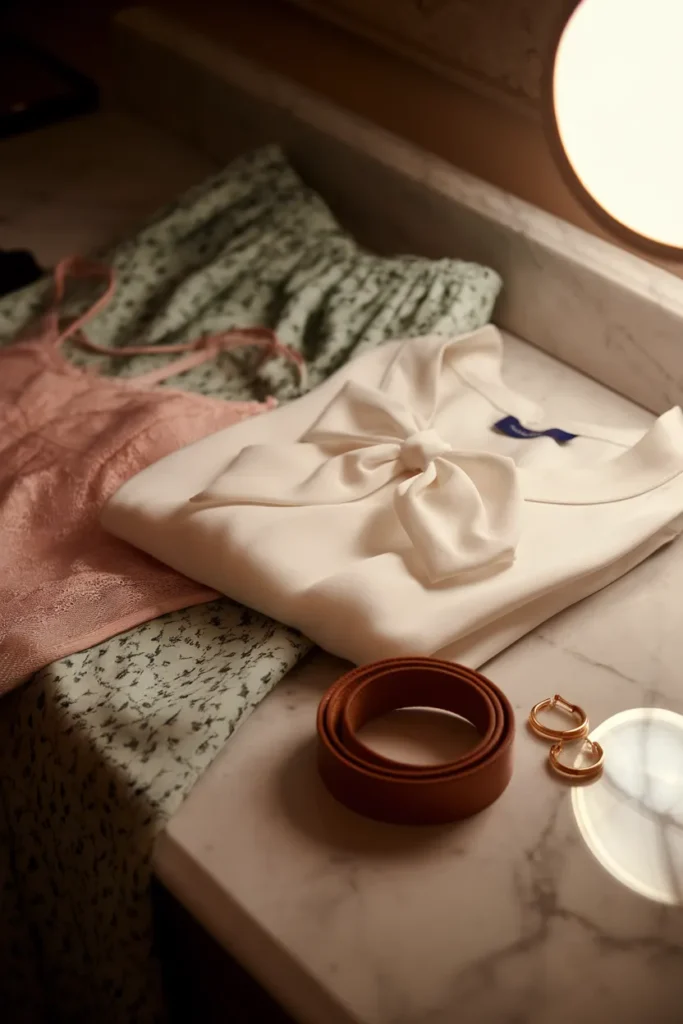
- A blouse with one romantic feature. One. A bow neck or a puff sleeve or a lace trim, not all three. Sezane sits around $120 to $180, Abercrombie and Anthropologie often land $70 to $120.
- A floral midi skirt or dress in a small, muted print. Small print reads elegant. Large print reads seasonal and you’ll retire it in a year.
- A lace-trim or satin camisole. Wears solo in summer, layers under every knit and blazer the rest of the year. Around $30 to $90.
- A soft cardigan you can wear as a top. Buttoned all the way up with a skirt, it becomes the outfit. Quince and Uniqlo cover $40 to $80, J.Crew from about $90.
- One textured piece for evening. Velvet, a subtle jacquard, a fine crepe with a drape. This is the piece that makes a $40 skirt look expensive.
- A belt that actually defines the waist. Genuinely the highest-leverage sub-$60 purchase in this entire capsule. It converts every straight silhouette you own into a romantic one, and choosing well matters more than people expect, which is why it’s worth reading up on the belts that actually define a waist before buying.
On price: if a contemporary silk blouse runs $250 and you’d wear it twelve times a year for four years, that’s under $6 a wear. The same math on a $70 polyester version worn twice before it pills is $35 a wear. The expensive one was cheaper. That said, if $250 isn’t in the budget, a washed silk blouse from the mid tier at $90 to $130 gets you most of the way, and Uniqlo’s rayon versions near $40 give you the drape at the cost of some longevity.
Dresses Are the Shortcut Nobody Mentions
Every capsule guide treats dresses as an afterthought. For a romantic wardrobe that’s backwards.
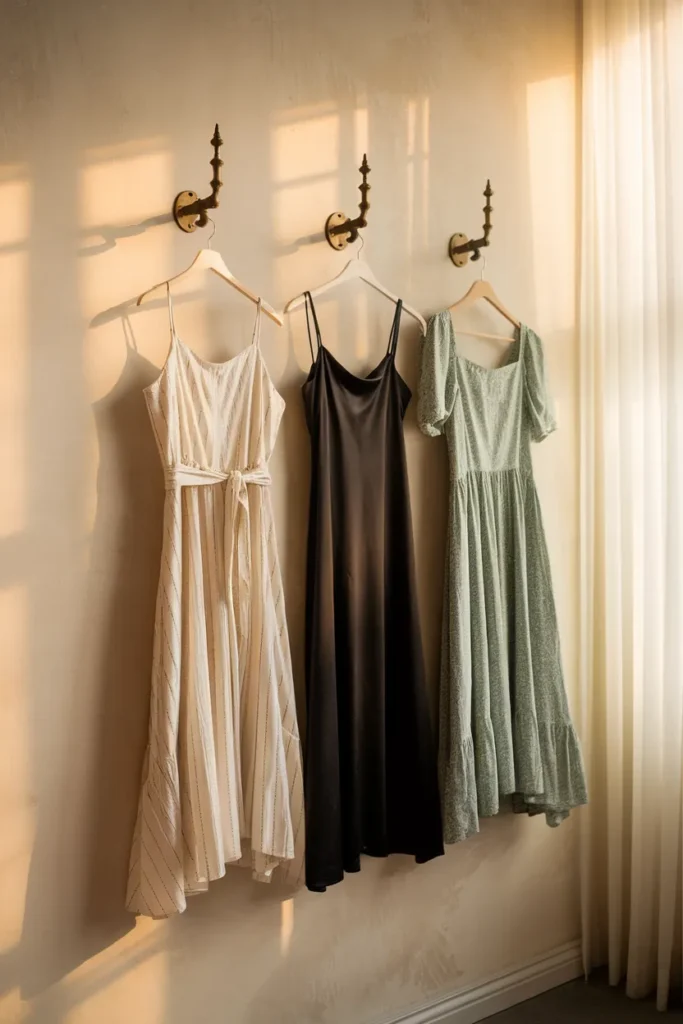
A dress is a finished outfit that requires zero coordination. It’s also, structurally, the easiest place for the aesthetic to live: fabric, movement, and waist all in one garment. Three good ones will out-earn six separates.
What to look for: a waist seam or a tie rather than a shapeless column, a hem that hits at midi or just below the knee, and a fabric that swings. Skip anything that needs shapewear underneath to sit right, because you won’t reach for it on a Tuesday.
Three is the number. One casual in cotton or linen blend, one bias-cut in a solid, one with print or texture for evening. If dresses turn out to be the thing you reach for hardest, there’s a whole approach built around exactly that in a dresses only capsule wardrobe for summer.
A Romantic Palette That Isn’t All Blush
Blush is the default and it’s a trap. Not because it’s unattractive, but because an all-pastel closet has nowhere to go. Everything blends, nothing anchors, and every outfit reads slightly washed out.
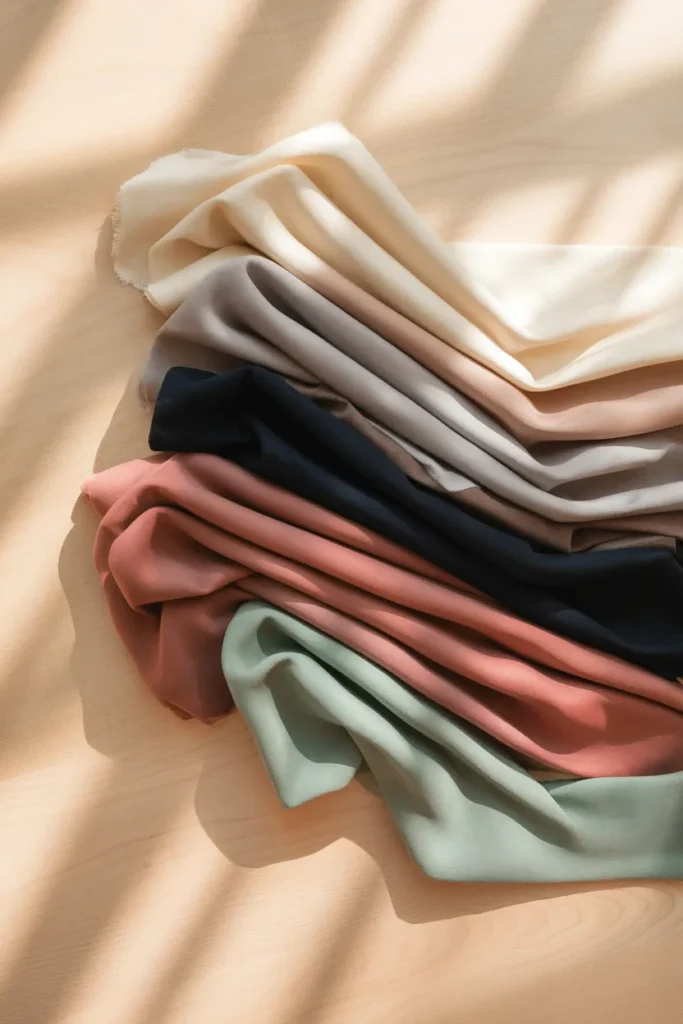
Build it in three layers instead.
Base, roughly 60 percent: cream, ivory, oat, taupe. Soft, warm, and the reason your pieces mix.
Anchor, roughly 30 percent: soft black, espresso, navy. This is the layer most romantic wardrobes skip entirely, and skipping it is why the closet reads sweet instead of expensive. A dark trouser under a lace blouse is what makes the lace look deliberate.
Accent, roughly 10 percent: pick two. Dusty terracotta, sage, burgundy, butter yellow, or a soft tomato red. Two accents, no more, so they can be worn together.
Blush belongs in that accent slot, not in the base. That one swap changes more than any single garment purchase will, and the broader logic behind it is worth understanding if you want to go further with adding color without losing cohesion.
Fabric Is Doing More Work Than the Print
If you take one shopping habit from this article, make it this one: read the fiber content before you look at the price.
Romantic dressing depends on drape, and drape is a fiber property. Silk, cupro, viscose, fine merino, cotton lawn, and linen blends all move. Heavy polyester, structured cotton twill, and stiff scuba do not, no matter how many ruffles are attached. Natural fibers differ meaningfully in absorbency, wrinkle recovery, and how they take dye, which is worth a skim in this fiber reference from University of Georgia Extension if you want the technical version.
A quick field test in the store: gather a handful of the fabric and let go. If it falls open and settles, it’ll drape on you. If it holds the crumple, it’ll hold every wrinkle you put in it by lunchtime.
The care label matters just as much for a wardrobe this small. US manufacturers are required to attach care instructions to garments under federal rules, and the FTC’s apparel labeling guidance explains what has to be on the tag and what it means. Check it before you buy, because three dry-clean-only pieces in an eighteen-piece capsule is a real running cost, and a piece you avoid wearing because cleaning it is a hassle is a piece you didn’t actually buy.
Shoes, Bags, and the Two Accessories That Carry the Aesthetic
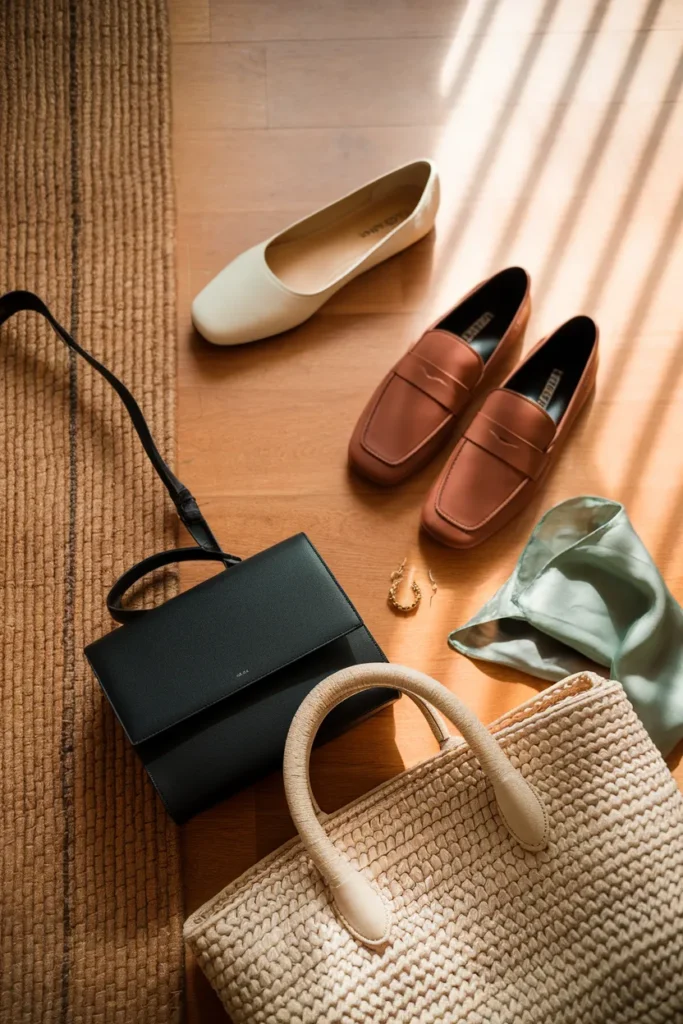
Four shoes cover a romantic capsule completely.
Ballet flats do the most, and they’re the shoe that signals the aesthetic fastest. Loafers keep the whole thing from tipping too sweet, particularly with a floral skirt. Clean white or cream sneakers make a bias skirt wearable on a Saturday. One heel, a block or kitten in soft black or nude, handles evening.
Two bags. A structured crossbody in cognac or soft black for daily use, and a woven or raffia tote for warm months. That’s it.
The two accessories that matter more than the rest: small gold hoops or a fine chain, worn constantly until they stop registering as an accessory and start reading as part of you, and a silk scarf in one of your accent colors. The scarf is doing enormous work for around $30 to $60. Tied at the neck, knotted on a bag handle, or used as a belt, it adds the romantic signal to an otherwise plain outfit without adding a garment.
Skip statement jewelry. In a wardrobe built on soft detail, a large necklace competes with the neckline instead of finishing it.
Twelve Outfits From Eighteen Pieces
Proof that the split works. Every formula below uses one detail piece at most.
| # | Outfit | Occasion |
|---|---|---|
| 1 | Silk blouse + wide-leg trouser + loafers | Work |
| 2 | Lace camisole + cardigan buttoned + bias midi + flats | Dinner |
| 3 | White tee + floral midi skirt + sneakers | Weekend |
| 4 | Bow blouse + dark jean + block heel | Date |
| 5 | Fine knit + bias midi + flats + belt | Work |
| 6 | Cream cotton dress + cardigan + sneakers | Errands |
| 7 | Silk blouse + jean + trench + loafers | Travel |
| 8 | Bias slip dress + cardigan + flats | Warm evening |
| 9 | Camisole + wide-leg trouser + heel + scarf | Evening out |
| 10 | Fine knit + trouser + loafers + belt | Business casual |
| 11 | Print dress + soft black cardigan + flats | Occasion |
| 12 | Tee + trouser + trench + sneakers + scarf | Transitional day |
Notice that the trench, the trouser, and the fine knit appear again and again. That’s what seventy percent quiet buys you.
Carrying It Through the Seasons
A romantic capsule survives seasons through layering rather than replacement, which is the entire economic argument for building one.
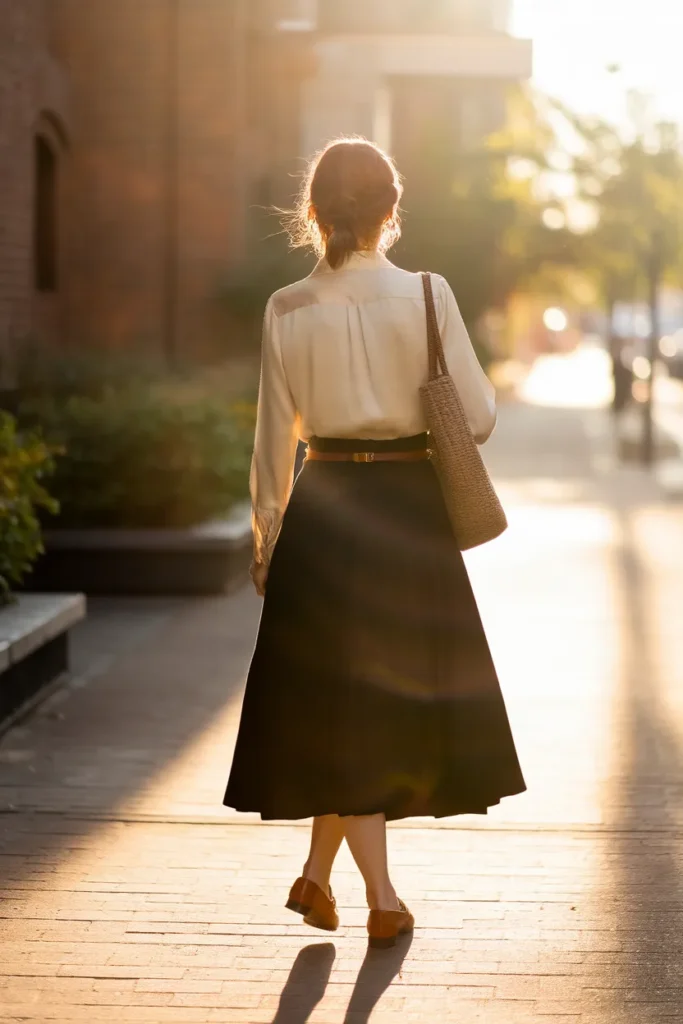
Spring, 50 to 70F. Trench over the silk blouse, flats, scarf at the neck. Bias skirt with the fine knit tucked in.
Summer, 75 to 95F. Camisole solo, cotton or linen-blend dress, raffia tote, flats or sneakers.
Fall, 45 to 70F. This is where the wardrobe peaks. Knit over the bias skirt, loafers, trench, and the floral print reads richer against espresso and burgundy than it ever does in July.
Winter, 20 to 45F. Knit under the coat, trouser or jean, tights with the midi, boots swapped in for flats. Two winter additions cover it: opaque tights and a warm coat.
The pieces themselves barely change. Only the layers do, which is the same principle behind a 30-piece year round capsule that survives every season if you want to see it applied across a larger wardrobe.
The Four Pieces to Leave on the Rack
Every one of these is beautiful in the store and dead in the closet.
Anything with three romantic features at once. Puff sleeve plus lace plus tiered hem. It can only ever be worn one way, which makes it an outfit, not a wardrobe piece.
Large-scale florals. They read as a specific year. Small and muted survives; oversized print does not.
Tiered maxi skirts in stiff cotton. They add volume at the widest point and hold every crease. If you want the tiered look, find it in a fabric that falls.
Sheer pieces with no plan. A sheer blouse needs a camisole you actually own in a color that works. Buy them together or don’t buy the blouse.
If you’re drawn to the softness but suspect your real pull is toward another era’s version of it, a vintage-inspired capsule with retro soul covers that neighboring aesthetic in full.
Frequently Asked Questions
How do I know if romantic is really my style?
Look at what you save, not what you own. If your Pinterest boards fill up with soft fabrics, defined waists, and small prints while your closet is full of structured basics you bought because they were sensible, the gap is your answer. Romantic dressers also tend to notice fabric before color, and would rather feel put together than comfortable.
What’s the difference between romantic style and the Kibbe Romantic body type?
Romantic style is a taste preference and applies to any body. Kibbe Romantic is a category within a specific body-type framework describing a soft, curved frame. You can have romantic taste without being a Kibbe Romantic, and the reverse is equally true. Build for your taste, then adjust fit for your proportions.
How many pieces does a romantic capsule wardrobe need?
Usually somewhere between fifteen and twenty-four, excluding underwear, workout clothes, and outerwear beyond one coat. Eighteen is a comfortable middle. The number matters far less than the ratio: keep it near twelve quiet pieces to six detail pieces and the wardrobe works at almost any size.
Can a romantic capsule wardrobe still look minimalist?
Yes, and it’s the version most people find easiest to wear daily. Keep the base neutral, keep the print small, keep detail to one element per outfit, and lean on fabric and cut rather than embellishment. The result reads soft and quiet at the same time.
Does this work if I’m petite, curvy, or midsize?
It does, with adjustments for proportion rather than for size. Petite frames generally do better with a midi hem that ends at the narrowest part of the calf and with smaller-scale prints, since a large print takes up more visual space on a shorter frame. Curvier proportions tend to look best with a defined waist seam rather than a straight column, and with detail placed away from the fullest point. Everyone benefits from checking the shoulder seam first, since that’s the one measurement tailoring can’t easily fix.
Are silk and lace pieces worth the money if they need dry cleaning?
Sometimes. Run the cost per wear including cleaning. A silk blouse worn twelve times a year with two cleanings at roughly $8 each is still cheaper per wear than a $70 piece that pills after four wears. Where it stops being worth it is at three or more dry-clean-only pieces in one small capsule, because at that point the friction stops you reaching for them. Many silk blends are hand-washable in cold water, so read the label rather than assuming.
Can I wear a romantic capsule to a business casual office?
Comfortably. Lead with the quiet pieces and let one detail through: silk blouse with a wide-leg trouser and loafers, or a fine knit with a bias midi and a belt. Save the puff sleeve and the print for days without a client meeting, and keep the color anchored with soft black or navy rather than going pastel head to toe.
Where to Start This Week
You don’t need to rebuild anything. Open your closet and sort what’s already there into two piles: quiet and detail. Most romantic dressers find the detail pile is enormous and the quiet pile has three things in it.
That imbalance is the whole problem, and it’s fixable with two or three purchases rather than twenty. A drapey trouser. A plain silk blouse. A belt.
Then pull one detail piece you love, build an outfit around it using only quiet pieces, and wear it this week. If it feels like you, you’ve found your ratio.
Save this one to your style board so the 70/30 split is there the next time you’re standing in a fitting room deciding whether a fourth floral blouse is really the piece you need.
Keep reading
Winter 2026 Fashion Trends Worth Your Closet Space
Every winter fashion trends 2026 roundup you have read so far has handed you a shopping list. Five trends here, twenty-three there....
Fall 2026 Fashion Trends: The Looks Worth Adding to Your Capsule
Every fall fashion trends 2026 roundup you’ve read this month has the same problem. It tells you satin is back, hands you...
Whimsigoth Outfits: Witchy, Romantic Style You Can Build From Your Fall Capsule
The first time whimsigoth outfits showed up in your feed, you probably saved four of them and then wore none. That is...