What to Wear to a Job Interview: Capsule-Friendly Outfits for Women
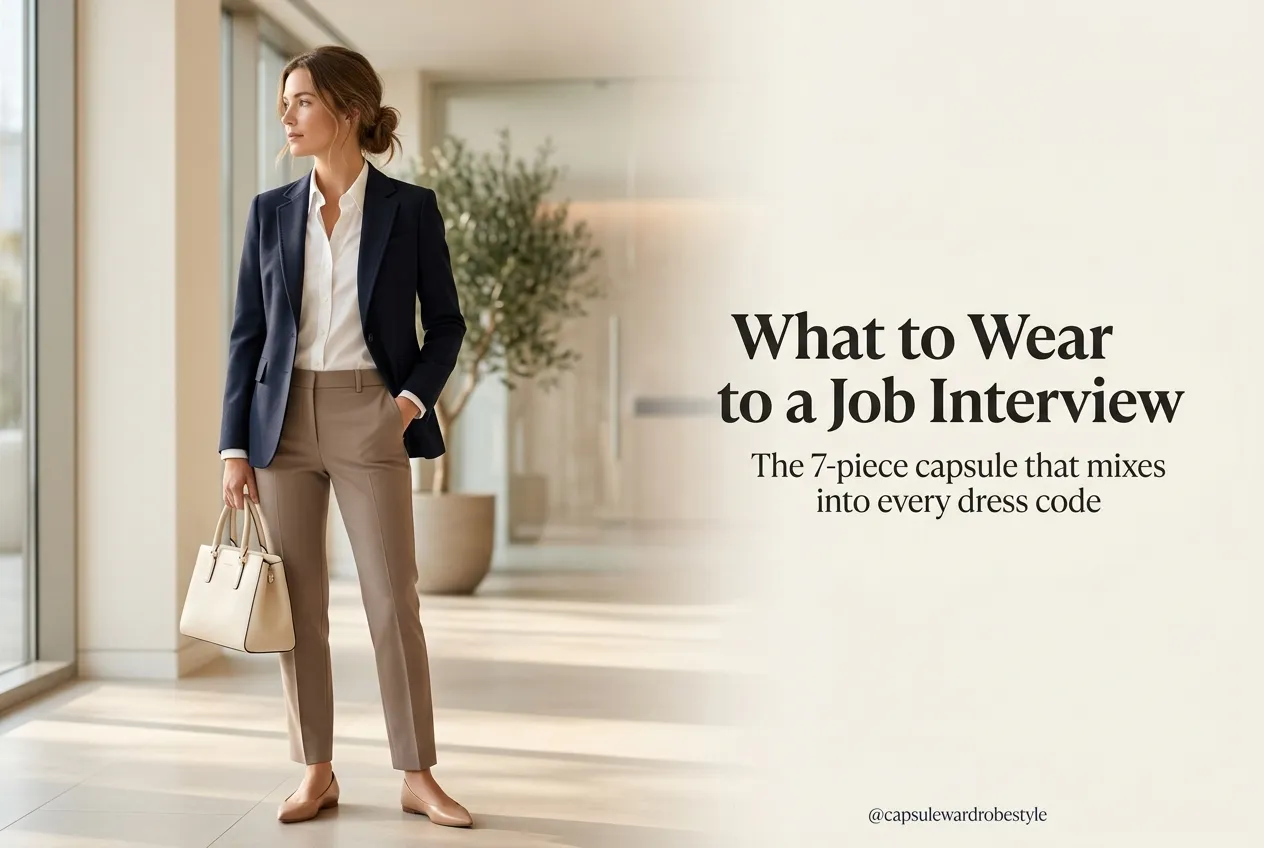
You have the interview. Now the closet panic hits. The right job job interview outfit women is not about buying a stiff suit you will never wear again. It is about looking polished, feeling like yourself, and picking pieces that earn their hanger space long after you get the offer. That is the whole promise here: one small interview capsule, three dress-code options, and outfits you actually keep.
I am going to walk you through it the way I would text a friend the night before. Fewer pieces. Better decisions. No 6 a.m. spiral.
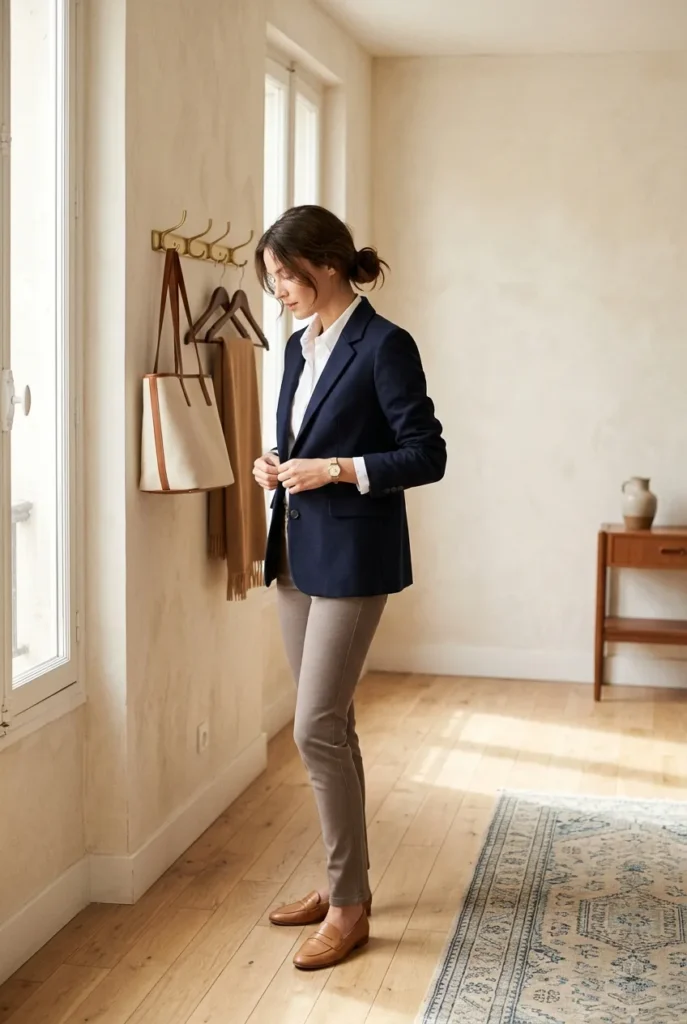
First, decode the dress code before you touch a hanger
Here is the mistake almost every ranking guide glosses over: you cannot pick an outfit until you know the room. A startup interview and a law-firm interview are two different planets, and showing up in the wrong register reads louder than any single piece.
Do a two-minute audit. Check the company’s website photos, their LinkedIn team pages, and their social feeds. Match what you see, then nudge it up one notch. If the team wears jeans, you wear smart casual. If they wear business casual, you go business professional. University career centers agree on this framing, and it is worth a skim: see Temple University’s career center guidance on interview attire and UC Santa Barbara Career Services interview prep for how they sort the tiers.
Three tiers cover almost everything: business professional (matched suit or blazer plus tailored dress), business casual (blazer, blouse, trousers or midi skirt), and smart casual (elevated knit, structured trouser, clean loafer). When in doubt, dress one step above the daily code. Nobody has ever lost an offer for looking slightly too put-together.
The 7-piece interview capsule (your outfit math)
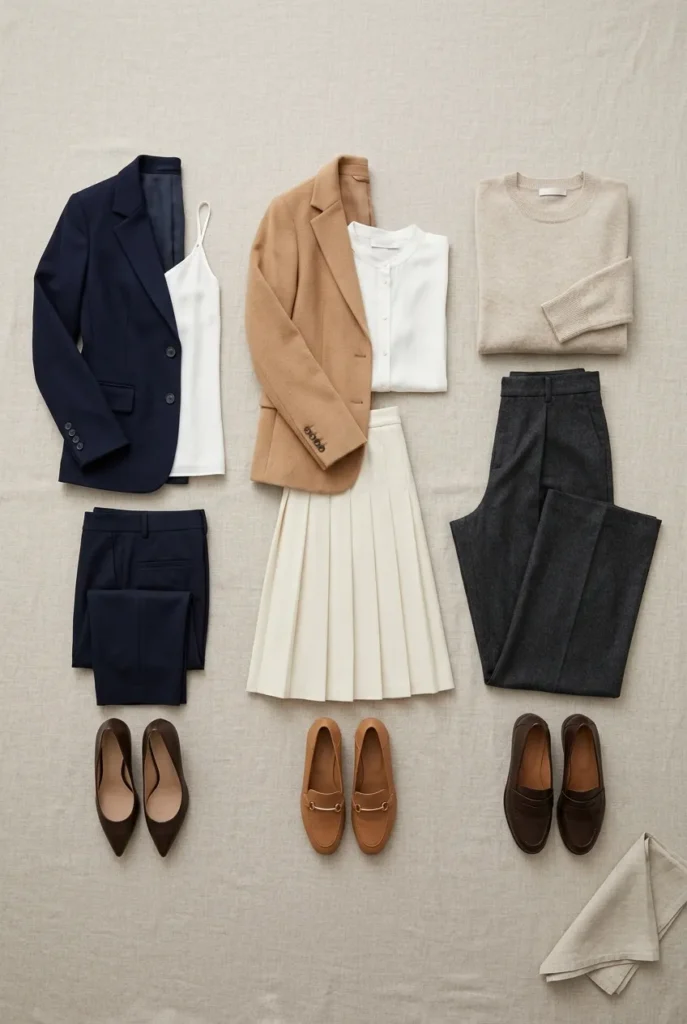
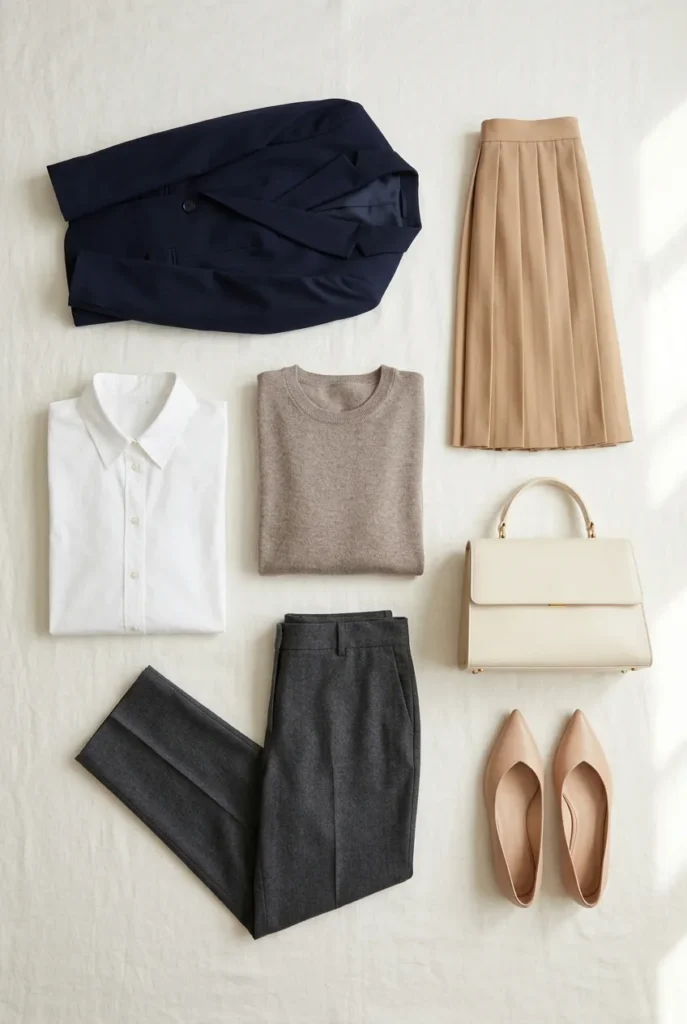
This is the part the big sites skip. Instead of one outfit you wear once, build a tiny capsule that mixes into more than ten interview-ready looks and then slides right into your everyday closet. Seven pieces. That is it.
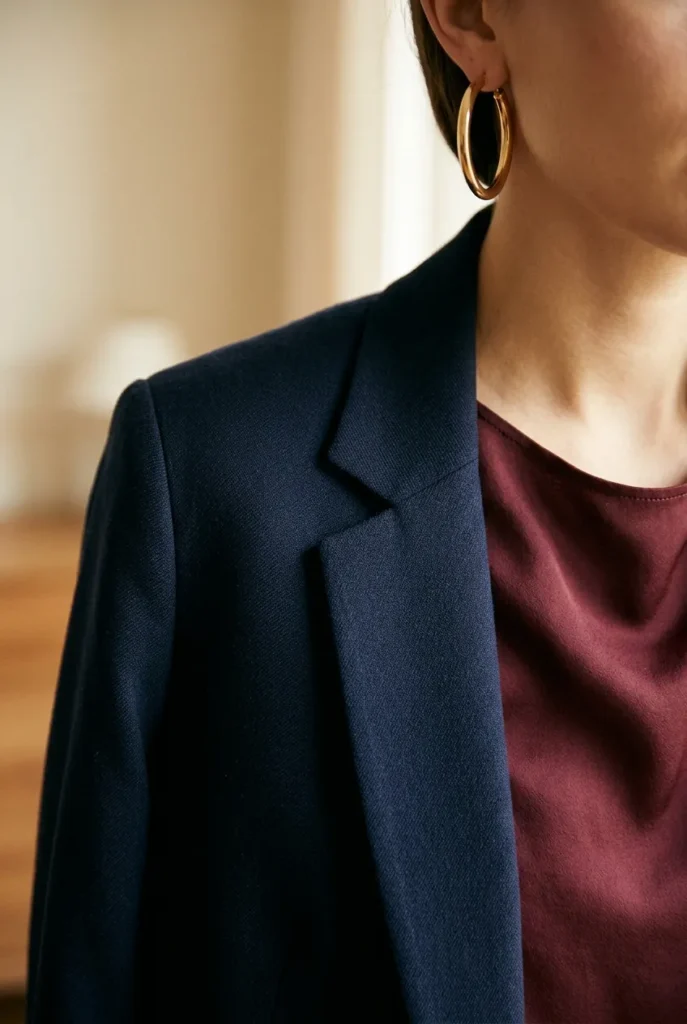
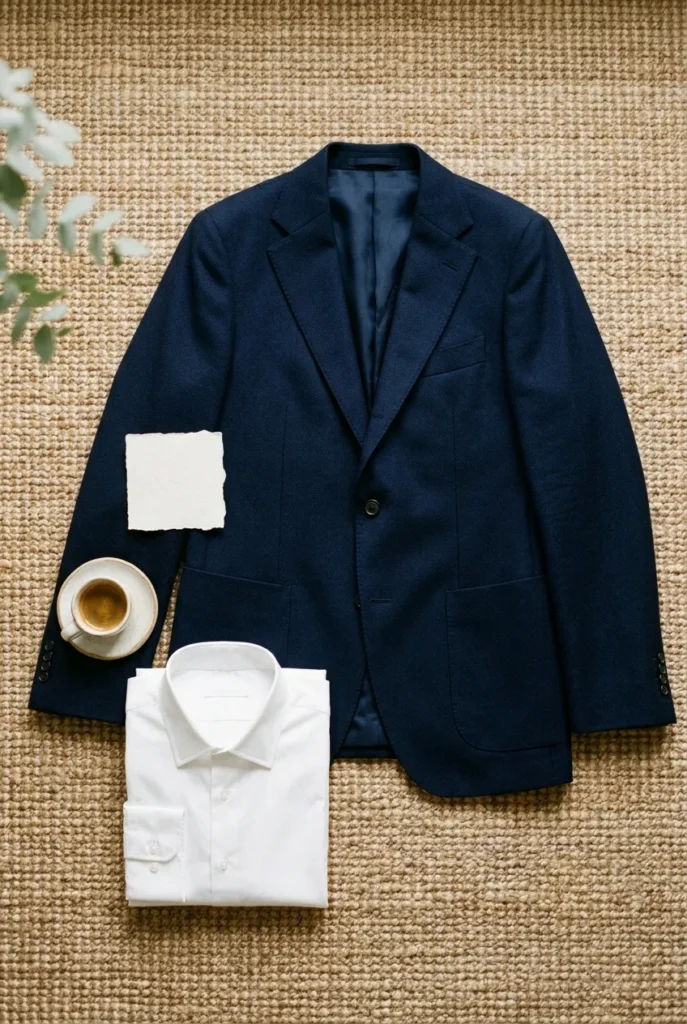
Front-load the highest-value item first: the blazer. A well-cut navy or black blazer is the single hardest-working piece you can own, and it instantly signals “I took this seriously.” If you want the deep dive, here is how to style a blazer for work in ways that go far beyond interviews.
Your seven:
- A tailored blazer (navy or black).
- A white button-down shirt.
- A fine-gauge knit or shell top in a neutral.
- Tailored trousers (charcoal, black, or taupe).
- A midi skirt or a simple sheath dress.
- Pointed flats or a low pump.
- A structured tote or top-handle bag.
Mix them: blazer plus button-down plus trousers reads business professional. Knit plus trousers plus loafers reads smart casual. Blazer plus sheath dress covers the most formal room you will face. One capsule, many rooms. If seeing the combinations written out helps you get dressed faster, these outfit formulas that make getting dressed faster use the same logic.
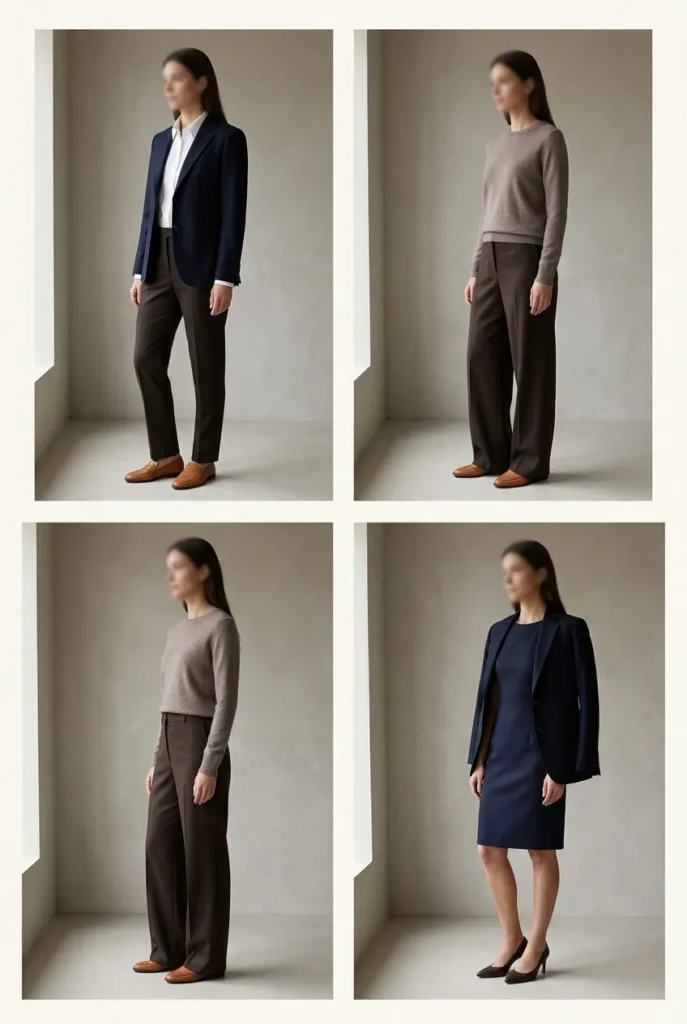
Here is the screenshot-friendly version:
| Piece | Business Professional | Business Casual | Smart Casual |
|---|---|---|---|
| Blazer | Yes, matched to bottoms | Yes, contrast is fine | Optional |
| Top | White button-down | Button-down or shell | Fine knit |
| Bottom | Tailored trousers or pencil skirt | Trousers or midi skirt | Wide-leg trouser |
| Dress option | Sheath under blazer | Sheath alone | Not needed |
| Shoe | Low pointed pump | Pointed flat | Clean loafer |
| Bag | Structured top-handle | Structured tote | Structured tote |
Want to keep leaning into this after the offer? A full business professional capsule wardrobe grows straight out of these same anchor pieces.
Colors that photograph well and read trustworthy
Neutrals win interviews. Navy reads competent, charcoal reads serious, ivory and camel read polished, soft black is safe almost everywhere. Build a neutral base first, then let a single accent do the talking (a burgundy shell, a butter-yellow blouse, one quiet piece of color near your face).
Skip anything loud or busy on top. Print pulls the eye off what you are saying. If you are unsure which neutrals actually suit you, it is worth learning how to choose wardrobe colors for your skin tone, because “navy” on one person is “washed out” on another.
The 60-30-10 split works here too: 60 percent neutral base, 30 percent secondary neutral, 10 percent accent. That is your whole palette, sorted.
Shoes, bag, and accessories (keep them quiet)
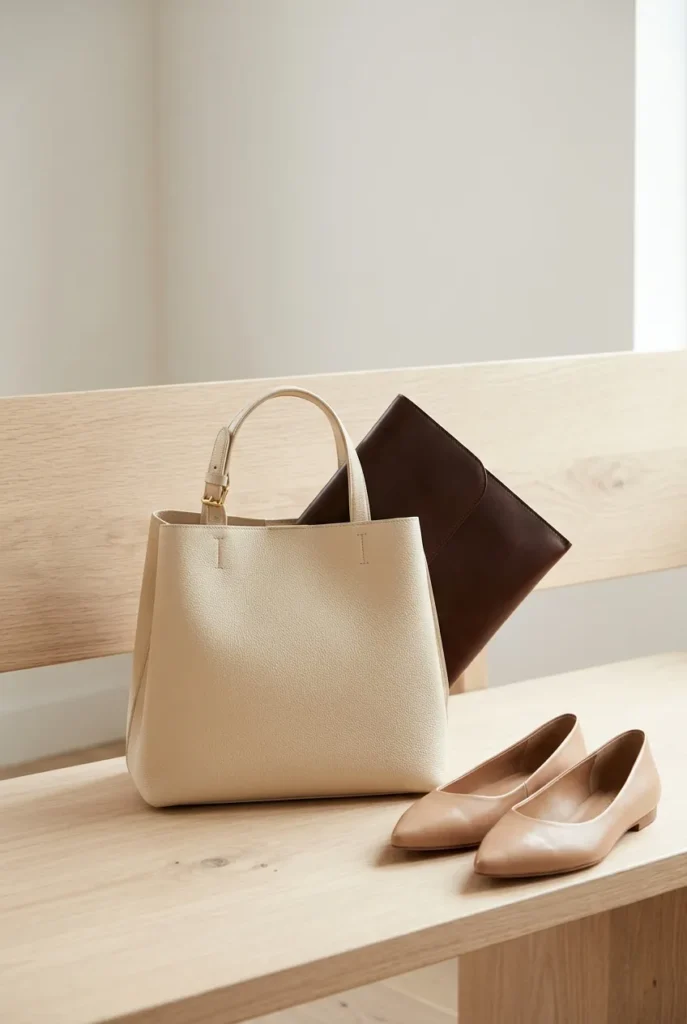
Your shoes should be clean, closed, and comfortable enough to walk in without thinking. A low pointed pump or a polished pointed flat covers nearly every interview. If you know you will be pacing a long hallway or standing through a panel, the most comfortable ballet flats to interview in will save your feet and your focus.
Carry one structured bag, not two. A top-handle or a slim tote that holds a folder looks intentional. Skip the backpack for professional and business rooms.
Accessories stay minimal: small earrings, one ring, a simple watch. The rule is easy. Nothing should jingle, nothing should distract, nothing should out-talk you.
Fit and proportion for your body (the part everyone skips)
A great interview outfit is a well-fitting one. Ranking guides love to say “wear a suit” and stop there, but fit is what makes the same blazer look expensive on one person and borrowed on another. Here is what actually works with your proportions, framed by what works, not what hides.
Petite (5’4″ and under): Look for cropped or shorter blazers and trousers hemmed to your true length. A monochrome column (one color top to bottom) keeps your line long.
Curvy and hourglass: A single-button blazer that nips at the waist and mid-rise trousers with a little stretch keep the shape clean without pulling. Wrap and sheath dresses work with your proportions beautifully.
Tall (5’9″ and over): Lean into wide-leg trousers and longer-line blazers you can actually find in your inseam. You can carry a bolder shoulder than most.
Over 40: Prioritize fabric with structure and drape over anything flimsy. A ponte or wool-blend blazer holds its shape all day and photographs polished in every light.
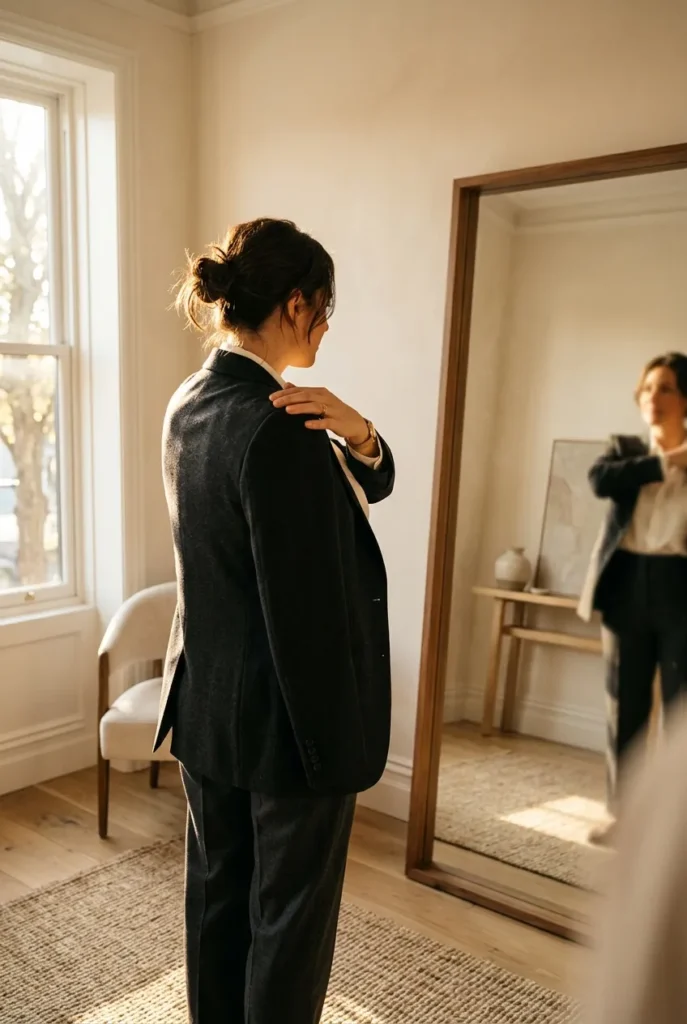
Whatever your shape, get the shoulders of the blazer right first. A tailor can fix a hem or a waist in a day; a bad shoulder is the one thing that never looks right.
What to wear for specific interviews
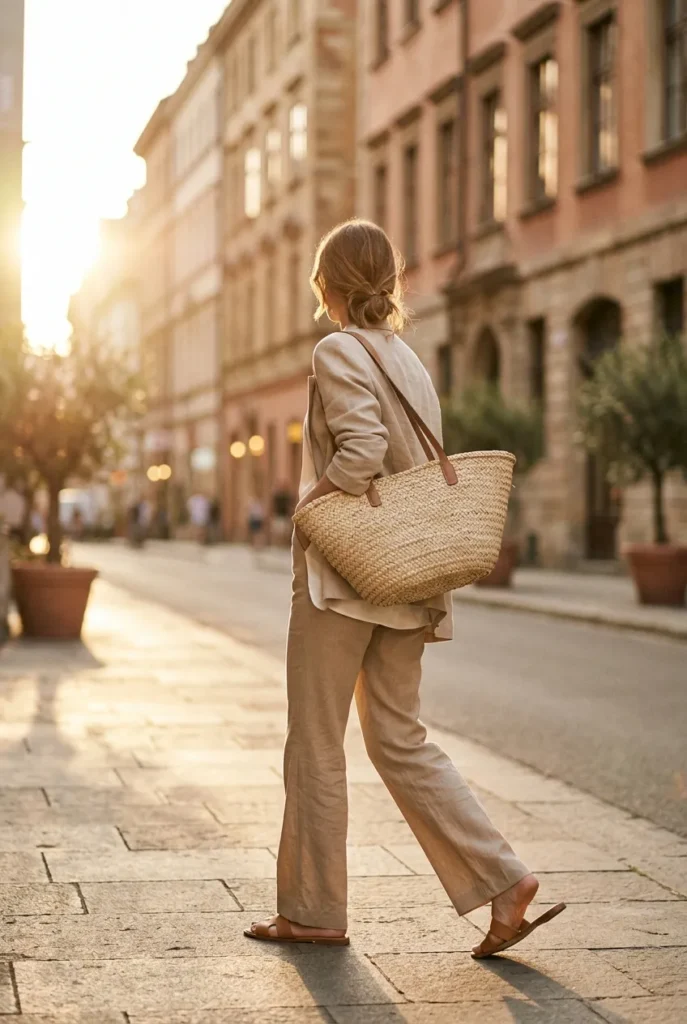
Summer interview: Swap the wool blazer for a breathable linen-blend or an unlined cotton one, and keep a lightweight shell underneath. A midi skirt with pointed flats stays cool and still reads professional. This is the “job interview outfit women summer” version, and it is mostly about fabric weight, not a different formula.
Creative or startup role: You can loosen to smart casual. A fine knit, a good trouser, a clean loafer, and one interesting-but-quiet accessory shows taste without trying too hard.
Healthcare, hospitality, or client-facing: Err conservative and practical. Closed comfortable shoes, minimal jewelry, hair back, nothing that swings when you move.
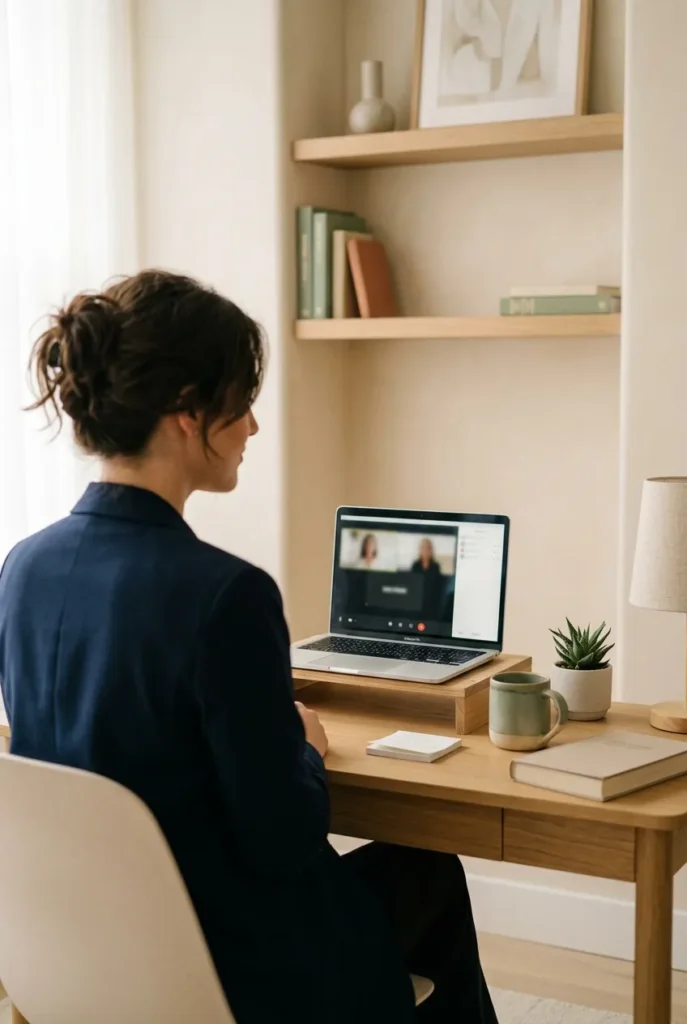
Virtual interview: Dress the top half fully (blazer plus a solid, camera-friendly neutral) and, please, wear real trousers anyway. The one time you stand up to grab a notebook, you will be glad.
Cost per wear: spend where it counts
Here is the reframe that saves money. You are not buying an interview outfit. You are buying a blazer, a shirt, and a trouser you will wear a hundred more times. Divide the price by every future wear and the “expensive” blazer is often the cheap one.
Spend on the two anchors (blazer, trousers), save on the rest. A quality blazer might run roughly $150 to $300 at Madewell, J.Crew, or Sezane [VERIFY: confirm current prices], and it earns it. If that is out of budget, a structured blazer from Uniqlo or Banana Republic Factory typically runs about $60 to $110 [VERIFY], with the trade-off being a slightly softer fabric and shoulder, so try it on and check that shoulder seam.
VERIFY: I styled one navy blazer across a full week of interviews and it never looked repeated once I swapped the top and shoe
VERIFY: I tracked cost per wear on my interview trousers for six months and they landed under a 50 dollar a wear.
VERIFY: I returned a $280 blazer and the $95 dupe from a mid-tier brand actually held its shape better through the day
Frequently asked questions
What are the 5 rules for dressing for a job interview?
Match the company’s dress code and go one step above it, stick to neutral colors, keep accessories minimal, make sure everything fits and is wrinkle-free, and choose comfortable shoes you can walk in. Those five cover almost every situation.
What should you not wear to a job interview?
Skip anything wrinkled, too tight, too casual (jeans, shorts, flip-flops), loud prints, strong fragrance, and jewelry that jingles or distracts. The goal is for them to remember you, not your outfit.
Can I wear a dress to an interview?
Absolutely. A simple sheath dress, on its own for business casual or under a blazer for business professional, is one of the easiest polished options. Keep the length at or near the knee and the color neutral.
What is considered a red flag in a job interview?
On the attire side, showing up noticeably underdressed for the company’s culture can read as low effort. More broadly, arriving late, speaking negatively about past employers, and being unprepared are the interpersonal ones interviewers flag most.
What should I wear to a summer interview when it is hot?
Keep the same formula but change the fabric. A linen-blend or unlined blazer, a lightweight shell, and a breathable midi skirt or trouser stay cool while still reading professional. Fabric weight matters more than the cut here.
Can I wear flats instead of heels?
Yes. A polished pointed flat is completely appropriate and often smarter, because comfort keeps you focused. Clean, closed, and neutral is the standard, not heel height.
Does this outfit work for a virtual interview?
Yes. Dress the top half fully in a blazer and a solid neutral that reads well on camera, and wear real bottoms anyway in case you stand up.
Get dressed in ninety seconds, not ninety minutes
Here is the takeaway worth bookmarking: you do not need a new outfit for every interview. You need seven good pieces that mix, fit your body, and photograph clean. Build the small capsule once, decode the room, and let the anchors do the work. Then keep wearing every piece long after you land the offer. Save this, screenshot the outfit-math table, and go get the job.
Keep reading

Office Siren Aesthetic: How to Wear It to an Actual Job
The office siren aesthetic is the sharpest thing to happen to workwear in a decade, and it’s also the fastest way to...

What to Wear for Headshots: How to Look Like Yourself on Camera
You have a headshot booked, and you’ve been standing in front of your closet for twenty minutes. Everything looks either too casual...
Japan Travel Capsule Wardrobe: What to Wear Sightseeing
You are going to walk. A lot. Japan rewards the traveler who wanders, which means your feet, your fabrics, and your outfit...