
Best Sunglasses for Capsule Wardrobe (Face-Shape Guide)
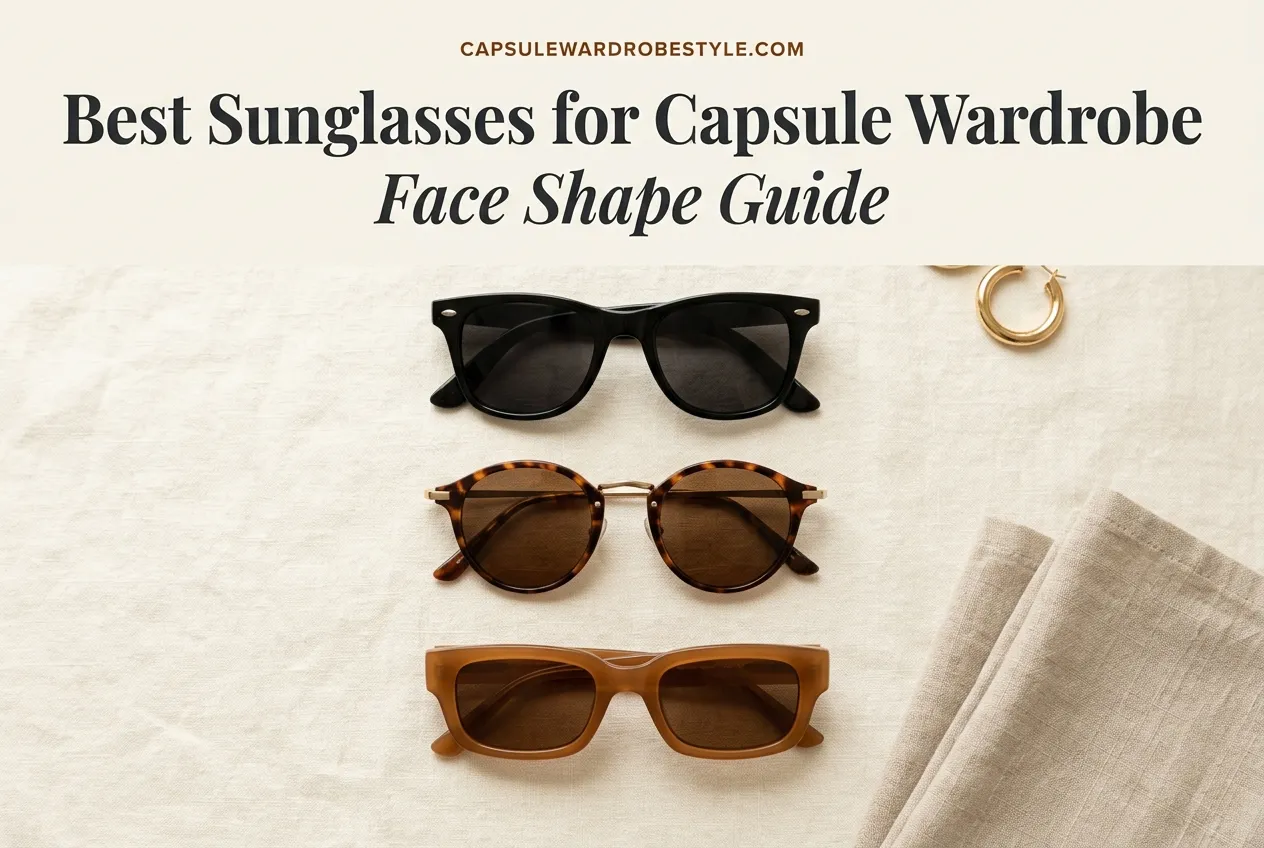
You own four pairs. You wear one. The other three live in a drawer because they pinch your temples, slide down your nose, or just feel wrong every time you catch your reflection. Finding the best sunglasses for capsule wardrobe shopping is less about owning more pairs and more about owning the right three. And the right three depend almost entirely on the shape of your face, the colors already living in your closet, and how often you actually leave the house in sunlight.
I built my own sunglasses capsule down to three pairs over six months. I tested frames from Quince, Warby Parker, Krewe, and a $14 pair from Target that, against every expectation, made the final cut. What I learned: most of us are overbuying sunglasses for the same reason we overbuy tops. Nobody ever told us the rules.
This guide gives you the rules.
Why Most Capsule Wardrobes Get Sunglasses Wrong
We treat sunglasses like jewelry. Buy them on a whim, wear them three times, replace them next summer. That’s the cycle that keeps your drawer messy and your sun-care budget bigger than it should be.
A capsule approach flips it. You pick frames the way you pick a trench coat: for shape, for color, for cost per wear. Three pairs, used in rotation, can carry you through every outfit for two to three years if you buy at the right tier and treat them well.
Here is the formula that works.
The Three-Pair Sunglasses Capsule
Forget the five-piece eyewear capsules you’ve seen floating around. Five is too many for most of us. Three is the magic number, and each pair earns its hanger space by doing a job no other pair can do.
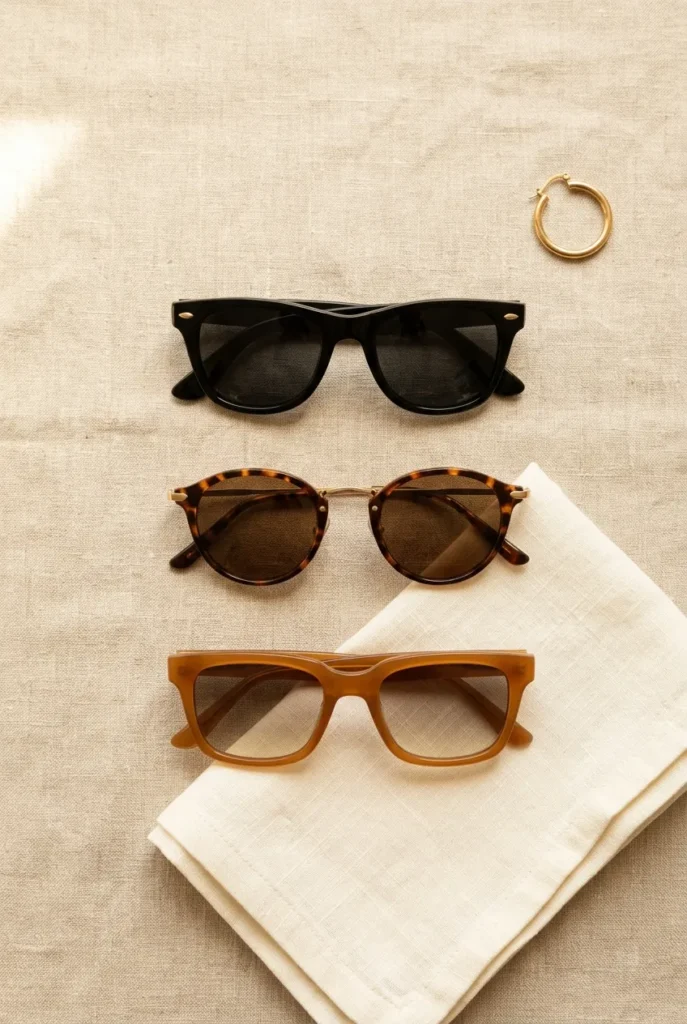
Pair One: The Everyday Anchor. A classic silhouette in a neutral frame color that matches the dominant tones in your closet. Wayfarer, square, or rounded square. Black acetate if your closet leans cool. Tortoise if it leans warm. This is the pair you grab without looking. It works with jeans, with a trench coat, with the linen midi dress, with the school-run sweats.
Pair Two: The Polarized Workhorse. Driving, beach, hiking, long walks. Polarized lenses cut glare in a way regular tints cannot. Frame style should be sportier or wrap-leaning. Aviator, navigator, or wide rectangular. Often the most affordable pair in the capsule because durability beats aesthetics here.
Pair Three: The Statement. One pair that adds personality. A bold cat-eye, an oversized round, a tinted color (amber, rose, sage). This is the pair you wear when the outfit is quiet and needs a moment of interest. You will reach for it less, but on the right day it’s the only pair that works.
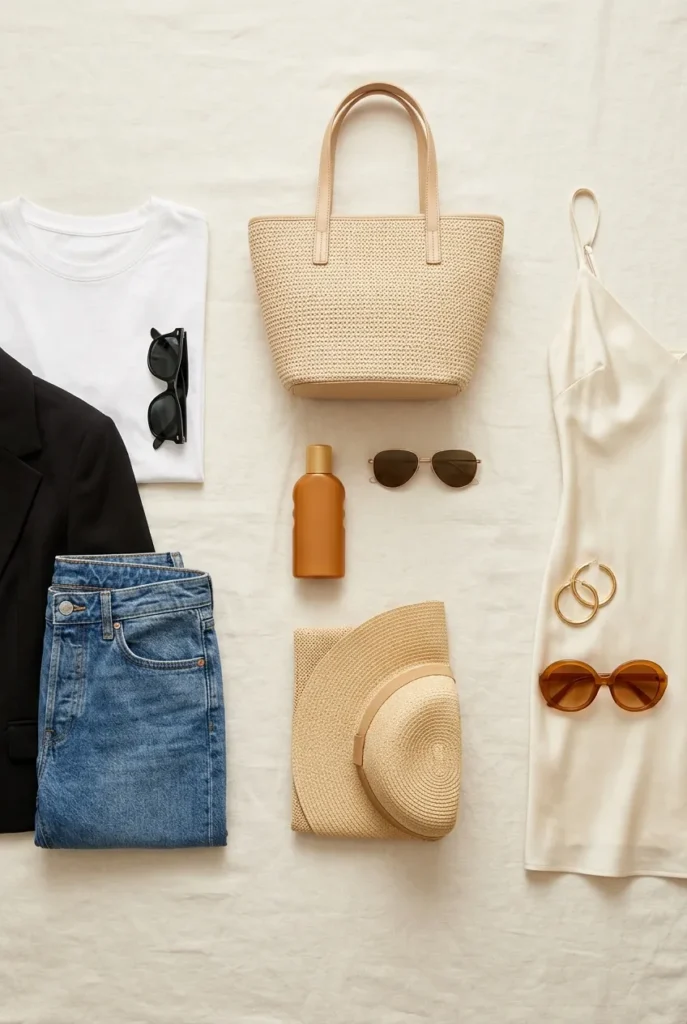
You will notice this maps almost exactly to the way most capsule wardrobes split: an anchor, a workhorse, a statement. Sunglasses are an accessory, but they follow the same rules as your knitwear.
Face Shape Comes First (Yes, Really)
Before you scroll for color or price, you need to know which frame shape your face actually likes. This is the part most sunglasses guides skip or turn into a generic optometry chart. We’re going to do it differently, with the capsule reader in mind.
There are four face shapes worth knowing for sunglasses purposes: round, oval, square, heart. There are more shapes than this in clinical terms, but for shopping decisions, these four cover almost everyone.
The rule of thumb that has held up across every fitting I’ve ever sat through: choose a frame shape that contrasts with your face shape. Round face wants angles. Square face wants curves. Oval face can wear most things but looks sharpest in geometric frames. Heart-shaped face wants width at the bottom of the frame to balance the forehead.
That’s the whole science of it. Everything else is preference.
Best Sunglasses for Round Faces
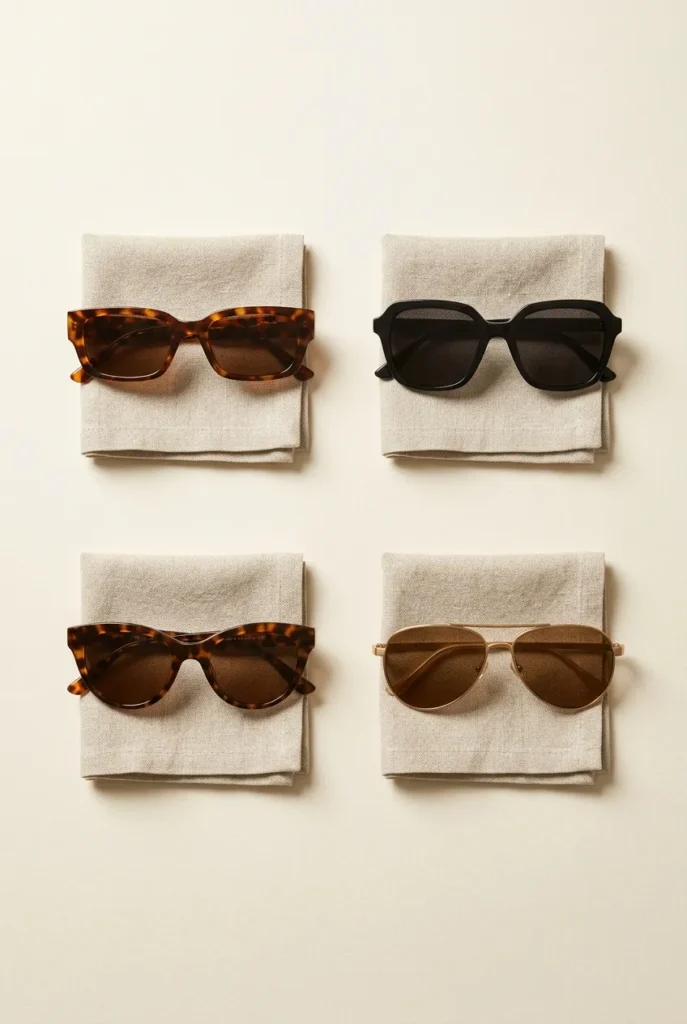
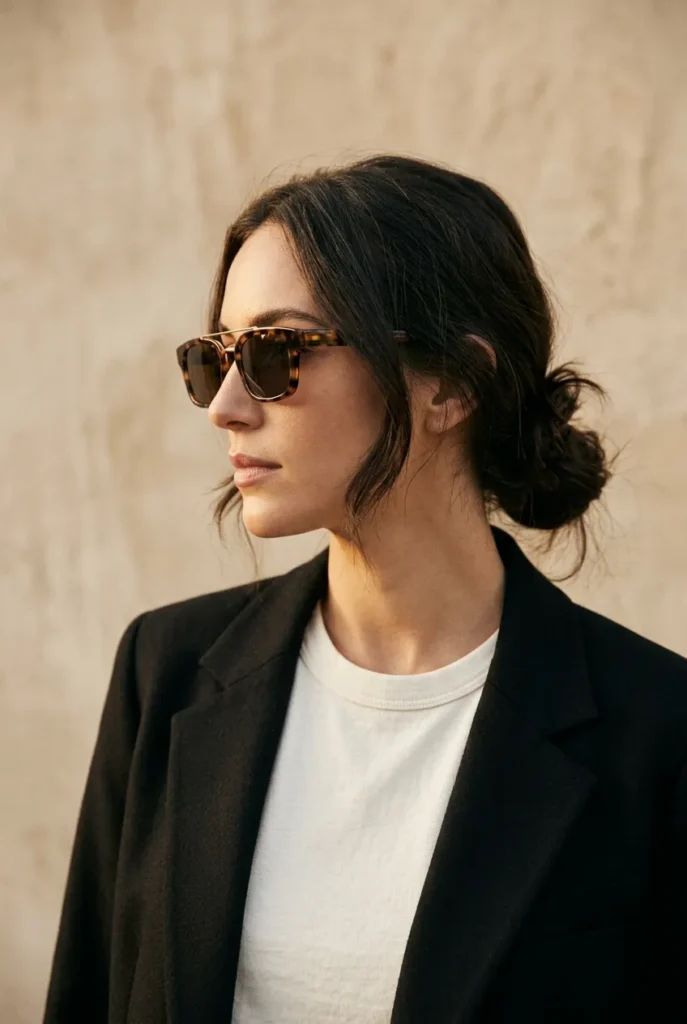
A round face has soft curves and roughly equal width and length. The goal is angles. Rectangular frames, square frames, and geometric cat-eyes all add the structure that brings out cheekbones. Avoid small round frames, which double down on the curves you already have.
In a capsule, this usually looks like a black or tortoise rectangle for everyday wear, a wraparound rectangle for polarized, and a sharp cat-eye for the statement piece.
Quince and Warby Parker both make rectangular acetates in the $50 to $145 range that work beautifully here. If you want the investment-tier reference, Celine, Saint Laurent, and Toteme all do versions, though you’ll pay $400 plus.
Best Sunglasses for Oval Faces
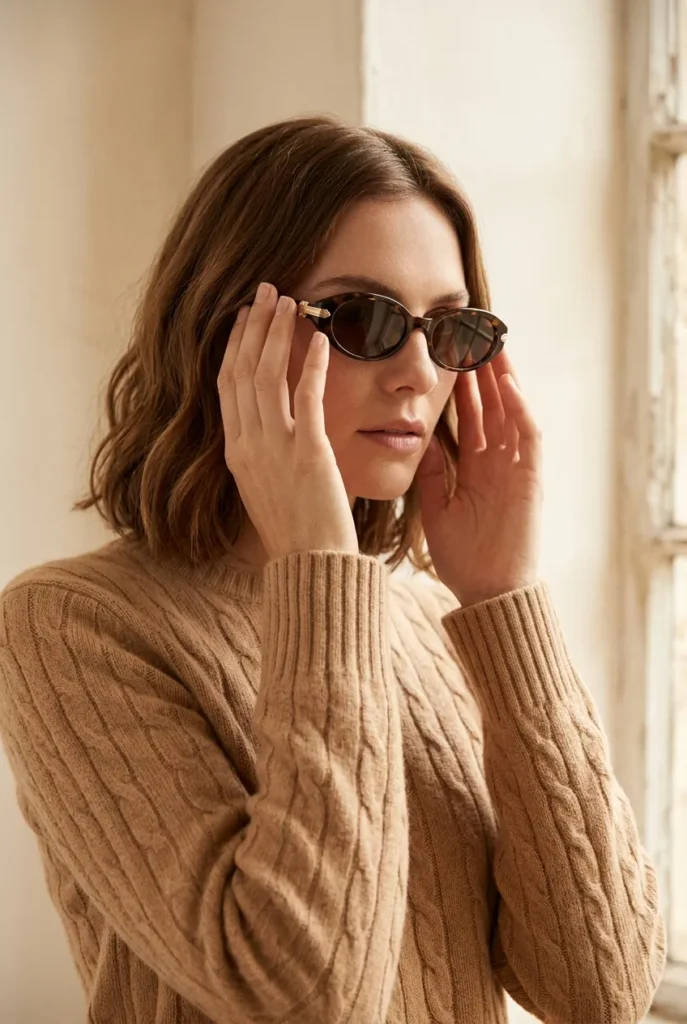
Oval faces have it easy. The length is slightly greater than the width, and the jaw is softer than the forehead. Almost every frame shape works. The capsule choice here is about color and proportion rather than shape rules.
Aim for frames that are roughly as wide as the widest part of your face. Geometric shapes (rectangle, square, hexagon) look sharpest. Aviator and wayfarer are both safe bets for everyday wear.
If you’re oval, you can lean into a more sculptural statement pair without worrying about balance, because your bone structure handles it.
Best Sunglasses for Square Faces
Square faces have a strong jawline and forehead with roughly equal width and length. Curves are the answer. Round frames, oval frames, soft cat-eyes, and aviators all work. Skip anything boxy, especially small rectangles, which echo the angles you already have.
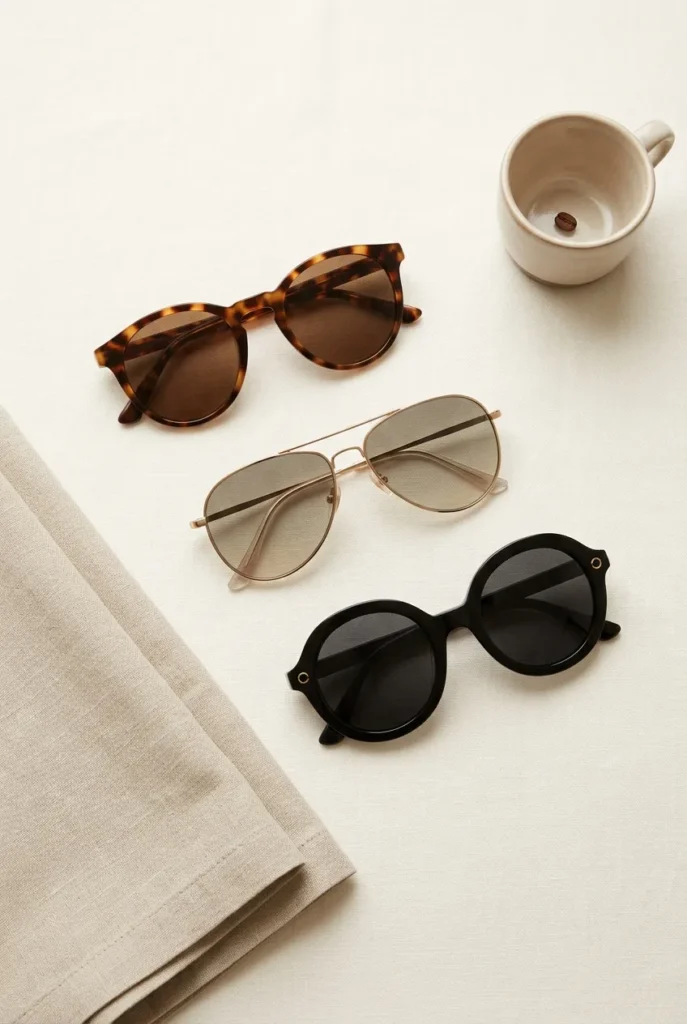
In a capsule, square-faced readers do well with a soft round acetate (the kind everyone calls “French girl”) as the everyday pair, an aviator as the polarized pair, and an oversized round for statement.
Best Sunglasses for Heart Faces
A heart-shaped face is widest at the forehead and narrowest at the chin. The eye plays a balancing trick: frames with more visual weight at the bottom (light at the top, fuller at the bottom) bring the eye downward and balance the proportions. Aviators, bottom-heavy cat-eyes, and rimless tops all work.
Avoid frames that are wider than your temples, which exaggerate the top of the face. Avoid heavy black acetate across the brow line.
In a capsule, this usually shapes up as a soft aviator everyday pair (warm gold or tortoise), a polarized navigator for outdoors, and a statement cat-eye where the cat-eye flare is gentle, not exaggerated.

The 60-30-10 Sunglasses Color Formula
You already use the 60-30-10 split for your clothing palette: 60 percent neutral base, 30 percent secondary, 10 percent accent. Apply the same math to your sunglasses and they will pair with everything you own.
60 percent of your wear should come from the neutral anchor pair. If your closet leans cool (whites, soft blacks, navy, gray), choose black acetate. If your closet leans warm (cream, camel, espresso, sage), choose tortoise. This is the pair you reach for daily.
30 percent comes from the secondary pair, usually the polarized one. Gold metal aviators or a softer brown acetate are the safe bets here because they bridge cool and warm closets.
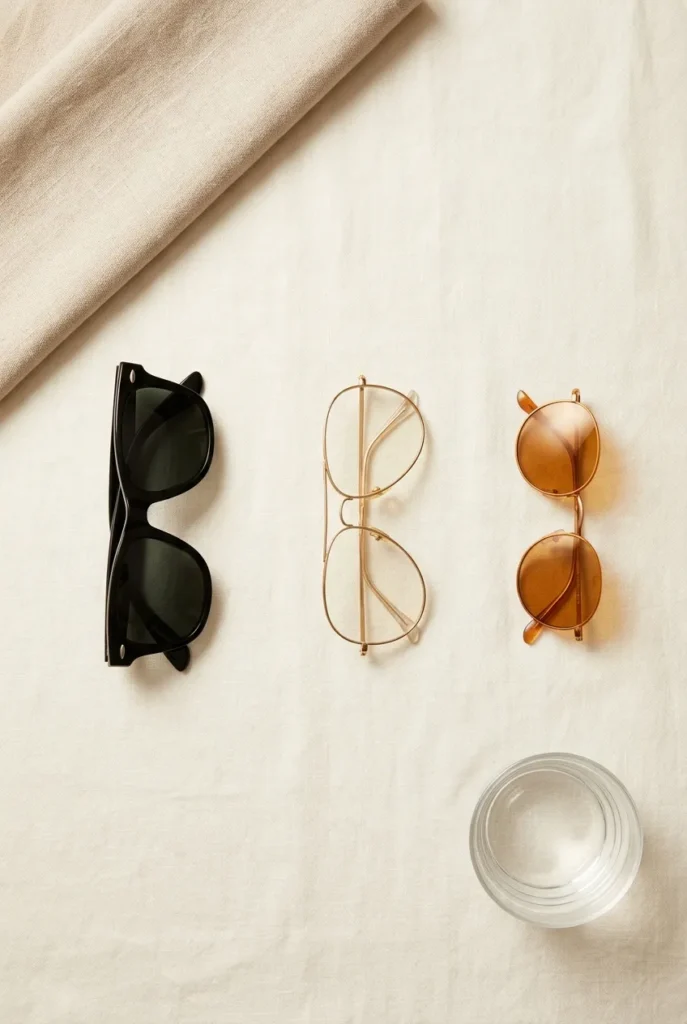
10 percent comes from the statement pair. This is where you can experiment with color: amber lenses, soft sage acetate, a true tortoise with green undertone, even a soft transparent honey frame. Worn rarely, it never gets old.
When all three pairs sit in the 60-30-10 split, they read as a curated collection rather than a random drawer. Your outfit photos look more cohesive even when you didn’t try.
Sunglasses with Hats and Caps (The Part Nobody Talks About)
If you wear a hat, your sunglasses need to play nicely with it. Most don’t. The pairing rules are simple once you see them written down.
With a wide-brim straw hat: smaller to medium frames that don’t compete with the brim line. Cat-eye, soft round, or compact rectangle. Avoid oversized frames; the silhouette gets crowded.
With a baseball cap: flat-top frames, navigator styles, or aviators sit naturally under the brim. Wayfarers with a high top bar can clash with the bill of the cap. If you live in baseball caps for school runs and grocery trips, the polarized navigator in your capsule earns its place here.
With a bucket hat: rounded frames soften the structured top of the hat. Small to medium aviators work too. Skip oversized frames.
With a beanie in fall: larger frames balance the rounded top. This is where a heavier acetate or oversized round really shines.
A practical tip: when you try sunglasses on at a store or unbox an online order, put the hat on at the same time. The mirror tells you the truth fast. I returned three pairs in 2025 because the brim of my favorite straw hat hit the top of the frames every time I tilted my head.

Where to Shop at Every Price Tier
You can build the three-pair capsule at almost any budget. Here is the US retail ladder honestly mapped.
Mass tier ($10 to $50): Target (A New Day and Universal Thread make decent acetate basics), Amazon Essentials, Old Navy. The trade-off: hinges loosen faster, lenses scratch easier, and most pairs from this tier last 12 to 18 months of daily wear before they feel cheap. Use this tier for your statement pair, where novelty matters more than longevity.
Mid tier ($50 to $150): Warby Parker (typically $95 to $145 for sunglasses), Quince (around $50 to $75 for acetate frames that punch well above their price), Madewell (around $58 to $98). This is the sweet spot for the anchor pair. Better hinges, better lens coatings, frames that feel substantial.
Contemporary tier ($150 to $400): Krewe, Sezane, Ray-Ban, Oliver Peoples (lower end). This tier delivers genuine durability and lens quality, plus the kind of subtle design details that look more expensive than they are. Worth it for the everyday pair if you wear sunglasses daily.
Investment tier ($400 plus): Celine, Saint Laurent, Toteme, Cutler and Gross. Aspirational reference only for most capsule readers. If you’re tempted by a $400 plus pair, a $150 Krewe will outlast and out-style most of what’s at the entry of this tier.
If you reach for the $300 Celine round frames, the closest dupes in feel and silhouette are the Quince Italian acetate round at around $50 to $65 and the Warby Parker Haskell at around $145.
Building a sunglasses capsule on a budget? Approach it the same way you would best sandals for a capsule wardrobe: buy the workhorse first, then add the everyday pair, then the statement.
The Sunglasses Buying Checklist
Before you click buy, run through this list. It takes 90 seconds and saves you a return.
- UV protection labeled 100 percent or UV 400. Non-negotiable. The American Academy of Ophthalmology and the FDA both confirm UV protection is the single most important feature, more important than brand, price, or style.
- Frame shape contrasts your face shape. Use the four-shape rule above.
- Frame color fits your closet palette. Black for cool, tortoise for warm, gold metal as the bridge.
- Hinges feel firm, not stiff. A loose hinge new in box will be a broken hinge in six months.
- Lens has no visible distortion when you look through it at a straight line. Tilt a pair against a doorframe and check.
- The frames don’t pinch behind your ears or slide down your nose. Either problem means a wrong fit, not a “break-in period.”
- Polarized only if you actually drive or spend time near water. Polarization is a $30 to $80 upcharge and is wasted on indoor city wear.
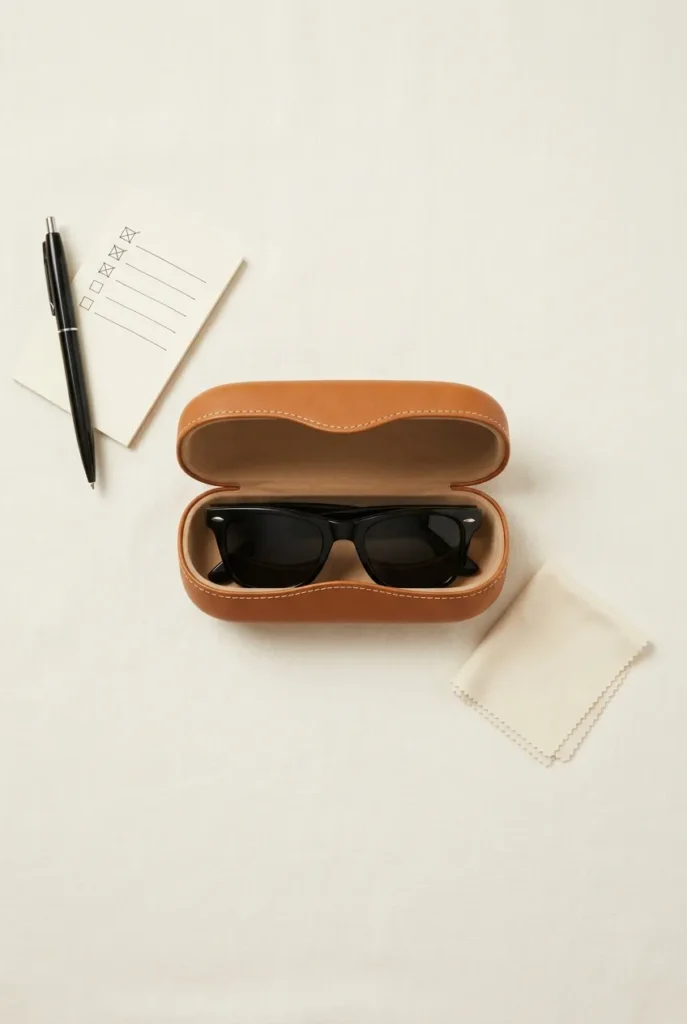
- A hard case included or budgeted separately. Soft pouches alone destroy lenses inside a tote bag in weeks.
How to Make Your Sunglasses Last
A well-bought pair should run you two to three years of daily wear. The math is good: $145 over three years is roughly $0.13 per wear. That’s lower cost-per-wear than almost anything else in your closet.
Wipe lenses only with the microfiber cloth, never a shirt hem (cotton has microfibers that scratch coatings). Store in the hard case when not on your face. Don’t push them up on your hairline more than briefly; this is the fastest way to loosen the bridge and warp the arms. Rinse with cool water if they get sticky from sunscreen or sweat, then dry with the cloth.
If a hinge loosens, most opticians (LensCrafters, Warby Parker stores, local independents) will tighten it for free in 30 seconds.
For readers building broader accessory collections, my 10-piece carry-on capsule wardrobe shows exactly which pair to pack for a 10-day trip when you can only bring one.
A Note for Sunglasses Over 40
If you’re building or refreshing a capsule wardrobe for women over 40, one shift matters: lens height. As we get older, the eye area benefits visually from slightly larger lens coverage, both because it softens fine lines around the eyes and because polarization helps with the glare sensitivity that increases with age. A medium-to-large frame in a soft round or rounded square shape tends to be more flattering than narrow rectangles after 40.
Tortoise reads warmer and softer on most skin tones over 40 than stark black. If you’ve worn black acetate your whole adult life, this is the one swap worth trying.
Best Sunglasses for Capsule Wardrobe Frequently Asked Questions
How many pairs of sunglasses do I need in a capsule wardrobe?
Three. One everyday anchor, one polarized workhorse, one statement. More than three and you’ll find one or two living in a drawer untouched. Fewer than three and you’ll have gaps for driving, dressy occasions, or year-round wear.
What sunglasses go with everything?
Tortoise acetate in a rectangular or soft round shape. Tortoise bridges cool and warm closet palettes, suits most face shapes, and reads as intentional rather than trendy. If your closet leans heavily cool, black acetate is the runner-up.
What color sunglasses are most versatile?
Tortoise first, soft black second, warm gold metal third. Skip pure silver and skip white frames if you want maximum mileage in a capsule.
How do I pick sunglasses for my face shape?
Contrast is the rule. Round face wants angular frames. Square face wants curved frames. Oval can wear most shapes but looks sharpest in geometric ones. Heart-shaped face wants width at the bottom of the frame, like aviators.
Are expensive sunglasses worth it?
For the everyday pair, yes. A $150 pair from Warby Parker or Krewe will outlast three $40 pairs and look more polished. For the statement pair, no; novelty fades fast and a $25 Target frame works fine. For the polarized pair, mid-tier is the sweet spot.
Can I wear my sunglasses year-round?
Yes, and you should. UV exposure happens in every season, including winter (snow reflects UV intensely). Your everyday pair earns its hanger space twelve months a year.
Does polarized always mean better?
No. Polarized lenses cut glare from horizontal surfaces (roads, water, snow). Indoors, while looking at screens, or in low light, polarization can make it harder to read LCDs and reduces clarity. Match polarization to use case.
The Bottom Line
A capsule sunglasses wardrobe is three pairs, mapped to your face shape, weighted to your closet’s color palette, and bought in the right price tier for each one’s job. Buy the workhorse first if you drive or spend time outdoors. Buy the everyday anchor next. Buy the statement last, and only when you’ve seen a pair you’d genuinely reach for.
Skip the drawer of forgotten frames. Pick three that earn their place.
Then go outside.
Keep reading

Capsule Wardrobe Shoes: The 7 Pairs That Cover Everything
Capsule wardrobe shoes are the part of the closet edit almost everyone skips. You can get the tops right, get the trousers...

The 8 Capsule Wardrobe Tops That Anchor Every Outfit You Own
You have more tops than anything else in your closet. You also have the least to wear. That contradiction is what sends...

The 6 Capsule Wardrobe Jackets That Actually Earn Their Hanger Space
You own more jackets than you wear. Most of us do. The denim one from three summers ago, the blazer that fits...