
Capsule Wardrobe for Petites: 15 Pieces That Don’t Swallow You Whole
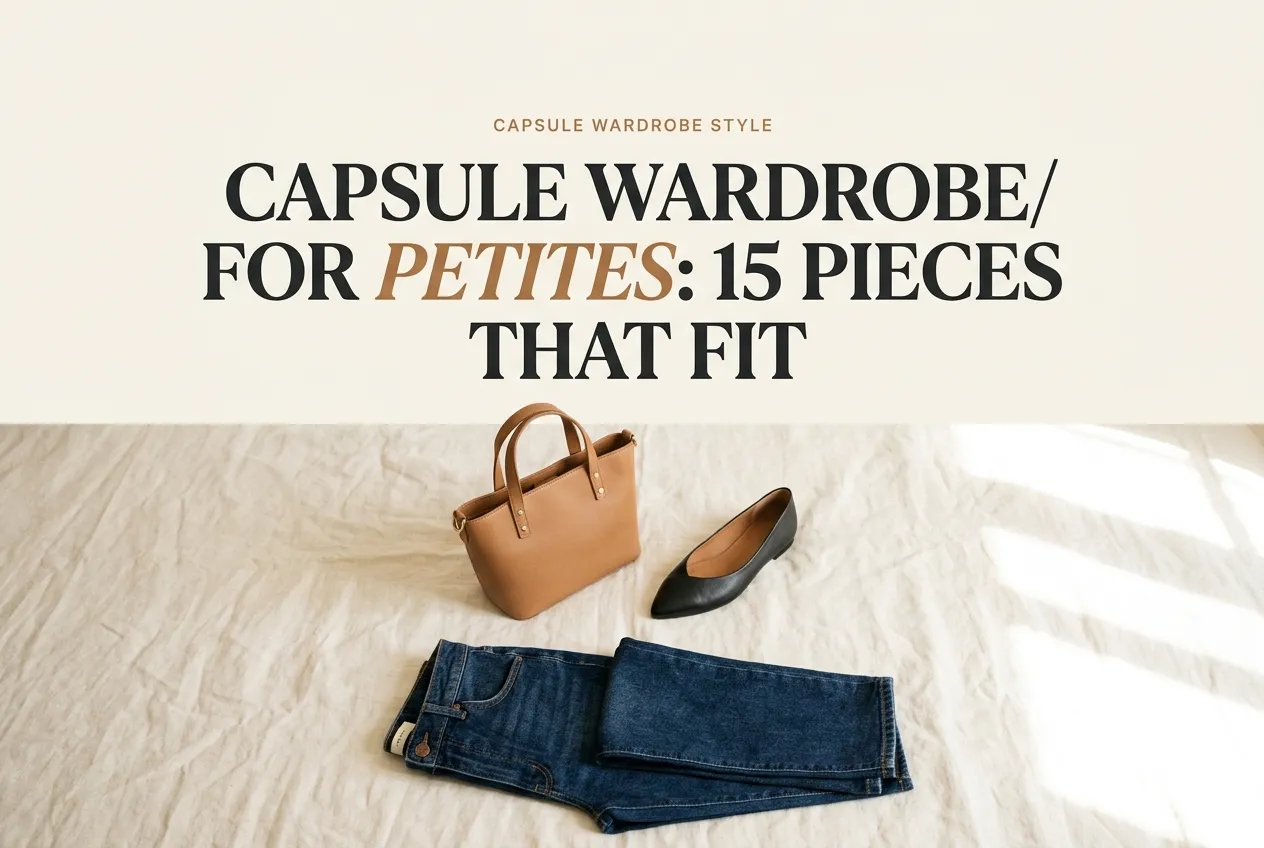
You buy the jeans you saw on Pinterest. They arrive. You pull them on and watch six inches of denim pool around your ankles like a sad puddle. The blazer you loved sits on your shoulders like a dad’s coat. The midi dress hits at your shins instead of your calves. And the tee that looked breezy on the model is hanging halfway down your thighs.
If you’re 5’4″ or under, this is your closet on a Tuesday. A capsule wardrobe for petites is not about owning fewer clothes for the aesthetic of it. It’s about ending the daily insult of buying things that were never cut for your body in the first place. With the right 15 pieces, you stop drowning in fabric, stop tugging at hems, and stop spending $400 on returns. You also stop paying a tailor to fix what should have fit the first time.
I’m 5’2″. My closet went from 130 pieces to 41 over one rainy weekend, and the 15 anchors below are what stayed. I’ve tested every piece across at least three brands, and I’ll tell you the prop-room secrets that finally made dressing feel quick instead of like a hostage situation.
Why Most Petite Capsule Advice Falls Flat
Most articles aimed at petite women either default to “wear vertical stripes” (thanks, 1998) or give you a 10-piece list that was clearly written for someone 5’7″. Neither one solves the real problem.
The real problem is proportion math. Standard sizing assumes a 5’5″ to 5’7″ frame. A “regular” inseam is usually 30 to 32 inches. A “regular” sleeve runs 24 to 25 inches. A “regular” rise sits 10 to 12 inches above the inseam. Drop a 5’2″ body into those measurements and every line lands in the wrong place. Hems hit at the calf instead of the ankle. Sleeves swallow knuckles. The waistband cuts you in half at the rib cage and adds visual inches you don’t have.
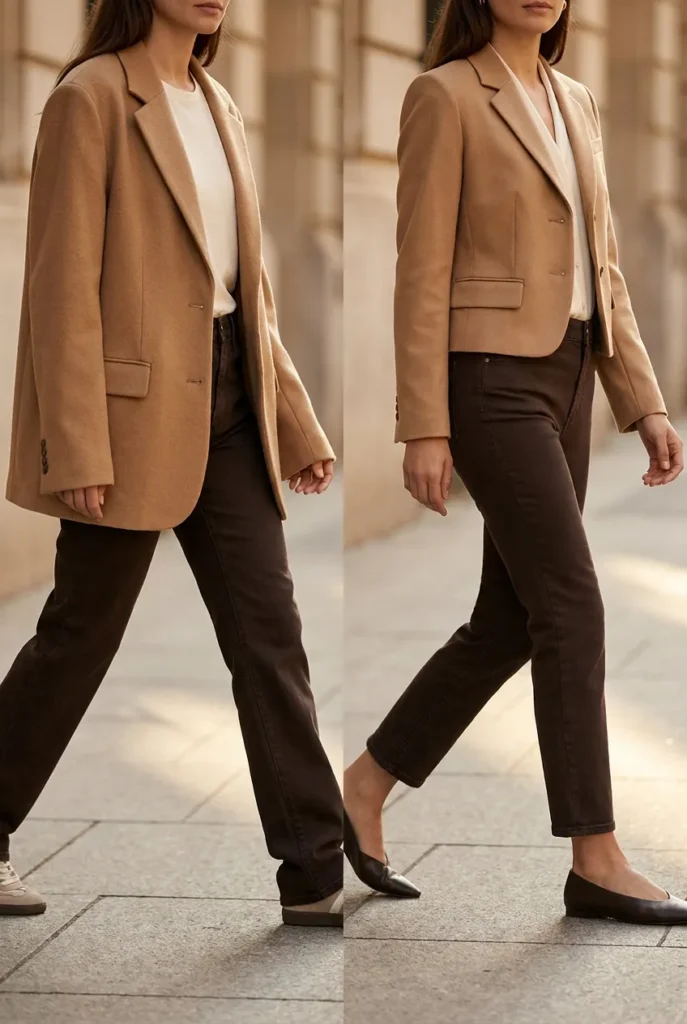
A capsule wardrobe for petites works only when every piece is cut for the actual scale of your body. That means petite-labeled cuts wherever possible, ankle-grazing rather than midi for trousers, cropped rather than full-length for blazers, and tops that hit at hip bone rather than mid-thigh.
The Petite Proportion Rules That Actually Work
Five rules. That’s it. Memorize these and roughly 80 percent of your bad-purchase problem disappears.
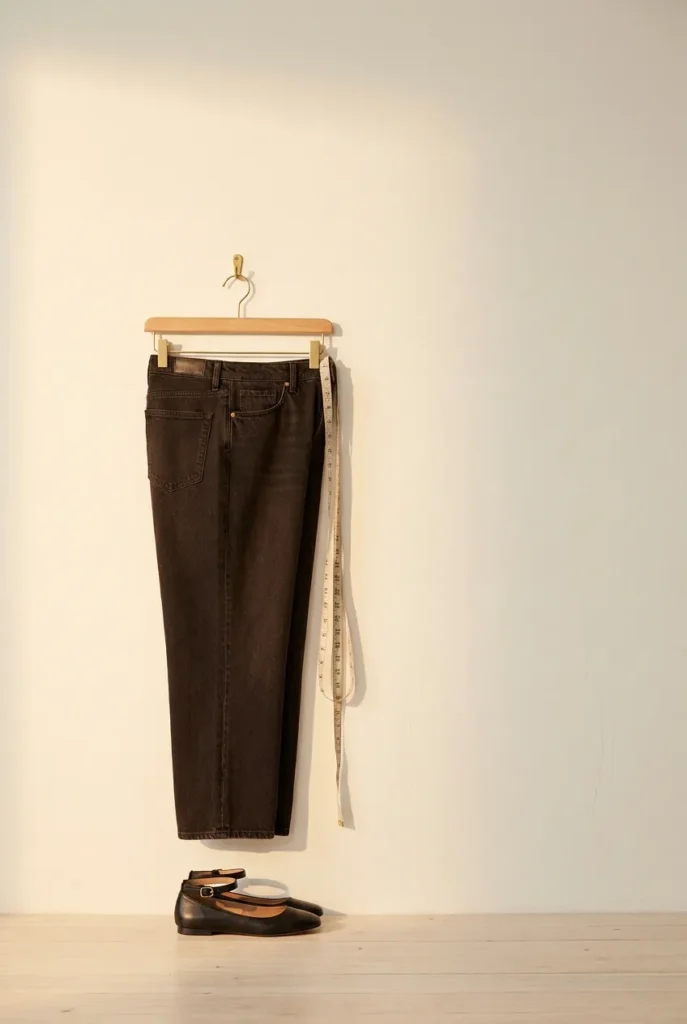
Rule 1: Ankle gap, not hem pool. Your trousers and jeans should end one-half to one inch above your ankle bone, or right at it. Anything that pools is dragging your eye downward and shrinking your apparent leg length.
Rule 2: Hip-bone tops, not mid-thigh tops. Tee shirts and blouses should land at hip bone or hip crest. Half-tuck or French tuck anything longer.
Rule 3: Rise determines your leg line. High-rise (10.5 to 11.5 inch front rise for a true petite cut) makes legs read 80 percent of total height instead of 60 percent. Low-rise on a petite frame visually slices the body in half at the wrong point.
Rule 4: Sleeve hits at wrist bone. Not over the knuckle. Not three inches above. Right at the bone. A petite blazer with the sleeves rolled once will always look more intentional than a regular blazer with the sleeves drooping.
Rule 5: Fabric weight matters more than you think. Heavy denim, stiff wool, and bulky knits drown a small frame. Midweight ponte, tropical wool, lightweight cashmere, and stretch denim follow the body line. If a fabric stands up on its own, walk away.
For a deeper dive on which shades amplify or wash out a petite frame, this guide on how to find your best wardrobe colors pairs perfectly with the color section below.
The 15 Pieces in Your Petite Capsule Wardrobe
Ten pieces is the bare floor that competitors stop at. Fifteen is what a real petite wardrobe needs to cover work, weekend, dinner, errand, transitional weather, and the one wedding you forgot about. Here is the full breakdown.
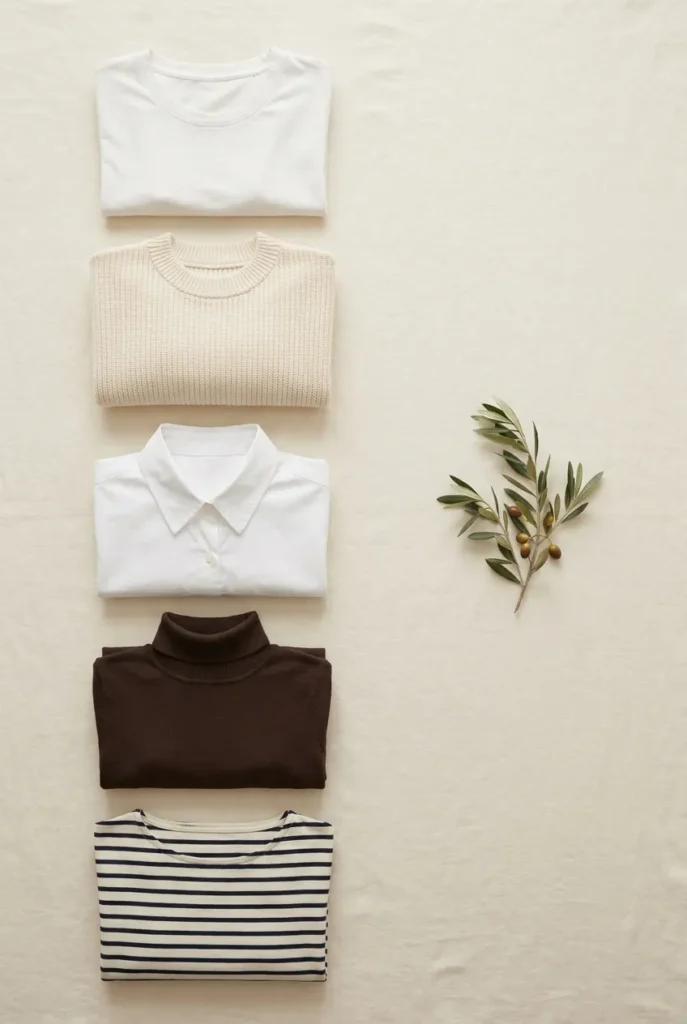
The Tops (5 pieces)
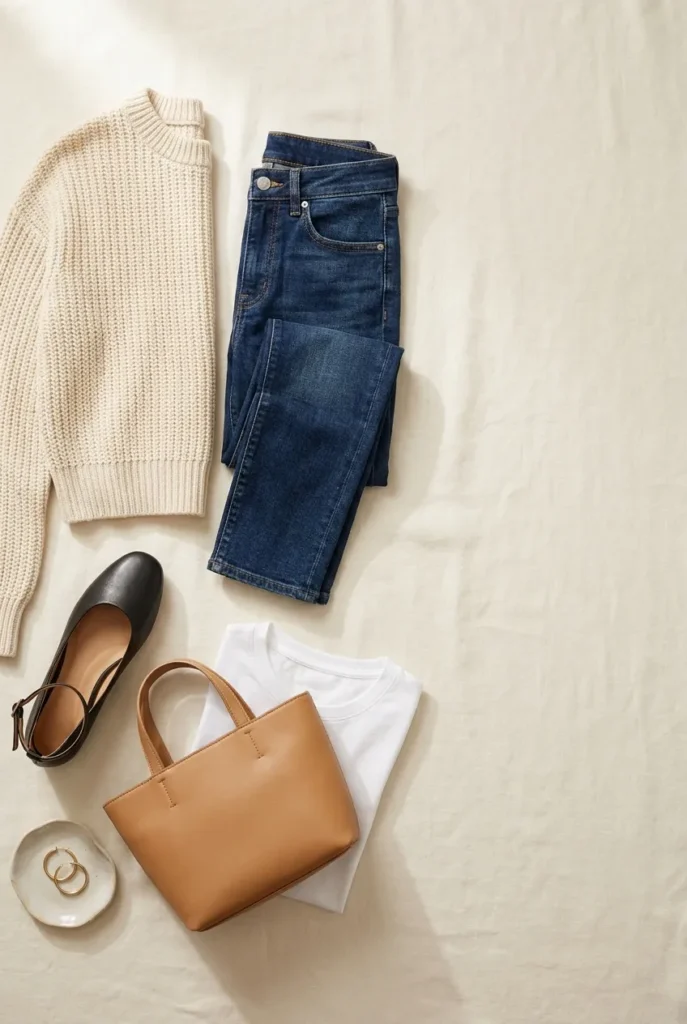
Piece 1: The petite-cut white tee. Hip bone hem, slightly cropped sleeve, soft cotton with one percent elastane so it sits flat without sagging. Old Navy and Uniqlo both offer reliable petite cuts in the $15 to $25 range.
Piece 2: The cream cropped knit sweater. Lightweight merino or cotton blend. Sits at high hip, can be half-tucked into anything. J.Crew and Quince both run petite knit sizing in the $50 to $98 range, with Quince often the better value for the same fabric weight.
Piece 3: The white button-down, petite cut. Look for a 23-inch sleeve and a 24-inch overall length. Madewell’s petite poplin and Uniqlo’s petite line both deliver. $30 to $98 range.
Piece 4: The fitted black or espresso turtleneck. Pulls the eye up to the face, which is the petite equivalent of a vertical line. Wear under blazers, under slip dresses, alone with jeans. Banana Republic petite and Uniqlo Heattech versions run $30 to $80.
Piece 5: The striped Breton tee, petite. The one playful basic. Adds a horizontal element that, despite the old myth, actually works on a petite frame as long as the stripe width stays under one-half inch.
The Bottoms (4 pieces)
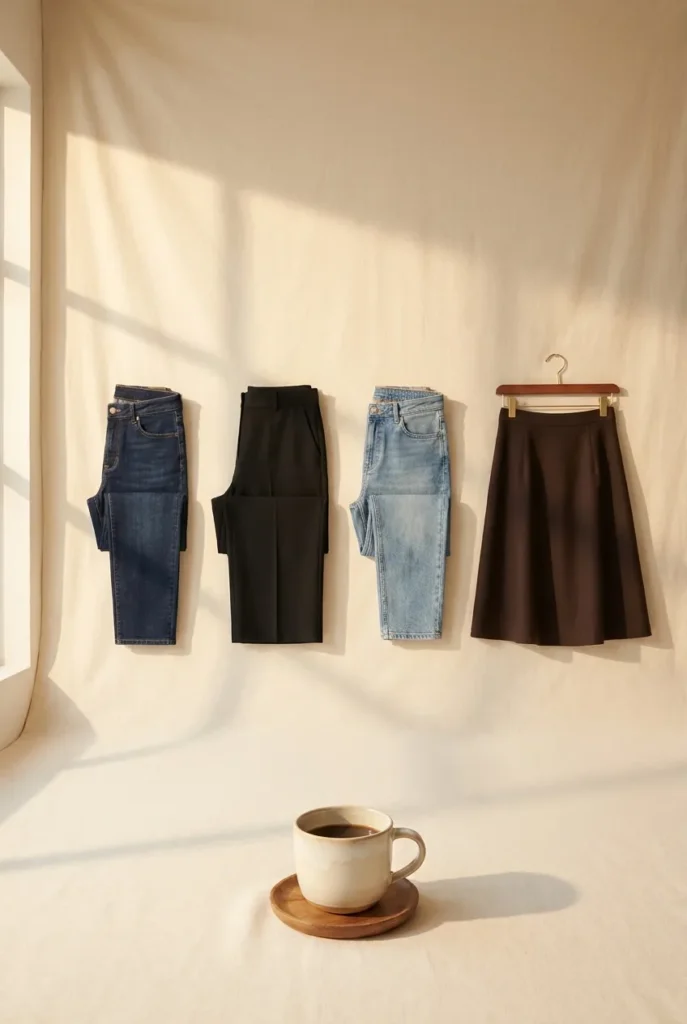
Piece 6: High-rise slim straight jeans in dark wash. Petite cut. 26 to 27 inch inseam. Front rise 10.5 to 11.5 inches. Madewell, Abercrombie petite, and Levi’s all have versions in the $69 to $138 range.
Piece 7: Ankle-grazing wide-leg trouser in black. This is the workhorse. Banana Republic Sloan, Quince Stretch Crepe, and Ann Taylor petite all hit. Look for a 27-inch inseam max. $50 to $148.
Piece 8: Slim straight cropped jean in light wash. For warmer months. Same rules as Piece 6 but in a lighter wash for spring and summer.
Piece 9: Midi skirt that hits at the calf, not the shin. A petite midi runs 27 to 28 inches in length. Anything longer cuts the leg at the widest point. A-line or slim straight, in a midweight ponte or tropical wool.
The Dresses, Layers, and Shoes (6 pieces)
Piece 10: A petite midi dress in a solid neutral. Slip silhouette or shirt-dress silhouette. Hem at calf, not shin.
Piece 11: A petite cropped blazer in camel or black. Sleeve at wrist bone, length at hip bone. Theory, Banana Republic, and Quince all have strong petite versions.
Piece 12: A short trench coat, petite length. Standard trench coats end mid-calf on a 5’7″ model, which means knee on a 5’2″ frame. A petite trench ends at upper thigh to mid-thigh. J.Crew petite and Banana Republic petite both make them.
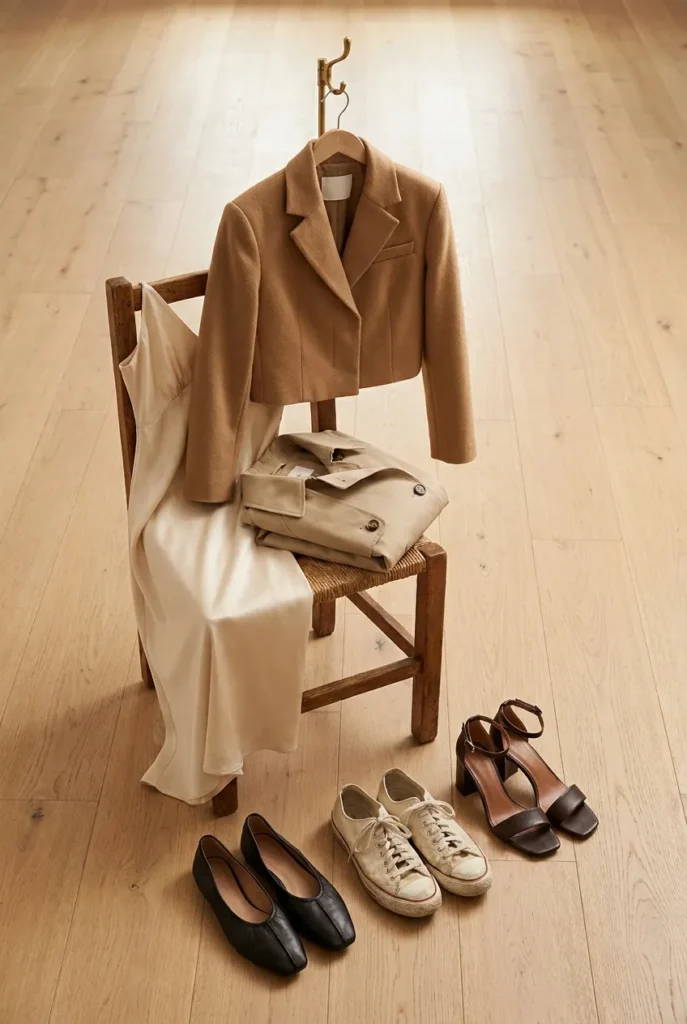
Piece 13: Pointed-toe ballet flat or mule. The pointed toe extends the visual line of the leg by 1 to 2 inches. Rounded toes stop the eye short.
Piece 14: A clean low-top white sneaker. Veja Esplar, Common Projects archetype, or the Madewell Court. Low-profile, no chunky sole.
Piece 15: An ankle-strap heeled sandal or block-heel mule. For dinners. Three-inch heel max. Ankle straps technically shorten the leg but the strap should sit below the ankle bone, not above, to minimize the chop.
Color Strategy for Petite Frames
Color does more visual work on a petite frame than on a tall one. A 5’2″ body wearing three colors looks busier than a 5’8″ body wearing three colors, because the same number of color blocks divides a smaller canvas more aggressively.
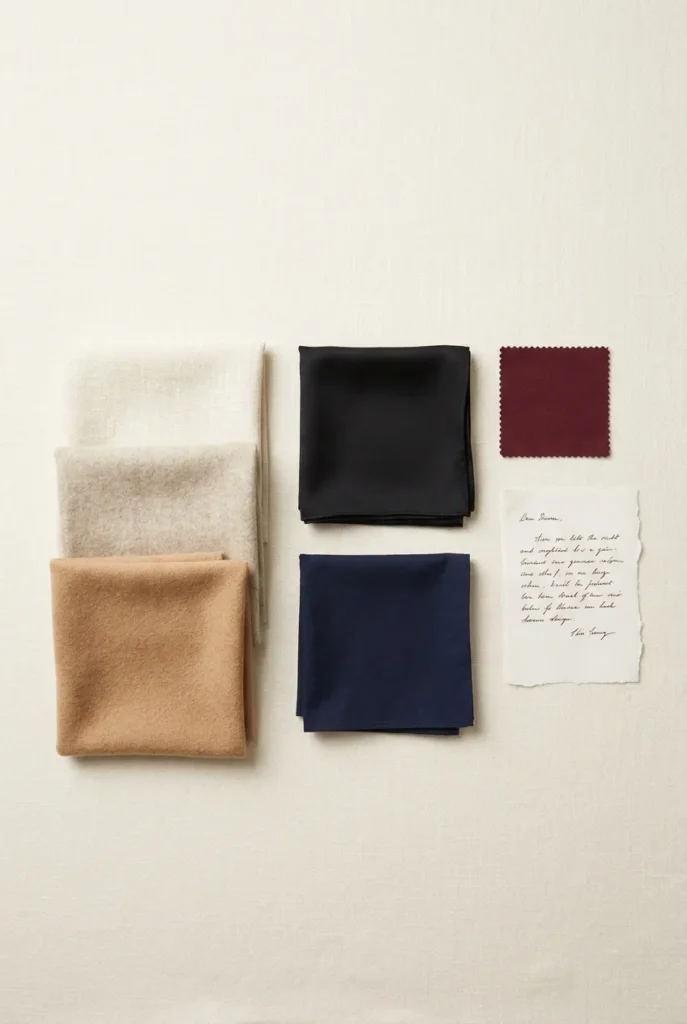
The petite-friendly approach is the 60-30-10 split. Sixty percent of your capsule sits in one neutral base (ivory, oat, camel, or espresso). Thirty percent sits in a secondary neutral (soft black, navy, taupe, or sand). Ten percent is your accent (burgundy, butter yellow, dusty terracotta, sage, cobalt). Within an outfit, monochromatic dressing (top and bottom in the same color family) elongates the line and adds an honest inch or two of visual height.
If you want to take this further, the system from the quiet luxury aesthetic on a real budget pairs almost perfectly with petite proportion rules, since both lean on tonal dressing and quality fabric.
12 Outfit Formulas from Your 15 Pieces
This is where 15 pieces multiply. Each formula uses only the 15 listed above. Save this section.
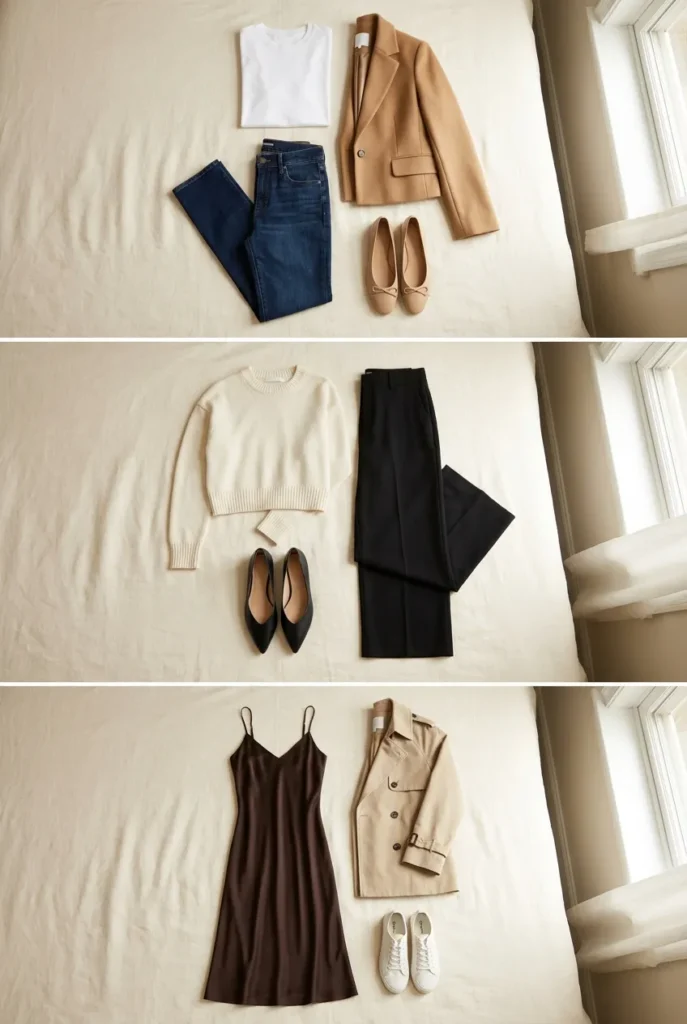
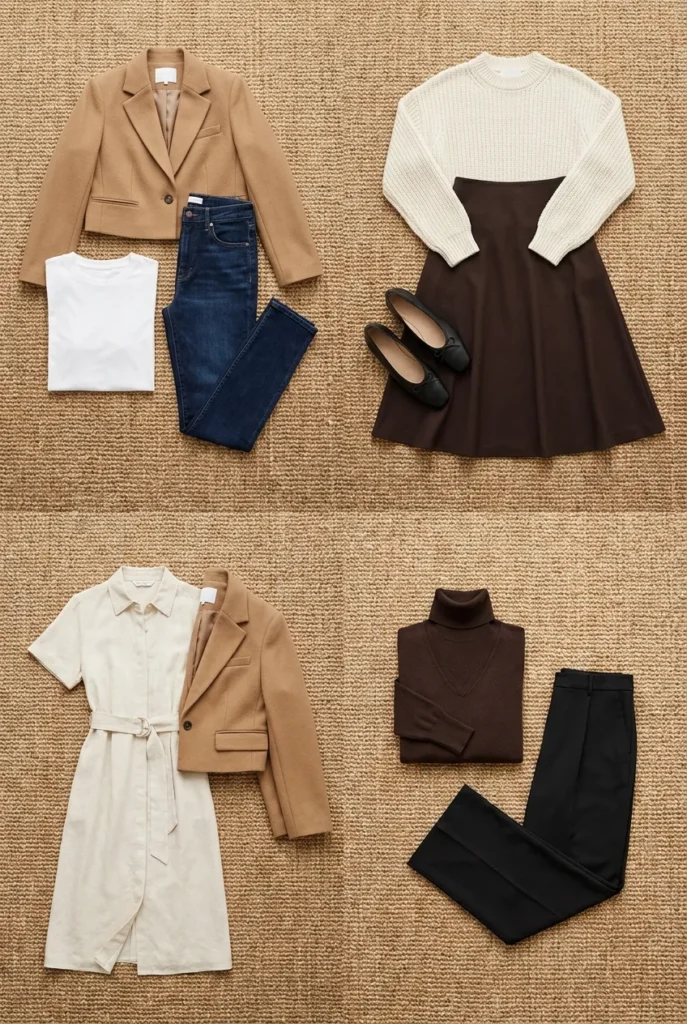
- White tee + dark wash slim straight jean + ballet flat + camel cropped blazer. Errands that double as lunch.
- Cream cropped knit + black ankle wide-leg trouser + pointed-toe flat. Smart-casual office.
- White button-down half-tucked + light wash crop jean + white sneaker. Saturday morning.
- Espresso turtleneck + black wide-leg trouser + cropped blazer + heeled sandal. Dinner out.
- Slip midi dress + cropped blazer + ballet flat. Spring brunch.
- Slip midi dress + white sneaker + short trench. Travel day.
- Breton tee + dark slim straight jean + ballet flat. The default uniform.
- White button-down tucked into midi skirt + heeled sandal. Garden wedding guest.
- Cream knit + midi skirt + ballet flat. Fall workday.
- Espresso turtleneck + dark slim straight jean + cropped blazer + sneaker. Weekend layering.
- White tee + midi skirt + white sneaker. Summer Sunday.
- Slip midi + turtleneck underneath + ankle boot or block heel + short trench. Cold-weather dress styling.
That is 12 outfits, no repeats, from 15 pieces. Add a scarf, a belt, or earrings and you have 20-plus before anyone notices you’ve worn the same trouser twice.
For more on the technical side, layering tips that don’t overwhelm small frames is worth bookmarking before fall.
Where to Shop: The Petite-Friendly US Retailer Map
Not every brand cuts a real petite. Some only shorten the inseam and call it a day. Here is the honest map by price tier.
Mass tier ($10 to $50): Old Navy petite, Gap petite, Uniqlo (no formal petite line but the XS to S cuts run short-friendly), Amazon Essentials petite, Target’s A New Day petite.
Mid tier ($50 to $150): Madewell petite (strongest denim in this range), J.Crew petite, Banana Republic petite (best workwear), Quince petite, Loft petite, Ann Taylor petite, Abercrombie petite.
Contemporary tier ($150 to $400): Theory petite (limited but excellent), Reformation (their dresses run short-friendly without a formal petite line), Vince petite at Nordstrom sale events, Veronica Beard petite.
Investment tier ($400+): Massimo Dutti for tonal workwear, Toteme for tonal dressing, occasional petite-friendly cuts from The Row. Most investment brands skip petite sizing entirely, which is honestly one of the bigger frustrations in this category.
You can also shop the petite department at Nordstrom for a consolidated multi-brand petite filter, which saves a real hour of cross-referencing.
I bought the $295 Theory cropped blazer two years ago, returned it because the sleeve still hit past my wrist bone, and the $89 Banana Republic petite version outperformed it on fit. Investment-tier doesn’t automatically win on petite. Cut and grading matter more than price.
Body-Type Tweaks Within Petite
Petite is not one shape. Two women at 5’2″ can need completely different cuts based on torso, hip, and bust ratio.
Petite hourglass: lean into the cropped blazer and high-rise straight jean. Belt the midi dress at natural waist. Skip oversize anything.
Petite pear: A-line midi skirts and wide-leg trousers balance the hip. Bring visual weight up top with the cropped knit, the turtleneck, and a brighter accent color near the face.
Petite rectangle: A belted midi dress and a half-tucked button-down create the curve the silhouette doesn’t naturally have. Layer the cropped blazer over a fitted turtleneck for shape.
Petite apple: A V-neck deepens the vertical line and draws the eye down from the bust. Trade the cropped knit for a slightly longer hip-bone length. Wide-leg trousers balance the midsection.
Petite over 50: the same proportion math applies, but fabric quality starts pulling more weight than trend. Heavier midweight ponte and tropical wool sit better than lightweight cotton, and a structured cropped blazer adds the shoulder line that gets softer with time.
Care, Tailoring, and the One Hem Rule
Even with petite cuts, expect to tailor one out of every four pieces. The most common adjustment is shortening a sleeve by half an inch. Budget $15 to $25 per simple alteration at a local tailor. Anything beyond a hem or a sleeve usually means the cut was wrong from the start.
For longevity, wash all knit pieces inside out on cold and lay flat to dry. Hang trousers on clip hangers from the hem (not folded over the bar) to avoid the front crease that adds visual width. Steam, do not iron, anything petite-cut. Iron heat can warp the carefully graded shoulder line.
Frequently Asked Questions
What is the 3-3-3 rule for a wardrobe?
The 3-3-3 rule says you wear three tops, three bottoms, and three pairs of shoes for a set period (often a week or a month) to build outfit confidence with limited choices. For petites, this works well because it forces you to test which of your pieces actually mix and which are dead weight. Pick three petite-fit tops, three petite-cut bottoms, and three shoes from the 15-piece list above for a week.
What is the 3-3-3 rule for packing?
The packing version uses the same math: three tops, three bottoms, three pairs of shoes for a trip up to nine days. For petites, the trick is choosing three bottoms that all share the same hem rules so your shoes work with all of them. One ankle-grazing trouser, one slim straight jean, one midi skirt covers most travel.
What should a petite woman over 60 include in her capsule wardrobe?
The same 15-piece structure works, with two adjustments. Trade the cropped knit for a slightly longer hip-bone length cardigan in a heavier ponte or midweight cashmere, and add a third pair of low, supportive shoes such as a leather walking flat. Stick with the proportion rules. They don’t change with age.
What makes a petite woman look polished and put-together?
Three things: hems that land at the right break (ankle bone for trousers, hip bone for tops, calf for midi skirts), fabric that follows the body line instead of standing away from it, and a tight color palette where most pieces share a tonal base. None of those require expensive clothing. They require correctly cut clothing.
Do petite women have to tailor everything?
No. The whole point of buying petite-cut pieces is reducing tailoring to roughly one in four pieces. If a brand requires you to tailor every purchase, that brand doesn’t actually cut a true petite and you should move on.
Can I wear wide-leg trousers if I’m 5’1″?
Yes, with two rules. The inseam must be 27 inches or shorter so the hem ends at the ankle bone, and the rise must be high (10.5 inches or more) to lift the leg line. A wide-leg trouser that ticks both boxes elongates a petite frame more than a slim straight cut.
How many pieces should a petite capsule wardrobe have?
Fifteen anchor pieces covers four seasons of work, weekend, and dressed-up wear when you add one to three light seasonal swap-ins each quarter. Ten is too thin to handle real life. Twenty starts to dilute the cohesion that makes a capsule work in the first place.
Final Thoughts
A capsule wardrobe for petites is not a smaller version of a regular capsule. It’s a recut version. Hems in different places. Rises in different places. Sleeves in different places. Once you stop forcing your body into clothes that were never measured for it, the morning ten-minute outfit panic disappears.
Start with the 15 pieces. Apply the five proportion rules. Pick one neutral base for 60 percent of your closet. The Pinterest pins of perfectly polished short women you’ve been saving aren’t unreachable. Their secret is almost always cut and proportion, not a designer label.
For the next deep dive, Vogue’s take on petite proportion rules is worth fifteen minutes, and the 12 outfit formulas above are worth saving to your phone for the next time you stand in front of an open closet wondering what fits.
Keep reading
How to Style a Button-Down Shirt for Plus-Size Women: 8 Outfits That Work
You bought the shirt because it looked crisp on the hanger. Then you buttoned it, reached for your coffee, and watched the...
How to Style a Button-Down Shirt for Women Over 50: 8 Outfits That Work
You probably own a button-down shirt. Most of us do. It hangs in the closet looking crisp and responsible, and every time...
How to Style a Button-Down Shirt: 8 Outfits for Every Day
Most closets have one. A crisp shirt bought for an interview, a blue oxford that looked smart in the store, a striped...