
Closet Organization Ideas: How to Organize a Small Closet Without Buying a Bigger One
You open your closet, scan the rod twice, and somehow have nothing to wear. Sound familiar? I have stood in front of a stuffed reach-in closet at 7:14 a.m. more times than I want to admit, holding two shirts I do not love and running late for a meeting. The closet was not the problem. The system was.
These closet organization ideas come from years of refining a small closet around a capsule wardrobe, plus a stubborn refusal to rent a storage unit just to fit my clothes. Whether you have a 4-foot reach-in, a tiny apartment closet, or a small walk in, the goal is the same. Make every piece visible, every outfit obvious, and every morning faster.
Who This Works For
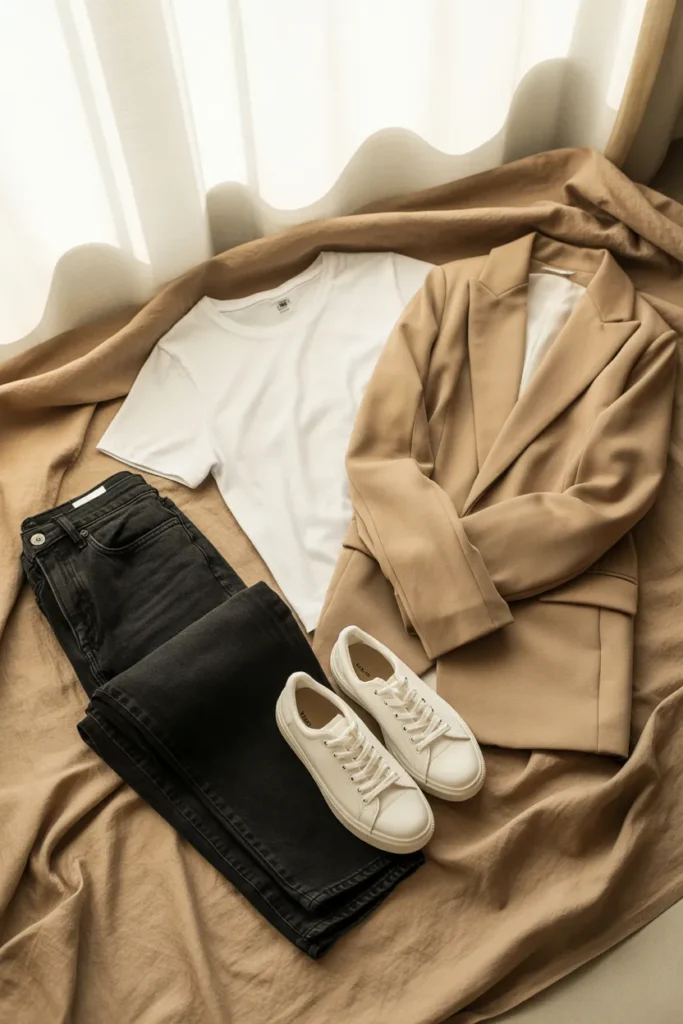
These ideas work for small reach-in closets (3 to 5 feet of rod), apartment-size walk-ins (under 40 square feet), and shared closets where you have one side to work with. Most tips are climate-flexible. I will call out cold-winter and humid-summer adjustments where they matter.
Size-wise, every recommendation is built for size-inclusive wardrobes. Plus-size readers will find that wider hangers, deeper bins, and longer hanging zones come up throughout. Petite readers, you’ll see notes on cropping shelf heights and shorter hanging sections so your closet works for your proportions, not against them.
This is also for readers who want a closet that supports a capsule wardrobe rather than a closet stuffed with everything you have ever owned. If you are open to editing as you organize, the system below saves you hours every week.
Start With a Capsule Audit, Not a Storage Run
The biggest closet organization mistake I see is buying bins before editing clothes. You end up with beautifully organized pieces you do not wear. Frustrating, expensive, and useless.
Pull everything out. Yes, everything. Lay it on the bed in three piles: love and wear often, love but rarely wear, and neutral or negative feelings. The third pile is your donate or sell pile, no negotiation. The second pile gets a 30-day test. If you do not wear it in 30 days, it joins pile three.
This audit is where capsule thinking earns its spot. You are not just organizing a closet, you are confirming what your wardrobe actually is. For a deeper edit framework, our capsule wardrobe brands guide covers which labels are worth the rod space and which are not.
Use the 80/20 Rule to Set Your Rod Limit
Most of us wear 20% of our clothes 80% of the time. The 20% deserves the prime real estate. Everything else competes for what is left.
Count the hangers in your closet. Now decide how many your space holds when each piece has breathing room (a finger-width gap). That is your rod limit. Anything above that limit forces you to edit, which is exactly what a small closet needs.
For a typical 4-foot rod, that’s 30 to 40 hangers max. Cramming in 60 means wrinkled clothes, hidden pieces, and the morning panic feeling.
Go Vertical Before You Go Wider
A small closet rarely needs more floor space. It needs more height. Most reach-in closets have 18 to 30 inches of dead space above the top shelf, and that is your easiest win.
Add a second shelf above the existing one for off-season storage, evening bags, or hat boxes. A simple wire shelf from Container Store or a stained pine shelf from Home Depot works. For renters, tension shelves install without holes.
If your rod sits at standard 60-inch height and you mostly hang shirts and folded pants, install a second rod underneath. Doubles your hanging capacity in one afternoon. Cost: about $25 in parts.
Switch to Matching Slim Hangers (The Single Best Upgrade)
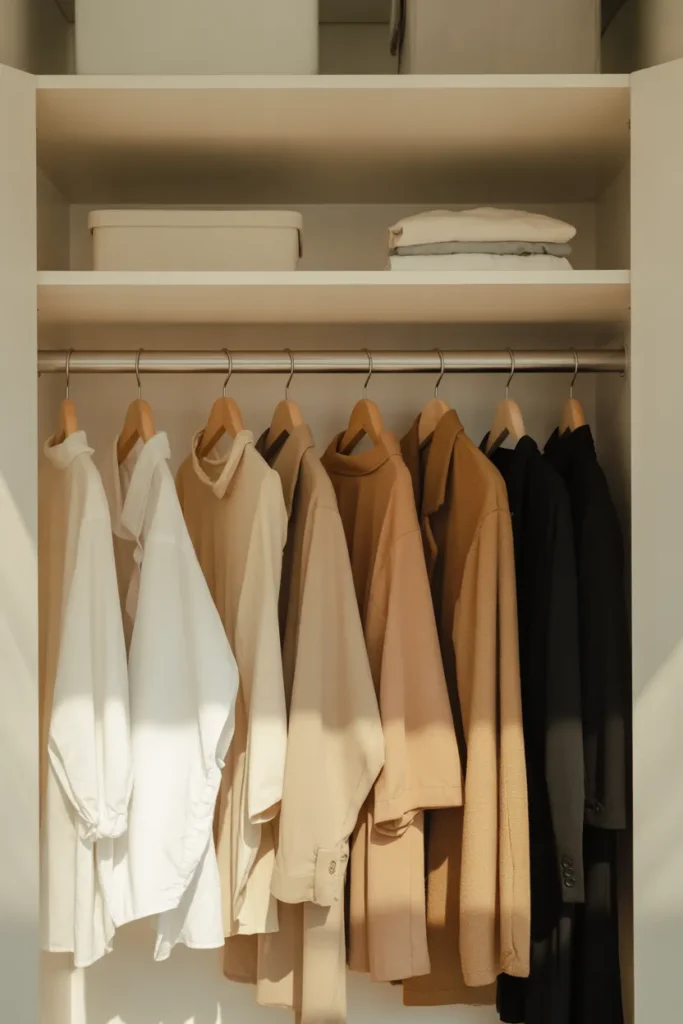
If you take one tip from this article, take this one. Matching slim velvet hangers transform a small closet faster than any other change. They reclaim 40% of rod space, prevent shoulder bumps on knits, and make your closet look like a boutique instead of a thrift store.
I tested four brands over two years. The thin velvet ones from Costco and Amazon Basics held up best. Wood hangers look beautiful on Pinterest but eat space. Save those for blazers and coats only.
For plus-size pieces, look for hangers rated for heavier garments and slightly wider shoulder spans. Most slim velvet hangers handle clothing through 3X without bending.
Organize by Outfit, Not Just by Category
This is the angle no closet article talks about, and it is the one that changed my mornings. Most guides tell you to group by category: shirts with shirts, pants with pants, dresses with dresses. That works for inventory. It does not work for getting dressed.
Try this instead. After categories are sorted, walk through your wardrobe and identify your top 8 to 12 outfit formulas. For real ones that work, our outfit formulas that work post breaks down combinations you can pull from a small closet without thinking.
Then use color-coded clip rings or simple ribbon ties to mark complete outfits that already work together. When you are running late, you reach for an outfit, not a hunt.
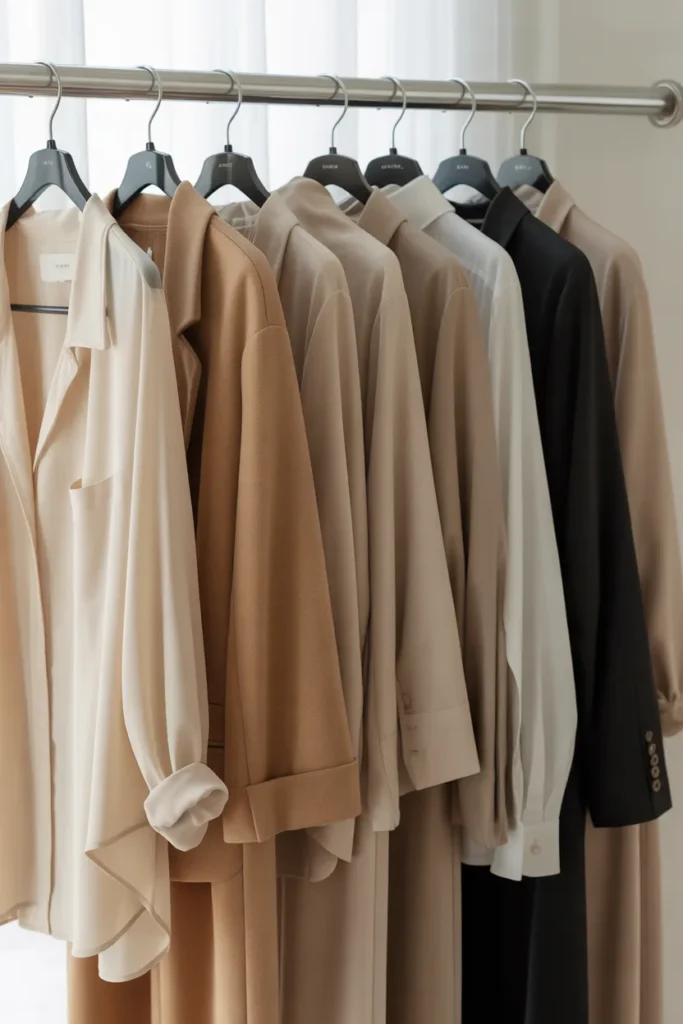
Anchor Your Closet to a Tight Color Palette
A tight color palette is the secret weapon of every closet that looks intentional in photos. When everything plays nicely together, organizing is easier because anything works with anything.
Stick to 3 to 5 neutrals plus 1 or 2 accent colors. Cream, camel, black, white, and soft navy is a classic combination. If you want a starting point that already works, our capsule wardrobe color palette guide walks through palettes for every aesthetic from quiet luxury to clean girl.
Once your palette is tight, sort each category by color from light to dark. The closet looks calmer immediately, and you stop buying duplicate pieces because you can see what you already own.
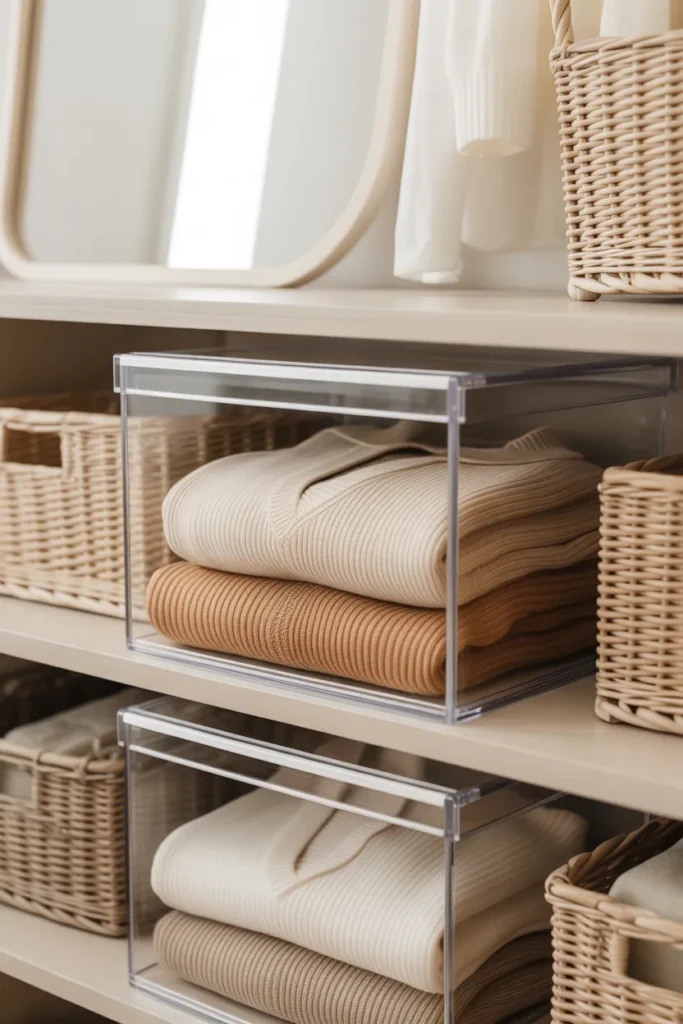
Tame the Top Shelf With Clear Bins
The top shelf is where good closets go to die. Sweaters get stained, scarves tangle, and you forget you own that handbag.
Use clear stackable bins, ideally with front-pull drawers so you can grab what you need without restacking. Group by type: one bin for off-season knits, one for swimwear, one for evening clutches. Label every bin. Future you will thank past you.
For cold winter readers, a cedar-lined bin protects wool and cashmere from moths. For humid summer climates, throw in a silica gel pack to prevent mildew on stored leather.
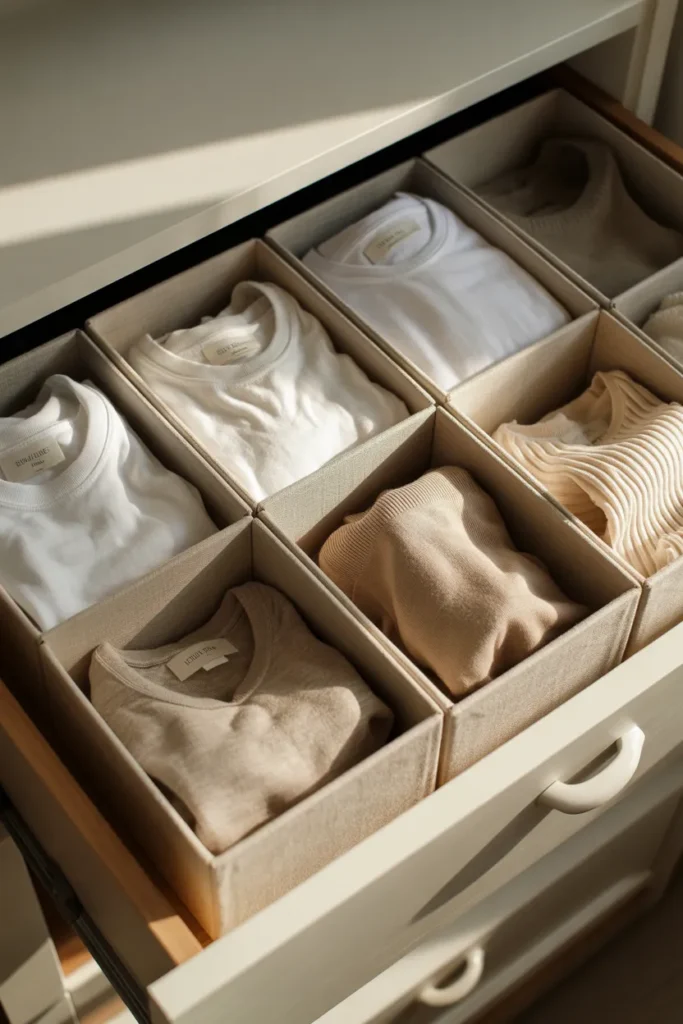
Use Drawer Dividers for Folded Capsule Basics
T-shirts, knit tops, leggings, and underwear belong in drawers, not stacked on shelves where they collapse the moment you grab one. If your closet has a built-in drawer unit, divide it. If it does not, a small 3-drawer rolling cart from Target or IKEA fits inside most closets and gives you fold storage instantly.
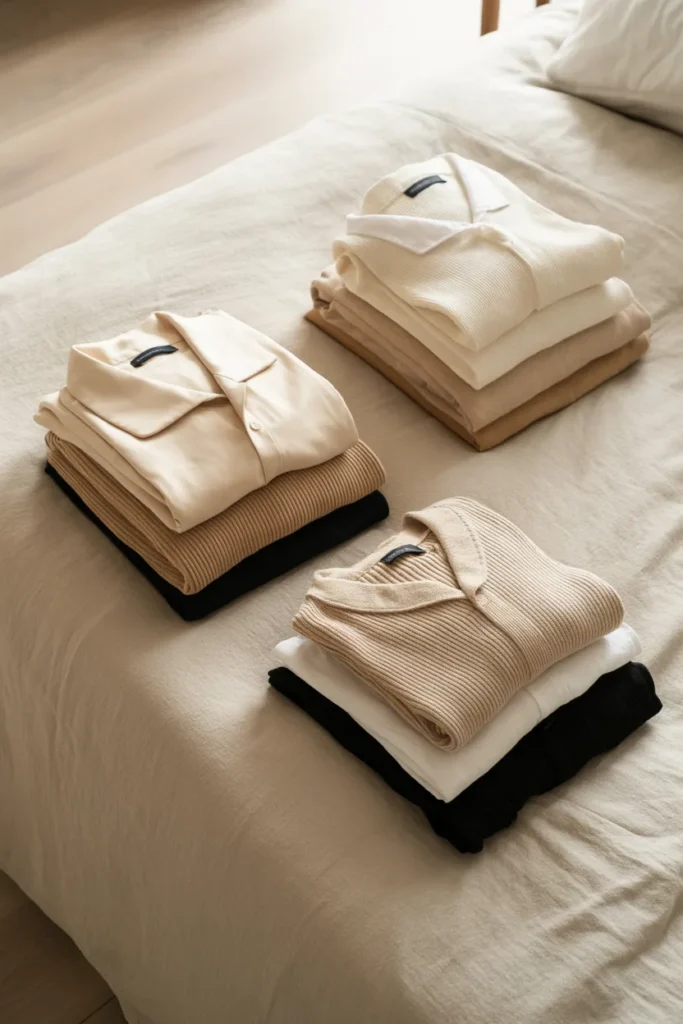
Use bamboo drawer dividers for structure. Fold using the file method (vertical, not stacked) so every piece is visible at a glance. A drawer of 12 white tees you can actually see beats a stack of 12 white tees you forget exist.
For petites, file folded jeans and leggings work well in shallower drawers. For tall sizes, deeper drawers prevent the fold from poking up.
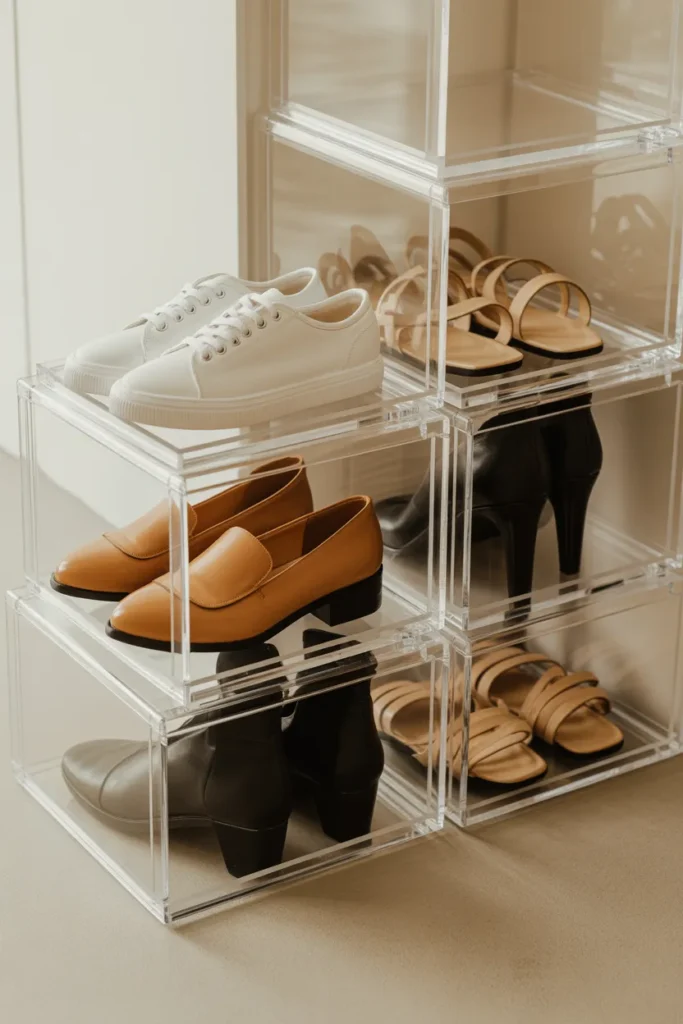
Solve Shoe Storage Without Hijacking the Floor
Shoes on a small closet floor look chaotic and collect dust. Three approaches work, and the right one depends on your space.
A clear stackable shoe organizer (Container Store and Amazon both carry good ones) lets you see every pair and double your floor capacity. Over-the-door shoe pockets work for flats and sneakers but stretch out heels. A simple 2-tier shoe rack on the floor works if you keep the count under 10 pairs.
Capsule wardrobe shoe rule of thumb: 8 to 12 pairs covers most lifestyles. White sneakers, loafers, ankle boots, knee boots for cold climates, sandals for warm, one heel, one flat, one trainer. If you have more than 15 pairs in active rotation, the closet is fighting your wardrobe.
Hang the Right Things, Fold the Rest
Not everything belongs on a hanger. Hanging knits stretches them out at the shoulders permanently. Hanging jeans wastes rod space. Hanging tees creates hanger bumps that ruin the line.
Hang: blazers, coats, button-down shirts (100% cotton wrinkles fast, hang it), dresses, silk blouses, structured pants, and skirts.
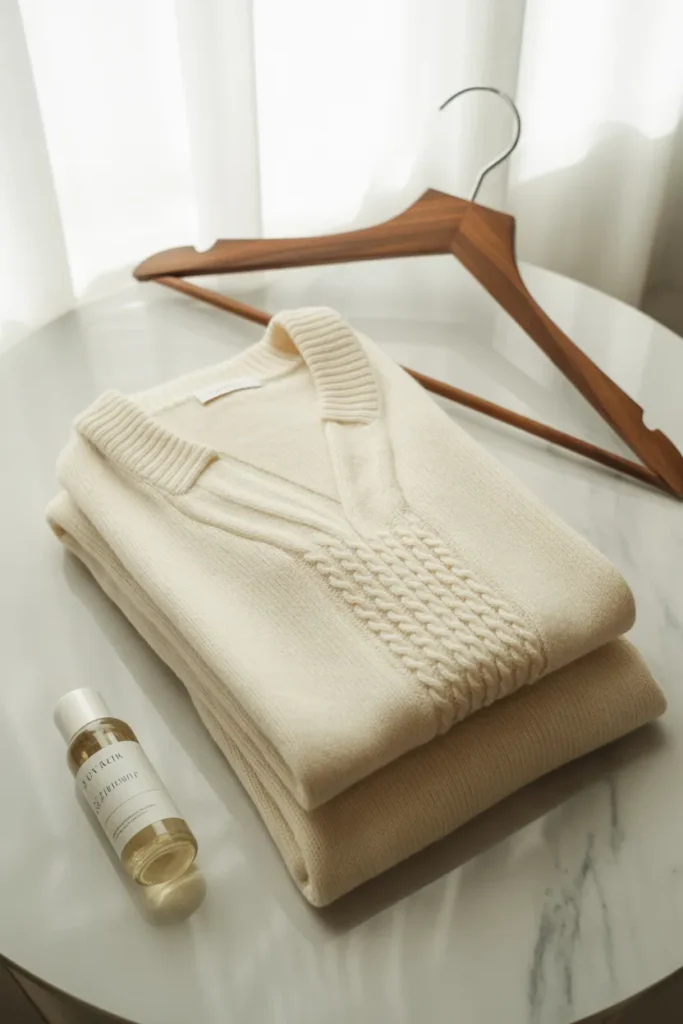
Fold: sweaters (especially merino wool and cashmere, which stretch under their own weight), tees, jeans, leggings, knit tops, and athletic wear.
This single shift creates rod space without removing a single piece from your wardrobe.
Build the Look With What You Already Own
You do not need to spend $300 at Container Store to organize a small closet. Most homes already have what works.
Shoeboxes, especially the sturdy ones from boots, become drawer dividers when cut to height. Mason jars from the kitchen hold belts, hair ties, and jewelry. A small basket from your bathroom works for scarves. The 3-drawer cart you used in college fits inside most closet floors.
I organized my first capsule closet on a $40 budget. The actual upgrade was editing my wardrobe down by 60 pieces, not buying storage. The clothes were the cost. The bins were almost free.
The 5-Layer Closet Method (Screenshot This)
Here is the framework I use every season. Each layer makes the next one easier.
- Edit: capsule audit, donate or sell, hit your rod limit
- Categorize: group by type, then by color light to dark
- Hang or fold: hang only what should be hung, fold the rest
- Vertical stack: clear bins on top shelf, drawer dividers below
- Outfit mark: flag 8 to 12 complete outfits with clip rings or ribbon
Run through these five layers once at the start of each season. The closet stays organized for months instead of weeks.
Set Up a Seasonal Rotation System
This is the second gap angle, and it is the one that keeps a small closet small forever. Most people store all four seasons of clothing in one closet. That guarantees overcrowding.
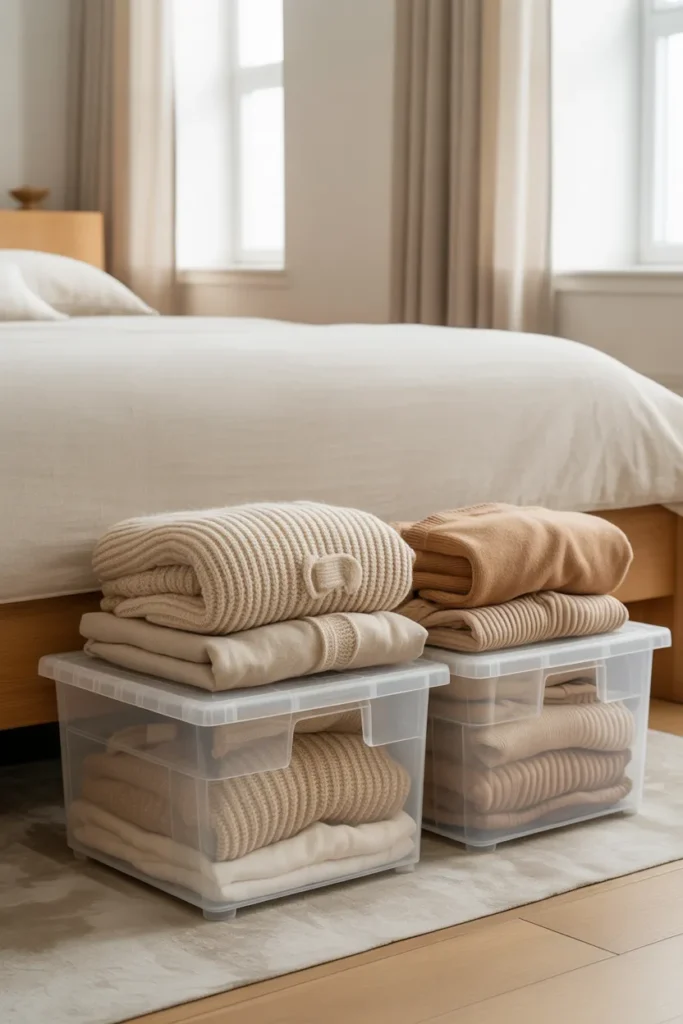
Twice a year (early March and early September works for most US climates), rotate. Move the off-season pieces to clear bins under the bed, in a hallway closet, or on the very top shelf. Bring the in-season pieces forward.
For cold-winter climates, rotate heavy knits, wool coats, and lined boots in October. For humid-summer climates, store linen and cotton tees with a silica pack to prevent mildew. For mild climates like the Pacific Northwest, you may only rotate two layers instead of full swaps.
Vacuum-sealed bags work for puffer jackets and bulky coats only. Skip them for knits and natural fibers, which need to breathe to avoid permanent creasing.
Aesthetic Touches That Make a Small Closet Feel Curated
A few low-effort additions make a small closet feel intentional, which keeps you motivated to maintain it.
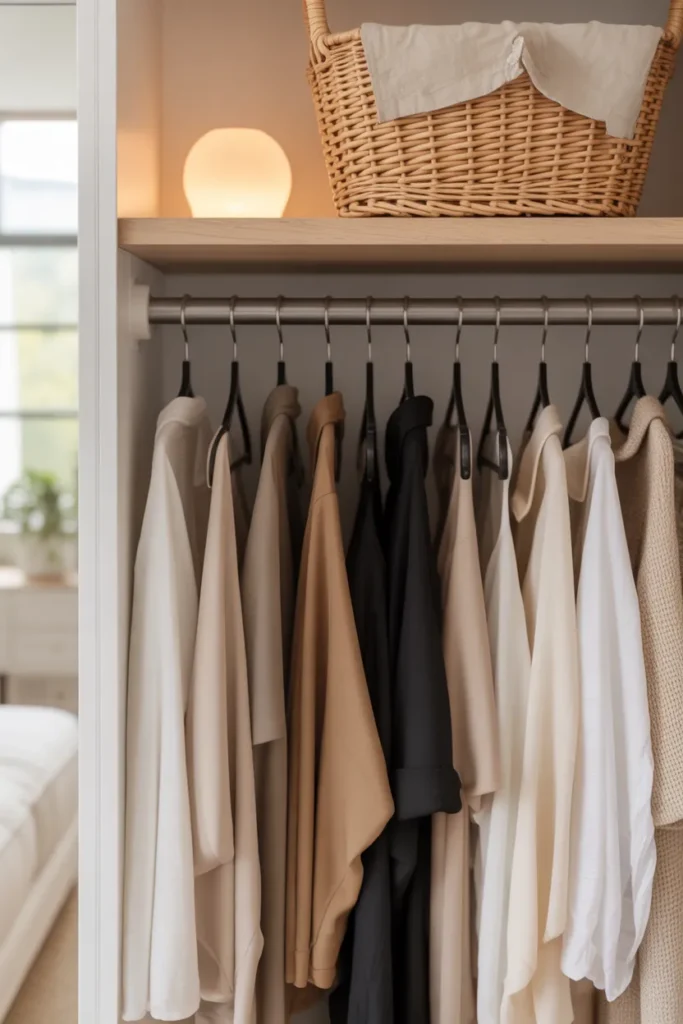
Matching hangers in one finish (matte black or natural wood) instantly elevate the visual. A small lamp or stick-on puck light brightens dark closets, especially helpful when you are dressing before sunrise. A linen-lined basket on the top shelf hides what you do not want to see.
For “quiet luxury” or “old money” leaning closets, add cedar blocks (smell amazing, protect wool). For “clean girl” or “scandi minimalist” leans, stick to white, cream, and natural wood tones with zero plastic visible.
A boutique-feel small closet outperforms a chaotic walk-in every time.
Common Closet Organizer Mistakes to Avoid
After helping friends redo their closets, the same mistakes show up over and over.
- Buying bins before editing clothes. Always edit first.
- Mixing hanger types. Standardize for instant calm.
- Storing all four seasons together in a small space.
- Over-the-door racks loaded with shoes that stretch out.
- Vacuum-sealing knits and natural fibers (they need to breathe).
- Hanging sweaters (shoulder bumps forever).
- Skipping labels on top-shelf bins.
- Buying a closet system before knowing your final wardrobe size.
Avoiding these saves $200 in storage you do not need and 10 hours of redoing the closet next year.
Caring for Your Closet Pieces So Organization Lasts
Organization fails when clothes deteriorate. A few care habits keep capsule pieces in rotation longer.
- Steam, do not iron, silk and merino wool
- Hand wash or dry-clean cashmere, never machine wash
- Hang knits to dry flat on a mesh rack, never on a hanger
- Spot clean blazers between dry cleanings to extend life
- Rotate sneakers and loafers (give each pair a day off to dry out)
Per Good Housekeeping Institute, proper fabric storage and care extends garment life significantly, which is the entire point of a capsule wardrobe.
Frequently Asked Questions
What is the rule of 3 for cleaning closets?
The rule of 3 means dividing every piece into one of three piles: keep, donate, or toss. No fourth pile, no maybe pile, no “I’ll decide later” pile. The forced choice is what makes the edit work.
What is the 80/20 rule in closet organization?
You wear 20% of your clothes 80% of the time. The 80/20 rule says give that 20% the prime hanging real estate at eye level and edit the rest hard. If something has not made it into the 20% in two seasons, it probably never will.
How do rich people organize their closets?
Wealthy clients I have read about (and the design magazines that profile them) consistently do the same things: small curated wardrobes, professional closet systems, matching hangers, color-coded sections, and clothes organized by outfit or occasion. The luxury is editing, not square footage. You can copy the method on any budget.
What should I not throw out when decluttering?
Sentimental pieces with real meaning, well-fitted basics that anchor outfits, classic outerwear like a wool coat or trench, quality denim that fits, and any investment pieces in good condition. Also keep tailoring-friendly items even if they fit slightly wrong now (a $20 tailor visit beats a $200 replacement).
How do I style closet organization if I do not own a dresser?
A 3-drawer rolling cart inside the closet replaces a dresser for under $40. Stack clear shoe boxes for fold storage. Use over-the-rod shelves for sweaters. Renters and small-apartment dwellers do this all the time and the system works.
What size storage bins should I order if I am between sizes?
For clothing storage, size up. Bins look fuller when slightly underfilled, clothes wrinkle less, and stacking stays stable. For drawer dividers, measure the drawer’s interior depth and width before ordering. Most US drawer dividers come adjustable to fit between 12 and 18 inches.
Are these closet organization ideas seasonal or year-round?
The system is year-round. The contents rotate twice a year (early spring and early fall in the US). The rod, shelves, bins, and dividers stay the same. Only the clothes inside swap.
How do I pack a capsule closet for travel?
Travel uses the same logic. Pack outfit formulas, not random pieces. Roll knits, fold structured items, and limit shoes to two pairs (one walking, one dressier). The 5-layer closet method translates directly to a carry-on. Per The American Cleaning Institute, garments stored properly in transit hold their shape better and need less steaming on arrival.
Save This for Your Next Capsule Wardrobe Refresh
A small closet is not a problem to solve. It is a tool that makes capsule dressing faster, cheaper, and more enjoyable. Edit first, organize second, and rotate seasonally. Your mornings get easier and your wardrobe gets sharper.
Pin this post so you have the 5-layer closet method handy for your next refresh, and tell me in the comments which idea you are trying first.
Keep reading

How to Make a Capsule Wardrobe Vision Board (That Actually Guides You)
A capsule wardrobe vision board is supposed to make getting dressed easier. Most of them do the opposite. You save four hundred...

The Capsule Wardrobe Template That Starts With Your Real Closet
You’ve downloaded a capsule wardrobe template before. Maybe three. There was a tidy list of thirty pieces, a suggested color palette, and...

7 Day Cruise Capsule Wardrobe: One Bag, Every Occasion Covered
A 7 day cruise capsule wardrobe sounds like a contradiction. One week, four dress codes, two climates, and a closet roughly the...