
How to Style Joggers Without Looking Like You Gave Up
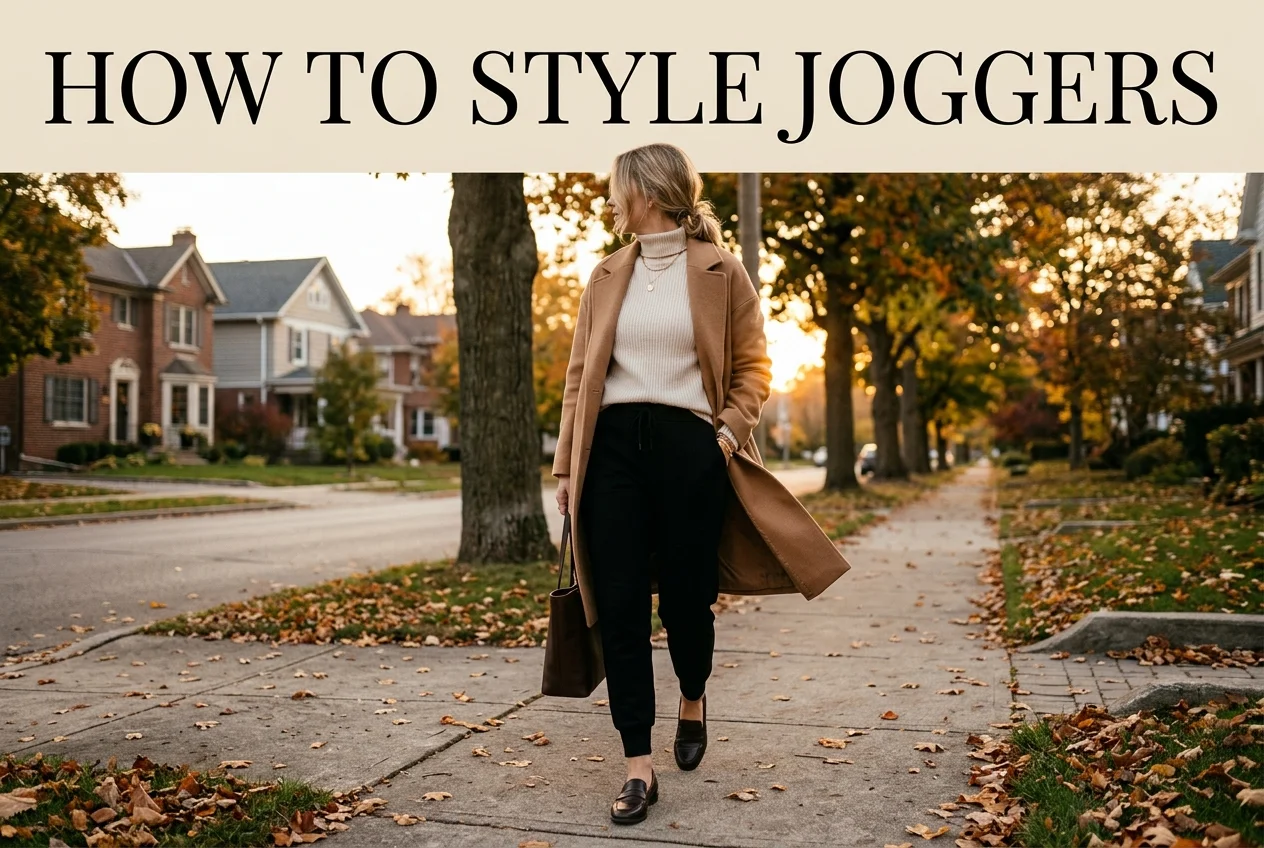
You own the joggers. You’ve seen the Pinterest pin where they look expensive and slouchy in the right way, and you’ve stood in front of your mirror in what is technically the same outfit, looking like you’re on your way to return a package. Same garment. Different result. Learning how to style joggers is less about buying different joggers and more about understanding the three mechanical things that separate “off duty” from “gave up.” Once you can see them, you can’t unsee them, and every pair you own gets better.
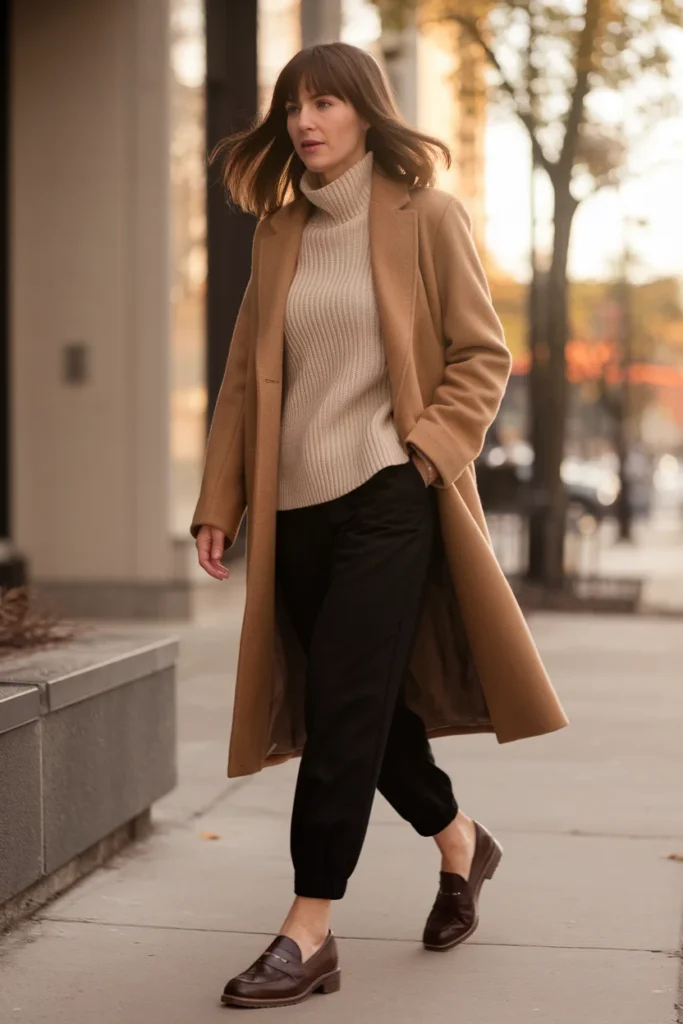
Here’s what we’re covering: the diagnosis first, then a rule you can apply to any pair in about four seconds, then eight outfit formulas, shoes, tops, fit by proportion, and what to buy next time so they don’t bag out at the knee by November.
Why Joggers Read as “I Gave Up”
It’s almost never the joggers. It’s three things happening at once, and most outfits are only guilty of two.
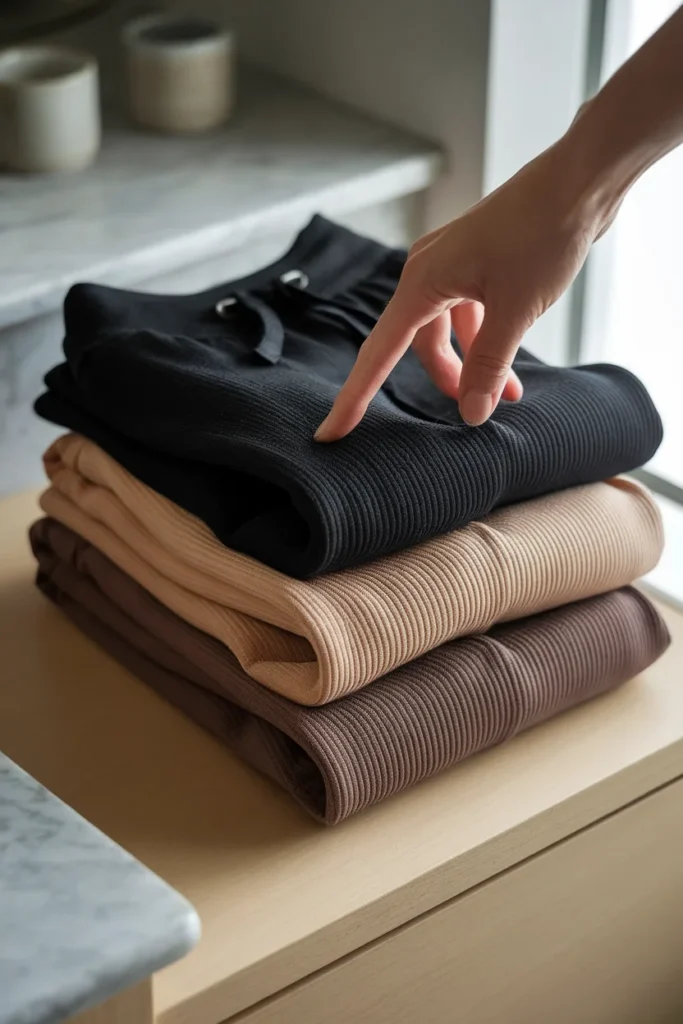
Fabric weight. Thin, loopback jersey with no body drapes straight down and clings to whatever it touches. It reads as pajama. Heavier french terry, ponte knit, or a cotton blend with real density holds a shape away from the leg, which is what makes a pant look like a pant. Grab a handful of the fabric at your thigh. If it collapses into a soft nothing in your fist, that’s your problem.
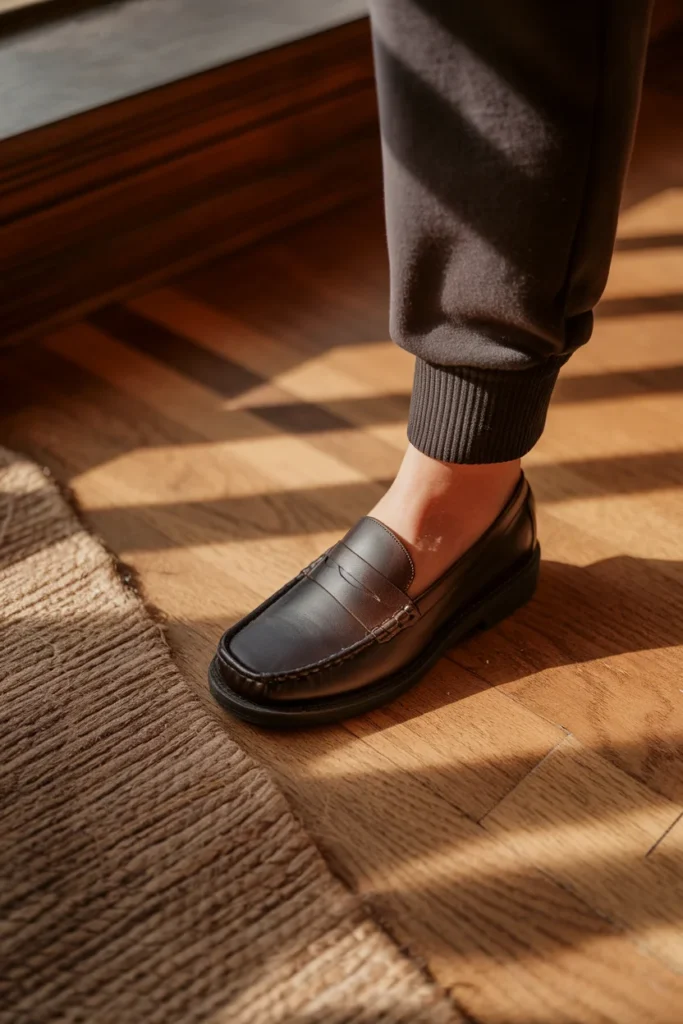
Cuff position. The elastic cuff should sit at or just above the ankle bone. Too low and it puddles over your shoe and swallows the leg line. Too high and it reads gym class. That narrow band of visible ankle is doing an enormous amount of work, and it’s free.
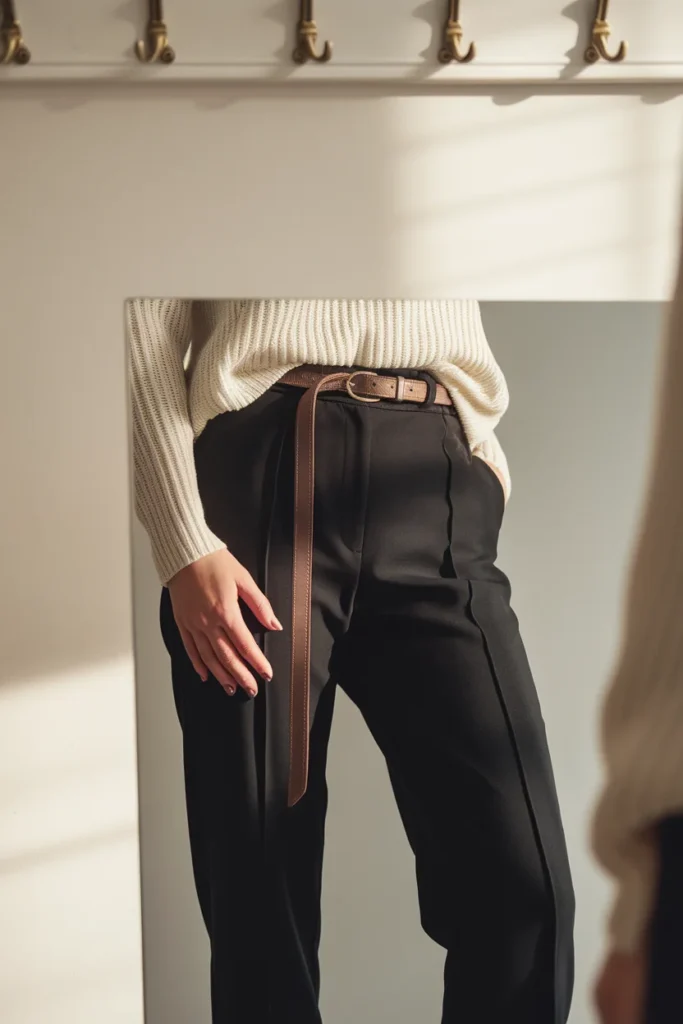
Hem break on top. This is the one nobody talks about. If your top ends at the widest part of your hip, the eye reads one continuous soft column and the outfit loses its waist entirely. Move that hem up two inches or tuck the front corner and the same two garments suddenly have structure.
I’ve bought the thin jersey version twice now, and both pairs were unwearable outside the house within about two months.
Fix all three and you’re done. Most people fix none and blame the pants.
The 2-of-3 Structure Rule
This is the part to screenshot.
Joggers bring zero structure to an outfit. They’re soft at the waist, soft through the leg, soft at the hem. So every jogger outfit needs to borrow structure from somewhere else, and the threshold is two out of three:
| Structure anchor | Counts as | Doesn’t count |
|---|---|---|
| Structured shoe | Loafer, ankle boot, mule, leather sneaker with a clean sole | Slide, Ugg, running shoe, sock |
| Structured top half | Blazer, button-down, denim jacket, trench, a knit with a defined shoulder, or any top with a deliberate tuck | Hoodie worn loose, oversized tee, cardigan hanging open over a tee |
| Structured accessory or finish | Leather crossbody, real belt, gold hoops, a structured tote, sunglasses | Nothing, or a backpack |
One anchor and you look like you’re running errands. Two and you look intentional. Three and you look like the pin.
Test it on your last jogger outfit. Hoodie, joggers, sneakers, no bag: zero anchors, which is exactly why it felt off. Swap the hoodie for a tucked knit and the running shoe for a loafer and you’re at two without buying anything. It’s the same structure trick that keeps cargo pants from reading tactical, applied to a softer pant.
What to Actually Look For When You Buy Joggers
Competitors will hand you a brand list. Brands change. Fabric specs don’t, so learn the spec and you can shop anywhere.
Read the composition tag first. In the US, federal law requires a fiber content label on nearly every garment sold, so the answer is always right there on the side seam. What you want:
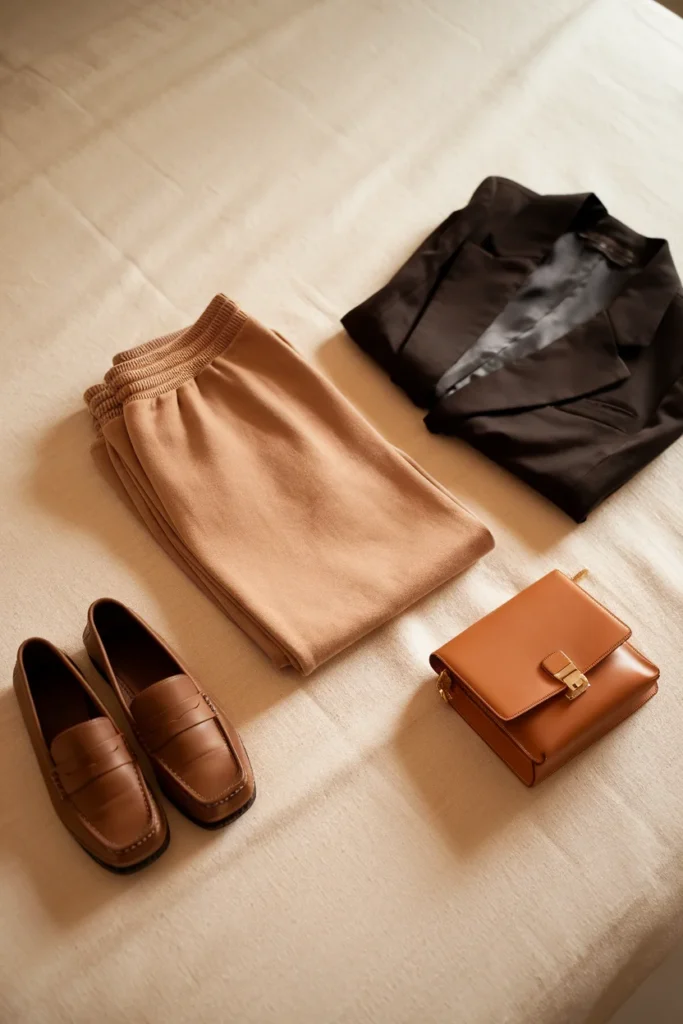
- Ponte knit or heavy french terry for anything you’d wear out. Both have body. Both hold a crease-free line through a full day.
- Cotton with 3 to 5 percent elastane. Enough recovery that the knees don’t bag by 3pm. Above about 8 percent and it starts reading as legging.
- Avoid 100 percent thin jersey for anything but sleep. It has no recovery, so it stretches into the shape of your last sitting position and stays there.
On price, roughly: mass tier at Old Navy, Gap or Uniqlo tends to run $25 to $50 [VERIFY], and at that price you’re usually trading fabric density for cost, so check the hand-feel in person. Mid tier at Quince, Everlane or Madewell typically lands around $60 to $130 [VERIFY], which is where ponte and heavier terry start showing up. Contemporary at Vince or COS runs $150 to $300 [VERIFY]. If you’re eyeing the $250 pair, the honest read is that a well-chosen $89 ponte pair gets you most of the way, and the gap is mostly fabric hand and how the cuff is finished.
Color: soft black, espresso, oat and charcoal all behave. They read as intentional in a way heather gray struggles to, because heather gray carries a sweatpant association that’s hard to shake. If you want them to disappear into everything you own, check how to pair neutral colors so nothing clashes before you buy.
I tested pairs across Quince, Everlane and Old Navy before I understood that the price gap is almost entirely fabric density, not fit.
8 Jogger Outfit Formulas That Don’t Read as Loungewear
Every formula below hits at least two structure anchors. Front-loaded, so the first one is the one to try tomorrow.
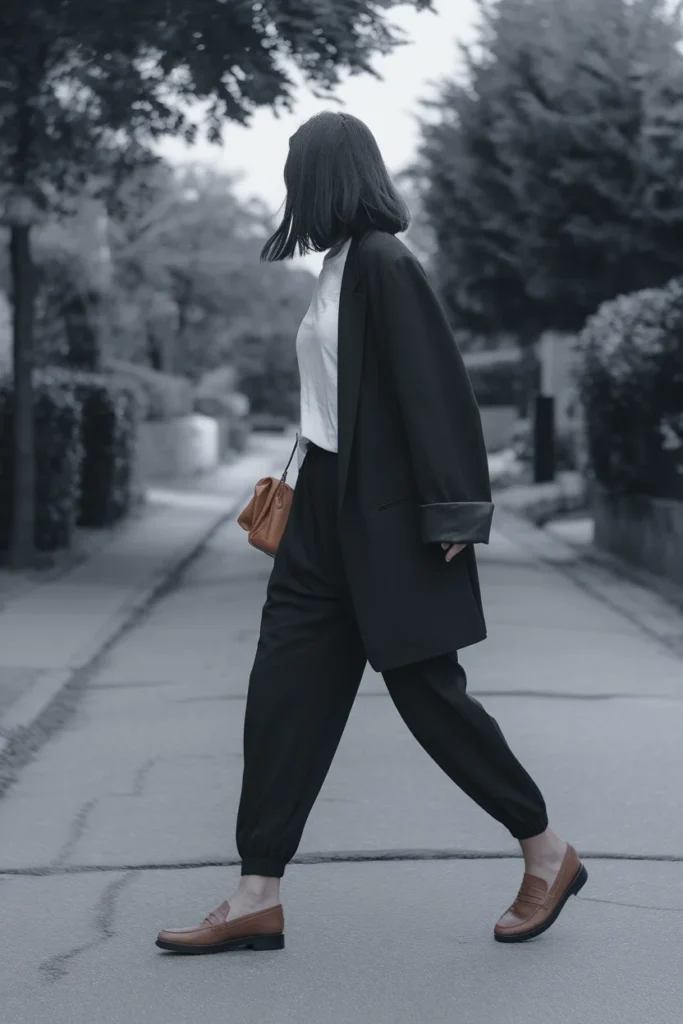
1. The blazer one. Soft black joggers, white tee tucked at the front only, a slightly oversized blazer, loafers. This is the highest-leverage jogger outfit that exists. The blazer shoulder alone does more than any other single swap.
2. The button-down one. Oat joggers, a crisp white button-down with sleeves rolled to just below the elbow, ballet flats. Sharp collar against soft pant is the entire trick.
3. The tuck-and-knit one. Espresso joggers, a fine-gauge merino crewneck tucked all the way in, leather belt, ankle boots. The belt is the anchor here, and it’s the piece most people skip.
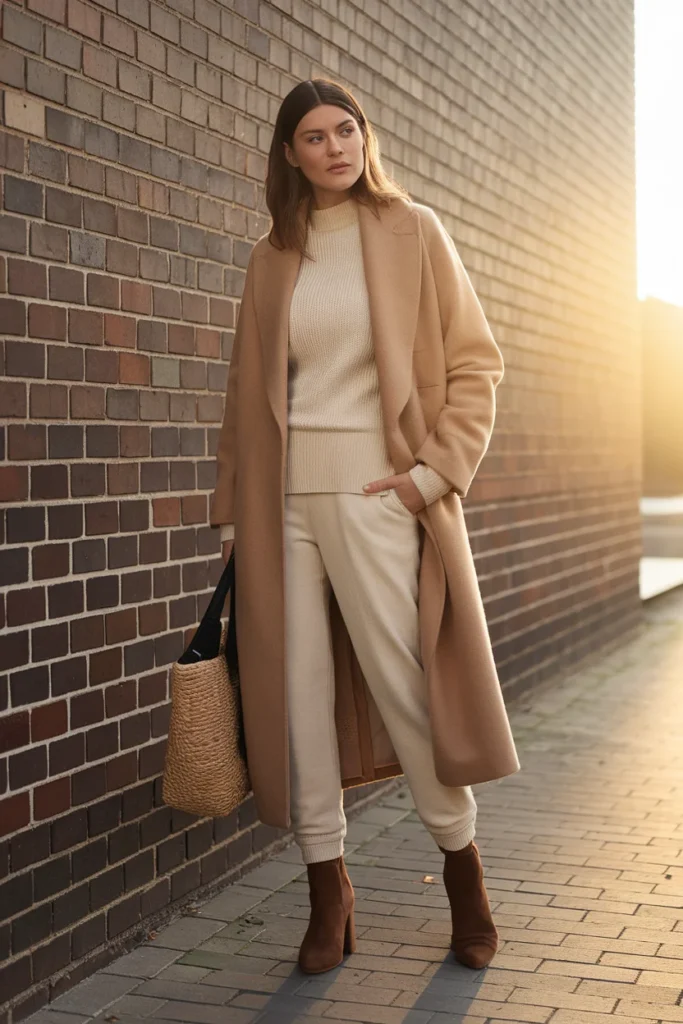
4. The monochrome one. Same color family head to toe, varied in texture: charcoal joggers, charcoal ribbed knit, charcoal wool coat. Unbroken color lengthens the line, and texture variation stops it reading like a tracksuit.
5. The trench one. Black joggers, white tee, trench left open and belted at the back. The trench hem falling past the knee is doing the structural work all by itself.
6. The denim jacket one. Oat joggers, cream knit, denim jacket, white leather sneakers with a clean sole. The most casual formula here and it still clears the two-anchor bar because the jacket and the shoe both count. If you’re deciding which outer layer to invest in first, these are capsule wardrobe jackets that actually earn their hanger space.
7. The vest one. Charcoal joggers, white button-down, a knit or tailored vest over it, ankle boots. Underrated. The vest cuts the torso at a deliberate point, which solves the hem-break problem structurally.
8. The long coat one. Any joggers, any fitted top, a wool coat past the knee, boots. The winter default. A long coat over a soft pant is one of the most reliably expensive-looking combinations in a cold-weather closet.
The Shoes That Do the Heaviest Lifting
If you change one thing, change the shoe. It’s the fastest structural upgrade available.
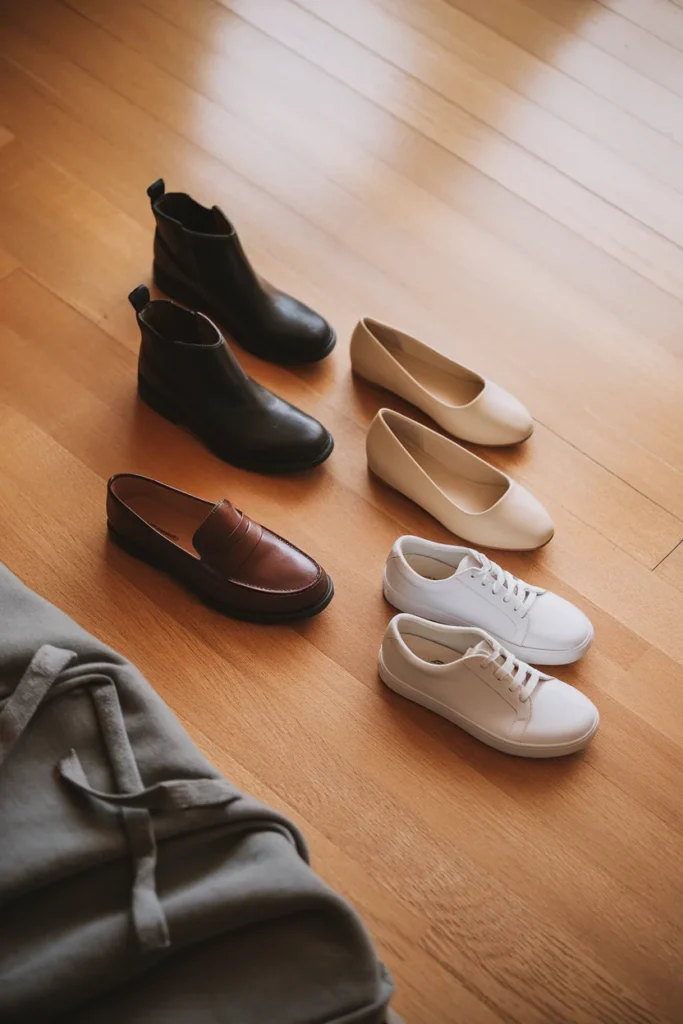
- Loafers. The single best pairing. Hard leather against a soft cuff is the contrast that reads deliberate. Worth the loafers worth owning if you’re building a capsule if you don’t have a pair yet.
- Ankle boots. Best in fall and winter. Keep the shaft close to the ankle so the cuff can sit on top of it cleanly instead of bunching.
- Ballet flats. Light, feminine, and they expose the most ankle, which visually lengthens the leg more than anything else on this list.
- Clean leather sneakers. Yes, but the sole has to be slim and the leather has to be smooth. A chunky running shoe pulls the whole outfit back toward the gym.
- Mules. Excellent in transitional weather. The exposed heel does the same lengthening job as a flat.
Skip: slides, shearling slippers, and anything with a visible performance sole.
What to Wear on Top (the Hemline Rule)
The top matters more than the pant, and one rule covers most of it: the hem should land above or below the widest part of your hip, never directly on it.
Land it on the hip and you get a soft column with no defined waist. Land it two inches higher and the waist reappears. Land it four inches lower, at mid-thigh, and you get a deliberate long-over-lean line instead.
What works:
- Fine-gauge knits, tucked fully or with a front-corner tuck
- Crisp button-downs, tucked or half-tucked
- A fitted tee under any structured layer
- Cropped knits that end at the natural waist
- Long tunics or oversized shirts that clear mid-thigh
What fights you: an untucked hoodie ending exactly at the hip, and a boxy sweatshirt of the same length. Both are the most common jogger pairing and both are the most common reason the outfit fails. If you want the cozy version anyway, half-tuck the front and add a belt or a structured shoe to hold the two-anchor line. For the tops that pair with the most things you already own, start with the eight capsule wardrobe tops that anchor every outfit you own.
Joggers by Proportion: Petite, Tall, Curvy, Over 40
Almost no styling guide covers this, which is odd given how much of the outcome is proportion rather than taste. This is about what works with the length of your leg and the shape of your torso, not about hiding anything.
Petite (5’4″ and under). Inseam is the whole battle. A standard 28-inch inseam puts the cuff mid-calf on many petite frames, which visually cuts the leg in half. Buy petite sizing or hem them so the cuff lands at the ankle bone. Keep tops cropped to the natural waist to give the leg more visual length.
Tall (5’9″ and over). Opposite problem: a standard inseam rides up and reads like the pair shrank. Look for tall sizing or a longer 30 to 32 inch inseam so the cuff has somewhere to sit. You can carry the long-coat formula better than anyone.
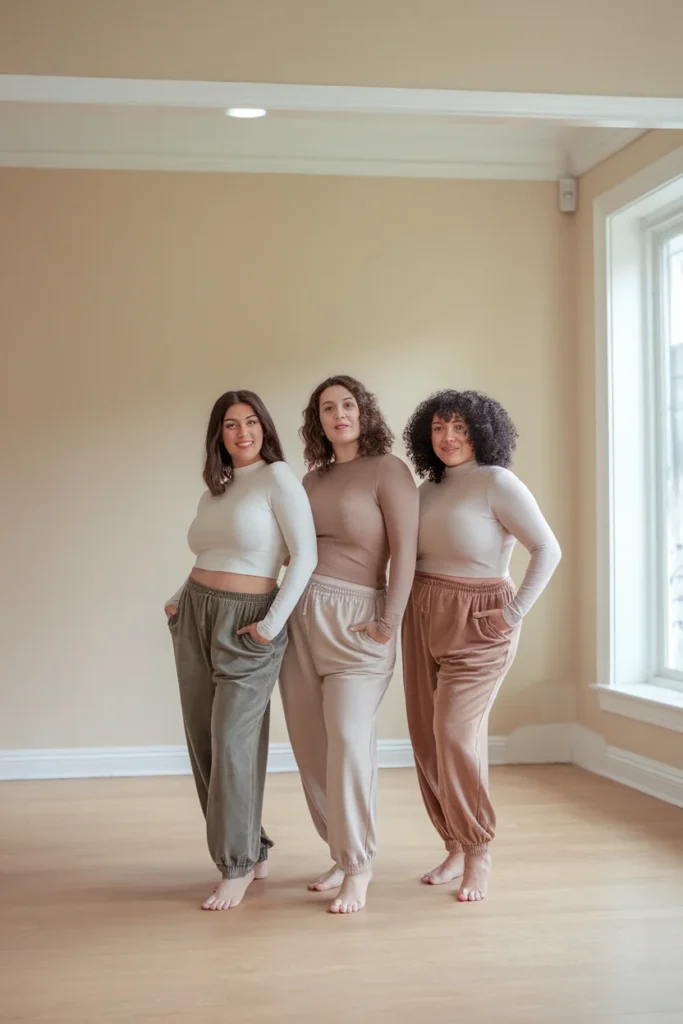
Curvy and hourglass. Look for a mid or high rise with a real waistband rather than a wide elastic band, which tends to roll. Tuck or belt so the waist stays visible. A tapered leg works with your proportions here because it keeps the line clean below the hip.
Plus-size and midsize. Ponte is your best friend. It holds its own shape instead of taking yours, which means the pant reads structured regardless of size. Straight-leg or gently tapered over aggressively tapered. Long open layers, the trench and the coat formulas, are reliable.
Over 40 and over 50. Fabric quality does more heavy lifting than cut. A dense ponte in espresso or soft black with a clean cuff reads polished at any age. Where the outfit tends to slip is the shoe, so keep it leather.
Can You Wear Joggers to Work?
Depends entirely on your office, and the honest answer is that most business-casual environments will accept them under three conditions: ponte or a comparable structured fabric, a genuinely tailored top half, and leather shoes. Soft black or charcoal only.
Where it stops working: client-facing days, interviews, anywhere with a stated business-professional code, and any jersey or heather gray pair regardless of styling. If you’re unsure, the safer play is a tapered trouser that reads similar and carries none of the risk. For the middle ground, these business casual work outfit ideas from a capsule wardrobe cover what actually holds up in an office.
How Joggers Earn Their Hanger Space
A capsule question, not a styling one: are they worth keeping?
Run the math. One pair of joggers in soft black or espresso, against a five-piece top rotation (white tee, white button-down, cream knit, fine merino crewneck, ribbed tank) and three outer layers (blazer, denim jacket, long coat), gives you roughly 15 to 20 genuinely distinct outfits before you’ve touched shoes. Add two shoe options and you’re well past 30.
That’s real return on one hanger. But only if the pair is neutral and structured. A heather gray jersey pair generates maybe three wearable combinations, all of them at home, which is the definition of a piece that doesn’t earn its space. One good pair beats four mediocre ones, every time.
I cut four pairs down to one espresso ponte pair last spring, and I’ve worn that single pair more than the four combined.
How to Keep Them From Looking Worn Out
Joggers age faster than almost anything else in a closet, and it’s usually pilling and knee bagging that kill them.
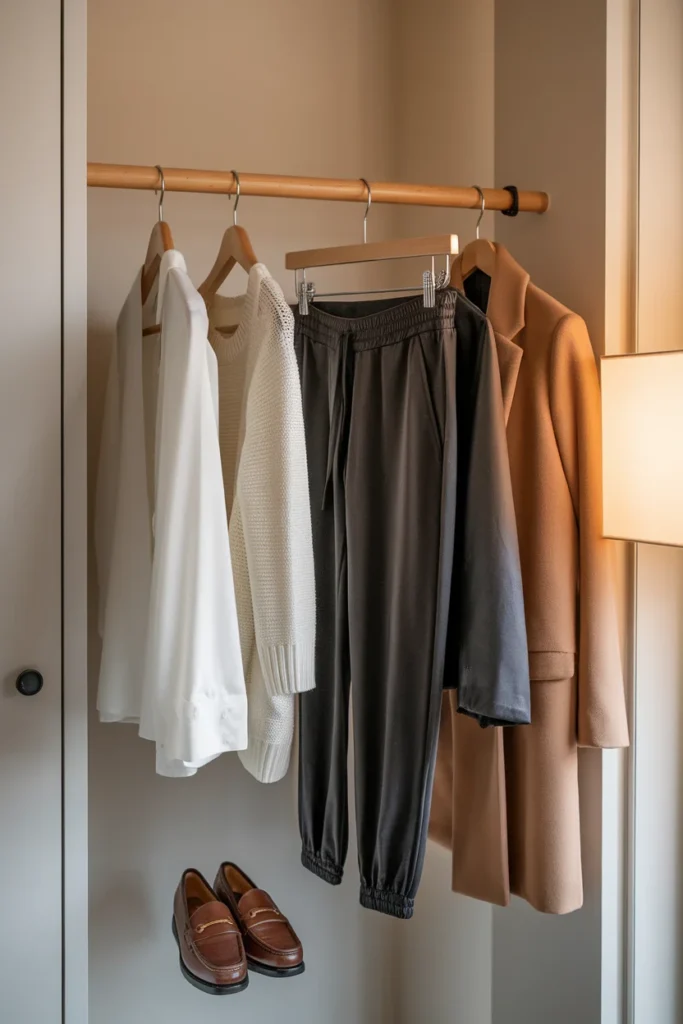
Wash cold, inside out, on a gentle cycle. Friction causes pilling, so turning them inside out protects the outer face. Skip the dryer or use low heat only, because high heat is what breaks down elastane and takes the recovery with it. That’s the same reason they start bagging at the knee around month four.
Every garment sold in the US carries washing and drying instructions because of the FTC’s Care Labeling Rule, so the specific answer for your pair is on the tag. Two more things: a cheap fabric shaver run over the seat and inner thighs twice a season resets the surface completely, and hanging them by the waistband instead of folding keeps the cuff elastic from creasing permanently.
General information only, not professional garment-care advice for a specific item. When in doubt, follow the tag.
How to Style Joggers Frequently Asked Questions
Are joggers still in style in 2026? Yes, though the shape has shifted. The very tapered, very cuffed athletic version has softened into a straighter, higher-rise, more trouser-adjacent cut in structured fabrics. If your pair is from the peak athleisure era and reads very narrow through the ankle, that’s the pair aging you, not the category.
What’s the difference between joggers and sweatpants? Joggers taper through the leg and finish with an elasticated cuff at the ankle. Sweatpants run straight or loose and often have an open hem. Joggers usually use a lighter or more structured fabric, which is exactly why they can be dressed up and sweatpants mostly can’t.
Are joggers supposed to be loose or tight? Neither. You want them skimming, close enough through the hip and thigh to show a line, loose enough that the fabric never pulls across the front. If they’re tight enough to read as a legging, you lose the pant silhouette that makes the outfit work.
What shoes go with joggers? Loafers first, then ankle boots, ballet flats, mules, and clean leather sneakers. The rule underneath all of them is that the shoe should have visible structure. Anything with a soft or chunky performance sole pulls the outfit back toward the gym.
Can I wear joggers if I’m petite? Absolutely, but check the inseam before anything else. A standard inseam often puts the cuff at mid-calf on a petite frame, which shortens the leg visually. Buy petite sizing or hem them so the cuff sits at the ankle bone, and keep tops cropped to the natural waist.
What’s a cheaper alternative to expensive ponte joggers? Mid-tier ponte in the $60 to $90 range [VERIFY] gets you most of the structure of a $250 contemporary pair. The real trade-off at the sub-$40 mass tier isn’t the cut, it’s fabric density and recovery, which is what determines whether they still look good in six months.
Can I wear joggers to a nice dinner? In a casual-to-smart-casual restaurant, yes, with all three structure anchors engaged: ponte joggers in soft black, a silk or fine knit top tucked in, heeled mules or boots, and a real bag. For anything with a dress code, choose a different pant.
Start With the Shoe
If the whole article collapsed to one line, it’s this: joggers don’t fail because they’re joggers, they fail because nothing else in the outfit is holding structure. Two anchors is the threshold. The fastest one to add is the shoe, and you almost certainly already own something that qualifies.
Try the blazer formula this week. Same joggers you already have, a tee tucked at the front, whatever structured jacket is in your closet, and the most solid shoe you own. Then look in the mirror and see whether the pants were ever the problem.
Keep reading

How to Style a Jacket for Plus-Size Women: 10 Outfits That Work
A lot of jacket advice for bigger bodies is still written around hiding. Hide the hips, hide the arms, hide under something...

How to Style a Jacket for Women Over 50: 12 Outfits That Work
Your closet probably holds more jackets than you wear. There’s the blazer from an old job, the denim jacket you’re unsure about...

How to Style a Jacket: 10 Cozy Jacket Outfits for Fall and Winter
Your jacket is the first thing people see between October and March. It’s also the piece most of us grab last and...
2 Comments