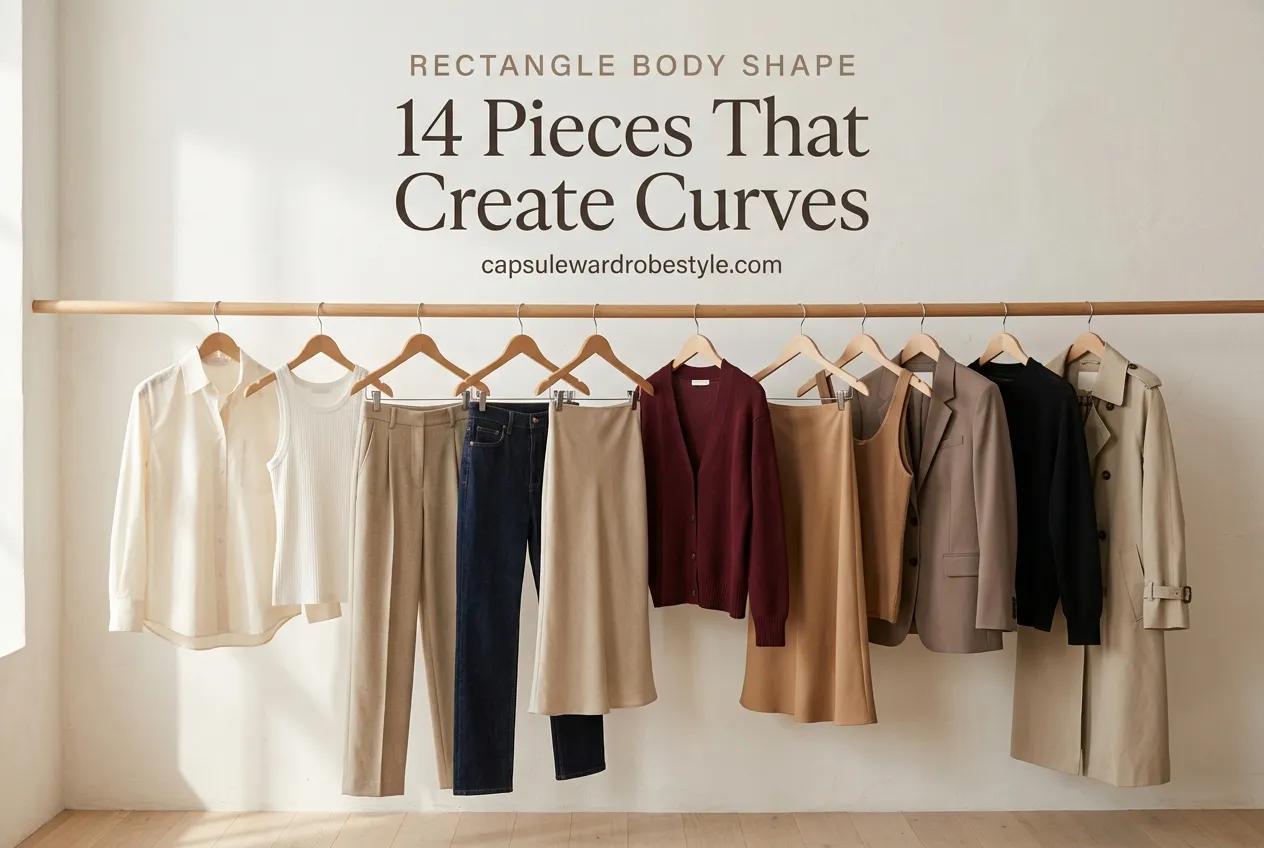
Rectangle Body Shape Capsule: 14 Pieces That Create Curves
You own the clothes. That is the frustrating part. Your closet is full, the pieces are nice, and every outfit still lands the same way: straight down, no shape, vaguely like a very well-dressed rectangle.
A rectangle body shape capsule fixes that with fourteen pieces, not forty. The trick is not buying different clothes. It is buying clothes that interrupt a straight line in three specific places, which is a thing almost nobody explains before handing you a shopping list.
Here is the whole capsule, the price ranges, the fabrics that actually hold shape, and six outfit formulas you can wear this week.
What a rectangle body shape actually is
Your shoulders, waist, and hips measure within a few inches of each other. The waist is there, it simply does not nip in sharply. That is the entire definition.
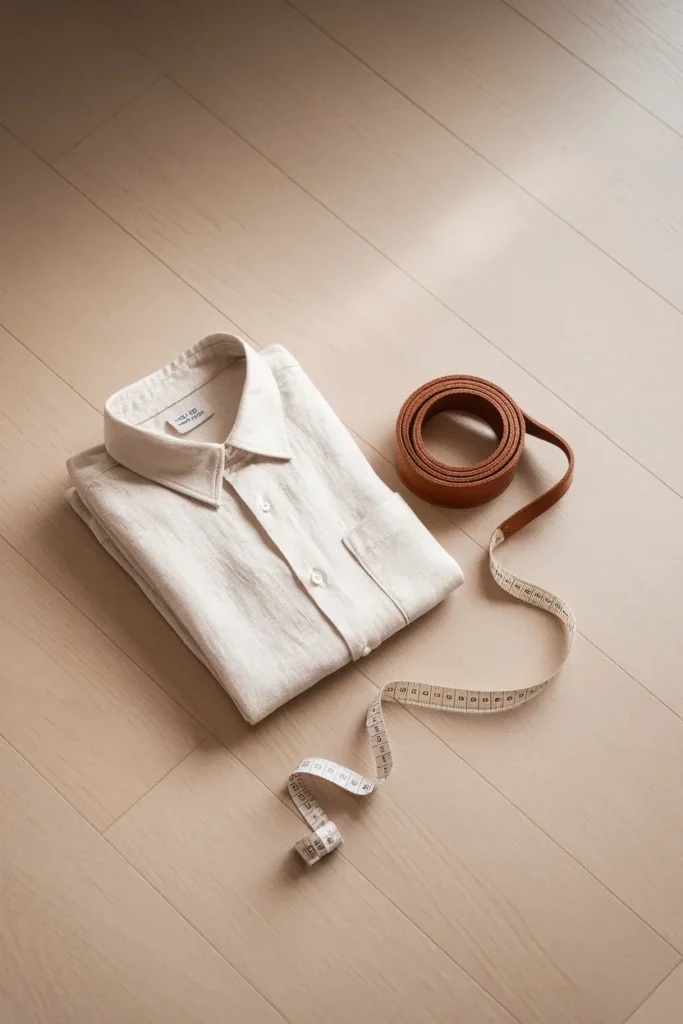
Measure once and stop guessing. Take your bust, your natural waist (the narrowest point, usually an inch above the belly button), and your hips at the fullest part. If your waist is less than about 25 percent smaller than your bust, and your bust and hips sit within roughly 5 percent of each other, you are working with a rectangle.
Worth saying plainly: this is a proportion, not a problem. It is also extremely common. Apparel researchers using 3D body scanning at NC State University found that straight and balanced proportions show up across a huge share of American women, which makes the industry’s obsession with the hourglass a little absurd.
Rectangles come in every size. You can be a curvy rectangle, a petite rectangle, a plus-size rectangle, a rectangle at 52 with a fuller midsection. The proportion holds even when the dimensions change.
The three points of interruption
Every piece of advice you have read about this shape is really one idea wearing different outfits: break the vertical line. Most articles stop there, which is why you end up with a belt you never wear.
Here is the framework I want you to shop with. A straight silhouette becomes a shaped one when you interrupt it at three points, and you only need two of the three in any single outfit.
Point 1, the shoulder. A defined shoulder gives the eye a starting width. A structured blazer, a drop-shoulder knit with real fabric weight, a puff sleeve, a boat neck.
Point 2, the waist. Anything that marks where your middle is. A belt, a tie front, a half tuck, a wrap, a high rise sitting right at the natural waist.
Point 3, the hip. Volume or movement below the waist. Pleats, a flared hem, a bias cut, a wide leg, a pocket detail.
Two points, minimum. All three at once can tip into costume. Fitted top plus wide-leg trouser is points 2 and 3. Structured blazer plus straight jean plus half tuck is points 1 and 2. Once you see outfits this way, shopping stops being a guess.
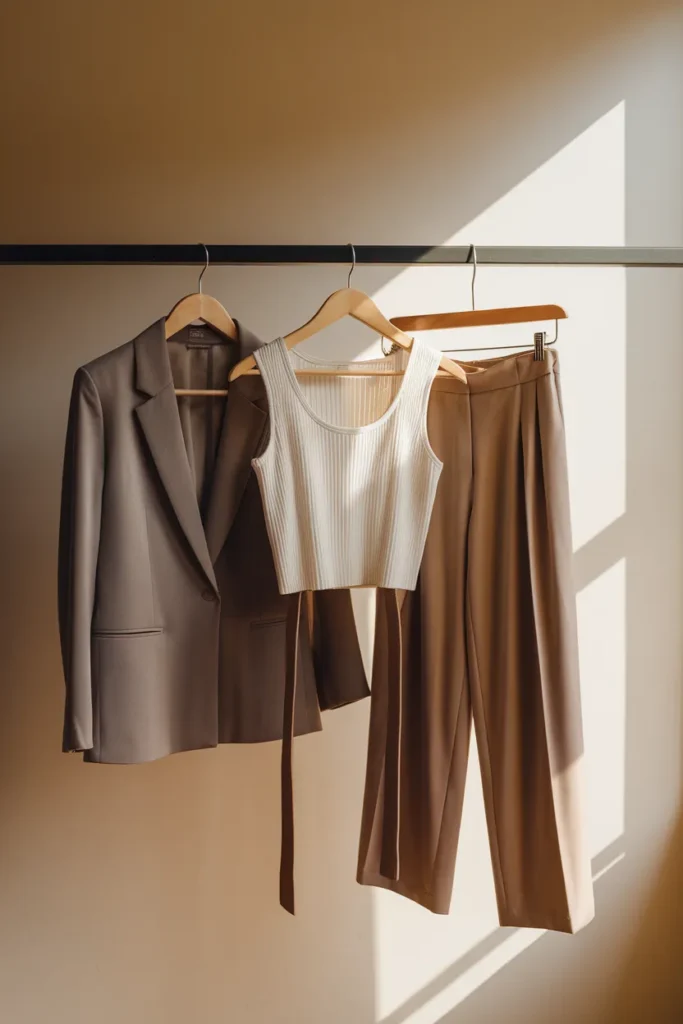
The 14 pieces, at a glance
Screenshot this. Price ranges are US, current as of publication, and worth confirming before you buy since retailers move fast.
| # | Piece | Why it works | Typical US range |
|---|---|---|---|
| 1 | Oversized cotton button-down | Half tuck creates a waist instantly | $40 to $110 |
| 2 | Fitted rib tank | The base layer for high-contrast volume | $15 to $45 |
| 3 | Wrap or tie-front top | Point 2 built into the garment | $50 to $130 |
| 4 | Drop-shoulder knit | Point 1, if the yarn has weight | $60 to $160 |
| 5 | Waist-length cardigan | Ends at the waist, marks the waist | $50 to $140 |
| 6 | Pleated wide-leg trouser | Point 3, the single best bottom | $70 to $180 |
| 7 | Straight-leg jean, high rise | Skims the hip instead of shrinking it | $70 to $140 |
| 8 | Barrel or curved-leg jean | Volume through the hip and thigh | $80 to $150 |
| 9 | Bias-cut or pleated midi skirt | Movement below the waist | $50 to $170 |
| 10 | Wrap dress | Points 2 and 3 in one piece | $90 to $250 |
| 11 | Shirt dress with removable belt | Belt it or leave it, two silhouettes | $80 to $200 |
| 12 | Structured blazer | The shoulder, and a nipped seam | $100 to $300 |
| 13 | Trench coat | Belted, which is the whole point | $120 to $350 |
| 14 | Leather belt, 1 to 1.5 inches | The cheapest shape you can buy | $30 to $120 |
Mass tier lives at Old Navy, Gap, Target, Uniqlo. Mid tier is Madewell, J.Crew, Quince, Everlane, Banana Republic. Contemporary runs through Sezane, COS, and Reformation. If a contemporary blazer at $300 makes you flinch, the mid-tier versions at Banana Republic and Quince hold shape genuinely well, and shoulder construction is where you notice the difference, not the fabric.
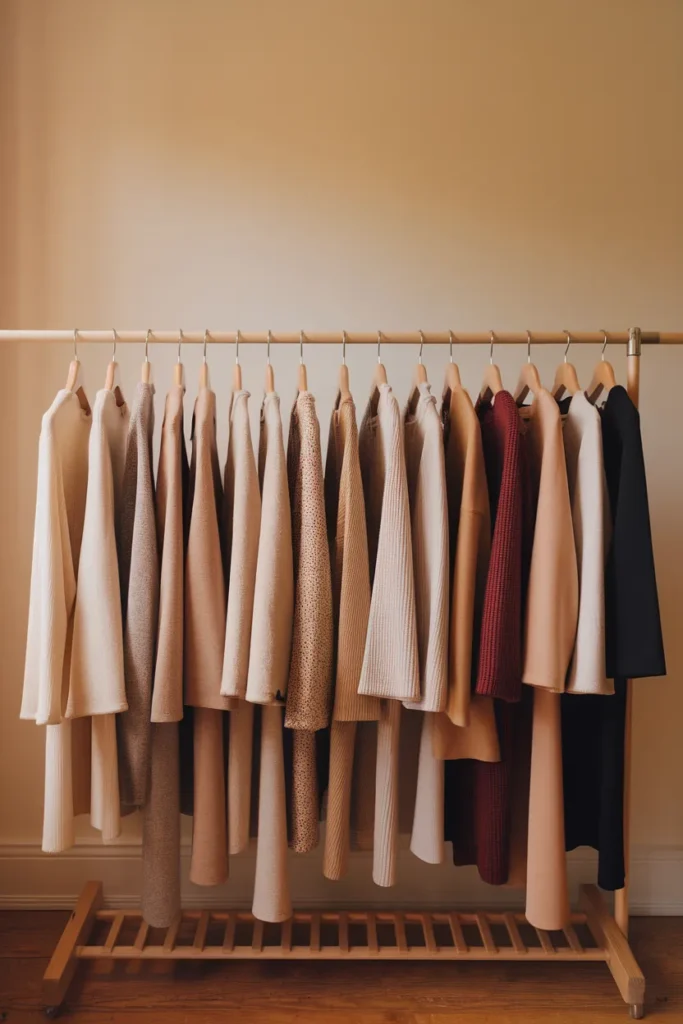
The five tops that add shape up top
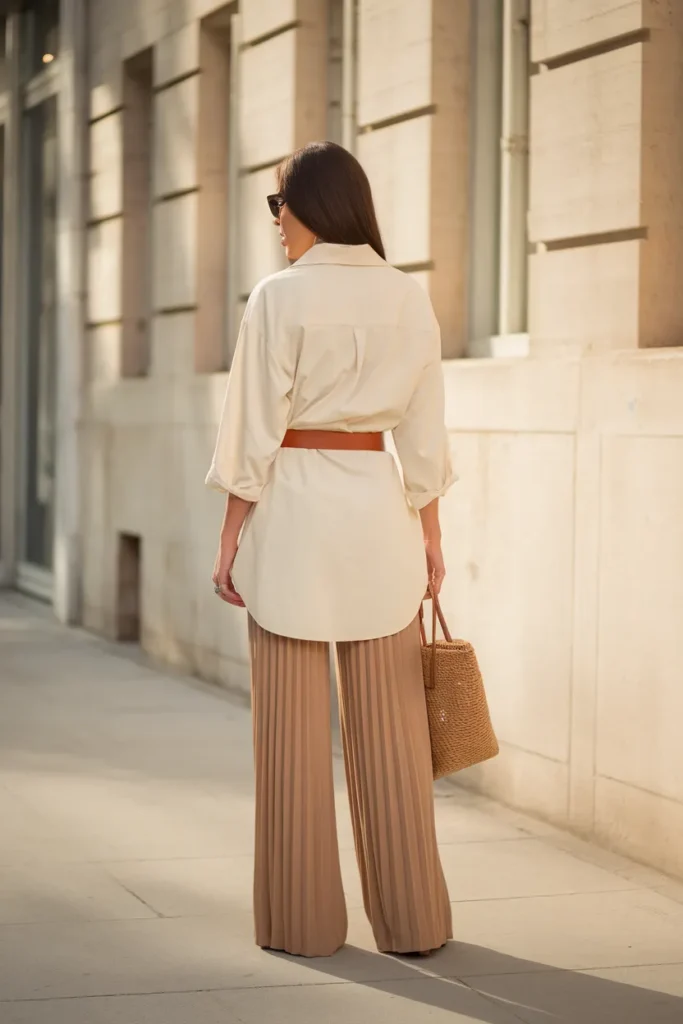
Start with the button-down, because it does more work than anything else here. Buy it one size up in cotton poplin, not a slinky rayon. Half tuck the front hem into your waistband and leave the back out. That single move marks your waist and adds a soft blouse over the hip.
The rib tank is your contrast piece. Fitted on top, volume below, every single time.
Wrap and tie-front tops do the waist work without you thinking about it. Look for a tie that sits at your natural waist rather than the hip, since a low tie drops your proportions and reads longer through the middle.
Your knit needs weight. A drop-shoulder sweater in a thin merino collapses straight down your frame and you have gained nothing. Look for cotton, a chunky lambswool, or a heavier cashmere blend. Go up a size or two for the shoulder line.
The cardigan rule is simple: it ends where you want the eye to stop. A waist-length cardigan draws a horizontal line at your middle. A long duster runs straight down, which is exactly the line you are trying to break.
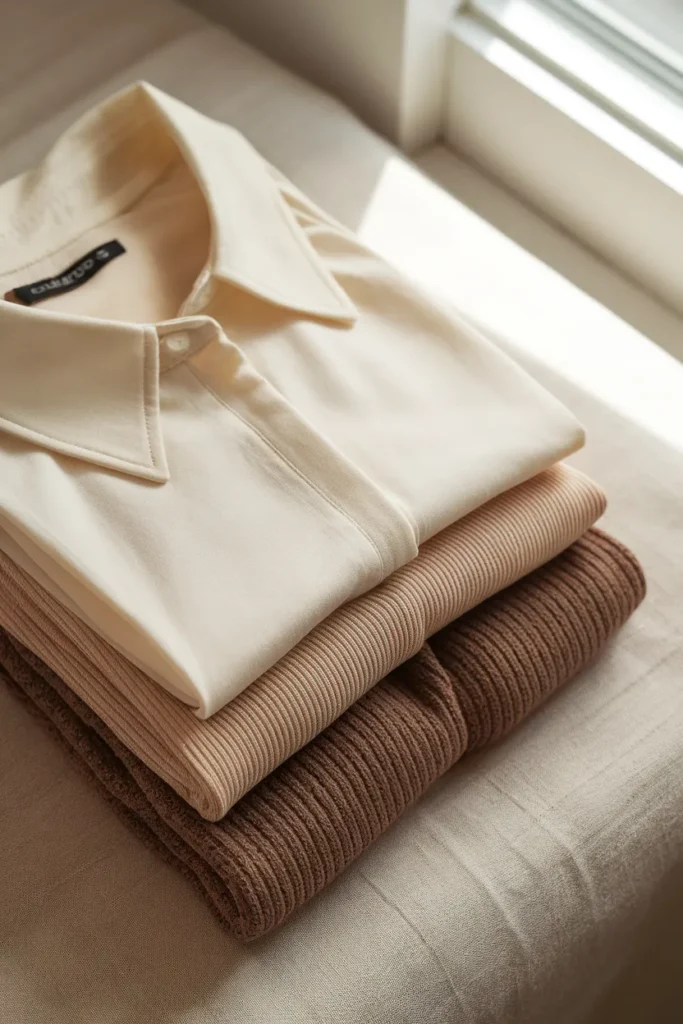
The four bottoms that give your lower half weight
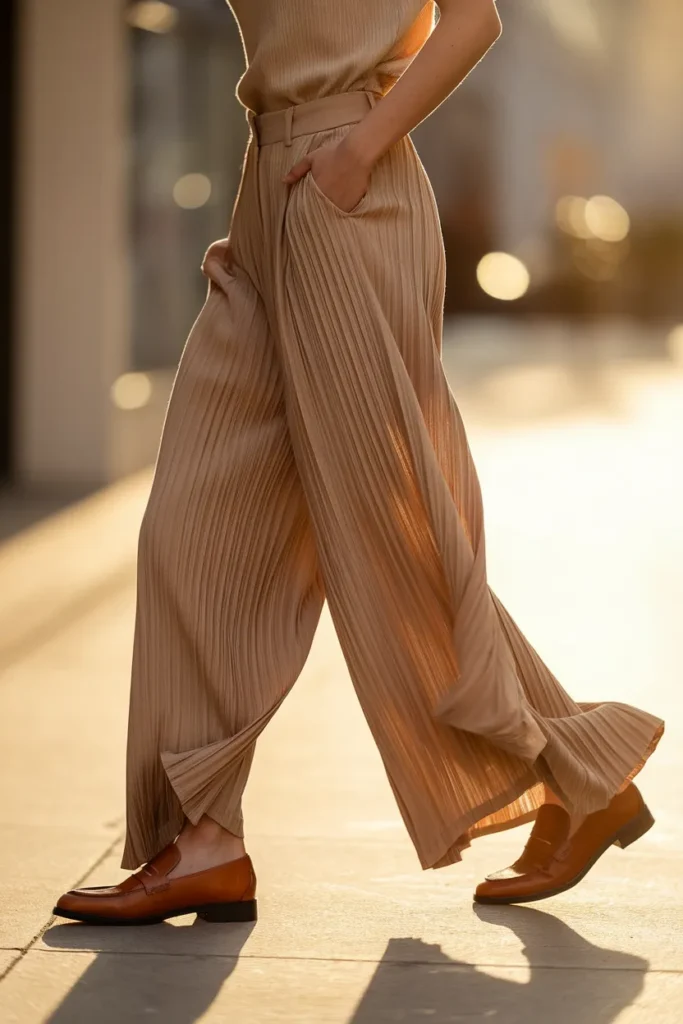
Pleated wide-leg trousers are the highest-value purchase in this entire capsule. The pleats add volume right at the hip, which builds width where you have none, and the leg falls clean from there. In a wool blend or a heavy twill they hold a shape all day. In a thin polyester they cling and defeat the purpose.
Straight-leg jeans, high rise, sitting at your natural waist. Skinny jeans are not banned, they simply narrow the one area you are trying to widen, so the effect runs backward.
Barrel and curved-leg jeans have quietly become the best denim shape for a straight frame, because the curve puts fullness through the hip and thigh and then tapers at the ankle. That taper matters. It keeps the volume from reading heavy.
For the midi skirt, choose movement over structure. A bias cut swings. A box pleat adds real volume. A stiff pencil skirt just extends the column, unless you pair it with a shouldered blazer to bring in point 1.
One footwear note: wide-leg trousers need a shoe with some presence at the toe, and the loafers that anchor a wide-leg trouser do this better than a delicate flat, which disappears under the hem and cuts your leg line short.
Two dresses that do the waist work for you
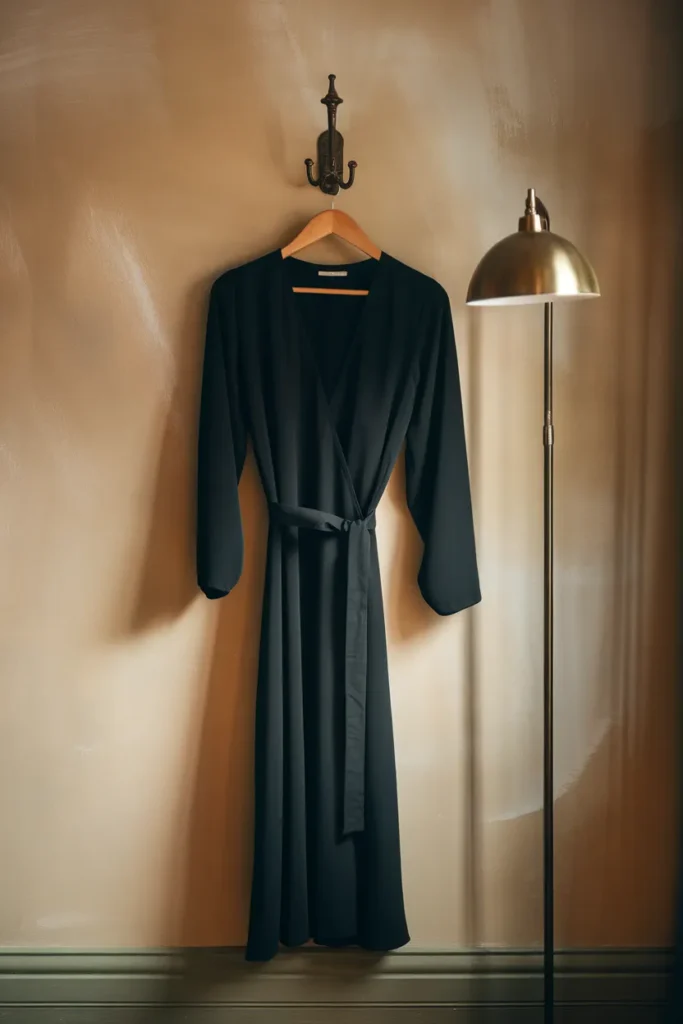
A wrap dress is the closest thing to a shortcut in this capsule. It ties at the natural waist, crosses the body on a diagonal, and the skirt falls with movement. Points 2 and 3, no styling required.
The shirt dress earns its place differently. Worn loose it is easy and long. Add the belt and you have a completely different silhouette, which means one hanger gives you two outfits.
What to skip: the shift dress and the drop-waist. Both hang from the shoulder straight to the hem, and on a straight frame that is a very long unbroken line. A shift can work if you belt it, though at that point a wrap dress is doing the same job with less effort.
Length matters more than you expect. A midi that ends at the mid-calf tends to sit better on a straight frame than a maxi that runs floor to shoulder in one continuous sweep.
Outerwear that builds a silhouette
Most coats erase whatever your outfit was doing. These two do not.
A structured blazer gives you the shoulder line that a straight frame does not naturally have. Look for a defined shoulder seam, a slight nip through the waist seam, and enough fabric weight to hold the shape when unbuttoned. Single-breasted with a low button stance elongates. Double-breasted adds visual width up top, which works in your favor.
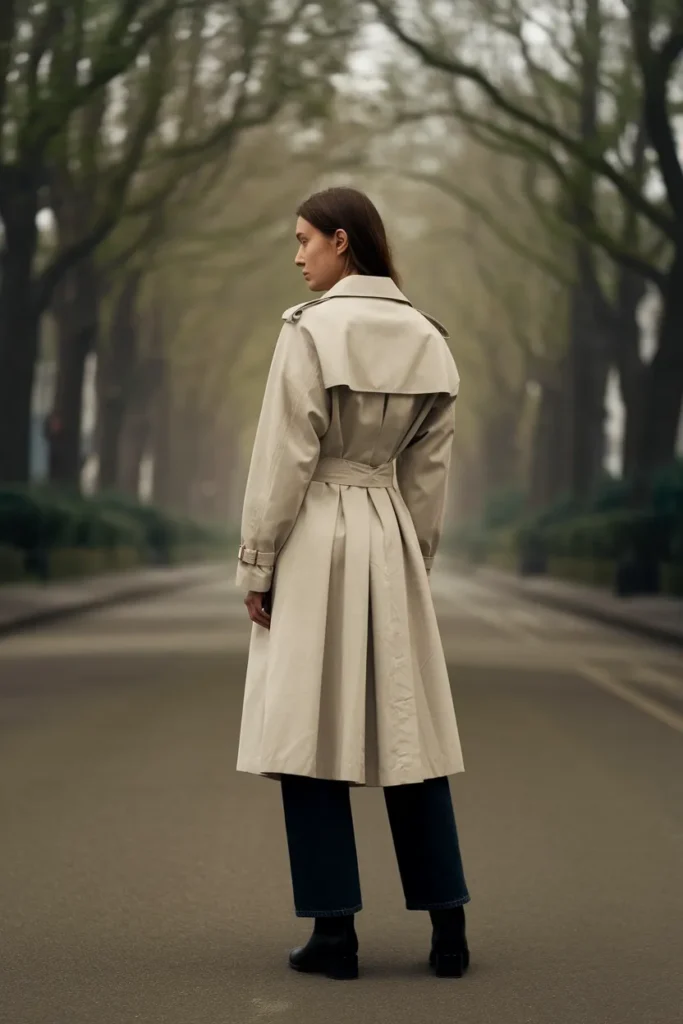
The trench is here for one reason: it belts. A camel or stone trench cinched at the waist creates the exact silhouette you are building underneath, so your shape survives the walk from the car to the office.
Both pieces have a fit priority. Get the shoulder right first, since a tailor can bring in the waist for around $25 to $50 and cannot fix a shoulder without rebuilding the jacket.
Why a belt does the most work per dollar
Fourteen pieces, and the cheapest one changes the most outfits.
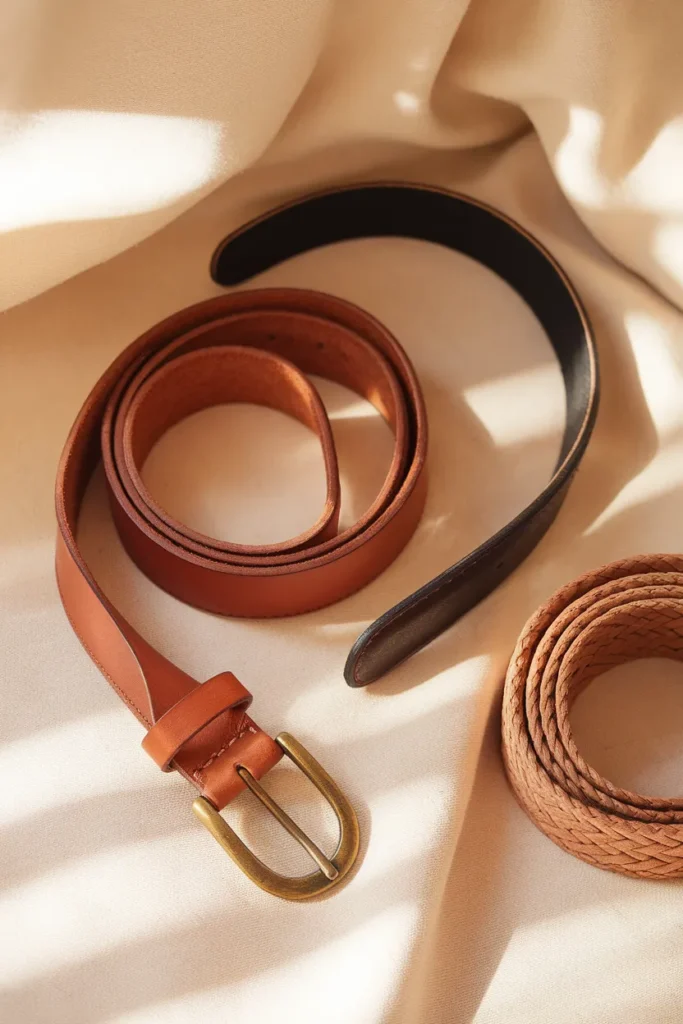
A belt at the natural waist is the fastest way to hit point 2, and it works over things you already own. Belt an open cardigan. Belt a shirt dress. Belt a blazer if the fabric is soft enough to gather.
Width is the decision most people get wrong. A very thin belt disappears on a straight frame and reads as an afterthought. A very wide belt can look like a corset. Between one and one and a half inches gives you visible definition that still looks casual, and a self-tie fabric belt does the same job with softer edges if hardware feels too deliberate.
Placement is the other half. Sit it at your natural waist, not on the hip bones. On a straight frame, a low-slung belt underlines the exact line you were trying to interrupt.
If you want to go deeper on which shapes to own, these five belt styles that earn their hanger space cover the full range.
Fabric weight matters more than cut
This is the piece almost nobody tells you, and it explains most of your disappointing purchases.
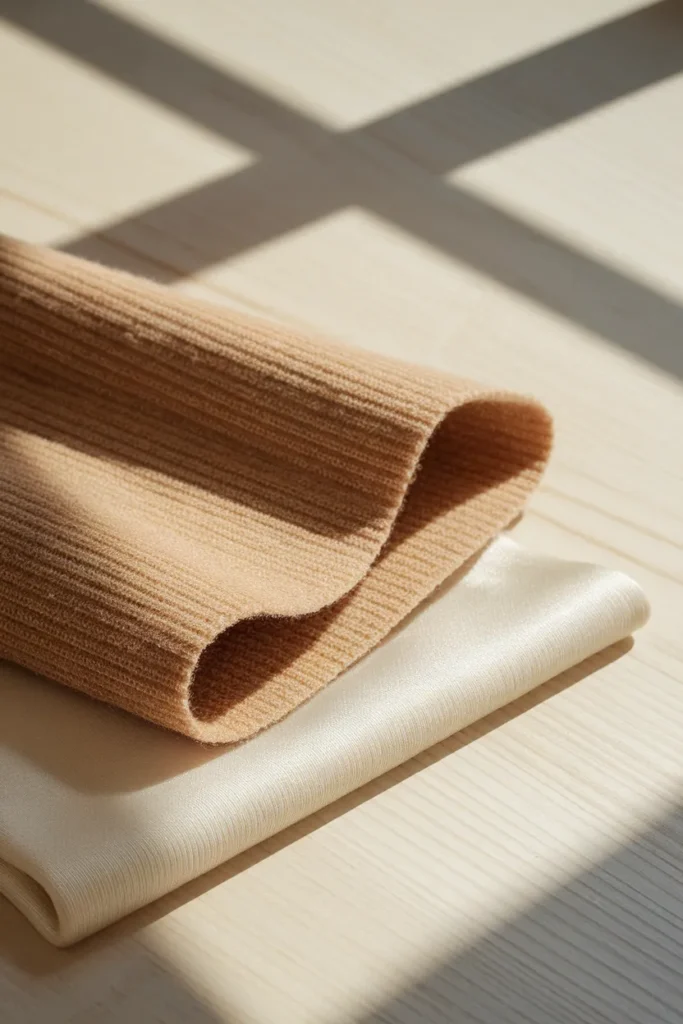
A silhouette only exists if the fabric can hold it. Buy the correct wide-leg trouser shape in a thin, drapey polyester and it will fall straight against your body, which puts you right back where you started. Buy the same shape in a wool blend, a heavy twill, or a structured cotton and the pleats stand away from the hip, which is what creates the width you wanted.
Fabrics that hold shape on a straight frame: wool and wool blends, heavy cotton twill, denim over 11 oz, cotton poplin, linen with body, ponte, boucle.
Fabrics that collapse: thin jersey, lightweight rayon and viscose, slinky polyester, fine gauge merino, anything with heavy stretch.
Check the composition tag before you check the price. Then check the care label, which US manufacturers are legally required to provide under the FTC Care Labeling Rule, because a structured piece that needs dry cleaning after every wear has a much worse cost per wear than the tag suggests.
Where color goes
Neutrals build the base, and color placement can add shape on its own.
A column of color, meaning a matching top and bottom, creates one long vertical line. Layer a contrasting jacket or cardigan over it and the outer piece frames that column, which reads as width at the shoulder and a narrower center. It is an optical version of point 1.
The reverse also works. A darker tone at the waist, whether that is a belt, a wrap tie, or a colorblocked panel, visually narrows the middle without changing a single measurement.
Keep the accent count low. One vivid piece against a neutral base does more than three competing colors, and it keeps the whole capsule mixing cleanly. If you want to push further than a single accent, this guide to adding color without losing cohesion maps out how far you can go before the capsule stops working.
Taking it to the office
Business casual is where a straight frame usually flattens out, because office clothes tend toward the boxy end of everything.
Your best office combination is the structured blazer over the rib tank with pleated trousers. Shoulder, waist through the tuck, volume at the hip. Add loafers and you are done in ninety seconds.
For a client meeting or an interview, the belted shirt dress under a blazer reads sharper than a suit on most straight frames, because the belt does what the suit jacket cannot.
Skip the boxy shell top and the straight shift, which are the two most common office pieces working directly against you. If your workplace runs formal, fifteen business professional pieces that mix and match covers the stricter end of the dress code.
Six outfit formulas from the 14 pieces
- Everyday: Rib tank + pleated wide-leg trouser + belt + loafers.
- Weekend: Button-down half tucked + barrel jean + sneakers.
- Office: Structured blazer + rib tank + pleated trouser + loafers.
- Dinner: Wrap dress + belt already built in + ankle boots.
- Transitional fall: Drop-shoulder knit + bias midi skirt + trench + boots.
- Travel: Shirt dress belted + cardigan + flats, and unbelted on the plane.
Six outfits from fourteen pieces is the floor, not the ceiling. Once these pieces are in rotation the count climbs fast, and if you want to extend the same logic across all four seasons, a thirty piece year round capsule wardrobe picks up where this leaves off.
FAQ
How do I know if I have a rectangle body shape? Measure your bust, natural waist, and hips. If your waist is less than roughly 25 percent smaller than your bust, and your bust and hips land within about 5 percent of each other, you have a rectangle. Ratios matter here, not dress size.
Can a rectangle body shape have curves? Yes. Rectangle describes the relationship between your measurements, not the absence of a bust or hips. You can be a curvy rectangle with a full bust and a fuller bottom, as long as the waist contrast stays gentle.
What should I avoid in a rectangle capsule wardrobe? Shift dresses, drop-waist styles, long line cardigans, boxy shell tops, and thin fabrics with no body. All of them extend a straight line rather than interrupting it. None of them are forbidden, they just need a second piece doing the shaping.
What is the difference between a rectangle and an hourglass? Both have balanced bust and hips. An hourglass has a waist at least 25 percent smaller, giving sharp contrast. A rectangle’s contrast is softer. That single measurement is the whole distinction.
Do belts really work on a rectangle body shape? They do, with two conditions. Sit the belt at your natural waist rather than the hip, and pick something between one and one and a half inches wide. A soft self-tie belt works equally well if hardware feels too structured.
Does this capsule work year round? Mostly. Eleven of the fourteen pieces carry across all four seasons. In summer you swap the chunky knit and trench for linen versions of the same shapes, and in deep winter you add tights and a heavier coat over the same base.
Can I build this without sticking to neutrals? Yes. Build the base in neutrals so everything mixes, then add color through one or two pieces and your accessories. The cohesion comes from the base, which leaves the accent pieces free to be as bold as you like.
Start with three
Fourteen pieces is a destination, not a weekend project. If you buy nothing else this month, buy the belt, the pleated wide-leg trouser, and the oversized button-down. Those three cover all three points of interruption and they mix with roughly everything already hanging in your closet.
Try the half tuck tomorrow morning and watch what it does. Then build from there.
Keep reading

8 Hoodie Outfits for Plus-Size Women That Actually Look Put-Together
Your closet has a hoodie in it. Probably three. And every cold morning you reach for one and think the same thing:...

How to Style a Hoodie for Women Over 50: 8 Outfits That Work
The hoodie in your closet is probably fine. The problem is usually three inches of it you have never looked at closely....

8 Cozy Hoodie Outfits for Fall and Winter That Never Look Sloppy
Your hoodie is not the problem. The seven inches of fabric hanging off the back of your neck is the problem, and...