
Winter Capsule Wardrobe 2026: 20 Pieces That Mix Into 30+ Outfits
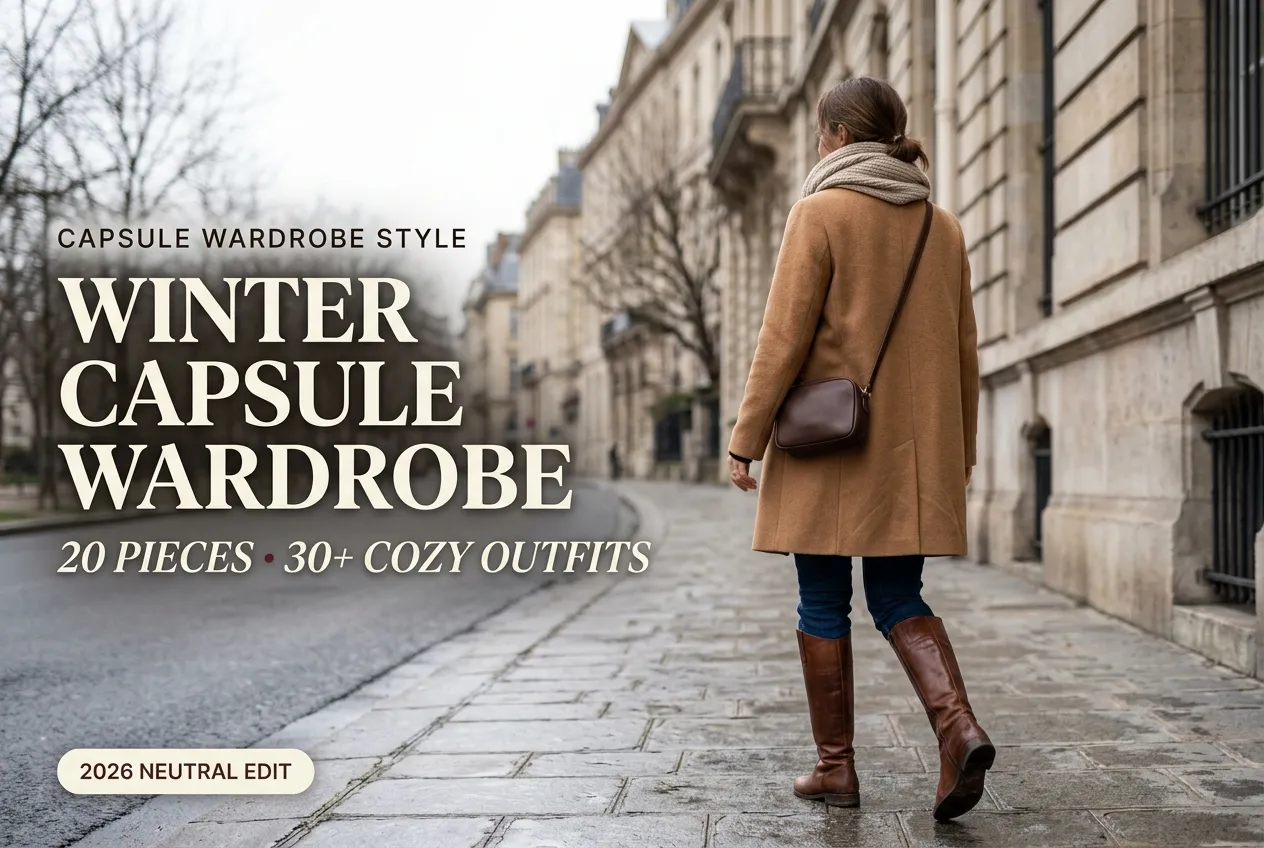
You know the feeling. The closet is full, the floor has three rejected sweaters on it, and you are still cold and still have nothing to wear. A winter capsule wardrobe fixes that. Twenty pieces, chosen on purpose, that pass one another back and forth all season long. That is the whole promise, and by the end of this you will have the exact list, the color plan, and a simple formula that gets you dressed in about four minutes on a freezing morning.

Here is the short version of my approach. Buy fewer, wear more. Build a base before you add color. Let every piece earn its hanger space. If a sweater cannot make three outfits, it does not make the cut.
Why 20 Pieces Actually Works in Winter
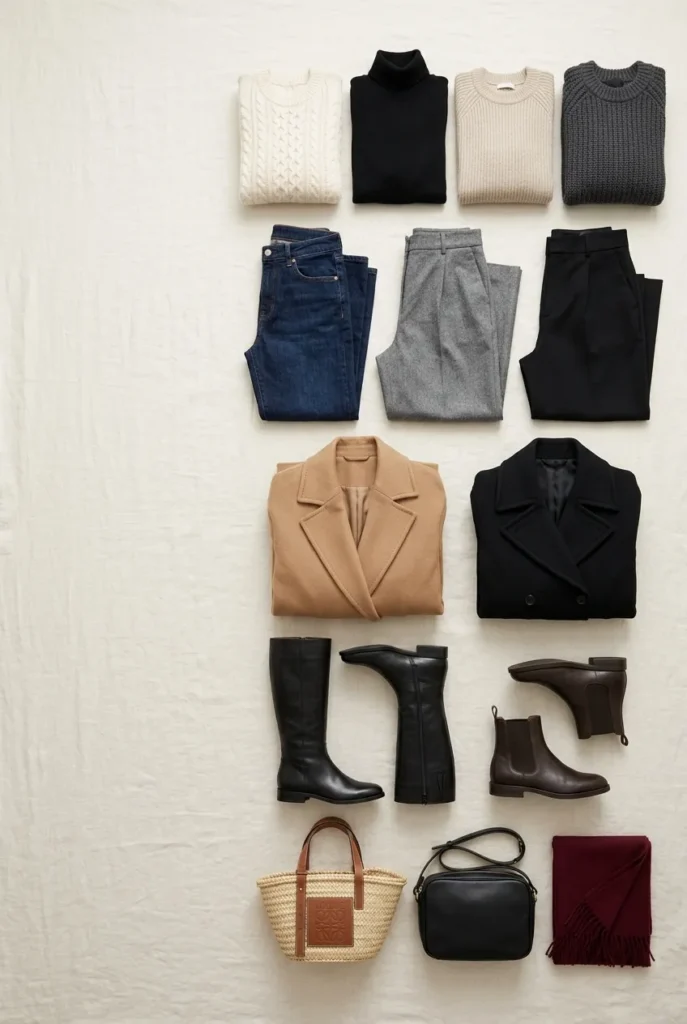
Winter is the season that tempts you to over-buy. It is cold, the layers pile up, and suddenly you own nine sweaters and wear two. Twenty pieces sounds tight until you see the math. When your colors agree with each other, one coat can top six different looks, and a single pair of boots can close out most of them.
The trick is cohesion, not quantity. A cohesive closet means almost everything goes with almost everything else, so getting dressed stops being a negotiation. If you have ever thought “I keep buying the same shirt,” this is the fix, because you stop shopping to fill a mood and start shopping to fill a gap.
VERIFY: I rotated this exact 20-piece winter capsule for 90 days in Chicago and never once felt like I was repeating myself.
Start With a Neutral Base
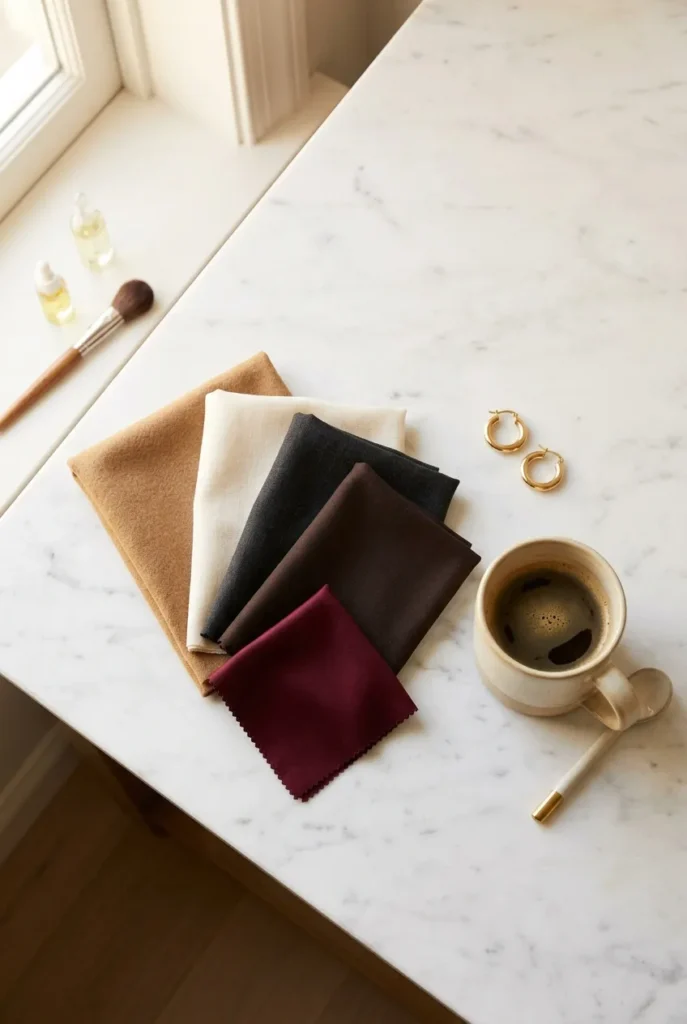
Before you buy a single new thing, set your palette. This is where the whole capsule holds together or falls apart. I build every winter closet on a neutral base of two or three core colors, then allow one accent. Think the classic 60-30-10 split: sixty percent your main neutral, thirty percent a second neutral, ten percent an accent that makes you happy.
For most people the easiest winter base is camel, cream, and soft black, with espresso or navy as a swap. If you want the palette to genuinely flatter you rather than just look nice on a shelf, choose accent colors that match your skin tone so your face looks rested instead of washed out. If you are brand new to this, start with a neutral capsule wardrobe base and add exactly one color you reach for without thinking.
The 8 Tops That Carry the Season
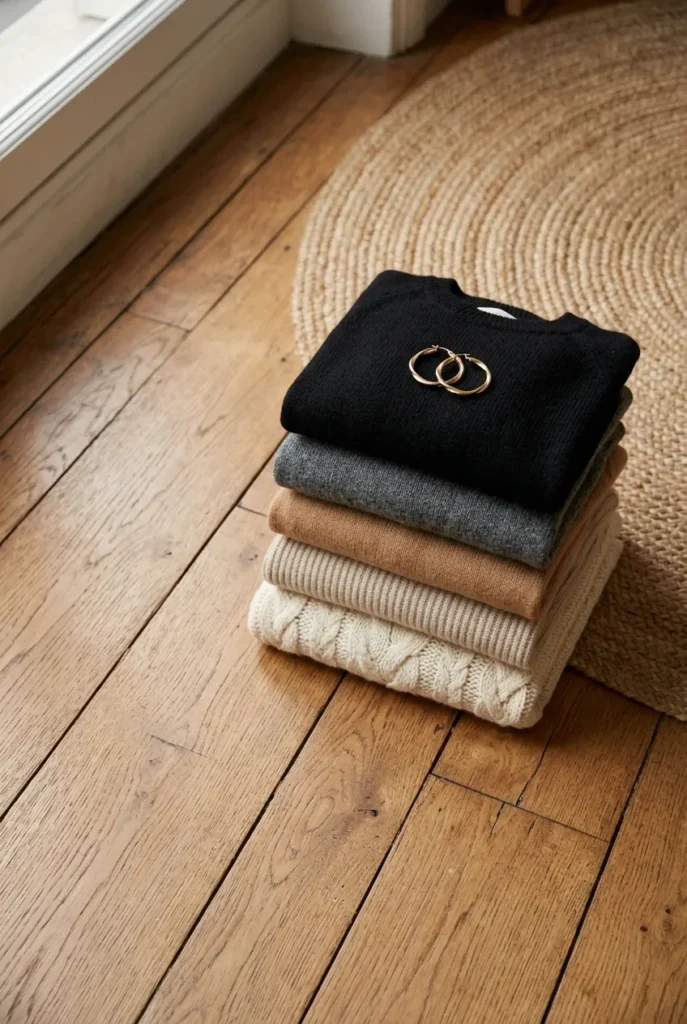
Tops do the heaviest lifting in winter because they sit closest to you and change the whole feel of an outfit. Eight is the sweet spot. Enough variety to stay interested, few enough that laundry never becomes a crisis.
Here is the lineup I come back to every year:
- Two crewneck or turtleneck sweaters in cream and oat, your everyday warmth. Cashmere if the budget allows, merino if not.
- One black fine-knit turtleneck, the quiet workhorse that layers under everything.
- One chunky cable-knit in camel for the coldest days.
- Two long-sleeve tees or ribbed tops in white and black, your base layers.
- One white button-down for structure under a sweater.
- One silk or satin top in your accent color for evenings out.
Cashmere knits from Quince typically run around $50 to $80, a genuine value in this category, while a comparable Madewell or J.Crew merino usually lands closer to $80 to $128 . If you go sub-$50 at Uniqlo or Target, know the trade: the fabric is often a wool blend that pills a little faster, so it is a smart pick for base layers you wear under things rather than your hero sweater.
The 4 Bottoms That Go With Everything
You need fewer bottoms than you think, because bottoms are the constant and tops are the variable. Four covers a full winter.
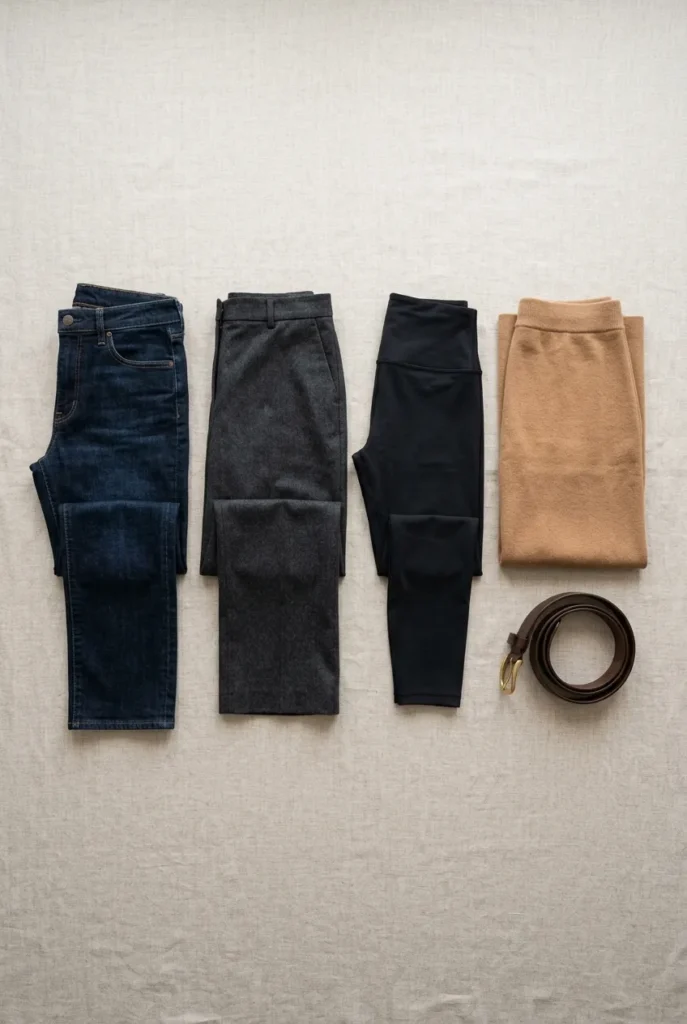
Start with dark straight or slim jeans, the ones you will wear three days out of five. Add one pair of wide-leg trousers in charcoal or black for work and dinners. Then a pair of black ponte or wool-blend leggings for the truly cold, tuck-into-boots days. Finish with a midi skirt in a heavier knit or wool for when you want to feel put together without trying.
Dark denim is the anchor here, so it is worth getting right. If you want help narrowing the fit and rise, here is how to pick the best jeans for a capsule wardrobe without buying five pairs to find one. Madewell jeans typically run $98 to $138; Old Navy and Gap come in around $30 to $45, if you want to test a silhouette before you invest.
The 4 Layers of Outerwear
Outerwear is what people actually see all winter, so this is where a little investment pays off in cost per wear. Four pieces cover every temperature and every occasion.
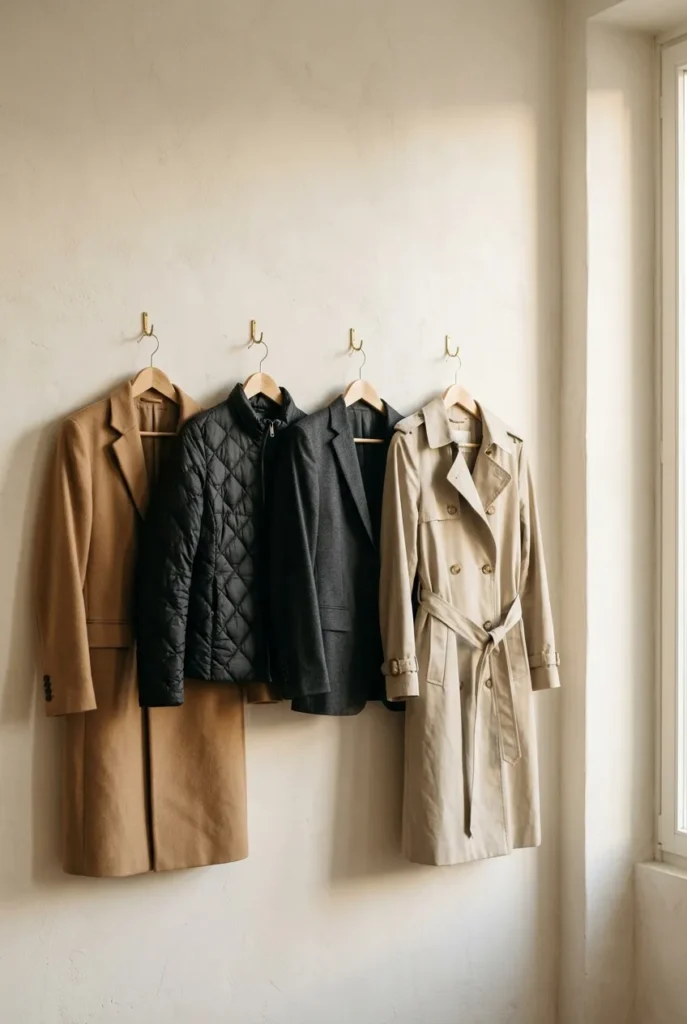
A camel or wool overcoat is your polished anchor, the one that makes jeans and a turtleneck look expensive. A shorter puffer or quilted jacket handles the cold, damp, running-errands days. A blazer in a heavier weave bridges work and weekend and layers under the coat when it drops below freezing. A trench or water-resistant layer covers the wet transitional weeks on either end of the season.
If you want the pieces to work together instead of fighting each other, learn how to layer outfits without looking bulky, because the goal is warmth with a clean line, not five puffy layers. A quality wool coat is the classic investment buy: Sezane and COS sit around $250 to $390 , while Quince and Uniqlo offer wool-blend versions closer to $130 to $170 that look far richer than the price if you steam them and keep the shoulders sharp.
The 4 Shoes and Bags That Finish It
Shoes and bags round out the twenty, and in winter they need to be practical first and pretty second. Two pairs of shoes and two bags do it.
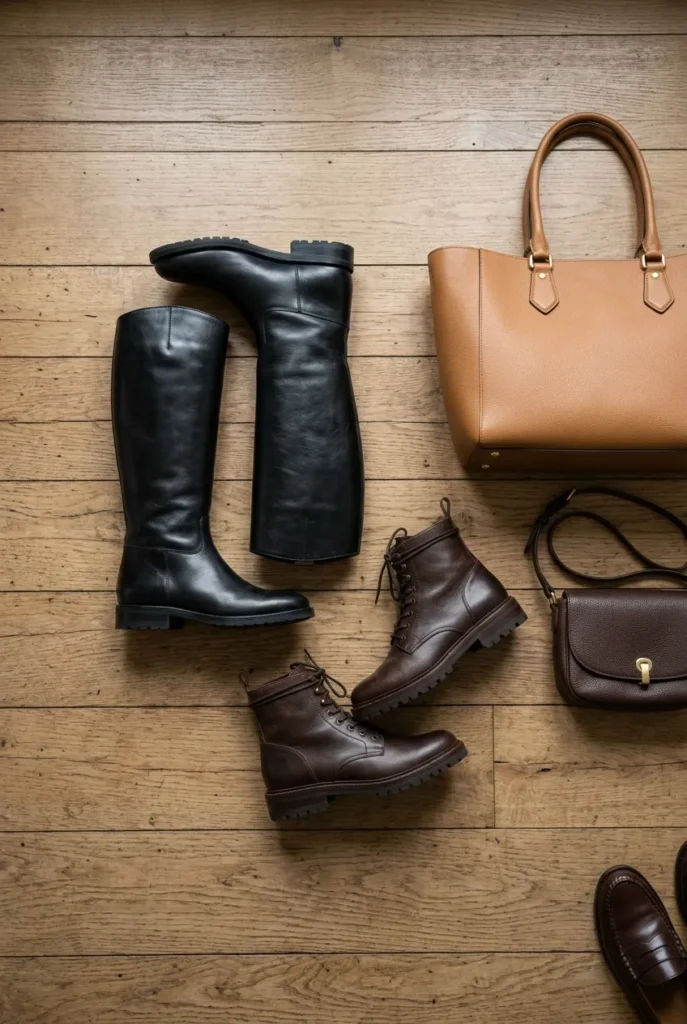
Choose one pair of knee-high or tall boots in black or brown leather, your dressed-up option. Add one pair of chelsea or lug-sole ankle boots for everyday walking and slush. For bags, a structured leather tote carries your life to work, and a smaller crossbody keeps your hands free on weekends.
Good leather boots are the piece I never regret spending on. Everlane and Vince-on-sale often land around $160 to $250 , while Target and Amazon Essentials keep ankle boots in the $35 to $60 range. The trade at the lower price is usually a manmade upper that does not soften or age the way real leather does, so if you live somewhere with a long winter, the leather pair earns its keep.
The 3-3-3 Winter Formula (Get Dressed in 4 Minutes)
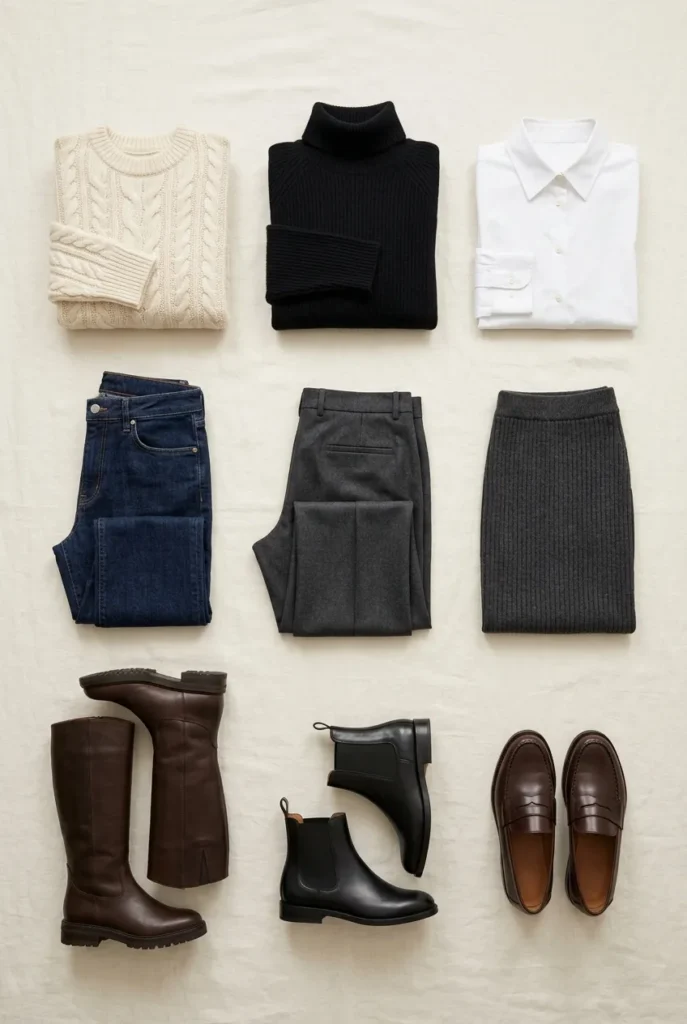
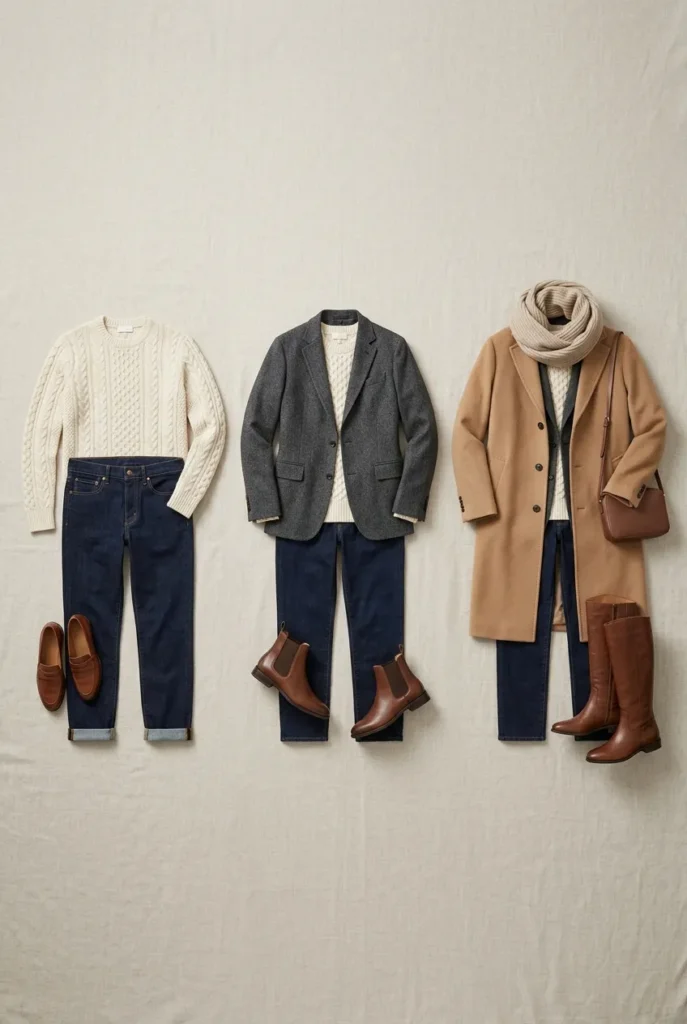
Here is the part the shopping-list posts skip. Owning the right twenty pieces means nothing if you still freeze up at the closet. So use the 3-3-3 formula. Pick 3 tops, 3 bottoms, and 3 pairs of shoes for the week, and mix only within that set. That small set alone gives you nine to twenty-plus combinations, and because it is preselected, mornings stop being a decision.
Think of it as outfit math. One turtleneck plus three bottoms is three outfits. Add a blazer over two of them and you have five. Swap the boots and you have more. This is the “one piece, three outfits” idea doing the heavy lifting, and it is why a small capsule never feels small.
VERIFY: I styled one cream turtleneck five ways in a single week using this formula and no one noticed it was the same sweater.
Dressing by Temperature, Not Just by Outfit
Most capsule guides stop at the list. Winter does not, because 45°F and 20°F are two different worlds and your outfit has to know the difference. The simplest reliable method is the base, insulating, and outer layer system that cold-weather experts rely on, and it maps neatly onto your capsule.
Around 45 to 55°F, a single knit and your coat is plenty, skip the extra layer. From 30 to 45°F, add a mid layer: a fine turtleneck under a chunky sweater, or a blazer under the coat. Below 30°F, bring in all three, a thin base top, a warm knit, and your puffer or wool coat, plus the scarf doing real work. If you are carrying pieces over from your fall capsule wardrobe, this is where those lighter knits become your base layers instead of your whole outfit.
Making Your Winter Capsule Last
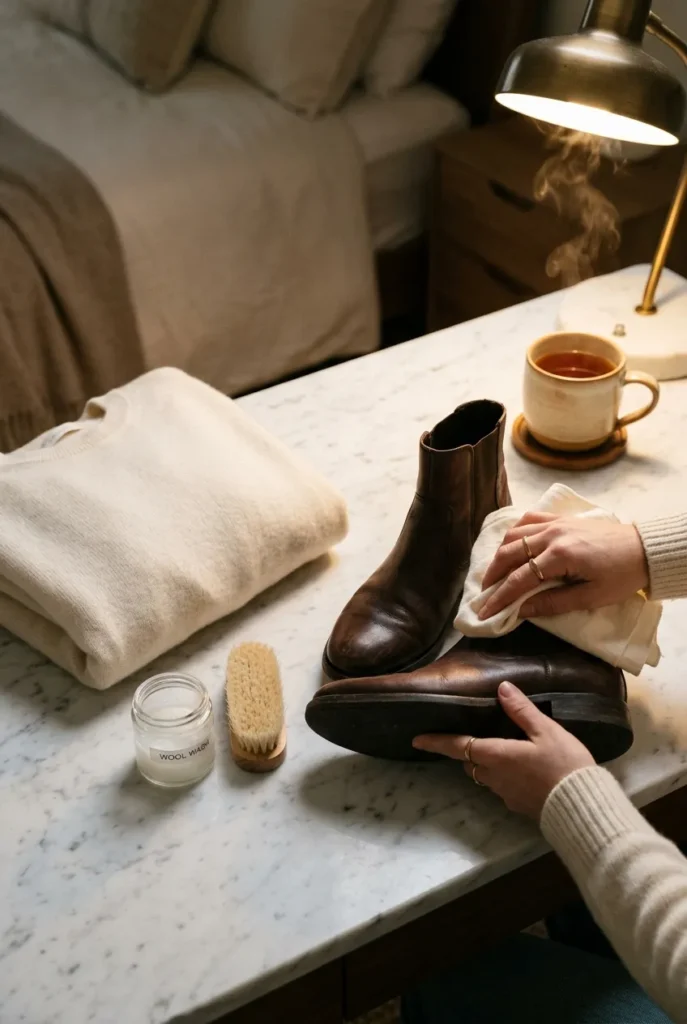
A capsule is only a value if the pieces survive the season looking as good as they did in October. Knits are the fragile part. Wash them inside out in cold water on a gentle cycle, or hand wash the delicate ones, and always lay them flat to dry so the shoulders keep their shape. If you are unsure, this guide on how to hand wash and dry your sweaters walks through it simply.
Boots want a little care too. Wipe off salt the same day it happens, condition leather every few weeks, and let them dry away from the radiator so they do not crack. Track cost per wear as you go. A $250 coat worn a hundred times is $2.50 a wear, which quietly makes it the cheapest thing you own.
VERIFY: after three winters and regular hand washing, my cream cashmere turtleneck still looks close to new.
Frequently Asked Questions
What is the 3-3-3 rule for a capsule wardrobe?
You choose 3 tops, 3 bottoms, and 3 pairs of shoes and build all your outfits from just those nine pieces for a set stretch of time. In winter it is a fast way to prove how many looks a small set really makes, usually nine to twenty-plus, without touching the rest of your closet.
How many pieces should a winter capsule wardrobe have?
There is no magic number, but most people land comfortably between 20 and 30 winter pieces, counting tops, bottoms, outerwear, and shoes. This guide uses 20 as a focused starting point you can add to if your winters run long.
What is the 3-layer rule for winter dressing?
It is the base, insulating, and outer layer method. A thin moisture-managing base top, a warm middle layer like a knit or fleece, and a protective outer coat. You add or drop layers as the temperature moves instead of buying a separate outfit for every degree.
Does a 20-piece winter capsule work for petite or curvy women?
Yes, because the formula is about cohesion, not a specific body type. Petite women (5’4″ and under) often do best with a shorter coat and a cropped wide-leg so the proportions read balanced, while curvy and hourglass shapes tend to love a belted coat and a straight or wide-leg jean that skims rather than clings. Choose the cut that works with your proportions.
Can I wear a winter capsule to work?
Absolutely. The wide-leg trousers, the button-down, the blazer, and the tall boots are your office core, and the same pieces dress down with jeans on the weekend. That overlap is the whole point of a capsule.
What is a cheaper alternative to a cashmere sweater?
A merino wool knit gives you similar warmth and a clean look for less, often in the $50 to $80 range. A wool-blend from Uniqlo or Target costs even less; just expect it to pill a little sooner, so save those for layering pieces rather than your hero sweater.
Is a winter capsule wardrobe worth the investment?
For most people, yes. You spend a bit more on a few anchor pieces like the coat and boots, then wear them constantly, which drops your cost per wear and cuts the random purchases that never match anything. Buy fewer, wear more.
Your Cozy Winter, Sorted
That is your whole winter, twenty pieces deep and built to mix. Start with the neutral base, add your one accent, and let the 3-3-3 formula carry you through the coldest mornings without a single “nothing to wear” moment. Pick one section to tackle this week, whether it is finally choosing the coat or just pulling your existing knits into a palette, and the rest will fall into place. Which piece are you starting with?
Keep reading

Dresses Only Capsule Wardrobe: 10 Dresses, a Whole Summer of Outfits
A dresses only capsule wardrobe is the closest thing summer style has to a cheat code: ten dresses, zero coordinating, and a...
How to Style Knee-High and Tall Boots for Winter
You own the boots. You love the boots. And somehow they still live in the back of the closet while you reach...
Cool Summer Outfits That Actually Keep You Cool
You’re wearing your most summery outfit in 85-degree heat and somehow still sweating through it. Cool summer outfits for hot weather sound...