
16 Shacket Outfits for Women Over 50 That Look Deliberate, Not Borrowed
This post may contain affiliate links. If you buy through them, we may earn a commission at no extra cost to you. As an Amazon Associate, we earn from qualifying purchases.
There is a moment, usually around the third try in front of the mirror, when a shacket stops reading as a jacket and starts reading as a shirt you forgot to tuck in. That moment is a fit problem, not an age problem. The best shacket outfits for women over 50 all solve it the same way, by controlling three things: where the shoulder seam lands, where the hem stops, and what is happening underneath.
Get those right and the shirt jacket becomes the most useful thing hanging in a fall closet. It layers over almost everything, it survives a 20 degree swing between the parking lot and the office, and it does what a cardigan cannot, which is hold a shape.
Below are 16 outfits, each one built around a different fabric, hem length, or occasion. A few are five-minute formulas. A few solve a specific problem, like what to wear underneath when the temperature drops, or how to wear one when you are 5’3″. None of them require buying a single new thing to try.
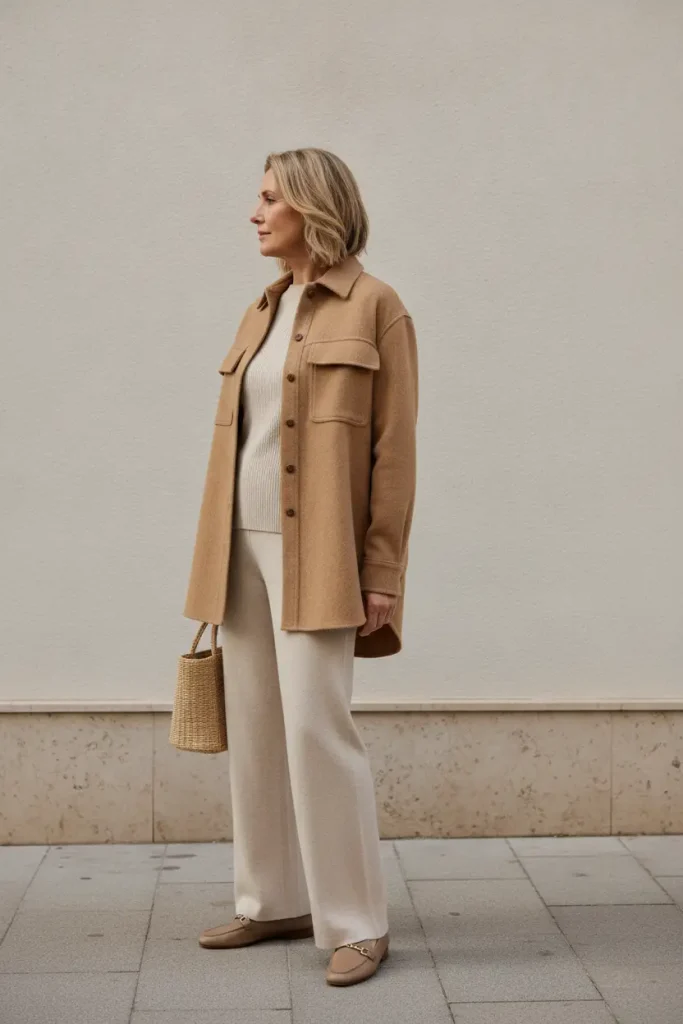
1. The Tonal Column: Same Shade Top to Bottom, Shacket Left Open
Nothing makes a relaxed layer look intentional faster than a matching base underneath it. Oatmeal ribbed knit, oatmeal wide-leg trousers, then a camel or taupe shacket hanging open over the top. The eye reads one uninterrupted line from shoulder to shoe, and the open jacket becomes a vertical frame on either side of it.
Skip the belt here. The whole point is the unbroken column.
Shoes stay in the same family: a taupe loafer or a bone sneaker keeps the line going all the way down.
One tone underneath means the shacket has nothing to fight with, so a relaxed shape reads as a styling choice instead of an accident.
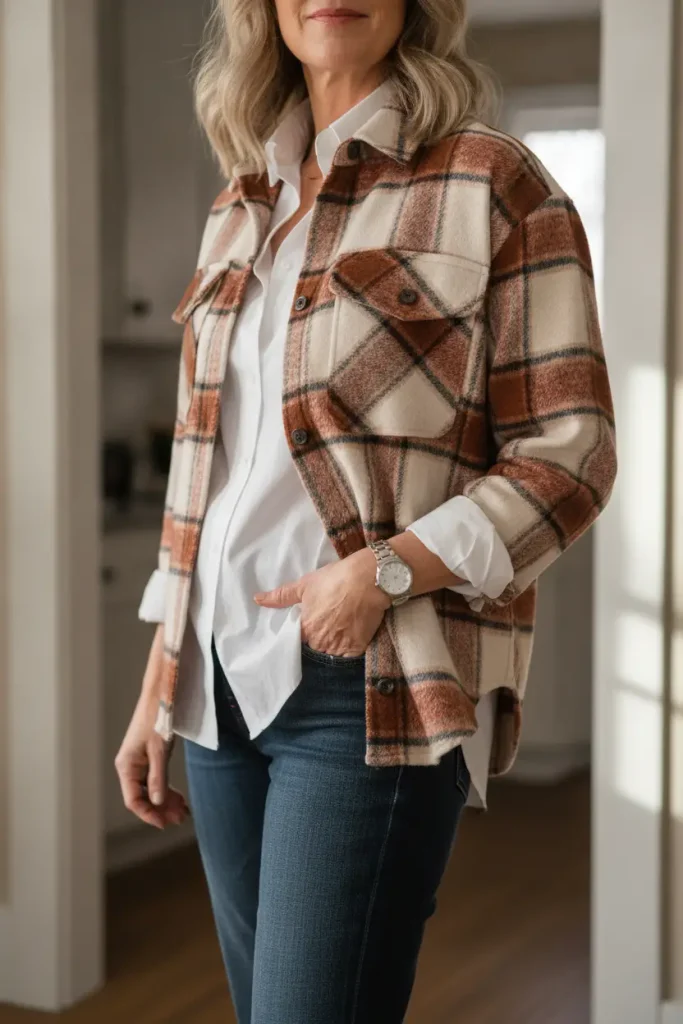
2. Plaid Shacket, White Button-Down, Straight-Leg Jeans
The weekend formula that has outlasted every trend cycle it passed through. A crisp white button-down underneath gives the plaid a hard edge to sit against, and the collar peeking out at the neck is what separates this from loungewear.
Wear it this way:
Button the shirt to the second button, collar standing slightly, not flattened.
Tuck only the front of the shirt so the waistband shows.
Roll the shacket sleeve twice, ending just below the elbow.
Leave the shacket open and unbuttoned all the way down.
Two collars stacked can go wrong fast, so keep the shirt collar narrow and the shacket collar soft. The same principle shows up in the layering rules that keep bulk under control: the layer closest to your face should be the crispest thing you own.
3. The 3-Point Fit Check Outfit: Grey Shacket, Black Tee, Dark Denim
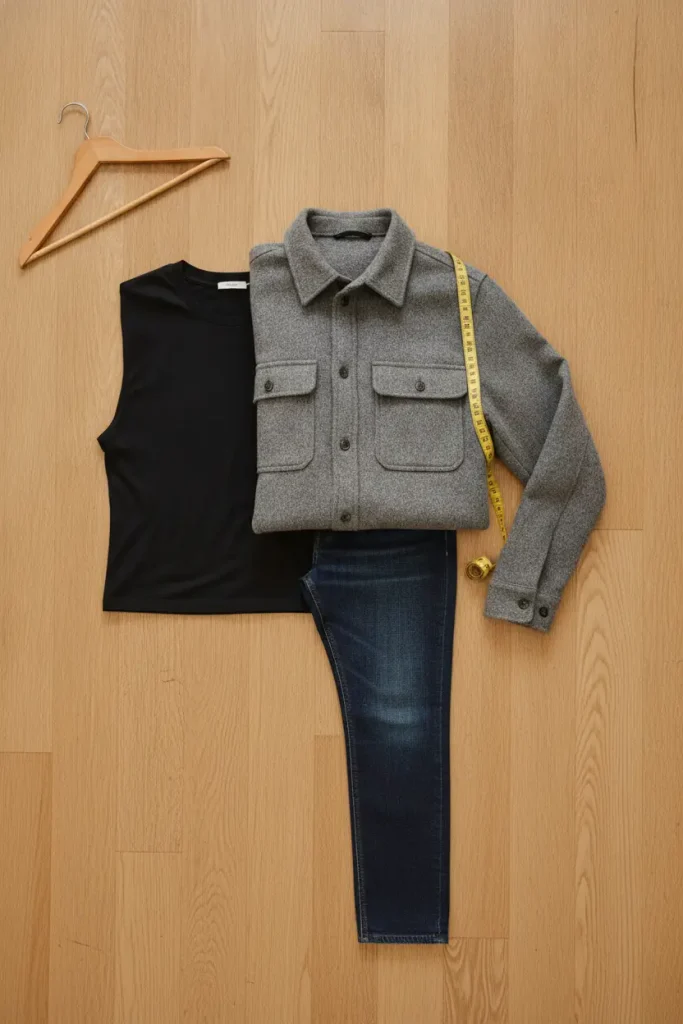
Before styling anything, run the check. Three landmarks decide whether a shacket looks tailored or borrowed, and all three are visible in a bathroom mirror.
Grey shacket, black crew tee, dark denim is the cleanest outfit to test all three on, because there is no pattern hiding the lines. If the shoulder seam has slid down your arm and the hem has landed dead center on your hip, that is the version of shacket outfits for women over 50 that photographs badly, and it is a sizing fix, not a style verdict.
Size down before you give up on a shacket. Most are cut generously enough that one size smaller still layers over a knit.
4. Wool Shacket Instead of a Blazer for Business Casual
Offices that stopped requiring blazers did not stop requiring structure. A wool or wool-blend shirt jacket in charcoal, navy or espresso gives you the shoulder line of a blazer with none of the stiffness, and it reads correctly in a conference room as long as the fabric is matte and the pattern is quiet.
Pair it with tailored trousers, a fine-gauge merino crew and a pointed flat. The one thing that breaks the illusion is a rumpled hem, so wool blends earn their keep here because they hold a press between wears.
Wool also asks for a little care in return. The Woolmark Company’s guidance on washing wool is worth reading once before the first wash, because most shackets that lose their shape lose it in the machine, not on the hanger: the Woolmark Company’s guidance on washing wool.
5. Belt the Shacket and Wear It Like a Jacket-Dress
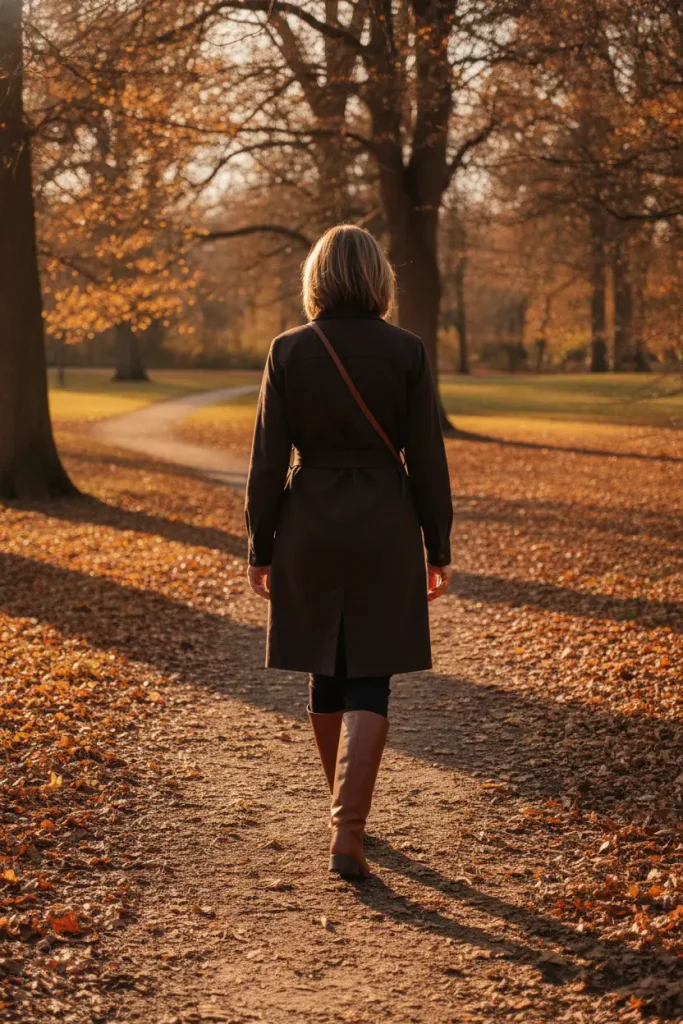
Longline shackets have a second life nobody talks about. Cinch a wide leather belt at the natural waist, close the top three buttons, and the jacket becomes the outfit. Underneath goes something slim and quiet: black leggings or ponte pants, plus a tall boot that closes the gap between hem and ankle.
Two details make or break it. The belt has to sit at the narrowest point, which is usually higher than it feels like it should. And the boot shaft needs to overlap the leg line, not leave a stripe of leggings showing between hem and boot.
Recreate this look
Worth knowing: a stiff cotton shacket fights the belt and bunches. Soft flannel, wool blend and washed twill all gather cleanly.
6. Over a Midi Dress, With the Hems Doing the Work
A shacket over a floaty midi is the outfit that saves a dress you thought was finished for the year. The contrast is the point: stiff collar, soft skirt. What matters is where the two hems land relative to each other.
Jacket hem and dress hem within a few inches of each other, so the eye reads one thick horizontal band across the leg and the dress looks shortened.
Jacket stopping at the hip or upper thigh with a long stretch of skirt below it, so the dress keeps its full length and the layer reads as deliberate.
Add an ankle boot rather than a sandal and the whole thing moves into October. A slim belt over the shacket is optional, though the dress usually has enough movement without it.
7. Corduroy Shacket, Dark Denim, Loafers
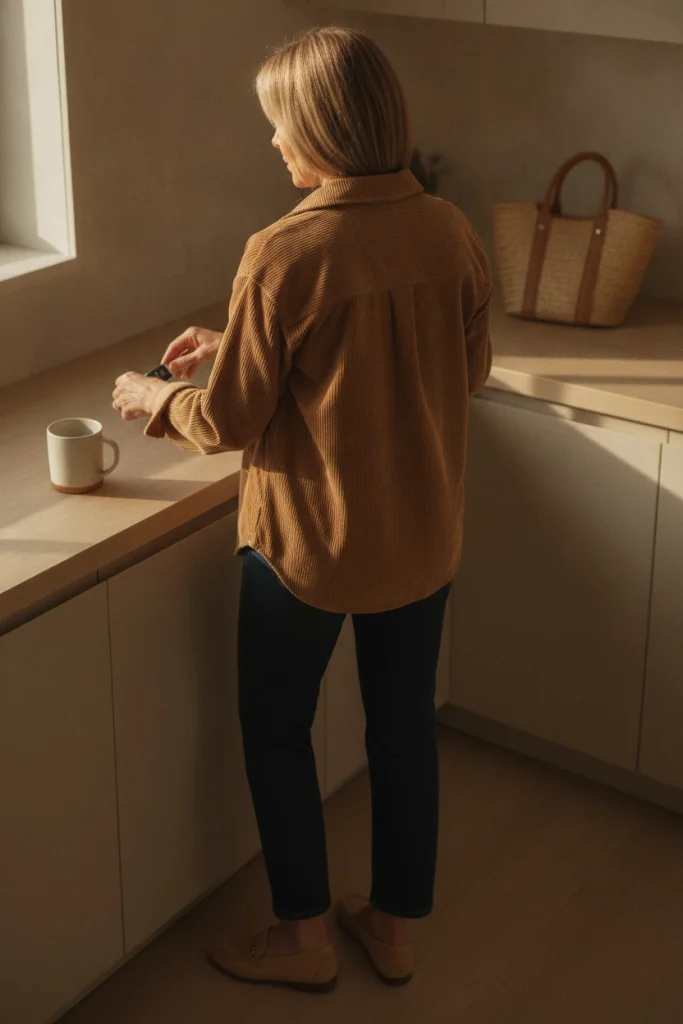
School run, grocery run, coffee with a friend who will notice if you tried. Corduroy is the fabric that makes a casual outfit look considered, because the wale catches light differently than everything else you own.
Keep the denim dark and straight through the leg so the textured jacket is the only thing with visual noise. A loafer beats a sneaker here by about a mile, since the polished toe balances the softness of the cord.
Colors that work without trying: camel corduroy over indigo, olive over black, rust over mid-wash. If the jeans are the weak link, the straight-leg and slim-cut jeans worth owning is the place to start, because corduroy needs a clean leg line to sit against.
💡 Quick Tip
Wide-wale corduroy adds visual bulk across the shoulders and chest. Narrow wale does not. If you are broader on top, the finer cord is the friendlier choice.
8. Quilted Shacket Over Wide-Leg Trousers
Quilting adds warmth and volume at the same time, which is why it goes wrong so often. The fix is proportion: if the jacket is puffy, the trouser has to be fluid. A wide-leg wool or a drapey twill balances it. A skinny jean underneath does the opposite and makes the whole silhouette top-heavy.
Pick a quilted shacket that stops at the hip bone, so the volume has an endpoint.
Put something flat and fine underneath, like a merino crew or a silk-feel shell.
Let the trouser break long over a low boot.
Quilted jacket plus chunky knit plus wide scarf, all at once.
A hem that lands at the fullest part of the hip.
Shiny quilting, which reads as a puffer rather than a shirt jacket.
Matte face fabric is what keeps a quilted shacket on the right side of the line between layer and sleeping bag.
9. The Travel Layer: Shacket, Tee, Stretch Trouser, Slip-On Sneaker
Airplane cabins run cold, airports run warm, and a shirt jacket handles both because it takes 4 seconds to remove and folds flat into a tote. It also outperforms a cardigan on arrival, since it does not come out of the bag looking slept in.
What makes it work on a travel day:
- ▸Patch pockets deep enough to hold a phone and a boarding pass without a bag.
- ▸A mid-tone neutral that hides coffee better than cream does.
- ▸Brushed cotton or a wool blend, both of which shed wrinkles faster than linen.
- ▸Buttons rather than a zip, so it opens partway instead of all or nothing.
One shacket can anchor an entire week away, which is the same logic behind a fall capsule built around one outer layer. Pack the jacket, pack fewer sweaters.
10. Petite Version: Cropped Shacket, High Rise, Cropped Boot
At 5’4″ and under, the standard shacket hem is not a preference problem, it is a math problem. Most are cut to hit a 5’8″ frame at the hip, which on a shorter frame lands mid-thigh and shortens the leg by several visible inches.
Two fixes, and the second one is free.
| Petite, 5’4″ and under | Tall, 5’9″ and over |
|---|---|
| Hem at or just above the hip bone | Hem at mid-thigh or lower |
| High-rise bottom, front tuck mandatory | Mid or high rise, tuck optional |
| Sleeve rolled to free the wrist | Sleeve left full length |
| Cropped or ankle boot, same tone as the trouser | Tall boot or a heavier loafer |
Keeping the boot in the trouser’s color family stretches the leg line further, which matters more on a shorter frame than any single garment does. There is a fuller breakdown of ankle boots that work with cropped hems if the shoe end is where your outfits usually stall.
11. Tall and Curvy Version: Longline, Open, Vertical Everything
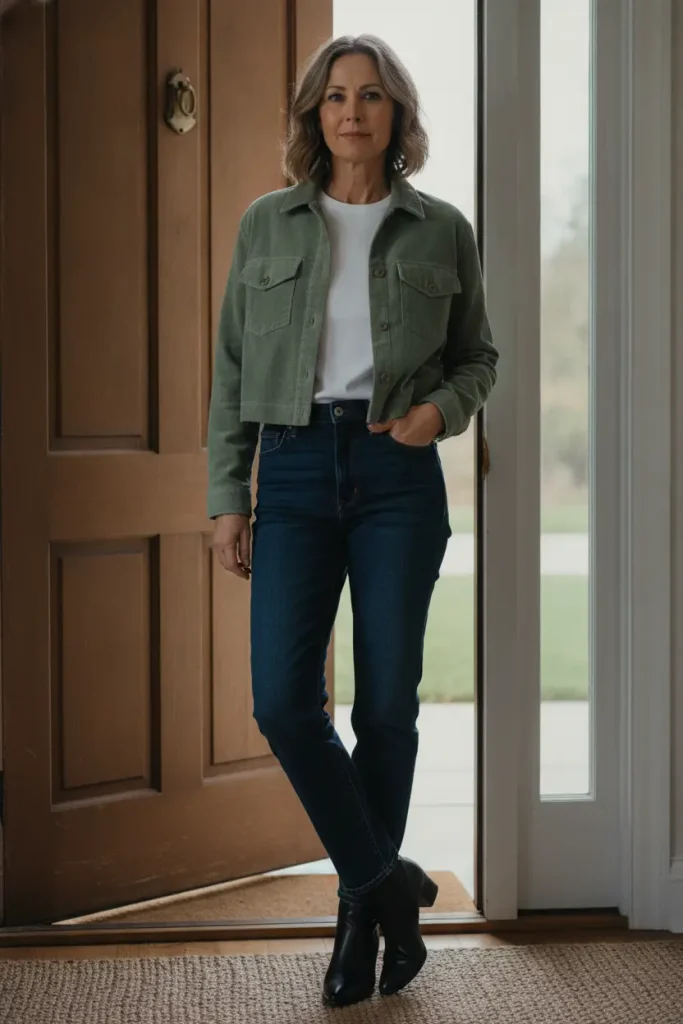
Height and curves both reward the long shacket, for different reasons. On a tall frame it finally has room to hang. On a curvier frame the open front creates two vertical lines that run past the waist and hip without cutting across them.
The rule underneath is the same either way: keep the base layer in one color from shoulder to hem so nothing interrupts those lines.
Buttoning a longline shacket closed erases the effect entirely, so if it came with a matching tie belt, put it in the drawer with the other tie belts.
12. All Black, Silk Shell Underneath, Somewhere to Be
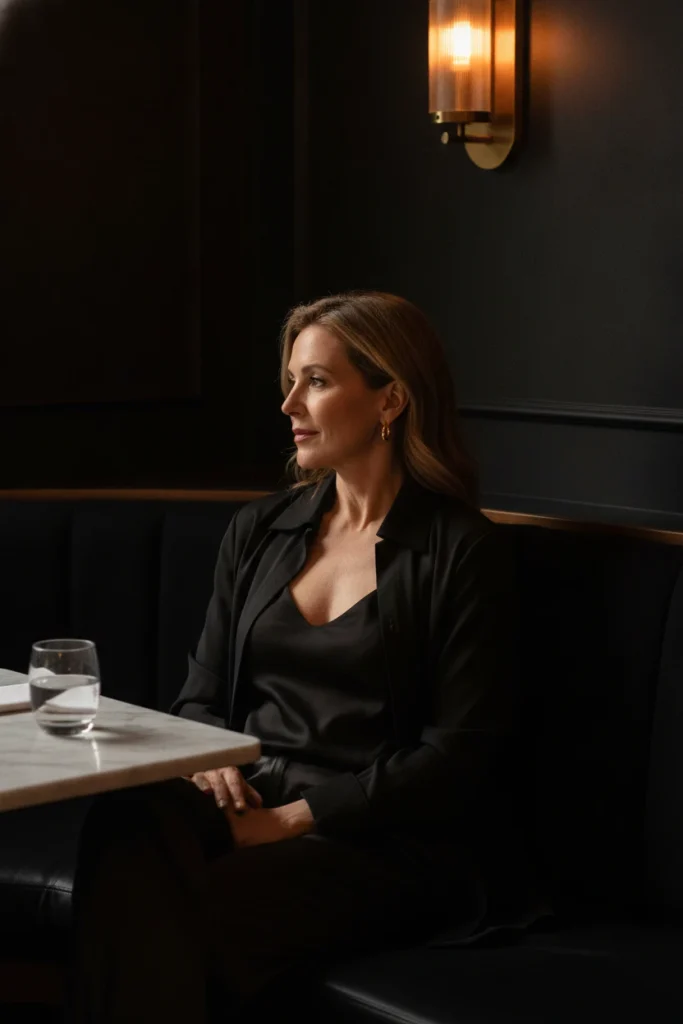
Black on black turns a casual shape into an evening one. A black shacket in a fine wool or a washed twill, a silk-feel camisole or shell underneath, black trousers, and one piece of gold at the ear or the wrist.
Texture is what stops it from flattening into a uniform. Matte jacket, liquid shell, and the difference between the two surfaces reads as intentional under restaurant lighting.
📌 Good To Know
Blacks rarely match across garments. Hold the jacket against the trousers in daylight before committing. A cool black over a warm black looks like an accident, while two deliberately different tones, say black over espresso, looks like a decision.
This is the same proportion logic in a leather jacket, just softer, and it travels from a dinner reservation to a gallery opening without a change of shoes.
13. Early Fall, Bare Ankle: Shacket, Tee, Cropped Wide-Leg, White Sneakers
September in most of the country means 78 degrees at noon and 58 by the time you walk back to the car. A lightweight cotton shacket carried over the arm all afternoon and thrown on at dusk handles that better than anything with a lining.
Cropped wide-leg trousers and a low white sneaker keep it from tipping into full fall. The bare ankle is doing real work here, holding the outfit in the season it actually is.
Heavy layer, light everything else. One warm piece over a summer outfit reads as early fall. Two warm pieces read as trying to skip ahead.
14. The Mid-Layer Trick: Shacket Under a Wool Coat
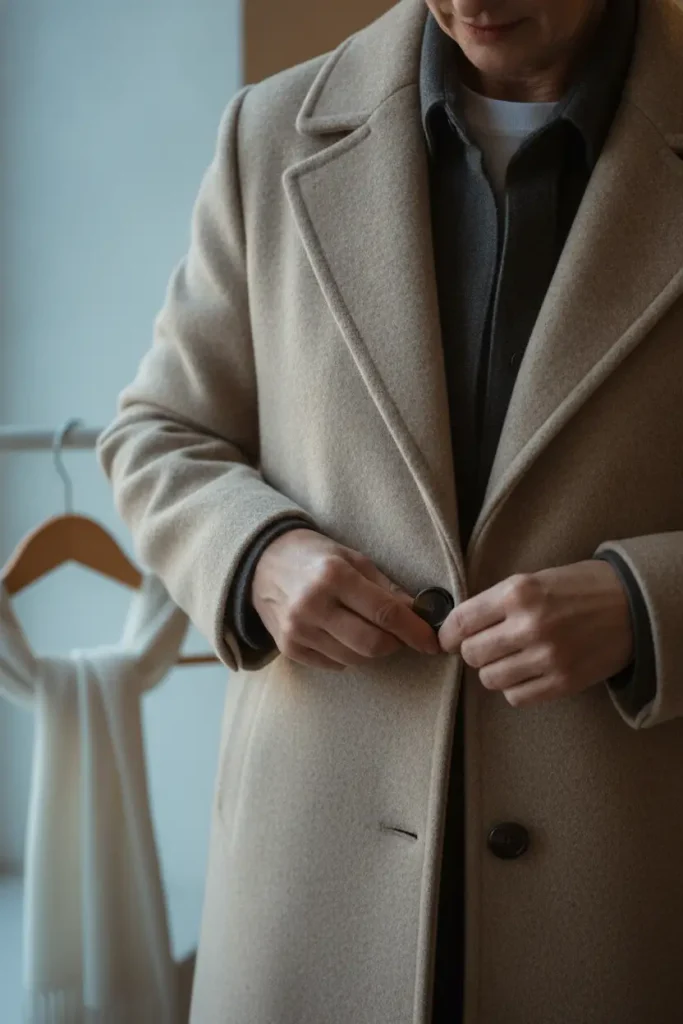
Here is the version almost nobody writes about. A shirt jacket is not just outerwear. Slide it under an unstructured wool coat and it replaces a bulky sweater, adding warmth across the chest and back while keeping the sleeve slim enough to fit inside a coat arm.
Chunky knit under a coat. Warm, but the sleeves bunch at the elbow, the collar crowds the neck, and taking the coat off indoors leaves you in something shapeless.
Shirt jacket under the coat. Flat sleeve, clean collar line, and when the coat comes off at lunch you are still wearing a structured layer instead of a sweater.
Two conditions make it work. The coat needs to be unstructured or a size up, and the shacket needs to be the flattest one you own, which usually means the wool blend rather than the quilted one.
15. Shop the Men’s Rack and the Resale Bin for Better Fabric
Women’s shackets at mass-market prices are often polyester fleece dressed up as flannel. The same money in the men’s department frequently buys brushed cotton or a wool blend, because men’s shirt jackets have been a workwear category for a century and the fabric standards stuck.
What to check before buying, in either department:
⚠️ Watch Out
Read the fiber content tag, not the product name. “Flannel” describes a napped finish, not a fiber, so a flannel shacket can be all cotton, all wool, or all polyester. US garments are required to carry fiber content and care information, which is exactly what that tag is for. See the FTC’s rules on apparel labeling.
Sizing across the aisle is straightforward: a men’s small generally maps to a women’s medium or large in a relaxed jacket, and the shoulder seam is the only measurement worth fussing over. Resale racks are the other reliable source, since a wool shacket that has already been washed a few times has done most of its shrinking.
16. Spring Carry-Over: Washed Cotton Shacket, Striped Tee, Ecru Denim
Shackets are filed under fall, which costs them half their working year. In washed cotton or a cotton-linen blend, the same shape handles a cool spring morning with nothing changed except weight.
Striped tee, ecru or off-white denim, a canvas sneaker or a flat sandal once it warms up. The jacket in sage, sky blue, butter yellow or plain ivory, so it belongs to the season rather than borrowing from the last one.
One shape, three seasons, and the reason it stretches that far is color discipline. A neutral base that makes every layer agree is what lets a single jacket move between all three without looking out of place in any of them.

Frequently Asked Questions
What exactly is a shacket?
A shacket is a shirt jacket: cut like an oversized button-down, made in a fabric heavy enough to work as a light jacket. It has a shirt collar, a button front and patch pockets, but the cloth is closer to a jacket’s weight. If it is too warm to wear tucked in and too light for January, it is a shacket.
Can a woman over 50 wear a shacket?
Yes, and the age question is really a fit question in disguise. The looks that go wrong are the ones where the shoulder seam has slid down the arm and the hem has landed on the widest part of the hip. Fix those two landmarks, keep the base layer simple, and the shape works at any age.
What do you wear under a shacket?
Flat, fine layers. A crew neck tee, a fine-gauge merino knit, a silk-feel shell or a crisp button-down all work because none of them add bulk under the arm. Save the chunky knit for under a coat instead. If the sleeve feels tight at the bicep once the shacket is on, the layer underneath is too thick.
Is a shacket a jacket or a shirt?
Functionally it is a jacket, structurally it is a shirt. That is the whole appeal. It gives you a collar, a button front and real pockets with the ease of a shirt, which is why it works as outerwear in mild weather and as a mid-layer when it gets cold.
What shoes go with a shacket?
Ankle boots and loafers are the two that never miss, because both have enough weight to balance a heavier jacket. Clean white or bone sneakers work for early fall and spring. Tall boots come in when the shacket is longline or belted. Delicate heels tend to fight the casual fabric.
Are shackets still in style?
The shirt jacket has moved from trend to category, which is the useful kind of staying power. It sits in permanent search demand rather than seasonal spikes, and the fabrics rotate each year while the shape stays put. Buying a neutral one in a good fiber is a low-risk decision.
How should a shacket fit across the shoulders?
The shoulder seam should sit on your shoulder bone or up to about an inch past it. Past that the jacket starts wearing you. Many are cut so generously that sizing down still leaves plenty of room to layer a knit underneath, so try the smaller size before deciding the style is not for you.
Where to Start
Pick one jacket and one formula, not all sixteen. The tonal column in entry 1 is the fastest way to see whether the shape suits you, because it strips out everything that could distract from fit. Run the 3-Point Fit Check while you are in front of the mirror anyway.
Then let the shacket earn its hanger space the slow way: once as outerwear, once under a coat, once belted. Three wears in three different roles tells you more than any shopping guide can.
Save this for the next cold morning
Pin whichever outfit you would actually wear tomorrow, then come back and work down the list.
Keep reading

Country Concert Outfits for Women: 15 Ideas From One Capsule
Buying a sequin fringe jacket or stiff new boots for one night of live music leaves you with a full closet and...

15 Street Style Outfits for Women (From a Capsule Wardrobe)
Modern street style looks incredibly polished, but the secret is entirely in the mix. You do not need a closet bursting with...

Wedding Guest Dresses for Women: 10 Rewearable Looks From One Capsule
Opening an invitation only to realize you have nothing to wear is an exhausting ritual. Most women spend between $150 and $300...