
Korean Fashion Outfits: The Capsule Wardrobe Behind the Aesthetic

Look closely at the Korean fashion outfits you’ve saved this fall and a pattern shows up fast. The same trench. The same sweater vest over a white shirt. Wide trousers that skim the shoe, a pleated skirt, a pair of chunky loafers.
Seoul street style looks endless on your feed. Underneath it sits a small, repeatable capsule.
That’s the part most guides skip. They show you 50 outfits and leave you to buy 50 things.
This one works the other way. You’ll get the 12 pieces I’d build a Korean capsule around, the proportion rule that makes plain basics read as Korean, and the outfit math (116 combinations, counted one by one). You’ll also get a size chart that translates Korean “free size” into US fits, plus a short take on 2026’s Pinterest trends worn the Seoul way, so the capsule stays current without a shopping spree.
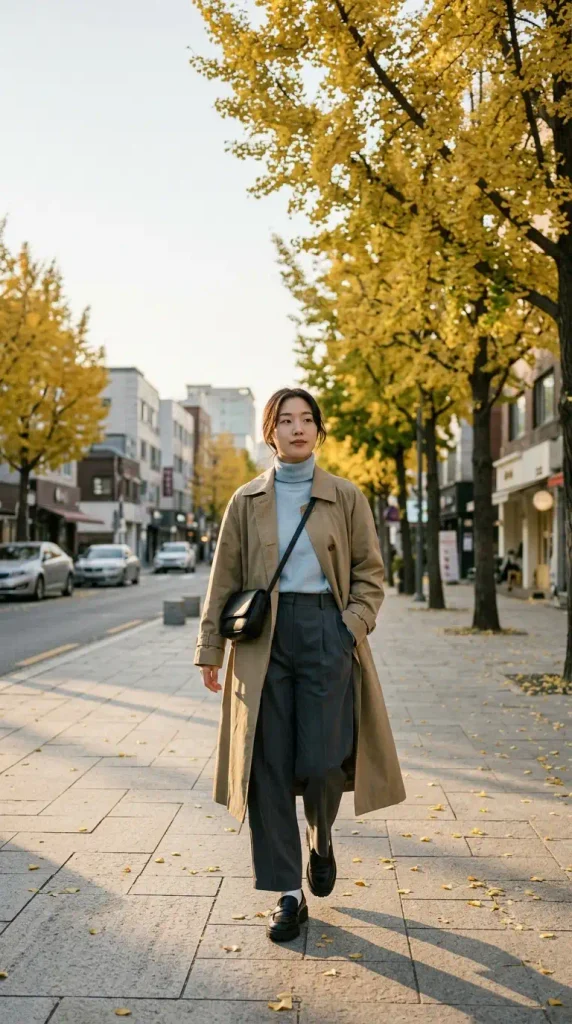
The Seoul 12: A Korean Capsule Wardrobe Built for Fall
Twelve pieces, four groups, one neutral palette with a single cool accent. That’s the whole system.
The palette does the heavy lifting. Korean street style leans on muted colors like charcoal, oat, cream, and navy, and that restraint is why mismatched shapes still look intentional. Every piece below goes with every other piece, so you never stand at the closet doing color math.
The groups have jobs. Four layers handle weather and shape. Four tops set the mood of each outfit. Three bottoms decide the silhouette. One dress works as a shortcut, since it becomes four different outfits depending on what you wear under it.
The Seoul 12 Capsule
Shoes and bags sit outside the 12, the way most capsule plans treat them. If you’d rather start from a bigger base, a full fall capsule wardrobe with 25 pieces covers more ground, and the Seoul 12 slots right into it.

The Proportion Rule That Makes Basics Read Korean
Put the same white shirt and jeans on two people and only one may look like Seoul. The difference is volume, and where it sits.
Korean outfits almost always pair one roomy half with one clean half. An oversized cardigan goes over straight jeans. A fitted turtleneck tucks into wide pleated trousers. When both halves go big, the outfit swallows you. When both go slim, it reads as plain office basics.
Call it the Volume Swap Rule: one oversized piece per outfit, and the piece next to it stays closer to the body.
Three ways to use it today:
- Big top, straight bottom: the cardigan or boxy jacket over straight jeans.
- Slim top, big bottom: the turtleneck or striped tee into wide trousers or the full midi skirt.
- Long over long only when one layer is thin: the trench over the knit midi works because the dress is fitted.
The rule also explains the front tuck. Tucking just the front of a loose shirt pulls it in at the waist, so even a roomy button-down gives you a defined middle above wide trousers.
Here’s the trade-off. Oversized shoulders hide a lot, which is part of the appeal, but they also shorten your frame. If you’re petite, keep the roomy piece on top and let your trouser hem graze the shoe so the line runs long.
Oversized cardigan, baggy jeans, chunky sneakers. Volume everywhere, so there’s no shape and the outfit looks borrowed.
Same cardigan, straight-leg jeans, loafers with crew socks. One roomy half, one clean half, and the look suddenly reads as Seoul.
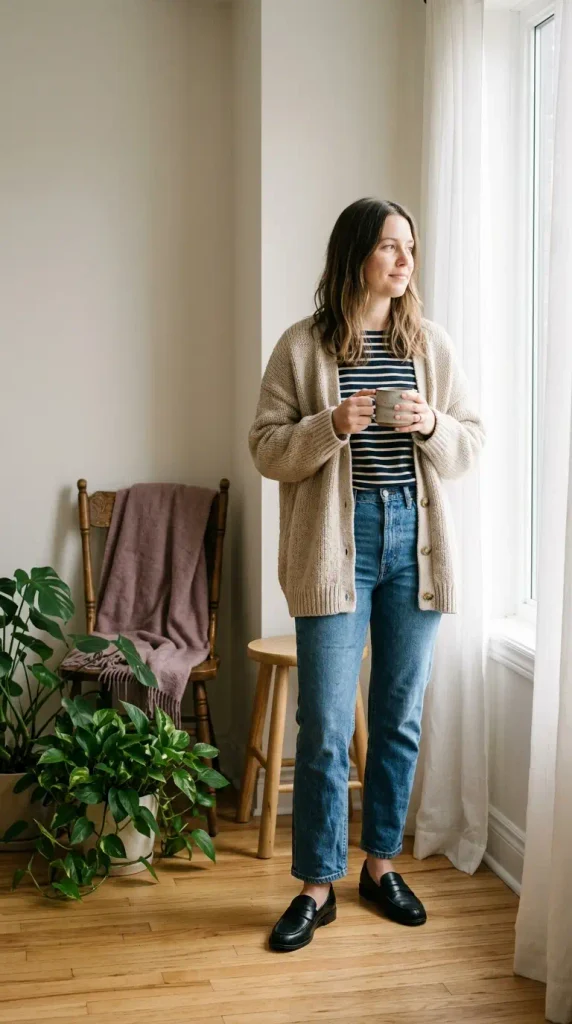
The Outfit Math: 12 Pieces, 116 Combinations
Here’s where a Korean capsule wardrobe earns its hanger space.
Start with the core. Four tops times three bottoms gives you 12 base outfits. The sweater vest is optional on any of them, which doubles that to 24. Then pick an outer layer or skip it: nothing, the trench, the boxy jacket, or the cardigan. That’s four choices, so 24 becomes 96.
The dress adds its own branch. Wear it alone or over any of the four tops (five ways), then add one of the same four outer options. That’s 20 more.
So 96 plus 20 lands at 116 outfits, before you touch shoes or a bag.
Not all 116 will feel like you. A striped tee plus vest plus cardigan might be one layer too many for your taste, and that’s fine. The count isn’t a dare to wear every combination. It shows why a small rail of matching pieces beats a closet of one-offs: every new piece multiplies instead of adding.
One test before you buy anything new. If a piece can’t pair with at least three things already in the capsule, it’s a one-off, and one-offs are where capsules quietly fall apart.
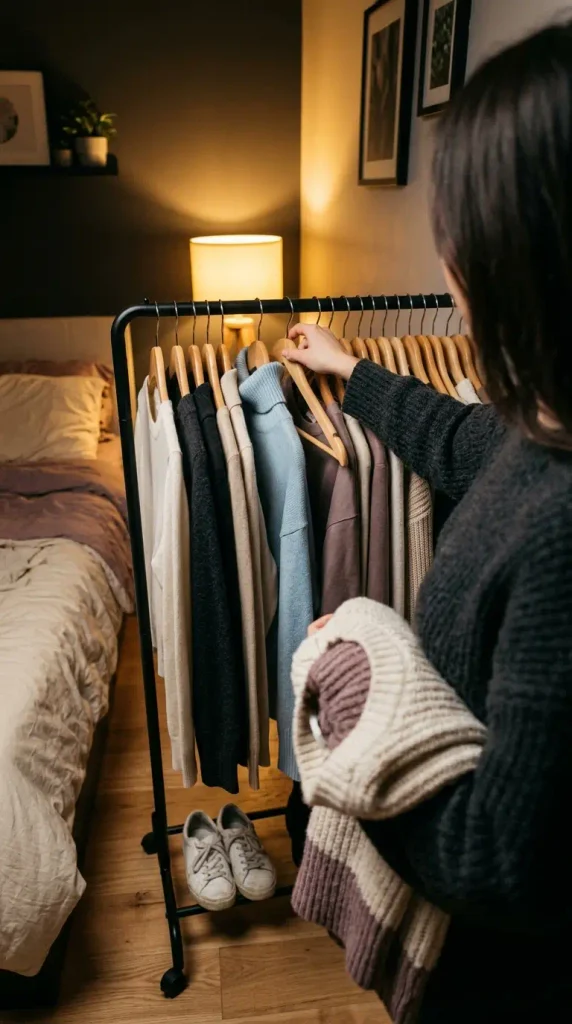
6 Korean Fashion Outfits to Build First
Six outfits, all pulled from the Seoul 12, each built around one named Korean style. Start here and the other 110 come easier.
1. The Campus Classic
White oversized shirt under the charcoal sweater vest, black pleated midi, white crew socks, lug-sole loafers. The 2026 version of the school look feels looser than the old one, and chunky soles keep it from looking like a uniform.
2. The Acubi Weekday
Acubi blends Y2K nostalgia with minimal basics and a hint of grunge, all in muted tones. Here that means the striped tee, straight jeans, the gray boxy jacket, and chunky sneakers. Add a small shoulder bag and stop there.
3. The Soft Office Suit
Icy blue turtleneck tucked into the charcoal wide-leg trousers, boxy jacket on top, loafers. It reads polished without a matching suit, and the cool blue keeps all that gray from going flat.
4. The Layered Knit Dress
The sleeveless knit midi over the white shirt, collar and cuffs showing, trench on top, ankle boots once it’s cold. Layering a shirt or tee under a sleeveless dress is a long-standing Korean move, and it gets the dress into fall.
5. The Cardigan Weekend
Oat cardigan buttoned halfway over the striped tee, straight jeans, white sneakers, a canvas tote. Easy, soft, and the most-saved kind of Korean casual outfit on Pinterest right now.
6. The Charcoal Tonal Look
Charcoal vest, charcoal trousers, white shirt, gray jacket. Monochrome outfits have long been a Korean staple, and going tonal is the fastest way to look deliberate with almost no effort.
💡 Quick Tip: The Collar and Cuff Check
When a shirt goes under a vest or the knit dress, let the full collar sit flat on top and pull about a finger’s width of cuff past the sleeve or bare arm. That small strip of white is what makes outfits 1, 4, and 6 look layered on purpose instead of buried.

Free Size, Real Sizes: Translating Korean Fits to US Clothing
Shopping Korean brands from the US runs into one label fast: free size.
It sounds like it fits everyone. It doesn’t. Free size simply means the item was made in one size, and unlike S, M, and L, there’s no Korean industry standard behind it. A fashion design professor at Hongik University told The Korea Herald’s reporting on free size that it usually lands near a US small, or Korean size 55. The same piece cited a 2014 study on why: women in the 55 to 66 range make up the biggest share of the market, so producing one size cuts inventory costs.
Two fit problems come up again and again in that reporting. Long sleeves run short on wider shoulders, and dresses run short on taller frames. A woman just over 5’1″ (156 cm) found free-size pieces swamped her instead.
So treat the chart below as a starting point, not a promise. Conversions shift by brand, and garment measurements beat labels every time.
| Korean size | Rough US size | Letter |
|---|---|---|
| 44 | 0 to 2 | XS |
| 55 | 2 to 4 | S |
| 66 | 4 to 6 | M |
| 77 | 6 to 8 | L |
| 88 | 8 to 10 | XL |
| Free size | Usually near a US small (Korean 55), sometimes stretching to a slim 66. Check flat measurements first. | |
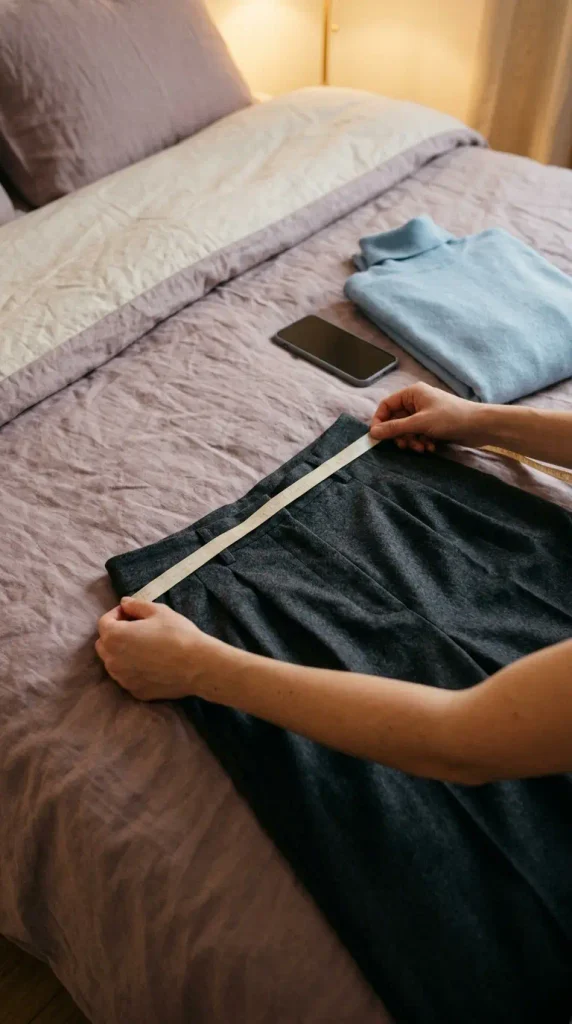
A habit that saves returns: lay your best-fitting sweater and trousers flat, then measure across the chest, the waist, and the full length. Korean listings usually give flat measurements in centimeters, so divide by 2.54 to get inches and compare piece to piece.
Shoes and Hems: Where Korean Street Style Is Won or Lost
Look at the bottom of a Seoul street style photo before the top. The shoe and the hem do more work than the jacket.
Wide-leg trousers should skim the top of the shoe, with a slight break or none at all. Too long and they pool. Too short and the wide leg turns into an accidental culotte. Straight jeans look sharpest ending at or just above the ankle bone, which shows a sliver of sock and keeps loafers looking deliberate.
The shoe shortlist stays short on purpose: lug-sole loafers, clean white sneakers, and ankle boots once it turns cold. Those three cover nearly every outfit in the Seoul 12.
Socks matter more than you’d think. White crew socks with loafers are one of the quickest Korean signals you can add for a few dollars.
Let wide trousers graze the top of a chunky loafer or sneaker.
Pair white crew socks with loafers and the pleated midi.
Match sole weight to volume: a full skirt needs a sturdy sole.
Hems that pool on the floor and swallow the shoe.
Thin, delicate flats under wide trousers. The outfit tips forward.
Straight jeans stacked in bunches over ankle boots.
For a closer look at how each hem lines up with each shoe, the hem rule for capsule shoes breaks it down pair by pair.

Korean Fall Outfits Meet 2026’s Pinterest Trends
Three of the fashion trends in Pinterest’s 2026 trend forecast slide into a Korean capsule with almost no shopping.
Cool Blue. Icy, glacier tones are pushing back against warm beige, and searches for “icy blue” rose 50% in Pinterest’s data. That’s why the Seoul 12 puts its only color into the turtleneck. It sits next to charcoal, cream, and khaki and freshens all three.
Brooched. Brooches are back, with “brooch aesthetic” searches up 110%. In a Korean outfit one small pin beats a cluster. Put it on the boxy jacket’s lapel or high on the cardigan, never on the stripe.
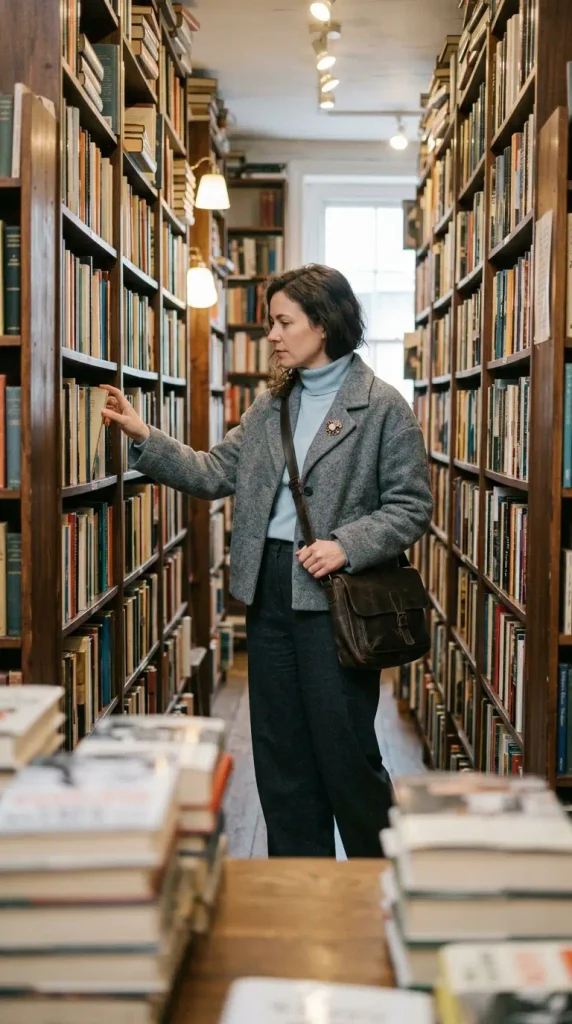
Poetcore. Pinterest frames it as oversized turtlenecks, worn-in vintage blazers, and messenger satchels. Korean styling already lives close by. The turtleneck under the boxy jacket, wide trousers, and a crossbody messenger get you there with what’s on the rail.
The catch with trends: they date fast. Keep them in the accents (a pin, a bag, one colored knit) and the capsule stays wearable after the forecast changes.
Layering Korean Outfits for Real Fall Weather
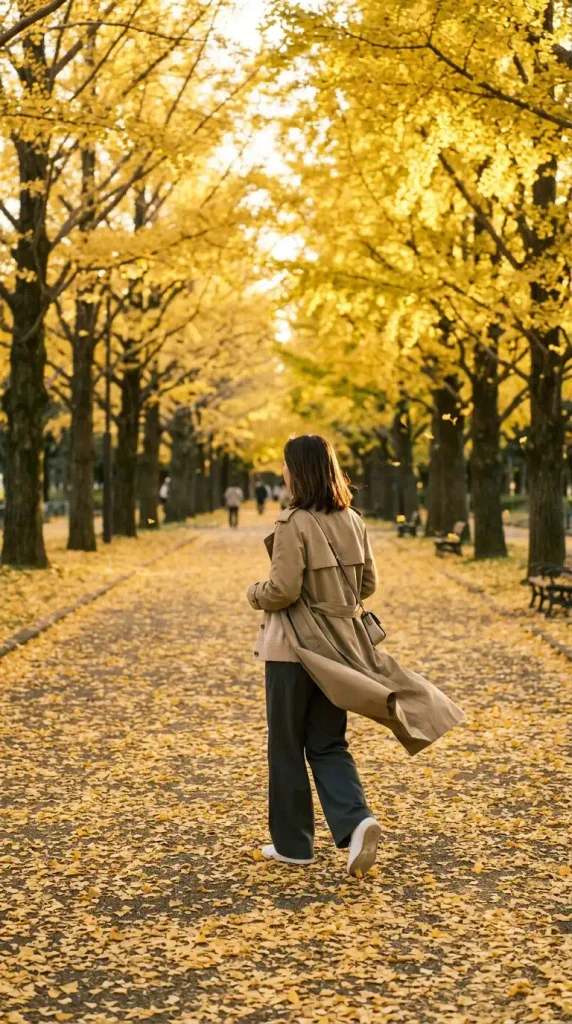
Korean layering isn’t decoration. It’s a response to weather that swings hard between afternoon and night.
Seoul’s 1991 to 2020 climate normals put the November average near 45°F (7.5°C), and the first frost typically arrives in late October. Mild afternoons, cold evenings: a swing plenty of US cities know well, so the layering order travels.
Build it thin first and thick last, fitted first and roomy last:
Base: the fitted turtleneck or striped tee, close to the body so nothing bunches later.
Core warmth: the sweater vest, which heats your middle without adding bulk to your arms.
Mid layer: the oat cardigan on cool days, left open so the vest still shows.
Outer: the trench for dry, mild days, or the boxy wool jacket once the evenings turn sharp.
The vest is the quiet hero of the whole system. When the jacket comes off indoors, the vest still makes the outfit look finished, and it keeps the trench sitting cleanly instead of straining at the shoulders.
If you’re deciding which coats deserve a spot in your rotation, six jackets worth keeping in a capsule compares the trench, blazer, and wool coat side by side.
Minimal Korean Fashion: What to Skip and What to Buy First
A small capsule fails in two predictable ways: too many statement pieces, or basics in the wrong fit.
Skip these, at least at the start:
- Loud logo pieces. They pin an outfit to one look and fight the muted palette.
- A second oversized coat. You only wear one roomy layer per outfit, so a second big coat mostly hangs there.
- Trend colors outside the palette. One cool accent is plenty. A second accent color halves the number of outfits it can join.
Then buy in the order that opens up the most outfits fastest. Each pick below works with everything bought before it.
Buy the Seoul 12 in this order
After those five, fill in the rest of the Seoul 12 as your budget allows. You’ll already have a working set of outfits while you shop.

Frequently Asked Questions
What is Korean fashion style called?
Most people call it K-fashion. Inside it sit several named styles: Acubi, which mixes Y2K nostalgia with minimal basics and a hint of grunge, Hongdae street style, and the preppy campus look. Korea’s traditional dress is the hanbok, which today is worn mainly for ceremonies and formal occasions, and which visitors often rent for a few hours to tour the palaces.
Why is Korean fashion so popular?
K-pop idols and K-drama stars put Korean outfits in front of a huge global audience, and fans want to copy what they see. The style also travels well. It relies on muted colors, relaxed shapes, and layering, so the pieces mix easily, work for school or the office, and look polished without feeling flashy.
What are the biggest Korean fashion trends right now?
For 2026, the big themes are more precise oversizing, layered sweater vests, and a softer take on gorpcore that puts technical outerwear over linen or knits. Vintage, grandmother-inspired pieces and a reworked student look with lug-sole loafers are also strong. On Pinterest, icy blue, brooches, and the bookish Poetcore look are rising fast.
What shoes go with Korean outfits?
Lug-sole loafers, clean white sneakers, and ankle boots cover most Korean outfits. Pair loafers with white crew socks for an instant Seoul feel. The bigger rule is the hem: wide trousers should graze the top of the shoe, and straight jeans look sharpest ending at or just above the ankle bone.
What should I wear in Korea in the fall?
Plan on layers. Fall in Korea runs from September through November, and Seoul’s November average sits near 45°F (7.5°C), with cool mornings and colder nights. A trench or wool jacket, a cardigan or sweater vest, a turtleneck, and wide trousers or jeans work well, along with comfortable shoes for long days of walking.
Does Korean free size fit a US medium?
Often it doesn’t. Free size usually lands near a US small, or Korean size 55, and sometimes stretches to a slim 66. Sleeves can run short on broader shoulders and dresses short on taller frames. Before you buy, compare the listing’s flat measurements in centimeters to a garment you already love.
Your Korean Capsule Starts With Five Pieces
Korean fashion outfits look complicated on a feed and simple in a closet. Twelve pieces in a muted palette, one roomy half per outfit, hems that skim the shoe, and a single cool accent cover school runs, office days, and weekend coffee all season.
Start with the white shirt, wide trousers, vest, trench, and turtleneck. Every piece after that multiplies what you can wear.
Save this to your fall outfit board, so the Seoul 12 list and the outfit math are right there the next time you shop.
Twelve muted pieces, one roomy half per outfit, and 116 ways to wear them.
Keep reading

Classy Outfits: The Capsule Wardrobe Behind the Aesthetic
Most closets that feel “not classy enough” aren’t short on nice clothes. They’re short on a system. There’s a silky blouse that...

Coquette Outfits for Plus-Size Women: The Capsule Behind the Aesthetic
Bows, lace, and soft pink look sweet on a Pinterest board. Then you shop for them in your size and find corsets,...

Coquette Outfits: The Capsule Wardrobe Behind the Aesthetic
Bows on everything. Lace socks. A satin skirt bought in a pink mood and never worn again. That’s how coquette outfits go...