
Light Layering for Summer: 6 Outfit Formulas for Cooler Evenings
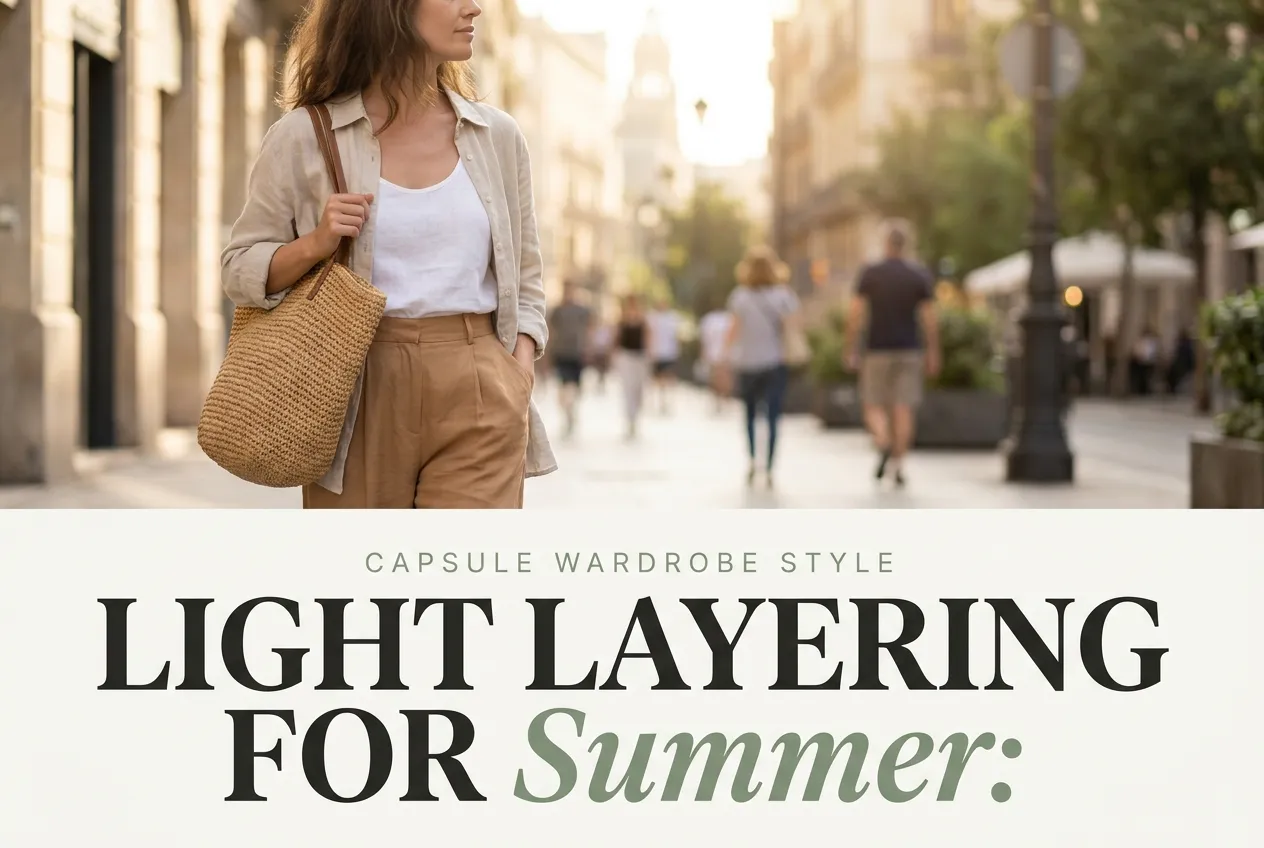
You leave the house at noon in 90-degree heat, bare arms, sandals, the lightest thing you own. By 8pm you’re sitting on a patio with goosebumps, arms crossed, wishing you’d grabbed something on the way out. Sound familiar? Summer layering outfits solve that exact gap, and they do it without making you sweat through the hot part of the day.
Here’s the promise: six repeatable formulas, each built around one breathable piece you can shrug on when the sun drops. No bulk. No overheating. Just outfit math that works from a picnic at 4pm to a dinner that runs late. We tracked these looks across a full summer, and the formulas below are the ones that actually earned their hanger space.
Why Summer Layering Outfits Are Harder Than They Look
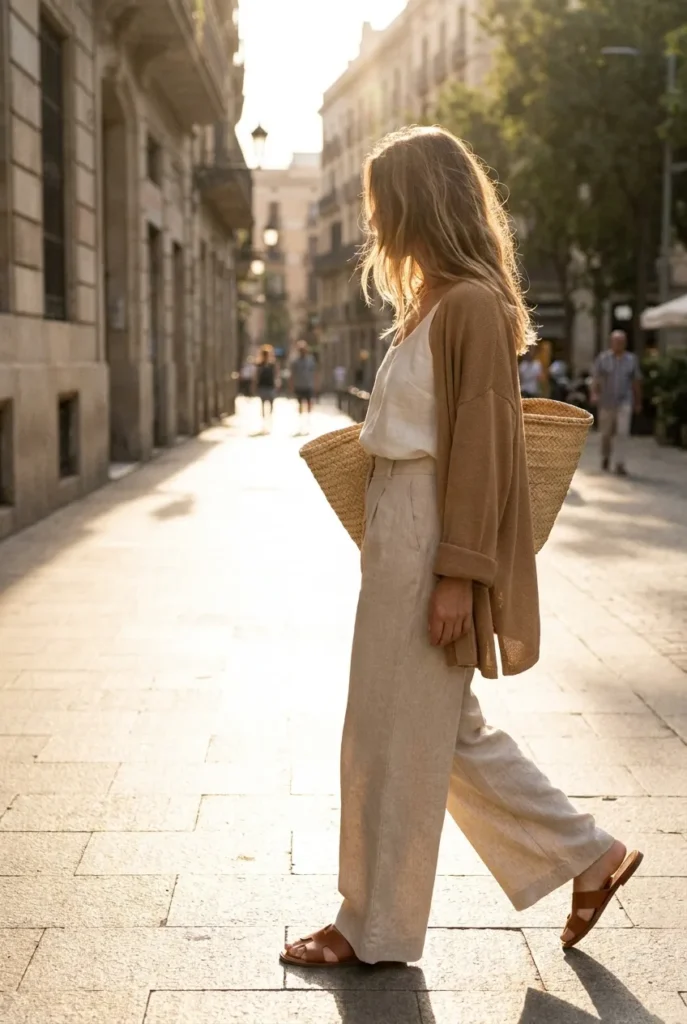
Most layering advice assumes it’s cold. Pile on a sweater, add a coat, done. Summer flips the whole problem. You’re not fighting to stay warm all day. You’re dressing for two temperatures in one outfit: the blazing afternoon and the evening that quietly drops fifteen or twenty degrees.
That swing is real. A July day can hit 92°F at 3pm and settle to 68°F by 9pm. Your skin notices. The trick is choosing one extra piece that does nothing during the heat (lives in your bag, ties at your waist) and then does everything once the air cools.
The mistake we see over and over: women reach for the wrong fabric. A chunky knit traps heat the second you put it on. A polyester jacket turns clammy. The whole point of breathable summer layers is that they regulate, not smother. Health guidance backs this up, with experts recommending light, loose, breathable fabric in heat to help your body stay cool.
So before we get to the formulas, one rule. Every layer in this article is something you can wear in the heat without melting and still be glad you brought it at night.
The Anchor + Air Layer + Insurance Piece Framework
Every outfit in this guide follows one simple structure we landed on after a full summer of testing. Three parts. That’s it.
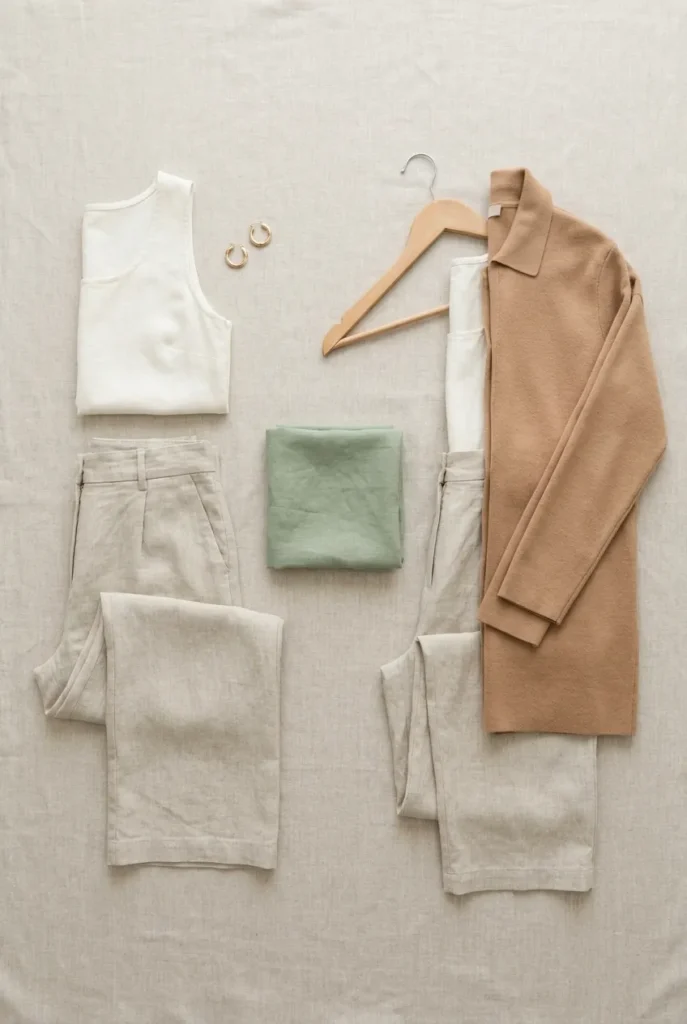
The Anchor is your base: the tank, tee, slip dress, or matching set you’d happily wear alone at 2pm. It’s lightweight, breathable, and complete on its own.
The Air Layer is the breathable piece you add for cooler evenings. Linen, cotton gauze, fine-gauge knit, or chambray. It opens, ties, or drapes. It never traps heat, and it folds down small enough to live in your tote until you need it.
The Insurance Piece is the one accessory or extra that bridges the gap on the chilliest nights, when a thin layer alone won’t cut it. A scarf you can wrap, a denim jacket, a wide pashmina. You won’t need it every day. On the nights you do, you’ll be grateful.
Here’s the outfit math in one line: Anchor for the heat, Air Layer for the drop, Insurance Piece for the surprise. Build every look on those three slots and you stop guessing.
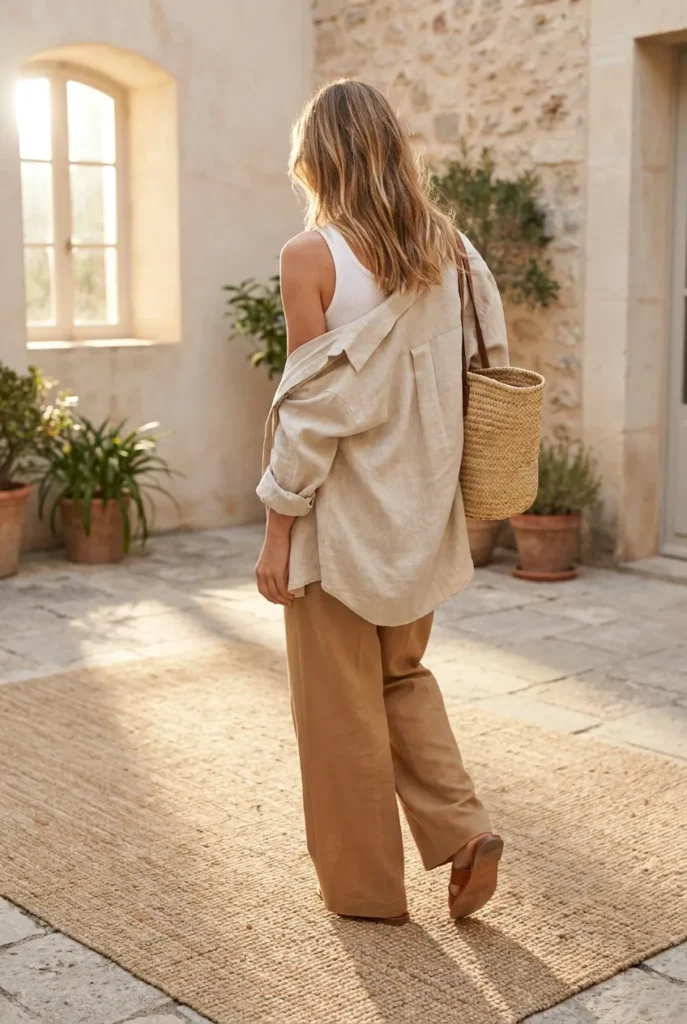
Formula 1: The Linen Overshirt Over a Tank
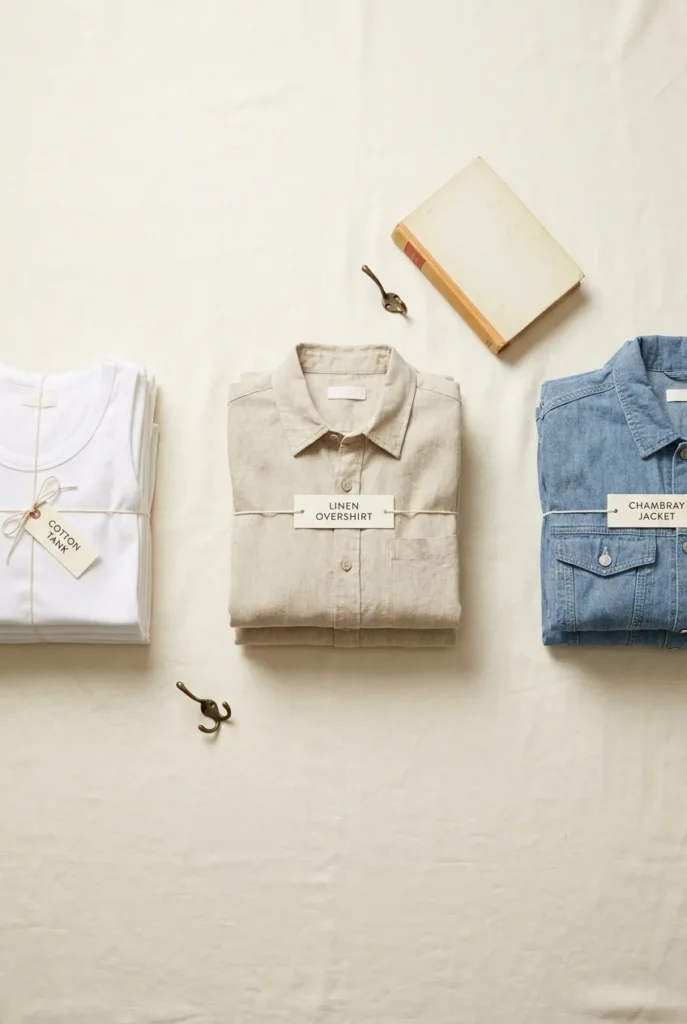
This is the one we reach for most. A fitted cotton or ribbed tank as the anchor, a relaxed linen overshirt as the air layer. During the day, the overshirt stays in your bag or knots around your waist. At night, you slide it on, leave it open, and instantly look pulled together.
Why it works: linen breathes better than almost anything. It moves air against your skin instead of trapping it, which is exactly why natural fibers like cotton and linen breathe best for hot, sticky weather. An oversized linen overshirt also adds shape without weight, so your silhouette reads intentional, not bundled.
Style it with: wide-leg trousers, denim shorts, or a midi skirt. Roll the sleeves to the forearm. Add ballet flats or flat sandals.
Shopping note: a good linen overshirt runs roughly $50 to $130 at Madewell, J.Crew, or Quince. The sub-$50 versions at Old Navy and H&M work, but the weave is thinner and wrinkles harder, so expect to steam it. If you want the look polished without the iron, the mid-tier linen holds its shape noticeably better.
For more of this relaxed, expensive-looking direction, see our take on quiet luxury summer pieces for hot weather.
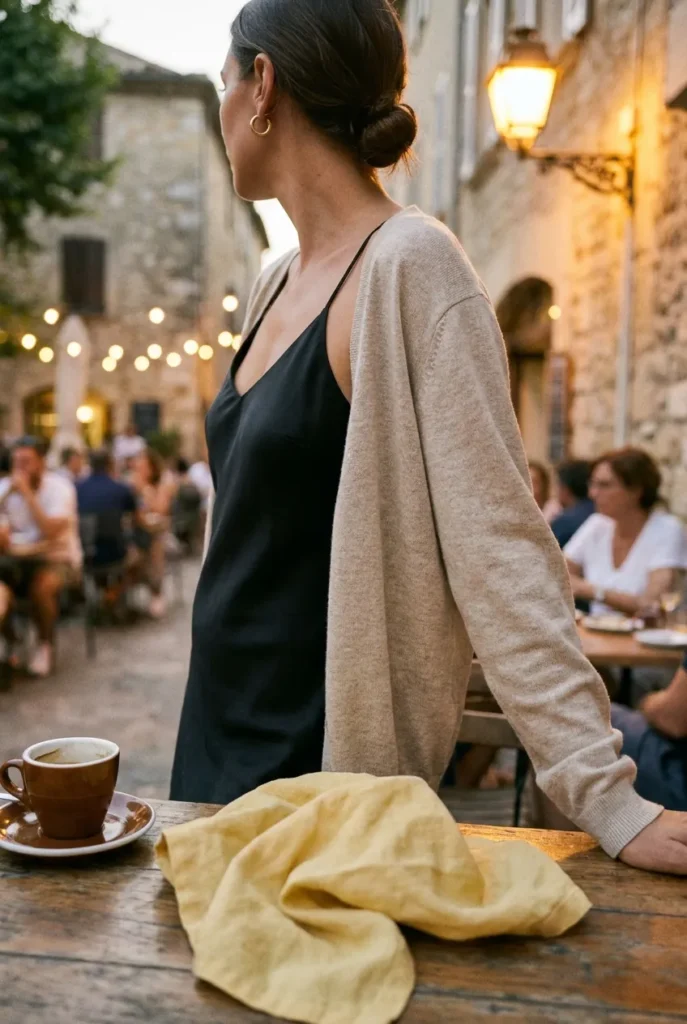
Formula 2: The Lightweight Cardigan Over a Slip Dress
A slip dress is the laziest, prettiest anchor in summer. One piece, zero effort, instantly done. The problem is it leaves you bare the moment the sun drops. Enter a fine-gauge cardigan as your air layer.
Skip anything chunky. You want a thin cotton or linen-blend knit that buttons low or stays open. During the day, the slip dress stands alone. At dusk, the cardigan goes over the shoulders or fully on, and the whole look shifts from beach to bistro.
This pairing also answers one of the most-searched summer styling questions: how to make a summer dress work past sunset. The cardigan is your answer.
Style it with: flat sandals for day, a slim belt over the cardigan if you want to define the waist, a small crossbody for evening. A neutral slip plus an oat cardigan reads quietly expensive. A printed slip plus a solid cardigan keeps it playful.
Shopping note: lightweight cardigans run about $40 to $110 at Uniqlo, Gap, and Everlane. Uniqlo’s fine knits punch above their price here. If you find one for under $30, check the fabric content; a high-acrylic blend will pill fast and feel warm in a bad way.
Formula 3: The Gauze Button-Down Knotted Over Shorts
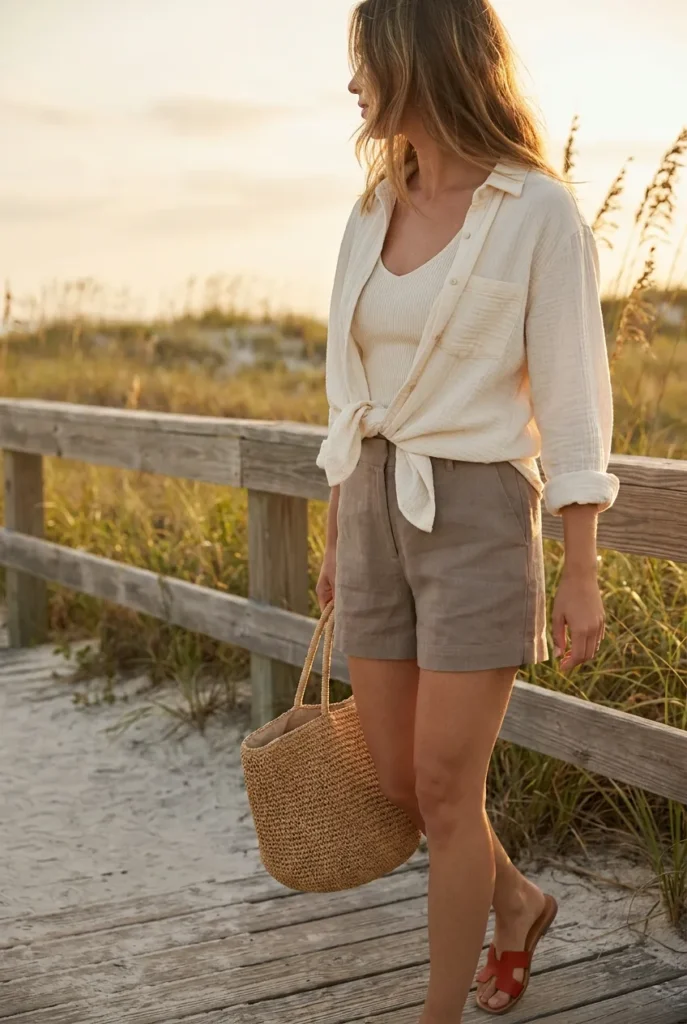
This one is built for the in-between hours, the 5pm-to-8pm stretch when it’s still warm but the light is going soft. Cotton gauze is the hero fabric: airy, slightly sheer, with a lived-in texture that looks good rumpled.
The anchor is a simple tank or bralette top with tailored shorts. The air layer is a gauze button-down, worn fully open and knotted at the waist, or buttoned halfway and tucked loosely. It’s the most casual formula here and the easiest to throw on.
This look leans into the relaxed, slightly undone aesthetic that performs so well on Pinterest right now. It photographs effortless because it genuinely is.
Style it with: tailored linen or cotton shorts, flat sandals or clean white sneakers, a straw tote. Keep jewelry minimal: one gold chain, small hoops.
Shopping note: gauze button-downs run roughly $45 to $120 at Madewell, Anthropologie, and Quince. The fabric is forgiving on every body type because it skims rather than clings. If you run warm, gauze is the single most breathable woven layer you can buy.
Formula 4: The Knit Vest Over a Tee
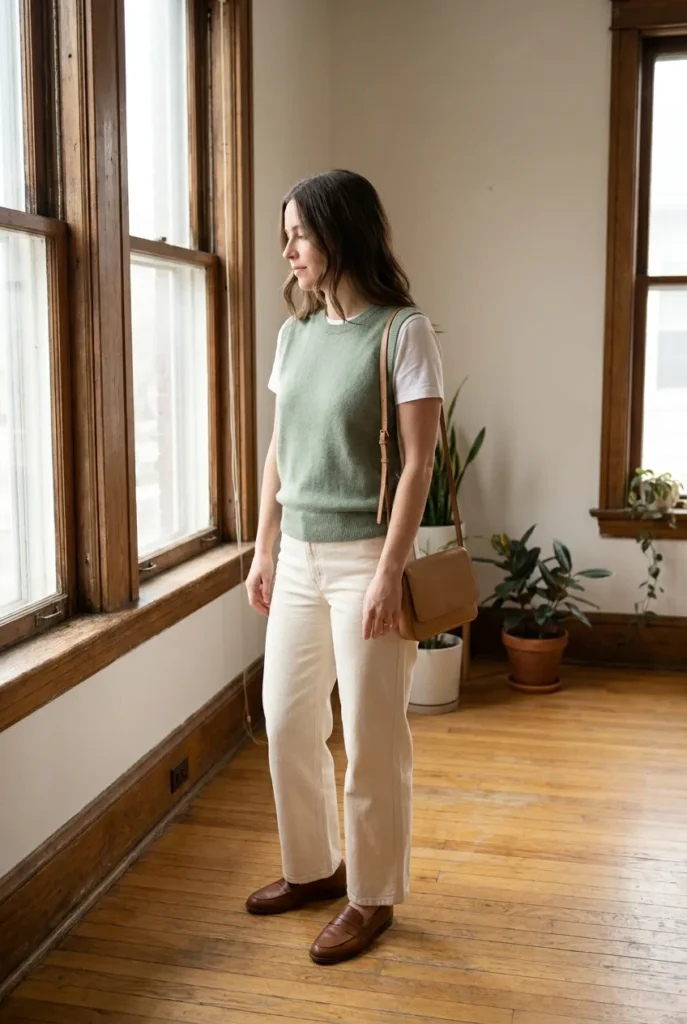
The knit vest had a real moment, and for hot-weather layering it actually makes sense. It adds a layer across your core, where you feel the evening chill first, while leaving your arms completely free. No sleeves means no overheating.
Your anchor is a fitted white tee or a short-sleeve tee. The air layer is a fine cotton or linen-blend vest in a neutral or soft accent color. During the day the tee stands alone. When the air cools, the vest does just enough.
This is also a sneaky-good office formula. A neutral vest over a crisp tee with trousers reads polished enough for a summer workday and casual enough for drinks after.
Style it with: trousers or a midi skirt for work, denim shorts for the weekend, loafers or ballet flats. Tuck the tee for a sharper line.
Shopping note: lightweight knit vests run about $35 to $95 at Gap, COS, and Quince. Look for cotton or a cotton-linen blend, not wool, for summer. A wool vest, even thin, will feel warm the second you put it on.
Formula 5: The Duster or Kimono Over a Matching Set
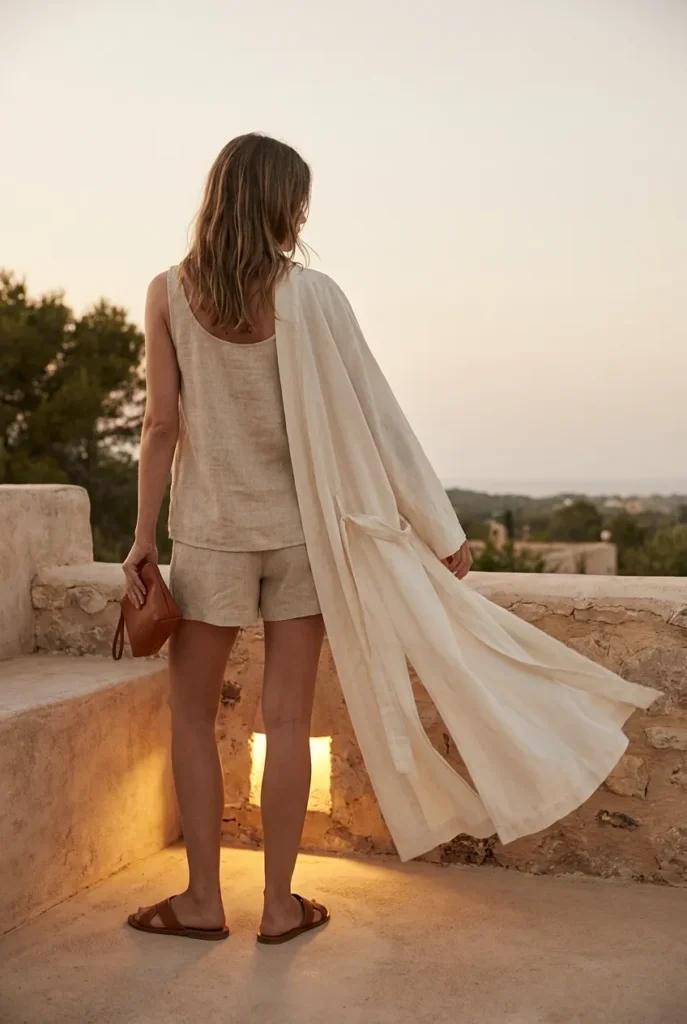
When you want maximum impact for minimum thought, this is the formula. A matching set (tank plus shorts, or a tank plus a skirt in the same fabric) is a complete outfit on its own. Throw a long, lightweight duster or kimono over it and you’ve got drama with zero effort.
The duster is your air layer, and because it’s open and flowing, it never feels hot. It moves with you. It catches the breeze. On a cool evening it gives you coverage from shoulder to shin without a single heavy seam.
This is the most elevated look here, the one that turns heads at a summer dinner. We styled this one set five different ways over a single week, and the duster was what made each version feel new.
Style it with: flat sandals or low heeled mules, a small clutch, statement earrings. Keep the set and the duster tonal for that quiet, expensive effect, or contrast a neutral set with a deeper duster for more punch.
Shopping note: lightweight dusters and kimonos run roughly $50 to $160 at Mango, Anthropologie, and COS. If you’re eyeing a $300-plus designer duster, the high-street versions in linen or cupro give you almost the same drape for a fraction of the cost; the main trade-off is the lining, not the look.
For evening layers that travel well, our summer travel capsule built for long days and cool nights leans on this exact duster trick.
Formula 6: The Denim or Trucker Jacket for the Coolest Nights
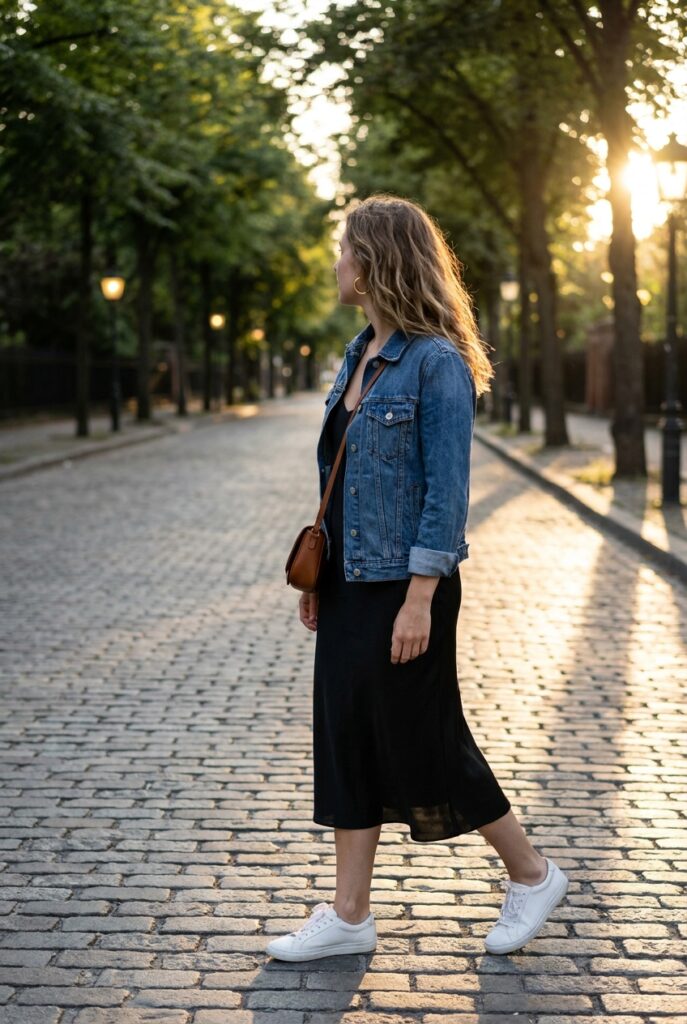
Some evenings the temperature really drops, and a thin woven layer won’t cut it. That’s when your insurance piece earns its keep. A classic denim jacket or a soft cotton trucker is the workhorse here: structured enough to actually block a breeze, casual enough to throw over almost anything.
Your anchor can be nearly anything from the formulas above: a slip dress, a tank and shorts, a tee and trousers. The denim jacket pulls it all together and adds a little edge. It’s the least fussy layer you own, which is exactly why it works.
The key is fit. A slightly cropped or true-to-size jacket layers cleaner over summer pieces than an oversized one, which can swallow a lightweight outfit. Roll the cuffs to keep it from reading heavy.
Style it with: a slip dress for contrast, white sneakers, a crossbody. A mid-wash denim jacket is the most versatile; a soft ecru or black trucker reads a touch more polished.
Shopping note: denim jackets run roughly $50 to $130 at Levi’s, Madewell, and Gap. This is a true investment piece by cost-per-wear, since a good one lasts years across every season. After three summers of near-constant wear, mine still looks better with age, not worse.
Building Your Light Layering Capsule
Here’s the part that ties it together. You don’t need a different layer for every outfit. You need a small set of air layers and one or two insurance pieces that mix across all six formulas.
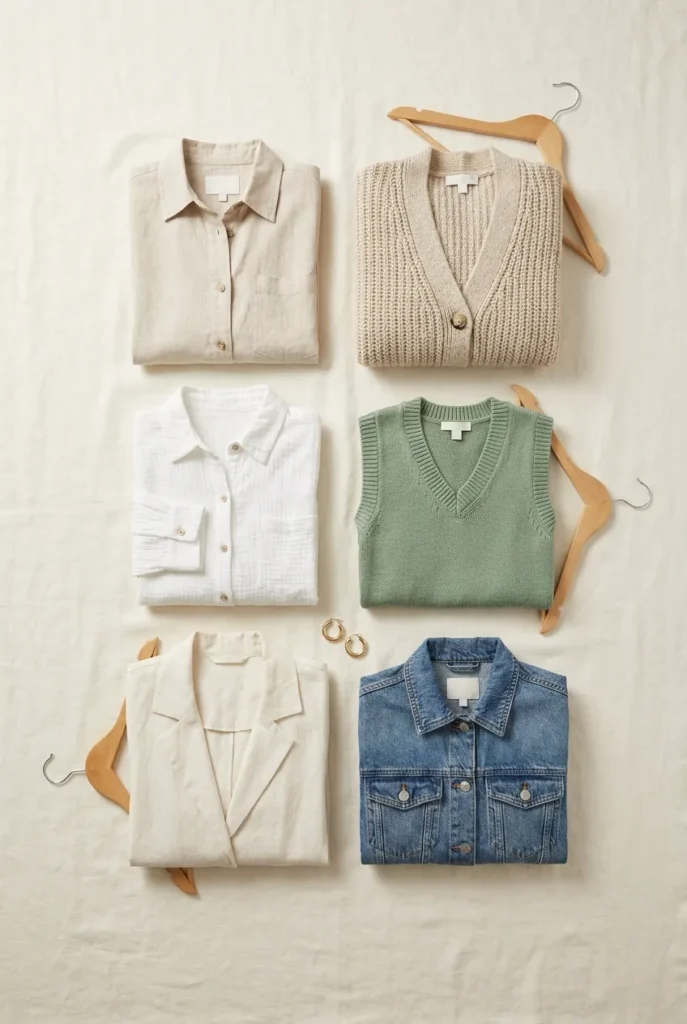
Start with these breathable summer layers as your core:
- One linen overshirt in a neutral (works in Formulas 1 and 3)
- One fine-gauge cardigan in oat or cream (Formula 2, and over a tee)
- One gauze button-down in white or ivory (Formula 3, and open over a tank)
- One knit vest in a neutral or soft accent (Formula 4)
- One lightweight duster or kimono (Formula 5)
- One denim or trucker jacket as your insurance piece (Formula 6)
Six layers. Pair them with the anchors you already own (tanks, tees, a slip dress, a matching set, shorts, trousers) and you can run all six formulas plus dozens of combinations in between. That’s the mix-and-match payoff: buy fewer, wear more.
A quick word on cost per wear. The pieces you’ll reach for most (the linen overshirt, the denim jacket) justify spending a little more, because you’ll wear them constantly across the whole warm season. The novelty layers can come from the mass tier. Spend where it counts, save where it doesn’t.
If coverage is part of your goal, many of these layers double as modest styling tools, which we cover in our guide to cool and covered summer outfits.
A Quick Note on Fabric Weight
One last thing that separates a layer that works from one that ruins your night. Fabric weight matters more than the piece itself.
For summer layering outfits, you want the lightest possible version of every layer. A linen overshirt should feel like air. A cardigan should be the kind you forget you’re wearing. The moment a layer feels substantial in your hands, it’ll feel hot on your body.
When you’re shopping, do the bag test: scrunch the piece in your fist. If it crushes down small and springs back, it’s a good summer layer. If it holds its bulk, leave it for fall. Your evenings will thank you.
Frequently Asked Questions
What are the best summer layering outfits for women who run hot?
Stick to open, breathable air layers you can remove fast: a linen overshirt, a gauze button-down, or a fine cardigan. Avoid anything that buttons tight or sits heavy on the shoulders. The goal is a layer that vents, so you can shrug it off the second you warm up and slide it back on when the evening cools.
How do I layer a summer dress without overheating?
Use a thin, open layer rather than a fitted one. A fine-gauge cardigan over the shoulders, a gauze shirt worn open, or a lightweight duster all add coverage without trapping heat. Keep the dress as your breathable anchor and let the layer do the temperature work only when you need it, usually after sunset.
What can I wear over a tank top in summer?
A linen overshirt, a gauze button-down, a knit vest, or a fine cardigan all work beautifully over a tank. Each adds shape and evening coverage while keeping your arms free or lightly covered. For the coolest nights, a denim jacket over the tank gives you real warmth without bulk.
Are these summer layers worth the investment?
The pieces you’ll wear most, like a quality linen overshirt and a good denim jacket, absolutely pay off on cost per wear because you’ll reach for them all season. For the novelty layers you wear less often, the mass-tier versions at Old Navy, Gap, or Uniqlo do the job fine. Spend where the wear count is highest.
Can I machine wash these layers?
Most can, with care. Linen and cotton pieces usually wash on cold and air dry well, though they’ll wrinkle, so a quick steam helps. Check the label on anything with a blend or a delicate weave. Gauze and fine knits last longest washed gently and laid flat to dry rather than tumbled on high heat.
Can I wear these layering pieces into fall?
Yes, and that’s the quiet win. A linen overshirt, a denim jacket, and a fine cardigan all carry straight into early fall layering over long sleeves. Buying breathable summer layers in neutral colors means they stretch across seasons instead of getting boxed up in September.
Final Thoughts
Summer layering is really just planning for the version of you who’s cold at 9pm. Pick one breathable air layer, tuck it in your bag, and you’ve turned a day outfit into a day-to-night outfit without a second thought.
Start with one formula this week. Try the linen overshirt over a tank, or the cardigan over a slip dress, and see how it feels when the temperature drops and you’re the one who came prepared. Save this guide, screenshot the six-piece capsule list, and build from there. Your summer evenings just got a lot more comfortable, and a lot more put together.
Keep reading

8 Hoodie Outfits for Plus-Size Women That Actually Look Put-Together
Your closet has a hoodie in it. Probably three. And every cold morning you reach for one and think the same thing:...

How to Style a Hoodie for Women Over 50: 8 Outfits That Work
The hoodie in your closet is probably fine. The problem is usually three inches of it you have never looked at closely....

8 Cozy Hoodie Outfits for Fall and Winter That Never Look Sloppy
Your hoodie is not the problem. The seven inches of fabric hanging off the back of your neck is the problem, and...