
12 Outfit Color Combinations for Women Over 50 That Always Look Expensive

Most closets after 50 hold plenty of good clothes and very few good pairings. The navy sweater is fine. The camel trousers are fine. Wear them with the wrong top, and the whole outfit reads tired instead of polished.
That gap is what this list fixes. These outfit color combinations for women over 50 are built for how your coloring looks now: softer contrast, maybe some silver at the temples, and skin that lights up next to some shades and fades next to others.
Each pairing comes with the pieces to wear it in, where each color should sit on your body, and the fabric that makes it look expensive instead of flat. Color does half the work. Texture does the other half, and almost nobody talks about that part.
You’ll also find two shades from Pinterest’s 2026 trend palette, translated into outfits a grown woman would actually wear to lunch.
Start with the rule right below. It makes every combination on this list easier to wear, and it works with pieces already hanging in your closet.
The 60-30-10 Face-First Rule (Read This Before the List)
Every pairing here follows one simple split. About 60 percent of your outfit goes in the calmer or darker color, usually trousers, a skirt, or a coat. Roughly 30 percent goes in the second color, and it sits near your face. The last 10 percent is the finish: metal, bag, belt, and shoes.
Placement matters most up top. The color closest to your face is the one people see when they talk to you, so a brightening shade there does more than any amount of color on your legs.
Quick test before you shop: hold each color under your chin next to a window in daylight. If your skin looks clearer and your eyes look brighter, that color belongs in your 30 percent.
📐 The 60-30-10 Face-First Rule
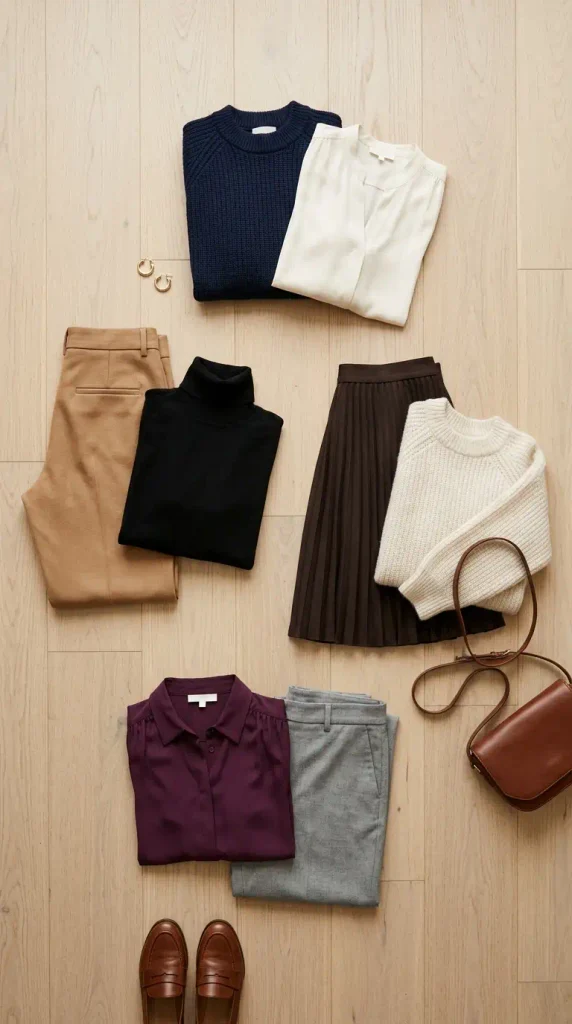
1. Navy and Ivory: One Pairing, a Full Week of Outfits
Navy is the softer, warmer cousin of black. Ivory is the kinder cousin of stark white. Together they give you contrast that looks sharp without looking severe, and they work in every season.
Six pieces build a whole week:
- navy crewneck sweater
- ivory blouse in a matte, silky fabric
- navy wide-leg trousers
- dark-wash straight jeans
- ivory cable knit
- cognac loafers
Mid-tier stores like J.Crew, Banana Republic, and Quince usually stock navy knits and wide-leg trousers each fall, so the base is easy to find.
| Day | Navy + ivory outfit math |
|---|---|
| Monday | Navy wide-leg trousers, ivory blouse, cognac loafers |
| Tuesday | Dark jeans, ivory cable knit, cognac loafers |
| Wednesday | Navy trousers, navy crewneck, ivory collar peeking out |
| Thursday | Dark jeans, ivory blouse, navy crewneck over the shoulders |
| Friday | Navy trousers, ivory cable knit, gold hoops |
Six pieces, five outfits, and no standing in front of the closet at 7 a.m.
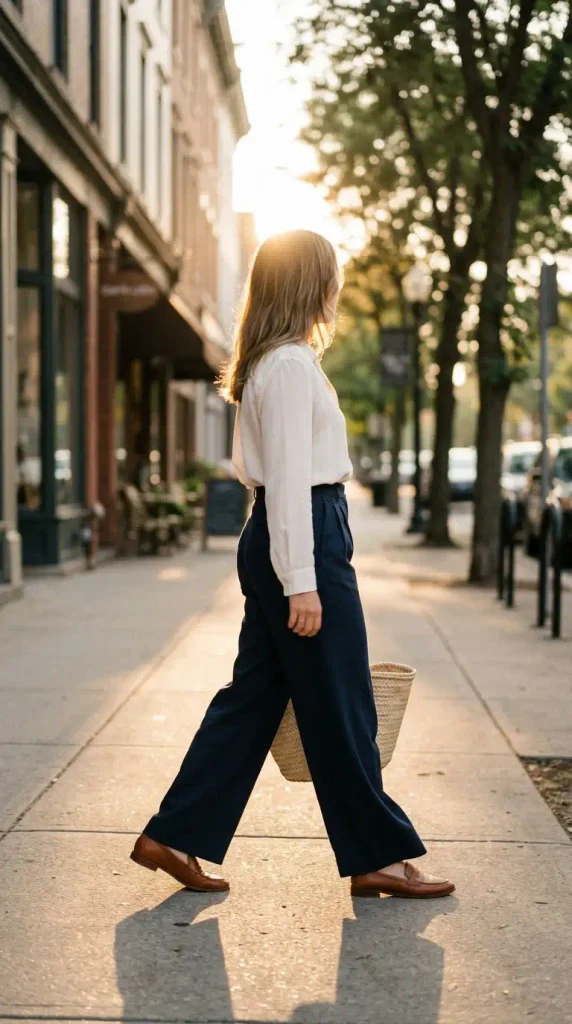
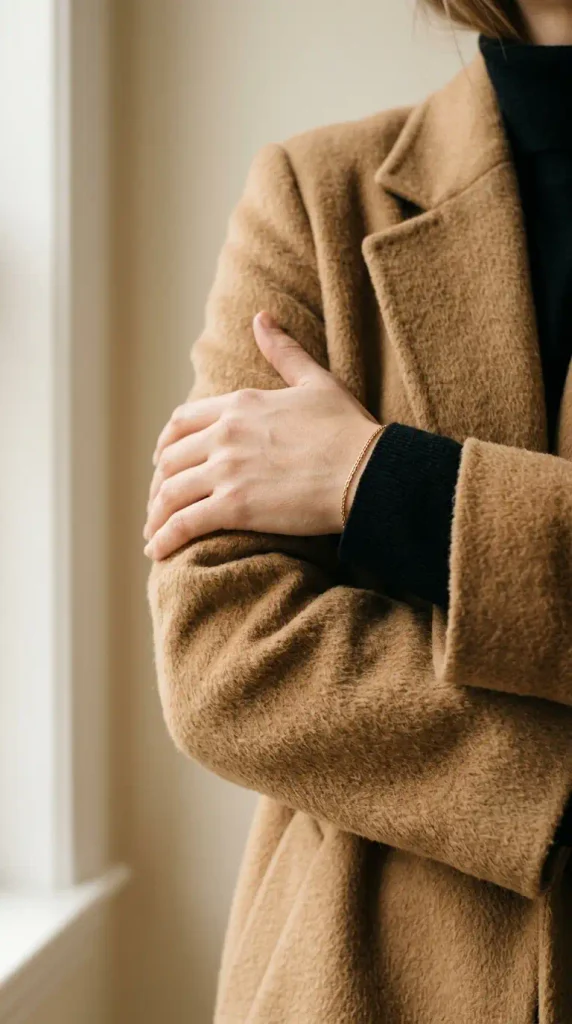
2. Camel and Soft Black, Worn in Matte Wool and Cashmere
Camel and black can look like a store mannequin. The colors aren’t the problem. Shine is.
Shiny polyester bounces light in a flat, plasticky way. Matte fabrics like brushed wool, cashmere blends, fine merino, and suede soak up light, so they look richer up close and in photos.
Keep the black soft and matte: a fine merino turtleneck, not a glossy knit. Then add camel wide-leg trousers, or throw a camel coat over everything. A slightly faded soft black is also gentler than jet black near the face, especially with silver or light hair.
Same two colors. Suddenly they look like quiet luxury.
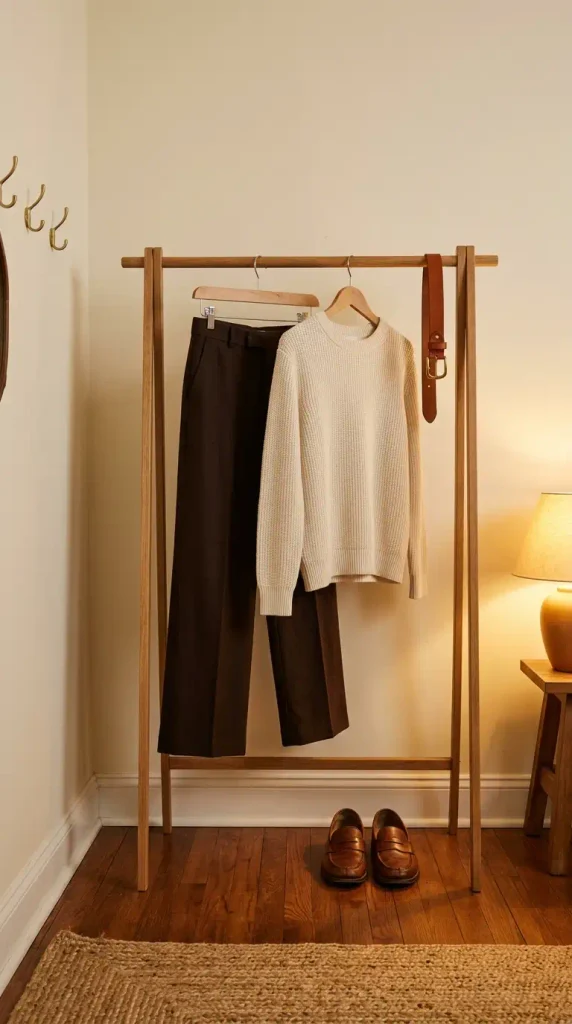
3. Espresso Brown and Cream for Warm, Rich Contrast
Brown has moved well past backup neutral, and espresso is the shade that looks most expensive. It’s deep enough to anchor an outfit but warmer than black, so it doesn’t pull color from your face.
Cream keeps the look light. Put the cream up top, near your face, and let espresso carry the 60 percent below. If brown is new territory, these ways to wear brown after 50 show how far one shade can stretch.
Recreate this look
One warning: if a cream piece looks yellow against your skin, swap it for ivory. The outfit works the same way.
4. Charcoal and Blush, Soft Color With a Sharp Edge
The usual mistake with blush is pairing it with beige. Both colors are light and warm, so they blur together and the outfit reads washed out.
Charcoal fixes that. It gives blush something firm to sit against, so the pink looks fresh instead of faded.
Blush cashmere sweater with charcoal trousers.
Charcoal blazer over a blush blouse.
Silver or rose gold jewelry to match the cool gray.
Blush with beige or pale gray.
Baby pink with heavy jet black.
Ruffles, blush, and pastel shoes all at once.
Tip: choose a blush with a little warmth in it. Icy pink can make mature skin look gray
5. Oat, Camel, and Cognac Worn Tonal Head to Toe
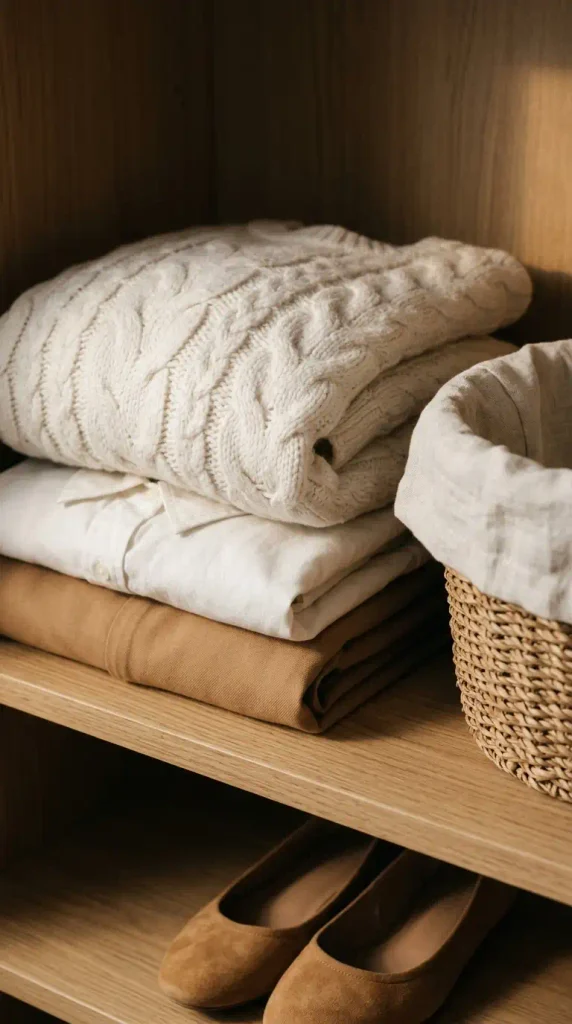
Head-to-toe beige can look flat on softer coloring. Head-to-toe oat, camel, and cognac looks like money. The difference is depth.
Pick three shades from the same warm family, each a little darker than the last: an oat knit, a camel coat, then cognac boots and bag. Light near your face, darkest at your feet.
💡 Quick Tip
Mix at least three textures, like a ribbed knit, a smooth wool coat, and suede boots. Three textures keep a one-color outfit from looking like a uniform.
Gold jewelry fits this family best. Silver can look a little cold against so much warmth.

6. Burgundy and Taupe Instead of Another Black Dress
Plenty of women over 50 default to black for dinners and events. It feels safe. Once your natural contrast softens, it can also look heavy near the face.
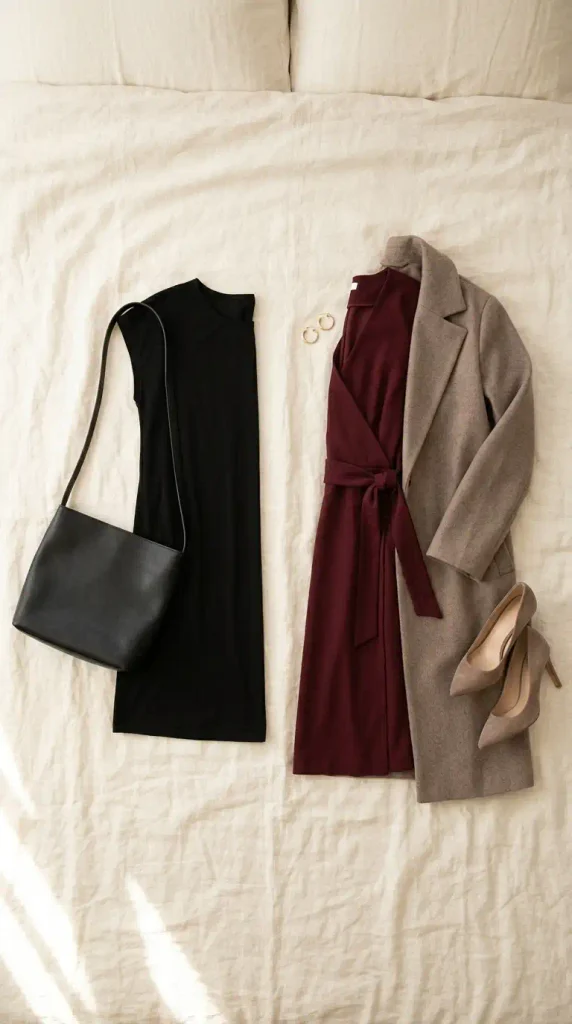
Burgundy gives you the same depth with warmth built in. Pair a burgundy knit or wrap dress with taupe: taupe trousers, a taupe coat, or taupe suede pumps. Taupe softens the red undertone, so the look reads grown-up, not holiday.
Black dress, black tights, black bag. Polished, but heavy and a little severe under restaurant lighting.
Burgundy wrap dress, taupe wool coat, taupe suede pumps, gold hoops. Same depth, with warmth near the face.
Same drama. More warmth.
7. Sage Green and Ivory for Light, Fresh Outfits
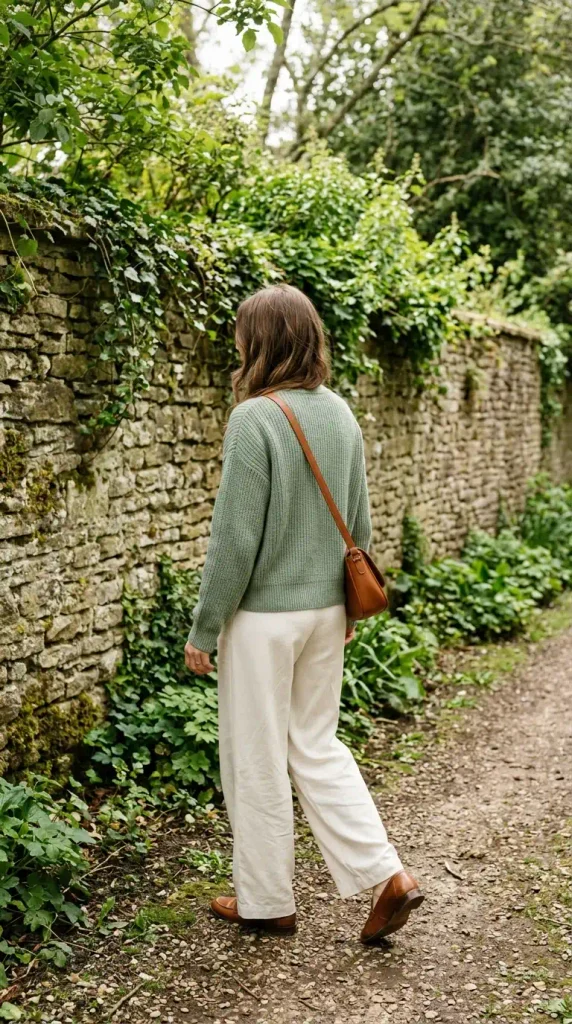
Sage sits halfway between a color and a neutral, which makes it easy to wear and easy to get wrong. Next to ivory, it looks calm and polished. Next to cool gray, it can turn muddy.
Three steps keep it fresh:
Choose a sage with a little warmth in it, closer to olive than to mint.
Wear the sage as a knit or blouse near your face, with ivory trousers or an ivory midi skirt below.
Add cognac leather, like a belt, bag, or loafers, so the light colors have something to lean on.
It works in spring with linen and in fall under a camel coat. For more shade-by-shade ideas, see these sage green outfits for women over 50.
8. Soft White and Camel, Inspired by Pantone’s Cloud Dancer
Pantone chose a white for 2026, and that’s good news for this pairing. Cloud Dancer is a soft, slightly warm white, and Smithsonian Magazine reported it’s Pantone’s first white Color of the Year.
Soft white beats optic white after 50. Bright, bluish white can look harsh against softer skin and silver hair. A soft white glows instead.
Wear it with camel: a soft white knit with camel trousers, or a camel coat over a white button-down and white jeans. Matte cotton and wool look richer here than anything shiny.
One catch: soft white shows wear fast. Fold it, store it away from sunlight, and wash it with whites only.
9. Plum and Soft Gray, the Grown-Up Take on Plum Noir
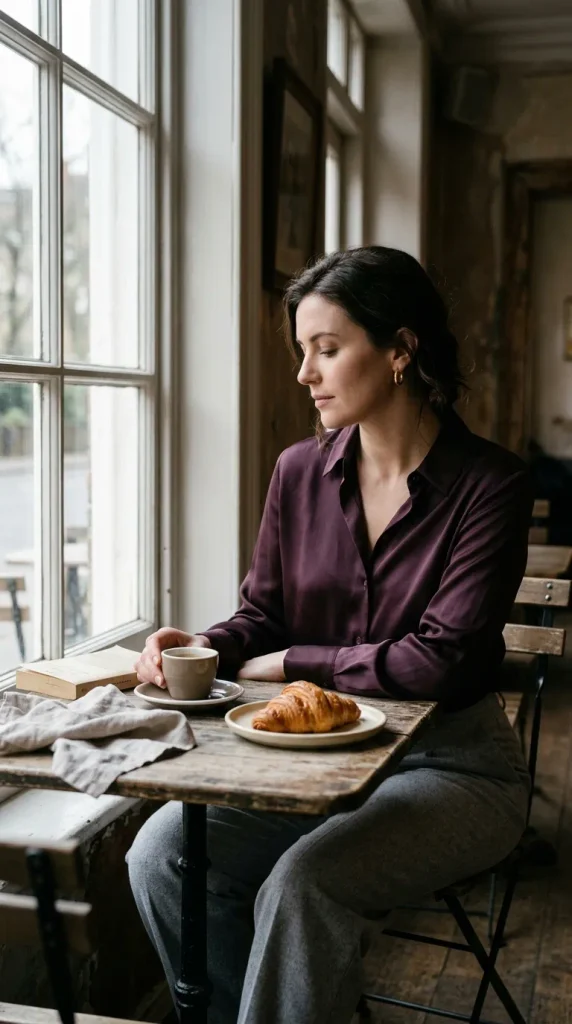
Plum Noir, a deep purple with brown in it, made Pinterest’s 2026 color palette report, and searches for dark plum have climbed fast. Most trend boards style it young and dramatic. Over 50, it works best quietly.
Wear plum as your 30 percent near the face, in a plum turtleneck or a silk blouse. Let soft heather gray take the 60 percent below, in trousers or a long cardigan.
Silver suits the cool gray. Gold leans into plum’s warmth. Either works, as long as you pick one.
Plum gives you the depth of black with real color built in, and soft gray keeps it from looking like a costume.
10. Icy Blue and Chocolate Brown for a Crisp Contrast
Pinterest’s Cool Blue is a pale, frosty shade, and it’s easier to wear than it sounds.
On its own, pale blue can look washed out on mature skin. Next to chocolate brown, it suddenly has structure. The brown grounds it, and the blue lifts your face.
Keep the blue up top, like a pale blue button-down or cashmere crewneck, and the chocolate below in wide-leg trousers, a suede skirt, or brown boots.
Tip: pick a blue with a little gray in it. Pure baby blue tends to read sweet instead of sharp.
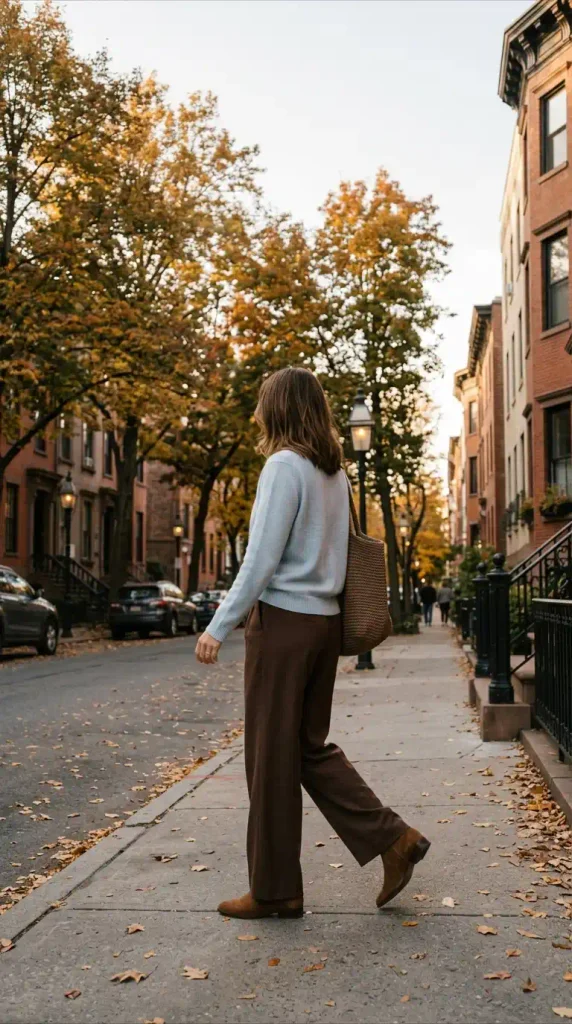
11. Deep Teal and Camel, the Jewel Tone Almost Everyone Can Wear
Teal sits between blue and green, so it plays well with warm and cool undertones alike. That makes it one of the easiest jewel tones to wear after 50.
Camel keeps it grounded. A deep teal sweater with camel trousers, or a camel coat over a teal dress, looks rich without trying hard. Teal also stands out beautifully against silver hair.
⚠️ Watch Out
Bright turquoise is not the same color. Look for a teal deep enough to read almost like a dark jewel indoors. Bright aqua can look loud next to camel.
12. Black and Ivory With Gold for Evenings Out
Black still has a place after 50. It just needs light near your face. Black and ivory with gold accents gives you a dinner outfit that photographs well and never looks severe.
Keep black on the bottom half or as a coat, and put ivory at the neckline.
- ▸Ivory silk blouse with black wide-leg trousers
- ▸Black midi skirt with an ivory fine-knit turtleneck
- ▸Small gold hoops and a gold chain to bring warmth back to the face
The finishing pieces carry more weight here than in any other pairing, and these small capsule wardrobe accessories cover the ones worth owning.
Black below, light above. That’s the whole trick.
Frequently Asked Questions
What colors look best on women over 50?
Rich mid-depth shades usually work best: navy, camel, espresso, burgundy, deep teal, and plum. They have enough color to brighten your face without the harshness of jet black or neon. Soft whites like ivory and cream also beat stark white near the face. Your exact best shades depend on your undertone, so test them in daylight.
Can women over 50 wear black?
Yes. Black works best below the waist or as a coat, with a lighter color like ivory, soft white, or blush near your face. A soft, slightly faded black is gentler than jet black next to silver or light hair. Gold or pearl jewelry at the neckline also brings warmth back up top.
What colors should women over 50 avoid?
No color is truly off-limits, but a few need care. Head-to-toe pale beige can look flat, very pale icy pastels can wash you out, and neon brights tend to overwhelm softer coloring. The fix is usually depth: swap baby blue for a grayed pale blue, or beige for camel.
Do your best colors change when your hair turns gray?
Often, yes. Silver and gray hair lower the natural contrast in your coloring, so some shades that worked before can look heavier or duller now. Many women find jewel tones like plum, teal, and sapphire look stronger against silver hair. Hold old favorites under your chin in window light to see what still works.
How do I make an inexpensive outfit look expensive?
Stick to two colors, choose matte fabrics over shiny ones, and make sure everything fits at the shoulders and hem. Mass-tier stores like Uniqlo and Old Navy carry solid basics, but their knits are often thinner and can pill sooner, so pick the heaviest weight they sell. One real leather belt or bag helps too.
Do these color combinations work for petite women?
Yes. Petite women (5’4″ and under) can wear every pairing here. Keep the 60 percent color on your bottom half and repeat it in your shoes. That creates one long column of color and keeps your proportions clean. Tonal outfits like oat, camel, and cognac are especially easy to wear this way.
Can I wear these color combinations year-round?
Most of them, yes. Navy and ivory, black and ivory, and the camel pairings work in every season once you swap the fabric: linen and cotton in summer, wool and cashmere in winter. Deeper pairings like burgundy and taupe or plum and gray feel most natural between September and February.
Your Next Step
Expensive-looking outfits rarely come from expensive clothes. They come from two colors that belong together, worn in the right places, in fabrics that soak up light instead of bouncing it.
Pick one pairing from this list that matches pieces already in your closet. Wear it three ways this week using the 60-30-10 Face-First Rule, and notice which version gets the compliments.
Then save this pin to your style board. The next time you open the closet and see nothing to wear, all twelve combinations are one tap away.
Keep reading

8 Ways to Wear Black for Plus-Size Women
Plus-size women tend to get black handed to them as a hiding place. Dark leggings, a long black tunic, a black cardigan...

8 Black Outfits for Women Over 50 That Look Fresh, Not Tired
Somewhere around 50, the black sweater that always looked sharp starts making you look tired. Same sweater. Same mirror. Different result. Nothing...

8 Black Outfit Ideas (and What to Pair Them With)
Black is the color most closets have too much of and still can’t make work. You grab the black sweater and the...