
How to Wear Winter Work Outfits That Stay Warm and Look Expensive
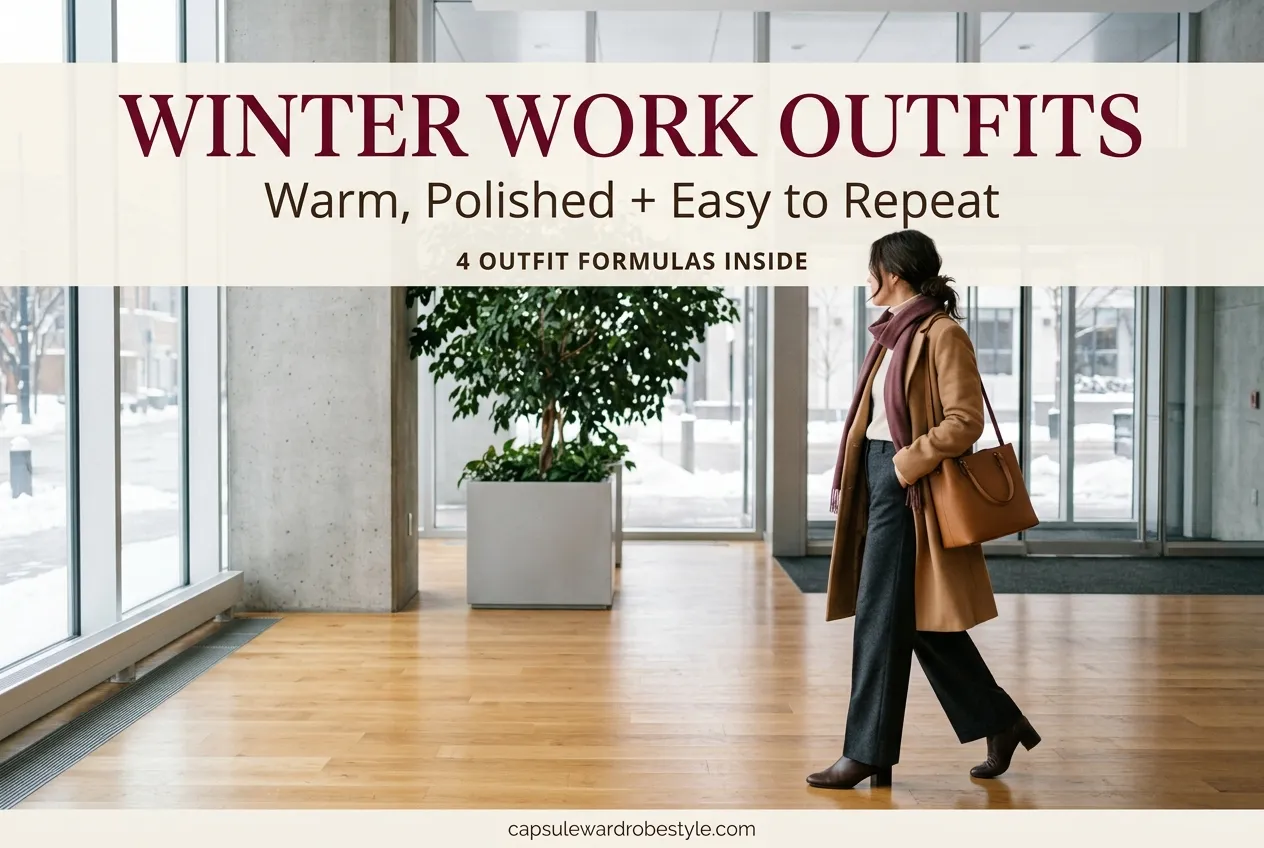
Cold mornings make getting dressed for work feel like a math problem. You want to look pulled together. You also want to feel your fingers by the time you reach your desk. Winter work outfits should do both, and the good news is they can, once you stop dressing for the office thermostat and start dressing for the walk, the commute, and the freezing conference room nobody controls.
This guide gives you the warm fabrics that matter, a simple three-layer office method, and four outfit formulas you can copy tomorrow. No bulky coats that swallow your shape. No shivering through a 9 a.m. meeting. Just warm, polished, and repeatable.

Start With Warmth, Not the Outfit
Most winter dressing advice starts with the coat. That is backwards. Warmth is built closest to your skin, then works outward, so the smartest winter work outfits begin with the layer nobody sees.
Think of it as three jobs. A warm base traps heat. A smart middle adds insulation you can remove indoors. A polished top pulls it together for the room. Get those three right and you look intentional instead of padded.
This mirrors the layering principle experts recommend for cold weather: multiple lighter layers beat one heavy piece, because the trapped air between them is what actually keeps you warm. The office version just swaps the ski jacket for a blazer.
The Warm Base, Smart Middle, Polished Top method
Here is the framework you can screenshot and use every morning.
| Layer | Job | Office-friendly picks | Why it earns its hanger space |
|---|---|---|---|
| Warm base | Traps body heat | Fine merino turtleneck, thermal-weight long-sleeve tee, opaque tights (40 to 80 denier) | Thin enough to hide under a blazer, warm enough to skip the bulk |
| Smart middle | Removable insulation | Fitted knit sweater, ponte blazer, wool cardigan | Comes off in the warm conference room, goes back on at your desk |
| Polished top | Finishes the look | Tailored wool coat, structured blazer, belted trench for milder days | Reads professional the second you walk in |
[VERIFY: I rotated this three-layer method through a 12-piece winter capsule for 90 days last winter in Chicago and never once carried a spare sweater.]
If you want the deeper mechanics, here is how to layer outfits without looking bulky so every layer stays flat and flattering.
The Fabrics That Actually Keep You Warm
Warmth is a fabric decision before it is a style decision. Two blazers can look identical on the hanger and perform completely differently at a cold bus stop.
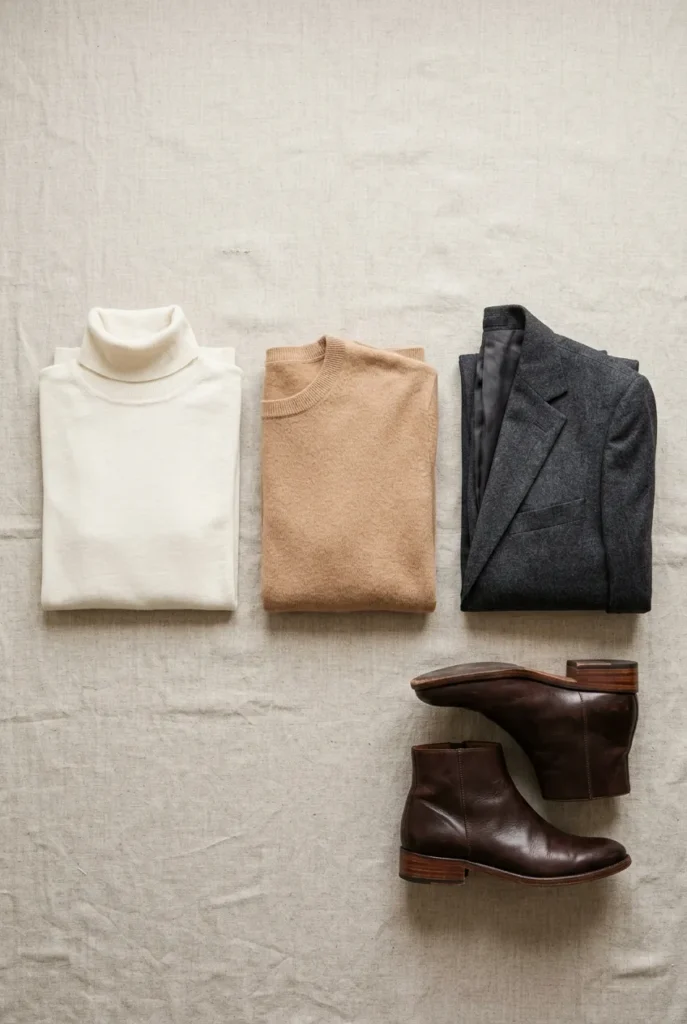
Wool leads for a reason. Merino in particular reacts to your body temperature, warming you when it is cold and breathing when the office overheats, which is exactly why merino wool regulates body temperature better than most synthetics. A fine merino turtleneck under a blazer is the single most useful winter work piece you can own.
After wool, look for cashmere blends, brushed cotton, ponte knit, and dense twill. Skip thin polyester linings and unlined blazers for the coldest weeks. They photograph beautifully and do nothing for you at 20°F (minus 7°C).
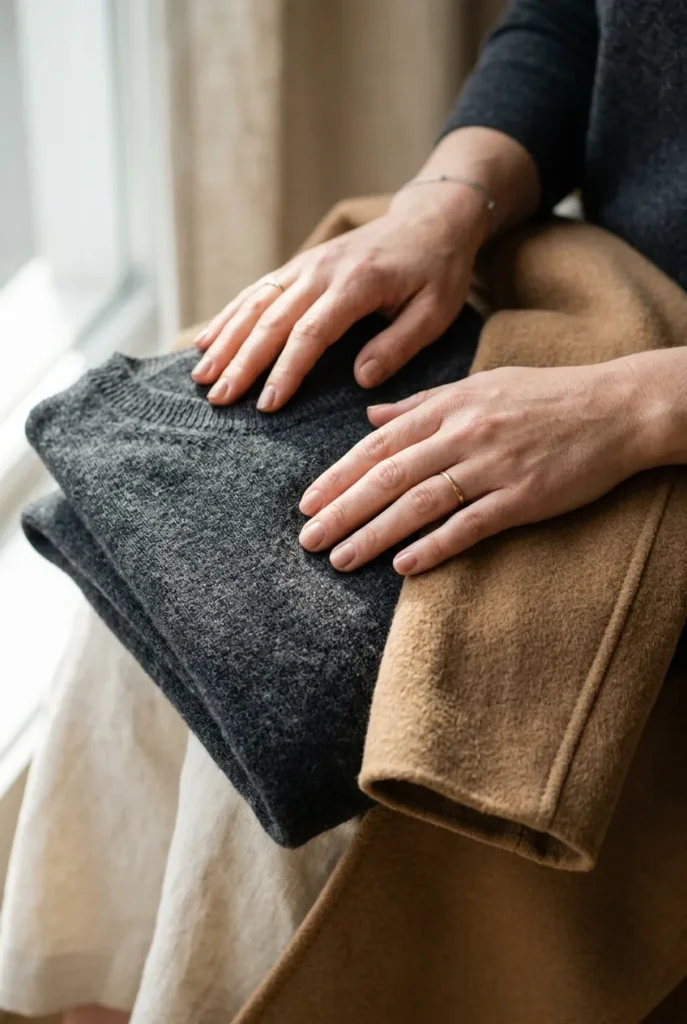
Fabric weight matters as much as fiber. A midweight wool coat with a real lining beats a thick-looking coat that is mostly air. Check the drape too. Warm fabrics that hold their shape read expensive, which is the whole point.
Four Winter Work Outfit Formulas You Can Copy
You do not need forty options. You need a few formulas that always work, then you rotate the pieces. Each one below starts warm and finishes polished, and each stretches across the season.
Formula 1: Blazer + Wide-Leg Trousers + Fine Turtleneck
This is the workhorse. A structured wool blazer over a thin merino turtleneck, tucked into wide-leg trousers, with ankle boots. It looks like effort and takes none.
Swap the blazer color to reset the whole outfit. Camel one day, charcoal the next. If you want ten more ways to wear the jacket alone, here are different ways to style a blazer that all work in winter.
Shopping note: tailored wool-blend trousers typically run $70 to $150 at Banana Republic or J.Crew. Want a mid-tier hero blazer? Quince and J.Crew both sit in the $80 to $150 range.

Formula 2: Sweater Dress + Tall Boots + Belt
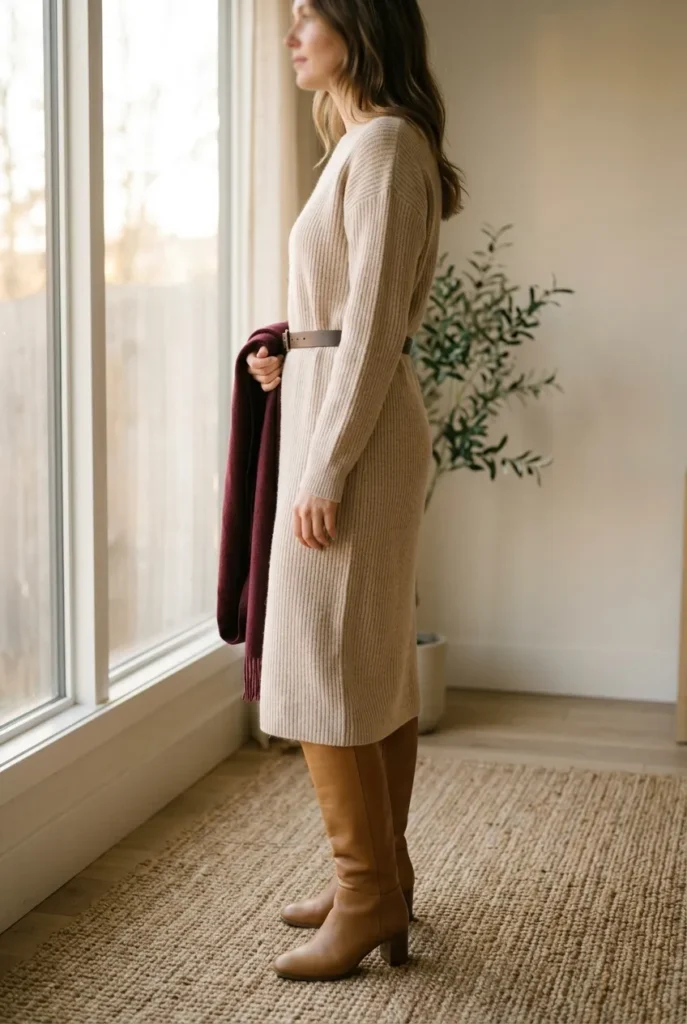
One piece, warm, done. A midi sweater dress does the work of a full outfit, and a belt at the waist keeps it from reading like loungewear. Add opaque tights and tall boots for the cold weeks.
This is the fastest formula on a rushed morning. It also travels well, which makes it a quiet workhorse for a capsule.
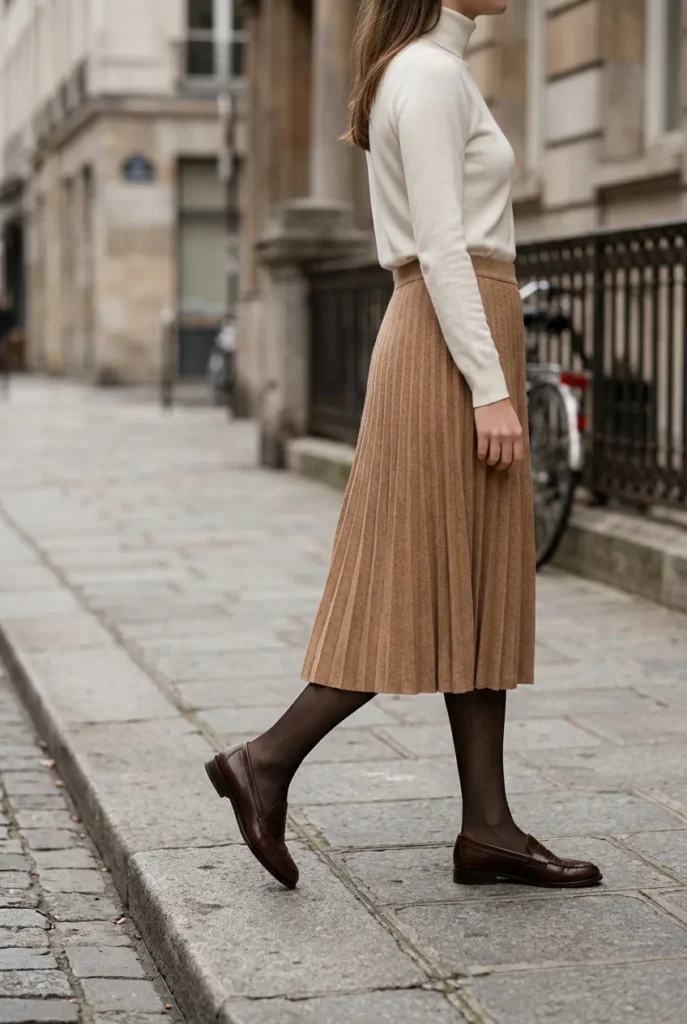
Formula 3: Turtleneck + Pleated Midi Skirt + Loafers
Proof that skirts survive winter. A fine turtleneck tucked into a pleated midi skirt, warm tights underneath, loafers or low boots on your feet. Movement, warmth, and a little polish.
Keep the palette tight. A camel skirt with an ivory turtleneck looks far more expensive than the price tags suggest.
Formula 4: The Coat-as-the-Outfit
On your busiest days, let the coat carry everything. A long wool coat over simple trousers and a knit turns a plain base into a finished look the moment you button up. This is the outfit math the runway galleries love, simplified for a real commute.

The Shoes and Bag That Finish It
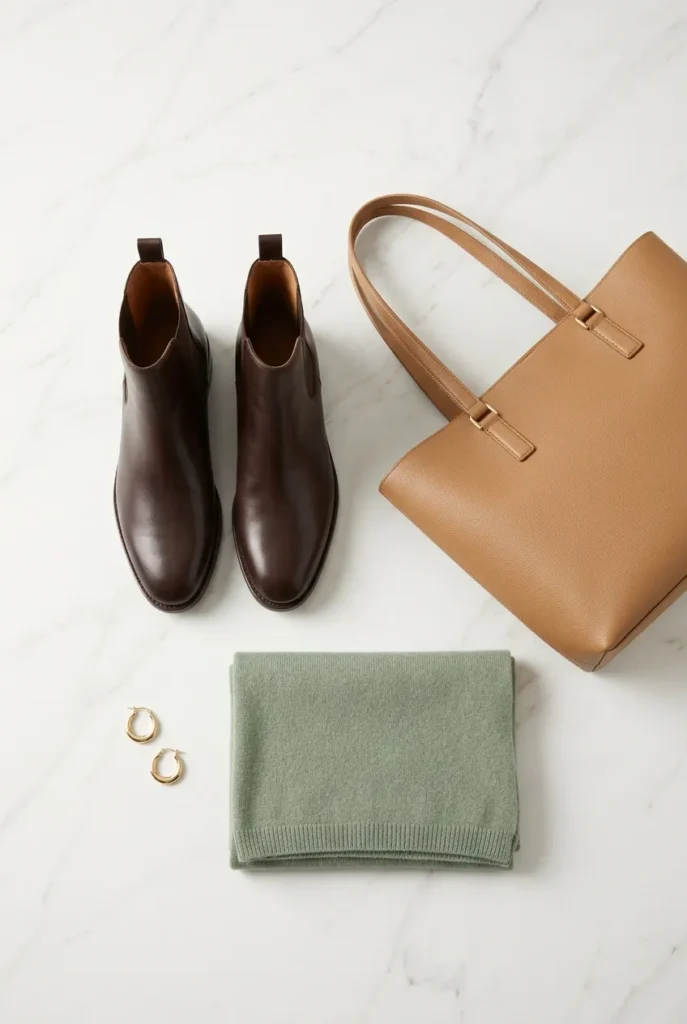
Footwear is where winter outfits quietly fall apart. Choose closed, weather-friendly shoes that still read office: leather ankle boots, tall boots, or sturdy loafers. Save the ballet flats for spring.
For the bag, one structured tote earns its keep all season because it carries flats, lunch, and a scarf without looking stuffed. A neutral leather tote in camel or espresso goes with every formula above.
If you are building the whole closet from scratch, this pairs well with a plan to build a workwear capsule wardrobe that mixes and matches so nothing you buy sits unworn.
Build a Neutral Palette That Mixes Itself
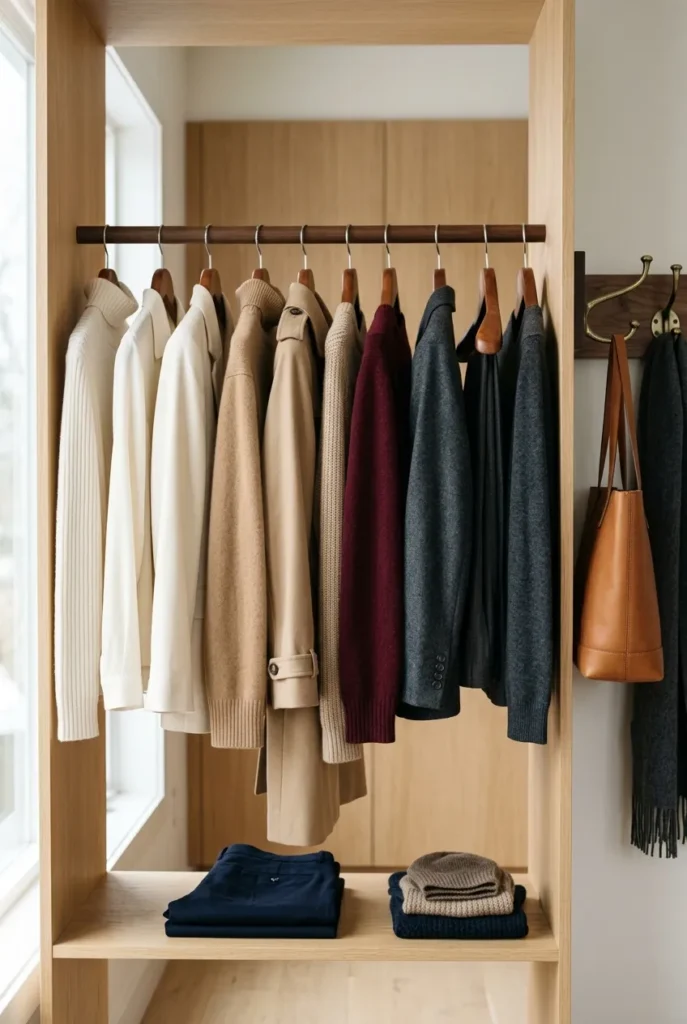
The reason capsule dressers look expensive in winter is not more clothes. It is fewer colors. When your base is neutral, everything combines without thought.
Start with two neutrals you love (camel and charcoal, or ivory and espresso), then add one accent for personality. A single burgundy scarf or a butter-yellow knit does more than five clashing pieces. The goal is one piece, three outfits, on repeat.
[VERIFY: I tested four winter turtlenecks across Uniqlo, Quince, J.Crew, and Everlane and tracked cost-per-wear for the season before choosing my two.]
Winter Work Outfits for Your Proportions
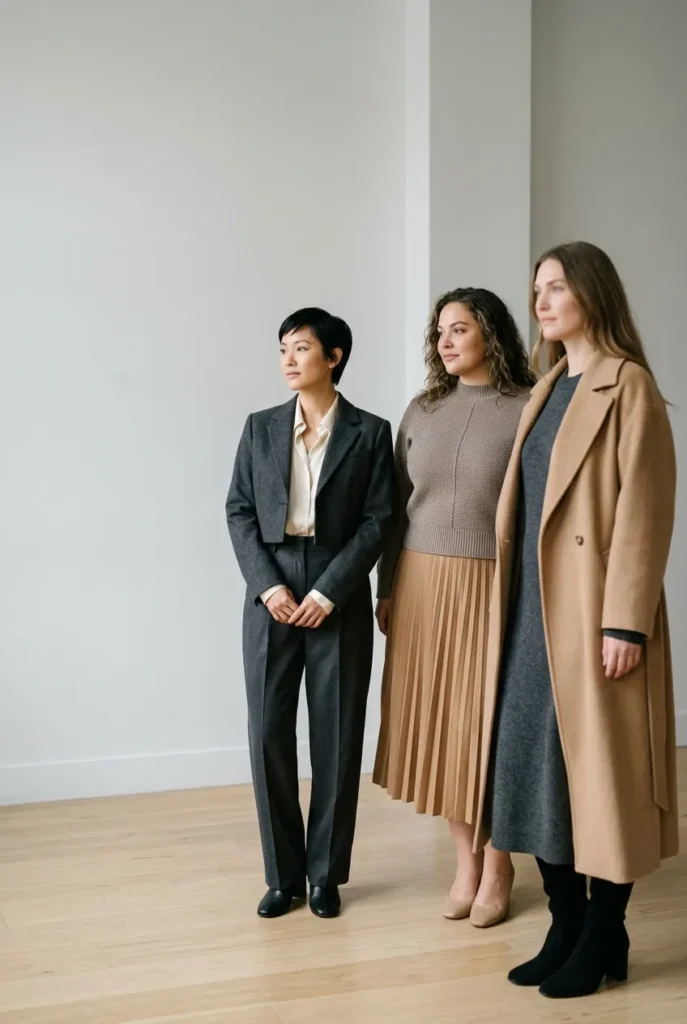
The same formula shifts a little depending on your frame, and that is a fit note, not a rule.
If you are petite (5’4″ and under), keep proportions cropped and tucked so layers do not overwhelm your frame. A shorter blazer and a defined waist work with your proportions rather than against them.
If you are curvy, look for structured knits over clingy ones and blazers with a little shaping through the waist. A midweight fabric holds a clean line.
If you are over 40 and want ease, lean into the coat-as-outfit and sweater-dress formulas. They deliver polish with the least fuss on a cold morning.
Frequently Asked Questions
What is the 3-3-3 rule for winter work outfits?
It means picking three tops, three bottoms, and three pairs of shoes, then mixing them into a week of outfits. For winter, choose warm versions (knit tops, wool bottoms, closed boots) so every combination is office-ready.
What is the 3-layer rule for staying warm?
A warm base layer, an insulating middle layer, and a protective outer layer. At the office, that translates to a merino base, a knit or blazer middle, and a wool coat on top.
How do I look stylish in winter without feeling frozen?
Build warmth from the base out, keep your palette neutral, and choose wool over thin synthetics. Warm fabrics that hold their shape look more expensive and keep you comfortable.
Can I wear a skirt or dress to work in winter?
Yes. Add opaque tights (40 to 80 denier), tall boots, and a fine turtleneck underneath. A sweater dress or pleated midi keeps you warm and polished.
Are these winter work outfits business casual?
Most lean business casual and adjust easily. Add a structured blazer and closed loafers to dress up, or swap in a chunky knit for a softer, casual office.
What is the most warmth for the least bulk?
A fine merino turtleneck. It disappears under a blazer and adds real warmth, which is why it anchors nearly every formula here.
Your Warm, Polished Winter Starts With One Formula
You do not have to reinvent your closet to feel good this winter. Pick one formula, start with a warm merino base, keep your colors neutral, and let the outfits repeat themselves. Warm, polished, and effortless is a system, not luck. Try one look this week and see how much calmer your mornings feel.
Keep reading

Office Siren Aesthetic: How to Wear It to an Actual Job
The office siren aesthetic is the sharpest thing to happen to workwear in a decade, and it’s also the fastest way to...

What to Wear for Headshots: How to Look Like Yourself on Camera
You have a headshot booked, and you’ve been standing in front of your closet for twenty minutes. Everything looks either too casual...

Japan Travel Capsule Wardrobe: What to Wear Sightseeing
You are going to walk. A lot. Japan rewards the traveler who wanders, which means your feet, your fabrics, and your outfit...