
The Formal Office Outfits Capsule: 10 Pieces, a Full Workweek
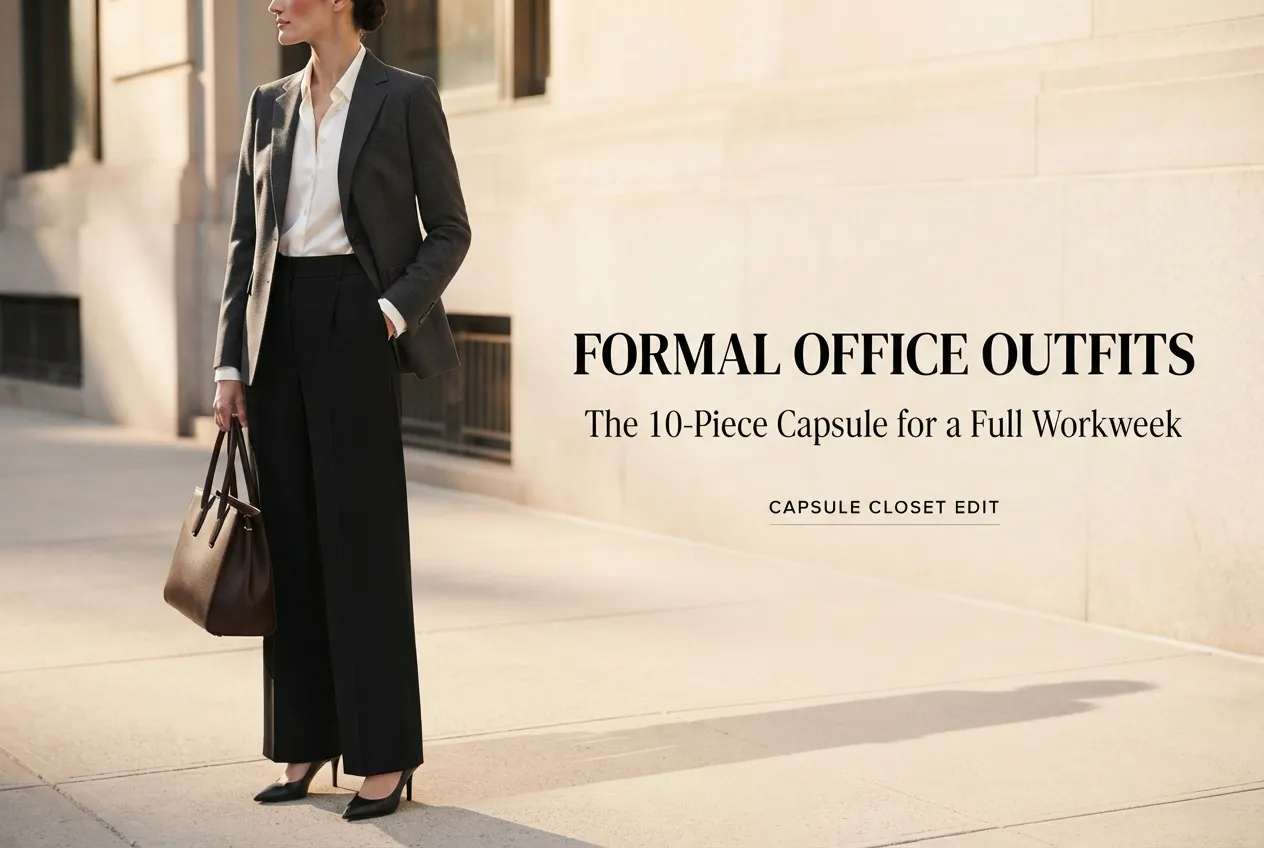
You open a full closet at 7 a.m. and still feel like you have nothing to wear to work. The dress code says business formal. Your reflection says tired. Sound familiar?
Here is the fix. A small, tailored capsule of formal office outfits, built so ten pieces cover a whole week without a single repeat that feels like a repeat. Fewer decisions. More confidence. And a look that reads expensive even when it isn’t.
We will define the dress code fast, build the ten-piece capsule, then run the outfit math so you can see exactly how it stretches. Along the way I will flag where to spend and where a mid-tier piece wins.
What business formal actually means (and how it differs from business casual)
Business formal is the strict end of workwear. Think matching suits, structured blazers, tailored trousers or knee-length skirts, closed-toe heels or refined flats, and tops with a clean, covered neckline. It is the dress code for law, finance, consulting, interviews, and boardrooms.
Business casual is looser: a blazer with dark denim, a knit with trousers, loafers instead of pumps. If your office lives there, you can soften it for a smart casual dress code instead of building this stricter set.
The line matters because it changes fabric and fit. Formal leans into structure, matte finishes, and neutral color. When in doubt about a workplace standard, a neutral reference like a university career center’s dress-code guide is worth a quick read [NEEDS APPROVAL: insert .edu career-center URL here].
The 10-piece formal office capsule
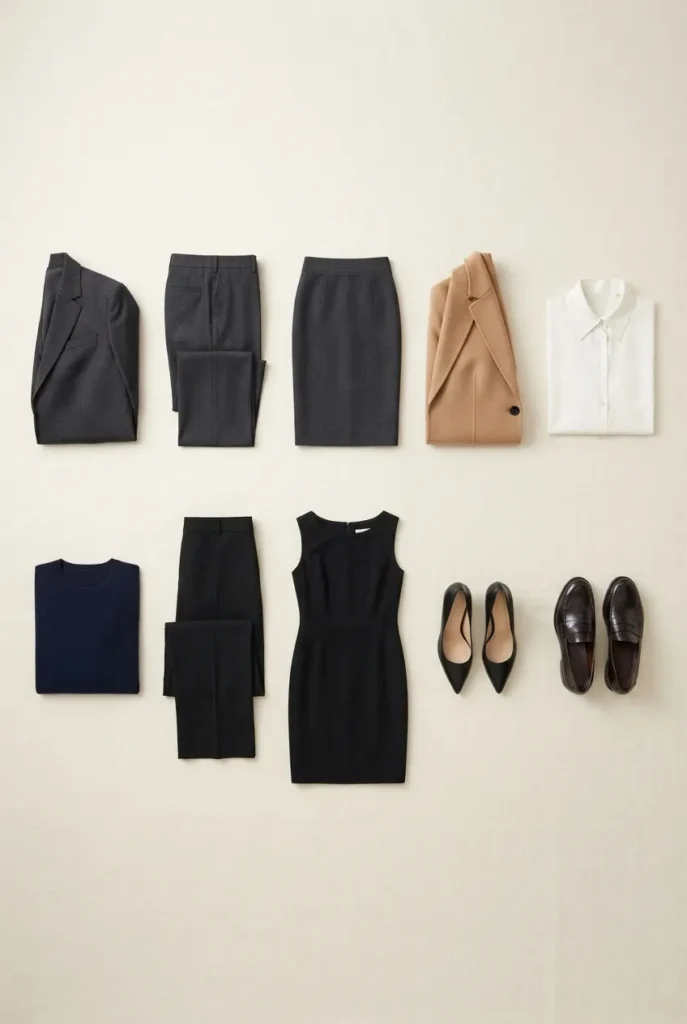
Here is the whole capsule. Every piece earns its hanger space because it pairs with at least three others. Prices are ranges, not fixed, so confirm current numbers before you buy.
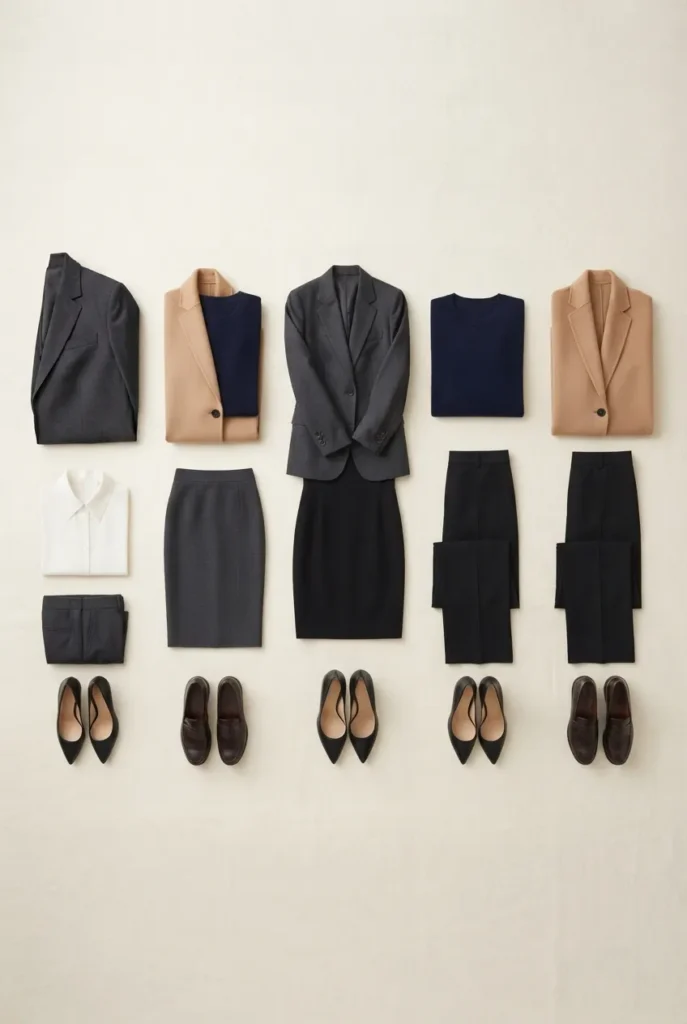
The ten: (1) a matching suit blazer, (2) matching suit trousers, (3) a matching pencil skirt in the same or a coordinating neutral, (4) a second standalone blazer in a contrasting neutral, (5) a white silk or poplin blouse, (6) a fine-gauge knit or shell, (7) wide-leg tailored trousers, (8) a sheath dress, (9) pointed pumps, (10) refined loafers or flats.
Colors stay in a tight neutral base: black, charcoal, navy, camel, ivory. Build the base first, add one accent later (burgundy or cobalt) once the neutrals mix cleanly. That is the outfit math working for you.
Start with a suit that does double duty
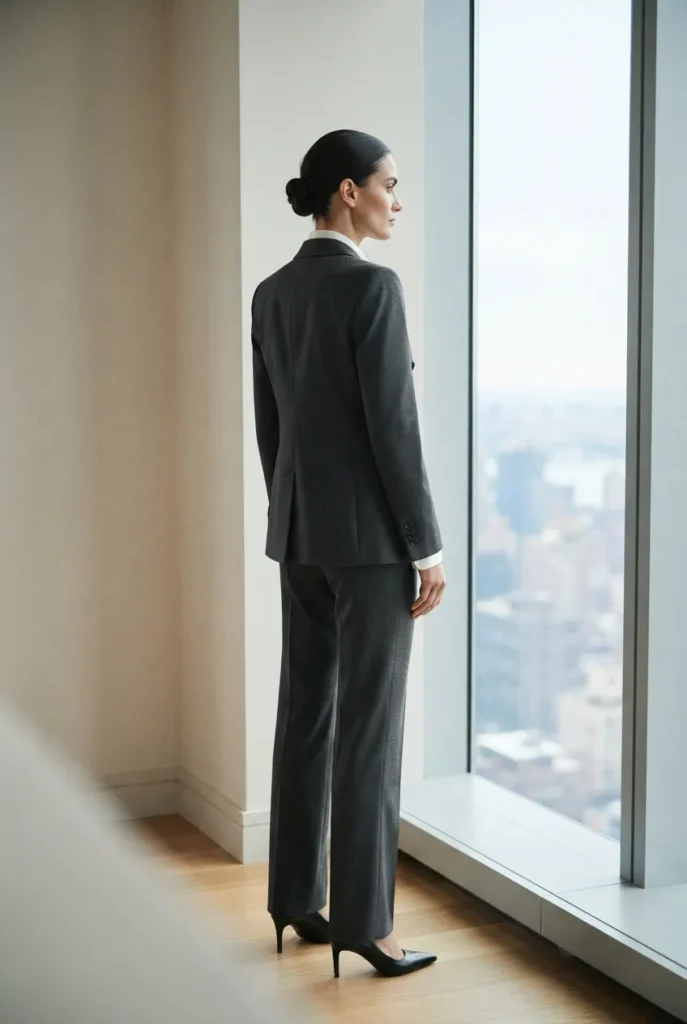
The anchor of any formal office wardrobe is a suit you can break apart. Buy the blazer, trousers, and a matching or coordinating pencil skirt so the pieces work together and alone.
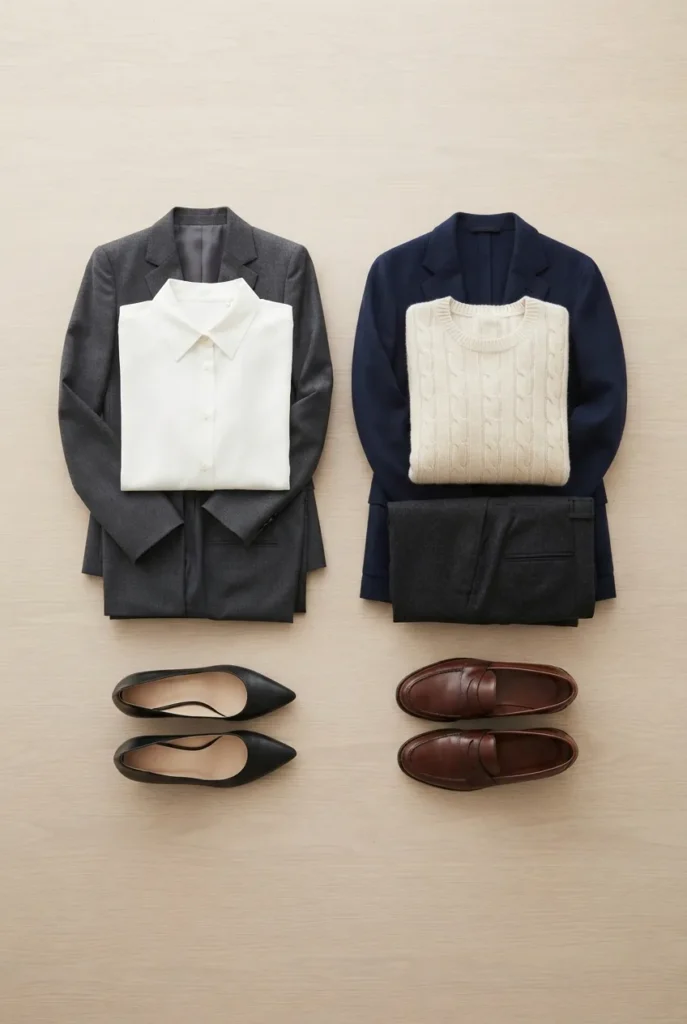
Charcoal and navy are the hardest-working suit neutrals because they read serious without the heaviness of full black. Look for a mid-weight wool or wool blend with a little structure through the shoulder. [VERIFY: I wore one charcoal suit set on rotation for a full quarter of client meetings and it never once looked tired.]
Where to spend: the suit. A mid-tier set from Banana Republic or J.Crew typically runs [VERIFY: around $150 to $350 for the pieces combined], and the tailoring holds up better than fast-fashion suiting over time.
The blazer worth the hanger space
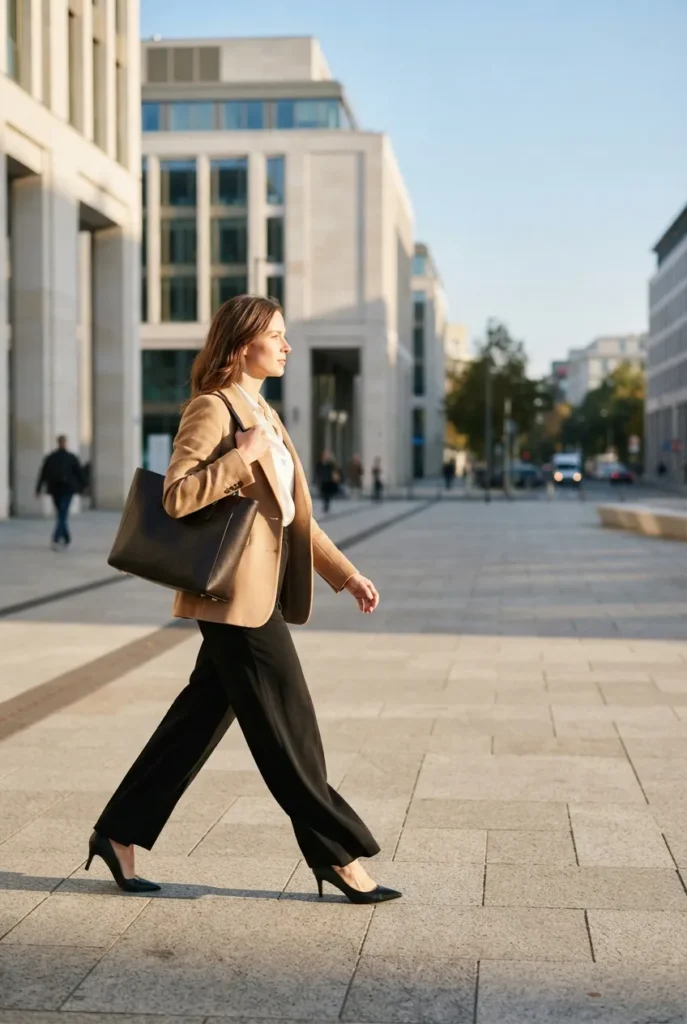
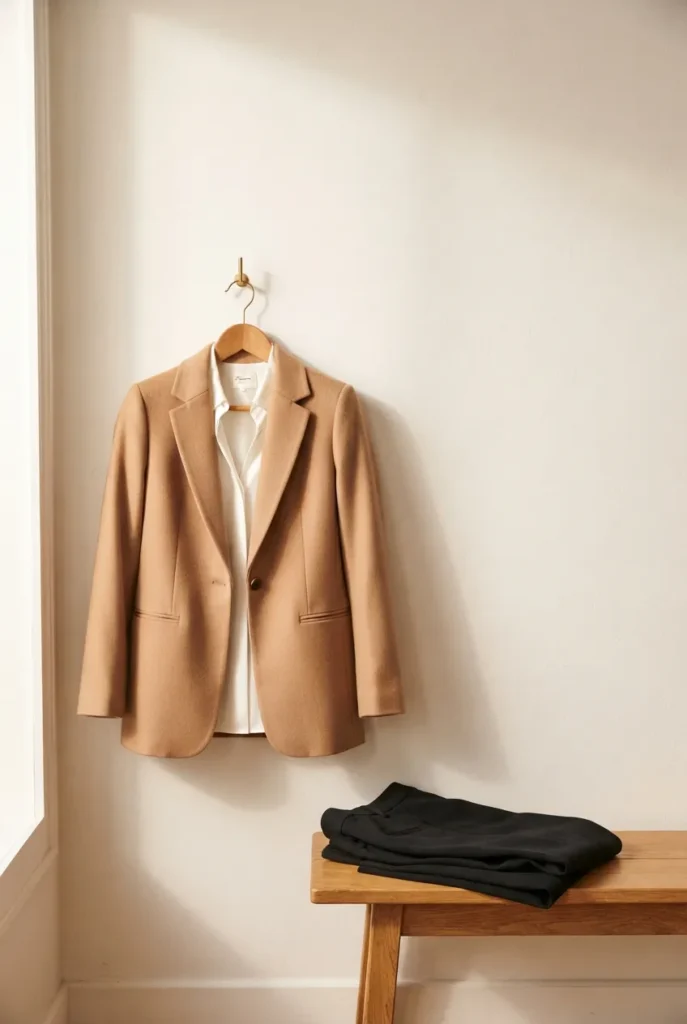
Your second blazer is the piece that multiplies everything. In a contrasting neutral to your suit (a camel blazer against a charcoal or navy suit), it lets you mix and remix so nothing looks like a uniform.
A good blazer sharpens a blouse and trousers instantly, and it layers over the sheath dress when a meeting turns formal. This is also the fastest way to make affordable pieces read more expensive: structure at the shoulder does the heavy lifting.
For colder commutes, a tailored topper earns its place too. The right trench for the polished commute sits neatly over a blazer without bulk.
Tops that read polished, not stiff
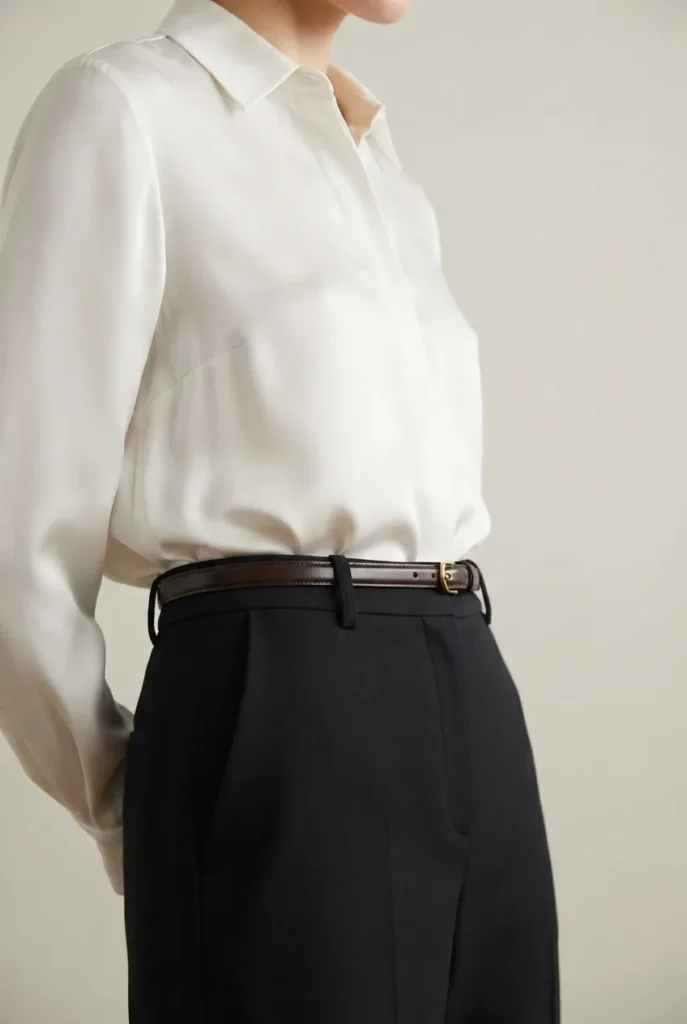
Two tops carry the whole capsule: a white silk or crisp poplin blouse, and a fine-gauge knit or shell. The blouse dresses everything up. The knit softens a suit for a long desk day without losing polish.
Keep necklines clean and fabrics matte. A silky Portofino-style blouse from Express runs [VERIFY: around $40 to $50], while a mid-tier silk blouse from Quince or Everlane sits higher [VERIFY: around $50 to $80] with better drape. If you choose the budget option, the trade-off is usually a thinner fabric that wrinkles faster, so check the fabric content on the label (the FTC’s guide to fabric labeling explains what those percentages mean).
Bottoms: the trousers and the pencil skirt
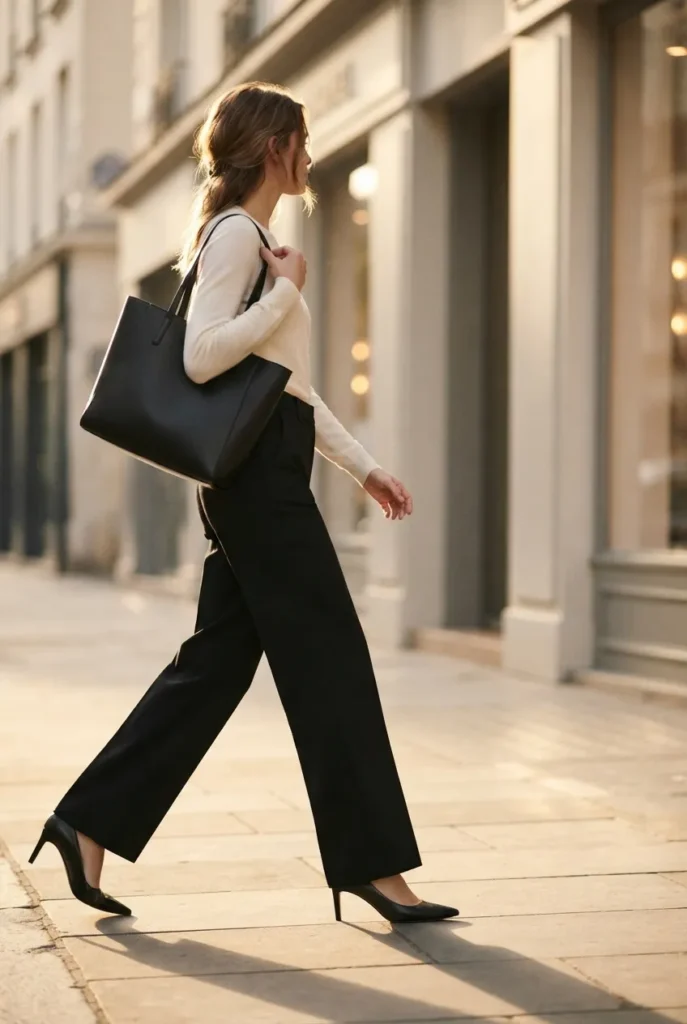
Beyond your suit trousers, add one pair of wide-leg tailored trousers and lean on the matching pencil skirt. Wide-leg trousers read modern and elongate the line; the pencil skirt is the reliable formal standby.
Both should hit a clean length: trousers grazing the shoe, skirt at or just below the knee. Fit note by proportion: petite frames (5 feet 4 and under) usually want a slightly cropped wide-leg to avoid pooling fabric, while tall frames (5 feet 9 and over) should confirm the inseam runs long enough. This is about working with your proportions, not hiding anything.
The one dress that ends morning debates
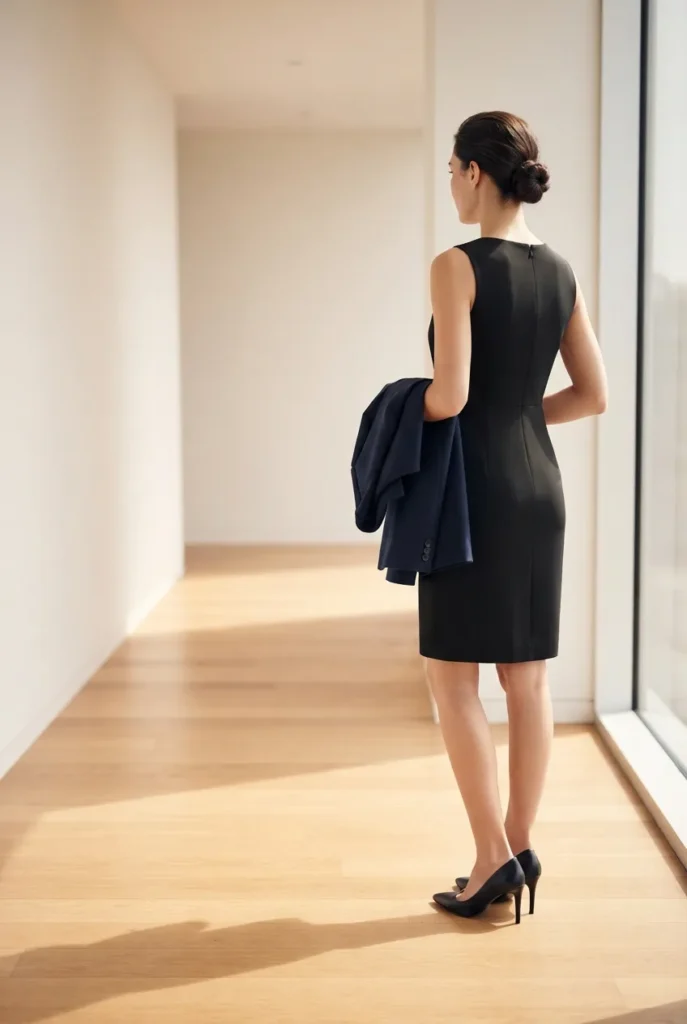
A sheath dress is the single fastest formal office outfit you own. One piece, zero coordinating, instantly appropriate. In black or navy it takes a blazer on cold days and stands alone on warm ones.
[VERIFY: I timed it once and a sheath dress plus pumps took me under ninety seconds from hanger to door.] For summer offices, a lighter sheath in a breathable weave keeps the polish without the heat, which answers the common “formal office outfits for women summer” question directly.
Where to save: the sheath. A Target A New Day or H&M sheath runs [VERIFY: around $30 to $55] and, with the right fit, reads far above its price under a good blazer.
Shoes and the work bag that finish it
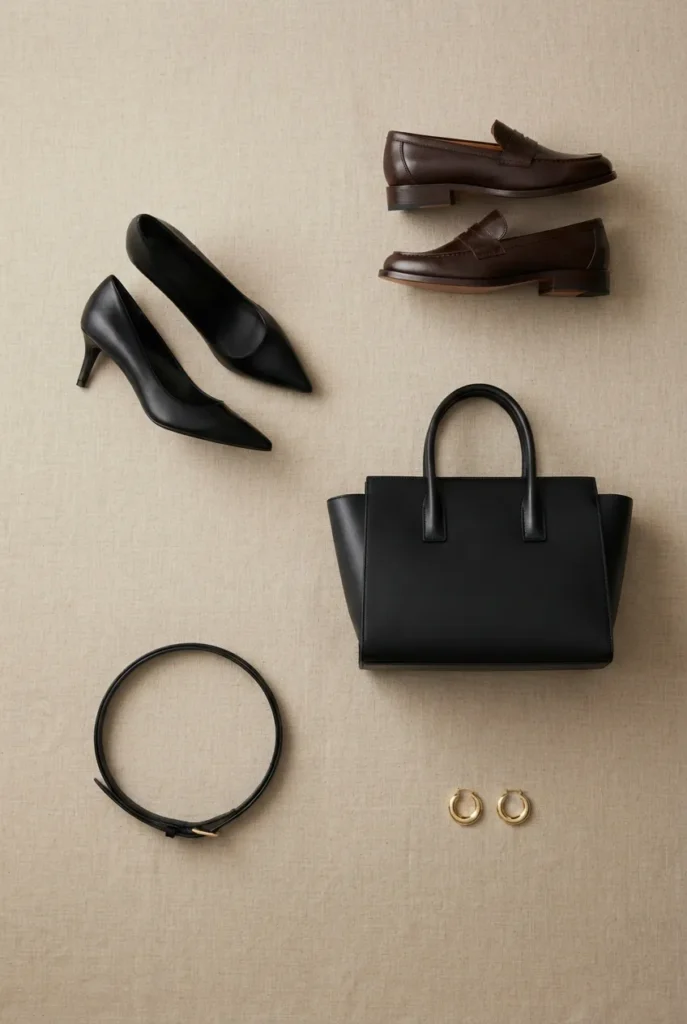
Two shoes cover formal: a pointed pump in black and a refined loafer or flat for the days your feet need mercy. Both should be clean, closed-toe, and neutral.
If heels are not your reality, that is fine. A polished pointed flat reads just as formal, and there are genuinely office-appropriate flats for long days that hold their shape. Finish with a structured work bag that anchors the outfit: a top-handle tote in black or espresso that fits a laptop.
Outfit math: 10 pieces, a full workweek
Here is the payoff. Watch ten pieces turn into a week of distinct formal office outfits, no repeats that read as repeats.
Monday: full charcoal suit (blazer, trousers) with the white blouse and pumps. Tuesday: sheath dress with the camel blazer and loafers. Wednesday: pencil skirt with the fine knit and pumps. Thursday: wide-leg trousers with the white blouse and the camel blazer. Friday: suit trousers with the knit and loafers, blazer optional.
That is five polished looks from a capsule small enough to see at a glance. Add the accent color later and the combinations multiply. Ready for more range across seasons and occasions? You can build out a broader workwear capsule wardrobe from this same neutral base.
Frequently asked questions
Does a formal office capsule work for petite women?
Yes. Focus on proportion: a slightly cropped wide-leg trouser, a knee-length (not midi) pencil skirt, and a blazer that ends at the hip bone keep a petite frame balanced.
What if I’m between sizes in suiting?
Size to the shoulders on a blazer and the hips on trousers and a skirt, then tailor the rest. Shoulders and hips are the hardest to alter, so buy for those and adjust the waist.
Is a good suit worth the investment?
For a formal dress code you wear weekly, yes. A mid-tier wool-blend suit spreads its cost over hundreds of wears, so the cost per wear drops fast compared with a cheap set you replace each year.
What’s a cheaper alternative to a silk blouse?
A poplin cotton or a matte polyester Portofino-style blouse. The trade-off is usually a thinner hand and more wrinkling, so steam it and check the fabric content before you buy.
Can these pieces be machine-washed?
Blouses and knits often can on gentle; structured blazers and wool suiting usually should not. Always read the care label, since fabric content drives the method.
Does this capsule work in summer?
Yes, with fabric swaps: a lighter sheath, a breathable poplin blouse, and loafers instead of pumps keep it formal without the heat.
Can I dress these pieces down after work?
The wide-leg trousers, knit, and loafers all cross over to a softer look, which is where a smart casual approach takes over.
Getting dressed should take ninety seconds
A formal office outfit does not require a bigger closet. It requires ten pieces that actually talk to each other. Build the neutral base, add structure at the shoulder, and let the outfit math do the rest.
Pick your ten this weekend, hang them together, and watch how much lighter Monday feels. Then tell me which combination became your Monday default.
Keep reading

Office Siren Aesthetic: How to Wear It to an Actual Job
The office siren aesthetic is the sharpest thing to happen to workwear in a decade, and it’s also the fastest way to...

What to Wear for Headshots: How to Look Like Yourself on Camera
You have a headshot booked, and you’ve been standing in front of your closet for twenty minutes. Everything looks either too casual...

Japan Travel Capsule Wardrobe: What to Wear Sightseeing
You are going to walk. A lot. Japan rewards the traveler who wanders, which means your feet, your fabrics, and your outfit...