
How to Create a Color Palette for Your Capsule Wardrobe (The 3-7-2 Method That Actually Works)
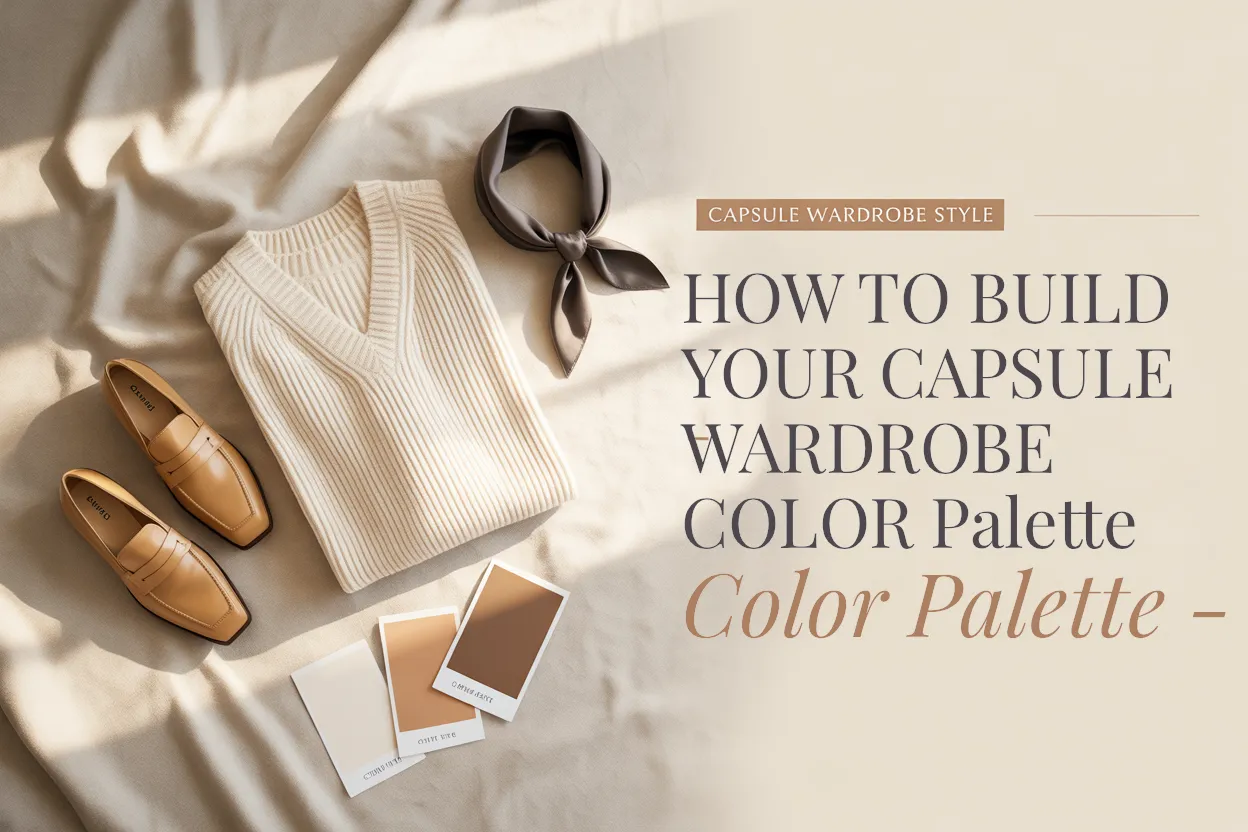
You know the moment. You’re standing in front of a closet that took you years to build, full of pieces you genuinely loved at checkout, and somehow nothing goes with anything. The cream sweater fights the gray pants. The cobalt blouse is gorgeous on its own and orphaned in your closet. Last Tuesday, I pulled three tops, two pairs of jeans, and a blazer onto my bed before I gave up and wore the same black tee I wore on Monday.
Here’s what I learned the hard way after two closet purges and one very humbling capsule reset: the missing piece was almost never the missing piece. It was the missing capsule wardrobe color palette.
When your closet shares a quiet, intentional color story, 30 pieces start behaving like 60 outfits. You stop buying lonely items. You stop staring. You get dressed in four minutes flat. This guide walks you through exactly how to choose that palette using a simple 3-7-2 framework you can screenshot and use today, plus tonal cheat sheets, climate adjustments, and care notes nobody else mentions.
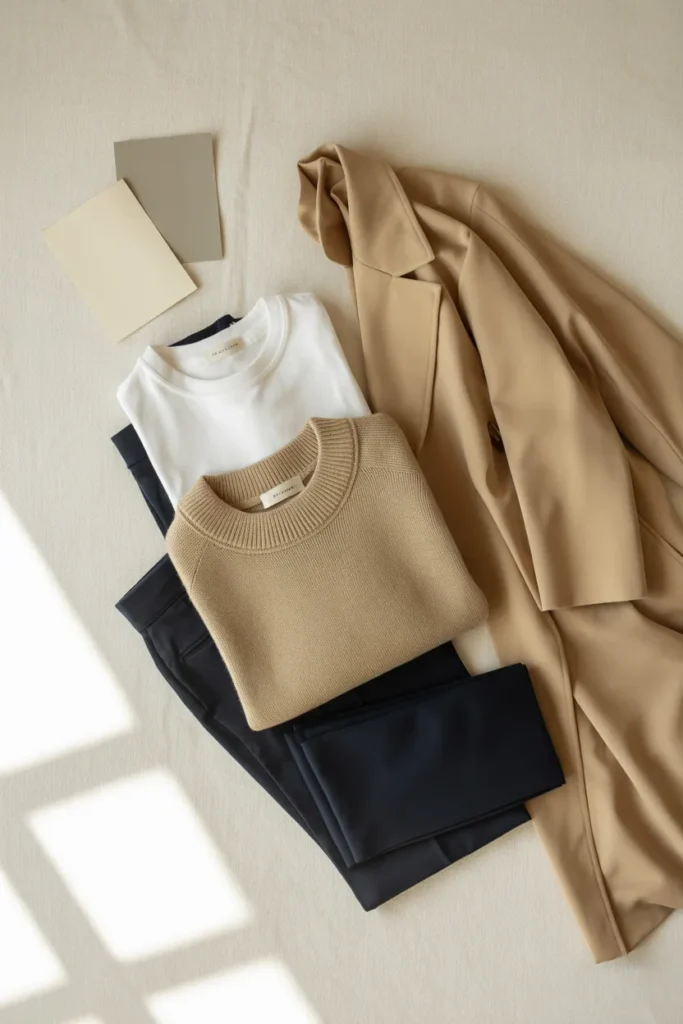
Why a Capsule Wardrobe Color Palette Is the Foundation, Not a Finish
Most people start a capsule by counting pieces. 30 items. 37 items. The famous 33. Counting is the easy part. The reason most capsules fall apart by week three is that the colors weren’t planned, so the math of mix-and-match never works.
Color is the first thing anyone registers about an outfit. Research from Today’s interview with color analyst Julia Dobkine notes that knowing your palette directly supports building a smarter, capsule-style wardrobe because everything you own falls within the same color family and naturally complements itself. Pantone underscored this in December 2025 when they named Cloud Dancer, a soft, balancing white, the 2026 Color of the Year, describing it as a quieting whisper in a noisy world. That’s exactly what your closet needs to be.
A locked-in palette gives you three quiet superpowers:
- Faster mornings. Every top works with every bottom. No more dressing-room math.
- Smarter shopping. A piece either belongs or it doesn’t. The “is it cute” question becomes “does it fit my palette.”
- Cost-per-wear that actually drops. A $90 sweater in your palette gets worn 50+ times. The same sweater in an orphan shade lives in the donate pile by spring.
If you’re still working out how lean to go on overall pieces, take a quick detour through this guide on how many clothes you actually need in a minimalist wardrobe before you build out colors.
Who This Works For
Before we go further, a quick honesty check on fit.
- Size range: Every framework here adapts to sizes XXS through 4X. I’ll flag specific adaptations for petite, tall, and plus-size readers as we go.
- Lifestyle fit: Best for anyone who works from home, hybrid, or in a smart-casual office. If you wear scrubs or a uniform 5 days a week, scale down the work-specific picks.
- Climate fit: I’ve built in adjustments for humid summer climates (Texas, Southeast, Florida), four-season climates (Midwest, Northeast), dry-summer climates (Southwest, California), and cold-winter climates (Pacific Northwest, Mountain states). I’ll call those out where relevant.
The 3-7-2 Framework: Your Capsule Wardrobe Color Palette in One Formula
Here’s the part you came for. Forget the vague “pick some neutrals and a few main colors” advice you’ll see everywhere else. This is the math:
3 neutrals + up to 7 main colors + 2 accents = a closet that mixes itself.
Let me unpack each piece.
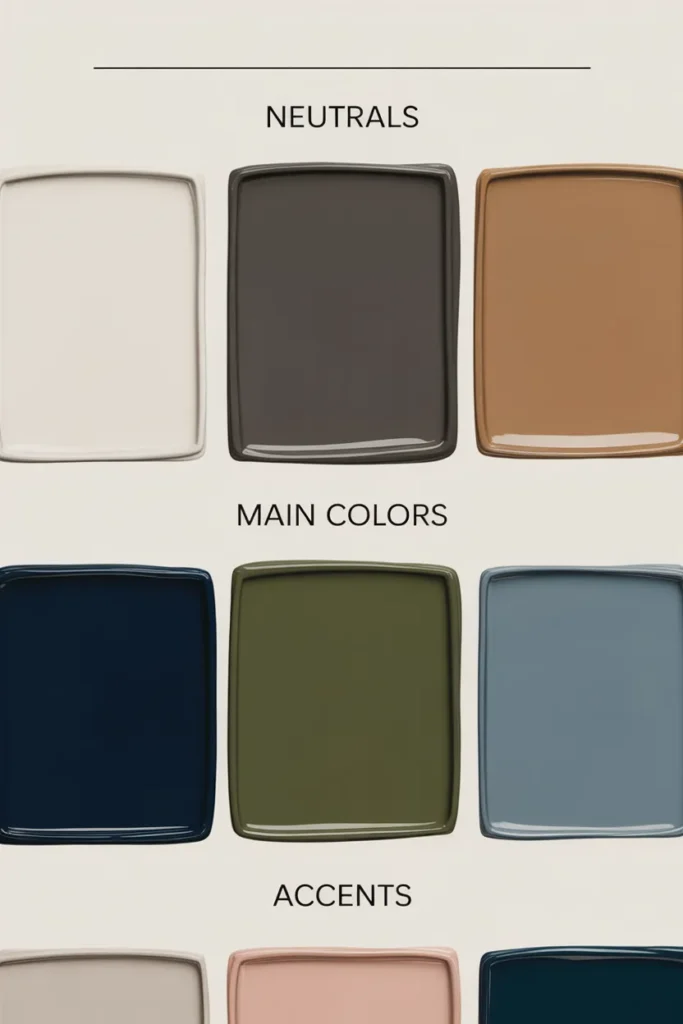
The 3 Neutrals (Your Anchors)
Neutrals are your hardworking base. They live on bottoms, outerwear, shoes, bags, and the simplest tees. Pick three and commit. Three is the sweet spot because two feels limiting and four starts looking accidental.
The classic American capsule neutrals fall into three buckets:
- Warm neutrals: ivory, cream, oat, camel, cognac, warm taupe, espresso brown.
- Cool neutrals: pure white, soft gray, charcoal, slate, true black, soft navy.
- Bridge neutrals: chocolate brown, deep olive, dove gray (these flex warm or cool).
You don’t have to pick all from one camp. A great combo many of us land on is ivory + charcoal + camel. It plays warm and cool at once and Cloud Dancer (Pantone 2026) drops right into the ivory slot if you want a current twist.
For petites: Lean toward lighter neutrals on bottoms (oat, soft gray) so you don’t shorten your line with a hard horizontal cut.
For plus sizes: A column of one neutral, top to bottom, lengthens beautifully. Try ivory tee + cream wide-leg pants for a tonal column.
For tall friends: You can carry darker bottom neutrals like espresso or charcoal without shortening your proportions, so use them confidently as anchors.
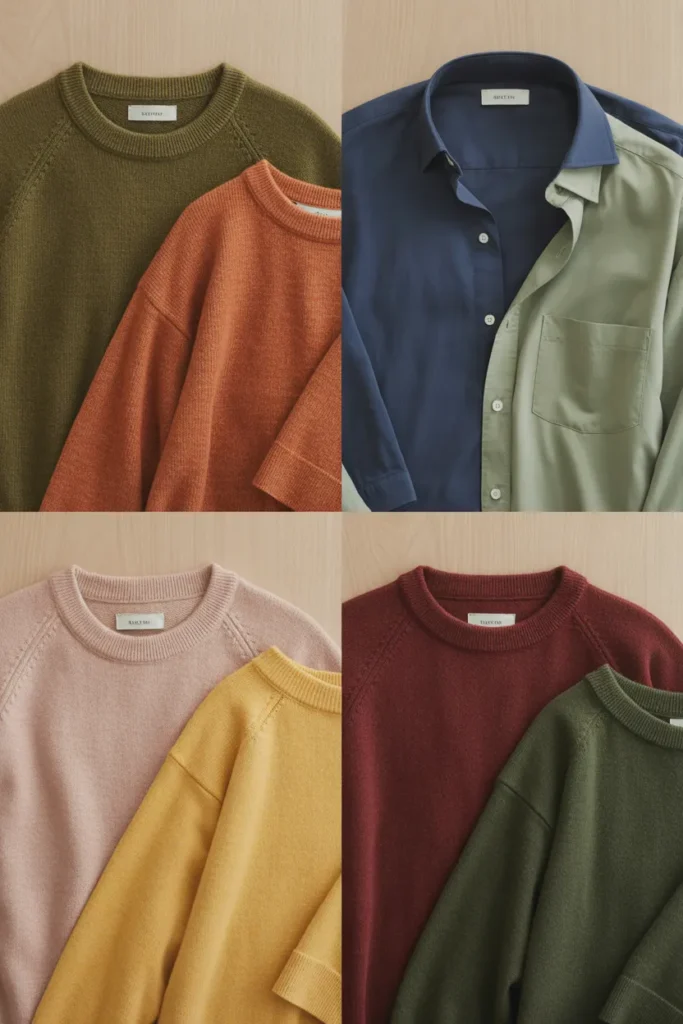
The Main Colors (Up to 7, But Most People Need 4 to 5)
Main colors are the shades you actually love. They’re your blouses, your knits, your dresses, your cardigans, and the colors that make you look in the mirror and feel like yourself.
Cap the list at 7. More than that and your closet stops feeling cohesive. For most readers, 4 to 5 is the real sweet spot.
How to pick them in three minutes:
- Open your camera roll and find five outfit photos where you felt amazing.
- Note the dominant non-neutral color in each.
- If a color repeats, it’s a main color.
- Pull from the same color family or two adjacent families on the color wheel for cohesion.
Common main color clusters that read as quiet luxury or clean girl on Pinterest:
- Earthy mains: olive, rust, mustard, chocolate, terracotta.
- Cool mains: navy, dusty blue, sage, soft pine, slate blue.
- Soft mains: blush, dusty rose, soft lavender, butter yellow, pale sage.
- Rich mains: burgundy, forest green, ink navy, oxblood.
The 2 Accents (Your Personality Pop)
Accents show up on small surfaces. A scarf. A bag. A single pair of pumps. A statement knit you wear once a week. Two is the magic number because one feels timid and three starts to look noisy.
Smart accent picks for a quiet luxury palette: cherry red, cobalt blue, burnt orange, leopard (yes, leopard counts as a neutral accent), gold hardware tones, rich chocolate.
Smart accent picks for a clean girl palette: butter yellow, pistachio, bubblegum pink, sky blue.
The trick: Pick accents that share an undertone with your neutrals. A warm camel neutral plays beautifully with cherry red and burnt orange. A cool charcoal neutral sings with cobalt and emerald.
Step-by-Step: How to Build Your Capsule Wardrobe Color Palette
Step 1. Audit What You Already Own
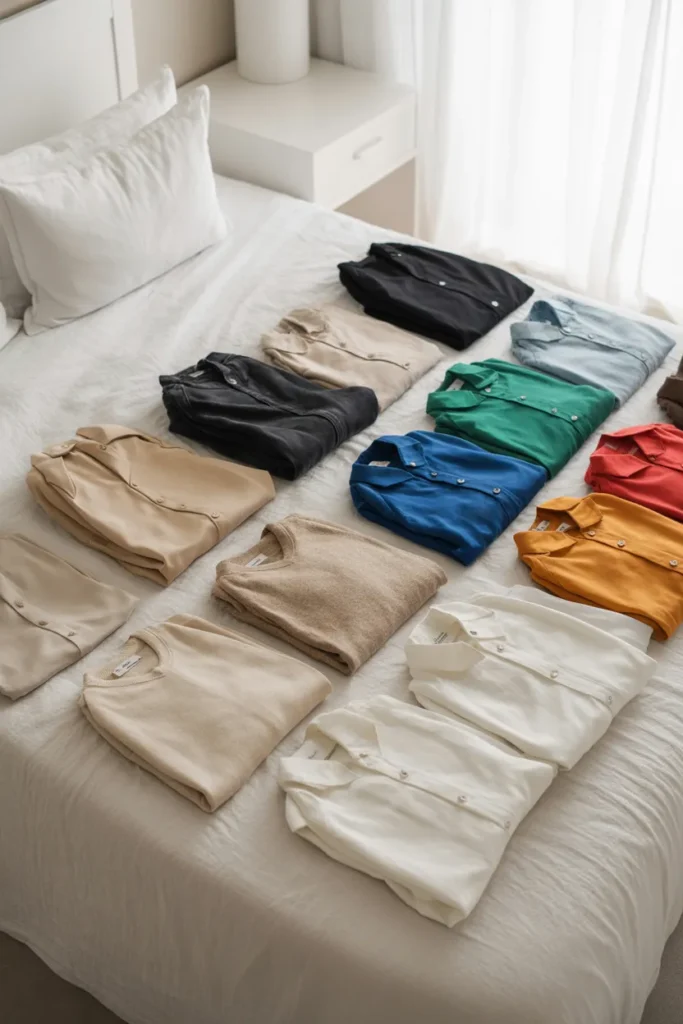
Pull every piece you’ve worn in the last 30 days and lay them out by color family on your bed. The colors that show up most are already your palette, you just haven’t named them yet.
Take a phone photo of the spread. This is your starting point and it’s almost always more cohesive than you think.
Step 2. Identify Your Undertone (The 30-Second Test)
Your skin’s undertone determines which colors light up your face vs which wash you out. Three quick checks:
- Veins on your inner wrist: Blue or purple = cool. Green = warm. Both = neutral.
- Jewelry test: Silver flatters more = cool. Gold flatters more = warm. Both work = neutral.
- White tee test: Pure bright white wins = cool. Ivory or cream wins = warm.
This isn’t a rule. It’s a starting filter. According to Today’s reporting on color analysis, even small shifts toward your undertone make outfits look more pulled together with no extra effort. If you want to go deeper, the seasonal color analysis system maps people to 16 different palettes.
Step 3. Pick Your 3 Neutrals
Match your undertone to your neutrals first.
- Cool undertone: pure white + charcoal + soft navy.
- Warm undertone: ivory + camel + chocolate brown.
- Neutral undertone: you can pull from either side. A great combo: oat + slate gray + cognac.
Step 4. Pick Your 4 to 7 Mains
Use the camera roll method from earlier. Then test cohesion: lay your three neutrals on the bed and place each candidate main color next to all three. If it plays nicely with at least two of the three, it stays. If it only works with one, it’s a one-off, not a main.
Step 5. Lock In Your 2 Accents
These should be the colors that make you happiest. They earn their keep by showing up small but loud. A blush silk scarf. A cobalt loafer. A burnt orange tote.
Step 6. Write It Down
Type your palette into the notes app on your phone. Eleven or twelve colors total. Take a screenshot. This is your shopping filter from now until forever (or until you reset, which most of us do every 18 to 24 months).
Climate-Adjusted Palette Logic (The Part Nobody Else Talks About)
Your palette should bend slightly with where you live. This is the angle competitors miss.
Humid Summer Climates (TX, FL, GA, the Carolinas)
Skip true black on big surfaces. It absorbs heat and reads heavy in 90-degree humidity. Lean into ivory, oat, soft sage, dusty blue, and cream. Keep black tiny: a sandal, a belt, a thin tank.
Four-Season Climates (NY, IL, OH, MA)
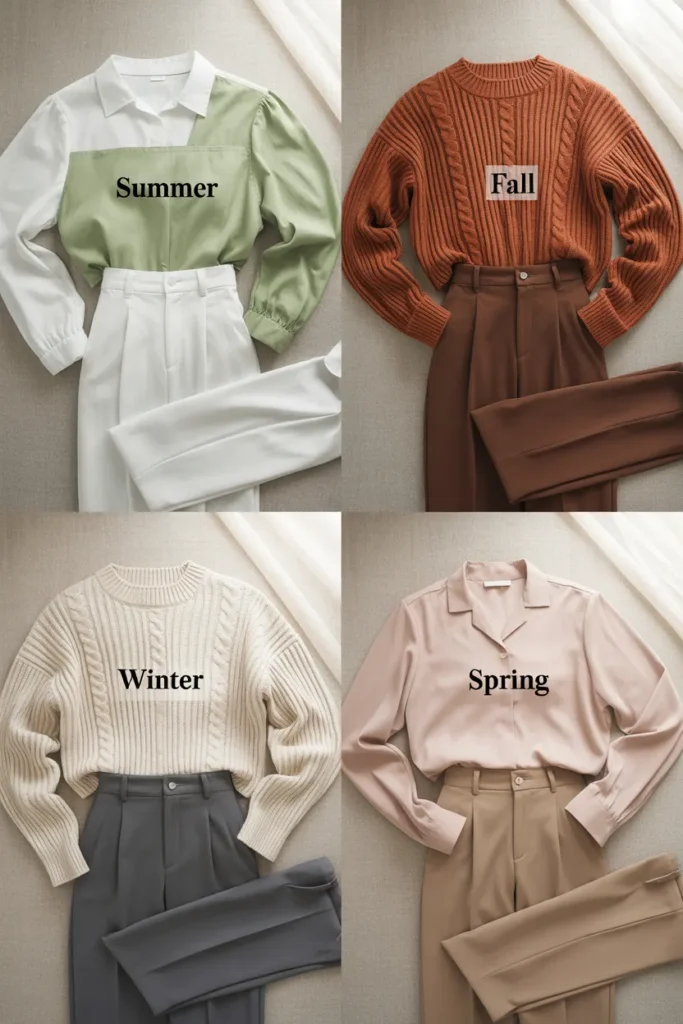
You actually need two seasonal palette shifts. Same anchor neutrals year-round, but rotate the mains. Spring/summer: blush, sage, butter, sky blue. Fall/winter: rust, olive, chocolate, burgundy.
Dry Summer Climates (CA, AZ, NM)
Your palette can carry richer colors year-round because the dry air keeps everything looking crisp. Olive, rust, terracotta, and cognac work in July without feeling heavy.
Cold Winter Climates (WA, OR, MT, MN)
Lean into depth: charcoal, espresso, ink navy, oxblood, forest green. Add one light neutral (cream or oat) so winter outfits don’t feel bunker-like.
How to Style Your Palette: 6 Outfit Formulas That Always Work
Once your palette is set, these formulas turn any 12 pieces into 30+ outfits.
Formula 1. The Neutral Stack
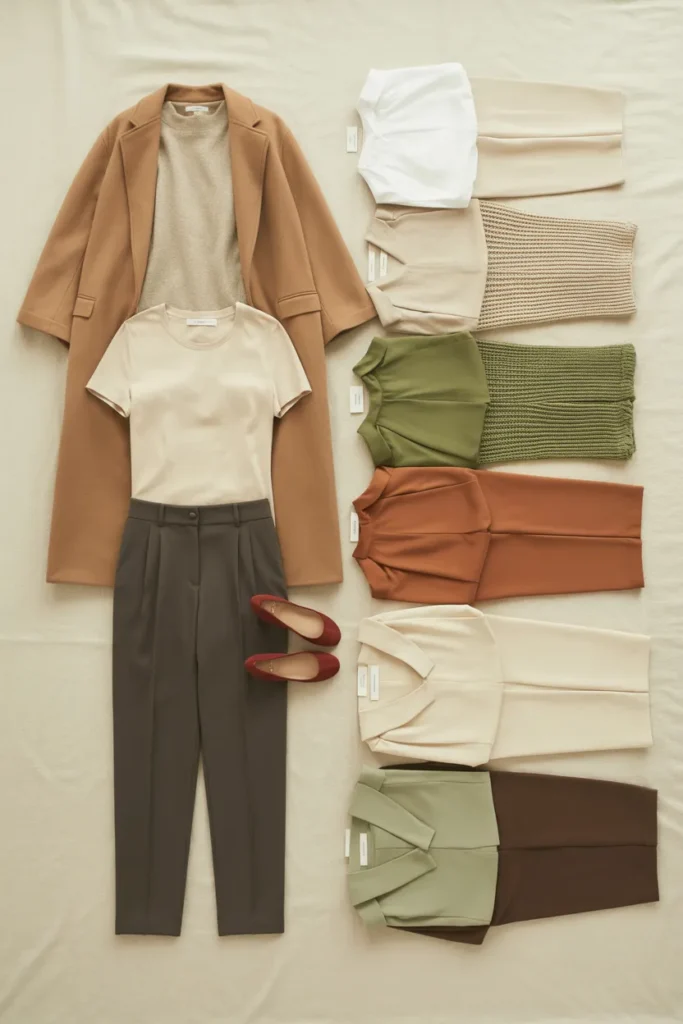
All three neutrals at once. Camel coat + ivory tee + charcoal trousers. Rich without trying.
Petite tip: Crop the trouser at the ankle so the column doesn’t visually stop short. Plus-size tip: A long camel coat over a tonal ivory and oat outfit gives a beautiful unbroken vertical line.
Formula 2. The Tonal Column
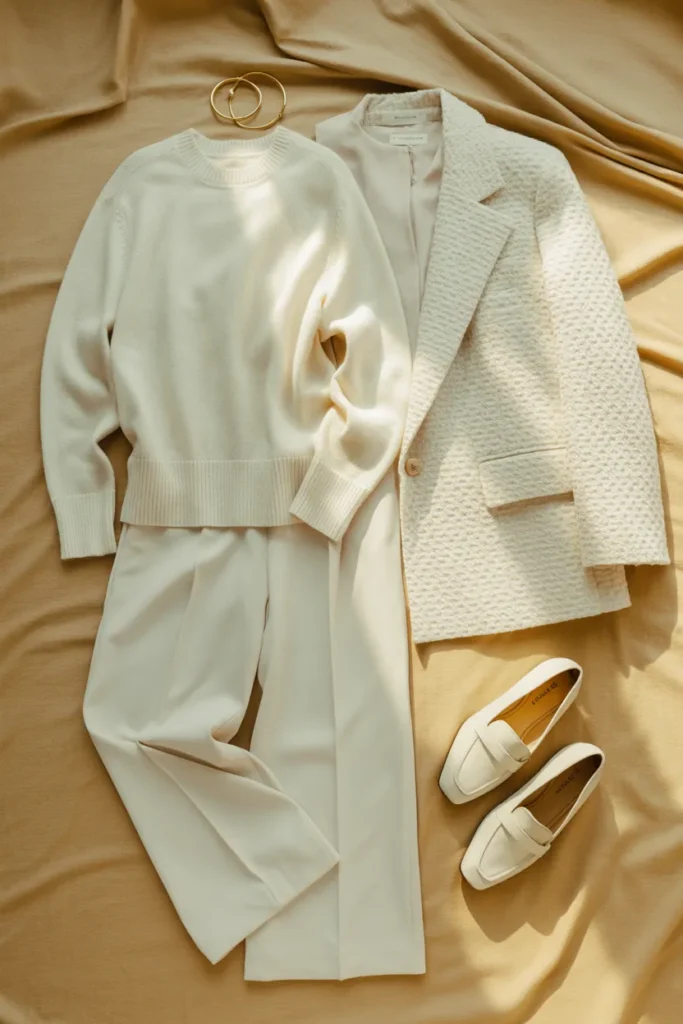
One color, head to toe, in two close shades. Cream sweater + ivory wide-leg pants. Quiet luxury in 30 seconds.
Formula 3. Neutral + One Main
The workhorse. Charcoal trousers + sage knit. Ivory pants + dusty blue blouse. This is what you’ll wear 60% of the time.
Formula 4. Two Mains in the Same Family
Olive blouse + rust trousers. Both earthy, both warm, instant cohesion.
Formula 5. Neutral + Accent Pop
Full neutral outfit + one accent piece. Cream sweater + cream trousers + cherry red flat. Makes a $30 shoe look styled.
Formula 6. The Color-Block
Two contrasting mains with one neutral grounding it. Sage sweater + cream trousers + chocolate boot. Editorial feel, easy execution.
If you want to see how 20 pieces stretch into dozens of outfits using these formulas, this walkthrough on how to mix and match a 20 piece capsule wardrobe is a good companion read.
Build This Look With What You Already Own
Here’s the truth: you almost certainly own most of your future palette already. Try this exercise before buying a single new thing.
Pull these capsule staples from your closet and lay them out:
- A white tee (you almost certainly own one)
- A pair of straight or wide-leg jeans
- A black, navy, or camel blazer
- A neutral trench, peacoat, or long cardigan
- A white sneaker
- A pair of loafers, ballet flats, or low boots
- A tote or crossbody in a neutral
These seven pieces alone give you the bones of 12 to 15 outfits when paired with two main-color knits or blouses you already love. Add your two accent pieces (a scarf and a fun shoe) and you’ve assembled a working capsule for the cost of zero new items.
When you do start replacing or upgrading, this guide on the best capsule wardrobe brands for 2026 is where I’d send you, especially for finding good cost-per-wear knits and outerwear in your palette.
Fabric and Care Notes (Because Color Longevity Is Real)
Color holds longer in some fabrics than others. A few honest flags:
- Black tees in 100% cotton fade fastest. Wash inside out, cold water, hang dry. Replace every 12 to 18 months if worn weekly.
- Cream and ivory knits in merino wool are gorgeous and pill quickly under bag straps and seatbelts. A fabric shaver is worth $12.
- Linen wrinkles. That’s the point. Don’t iron a linen blouse to within an inch of its life; steam it and accept the soft creases.
- Tencel and modal blends hold color beautifully and resist pilling. They’re worth seeking out for main-color tops.
- Camel and tan wool coats can develop sheen on the seat and elbows. Brush after wear with a clothing brush; dry clean once per season.
- Saturated mains (cobalt, burgundy, emerald) bleed in the wash. Cold water, separate cycle for the first three washes.
Travel Capsule Color Math
For a carry-on-only trip, your color palette becomes the difference between 5 days of outfits in 9 pieces or a panic-pack of 18.
The rule: pick 2 neutrals + 2 mains + 1 accent for any trip under 10 days.
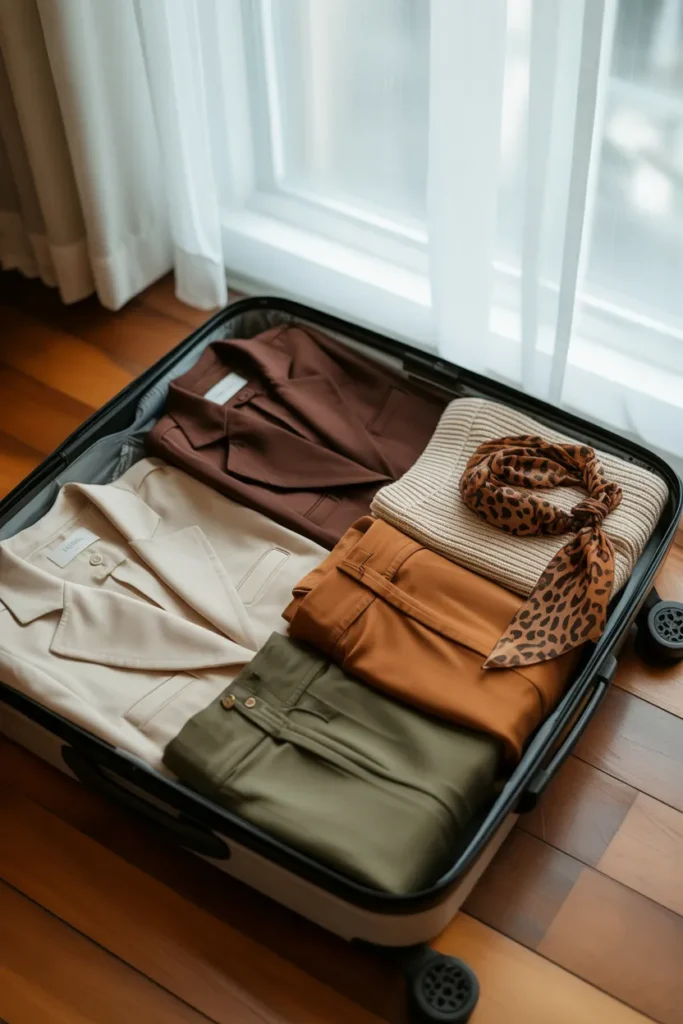
Example for a 7-day fall trip to Europe:
- Neutrals: ivory + chocolate brown
- Mains: olive + rust
- Accent: leopard scarf
That’s 5 colors total, and any top works with any bottom. 9 pieces (2 trousers, 1 jeans, 3 tops, 1 knit, 1 blazer, 1 scarf) gives you 12+ outfits.
Common Mistakes That Kill a Capsule Wardrobe Color Palette
After helping a few friends through this, the same five mistakes show up over and over.
- Picking too many mains. More than 7 main colors means cohesion breaks. Trust the cap.
- Buying an accent piece first. Accents only earn their keep when neutrals and mains are locked. A cobalt coat with no cobalt-friendly neutrals becomes an orphan.
- Forcing a trend color. Cherry red is having a moment in 2026, but if it doesn’t play with your neutrals, it lives in your closet, not on your body.
- Ignoring your undertone. A cool-undertone person in head-to-toe warm camel can read tired. A small adjustment (cream instead of ivory, soft navy instead of cognac) fixes everything.
- Treating the palette as permanent. Reset every 18 to 24 months. Your life shifts, your colors shift slightly with it.
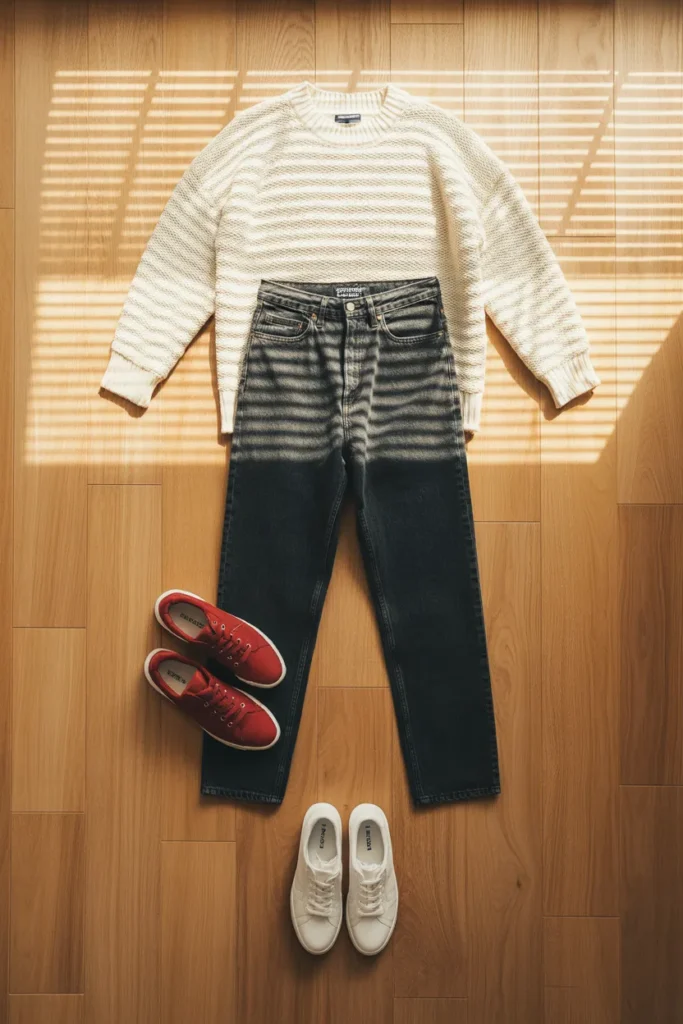
Pantone 2026 and Your Capsule Wardrobe Color Palette
If you want a current twist, slot Pantone’s 2026 Color of the Year into your palette as one of your neutrals or mains. Cloud Dancer (PANTONE 11-4201) is a soft, balancing white that Pantone described as a quieting whisper in a noisy world, and it’s the first white ever named Color of the Year. It works as:
- A neutral replacement for ivory or pure white in a warm-undertone palette.
- A main color when paired with charcoal, espresso, or olive (think a cream cashmere knit doing the heavy lifting).
- A tonal partner alongside oat and oyster for an all-cream column outfit that reads expensive without being expensive.
It’s not a trend. It’s a 2026 reference point you can lean on for the next few years.
How a Capsule Wardrobe Color Palette Saves Money (Cost-Per-Wear Math)
The cost-per-wear story is the unsexy reason this matters most. A $120 cream cashmere sweater that fits your palette gets worn 60+ times in two years: that’s $2 per wear. A $120 cobalt sweater that fights your three neutrals gets worn 6 times: that’s $20 per wear, and it’s still in your closet.
When every piece you buy passes through the palette filter, your closet stops collecting orphans. That’s the actual savings.
FAQ: Capsule Wardrobe Color Palette Questions
How many colors should a capsule wardrobe color palette have?
Most people land between 9 and 12 total colors. The 3-7-2 framework caps it at 12 (3 neutrals, up to 7 mains, 2 accents). Below 9 starts to feel limiting; above 12 starts to feel scattered.
What is the 3 color rule for outfits?
The 3 color rule is a styling guideline, not a palette rule. It says any single outfit should contain no more than three colors total: one dominant, one neutral, and one accent. Your full palette can have many more colors than that.
Can a capsule wardrobe have bright colors?
Yes. Bright colors live in your accent slots or as one of your mains. The trick is making sure they share an undertone with your neutrals so they actually mix in.
How do I find my best clothing colors?
Start with the 30-second undertone test (veins, jewelry, white tee). For a deeper read, professional color analysis using the seasonal system (winter, spring, summer, fall, plus 12 sub-seasons) is the most accurate route, and most consultants charge $100 to $300.
How do I style a capsule wardrobe color palette if I don’t own a white tee?
A pure white tee is the most useful capsule staple, but you can substitute it. Try an ivory or oat tank, a cream silk camisole, or a soft gray crew neck. Any of these work as a neutral base layer under your blazers and cardigans.
What size should I order if I’m between sizes in a capsule basic?
For knits and tees, size up if you want a relaxed, tucked-in look (which most capsule outfits use). Size down for fitted layering pieces meant to go under blazers. For trousers, size up at the waist if hemming is easier than letting out.
Is a capsule wardrobe color palette seasonal or year-round?
Your three neutrals stay year-round. Your 4 to 7 mains can shift with the season (lighter and brighter in spring/summer, deeper and warmer in fall/winter). Your accents are usually year-round because they live on small surfaces.
How do I pack capsule wardrobe colors for travel?
Use the 2-2-1 rule for trips under 10 days: 2 neutrals, 2 mains, 1 accent. That’s 5 colors total across 8 to 10 pieces, and every top works with every bottom.
What are the best neutral colors for a capsule wardrobe?
The most versatile neutrals for American closets are ivory or pure white, charcoal or true black, and camel or chocolate brown. These three colors layer beautifully and play with almost every main color you’ll add.
Save This for Your Next Capsule Wardrobe Refresh
Here’s what I want you to take from this: a capsule wardrobe color palette isn’t a constraint. It’s the freedom to stop second-guessing every morning and start trusting your closet.
Screenshot the 3-7-2 framework. Run the 30-second undertone test this week. Lay out what you already own and let it tell you what you’ve been buying all along. Every closet has a quiet color story hiding in it. Yours just needs to be named.
Save this for your next capsule wardrobe refresh, and the next time you’re standing in a Target dressing room debating a cobalt sweater, you’ll know whether it earns a spot or doesn’t.
Keep reading
13 Ways to Wear Sage Green for Plus-Size Women
Sage green is the color women buy on impulse and then leave on the hanger. It looks calm and expensive in the...

Sage Green Outfits for Women Over 50: 10 Ways to Wear It Well
Sage green is the one color women keep asking me about and then leave hanging in the closet. It looks calm and...

10 Sage Green Outfit Ideas for Fall (and Exactly What to Pair Them With)
Sage green outfits look easy on a pin and confusing in a closet. The color sits right between a neutral and a...