
How to Style Baggy Jeans So the Whole Outfit Looks Deliberate
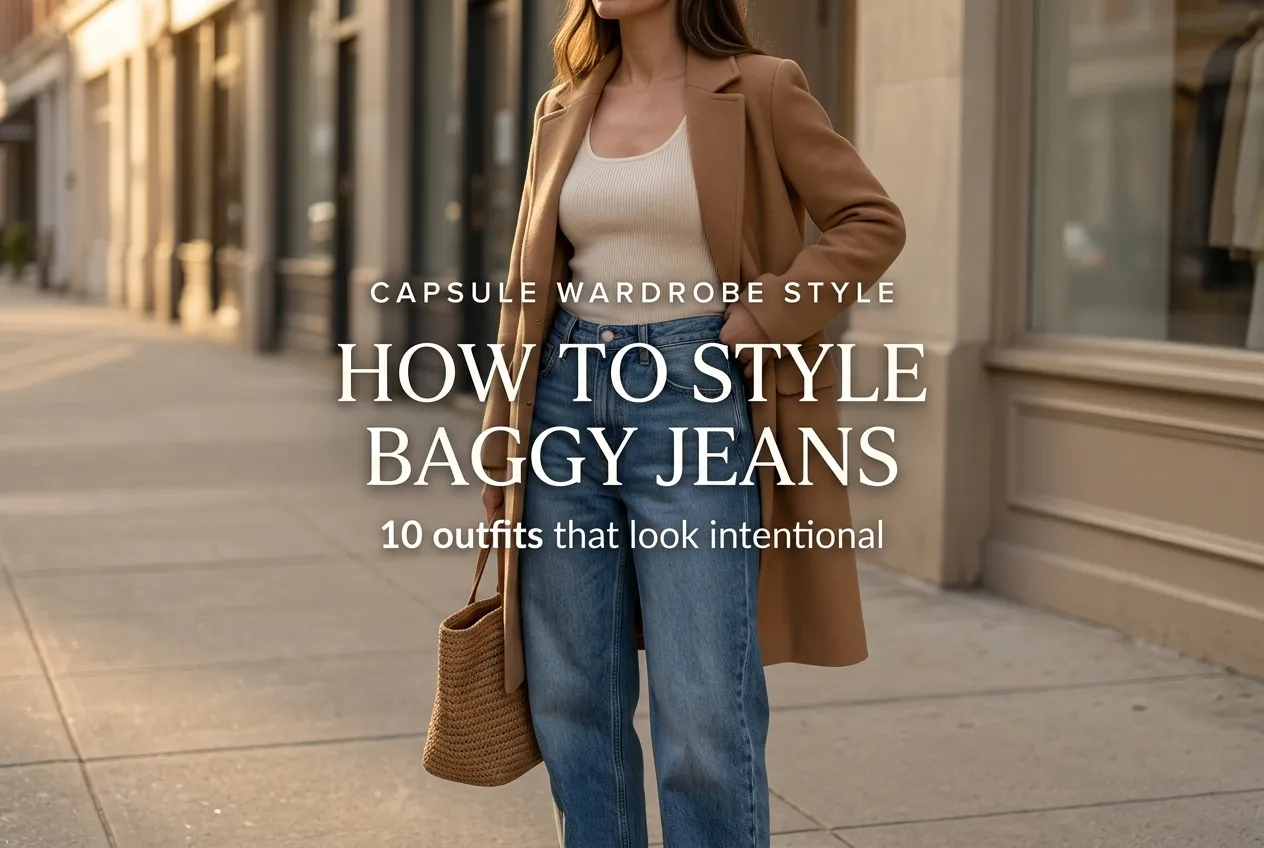
You ordered the baggy jeans. They showed up, you pulled them on, and somehow the mirror gave you a woman wearing borrowed clothes.
That gap between the pin and the reflection is almost never the jeans themselves. It’s the four inches of denim pooling at your ankle. It’s the sweater carrying the same volume as the bottom half, so your eye has nowhere to land. It’s a shoe that vanished under the hem entirely.
Learning how to style baggy jeans is proportion work, and proportion work is measurable. Below you’ll find ten outfits, a hem rule you can check with a tape measure before the return window closes, and the math that turns one pair into twelve looks using pieces already hanging in your closet.
Why Baggy Jeans Read Sloppy on One Woman and Sharp on Another
The variable is contrast, and there’s only one of it.
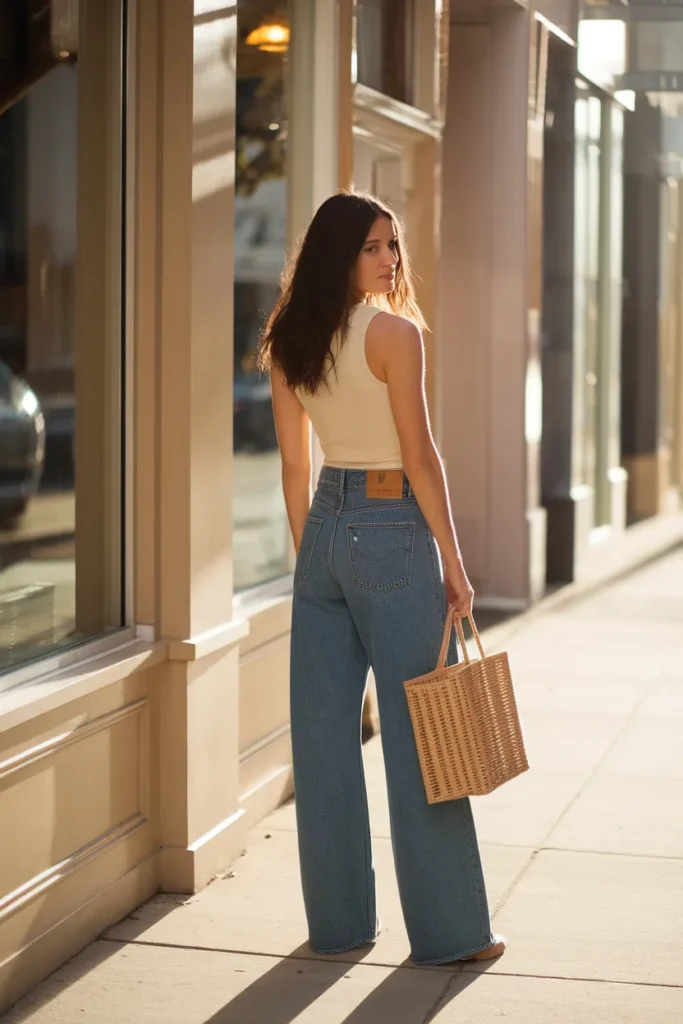
Baggy denim carries a lot of visual weight below the waist. When the top half carries the same weight, your eye can’t find a waistline anywhere in the outfit, so it reads the whole silhouette as one soft column. That’s the sloppy version. It isn’t about your size. A 5’10” model in an oversized hoodie and puddle jeans looks exactly as shapeless as anyone else would.
The sharp version puts a clear marker somewhere between your ribs and your hip bones. A tucked tank does it. So does a belt, a cropped jacket ending at the high hip, or a knit that stops at the top of the jeans instead of covering them.
Roughly one third fitted on top, two thirds relaxed on the bottom. That ratio does most of the work before you’ve made a single other decision.
One exception worth knowing: you can double up on volume if the two pieces sit at different heights. A cropped puff sleeve knit above high rise baggy jeans works because the knit ends where the denim begins, so the waist stays visible even though nothing is fitted.
The Fit Checklist to Run Before the Return Window Closes
Most baggy jeans problems are fit problems, and you can catch all of them in about ninety seconds standing in your bedroom.
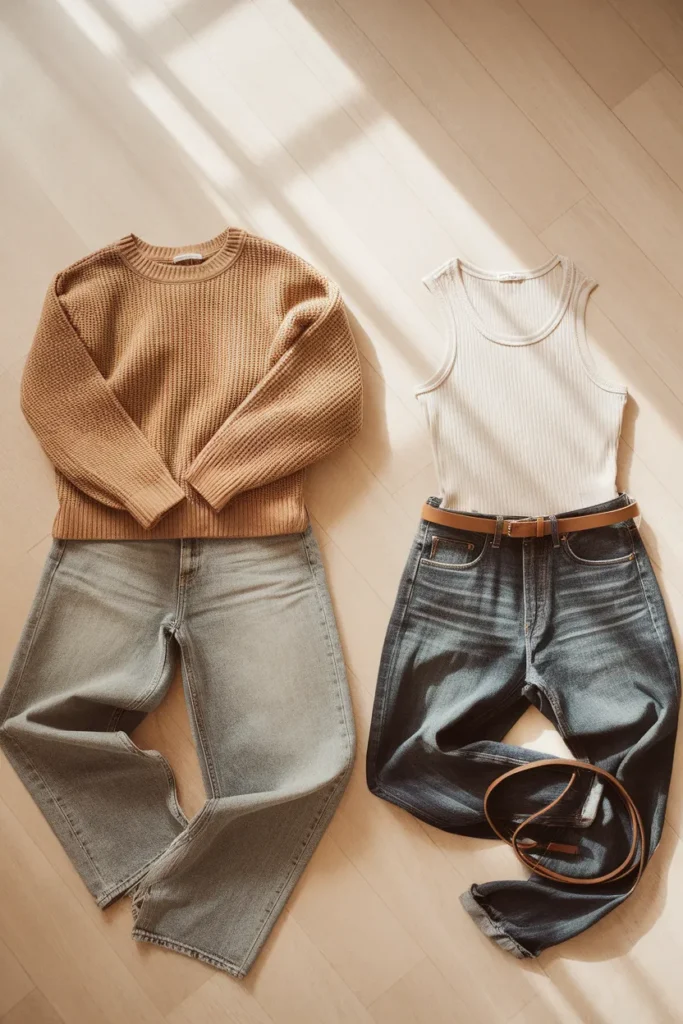
Rise. High rise or mid rise. A high rise gives you a visible waist without any styling effort, which is why it’s the easiest starting point. Low rise works, but you then need the top to do the waist marking for you.
Hem. This is the one nearly everyone gets wrong, and it’s the one nobody writes down. Measure from your ankle bone.
| Hem finish | Where it lands | Pairs with | What it does |
|---|---|---|---|
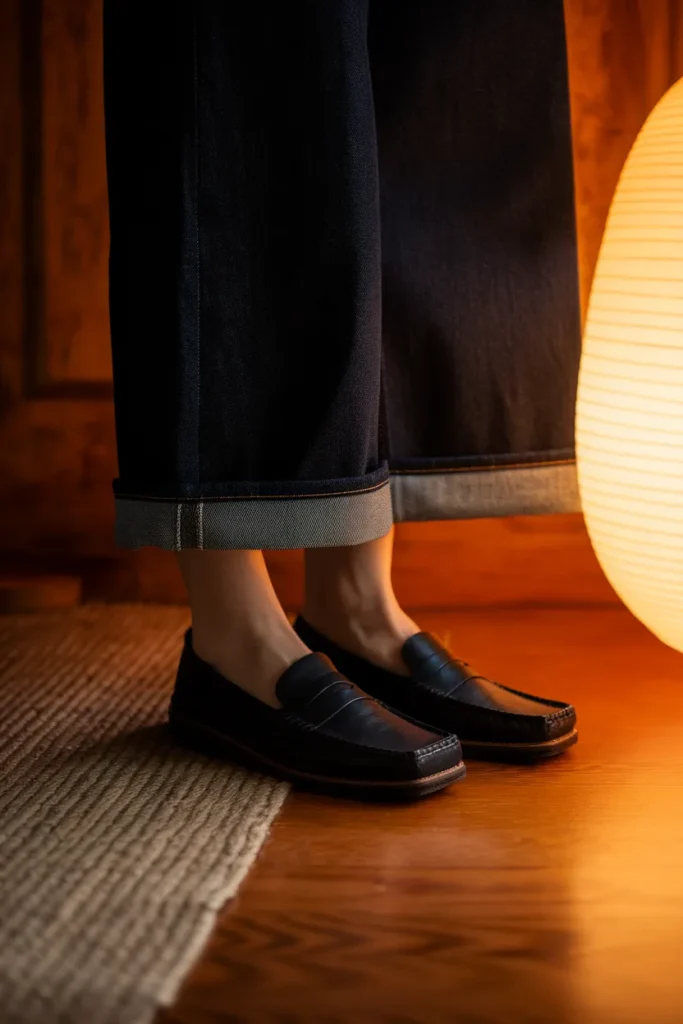
| Cropped | 1 to 2 in above the ankle bone | Ballet flats, loafers, low sneakers | Shows ankle, reads longer through the leg |
| Grazing | Right at the ankle bone | Almost anything | Safest, most versatile, hardest to get wrong |
| Full break | Covers the top of the shoe with one soft fold | Boots, heels, chunky sneakers | Longest leg line, needs some shoe height under it |
| Puddle | 2 or more inches of fabric on the floor | Platform or block heel only | Deliberate on tall frames, swallows shorter ones |
If your jeans arrive somewhere between grazing and puddle, a hem costs $15 to $25 at most tailors and is the single highest return on money in this entire article.
Fabric weight. Look for mid weight to heavy cotton, roughly 11 to 14 oz, with little or no elastane. Heavier denim holds the leg shape and falls in a clean line. Lightweight stretch denim collapses against your thigh by lunchtime, which is what people mean when they say a pair “went shapeless.” You can check this before buying, because the FTC requires a fiber content and care label on every garment sold in the US, so the composition is printed inside the waistband.
Drape test. Hold the jeans by the waistband and let them hang. Good denim falls straight with a slight column shape. Cheap denim clings to itself and creases in soft accordion folds.
If you’re building a wardrobe from scratch rather than adding to one, the printable capsule wardrobe checklist covers which two denim washes to own before you buy a third.
Outfits 1 to 3: The Everyday Rotation
These three cover roughly eighty percent of a normal week, and each one takes under ninety seconds.
1. Fitted rib tank, belt, low white sneakers. The tank goes fully tucked, not half. Add a slim espresso or black leather belt so the waist is doing its job even under a jacket later. Push the sneakers toward low profile leather rather than chunky runners, because bulk on both ends flattens the whole line.
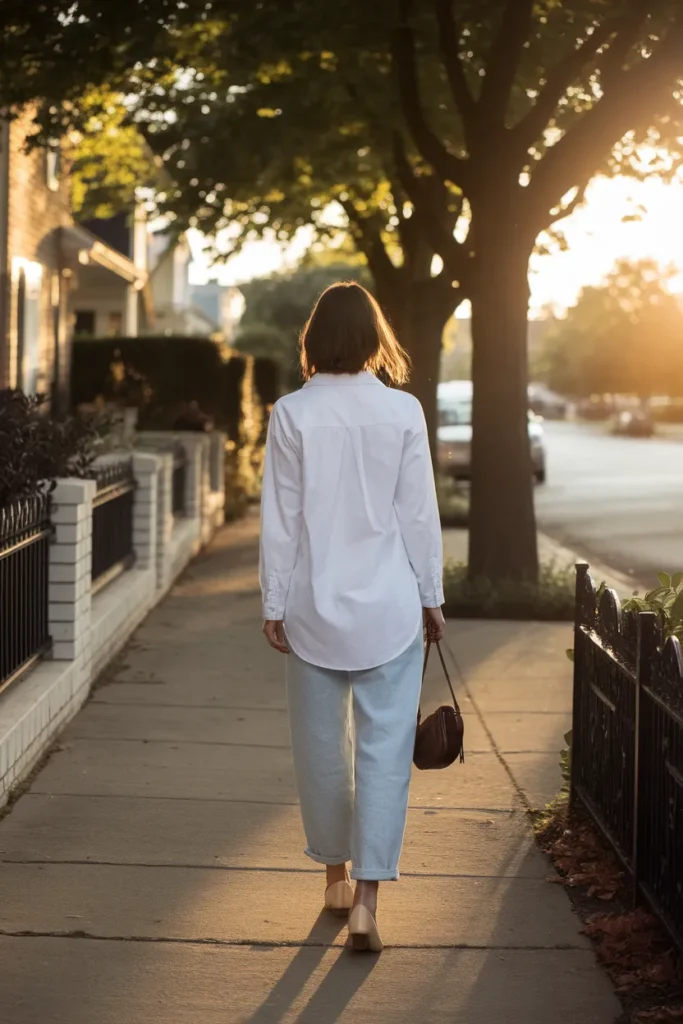
2. White button-down, half tucked, ballet flats. Front tuck only, back left loose, top two buttons open. It’s the most forgiving version of a polished outfit because the loose back panel skims instead of clinging. Flats keep it easy. A cognac belt threads it together if the jeans have loops.
3. Fine gauge knit, tucked, loafers and gold hoops. Fine gauge matters here. A chunky knit tucked into baggy denim creates a thick bunched waistline that fights you all day. A merino or cotton fine knit tucks flat. Gold hoops and a structured bag take this from errands to lunch without a second thought.
Outfits 4 to 6: When You Need to Look Put Together
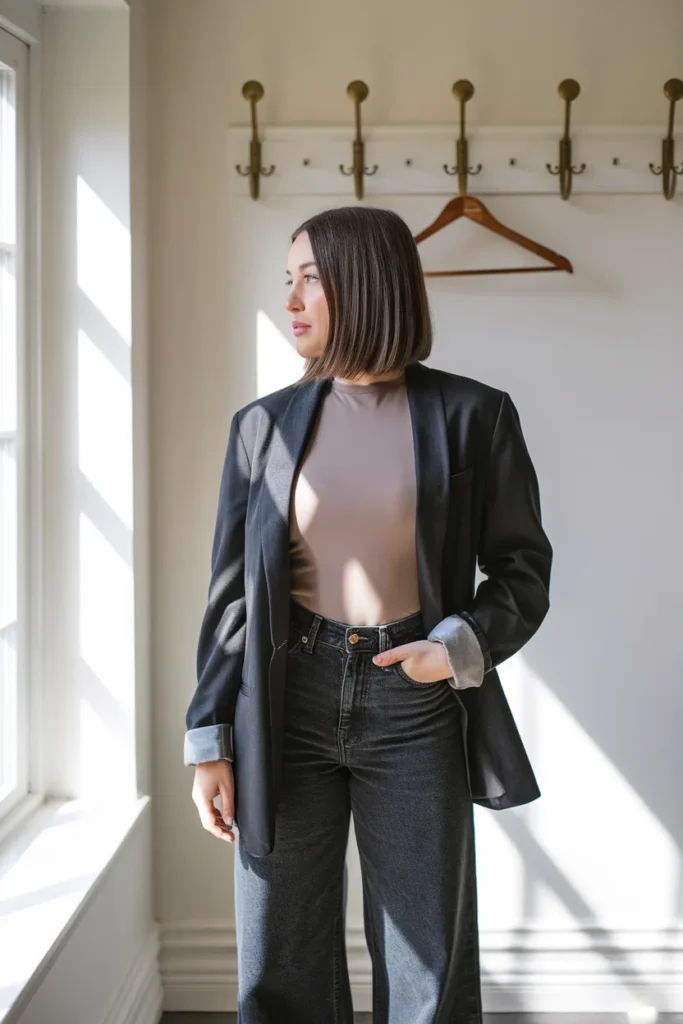
4. Structured blazer over a fitted tee, pointed flat. Single breasted, soft black or camel, with a real shoulder line. The blazer supplies all the structure the denim lacks, so everything underneath can stay simple. Sleeves pushed to the forearm keeps it from tipping into borrowed suiting.
5. Cropped jacket over a slim knit, cap toe flat. A short tweed or boucle jacket that ends at the high hip is the most reliable office friendly option here, because the hem hits above the widest part of the jeans and preserves your leg line. Dark wash only for this one. Skip distressing entirely.
6. Monochrome neutral, top to toe. Oat knit, ecru or stone baggy jeans, cream loafers. Keeping the whole outfit inside one narrow color family is the fastest way to make relaxed denim look expensive, because there’s no color break at the waist to interrupt the vertical line. Vary the textures so it doesn’t go flat: a ribbed knit against smooth denim against a leather shoe.
If your office sits in that middle zone where denim is fine on Fridays but nowhere else, these translate directly into business casual outfits built from a capsule.
Outfits 7 and 8: Denim on Denim and the Cropped Layer
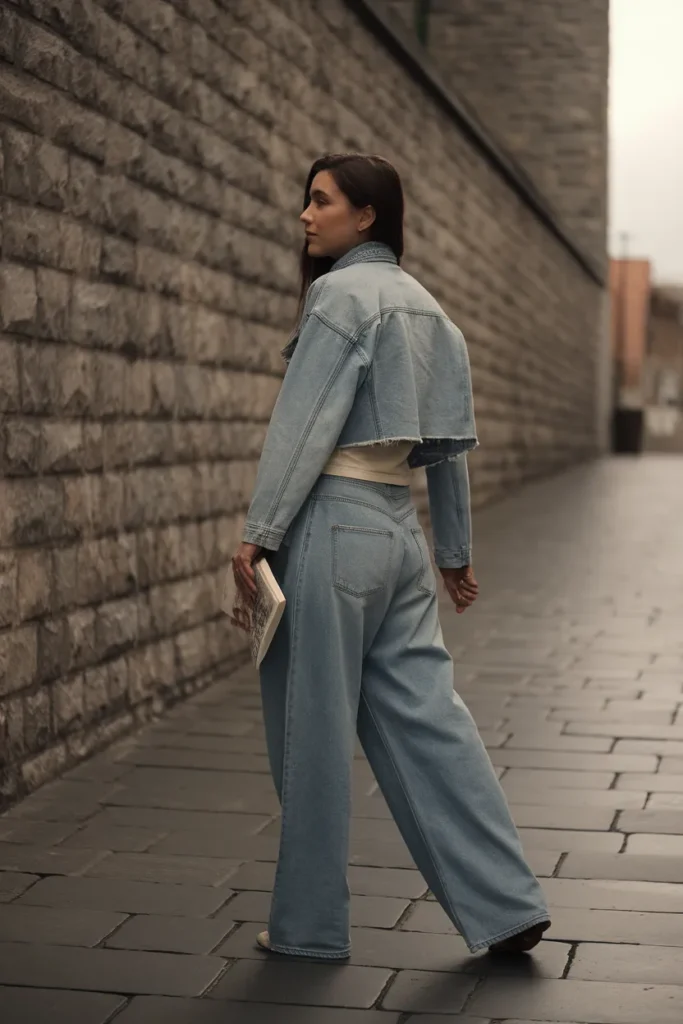
7. Matching wash jean jacket. Two rules make this work. Keep the washes close, either genuinely matching or clearly different enough to read as deliberate, and make sure the jacket ends at your high hip. A long denim jacket over baggy denim gives you one continuous indigo rectangle. Add a cream tee underneath and one metal accent, hoops or a thin chain, so there’s a break in the blue.
8. Cropped trench or short bomber. Anything that ends above the widest point of the jeans restores the balance the volume took away. A cropped trench in stone reads polished. A short bomber reads weekend. Both do the same structural job, which is giving your waist a horizontal line to sit on.
Outfits 9 and 10: After Six
9. Silk or satin camisole, dark wash, slingback. Fabric contrast does the dressing up here, not tightness. A washed silk cami against heavy indigo denim reads intentional in a way a fitted jersey top never quite manages. Slingbacks or a low pointed heel let the hem break properly over the shoe.
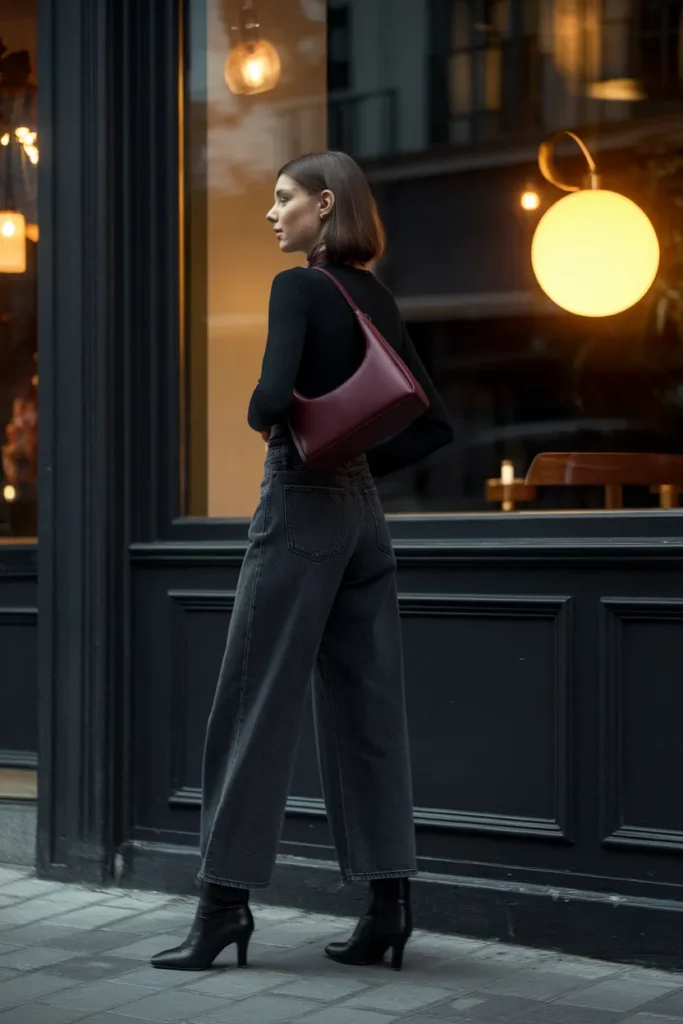
10. All black, fitted long sleeve, heeled boot. Soft black baggy jeans, a fitted black long sleeve or bodysuit, a heeled ankle boot hidden under the hem. Then one strong accessory carrying the color: a burgundy shoulder bag, a butter yellow scarf, a stack of gold. Black on black gives you the longest line available, and the single accent stops it reading severe.
What Each Shoe Does to the Silhouette
Shoes decide the register of the whole outfit, so it’s worth knowing what each one actually does rather than picking by mood.
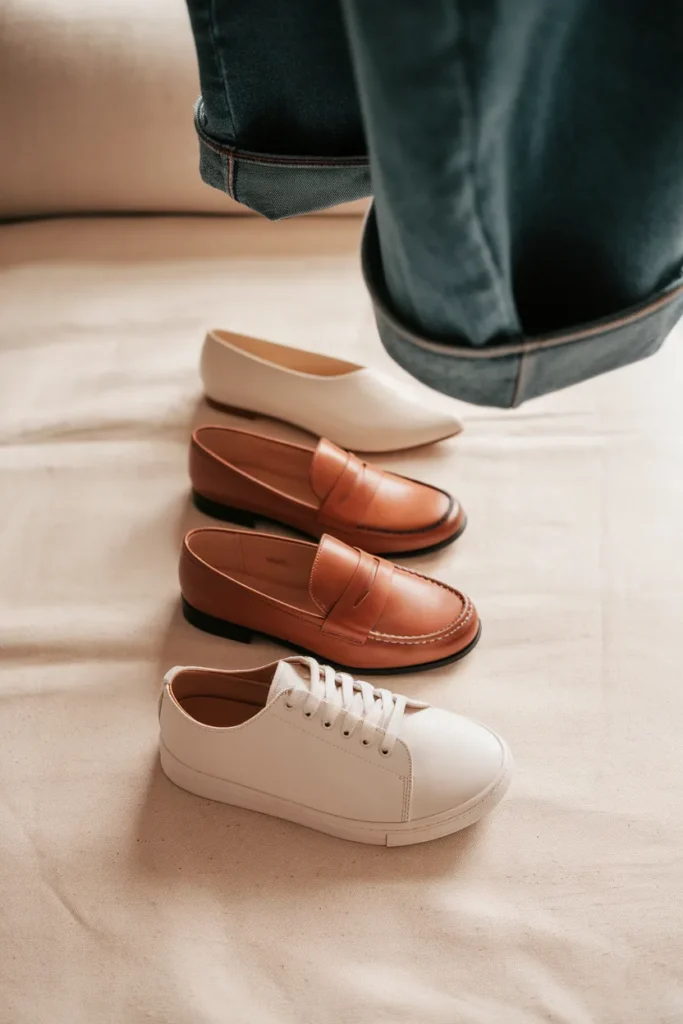
- Low white sneakers. Fully casual, keeps the hem light. Low profile leather over chunky runners, since chunky plus baggy reads heavy at both ends.
- Loafers. The most useful shoe in this entire category. Polished enough for an office, flat enough for a Saturday, and the low vamp shows a sliver of foot that keeps the leg line going. Our roundup of the best loafers for women in 2026 breaks down which shapes work under a wide hem.
- Ballet flats. Soft and easy, best with a cropped or grazing hem. Under a full break they disappear.
- Pointed heels and slingbacks. The dressiest option and the biggest change to your proportions, because the point extends the leg past where the hem stops.
- Ankle boots. Fall and winter default. Needs a full break or the hem catches awkwardly on the shaft.
- Chunky boots or platforms. The only shoes that hold up under a true puddle hem.
One rule covers all of them. If the hem covers more than the laces or the topline of the shoe, you’ve lost the break, and the outfit will read heavy no matter how good the top half is.
Baggy Jean Outfit Math
Here’s the part nobody else writes down, and it’s the reason a single pair of baggy jeans earns its hanger space instead of hanging there as a trend purchase.
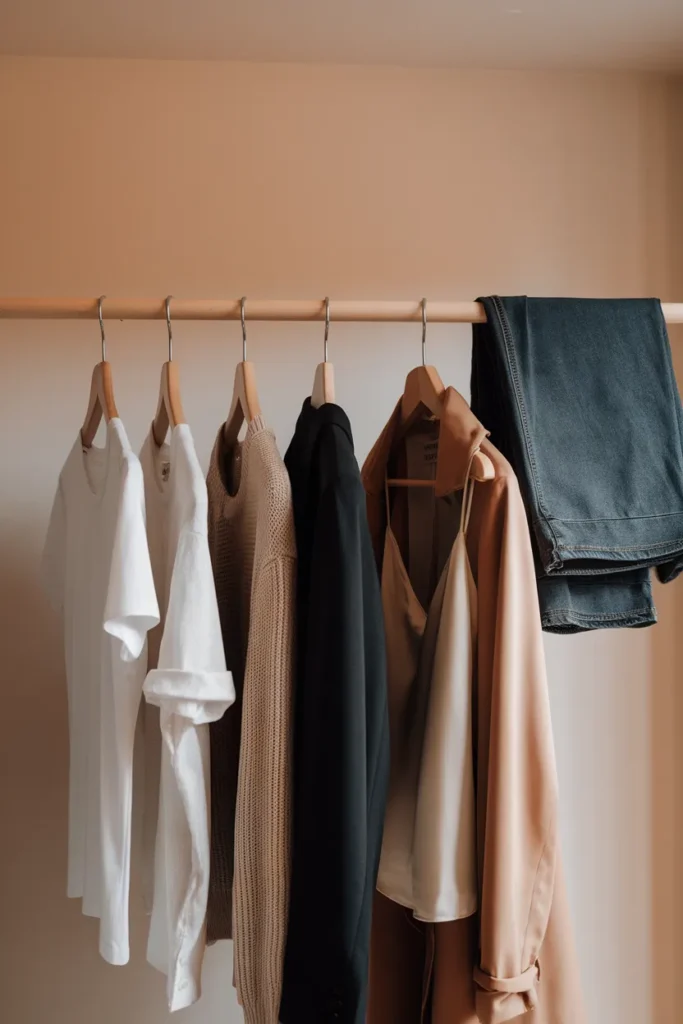
Six pieces you almost certainly own already. Two versions of each. Twelve outfits from one pair of jeans.
| Piece you already own | Everyday version | Dressed up version |
|---|---|---|
| White tee | + belt + low sneakers | + blazer + pointed flat |
| White button-down | half tuck + ballet flats | full tuck + heel + gold hoops |
| Fine gauge knit | + loafers | + long coat + ankle boot |
| Blazer | over a tee + sneakers | over a cami + slingback |
| Silk camisole | + cropped denim jacket + flats | on its own + heeled boot |
| Trench coat | over a tee + sneakers | over a knit + loafers |
Screenshot that. It’s the whole system.
The point of the grid isn’t the specific twelve. It’s the ratio. Any new piece that can’t produce at least six wearable outfits against what’s already in your closet doesn’t belong in a small wardrobe, however good it looks on the model. If formula based dressing is how your brain works, the Nordic minimalist capsule and its five outfit formulas applies the same logic across a full closet.
What a Good Pair Costs, Mass to Investment
Prices move constantly, so treat these as bands rather than fixed numbers, and check current pricing before you buy.
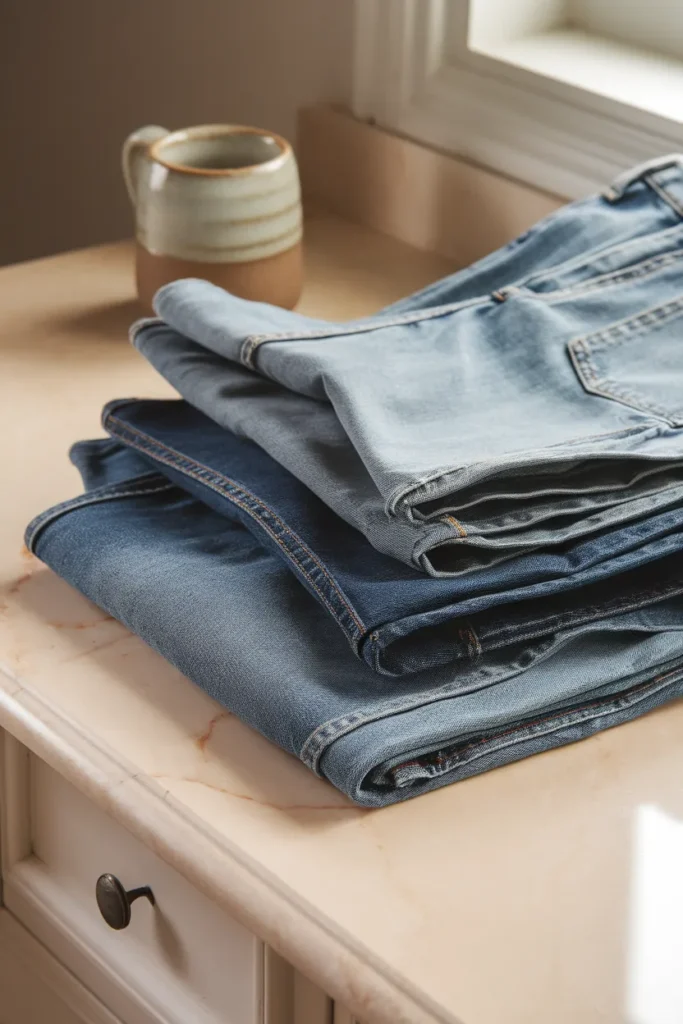
Mass, roughly $30 to $50. Old Navy, Gap, Uniqlo, Target, H&M. Trade off is fabric weight. Most sit under 10 oz with elastane, which means the leg shape softens after a few wears. Reasonable choice if you’re testing whether the silhouette suits you at all.
Mid, roughly $80 to $150. Madewell, J.Crew, Everlane, Quince, Abercrombie. This is where the fabric gets heavy enough to hold a line and the rise stops being an afterthought. J.Crew’s denim trouser and Madewell’s baggy straight both sit in this band, and Madewell carries petite lengths.
Contemporary, roughly $160 to $300. AG, DL1961, Good American, COS, Sezane. You’re paying for cut and recovery. Worth it if denim is your daily uniform, hard to justify if it isn’t.
Investment, $300 and up. Agolde at full price, Mother, Khaite. Beautiful denim. Also entirely skippable. If you’re eyeing a $325 pair, the mid tier band above gets you roughly ninety percent of the way for a third of the money, and the difference lives in fabric hand rather than in how the outfit reads from six feet away.
For a fuller picture of where each label sits, our guide to capsule wardrobe brands from affordable to luxury maps the same tiers across every category.
Cost per wear is the honest measure. A $140 pair worn twice a week for two years lands under seventy cents a wear. A $45 pair that loses its shape in three months and gets shoved to the back of a drawer costs considerably more than that.
Fit Notes by Proportion
None of this is about hiding anything. It’s about where the lines land relative to your frame.
Petite (5’4″ and under). Hem length carries the whole outfit. Aim for cropped or grazing, never puddle, because extra fabric on the floor visually shortens the leg. High rise plus a tucked top keeps the waist high. A shoe with any lift, a block heel or a platform loafer, buys back the height the volume takes.
Tall (5’9″ and over). You have the most room to play. A full break or a light puddle looks deliberate on a long leg. Watch the inseam when ordering, since standard lengths often arrive as accidental crops.
Curvy and hourglass. A high rise that actually sits at your natural waist rather than sliding down is the whole game. Look for contoured waistbands, which sit flat instead of gapping at the back. Fitted on top, always, so the waist you have stays visible.
Midsize and plus size. Same principles, no modifications needed. Heavier denim serves you especially well here because it holds a clean line rather than clinging. Good American and Madewell both carry extended sizing in relaxed cuts.
Over 40. Dark wash, minimal distressing, mid to high rise. The version that stops working is the low rise with heavy whiskering, which reads costume rather than current. Our guide to a capsule wardrobe for women over 40 covers the denim shapes that hold up across a whole closet.
Keeping the Fit
Baggy denim goes shapeless faster than fitted denim does, because there’s more fabric to stretch and nothing holding it against your body.
Wash it rarely. Levi Strauss & Co. recommends washing denim once every ten wears at most, spot cleaning between times with a damp cloth and a little mild soap. Cold water, inside out, zipper closed, gentle cycle.
Skip the dryer. Heat is what breaks down the cotton structure and shortens the inseam you paid a tailor to get right. Hang by two belt loops in a shaded spot so the weight pulls the leg straight.
Between wears, hang them rather than folding them over a chair. Denim keeps whatever crease you leave it in.
How to Style Baggy Jeans Frequently Asked Questions
Are baggy jeans still in style in 2026?
Yes. Relaxed and wide denim has held the top of the trend cycle for several seasons and appeared again across spring and fall 2026 runways. Pinterest’s own 2026 trend forecast names slouchy denim as part of its Glamoratti prediction, which points to sustained search interest rather than a fading moment. The version that’s shifted is the styling, which has moved from streetwear heavy toward cleaner and more tailored.
What shoes look best with baggy jeans?
Loafers are the most versatile, followed by low profile white sneakers for casual days and pointed heels or slingbacks for evening. Ballet flats work beautifully under a cropped hem. Ankle boots need a full break to sit right. The only combination worth avoiding is a very chunky shoe under a very wide hem, which adds weight at both ends.
How do you make baggy jeans work with your proportions?
Create one clear waist marker and keep the top half fitted or cropped. A tucked tank, a belt, or a jacket ending at the high hip all do it. Then set your hem so the shoe is at least partly visible. Those two adjustments solve nearly every complaint people have about the silhouette.
Can petite women wear baggy jeans?
Yes, with attention to length. Buy petite inseams where you can, or budget for a hem. Keep the hem between one and two inches above the ankle bone, choose a high rise, tuck your top, and add a little shoe height. Madewell, Abercrombie, and Gap all carry petite lengths in relaxed cuts.
What tops go with baggy jeans?
Anything fitted or cropped. Rib tanks, fine gauge knits, bodysuits, silk camisoles, and half tucked button-downs all work. Structured layers add polish: a single breasted blazer, a cropped tweed jacket, a short trench. The combination to skip is an oversized top with an oversized bottom, unless the top ends above the waistband.
How much should you spend on a pair?
The $80 to $150 band is the sweet spot, where fabric weight and rise are reliable without paying designer margins. Under $50 is fine for testing the silhouette, but expect the shape to soften within a season. Above $300 you’re buying fabric hand rather than a visibly better outfit.
How do you keep baggy jeans from stretching out?
Wash sparingly and never tumble dry. Cold water, inside out, gentle cycle, then hang by two belt loops to air dry. Heavier denim with little or no elastane holds its shape far longer than lightweight stretch. If a pair has gone slack in the waist, a quick wash and air dry usually recovers most of it.
One Pair, Twelve Outfits
Baggy jeans aren’t hard to wear. They’re just unforgiving about two specific things, and once your hem is right and your waist is visible, everything else is preference.
Start with the grid. Pull the jeans out, lay them next to the six pieces from the outfit math table, and photograph the combinations that work. You’ll have your week planned in about ten minutes, and you’ll know immediately whether the pair earns its hanger space.
If you want the same approach applied to a whole closet rather than one pair, the free 30-Piece Capsule Wardrobe Checklist walks through the thirty pieces that generate the most outfits, on one printable page.
Keep reading

How to Style a Shacket for Plus-Size Women: 16 Outfits That Work
A shacket is the easiest piece in your closet to buy and the easiest one to get wrong. It hangs open, it...

16 Shacket Outfits for Women Over 50 That Look Deliberate, Not Borrowed
There is a moment, usually around the third try in front of the mirror, when a shacket stops reading as a jacket...

How to Style a Shacket: 16 Cozy Outfits for Fall and Winter
Your shacket is probably hanging in the closet right now, doing nothing, because it feels like a shirt that thinks it is...