
How to Build a Capsule Wardrobe: The Complete Beginner’s Guide
Have you ever stood in front of a closet packed with clothes and thought, “I have nothing to wear”? You are not alone. Most people wear only about 20–30% of the clothing they own, leaving the rest untouched season after season. The solution is surprisingly simple: a capsule wardrobe.
This complete beginner’s guide will walk you through everything you need to know about building a capsule wardrobe from scratch — what it is, why it works, and a practical step-by-step process you can start today. Whether you are looking for a minimalist wardrobe that saves time and money or a thoughtful system that makes getting dressed effortless, this guide has you covered.
What Is a Capsule Wardrobe?
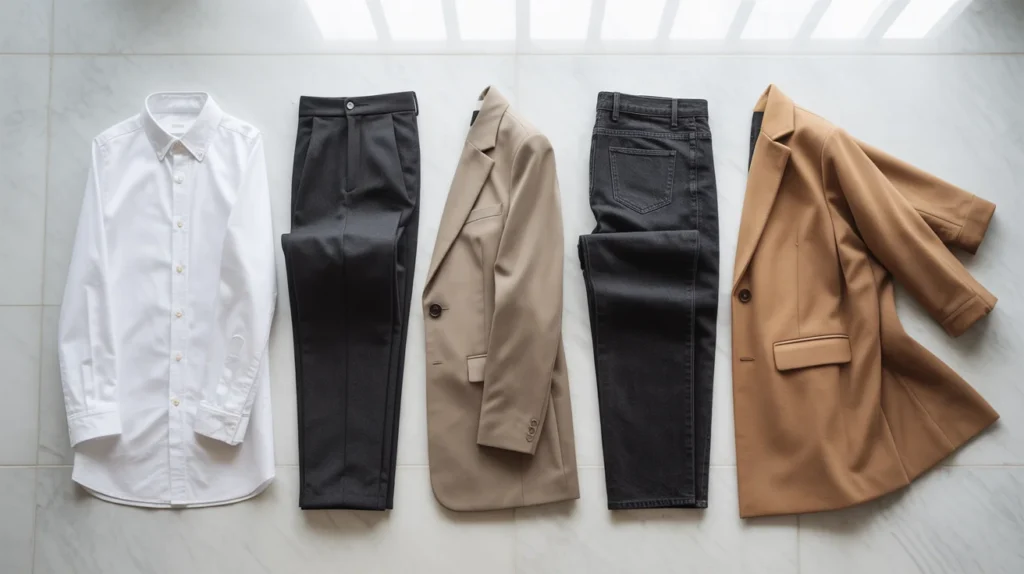
A capsule wardrobe is a curated collection of versatile, interchangeable clothing pieces that work together to create dozens of outfit combinations from a limited number of items. The concept was first introduced by London boutique owner Susie Faux in the 1970s and later popularized by designer Donna Karan with her iconic “Seven Easy Pieces” collection in 1985.
The core idea is straightforward: instead of filling your closet with trendy, single-use pieces, you invest in a smaller set of high-quality, timeless garments that mix and match effortlessly. Think of it as building a wardrobe where every single piece earns its place.
A typical capsule wardrobe contains anywhere from 25 to 40 pieces (including shoes and outerwear), though there is no rigid rule. The popular Project 333 challenge encourages wearing just 33 items for three months — a great starting point for beginners.
Why Build a Capsule Wardrobe? 5 Powerful Benefits
Before diving into the how-to, understanding the why will keep you motivated throughout the process.
1. Save Time Every Morning
Decision fatigue is real. Psychologist Barry Schwartz’s research on the paradox of choice shows that too many options can actually cause stress and indecision. With a capsule wardrobe, getting dressed takes minutes instead of thirty frustrating attempts in front of the mirror.
2. Save Money Long-Term
When you stop impulse buying and start investing in quality over quantity, your spending decreases significantly. A well-chosen blazer that lasts five years costs less per wear than ten cheap jackets that fall apart after a few washes.
3. Reduce Environmental Impact
The fashion industry accounts for roughly 10% of global carbon emissions. An estimated 11.3 million tons of textile waste ends up in landfills each year in the United States alone. By choosing fewer, better-made garments, you directly contribute to reducing that waste. For a deeper look at sustainable fashion choices, the Good On You directory rates brands on their ethical practices.
4. Discover Your Personal Style
When you remove the noise of impulse purchases and trend-chasing, your authentic style emerges naturally. You begin to understand which cuts, colors, and fabrics genuinely make you feel confident.
5. Less Clutter, More Clarity
A minimalist closet creates physical and mental space. Research published in the International Journal of Market Research found that participants who tried a capsule wardrobe for three weeks reported feeling less stressed and more joyful about their personal style.
For more on building confidence through intentional dressing, explore our style tips and how-to-wear guides.

How to Build a Capsule Wardrobe: Step-by-Step Guide for Beginners
Step 1: Define Your Lifestyle and Needs
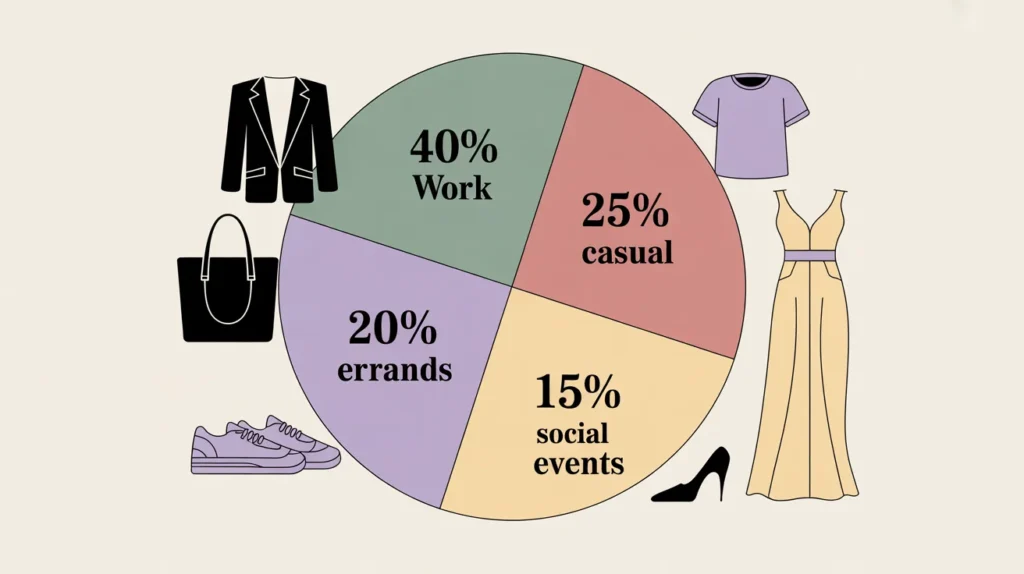
Before touching a single hanger, take an honest look at how you spend your days. Ask yourself these questions:
- What percentage of my week is spent at work, running errands, socializing, or exercising?
- What dress codes do I follow daily?
- What is the climate where I live?
Your capsule should reflect your actual life — not an aspirational Instagram version of it. A stay-at-home parent needs a different capsule than someone working in a corporate office. If you need help organizing this process, our beginner’s capsule wardrobe guide breaks it down further.
Step 2: Declutter Your Current Closet
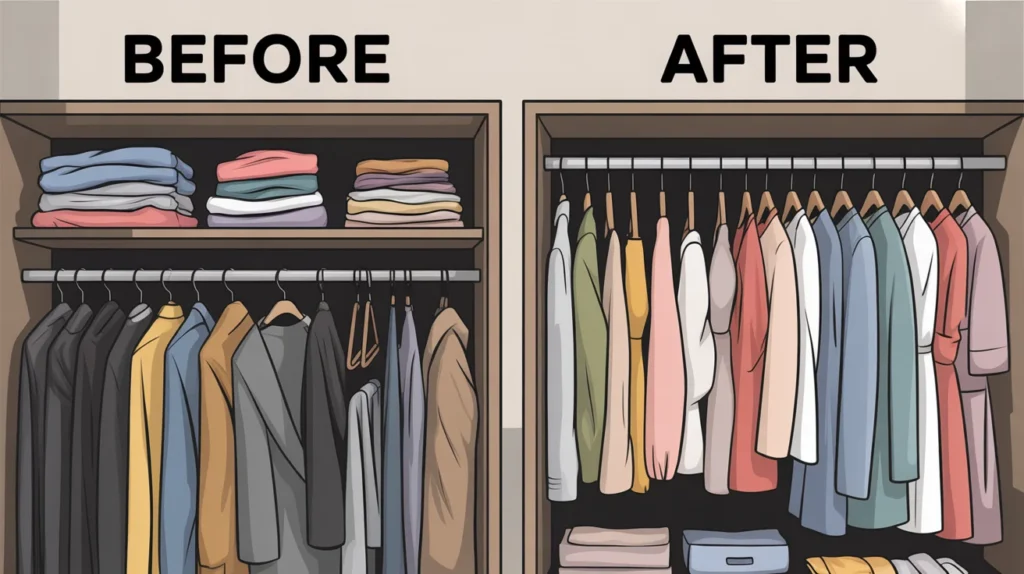
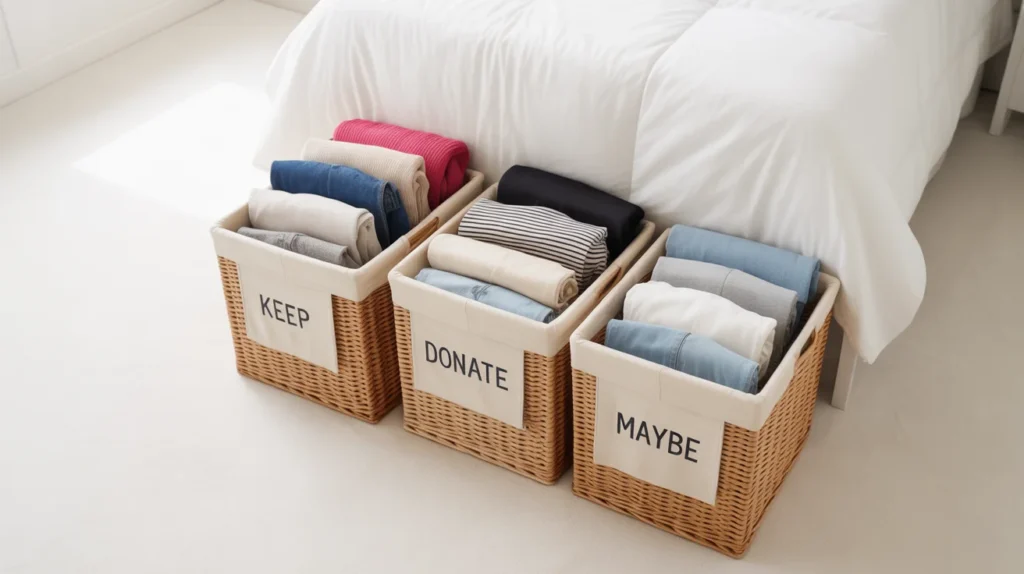
This is the step most people dread — but it is also the most liberating. Pull everything out of your closet and sort each item into three piles:
Keep: Items you love, wear regularly, and that fit well right now. Donate/Sell: Pieces that no longer fit, feel outdated, or haven’t been worn in six months or more. Platforms like Poshmark or ThredUp make reselling easy. Maybe: Items you are unsure about. Store these in a box for 30 days. If you don’t reach for them, let them go.
This wardrobe detox is one of the most empowering steps in the entire process. For a detailed approach, check out our closet declutter and organization guide.
Step 3: Choose Your Color Palette
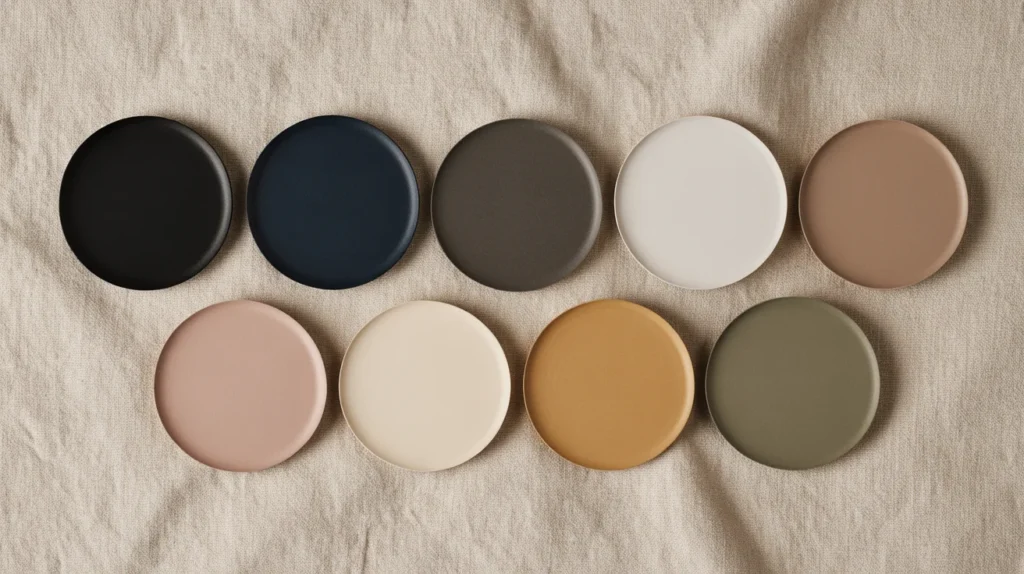
Color coordination is the secret weapon of any successful capsule wardrobe. Start with a foundation of two to three neutral base colors that complement your skin tone. Popular neutral choices include black, navy, gray, white, cream, camel, and taupe.
Then add one to two accent colors you love and already feel comfortable wearing. These accent shades add personality and keep your wardrobe from looking monotonous.
Pro Tip: Every top should pair with every bottom in your capsule. If a piece only works with one specific outfit, it is not versatile enough to make the cut.
Our complete color coordination guide will help you pick the perfect palette for your skin tone and style preferences.
Step 4: Select Your Core Pieces
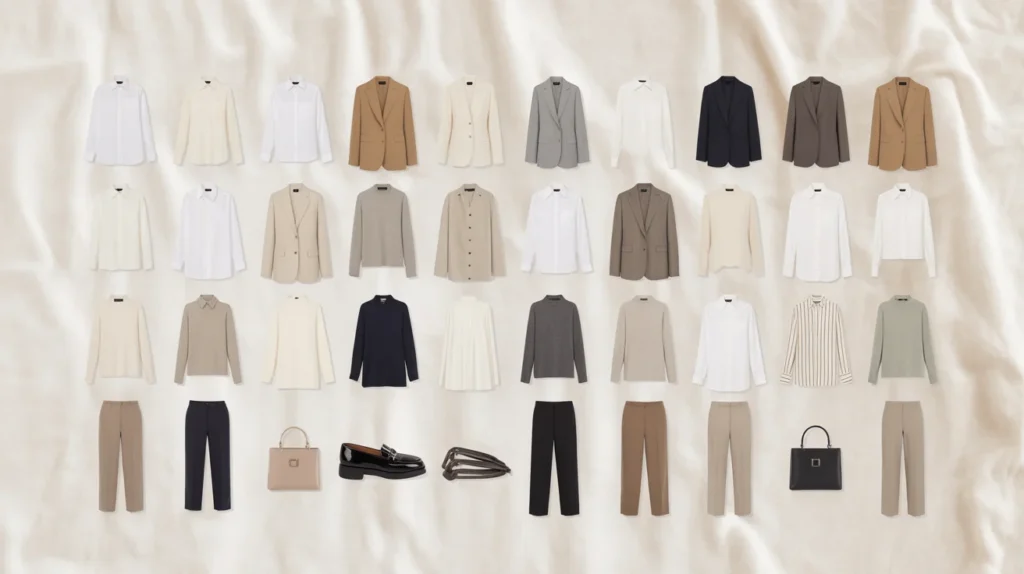
Here is a practical breakdown of essential items for a well-rounded capsule wardrobe. Adjust the numbers based on your climate, lifestyle, and laundry habits:
Tops (5–7 pieces): Two to three basic tees or tanks in neutral shades, one to two blouses or button-downs, one striped or printed top for variety, and one lightweight knit or sweater.
Bottoms (4–5 pieces): One pair of dark wash jeans, one pair of black trousers, one pair of casual pants (chinos or linen), and one skirt or additional pair of denim depending on your preference.
Layers (2–3 pieces): One classic blazer, one casual cardigan or pullover, and one lightweight jacket (denim, leather, or utility).
Outerwear (1–2 pieces): One seasonally appropriate coat — a trench coat for spring, a wool coat for winter.
Shoes (3–4 pairs): One pair of everyday sneakers, one pair of dressy flats or loafers, one pair of boots, and one pair of sandals or heels depending on your lifestyle.
Accessories (5–7 pieces): One everyday handbag, one crossbody or tote, a versatile scarf, simple jewelry, and a quality belt.
Browse our wardrobe essentials and best basics collection for specific product recommendations at every price point.
Step 5: Master the Mix-and-Match Formula
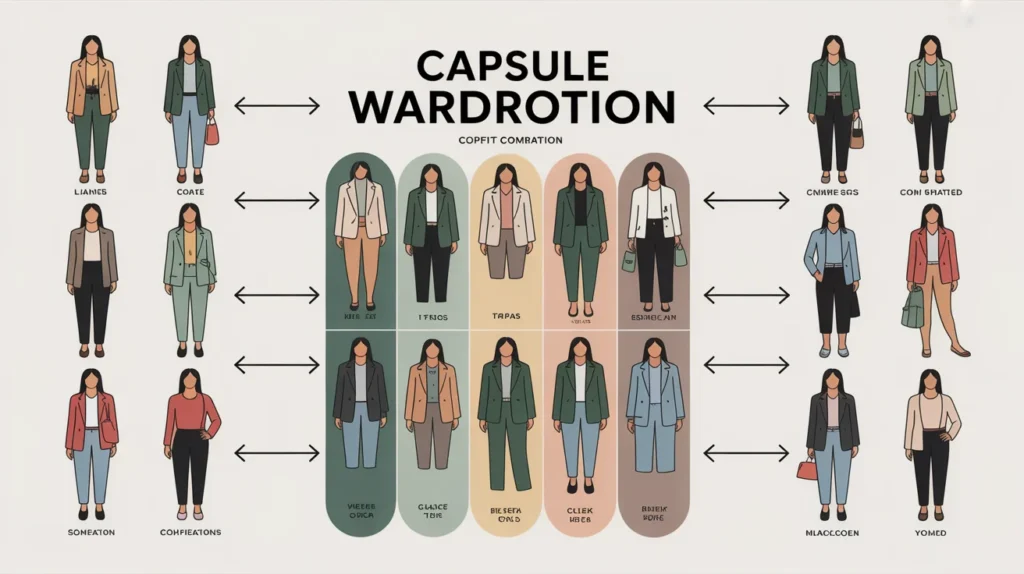
The true magic of a capsule wardrobe lies in outfit multiplication. With just 30 carefully chosen pieces, you can easily create over 100 unique outfit combinations.
The formula is simple: every top works with every bottom, every layer works over every top, and your shoes and accessories add further variety. This interchangeability is what separates a capsule from a regular small closet.
Try this exercise: pick five tops, three bottoms, and two layers from your capsule. That alone gives you 30 distinct outfits — enough for an entire month without repeating a single look.
For daily inspiration and combination ideas, visit our mix and match ideas section.
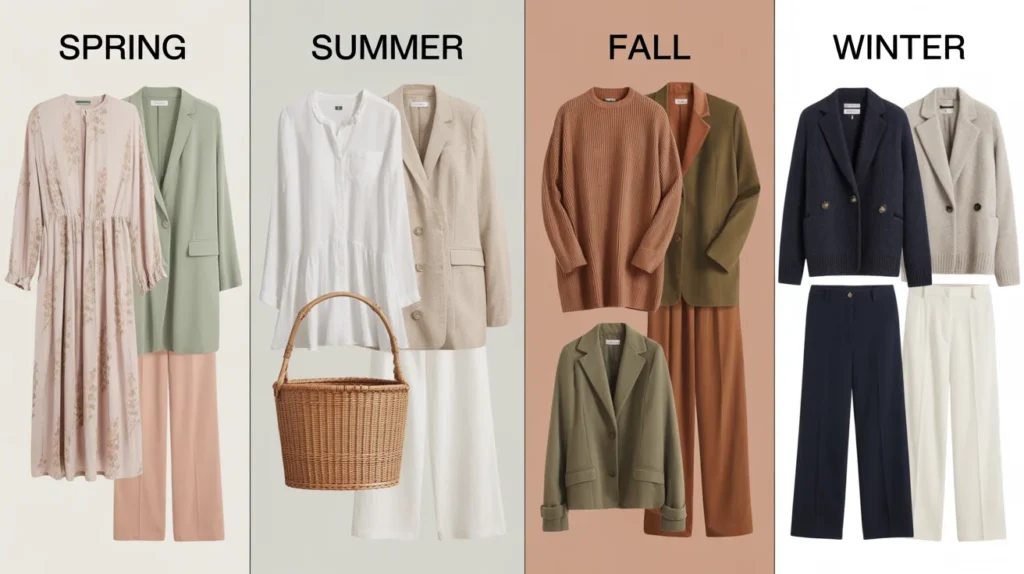
Step 6: Adapt Your Capsule by Season
Your capsule wardrobe should evolve with the seasons. Rather than overhauling everything, swap out a handful of pieces every three months:
Spring: Transition with lighter layers, linen fabrics, and soft pastel accents. Replace heavy coats with a trench or lightweight jacket.
Summer: Bring in breathable cotton and linen, swap boots for sandals, and add one or two breezy dresses.
Fall: Introduce warm knits, earth tones, and ankle boots. A versatile cardigan and a good scarf go a long way.
Winter: Layer up with heavier outerwear, cashmere sweaters, and warm-toned accessories.
Explore our seasonal guides for detailed capsule plans: spring, summer, fall, and winter capsule wardrobes.
Smart Shopping Rules for Your Capsule Wardrobe
Once your capsule is built, maintaining it requires intentional shopping habits. Follow these rules before every future purchase:
The 3-Way Test: Can this piece be styled at least three different ways with items already in your capsule? If not, pass on it.
Quality Over Quantity: Feel the fabric, check the stitching, and read reviews. A well-made garment from a reliable brand will outlast five fast-fashion alternatives. Our best capsule wardrobe brands guide highlights brands known for durability and timeless design.
The 24-Hour Rule: See something you love? Wait 24 hours before buying. If you are still thinking about it the next day, it might be worth adding to your capsule.
Cost Per Wear: Divide the price by the number of times you will realistically wear the item. A $120 blazer worn 100 times costs $1.20 per wear. A $25 trendy top worn twice costs $12.50 per wear.
For budget-conscious shoppers, our closet staples under $50 collection proves that building a capsule wardrobe does not have to be expensive.
Common Capsule Wardrobe Mistakes to Avoid
Going too minimal too fast. Start with 35–40 pieces and gradually refine down. Jumping straight to 15 items can feel restrictive and lead to frustration.
Ignoring your actual lifestyle. Building a wardrobe full of office blazers when you work from home will leave you reaching for sweatpants every day. Be honest about what you need.
Choosing only neutrals. While neutrals form the foundation, a capsule without any personality feels boring fast. Add accent colors and at least one statement piece that brings you joy.
Expecting perfection immediately. Your first capsule will not be flawless — and that is completely okay. Treat it as a living system that improves season by season. Every rotation teaches you more about what works for your body, lifestyle, and preferences.
Your Next Step: Start Today
Building a capsule wardrobe is not about restriction — it is about freedom. Freedom from decision fatigue, impulse purchases, and a closet full of things that do not serve you. Start with one step today: pull out everything from your closet and ask yourself which pieces truly make you feel confident.
Ready to take the full plunge? Download our capsule wardrobe checklist to track your progress as you build your dream wardrobe, one intentional piece at a time.
Frequently Asked Questions
How many pieces should a capsule wardrobe have? Most capsule wardrobes contain between 25 and 40 items including tops, bottoms, layers, shoes, and accessories. The ideal number depends on your lifestyle, climate, and personal comfort level. Start with a range that feels manageable and adjust over time.
Can I have a capsule wardrobe on a budget? Absolutely. Start by shopping your own closet first — you likely already own many foundational pieces. Fill gaps gradually through thrift stores, consignment shops, or affordable basics from quality retailers. Building a capsule is a process, not a single shopping spree.
Do I need to get rid of all my other clothes? Not at all. Store off-season or sentimental items separately. The goal is to curate your daily-wear closet so that everything in it works together and gets worn regularly.
Is a capsule wardrobe only for women? No. The capsule wardrobe concept works for everyone regardless of gender. The principles of versatility, quality, and intentional selection are universal.
How often should I update my capsule? Most people refresh their capsule seasonally — roughly every three months. This does not mean replacing everything, but rather swapping a few pieces to suit the weather and any evolving style preferences.
Pin this guide to your Capsule Wardrobe or Minimalist Style board on Pinterest for future reference! Follow Capsule Wardrobe Style for weekly outfit ideas, seasonal capsule plans, and wardrobe building tips.